Repositório ISCTE-IUL
Deposited in Repositório ISCTE-IUL:
2018-06-08Deposited version:
Post-printPeer-review status of attached file:
Peer-reviewedCitation for published item:
Pires, A., Alves-Oliveira, P., Arriaga, P. & Martinho, C. (2017). Cubus: autonomous embodied characters to stimulate creative idea generation in groups of children. In J. Beskow, C. Peters, G. Castellano, C. O'Sullivan, I. Leite & S. Kopp (Ed.), 17th International Conference on Intelligent Virtual Agents, IVA 2017. (pp. 360-373). Estocolmo: Springer International Publishing.
Further information on publisher's website:
10.1007/978-3-319-67401-8_46Publisher's copyright statement:
This is the peer reviewed version of the following article: Pires, A., Alves-Oliveira, P., Arriaga, P. & Martinho, C. (2017). Cubus: autonomous embodied characters to stimulate creative idea generation in groups of children. In J. Beskow, C. Peters, G. Castellano, C. O'Sullivan, I. Leite & S. Kopp (Ed.), 17th International Conference on Intelligent Virtual Agents, IVA 2017. (pp. 360-373). Estocolmo: Springer International Publishing., which has been published in final form at
https://dx.doi.org/10.1007/978-3-319-67401-8_46. This article may be used for non-commercial purposes in accordance with the Publisher's Terms and Conditions for self-archiving.
Use policy
Creative Commons CC BY 4.0
The full-text may be used and/or reproduced, and given to third parties in any format or medium, without prior permission or charge, for personal research or study, educational, or not-for-profit purposes provided that:
• a full bibliographic reference is made to the original source • a link is made to the metadata record in the Repository • the full-text is not changed in any way
The full-text must not be sold in any format or medium without the formal permission of the copyright holders.
Serviços de Informação e Documentação, Instituto Universitário de Lisboa (ISCTE-IUL) Av. das Forças Armadas, Edifício II, 1649-026 Lisboa Portugal
Phone: +(351) 217 903 024 | e-mail: [email protected] https://repositorio.iscte-iul.pt
Cubus: Autonomous Embodied Characters to
Stimulate Creative Idea Generation in Groups of
Children
André Pires1,2, Patrícia Alves-Oliveira1,3, Patrícia Arriaga3
and Carlos Martinho1,2
1 INESC-ID, Av. Professor Cavaco Silva, 2744-016 Porto Salvo, Portugal
2 Instituto Superior Técnico, University of Lisbon, Av. Professor Cavaco Silva,
2744-016 Porto Salvo, Portugal
{andre.b.pires,carlos.martinho}@tecnico.ulisboa.pt
3
Instituto Universitário de Lisboa (ISCTE-IUL), CIS-IUL, Av. das Forças Armadas, 1649-026 Lisboa, Portugal
Abstract. Creativity is an ability that is crucial in nowadays societies. It is, therefore, important to develop activities that stimulate creativ-ity at a very young age. It seems, however, that there is a lack of tools to support these activities. In this paper, we introduce Cubus, a tool that uses autonomous synthetic characters to stimulate idea generation in groups of children during a storytelling activity. With Cubus, children can invent a story and use the stop-motion technique to record a movie depicting it. In this paper, we explain Cubus’ system design and architec-ture and present the evaluation of Cubus’ impact in a creative task. This evaluation investigated idea generation in groups of children during their creative process of storytelling. Results showed that the autonomous be-haviors of Cubus’ virtual agents contributed to the generation of more ideas in children, a key dimension of creativity.
Keywords: autonomous virtual agents, child-agent interaction, creativ-ity support tool, group creativcreativ-ity with children, creative storytelling
1
Introduction
The role of creativity is paramount in our current day societies. Creativity con-tributes in a major way to both our professional and personal growth. It is, therefore, important to encourage the growth of this ability from a very young age [1]. Although many schools already feature storytelling activities which help promote the children’s creative thinking [2], these activities are cumbersome for teachers to prepare and manage, with scarce tools existing to support these activities [3].
With this work, we propose to enhance children’s creativity, by focusing on the stimulation of idea generation during their creative process. As identified
by Torrance [4], idea generation (also denominated by fluency ) is one of the primary aspects of the creative process. Inspired in literature regarding this aspect of creativity we designed a system and activity that explored techniques to improve idea generation using agents’ autonomous behaviors. Our system, Cubus, emerges as a virtual environment that allows groups of children to engage in creative storytelling while interacting with autonomous synthetic characters that are part of Cubus. As a design guideline we adopted the Concrete Stimuli technique (which suggests using physical things to provide stimuli during creative sessions) [5]. In our particular application, we expect to use our agents’ behaviors to produce these stimuli. Additionally, we believe that it is important to conduct our study in a social setting as most of our interactions and problem solving have a social component. This focus should help children learn how to better express and represent their knowledge and ideas. To this end, while designing our activity we intended to leverage the Group Interaction technique, in which ideas verbalized by one member of a group can prompt other members to suggest more ideas [5].
Three dimensions were taken into account for the evaluation of how Cubus enhances creativity: creative process, creative product, and impact on the partic-ipants’ creative idea generation (fluency). This paper focuses on the analysis of the creative process. Our evaluation study was planned to test the hypothesis that the inclusion of the characters’ autonomous behaviors would increase idea generation in groups of children during the creative process of storytelling.
1.1 Creativity
Creativity is a concept that has no consensual definition, but there is an overall agreement that creativity can be defined as the “interaction among aptitude, process, and environment by which an individual or group produces a percep-tible product that is both novel and useful as defined within a social context” [6]. This work is framed within the research area of computational creativity. Before starting the development of the Cubus system it was crucial to study and understand the different ways that tend to contribute to a creative process. Torrance [4], cites four fundamental creative abilities in the creative process: fluency, flexibility, originality and elaboration. With this work, we focus only on stimulating fluency, the number of ideas generated during a creative process. Not only we want to stimulate fluency during the creative process, as we are interested in improving this creative ability within a group and as a result in a social context. Henceforth, creativity deviates from emerging from an individual creative process, to become an ability that is stimulated in a distributed way within a group [7, 8]. During the unscripted collaborative efforts that emerge during the creative process, improvisation is key as it involves creating different ideas as well as adapting to concepts introduced by others and building upon them [9]. In our study, we used Cubus to stimulate fluency in groups of children during storytelling.
Creativity Support Tools: Our work contributes towards the enhancement of creativity with the aid of computers, defined as the field of Creativity Support Tools (CSTs) [10]. We took inspiration from works such as Dr. Inventor [11] and a work that uses a physical agent to aid children in creative storytelling [12].
1.2 Human-Agent Interaction
Cubus system includes synthetic characters and their design inspiration includes previous work in the area of Human-Agent Interaction (HAI). Given that our characters are non-humanoid, we faced several challenges in designing their emo-tional expressive behaviors. To address emoemo-tional expression when designing characters with a restrictive appearance, we followed an extensive survey carried out by Bethel and Murphy [13] in which different means of expression are sug-gested, such as movement [14, 15], color [15, 16], sound and proxemics [17]. We incorporated several of these means and guidelines while designing how our syn-thetic characters should interact with the user and with each other to increase their chances of expressing themselves successfully.
Cubus offers a similarly structured environment as presented in the Oz Project, designed for the creation and presentation of dramas in a virtual setting [18]. Cubus uses non-humanoid characters to allow children’s imagination to direct the characters’ narratives freely. The use of simple shapes as been shown to allow the creation of rich narratives in similar contexts [19].
In the study of creativity, motivation is one of the foundations for a suc-cessful creative experience [20], as such we will use agents to motivate users in their task [21]. Additionally, the use of a synthetic character does not hinder communication and is able to enhance discussion in a collaborative task with pairs of children [22], reinforcing our motivation to include synthetic characters in our scenario. These prior findings were taken into account when planning our study.
2
Cubus System
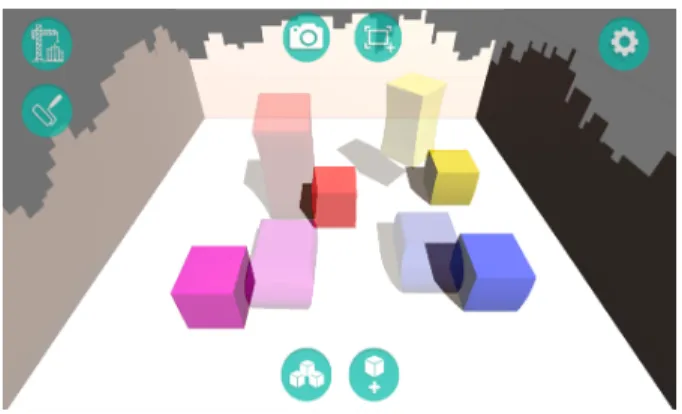
Our work features a virtual environment which contains a small set of world building tools and synthetic characters (Figure 1). The system was tailored to fit the target audience of children between the ages of 7 and 9 years old. Our main concern during the development of Cubus was to keep it accessible for children and open-ended to leave space for creation, allowing the creative storytelling process to unfold. Cubus can be divided into two primary components:
– Synthetic characters: Our characters will be featured in the children’s story as their actors;
– Virtual environment: The environment is responsible for supporting the world building features and recording the story that children create. The development of this work was carried out with the UnityTM game engine
(version 5.3.5f1) and our testing environment consists in a SamsungTM Galaxy
Fig. 1. Virtual environment.
2.1 Synthetic Characters
The synthetic characters were designed to be non-humanoid and rely on the emergent interaction between them for emotional expression. Using this interac-tion among the characters toward stimulating creativity is the most innovative part of this work. For brevity, “synthetic characters” will be addressed as “agents” for the remainder of this paper.
Agents’ Implementation: Each agent corresponds to one of five specific emotions (anger, happiness, fear, sadness, disgust), displaying behaviors au-tonomously that are consistent with that emotion [14]. There is no limit to how many agents of a given emotion can be present in our environment at a given time. To add more depth to the agents’ emotional displays, two types of behaviors were created for each emotion: a standard behavior and an intense behavior, the latter being perceived as a stronger display of the given emotion.
Additionally, each agent has two drives: one that triggers standard behavior and another that triggers intense behavior. These drives vary between 0 and 90. The standard drive starts at a random value between 0 and 35 and increases with the passing of time (1-second intervals). When this drive reaches 90, it triggers the standard behavior and resets its value to 0. Additionally, this timed increase “step" is affected by a multiplier, within the range of 1 to 1.5 for the standard drive and 1 to 1.3 for the intense drive. These multipliers are set ran-domly within these ranges at the moment of the agent’s creation. Both elements of randomness introduce diversity to the different agents’ behaviors, reducing their predictability and making their interaction appear more natural. The same drive also increases when other agents display any behavior within a certain ra-dius of the agent. The intense drive starts at 0 and only increases with time until 65, after this point only increases when stimuli from other agents’ behav-iors (which share the same emotion) are received. When this drive reaches 90 the corresponding behavior is triggered and both drives are reset. It should be noted that while a behavior is occurring, no stimulus is received from other agents.
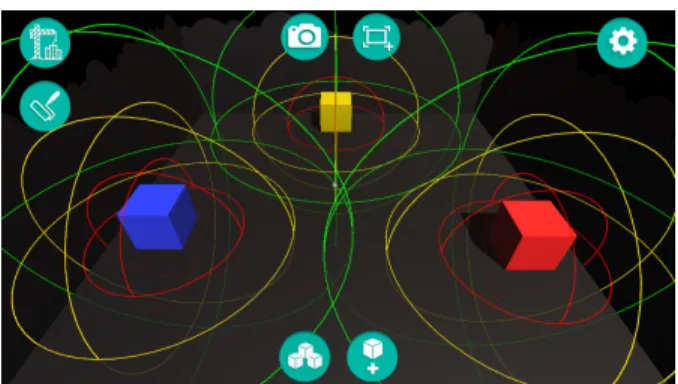
Fig. 2. Proxemic distances that weight agents’ interaction.
These agents’ interact with each other by broadcasting stimuli to the sur-rounding agents when they display a behavior. The intensity of these stimuli differs taking into account the distance at which the other agents are (closer agents provide stronger stimuli). These distances are fixed for every agent and divided into three intervals as evidenced in Figure 2. The contributions from the stimuli vary from 25 to 45 when contributing toward the standard drive and between 35 and 60 for the intense drive. With the combination of these mechanisms, we empowered children to create unique scenes in their story that emerged from the actors they choose, as well as how they place them.
Appearance: We have chosen a neutral appearance for the agents’ design to provide the possibility for children to project any desired character. To this end, the geometric shape of a cube was selected, inspired by LEGOTM bricks. Since
emotions seem to enhance creativity in video games [23] it was important to es-tablish which emotions we were attempting to represent. We considered Ekman’s [24] model of six emotions to be appropriate for our context, omitting surprise emotion given that there is no consensus regarding its inclusion as an emotion.
Expression: We focused on two primary means of communication for the agents: color and body movements/posturing. To combine these features appro-priately and make them be perceived as natural during the agents’ animations, we studied DisneyTM’s twelve principles of animation [25]. These principles ad-dress the human need for more pronounced cues in order to correctly perceive ac-tions or displays of affection by synthetic characters. The most relevant principles in our design were: squash and stretch, anticipation, follow-through, and staging.
Color: In order to create an identity for our emotions, some emotion-color as-sociations were selected, the inspiration for these was drawn from DisneyTM’s
movie Inside Out. Ekman was one of the scientific consultants for this movie and the emotions present in the movie feature one predominant color. As such, we considered that the unique colors associated with each emotion would create
Fig. 3. Happiness emotion’s spinning jump (key frames).
distinguishable agents. Additionally, in an effort to direct the users’ attention to the agents’ behaviors we added a blinking effect triggered in the beginning of the agents’ behaviors. This blinking remains within the hue of each agent’s base color and depending on the valence of its emotion the blink varies, being brighter when the valence is positive (e.g., happiness) or darker for a negative valence (e.g., anger). This blinking effect also varies according to the arousal of each emotion, e.g., happy and angry emotions have a high arousal. Thus, the blinking will have a higher frequency than, for instance, when sadness is being displayed. These blinking frequencies were tuned to ensure they were distinguishable and represented the different arousals levels.
Body Movement and Posture: In addition to detailed animation principles, we explored character deformation in our animations to create simple but organic movements for the agents. This step toward deformable characters enabled a more appropriate representation of simple actions (i.e., jumps, nods, squats, etc). Some of the aforementioned animation principles, such as squash and stretch or follow-through, helped convey the physical impact actions have on a character’s body as seen in Figure 3. To convey our particular set of emotions through ani-mation, we considered Wallbott’s [14] work, which summarizes some of Darwin’s observations regarding movement and posture in emotional expression. These ob-servations provided insight to create the desired set of emotions for our agents, as well as for their arousal state. For example, stretching the body and mim-icking an inflated chest while leaning forward conveys anger, while squashing and tilting down while staying motionless conveys sadness. When combined and properly timed, these cues produced the final version of our animations for the agent’s expression. In an effort to increase our agents’ expressiveness, two anima-tions were designed for each emotion. Each agent exhibits two different intensity levels for every emotion: standard and intense. This allows the agent to express the heightened emotional intensity of agents interacting with the same emotion.
2.2 Interactive Virtual Environment
The virtual environment sustains both the interaction between children and our agents, as well as the children’s storytelling process (Figure 1). This environment allows the recording of the children’s story, managing and directing the agents and customizing virtual scenarios. For the design of the system, we followed a
modular approach with four major components: screen recorder, world building tool set, agents, and user interface (UI) manager. The screen recorder module is responsible for the capture of objects within the scene that are 3D, while ex-cluding any screen overlays or UI elements. The world building tools control and carry out children’s inputs when managing their scenes. This ranges from chang-ing the scenario to creatchang-ing and deletchang-ing agents. An UI manager module serves as the interface between the children’s inputs and both the agents and the tool set.
Stop-motion: To allow the recording of the stop-motion story, children can perform screen captures when creating scenes to feature in their movie. These screen captures omit the application’s UI elements and record only the actors and scenario. The images resulting from the screen captures are stored within the device and, at a later stage, imported into an application that supports the creation of a stop-motion movie. Two features were added to help children understand how to use the system: an effect mimicking a camera flash each time a screen capture is performed, helping reaffirm the action; and an overlay with small opacity covering the entire screen of the previous screen capture (visible in Figure 1). This last feature was useful, as some children showed difficulties recalling their last recorded moment in the story when they e.g., changed the story scene. It is also possible to create intertitle screens (as seen in silent movies). These allow children to record a screen with a written message, enabling them to explore and explain more drastic changes within their story.
World: The virtual environment gives children enough degrees of customiza-tion to personalize the story. Several scenarios are available in our environment, these are very distinguishable from each other and allow for different uses. Their topologies are quite different (e.g., curvilinear, rectilinear or with sharp angles), while still being very much open to interpretation. To point out an example, our “spiky" scenario was seen as pine trees, mountains or traps by children. To provide children more creative freedom, a color selection screen was added, en-abling children to select a color for the scenario and another for the skybox that envelops it.
Interacting with the actors: The building tools allow children to create and manage their actors. To this end, children are able to select which type of agent (or actor) they wish to feature in their story. Additionally, children can access a list of all their actors, through which they can hide or reveal actors or delete them. The ability to toggle an actor’s visibility is useful for actors that aren’t in every scene of the story, allowing children the creative freedom to experiment with more complex storytelling narratives. To control the actors, children can perform dragging (press on the agent with their finger and drag it from one point to another) and rotation movements (press on the agent with one finger to select it and use another finger to slide up or down, to rotate forward or backward) of their actors. These movements allow children to represent characters walking around or facing an important object or character in any given scene.
3
Evaluation study
This section presents the evaluation study performed to investigate Cubus’ po-tential to stimulate idea generation. Two other studies were carried out during the development of Cubus: a co-design study, to guide and validate our de-sign, and a usability test, to validate the functionalities and workflow offered by Cubus. Both studies are covered elsewhere. For the creativity evaluation and prior to children’s participation, parents signed an informed consent which stated their willingness in letting their child perform the study, and each child provided, verbally, their assent to participate. This study was performed in a school set-ting to investigate whether Cubus with the inclusion of autonomous behavior in the characters’ can stimulate fluency of ideas in children while performing a storytelling task. To study this, we have analyzed the fluency of ideas (number of ideas generated) by comparing two experimental conditions:
– Autonomous condition: in which children interacted with the autonomous version of the agents;
– Non autonomous condition: in which children interacted with the same agents whose behavior they control directly. Additionally, children can select one of three sizes for each agent (small, medium or large).
We hypothesize that children will have higher fluency in the autonomous condi-tion when compared to the non-autonomous one.
Sample: 20 children participated in the evaluation of Cubus, with ages ranging from 7-9 years old (M = 8.10, SD = 0.72, 14 female). Our sample was split evenly between conditions with 10 children featured in each condition. Children performed the task in pairs, henceforth, each session consisted of two children interacting with Cubus with a total number of 10 sessions. The pairs of children were organized by their school teacher who selected children that were friends and that played well together. Each session lasted approximately 1h and was lead by two researchers: one researcher with a computer science background and with knowledge on the specifics of Cubus, and a psychologist.
Procedure: Pairs of children entered the designated classroom in which the study would be performed. The flow of the study can be divided into four stages:
1. Saying hello. The initial phase consisted of the presentation of each child and of each researcher in order to get to know each other. During this phase, the leading researcher explained that the goal of the activity was to create a stop-motion movie using Cubus. As most children were not familiarized with stop-motion animation, this notion was explained to them. To do this, the researcher used Cubus to provide a basic example of an agent walking from one side to the other in the virtual environment while performing screen captures of each frame, and then showed the end product of the movie. As children got engaged with the notion of stop-motion, they were motivated to
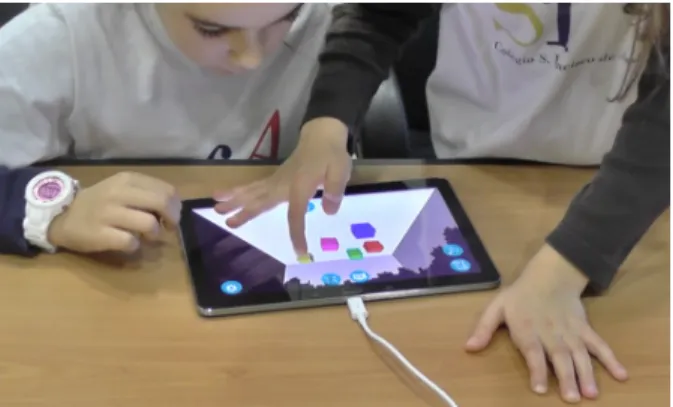
Fig. 4. Children interacting with Cubus system.
try it by themselves using Cubus. This enabled the explanation of the basic features of Cubus and at the end of this stage, children were familiar with the system and ready to start their own movie;
2. Hands on Cubus. The researcher explained to the pair of children that their movie had to follow a theme (i.e., their story needed to start with someone dreaming and to end with someone waking up). For all sessions, Cubus was set to the following mode: a clear Cubus world with a white color as a metaphor for a white paper sheet. Children started to create their story collaboratively (actors, actions, scenarios, and plot) (see Figure 4) and the role of the researchers was to support their questions regarding any dynamics with respect to using Cubus, or to keep the storytelling flow and rhythm going by asking questions such as, “what’s your actor going to do now?” or “what happens next?”. Children had no knowledge about the behavior and color associations of the agents’ emotions. This stage continued until the pair of children finished their story using the stop-motion technique;
3. Narration. After having completed their stop-motion movie, children per-formed the voice narration for their story. The voice narration of the movie consisted of children speaking (either as narrators, actors, or even making a soundtrack) to a voice recorder while watching their movie play. As children did not have a written script, they were able to train the narration several times until they felt comfortable. It is important to note that although each narration was grounded on the main story plot defined by children, each nar-ration was different and tied with the improvisation between children about what was happening in the movie. This stage ended when the stop-motion movie had a narration;
4. Saying goodbye. The last stage of this study consisted of watching together with children their movie and congratulating them on their accomplishment.
Data analysis: To study if the presence of autonomous agents during a sto-rytelling task increased the fluency of ideas (i.e., number of ideas generated)
by children, we performed behavior video analysis of the recorded sessions (10 sessions in total). The video analysis was focused only on the Hands on Cubus phase, described in the Procedure. Therefore, the behavior analysis concerned only the process of the stop-motion movie creation. The main goal of the behav-ioral analysis was to analyze the fluency of ideas of children during the creative process of creating the stop-motion movie while interacting with Cubus in each experimental condition. To this end, a coding scheme for fluency of ideas was generated in order to perform the behavioral analysis, and is described below:
– Idea - The first step was to define what an actual idea was in the context of the storytelling activity, to differentiate it from the rest of the interaction. Therefore, an idea was defined as a verbal interaction between children that has the potential to add a detail to the story that is being created. Ideas can appear in duplicate and are still considered ideas even if children decide not to use them in the final story. In this context, an idea can be a verbal detail related to the actors, actions, scenario, or other, if related to the story that is being created. An interaction that concerns technical details of how to manage Cubus was not considered an idea, e.g., when a participant asked “how can I add another actor?”.
The next step was to differentiate between the types of ideas that were gen-erated. This type of coding is dependent on the content of the ideas and can be divided into two different types of ideas, described below:
– Idea-agents - An idea that derives from the interaction with the agents needs to be related with the agents’ characteristics, such as color, size, and/or behavior. For example, if a participant states that an agent “became bigger”, it does not count as an idea. Whereas if a participant says that “[the agent] has become bigger to scare someone”, is considered an idea derived from the interaction with the agent;
– Idea-children - In this category belongs any idea that derives from the imagination of the participants and that connects with the story (and that is not related to the agents). Examples can be the choice of a shape for a given scenario (e.g., a spikier world) or the colors of the scenario.
Video analysis was performed using ELAN software [26] and conducted by two researchers. One researcher coded 100% of the data and the second researcher coded 40% (selected randomly) [27]. Since one of the variables was a constant, the Percent Agreement Method [28] was used to calculate the inter-judges agreement for the coding of “Ideas”, revealing an agreement of 87%. Cohen’s Kappa [29] was used to calculate the inter-judges agreement for agents” and “Ideas-children”, revealing an agreement of K = 0.947 and K = 0.932, respectively.
Results: The results of this study include the analysis of the number of ideas-agents (ideas generated by children resulting from the interaction with the
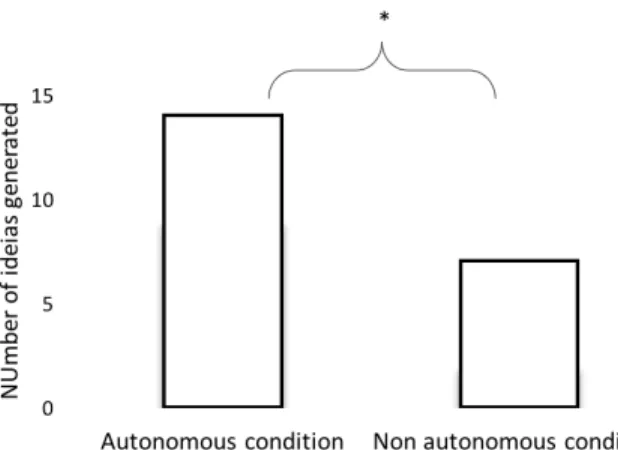
Fig. 5. Mean ranks of the ideas generated (fluency) by children, resulting from the interaction with the agents. (*) denotes p<0.01.
agents) and ideas-children (ideas generated by children connected only with the story and not dependent on the interaction with the agents). Given the small size of the sample, non-parametric tests were used to analyze the data. Therefore, to analyze the ideas-agents, a Mann-Whitney U test was used revealing that the number of ideas that emerged from the interaction between the participants and the agents differed statistically across conditions, U = 15, p = .007, r = 0.60. By analyzing the mean ranks it can be seen that the number of ideas gen-erated was higher when participants interacted with autonomous agents (Mean rank = 14.00) compared to the non autonomous agents (Mean rank = 7.00) (see Figure 5). Additionally, we have calculated the difference for the number of ideas-children between conditions. A Mann-Whitney U test showed that the number of ideas generated by children that are connected with the story and that were not dependent upon the interaction with the agents does not statistically differ across conditions, U = 38, p = 0.364, r = 0.20. Despite the non-significant result, the number of ideas generated was higher in the autonomous condition (Mean rank = 11.70) in comparison with the non-autonomous condition (Mean rank = 9.30). Overall, results suggest that the number of ideas generated by participants differs statistically between conditions when looking at the num-ber of ideas generated by children when interacting with the agents. This result corroborates our study hypothesis, showing that children are able to generate more ideas when interacting with an autonomous agents compared to a non autonomous one.
4
Conclusion
In this paper, we present Cubus, a system designed to stimulate children’s idea generation during storytelling. Cubus is comprised of a virtual environment and
autonomous agents that children interact with through a touch interface on an AndroidTM tablet. The innovative component of Cubus concerns the
au-tonomous agents whose behaviors were designed to stimulate children’s creativ-ity, and in particular the creative process of idea generation in children while in-teracting with Cubus. The results suggest that children are able to generate a sig-nificantly higher number of ideas when interacting with the autonomous agents compared to the control condition in which the agents were not autonomous.
The main contribution of this work to the area of intelligent virtual agents is to demonstrate that the inclusion of synthetic characters with autonomous behaviors can have a strong impact on creativity based tasks with children. The evaluation of Cubus as a tool to stimulate idea generation in children com-prises additional evaluation aspects that are still ongoing. One of these aspects is related with the evaluation of the creative products, i.e., the movies children created. These will be evaluated by a panel of judges with expert knowledge in animation. Additionally, children’s creative skills will be analyzed by apply-ing validated tests that quantify individuals’ creative potential. For future work we also aim to extend the study with Cubus to a larger sample size, since the number of participants included in this study was relatively small.
Acknowledgments
This work was supported by national funds through Fundação para a Ciência e a Tecnologia (FCT) with reference UID/CEC/50021/2013 and through project AMIGOS (PTDC/EEISII/7174/2014). We would also like to thank the school São Francisco de Assis for their support.
References
1. Mellou, E.: Can Creativity be Nurtured in Young Children? Early Child Develop-ment and Care 119(1) (1996) 119–130
2. Di Blas, N., Paolini, P., Sabiescu, A.G.: Collective digital storytelling at school: a whole-class interaction. International Journal of Arts and Technology 5(2-4) (2012) 271–292
3. Chan, S., Yuen, M.: Personal and environmental factors affecting teachers’ creativity-fostering practices in Hong Kong. Thinking Skills and Creativity 12(1) (jun 2014) 69–77
4. Torrance, E.P.: The Search for Satori and Creativity. 1st edn. Creative Education Foundation, Buffalo, New York (1979)
5. Smith, G.F.: Idea-Generation Techniques: A Formulary of Active Ingredients. The Journal of Creative Behavior 32(2) (jun 1998) 107–134
6. Plucker, J.A., Beghetto, R.A., Dow, G.T.: Why Isn’t Creativity More Important to Educational Psychologists? Potentials, Pitfalls, and Future Directions in Creativity Research. Educational Psychologist 39(2) (jun 2004) 83–96
7. Sawyer, R.K., DeZutter, S.: Distributed creativity: How collective creations emerge from collaboration. Psychology of Aesthetics, Creativity, and the Arts 3(2) (2009) 81–92
8. Fischer, G.: Meta-design and Social Creativity: Making All Voices Heard. Human-Computer Interaction – INTERACT 2007 (2007) 692–693
9. Sowden, P.T., Clements, L., Redlich, C., Lewis, C.: Improvisation Facilitates Di-vergent Thinking and Creativity: Realizing a Benefit of Primary School Arts Ed-ucation. Psychology of Aesthetics, Creativity, and the Arts 9(2) (2015) 128–138 10. Shneiderman, B.: Creativity support tools: accelerating discovery and innovation.
Communications of the ACM 50(12) (dec 2007) 20–32
11. Donoghue, D.P.O., Saggion, H., Dong, F., Hurley, D., Abgaz, Y., Zheng, X., Cor-cho, O., Zhang, J.J., Careil, J.M., Mahdian, B., Zhao, X.: Towards Dr Inventor: A Tool for Promoting Scientific Creativity. Proc. 5th International Conference on Computational Creativity (ICCC) (October) (2014) 268–271
12. Ryokai, K., Lee, M.: Children’s storytelling and programming with robotic char-acters. C&C ’09 Proceedings of the seventh ACM conference on Creativity and cognition (2009) 19–28
13. Bethel, C., Murphy, R.: Survey of Non-facial/Non-verbal Affective Expressions for Appearance-Constrained Robots. IEEE Transactions on Systems, Man, and Cybernetics, Part C (Applications and Reviews) 38(1) (jan 2008) 83–92
14. Wallbott, H.G.: Bodily Expression of Emotion. European Journal of Social Psy-chology 28(6) (1998) 879–896
15. Argyle, M.: The Syntaxes of Bodily Communication. Linguistics 11(112) (1973) 71
16. Terada, K., Yamauchi, A., Ito, A.: Artificial emotion expression for a robot by dynamic color change. In: 2012 IEEE RO-MAN: The 21st IEEE International Symposium on Robot and Human Interactive Communication, Paris, France, IEEE (sep 2012) 314–321
17. Friedman, D., Steed, A., Slater, M.: Spatial Social Behavior in Second Life. Intel-ligent Virtual Agents 4722 (2007) 252–263
18. Kelso, M.M., Weyhrauch, P., Bates, J.: Dramatic presence. Presence: The Journal of Teleoperators and Virtual 2(1) (1993) 1–15
19. Gordon, A.S., Roemmele, M.: An Authoring Tool for Movies in the Style of Heider and Simmel. The Seventh International Conference on Interactive Digital Story-telling (ICIDS 2014) (2014) 1–12
20. Amabile, T.M., Hennessey, B.A.: The motivation for creativity in children. Achievement and motivation: A social-developmental perspective (1992) 54–74 21. Kahn, P.H., Kanda, T., Ishiguro, H., Gill, B.T., Shen, S., Ruckert, J.H., Gary,
H.E.: Human creativity can be facilitated through interacting with a social robot. In: 2016 11th ACM/IEEE International Conference on Human-Robot Interaction (HRI), Christchurch, New Zealand, IEEE (mar 2016) 173–180
22. Ryokai, K., Vaucelle, C., Cassell, J.: Virtual peers as partners in storytelling and literacy learning. Journal of Computer Assisted Learning 19(January) (2003) 195– 208
23. Hutton, E., Sundar, S.S.: Can video games enhance creativity? effects of emotion generated by dance dance revolution. Creativity Research Journal 22(3) (2010) 294–303
24. Ekman, P., V. Friesen, W., Ellsworth, P.: Emotion in the Human Face. 1st edn. Pergamon Press Inc., Fairview Park, Elmsford, New York (1972)
25. Thomas, F., Johnston, O., Thomas, F.: The illusion of life: Disney animation. Revised edn. Hyperion Books, New York, United States (1995)
26. Wittenburg, P., Brugman, H., Russel, A., Klassmann, A., Sloetjes, H.: Elan: a pro-fessional framework for multimodality research. In: Proceedings of LREC. Volume 2006. (2006) 5th
27. Heyman, R.E., Lorber, M.F., Eddy, J.M., West, T.V.: Behavioral Observation and Coding. In Reis, H.T., Judd, C.M., eds.: Handbook of Research Methods in Social and Personality Psychology. 2nd edn. Cambridge University Press, New York (2014) 345–372
28. McHugh, M.L.: Interrater reliability: the kappa statistic. Biochemia medica 22(3) (2012) 276–282
29. Cohen, J.: Weighted kappa: Nominal scale agreement provision for scaled disagree-ment or partial credit. Psychological bulletin 70(4) (1968) 213