Margareth Pretti DalcolmoI
Mônica Kramer de Noronha AndradeII
Pedro Dornelles PiconIII
I Centro de Referência Hélio Fraga.Ministério da Saúde. Rio de Janeiro, RJ, Brasil II Faculdade de Medicina. Universidade
Federal do Rio de Janeiro. Rio de Janeiro, RJ, Brasil
III Hospital Sanatório Partenon. Secretaria de Estado da Saúde do Rio Grande do Sul. Porto Alegre, RS, Brasil
Correspondence: Margareth Pretti Dalcolmo
Estrada de Curicica 2000 Jacarepaguá 22710-552 Rio de Janeiro, RJ, Brasil E-mail: [email protected] Received:
Approved: 4/25/2007
Multiresistant tuberculosis in
Brazil: history and control
ABSTRACT
The article aimed at assessing multidrug-resistant tuberculosis control in Brazil, based on the experiences of reference institutions, and the most relevant studies carried out to determine local and national resistance rates. Control measures and the current situation of treatment and diagnoses after the implementation of the national guidelines, which were revised in 2004, are considered. The fi rst national survey on resistance to anti-tuberculosis drugs was performed in the middle of last decade. From its outcomes, a regimen to treat all cases of multidrug-resistant tuberculosis was validated and adopted. Government measures enabled the implementation of a surveillance system, whose outcomes are also commented.
KEY WORDS: Tuberculosis, Multidrug-resistant, prevention & control. Tuberculosis, multidrug-resistant, history. Evaluation of results of therapeutic interventions. Epidemiologic surveillance. National health programs. Brazil.
INTRODUCTION
The last decades were marked by huge social differences in developing countries such as Brazil. These inequalities are translated into an increase in poverty, lack of access to services, population growth, and urban concentration. This has a negative repercussion in endemic diseases, such as tuberculosis (TB), and the pandemic of infection by Aids virus. In this scenery, worsening of TB control programs resulted in great challenges to fi ght infectious diseases. They are: expressive increase in TB treatment drug resistance, emergence of multidrug resistant forms (MDRTB), and more recently, in 2006, extensively drug resistant tuberculosis (XDRTB).6,16,23
In Brazil, several facts followed the development of the I Inquérito Nacional de Resistência (1st National Survey on Resistance), whose outcomes were published in 1998,2 they were: creating a protocol to validate standard thera-peutical regimen to treat MDRTB cases;9 recommending the performance of culture and sensitivity test in all cases of disease retreatment, according to the national guidelines for TB, designing several research works together with national institutions; implementing a system of epidemiologic surveillance of resistant cases, which implies reporting all cases and follow them up during and after treatment.
BACKGROUND
Clinical form of TB resistant to rifampicin and to iso-niazid was conceptually called multidrug-resistant tu-berculosis in the United States in the end of the 1980’s. Between 1982 and 1986, there was an expressive incre-ase in the multiresistant forms, leading to recognition of the problem as a public health one, and revealing the impact of AIDS epidemics and the disorganization of health services including those of New York. In the beginning of the 1990’s, outbreaks of nosocomial transmission of multidrug resistant TB were reported by New York hospitals, they were all characterized by late diagnoses, unsuitable therapy, high mortality, and high transmission rate, especially because patients were in hospital and were immunocompromised due to Aids.3,15 Other authors have already reported similar experiences in patients with AIDS severely immuno-compromised, leading to mortality rates up to 60% in a 16-week period.
In Brazil, there is a standard regimen for retreatment cases whose fi rst treatment was unsuccessful, which, until 2004, it was recommended to apply a combination of rifampicin, isoniazid, and pyrazinamide, regardless of the performance of sensitivity test to drugs.* We have considered as multiresistant for reporting and treatment purposes, those cases that present in vitro resistant to rifampicin and to isoniazid, and to a third drug on the standard treatments.
Case concept of MDRTB in Brazil is the following:
• Confi rmed – TB case with diagnoses confi rmed by culture and identifi cation of Mycobacterium tuberculosis and by sensitivity test, with rifampicin + isoniazid resistance and to another drug;
• Probable – failure to retreatment regimen (phase III) with sensitivity to rifampicin or isoniazid.
Bases of multiple chemotherapy
Together with the introduction of TB chemotherapy, is a progressive knowledge on the pharmacodynamics of its etiological agent, M. tuberculosis. Among pathogenic mycobacterias, that from TB is a severe challenge to public health, leading to complex articulation between early diagnoses and effi cient chemotherapy to stop its transmission chain. Thus, chemotherapy is the most powerful sanitary resource to treat TB, because it is the only thing capable of directly interfering in smear positive cases, the “main bacilli reservoir” defi ned by Canetti, in 1959.3,11
Isolated use of only one medication shows the high proportion of resistant mutants and explains the
phe-nomena of primary, natural, and acquired resistance, and the consequent need for drug association in the regimen. Based on in vitro and in vivo models, cur-rently the singularity of differentiated multiplication of M. tuberculosis is well understood, according to the oxygen supply. That is, the different growth speed in intra and extra cellular environments, in closed ca-seous lesions, and in the wall of cavitary lesions. This differentiates populations that present rapidly growing (they are more sensitive to medication) from persistent populations (slow or intermittent multiplication), that require prolonged treatment for elimination. These are the bases for regimens to neutralize naturally resistant bacilli and for the long treatment period to eliminate persistent bacilli present in resistant forms.3,8,11,26
Observation of the direct proportion of persistent bacilli populations and the disease morbidity with the total bacilli population led to the development of a two-phase treatment. This presents a two-phase called intensive phase, aiming at quick reduction of bacterial load, and the continuation phase aiming at preventing disease reactivation or relapse, by sterilizing resistant ones. This principle applies especially to susceptible forms of TB, however, in a rational fashion. It also applies to resistant forms, despite prolonged treatment, as observed in studies published for MDRTB treatment where there is the presence of a maximum number of associated drugs in the fi rst 12 months of treatment.10, 20
Rational use of anti-TB drugs in designing regimens is the following:3
• Group 1 – fi rst line drugs, oral: isoniazid, rifampi-cin, ethambutol, pyrazinamide.
• Group 2 – injectables: streptomycin, kanamycin, amikacin, capreomycin (in MDRTB they must always be used in the initial phases).
• Group 3 – quinolones: ofl oxacin, levofl oxacin, moxifl oxacin, gatifl oxacin (in MDRTB they are the fi rst choice).
• Group 4 – other second line drugs: ethionamide, protionamid, cycloserine or terizidone, para-ami-nosalicylic acid.
• Group 5 – “reinforcement” drugs: amoxicillin/cla-vulanate, clofazimine, thiosemicarbazone, high doses of isoniazida (mild action).
It has been known for a while that previous contact with drugs is the greatest clinical indicator of development of multi-drug resistance.10,11,19 Thus, multiresistant is considered a biological iatrogenic phenomena, due to the inadequate use of short-course regimens – especially
those made by the combination of rifampicin, isoniazid, pyrazinamide and ethambutol. The strategy of pre-vention to multiresistance is the correct application of short-course fi rst-line treatment, using the components of Directly Observed Treatment Short course (DOTS) strategy, or directly observed treatment.
Launched by the World Health Organization in the middle of the 1990’s, DOTS strategy has the following measures: a) political commitment and fi nancial support by countries and regions; b) suitable and regular supply of medications, with quality control of drugs; c) early detection of cases with good quality bacteriology; d) standardized treatment categories applied under direct observation of the patients, aiming at regular intake of medications; and e) monitor and assessment of the information system and the impact of the measures adopted.26 Up to the beginning of that decade, in diffe-rent introduction levels, the DOTS had been adopted in 155 countries, including Brazil. The Ministry of Health determined that these measures would be adopted as a priority over fi ve years ago. Currently in Brazil there are acknowledged effective experiences in implementation with encouraging outcomes, in the Mid-West region and in Parana, in areas of Rio de Janeiro, such as the community of Rocinha, and other areas in São Paulo.
In 2006, the offi cial mission of the Stop TB partnership came to Brazil bringing new contributions to the goals of TB control, such as: increase the quality of TS/ DOTS; reinforce the combat to TB/HIV co-infection, MDRTB and other vulnerable groups; strengthen the health system of the country; foster greater involvement of health professionals, empowering the civil society; and develop operational research. In this sense, creation of a Forum Stop TB Partnership by the Ministry of Health was a milestone for TB control in the country, once it offi cially recognized the important role of social mobilization. This decision and the political commit-ment were determinant for the country to be able to, in 2006, receive a US$ 27 million investment of the Global Fund to fi ght Aids, Tuberculosis and Malaria for a fi ve-year-period.
Complexity of multiresistant tuberculosis
Mycobacterium tuberculosis is a slow-growing aerobe pathogen with a high proportion of resistant mutants. 19-21 Of the four known mechanisms leading to bacterial resistance (conjugation, transformation, transduction, and mutation), M. tuberculosis acquires resistance to drugs only through mutation. Resistance to isoniazid is due to a mutation frequently observed in katG gene and to rifampicin, in the rpoB gene. Recent studies using molecular biology techniques have been relevant to understand the transmission mechanisms and the virulence of the bacilli, and also to open new ways for diagnoses and therapy.8, 24, 25,27
In Brazil, despite the clear worsening of several local programs to control TB, one of the reasons that resis-tance cases could be prevented was the regular use of isoniazid associated with rifampicin in the same tablet, since the introduction of short course regimen.14,17
Types of resistance to M. tuberculosis may be sum-marized in:
• Natural – due to spontaneous mutation, regardless of previous exposure to drugs, and directly propor-tional to the number of bacilli.
• Initial – observed when patients start treatment, with resistance to one or more drugs. It includes patients with primary or acquired resistance, with no known history of prior treatments.
• Primary – observed in patients who have not been previously treated, infected by a resistant form.
• Acquired or secondary – resulting from the previous inadequate use of medication.20
Cross-resistance and adherence are known as major problems in TB control, especially regarding managing retreatment.19,20 Cross-resistance is a well known pheno-mena well described in the literature, occurring among the most important drugs used in treatment. Among ansamycin drugs, a TB case resultant to rifampicin presents a higher than 80% chance to be also resistant to rifabutin. A similar phenomenon is expected to ri-fapentine, an ansamycin derivative recently tested for sensitive TB cases. As its half life is fi ve times higher than that of rifampicin, rifapentine presented promising results regarding the possibility of intermittent use in treatment regimen, and up to once a week in chemo-prophylaxis regimens. Cross resistance may also occur among aminoglycosides, in the sequence: streptomycin, kanamycin, amikacin, and the polypeptide capreomy-cin; among quinolone derivatives, as recently confi rmed by pharmacokinetic studies; and among isoniazid and ethambutol, with a current question on the common role of the presence of the katG gene in both. 8,27
There is great diffi culty to comparatively assess stu-dies on MDRTB published in the literature according to the criteria based on evidences, either because of methodological limitations, differences in experien-ces reported, or regimens used. These studies do not contemplate explanatory or pragmatic clinical essays because of ethical aspects, being limited to describing observed outcomes and the adverse effects of treatment. For these reasons, the “best evidences” are those from the action of each drug available, the drug association used, and the treatment regimen in the different public experiences.3,7,9,22
in several Latin American countries because they act in bacillary population with intermittent multiplication and where almost all patients are treated with rifampicin monotherapy. Besides, combined administration of medications in sensitive patients using fi xed dose com-bination(FDC) or combined therapy, ensures the best serum peaks and facilitates surveillance. In resistant patients, it is important to observe that all medications are taken at the same time.
Background of resistance control in Brazil
Historical experiences were reported in the Brazilian literature in previous decades by authors such as Poppe de Figueiredo, Jayme dos Santos Neves, Hélio Fraga, Germano Gerhardt, José Rosemberg and others, sho-wing the national concern with resistance. In the years 1958-59, 66.6% of patients in treatment in the former state of Guanabara (current city of Rio de Janeiro) had become chronic resistant to two or three drugs in the standard regimen. The same phenomenon was seen in several Brazilian capitals, revealing the problem in the country. In Rio Grande do Sul, in 1960, cure rate was extremely low (12.9%), corresponding to a mortality rate of 92.0 cases/100,000 inhabitants. A study* performed between 1962 and 1966 to document sensitivity to drugs that were standard at that time (streptomycin, isoniazid and pyrazinamide), found 20.5% (186/906) cases of primary resistance to at least two of them. Another study* between 1972 and 1978, reports a primary resistance of 8.5% (86/1017) among the patients studied.
Several corrective actions have been introduced by the then called Serviço Nacional de Tuberculose (National Tuberculosis Service), for the whole country as of 1960: a regimen was standardized, made of streptomycin, para-aminosalicylic acid and isoniazid for new cases; regimens with “reserve drugs” for surgical cases; changes on admission criteria of patients, among other measures. In Rio Grande do Sul, for example, outco-mes were modest, since in 1966, cure rate was still low (36.9%),although it had increase three fold.17,22 A study that compared the evolvement of resistance rates at Instituto Clemente Ferreira, in São Paulo, showed a decrease from the 1960’s to the 1980’s, and less marked from the 1970’s to the 1980’s (9.6% to 7.4%).13 This decrease is likely to have occurred due to a better organization of the TB program in the 1970’s and to the introduction of more powerful drugs in the treatment, particularly to the combined administration of rifampicin and isoniazid, in the 1980’s.14
An epidemiological surveillance system of MDRTB is currently running, and it should evolve to monitor all retreatment cases nationwide. The most relevant facts with proved in vitro sensitivity is necessary. Among
these, two may not have been used in the past and one must be injectable, such as aminoglycosides or polypeptides; together with oral quinolone, for at least 24 months, or at least 18 months after negative cultu-re.3,14,20 Applying this methodological recommendation to the methodology of published studies, a direct ob-servation of the number of drugs not previously used with the fi nding of best results.
Diagnoses of multiresistant tuberculosis
In almost all published studies, the criteria used to defi ne a case as multiresistant were the sensitivity test.7,9,12,15 Prevailing method is that of proportions, in solid Lowenstein Jensen medium, or in liquid medium, such as Bactec 460. MGIT 960 system or MB/Bact sys-tem are considered fast because they enable pathogen identifi cation in 15 days on average.5
The method of proportions, originally described by Canetti et al4 in 1963, consists on putting the same amount of dilutions with approximated measure of the inoculum in control and in the medium with the drug tested. Resistance or sensitivity is estimated by com-paring the number of colonies growing in the medium with the drug, and the number growing in the control medium expressed in percentage. The defi ning cut-off point considered is 1%.5
Despite the technological progress reached, diagnoses of MDRTB still takes long, due to the time required by the methods of diagnoses, even in liquid mediums of culture, and by limitations and inconsistencies in sensitivity tests. Among the drugs regularly tested, the only ones which present proved 100% confi dence are rifampicin and isoniazide.3 A study recently published by Mitchison20 reports the comparison among 16 re-ference laboratories in mycobacteriology worldwide and the differences in the outcomes found regarding resistance to fi rst and second line drugs. This author criticizes the confi dence values of sensitivity tests and suggests the defi nition of minimal individual inhibiting concentrations for each drug as a priority, through laboratory validation.20
Therefore, to decide what regimen to be used in pa-tients already treated for TB, it should be considered the therapy history of these patients together with the result of the sensitivity test.22
In addition to the important components to treat TB and MDRTB already mentioned, it is important to take into account the concept of early bacterial activity, to which isoniazid is the best medication. Rates of isoniazid resistance must be considered and they are expressive
from the last ten years to the present are summarized as follows.
• 1995 – local experiences of institutions were acknow-ledged by the Coordenação Nacional de Pneumologia Sanitária (National Coordination of Sanitary Pneu-mology) of the Ministry of Health, such as: Hospital Sanatório Partenon (Porto Alegre), Instituto Clemente Ferreira (São Paulo), Hospital Raphael de Paula Souza (Rio de Janeiro).5,9 In the same year, the outpatient faci-lity of the Centro de Referência Hélio Fraga together with Hospital Raphael de Paula Souza was created, at fi rst, as a state reference.
• 1995 to 1998 – the Multicentric Protocol was created to treat MDRTB cases, aiming at validating a standard regimen.9
• 1996 and 1997 – the 1st National Survey on Drug Resistance was carried out in Brazil with the fi rst ou-tcomes published in 1999.2 In the same year, all drugs were recorded in the Agência Nacional de Vigilância Sanitária (National Health Surveillance Agency – An-visa), and the mechanisms for systematic purchase of the regimen were established. State laboratories started producing most drugs used, and only terizidone was bought in the international market.
• 2000 – the Ministry of Health considered the regimen made by the association of ofl oxacin, amikacin or streptomycin, ethambutol, terizidone and clofazimine as valid, starting epidemiological surveillance with reporting of cases undergoing treatment” in that year; at the same time, a database was set up for Epidemio-logical Surveillance of MDRTB.
• 2004 – the introduction of an epidemiological sur-veillance system of MDRTB was continued because
of an agreement of technical cooperation between the Ministry of Health, Centro de Referência Hélio Fraga, and the Project Management Sciences of Health. In 2005 a control study of all fi rst and second line drugs used in TB control was published,* including MDRTB, presenting satisfactory outcomes regarding effi ciency. In 2006, the 2nd National Survey on TB drugs resistan-ce started. The representative sample for the country should reveal the current resistance pattern of fi rst and second line drugs in outpatient and hospital cases.**
Current Situation of resistance in Brazil
A study performed in Brazil between 1986 and 1989on primary resistance to drugs, demonstrated resistance percentages to isoniazid from 6.1 to 6.8%, and to ri-fampicin from 0.4 to 0.6%; resistance to two or more drugs reached almost 3%. Total primary resistance, considering all patients resistant to at least one medi-Table 1. Pattern of resistance found in the 1st National Survey
on Resistance.³ Brazil, 1996-1997.
Drug Resistance (%)
Primary Acquired
Rifampicin (R) 0.2 0.8
Isoniazid (H) 3.5 6.7
Ethambutol (E) 0.1 0.2
Streptomycin (S) 2.5 3.9
MDR: RH 0.9 5.7
MDR: RHS 0.3 1.4
Total 9.2 21.8
MDR: multidrug resistant or resistant to rifampicin + iso-niazid
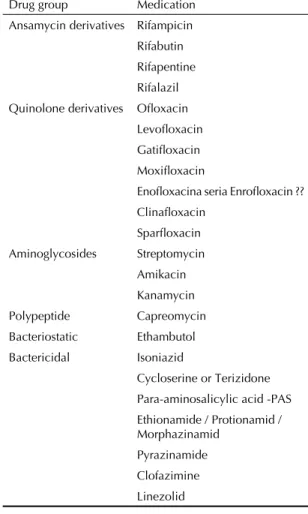
Table 2. Drugs groups and medication produced since 1945, available for TB treatment.
Drug group Medication
Ansamycin derivatives Rifampicin
Rifabutin Rifapentine
Rifalazil
Quinolone derivatives Ofl oxacin
Levofl oxacin Gatifl oxacin
Moxifl oxacin
Enofl oxacina seria Enrofl oxacin ??
Clinafl oxacin Sparfl oxacin
Aminoglycosides Streptomycin
Amikacin
Kanamycin
Polypeptide Capreomycin
Bacteriostatic Ethambutol
Bactericidal Isoniazid
Cycloserine or Terizidone Para-aminosalicylic acid -PAS
Ethionamide / Protionamid / Morphazinamid
Pyrazinamide
Clofazimine
Linezolid
* Bento C, Rocco N. A incidência da tuberculose no Rio Grande do Sul de 1940 a 1960. In: Anais dos XI Congresso Nacional de Tubercu-lose e VI Congresso Brasileiro de Doenças Torácicas. Porto Alegre: Universidade do Rio Grande do Sul; 1961. p. 938-945.
cation, was 15.2% in 1986, and 11.5% in 1989. These data were similar to those obtained in the studies of difference series,13,14 in the 1970’s. A greater rate of primary resistance was observed in the north more than in the south and southwest region with high primary resistance rate to streptomycin (7.2%). This probably
indicates infection previous to the 1980’s, therefore, they were cases of endogenous reinfection, and the use of streptomycin in the treatment of new TB cases is not recommended, apart from special situations.14
In the World Survey on Resistance, coordinated by the World Health Organization and the International Union Against Tuberculosis, between 1995 and 1996, Brazil took part in the sample with 2,888 strains of patients seen in outpatient facilities, treated (N=793) and not previously treated (N=2.095).2,26 Difference between the global rate of multiresistance was observed (rifam-picin + isoniazid and/or other drugs) in patients not previously treated (0.9%) and already treated (5.4%), reinforcing the importance of the previous use of medi-cation as a clinical indicator of resistance.2
PATTERN OF RESISTANCE AND DRUG PERSPECTIVES
The 1st National Survey on Resistance2 (1996 to 1997) had a representative sample for the country: totaling 6,000 outpatient cases among never treated and retre-ated. Table 1 shows the pattern of resistance found.
Since 1945, with the development of pyrazinamide and later streptomycin, few drugs have been produced for TB treatment, especially when compared to other diseases.26 Table 2 summarizes all drugs produced up to the present.
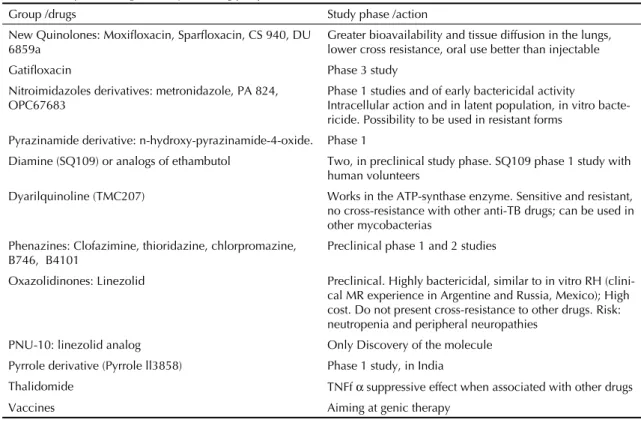
Table 3. Groups and drugs in study and drug perspective for tuberculosis.
Group /drugs Study phase /action
New Quinolones: Moxifl oxacin, Sparfl oxacin, CS 940, DU 6859a
Greater bioavailability and tissue diffusion in the lungs, lower cross resistance, oral use better than injectable
Gatifl oxacin Phase 3 study
Nitroimidazoles derivatives: metronidazole, PA 824, OPC67683
Phase 1 studies and of early bactericidal activity
Intracellular action and in latent population, in vitro bacte-ricide. Possibility to be used in resistant forms
Pyrazinamide derivative: n-hydroxy-pyrazinamide-4-oxide. Phase 1
Diamine (SQ109) or analogs of ethambutol Two, in preclinical study phase. SQ109 phase 1 study with
human volunteers
Dyarilquinoline (TMC207) Works in the ATP-synthase enzyme. Sensitive and resistant,
no cross-resistance with other anti-TB drugs; can be used in other mycobacterias
Phenazines: Clofazimine, thioridazine, chlorpromazine, B746, B4101
Preclinical phase 1 and 2 studies
Oxazolidinones: Linezolid Preclinical. Highly bactericidal, similar to in vitro RH
(clini-cal MR experience in Argentine and Russia, Mexico); High cost. Do not present cross-resistance to other drugs. Risk: neutropenia and peripheral neuropathies
PNU-10: linezolid analog Only Discovery of the molecule
Pyrrole derivative (Pyrrole ll3858) Phase 1 study, in India
Thalidomide TNFf α suppressive effect when associated with other drugs
Vaccines Aiming at genic therapy
Table 4. Multidrug resistant tuberculosis cases reported to the Epidemiological National Surveillance of the Ministry of Health and frequency of HIV co-infection, between 1995 and 2007.
Year MDR TB MDR TB/HIV +
N N %
1995-1999 292 20 7
2000 308 25 8
2001 336 19 6
2002 333 21 6
2003 318 28 9
2004 319 23 7
2005 399 31 8
2006 328 22 7
2007* 116 9 8
Total 2.749 198 7
* Partial data
Source: VE MDR TB database, Centro de Referência Hélio Fraga, June 2007.
Table 3 summarizes the main substances and drug groups currently under study and the research lines for TB treatment.
FINAL CONSIDERATIONS
Avoiding resistance is known as the most important premise of tuberculosis treatment.8,19,21 Add to that the complexity of the disease per se, the diffi culty in handling patient with long treatment course, the lower effi ciency compared to conventional treatments, and the high costs of drugs and the propaedeutics necessary to follow-up. Additionally, there is the human suffering due to the severity of the consequences of this form of TB, that many times takes the patients away from the job market due to disability, in their most productive years.1,18 In this aspect, it is important to highlight that among TB cases reported to the Epidemiology Surveillance System of the Ministry of Health, the predominant age group (50.1% of cases) is between 20 to 40 years old, and that the frequency of HIV co-infection is lower than the national average among TB cases (Table 4).
In a prospective outlook for MDR TB the fi elds of prevention, diagnoses and treatment are considered as priorities for investments and research.
For transmission control, investments on introducing DOTS strategy are priority, together with the greater effi ciency of short course treatment, preventing the appearance of resistant forms; and the increased use of molecular epidemiology in describing micro epidemics and in detecting clusters.
The strategy for diagnoses would be: greater confi dence in sensitivity tests available, with strict quality control of the outcomes supplied; validation of new and fast methods; studies with molecular and immunologic markers; standardization of individual minimal inhi-biting concentrations of drugs to determine resistance; studies to validate clinical markers of resistance based on therapy history.
For treatment the priorities would be: validation of sen-sitivity tests for newer drugs and monitoring of minimal inhibiting concentrations for each of them, aiming at increasing the effi ciency of regimens, and discovering drugs that can lead to new regimens. In this sense, the current period is extremely relevant, with studies on 7 drugs being conducted, from different pharmacological groups and in different phases, pre and post clinical; this had not occurred since the discovery of rifampicin, almost 40 years ago.1,18 According to Global Alliance for TB Drug Development, for the development of anti-TB drugs, the following are under study: one dyarilquinoline, two nitroimidazoles analogs and deri-vatives, together with synthase and translocase enzyme inhibitors. These studies also aim at creating treatment regimens with lower doses and shorter courses.
Another challenge is to reduce market prices, parti-cularly of second and third line drugs. This may be reached through the actions of supranational institutions such as: Global Fund Against Aids, Tuberculosis, and Malaria, Global Alliance for TB Drug Development, Green Light Committee.
1. Bates JH. Tuberculosis chemotherapy. The need for
new antituberculosis drugs is urgent. Am J Respir Crit
Care Med. 1995;151(4):942-3.
2. Braga JU, Werneck Barreto A, Hijjar MA. Nationalwide
survey of tuberculosis drug resistance in Brazil. Int J
Tuberc Lung Dis. 1993;3(Supl 1):121.
3. Caminero Luna JA. Guía de la tuberculosis para Médicos Especialistas. Paris: Union Internacional Contra la Tuberculosis y Enfermedades Respiratorias; 2003.
4. Canetti G, Rist N, Grosset J. Measurement of sensitivity of the tuberculous bacillus to anti-bacillary drugs by the method of proportions. Methodology, resistance
criteria, results and interpretation. Rev Tuberc Pneumol
(Paris). 1963; 27:217-72.
5. Castelo Filho A, Kritski AL, Barreto AW, Lemos ACM, Ruffi no Netto A, Guimarães CA, et al. II Consenso Brasileiro de Tuberculose: Diretrizes Brasileiras para
Tuberculose 2004. J Bras Pneumol. 2004;30(Supl 1):
S57-S86.
6. Centers for Disease Control and Prevention. Extensively drug-resistant tuberculosis – United
States, 1993-2006. MMWR Morb Mortal Wkly Rep.
2007;56(11):250-3.
7. Chan ED, Laurel V, Strand MJ, Chan JF Huynh ML, Goble M, Iseman MD. Treatment and outcome analysis of 205 patients with multidrug-resistant
tuberculosis. Am J Respir Crit Care Med. 2004;
169(10):1103-9.
8. Cole ST. Mycobacterium tuberculosis: drug resistance
mechanisms. Trends Microbiol. 1994;2(10):411-5.
9. Dalcolmo MP, Fortes A, Melo FF, Motta R, Ide Netto
J, Cardoso N, et al. Estudo de efetividade de esquemas
alternativos para o tratamento da tuberculose
multirresistente no Brasil. J Pneumol. 1999;25(2):70-7.
10. Fox W. General considerations in the choice and management of regimens of chemotherapy for
pulmonary tuberculosis. Bull Int Union Tuberc.
1972;47:49-67.
11. Fox W, Mitchison DA. Short-course chemotherapy
of pulmonary tuberculosis. Am Rev Respir Dis.
1975;111(3):325-53.
12. Frieden TR, Sherman LF, Maw KL, Fujiwara PI, Crawford JT, Nivin B, et al. A multi-institutional outbreak of highly drug-resistant tuberculosis:
epidemiology and clinical outcomes. JAMA.
1996;276(15):1229-35.
13. Fiúza de Melo FA, Ide Neto J, Seiscento M, Pinto JA,
Afi une JB. Tuberculose Multirresistente. J Pneumol.
1993;19:73-81.
14. Fiúza de Melo FA, Afi une JB, Ribeiro LHG, De Felice
EA, Castelo A. Resistência primária do M. tuberculosis
num serviço ambulatorial de referência em São Paulo: evolução por três décadas e comparação com outros
estudos nacionais. J Pneumol. 1996;22:3-8.
15. Fujiwara P, Cook SV, Rutheford CM, Crawford JT, Glickman SE, Kreiswirth BN, et al. A continuing survey of drug-resistant tuberculosis, New York city, April
1994. Arch Intern Med. 1997;157(5):531-6.
16. Gandhi NR, Moll A, Sturm AW, Pawinski R, Govender T, Lalloo U, et al. Extensively drug-resistant tuberculosis as a cause of death in patients co-infected with tuberculosis and HIV in a rural area of South
Africa. Lancet. 2006; 368(9547):1554-6.
17. Gerhardt Filho G, Hijjar MA. Aspectos
epidemiológicos da tuberculose na Brasil. J Pneumol.
1993;19(1):4-10.
18. Migliori GB, Loddenkemper R, Blasi F, Raviglione MC. 125 years after Robert Koch’s discovery of the tubercle bacillus: the new XDR-TB threat. Is “science” enough
to tackle the epidemic? Eur Respir J. 2007;29(3):423-7.
19. Mitchison DA. Antimicrobial therapy of tuberculosis: justifi cation for currently recommended
treatment regimens. Semin Respir Crit Care Med.
2004;25(3):307-15.
20. Mitchison DA. Drug Resistance in tuberculosis. Eur
Respir J. 2005;25(2):376-9.
21. Mitchison DA, Nunn AJ. Infl uence of initial drug resistance on the response to short-course
chemotherapy of pulmonary tuberculosis. Am Rev
Respir Dis.1986;133:423-30.
22. Picon PD, Rizzon CFC, Freitas TM, Azevedo SNB, Gutierrez RS. Resultados do tratamento. In: Picon PD, Rizzon CFC, Ott WP, editores. Tuberculose: Epidemiologia, Diagnóstico e tratamento em clínica e saúde pública. Rio de Janeiro: Editora Médica e Científi ca Ltda; 1993. p.504-23.
23. Shah NS, Wright A, Bai GH, Barrera L, Boulahbal F,
Martín-Casabona N, et al. Worldwide emergence of
extensively drug resistant tuberculosis. Emerg Infect
Dis. 2007;13(3):380-7.
24. 24. Silva MS, Senna SG, Ribeiro MO, Valim AR, Telles MA, Kritski AL, et al. Mutations in KatG, inhA and ahpC genes of Brazilian isoniazid resistant isolates of Mycobacterium tuberculosis. J Clin Microbiol.
2003;41(9):4471-74.
25. 25. Telenti A. Genetics of drug resistance in
tuberculosis. Clin Chest Med. 1997;18(1):55-64.
26.. World Health Organization. Guidelines for the programmatic management of drug-resistant tuberculosis. Geneva; 2006.
27. Zang Y, Young D. Molecular genetics of drug
resistance in Mycobacterium tuberculosis. J Antimicrob
Chemother. 1994;34(3):313-9.