THIS REPORT WAS PREPARED BY FRANCISCO MARQUES LOURENÇO, A MASTERS IN FINANCE STUDENT OF THE NOVA SCHOOL OF BUSINESS AND ECONOMICS, EXCLUSIVELY FOR ACADEMIC PURPOSES.THIS REPORT WAS SUPERVISED BY ROSÁRIO ANDRÉ WHO
M
ASTERS IN
F
INANCE
E
QUITY
R
ESEARCH
Bearish outlook for Spain (48.1% EV)
Despite the focus on LTE (c.59.0% coverage) and FTTH deployment (11.5 homes passed) and a strong push for pay TV and smartphone subsidization, we consider that TEF’s commercial portfolio is inferior to its peers, both in terms of price and bundle size. Hence, we are expecting further 3.8 and 8.2pp MS erosion on mobile and broadband market shares, respectively.
Strong Brazil with GVT integration (BRL41.9/sh, BUY)
We consider that the Eur7.2bn takeover of GVT allows Vivo to compete more directly with AMX and Oi in 4P products at a country level, while consolidating its front seat position in SP. At the same time, we expect a positive pressure on residential ARPU due to GVT’s superior network.
Concerns over LT strategy in Germany (Eur4.5/sh, SELL)
In Germany, the Eur8.6bn acquisition of E-Plus makes O2 the
largest mobile operator with a subscriber MS of 37.4% in FY14, with expected improvements on its much-debated connectivity issues. However, we consider that O2’s low relevance on FBB
(8.1% MS FY14) leaves TEF in a weak competitive position in the midst of increasingly convergent telecoms markets in Europe. Telekom (41.3% FFB MS, 34.6% mobile MS) and Vodafone (17.9% FBB MS, 28.0% mobile MS), already offer fixed-to-mobile tariffs and whereas TEF hasn’t shown any intentions of investing on its wireline infrastructure aside from maintaining its wholesale agreement with DTE.
T
ELEFÓNICA
C
OMPANY
R
EPORT
TELECOMMUNICATIONS SERVICES
3 JUNE 2015
S
TUDENT
:
F
RANCISCO
M.
L
OURENÇO
[email protected]
Troubles At Home
Sceptical view Spain offsets positive stance over Brazil
Recommendation: SELL
Vs Previous Recommendation N/A Price Target FY15: 11.90 € Vs Previous Price Target N/A Price (as of 21-May-15) 13.30 € Bloomberg: TEF SM 52-week range (€) 13.86 – 10.84 Market Cap (€m) 65,681.0 Outstanding Shares (m) 4,938.4 Source: Bloomberg Source: Bloomberg
(Values in € millions) 2014 2015E 2016E Revenues 50,377 47,146 46,392 OIBDA 15,515 15,294 15,192 Net Profit 3,001 3,734 30,067 EPS 0.61 0.80 0.59 P/E 19.51 14.80 20.28 ROE 12.3% 10.2% 10.5% EV / Revenues 2.1x 2.3x 2.3x EV / OIBDA 6.9x 7.0x 7.0x EV / Op FCF 11.2x 12.6x 12.3x Dividend Yield 6.3% 6.3% 6.3% Net Debt / OIBDA 2.9x 3.1x 2.7x Source: Bloomberg and analyst estimates
TELEFÓNICA S.A. COMPANY REPORT
Table of Contents
Contents
EXECUTIVE SUMMARY ... 3
VALUATION ... 5COMPANY OVERVIEW ... 5
COMPANY DESCRIPTION ... 5 SHAREHOLDER STRUCTURE ... 6TELEFÓNICA DE ESPAÑA ... 7
WIRELESS ... 7 WIRELINE ... 10 VALUATION ... 14TELEFÔNICA BRASIL ...15
WIRELESS ... 15 WIRELINE ... 17 VALUATION ... 20TELEFONICA DEUTSCHLAND ...21
WIRELESS ... 21 WIRELINE ... 21 VALUATION ... 25TELEFÓNICA HISPANOAMERICA ...25
VALUATION METRICS ...27
ASSUMPTIONS ... 27 SENSITIVITY ANALYSIS ... 27 SCENARIO ANALYSIS ... 28 COMPARABLES ... 28APPENDIX ...28
FINANCIAL STATEMENTS ...30
TELEFÓNICA S.A. COMPANY REPORT
Executive Summary
We value Telefónica SA (TEF SM) at Eur11.9/share, which, considering an expected dividend payout of Eur0.75 per share in 2015e, corresponds to a negative shareholder return of 3.4% from the current market price of Eur13.3/share, and thus, a sell recommendation for investors.
In our opinion, in the last couple of years Telefónica (TEF) has taken the right steps in order get back to positive YoY growth (see chart 1), revamp its profitability and stabilize leverage (see chart 2). The telecoms group has focused on the markets where it holds a dominant competitive position (Spain, Brazil and Germany) while divesting from non-strategic operations (O2 UK, Ireland, Czech
Republic and Slovakia), in order to reduce leverage. At a country level, TEF has focused on data monetization by extending its LTE1 coverage and by offering discounts on LTE-enabled handsets in order to boost data traffic. At the same time, the company has strengthened its wireline offer by investing in high-speed FTTH2 network (14.7 million houses passed in FY14 in Spain and Brasil) and adding pay TV to 2P3 and convergent4 bundles (Movistar Fusión portfolio) in order to reduce churn and boost retention.
Despite our positive views on TEF’s strategy we are quite bearish regarding the recovery in Spain (48.1% of Group EV), the group’s largest and most relevant market. Comparing the commercial portfolio of most significant players in this market, we conclude that TEF is outperformed by its peers in prices and in bundle size (see chart 3-4), both in mobile (on average Eur1.6/month higher than competitors for lower-end contract bundles, Eur2.4/month for medium-size tariffs and Eur9.0/month for high-end mobile tariffs) and 4P tariffs (on average Eur4.4/month higher for the lower-end bundles and Eur14.7/month higher for high-end tariffs). For this reason, we expect further market share erosion, in both mobile (5.9pp for 2015e-22e) and FBB (7.7pp), as we consider that consumers will continue to move away from TEF due to its relatively high pricing.
On the other hand, we expect that TEF will benefit from an improving economic backdrop (IMF forecasts an average GDP growth of 1.9% for FY15-22E) and from a more stable pricing environment, following Vodafone’s (VOD) acquisition of Ono and Orange’s (ORA) takeover of Jazztel (JAZ) seen in 2014. Also, in mobile, this consolidation means lower competition coming from the mobile
1
LTE, an abbreviation for Long-Term Evolution, commonly marketed as 4G LTE, is a standard for wireless communication of high-speed data for mobile phones and data terminals.
2
Fibre to the home is commonly referred as FTTH.
3
2P refers to fixed broadband and fixed telephony product bundles.
4
Fixed-to-mobile 4P tariffs includes Fixed Broadband (FBB), Fixed Telephony (FT), Mobile Telephony and Broadband (Voice and Data) and 5P tariffs in case Pay TV is included.
Chart 3 – Mobile contract tariffs in Spain. (Source: Company data). Chart 1 – TEF’s operational performance (m EUR) between FY08-14. (Source: Company data).
Chart 2 – Net Debt (m EUR) and leverage ratio (Net Debt / OIBDA) between FY08 and FY20e. (Source: Company data).
TELEFÓNICA S.A. COMPANY REPORT
virtual operators (MVNO’s), led by JAZ and Ono, which have been taking mobile subscriptions from larger operators since 4Q06 (average quarterly net additions of 252 thousand). Regarding bottom-line performance in Spain, we expect a decrease in the OIBDA margin in the near-term (c.44.7% for 2015e-17e, increasing 0.4pp YoY thereafter, on average) due to high handset equipment sales (2.7% CAGR) and increasing TV content and equipment costs associated with the addition of pay TV to the Fusión Portfolio in 4Q14. At the same time, we forecast a CAGR of -0.5% for the Operating Cash Flow, negatively affected by the deployment of FTTH (75% houses passed expected for 2016e) and LTE network5 (85% coverage expected for 2016e).
Furthermore we hold positive outlook over Telefónica Brasil (VIVT3 BZ, FV BRL41.9/share, BUY), mainly due to the expected growth potential6 coming from the Eur7.2bn takeover of GVT, which allows Vivo to compete with AMX and Oi in 4P products at a country level (29.1% FBB MS), while consolidating its leadership position in São Paulo. From 2015e to 2022e we expect FBB accesses to increase 1.7x to 12.7bn, on the back of high demand for FBB, with penetration levels getting closer to Europe (18.2% expected for 2022e vs. 30.5%7 EU average) and GVT’s high-quality network. Moreover, we expect bottom-line performance to be affected by large capital expenditures associated with the deployment of GVT’s fibre network (19.0% of revenue for 2016e-17e) with a positive effect from the combination of Vivo and GVT’s wireline network in São Paulo. All in all, considering that, TEF’s stake in Vivo decreases from 74% to 70% (following capital increase in 1Q14 for the acquisition of GVT8), we estimate a Eur22.0bn Enterprise Value for Vivo, which contributes 16.5% to the Group EV. Concerning T. Deutschland (O2G GY, FV BRL4.62/share, SELL), we consider that, following the integration of E-Plus in 4Q14, O2 will be able to sustain its
mobile MS (37.4% on 1Q15) in the short-term due to its relatively lower tariffs and the connectivity improvements expected for 2015e with the combination of both company’s networks. Nevertheless, considering that O2 is primarilya mobile
operator (90.6% of subscribers, 86.6% of Revenues and a FBB MS of only 8.0%) we are quite conservative regarding the LT growth potential of this operation, as we already see O2’s competitors pushing the market towards convergence, with
Telekom and Vodafone adding 906k and 255k customers (respectively) to their convergent 4P tariffs in one year’s time.
5
Currently coverage is 65.0% and the target for 2016e is 85%.
6From FY16E to FY22E we expect Vivo’s wireline revenues to grown at a CAGR of 9.1%. 7
Average fixed broadband penetration in European countries using ITU data for 2013.
8
Telefónica acquired GVT with a combination of Eur4.66bn in cash and a 12.0% stake in an enlarged Telefónica Brasil (after capital increase).
Chart 4 – Comparison of 4P tariffs in Spain based on data allowance (500MB+ or 2GB) and FBB fibre download speed (30 Mbps+ and 100Mps). (Source: Company Data)
Chart 5 – Outlook for Vivo millions of BRL. (Source: Analyst Estimates)
Panel 1 – DCF Valuation for Vivo (Ticker: VIVT4 BZ Equity). Source: Analyst Estimates.
VIVO FV
Enterprise Value 74,501 (-) Net Debt (FY15) -965 (+) Non-Op. Assets 8,469 (-) Non-Op. Liabilities -16,116 (-) Preferred Shares -44,818 Equity Value 21,070 # ON Shares 503.05 Target Price 41.9 Current Price 38.10
Upside / Dow nside 17.1% Recom m endation BUY
TELEFÓNICA S.A. COMPANY REPORT
In sum, since TEF hasn’t shown any intentions of investing on its wireline infrastructure aside from maintaining its wholesale agreement with DTE, we are expecting further deteriorating of wireline business revenues (-6.6% CAGR from 2015e to 2022e). In the wireless business however, we expect top-line to grow at a CAGR 0.9% from 2016e to 2022e, with a positive impact coming from mobile data ARPU (2.7% CAGR) and handset equipment sales (8.0% CAGR).
Valuation
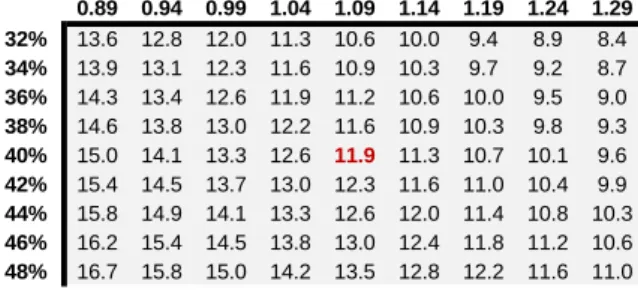
The methodology used to arrive at Eur11.9/share was a local-currency Sum-of-the-Parts (SOTP) valuation model using an explicit discount cash flow (DCF) analysis for each subsidiary (see Panel 2 on the left-hand side). For each country, aside from TEF’s performance, we have analysed the evolution of subscribers, penetration rates and MS, as well as the key performance indicators of the most relevant telecoms competing with TEF. For LatAm we used the current exchange rates in order to convert each local-currency EV to Euros, and used forward exchange rates in order to incorporate these cash flows on the forecasted financial statements.
Company overview
Telefónica is Spanish multinational Telecommunications service provider with 341m accesses spread over 16 countries9 in Europe and Latin America. The company was founded by the Spanish Government in 1924 as Compañía Telefónica Nacional de España, and was privatized in 1997 following the liberalization of the Spanish telecom market. TEF is currently managed by Cesár Alierta Izuel, who holds both the positions of Chairman of the Board of Directors and Chief Executive Officer since 2000.
Company description
TEF’s operations are divided into four main groups (see chart 7): T. de España (48.1% of Group EV), T. do Brasil (16.5%), T. Deutschland (10.0%), and T. Hispanoamerica (25.4%). At the group level, performance has worsened in recent years, mainly due to TEF’s struggling home market (see chart 8). Between 2008 and 2014, revenues shrunk 13.1% (2.3% CAGR) while OIBDA contracted -32.3% (-6.3% CAGR).
In its home market, TEF’s profitability has been affected by a weak economic backdrop (-0.71% average GDP growth between 2008 and 2014), regulation (cuts in the mobile termination rate) and high competition, in both wireline and
9
Spain, Brasil, Germany, Argentina, Chile, Perú, Colombia, México, Ecuador, Uruguay, Venezuela, Guatemala, El Salvador, Panamá, Nicaragua and Costa Rica. Following the of O2 UK to Hutchison Whampoa
Panel 3 – Sum-of-the-Parts Valuation for Telefónica S.A. (Ticker: TEF SM Equity). Source: Analyst Estimates.
Spain 44,803 100.0% 44,803 Brazil 21,330 70.0% 14,931 Germ any 14,944 62.5% 9,340 Hispanoam erica 24,994 n.a. 24,055
Argentina 2,746 100.0% 2,746 Chile 4,597 100.0% 4,597 Perú 8,554 98.5% 8,426 Colombia 2,703 70.0% 1,892 México 3,660 100.0% 3,660 Venezuela 1,046 100.0% 1,046 Ecuador 1,075 100.0% 1,075 Uruguay 613 100.0% 613 Enterprise Value 106,071 93,129
(-) Net Debt (FY15) -57,947 (+) Debt in Minorities 1,199 (+) Equity Investms. 1,293 (+) LT Fin. Assets 13,310 (+) Deferred Taxes 5,579 (+) Sale of O2 UK 10,200 (-) Provisions -7,993 Equity Value 58,771 # Shares 4,938 Target Price 11.90
Current Share Price 13 Upside/Dow nside -3.4%
Recom m endation SELL
TEF SM
EV Stake FVPanel 2 – DCF Valuation for T. Deutschland (Ticker: O2G GY Equity). Source: Analyst Estimates.
O2 Deutschland FV Enterprise Value 14,944 (-) Net Debt (FY15) -841 (+) Financial Assets 68 (+) Deferred Taxes 581 (+) Other Assets 432 (-) Provisions -1,117 (-) Other Liabilities -749 Equity Value 13,319 # Shares 2,975 Target Price 4.5 Current Price 5.18
Upside / Dow nside -7.7% Recom m endation SELL
TELEFÓNICA S.A. COMPANY REPORT
wireless segments. Consequently, between 2008 and 2014, TEF Spain revenues dropped 42.3% (CAGR of -8.8%), while OIBDA shrunk 44.9% (CAGR -9.5%). At the same time, the relevance of Spain to TEF decreased from 36.0 to 23.9% in terms of revenue (chart 9), and from 44.9 to 36.6% in terms of OIBDA.
Furthermore, TEF entered the Brazilian market in 1998, during privatisation of the telecoms sector. In 2002, TEF and Portugal Telecom created a joint-venture which merged all of their existing operations under the name Vivo. Later in 2010, TEF acquired PT’s stake in Vivo for Eur7.5bn, and merged its underperforming fixed-line operator Telesp, as part of a fixed-mobile integration strategy aimed at competing directly with AMX in São Paulo. At an operational level, Vivo has helped to offset revenue erosion seen in Spain, with a revenue CAGR of 4.5% (7.9% organically) and an OIBDA CAGR of 0.9% (4.1% in organically) between 2008 and 2014. Subsequently, Brazil’s weight on the group revenues and OIBDA increased 7.4pp (to 23.3%) and 8.2pp (to 22.8%), respectively, as we can see in
chart 9.
Moreover, TEF entered the German market in 2005, through the GBP17.7bn acquisition of mm O2 plc (formerly known as BT Wireless) of which O2 Germany
was part of. In 2009, TEF acquired HanseNet for Eur0.9bn from Telecom Italia in order to lift its FBB, which eventually failed position O2 as an integrated player
(FBB MS below 10%). In 2014, O2 represented 11.0% of Group revenues in 2014
and 4.7% of Group OIBDA.
In Hispanoamerica, TEF operates in Argentina (2.9% of Group EV), Chile (4.9%), Perú (9.0%), Colombia (2.0%), México (3.9%), Venezuela/Central América10 (0.7%), Ecuador (1.2%) and Uruguay (0.7%). Together these countries represented 26.1% of group revenues in 2014, 3.7pp higher than in 2008. In addition, following its deleveraging strategy, TEF has divested from O2 Ireland
(Eur850m), O2 Czech and Slovakia (Eur2.3bn) and O2 UK (GBP10.25bn), in
order to fund its acquisitions in Brazil, Germany and Spain (Digital+). In table 1, we have summarized the most significant M&A movements since 2013, with the estimate leverage ratio for each year.
Shareholder structure
TEF’s shareholder structure is composed by BBVA with a 5.9% stake, La Caixa11
with 5.4%, Blackrock with 3.6%, and by JP Morgan with 3.5% (see chart 1012). The Board of Directors is composed by 18 members, 5 of which are appointed at
10 Guatemala, El Salvador, Panamá, Nicarágua and Costa Rica.
11
Through CaixaBank and La Caixa’s Foundation.
12
Source: Bloomberg
Chart 9 – Weight of each subsidiary in Group Revenues (%) (2008-14)
Chart 8 – Wireless and Wireline Revenues (millions of Euros) in Spain (1Q08-1Q14).
Chart 10 – Shareholder Structure
m EUR (unless noted) Value Date Lev.
O2 UK Wireline (mGBP) 180 6/13 2.5x O2 Ireland (mGBP) 780 6/13 2.5x Cent.Am. Assets (mUSD) 500 8/13 2.5x E-Plus -8,550 1/14 3.2x O2 Czech Republic 2,467 1/14 3.2x 4227 Tow ers (Spain) 385 1/14 3.2x 22% Stake in Digital+ -325 7/14 3.2x 56% stake in Digital+ -707 4/15 3.8x GVT -7,693 6/15 3.8x O2 UK (mGDP) 10,250 6/16 3.2x
Table 1 – Significant M&A activity from Telefónica since 2013 (Source: Bloomberg)
TELEFÓNICA S.A. COMPANY REPORT
the proposal of the shareholders – 2 by BBVA and La Caixa and 1 by China Unicom, following the Strategic Partnership Agreement established in 2011. The directors of the company hold 0.176% of the total voting rights of the company.
Telefónica de España
Spain is TEF’s biggest and most relevant market with 23.9% of Group Revenues and 36.6% of OIBDA in 2014. Benefiting from its incumbent position, TEF has been the market leader across services13(see table 2), despite fierce competition from other players, which as lead to successive QoQ subscriber losses in the mobile segment, and MS deterioration in the wireline segment, as we will discuss below. TEF’s strategy in Spain has been mainly directed at protecting its OIBDA margin (2.2pp decrease between FY08 and FY14) which stood at 47.2% on 4Q14, significantly above TEF’s main competitors – Orange with 24.7% and Vodafone with 24.2%. Hence, as we will discuss further below, Telefónica has remained less keen on lowering its prices than its competitors, which has negatively affected its subscriber base and market share, as we can see in charts
11 and 12.
Regarding competition, the two M&A movements seen in 2014 and 2015, namely VOD’s Eur7.2bn acquisition of Ono (3.0% mobile MS and 12.8% FBB MS) and ORA’s Eur3.4bn deal with Jazztel (3.7% mobile MS and 12.1% FBB MS) has left three large fixed-to-mobile operators –TEF, VOD and ORA – which compete in all 4P services (see table 2). In our opinion, consolidation has three significant impacts for TEF: (1) in the mobile segment, consolidation means lower competition coming from MVNO’s14
, which have been gaining considerable space in Spain; (2) in the wireline segment, TEF will face tougher competition on its convergent tariff (Movistar Fusión) as VOD’s and ORA’s fixed-line offer is strengthened and (3) reduces long-term price competition in both segments as the market is dominated by only three players. Aside from price stabilization and consequent ARPU protection, we consider that the main rationale for consolidation in Spain was the increasing traction convergent offers15, which started to be marketed in 2012 by Jazztel, Ono and TEF. Both VOD (8.9% FBB pre-Ono in 4Q14) and ORA (15.3% FBB MS pre-Jazz in 4Q14) lacked sufficient FBB scale in order to effectively compete with TEF (44.9% FFB MS 4Q14), which was in a much more comfortable position to up-sell its 2P/3P customers to
Fusión.
13
Fixed Telephony and Broadband, Mobile and Pay TV.
14
MVNOs stand forMobile Virtual Network Operators.
15
As of 4Q14 the penetration of FMC tariffs was 17.3% penetration which corresponds to 8.0bn convergent bundles, according to CMT).
Chart 11 – Performance in Spain from 1Q08 to 1Q14 (Revenues and OIBDA in millions of EUR). Table 2 – Subscriber MS as of 4Q14 after Consolidation movements
TEF VOD ORA
Mobile 34% 28% 29%
FBB 45% 22% 27%
Pay TV 71% 15% 2%
FT 55% 20% 19%
TELEFÓNICA S.A. COMPANY REPORT
Wireless Segment
Room for mobile penetration improvement
In the last 8 years, total mobile accesses in Spain have increased 17.0% (CAGR 1.35%) to 51.1 million (4Q14), which corresponds to 109.8 mobile accesses per 100 inhabitants (see chart 13). Penetration had reached its highest levels in 4Q11 with 112.6%, but, due to the worsening of economic conditions seen in 2012 and 2013 (2.1% and 1.2% negative GDP growth, respectively), this figure was reduce to 106.9%, the lowest level seen since 2Q08. At a European level, Spain’s ranks remains below average in terms of penetration, which stood at 127.6 in 2014. Going forward we expect penetration Spain to increase to reach 120.0% by 2022, on the back of a more supportive economic environment (1.9% GDP GAGR from 2015e to 2022e16). In addition, we expect penetration levels to become more stable (less fluctuation with the economic cycles) as the telecoms sector continues to move towards convergence (in 1Q15 30.6% of TEF’s mobile subscribers were in Fusión) which have, inherently, lower churn than mobile-only tariffs (0.9% vs. 1.9%, respectively for TEF in 1Q15).
Larger mobile operators losing space to Yoigo and MVNO’s
Taking into consideration the M&A movements in 2014, the mobile market in Spain is dominated by TEF (34.4% MS), VOD/Ono (25.8%), ORA/Jazztel (25.6% with Jazztel) and Yoigo (6.8%) which represent 98.1% of the subscriber base (see chart 14). The remaining 1.9% corresponds to group MVNO’s which includes Más Móvil and Euskaltel. From 2006 to 2014, this group, which previously included Jazztel and Ono, have been able to take subscribers from the larger operators over the years (see in chart 15) due to their very competitive, prepay tariffs.
TEF benefits from consolidation, but not enough to avoid MS erosion
Regarding consolidation, we expect TEF to benefit from consolidation, as they reduce competition from MVNOs, which have been captivating most mobile subscriber’s losses from Telefonica, especially in the pre-pay segment - since 2008, when MVNO’s started to gain traction, TEF’s prepay subscriber base has shrunk 63.2% (vs. a 24.2% reduction of TEF’s mobile subscriber base).
Furthermore, in order to evaluate TEF’s competitive positioning, we have compared three 4G/LTE post-pay tariffs (TEF’s most relevant mobile segment with 82.1% of mobile subscribers and 93.4% of MSR17) from TEF, ORA, VOD and Yoigo, based on data allowance, which we consider to be the key driver of
16
According to IMF data
17
MSR stands for Mobile Service Revenues.
Chart 15 – Mobile net additions in Spain (Source: CNMC)
Chart 13 – Mobile subscribers (millions) and penetration (accesses per 100 inhabitants) in Spain (Source: CNMC)
Chart 14 – Mobile accesses as of 1Q15 (Source: Company Data).
TELEFÓNICA S.A. COMPANY REPORT
this segment. As we can see in chart 16, Yoigo’s mobile contract tariffs are considerably cheaper to the ones offered by TEF, VOD or ORA18. Also, Yoigo retails a bundle with unlimited voice minutes and data usage for Eur29.9/month which is, on average, Eur3.0/month cheaper than any 2.5GB bundle offered by Movistar (Eur33.0/month), ORA (Eur31.0/month) or VOD (Eur32.0/month). In sum, we do not consider that the benefit coming from consolidation will be enough to offset TEF’s less competitive tariffs, specially comparing with Yoigo. Additionally, we do not expect TEF to engage in price competition, since its long-term strategy has been margin protection. Hence, considering the reduction of MVNO’s we believe that TEF will sustain its prices above ORA, VOD and Yoigo, leading to a further market share deterioration. Consequently, between 2015e and 2022e, we expect a 5.6pp MS reduction to 27.2%, with mobile subscriptions decreasing at a CAGR of 2.0%.
ARPU - growing relevance of data as operators seek to monetize data
Over the last years, intense price competition from MVNO’s, together with regulatory cuts in the MTR19, had a negative pressure on mobile voice ARPU across operators (see chart 17). However, we consider that mobile communication habits in Spain are shifting from voice/ SMS to data: since 1Q12, data consumption per subscriber (in Spain) increased 185.2% (154 to 439 MB/month) while voice traffic per subscriber (MOU20) increased only 22.0% (114 to 139 minutes/month) and SMS traffic per subscriber decreased 60.1% (10 to 4 texts/month). Hence, going forward we expect data to become the main driver of MSRs, with consumers moving away from voice and SMS to OTT services such as WhatsApp. At the same time, we expect mobile operators to continue to push for data monetization by investing in LTE network and subsidizing smartphone equipment in order to boost data traffic and, consequently, data ARPU. On the revenue side, we expect a negative pressure on as mobile operators continue to stretch customer data allowances and, at the limit, provide high-end tariffs with unlimited data, following Yoigo’s move in 2014.
For TEF, data revenues already account for 38.8% of 2014 MSR, 13.1pp higher than in 2011, as we can see in chart 18. In contrast with voice ARPU (-33.3% FY11-14), data ARPU has improved 22.2% (FY11-14), on the back strong traffic growth, which has offset lower average revenue per MB (due to successive increases of the data allowances). With smartphone penetration currently at
18
For a small data cap bundle, Yoigo charges Eur8.80/month for 1.2GB of data, whereas VOD charges Eur10.50/month for 800 MB, ORA charges Eur11.95/month for 1GB and TEF charges Eur12/month for 1GB. For the medium 2.5GB and the large 4+GB bundles, Movistar continues to price its post-pay tariffs higher than its competitors at 33 and Eur45/month, respectively. In contract, Yoigo prices its unlimited voice and mobile tariff at Eur29/month
19
78.3% cut from 4.98 Eurocent/minute in 2012 to 1.09 in 2013
20
Minutes of Use – average voice traffic (measured in minutes) per subscriber per month.
Figure 18 – Voice vs. Data Revenues (m EUR) in TEF Spain between 1Q11 and 4Q14.
Chart 17 – Mobile voice ARPU (Eur / month / subscriber) in Spain per operator (Source: CNMC)
Chart 16 – Mobile Post-Paid Tariffs in Spain (Company data)
TELEFÓNICA S.A. COMPANY REPORT
62.8%21 (75.6% for contract subscribers) and LTE penetration at 13.7% (2.2m subscribers) we consider that there is significant room for data traffic growth since LTE-enabled equipment is estimated to consume 3x more data than 3G handsets22. Hence, going forward, we are assuming a CAGR of 3.6% for data ARPU, on the back of higher data usage per subscriber as LTE penetration increases, with a short-term negative impact coming from lower average revenue per MB as we expect further increases on the data allowances for each tariff. Furthermore, we expect that the blended ARPU will continue to be negatively impacted by deteriorating voice ARPU which has decreased 26.6% between 2012 and 2014, due to a combination of regulatory cuts on the MTR (73.2% cut since 2012) and relatively flat MOU (16.0% growth between 2012 and 2014 vs. 36.7% decrease on the ARPM23). In addition, we estimate a CAGR of -7.6 for voice ARPU, due to lower interconnection revenues (in the short-term as operators suffer from a lower MTR) and due to the voice-for-data substitution described above.
Outlook - Not enough data monetization to fuel recovery
In light of our estimates in terms of mobile subscribers and ARPU we estimate a CAGR of -4.2% for MSRs from 2015e to 2022e (vs. -6.2% 2009-14) with negative YoY growth until 2020e. We are assuming a progressive decline in YoY revenue erosion on the back of the data monetization efforts that we have previously discussed. Nonetheless, considering TEF’s relatively expensive mobile tariffs we forecast further subscriber losses (300 thousands per year on average for 2015e-2022e vs. 1000 FY09-14) as customers continue to switch for cheaper alternatives (chart 19).
Wireline Segment
In the Wireline segment TEF provides Broadband (FBB), Pay TV and Fixed Telephony (FT) at a country level. As we will discuss further below, TEF has maintained a strong foothold with a MS of 55.3%24. In terms of revenues, Wireline Business represented 71.1% of TEF Spain’s 2014 revenues and 57.3% of total accesses.
Market overview – Operators push for 4P
Furthermore, most of wireline services are sold together in bundles, either 2P (FBB and FT), 3P (adding Pay TV) or 4P (adding Mobile). Since the first convergent tariffs were first introduced in 2012 by JAZ and TEF, most of 2P and
21
According to data from the 1Q15 results report and presentation.
22According to data from Telefónica’s 1Q15 report. 23
Average Revenue per Minute
24
Including Broadband, Pay TV and Fixed Telephony accesses
Chart 20 – Evolution of wireline services (millions of accesses) in Spain since 2008. (Source: CMT) Chart 19 – Subscribers (millions) and ARPU (EUR / subs / month) outlook for TEF Spain (Source: Analyst Estimates).
TELEFÓNICA S.A. COMPANY REPORT
3P costumers have switched away to 4P (see in chart 21), with convergent offers reaching household penetration of 44.0% in 2014. In terms of accesses, 4P now accounts for 62.6% and 42.1% total FBB and FT accesses, as well as, 43.5% of total Pay TV subscriptions. Consequently, in order to understand the competitive environment of wireline services in Spain, we will concentrate our price analysis on convergent tariffs rather than 1P, 2P or 3P prices.
Moreover, from the three wireline services that TEF provides, we will look closer at FBB, as we consider it to be the key driver of 4P bundles, due to its increasing demand in last the last years. Between 2008 and 2014, FBB accesses increased 44.3%, reaching a household penetration of 70.1%, whereas, FT accesses shrunk 6.5% over the same period, in line with a fixed for mobile telephony substitution trend seen in most European countries. Pay TV, despite a 25.8% increase in subscriptions, has gained little traction in Spain (household penetration at 27.7%) mostly due the high popularity of open television25. Besides, the positive growth in Pay TV described above came from subscriptions included 4P tariffs, as accesses included in 2P and 3P tariffs decreased 28.9% over the same period. Going forward, we expect FBB, FT and Pay TV subscriptions to converge, as 4P penetration continues to improve (currently at 17.3%).
Market overview - demand for high-speed connections drives fibre roll-out
From 4Q08 to 4Q14, FBB penetration per 100 inhabitants increased from 12.4 to 28.6% (see chart 22). Similar to what we have seen in mobile, Spain ranks below OECD average, which stood at 29.4% in 2Q14. Likewise, we believe this gap will shrink and FBB penetration will increase to 38.1% by 2022, as providers continue to deploy high-speed technology network, such as FTTH, in order to increase service quality (FBB connection speed seen in Spain26 is relatively low) and reduce long term costs.
Competition – TEF losing MS YoY despite growing subscriber base
Following the consolidation of the telecoms sector seen in 2014/15, there are four players that represent 94.7% of the FBB subscriber base – TEF (45.6% MS), ORA/Jazztel (27.4%) and VOD/Ono (21.7%). Apart from Ono, operators have enjoyed consecutive positive QoQ net additions (see chart 23), benefiting from the growing demand for FBB. TEF, despite being largest player in the segment and having a growing subscriber base, has been losing space to ORA, JAZ and
25
This can be explained by the fact that open TV in Spain includes 33 free channels.
26
In 1Q13, 60.7% of broadband accesses had a connection speed below 10 Mbps broadband speeds. The reason for this lack of investment is that Telefónica had enjoyed an above 50.0% market share for a long time (until 2Q13), and thus there was little incentive to invest in fibre since the company would face significant regulatory hurdle, and would probably be forced to share its FTTH network with its competitors. However, this scenario changed when TEF’s saw its market share fall considerably, mostly to ORA, VODA and JAZZ, which led TEF to invest considerably in fibre, as a way to increase the quality of its portfolio and avoid cutting its price points even further.
Chart 21 – Evolution of 2P/3P/4P (millions of accesses) in Spain since 2008, in terms of packages in which this service is sold (Source: CMT)
Chart 22 – Evolution of FBB accesses in Spain since 2008 (millions).
Chart 23 – FBB net adds (thousands) between 4Q12 and 4Q14. (Source: CMT)
TELEFÓNICA S.A. COMPANY REPORT (1). (2). (3). (4). TEF 30Mbps / 500 MB 30 Mbps / 2 GB 300 Mbps / 500 MB 300 Mbps / 2 GB VOD 30Mbps / 1 GB 30Mbps / 2 GB 120 Mbs / 1 GB 120 Mbps / 2 GB ORA 50 Mbps / 1 GB 50 Mbps / 2.5 GB 100 Mbps / 1 GB 100 Mbps / 2.5 GB JAZ 50 Mbps / 1.1 GB 50 Mbps / 2 GB 200 Mbps / 1.1 GB 200 Mbps / 2 GB
Table 3 – Fixed broadband download speed and data allowance included in each Convergent Tariff chosen for the price comparisons. (Source: Company Data)
VOD27, due to its relatively high tariffs, as well as, its reluctance to engage in any kind of price competition. In our view, TEF has remained focused at protecting its price points, mainly by adding Pay TV to its bundles, as it did on the cheaper
Fusión tariffs in 2014. In addition, in 1Q15, Telefónica rose the price of all Fusión
tariffs by Eur5.0/month, expecting to benefit from consolidation, which signals its strategy to protect its prices and margins.
Competition – Fusión is, on average, Eur8.2/month more expensive
In order to have a forward looking view regarding the competitive positioning of 4P operators in Spain, we have compared four types of convergent bundles sold by TEF (Fusión), ORA (Canguru), VOD (One28) and JAZZ (Ahorro) based on FBB download speed and mobile data allowance, which we consider to be the key differentiators for consumers (see table 329).
As we can see in chart 24, for all four bundles that we have compared, TEF is pricing its 4P portfolio above its peers and does not offer any significant advantage in terms of mobile data and FBB download speed (see table 3). For example, TEF’s flagship bundle (Fusión Contigo TV) is, on average, Eur4.6/month more expensive than the other three offers30 and, in terms of specifications (table 3), includes a smaller data allowance and falls behind ORA and JAZ in terms of FBB download speed. Moreover, for a larger mobile data allowance (2 GB) TEF charges customers an additional Eur18.0/month whereas its competitors charge, on average Eur11.7/month31. In terms of FBB, all four operators charge an additional Eur12.0/month (from bundle 1) for an upgrade to at least 100 Mbps download speed. Hence, we consider TEF is outperformed by its peers both in terms of price and specifications.
Outlook - growth in FBB subscribers despite falling market share
Nevertheless, in the short-term, we expect TEF to benefit from its large FTTH footprint (11.5m houses passed vs. 8.5 from VOD, 3.7 from JAZ and 0.9 from
27As a result 2012 to 2014, TEF’s subscriber base increased 5.36% while ORA’s base increased 40%, JAZ’s 17% and VOD’s 43%. 28One is Vodafone’s first convergent tariff after the integration of Ono. Jazztel and Orange still have separate commercial offers and, for
that reason, we have analysed both convergent tariffs.
29
1) Small fixed (30 Mbps fibre/ADSL) and small mobile (LTE 500MB+). 2) Small fixed (30 Mbps fibre/ ADSL) and large mobile (LTE 2GB). 3) Large fixed (100 Mbps fibre) and small mobile (LTE 500MB+). 4) Large fixed (100 Mbps fibre) and large mobile (LTE 2GB).
30Vodafone’s One is Eur43.0/month; Orange’s Canguru is Eur42.0/month and Jazztel’s Ahorro is 42.28/month. 31
Vodafone charges Eur11.0/month for an additional 1GB; Orange charges Eur12.0/month for an additional 1.5GB and Jazztel charges Eur12.1/month for an additional 1GB.
Chart 24 – Comparison of Convergent Tariffs in Spain based on mobile data allowance (500MB+ or 2GB) and Broadband fibre download speed (30 Mbps+ and 100Mps). (Source: Company Data).
TELEFÓNICA S.A. COMPANY REPORT
ORA) as we can see in table 4. Going forward, however, we consider that VOD posts the biggest threat to TEF, due to its lower prices, large FTTH scale and its leading position in terms of LTE coverage. In addition, in urbanized areas, where fibre coverage is typically higher, we expect TEF to loose space also to Jazztel, which we consider to be the best value-for-money offer in the market today (see
table 3 and chart 24). Furthermore, it is still unclear how ORA will relaunch its
4P/5P tariffs after the integration of Jazztel is fully completed. Nonetheless, Orange mentioned its strategy is to grow its top-line by enlarging its subscriber base rather than increase its prices. Hence, we consider the combination of the two operators will create a very strong opponent to VOD and TEF, as it will combine ORA’s well-developed mobile network (73.0% LTE coverage) and Jazztel’s growing fibre network (10m homes passed expected for FY16 which corresponds to a coverage of 54.5%).
Consequently, we are assuming in our forecasts that TEF will continue to lose MS to VOD and JAZ/ORA. The key trigger for our bearish outlook over TEF’s position view comes from the pricing movements seen in 1Q15. Firstly, TEF raised by Eur5.0/month the price of its 4 Fusión tariffs in anticipation of a more stable pricing environment following consolidation. Secondly, after the integration of Ono in 1Q15, VOD re-launched its convergent portfolio (One) which, as we previously mentioned, significantly underpriced TEF’s portfolio. In our opinion, these movements signal two opposing strategies by the two operators: 1) TEF’s push for margin protection and 2) VOD’s willingness to increase its MS in FBB (currently at 21.7%) by offering better deals than TEF. All in all, in terms of valuation, we forecast that FBB accesses will grow at a 1.3% CAGR, between 2015e-22e, with a 7.4pp market share deterioration over the same period. In the short-term, however, we consider that TEF will benefit its larger fibre coverage at the same time that demand for FBB continues to increase (see chart 25).
Acquisition of Digital+ allows reduction of long-term TV content costs
Between 2014 and 2015, TEF accumulated a 78.0% stake in the Digital+32 for a total of Eur1.0bn. This company provides satellite pay TV service to 1.7m consumers (33.5% MS in 4Q14) and wholesales content to other pay TV providers. In our opinion, this acquisition has two important effects for TEF: 1) gives TEF a dominant position in pay TV with a subscriber MS of 70.7%; 2) enables a reduction in LT content costs as sufficient scale is reached. On the other hand, due to regulatory remedies, TEF was forced to wholesale 50% of Digital+’s premium content over to its competitors which, in our opinion, significantly reduces the strategic benefits of this acquisition in terms of content
32 FTTH LTE TEF 63.0% 65.0% VOD 46.6% 75.0% ORA 4.9% 73.0% JAZ 20.1% 73.0%*
Table 4 – FTTH and LTE coverage in Spain per operator. *Jazztel is a MVNO and therefore does not own a LTE network of its own. The 73.0% LTE coverage corresponds to Orange’s network (with whom JAZ has the MVNO agreement. (Source: Company Data)
Chart 25 – Outlook for TEF’s wireline accesses (millions) in regards to IPTV, Fixed Broadband and Fixed Telephony. (Source: Analyst Estimates)
TELEFÓNICA S.A. COMPANY REPORT
exclusivity. Hence, we do not expect TEF to create add value to its 4P portfolio by marketing additional premium content since its competitors can obtain this content at the wholesale level. In addition, we recall that, due to the large number of open television channels in Spain, the relevance of Pay TV is still small (household penetration at 27.2%). Therefore, considering that TEF will have to provide its competitors with 50% of its premium content, we consider that this acquisition will be neutral at the top-line. Nonetheless, we are including in our valuation costs savings going forward, as TV content costs are reduced.
Positive YoY top-line growth expected for 2017e
Moreover, we assume that consolidation will have a long-term positive effect on residential ARPU, which has fallen 22.1% from 2011 to 2014, according to our estimates. In addition, we expect a positive impact coming from the addition of pay TV to the Fusión offers, which provides an additional revenue stream for the same DSL/Fibre connection. For our forecasting period we assume a CAGR of 1.5%, with negative YoY growth until FY16E. Moreover, from 2015e to 2022e we are forecasting top line growth of 0.7% (CAGR), on the back of broadband ARPU stabilization (0.2% CAGR) and TEF’s large coverage in an environment of growing demand for FBB.
Valuation
Considering our analysis for the wireless and wireline segments we are quite bearish regarding growth potential for TEF in Spain. From 2015e to 2022e we forecast negative revenue CAGR of -0.3%, with top-line deteriorating until FY19e (see chart 26). From then on, we expect that the recovery in the wireline segment (on the back of higher FBB demand and ARPU stabilization) will offset the poor performance of the wireless segment. At the OIBDA level, we are assuming YoY negative growth until FY17e, due to an adverse effect of TV content/equipment (due to Fusión additions and up-selling from 2P customers to 4P) and handset equipment sales (as part of the data monetization strategy) on the margin. From FY18e onwards we consider that the OIBDA margin will be positively affected by lower content costs, as TEF reaches sufficient scale in pay TV, and lower operating costs as ADSL customers are moved to the more cost-effective fibre-network (see chart 27). Regarding bottom-line performance, we expect that the expansion of fibre (currently coverage is 63.0% and the target for 2016e is c.75.0%33) and LTE networks (currently coverage is 65.0% and the target for 2016e is c.85.0%34) will lead to high levels of Capex until FY18e at 19.1% of revenues (on average), stabilizing at 15.5% by the end of our forecasting period
33
According to company guidance provided in results presentations.
34
According to company guidance provided in results presentations.
Chart 27 – Outlook for TEF Spain in terms of OIBDA, Capex and Operating Cash Flow in millions of Euros. (Source: Analyst Estimates)
Chart 26 – YoY revenue growth of TEF Spain’s Wireless and Wireline Segment from 2010 to 2022e. (Source: Analyst Estimates and company data)
TELEFÓNICA S.A. COMPANY REPORT
(see chart 25). Assuming a WACC of 7.1% and a terminal growth of 1.5% we value Spain at Eur44.8bn, which corresponds to 48.1% of the total Group EV.
Telefônica do Brasil
Telefônica do Brasil (Vivo), with 22.3% of Group revenues and 22.8% of Group OIBDA, is TEF’s second largest operation worldwide. Following the Eur7.7bn (Eur4.7bn in cash and 3.0bn in stock) of GVT35 TEF will hold a 70% controlling stake36 (see chart 28) in Vivo which trades (VIVT3 for common shares and VIVT4 for preferred shares) on the São Paulo Stock Exchange (Bovespa) with an estimated free-float of 23.0%. We value Vivo (VIVT3 BZ) at BRL41.9/share which corresponds to a positive shareholder return of 17.2% from the current market price of Eur38.1/share, considering an expected dividend payout of BRL3.6/share for ON shares and BRL3.7/share for PN shares announced for FY15e. The trigger of our buy recommendation comes from the expected growth potential following integration of GVT, which allows Vivo to expand its wireline business outside of São Paulo. Considering the current relatively low FBB penetration of 11.8% (vs. 29.4% in Europe), a positive economic environment (1.8% average GDP growth for 2015-22e), high appetite for this service (18.8% Subscriber CAGR between 2007 and 2014) and Vivo’s presence in 17 states (84% of the population) we consider that there is a substantial growth opportunity in this country, as we will try to demonstrate below.
Wireless Segment
Market overview - appetite for mobileSince the beginning of the 20th century, Brazil has experienced an impressive evolution in the telecommunications sector with accesses and penetration rates climbing across services, reaching North American and European levels. From 4Q05 to 4Q14, mobile accesses in Brazil increased 309.0% (CAGR 15.5%) with mobile penetration jumping almost 100pp to 140.2% (see chart 29), which is considerable higher than the OECD average of 124.8. In our opinion, this relatively high penetration is explained by the large price differential between off-net and on-off-net tariffs, leading consumers to hold more than one active mobile prepay SIM card, which explains the high relevance of the prepay segment in these country (76.1% vs. 28.8% in Spain and 49.5% in Germany). Going forward,
35 This acquisition is expected to be completed in 2Q15,
36
Telefónica currently holds 92% of ON shares and 65% of PN shares which corresponds to 74% total shares. According to the terms of the deal with Vivendi, TEF will acquire GVT for a cash component of Eur4.7bn, which is finance d through a capital increase at Telefónica Brasil, and a 12% stake in the enlarged Telefónica Brasil. In addition, TEF will exchange 1,110m shares of Telecom Italia for 4.5% stake in the enlarged Telefónica Brasil. All in all, the capital structure of Telefonica Brasil will be: TEF with 70%, Vivendi with 7.4% and a remaining free-float of 23%.
Chart 29 – Evolution of mobile subscriptions (millions of accesses) and penetration (accesses per 100 inhabitants) in Brazil from 1Q05 to 4Q14. (Source: Anatel)
Chart 28 – Shareholder Structure of TEF Brasil following the capital increase of 1Q15. (Source: Company data)
TELEFÓNICA S.A. COMPANY REPORT
due to the relatively high penetration seen at the moment, we expect YoY growth of mobile accesses to keep shrinking, with penetration stabilizing around 147.0% by 2022e.
Claro and TIM close behind Vivo
The Brazilian mobile market is dominated by Vivo (28.5% MS), TIM (27.0% MS), Claro (25.3% MS) and Oi (18.1% MS) which account for 98.8% of total subscribers. At a country level, from these mobile network operators, Claro has the highest coverage (92.1%) followed by TIM (91.5%), Vivo (91.3%) and Oi (88.6%). Following the general pace of this segment – both high population and penetration growth – these operators have enjoyed positive QoQ net additions in the last 10 years, as we can see in chart 30. Hence, subscriber market share has been determined by how fast these players are able to grow their mobile subscriber base. Consequently, Vivo, with an 11.1% subscriber CAGR between 1Q05 and 4Q14, has seen its market share fall by 15pp. Claro and TIM, with average annual growth of 18.1% and 17.7% have increased their market share by 5.6pp and 4.6pp, respectively, threatening Vivo’s leadership in mobile.
Nevertheless, Vivo’s weak performance in terms of MS can be explained by its focus on post-paid subscribers, which have a 4 times higher ARPU than pre-paid37. As we can see in chart 31, from 1Q10 to 4Q14, Vivo’s post-paid base jumped from 16.0pp to 35.5%, at the same time the percentage of contract subscribers of TIM, Claro and Oi increased only 2.0pp (on average). Consequently, Vivo is, by far, the market leader in post-pay with 44.2% of total contract subscriptions in Brazil (followed Claro with 24.4%, TIM with 19.5% and Oi with 11.7%). In the pre-pay segment, however, Vivo has been relegated to the third place with a 24.1% market share, behind TIM (29.6%) and Claro (26.0%). Going forward, we expect Vivo to continue to focus on migrating it’s prepay subscriber to contract in order to reduce its relatively high churn (2.9% vs. 1.8% in Spain 2.4% in Germany and 1.7%) and protect its ARPU.
Vivo’s focus on high-value customers pays off in terms of MSR
Average ARPU among Brazilian operators decreased 16.6% in the last 5 years, mostly affected by a large pre-paid costumer base (76.1% of total), regulatory cuts in MTR and an intense competitive environment. Nonetheless, Vivo has been more effective than its competitors at protecting ARPU, mostly due to its focus on post-paid subscribers – see chart 32. Between 1Q10 and 4Q14, Vivo’s ARPU increased 1.7% whereas TIM’s ARPU fell 25.2% and Claro’s ARPU decreased 25.0%. Consequently, Vivo’s focus on high-value customers has
37 In 4Q14, Vivo’s post-paid ARPU was BRL50.0/month, almost 4 times higher than pre-paid
ARPU (BRL12.8/month in the same quarter).
Chart 30 – Evolution of net additions per operator (thousands of accesses) in Brazil from 1Q05 to 4Q14. (Source: Company Data; Anatel)
Chart 31 – Post-Pay accesses per operator as a percentage of total subscribers in Brazil from 1Q10 to 4Q14. (Source: Company Data)
Chart 32 – ARPU (BRL / Subscriber / month) per operator in Brazil from 1Q10 to 4Q14. (Source: Company Data)
TELEFÓNICA S.A. COMPANY REPORT
off in terms of MSR as we can see in chart 33. Between 1Q10 and 4Q14, MSR have grown at a CAGR of 7.7% (vs. 5.0% from TIM and 2.8% from Claro) making Vivo the best performer (see chart 31) at the top line with a MS of 36.8% (vs. TIM with 25.4%, Claro with 24.4% and Oi with 17.8%).
Operators set eyes on LTE in order to boost data revenues
Another pin-point of Vivo’s strategy is data monetization38
. Since the LTE spectrum auction in 2012, for which Vivo paid BRL1.1bn, coverage has reached 42.5% of the population, according to Anatel data for 1Q15. Vivo has the largest LTE coverage with 40.8%, in front of Claro (37.1%), TIM and Oi (both with 35.5%). Correspondingly, Vivo held the highest percentage of LTE-enabled devices with a LTE subscriber market share of 37.6%, followed by TIM (32.2%), Claro (19.7%) and Oi (7.6%). At the top-line, the effects of data for Vivo have been evident – from 1Q12 to 1Q15 data revenues increased 48.1% with data ARPU contributing 39.1% to the blended ARPU (20.3 pp increase). Going forward, assuming that TEF continues to expand its LTE coverage, we expect a strong growth for data revenues (CAGR of 9.8% from FY15e to FY22e) on the back of growing data usage per subscriber, which is still relatively low at 281 MB per month (vs. 496.5 in Spain, 333.1 in Germany and 438.1 in the UK).
Outlook - focus on data offsets loss of pre-paid subscribers
From 2015 to 2022 we forecast a CAGR of 9.6% for wireless revenues (chart 34) and a CAGR of 1.6% for mobile subscriptions. On the revenue side, we expect positive contribution coming from data, as Vivo continues to invest heavily on LTE coverage expansion. In addition we assume a positive contribution coming from equipment sale, as Vivo continues to subsidize the sale LTE-enabled smartphones, as part of its plan to monetize data. In terms of subscribers, we assume a reduction in the mobile market share of Vivo due to a lower pre-paid subscriber base. In the post-paid segment we expect Vivo to remain the largest operator, which we consider to have a very positive impact on ARPU.
Wireline Segment
Exponential growth in BroadbandSimilar to what we have seen in the mobile segment, there has been an exponential growth in FBB in Brazil (see chart 35). From 1Q07 to 4Q14, FBB accesses grew 276.7% to 24.0m (CAGR of 18.1%), with penetration jumping from 3.4 to 11.9% per 100 inhabitants. Nonetheless, there is a considerable discrepancy within federal states, as most of the investment in FBB network has
38
According to information given during the conference call on February 2015
Chart 33 – MSRs (m BRL) per operator in Brazil from 1Q10 to 4Q14. (Source: Analyst Estimates)
Chart 35 - Evolution of FBB subscriptions (millions) and penetration (per 100 inhabitants) in Brazil from 1Q05 to 4Q14. (Source: Anatel) Chart 34 – Wireless Revenues forecast (m BRL) and expected YoY growth. (Source: Analyst Estimates.)
TELEFÓNICA S.A. COMPANY REPORT
been directed to urban areas. Out of the 27 states, 16 have a penetration rate lower than 6%. At an international level, Brazil ranks above the average for Latin America (10.9%) but it still considerable below the European average (29.4%). Going forward we expect penetration levels to continue to increase at a strong pace on the back growing demand for this service and a supportive economic environment (average GDP 1.8% expected from FY15e-22e).
América Móvil continues ahead of Oi
Regarding competition, there are four large FBB providers which account for 88.1% of total FBB accesses at a country level: América Móviles (AMX), Oi, Vivo and GVT. As we can in table 5, operators are not present in all of the 27 federal states and thus, they may not compete directly in region where they own a FBB infrastructure. AMX is the largest player in this segment with 7.5m subscribers on 4Q14 (31.4% MS)39. This company operates in 16 federal states (including São Paulo and Rio de Janeiro), which corresponds to 91.9% of the population40. Oi is second largest provider with 6.6m FBB subscribers (27.3% MS)41. Oi’s is present in 26 states (all except São Paulo) which corresponds to 78.3% of the population. Vivo is the third largest FBB provider with 3.9m accesses (17.1% MS). However, Vivo operates only in São Paulo, Brazil’s most populated state with 44m inhabitants (21.7% of total), where it holds a subscriber market share of 46.1% (4Q14). The fourth largest operator is GVT, which operates in 16 states (83.8% of the population including São Paulo and Rio de Janeiro) with 2.9m accesses in 4Q14 (83.8% MS). These operators have followed the general pace of the market, with general positive YoY growth. In addition, as we can see in (see chart 36), between 1Q07 and 4Q14, Claro (average subscriber growth of 42.2%) and GVT (47.1%) have been taking market share points, at the expense of Vivo (10.4%) and Oi (11.4%).
3P drives fixed telephony
In contrast with FBB and mobile, FT accesses have remained mostly stable between 2007 and 2014 with penetration lingering between 20.8% and 22.2%. In this segment, Oi is the largest operator with 36.2%, followed by AMX (25.9%), Vivo (23.5%) and GVT (10.2%). Competition movements are similar to what we have seen in FBB with AMX and GVT gaining space from Oi and Vivo. We expect that this segment will be mostly driven by FBB, especially in urban areas, as consumers move to 3P bundles.
39
Since the commercial release of broadband packages in 2005, NET has able to increase its market share YoY, with an impressive CAGR of 42.3% for its subscriber base.
40
NET’s market share in these 16 states is 32.7%
41
The company’s market share excluding São Paulo, the only state where Oi is not present, is 43.5%
Chart 36 - Evolution of Broadband MS (accesses) in Brazil from 1Q07 to 4Q14. (Source: Anatel)
Table 5 –Number of UF’s (Unidades
Federativas) covered by each operator, and % of the total population that can be covered. (Source: Anatel and Analyst Estimates)
#UF % Pop MS AMX 20 92% 31% OI 26 78% 27% VIVO 1 22% 17% GVT 16 84% 12% VIVO+GVT 17 84% 29%
TELEFÓNICA S.A. COMPANY REPORT
Momentum in Pay TV
Regarding Pay TV, between 2007 and 2014, subscriptions increased 365.8% (CAGR 20.6%) to 19.6m, with subscribers per 100 inhabitants reaching 9.7% (chart 37). In an environment of growing subscriber bases across providers, this segment is dominated by AMX (51.2% MS) and Sky (28.8% MS) which represent 80.8% of total pay TV subscribers. Nonetheless, smaller providers, namely Oi (MS 6.7%) and GVT (4.5% MS), have been taking MS points from the largest players as they migrate their broadband subscribers to 3P. Vivo (3.9% MS), which has shown little momentum in pay TV until 2014 (CAGR 12.1% from 4Q08 to 4Q14) has followed the same strategy seen in Spain, partially subsidizing pay TV in 3P in order to improve consumer loyalty and retention. As a result there was a 20.4% YoY increase in pay TV accesses in 2014. Going forward we expect pay TV subscriptions to continue to increase as providers to continually to incentivize subscribers to move to 3P in order to reduce churn. For Vivo, we are assuming a ST negative impact on the OIBDA margin associated with the cost of TV content and equipment. Similar to what we have discussed in FT, we consider that FBB will be the main driver of 3P and thus, we expect pay TV, FT and FBB accesses to converge.
GVT allows Vivo to expand its FBB service outside of São Paulo
In August 2014, TEF agreed to buy GVT from Vivendi SA for Eur7.2bn42. From a strategic perspective, this acquisition allows the company offer 4P products outside of São Paulo, increasing its FBB presence to 17 federal states, which corresponds to 83.8% of the population. In terms of FBB MS, with the addition of 4.7m GVT accesses, Vivo jumps in front of Oi with 29.4% of total accesses. Furthermore, Vivo consolidates its front seat position in São Paulo, where it had been losing space to GVT. All in all, this acquisition gives a long-term growth potential as an integrated player, with the ability to cover 91.3% of the population in the mobile segment and 83.8% of the population in the wireline segment. Additionally, Vivo will also benefit from GVT’s superior network43
, which, as we mentioned above, has been a leader in terms of YoY growth (CAGR 47.1% 4Q07-4Q14). Going forward, we expect Vivo’s FBB subscriber base to reach 12.7m (7.6% CAGR 2015e-22e, excluding the effect of the integration of the 4.7m accesses from GVT) on the back growing demand for FBB and GVT’s high-quality network (see Chart 38).
42
From the Eur7.2bn, Eur4.7 will be paid in cash, financed by a capital increase of Telefónica Brasil S.A. and through the rendering of Telefónica’s 5.7% stake in Telecom Italia SpA over to Vivendi
43
According to Anatel data, more than 86.0% of GVT’s subscribers have broadband connection plans above 10 Mbps, 92% of which outside of São Paulo. In terms of average connection speed, GVT beats AMX in every state except Pernambuco and Goiás (14 out of 16). In São Paulo, the average connection speed was 19.3Mbps in January 2015, ahead of both Vivo (11.7 Mbps) and AMX (16.6Mbps)
Chart 37 - Evolution of Pay TV subscriptions (millions of accesses) and penetration (accesses per 100 inhabitants) in Brazil from 2007 to 2014. (Source: Anatel)
Chart 38 – Forecasted FBB accesses and market share, following the acquisition of GVT. (Source: Analyst Estimates.
TELEFÓNICA S.A. COMPANY REPORT
Positive outlook on the back on GVT’s superior network
For Vivo’s wireline business we forecast a top line CAGR of 13.2% from 2015e to 2022e (see chart 39), on the back of the incorporation of GVT into our estimates. From an operational standpoint we consider that GVT will have a short-term positive pressure on residential ARPU, due to the impact of its higher-end bundles. At the same time, we expect that Telefónica’s push for 3P will also benefit ARPU, due to the additional revenue stream coming from pay TV. In terms of accesses, aside from the initial impact in 2015, we consider that GVT’s superior network (as mentioned in the wireline segment) will allow Vivo to consolidate its position in São Paulo while benefiting from the sustained growth that GVT has shown at a country level. We recall that, between 1Q07 and 4Q14, GVT has increased its broadband market share by 9.6pp.
Consolidation in Brazil?
For quite some time now there has been significant speculation revolving further consolidation in Brazil, namely a possible tie-up between TIM and Oi or, a joint bid from Oi, Telefónica and América Móvil for TIM. The basic rationale behind the TIM+OI consolidation is that TIM is a mobile-only operator and Oi lacks the financial firepower to invest heavily in its mobile network (as we mentioned before, Oi has the lowest LTE coverage in Brasil). Together, Oi and TIM would reduce the much needed investment in mobile infrastructure and the resulting telecoms group would be able to shift some of this capex towards enhancing Oi’s FBB network. However, we consider that it is still very unclear how this process will turn out due to Oi’s current high leverage (4.2xEBITDA vs. the peer average of 2.4xEBTIDA) and due to major regulatory hurdles that the deal would face. In addition, we don’t expect Telefónica to engage actively in further M&A activity in the short-term as the company stated that its focus was the closing and consequent integration of GVT, as well as keeping its leverage in check. For this reason we have not included any further consolidation scenarios in our valuation.
Valuation
Assuming a discount rate of 11.5% and growth in perpetuity of 2.8%, we value Telefónica Brasil at BRL72.9bn (Eur21.4bn). We have included the expected synergies coming from the incorporation of GVT in both OIBDA and capex. From 2015 to 2022, we expect OIBDA margin to suffer from costs associated with handset sales in the mobile segment, and TV content and equipment in the wireline unit. Moreover, we expect capex to remain relatively high in the medium-term as Vivo continues to expand its LTE coverage, deploy its FTTH network in São Paulo (4.2m houses passed in 1Q15) and integrates the expansion plans of GVT outside of this state (see chart 40).
Chart 40 – Outlook for Vivo in terms of OIBDA, Capex and Operating Cash Flow in millions of BRL. (Source: Analyst Estimates)
Chart 39 – Wireline Revenues forecast (m BRL) and expected YoY growth. (Source: Analyst Estimates.)
TELEFÓNICA S.A. COMPANY REPORT
Telefonica Deutschland
Since the divestment from the UK operation in 1Q15, T. Deutschland (O2) is the
only remaining subsidiary of the group operating in Europe, aside from Spain. In 2014, O2 acquired E-Plus, KPN’s German mobile arm, for Eur8.6bn with
combination of Eur3.7bn in cash, finance through a rights issue, and a 20.5% stake in the enlarged company. Following the capital increase TEF’s ownership was diluted from 76.8 to 62.5 (see chart 41). Moreover, O2 (O2G GY) trades on
the Frankfurt Stock Exchange with an estimated free float of 8.5%, which we value at Eur4.48 per share. Considering the dividend payments expected for the 2015e (Eur0.25/share), our valuation implies a negative shareholder return of 7.7% and thus, corresponds to a sell recommendation for investors. As we will try to demonstrate further below, our bearish stance regarding the O2, is based on
our expectation that, as we have seen in Spain, the telecom sector in Germany will progressively move towards convergence, leaving O2, which has relatively
low relevance in FBB (8.0% base MS), in a very uncomfortable position, comparing with its peers, namely DTE and VOD, who are already pushing aggressively for convergent tariffs.
Wireless Segment
Market overview - mature mobile market, with relatively high penetration
From 1Q09 to 4Q14, total mobile subscribers in Germany increased 5.3% (1.5% CAGR, see chart 42). In the meantime penetration has remained fairly stable at 139.1% (1.7% CAGR during this period). Comparing this level with other countries (124.6% in the UK and 109.1% in Spain) we expect penetration to remain fairly stable in the coming years as this is already a very mature mobile market.
O2 becomes leader in subscribers with the integration of E-Plus
Following the acquisition of E-Plus, the mobile market in Germany is dominated by three MNOs – O2
44
(42.1m subscribers and a MS 37.4%), DTE (39.0m/37.4%) and VOD (31.5m/28.0%). Since 1Q09, both O2 and E-Plus have been gaining momentum, increasing their MS at the expense of DTE and VOD (see chart 43). Between 1Q09 and 3Q14, TEF and E-Plus’ MS increased 5.6 and 3.2pp respectively while DTE and VOD’s declined 2.7 and 6.1pp.
O2 as the cheaper alternative to Telekom and Vodafone
44 TEF’s merger with E-Plus lead to re-statement of the latter’s mobile subscribers. Using data from 3Q14, and assuming no major
subscriber losses in 4Q, TEF would have around 47.0m accesses in this quarter. However, TEF’s assessment of its mobile base turned out to be more rigorous than E-Plus’, with O2 reporting 42.1m accesses in 4Q14, which contributed heavily to the 2.3% YoY reduction of total mobile subscriptions seen in Germany.
Chart 42 – Evolution of Mobile accesses (millions) and mobile penetration (accesses per 100 inhabitants) from 2009 to 2015. (Source: Company Data).
Chart 41 – Telefonica Deutschland’s shareholder structure following the capital increase in 2014. Source: Bloomberg and analyst estimates)
Chart 43 – Evolution of Mobile market share in terms of accesses from 1Q09 to 4Q14. (Source: Company Data).