i
ISA’s technology reaches the Middle East
When Intelligent Senses are needed Anywhere
Author: Mafalda Garcia Delgado Advisor: Nuno Magalhães Guedes
Dissertation submitted in partial fulfillment of requirements for the degree of MSc in Business Administration, at the Universidade Católica Portuguesa,
ii
Acknowledgements
Learning is a journey. It never truly ends.
Nevertheless, this thesis represents the finishing line of my academic life, which would have not been accomplished without the contribution of several people.
First and foremost, I would like to acknowledge Dr. Henrique Pereira, from ISA, for his vast knowledge and precious assistance which enabled the realization of this dissertation.
In second place, I would like to express my gratitude to my Advisor, Dr. Nuno Magalhães Guedes, whose expertise, critical thinking and support, added considerably to my graduate experience.
I would also like to thank my extraordinary friends, my dear family and my outstanding roommates who have always been there encouraging me, even when life put us a world apart and to my older sister, whose remarkable bravery, audacity and joy have always been worth of my admiration.
I finally dedicate this master thesis to my parents, whose infinite wisdom, support and guidance along the way brought us here today. For their love and dedication I will always be indebted. For them: we made it!
iii
Abstract
Title: ISA’s technology reaches the Middle East – When Intelligent Senses are needed Anywhere.
In the end of 2012, ISA – Intelligent Sensing Anywhere, a Portuguese technological-based company in the oil & gas and energy telemetry business which had started the operations of its International Joint Venture (IJV) in Cairo in the beginning of the year, was facing the tough decision on whether it should divest on the IJV.
Although the partnership was stable and the first implemented pilot projects had been a success, Egypt was living a social and political crisis since 2011. This crisis had been recently aggravated with the election of President Mohammed Morsi with 51% of the votes, in a straight division of the country between Islamist governance and the moderate Muslims, Christians and liberals. Underlying ISA’s concerns were the security of its members, the decrease in investment regarding national projects, ISA’s future success in the North Africa and Middle East regions and the best interests of its stakeholders. The dilemma on whether the firm should go on with its IJV is therefore the central issue of this dissertation.
In addition to the Case Study, this dissertation includes a Literature Review which provides the theoretical grounds for the proceeding analysis on the Teaching Note, exploring issues such as technological R&D, International Negotiation, Strategic Alliances and Sustainability in a SMEs internationalization context.
Keywords: ISA; SME; Middle East; Strategic Alliances; IJV; TR&D
Resumo
Titulo: A tecnologia da ISA atinge o Médio Oriente – Quando os sentidos são precisos em todo o lado
No fim de 2012, a ISA – Intelligent Sensing Anywhere, uma empresa portuguesa de telemetria cujas operações no mercado egípcio começaram através de uma International Joint Venture (IJV) no início do ano, deparava-se com a difícil decisão de continuar ou não no mercado. Embora a parceria fosse estável até então e a implementação dos projetos piloto tivessem sido um sucesso, o Egipto encontrava-se numa crise politica e social desde 2011. Esta situação foi recentemente agravada com a eleição do presidente Mohammed Morsi com 51% dos votos, dividindo o país entre uma governança Islâmica e os muçulmanos moderados, cristãos e liberais. Subjacentes às preocupações da ISA estavam a segurança dos seus trabalhadores, a diminuição do investimento no que toca a projetos no país, o potencial sucesso da ISA nos mercados do Norte de África e do Médio Oriente e os interesses dos seus stakeholders. O dilema sobre se a empresa deve ou não manter a IJV é, portanto, a questão fulcral desta tese. Além de incluir um Estudo de Caso, esta tese inclui uma revisão de literatura que fornece as bases teóricas para a análise posterior no capítulo da Teaching Note, explorando questões como a Investigação e Desenvolvimento (I&D) tecnológicos, Negociação Internacional, Alianças Estratégicas e Sustentabilidade num contexto de internacionalização das PME portuguesas.
iv
Table of Contents
Acknowledgments ... ii
Abstract ... iii
List of Exhibits...vi
List of Terms and Acronyms ... vii
I | Introduction ... 1
II | Case Study ... 3
2.1. The Company... 3
2.2. The Core Strategy ... 4
2.3. The International Lever ... 6
2.4. The Flashback ... 6
2.5. ISA South America ... 8
2.6. ISA Middle East ... 8
2.7. Local Presence and International Sales Process ... 10
2.8. Magnifying ISA ... 11
2.9. NYSE Alternext ... 12
2.10. The Unforeseen ... 13
2.11. Next Steps ... 13
III | Literature Review ... 19
3.1. R&D and Innovation in IJVs ... 19
3.1.1. Innovation as a Competitive Advantage ... 19
3.1.2. Disruptive and Sustaining Technologies ... 20
3.1.3. Innovation & Stakeholders ... 22
3.1.4. The Contribution of Technological R&D for Innovation in SMEs ... 23
3.1.5. The innovation value curve ... 24
3.1.6. Business Intelligence Processes ... 24
v
3.2.1. Hofstede dimensions ... 26
3.3. Entry Modes ... 28
3.3.1. Strategic Alliances ... 29
3.3.2. International Joint Ventures ... 30
3.3.2.1. The Case of SMEs vs MNEs ... 30
3.3.2.2. The right partner ... 31
3.3.2.3. Profitability and Longevity of SMEs IJVs ... 32
3.3.2.4. Predatory Alliances ... 33
3.3.2.5. Knowledge Management within the IJV ... 33
3.3.2.6. Hofstede dimensions as IJVs performance influencers ... 34
3.4. Market Divestment of IJVs in Emerging Economies ... 35
3.4.1. Governments Corruption ... 37
3.5. Sustainability ... 37
3.5.1. The importance of Sustaining Competitive Advantages in Managing the Alliance’s Development ... 37
3.5.2. Blue and Red Ocean Strategies ... 39
3.5.3. The introduction of a Blue Ocean Strategy in The Middle East by SMEs ... 41
IV | Teaching Note ... 43 4.1 Case Summary ... 43 4.2 Learning Objectives ... 44 4.3 Assignment Questions ... 45 4.4 Class Plan ... 46 4.5 Analysis ... 47
4.6 What Happened Next? ... 66
V | Conclusion ... 68
vi
List of Exhibits
Case Study
Exhibit 1 | Group Structure in 2012 15
Exhibit 2 | Internal Structure 15
Exhibit 3 | ISA’s representation of a Smart City 16
Exhibit 4 | Investment in 2011 16
Exhibit 5 | Turnover Evolution per Business Unit 17
Exhibit 6 | Turnover Evolution per Market 17
Exhibit 7 | Main Clients in the National Market 18
Literature Review & Teaching Note
Figure 1 - Disruptive technology innovation model ... 20Figure 2 - Generic Business Intelligence Framework ... 25
Figure 3 - Hofstede's Cultural Dimensions Theory ... 27
Figure 4 - Key descriptors of knowledge management processes ... 34
Figure 5 - A framework of structural reconfiguration in IJVs ... 35
Figure 6 - Primary reasons for carrying out a divestment ... 36
Figure 7 - Corruption Perceptions Index 2012 ... 37
Figure 8 - Proper Control Structure in IJVs ... 39
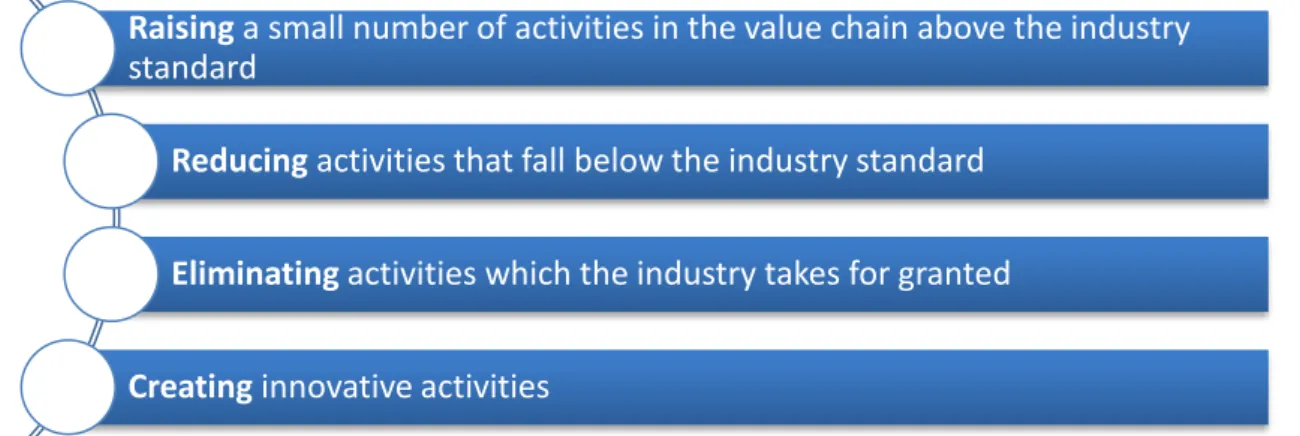
Figure 9 - 4-Steps framework to redesign a value curve ... 40
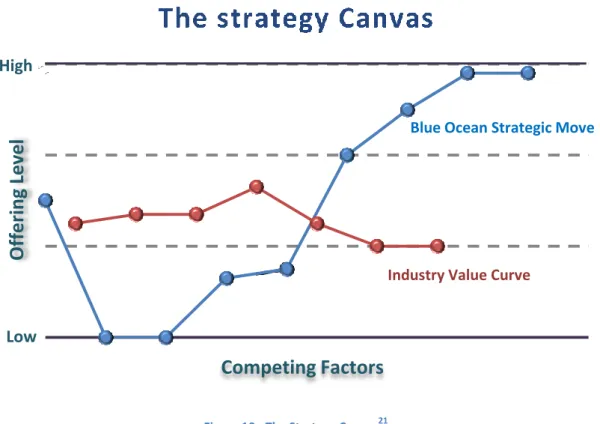
Figure 10 - The Strategy Canvas ... 41
Figure 11 - Business Intelligence Flow applied to ISA ... 52
Figure 12- Hofstede's Cultural Dimensions - Portugal vs Egypt ... 54
Figure 13 - Hoftede's Cultural Dimensions: Portugal vs Brazil ... 58
Figure 14 - 4-Steps framework applied to ISA ... 60
Figure 15 - Political Risk Index, 2013 ... 62
Figure 16 - Stakeholder's Concerns on the Future of ISA Middle East ... 63
vii
List of Terms and Acronyms
B2B – Business to Business
B2B2C – Business to Business to Consumer B2C – Business to Consumer
BI – Business Intelligence
CRM – Customer Relationship Management CSF – Critical Success Factors
EMS – Energy Management Solutions ERP – Enterprise Resource Planning GCC - Gulf Cooperation Council
GSM - Global System for Mobile Communications IDV - Individualism versus Collectivism
IJV – International Joint Venture ISA – Intelligent Senses Anywhere JV – Joint Venture
M2M – Machine-to Machine MAS - Masculinity vs Feminity MNE – Multinational Enterprise NYSE – New York Stock Exchange OLAP - On-line Analytical Processing
OPEC - Organization of the Petroleum Exporting Countries PDI – Power Distance
R&D – Research & Development RDT – Resource Dependence Theory SCM – Supply Change Management
SMDP – Strategic Management Decision Processes SME - Small and medium enterprise
1
I | Introduction
In November 2012, ISA – Intelligent Sensing Anywhere, a Portuguese technological-based company in the oil & gas and energy telemetry business, was required to make a tough decision on its internationalization process. A company born as a start-up in 1990 by the hands of engineering college students was now internationally recognized and awarded for its innovation in the telemetry market and was now listed in NYSE Alternext.
In order to compete internationally, ISA acknowledged the need to invest on technological R&D, to develop solutions which can remotely meter consumption in the areas of Oil, Energy, Environment, Transport, Security and Health Security and Automation. ISA was able to create innovative products and services in the market, and met the requirements of assuring higher energetic efficiency, cost reduction and real time information provided through business intelligence processes.
Its products can be found in more than 20 countries worldwide including Egypt, where ISA established ISA Middle East, an International Joint Venture with an experienced partner in the market, with the aim of getting the knowledge and the experience required to be successful, and to reach other markets in North Africa.
However, the social and political situation grew inversely to the development of the IJV. In July 2012, Mohammed Morsi won the elections in Egypt, against Ahmed Shafiq, with 51% of the votes, which caused the political and religious division of the country between Islamists and Moderate Muslims, Christians and Liberals.
For ISA’s concern, the tension lived in Cairo would soon burst up and become a civil war. ISA’s board would have to make a strategic decision that might change the path of that company in the Middle East
This dissertation has the aim to demonstrate how a Small to Medium Enterprise could achieve an international recognition in the technological market, through the process of Business Intelligence and the development of telemetry solutions for B2B and B2C markets.
Strategic alliances are going to be the core discussion of this paper. More precisely, this dissertation is going be focused on how SMEs can enter with and sustain its strategic alliances in culturally challenging markets.
2 To accomplish this goal, this dissertation will be divided into three parts: the Case Study, the Literature Review and the Teaching Note.
In the Case Study, the firm, its vision, strategic moves and options will be presented. The Literature Review will contain specific frameworks and concepts with the aim of providing a theoretically basis that will be helpful in the analysis of the issues addressed in the Teaching Note. This last section aims to give guidance for an instructor on the described themes and help to stimulate the students’ in-class participation.
In the Literature Review the strategic concepts and frameworks of relevant theorists which should be helpful for analyzing the questions proposed in the Teaching Notes section are highlighted. Finally, in the Teaching Note section an approach for the discussion of the Case Study is suggested. The goal of this section is to give a possible guideline for the instructor to use during class and to stimulate the class discussion. This last section is expected to be complemented with the instructor’s own comments after the in-class discussion.
3
II | Case Study
Henrique Pereira was staring at the world map, drumming his fingers on the table on a sunny day of November 2012, in Coimbra, Portugal, just before a meeting he had called up with his team. ISA – Intelligent Sensing Anywhere, a small to medium sized company in the technological field, with a turnover of 5,4 million euros in the year of 2011, decided it was time to take a hard step. Henrique Pereira had been hired in December 2010 by the company to lead the company into a new market, and now he had a letter from the administration and another from the shareholders with financial data attached on his hands. On the header, in bold letters, it was written what they had been discussing for a few days: “Time to change”. The world map was on Henrique's mind all week. A huge world map was all written upon, not only with seas and countries’ names but also with possibilities and market characteristics. Henrique gathered his team and told them: “It is time for us to go big or go home. Where should we go from here? Should we stay or should we go? How big a risk can we afford to run? This is a good day to make crucial decisions.”
The team went back through all the decisions they took the past few years in order to decide in which markets should they reallocate resources, and which markets were worth entering.
2.1. The Company
In 1990, four newly-graduated physics and computer engineering students at the University of Coimbra, with fresh ideas and knowledge in the development of solutions of acquisition and transmission of data and remote control, decided to create a start-up. ISA – Intelligent Sensing Anywhere, was soon to be a technology-based company, headquartered in Coimbra (see Exhibit 1).
After years of developing and implementing solutions for monitoring and environmental control and benefiting from the evolution of mobile communication, ISA had become the world pioneer in the launching of telemetry solutions through GSM applied to the monitoring of tanks, nets, and gas meters.
For more than 20 years, ISA has specialized in intelligent telemetry and remote management solutions. Its core business consisted of creating and developing products and solutions in order to create value in different fields such as fuel distribution, energetic and hydric efficiency, environmental monitoring and intelligent houses and cities (see Exhibit 2).
4
“Intelligent Sensing Anywhere: We want to take our telemetry systems to all corners of the world, to every home, every car, every person, and every environment! We want to measure the quality of the air
you breathe and of the water that drink, your energy consumption, your health and the status and location of all your assets... and then process these data in an intelligent way, thus building a better
world!”
The company’s vision stated the main goals that lead to the conceptualization of smart cities (Exhibit 3). Step by step ISA was aiming that every city would have a sustainable development that respected the environment by optimizing energetic efficiency through the offer of remote metering solutions that could make every health care, transportation and security company access information in real time.
Although the company’s rivals included multinationals such as Schneider, Siemens, ABB, Honeywell, Pacific Controls and Johnson Controls, these firms did not concentrate on small niches, but on mass markets, which did not require customized solutions, translated in added value for a company like ISA. Henrique clarified that ISA’s technology and incorporated know-how along with an almost exclusive market did not undermine companies with higher turnovers.
Thus, ISA’s general strategy focused on the dominance of a very specific niche, with a technology that was not replicated so far, due to the protection of its patents and know-how. This provided a favorable position for ISA, especially on its main area of Oil & Gas. ISA had a team exclusively dedicated to Business Intelligence1 processes, which was able to raise the industry standards on Machine-to-Machine (M2M) communications in the segment of Oil & Gas. Telemetry, which is ISA’s core business, makes the bridge in M2M communications, reinforcing its great potential among international competitors.
2.2. The Core Strategy
ISA’s offer was very similar across geographical areas – energy management and monitoring solutions grounded on telemetry as a technological component. Through the continuous collection of a large set of variables of energy consumption, the company was able to find inefficient patterns and then to bridge the gaps to raise efficiency, and consequently to save energy and money, a solution that was offered to consumers as the Smart Logistics service, to which ISA constantly added value in order to optimize the use of telemetry by the consumer.
1
Business Intelligence is the process of collecting, storing, treating and diffusing data that can add value and efficiency to a company
5 Henrique explained through a medical analogy that what defined and distinguished the company was ISA’s approach to the problem: “a client of ours has a problem and consults a specialist. The majority of our competitors, by looking at our client, would immediately suggest solutions lined-up with their specialization – a surgery in case they are surgeons, for example. ISA prefers to do a complete and detailed diagnosis which identifies the existing problems and, based on this analysis, suggests better solutions. This not only saves money to clients, but also spares resources and promotes a different way of being efficient. If we see there is the need for surgery, we obviously will do it, but based on real data, not only on opinions and perceptions.”
With this strategy ISA was able to successfully grow since its beginning. Although Henrique recognized that reality never happens exactly as planned, when confronted with cultural differences, the teams focused on the external markets endeavor to understand a different reality. In what concerns the Middle East and North African countries, the time required to close deals was larger than what they initially thought of.
Nevertheless, Henrique always believed in what he was selling and tried to spread that confidence among his team members by remembering them of what had made them successful that far. The Key Success Factors matched across countries: high return on investment, the attained percentage of efficiency and the ability to create value to ISA’s clients (not only they are able to reduce costs, but are also able to differentiate from their competition and therefore give value to their own clients). Henrique highlighted to his team one factor that was particularly relevant for the Middle East: the importance of finding the right partner to be able to develop a trustful win-win business relationship.
Furthermore, the firm’s strong efforts on Research and Development (see Exhibit 4) allowed to treat the information received from its clients and the macroeconomic environment and to turn it into innovative solutions.
On 2011, ISA was able to beat the external crisis on the world economic markets by increasing 40% of its total turnover (see Exhibit 5). This outcome was possible due to the opening of ISA Middle East and ISA South America (see Exhibit 6), as well as due to the enlargement of the spectrum of application of its technologies to new market and client segments2.
2
6
2.3. The International Lever
The team was aware that swimming in a world of sharks would not be easy. The small sized company was well known in the Portuguese energy and oil industry, with clients such as BP, Shell, Mobil, Total, Repsol and Galp, which measured their reservoirs anywhere in the world using ISA’s technology (see Exhibit 7).
But the fact was that, as Henrique stated, “out of borders the firm was a micro, or even a nano, international player”. As so, the managers had to be extremely careful to avoid squandering the limited resources of the company.
The firm soon begun to win relevant international contests, competing at the same level of other relevant players in the world market, and after 10 years it became the leader of the segment of multinational oil companies in what concerns the measurement of gas tanks worldwide.
Thus, the replication of the business model from fuel to water and energy, turned out to be the rising point of ISA and its international projection. ISA’s presence around the 5 continents accounted for 70% of the company’s production3. It was possible to find ISA’s technology in 27 countries, as 52 thousand telemetry systems had been installed. For the company, “this is only a starting point, not a point of arrival”.
In 2005, ISA realized that some geographical areas required not only its exports, but also the physical presence of the company in order to further exploit the market, and defined three year long term internationalization plans, revising and adjusting them annually. In 2008, the company opened its subsidiaries in Spain, France and Brazil. “We need to have people who not only know the market but also feel it, that are able to understand its dynamics” – said Henrique.
2.4. The Flashback
In December 2010, Henrique was deliberately hired to be the Managing Director of the Energy business area of the company, being later on transferred to the international business development as a required step to lead the expansion strategy. After one year Henrique started to be directly involved on the process due to his previous experience as a manager in IT companies with global operations.
3
7 On the beginning of 2011, the top management was considering which areas were more relevant for the international expansion of ISA. At that time the administration saw the huge potential of four regions: Brazil, as an opening door for South America; the Middle East, because of the potential of its market; China, as a lever for the Far East; and the United States for the dimension and maturity of the market.
The initial process for developing the entry strategy for a new market was already quite standardized. It consisted on revising the analysis of the firm’s internal competences and strengths. Then, all the relevant strengths and weaknesses of these four markets and what might affect its entrance were analyzed. The certain successful factor was undeniable for Henrique: “Being in a lot of countries is an essential strategy to mitigate the risk… if one ship sinks, we still stand”. However, he felt that doing an accurate realistic match was the hardest step to overtake.
All of these markets were probed before by sales representatives. In China, for instance, the firm had a commercial gateway since 2009 in Shenzen. Its partner was, on a contract manufacturing basis, a supplier of required electronic equipment for the production of each unit, which in this way would only need to be assembled in Portugal. The process was profitable when one is dealing with high quantities, said Henrique. Twice a year, 2 to 3 employees were sent to Shenzen to control production and to build network in order to prospect the possibility of establishing, in the future, a physical presence of its own in the market. Although the Chinese population had a high purchasing power due to their industrial capacity, manufacturing and cutting-edge technology, the country had endless energy and environmental problems due to the fast industrialization and slovenly control which added to a substantial discrepancy on the degree of external openness to trade, made it less appealing. However, the government was now taking measures in order to reverse the pollution it had been so criticized for. Moreover, China was growing at a strong rate being the second largest economy and might soon surpass the United States.
But “it was imperative to make a choice” – said Henrique. During the second trimester of 2011, the company had already prospected all markets and came to a consensus to make higher investments in only two of the options: Brazil and the Middle East. Henrique saw that the basis for this choice was mainly the opportunity for a faster entry in these markets and the difficulty to simultaneously focus on the four regions.
After the strategy was approved by both administration and shareholders, the following step was to define the implementation procedures.
8
2.5. ISA South America
In 2008, ISA had started a joint-venture in Brazil which did not pay off at the time as the firm had “the wrong strategy, the wrong partner and the wrong resources”, explained Henrique. Nevertheless, the growing Brazilian market could not be dismissed. As Henrique stated, “Brazil has it all – industry, research, growing knowledge and natural resources – the engine that Europe lacks”. However, Brazil had a strong protectionist policy. Firms that wanted to do business in Brazil had to settle there and to hire and train a minimum percentage of Brazilian workers, in order to increase local knowledge and employment.
ISA started in Brazil as a wholly-owned subsidiary and its new strategic plan included SABESP as the main client. The local state owned company that provides water and sewage services to commercial, industrial and residential users in São Paulo state, covers 50km of São Paulo’s region, easily reaching 26.7 million customers - or 60% of this State’s population. ISA also escalated faster in this market due to the law for mandatory sub metering installment in condominiums. SABESP connected one new client per day and had, at this point, more than 7 million active accounts, having ISA has it main supplier of telemetry systems.
Henrique had been giving support to the activities in Brazil until June 2012, when the firm hired a general manager, a Portuguese engineer that had been living in Brazil for the last twenty years, to locally control ISA South America. He stated that “the Brazilian market is mainly attractive for its scale”. But for how long? Although the utility market was by far more competitive than the Portuguese one, Brazilian clients had lower resistance to change and therefore, they easily changed suppliers.Henrique believed that the World Cup in 2014 and the Olympic Games in 2016 would be the peak of its growth rate. However, by then, Brazil would already have the technical knowledge and economic strength to continue growing, and to keep being the economic power house of South America.
2.6. ISA Middle East
For several months in 2011, the team had been prospecting the markets of the United Arab Emirates, mainly Dubai, as well as Jordan, Turkey and Saudi Arabia. For each of them the team had evaluated its maturity and potential, and negotiated the frames for suitable partnerships. They thought of Jordan, “the poor parent of the Arab world”, in an attempt to leverage and find business in a sustainable area with the prospects of extending it to other countries. Nevertheless, the core reason was the inflated electricity price in the country that would
9 maximize ISA’s competitiveness on the energy sector. In spite of being physically installed in the Middle East, the choice of having a partner with a big network was based on the need of being cost efficient at this early stage of the process.
The same happened in Turkey, which was growing at a rhythm close to 2 digits4. A huge market which might open the doors for the Asian world. It had a central location close to Africa, the Middle East and the Arab World and yet, it did not culturally fit in any of these continents. A country which raised doubts and controversy among the team for not having solid relationships with any of these geographies. Notwithstanding, it had the size and opportunities for being profitable on a stand-along basis and ISA could take advantage of Turkey’s strategic vector towards Brazil, to easily create a partnership. For the past few weeks, the team had also been evaluating business proposals and Henrique was confident they were going to have the first projects by 2013.
On the same stage, moving South, a giant was waiting for ISA. Saudi Arabia was a very interesting country for business once a person learned how to deal and respect the habits and culture. Nothing is more important for Saudis than a relationship built on trust, – said Henrique – and the best connection one can make in the country is with a respected and credible family. Moreover, although Saudi Arabia had a lot of historical conflicts with other countries, none of them was with Portugal, which could be beneficial for the company in the search for a complementary partner.
The team thought of Egypt to be a reasonable market choice since it had one of the largest populations in North Africa and the Middle East, and was a basis for covering all African countries.
ISA started establishing contacts with the Arab Portuguese Chamber of Commerce. The institution, which mission was to support and develop commercial and cultural relationships between Portugal and the 22 member countries of the league of the Arab States, was the main vehicle to find a partner.
An interesting opportunity was to create a joint venture with Wahid Tawfik, a well-known Arabian business man whom the ISA managers already knew from his former successful experience at the DuPont Group, and who was interested in the Portuguese company as a way to reach the Brazilian market. Wahid Tawfik was the CEO of Calensia, a consulting firm focused on business and operational development and investment advice which was already working
4
10 with key markets for ISA, such as fuel distribution, telecommunications and agricultural production farms businesses. Henrique’s team saw that the partner had good technical solutions and an extensive networking that ISA could benefit from - they could aggregate their complementary strengths in terms of business and value chain.
The main goal of the Joint Venture was to create local synergies which would allow the alliance to reach all the countries of the Persian Gulf and the Arab World. However, it did not take a long time for ISA to realize that it would be as impossible as “covering the USA through a joint venture established in México”. Cultural differences and political barriers would be hard to surpass. Thus, after being established in Cairo for a few months and having some interesting partnership opportunities on their hands, Henrique and Wahid Tawfik considered the possibility of focusing the Egyptian joint venture on North Africa and to approach directly the Middle East from Portugal, for the market characteristics were highly differentiated between these regions. Therefore, in the first quarter of 2012, Wahid Tawfik took the chair of managing director of ISA Middle East.
Although the Arabic countries still had technical gaps, Henrique saw them as an opportunity to sell knowledge and services. The Portuguese team for the Middle East market, led by Henrique, saw a traditional but saturated market of oil and gas as a threat to its business, and consequently decided to offer energy efficiency solutions, to which potential clients were becoming increasingly responsive. In addition, Henrique claimed the market to be poorly exploited in terms of energy and hydric telemetry, which could lead to the increasing adoption of solutions which fit with ISA’s offer. Moreover, it was important for the firm to enjoy the ease of acceptance Portugal had in their commercial relationships for its war conflict free past with Arab countries, and the geographical proximity advantage.
2.7. Local Presence and International Sales Process
During that meeting Henrique also wondered about which of ISA’s employees he could suggest to execute the projects soon to be implemented, and who was prepared to face such a cultural impact while representing the company. In spite of having a strong team on the headquarters, ten employees were already sent to work in Cairo, to work closely on the projects.
The sales procedure always began by establishing B2B projects through the local partners’ network, and therefore enhancing the importance of the relationship with his partners as a way to reach clients. Henrique was explaining how the need for a direct contact facilitated the initial process complementing their market segmentation for water and energetic efficiency,
11 which was mainly focused on Banking, Shopping Centers, Facility Management, Retail Stores, and Public Administration. The next step was to find opportunities that fit in ISA’s offer through searching for gaps in the firms’ value chain. As solutions were tailored to each client’s needs, Henrique knew that project prices could vary between 50.000€ and 1.000.000€. The main difference between geographies ended up being the cost of imports for the equipment, which weighed more in Brazil.
Later on, the sales team discussed about a logical solution within the existent constraints, and finally reached a commercial proposal for providing the solution. This was negotiated with the client, with the aim of finding a point of approval in order to turn it into a real project. From this point on, ISA’s representative in the country monitored the project execution and provided customer support along with the local partner, reporting relevant information directly to Henrique.
After rendering a successful project, ISA used it as a reference to begin new ones within the same market.
2.8. Magnifying ISA
As an internationalized company, ISA’s decisions on entering new markets were not always crystal clear. There were, along the way, some tough decisions had to make without knowing what was at the end of the road. The company’s attempt to enter the United States’ market had been one of them. ISA had an approaching strategy that didn’t pay off and had to quit. In 2010, the main reason was the regulatory barrier to the entry of new products in the market, which entailed specific certifications and modifications, and a lack of guidelines on the best way to do it. The fierce competition in the country was also threatening but Henrique was mainly concerned with whether they would be able to develop a product that could be commercialized in the USA in the foreseeable future.
But Henrique thought that sometimes numbers say gold, while reasoning says no. Angola for example, a market where many Portuguese companies were doing business, was not attractive for ISA for strategic reasons. “We are not in the business of giving money away in order to develop our business”– said Henrique. “It’s a country where everything only moves under bribery, which allied to an overcrowded market and the security problem, turns it into a very unattractive market for Portuguese firms.” ISA’s strategic thinking always avoided going into markets which could obviously be dangerous for its business, such as Nigeria. Henrique explained that “it is crucial to understand a market; not even doing business in Brazil is
clear-12 cut. And when you go to the Arab world this factor of difficulty multiplies by 10 or 100 due to cultural discrepancy.” In these countries, business develops much slower, as the Arab speaks in the eyes and the relationship takes such a big role.
However, what seems to be cross-cutting and a must for every country is a good support system both in Portugal and at the local market, a well-conceived realistic plan and, last but not the least, an appropriate investment on a considerably long timeline. According to Henrique, the reason for the long timeline lied on the fact that “Portuguese companies are never going to be a dominant player in the international market, as Portugal does not have a very strong internal market”. The difficulty of most companies in the Middle East, he explained, was that they only make 6-month investments. After that semester, they realize that it was a very short time to develop the necessary commercial relationship and had already spent their available capital, forcing them to leave the market.
2.9. NYSE Alternext
The international image of the firm had improved in the last years. Since Henrique entered the firm, all employees and managers worked together to understand what had to be fine-tuned, aligning their internal departments to move forward.
As so, in June 2012, they were able to reach the milestone they have been working on for the last years. ISA was the first Portuguese company to be admitted at the NYSE Alternext, the equity trading market for small to medium sized companies. On Henrique’s perspective, there were three main reasons why this was so desirable:
Firstly, for a matter of internal standards. A listed company has far more obligations of strictness and discipline, which meant additional quality for the whole firm.
Secondly, for the image it conveyed to the market, a credibility measure for showing up with a particular background. It was a differentiation factor that eased the approach to the market, showing the barriers they crossed over to reach this target. The administration desire was for this to work as an international certification.
Thirdly, as for most companies, for financial issues. The shareholder structure had been modified 2 years before and was still very stable. Nevertheless, the administration was being cautious and forearming future investments on new markets. Adding up to the possible need of new investors, the existence of a far more transparent and visible operation was very important for trust issues.
13 However, not everything was bright. Being on display for the whole world to see was a two way street. When something went wrong, the firm was injured. Moreover, for competitive issues, competitors had access to ISA’s data and strategic plans that they did not have previously.
2.10. The Unforeseen
However, in July 2012, the game turned against the company. Looking back, Henrique saw a difficult market that has been slowly opening to ISA since the first fuel tanks solution being installed in Egypt5, reaching a time of elections. For the first semester of 2012, its entrance in the market had actually exceeded its expectations. The pilot tests were successful and the team, which included two Portuguese engineers of ISA and six Egyptians, was also establishing new contracts.
The instability lived in all the North African and Middle Eastern countries since the Arab Spring6, were mainly due to the attempt to overthrow the regime of President Hosni Mubarak. Millions of protesters participated in the Egyptian Revolution in 2011. President Murabak stepped down in February 2011 and the Air Force’s chief, Ahmed Shafik, assumed the government’s chair. At the same time, the Muslim Brotherhood7, an Islamic organization of great influence in Egypt, became legal and founded the Freedom and Justice Party which was led by Mohammed Morsi.
In July 2012, Mohammed Morsi was the first president being democratically elected in Egypt beating Ahmed Shafiq with 51% of the votes8. At the inaugural ceremony, Morsi stated "Today
we start a new chapter in the history of Egypt. We turn an old page of an ugly era."
To ISA’s concern, the straight division of the country between Islamist governance and the moderate Muslims, Christians and liberals could only trigger a civil war.
2.11. Next Steps
On the day after the meeting, Henrique was going to fly back to Egypt. ISA continued having a special relationship with the Arab World. For the last year, he had been spending most of his
5
ISA installs its first equipment in the Middle East – (artigo)
6
Korotayev A., Zinkina J., (2011)
7
“What is the Muslim Brotherhood?”, CNN, June 25, 2012
8
14 time between Jordan, Egypt and Saudi Arabia in order to develop his local relationships as he knew that it was essential to continue meeting with his partners who already trusted him. Henrique stood up from his chair, and did a circle around North Africa and the Middle East. He knew that at this point these markets were very important for ISA and he could not dismiss them.
The future could become dangerous to a joint venture which had recently entered the market and now was facing political and economic insecurity. The anxiety on this matter spread not only within the members of ISA Middle East but also between shareholders, who were soon requesting ISA to take action. Moreover, potential clients were not ready to invest in new contracts as the instability in Egypt would certainly reduce foreign investment and affect the whole economy for an undefined period of time. As for now, the population was living a nightmare. One for which they could not afford to think further than assuring their own survival.
Before flying back to Cairo, Henrique knocked on the office door of the CEO, José Basílio Simões, to discuss the outputs of the meeting. He had several options on his mind, and none of them seemed the perfect choice.
After talking for a few hours, the CEO stressed out the importance of this decision for the company’s future and how reluctant on the future of the Persian Golf he was. The region was undoubtedly promising but the social and economic conflicts were constraining all business activities.
The CEO was going to meet with the board during the next days and it would be on their hands to decide whether it made sense for ISA to divest in the North African and the Middle East markets and where it would make sense to have the green lights on.
15
Shared Services
Financial and Corporate Support People, Careers and Infrastructures Marketing &Communication ISA Academy
ISA PRO Purchases, Warehouse
and Production
CTO
Quality
ISA Oil & Gas Business Unit
Business Developme nt Project Manageme nt Office Marketing & Product Manageme nt Costumer Support Consulting Technical Operations
ISA Energy Business Unit
Business Developme nt Project Manageme nt Office Marketing & Product Manageme nt Costumer Support Solution Design Technical Operations
Technology
Engineering IT Quality Assurance & Process Enforcement
Exhibit 1 | Group Structure in 2012
Source: ISA, Annual Report 2011
Exhibit 2 | Internal Structure
16
Investment 2011 (CapEx)
Facilities improvement Basic Equipment Subsidiaries R&D
Exhibit 3 | ISA’s representation of a Smart City
Source: ISA, Annual Report 2012
Exhibit 4 | Investment in 2011
17 0 500 1.000 1.500 2.000 2.500 3.000
BU Oil&Gas BU Energy Other
M ill ion eu ros 2009 2010 2011 0 500 1.000 1.500 2.000 2.500 3.000 3.500 4.000 4.500
Portugal European Union Other
M ill io n E u ro s 2009 2010 2011
Exhibit 5 | Turnover Evolution per Business Unit
Source: ISA, Annual Report 2011
Exhibit 6 | Turnover Evolution per Market
*The atypical growth of turnover in Portugal from 2010 to 2011, given the company’s history, was “mainly justified by the Energy Efficient project implemented in the country in 2011” (Source: ISA, Annual Report 2011).
18
Exhibit 7 | Main Clients in the Portuguese Market
19
III | Literature Review
The main goal of this chapter is to review theoretical frameworks concerning the case study. Consequently, this section encompasses four main issues: Innovation and TR&D, International Negotiation, Entry Modes and Sustainability.
It is important to notice that the information presented in this section mostly concerns the perspective of technological Small to Medium Enterprises (SMEs) when applying an internationalization strategy, focusing on the challenges these have to surpass in the achievement of success.
3.1. R&D and Innovation in IJVs
3.1.1. Innovation as a Competitive Advantage
In 1942 Schumpeter defined innovation as the concretization of original ideas for products and processes differentiating it from invention, which in its turn was the action prior to innovation, the creation of these ideas and processes. Innovation can take the form of new inventions or the form of more effective means of organization and production which improve the traditional logistics (Ayyagari et al., 2011). The last form is commonly seen in emerging countries where processes which are already in use in developed countries are adjusted and applied to the reality of these economies.
From a strictly rational point of view, innovation generates unique organizational competences that lead to competitive advantage (Teece et al., 1997; Eisenhardt and Martin 2000; Zollo and Winter, 2002 as mentioned by Hall and Martin, 2005). However, some authors argue that when the intensity of competition increases, a firm’s freedom to deviate from its competitors by applying innovative processes might decrease as that might not be well understood by their customers and therefore incur in unexpected costs whenever these actions fail (Ayyagari et al., 2011). Moreover, this increasing competition might increase the innovation in incumbent firms which are technologically advanced and decrease its growth for the less efficient ones (Aghion et al. 2009, as mentioned by Ayyagari et al., 2011).
There is common ground in literature on the importance that innovative responses to changing economic environments have on economic development. In developing countries, SMEs are considered to be the main contributors of innovation. However, in their study, Ayyagari et al. shown that generally the most innovative firms tend to be the larger and younger ones, with
20 highly educated managers which have some managerial experience and where the exporting activity and private ownership also show to be relevant. The ones with more access to external financing, the ones competing internationally and the firms which borrow in foreign currency indicate higher levels of innovation. On the other hand, state-owned firms showed to be the least innovative, cetaris paribus. The exposure to foreign markets’ competition forces both MNEs and SMEs to innovate in order to survive to changing environments mainly in countries where governance is ineffective.
3.1.2. Disruptive and Sustaining Technologies
Disruptive technologies can be defined as the technologies that break through the traditional market capabilities and generate a new competitive environment (Kassicieh et al., 2002). On the other hand, sustaining technologies improve the already established practices and add value to the value chain (Kassicieh et al., 2002).
Figure 1 - Disruptive technology innovation model9
Clayton M. Christensen, the pioneer of this view, stated that as disruptive technologies have different attributes from market products, these may not be valued by its existing customers and therefore have higher risk for their resistance. Moreover, Freeman (1982) categorized innovation uncertainty concerning four fields: technological feasibility, commercial viability, organizational capability and social acceptability (Hall and Martin, 2005). Consequently, this reinforces the need for strategic flexibility, by pulling and pushing discontinuous developments in a firm’s environment and building dynamic capabilities to better use their resources in order to answer the needs of changing markets (Walsh & Kirchhoff, 2002).
9
21 As we can see in the above scheme (Figure 1), new technologies might come from the inside of the industry, originated by the core competencies of a firm. These are intended as the knowledge and capabilities underlying a firm’s activity and that provide a competitive advantage to the firm (Prahalad and Hammel 1991, as quoted by Walsh, 2002). Although this source tends to create only evolutionary technology, R&D efforts within the firm can also create radical technologies.
When technologies are originated exogenously, they break through the existing industry and create new markets for their products, as it is risky to compete against existing technology that is already familiar to the consumer. These technologies create discontinuous innovation as they are a product of disruptive inventions, which are harder to commercialize due to the risk of newness: It is difficult but mandatory that consumers create new habits to take all the benefits of the technology and that can be done through proving (mainly to lead user groups), that they perform better and are less costly (Walsh & Kirchhoff, 2002)
Regardless of their difficult commercialization, disruptive innovations are protected by intellectual property which leads to competitive advantage and sustainability until its patent duration ends and, at that time, the disruptive technology will have turned into evolutionary as it is already familiar to consumers (Bower and Christensen, 1995).
In what concerns the flow of the evolutionary technology, it produces continuous innovations as an improvement of established processes, in result of consumers’ behavioral change who demand better products (Walsh & Kirchhoff, 2002).
The scheme suggests that the commercialization of technologies should be done in a different way, as they imply distinctive efforts to attract demand. There is also a difference between the goals of each of them. Firms that place their stakes on disruptive technologies are more concerned on their products’ success and on R&D support whilst the ones applying sustaining technologies focus on the existing market potential and on increasing their revenues (Kassicieh, 2002). As products resulting from the former are usually more practical and simpler, this can lead them to exceed what the market demands and ultimately to occupy the lower end of the traditional market (Christensen, 1997).
In this line of thought, Stephen Walsh (2002) focus on Madiquis idea recognition model (1969) who differentiates two sources of innovation: recognizing technological feasibility, called “technological push” or recognizing potential demand for an invention, known as “market pull”, stating that both of them can lead to sustainable competitive advantage.
22 Walsh perceived a stream of profits deriving from the market pull view, where the loyalty and dependence of a consumer is superior due to continuous innovations built on existing technologies which in their turn are the outcome of long-term R&D efforts.
On the other hand, building on Bower and Christensen (1995) perspective, Walsh reinforces the risk of commercializing disruptive technologies for the resistance to change which might affect the technological transfer. However, the inexistence of an established customer base can provide flexibility to new firms. The user application type of disruptive technologies based on a technological push strategy is stated to be, as Schumpeter (1942) emphasizes in his work, a result of “creative destruction”, as existing markets are eliminated or enlarged and new ones are created for the new technology, which he refers to as an important driver of economic progress and capitalism. Adding to Schumpeter’s work, “Innovation without creative destruction implies finding new markets and thus creating new consumer demand” (Burke et al 2009:21).
Successful disruptive technologies are said to dethrone the industry leaders as incumbents do not know how to compete in an emerging field (Cooper and Smith, 1992 as quoted by Utterback, 2005). Utterback (2005: 5) states that “the change from one technological paradigm that has shaped a firm to a new paradigm formed by economic and social change presents a significant challenge for incumbent firms”.
Christensen alleges that establishing new market segments is a means of delivering the new technology to early adopters and that once this innovation reaches most users it begins to compete with the older products of the traditional market (Christensen 1997, as quoted by Utterback 2005).
Moreover, Christensen (1995) claims that investments in disruptive technologies by established firms would not bring benefits as the existing customer base would not be able to use them, these technologies offer lower margins and these firms are not acting on an emerging market. As so, he states that firms willing to create disruptive growth should attempt to win the layer of non-consumers as it is much easier than stealing from competition.
3.1.3. Innovation & Stakeholders
It is also important to enhance the relationship between innovative companies and its stakeholders. For this purpose, Donaldson and Preston (1995) distinguished the role of a firm’s stakeholders for their importance and involvement with the firm. In their literature, they have considered the normative approach to be the one concerning corporate stakeholders, to which
23 the firm has a moral obligation and direct involvement (Philips et al., 2003), such as the firm’s employees, investors, customers, suppliers, financiers and local communities. On the other hand, instrumental (Donaldson and Preston 1995) shareholders are viewed as the ones to which the firm has no moral obligation (Philips et al. 2003) but should also be managed as they can affect the firm in a positive or negative way. This group which among others includes the media, activists and competitors, can enhance a firm’s competitive advantage if the firm is able to establish trustful relationships (Hall and Martin, 2005).
In this line of thought, identifying which stakeholders present higher power of influence, higher legitimacy among the society and higher urgency degree, is seen as a primordial issue in the design of innovative solutions mainly for the ethical issues at stake (Mitchell et al., 1997 as mentioned by Hall and Martin 2005).
According to Hall and Martin (2005: 276), “a key challenge in radical technology development is the ability to accommodate such pressures (…), to exploit the potential benefits as well as assess, manage and minimize the perceived or unforeseen unintended negative consequences of the technology”.
Consequently, the authors conclude that social feasibility represents another barrier to overcome in the path of developing successful disruptive technologies.
“The key to innovative success is to minimize the disruption within the innovation value-added chain”10
3.1.4. The Contribution of Technological R&D for Innovation in
SMEs
Innovative SMEs who invest in improving their R&D competences are more propitious to develop technological alliances and the required cooperation to acquire external resources which will bring them to a high standard, leveling them up to compete on the level of big companies. Audretsch and Vivarelli, 1996, as quoted by Barajas, Huergo and Moreno, 2012). The firms’ dimension is not the only variable that determines its impact on possible technological alliances. A R&D unit previously running inside the firm, the knowledge of the
10
24 R&D personnel, the number of patents and the previous experience in partnerships are also positive influencers of a firm’s success. Furthermore, the decision to make a technological R&D alliance derives from “a combination of internal capacity and external needs”. (Barajas et al., 2012:5).
“Following the resource-based theory, cooperative and in-house R&D activities are considered complementary strategies aiming to increase technological capacities of firms.” (Barajas, et al., 2012: 5). In conclusion, “economic performance seems to be more influenced by the type of technological partner, the distance to the market of the cooperative project and the type of firm” (Colombo et al.,2009).
3.1.5. The innovation value curve
The value curve is a very common tool used across all types of companies. It represents the level at which a firm operates on all the characteristics of the industry that are valued by its customers and draws the position of its competitors on the same characteristics, allowing a comparison.
In its turn, the innovation value curve brings new ground for determining which of the existing value drivers need to be repositioned or even dropped and whether some new value drivers should be introduced in order to determine a firm’s optimal positioning (Narasimhalu, 2007). The importance of each value driver will depend on the cost sensitivity of consumers on that specific matter. As “an innovation is only as good as the value it creates for the customer” (Narasimhalu, 2007: 556), it is important to balance the effective cost of a innovation by upgrading the most valued drivers and downgrading the least valued ones.
For this matter, two methods are proposed by the author: To begin by placing all available funds on the most preferable drivers until they reach the desired level by consumers and continue down the scale, and if two or more have the same importance, to begin where the unit upgrade cost is lower or to place an equal amount of funds to each valued characteristic and therefore, to upgrade them equally.
3.1.6. Business Intelligence Processes
In the complex world of data gathering, Business Intelligence (BI) aroused as a solution for treating the collected information and for making it useful for decision making processes. This process of collecting, treating and diffusing information is crucial to keep up with changing envir
25 onments and having information about it on your hands brings easiness to apply realistic tactics and strategies. The success of these processes mainly depends on the reliability of the collected data as well as the way it is converted into important information. For increasing the effectiveness and the efficiency of the companies’ logistics, knowledge and resources, BI has the potential of increasing firms competiveness (Zeng et all. 2006).
Figure 2 - Generic Business Intelligence Framework11
For understanding how Business Intelligence works in practice, it is important to know the different stages and succeed in all of them. The first step is acquiring data, which can be done through observing consumers behavior and preferences, the supply chain and the streams of information across the organization through integrated systems such as Customer Relationship Management (CRM), Enterprise Resource Planning (ERP) and Supply Chain Management (SCM). Afterwards, this complex information is stored on the Data Warehouse, and analyzed by on-line analytical processing (OLAP) techniques. After the information is organized, the next process is known as Data Mining, the identification of patterns which will help solving specific business problems through predictions, clustering and estimations.
These platforms support companies with easy-to-use applications across all employees, providing them important tools to understand customers and markets leading all the organization to make better decisions and therefore, leading to higher competitiveness. For this purpose, it is crucial to understand that all of these processes should be undertaken, as investing efforts in the first stages without deploying the analyzed data won’t bring the ultimate expected results (Zeng et al., 2006). “The business value of BI lies in its use within management processes that impact operational processes that drive revenue or reduce costs, and/or in its use within those operational processes themselves” (Williams and Williams, 2003: 3). As so, to create value through BI, the firm should be strategically aligned and the business questions that require an answer should be clear, so that BI can deliver value by anticipating future changes and needs. (Williams and William, 2003).
11
26
3.2. International Negotiation
Gerard Hendrik Hofstede once said that "Culture is more often a source of conflict than of synergy. Cultural differences are a nuisance at best and often a disaster." For as long as the human being has its roots, globalization cannot overcome the impact of managing style and strategic behavior as related to one’s cultural background (Dimitratos et al., 2011).
Thus, it is important to realize how culture affects strategic management decision-making processes (SMDP) in an international context in order to avoid ineffective strategic moves in business relations (Tse, Lee, Vertinsky, Wehrun 1988, as quoted by P. Dimitratos et al. 2011) SMDP involves steps and tactics that go from the identification of stimulus for action and end with its commitment. It is therefore crucial for the success of long-term performance and the achievement of competitive advantage which require reconfiguration of resources and competencies within the firm (Dimitratos et al. 2011).
Based on the approach of Dimitratos et al. (2011), a relationship between Hofstede cultural dimensions and three dimensions of SDMP is shown here:
Hierarchical decentralization, which refers to the extent of authority and power across firms in the SMDP;
Later communication, which examines the contribution to the SMDP of each business unit and department and the internal communication effectiveness;
Formalization, concerns the extent to which organizational policies and plans are integrated in the SMDP
3.2.1. Hofstede dimensions
On his extensive research in forty countries, Hofstede (1980) considered that the four main dimensions of distinctiveness in cultural background that impact international negotiation concerned power distance, individualism vs collectivism, uncertainty avoidance and masculinity vs femininity, as can be seen in Figure 3. However, in 1988, Hofstede and Bond developed a new element due to the discovery of specificities in Asian countries: the long-term vs short-term orientation, which complement the framework dimensions.
27
Figure 3 - Hofstede's Cultural Dimensions Theory12
The first dimension, power distance, refers to the degree of acceptance and expectation of a hierarchical order within firms. The higher this element scores, the more is the inequality in power distribution.
Uncertainty avoidance concerns the extent to which individuals in a country deal and tolerate risk and the unknown. A country with high score on this matter will be a sign of strict rules and laws implemented to avert uncertainty.
In its turn, individualism relates to the lack of concern of one person with others. Working as a group and celebrating achievements with others is a characteristic of collectivist cultures. The fourth dimension, masculinity, concerns the degree of gender differentiation and therefore has a high impact on women’ rights in the society and on their careers. A society where women have no decision power and have unequal opportunities would imply a high masculinity degree.
The fifth and most recent dimension, long or short-term differentiation, is mostly related to how societies face change. A high long-term differentiation indicates that the country is highly attached to traditions and values, has a strong work-ethic and prioritizes social obligations. Hofstede considers that power distance and uncertainty avoidance are the main dimensions as they can “influence the success of the SMDP by shaping expectations and commitment of organizational participants” (Dimitratos et al, 2011: 196).
12
28 As so, Dimitratos (2011) concluded in his research that high power distance in the international firm location has a negative relation with hierarchical decentralization for what concerns international SMDP of that firm. Furthermore, individualism was not found to be negatively related to lateral communication. Although individualistic cultures’ concern is focus on the self, these tend to pro-actively gather information and consequently use the information gathered in the SMDP. Ultimately, formalization in SMDP was found to be correlated with uncertainty avoidance as higher control levels are required in processes to preclude risks in these cultures.
3.3. Entry Modes
On a daily business work, companies face the need to make several decisions on their budget for marketing implementation, on the launching of new product lines, on their human capital needs, etc.. Nevertheless, when it comes to planning for future long-term outcomes, there are some decisions that portray higher responsibility and one of them is the decision of entering new markets. The reasons underlying the decision of entering new markets are usually related to an attempt of minimizing the risk by diversifying the geography where the firm works, or increasing sales and production volume (economies of scale) in non-saturated markets where the company sees an opportunity to succeed (Arnold, 2003).
For deciding on the path to “go global”, there is not a singular way that fits every company. On the contrary, firms should decide on the basis of the transaction cost theory (Brouthers and Nakos, 2004) which can lead them to the following decisions:
- Direct or Indirect Exporting - Franchising,
- Licensing, - Joint-venturing,
- Management contracting - Contract manufacturing
- Wholly-owned overseas subsidiaries
- Green-field investment: 100% owned subsidiary, creating a new entity - Full Acquisition: Acquiring 100% of a local firm
- Partially-owned overseas subsidiaries - Partial Acquisition
29 The transaction cost theory has been widely used across different literature of internationalization, as a tool to determine the entry mode choice. This theory concerns three variables from which both MNEs and SMEs can take valuable conclusions. The first one, Asset Specificity, is related “to the physical and human resources, which may lose value in another use, that a company employs to complete a specific task” (Brouthers and Nakos, 2004:3). For example, when the expertise of a technician is high, the danger of losing it to competition and replacing it is higher. Secondly, firms are required to safeguard themselves from possible opportunistic behaviors of the foreign firms through the use of legal control tools and learning experience. This type of threat has the name of Behavioral Uncertainty. Lastly, the hostility of the market and its political risk cause Environmental Uncertainty to the new entrant. (Brouthers and Nakos, 2004).
Research has proven that equity modes of entry are preferred not only by SMES that make larger asset-specific investments but also by the ones perceiving lower environmental uncertainties in the target market and by the ones with advanced internal control, for a matter of risk and internal control (Brouthers and Nakos, 2004).
3.3.1. Strategic Alliances
"Few companies have everything that they need. You may need money, customers, or product. No matter what you need, there is someone who has it. That someone is a potential
Corporate Partner." - Curtis E. Sahakian
Strategic Alliances are partnerships in which two or more firms join their efforts and complement each other in order to achieve what would be impossible or less profitable without a partner. The imperative duration, the quantity of required resources and the degree of autonomy within the alliance vary according to each case, therefore creating different types of alliances which can go from a simple collaboration, to a strategic partnership, the creation of a joint-venture or of a group structure until the merger of both companies which represents the higher degree of a strategic alliance (Yan, 1998; Hanvanich, 2003).
However, it is highly important to weight the risks, knowledge and skills of the potential partner to assure its feasibility and profitability, as several problems may arise. Cultural differences, for example, “make an IJV more susceptible to termination than a wholly-owned subsidiary” (Hanvanich et al., 2003: 6).