2010 Sept-Oct;18(5):1031-8 www.eerp.usp.br/rlae
Corresponding Author:
Kely Vanessa Leite Gomes da Silva
Universidade Federal do Piauí. Departamento de Enfermagem. Rua Cícero Eduardo, s/n
Bairro Junco
CEP: 64600-000 Picos, PI, Brasil E-mail: [email protected]
Analysis of Nursing Dissertations and Theses on Mental Health,
Brazil, 1979-2007
Kely Vanessa Leite Gomes da Silva
1Arisa Nara Saldanha de Almeida
2Ana Ruth Macedo Monteiro
3Lia Carneiro Silveira
3Ana Virgínia de Melo Fialho
3Thereza Maria Magalhães Moreira
3This bibliographic study analyzes scientific texts published in the CEPEn database in the
mental health field (1979-2007). A total of 280 abstracts were investigated, of which 208
were Master’s theses. The individuals investigated in these studies were professionals (57),
patients (50), and professors and/or students (18). Among the themes addressed between
2000 and 2007 were the following: Nursing Care in Mental Health (40), Perception in Mental
Health (37); and Transversality in Mental Health Care (27). This study provided an overview
of the scientific research produced in the mental health field in Brazilian nursing graduate
programs. We expect this study to elicit reflections concerning mental health care practice
and enable new approaches for nursing promoting health and the prevention of diseases in
order to enable patients to recover their citizenship, autonomy and quality of life.
Descriptors: Mental Health; Psychiatric Nursing; Nursing Research.
1 RN, Master’s Student, Universidade Estadual do Ceará, CE, Brazil. Scholarship Holder CAPES. Professor, Faculdade Leão Sampaio,
CE, Brazil. E-mail: [email protected].
2 RN, Master’s Student, Universidade Estadual do Ceará, CE, Brazil. Scholarship Holder CAPES. E-mail: [email protected]. 3 RN, Ph.D. in Nursing, Professor, Universidade Estadual do Ceará, CE, Brazil. E-mail: Ana Ruth - [email protected],
Análise das dissertações e teses de enfermagem sobre saúde mental, Brasil, 1979-2007
Trata-se de estudo bibliográico, com o objetivo de analisar os textos cientíicos,
divulgados na base de dados CEPEn, na área de saúde mental (1979-2007). O total de resumos estudados foi 280, dos quais 208 constituíam-se de dissertações de mestrado.
Os sujeitos que se destacaram foram os proissionais (57) e pacientes (50). Dentre as
temáticas abordadas evidenciaram-se (2000-2007): o cuidado de enfermagem em saúde mental (40) e a percepção em saúde mental (37). Este trabalho possibilitou visualização
panorâmica acerca da produção cientíica em saúde mental nos cursos de pós-graduação em enfermagem, no Brasil. Espera-se, aqui, que o estudo suscite relexões acerca das
práticas de cuidado em saúde mental e possibilite novas abordagens em enfermagem, com vistas à promoção da saúde e prevenção de agravos que favoreçam a cidadania,
autonomia e qualidade de vida dos sujeitos envolvidos.
Descritores: Saúde Mental; Enfermagem Psiquiátrica; Pesquisa em Enfermagem.
Análisis de las disertaciones y tesis de enfermería sobre salud mental, Brasil, 1979-2007
Se trata de un estudio bibliográico, con el objetivo de analizar los textos cientíicos
divulgados en la base de datos CEPEn en el área de salud mental (1979-2007). El total de resúmenes estudiados fueron 280, de los cuales 208 eran disertaciones de maestría.
Los sujetos que se destacaron fueron los profesionales (57) y pacientes (50). Entre
las temáticas abordadas se evidenciaron (2000-2007): el Cuidado de Enfermería en
Salud Mental (40) y la Percepción en Salud Mental (37). Este trabajo posibilitó obtener una visión panorámica sobre la producción cientíica en salud mental en los cursos de Posgraduación en Enfermería en Brasil. Esperamos que el estudio incentive la relexión sobre las prácticas de cuidado en salud mental y posibilite nuevos abordajes en enfermería con el objetivo de promover la salud y prevenir daños, de forma a favorecer la ciudadanía, la autonomía y la calidad de vida de los sujetos envueltos.
Descriptores: Salud Mental; Enfermería Psiquiátrica; Investigación en Enfermería.
Introduction
The institutionalization of psychiatry was established
in the mid 17th Century during the Enlightenment era.
The use of reasoning as exempliied by ancient Greeks
was recovered by philosophers during this time and irrationality, represented by insane individuals and “disturbers of the peace”, was contained and corrected in prisons, schools, workhouses and madhouses
that emerged throughout Europe in the 18th and 19th
centuries(1).
Classical psychiatry was developed with the creation
of asylums, considered an eficacious therapeutic model,
viewing isolation and abusive practices as a necessary evil for achieving a cure. After psychiatry, movements contrary to this instituted knowledge and practice emerged aiming to reform the model current at the time.
In Brazil, psychiatric reform was triggered in a political context of struggle to re-democratize the country
and was strongly inluenced by movements of reform in
psychiatric care in Italy and the United States at the end of the 1970s. The internal conditions of psychiatric facilities that included maltreatment of inpatients were exposed in the Brazilian social process of “democratic
opening”(2).
Therefore, the transition of the mental health paradigm occurs with the transition from hospitalization to deinstitutionalization. The hospital paradigm reveals an inability to institute spaces to help and welcome
patients, while the psychosocial ield adopted by the
treat it uniquely based on the biological and scientiic
references. Hence “psychiatric deinstitutionalization” proposes a transformation in the knowledge, professional,
and educational ields and institutional mental health
practices(3).
Currently, mental disease is explained not only by biological causes, but also psychological and social ones, and appropriate care seeking to enable patients to be re-inserted into society and to provide appropriate support
for patients and family members is necessary(4). The
practices developed in the nursing ield are inluenced
by human relationships and nursing’s focus goes beyond disease’s physical/biological aspect and considers the context of interpersonal relationships in which the
professional is an instrument of care(5).
An analysis of the articles published by the Latin
American Journal of Nursing in the last ive years reveals
that only one study consisted of a systematic review
of knowledge produced in the mental health ield(6). Data were collected from the proceedings of Mental Health Researchers and Psychiatric Nursing Specialists Meetings. The content analyzed highlights the prevalence of articles addressing psychiatric nursing care, which
relects nurses’ initiative to describe and disseminate
their practices.
From this perspective, this study contributes to broadening the discussion of studies of psychiatric nursing care, allowing a deeper knowledge of the way nursing studies are being produced in the mental health
ield.
This study was developed as part of the evaluation of a course “Research in Health and Quantitative Methodology” from the Master’s program in Clinical Health and Nursing Care at the State University of
Ceará. The subject of mental health is the object of this
study, since Psychiatric Reform is a landmark for nursing care in mental health.
This study analyzes the scientiic texts (dissertations
and theses) published in the catalogs of the Center for Studies and Research in Nursing (CEPEn) in the mental
health ield (1979-2007).
Method
This is a bibliographic study with a quantitative approach, the methodology of which is based on exploratory and selective readings of the study’s material, which contributed to the process of synthesis and analysis of results. We stress that in this type of investigation, the studied material must have been published in the form of books, articles in periodicals,
and currently, as material available on the internet(7).
The catalogs of the Center of Studies and Research in Nursing (CEPEn) were used to collect data and all the abstracts of Brazilian dissertations and theses that met the inclusion criteria constituted the material of this study: abstracts published from 1979 to 2007 available online (site: www.abennacional.org.br) through the link CEPEN or on CD-Rom with the following descriptors: Psychiatric Nursing; Mental Health; Mental Disorder.
Data were collected in October and November 2008 and a total of 337 abstracts were found; 57 were
excluded due to repetition or because they did not it the
study’s theme, totaling 280 abstracts.
Results
Data concerning the theses’ and dissertations’ abstracts are presented according to year of publication, graduate program, distribution regarding its category,
subject matter and settings where they were carried out.
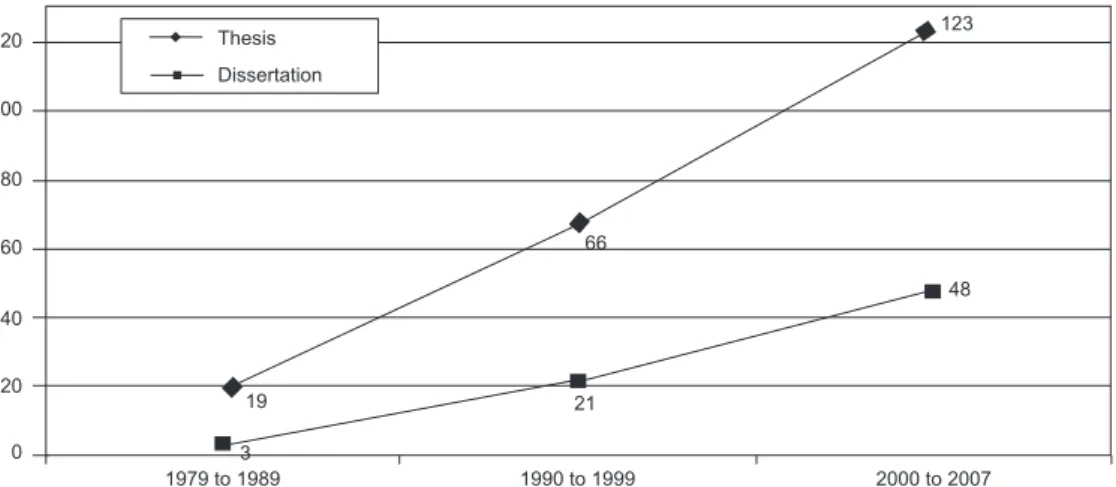
Figure 1 – Distribution of abstracts published in the CEPEn catalogs from 1979 to 2007 according to year of publication. Fortaleza, CE, Brazil, 2008.
120
100
80
60
40
20
0
1979 to 1989 1990 to 1999 2000 to 2007
Thesis
Dissertation
19
66
123
48
21
Rev. Latino-Am. Enfermagem 2010 Sep-Oct;18(5):1031-8.
Figure 1 shows a predominance of theses compared to dissertations. Twenty-two studies were developed between 1979 and 1989 including dissertations and
180
23 17
16 13 9
7 6 2 2 2
1 1 1
0 20 40 60 80 100 120 140 160 180 200 U S P U F R J U F S C U F C U F P B U N I-R IO U F M G U N IC A M P U N B U F R S U F B A U F R N U F P R U F P I
theses; 87 between 1990 and 1990, and 171 studies were published between 2000 and 2007 in the CEPEn catalogs addressing mental health.
Figure 2 – Distribution of abstracts published in the CEPEn catalogs from 1979 to 2007 according to graduate nursing programs. Fortaleza, CE, Brazil, 2008.
Figure 2 shows that a large majority of the studies are
in the Southeast. The graduate programs that stood out were: University of São Paulo (USP); Federal University of Rio de Janeiro (UFRJ); Federal University of Santa Catarina
(UFSC) and Federal University of Ceará (UFC).
The abstracts analyzed according to the thematic categories that ground this study are presented as follow.
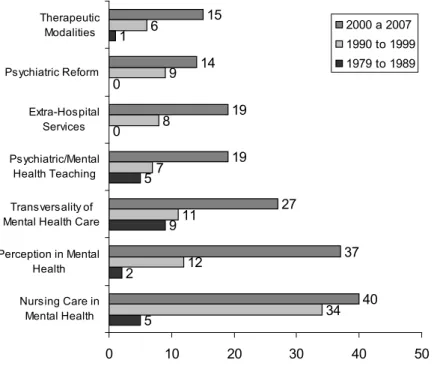
Figure 3 – Distribution of the abstracts published in the CEPEn catalogs from 1979 to 2007 according to the categories evidenced in this study. Fortaleza, CE, Brazil, 2008.
5 2 9 5 0 0 1 34 12 11 7 8 9 6 40 37 27 19 19 14 15
0 10 20 30 40 50
Nursing Care in Mental Health Perception in Mental
Health Transversality of Mental Health Care
Psychiatric/Mental Health Teaching Extra-Hospital Services Psychiatric Reform Therapeutic
Modalities 2000 a 2007
1990 to 1999
To facilitate analysis, the studies were divided into thematic areas: Nursing care in mental health; Perception in mental health; interconnections in mental health care; Psychiatric/Mental Health nursing teaching; Extra-Hospital services; Psychiatric Reform; and Therapeutic modalities.
The studies were also allocated into intervals that
relect historical and political periods experienced in the country. The irst period (1979-1989) is characterized
by the beginning of Brazilian psychiatric reform; the second (1990-1999) refers to the period when re-democratization was consolidated in the country; and the last period (2000-2007) is when the new law governing mental health was enacted.
Under the theme “Nursing Care in Mental Health” were included the abstracts that presented aspects related to nursing care, historical analysis of nursing practices and the ‘doing’ and ‘knowing’ of psychiatric nursing.
The theme “Perception in Mental Health” included the studies addressing the perception and experience of family members, students, patients and professionals concerning mental disease, treatment and experiences
in the mental health process.
The studies that related mental health to other
related ields were included under the item “Transversality
of Mental Health Care”. The thematic “Psychiatric/Mental Health Nursing Teaching” included studies addressing the learning-teaching process and the experience of students/professors in the psychiatric discipline based on the new mental health care paradigm.
The theme “Extra-Hospital Services” included the studies that reported the new spaces available in mental health care (Therapeutic Residences, Shelters, Psychosocial Care Centers (CAPS), Day Hospitals, Mental Health Outpatient Centers), addressing experiences, the
patients’ psychosocial proiles and situations, evaluation
of services, structure, and therapeutic processes developed concomitantly with deinstitutionalization.
The studies addressing mental health policies, Psychiatric Reform, the psychosocial care model and the planning of actions in mental health in certain settings were included in the theme “Psychiatric Reform”. Finally, the item “Therapeutic Modality” included the studies that discuss the relationship and individual and group
therapeutic projects.
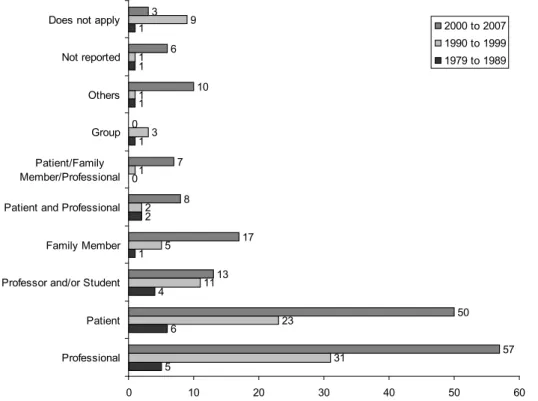
Figure 4 – Distribution of abstracts published in the CEPEn catalogs from 1979-2007 according to the subjects
included in the studies. Fortaleza, CE, Brazil, 2008. 5
6 4 1
2 0
1 1 1 1
31 23
11 5 2 1
3 1 1
9
57 50 13
17 8
7 0
10 6 3
0 10 20 30 40 50 60
Professional Patient Professor and/or Student Family Member Patient and Professional
Patient/Family Member/Professional
Group Others Not reported Does not apply
2000 to 2007
1990 to 1999
1979 to 1989
The individuals addressed in the investigated studies comprised mostly professionals, patients and
Rev. Latino-Am. Enfermagem 2010 Sep-Oct;18(5):1031-8.
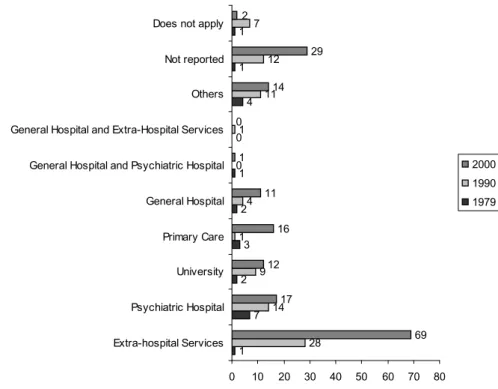
Figure 5 – Distribution of abstracts published in the CEPEn catalogs from 1979-2007 according to the setting where the studies were carried out. Fortaleza, CE, Brazil, 2008.
1 7 2
3 2 1 0
4 1 1
28 14 9 1
4 0
1 11
12 7
69 17
12 16 11 1 0
14 29 2
0 10 20 30 40 50 60 70 80 Extra-hospital Services
Psychiatric Hospital University Primary Care General Hospital General Hospital and Psychiatric Hospital General Hospital and Extra-Hospital Services Others Not reported Does not apply
2000 to 2007
1990 to 1999
1979 to 1989
Data presented in igure 5 reveal a relevant interest
in studies carried out in the following settings: extra-hospital, university and primary health care.
Discussion
Figure 1 shows the growing scientiic production in
nursing mental health with a leap from 22 studies in the 1980s to 87 studies in the 1990s, with a considerable increase also in the number of graduate programs in the decade. This is explained by the expansion led by the restructuring of the Brazilian Education Guidelines Law approved in 1997, which established that higher level education schools should have at least one third of their faculty members with a Master’s or doctoral
degree(8). Consequently, several graduate programs were
launched with a higher demand for candidates and with a consequent increase in the number of dissertations and theses from the 1990s on.
Greater accessibility to Master’s programs is observed since there are fewer doctoral programs distributed in the national territory, with a lower number
of slots. Research in the studied subject is also more
frequent in graduate programs of some Brazilian states, most of them in the state of São Paulo, given that a Master’s program in Psychiatry was implemented in USP in 1975, which at the end of the 1970s and beginning of the 1980s focuses on psychiatric nursing (Figure 2).
The 1960s and 1970s were marked by growth in the theory of the nursing profession with the emergence
of the irst graduate program that provided a degree in
1972 at the Anna Nery Nursing School at the Federal University of Rio de Janeiro (only the Master’s program),
and was the irst doctoral program authorized in
1980(9).
Nurses seek to deepen their scientiic knowledge
with a growing interest in research in recent decades.
Scientiic concern in nursing dates back to the 18th century when the emergent model of capitalist production demanded the creation of hospitals to deliver
health care(10).
The Brazilian mental health policies have changed in recent years. After the movement for the psychiatric reform, the structure of mental health services abandoned the restriction to hospitals of psychiatric hospitalization and came to include a community-based
network composed of various extra-hospital services(11).
health into other health programs, social movements
and institutions(12).
In relation to the addressed themes, an interest in
mental health promotion in different health ields and
services is apparent, which consolidates the mental health proposals in different care spheres.
The success of psychiatric reform depends on new forms of care and treatment and requires that health
professionals be prepared for these activities(13). For that,
nursing practice should be carried out in a humanistic,
creative, relexive and imaginative perspective,
considering care as a dynamic, mutable and innovating
process(14).
Among the categories that emerged from the studied
material, we found investigations of and relections on
care, knowledge constructed regarding psychiatric reform and the approach to patients with mental disorders and their family members, as well as new therapeutic modalities in work spaces in mental health.
The re-construction of a new action in health in which health professionals are challenged to link technical knowledge with ability in order to deal with diversity and unpredictability is seen in the current care model. It is a
paradigmatic, conceptual and ethical rupture(15).
In relation to the theme “Psychiatric/Mental health nursing teaching”, it is believed that changes in the
mental health ield imposes a transformation in the educational ield and require professionals committed to
a new way of dealing with knowledge(16). Mental health
teaching in the paradigm of psychiatric reform should
relect the changes experienced in care and become the object of interest and study of those involved.
It is necessary to establish permanent education
processes jointly with the mental health nursing team and
to establish appropriate professional education to fully implement policies in this sector because the cooperation between services and universities strengthens and
develops the workforce in healthcare(17).
Concerning the studies’ participants, patients with psychiatric disorders and their family members are increasingly studied as are the professionals involved in care as active actors of this process of re-constructing new practices of care delivered to patients with mental
disorders(18). Nurses need to know and understand the
entire context, offer support and the necessary guidance; they need to help patients to be active participants in the therapeutic process and focus on the family and
offer the necessary support(4).
In relation to the research settings, extra-hospital services are highlighted, with the implementation of new modalities of community-based care and the inter-relation of these services and primary care in which the interest for the investigation of the work and strategies developed by health professionals is observed.
It is important to highlight the diverse purposes of mental health services: promotion and prevention actions, cure and rehabilitation associated with the
construction of autonomous subjects satisied with their
lives(17). After all, psychiatric reform aims to transcend
the walls of the asylum, creating spaces that focus on the individuals’ singularity, collaborating with their autonomy and self-care in the health-disease continuum. For that, conceptions and devices need to be re-elaborated, so that one can better relate with madness, re-constructing
it from a perspective more committed toto the interests
of those to whom care is delivered(19).
Conclusion
Among the graduate programs, the Psychiatric Nursing Graduate Program – Master’s and doctoral programs – at the University of São Paulo is highlighted. It has developed activities since 1975 with a growing
and signiicant interest of its researchers in mental
health.
It is remarkable that the analyzed studies show a tendency in the last seven years to address extra-hospital mental health services, revealing an interest in the praxis of these care settings from the perspective of patients, professionals and family members. From
this perspective, one needs to relect on the risk of
the medicalization of the problem, defending the understanding of other factors that contribute to psychological suffering, and not reducing it to the biological and individual sphere.
This study presents an overview of the current
state of scientiic research in mental health in Brazilian
nursing graduate programs, guiding the development of further research on the theme. It aims to challenge
health professionals to relect on transformations arising from the modern world and their relections on the mental health ield, taking into account
the principles of deinstitutionalization, citizenship, social reinsertion and family support, with a view of
themes that arises from scientiic nursing research as an instrument that conirms and encourages this
Rev. Latino-Am. Enfermagem 2010 Sep-Oct;18(5):1031-8.
References
1. Porter R. Uma história social da loucura. Rio de Janeiro (RJ): Jorge Zahar Editor; 1990.
2. Oliveira AGB, Alessi NP. O trabalho de enfermagem em saúde mental: contradições e potencialidades atuais. Rev. Latino-Am. Enfermagem. 2003 maio-junho;11:333-40.
3. Machado AL, Colvero LA. Unidades de internação psiquiátrica em hospital geral: espaços de cuidados e a atuação da equipe de enfermagem. Rev. Latino-Am. Enfermagem. 2003 setembro-outubro;11:672-7.
4. Spadini LS, Mello e Sousa MCB. A doença mental sob o olhar de pacientes e familiares. Rev Esc Enferm USP.; 2006;40(1):123-7.
5. Rodrigues RM, Schneider JF. A enfermagem na assistência ao indivíduo em sofrimento psíquico. Rev. Latino-Am. Enfermagem. 1999 julho;7:33-40.
6. Munari DB, Oliveira NF de, Saeki T, Souza MCB de M. Análise da produção científica dos encontros de pesquisadores em enfermagem psiquiátrica e saúde mental. Rev. Latino-Am. Enfermagem. 2008 junho;16(3):471-6.
7. Gil AC. Como elaborar projetos de pesquisa. 4. ed. São Paulo: Atlas; 2007.
8. Moriya TM, Rodrigues ARF, Almeida MCP, Ruffino MC, Oliveira MFP. Pós-graduação “strictu sensu” em enfermagem: um estudo do seu desenvolvimento no Brasil. Ribeirão Preto (SP): Fundação Instituto de Enfermagem de Ribeirão Preto; 1998.
9. Silveira LC, Dias MAS, Chagas MIO, Damasceno MMC, Fraga MNO. Tendências das teses de doutoramento em enfermagem produzidas na Universidade Federal do Ceará. Texto Contexto Enferm. 2003 julho-setembro;12(3):314-22.
10. Carvalho V. Tendências da pesquisa na enfermagem. In: Anais do 2o Fórum Mineiro de Enfermagem; 2000. set 18-21; Uberlândia, Brasil. Universidade Federal de Uberlândia; 2000; p. 55-68.
11. Ministério da Saúde (BR). Secretaria-Executiva de atenção à saúde. Legislação em Saúde Mental 1994-2004. Brasília; 2004. 12. Fraga MNO, Souza AMA, Braga VAB. Reforma Psiquiátrica: muito a refletir. Acta Paul Enferm. 2006 abril-junho;19:207-11. 13. Berlinck MT, Magtaz AC, Teixeira M. A reforma Psiquiátrica Brasileira: perspectivas e problemas. Rev. Latino-Am Psicopatol Fund. 2008;11:21-7.
14. Villela SCV, Scatena MCM. A enfermagem e o cuidar na área de saúde mental. Rev Bras Enferm. 2004 novembro-dezembro;57:738-41.
15. Aranha e Silva AL, Fonseca RMGS. Processo de trabalho em saúde mental e o campo psicossocial. Rev. Latino-Am. Enfermagem. 2005 maio-junho;13:441-9.
16. Tavares CMM. A educação permanente da equipe de enfermagem para o cuidado nos serviços de saúde mental. Texto Contexto Enferm. 2006 abril-junho;15:287-95.
17. Campos GWS. Um método para análise de co-gestão de coletivos. São Paulo: Hucitec; 2000.
18. Macedo VCD, Monteiro ARM. Educação e saúde mental na família: experiências com grupos vivenciais. Texto Contexto Enferm. 2006 abril-junho;15:222-30.
19. Silveira LC, Braga, VAB. Acerca do conceito de loucura e seus reflexos na assistência de saúde mental. Rev. Latino-Am. Enfermagem. 2005 julho-agosto;13:591-5.
Received: Jun 30th 2010