*Correspondence: P.C. Cardoso. Curso de Nutrição, Universidade Federal do Espírito Santo, Alto Universitário, s/n, Caixa Postal 16 –Guararema, 29500-000 - Alegre - ES, Brasil. E-mail: [email protected]
A
rti
Pharmaceutical Sciences vol. 45, n. 3, jul./sep., 2009
Carotene and provitamin A content of vegetables sold in Viçosa,
MG, Brazil, during spring and winter
Pollyanna Costa Cardoso
1*, Ceres Mattos Della Lucia
2, Paulo César Stringheta
3,
José Benício Paes Chaves
3, Helena Maria Pinheiro-Sant’Ana
41Course of Nutrition, Federal University of Espírito Santo, 2Course of Nutrition, Vila Velha University Center/ES, 3Department of Food Technology, Federal University of Viçosa, 4Department of Nutrition and Health, Federal University of Viçosa/MG
This study investigated the α-and β-carotene content and provitamin A value of four leafy vegetables
sold at local and street markets in Viçosa, MG, Brazil, in the spring and winter of 2002. Carotenoids were analyzed by high-performance liquid chromatography. α-Carotene was detected in all samples sold during
spring, but was only present in a few samples of smooth and curly lettuce and kale in winter. β-Carotene was
found in marked quantities in all leafy vegetables analyzed. Duncan’s test (α = 5%) showed signiicantly higher α-carotene content in curly lettuce and vitamin A value in large-leaved watercress in the spring.
Mean β-carotene content and vitamin A value were 7544, 8751, 2584, 2792, 8193, and 5338 µg/100 g and
666, 760, 227, 238, 698, and 460 µg RAE/100 g in large-leaved and hydroponic watercress, smooth and
curly lettuce, kale and spinach, respectively. All leafy vegetables analyzed represent important sources of provitamin A and supply an important part of the daily requirements of children and adults.
Uniterms: α-Carotene. β-Carotene. Leafy vegetables/analysis. Provitamin A.
Investigou-se o conteúdo de α e β-caroteno e avaliou-se o valor pro-vitamínico A de quatro hortaliças
folhosas comercializadas em mercados locais e feira- livre de Viçosa, MG durante a primavera e o inverno de 2002.Os carotenóides foram analisados por Cromatograia Líquida de Alta Eiciência (CLAE). O α-caroteno foi detectado em todas as amostras analisadas na primavera, porém no inverno,
somente algumas amostras de alface crespa e lisa, e couve apresentaram tal carotenóide. O β-caroteno foi
encontrado, em quantidades apreciáveis, em todas as hortaliças folhosas analisadas. O teste de Duncan (α=5%) detectou que o conteúdo de α-caroteno em alface crespa e o valor de vitamina A em agrião de
folha larga foram estatisticamente superiores na primavera. Os teores médios de β-caroteno e de valor de
vitamina A para agrião de folha larga e hidropônico, alface crespa e lisa, couve e espinafre foram: 7544; 8751; 2584; 2792; 8193; 5338 µg/100g e 666; 760; 227; 238; 698; 460 µg RAE/100g, respectivamente.
Todas as hortaliças folhosas analisadas constituem importantes fontes de provitamina A e suprem grande parte das recomendações diárias de crianças e adultos.
Unitermos: α-caroteno. β-caroteno. Hortaliças folhosas/análise. Pró-vitamina A.
INTRODUCTION
Dark green leafy vegetables are good sources of minerals and vitamins (Raju et al., 2007), and are impor-tant because they are rich in provitamin A carotenoids (Graebner et al., 2004; Zanutto, Jordão, Vannucchi, 2003). Since humans are unable to synthesize carotenoids, they exclusively depend on dietary intake as a source of these
Due to their tropical and subtropical climate, deve-loping countries, especially Brazil, count on large sources of carotenoids (Rodriguez-Amaya, 2000), such as leafy vegetables, which are relatively inexpensive and readily available throughout the year. In view of the high cost of foods of animal origin, vegetables account for 82% of dietary vitamin A intake in developing countries (Van Den Berg et al., 2000).
Vitamin A deiciency continues to be a public health problem in various regions of Brazil and is associated with the limited intake of vitamin A-containing foods (Brasil, 2007). Strategies to combat vitamin A deiciency in developing countries are based on the consumption of foods rich in provitamin carotenoids (Zanutto, Jordão, Vannucchi, 2003; Gibson, Hotz, 2001). Intervention pro-grams should be adopted in Brazil to prevent and/or reduce vitamin A deiciency, including nutritional education and food fortiication for risk populations (Milagres, Nunes, Pinheiro-Sant’Ana, 2007).
However, numerous factors may interfere with the carotenoid content of foods, such as maturation stage (Rodriguez-Amaya, 2000), differences between plant varieties (Olson, 1999), climate conditions, soil type, effect of agrochemicals, differences in distribution among distinct parts of the plant, cultivation conditions, presence of damage to the plant structure, exposure to light, and storage and processing conditions (Amaya-Farfan, 1999). One important factor affecting the carotenoid content of foods is the commercialization condition of vegetables by establishments such as street and local markets. The Brazilian system of distribution of fruits and vegetables has been characterized over the last decades by a shift in importance from traditional suppliers such as street ma-rkets to supermama-rkets, greengrocers and grocery stores (Poletto, Carvalho, Salay, 1996; Rezende, Castro, Starling, 1995). This change is explained by consumer preference in terms of the localization of the establishment, availability of parking, price, appearance of the clean product, perso-nal safety, possibility of rapid purchase, and a variety of products other than fruits and vegetables (Fonseca, Silva, Salay, 1999).
Studies investigating the provitamin A carotenoid content of vegetables during the four seasons of the year are controversial. According to Azevedo and Rodriguez-Amaya (2005), carotenoid content is affected by climate alterations, with exposure to sunlight and higher temperatures increa-sing the biosynthesis of carotenoids but, at the same time, inducing photodegradation, thus reducing their levels in plants. Studies investigating the carotenoid content of leafy vegetables are important to provide better information to consumers and healthcare workers since they estimate the
daily intake of carotenoid-rich foods and their relationship with health and disease (Raju et al., 2007).
Therefore, the objective of the present study was to evaluate the α- and β-carotene content and provitamin A
activity of leafy vegetables sold at local and street markets in Viçosa, Minas Gerais, Brazil, in the spring and winter of 2002.
MATERIAL AND METHODS
Sample collection and preparation
Samples of the following four types of leafy vege-tables were collected on three different days at four sites of sale (three local markets and one street market) during spring and winter: large-leaved and hydroponic watercress (Nasturtium oficinale), curly and smooth lettuce (Lactuca sativa), kale (Brassica oleracea var. acephala), and spi-nach (Spinacea oleracea).
The markets were chosen based on observations made during previous visits to select those that sell the same vegetables grown at similar locations and under similar conditions. At the street market, stands presenting similar conditions, cultivation sites and commercializa-tion were selected. The leafy vegetables sold at the street market were produced in the rural area of Viçosa by the marketers themselves, whereas the vegetables sold at the local markets were produced in neighboring regions such as Coimbra, Porto Firme and Paraíso (rural area of Viço-sa), or were from the Central Supply Market (CEASA) of Belo Horizonte. At the street market, the leafy vegetables were sold in the same day they were harvested at stands exposed to the sun or covered with a plastic sheet. At the local markets, the vegetables were exposed to ambient temperature for 24 h or longer.
After collection, the samples were stored in a re-frigerator at 5-10 ºC until the time of analysis. About 30 g of each vegetable was collected, stored in transparent plastic bags, covered with aluminum foil, identiied and sent to the laboratory. The vegetables were washed under running water, dried on paper towels, cut into small pieces, and homogenized for subsequent trituration. Extraction of carotenoids from the vegetables was performed on the same day of collection.
Reagents and equipment
The samples were iltered using Whatmann No. 40 ash-free ilter paper (England), 3-mL sterile disposable
syringes (Arrow Medical Supply Co. Ltd., Korea), and
0.45-µm Millex-HV filter units made of polyethylene (Millipore, Brazil).
The mobile phase consisted of HPLC grade metha-nol and acetonitrile (OmniSolv, EM Science, USA) and ethyl acetate (Merck, Brazil).
A bench grinder (MA 102, Marconi), vacuum pump, and rotary evaporator (model 344.1, Quimis) were used for sample preparation. The mobile phase was degasiied in an ultrasonic bath (T-14, Odontobrás).
For high-performance liquid chromatography (HPLC), a Shimadzu LC chromatograph equipped with a high-pressure pump, manual injector with a 50-µL size loop, Lichrospher 100 column RP-18 (Merck; 5 µm, 250 mm long x 4 mm internal diameter), and UV-visible spec-trophotometer detector (model SPD 10 AV, Shimadzu) was used.
Extraction of carotenoids
Carotenoids were extracted according to the method described by Rodriguez et al. (1976), with some modii-cations. About 5 g of each sample was triturated with cold acetone in a bench grinder and vacuum iltered through a Büchner funnel containing ash-free ilter paper. The ex-tract was transferred in a stepwise fashion to a separation funnel containing cold petroleum ether and then washed in distilled water until complete removal of the acetone. Anhydrous sodium sulfate was added to remove any residual water. The extract was concentrated in a rotary evaporator at 35-37 ºC. The pigments were stored in amber glass lasks sealed with aluminum lids and frozen at 5 ºC until the time of carotenoid analysis.
All chemical analyses were performed in the dark, with care taken to protect the pigments from light and oxygen by using amber glassware or aluminum foil to wrap the glassware.
Chromatographic analysis
The presence of carotenoids in the samples was analyzed by HPLC. About 1 to 2 mL of the extract stored in petroleum ether was evaporated under a nitrogen low and resuspended in acetone. The extracts were then iltered through a 0.45-µm ilter unit and 20 to 30 µL of the sample was injected into the chromatographic column.
The chromatographic conditions used were tho-se described by Pinheiro-Sant’Ana et al. (1998), with some modiications: Shimadzu chromatograph; mobile
phase consisting of methanol:acetonitrile:ethyl acetate (80:10:10); low rate of the mobile phase: 2.0 mL/min; run time: 13 min.
Preparation of the α- and β-carotene standards
α-Carotene and β-carotene extracted from carrots
by open-column chromatography according to Pinheiro-Sant’Ana et al. (1998) were used as vitamin standards. Briefly, about 20 g of carrots was triturated with ace-tone and petroleum ether was added. A magnesium oxide:Hyflosupercel (1:2) column was used, with the mobile phase consisting of 2% ethyl ether in petroleum ether. The carotenoids obtained were identiied using the following parameters: order of elution of the fractions from the column; color of the eluted pigments; HPLC re-tention time, and absorption spectra of the carotenoids of interest. The α- and β-carotene solutions were quantiied
by spectrophotometry based on maximum absorbance according to Beer’s law. The absorption coeficients (2800 and 2592) and wavelengths of maximum absorption (444 and 449 nm) of α- and β-carotene, respectively, were
ob-tained according to Rodriguez-Amaya (1989). External standard curves were used for the quantiication of α- and β-carotene in the samples.
Calculation of vitamin A value
Vitamin A value is expressed as retinol activity equi-valent (RAE) per 100 g sample according to the conversion factors for vitamin A value established by the Institute of Medicine (IOM, 2001). The IOM deines that 1 RAE corresponds to 1 µg retinol or 12 µg β-carotene or 24 µg
of other provitamin carotenoids.
Experimental design
RESULTS AND DISCUSSION
Qualitative analysis of α- and β-carotene in
vegetables
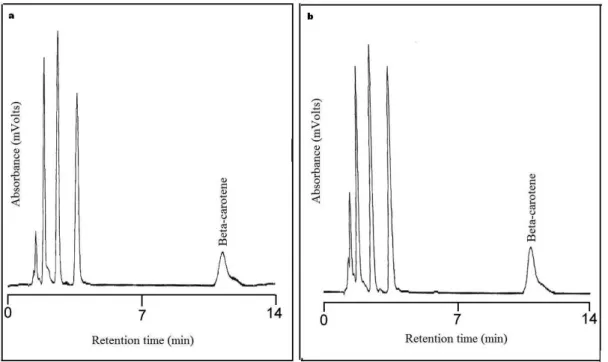
Figure 1 shows typical chromatograms obtained for samples of the vegetables studied.
α-Carotene was found in the four types of leafy
vegetables analyzed, but was not detected in some samples during winter. According to Mercadante and Rodriguez-Amaya (1991), when detected, α-carotene
is present in small amounts in leafy vegetables. Abdel-Kader (1991), Heinonen et al. (1989) and Bureau and Bushway (1986) detected α-carotene in lettuce
sam-ples but not in spinach. Godoy and Rodriguez-Amaya (1998) found no α-carotene in watercress. In a study
analyzing 11 leafy vegetables, α-carotene was only
detected in kale, amaranth, parsley and taro (Merca-dante, Rodriguez-Amaya, 2001). In a literature review of data regarding sources of carotenoids published by Barbosa-Filho et al. (2008), α- and β-carotene were
found in kale, lettuce and spinach.
β-Carotene was detected in all leafy vegetables
analyzed. From a nutritional point of view, β-carotene is
considered to be the main provitamin A (Niizu, Rodriguez-Amaya, 2005; Moreira et al., 2005; Campos et al., 2003; Almeida-Muradian, Penteado, 2003; Rodriguez-Amaya, 1996).
Quantitative analysis of α- and β-carotene in
vegetables
The α-carotene content of the leafy vegetable
sam-ples analyzed is shown in Table I. α-Carotene was detected
in all samples analyzed during spring. However, in the winter only a few samples of curly and smooth lettuce and kale contained this carotenoid. A signiicant difference (p ≤ 0.05) in α-carotene content between the two seasons was
only observed for curly lettuce, with α-carotene content
being higher in the spring.
In the spring, mean α-carotene content was 857,
735, 198, 191, 448 and 297 µg/100 g in large-leaved and hydroponic watercress, curly and smooth lettuce, kale and spinach, respectively. In the winter, mean α-carotene
content was 58 µg/100 g in curly lettuce, 93 µg/ 100 g in smooth lettuce, and 182 µg/100 g in kale. Thus, large-leaved watercress presented the highest α-carotene content
in the spring, whereas curly lettuce presented the lowest amount in the winter.
Analysis of studies in the literature investigating the carotenoid composition of leafy vegetables revealed different results regarding the presence of α-carotene in
the same vegetable, even when the same analytical method was used (Mercadante, Rodriguez-Amaya, 2001). These results can be explained by differences between varieties and cultivars, the effect of climate and soil, and the pre-sence of minor carotenoids in leaves.
FIGURE 1. HPLC analysis of carotenes in samples of large-leaved watercress (a) and smooth lettuce (b). Chromatographic conditions:
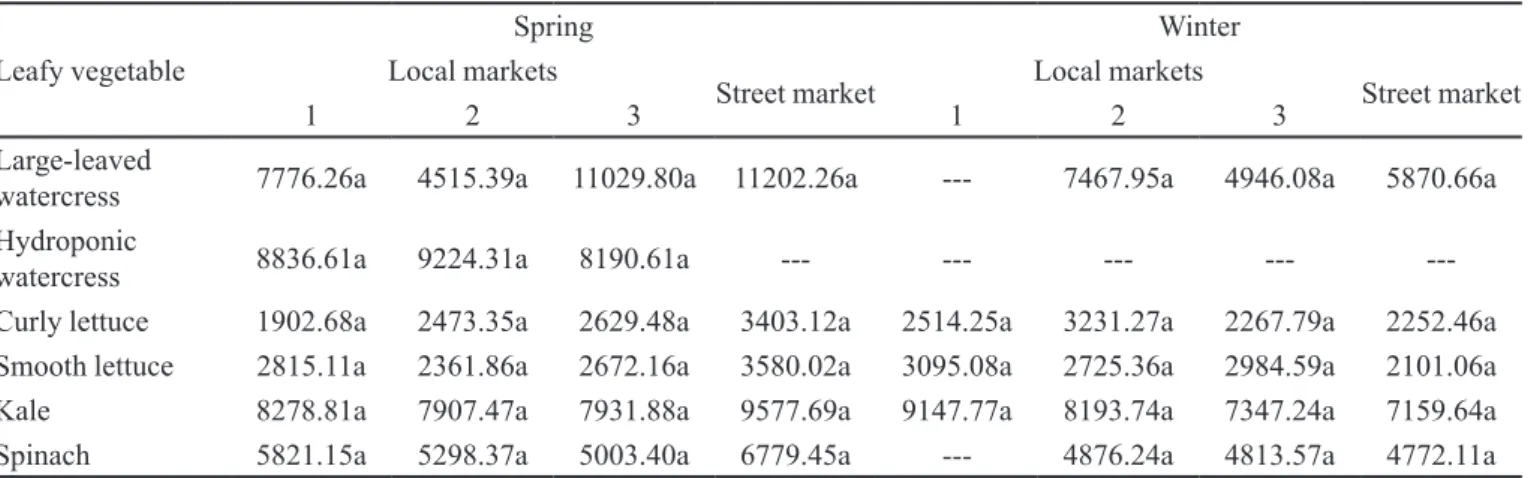
Table II shows the β-carotene content of the leafy
ve-getable samples analyzed. The main carotenoids of green leaves are lutein, corresponding to 45% of all carotenoids, and β-carotene, corresponding to 25%, although a marked
variation in their absolute concentration has been reported (Kimura, Rodriguez-Amaya, 2003; Almeida Muradian, Vanderlinde, Sasaki, 2000; Rodriguez-Amaya, 1993).
In the spring, mean β-carotene content was 8631,
8751, 2602, 2857, 8424 and 5726 µg/100 g in large-leaved and hydroponic watercress, curly and smooth lettuce, kale and spinach, respectively. In the winter, mean β-carotene
content was 6095 µg/100 g in large- leaved watercress, 2566 µg/100 g in curly lettuce, 2727 µg/100 g in smooth lettuce, 7962 µg/100 g in kale, and 4821 µg/100 g in
spi-nach. Thus, large-leaved and hydroponic watercress con-tained the highest β-carotene levels in the spring, whereas
in the winter kale was the leafy vegetable that presented the highest content of this carotene.
No signiicant difference (p > 0.05) in β-carotene
content was observed between vegetables sold at local and street markets of Viçosa during spring and winter (Table II).
Studies have shown that in European countries, where the climate is temperate and marked climate varia-tion occurs, the carotenoid content of vegetables varies signiicantly over the year (Granado et al., 1992; Heinonen
et al., 1989). Campos et al. (2006) found no variation in the carotene content of vegetables sold in Viçosa, MG,
TABLE I - Mean α-carotene content (µg/100 g) of leafy vegetables sold in Viçosa, MG, in the spring and winter of 2002 (values
are expressed on a wet weight basis)
Leafy vegetable
Spring Winter
Local markets Street market Local markets Street
market
1 2 3 1 2 3
Large-leaved
watercress 603.84a 233.04a 1590.24a 999.31a --- * * *
Hydroponic
watercress 820.44a 884.64a 500.28a --- --- --- ---
---Curly lettuce 155.04a 150.24a 226.08a 262.32a * 65.04b 51.24b *
Smooth lettuce 155.52a 206.04a 235.08a 165.60a * 54.24a 132.36a *
Kale 441.48a 342.00a 448.80a 561.12a * * 182.28a *
Spinach 289.80a 299.28a 305.04a 294.60a --- * * *
(---) Vegetable not sold at the establishment. (*) Not detected.
Means within the same row followed by the same letter are not signiicantly different by ANOVA (p >0.05). Means within the same row followed by different letters differ signiicantly by the Duncan test (p ≤ 0.05).
TABLE II - Mean β-carotene content (µg/100 g) of leafy vegetables sold in Viçosa, MG, in the spring and winter of 2002 (values
are expressed on a wet weight basis)
Leafy vegetable
Spring Winter
Local markets
Street market Local markets Street market
1 2 3 1 2 3
Large-leaved
watercress 7776.26a 4515.39a 11029.80a 11202.26a --- 7467.95a 4946.08a 5870.66a
Hydroponic
watercress 8836.61a 9224.31a 8190.61a --- --- --- ---
---Curly lettuce 1902.68a 2473.35a 2629.48a 3403.12a 2514.25a 3231.27a 2267.79a 2252.46a
Smooth lettuce 2815.11a 2361.86a 2672.16a 3580.02a 3095.08a 2725.36a 2984.59a 2101.06a
Kale 8278.81a 7907.47a 7931.88a 9577.69a 9147.77a 8193.74a 7347.24a 7159.64a
Spinach 5821.15a 5298.37a 5003.40a 6779.45a --- 4876.24a 4813.57a 4772.11a
(---) Vegetable not sold at the establishment.
between three seasons of the year (spring, summer and autumn), except for green peppers. However, in countries such as Brazil where differences in climate conditions are only observed between summer and winter, the carotenoid content of vegetables may vary between these two seasons.
Although statistical analysis showed no signiicant difference in the β-carotene content of vegetable sold
during the two seasons, higher levels of this carotene were observed in all leafy vegetables sold at the street market during spring. This inding is probably due to the shorter period of storage of these vegetables since they were harvested the previous night or on the same day of distribution, the shorter transportation time (rural area of Viçosa) when compared to that of vegetables sold at the local markets (neighboring regions such as Coimbra, Porto Firme and Paraíso or even from CEASA-Belo Horizon-te), and shorter time of commercialization (7 to 12 h). At the local markets, the vegetables were stored for 24 h or longer, a fact resulting in the degradation of carotenes. However, in the winter the vegetables originating from the local markets presented a higher content of this carotene. The lack of signiicant differences in the carotenoid content of the vegetables studied might be explained by the marked variation between replicates, sampling sites and seasons of the year. Analysis should consider the different types of commercialization of vegetables, including the location of cultivation, harvest conditions, duration and type of storage and exposure for sale, in addition to stage of maturation, varieties, effect of chemical products, and distribution in the plant (Giuntini et al., 2005; Almeida-Muradian, Penteado, 2003; Rodriguez-Amaya, 2000; Amaya-Farfan, 1999; Olson, 1999). One or more factors may have inluenced the carotene content of the samples analyzed, since this study was conducted under real
con-ditions of vegetable commercialization in the absence of control for the parameters described above.
Comparison of the quantitative distribution of carotenoids in the vegetables analyzed (Figure 2) with literature data showed that the mean β-carotene content
found in watercress, lettuce, kale and spinach samples was higher than that reported in other studies. Campos et al. (2003) found a β-carotene content of 4330 µg/100 g in
watercress and of 1482 µg/100 g in lettuce served at com-mercial restaurants in Viçosa, MG. In a study conducted in Campinas, SP, Godoy and Rodriguez-Amaya (1998) observed trans-β-carotene concentrations of 2580, 2500
and 2330 µg/100 g in kale, spinach and watercress, res-pectively. Della Lucia et al. (2008) reported a β-carotene
content of kale ranging from 4856 to 7409 µg/100 g, whereas Zanutto, Jordão and Vannucchi (2003) found a value of 3700 µg/100 g. A β-carotene content of 2006 and
2400 µg/ 100 g in lettuce and spinach, respectively, has been reported by Ismail and Fun (2003). Hart and Scott (1995) found β-carotene concentrations of 1603, 3397
and 4777 µg/100 g in samples of lettuce, spinach and watercress, respectively. Khachik et al. (1992) found a
β-carotene content of 8900 µg/100 g in spinach. Granado et al. (1992) reported β-carotene concentrations of 172
and 3254 µg/100 g for lettuce and spinach, respectively.
Provitamin A value of vegetables
Vitamin A values showed a variation similar to that observed for β-carotene, except for samples in which α
-carotene was also detected, a fact contributing to a higher total vitamin A value in these vegetables.
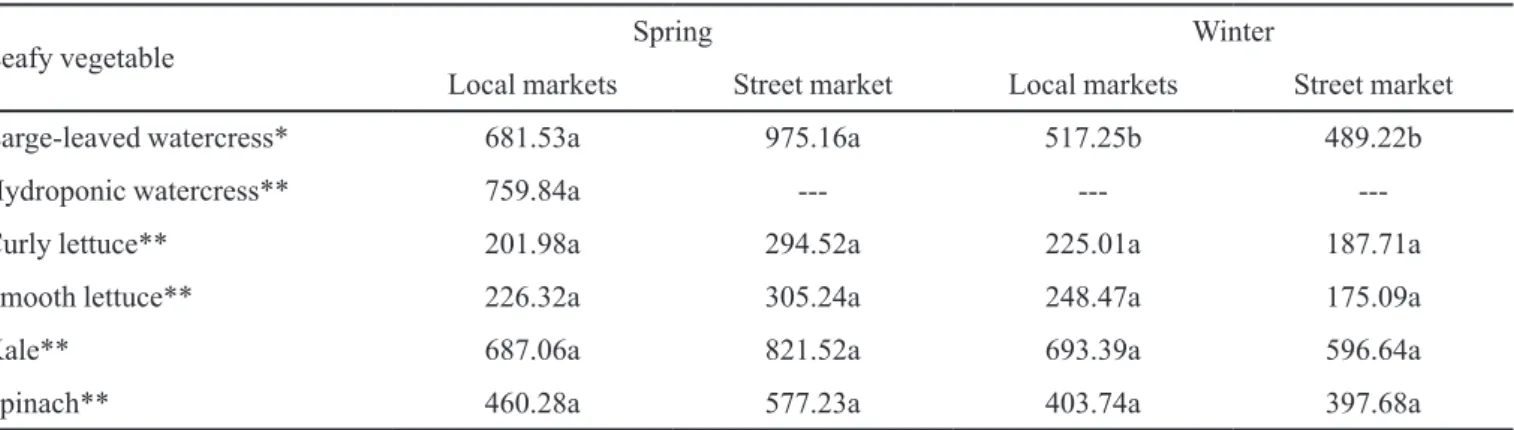
As can be seen in Table III, a signiicant difference in vitamin A value between the two seasons was only
observed for large-leaved watercress (p ≤ 0.05). Vitamin A values were signiicantly higher in watercress samples collected at local and street markets during spring. No sig-niicant difference in vitamin A value between treatments was observed for the other leafy vegetables. The variation in vitamin A value between samples obtained from local and street markets might be due to the biological oxidation of provitamin A carotenoids to inactive xanthophylls, a process that occurs rapidly during storage (Olson, 1991). Carotenoids can be oxidized to inactive forms both by enzymatic action during storage or by exposure to light and oxygen (Melendez-Martinez, Vicario, Heredia, 2004; Amaya-Farfan, 1999).
The highest provitamin A content was observed in kale, followed by large-leaved watercress (Figure 3). The mean vitamin A values found in the vegetables studied agree with data from the Brazilian Food Composition Table of the University of São Paulo (2008), which lists the vitamin A and carotenoid content reported in different studies. According to this table, the vitamin A value of watercress ranges from 245 to 690 µg/100 g, curly and smooth lettuce present a vitamin A value of 240 and 210 µg/100 g, respectively, the vitamin A value of kale ranges from 490 to 910 µg/100 g, and the vitamin A value of spinach is 450 µg/100 g. Differences in quantiication techniques, origins and cultivation may explain the va-riations in provitamin A content (Almeida-Muradian, Penteado, 2003).
Vitamin A values were used to calculate the nu-tritional adequacy of consumption of one portion of the vegetables by children and adults (Table IV). Mean vitamin A values found in vegetables sold at local and street markets during the two seasons were used to
evaluate this adequacy (Figure 3). Consumption of one portion of large-leaved watercress corresponds to half the recommended intake of vitamin A per day for chil-dren and to practically one-fourth of the recommended intake for male adults. In contrast, consumption of one portion of kale corresponds to 52% and 23% of the daily requirements of a child and a male adult, respectively. The consumption of two and four portions of spinach would meet the daily requirements of a child and a male adult, respectively. The other leafy vegetables (curly and smooth lettuce and hydroponic watercress), in this order, play an important role in meeting daily vitamin A requirements (Table IV). Since the leafy vegetables analyzed meet an important part of the daily vitamin A requirements of the population, consumption of these vegetables may effectively reduce vitamin A deiciencies. These vegetables are easily cultivated and accessible to the population due to their low cost compared to products of animal origin.
TABLE III - Mean value of vitamin A (µg RAE/100 g) originating from α- and β-carotene in the leafy vegetables analyzed in the
spring and winter of 2002 (values are expressed on a wet weight basis)
Leafy vegetable Spring Winter
Local markets Street market Local markets Street market
Large-leaved watercress* 681.53a 975.16a 517.25b 489.22b
Hydroponic watercress** 759.84a --- ---
---Curly lettuce** 201.98a 294.52a 225.01a 187.71a
Smooth lettuce** 226.32a 305.24a 248.47a 175.09a
Kale** 687.06a 821.52a 693.39a 596.64a
Spinach** 460.28a 577.23a 403.74a 397.68a
(---) Vegetable not sold at the establishment.
*Means within the same row followed by the same letter are not signiicantly different by the Duncan test (p > 0.05). **Means within the same row followed by the same letter are not signiicantly different by ANOVA (p > 0.05).
FIGURE 3 - Mean vitamin A values (µg RAE/100 g) of leafy
CONCLUSIONS
α-Carotene and β-carotene were found in all leafy
vegetables analyzed. However, α-carotene was not
detec-ted in some of the samples, whereas β-carotene was
pre-sent in marked amounts in all leafy vegetables analyzed. A signiicant difference in α-carotene content between the
two seasons was only observed for curly lettuce, with α
-carotene content being higher in the spring. Large-leaved watercress sold at local and street markets during spring presented a signiicantly higher vitamin A value than wa-tercress sold during winter. The leafy vegetables sold in Viçosa, MG, were characterized by a high provitamin A content, occupying a special position when compared to those analyzed in other regions of Brazil and of the world. The vegetables studied may supply an important part of the daily vitamin A requirements of children and adults by being available to the population practically throughout the year at accessible prices.
ACKNOWLEDGEMENT
We thank Conselho Nacional de Desenvolvimento Cientíico e Tecnológico (CNPq) for inancial support.
REFERENCES
ABDEL-KADER, Z. M. Determination of carotenoids in foods
by high-performance liquid chromatography. Die Nahrung,
v.35, n.7, p.689-693, 1991.
ALMEIDA MURADIAN, L. B.; VANDERLINDE, D. W.; SASAKI, R. Provitamin A activity of raw and cooked
Brazilian leaves. Ciênc. Tecnol. Aliment., v.20, n.2,
p.151-153, 2000.
ALMEIDA-MURADIAN, L. B.; PENTEADO, M. V. C.
Carotenóides. In: PENTEADO, M. V. C. Vitaminas:
aspectos nutricionais, bioquímicos, clínicos e analíticos.
São Paulo: Ed. Manole, 2003. p.3-52.
AMAYA-FARFAN, J. Panorama de la investigación sobre
carotenoides en el Brasil. Perspectiva y necesidades. Arch.
Latinoam. Nutr.,v.49, n.1-S, p.92-94, 1999.
AZEVEDO, C. H. de; RODRIGUEZ-AMAYA, D. B. Carotenoid composition of kale as inluenced by maturity,
season and minimal processing. J. Sci. Food Agric.,v.85,
n.4, p.591-597, 2005.
BARBOSA-FILHO, J. M.; ALENCAR, A. A.; NUNES, X. P.; TOMAZ, A. C. A.; SENA-FILHO, J. G.; ATHAYDE-FILHO, P. F.; SILVA, M. S.; SOUZA, M. F. V.; DA-CUNHA, E. V. L. Sources of alpha-, beta-, gamma-, delta-
and epsilon-carotenes: a twentieth century review. Rev.
Bras. Farmacogn., v.18, n.1, p.135-154, 2008.
BRASIL. Ministério da Saúde. Departamento de Atenção
Básica. Alimentação e Nutrição. Vitamina A. Disponível
em <http://dtr2004.saude.gov.br/nutricao/vita.php>. Acesso em: 16 jun. 2007.
TABLE IV - Adequacy of the value of vitamin A originating from α- and β-carotene of leafy vegetables sold in Viçosa, MG, in the
spring and winter of 2002
Leafy vegetable Portion1 (g) Vitamin A value2
(µg RAE/portion) Adequacy in children
3
(%) Adequacy in men4 (%)
Large-leaved watercress 30 199.8 50.0 22.2
Hydroponic watercress 30 228.0 57.0 25.3
Curly lettuce 40 90.8 22.7 10.1
Smooth lettuce 40 95.2 23.8 10.6
Kale 30 209.4 52.4 23.3
Spinach 50 230.0 57.5 25.6
1 Corresponding to the following home measures: watercress: 6 medium branches; lettuce: 4 medium leaves; kale: 3 full soup
spoons; spinach: 2 full soup spoons (Pinheiro et al., 2005).
2 Mean of four sampling sites during the two seasons (spring and winter).
3 DRI (2000) for children aged 4 to 8 years: 400 µg/day.
BUREAU, J. L.; BUSHWAY, R. J. HPLC determination of
carotenoids in fruits and vegetables in the United States. J.
Food Sci., v.51, n.1, p.128-130, 1986.
CAMPOS, F. M.; PINHEIRO-SANT’ANA, H. M.; SOUZA, P.M. de; STRINGHETA, P. C.; CHAVES, J. B. P. Pró-vitaminas A em hortaliças comercializadas no mercado formal e informal de Viçosa (MG), em três estações do ano.
Ciên. Tecnol. Alim., Campinas, v.26, n.1, p.33-40, 2006.
CAMPOS, F. M.; PINHEIRO-SANT’ANA, H. M.; STRINGHETA, P. C.; CHAVES, J. B. P. Teores de beta-caroteno em vegetais folhosos preparados em restaurantes
comerciais de Viçosa-MG. Braz. J. Food Technol., v.6, n.2,
p.163-169, 2003.
COZZI, R.; RICORDY, R.; AGLITTI, T.; GATTA, V.; PERTICONE, P.; SALVIA, R. de. Ascorbic acid
and β-carotene as modulators of oxidative damage.
Carcinogenesis, v.18, n.1, p.223-228, 1997.
DELLA LUCIA, C. M.; CAMPOS, F. M.; MATA, G. M. S. C.; PINHEIRO-SANT’ANA, H. M.. Controle de perdas de carotenóides em hortaliças preparadas em unidade de
alimentação e nutrição hospitalar. Ciênc. Saúde Colet., v.13,
n.5, p.1627-1636, 2008.
FONSECA, M. da C. P. da; SILVA, M. A. A. P. da; SALAY, E. Atitudes dos consumidores com relação à compra de hortifrutícolas em hipermercados e feiras livres na cidade
de Campinas – SP. Cad. Ciênc. Tecnol., Brasília, v.16, n.1,
p.87-113, 1999.
FONTANA, J. D.; MENDES, S. V.; PERSIKE, D. S.; PERACETTA, L. F.; PASSOS, M. Carotenoídes. Cores
atraentes e ação biológica. Biotecnol. Ciênc. Des., v.2, n.13,
p.40-45, 2000.
FOOD AND NUTRITION BOARD. Institute of Medicine.
National Academy of Sciences. Dietary Reference Intakes
for vitamin A, vitamin K, arsenic, boron, chromium, copper, iodine, iron, manganese, molybdenum, nickel, silicon, vanadium and zinc. Washington, National Academy Press, 2000. Disponível em <http://www.nap.edu>. Acesso em: 18 jun. 2007.
GIBSON, R.S., HOTZ, C. Dietary diversiication/modiication strategies to enhance micronutrient content and
bioavailability of diets in developing countries. British
Journal of Nutrition, v.85, n.2, p.S159-S166, 2001.
GIUNTINI, D.; GRAZIANI, G; LERCARI, B.; FOGLIA NO, V.; SOLDATINI, G.F.; RANIERI, A. Changes in carotenoid and ascorbic acid contents in fruits of different tomato
genotypes related to the depletion of UV-B radiation. J.
Agric. Food Chem., v.53, n.8, p.3174-3181, 2005.
GODOY, H. T.; RODRIGUEZ-AMAYA, D. Occurrence of cis
isomers of provitamins A in Brazilian vegetables. J. Agric.
Food Chem., v.46, n.8, p.3081-3086, 1998.
GRAEBNER, I. T.; SIQUEIRA, E. M. A.; ARRUDA, S. F.; SOUZA, E. M. T. de. Carotenoids from native Brazilian
dark-green vegetables are bioavailable: a study in rats. Nutr.
Res., v.24, n.8, p.671-679, 2004.
GRANADO, F.; OLMEDILLA, B.; BLANCO, I.; ROJAS-HIDALGO, E. Carotenoid composition in raw and cooked
Spanish vegetables. J. Agric. Food Chem., v.40, n.11,
p.2135-2140, 1992.
HART, D. J.; SCOTT, K. J. Development and evaluation of HPLC method for the analysis of carotenoids in foods, and the measurement of the carotenoid content of vegetables
and fruits commonly consumed in the UK. Food Chem.,
v.54, n.11, p.101-111, 1995.
HEINONEN, M. I.; OLLIAINEN, V.; LINKOLA, E. K.; VARO, P. T.; KOIVISTOINEN, P.E. Carotenoids in inish foods:
vegetables, fruits, and berries. J. Agric. Food Chem., v.37,
n.3, p.655-659, 1989.
INSTITUTE OF MEDICINE (IOM-U.S.). Food and Nutrition
Board. Standing Committee on the Scientiic Evaluation of
Dietary Reference Intakes. Dietary reference intakes for vitamin a, vitamin k, arsenic, boron, chromium, copper, iodine, iron, manganese, molybdenum, nickel, silicon, vanadium and zinc. Washington: National Academy Press, 2001. 797p.
ISMAIL, A.; FUN, C. S. Determination of vitamin C, β-carotene
and ribolavin contents in ive green vegetables organically
and conventionally grown. Mal. J. Nutr., v.9, n.1, p.31-39,
2003.
KHACHIK, F; GOLI, M. B.; BEECHER, G. R.; HOLDEN, J.; LUSBY, W. R.; TENORIO, M. D.; BARRERA, M. R. Effect of food preparation on qualitative and quantitative distribution of major carotenoid constituents of tomatoes
and several green vegetables. J. Agric. Food Chem., v. 40,
KIMURA, M.; RODRIGUEZ-AMAYA, D. B. Carotenoid
composition of hydroponic leafy vegetables. J. Agric. Food
Chem., v.51, n.9, p.2603-2607, 2003.
MELENDEZ-MARTINEZ, A. J.; VICARIO, I. M.; HEREDIA, F. J. Importancia nutricional de los pigmentos carotenoides.
Arch. Latinoam. Nutr., v.54, n.2, p.149-155, 2004.
MERCADANTE, A. Z.; RODRIGUEZ-AMAYA, D. B. Carotenoid composition of a leafy vegetable in relation to
some agricultural variables. J. Agric. Food Chem., v.39, n.6,
p.1094-1097, 1991.
MERCADANTE, A. Z.; RODRIGUEZ-AMAYA, D.
Conirmação da identidade da α-criptoxantina e incidência
de carotenóides minoritários provitamínicos A em verduras
folhosas verdes. Ciênc. Tecnol. Aliment., v.21, n.2,
p.216-222, 2001.
MILAGRES, R. C. R. M.; NUNES, L. C.; PINHEIRO-SANT’ANA, H. M. A deiciência de vitamina A em crianças
no Brasil e no mundo. Ciênc. Saúde Colet., v.12, n.5,
p.1253-1266, 2007.
MOREIRA, A. P. B.; PINHEIRO-SANT’ANA, H. M.; SOUZA, S. L. de; ALENCAR, E. R. de. Atividade provitamínica A de hortaliças comercializadas no mercado formal e informal
de Viçosa, MG. Rev. CERES, v.55, n.300, p.177-189, 2005.
NIIZU, P. Y.; RODRIGUEZ-AMAYA, D. B. New data on the
carotenoid composition of raw salad vegetables. J. Food
Compos. Anal., v.18, n.8, p.739-749, 2005.
OLSON, J. A. Carotenoids. In: SHILS, M. E.; OLSON, J.
A.; SHIKE, M; ROSS, A. C. Modern Nutrition in Health
and Disease. 9 ed. Baltimore: Wiliams & Wilkins, 1999. p.525-541.
OLSON, J. A. In: MACHLIN, L. J. Handbook of Vitamins. 2.
ed. New York: Marcel Dekker, 1991. p.1-57.
PINHEIRO, A. B. V.; LACERDA, E. M. A.; BENZECRY, E. H.;
GOMES, M. C. S.; COSTA, V. M. Tabela para avaliação de
consumo alimentar em medidas caseiras. 5.ed. São Paulo: Ed. Atheneu, 2005. 131p.
PINHEIRO-SANT’ANA, H. M.; STRINGHETA, P. C.; BRANDÃO, S. C. C.; AZEREDO, R. M. C. Carotenoid retention and vitamin A value in carrot (Daucus carota L.)
prepared by food service. Food Chem., v.61, n.1-2,
p.145-151, 1998.
POLETTO, A. C. P.; CARVALHO, J. F.; SALAY, E. Destino dos produtos hortifrutícolas comercializados na Ceasa/
Campinas. Rev. Polít. Agríc., Brasília, v.5, n.4, p.12-15,
1996.
PRATT, S. Dietary prevention of age-related macular
degeneration. J. Am. Optom. Assoc., v.70, n.1, p.39-47,
1999.
RAJU, M.; VARAKUMAR, S.; LAKSHMINARAYANA, R.; KRISHNAKANTHA, T. P.; BASKARAN, V. Carotenoid composition and vitamin A activity of medicinally
important green leafy vegetables. Food Chem., v.101, n.4,
p.1598-1605, 2007.
REZENDE, J. B.; CASTRO, A. R.; STARLING, M. B. L. Os problemas da comercialização de hortigranjeiros na região
metropolitana de Belo Horizonte. Conjunt. Aliment., v.7,
n.1, p.24-38, 1995.
RODRIGUEZ, D. B.; RAYMUNDO, L. C.; LEE, T.; SIMPSON, K. L.; CHICHESTER, C. O. Carotenoid pigment changes
in ripening Momordica charantia fruits. Ann. Bot., v.40,
n.3, p.615-624, 1976.
RODRIGUEZ-AMAYA, D. B. Assessment of the provitamin
A contents of foods - The brazilian experience.J. Food
Compos. Anal., v.9,n.3, p.196-230, 1996.
RODRIGUEZ-AMAYA, D. B. Critical review of provitamin
A determination in plant foods. Journal of Micronutrients
Analysis(veriicar título, não há registro no ISSN), Barking, v.5, número?, p.191-225, 1989.
RODRIGUEZ-AMAYA, D. B. Nature and distribution of
carotenoids in foods. In: CHARALAMBOUS, F. ed. Shelf
life of foods and beverages – chemical, biological, physical and nutritional aspects.Amsterdam: Elsevier Science, 1993. p.547-589.
RODRIGUEZ-AMAYA, D. B. Some considerations in
generating carotenoid data for food composition tables. J.
Food Composit. Anal., v.13, n.4, p.641-647, 2000.
SILVA, C. R. M.; NAVES, M. M. V. Suplementação de
Vitaminas na Prevenção de Câncer. Rev. Nutr., v.14, n.2,
p.135-143, 2001.
STAHL,W; SIES, H. Bioactivity and protective effects of
natural carotenoids. Biochim. Biophys. Acta, v.1740, n.2,
TBCA-USP 5.0. Tabela Brasileira de Composição dos Alimentos. Departamento de Alimentos e Nutrição Experimental. Faculdade de Ciências Farmacêuticas. Universidade de São Paulo. 2008. Disponível em: < http:// www.fcf.usp.br/tabela/>
VAN DEN BERG, H.; FAULKS, R.; GRANADO, H.F.; HIRSCHBERG, J.; OLMEDILLA, B.; SANDMANN, G.; SOUTHON, S.; STAHL, W. The potential for the improvement of carotenoid levels in foods and the likely
systemic effects. J. Sci. Food Agricult., v.80, n.7,
p.880-912, 2000.
ZANUTTO, M. E.; JORDÃO, A. A. Jr.; VANNUCCHI, H. Improvement in vitamin A status with consumption of
dark-green vegetables — a bioavailability study in rabbits. Nutr.
Res., v.23, n.3, p.271-278, 2003.
Received for publication on 25th September 2007