Efect of nutritional supplementation
with milk whey proteins in
amyotrophic lateral sclerosis patients
Luciano Bruno de Carvalho Silva1, Lucia Figueiredo Mourão2, Ariovaldo Armando Silva3, Núbia Maria Freire Vieira Lima4, Sara Regina Almeida4, Marcondes C. Franca Jr5,
Anamarli Nucci6, Jaime Amaya-Farfán7
ABSTRACT
Objective: We evaluated the efficacy of oral supplementation with milk whey proteins and modified starch (70%WPI:30%MS), on nutritional and functional parameters of patients with ALS. Method: A prospective randomized double-blind study was performed with 16 ALS patients, divided in two groups, the treatment group received (70%WPI:30%MS) and the control group received (maltodextrin). They underwent prospective nutritional and functional assessment for 4 months. Results: Patients in the treatment group presented weight gain, increased body mass index (BMI), increased arm muscle area and circumference, higher albumin, white blood cell and total lymphocyte counts, and reduced creatine-kinase, aspartate aminotransferase and alanine aminotransferase. In the control group, biochemical parameters did not change, but weight and BMI declined. Conclusion:
Our results indicate that the agglomerate 70%WPI:30%MS may be useful in the nutritional therapy of patients with ALS.
Key words: amyotrophic lateral sclerosis, nutrition status, anthropometry.
Efeito da suplementação nutricional com proteínas do soro de leite em pacientes com esclerose lateral amiotrófica
RESUMO
Objetivo: Avaliar a eficácia da suplementação nutricional oral com proteínas do soro do leite e amido modificado (70%WPI:30%MS), nos parâmetros nutricionais e funcionais de pacientes com esclerose lateral amiotrófica (ELA). Método: Foi realizado estudo randomizado duplo-cego, com 16 pacientes com ELA, divididos em dois grupos, um que recebeu 70%WPI:30%MS e um controle que recebeu maltodextrina. Os pacientes foram submetidos a avaliação nutricional e funcional durante quatro meses. Resultados:
Nos pacientes que receberam o suplemento 70%WPI:30%MS, foi observado ganho de peso, aumento na contagem de linfócitos e redução de creatina kinase, aspartato aminotransferase and alanina aminotransferase. No grupo controle, os parâmetros bioquímicos não sofreram modificações; no entanto, peso e índice de massa corporal diminuíram. Conclusão: Nossos resultados indicam que o aglomerado 70%WPI:30%MS pode ser útil na terapia de pacientes com ALS.
Palavras-chave: esclerose lateral amiotrófica, estado nutricional, antropometria. Correspondence
Gabriel Monteiro da Silva Departamento Nutricional Universidade Federal de Alfenas 37130-000 Alfenas MG - Brasil E-mail: [email protected]
Financial support CNPq - Conselho Nacional de Desenvolvimento Científico e Tecnológico
Received 24 September 2009 Received in final form 12 November 2009 Accepted 18 November 2009
1MD, Prof., Federal University of Alfenas- MG (UNIFAL-MG) and Center for Food Security Studies (NEPA), University of
Campinas (UNICAMP), Campinas SP, Brazil; 2MD, Prof. PhD, Speech Pathologist Medical School (FCM/UNICAMP); 3MD, Prof.,
FCM-UNICAMP Otorrionolaringology FCM/UNICAMP; 4Physiotherapist Dept. of Neurology FCM/UNICAMP; 5MD, Neurologist
Ambulatory Neuromuscular Diseases HC/UNICAMP; 6MD, Associate Prof., FCM/UNICAMP. Ambulatory Neuromuscular
Amyotrophic lateral sclerosis (ALS) is a progressive neurodegenerative disorder of motor neurons in the ce-rebral cortex, brainstem, and spinal cord1. ALS patients
show multiple clinical features, since the disease af-fects bulbar and/or spinal systems according to the site of motor neuron involvement. As the disease progress-es, both upper and lower motor neurons may be afect-ed, and various symptoms may overlap2. During the
course of ALS, there is often a decline in nutritional sta-tus that is not properly managed in clinical practice, even though it is a significant and independent prognostic survival factor3.
Nutritional status should be routinely monitored to identify poor food intake and malnutrition4. Patients may
experience rapid weight loss associated with reduced nu-tritional intake, prolonged meal times, fatigue, dehydra-tion and depression. Unfortiied texture-modiied diets for dysphagic patients may hasten weight loss due to their low protein and energy content5,6. When these
nutrition-depleting co-factors are present the insidious onset of malnutrition is inevitable.
Ingredients such as milk whey proteins, when chemi-cally or physichemi-cally modiied, can alter the viscosity of food systems. However, on their own, they are unable to reach the viscosity standardised by the ADA7 for luids, but
ag-glomerated with carbohydrate sources such as modiied starch, they could increase the viscosity of food systems to values close to those cited by the ADA.
Based on the high malnutrition index and diiculty in nutritional handling, the main objective of this study was to evaluate the efect of supplementation with the agglom-erate with 70% milk whey protein isolate and 30% modi-ied starch (70%WPI:30%MS), on anthropometrics, body composition and biochemists parameters in ALS patients.
METHOD
Study design and population
We performed a prospective randomized double-blind controlled clinical trial to evaluate oral supplemen-tation of milk whey protein in patients with ALS. We re-cruited 16 patients (14 males) with clinically deinite ALS from the Neuromuscular outpatient clinic of Campinas University (UNICAMP). Patients were divided in two groups of 8 patients each, and randomized to receive ei-ther milk whey protein or maltodextrin (control), for 16 weeks, and submitted to bimonthly evaluation.
he study was conducted between July 2006 and July 2007. he study was approved by the ethics committee of the School of Medical Sciences - UNICAMP and all pa-tients accepted a written consent.
Inclusion criteria
ALS patients meeting El Escorial criteria (1998)8 for
deined disease, either with bulbar or appendicular on-set, regularly assisted in the Clinic, were included in the study.
Exclusion criteria
Patients with nasogastric tube or gastrostomy, on as-sisted mechanical ventilation and without intervening neurological illnesses.
Nutritional intervention phase
Patients were randomized to receive either maltodex-trin (control group) or oral supplementation with whey protein (treatment group). his is a nutritional supple-ment developed at UNICAMP containing 70% of milk serum protein and 30% modiied starch (70% WPI:30% MS). Patients received maltodextrin or whey protein for 16 weeks. Nutritional assessment, including anthropo-metric and biochemical measures, was performed at the onset, two months and four months after supplementa-tion. We performed functional assessment at the onset and four months after supplementation.
Nutritional supplementation
Individual daily needs of protein are 1.2 g/kg of body weight. We ofered whey protein to the patients, approx-imately 30% of the daily protein requirements.
Nutritional supplementation was administered twice a day (morning and afternoon) for 16 consecutive weeks. Patients did not receive the supplement concurrently with Riluzole. hey were instructed to keep the product in a refrigerator and to solubilize it before administration; on an individual basis, assays to the adequate viscosity were performed with orange juice (pH=4.0 and 1.5% of solid components).
Dietary evaluation
After nutritional anamnesis and socio-economic data collection, we applied the 24h record method9 in 6
difer-ent days for every patidifer-ent. We inquired about the usual diet of the patient, including amount, commercial brand and the cooking procedure. We estimated energy re-quirement (ER); proportion of carbohydrates, proteins and lipids; proportion of saturated, polyunsaturated and monounsaturated fat relative to ER; and the intake of i-bers, calcium, iron, retinol and ascorbic acid. Estimates were accomplished by the software DIET PRO 4.010. he
amount of ibers, cholesterol, saturated, polyunsaturated and monounsaturated fat was analyzed by DIET PRO 4.0 in accordance with the Brazilian food composition table11
and the table of the United States Department of Agricul-ture (USDA – Release 16)12.
Di-etary Allowances (RDA)13 and the recommendations of
the Brazilian Society of Food and Nutrition14,
respective-ly. We used the guidelines of the Institute of Medicine to analyze intake of micronutrients. he Harris and Bene-dict equation, modiied by Long et al.15 was employed to
analyze resting energy requirements.
Nutritional evaluation
Body weight (kg)16 and height (m) were assessed,
ow-ing to the fact that four patients older than 60 were limit-ed to wheelchairs, the Chumlea et al. method was uslimit-ed17.
Body mass index (BMI - kg/m2) and midarm
circum-ference (MAC - cm)18,19 were determined; the tricipital
(TSF), bicipital (BSF), supra-iliac (SISF) and subscapular (SESF) skinfolds (SF) were measured using the scientiic Lange branded 0.1mm-accuracy adipometer, in order to
classify ALS patients according to the estimates of rela-tive body fat18; midarm muscle circumference (MAMC),
arm muscle area (AMA) and arm fat area (AFA) were ob-tained from MAC and TSF according to Heymsield et al. and Frisancho19,20. he percentage of weight loss (%WL)
was determined based upon the usual and the actual-ly measured weight of the patient21. he protein-caloric
malnutrition score (PCMS)18 was used to classify
nutri-tional status of patients.
Clinical and biochemical parameters
We determined the serum levels of C-reactive pro-tein, albumin, pre-albumin, creatine-kinase (CK), cre-atine, urea, glucose, aspartate transferase (AST), alanine transferase (ALT), total lymphocyte count, platelets, so-dium and potassium for each patient.
Table 1. Inluence of the nutritional supplementation with the 70%WPI:30%MS agglomerate on body weight (kg), body mass index (BMI-kg/m2), fat mass (%) and fat free mass (%), tricipital skinfold (TSF), bicipital skinfold (BSF), supra-iliac skinfold (SISF), subscapular skinfold
(SESF) and sum of the four skinfolds (mm), midarm circumference (MAC), wrist circumference, midarm muscle circumference (MAMC), arm muscle area (AMA) and arm fat area (AFA) (cm2).
Parameters
Control group* Treatment group*
Months Months
0 2 4 0 2 4
Body weight (kg) 65.8±1.2a
[49.8-81.0] 64.7±1.3
b
[48.0-80.0] 64.3±1.3
b
[48.0-80.0] [45.4-81.5]62.3±1.5 [46.1-81.6]63.3±1.5 [45.9-81.7]63.4±1.5 BMI (kg/m2) 22.9±0.4a
[17.2-26.9] 22.5±0.4
b
[17.0-27.7] 22.2±0.4
b
[17.0-27.7] 21.7±0.4
B
[18.12-27.03] 22.1±0.4
A
[18.20-27.17] 22.3±0.5
A
[18.43- 27.51] Fat mass (%) 26.1±0.7
[15.6-40.4] [15.6-39.9]28.1±0.3 [15.6-40.0]27.3±0.3 [10.38-26.5]20.8±0.6 [10.2-25.5]20.5±0.6 [10.01-25.9]20.4±0.6 Fat free mass (%) 73.8±0.3
[59.6-84.4] [60.1-84.4]71.9±1.2 [60.0-84.4]72.7±1.2 [73.5-89.62]79.1±0.6 [74.5-89.8]79.5±0.6 [74.1 89.99]79.6±0.6
TSF (mm) 14.9±0.5
[7-23] 14.4±0.5[7-23] 15.8±0.5[6.5-24] 9.6±0.2
B
[6-12] 10.7±0.2
A
[7-13] 11.1±1.2
A
[8-13]
BSF (mm) 7.4±0.3b
[3-12] 7.4±0.2
ab
[4-12] 8.6±0.2
a
[3.5-12.6] 6.2±0.1
A
[4-8] 5.6±0.1
B
[4-7] 5.5±0.1
B
[4-7.1]
SISF (mm) 15.5±0.7
[5-25] 16.1±0.7[5-25] 16.2±0.7[5-26] 12.4±0.3[6-18] 11.8±0.3[6-17] 11.7±0.3[6-17] SESF (mm) 12.9±0.4b
[8-22] 13.5±0.5
a
[8-22.3] 13.6±0.5
a
[8-22.4] 11.5±0.2
A
[8-14] 10.8±1.2
B
[8-13.8] 10.2±0.2C[8-13.5] ∑ SF (mm) 50.6±1.5
[24-71] 51.4±1.5[25-71] [23.1-3 .8]66.6±1.6 39.8±0.4[35-46] 39.1±0.3[34.8-44] 38.5±0.3[34.5-43]
MAC (cm) 27.2±0.3
[20.5-31] 27.3±0.1[20-31] 27.2±0.1[20-31] [19.5-30.8]25.3±0.5 25.5±0.5[19.5-30] 25.8±0.4[21-30] wrist circ (cm) 16.7±0.1
[14.4-18] 17.1±0.1[15-18] [14.5-18.2]16.7±0.1 17.1±0.2[14.8-19] 17.1±1.3[14.8-19] 17.1±1.3[14.8-19] MAMC (cm) 23.3a±0.3
[18.3-26.5] [17.8-26.9]22.8±0.3 22.6±0.3
b
[17.9-27.1] [15.4-27.3]22. 5±0.5 [15.7-28.3]22.8±0.5 [16.9-28.4]23.9±0.5 AMA (cm2) 42.1±2.1a
[15.9-67.8] 42.1±2.1
a
[15.9-67.2] 39.9±2.1
b
[14.4-67] [23.1-69.9]47.8±2.5 [30.1-71.9]48.6±2.3 [31.0-71.6]48.4±2.2 AFA (cm2) 61.3±1.4a
[33.4 75.4] 61.4±1.4
a
[33.9-76.4] 64.2±1.4
b
[34-78. 2] 20.9±0.6
A
[10.3-26.5] 20.1±0.6
B
[10.2-25.5] 19.8±0.6
B
10.1-25.2]
Amyotrophic Lateral Sclerosis Functional Rating Scale Revised (ALSFRS-R)
ALSFRS-R is a questionnaire-based scale for activi-ties of daily living. his scale contains 12 items grouped into three domains that encompass appendicular func-tion (gross motor tasks), bulbar and respiratory funcfunc-tion. Each item has a 5-point scale (0 for unable. 4 for normal) and scores ranging from 0 to 48. Low scores denote a se-rious disease status22.
he patients were evaluated by an interdisciplinary group. he nutritional assessment was done by a nutri-tionist and the ALSFRS-R assessment by physiotherapists.
Statistical analysis
We used the Kolmogorov-Smirnov test to evaluate whether the studied variables had normal distribution. Independent variables with normal distribution were ex-pressed as mean±standard deviation, and compared with a two-sided t test. Prospective data were analyzed with a
paired t-test. We used the Mann-Whitney test to com-pare independent groups without normal distribution. he value was set at 5%.
RESULTS
he average age of the patients was 53 (ranging be-tween 32 and 69 years old) and the illness time, 2 years±1. In 10 patients, the impairment was predominantly appen-dicular, whereas in the remaining 6 it was bulbar (GB).
We found increased food intake in both control and supplemented groups after nutritional intervention. In both groups, patients followed nutritional advice as shown by the relevant improvement in macro and mi-cronutrient intake.
At the time of enrollment, patients in the control group exhibited 77% nutritional adequacy, but after 4 months, the percentage rose to 90.27 (p=0.032). Car-bohydrate intake (70.8% vs 82%, p=0.022) signiicantly increased in 4 months, as did the lipid intake (93% vs
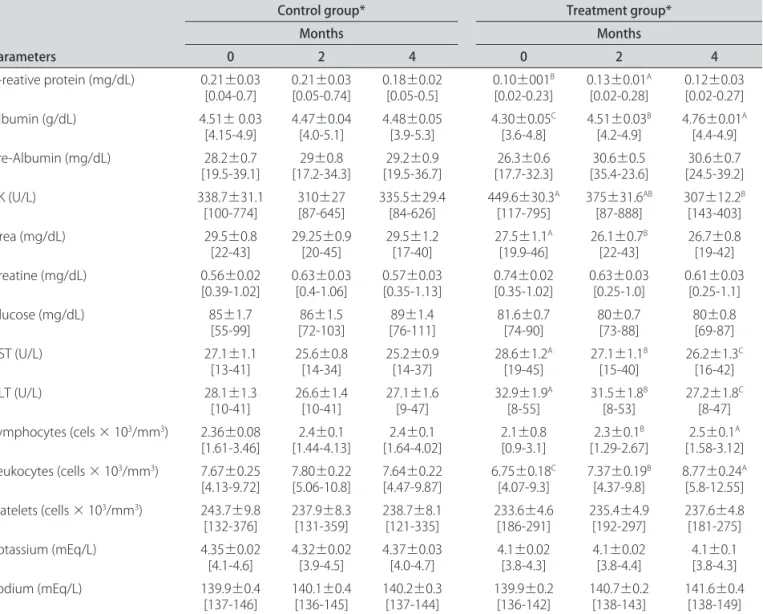
Table 2. Inluence of nutritional supplementation with the 70%WPI:30%MS agglomerate on clinical and biochemical parameters.
Parameters
Control group* Treatment group*
Months Months
0 2 4 0 2 4
C-reative protein (mg/dL) 0.21±0.03
[0.04-0.7] 0.21±0.03[0.05-0.74] 0.18±0.02[0.05-0.5] 0.10±001
B
[0.02-0.23] 0.13±0.01
A
[0.02-0.28] 0.12±0.03 [0.02-0.27]
Albumin (g/dL) 4.51± 0.03
[4.15-4.9] 4.47±0.04[4.0-5.1] 4.48±0.05[3.9-5.3] 4.30±0.05
C
[3.6-4.8] 4.51±0.03
B
[4.2-4.9] 4.76±0.01
A
[4.4-4.9] Pre-Albumin (mg/dL) 28.2±0.7
[19.5-39.1] [17.2-34.3]29±0.8 [19.5-36.7]29.2±0.9 [17.7-32.3]26.3±0.6 [35.4-23.6]30.6±0.5 [24.5-39.2]30.6±0.7
CK (U/L) 338.7±31.1
[100-774] 310±27[87-645] 335.5±29.4[84-626] 449.6±30.3
A
[117-795] 375±31.6
AB
[87-888] 307±12.2
B
[143-403]
Urea (mg/dL) 29.5±0.8
[22-43] 29.25±0.9[20-45] 29.5±1.2[17-40] 27.5±1.1
A
[19.9-46] 26.1±0.7
B
[22-43] 26.7±0.8[19-42] Creatine (mg/dL) 0.56±0.02
[0.39-1.02] 0.63±0.03[0.4-1.06] 0.57±0.03[0.35-1.13] 0.74±0.02[0.35-1.02] 0.63±0.03[0.25-1.0] 0.61±0.03[0.25-1.1]
Glucose (mg/dL) 85±1.7
[55-99] [72-103]86±1.5 [76-111]89±1.4 81.6±0.7[74-90] 80±0.7[73-88] 80±0.8[69-87]
AST (U/L) 27.1±1.1
[13-41] 25.6±0.8[14-34] 25.2±0.9[14-37] 28.6±1.2
A
[19-45] 27.1±1.1
B
[15-40] 26.2±1.3
C
[16-42]
ALT (U/L) 28.1±1.3
[10-41] 26.6±1.4[10-41] 27.1±1.6[9-47] 32.9±1.9
A
[8-55] 31.5±1.8
B
[8-53] 27.2±1.8
C
[8-47] Lymphocytes (cels × 103/mm3) 2.36±0.08
[1.61-3.46] [1.44-4.13]2.4±0.1 [1.64-4.02]2.4±0.1 2.1±0.8[0.9-3.1] 2.3±0.1
B
[1.29-2.67] 2.5±0.1
A
[1.58-3.12] Leukocytes (cells × 103/mm3) 7.67±0.25
[4.13-9.72] 7.80±0.22[5.06-10.8] 7.64±0.22[4.47-9.87] 6.75±0.18
C
[4.07-9.3] 7.37±0.19
B
[4.37-9.8] 8.77±0.24
A
[5.8-12.55] Platelets (cells × 103/mm3) 243.7±9.8
[132-376] 237.9±8.3[131-359] 238.7±8.1[121-335] 233.6±4.6[186-291] 235.4±4.9[192-297] 237.6±4.8[181-275] Potassium (mEq/L) 4.35±0.02
[4.1-4.6] 4.32±0.02[3.9-4.5] 4.37±0.03[4.0-4.7] 4.1±0.02[3.8-4.3] 4.1±0.02[3.8-4.4] 4.1±0.1[3.8-4.3]
Sodium (mEq/L) 139.9±0.4
[137-146] 140.1±0.4[136-145] 140.2±0.3[137-144] 139.9±0.2[136-142] 140.7±0.2[138-143] 141.6±0.4[138-149]
101.4%, p=0.038). Protein and iber intake also improved at the end of this period (82.04% vs 93.53%, p=0.043, and 50.44% vs 63.6%, p=0.034, respectively). Ingestion of calcium (p=0.002), ascorbic acid (p=0.035), vitamin E (p=0.012) and retinol (p=0.041) increased.
We found similar changes in the supplemented group. Energy adequacy rose from 78.55 to 92.20% (p=0.034) in two months. Intake of carbohydrates (72.61% vs 91.1%, p=0.021), lipids (94.66% vs 107.2%, p=0.001), proteins (79.24% vs 105.6%, p=0.001) and ibers (49.96% vs 74.48%, p=0.002) improved in this group after two months. Calci-um and vitamin E ingestion also increased (p=0.002 and 0.014, respectively).
Table 1 shows body weight, BMI, fat and lean body mass in the control and supplemented groups. here was a signiicant reduction of body weight and BMI in the control group (p=0.029 and 0.003, respectively), where-as in the supplemented group we found increwhere-ased BMI (p=0.041). Diferences between groups did not reach sta-tistical signiicance. Table 1 also shows TSF, BSF, SISF and SESF skinfolds in both groups.
In the control group only, we found decreased MAMC and AMA in the follow-up (p=0.003 e p=0.019), whereas AFA increased (p=0.042). MAC and wrist circumference did not change in the supplemented patients (p=0.062 e p=0.090, respectively) (Table 1).
here was signiicant improvement in serum albumin levels (p=0.001), total lymphocyte count (p=0.004) and white blood cell count (0.002) among supplemented pa-tients. In this group, CK, AST and ALT levels signiicant-ly decreased (p=0.028, 0.004 and 0.003, respectivesigniicant-ly), as depicted on Table 2.
ALSFRS-R scores in both groups are on Table 3.
DISCUSSION
Patients with ALS included in this study share the characteristic epidemiologic features of the disease23. We
did not ind relevant diferences between patients with bulbar and appendicular predominance.
Most patients had low income (88% received <$1,000.00) and education level (80% studied up to the 4th grade). Ten patients (62%) had 5 or 6 daily meals, four
(25%) had 4, and two (13%) had 3 daily meals.
Rio and Cawadias24 reviewed nutritional guidelines for
patients with ALS in the United Kingdom and found that
calorie and protein supplementation was the cornerstone of nutritional therapy. Hefernan et al.25 also emphasized
the relevance of education and nutritional intervention in these individuals. In a previous study with 20 patients, au-thors were able to modify the nutritional status classiica-tion in 70% of individuals after oral supplementaclassiica-tion. hey have shown that oral supplementation avoided worsening the nutritional status, but could not normalize the overall nutritional adequacy26. In accordance with Karsarskis et
al.27 and Desport et al.1, we have found progressive decline
of body weight and BMI in non-supplemented patients. However, BMI improved in patients that received oral supplementation. In this group, fatty and lean body mass did not decline in the follow-up, leading to higher PCMS. Skinfolds are a useful clinical method to evaluate body composition, namely the proportion of fat mass28,29. We
found in the control group that BSF and SESF increased in the follow-up, thus suggesting higher proportions of body fat mass. Increased TSF in supplemented patients may have been caused by higher food intake during the study. Slowie4 identiied a relationship between reduced food
intake and smaller TSF. Modiications in TSF may have contributed to improved PCMS scores in this group.
MAMC and AMA are markers of striated muscle pro-tein mass28. MAC and wrist circumference did not change
in the follow-up in either group (Table 1). MAMC and AMA declined in the control group, whereas AFA in-creased; this may indicate a fatty change in the skeletal muscle due to chronic denervation. MAMC and AMA remained stable in the supplemented group, but AFA de-clined, suggesting preserved lean body mass and reduced fat body mass. Similar indings were reported by Stanich et al.26 among patients with ALS receiving hypercaloric
supplementation. Karsarsis et al.27 identiied progressive
AMA decline over disease course.
Patients in both groups were classiied as eutrophic according to the BMI. However, PCMS takes into account body composition measures and is therefore a more re-liable tool to evaluate nutritional status. In the control group, PCMS were 80.13, 77.67 and 79.93 at the onset and after 2 months and 4 months of follow-up, respec-tively. Meanwhile, PCMS progressively increased among the supplemented patients (75.26, 77.13 and 78.89). De-spite the diferent courses, patients in both groups were classiied as having moderate malnutrition (70-80%).
Table 3. ALSFRS-R: Level of signiicance among the irst and second time of control and supplemented groups.
Control group* Treatment group*
0 4 p-value 0 4 p-value
ALSFRS-R 27.0±3.8a 23.6±4.4b 0.03 29.1±2.4 27.0±3.5 0.17
Clinical and biochemical parameters showed normal values for albumin, pre-albumin and C-reactive protein (CRP) in patients with ALS. Kasarskis et al.27 previously
found that pre-albumin and retinol-binding protein se-rum levels did not change over disease course. hese re-sults are much similar to the ones observed in our sup-plemented group. Desport et al.1 also found normal values
for CRP, white blood cell and total lymphocyte counts in ALS. We found increased serum albumin, white blood cell and total lymphocyte counts in supplemented patients; this may be related to immunomodulatory properties of milk proteins28. Muscle turnover, expressed by CK, AST
and ALT levels, also decreased in this group.
he bioactive properties of milk whey protein were observed in studies made in order to analyze the difer-ent efects of food proteins in the immune system of an-imals. It was noticed that the whey protein isolate con-tains high levels of glutathione, and its precursors cystine and glutamylcystine, and that the combination of these factors plays an important role in maintaining the neces-sary cellular glutathione levels to guarantee an eicient immune response29. Considering these bioactive
prop-erties, beneic efects may be implied in the analyzed pa-rameters. Diferent from proteins, modiied starch used in the treatment group was only composed by carbohy-drates, calculated as part of the recommended daily en-ergetic ingestion of the individuals’ diet.
ALSFRS-R is a reliable tool useful to predict survival in ALS30,31, survival after mechanical non-invasive
venti-lation, and to estimate overall functioning of patients with ALS32. ALSFRS-R scores did not change among
supple-mented patients (p=0.173), but signiicantly declined in the control group (p=0.003).
In Conclusion, during the follow-up study, intake of carbohydrates, lipids, proteins, ibers, calcium and vita-min E signiicantly increased in both control and sup-plemented groups. BMI, MAMC and AMA declined over time in the control group, which received malto-dextrin. In the supplemented group, however, serum al-bumin, white blood cell and total lymphocyte counts in-creased. Lean body mass seems to be preserved in this group, and skeletal muscle turnover markers (CK, AST and ALT) declined. he ALSFRS-R scores did not change in the supplemented group, while patients in the control group presented a progressive decline. Our results indi-cate that 70%WPI:30%MS improved the nutritional sta-tus of patients with ALS, and may be useful in the clini-cal management of the disease.
REFERENCES
1. Desport JC, Preux PM, Magy L, et al. Factor correlated with hypermetabolism in patients with amyotrophic lateral sclerosis. Am J Clin Nutr 2001;74:328-334. 2. Strand EA, Miller RM, Yorkston KM, Hillel AD. Management of oral-pharyngeal dys-phagia symptoms in amyotrophic lateral sclerosis. Dysdys-phagia 1996; 11:129-139.
3. Desport JC, Preux PM, Truong TC, Vallat JM, Sautereau D. Couratier P. Nutri-tional status is a prognostics factor for survival in ALS patients. Neurology 1999;53:1059-1063.
4. Slowie LA, Paige MS, Antel JP. Nutritional considerations in the management of patients with ALS amyotrophic lateral sclerosis. J Am Diet Assoc 1983;83: 44-47. 5. Wright L, Cotter D, Hickson M, Frost. Comparison of energy and protein in-takes of older people consuming a texture modiied diet with normal hos-pital diets. J Human Nutr Diet 2005;18:213-219.
6. Silva LBC, Mourão LF, Silva AA, et al. Avaliação da ingestão alimentar de indi-víduos com esclerose lateral amiotróica. Rev Bras Nutr Clin 2008;23:5-12. 7. ADA: National Dysphagia Diet: Standardization for Optimal Care. National
Dys-phagia Diet Task Force. Chicago: The American Dietetics Association, 2003:50. 8. World Federation of Neurology Research Group on Neuromuscular Diseases. El Escorial revisited: revised criteria for the diagnosis of amyotrophic lateral sclerosis. HYPERLINK http:// www.wfnals.org/articles/elescorial1998.htm 9. Fisberg RM, Martini LA, Slater B. Métodos de Inquéritos Alimentares. In:
Fis-berg RM, Slater B, Marchioni DML, Martini LA (Eds). Inquéritos Alimentares: Métodos e bases cientíicos. São Paulo: Manole, 2005:2-7.
10. Monteiro JBR, Esteves EA. Diet Pro versão 4.0. Sistema de suporte à avaliação nutricional e prescrição de dietas [CD-ROM]. Viçosa:Agromídia Software; 2001. 11. Tabela Brasileira de Composição de Alimentos. NEPA-UNICAMP-Versão
II-2-th ed. Campinas:NEPA-UNICAMP;2006:42.
12. U.S.Departament of Agriculture. Composition of Foods. Raw, Processed, Pre-pared USDA National Nutrient Database for Standard Reference. Release 16. Nutrient Data Laboratory homepage. HYPERLINK http://www.nal.usda.gov/ fnic/foodcomp/Data/SR18/SR18doc.pdf.
13. National Academic of Sciences. National Research Council. Recommended di-etary allowances. 10th ed. Washington: National Academic Press, 1989:115. 14. Vannucchi H, Menezes EW, Campana AO, Lajolo FM. Aplicações das recomenda-ções adaptadas à população brasileira. Ribeirão Preto: Legis Suma, 1990;156. 15. Long CL, Schafel N, Geiger JW. Metabolic response to injury and illness: Es-timation of energy and protein needs from indirect calorimetry and nitro-gen balance. JPEN 1979;3:452-456.
16. Grant JP, Custer PB, Thurlon J. Current techniques of nutrition assessment. In Handbook of total parenteral nutrition. Philadelphia: Saunders, 1980:12-23. 17. Chumlea WC, Roche AF, Steinbaugh ML. Estimating stature from knee height
for persons 60 to 90 years of age. J Am Geriatric Soc 1985;33:116-120. 18. Lohman TG, Roche AF, Martorell R. Anthropometric standardization
refer-ence manual. Champaign: Human Kinetics, 1989:39-54.
19. Heymsield SB, McManus S, Smith J, Stevens V, Nixon DW. Anthropometric measurement of muscle mass: revised equations for calculating bone-free arm muscle area. Am J Clin Nutr 1982;36:680-690.
20. Frisancho AR. New norms of upper limb fat and muscle areas for assessment of nutritional status. Am J Clin Nutr 1981;34:540-545.
21. DeHoog S. Avaliação do Estado Nutricional. In: Mahan LK, Stump SE. (Eds). Alimentos, nutrição e dietoterapia. 9 Ed. São Paulo:Roca, 1998:371-395. 22. Cedarbaum JM. Stambler N. Malta E. Fuller C. Hilt D. Thurmond B. The
ALS-FRS-R: a revised ALS functional rating scale that incorporates assessments of respiratory function. J Neurol Sci 1999;169:13-21.
23. Dietrich-Neto F, Callegaro D, Dias-Tosta E, et al. Amyotrophic lateral sclero-sis in Brazil: 1998 national survey. Arq Neuropsiquiatr 2000;58:607-615. 24. Rio A, Cawadias E. Nutritional advice and treatment by dietitians to patients
with amyotrophic latera sclerosis/motor neurone disease: a survey of current practice in England, Wales, Northern Ireland and Canada. J Hum Nutr Diet 2007;20:1-13.
25. Hefernan C, Jenkinson C, Holmes T, et al. Nutritional management in MND/ ALS patients: an evidence based review. Amyotroph Lateral Scler Other Mo-tor Neuron Disord 2004;5:72-83.
26. Stanich P, Pereira AML, Chiappeta ALML, Nunes M, Oliveira ASB, Gabbai AA. Suplementação nutricional em pacientes com doença do neurônio motor/ esclerose lateral amiotróica. Rev Bras de Nutr Clin 2004;19:70-78. 27. Kasarskis E, Berryman S, Vanderleest JG, Schneider AR, McClain CJ.
Nutrition-al status of patients with amyotrophic laterNutrition-al sclerosis: relation to the prox-imity of death. Am J Clin Nutr 1996;63:130-137.
28. Mercier A, Gauthier SF, Fliss I. Immunomodulating efects of whey proteins and their enzymatic digests. Int Dairy J 2004;14:175-183.
29. Bounous G, Molson JH. The antioxidant system. Anticancer Res 2003;23:1411-1416.
30. Silva LBC, Mourão LF, Silva AA, et al. Amyotrophic lateral sclerosis: com-bined nutritional, respiratory and functional assessment. Arq Neuropsiquiatr 2008;66:354-359.
31. Gordon PH, Cheng B, Montes J, Doorish A, Albert SM, Mitsumoto H. Outcome measures for early phase clinical trials in amyotrophic lateral sclerosis. Amy-otroph Lateral Scler Other Motor Neuron Disord 2007;27:1-4.