Setembro, 2017
Ana Sofia Taborda Martins Pereira
Licenciada em Ciências de Engenharia Biomédica
Development of a Cellulose Acetate Multisensorial
Membrane
Dissertação para obtenção do Grau de Mestre em Engenharia Biomédica
Orientador: Isabel Ferreira, Professora Associada, DCM-FCT/UNL
Co-orientador: Ana Baptista, Investigadora Pós-Douto-ramento, DCM-FCT/UNL
Development of a Cellulose Acetate Multisensorial Membrane
Copyright © Ana Sofia Taborda Martins Pereira, Faculdade de Ciências e Tecno-logia, Universidade Nova de Lisboa.
vii
Aknowledgements
Em primeiro lugar, quero agradecer à minha orientadora, Professora Isabel Ferreira, por me ter dado a oportunidade de concretizar este projecto. Muito obri-gada pela motivação, disponibilidade, apoio e conhecimento transmitido.
À minha co-orientadora, Doutora Ana Baptista, agradeço-lhe toda a boa disposição, a disponibilidade demonstrada, toda a paciência e constante preocu-pação e dedicação. Mesmo quando os resultados não eram os mais promissores, teve sempre uma palavra de incentivo. Obrigada por todo o conhecimento trans-mitido.
Aos meus colegas, e agora amigos, de laboratório – os meus sinceros agra-decimentos. Foi um prazer partilhar com cada um de vocês, de maneiras diferen-tes, este capítulo que agora me vejo completar. Obrigada pelo companheirismo e ajuda, em especial ao David Sousa, que ganhou um lugar especial no meu cora-ção, agora insubstituível.
À minha mãe, Elsa, e também à minha avó, Isabel, agradeço-vos pela pessoa que sou e o dever a vocês. Pela educação que me deram ao longo da vida, pela alegria que sempre me transmitiram e por todo o amor que me deram. Obrigada por estarem sempre presentes, mesmo não estando junto a mim. São ambas um exemplo para mim, tenho-vos como as pessoas mais carinhosas e bondosas que conheci. Mãe, és a minha razão de viver, amo-te muito!
viii
irei muito mais além e pela inquestionável motivação. O mais sincero de todos os obrigados a si, a quem admiro a forte personalidade e a quem estimo toda a amizade.
Ao Miguel Dias, Mimi, que foi o meu pilar durante praticamente dez anos inteiros, um obrigada infinito. Sem ti, a minha sanidade mental não teria sido preservada. Obrigada por todo o amor que me deste, por todo o apoio incondi-cional. Não tenho palavras que cheguem para ti, contigo cresci e aprendi muito mais do que poderia imaginar.
Um obrigada do fundo do coração à Tia São e ao Tio Zé, os quais considero uns segundos pais, por todo o apoio e carinho com que sempre me trataram.
Não posso deixar de agradecer ás amigas FCTenses, Joana Reis e Anayza Soares, bem como aos amigos mais procrastinadores: Nana e Rômulo. O meu percurso académico foi a festa que foi graças a vocês! Levo-vos no coração!
ix
Abstract
Biological fluids are the most measured media to monitor metabolites like glucose. Glucose measuring is important since it requires routine track for pa-tients undergoing self-testing, like papa-tients diagnosed with pathologies that re-quire daily control of these metabolites or people who have problems with blood collection like haemophiliacs. It can prove to be painful and stressful collecting samples since most methods are invasive.
The well-being and life quality of these patients can be improved by per-forming non-invasive tests to body fluids at the surface of the skin without ever losing biochemical profiling. Sweat and saliva can be collected more frequently this way, proving less painful and less stressful to the patients.
By combining different biosensing functionalities in a unique membrane, in order to make it multisensorial, and integrate it in a wearable device which can be used on the skin’s surface as a band-aid, it’s possible to perform auto diagnosis keeping in mind a reduced cost policy, portability and ecology.
x
xi
Resumo
Fluidos biológicos são os meios mais medidos quando se trata de monitori-zar metabolitos como a glucose. A sua medição é importante para pacientes que necessitem de realizar uma monitorização continua, como é o caso de pessoas que sofrem de doenças que requerem autoexames ou mesmo pessoas com fobias, como no caso de hemofílicos. Para eles, tais tarefas mostram-se penosas e dolo-rosas pois a maior parte dos métodos utilizados para recolha de amostras são invasivos.
É possível melhorar o bem-estar e a qualidade de vida desses pacientes atra-vés de testes não invasivos a fluidos corporais à superfície da pele sem perder o perfil bioquímico. Amostras de saliva e suor podem ser recolhidas de formas mais frequentes do que o sangue, trazendo menos complicações aos pacientes.
Ao combinar diferentes funcionalidades numa membrana que actua como um biossensor de forma a integrá-la numa plataforma que se possa colocar sobre a pele como um penso, é possível realizar um autodiagnóstico tendo em conta uma política de custos reduzidos, portabilidade e de ecologia.
xii
xiii
Contents
LIST OF FIGURES ... XV
LIST OF TABLES ... XIX
ACRONYMS ... XXI
INTRODUCTION ... 1
MATERIALS AND METHODS ... 9
RESULTS AND DISCUSSION ... 23
CONCLUSIONS... 59
BIBLIOGRAPHY ... 63
xv
List of Figures
FIGURE 1.1-PICTURE OF LEE ET AL.’S WEARABLE SWEAT MONITORING PATCH ... 7 FIGURE 1.2-CELLULOSE ACETATE STRUCTURE ... 8 FIGURE 2.1-SCHEMATIC DIAGRAM OF A CONVENTIONAL ELECTROSPINNING SETUP ... 10 FIGURE 2.2–SCHEMATIC OF THE PREPARATION PROCEDURE OF PANI FUNCTIONALIZED CELLULOSE NANOFIBERS 11 FIGURE 2.3–OPTICAL CAMERA IMAGE OF AN EXAMPLE PREPARATION WITH DIFFERENT FUNCTIONALIZED CA
MEMBRANES. ... 15 FIGURE 2.4-EXAMPLE OF A MICROSCOPE SLIDE CONTAINING SMALL SAMPLES OF FUNCTIONALIZED CA MEMBRANES
MEASURE POTENTIOSTATIC EIS ... 17 FIGURE 2.5-SCHEMATIZATION OF THE CHOSEN ELECTRODE CONFIGURATION USED IN THE ELECTRO-CHEMICAL
MEASUREMENTS ... 19 FIGURE 2.6-PICTURE OF THE ELECTROCHEMICAL TEFLON-MADE CELL USED ON THE CYCLIC VOLTAMMETRY
STUDIES ... 20 FIGURE 3.1–SEM IMAGES OF CA ELECTROSPUN MEMBRANE (I) BEFORE AND (II) AFTER IMMERSION ON A 0.1M
NAOH(PH13) ELECTROLYTE SOLUTION... 31 FIGURE 3.2–SEM IMAGES OF CA ELECTROSPUN MEMBRANE FUNCTIONALIZED WITH PANI(I) BEFORE AND (II)
AFTER IMMERSION ON A 0.1MNAOH(PH13) ELECTROLYTE SOLUTION ... 31 FIGURE 3.3–SEM IMAGES OF CA ELECTROSPUN MEMBRANE FUNCTIONALIZED WITH PPY (I) BEFORE AND (II)
AFTER IMMERSION ON A 0.1MNAOH(PH13) ELECTROLYTE SOLUTION. ... 31 FIGURE 3.4–SEM IMAGES OF CA ELECTROSPUN MEMBRANE FUNCTIONALIZED WITH PEDOT(I) BEFORE AND (II)
AFTER IMMERSED ON A 0.1MNAOH(PH13) ELECTROLYTE SOLUTION ... 28 FIGURE 3.5–ATR-FTIR SPECTRA OF CA,PANI FUNCTIONALIZED CA,PPY FUNCTIONALIZED CA AND PEDOT
FUNCTIONALIZED CA MEMBRANES ... 30 FIGURE 3.6-REPRESENTATIVE I-VCURVE OBTAINED FOR PEDOT/CA MEMBRANE.... ... 32 FIGURE 3.7–SEM IMAGES OF CA ELECTROSPUN MEMBRANE FUNCTIONALIZED WITH PPY (I) BEFORE AND (II)
AFTER IMMERSION ON A 0.1MNAOH(PH13) ELECTROLYTE SOLUTION ... 34 FIGURE 3.8–SEM IMAGES OF CA ELECTROSPUN MEMBRANE FUNCTIONALIZED WITH PPY (I) BEFORE AND (II)
xvi
FIGURE 3.9-EIS FITTING CURVE OF A PPY/CA MEMBRANE (RED DOTS) AND ITS EIS EXPERIMENTAL CURVE
(BLUE)... ... 35 FIGURE 3.10-CIRCUIT MODEL OF A PPY/CA MEMBRANE AT HIGH FREQUENCY CAPACITANCE ... 35 FIGURE 3.11-EIS FITTING OF A PEDOT/CA MEMBRANE (RED DOTS) AND ITS EIS EXPERIMENTAL CURVE (BLUE)
... 36 FIGURE 3.12–CIRCUIT MODEL OF A PEDOT/CA MEMBRANE AT HIGHLY CONDUCTIVE DC. ... 36 FIGURE 3.13-EIS FITTING OF A LESS CONDUCTIVE AT DCPEDOT/CA MEMBRANE (RED DOTS) AND ITS
EXPERIMENTAL CURVE (BLUE)... ... 37 FIGURE 3.14-CIRCUIT MODEL OF A PEDOT/CA MEMBRANE AT HIGH FREQUENCY CAPACITANCE SHOWING THE
NON-COVERED INSULATING BULK OF THE CA FIBERS WITH PEDOT... ... 37 FIGURE 3.15–PANI/CA(I),PPY/CA (II) AND PEDOT/CA(III) VOLTAMMOGRAMS AT 20,40,80 AND 100
MV/S AND (IV) SHOWS THE DEPENDENCE OF THE SCAN RATE TO PANI/CA,PPY/CA AND PEDOT/CA’S PEAK CURRENTS.... ... 40 FIGURE 3.16-PANI/CA(I),PPY/CA(II) AND PEDOT/CA(III) VOLTAMMOGRAMS AT 80 MV/S USING DIFFERENT CONCENTRATIONS OF GLUCOSE 0.1MNAOH SOLUTION AS ELECTROLYTE ... 43
FIGURE 3.17–PLOTS OF GLUCOSE CONCENTRATION VERSUS ANODIC PEAK CURRENT (I), ANODIC PEAK POTENTIAL
(II), CATHODIC PEAK CURRENT (III), CATHODIC PEAK POTENTIAL (IV), OF THE PANI/CA MEMBRANES ... 45 FIGURE 3.18–PLOTS OF GLUCOSE CONCENTRATION VERSUS ANODIC PEAK CURRENT (I), ANODIC PEAK POTENTIAL
(II), CATHODIC PEAK CURRENT (III), CATHODIC PEAK POTENTIAL (IV), OF THE PPY/CA MEMBRANES ... 46 FIGURE 3.19-PLOTS OF GLUCOSE CONCENTRATION VERSUS ANODIC PEAK CURRENT WITH A FITTING DONE
EXCLUDING DATA CIRCLED IN RED (I), ANODIC PEAK POTENTIAL (II), CATHODIC PEAK CURRENT (III),
CATHODIC PEAK POTENTIAL (IV), OF THE PEDOT/CA MEMBRANES ... 47 FIGURE 3.20-CYCLIC VOLTAMMOGRAMS FOR PANI/CA(I),PPY/CA(II) AND PEDOT/CA(III), ALL RAN AT 80
MV/S WITH THREE DIFFERENT ARTIFICIAL SWEAT SIMULATING ELECTROLYTES WITH PH4(AATCC), PH6 (ISO) AND PH8(ISO)... ... 51 FIGURE 3.21–EQUATION EXPLAINING PANI’S ELECTROCHEMICAL BEHAVIOUR... 52 FIGURE 3.22–SCHEME REPRESENTING THE OXIDATION OF PYRROLE RINGS AND THEIR LOSS OF CONJUGATION WHEN
THE FORMING OF CARBONYL GROUPS OCCUR [48]... ... 52 FIGURE 3.23–CHRONOAMPEROGRAMS OF PANI/CA(I),PPY/CA(II) AND PEDOT/CA(III) FOR DIFFERENT
GLUCOSE CONCENTRATIONS ... 54 FIGURE 3.24-CHRONOAMPEROGRAMS OF PANI/CA(I),PPY/CA(II) AND PEDOT/CA(III) FOR DIFFERENT
ARTIFICIAL SWEAT SOLUTIONS ... 55
A.1-CYCLIC VOLTAMMETRY EXPERIMENTAL SETUP RESULTS WITHOUT A CARBON STRIP INSIDE THE TEFLON-MADE CELL, WITH A CARBON STRIP ON TOP OF THE MEMBRANE AND BENEATH IT... ... 69 A.2-CYCLIC VOLTAMMOGRAMS FOR PANI/CA,PPY/CA AND PEDOT/CA USING DIFFERENTLY CONCENTRATED
SOLUTIONS OF GLUCOSE ELECTROLYTE... ... 70 A.3-ARTIFICIAL SWEAT CYCLIC VOLTAMMETRY OF PANI/CA,PPY/CA AND PEDOT/CA WITH DIFFERENT
RANGES OF APPLIED POTENTIAL ... 71 A.4-CHRONOAMPEROMETRY FOR PANI/CA WITH ARTIFICIAL SWEAT SOLUTIONS TESTING DIFFERENT
xvii
List of Tables
TABLE 1.1–TABLE SUMMARIZING DIFFERENT TYPES OF BIOSENSORS ... 3
TABLE 2.1-ELECTROSPINNING PARAMETERS USED TO PRODUCE CA ELECTROSPUN MEMBRANES ... 10 TABLE 2.2–CHEMICAL COMPOSITION OF THE THREE TYPES OF ARTIFICIAL SWEAT SOLUTIONS USED FOR THE
DEVICE’S ELECTROCHEMICAL MEASUREMENTS ... 18 TABLE 2.3-AVERAGE SAMPLE THICKNESS OF THE ELECTRODES USED IN CYCLIC VOLTAMMETRY ... 20 TABLE 3.1-AVERAGE CA FIBER DIAMETERS WHEN FUNCTIONALIZED WITH PANI,PPY AND PEDOT BEFORE AND
AFTER IMMERSION IN 0.1MNAOH(PH13) ... 34 TABLE 3.2–CONDUCTIVITY OF PANI/CA,PPY/CA AND PEDOT/CA MEMBRANES, BEFORE AND AFTER BEING
DIPPED IN 0.1MNAOH SOLUTION, RELATED TO THE CORRESPONDING MEMBRANE AVERAGE THICKNESS
(TAV) ... 44 TABLE 3.3–DIFFERENT CONCENTRATIONS OF GLUCOSE 0.1MNAOH SOLUTION AND ITS CORRESPONDING
FUNCTIONALIZED MEMBRANE PEAK POTENTIALS ... 43 TABLE 3.4–TABLE SUMMARIZING PANI/CA,PPY/CA,PEDOT/CA FUNCTIONAL GROUPS, FITTING EQUATIONS,
COEFFICIENTS OF DETERMINATION AND PEAK TYPE... 48 TABLE 3.5–TABLE COMPRISING THE STABILIZATION CURRENT IN µA TAKEN FROM THE CHRONOAMPEROGRAMS FOR
xix
Acronyms
WHO World Health Organization CA Cellulose Acetate
PPy Polypirrole
PEDOT Poly(3,4-ethylenedioxythiophene) PANI Polyaniline
PANI/CA Polyaniline functionalized cellulose acetate membrane PPy/CA Polypirrole functionalized cellulose acetate membrane PEDOT/CA Poly(3,4-ethylenedioxythiophene) functionalized cellu-lose acetate membrane
DMAc Dimethylacetamide GOx Glucose Oxidase
ISO International Organization for Standardization
AATCC American Association of Textile Chemists and Colorists SEM Scanning Electron Microscopy
xx IR Infrared Radiation
I-V Curves Current-Voltage Characteristic Curves EIS Electrochemical Impedance Spectroscopy AC Alternating Current
WS Working Sense WE Working Electrode CE Counter Electrode RE Reference Electrode CV Cyclic Voltammetry Dav Average Diameter Mw Molecular weight TAv Average Thickness
Z Complex Impedance
Y Complex Admittance
X Total Imaginary Reactance
XC Capacitive component in the complex plane of the total imaginary reactance
XL Inductive component in the complex plane of the total im-aginary reactance
ω Angular Frequency
φZ Phase Angle of the Impedance Magnitude
φY Phase Angle of the Admittance Magnitude
1
Introduction
1.1 - Motivation
Present day effective healthcare demands require medical diagnostics la-boratories to use accurate, fast and inexpensive devices in a routinely way.
Biological sensing devices are widely used in clinical diagnosis as inte-grated biomedical systems mainly due to their fast response and reduced size. This makes them highly distinguishable in immediate testing through their sen-sitivity and specificity, thus providing viable solutions to contemporary healthcare industry needs.
The need to expand and spread clinical analysis in an independent way to
doctor’s clinics and patients self-testing at home has been increasing, thus, con-tinuous efforts to provide ready-to-go care and new concepts of portable analysis are coming up. Biosensors were made available in the market as a small sized method of rapid detection for that purpose.
Biological fluids as blood, serum and urine are between the most measured media to monitor metabolites such as glucose, urea and lactate. These measure-ments are important since they require routine track for patients undergoing self-testing. They are also relevant for patients diagnosed with pathologies that re-quire daily control of these metabolites or people who have problems with blood collecting like haemophiliacs. It can prove to be painful and stressful collecting samples since most methods are invasive. There has been an increase in trying to
2
measure metabolites in body fluids others than blood by non-invasive means in developing biosensors in clinical analysis.
Improving the well-being and life quality of these patients is an attainable possibility - by performing non-invasive tests to body fluids at the surface of the skin without ever losing biochemical profiling. Sweat and saliva can be collected more frequently this way, proving less painful and less stressful to the patients.
By combining different biosensing functionalities in a unique membrane, in order to make it multisensorial, and integrate it in a wearable device which can be used on the skin’s surface as a band-aid, a sticker or a temporary tattoo, it’s possible to perform auto diagnosis keeping in mind a reduced cost policy, port-ability and ecology without the physical presence in a clinical analysis laboratory, be it in critical moments or in a daily routine short term monitoring.
In this context, the present work aims the development of a multisensorial membrane that can monitor glucose and pH levels, envisaging patients with pa-thologies such as diabetes mellitus, which require real time and continuous con-trol of those levels in a fast, painless, safe and simple way.
1.2 – State of the Art
The first concept of biosensor ever was defined by Clark Jr, by publishing his work on oxygen electrodes in the year of 1956. Later, in 1962, he described his first glucose oxidase (GOx) immobilization experience on electrodes, via a dialy-sis membrane. With that, it was verified that glucose and oxygen concentration are proportional since decreasing of one of them, lessens the other [1].
Clark’s original patent states that a number of enzymes can be used to
con-vert electroinactive substrates into electroactive products. The use of two elec-trodes, having one of them covered with GOx, and differential current measure-ments helped correct the effect of interference. [1]
3
[2]. Since then, various types of sensors were developed - Table 1.1 summarizes them.
Table 1.1 –Table summarizing different types of biosensors (adapted from [1], [3])
Type of Sensors Short Description
Tissue-based Sensors
Developed by Diviès and further per-fected by Rechnitz. Tissues are from plant and animal sources, with an inhibitor or a
substract as the analyte of interest.
Organelle-based Sen-sors
Made using membranes, chloroplasts, mi-tochondria and microsomes. High stabil-ity despite longer detection times and
re-duced specificity.
Immunosensors
Based on the high affinity of antibodies towards antigens for them to interact
with the host’s immune system.
DNA Biosensors
Diagnose hereditary disease and patho-genic infections, by sequencing and hy-bridizing DNA. Lund et al. connected DNA to microsphere surfaces and Gam-bhir et al. first immobilized DNA in
poly-pirrole films.
Magnetic Biosensors
Miniaturized in size, they detect magnetic nanoparticles in microfluidic channels
be-cause of the magnetoresistance effect.
Thermal or Calorimet-ric Biosensors
Developed by assimilating biosensor ma-terials into physical transducers.
Piezoelectric Biosen-sors
4
Both measure changes in resonance fre-quency of a piezoelectric crystal due to its
structure’s mass changes
Optical Biosensors
With a light source, a light beam is gener-ated with defined characteristics to be modulated as it goes through a
photode-tector.
Genetically-Encoded Biosensors
Using genetic fusion reporters, they are user-friendly, easy to engineer, to
manip-ulate and transfer into cells.
Peptide and Protein Sensors
Manufactured through synthetic chemis-try followed by enzymatic labelling with synthetic fluorophores. Utilized to control
target activity enhancing signal-to-noise ratio and sensitivity of response through introduction of chemical quenchers and
photoactivatable groups.
Biosensors used to be described as compact units of analysis with a biolog-ical/biologically-derived sensitive recognition element or associated with a physicochemical transducer. They combined the specificity of the biological mol-ecule along the transducer so that a biological sign could be converted into an optical or electrochemical sign [2], [3]. Whilst a chemical sensor was said to be a miniaturized analytical device than could deliver real time and online infor-mation on the presence of specific compounds or ions in complex samples [4].
Nowadays, biosensors have acquired a much wider meaning, with no dis-tinction being made between bio and chemical sensors. A biosensor is any sensor that measures a chemical concentration in a biological system, capable of contin-uous monitoring, fast and precise analysis, all in a simple and ready-to-use de-vice for non-medical personnel [4].
5
clinical analysis due to their better sensitivity, reproducibility, easy maintenance and low cost. Different detection methods combined with different sensing strat-egies make good multiparameter sensors. For example, using electrochemical and fibre-optic technology, one can continuously measure in vivo pH, carbon di-oxide partial pressure, oxygen partial pressure and oxygen saturation in human pregnancy [2], [3], [5], [6].
Glucose sensors have long been in development mainly due to diabetes melli-tus. Despite the challenges yet to overcome regarding accuracy and reliability, glucose biosensor technology has been improved with point-of-care devices, con-tinuous glucose monitoring systems and non-invasive glucose monitoring sys-tems with a wide range of applications that go from fermentation to food quality control [3], [7].
Nowadays, one of world wide’s most common endocrine disorders of car-bohydrate metabolism is diabetes mellitus. Being a major health problem, it has become one of the leading causes of morbidity and mortality with increased prevalence. According to the World Health Organization (WHO), in 2000 there were approximately 171 million people suffering from diabetes, a number that is expected to increase to 366 million by 2030 [3].
Blood glucose concentration needs to be monitored in order to prevent fur-ther aggravations of diabetes and achieve glycaemic goals, as it provides infor-mation for optimizing patient treatment strategies. Since it is a major diagnosis tool, it has gathered particular interest, hence a series of glucose sensors has been developed and dominates the biosensor market [1], [3], [8].
6
Even though portable transdermal glucose sensors manufactured in watch-like devices or in screen-printed enzyme electrode test strips have already been developed, a reliable non-invasive glucose measuring method doesn’t exist yet [3].
Most sensors hardly reach the market due to issues regarding accuracy of the electrical contacts on the skin, miniaturization and lack of full portability. Stretchable membranes have been the focus of more recent studies since they can feature small size, lightweight and biocompatibility, which are very hard to achieve in a single device [11]–[13].
Sweat is a much more accessible biological fluid than blood – sweat excret-ing eccrine glands are all over the human body, which makes it qualifiable for diagnosis of many disease markers such as glucose [8], [14].
Recently, there has been an improvement in glucose-sweat sensing devices. Focusing on the non-invasive characteristic, Russell et al. [8] found a new and innovative approach: tattoo sensing technology using glucose-sensing hydrogel microspheres. This concept was further developed by Zhi et al. [8] with envelop-ment of the sensors in thin film, fastening the analyte transport through the de-vice.
Diamond et al. [8] assembled a sweat sensing device called SwEatch for so-dium analysis with 3D-printed sensor cases and connections, a lithium battery that provided a continuous run for 3 hours.
Sweat-sensing patches first came in 2010, by Heikenfeld et al. [8]. They stim-ulated sweat production and measured analyte concentrations wirelessly. This information could be transmitted to a smartphone.
A non-invasive sensing device for detecting analytes in sweat via electro-chemical sensing was tried out by Wang et al. Later, Gao et al. [8] integrated this idea in a Bluetooth-enabled wristband that detected skin temperature, sodium, potassium, lactate and glucose, using multiple sensors.
7
using soft bioelectronics on human skin. A picture of the device is shown in Fig-ure 1.1.
Figure 1.1 – Picture of Lee et al.’s wearable sweat monitoring patch (adapted from [14])
For this project, the relevance of developing an electrochemical sensing platform that uses non-invasive sweat analysis to monitor glucose and pH, so that it can be further developed to possibly integrate a patch-like device in future studies was mainly to miniaturize diagnostic tools and make them easy and ready to use by people in need of such care, like diabetes mellitus patients. The innovation comes with the choice of materials to be used. Organic and biocom-patible polymers were selected to integrate the platform sensing bulk. This way, not only a sustainable policy was carried out but also a reduced economic invest-ment was made.
Nowadays, sustainable and renewable source derived products have gath-ered attention since they are less harmful to the planet’s ecosystems.
Cellulose is an abundant biopolymeric composite that occurs naturally and, despite its toxic extracting procedures, it’s biodegradable and recyclable as it comes mostly from wood, cotton and algae. Its fabrication process has been wide studied and established with a long-time basis of procedure. Cellulose is made of repeating glucopyranosyl rings and can be chemically modified. These are some of the attributes that turn this polymer into one of the core elements of low cost disposable devices [15]–[17].
glucopyra-8
nosyl’s rings hydroxyl groups are replaced by ester groups. They have high wa-ter permeability [17], [18]. One of them is cellulose acetate (CA) and was the cho-sen polymer to use as the biocompatible organic matrix to be functionalized by three different conductive polymers. CA structure is represented in Figure 1.2. Conducting polymers ensure electron conductivity when doped. Doping is per-formed by means of chemical or electrochemical oxidation or reduction, resulting in the acquisition of positive and negative charges by the polymeric chains. Due to their easier synthesis pathway, biocompatibility and good conductivity, poly-mers such as Polyaniline (PANI), Polypirrole (PPy) and Poly(3,4-ethylenedioxy-thiophene) (PEDOT) have been extensively studied for medical applications [19]–[24].
Figure 1.2 – Cellulose acetate structure (adapted from [25])
9
Materials and Methods
This chapter describes, in detail, the preparation of the multisensorial mem-brane. First, cellulose acetate membranes were electrospun, then functionalized with conductive polymers and finally, tested to electrolytes using different solu-tions.
2.1 Preparation of Cellulose Acetate electrospun membranes
Cellulose acetate (CA) membranes were produced via electrospinning tech-nique based on parameters optimized in previous studies. A CA solution [12% (w/w) - Mn ~ 50000, 20 - 40% acetyl groups, Sigma-Aldrich] in 2:1 acetone:DMAc solvent mixture was prepared and loaded into a 1ml syringe (B. Braun).
A syringe pump (KDS100) was used to control the flow of the polymer so-lution through a needle (ITEC, Iberiana Technical, Lda., 21G) at a constant rate of 0.2 ml/h. The tip of the needle was connected to the positive pole of a high voltage source (Glassman High Voltage, Inc.) and the grounded collector is a static aluminium foil placed at a distance of 15 cm from the needle’s tip– as il-lustrated in Figure 2.1. In Table 2.1, the electrospinning parameters used to pro-duce the CA electrospun membranes are listed.
When a high voltage is applied, the molecules within the solution are charged creating a repulsive force. The resulting electrostatic repulsive force on
10
the newly formed Taylor cone, which is higher than the solution’s superficial
ten-sion, leads to the formation of an electrically charged jet. Since the surface of least potential is the collector, the jet is accelerated in its way. The solvent evaporates along the path and a polymeric nanofiber matrix is randomly deposited on the
collector’s surface with a thickness that varies according to the deposition time. The resulting membranes had an average thickness of 361.1±64.1 nm since they were deposited for 5 hours straight.
Figure 2.1 - Schematic diagram of a conventional electrospinning setup (adapted from [27])
Table 2.1 - Electrospinning parameters used to produce CA electrospun membranes
Needle Gauge 21
Grounded Collector Distance [cm] 15
Applied voltage [kV] 20
Deposition Time [hours] 5
Relative Humidity [%] 40-60
11
2.2 Functionalization of CA electrospun membranes
The produced CA electrospun membranes were functionilized with polyaniline, polypyrrole or PEDOT all obtained by the polymerization of the monomer (aniline, pyrrole or edot, respectively) using two different approaches: in situ-oxidation in aquous solution or vapour phase.
2.2.1 In situ oxidation of Aniline in aqueous solution
In order to functionalize the CA electrospun fibers with polyaniline, both aniline (monomer) and ammonium persulfate (oxidizing agent) solutions were prepared according to literature procedure [28], as is schematized in Figure 2.2. A 365 µL of aniline (C6H5NH2, Sigma Aldrich, Mw = 93.13, 99,50% assay) was
dissolved in 10 mL of hydrochloric acid (HCl, 1 M) in an ice bath during 10 minutes. Afterwards, a CA membrane with dimensions of 3 cm x 2 cm was com-pletely submerged in the previously prepared solution for 10 minutes. A 0.456 g of ammonium persulfate ((NH4)2S2O8, Sigma Aldrich, Mw = 228.20, 98% assay)
was dissolved in 10 mL of HCl and added dropwise to the monomer solution and left to react for 45 minutes. After polymerization, the CA membrane func-tionalized with PANI was carefully washed with ultrapure water (Milipore®) and ethanol to stop the reaction and to extract the by-products and residues of the reaction. Later, the membranes were dried at room temperature.
12
2.2.2 In situ oxidation of Pyrrole in aqueous solution
To perform this functionalization, pyrrole is used as the monomer and Iron (III) chloride hexahydrate (FeCl3.6H2O, Sigma-Aldrich, Mw = 270.30, 98% assay)
as an oxidizing agent, in a 1:2 ratio [28].
After preparing a 20 mL aqueous solution of 0.05 M of pyrrole (C₄H₅N, Sigma-Aldrich, Mw=67.09 g/mol, 98% assay), a CA membrane with dimensions of 3 cm x 2 cm was added and stirred for 10 minutes to soak the membrane with the monomer.
To initiate the polymerization, 0.134 g of the oxidizing agent were added to the solution and left stirring for 30 minutes. The CA membranes were washed thoroughly with ultrapure water (Milipore®) and ethanol, until no more PPy ag-gregates were unleashed, and were left to dry at room temperature.
2.2.3 Vapor-Phase Polymerization of EDOT
The functionalization of CA electrospun fibers with PEDOT considers two steps: (1) impregnation of the CA membranes with an oxidizing agent and (2) the polymerization of EDOT by evaporating the monomer onto their surface using a sealed chamber.
The solution of oxidizing agent, Iron (III) Chloride Hexahydrate, was pre-pared by dissolving 0.2 g in 5 mL of water and left stirring for 45 minutes. A 2.5 cm by 1.5 cm CA membrane was submerged in the solution for 15 minutes. After being removed from the solution, it was stretched inside a petri plate, where it was left drying for 24 hours.
13
2.3 Characterization of functionalized CA membranes
2.3.1 Scanning Electron Microscopy (SEM)
A high-resolution image of the CA electrospun membranes is possible by SEM. An electron beam is focused to the sample’s surface in order to interact with its atoms, ejecting secondary electrons which are detected, translating the signal into an image. Metallic sample coating was required to improve the signal and reduce sample charging.
Sample preparation procedure consisted in cutting small pieces of each membrane, functionalized with each different conductive polymer and without functionalization, placing them on carbon strips on a metallic sample support. The samples were sputtered with carbon thin layer to avoid electrons charging. The surface morphology of CA electrospun membranes was evaluated by SEM, model JEOL 7001.
Fiber diameters were measured from the SEM images using the ImageJ® image processing software. The average diameter of the fibers was estimated from several existing fibers that could be observed on the same level. 10 meas-urements were made on each fiber per image.
2.3.2 Fourier transform infrared (FTIR) spectroscopy: Attenuated Total Reflectance (ATR)
FTIR provides the membrane’s chemical information by generating a spec-trum from a sample irradiated by infrared radiation (IR). The absorbed IR radia-tion excites molecules into a higher vibraradia-tional state, by means of a modulated wavelength. The energy difference between that vibrational state and the previ-ous at-rest state is measured as a function of that same wavelength which is char-acteristic of each molecular structure. The infrared absorption bands identify mo-lecular components and structures, as the FTIR produces interferograms that, once processed with Fourier transforms, result in a single-beam infrared spec-trum of intensity versus wavenumber.
14
through the ATR crystal, reflecting and then collected by a detector when exiting it. Penetration depth is wavelength of light, angle of incidence and refraction in-dices dependent.
The spectra were obtained on a Thermo Nicolet 6700 spectrophotometer.
2.3.3 Electrical conductivity
Current-Voltage Characteristic Curves (I-V Curves) show the relationship between the current flowing through an electronic device and the applied voltage across its terminals. By applying any voltage value to a resistive element, the re-sulting current is directly obtained from the I-V curve. and so is the power that is dissipated or generated by that same element.
By Ohm’s Law,
𝑉 = 𝑅𝐼 (2.1)
the current through the resistor is a function of the applied voltage, since I is proportional to the potential difference, V, times the constant of proportionality,
1/R. So, in an ideal resistance, their relationship is linear, constant and ohmic, making 1/R the slope of the straight line that represents the current against the potential difference.
The functionalized membranes’ electrical conductivity was measured by
obtaining their I-V curves and sorting their resistance, hence their conductivity,
σ in Siemens per centimeter (S/cm), using the following equation:
𝜎 = 𝐴𝑅 𝑙 (2.2)
where l represents the length of the piece of material, A represents the cross-sec-tional area where the current has passed-through and R represents the resistance.
15
Figure 2.3 – Optical camera image of an example preparation with different functional-ized CA membranes, (PANI/CA, PPy/CA and PEDOT/CA), which were cut and immobilfunctional-ized
on microscope slides with silver conductive glue to measure electrical conductivity
2.3.4 Electrochemical Impedance Spectroscopy
Electrochemical Impedance Spectroscopy (EIS) helps determining the non-linear behaviour of an electrochemical process as a perturbative characterization of its dynamics. It measures the current that goes through the electrochemical cell after the application of an alternating current (AC) potential as a small excitation signal. This signal can then be analyzed as a Fourier series.
In the present work, however, EIS was used as a counterpart of the electrical conductivity analysis along with the SEM evaluation of the functionalized CA membranes, for modeling the electrochemical systems. Theoretical modelling can explain and predict their behavior and can help designing systems with de-sired features. Equivalent circuit models were tried out for each functionalized membrane by designing hypothetical electrical circuits that describe the fre-quency response to the excitation signal [29], [30].
Complex impedance and admittance are defined by
𝑍 = 𝑅 + 𝑗𝑋 = |𝑍|𝑒𝑗𝜑𝑍 (2.3)
and
𝑌 = |𝑌|𝑒𝑗𝜑𝑌 (2.4)
where total imaginary reactance X is a sum of the capacitive and inductive com-ponents in the complex plane:
𝑋 = 𝑋𝐿+ 𝑋𝐶 (2.5)
16
𝑋𝐶 = −𝜔𝐶1 (2.6)
and
𝑋𝐿 = 𝜔𝐿 (2.7)
where ω is the angular frequency.
The potentiostat equipment measures directly either impedance magni-tude (absolute value of complex Z) or admittance magnitude (absolute value of complex Y) and phase angle of the impedance (φZ) or admittance (φY) magni-tude, respectively, where Y = 1/Z and φY = –φZ.
It is appropriate to consider basic system response at the impedance level. Taking that the overall impedance of the system, Zz, approaches R0 at sufficiently
low frequencies and R∞ at sufficiently high ones, one can form the normalized dimensionless quantity
𝐼𝑧 = 𝑅0 − 𝑅∞ 𝑍𝑧 − 𝑅∞ (2.8)
If an ideal resistor has zero reactance, whereas ideal inductors and capaci-tors have zero resistance, then it responds to current only by reactance, which can be both from capacitor or inductor. For this model, it is assumed that there is a reactance of inductor (XL) and capacitor (XC) in the circuit. [30]
17
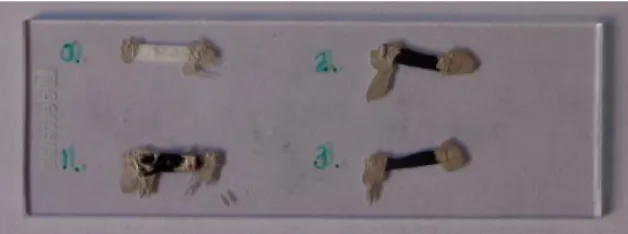
Figure 2.4 – Example of a microscope slide containing small samples of functionalized CA membranes glued either with silver glue (A and B samples) and or with carbon paste (C
samples) to measure potentiostatic EIS
2.5 Electrolyte Preparation
To test the membranes as a device, various solutions were prepared as elec-trolytes for the electrochemical measurements.
The electrolytes used on the electrochemical analysis were the following:
2.5.1 Glucose solution
Different concentrations of glucose solutions – 10 µM, 20 µM, 80 µM, 200 µM, 800 µM, 1 mM, 2 mM and 4 mM in water (pH: 5~7) - were evaluated. 5.5 mM and 7 mM were also prepared but ended being discarded. These concentrations were chosen based on the blood glucose levels of the human body, which are tightly correlated to sweat glucose levels and therefore, can be tested in a range to healthy from hypoglycemic. [31]–[33]
Glucose was purchased from Scharlab (D(+)-Glucose anhydrous, extra pure, Pharmpur®, pH Eur, BP, USP, C6H12O6, Mw = 180.16 g/mol) and was
used without further purification.
2.5.2 Glucose in NaOH
Different concentrations of Glucose solutions – 10 µM, 20 µM, 80 µM, 200 µM, 800 µM, 1 mM, 2 mM, and 4 mM in NaOH (pH 13) - were evaluated since glucose needs to be in a basic medium with high pH to guarantee oxidation [34], [35].
18
2.5.3 Artificial Sweat
Since body fluid pH is important to the patient’s health, pH of solutions in the pH range of pH 4 – pH 8, was measured in artificial sweat solutions since the pH of human sweat is maintained in this region [36], [37].
L-Histidine (C6H9N3O2, Mw = 155.15g/mol, 99%(TLC) assay), Sodium Chloride (NaCl, Mw = 58.44g/mol, 99% assay), Sodium Phosphate Monobasic (NaH2PO4, Mw = 119.98g/mol, 99% assay), Sodium Phosphate Dibasic
(Na2HPO4, Mw = 141.96g/mol, 99.95% assay) and Lactic Acid (Mw = 90 g/mol,
88% assay) all from Sigma Aldrich and used without further purification. Each
component’s concentration and percent of weight of solution in the solution’s
total volume is enumerated in Table 2.2 [38], [39]
Table 2.2 – Chemical composition of the three types of artificial sweat solutions used for
the device’s electrochemical measurements (adapted from [39])
Concentrations (%(w/v))
AATCC (pH4) ISO (pH6) ISO (pH8)
Sodium Chloride 1.00 0.50 0.50
Lactic acid (88%) 0.097 - -
L-Histidine 0.025 0.05 0.05
NaH2PO4 - 0.22 -
Na2HPO4 0.10 - 0.50
2.6 Electrochemical behaviour of the functionalized CA membranes with glu-cose and artificial sweat
19
solution, on a potentiostat (Gamry Instruments, Reference 3000). This configura-tion is better for systems with very low currents and short timescales, where the CE potential can be expected not to drift over the course of the experiment. Figure 2.5 shows a simple schematic of this configuration.
Figure 2.5 – Schematization of the chosen electrode configuration used in the electro-chemical measurements, where W/WS represents the working electrode as well as the
work-ing sense and C/R represents the counter and reference electrode.
2.6.1 Cyclic Voltammetry
Cyclic voltammetry (CV) is an electrochemical technique used to evaluate redox behavior over a potential range at electrode surface, resulting in a voltam-mogram.
CV measures can generate oxidation states during the forward voltage scan and then reduce them on the reverse scan. The oxidation/reduction are function of the scan rates. [40].
For the electrochemical study of glucose and artificial sweat at the different functionalized membranes, three different electrodes were tested in a two-elec-trode configuration, schematized in Figure 2.6. Its characteristics are compiled in Table 2.3. Three different assemblages were tried out inside the Teflon-made cell
20
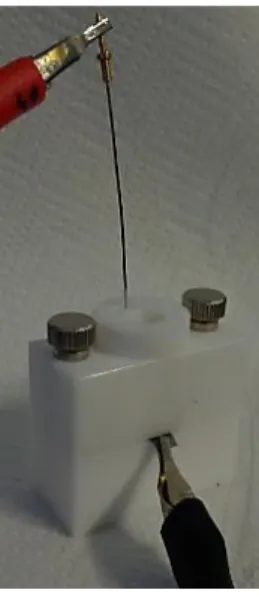
Figure 2.6 - Picture of the electrochemical Teflon-made cell used on the Cyclic Voltam-metry studies.
Table 2.3 - Average sample thickness of the electrodes used in Cyclic Voltammetry that were scanned in both directions with 20, 40, 80 and 100 mV/s scan rates. Sample area: 1 cm2.
Electrode Type Average Sample Thickness (mm)
PANI/CA membrane (1.2 ± 0.1)x10-1
PPy/CA membrane (1.4 ± 0.02)x10-1
PEDOT/CA membrane (8.2 ± 1.4)x10-2
21
2.7 Amperometric detection of glucose and artificial sweat
2.7.1 Chronoamperometry
Chronoamperometry measures the current that goes through the electro-chemical cell at a fixed potential as a function of time. A voltage is applied to the cell without a reaction occurring which is then stepped up by the addition of the analyte, initiating the electrode process, resulting in a current spike. Over the time, the current tends to drop off due to the material diffusion to the electrode surface for the reaction to happen.
All measurements were performed by applying an appropriate potential to the working electrode, studied previously by the cyclic voltammetry tests, to the two-electrode configuration cell.
Four different methodologies were tried out, thoroughly timed. The first method consisted in adding 1 mL of glucose electrolyte solution to the cell, then removing it. After the removal, 1 mL of Millipore® ultra-pure water was added, to wash the membrane, then removed. Next, a higher concentrated glucose elec-trolyte solution was added, removed, and the washing process was repeated. This was made continuously, on the same membrane, for concentrations ranging from 20 µM to 2 mM.
The second and third methods didn’t involve membrane washing. They
simply consisted in adding and removing, in a successive manner, to the same membrane, 1 mL of glucose solution. The only difference being that in the second method, glucose solution addition started from the lowest concentration (20 µM) to the higher concentrated ones and the third method went from highest to low-est concentrations.
23
Results and Discussion
In this section, the results obtained will be presented and discussed. First, the differently functionalized electrospun membranes’ will be characterized us-ing different techniques. Then, usus-ing glucose solutions with different concentra-tions and artificial sweat soluconcentra-tions with different pH values as electrolytes, the membranes electrochemical behaviour and their amperometric response was an-alysed.
3.1 Electrospun Membranes Caracterization
All the electrospun cellulose acetate membranes functionalized with con-ductive polymers (PANI, PPy and PEDOT) by the methodology described in sec-tion 2.2 were analysed by SEM and ATR-FTIR.
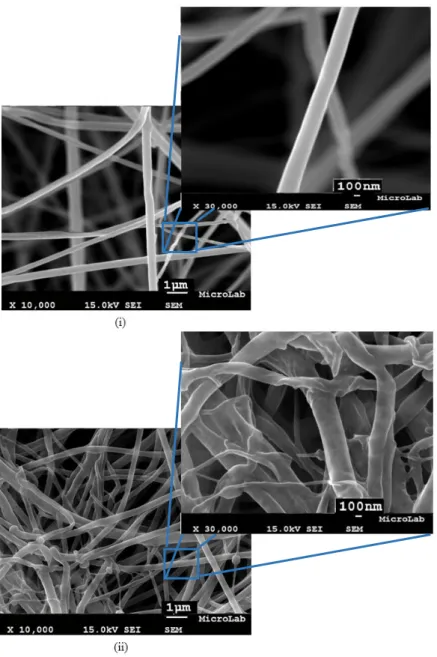
Figure 3.1 shows SEM obtained images for CA electrospun membranes. The difference between them is that the CA electrospun membrane displayed in Fig-ure 3.1(ii) was immersed in a 0.1M NaOH (pH 13) electrolyte for one hour.
24
Figure 3.1 - SEM images of CA electrospun membrane (i) before and (ii) after immer-sion on a 0.1M NaOH (pH 13) electrolyte solution. Two different magnifications are
dis-played, x10000 and x30000
Since the membranes will be tested for different glucose concentrations like the ones found in healthy human blood and sweat, and glucose is easily oxidized in alkaline mediums, comparisons between the functionalized membranes per-formance towards acidic and basic pH values was previously performed.
25
in a basic medium. The same was done with an acidic solution of HCl 0.1 M (pH 1), which completely degraded the membrane making it impossible to further test it.
26
Figure 3.2 – SEM images of CA electrospun membrane functionalized with PANI (i) before and (ii) after immersion on a 0.1M NaOH (pH 13) electrolyte solution. Two different
magnifications are displayed, x10000 and x30000.
27
The PANI layer presents an estimated thickness around the CA fibers of 52.4±52 nm. Such high standard deviation is due to a rough estimate of the aver-age diameter of fibers from SEM, since this is based on the difference between the CA fibers average diameter from Figure 3.1 and the PANI/CA average fiber diameter. In NaOH solution, is it clearly observed a fused web of electrospun fibers, with an increased thickness of 22% when compared to the non-immersed PANI layer.
28
Figure 3.3 – SEM images of CA electrospun membrane functionalized with PPy (i) be-fore and (ii) after immersion on a 0.1 M NaOH (pH 13) electrolyte solution. Two different
magnifications are displayed, x10000 and x30000.
agglom-29
erates disappear but CA fibers remain uniformly covered by PPy, being esti-mated a thickness increase by 25% in comparison with the non-immersed PPy layer.
Figure 3.4 - SEM images of CA electrospun membrane functionalized with PEDOT (i) before and (ii) after immersed on a 0.1M NaOH (pH 13) electrolyte solution. Two different
30
Figure 3.4 shows SEM images of CA membrane covered with PEDOT. A layer is covering the electrospun fibers surface with a thickness of 76±38nm (Fig-ure 3.4(i)). When immersed in 0.1 NaOH solution (Fig(Fig-ure 3.4(ii)), brittle mem-brane may be caused by broken fibers seen in SEM images.
Table 3.1 – Average CA fiber diameters when functionalized with PANI, PPy and PE-DOT before and after immersion in 0.1 M NaOH (pH 13) solution, 4 fibers were measured in each sample, 10 times each, using ImageJ® image processing software
CA PANI/CA PPy/CA PEDOT/CA
Dav before
electro-chemical characteri-zation (nm)
361.1±64 465.9±274 441.9±170 512.8±141
Dav with 0.1 M
NaOH electrolyte (nm)
308.8±60 595.6±104 583.3±145 537.5±238
Average cellulose acetate fiber diameters increased after being functional-ized, confirming that a conductive polymer layer was successfully deposited on the cellulose acetate matrix despite not being uniform.
ATR-FTIR was further performed to confirm the chemical composition of CA membranes functionalized with conductive polymers.
31
Figure 3.5 – ATR-FTIR spectra of CA (i), PANI functionalized CA (ii), PPy func-tionalized CA (iii) and PEDOT funcfunc-tionalized CA (iv) membranes.
(ii)
(iii)
32
Regarding CA spectra (Figure 3.5(i)), the absorption bands at 1732 cm-1 (C=O ester stretching) and 1371 cm-1 (CH) are assigned to the acetyl group on the polymeric chain, the last one being related to angular distortion in the ester methyl group. 1213 cm-1 band to C—O stretching of the acetyl group. The band present at 3439 cm-1 is allocated to the O–H stretching of the hydroxyl group [41], [42], [43].
Although there is a high absorption of the membranes in all wavenumber region due to its high thickness and dark colour, the finger-print of the FTIR peaks for each conductive polymer can be clearly observed. [44].
CA membrane functionalized with PANI spectra (Figure 3.5(ii)) shows ab-sorbance values above 1, related to roughness of membranes. The absorption bands at 1516 cm-1 and 1473 cm-1 correspond to the quinone and benzene ring C
= C stretches. The C–N stretch associated with 1273 cm-1 is visible as is the 1231 cm-1 band peak, assigned to the stretching mode of the protonated C–N group [45], [46].
ATR-FTIR absorption spectra of the PPy functionalized CA membrane (Figure 3.5(iii)) peaks at 1036 cm-1 and 1092 cm-1 can be assigned to C–H wag-ging. C–N stretch bonds are represented by the 1292 cm-1 band while C=N stretch corresponds to 1751 cm-1. The characteristic peaks at 1535 and 1454 cm-1 associate to C=C stretching. The observed peaks confirm the presence of PPy in this membrane [37], [38].
33
Electrical conductivity of the successfully functionalized membranes was studied to understand the difference between each conductive polymer layer and to check the influence of immersion in 0.1 M NaOH solution.
As previously stated, electrical conductivity values of each different func-tionalized CA membrane were obtained from their corresponding I-V curves, in accordance to each sample’s geometry, applying a potential from -1 to +1 V and measuring the corresponding electric current values. Figure 3.6 shows an exam-ple of one of the obtained I-V curves.
Figure 3.6 - Representative I-V Curve obtained for PEDOT/CA membrane.
Table 3.2 shows the conductivity values obtained for PANI/CA, PPy/CA and PEDOT/CA membranes, before (σinitial) and after (σfinal) being immersed
in 0.1 M NaOH solution, and corresponding membrane average thickness (TAv).
The electrical conductivity of the membranes decreases when submitted to the basic medium which can be explained by the fact that conduction in these polymers is related with the degree of protonation which is dependant of pH. Thus, electronic conductivity becomes pH dependant and influenced by the
34
Table 3.2 - Conductivity of PANI/CA, PPy/CA and PEDOT/CA membranes, before (σ
ini-tial) and after (σfinal) being dipped in 0.1 M NaOH solution, related to the corresponding
mem-brane average thickness (TAv).
TAv [mm]
σ
initial [S/cm]σ
final [S/cm]PANI/CA (1.2 ± 0.1)x10-1 (4.7 ± 2.2)x10-3 (2.6 ± 0.05)x10-7
PPy/CA (1.4 ± 0.02)x10-1 (1.5 ± 1.2)x10-1 (2.4 ± 0.3)x10-5
PEDOT/CA (8.2 ± 1.4)x10-2 3.9 ± 1.2 (1.3 ± 0.001)x10-5
The PEDOT-functionalized CA membrane shows the best conductivity value (3.88 S/cm) when compared to PPy and PANI (Table 3.2). This result can be explained by the formation of a continuous and uniform PEDOT layer around the CA fibers (Figure 3.4(i)). However, the membrane´s morphology is clearly affected after being immersed in a basic solution, as shown in Figure 3.4(ii) which may explain the decrease of conductivity value to 1.34x10⁻⁵ S/cm.
From the EIS measurements fitting it is obtained the hypothetic circuit pa-rameters describing the membranes electrical behaviour.
35
Figure 3.7 - EIS fitting curve of a PANI/CA membrane showing its current-voltage phase shift at low and high frequencies (red) and its EIS experimental curve (blue).
Figure 3.8 - Circuit model of a PANI/CA membrane showing the inductive behaviour of the fibers
Despite having a slight resistive behaviour at low frequencies, as the fre-quency raises, the inductive effect becomes clearer, meaning there is probably a non-covered inductive bulk of CA fibers.
36
Figure 3.9 - EIS fitting curve of a PPy/CA membrane showing its current-voltage phase shift at low and high frequencies (red) and its EIS experimental curve (blue).
Figure 3.10 - Circuit model of a PPy/CA membrane at high frequency capacitance showing the non-covered insulating bulk of the CA fibers with PPy
The circuit model in Figure 3.10 reveals an inductive behaviour at low fre-quencies as well as a resistive character by looking at the wide range of
frequen-cies that matches the membrane’s interface. The charge carrier accumulation is due to capacitive interface and may be related to insulating fiber bulk.
37
Figure 3.11 - EIS fitting of a PEDOT/CA membrane showing its current-voltage phase shift at low (zero) and high (positive) frequencies (red) and its EIS experimental curve.
Therefore, the model of the described PEDOT/CA membrane can be as shown in Figure 3.12, with a good fit, where the resistance of the fibers measuring is R = 420 Ω and the geometrical high frequency capacitance, is C = 5 nF. It is then possible to assume that CA fibers are fully covered with PEDOT.
Figure 3.12 – Circuit model of a PEDOT/CA membrane at highly conductive DC show-ing the fully coverage of the CA fibers with PEDOT
The PEDOT/CA membrane has lower DC conductivity and the the EIS
38
Figure 3.13 - EIS fitting of PEDOT/CA membrane showing its current-voltage phase shift at low and high frequencies (red) and its experimental curve (blue).
It can be seen, that the character of the membrane is rather capacitive, which means charge carrier accumulation. Thus, the equivalent circuit can be repre-sented as it is in Figure 3.14.
Figure 3.14 - Circuit model of a PEDOT/CA membrane at high frequency capacitance showing the non-covered insulating bulk of the CA fibers with PEDOT
39
3.2 Electrochemical behaviour of glucose and artificial sweat at different elec-trodes
3.2.1 Cyclic Voltammetry
Cyclic Voltammetry was used to study the electrochemical behaviour of each of the conductive polymer functionalized membranes with different elec-trolytes. This way, the reduction and oxidation processes were assessed. Each measuremnt performed is destructive for the membrane, meaning that different set of CA functionalized membranes were used.
Despite trying different assemblages for the two-electrode configuration, only one prevailed, namely the one using the two electrode Teflon-made cell, with the platinum wire as the reference/counter electrode and the functionalized CA membrane with a carbon strip underneath as the working electrode. The comparative voltammograms of each assemblage can be seen on the Appendix, section A.1.
40
PANI/CA
PEDOT/CA
PPy/CA
(i)(ii)
mV/s mV/s mV/s mV/s mV/s mV/s mV/s mV/s
41
Figure 3.15 – PANI/CA (i), PPy/CA (ii) and PEDOT/CA (iii) voltammograms at 20, 40, 80 and 100 mV/s, for 8 cycles, with an applied potential between -1 to 1 V, only cicle 4 is presented and (iv) shows the dependence of the scan rate to PANI/CA, PPy/CA and PEDOT/CA’s peak currents.
Each of the anodic peak shifted to more positive potentials, bestowing the kinetic limitation in the electrochemical reaction. Also, the anodic peak currents rise linearly with increasing scan rate, which proves that it is a surface-controlled electrochemical process [7], [50], [51]. Surface-controlled electrochemical pro-cesses are consequence of redox reactions at low scan rates on modified elec-trodes. At higher sweeps, the redox reactions start being controlled by diffusion processes [52]., for that reason, 80 mV/s was used as the preferred scan rate since the curves were the most well-defined ones and kept the surface-controlled pro-cess.
Selecting 80 mV/s scan rate, a cyclic voltammetric study of a new electro-lyte was performed. Glucose solution (pH 6 ~ 7), with concentrations ranging from 10 µM to 4 mM. PANI and PEDOT electrodes showed anodic peaks, around +0.50 V and +0.20 V, respectively. Since glucose is not in an alkaline solution, the observed peaks belong to PANI and PEDOT [52]. PPy did not presen peaks sug-gesting technical malfunctions during tests, namely short circuit, possibly due to contact between the platinum wire and the carbon strip. These results can be as-sessed in the Appendix, A.2.
42
As mentioned before, to guarantee the glucose’s oxidation, 0.1 M NaOH solution (pH 13) was used. By doing so, the membrane material won’t react. This time, glucose concentration was varied to match the sweat glucose concentration range [14], [53], [54]. Cyclic voltammograms responses obtained with ranging glucose concentrations from 10 µM to 4 mM in such solution at a scan rate of 80 mV/s, in a total of 8 cycles, displaying curve 4, of PANI/CA, PPy/CA and PE-DOT/CA are shown in Figure 3.16. Applied potential ranged from -0.5 to +1.5 V. Glucose concentrations above 4 mM, namely 5.5 mM and 7mM were discarded since the electrode showed saturation and inconclusive results.
43
Figure 3.16 - PANI/CA (i), PPy/CA (ii) and PEDOT/CA (iii) voltammograms at 80 mV/s using different concentrations of glucose 0.1 M NaOH solution as electrolyte, for 8 cycles, with an applied potential between -0.5 to 1.5 V, only curve 4 is presented.
An analysis on each of the functionalized CA membrane voltammogram was performed. The peaks are compiled in Table 3.3.
44
Table 3.3 – Different concentrations of glucose 0.1 M NaOH solution and its correspond-ing functionalized membrane peak potentials
Glucose PANI/CA PPy/CA PEDOT/CA
Concentra-tion (mM)
Peak Potential (V) Peak Potential (V) Peak Potential (V)
Anodic Cathodic Anodic Cathodic Anodic Cathodic
0.01 +0.89 +0.72 +0.07 +0.04 +0.37 +1.09
0.02 +0.84 +1.19 +0.70 +0.17 +0.82 +1.21
0.08 +0.50 +0.83 +0.49 +0.26 +0.58 +1.11
0.2 +0.36 +0.78 +0.72 +0.31 +0.48 +1.09
0.8
1
2
+0.38 +0.10 +0.50 +0.28 +0.33 +0.24
+0.00 +0.67 +0.40 +0.49 +0.43 +0.52
+0.57 +1.13 +0.54 +0.42 +0.34 +1.06
4 +0.36 +0.17 +0.27 +0.56 +0.54 +1.08
Glucose is a polyprotic acid with 5 OH groups. Keeping in mind that glu-cose is more acidic than alcohols with a pKa of about 12 (Ka = 10-12), meaning the electronegative oxygen atoms in the molecule pull electron density away from the carbon atom bearing the negatively charged oxygen in the conjugate base, stabilizing it. The reaction mechanism of glucose in an alkaline medium is as follows:
C6H12O6 (glucose) + 2OH
-
→ C6H12O7 (gluconic acid) +H2O + 2e- [55]Thus, the cyclic voltammograms in Figure 3.7, confirm that glucose is be-ing oxidized.
45
– high concentration solutions – from 800 µM to 4 mM) and the glucose concen-tration as a function of anodic peak current and potential as well as a function of cathodic peak current and potential are shown in Figure 3.17 for PANI/CA.
Figure 3.17 – Plots of glucose concentration versus anodic peak current (i), anodic peak potential (ii), cathodic peak current (iii), cathodic peak potential with a fitting done excluding data circled in red (iv), of the PANI/CA membranes. The coloured bars represent the standard deviation of the current or the potential. The red bars envelop the lower concentrations (10µM, 20µM, 80µM, 200µM) and the yellow bars envelop the higher concentrations (800µM, 1mM, 2mM, 4mM).
Group 2 peak currents suggest membrane saturation, since they tend to stabilization. This might be because of the electrode area, which is too small and once immersed in group 2 solutions, beyond a certain threshold, could not pro-duce more reaction. Group 1 peak currents might hint at some linear growth
46
when it comes to anodic and cathodic peak current but more intermediate glu-cose concentration solutions would be needed to test this possibility.
Regarding the fitting, in Figure 3.17(iv), to the cathodic peak potential val-ues, 10 µM and 800 µM concentrations were left out, circled in red, hence a linear fitting was possible to attain. PANI/CA membranes may be sensitive to the two different ranges of glucose low and high concentrations.
PPy/CA relation as well as PEDOT/CA relation between glucose concen-tration and anodic and cathodic peaks are represented in Figures 3.18 and 3.19, respectively.
Figure 3.18 – Plots of glucose concentration versus anodic peak current (i), anodic peak po-tential (ii), cathodic peak current (iii), cathodic peak popo-tential with a fitting done excluding data circled in red (iv), of the PPy/CA membranes. The coloured bars represent the standard
deviation of the current or the potential. The red bars envelop the lower concentrations (10µM, 20µM, 80µM, 200µM) and the yellow bars envelop the higher concentrations (800µM,
1mM, 2mM, 4mM).
47
PPy/CA cathodic peak potential grows linearly with the concentration of glucose, except for 800 µM glucose concentration, as can be seen in Figure 3.18 (iv). The coloured bars are also well separated, suggesting a clear distinction be-tween the low glucose concentration regime and the higher concentration one. This means that PPy/CA is potentially sensitive to the distinct groups of different concentrations. The remainder relations of anodic peak current/potential and ca-thodic peak current with glucose concentration do not show a reliable correla-tion, as the bars are superimposed.
Figure 3.19 - Plots of glucose concentration versus anodic peak current with a fitting done excluding data circled in red (i), anodic peak potential (ii), cathodic peak current (iii), cathodic peak potential (iv), of the PEDOT/CA membranes. The coloured bars represent the standard deviation of the current or the potential. The red bars envelop the lower
concentra-tions (10µM, 20µM, 80µM, 200µM) and the yellow bars envelop the higher concentraconcentra-tions (800µM, 1mM, 2mM, 4mM).
48
PEDOT/CA anodic peak current relation shows a good fit when exclud-ing 10 µM and 2 mM, which means that this correlation may hint at this
mem-brane’s sensitivity to different glucose concentrations, while the other peak rela-tions are not reliable.
Table 3.4 summarizes CV results obtained for glucose in 0.1 M NaOH listing the functional groups, correlation and coefficient of determination as well as cor-responding peak where the fitting could be made, for each functionalized CA membrane.
Table 3.4 – Table summarizing PANI/CA, PPy/CA, PEDOT/CA functional groups, fit-ting equations, coefficients of determination and peak type
Functional
Group Correlation R
2 Peak
PANI/CA Vf = -0.199ln(Glu) +
0.3834 0.9713
Cathodic (Potential)
PPy/CA Vf = 0.084ln(Glu) +
0.4626 0.9822
Cathodic (Potential)
PE-DOT/CA
Im = -0.009ln(Glu) +
0.1182 0.9604
Anodic (Current)
Table 3.6, shows a possible correlation between CA membranes functional group and the type of peak. For both PANI/CA and PPy/CA, the fitting of their respective cathodic peak potential may be a function of the amine group whereas for PEDOT/CA, that has a different functional group, namely the 3,4-ethylene-dioxythiophene group, might be directly related to the anodic peak.
49
These results hint at the sensitive capacity of each functionalized membrane to different glucose concentrations.
The simulated sweat solutions studied in this project, namely AATCC (pH4), ISO (pH6) and ISO (pH8), cyclic voltammograms for PANI/CA, PPy/CA and PEDOT/CA using said electrolytes are displayed in Figure 3.8.
50
Figure 3.20 - Cyclic voltammograms for PANI/CA (i) for an applied range of potentials from -0.5 V to +1.5 V, PPy/CA (ii) for an applied range of potentials from -1.0 V to +1.0 V and PEDOT/CA (iii) for an applied range of potentials from -0.5 V to +1.2 V, all ran at 80 mV/s with three different artificial sweat simulating electrolytes with pH 4 (AATCC), pH 6 (ISO)
and pH 8 (ISO). Curve 4 of 8 cycles in total is shown.
Figure 3.20(i) shows PANI/CA cyclic voltammograms with different artifi-cial sweat simulating electrolytes. A study was first carried out to determine the more adequate applied potential: -0.5V to +1.0V. Peaks were observed for both
PPy/CA
51
pH 4 and pH 8 but not for pH 6 (see Appendix A.3). The applied potential for pH 6 was then changed from -0.5V to +1.2V.
PANI/CA’s anodic peak potential values (Figure3.20(i)) were found at +0.76, +1.11 and +0.48V for pH 4, pH 6 and pH 8, respectively. This can be ex-plained by the electrochemical behaviour of polyaniline when influenced by pH (Figure 3.21): at low pH levels, radical cations are formed and oxidized into imines afterwards showing oxidation above +0.65V, which means that at low concentration of protonic acid, both electron transfer and protonation peaks merge giving a usually broad peak at 0.40 V, which is consistent with the ob-tained results [47].
Figure 3.21 –Equation explaining PANI’s electrochemical behaviour. Formation of rad-ical cations leads to their oxidation into imines (adapted from [47]).
52
Figure 3.22 – Scheme representing the oxidation of pyrrole rings and their loss of conju-gation when the forming of carbonyl groups occur [48].
PEDOT/CA in Figure 3.20(iii) needed applied potential adjustment for pH 4 (-0.5 to +1.2V) in order to make the anodic peak curve value clearer (trial using -0.5 to +1.0V can be seen in Appendix A.3). For pH 6 and pH 8, applied potentials used were -0.5 to +1.0V. Anodic peak values of +0.89, +0.37 and +0.61V were obtained respectively for pH 4, 6 and 8. This variation can be explained by the fact that oxygen attached to the β-position of the thiophene ring supports the delocalization of positive charges on the PEDOT backbone [48].
3.3 Amperometric detection of glucose and artificial sweat
3.3.1 Chronoamperometry
To improve the performance of the PANI, PPy and PEDOT functionalized CA membranes as a biosensor, the effects of pH and the detection potential on the current response should be optimized to enhance sensitivity. The am-perometric response depends on the applied potential.
The effect of the applied potential on the electrochemical oxidation of glu-cose was studied previously (Section 3.2). By increasing the applied potential in order to match the electrochemical oxidation peaks of glucose, the current in-creases, meaning that the electrode’s response results from the electrochemical oxidation of glucose [51], [57]. To a higher than +0.7 V applied potential, the re-sponse current starts to level off, so the selected potential for glucose and for the different pH artificial sweat detection was +0.6 V [57].
53
the one stated in Section 2.7.1, that comprised using different membranes for each electrolyte addition, whose results can be seen in Figure 3.23 and 3.24. The other methodologies results can be accessed in Appendix A.4.
In Figure 3.23 (i), glucose concentration of 2 mM of the PANI/CA mem-brane had to be left out since the output corresponded to a technical malfunction, namely, short circuit. As can be seen, shortly after the addition of glucose solu-tion, the oxidation current increases and reaches a steady state within approxi-mately 200 s.
Figure 3.23 – Chronoamperograms of PANI/CA (i), PPy/CA (ii) and PEDOT/CA (iii) for different glucose concentrations ranging from 10 µM to 2 mM using an applied potential of
![Figure 1.1 – Picture of Lee et al.’s wearable sweat monitoring patch (adapted from [14])](https://thumb-eu.123doks.com/thumbv2/123dok_br/16548425.737038/27.892.372.607.232.404/figure-picture-lee-wearable-sweat-monitoring-patch-adapted.webp)
![Figure 2.1 - Schematic diagram of a conventional electrospinning setup (adapted from [27])](https://thumb-eu.123doks.com/thumbv2/123dok_br/16548425.737038/30.892.277.617.373.704/figure-schematic-diagram-conventional-electrospinning-setup-adapted.webp)
![Figure 2.2 – Schematic of the preparation procedure of PANI functionalized cellulose nanofibers (adapted from [19])](https://thumb-eu.123doks.com/thumbv2/123dok_br/16548425.737038/31.892.203.744.799.1014/figure-schematic-preparation-procedure-functionalized-cellulose-nanofibers-adapted.webp)
![Table 2.2 – Chemical composition of the three types of artificial sweat solutions used for the device’s electrochemical measurements (adapted from [39])](https://thumb-eu.123doks.com/thumbv2/123dok_br/16548425.737038/38.892.140.708.595.866/table-chemical-composition-artificial-solutions-electrochemical-measurements-adapted.webp)