‘Eventful Cities’ and Cities of Events
– Medieval events in Portugal –
A Comprehensive Study
Carla Alexandra Pereira Fernandes Delgado
Dissertação para obtenção do Grau de Mestre em Marketing e Promoção Turística
Dissertação de Mestrado realizada sob a orientação do Professor Doutor Nuno Miguel Almeida e co-orientação do Professor Doutor Greg Richards da Universidade de Tilburg
Copyright
Eventful Cities and Cities of Events – Medieval Events in Portugal – A Comprehensive Study ‘Copyright” em nome de Carla Alexandra Pereira Fernandes Delgado, da ESTM e do IPL. “A Escola Superior de Turismo e Tecnologia do Mar e o Instituto Politécnico de Leiria têm o direito, perpétuo e sem limites geográficos, de arquivar e publicar esta dissertação através de exemplares impressos reproduzidos em papel ou de forma digital, ou por qualquer outro meio conhecido ou que venha a ser inventado, e de a divulgar através de repositórios científicos e de admitir a sua cópia e distribuição com objetivos educacionais ou de investigação, não comerciais, desde que seja dado crédito ao autor e editor”.
Dedicatória
Dedico a minha dissertação à minha família, não só pelo incentivo constante, mas também, pelo apoio incondicional, sem o qual teria sido impossível levar este barco a bom porto. Filhota: agora sou toda tua!
Acknowledgements
I must thank my family, especially my parents, Carlos and Alexandrina, my husband Cesar and my brother Bernardo, for all their help and support.
I must also mention my pseudo sister, Susan Barardo, because without her I would not have dared to embark on this adventure!
I would also like to bestow my advisor, Professor Nuno Almeida, who, even though I was from an "exotic area," as he well stated, he believed in me, knew exactly how to challenge me into keeping alive the interest in research; I must also state my gratitude to Professor Greg Richards for having so promptly accepted the invitation to embark with us on this, for me, new journey!
To all my teachers a big ‘thank you’ for all the knowledge imparted. I’m very grateful to have met, learned and shared thoughts with you all.
I also wish to thank the City Hall of Almodôvar, for the readiness with which they received my request to apply the survey questionnaire pre-test in their Medieval Journey, also the City Hall of Penela, not only for kindness with which I was received, but also for the logistics and support provided and at last but not least important, the City Hall of Óbidos that so readily accepted my request and allowed me to enter their castle!
Resumo
Sendo o turismo uma fonte de receitas assente nas motivações e experiências que suscita, não será de todo invulgar afirmar que, resiste e persiste o destino que vinga pela sua autenticidade. O turismo cultural tem vindo a crescer e a ganhar terreno como forma de desenvolvimento económico visando a sustentabilidade dos locais e cidades em que se desenvolve. Poucas serão as cidades que não apostam na criação de eventos atrativos, por vezes inovadores outras vezes similares a outros eventos, mas que garantam uma grande afluência turística e que permitam colocar a cidade num eventual roteiro do imaginário turístico de turistas culturais, que procuram as ditas experiências culturais genuínas e autênticas.
O conceito “cidade de eventos” ainda que novo, ou de pouco uso, em Portugal, há já algum tempo que está a ser aplicado noutras cidades do globo e há já algum tempo que tem vindo a ser estudado pelas mesmas, de modo a que cada cidade possa desenvolver um portfólio de eventos autênticos, verdadeiros chamarizes de turismo e atividade turística, bem como, impulsionadores de sustentabilidade económica e de desenvolvimento local e regional.
Esta dissertação visa, acima de tudo, a tentativa de compreender algumas “eventful cities” portuguesas, bem como a identificação de alguns impactos dos eventos, nomeadamente dos eventos medievais, de modo a estudá-los e, eventualmente, apresentar reformas para melhor servir as localidades e respetivas populações.
Palavras – Chave: ‘eventful city’; cidades de eventos; impactos de eventos; eventos medievais; turismo cultural;
Abstract
As tourism is a revenue source that lies in both motivations and experiences that arouses and facilitates is will not be unusual to say that authenticity is the reason why a destination endures and resists.
Cultural tourism has been growing and developing as a resource for economic growth aiming the sustainability of the places and cities that host it. Few are the cities nowadays that do not bet in the creation of attractive events, sometimes similar to other events sometimes completely innovative, but that are capable to ensure a big touristic presence and that allow the city to be a part of an eventual imaginary tourist route, for those who seek the so called genuine and authentic cultural experiences.
The concept “eventful cities” yet new in Portugal is being used in other cities around the world and it has been studied by them, so that each city is capable of developing an authentic event portfolio as a touristic decoy, as well as a thrust activator of economic and social sustainability both local and regionally.
This thesis aims, above all, the attempt to understand some Portuguese eventful cities and the identification of a few event impacts, namely in medieval events, in order to study them and, eventually, propose changes so as to better fit the needs of the cities and their populations. Key – words: eventful cities; cities with events; event impacts; medieval events; cultural tourism;
Index
Resumo ...vii
Abstract ... ix
Index ... xi
Table Index ... xiii
Annexes Index ... xv Abbreviation Index ... xv Chapter 1 – Introduction ... 1 1.1. Theme definition ...1 1.2. Research objectives ...4 1.3. Thesis structure ...5
Chapter 2 - Literature Revision ... 7
2.1. Introduction...7
2.2. Why cities need to be eventful ...7
2.2.1. From tangible heritage to the intangible culture... 13
2.2.2. The importance of creativity in tourism ... 14
2.2.3. Development of idiosyncratic places ... 17
2.3. Historical framework ... 18
2.4. Medieval fairs as a marketing and touristic promotion tool ... 20
Chapter 3 – Methodology ... 25
3.1. Introduction... 25
3.2. Methodology ... 25
3.3. Objectives and hypothesis of the investigation... 25
3.4. Survey questionnaire ... 27 3.5. Measures ... 29 3.6. Sample ... 29 Chapter 4 – Discussion ... 33 4.1. Introduction... 33 4.2. Results ... 33 4.3. Hypothesis verification ... 38 4.3. Correlation analysis ... 41 4.3.1. Introduction ... 41 4.3.2. Discussion of results ... 41
4.4. Impacts of medieval fairs ... 48
Chapter 5 – Conclusions ... 51
5.1. Introduction... 51
5.2 Theoretical and practical contribution of the investigation ... 51
5.2. Limitations ... 54
Table Index
Chapter 2 – Literature Revision
Table 2. 1 - Differences between “cities of events” and “eventful cities” ... 12
Table 2. 2 - Development, trends and opportunities ... 16
Chapter 3 – Methodology Table 3.6. 1– Social-demographic characterization of the visitors ... 32
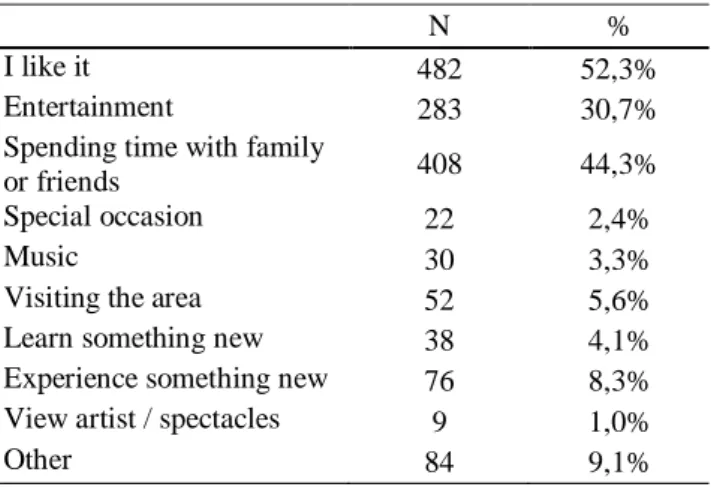
Chapter 4 – Discussion Table 4.2. 1.– Reasons to attend the event ... 33
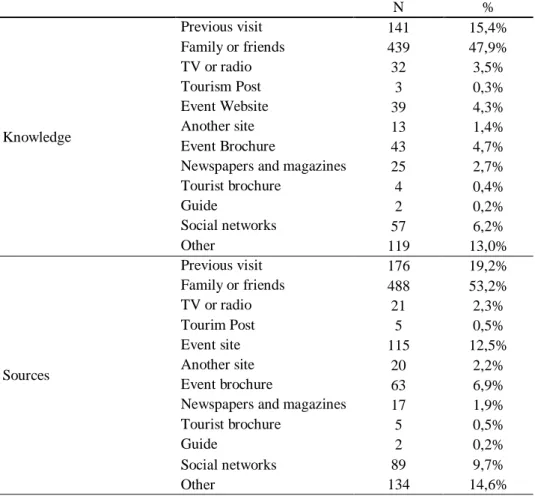
Table 4.2. 2.– Sources of knowledge and information for planning the visit ... 34
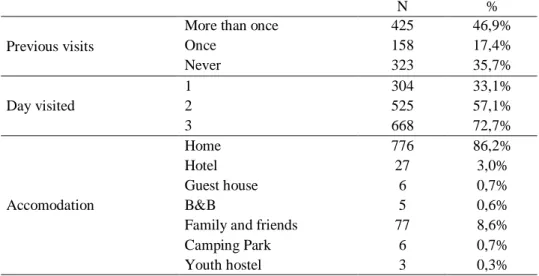
Table 4.2. 3. – Previous visits; day visited and place of accommodation during the event .... 35
Table 4.2. 4. – Probability of repeating the visit and recommending the event ... 35
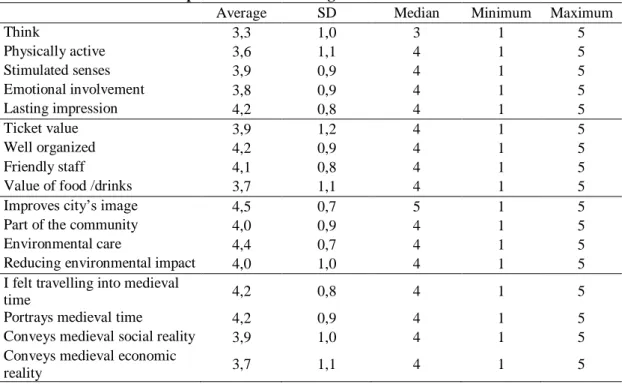
Table 4.2. 5. – Descriptive statistics of the agreement levels with the statements ... 36
Table 4.2. 6. – Expenses during the event ... 36
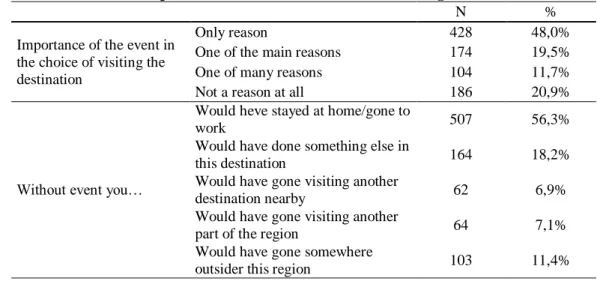
Table 4.2. 7. – Importance of the event in the choice of visiting that destination ... 37
Table 4.2. 8. – Descriptive statistics of the number of people per group ... 37
Table 4.2. 9. – Visits to other attractions in the past 12 months ... 38
Table 4.2. 10. – Social networks used ... 50
Table 4.2. 11.– Newspapers read ... 38
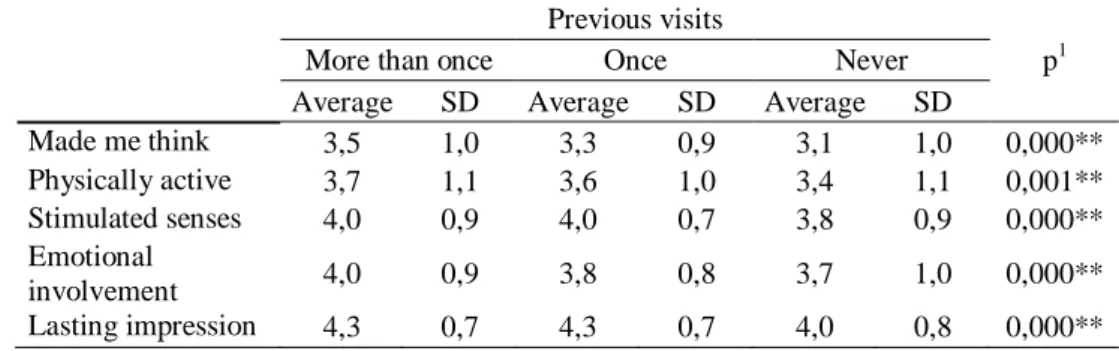
Table 4.3. 2. – Reasons of attending the event according to the location of the event ... 42 Table 4.3. 3–Sources of information according to the location of the event ... 43 Table 4.3. 4– Importance of the event in the choice of visiting the area and activities held if the event did not take place ... 44 Table 4.3. 5–Correlation of the probabilities of repeating and recommending the event and the level of agreement of the items concerning the medieval reality of the event ... 45 Table 4.3. 6 - Agreement levels to the items related to image according to the location of the event... 46 Table 4.3. 7– Average expenditures per person according the gender ... 46 Table 4.3. 8– Average expenditures per person according to the place of accommodation during the event ... 47 Table 4.3. 9 – Correlation of the agreement level with the items on medieval reality and the items regarding the emotional involvement, senses and impression... 48
Annexes Index
Original Dutch survey questionnaire ... 65
Pre-test survey questionnaire ... 67
Final Portuguese survey questionnaire ... 69
Statistical data gathered from Portugal Tourism Office ... 71
Abbreviation Index
WTO – World Tourism Organization POI – Point Of Interest
Chapter 1 – Introduction 1.1. Theme definition
Tourism has been one of the most dealt topics in recent years, appealing to researches of many different areas given its multidisciplinary profile.
Many definitions of tourism have aroused in literature throughout times, from the simple movement of masses (Stone, 2011), to more complex concepts that concern, not only the movement referred previously, but also, the activities that preceded it plus all the activities that allow the stay of people at that destination (Andrade, 2007) or even as Mak (2004) states tourism may outcome from several reasons: spending time with relatives and friends, recreation, finding new places, experience a different culture, good food, adventure or visit local and typical touristic places. Murphy (1985;165) argues that ‘tourism is the industry that
uses the community as a resource, sells it as a product, and in the process affects the lives of everyone’.
Just like tourism, those who practice it have been encapsulated in a concept, but consensuses arouse only from the World Tourism Organization (WTO) and the United Nations Conference on International Travelling and Tourism (1963) held at Rome. Here, at the WTO/UN Conference was presented a universal definition for tourism and those who practice it. The people who practice tourism were then divided into tourists and excursionists, although both were a part of the broader concept ‘visitor’ - any person who visits a country or a different region from the one he lives for any reason other than the practice of a remunerated activity. The truth is that there seems to be a definition for each author on the subject and for that we can truly be aware of its complexity. On what concerns ‘cultural tourism’, according to the World Tourism Organization (WTO, 1985), it has been defined as every trip that according to its nature satisfies the diversity need and the knowledge expansion present in each human being.
For what this thesis is concerned, a definition of event is also essential, therefore ‘as tourism
may simply be defined as the movement of people, events may be simply defined by the gathering of people as a result of their movement’ (Sharpley and Stone, 2011; 17). Although
define ‘event’, Light (1996; 183), for example, describes events as ‘temporary occurrences,
usually with a particular theme, which aim to 'attract people (spectators, visitors, residents, guests) to a focal point of a short-lived, organized activity in which the visitor may participate, watch, view, learn from, and enjoy'. And ‘cultural event’ seems to be understood
as an event related to an experience detached from the daily life and usually concerning a special category of event, such as art and music festivals, sports or traditional celebrations (Richards and Palmer, 2010). Allen, O’Toole and McDonnel (2005) describe these ‘special events’ as ‘specific rituals’ deliberately planned and created to celebrate a special occasion or to achieve certain objectives. Getz (1997 and also 2000) also states that ‘special events’ are defined by their context. According to Richards and Palmer (2010) there are some key features possible to identify in cultural events, namely: 1) the cultural content; 2) timing and location; 3) audience; and 4) stakeholders. But these latter three features seem to be, not just general, but more particularly, the common ground for every event, since every event needs to take place at a specific time and place, oriented to an audience that must be attracted or invited to attend and stakeholders that may be directly or indirectly involved in the event. There is a wide body of literature devoted to events, especially literature that deals with the strategic and operational management of events, (e.g. Quinn, 2009; Tum, Norton, and Wright, 2006; Getz, 2007) however there seems to be a growing academic interest in the understanding of the motivations, the economic impacts and events in it selves (Crompton and McKay, 1994; 1997; Shipley, Jeffrey and Zack, 2008) so a multiplicity of perspectives is being brought to light. The most recent studies, are being inspired by social sciences (Carlsen and Taylor, 2003; Fredline, Jago and Deery, 2003; Delamere, 1997; Delamere, 2001; Delmere, Wenkel and Hinch, 2001zxs) and involve cultural and social change (Picard and Robinson, 2006), the reproduction of place and tradition and the role of communities as producers/consumers, for as Getz (2007; 406) argues ‘there is no real justification for
considering event tourism as a separate field of study’ although it is usually seen as a
specialty within national tourism offices and destination marketing or management organizations, nevertheless, historical research shows that events have long acted as touristic attractions (Quinn, 2009).
in order to increase tourism activity in a region or destinations, others are devoted to a special type of events (e.g. Morrow, 1997 on exhibitions; Rogers, 2003 on conventions; Supovitz and Goldblatt, 2004 on sports events) but they all convey an alliance to tourism potential.
Several cities are now developing an “event portfolio” in order to answer the actual economic and financial crisis in the country, through tourism and tourist activity, raised and boosted by those same portfolios in order to combat touristic seasonality.
Tourism is often seen as an enemy of traditional events (Richards and Palmer, 2010), and although many studies have been developed around attitudes and perceptions of both residents and of visitors (Fredline and Faulkner, 1998; Mason and Beaumont-Kerridge, 2004; Xiao and Smith, 2004) it seems almost as many have been dedicated to the analysis of consumption and socio-cultural effects of cultural festivals and events. As Richards and Palmer (2010; 6) argue
‘with the development of the industrial city, the festivals and fairs of the medieval city were located in more formalized spaces (…) the industrial revolution transformed the medieval festival into a break from work – a period of rest and relaxation, hence festivals can be
recognized as formal periods of pleasurable activities (Janiskee, 1980).
Hence, our purpose is to approach these events as a way to understand them and those who are attracted to them, but also to really have a grasp of what makes them proliferate so rapidly and how can they become attractive to other audiences or simply how can they provide input into turning a city of events into an eventful city.
Consequently, the theme chosen for this thesis was the result of a long term evaluation of hypothesis and it focuses mainly on the study and analysis of the socio-cultural, as well as economical, impacts of events on the cities hosting them while trying to comprehend if these were just cities with events or indeed eventful cities. We then chose to approach, specifically, medieval events due to the historical background in Portugal that makes these types of events so dear and, at the same time, events that seem to proliferate across this small country, maybe because they tend to link the past to the present (Campos, 2011). These events in particular appear to be one of the most flourishing events in Portugal and they seem to be an interesting type of event, but also, one that hasn’t been exhaustively researched, even though it has been growing both in importance as in numbers these past recent years.
1.2. Research objectives
Festival and event tourism has been the fastest growing leisure industry (Getz, 1991; Nicholson and Pearce, 2001) and for that it has received the attention of many researchers that apart from the usual topics of economical impacts, marketing strategies of events, and festival management (Getz, 1989; Gnoth and Anwar, 2000; Raltson and Hamilton, 1992; Ritchie, 1984) are now trying to understand the motivations underneath the attendance of tourists in events and festivals, because, in their opinion, understanding the motivations will most certainly provide or lead to a better planning and marketing of the events as well as a more profound segmentation of participants. Crompton and McKay (1997) articulated that the understanding of the motivations would be the key to design offerings for the event attendees, to monitor their satisfaction, as well as an accurate tool for understanding the attendees’ decision-making process. But, from our point of view the real break-through was the materialization of the term ‘events tourism’ and most recently ‘event tourism’. In 1989, Getz began discussing the planning for ‘events tourism’ and in 2008 he defines the parameters of ‘event tourism’ in his review article in Tourism Management. Stokes (2005) articulates that the primary goal of event tourism is driven by economical benefits, however, it seems to be more about an event than just benefits or outcomes and planning or portfolios. It appears evident that the cities, the communities and the visitors are the ones who, in fact, play a main role in an event. Thus, it seems crucial, not only to study the event in itself but also the attendees and their motivations to participate in such events, as well as the real benefits underneath the establishing of a specific event, in our case, the medieval events, in a specific city or community.
Thus, the objectives of this thesis are mainly three. The first is to identify the impacts of events, specifically medieval events, and due mainly to their proliferation across the country, in the cities and communities hosting them. Second, to categorize the perceptions and to profile those who visit such events, and, finally, to classify cities of events and eventful cities, establishing, if possible, terms of comparison between them and their main features.
1.3. Thesis structure
This thesis is structured into five parts being each one structured and divided in chapters within themselves.
The first chapter is the Introduction, here we sought to define both theme and purpose of the investigation and proceed with their explained in smaller chapters. The introduction is divided into: “Theme definition”; “Research objectives”; and “Thesis Structure” in an attempt to briefly explain and tackle some of the issues considered important and discussed throughout the text. Thus, the introduction addresses some general concepts and definitions taken into account, almost as a starting point, in the elaboration of the thesis, some that will in latter chapters be properly addressed.
In the second chapter, we undertake a comprehensive and systematic literature review that starts with an approach for the need of “eventful cities” and its concept, and then we establish an “Historical framework” of medieval fairs in Portugal, as an explanation for the events chosen as the core for the elaboration of the thesis forthcoming not only the concept of an eventful city in itself but also trying to understand the use of these historical recreations as marketing and touristic promotion tool. We then move toward the public and audiences of such events and try to portray their motivations, social and economical features, among other characteristics we consider fundamental.
Next we enter chapter three, Methodology, where we identify the objectives and hypothesis of the investigation, clarify the survey questionnaire used in the gathering of data, that we analyzed with a statistical software (SPSS), as well as the measures chosen and to end this chapter we shed some light on the sample and cities chosen to do so.
The forth chapter, Discussion, elucidates the correlation analysis undertaken and reflects about the impacts of medieval fairs, based on the analysis made from the previously gathered data. In this same chapter we embark on the analysis of the data followed by a brief discussion on the same.
Lastly, the fifth chapter, Conclusions, refers to the investigation’s contributions, both practical and theoretical, the research limitations and it also concerns suggestions for future researches that might wish to follow our line of thought.
We would like to advice that since we chose to structure this thesis around a vast literature research there might be repetition of ideas, however we believe them to be necessary and chose not to mutilate the original text. Such choice may appear debatable, but being a language and literature graduate, it seemed to contribute to the natural understanding of our exposition and to aspects that we consider fundamental to the global understanding of our thoughts.
Chapter 2 - Literature Revision
2.1. Introduction
This chapter aims to grasp the concept of ‘eventful cities’ and city of events, what sets them apart and distinguishes them, how they came to be and why do cities need to be eventful. We also try to comprehend other theoretical concepts that, from our perspective, are important for the development of the thesis, such as, impacts of events, types of impacts – economical, social and cultural – cultural tourism, models of city, among others, as well as provide an historical framework of and for medieval events, in general, but then focusing our attention to the case of Portugal.
2.2. Why cities need to be eventful
As Zukin (2004; 3) states ‘culture has taken on a more instrumental meaning in cities’ and Richards and Palmer (2010; 2) claim that ‘no city believes it is too small or too complex to
enter the market of planning and producing events’ therefore many cities are promoting
themselves as eventful cities, as places skilled for fighting the globalization challenge and the urge for stagnation. Such cities promote their cultural assets in ways that makes them capable of distinguish them from other eventful cities, capable of enhancing their social, cultural and economic features, capable of facing both globalization and local tensions (Zukin, 2004). Cultural tourism and events are a key factor in the urban development, or revitalization issue and the historical recreations that medieval events embody help to promote the culture of a city as a major event attraction for they tend to meet the needs of touristic consumption according to Campos (2011), and for Silvanto and Hellman (2005;6) ‘festivals influence the
people’s idea of a city(…) provide many points of identification (…) consolidate subcultures and create togetherness among amateurs (…) creating a (…) powerful experience bringing together audience and festival performer and organizers’.
Just like in the medieval times, nowadays cultural recreations and medieval fairs may also be the setting for intercultural exchanges, for they now rely on actors and performers that originate from many different countries. Now, as it was then, medieval fairs personify not only the spirit of social gathering but also relaxation, cultural and historical authenticity, a feature that seems to please a growing number of visitors (Campos, 2011).
Shuster (2001) argues that all previous studies of festivals lye on two perspectives ‘arts and
urban development’ and ‘livable cities’. According to the author the first are market oriented
events, events that are being sold as commodities that help boosting the city’s image, urban renewal and capture investments (De Bres and Davis, 2001). On the other hand the ‘livable city’ perspective emphasizes the community and how that same community may use the event as a source to identify itself since it is increasing the competitiveness between cities who are increasingly using events and festivals in order to promote themselves and as a result of such competitiveness it is necessary to find ways to distinguish one city/community from any other, creating competitive advantages that allows them to capture value and therefore retain or gain tourists. But social and cultural impacts must also be studied in the light of their context, meaning the place where they are held may have an impact on the perceived image by the tourist, or in other words ‘the external context provides an essential multi-dimensional
framework for exploring the socio-cultural impacts of events. Inevitably, different external realities will be of greater or less relevance to different kinds of events’ (Sharpley and Stone,
2011; 10).
Previous studies contributed to the establishing of a framework for event motivation studying and surveying (e.g. Crompton and McKay, 1997; Getz , 2004; Getz & Cheyne, 2002; Gibson, 2004) although nowadays the questions asked no longer prevail in the ‘Who are they?’ or ‘Why do they come?’, but are focusing on the social, economical, environmental and cultural impacts of these events in the communities and the hosting cities. This is due to the fact that events and festivals held in small destinations play an important role in tourism development and therefore have an economical impact on that same destination, as well as a somewhat strong impact on the community (e.g. Getz, 2007; Quinn, 2009; Richards and Wilson, 2004;
host community are intertwined and depend on goals and values within that community’.
Every event has a purpose and every event impacts on communities, participants and other stakeholders, (Getz; 2007). These impacts, as stated before, may be positive (expected benefits) or negative (costs and negative consequences that reduce the net benefit) and the key lies in identifying which are, and, if possible, predict which will be, the impacts of an event with the purpose of maximizing the benefits and minimizing the negative impacts. It is a fact that most events are hosted to generate economic growth, but there are other reasons to stage an event such as the enhancement of the image (Richards and Wilson, 2004), development of the sense of pride and community cohesion (Waitt, 2003) or to revitalize local culture and traditions. According to several authors, these events may not have a focus on the economical benefit, especially if they are government funded or sponsored, therefore studies must go beyond the economic impacts and approach in a broader perspective as to fully understand them, they must aim also the identification, measurement and analysis of the social and cultural impacts (Hiller, 1998; Ritchie, 2000; Faulkner et al, 2003, Getz, 2007).
Burdge and Vanclay (1996; 59) define social impacts as ‘all social and cultural consequences
to human population of any public or private actions that alter the ways in which people live, work, play, relate to one another, organize to meet their needs, and generally cope as members of society. Cultural impacts, on another hand, are those which “involve changes to the norms, values, and beliefs of individuals that guide and rationalize their cognition of themselves and their society”. The social and cultural impacts may be defined generally and
quite simply as all the changes that occur in people lives and customs or traditions and for that needs to be treated with a multi-dimension approach in order to cover not just the immediate social impacts, but also the complex relations underneath cultural changes. Richards (2007; 1) stated that tourism is often seen as having a negative impact on the cultural content and authenticity of cultural events, because, as he well describes it, ‘tourism arguably increases
commercialism, robbing the event of its meaning and devaluing it as a means of identification for local people’, therefore he sets his aim into examining the difference between
perspectives, comparing the views of locals to the views of visitors and addresses the extent of the impacts on the views of residents and visitors regarding the authenticity and cultural basis of a traditional event resulting from that commercialization process.
Many studies have focused on the transition from the cultural ritual to the spectacle, in order to make them more appealing for consumption. Sharpley and Stone (2011; 3) state that
‘events are not always promoted or staged for the economic benefits that they might generate’
and that the ‘impacts of events are neither discrete nor necessarily hierarchical’ and that this led authors to embrace research that goes beyond economical impacts.
Being “eventful”, according to Richards and Palmer (2010), means that a city uses its cultural resources in making it look more appealing, attractive and livable although the authors also claim that ‘eventfulness should not be an aim in itself’ but cities that ‘successfully harness
cultural events as an integral part of a broader development strategy will reap the benefits of generating wider cultural, social and economic benefits.’ (Richards and Palmer, 2010; 4). In
other words social changes can be defined as life improvement, or as Sharpley and Stone (2011; 5) say ‘changes in the quality of life of local communities, participants and other
stakeholders that arise from the holding of an event of any kind’. As for cultural impacts these
can relate to the transformation of values, traditions and norms (Richards and Wilson, 2006). According to Richards and Palmer (2010) today cities are facing two possibilities: 1) they both develop in order to meet the challenges of globalization or 2) fight the transformation need and stagnate. The authors argue that some cities are capable of promoting themselves as eventful due to the reputation of their events, as is the case of, for example, Melbourne and Seoul, but other cities, who are trying to enter such a market, need to build and to develop strategies capable of guaranteeing that the event will indeed contribute to the strengthening of the city’s identity and culture (Richards and Wilson, 2004) and here lies the authenticity issue, is copying really a cultural strategy or as Carvão (2009) states there is a search for the authentic in cultural consumption and therefore there must be an attempt to be creative, for creative tourism is now a mean to develop distinction (Zukin, 2010) because as Cloke (2006) states the creativity in tourism can extend to many different areas.
Richards and Palmer (2010) describe what they classify as models of cities and argue that each model affects the way one may think and feel the city. They describe the ‘managed city’ as the one that emerged in the nineteenth century where both city and inhabitants were
where culture, as well as tourism and leisure were seen as means for economic development, image improvement and social inclusion. Then Richards and Palmer (2010) approach the ‘entrepreneurial city’ where the partnership model grew and city centers were developing into consumption centers and thus the cultural events aimed mainly to attract consumers, such cities are distinct in the way they develop their relations and renegotiation of the planning of its cultural events. Afterwards Richards and Palmer (2010;13) describe the model of ‘creative
city’ as the ‘development of a concept that focused on the importance of design, cultural industries and cultural amenities as key resources for livable cities’, these are cities that
intertwine culture, economy and pace with creativity industry. Finally they look into
‘intercultural city’ cities, the ones that are blessed with the diversity advantage, where the
cultural and creative resources are represented by mixed cultures of inhabitants thus opening the door for interculturality providing new challenges for the management of events that may potentiate intercultural exchange. All these models of city, according to the authors allow us to, not only study them, but also understand them and their goals. In fact they state that in the latter three models of cities cultural events are the best way to make the most of the creativity at large in order to reap a number of benefits:
1) Improvements to the quality of life in the city;
2) Creativity activity; 3) The growth of audiences; 4) The creation of partnerships;
5) Recreational and educational opportunities; 6) Economic and social benefits;
7) National and international profile raising; and 8) Meeting civic objectives.
(Richards and Palmer, 2010;19)
Events are mainly seen, in many cities, as mere spectacles that attract, or aim to attract, large numbers of people to consume, not just the material commodities, goods and services, but also ideas and values, or in other words, culture and leisure (Zukin, 1995; Pine and Gilmore 1999). Some events are almost seen as destinations in themselves, hence cities nowadays are
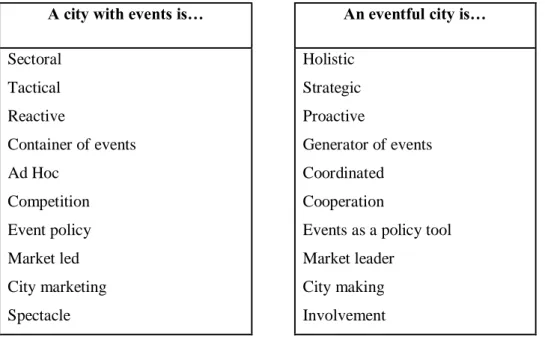
likely to see an event as a resource that can help develop and the creative industry, promote the city’s image and attractiveness and encourage social cohesion. Thus, a city with events differs from an eventful city, for the simple production of an event is insufficient to make it eventful. Eventful cities relate to their events, maximize their resources and benefits from the event program as a whole, with a holistic perspective and effective management, for eventful cities consider the coherence of their events, they bet on creativity.
Nowadays eventful cities around the world are reaching a higher level of professionalization concerning the organization process of the event as well as in the use of events as a tool to achieve broader policies (Richards and Palmer, 2010). Consequently, it seems this might be a good feature to identify and differentiate the cities that host events from the ones that make events a part of the city’s policy, image improvement and enhancing community collaboration and involvement.
Table 2. 1 Differences between “cities of events” and “eventful cities”, adapted and abridged from
Richards and Palmer, 2010;43
A city with events is… An eventful city is…
Sectoral Tactical Reactive Container of events Ad Hoc Competition Event policy Market led City marketing Spectacle Holistic Strategic Proactive Generator of events Coordinated Cooperation
Events as a policy tool Market leader
City making Involvement
2.2.1. From tangible heritage to the intangible culture
In 1972 UNESCO defined tangible and natural heritage aiming a global safeguard of the heritage which is a result of the creative capacity of human beings as well as a legacy demanded by future generations and later it was incorporated the cultural and natural landscape into this concept, classified as heritage of humanity.
‘Creative resources are now regularly employed to generate more distinctive identities, offering regions and cities a symbolic edge in an increasingly crowded marketplace. The emphasis in such strategies has also shifted from tangible to intangible cultural resources because more places lacking a rich built heritage are now competing for tourism business
(Richards, 2011; 1230) thus the competing skill of a tourism destination, or in our case a city, lies on ‘its ability to transform the basic inherited factors into created assets with a higher
symbolic or sign value and that organizational capacities allow some regions to make better use of their inherited and created assets to make themselves attractive to tourists’ (Richards,
2011; 1230). In recent times, tourism has been the industry that conveys culture while developing a strong correlation with creativity in order to shift traditional cultural tourism from tangible heritage to a more intangible culture deeply involving the everyday life of the destination in the touristic experience.
According to Richards (2011; 1225) ‘the emergence of creative tourism reflects the growing
integration between tourism and different placemaking strategies, including promotion of the creative industries, creative cities and the creative class. Creative tourism is also arguably an escape route from the serial reproduction of mass cultural tourism, offering more flexible and authentic experiences which can be co-created between host and tourist’ and creativity can
also be an attractive strategy option for the stimulation of economic, social and cultural outcomes due to the fact that, when applied, it stimulates more creative activity. Richards (2011; 1231) argues that ‘public sector intervention in creative development has basically
involved three approaches: 1) Creative Industries; 2) Creative Cities and 3) Creative Class. Creative industries strategies aim to stimulate the development of creative production through support for the “creative industries” sector’ and some definitions actually include
tourism. ‘Creative city strategies are founded on the idea that creativity can be fostered or
‘creative for the world’ and the ‘creative class’ approach is based on the idea that there is a growing number of people engaged in creative occupations who are attracted to places because of their creative atmosphere’. (Richards, 2011; 1231, 1232)
The perspective this thesis values the most, is in fact, the possibility of tourism conveying a tangible cultural experience, the idea that a cultural creative atmosphere can lead to the development of the city’s image and carry benefits for its communities.
2.2.2. The importance of creativity in tourism
Creativity has been defined in many different ways by many different authors who seem to agree on one thing, it is problematic and hard to define creativity. During the Renaissance the concept of creativity began to be applied to artists and poets in the Romantic movement of the late 18th and early 19th century but, in the past fifty years or so, some scholars have engaged in a rigorous study on the concept of creativity, from Freud, to the areas of sociology and economics.
However, and until recently, creativity has been a topic of relatively low interest. Taylor (1988) approached the large number of definitions of creativity in the literature available at the time and following the footsteps of Rhodes, and grouped into four main areas the general scientific approaches into the 4P’s of creativity:
The creative person; The creative process; The creative product; and The creative environment.
Abridged from Richards, 2011; 1226
argues that ‘in essence we are seeing the development of tourism as an increasingly creative
and ludic environment, within which new practices can be developed which challenge current representations of space’.
Tourism services have become, by excellence, the mean of providing and developing experiences capable of linking tourism, consumption and lifestyle in one cultural field, however the most important rule to keep in mind is to innovate and make more flexible experiences, harder to imitate and copy, maintaining the uniqueness factor guarded (Richards, 2011), so that the tourist may actively and creatively participate in those experiences, as to feel being part of the city and the community.
Hence, cities must be creative and show some creativity in managing and marketing themselves, for the ‘creative turn’, as Richards (2011) explains has affected tourism in several ways: there has been an increased of creative content integrated into tourism and tourism has become a creative field for the development of skills and performance. Furthermore the author states that ‘the creative development of tourism production also stems from the nature
of tourism itself’ and that this ‘process has also been evident in cultural tourism, where the increasing supply of cultural products has in many cases outstripped demand (…) increasing competition and driving a search for alternative models.’(Richards, 2011; 1228)
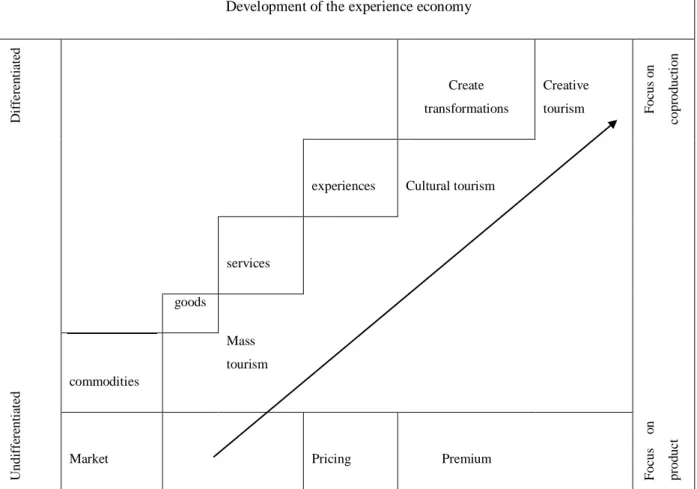
Richards and Wilson (2006) pointed out a number of key consumption trends, stemmed in the emergence of the postmodern ‘postmaterialist’ society, a consumption based society, linked to the rise of creativity in tourism, such as 1) the discontent with contemporary modes of consumption; 2) the blurring boundaries between work and leisure; 3) the increasing desire for self-development and skilled consumption; 4) the experience hunger of consumers; 5) the building narrative, biography and identity; and 5) the attractiveness of creativity as a form of expression. Therefore one of the main drivers of creative tourism are the creative skills employed as the basis of tourism businesses leading to skilled consumption that, in turn, allows not only the development of distinctive identities through a lifestyle enhancement, but it also is capable of leading to more creative uses of the tourism resources (Richards, 2011). The development of the economy experience in tourism can be seen as summed up in the following scheme, adapted and abridged from Richards (2010).
Table 2. 2 Adapted and abridged from Richards (2010), Creative tourism: Development, trends and opportunities
Development of the experience economy
D if fe re n ti at ed Create transformations Creative tourism Foc us o n copr oduc ti on U ndi ff er ent ia te d
experiences Cultural tourism
services goods
commodities
Mass tourism
Market Pricing Premium
F oc us o n pr od uc t
As Richards (2011; 1232 - abridged) explains, creative city strategies, namely
‘cultural-creative clusters, are designed to produce a range of outcomes, including
Strengthening the Identity, Attraction Power and Market Position of Places;
Stimulating a More ‘Entrepreneurial’ Approach to the Arts and Culture;
Stimulating Innovation and Creativity;
Finding a New Use for Old Buildings and Derelict Sites; and
2.2.3. Development of idiosyncratic places
Places, cities, regions are being presented as creative resources capable of generating distinctive identities, which is in fact what the tourism industry seeks – authentic identity. Such concept of identity is, for its importance, being applied to other tourism products and resources, for this is also a strategy being used in intangible cultural resources (Richards, 2011).
Landry (2000) asserts that a wider approach to creativity may be able to solve urban problems due to the involvement of all those who are indeed a part of the city – citizens, industries, governance. And this seems to be, according to our research a well accepted and searched strategy by the growing number of people who are devoting themselves to creative occupations, attracted to locations where their own creativity can take part of such an atmosphere, rather than the ‘passive gaze’ described by Richards that used to attract visitors and define the practice of tourism.
However, according to Richards (2011), this creative atmosphere is hard to define and is linked by the development of creative or cultural clusters, in turn divided into three different perspectives:
1) the stimulation of a specific industrial sector;
2) the development of the creative potential of a city; and
3) attract a specific group of either producers or consumers (or both, we dare add).
These creative and cultural clusters have an important role in the economical development, in the making of a cultural economy, adding together the authenticity needed to attract tourism into those places (Richards, 2011).
According to Richards (2011; 1234) ‘in their search for creative material, tourists
increasingly seek out alternative public spaces or the heterogeneous spaces that (…)contrasts with enclavic, or highly controlled and scripted tourist spaces. In heterogeneous spaces transitional identities may be sought and performed alongside the everyday enactions of residents, bypassers, and workers’ and ‘creativity’ seen a practice that fuses both producers
recent studies have emphasized ‘the role of “co-creation” or “presumption”, involving the
creative collaboration in developing tourism practices by both consumers and producers’ and
some studies concerning ‘the development of tourism in cities has also underlined how
tourists effectively become ‘placemakers’, adding to the vitality and liveliness of cities as well inhabiting new areas of cross-cultural communication and creativity’ furthermore, the author
clarifies that ‘the essence of creative tourism seems to lie in activities and experiences related
to self-realization and self-expression whereby tourists become performers and co-creators as they develop their creative skills’ (Richards, 2011; 1236, 1237) but he takes it a
step up and states that ‘the destination itself needs to become more creative in designing
‘characteristic’ experiences. This means that the destination needs to think carefully about the aspects of creativity that are linked to place, and which give creative tourists a specific motivation to visit. This also makes it important that creativity is also embedded or anchored in the destination. Every location has the potential to provide a unique combination of knowledge, skills, physical assets, social capital and ‘atmosphere’ which make certain places particularly suited to specific creative activities’ (Richards, 2011; 1238) and if ‘creativity provides activity, content and atmosphere for tourism, tourism in turn supports creative activities’. (Richards, 2011; 1245).
Hence, the increase of the creative approaches to tourism seems to be connected to the a variety of strategies elaborated to create distinctive places.
2.3. Historical framework
Portugal´s history is rich and punctuated by the presence of many different people throughout the ages, from the Celts, the Muslims and the Romans, among many others. All of them left their mark and contributed to the culture of what we now know as Portugal.
In medieval Portugal, as well as across Europe, fairs were one of the most important medieval economical “institutions”, allowing merchants, producers, distributers and consumers to meet
those locations would translate into money, and proof of that were the privileges and protections granted by kings to those who decided to participate in them, at a time when land was a proof of wealth. The oldest fair known in Portugal dates back to 1125 in Ponte de Lima, but by the year 1325 the entire territory held fairs, i.e. the so called “free fairs” in which there was an absence of fee or toll to participate.
In Portugal it is possible to distinguish two different stages of fairs, the first, at their birth, a time when they were scarce, and a second stage, that corresponds to their expansion, a growth that lasted until the 15th century (Herculano, 2008; Marques, 1997; Mattoso, 1992; Serrão, 2007).
Today the re-enactment of medieval fairs is capable of mobilizing entire communities and from the initial idea to their actual implementation it can take several months, and contrarily to what happened when these first took place, there is an audience for such festivals that attend without playing a role, much like going to an art exhibition (Coelho, 2009). The actual crisis scenario does not seem to impact these events as expected, it is true that visitors do not spend as much as they once did, according information from to the organization of the events, but the fact is that visitors do attend and in one way or another they all do spend some amount of money, in some events more than others, which we believe to be related to the location of the medieval market.
Janiskee (1980, 97) described festivals and events as ‘formal periods or programs of
pleasurable activities, entertainment or events having a festive character and publicly celebrating some concept, happening or fact’. And such events, as stated previously, date
back centuries, for people have always recognized the need to publically and collectively celebrate civic rituals (Turner, 1982). These public celebrations were usually, and at first, allied to religious festivities and emphasized the social and cultural way of life of the communities, their values and beliefs, reinforcing the image of tradition. Consequently, festivals seem to have flourished into the 21st century proliferating according to their tourism potential, the experience consumption (Van Elderen, 1997). The key factor to their actual growth, or reinvention, seems to be their economical outcome potential, for they are capable of revitalizing a community, reposition a destination and generate tourism revenue. Hence, throughout times, fairs were not only the scene of commerce and trade, they were also the place where people could exchange ideas, information and at the same time gather socially
(Herculano, 2008; Marques, 1997; Mattoso, 1992; Serrão, 2007). Therefore we believe these events had not only a great importance in the growth of the economy, but also an enormous social meaning, for they allowed intercultural exchanges that permitted the “growth of thinking” and for those reasons, as well as the actual proliferation of these events, we chose medieval events to be the core of our research, because as Light (1996) avows in spite of their growing popularity and profusion, events, in general, and historical reenactments, in particular, have been relatively less researched or studied.
2.4. Medieval fairs as a marketing and touristic promotion tool
There has been studies in city marketing and tourism that show the use of events as a tool to market the cities in particular, nevertheless because there has been a general increase in the competition between cities, that intend to attract not only consumers but also investors and policy-makers, and since a great number of places are entering such competitive environment, the infrastructure and amenities have a predisposition to look similar, although what seems to be ideal is their authenticity and identity capable of attracting both investors, producers as well as tourists and consumers.
It seems imperative, in order to maintain an authentic and unique event, the need for cities to create ways to distinguish themselves from their direct competitors (Richards and Wilson; 2004). And even though recent years have been quite rich in studies on cultural events, as Crespi-Vallbona and Richards (2007; 106) the focus has often been on the replacement of
local, traditional cultural by globalised, popular culture, and the transition from “ritual” to “spectacle”. This is part of a wider development of “festivalisation.
‘Cities and their hinterlands have become stages for a continual
The success of cultural tourism lye in the fact that the natural resources are susceptible to draw in tourism, but it is imperative to estimate the values and perceptions of locals about themselves and their culture, before planning such events, for history is one of the natural local resources available and, for that reason, reliving the past may possibly be a tourist attraction where noting must be left to chance, from the reconstitution in itself to the parallel animation, in such ways that the past meets the present and conveys the wanted authentic experiences to those who visit the event. In addition, these cultural events provide a balance between the visitors’ satisfaction and the internal economic benefits, as a result of encouraging the locals to participate in the event and protecting local patrimonial assets (Campos, 2011).
Successful events are, consequently, capable of improving the image of city, they brighten up the streets and locals develop a renewed pride in their home town, as quoted by Richards and Palmer (2010), culture is like a euphemism for the power of the city’s event in the economy, their advantage, as the sum of all the aspects that facilitates the city to compete for jobs and investments. Even though the impact of an event can be estimated through figures, it is also as an image of a certain community and Haider, Kotler and Rein (1993) articulated the value of such events in the image making and image enhancing, in the attracting tourists, aiming for the development of the community. Getz (1991) insists that festivals and events are a new wave of alternative tourism that contributes to sustainable development and improves the relationship between host and guest. Shuster (2001), for example, stated that festivals and events staged as urban ephemera or spectacle yield economic benefits raising the profile of places, their products and attracting flows of tourists, capital and investment and according to Almeida (2010, 194) ‘directors would be desirable to improve the creative environment
among its teams to thereby further increase individual performance and by extension the organization's performance. So managers should have an increased attention on recruitment of individuals to identify cultural values revealed by the candidates’ a notion easily applied to
an event organization team.
Medieval events, in particular, just as argued by Richards and Wilson (2006 and also 2007), are capable of bringing together the event and the cultural places, such historical events, or cultural events, are almost an appropriation of the past and the re-enactment usually indulges
in favouring the dramatization of popular events and people like Vikings, medieval knights, pirates and slaves (Guha, 2009) for these events derive from the “living history” technique, developed in England and the United States, during the late seventies of the twentieth century. Coelho (2009) addressed this exact subject in her master thesis and found the information concerning Portugal “living history” events scattered and hard to obtain. Nevertheless, the author argues that this method had, at its birth, a unique educational purpose, it was related to the history syllabus and promoted both meaningful and an active learning process by bringing closer the students to the real “subject of study”, through the most accurate historical recreation, in which students could participate. These events, promoted by schools, museums and other educational entities, implied on their own the community involvement, for they were the ones starring the event and according to Coelho (2009) many argued that such events were deprived of public since those who attended needed to dress a part and perform a character. So if, at first, the impact was seen regionally, gradually these events started attracting other visitors with different interests, other than learning, hence if in their origin they did not have specific touristic promotional objectives, today they are an attraction if not a destination by themselves (Campos, 2011) allowing visitors to take part in a, almost real, time travel to the past where, in most cases, they can interact and get emotionally attached to the event. Therefore these medieval events in Portugal are now, according to Coelho (2009; 20) ‘ways of translating past facts, making them accessible to all types of public, even those who
claim not to appreciate history’ for when they started they were just a strategy to open the
museums to the communities making them more dynamic but by principle these ‘living
history events’ were not available to the general non-participant public, however twenty years
past and some municipalities started developing projects based on historical facts to promote their patrimony opening reaching a wider range of population and cultural tourism, enabling the visit of these events to an audience that was not included in the animation as characters. Coelho (2009; 72) argues that nowadays medieval fairs ‘attract many visitors, both
Portuguese and foreigners, and in this aspect it fulfils one of the objectives, which relates to cultural tourism, attracting a broader public to visit the historical sites where actions are carried out. However it seems to us absolutely essential, on one hand, to value and convey the
years go by it does not fade the desire to continue living these days in past times and that the visit to the fair does not resemble the family outing to the shopping center’.
2.5. Audiences and public
Cultural tourism, according to the 'Dictionary of Travel, Tourism and Hospitality Terms', (Harris and Howard, 1996), is a general term referring to leisure travel motivated by one or more aspects of the culture of a particular area, a cultural tourist, is defined by the Australian Bureau of Statistics in 'Domestic Cultural Tourism in Australia, 1994-95’ (1997) as a person who stayed more than 40 kilometers away from home for at least one night and attended a cultural venue.
In Portugal, according to an article in Diário Económico by Peralta (2011) cultural tourism is likely to grow 20% in upcoming years. According to statistical data of the national tourism office (Turismo de Portugal) about 37,4% of Portuguese residents made at least one touristic trip where they stayed one night away from their residence location, they were mostly between 25-44 years old and their main reason to travel was ‘leisure, recreation and vacation’. Those who get involve and experience an event are designated as audience and public, being the audience the direct stakeholder group within the public of an eventful city, ‘which
includes any group with which the event programme needs to communicate, such as the media, government bodies, financial institutions, pressure groups, customers, suppliers and other stakeholders (Richards and Palmer, 2010; 293). In fact, audience and public differ,
since ‘audience’ are those who actually participate in the event and ‘public’ stands for potential participants, an events try to widen their audiences by turning potential participants into members of the audience. This process, named audience development, implies collaboration between the different stakeholders of an event in order to fully understand the audience, their needs, opinions and characteristics (Richards and Palmer, 2010).
Ralston and Crompton (in Getz, 1991) decided to approach the events attendees motivations by using a five point Likert Scale and forty-eight motive statements, and as a conclusion they suggested that those motivation statements were generic across all groups. Other authors began then their own incursion into the study of motivations and, Backman et al (1995) for
example, attempted to examine demographic characteristics, motivations and activities of tourists using the 1985 U.S. Pleasure Travel Market data. For that aim they developed and analyzed twelve motive statements, identifying five different dimensions, some of these dimensions resulting or explained by the demographic factor, i.e. excitement is less likely to be the travel motivation of senior and married festival attendees or even that the lowest income group is more likely to be motivated by attending festivals to socialize while less likely to attend high-risk activities. This shown that event attendees were, in fact, a heterogeneous group and for that this group required segmentation, although Richards and Palmer (2010; 299) argue that ‘classical or more traditional events attract an audience
composed of a relatively homogeneous group of people with high incomes and education levels’ and that the ‘growth in the cultural audience generally depends on two factors: the expansion of the middle class which increases the number of highly educated people with time and money to consume culture, or reaching groups who currently have low levels of cultural consumption.’ Getz (2008) argues that the “event experience” allows profiling the potential
tourists by understanding the perceptions of the experiences and by influencing future consumption attitudes. In Portugal there are few studies concerning the audiences and public of medieval events (Campos, 2010 and also 2011) but we feel they need to be compared, updated and yet again repeated to provide a strong assessment and a valid analysis.
Some authors argue that the cultural tourist is very demanding, that he values and criticizes all that embodies his experience, during the visit, moving as if the space was his own. Others take it a step further by arguing that the cultural creative tourist is a part of the creative industry tissue seeking rich quality experiences in such way capable of identifying their personality as creative, but most of the times they do not stay at the destination for the night. What we need to understand is not just who in fact attend these fairs, but why, and most definitely if they do connect and bond to the space, to the atmosphere, to the people and ultimately to the event.
Chapter 3 – Methodology
3.1. Introduction
This chapter describes the methodology chosen for the study, the objectives and hypothesis developed for the investigation. Here we also describe the survey questionnaire applied as well as the measures used in its elaboration and finally the sample of the study.
The methodology for this particular study was adapted to the Portuguese reality, in other words, for this investigation we adapted the methodology of a Dutch investigation of ‘eventful cities’ to Portuguese cities hosting medieval events, which is why we also decided to include a new scale in the survey questionnaire.
3.2. Methodology
The data obtained from the questionnaires were processed through the IBM Software SPSS version 19.0 for Windows. Quantitative variables are summarized by mean ± standard deviation, minimum and maximum quality using the absolute and relative frequencies. The analysis of hypotheses and aims of the study was done in a descriptive point of view using the relative frequencies and descriptive statistics.
To analyze de associations of variables we used the Qui-Square, when both variables were qualitative, the ANOVA when one of the variables was qualitative and the other quantitative or ordinal and the Pearson Correlation significance test when dealing with variables that were quantitative or ordinals. We have considered statistically significant differences to p <.05.
3.3. Objectives and hypothesis of the investigation
We chose a quantitative research method supported by survey questionnaires, using attitude scales and multiple answers.
Our investigation lye in the analysis of the profile of the visitor of medieval events and, most importantly, the identification of the perceptions built by the visitor as well as determine the social and economical impacts of the event so that we can be able to classify eventful cities. Consequently, our main objectives are:
1) To identify who attends medieval events and the reasons leading to the choice of attending that particular event; i.e. if the medieval event is seen as a destination in itself or just a Point Of Interest (POI) of the destination visited;
2) To profile medieval events attendees so that measures can be taken to attract other market niches and improve the supply features;
3) To understand the perceptions of tourists/visitors concerning the medieval event to better anticipate future choices, in order to try establishing some measures of improvement;
4) To determine the social and economical impacts of the medieval event in the local community as well as the destination in itself; and
6) To recognize the presence of the characteristics of an eventful city. To answer these objectives we developed the following hypothesis: H1: Medieval events attract a heterogeneous group of tourists/visitors;
H2: The geographic proximity of the medieval event is the basis to choose attending a certain medieval event;
H3: Visitors are attracted to medieval events because of the creativeness and historical rigor of such events;
H4: Visitors that repeat visits are the ones who develop an emotional bond to the event; H5: Medieval events are destinations in themselves within the destination;
H10: Medieval events are well organized and a part of the image boosting policy;
H11: Medieval events establish an emotional bond to its visitors and communities by involving them in the event;
H12: Eventful cities generate medieval events as a policy tool; H13: Eventful cities are market leaders in medieval events;
H14: Eventful cities are a well coordinated generator of event throughout the year; H15: Eventful cities imply cooperation from local communities in the medieval events.
To gather the information that could confirm or deny the objectives and hypothesis presented we applied a survey questionnaire.
3.4. Survey questionnaire
The survey questionnaire itself is divided into two main stages, the first with the questions needed to analyze the impacts and, the second, with control questions as well as items relevant for other profiling statistic elements such as age, gross income, residence and education level. So the survey questionnaire is made of twenty three questions, the first two inquire how they came to know about the event and why they made the decision to attend the event. The third asks if the event had been previously visited and the fourth enquire the days visited the current edition of the event. This is followed by a question that intends to find out where they stayed during the visit. The goal of seventh question scale is to find out the intention of the visitor to repeat the visit and the eighth to observe if they will recommend visiting the event. The next question is a scale of six points – totally agree to don’t know – with sentences the visitor needs to classify. The tenth question concerns the values (money) spent during the visit or stay at the destination and it is followed by a question whose goal is to assess the event’s importance in the decision making process of choosing that particular destination. The thirteenth question intents to find out what would the tourist/visitor do if the event was not being held. The next seven questions (from question 14 to question 20) are for statistical purposes, they enquire about place of residence, number of people in the group, age,