(1) Universidade Federal de Santa Maria (UFSM), Santa Maria, RS – Brasil. Funding: FAPERGS
Conlict of interest: non-existent
Temporomandibular dysfunction and craniocervical pain in
professionals of the nursing area under work stress
Disfunção temporomandibular e dor craniocervical em profissionais da área
da enfermagem sob estresse no trabalho
Daniela Pozzebon(1) Chaiane Facco Piccin(1) Ana Maria Toniolo da Silva(1) Eliane Castilhos Rodrigues Corrêa(1)
Received on: October 26, 2015 Accepted on: February 04, 2016
Mailing address:
Daniela Pozzebon
Rua 12 de outubro, 140 / 302 A Bairro Nonoai, Santa Maria , RS – Brasil CEP: 97060-200
E-mail: [email protected]
ABSTRACT
Purpose: to investigate the presence of Temporomandibular Disorder, headache and neck pain and
mus-cle pain threshold of cervical musmus-cles in nursing professionals exposed to occupational stress.
Methods: 43 women were evaluated for the presence and severity of Temporomandibular Disorder using
the Diagnostic Criteria for Temporomandibular Disorder instrument and Temporomandibular Dysfunction Index, respectively. Furthermore, they were evaluated for the pain threshold to pressure on the cervical muscles by algometry and for the presence of headache and neck pain.
Results: temporomandibular Disorder was found in sample 30.23% and 0.52 was the mean score of
dysfunction severity. Of the participants with Temporomandibular Disorder, there presence of depression was found in 69.23%; 61.64% Grade I in Graded Chronic Pain and Speciic Physical Symptoms including pain and excluding pain were 46.15% and 61.64%, respectively. Headache was reported by 55.81% and neck pain by 60.47%. There was no association between the presence of Temporomandibular Disorder, headache and neck pain. Pain pressure thresholds of cervical muscles were low in subjects with and without Temporomandibular Disorder, without statistical difference. The sternocleidomastoid muscle it´s the lowest value of pain pressure threshold.
Conclusion: high incidence of Temporomandibular Disorder, headache and neck pain were detected in
the studied sample. Temporomandibular Disorder was not associated with the presence of headache and / or neck pain. The high frequency of cervical pain and low pain pressure thresholds in the sternocleido-mastoid muscle in all subjects demonstrate the involvement of the cervical spine and muscles in these professionals, resulting of possible improper postures and stress-related muscle tension.
Keywords: Temporomandibular Joint Disorders; Pain Measurement; Depression; Stress Psychological
RESUMO
Objetivo: veriicar a presença e severidade de Disfunção Temporomandibular, presença de cefaleia e
cer-vicalgia e o limiar de dor muscular de músculos cervicais em proissionais de enfermagem sob estresse no trabalho.
Métodos: 43 mulheres foram avaliadas quanto à presença e severidade de Disfunção Temporomandibular
pelo instrumento Critérios de Diagnóstico para Pesquisa de Desordem Temporomandibular e pelo Índice Temporomandibular, respectivamente. Além disso, foram avaliadas quanto ao limiar de dor à pressão nos músculos cervicais por algometria e quanto à presença de cefaleia e cervicalgia.
Resultados: disfunção Temporomandibular foi encontrada em 30,23% da amostra, com valor médio de
escore de gravidade de 0,52. Entre as participantes com Disfunção Temporomandibular, 69,23% apre-sentavam depressão, 61,64% graduação I de dor crônica e Sintomas Físicos não Especíicos incluindo e excluindo itens de dor em 46,15% e 61,64%, respectivamente. Cefaleia foi referida por 55,81% e cervi-calgia por 60,47%. Não houve associação entre Disfunção Temporomandibular, cefaleia e cervicervi-calgia. Os limiares de dor dos músculos cervicais apresentaram-se baixos tanto nos indivíduos com diagnóstico de Disfunção Temporomandibular quanto nos sem este diagnóstico, sem diferença signiicativa. O mús-culo esternocleidomastóideo apresentou-se com os menores limiares de dor à pressão.
Conclusão: alta incidência de Disfunção Temporomandibular, cefaleia e cervicalgia foram detectadas
nesta amostra. Disfunção Temporomandibular não inluenciou a presença de cefaleia e/ou cervicalgia. A alta frequência de dor cervical e os baixos limiares de dor no músculo esternocleidomastóideo em todas as participantes demonstram o comprometimento dos músculos cervicais, resultante de possíveis postu-ras inadequadas e tensão muscular relacionadas ao estresse.
INTRODUCTION
Psychosocial factors like anxiety, depression, and
stress can inluence the development of the behavioral
habits, such as bruxism and teeth clenching, and those can lead to the development of symptoms related to tempormandibular dysfunction (TMD)1.
According to the American Academy of Orofacial Pain (AAOP), TMD covers a group of musculoskeletal and neuromuscular conditions that involve the temporomandibular articulations (TMA), masticatory muscles and all the related tissues 2. The etiology of TMD is complex, multifactorial and is related to the predisposing, triggering, and perpetuating factors 3. Parafunctional habits (e.g. bruxism), trauma in the orofacial region4, and psychosocial factors are among the risk factors 5. In relation to men, women have
signiicantly higher probability of being diagnosed with
TMD 1,5.
In addition to that, TMD is frequently associated to headache and muscular pain in the neck 6,7. The neuro-functional and anatomic relation that exists among the TMA, the cervical spine, and the skull can justify the occurrence of those associations. The movements of the skull and the cervical spine occur concurrently to the activation of the masticatory muscles and the mandibular movements, in other words, all postural mechanism that acts in the head participates in the control of the mandibular posture as well 8. Also, the existence of a convergence of the cervical sensory information with the afferent of the trigeminal nerve can explain deregulation of the painful symptoms 9.
High levels of stress at work can cause different physical conditions, anxiety, and depression, among others 10. Symptoms of depression and anxiety can cause muscular hyperactivity 11. Many times, the emotional tension resulting from stress are relieved by contracting the masticatory muscles 12, as a conse-quence there is the occurrence of muscular pain 3.
Psychosocial risk factors at work can contribute to the high levels of stress among workers 13. Therefore, when the stressor continues or when there is the simul-taneous presence of other stressors, the process of stress evolves to the last phase, which is the exhaustion, that corresponds to the appearance of diseases 14.
The nursing profession was identiied as a highly
stressful occupation. Thus, it is relevant to investigate the presence of physical and psychological dysfunc-tions, and if there is a relation between them, in order to clarify the risk of these dysfunctions in women exposed to stress at work.
Hence, the objective of this study was to check the presence and severity of TMD among the nursing professionals under stress at work; to investigate the presence of headache and neck pain, and its association with TMD; to investigate the pressure pain threshold of the cervical muscles among the profes-sionals with and without the diagnosis of TMD.
The hypothesis of this study is that there is a corre-lation between the presence of TMD and the presence of headache and neck pain. Also, it is assumed that
there is signiicant difference among the thresholds of
pain in the cervical muscles between participants with and without TMD. Besides, it is believed that the higher the level of stress at work, the more severe the TMD.
METHODS
The study is part of a project entitled “Craniocervicomandibular System: methods for evaluation and multimodal therapeutic intervention” approved by the Ethics in Research Committee from the Federal University of Santa Maria (UFSM) under the protocol number 33665714.0.0000.5346, according to the Resolution 466/2012 from the National Health Council.
The research was conducted with nursing profes-sionals of a hospital institution in the city of Santa Maria/RS. The project was presented to the profes-sionals orally in order to select the volunteers. Those who were interested in participating in the study signed the Free Informed Term of Consent (FUTC), answered to an anamnesis form, and the Job Stress Scale (JSS).
In order to be included in the study, the volunteers had to be between 20 and 50 years old, had been working for at least three months in the same insti-tution, in the same function, and they should have been exposed to work stress, according to the JSS. Besides, they had to be in accordance with the procedures that would be conducted and sing the FUTC.
Were considered as exclusion criteria some factors that could interfere in the result of the evaluations: signs of neuropsychomotor impairment (neurological
sequelae), being under effect of analgesic, anti-inlam -matory, and myrorelaxing drugs, previous surgeries in the cervical spine and/or facial region, treatment for orofacial pain or for the cervical spine within the last six months, and treatment for cancer diseases within the
last ive years.
excluded for not presenting work stress according to JSS.
The research was carried out in the Orofacial Laboratory of Motricity from the Federal University of Santa Maria, with 43 women aged between 20 and 50 years old. All the participants were informed about the objectives of the research as well as the procedures that would be conducted.
The anamnesis form included personal, profes-sional, and socio-demographic data, as well as questions related to the inclusion and exclusion criteria of this study. In addition, the participants were also questioned for the presence of headache and neck pain.
The JSS (Appendix A) was used to classify the volunteers for the level of stress exposure at work. To each of the answers of the questionnaire, scores from 4 to 1 were attributed from highest to lowest frequency. The possibilities of answers varied from frequently (4) to never (1). Therefore, the cut-off for the “demand” dimension was established as follows: low demand: scores from 5 to 14; high demand: scores from 15 to 20. For the “control” dimension those who reached scores from 6 to 17 were considered as low control,
and classiied as high control those who scored from
18 to 24 15. Professionals exposed to a combination of high demand and low control were considered as a group of higher exposure to stress at work; those exposed to high demand with high control or to low control with low demand were considered as groups of intermediate exposure to stress at work, and those with
high control and low demand were classiied as not
exposed to stress at work 15.
The selected participants were evaluated for the presence and severity of TMD, presence of headache, neck paina, presence and level of depression, and for the threshold of cervical muscular pain.
The instrument Research Diagnostic Criteria for Temporomandibular Disorders (RDC/TMD) 16 was used in order to evaluate the volunteers for the presence of TMD. The possible diagnoses of RDC/TMD can be: Ia) myofascial pain, Ib) myofasical pain with limited mouth opening, IIa) disc dislocation with reduction, IIb) disc dislocation without reduction, with limited mouth opening, IIc) disc dislocation without reduction, without limited mouth opening, IIIa) arthalgia, IIIb) osteoarthritis of TMJ, and IIIc) osteoarthorsis of TMJ 16. From the axis II of the RDC/TMD, were evaluated the presence and levels of depression (normal, moderate, or severe),
level of chronic pain, and levels of Non-speciic Physical
Symptoms (NSPS) including pain, and NSPS excluding pain.
The Temporomandibular Index (TI) 17 was calculated
based on the clinical indings of the RDC/TMD protocol.
This index evaluates the severity of TMD encompassing three domains with value attribution of 0 (absence of clinical sign) to 1 (presence of clinical sign): functional index (mobility), muscular index, and joint index. For the funcional index were considered 12 items referring to the mandibular movements: non-assisted opening, and assisted opening with and without pain, left and right lateralization, protrusion and patter of mandibular opening. The muscular index contemplates the palpation of 20 spots referring to the temporal extra-oral masticatory muscles in its three bundles, masseter in three regions, posterior mandibular region, subman-dibular region, and intra-orally in the area of the lateral pterygoid and the tendal of the temporal muscle. And,
inally, the joint index, composed of eight items consid -ering the TMJ palpation (lateral pole and posterior ligament) and perception of articular sounds such as clicking in the opening movements, mandibular closing
and lateralization, and presence of ine and thick
crackles. The TI is composed by the arithmetic mean of the three indexes, and considering that the closer the index is to 1, the greater is the severity of the signs and symptoms of TMD 17.
The presence of headache and neck pain was
investigated in the anamnesis form. Were classiied
as having headache and/or neck pain the individuals who showed recurrent pain in the head and/or cervical muscles for at least six months.
The PPT of the cervical muscles – scalenus, sterno-cleidomastoid (SCM), suboccipitals, upper and middle
trapezius – was veriied, bilaterally, by algometry. Each
spot was compressed with an algometer twice, with an interval of three minutes between each time, and the mean of the values was calculated and registered 18.
It was considered 0.5 kg/cm2 as the lowest pressure value taking into account for registration and 4 kg/cm2 as the highest pressure applies by the algometer, if the volunteer did not report any pain during the evaluation of these muscles.
The statistical analysis was carried out with the software STATISTICA 9.1. For this analysis, in relation to
the presence of TMD, after the classiication according
to the criteria aforementioned, were considered only two groups – with diagnosis of TMD (including all the diagnoses groups) and without diagnosis of TMD.
Data related to the sociodemographic proile of the
The greatest part of the sample as constituted by nursing technicians (74.42%), married (60.47%), with employment contract (90.70%), working in the actual
function between one and ive years (58.14%).
According to the RDC/TMD, from the total of 43 women evaluated, 13 (30.23%) presented TMD, from these, six presented myogenic TMD (46.15%) and the other seven presented mixed TMD (53.85%). Bilateral impairment was found in 10 volunteers, and unilateral was found in three (one volunteer showed unilateral impairment on the right side and two on the left side). From the 13 participants with TMD, from the axis II of the RDC/TMD, it was observed the presence of depression in nine of them (69.23%). The moderate and severe
RESULTS
The sample was composed by 43 women with an average age of 35.33±6.78 years old, being 97.67% exposed to the intermediate level of stress (high demand and high control at work) and 2.33% exposed to higher level of stress (high demand and low control), according to the demand-control model of JSS. On Table 1 the sample is showed according to the levels of stress exposure at work.
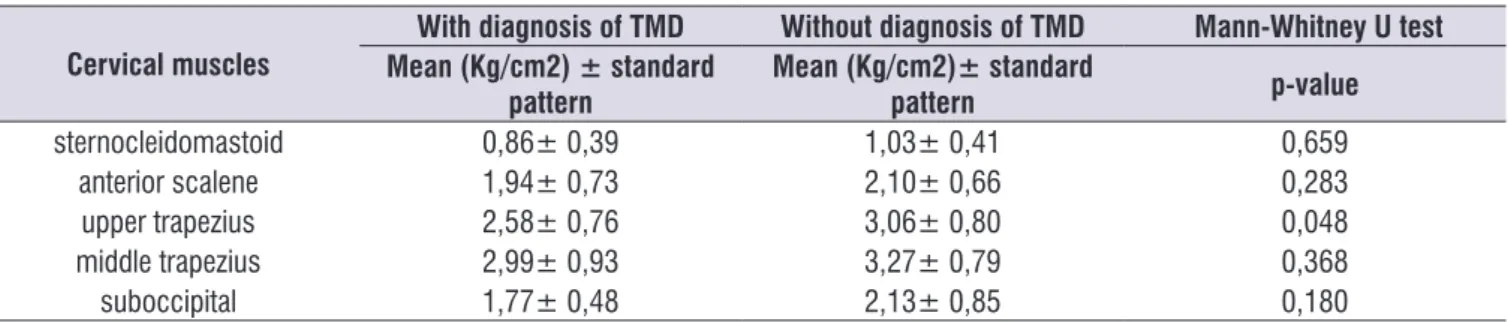
Table 3 presents the mean values, standard deviation, and p value of the algometric evaluation of the cervical muscles obtained in the participants’ evalu-ation with and without the diagnosis of TMD.
Statistical associations among the studied variables were not found, for instance, between TMD and headache (p=0.244), and TMD and neck pain (p=0.559) through chi-square test.
the levels of stress, represented by the demand and control dimensions, and the severity of TMD was
conducted by Spearman’s correlation coeficient. The
association among the presence of TMD, neck pain, and headache were carried out by Chi-square text. The normality of data was tested with Shapiro-Wilk test, and the algometry values for the cervical muscles from the groups with and without diagnosis of TMD were compared by using Mann-Whitney U test. Was
considered as statistically signiicant the value of p
inferior to 0.05.
Table 1. Sample distribution regarding the levels of stress at work
Levels of stress n %
Intermediate 42 97,67
High 1 2,33
levels of depression were found in 30.77% (n=4) and 38.46% (n=5) of the participants, respectively. As for the level of chronic pain, 61.54% (n=8) of those partici-pants showed level I, for instance, low incapacity and high intensity. In relation to the NSPS, 46.15% (n=6) and 61.54% (n=8) showed severe levels of NSPS with pain and of NSPS without pain, respectively, according to the evaluation of the axis II of RDC/TMD.
The volunteers with TMD showed a medium score value of the severity of the dysfunction of 0.52 obtained with TI.
Table 2 presents the data related to the presence of headache and neck pain among the participants with and without the diagnosis of TMD.
Table 2. Sample distribution regarding the presence of headache and neck pain between the participants with and without the diagnosis
of Tempormandibular Dysfunction
With diagnosis of TMD (n = 13) Without diagnosis of TMD (n = 30)
Variables n % n %
Headache 9 69,23 20 66,67
Neck pain 7 53,85 19 63,33
Table 3. Mean values, standard deviation, and p value of the algometric evaluation of the cervical muscles in patients with and without the
diagnosis of Temporomandibular Dysfunction
Cervical muscles
With diagnosis of TMD Without diagnosis of TMD Mann-Whitney U test Mean (Kg/cm2) ± standard
pattern
Mean (Kg/cm2)± standard
pattern p-value
sternocleidomastoid 0,86± 0,39 1,03± 0,41 0,659
anterior scalene 1,94± 0,73 2,10± 0,66 0,283
upper trapezius 2,58± 0,76 3,06± 0,80 0,048
middle trapezius 2,99± 0,93 3,27± 0,79 0,368
suboccipital 1,77± 0,48 2,13± 0,85 0,180
TMD = Temporomandibular Dysfunction
Among the women with TMD, the correlation between the levels of stress, obtained through the demand and control dimensions from the JSS scale, and the severity of TMD, obtained through TI, were not
signiicant (p=0.114 and p=0.568, respectively).
DISCUSSION
The participants included in this study had worked more than three months in the institution, for instance, those who were hired after the experience period.
TMD was considered as a physical manifestation, which can have stress as a contributing factor. In this study, 30.23% of the individuals were diagnosed with this dysfunction. It is highlighted that TMD has multifac-torial etiology, being stress as one of the predisposing factors 1,19.
The presence of TMD in the participants of this study was expected, because the symptoms of the disorders of the masticatory system are more frequent in women than men 20, and attack individuals who belong to the age-group established in this research 21. The results found in this sample are similar to the prevalence of TMD in the general population (40%), according to AAOP 2. Besides, participants of this study presented exposure to occupational stress. As already noted, symptoms related to TMD were predominant in women who had an employment contract 21. However, almost 70% of the sample did not show TMD. Although the psycho-social factors are associated with the appearance of symptoms related to TMD, the etiology of this disorder has not been completely explained yet. Some authors state that the malocclusion is one of the main factors that cause TMD 22. Nowadays, it is considered that there is not only one single etiologic factor responsible for TMD, being its etiology multifactorial comprising functional, anatomic and psychosocial factors 23.
The mean score value of the severity of TMD
(0.52), obtained by TI in this sample, can be classiied
as moderate and was similar to the values found in men and women with TMD (TI=0.48) 24. The authors
classiied the severity of TMD through the TI scores as:
medium, from 0 to 0.3; moderate, from 0.3 to 0.6; and severe, from 0.6 to 1.
It is observed a great participation of the psycho-social components in the diagnosis of TMD. From the 13 participants with TMD, from the axis II of RDC/TMD, the presence of depression was observed in nine of them. Depression is probably the most common emotional state present in patients with TMD 25. Higher levels of
depression were veriied in patients with TMD rather
than in healthy subjects 26. Besides that, depression increases the perception of pain, which can be linked to the appearance of chronic symptomatology 27 and be predisposing factor for TMD. A study showed that individuals with depression presented 2.65 times more chances of developing TMD when compared to the group without depression 28.
Somatization on RDC/TMD is known as NSPS. It is the state in which the individual expresses his/her psychological problems through physical symptoms. The presence of psychosocial factors such as depression, can contribute to the development and maintainability of pain 3. Therefore, the presence of depression and somatization, found in severe level in many of the participants of this sample, can contribute to the development of TMD and for the chronicity of pain in those individuals.
occupational stress 30. Although the development and
evolution of headache can be inluenced by stress 19, it may not be the exclusive causing agent. The sample of this study is composed by women, and they are more susceptible to headache 14. Anxiety disorders and depression also seem to contribute to the occurrence of episodes of headache 18. Besides, the lack of physical exercises practice can be a contributing factor, one that was found in the sample of this study. In any case, the presence of headache associated to stress turn women into a group risk for emotional imbalance 19.
A study concluded that women with headache, both chronic and episodic, do not only have a higher prevalence of TMD, but also a higher risk factor of developing the problem 31. Another study found symptoms of headache evaluated by visual analogue scale (VAS), both in the group of patients with TMD and in the control group; however the symptoms were
more signiicant in those with TMD 32. The presence of headache in the sample of this study did not associate the presence TMD, contradicting results from other studies 6,31,32 . A hypothesis for this inding is that the
present study did not present a speciic design for the
analysis of the correlation between different types of TMD and of headache, which could have answered this question more accurately.
Neck pain was referred by a great number of volunteers. The presence of neck pain can be related to psychosocial factors as well as to the mechanical exposure in the work environment. In a previous study, an association between musculoskeletal disorders was found, such as lumbar pain, and psychosocial factors 33. A reason would be that the muscle tension caused by stress generates spasms of various muscles, particularly to those of the cervical region, resulting in episodes of pain 34. The postural changes, for example, anteriorization of the head, which can be associated to the hyperextension of the upper cervical spine, can result in functional changes and pain 35. The speeding of the work pace, the physical manipulation of patients, and repetitive techniques associated to inadequate body posture, are relevant precipitating factors 13,34. Thus, it is possible to suggest that the psychosocial factors of work and the mechanical factors can act jointly or as aggravating factor each other.
There was not found association between the symptoms of neck pain and the presence of TMD. Like the results in a study previously conducted, possibly, the lower severity and lower duration of cranioman-dibular and neck pain in the studied sample may have
justiied the absence of this association 36, as well as the lack of a more detailed analysis of correlation including the different diagnoses of TMD and the different sever-ities found. It has already been noted that the higher the severity of TMD, the higher the severity of cervical dysfunction 37.
The PPT of the cervical muscles of the partici-pants with diagnosis of TMD showed to be inferior to the values found in the evaluation of the participants without the diagnosis of the dysfunction. However, only the upper trapezius muscle showed statistical difference among the participants with and without TMD. It has been already noticed, by electromyog-raphy, in the trapezius muscle of patients with TMD, increase of electrical activity under resting in relation to the corresponding muscles of control subjects 38. The results suggest that there is a higher tension of this muscle in individuals with TMD. The SCM muscle showed the lowest pain threshold in both groups (0.86 and 1.03 kg/cm2, with and without the diagnosis of TMD, respectively) in comparison to the other muscles evaluated. A previously conducted study also found lower pain thresholds for the SCM muscle, in relation
to the other muscles evaluated, what was veriied both
in individuals with TMD (1.6 kg/cm2) and in the control group (2.6 kg/cm2) 32. The value of 2.7 kg/cm2 in the
algometry of the trapezius muscle was veriied in a
study 39, and is similar to the value found in the present evaluation of the upper trapezius muscle.
There was found a high percentage of volunteers with neck pain, even among those who were not diagnosed with TMD. The presence of neck pain was demonstrated by the assessment of low PPT in the analyzed muscles, in special the SCM muscle. Values equal or lower than 3 kg/cm2 can be considered abnor-mally low 39. Thus, it is possible that the cervical pain is not related only to the presence of TMD. Ergonomic factors, inadequate posture, physical manipulations,
and repetitive techniques can also inluence cervical
pain, as it has already been mentioned.
This study showed some limitations, among them is the reduced sized of the sample and the absence of
speciic exams to evaluate headache and neck pain.
High frequency of TMD was detected in the partici-pants of this study. It is important to consider that
this dysfunction can also be relected on myofunc -tional changes and loss of important stomatognathic functions such as chewing and swallowing 40.
cross-sectional studies like present one, provide only an instantaneous image of the variable which is intended to be studied. There is the need for other studies that evaluate the presence of stress at work in the course of time.
It was pointed out, in this study, that the diagnosis of TMD in those professionals only occurred due to the promotion and implementation of this research. The evaluated professionals did not have any knowledge about the dysfunction and its possible relation to the symptoms of headache and neck pain. In the same way, they were unaware of the therapeutic possibilities in the craniocervicomandibular dysfunctions.
The results found reveal the importance of not
underestimating the inluence of psychosocial factors,
particularly stress, both in the beginning, and in the perpetuation and/or worsening of TMD by the profes-sionals in the area of orofacial rehabilitation. It is also highlighted that prevention measures and control of
stress at work can be beneicial to the well-being of this
population, as well as to all working classes.
Nevertheless, since the work routine in working institutions are hard to be altered, the individual has to adopt measures to control the stress generated in the working environment. Such measures will only be possible through heightening awareness in respect to the greatness of the problem.
Therefore, the evaluation and treatment of the individuals who complain about facial pain, headache, and cervical spine pain should be globalized, including the psychosocial factors that can be involved. Also, it is important to highlight the necessity of early investi-gation on the effect of the psychosocial factors over the craniocervicomandibular muscle system.
CONCLUSION
It was detected, in the studied sample, a high incidence of TMD of moderate level. It was also noticed high incidence of headache and neck pain, however without association with the presence of TMD. The pressure pain threshold of the cervical muscles proved to be lower among the professionals with the diagnosis of TMD in relation to those without the diagnosis. However, only the upper trapezius muscle showed
signiicant difference between the groups.
REFERENCES
1. Nishiyama A, Kino K, Sugisaki M, Tsukagoshi,
K. Inluence of psychosocial factors and habitual
behavior in temporomandibular disorder-related symptoms in a working population in Japan. Open Dent J. 2012;6:240-7.
2. Okeson JP, editor. Dor Orofacial – Guia para Avaliação, Diagnóstico e Tratamento. Academia Americana de Dor Orofacial. São Paulo: Quintessence Editora Ltda; 1998.
3. Okeson JP, de Leeuw R. Differential diagnosis of temporomandibular disorders and other orofacial pain disorders. Dent Clin North Am. 2011;45(1):105-20.
4. Ohrbach R, Fillingim RB, Mulkey F, Gonzalez Y,
Gordon S, Gremillion H, et al. Clinical indings and
pain symptoms as potential risk factors for chronic
TMD: descriptive data and empirically identiied
domains from the OPPERA case-control study. J Pain. 2011 Nov;12(11 Suppl):T27-45.
5. Fillingim RB, Ohrbach R, Greenspan JD, Knott C, Dubner R, Bair E, et al. Potential psychosocial risk factors for chronic TMD: descriptive data and
empirically identiied domains from the OPPERA
case-control study. J Pain. 2011 Nov;12(11 Suppl):T46-60.
6. Franco Al, Gonçalves DA, Castanharo SM, Speciali JG, Bigal ME, Camparis CM. Migraine is the most prevalent primary headache in individual with temporomandibular disorders. J Orafac Pain. 2010;24(3):287-92.
7. da Costa DR, de Lima Ferreira AP, Pereira TA, Porporatti AL, Conti PC, Costa YM, Bonjardim LR. Neck disability is associated with masticatory myofascial pain and regional muscle sensitivity. Arch Oral Biol. 2015;60(5):745-52.
8. Biasotto-Gonzalez, DA. Abordagem Interdisciplinar das Disfunções Temporomandibulares. São Paulo: Manole, 2005.
9. Schürks M, Diener HC. Migraine allodynia, and implications for treatment. Eur J Neurol. 2008;15(12):1279-85.
10. Dalri RDCDM, Silva LAD, Mendes AMOC, Robazzi MLDCC. Nurses’ workload and its relation with physiological stress reactions. Nurses’ workload and its relation with physiological stress reactions. Rev Lat Am Enfermagem. 2014;22(6):959-65. 11. Kindler S, Samietz S, Houshmand M, Grabe HJ,
12. Calixtre LB, Gruninger BLDS, Chaves TC, Oliveira ABD. Is there an association between anxiety/ depression and temporomandibular disorders in college students? J Appl Oral Sci. 2014;22(1):15-21. 13. Freimann T, Merisalu E. Work-related psychosocial
risk factors and mental health problems amongst nurses at a university hospital in Estonia: A cross-sectional study. Scandin J Public Health. 2015;43(5):447-52.
14. Correia LL, Linhares MBM. Enxaqueca e Estresse em Mulheres no Contexto da Atenção Primária. Psicologia: Teoria e Pesquisa. 2014;30(2):145-52. 15. Urbanetto J de S, Magalhães MC, Maciel VO,
Sant’Anna VM, Gustavo Ada S, Poli-de-Figueiredo CE, et al. Estresse no trabalho segundo o Modelo Demanda-Controle e distúrbios psíquicos menores em trabalhadores de enfermagem. Rev Esc Enferm USP. 2013;47(5):1186-93.
16. Dworkin SF, LeResche L. Research diagnostic criteria for temporomandibular disorders: review,
criteria, examinations and speciications, critique. J
Craniomandib Disord. 1992;6(4):301-55.
17. Pehling J, Schiffman E, Look J, Shaefer J, Lento P, Fricton J. Interexaminer reliability and clinical validity of the temporomandibular index: a new outcome measure for temporomandibular disorders. J Orofac Pain. 2002;16(4):296-304.
18. Gomes MB, Guimarães FC, Guimarães SM, Claro Neves, AC. Limiar de dor à pressão em pacientes com cefaleia tensional e disfunção temporomandibular. Braz Dent Sci. 2010;9(4):84-91. 19. Crettaz B, Marziniak M, Willeke P, Young P,
Hellhammer D, Stumpf A, Burgmer M. Stress-induced allodynia–evidence of increased pain sensitivity in healthy humans and patients with chronic pain after experimentally induced psychosocial stress. PloS One. 2013;8(8):69460. 20. Anastassaki KA, Hugoson A, Magnusson
T. Prevalence of symptoms indicative of temporomandibular disorders in adults: cross-sectional epidemiological investigations covering two decades. Acta Odontol Scand. 2012;70(3):213-23.
21. Donnarumma MDC, Muzilli CA, Ferreira C, Nemr K. Disfunções temporomandibulares: sinais, sintomas e abordagem multidisciplinar. Rev CEFAC. 2010;12(5):788-94.
22. Sánchez-Pérez L, Irigoyen-Camacho ME, Molina-Frechero N, Mendoza-Roaf P, Medina-Solís C, Acosta-Gío E, Maupomé G. Malocclusion and TMJ
disorders in teenagers from private and public schools in Mexico City. Med Oral Patol Oral Cir Bucal. 2013;18(2):312-24.
23. Biasotto-Gonzalez DA, Andrade DV de, Gonzalez TO, Martins MD, Fernandes KPS, Corrêa JCF, et al. Correlação entre disfunção temporomandibular, postura e qualidade de vida. Rev Bras Crescim Desenvolv Hum. 2008;18(1):79-86.
24. Mazzetto MO, Rodrigues CA, Magri LV, Melchior MO, Paiva G. Severity of TMD Related to Age, Sex and Electromyographic Analysis. Brazil Dental J. 2014;25(1):54-8.
25. Smith GR. The Epidemiology and Treatment of Depression When It Coexists with Somatoform Disorders, Somatization, or Pain. Gen Hosp Psychiat. 1992;14:265-72.
26. Lajnert V, Francisković T, Grzic R, Kovacević
PD, Bakarbić D, Buković D et al. Depression,
somatization and anxiety in female patients with temporomandibular disorders (TMD). Coll Antropol. 2010;34:1415-9.
27. Giannakopoulos NN, Keller L, Rammelsberg P, Kronmüller KT, Schmitter M. Anxiety and depression in patients with chronic temporomandibular pain and in controls. J Dent. 2010;38(5):369-76.
28. Liao CH, Chang CS, Chang SN, Lane HY, Lyu SY, Morisky DE et al. The risk of temporomandibular disorder in patients with depression: a population-based cohort study. Community Dent Oral Epidemiol. 2011;39(6):525-31.
29. Stovner LJ, Hagen K, Jensen R, Katsarava Z, Lipton RB, Scher AI, et al. The global burden of headache: a documentation of headache prevalence and disability worldwide. Cephalalgia. 2007;27(3):193-210.
30. Wan Y, Xie J, Yang F, Wu S, Wang H, Zhang X, et al. The prevalence of primary headache disorders and their associated factors among nursing staff in North China. J Headache Pain. 2015;16:4.
31. Gonçalves MC, Florencio LL, Chaves TC, Speciali JG, Bigal ME, Bevilaqua-Grossi D. Do women with migraine have higher prevalence of temporomandibular disorders? Braz J Phys Ther. 2013;17(1):64-8.
32. Moreno BGD, Maluf SA, Marques AP, Crivello-Júnior O. Avaliação clínica e da qualidade de vida de indivíduos com disfunção temporomandibular. Rev Bras Fisiot. 2009;13(3):210-4.
disorders among Alzahra Hospital nurses. Iran J Nurs Midwifery Res. 2015;20(1):1-6.
34. de Souza Magnago T S B, Lisboa M T L, Griep R H, Kirchhof A L C, de Azevedo Guido, L. Aspectos psicossociais do trabalho e distúrbio musculoesquelético em trabalhadores de enfermagem. Rev Lat Am Enfermagem. 2010;8(3):429-35.
35. Silva AG, Punt TD, Sharples P, Villas-Boas JP, Johnson MI. Head posture and neck pain of chronic nontraumatic origin: a comparison between patients and pain-free persons. Arch Phys Med Rehabil. 2009;90(4):669-74.
36. Ries LGK, Graciosa MD, Medeiros DLD, Pacheco
SCDS, Fassicolo CE, Graeling BCF, Degan VV. Inluence of craniomandibular and cervical pain on
the activity of masticatory muscles in individuals with Temporomandibular Disorder. CoDAS. 2014;26(5):389-94.
37. Bevilaqua-Grossi D, Chaves TC, de Oliveira AS. Cervical spine signs and symptoms: perpetuating rather than predisposing factors for temporomandibular disorders in women. J Appl Oral Sci. 2007;15(4):259-64.
38. Pallegama RW, Ranasinghe AW, Weerasinghe VS,
Sitheeque MA. Inluence of masticatory muscle pain
on electromyographic activities of cervical muscles in patients with myogenous temporomandibular disorders. J Oral Rehabil. 2004;31(5):423-9.
39. Fischer AA. Pressure algometry over normal muscles. Standart values, validity and reproducibility of pressure threshold. Pain. 1987;30:115-26.
Appendix A –
Job Stress Scale
Here is a list of situations that you might encounter in your job. Please read each statement and use the scale shown below to give your opinion on each of them.
DEMANDS DIMENSION
Do you have to work very fast?
( ) Often ( ) Sometimes ( ) Seldom ( ) Never/almost never Do you have to work very intensively?
( ) Often ( ) Sometimes ( ) Seldom ( ) Never/almost never Does your work demand too much effort?
( ) Often ( ) Sometimes ( ) Seldom ( ) Never/almost never Do you have enough time to do everything?
( ) Often ( ) Sometimes ( ) Seldom ( ) Never/almost never Does your work often involve conlicting demands?
( ) Often ( ) Sometimes ( ) Seldom ( ) Never/almost never
CONTROL DIMENSION
Do you have the possibility of learning new things through your work? ( ) Often ( ) Sometimes ( ) Seldom ( ) Never/almost never Does your work demand a high level of skill or expertise?
( ) Often ( ) Sometimes ( ) Seldom ( ) Never/almost never Does your job require you to take the initiative?
( ) Often ( ) Sometimes ( ) Seldom ( ) Never/almost never Do you have to do the same thing over and over again?
( ) Often ( ) Sometimes ( ) Seldom ( ) Never/almost never Do you have a choice in deciding HOW you do your work?
( ) Often ( ) Sometimes ( ) Seldom ( ) Never/almost never Do you have a choice in deciding WHAT you do at work?