Continued administration of antithrombotic agents during
transperineal prostate biopsy
_______________________________________________
Toko Asano1, Shuichiro Kobayashi2, Masataka Yano2, Yukihiro Otsuka1, Satoshi Kitahara2
1Service of Urology, Omori Red Cross Hospital, Tokyo, Japan; 2Service of Urology, Tama-Nambu Chiiki Hospital, Tokyo, Japan
ABSTRACT ARTICLE INFO
______________________________________________________________ ______________________
Purpose: To determine the safety of continued administration of antithrombotic agents during transperineal (TP) prostate biopsy.
Patients and Methods: A total of 811 men who underwent transrectal ultrasound (TRUS)-guided TP biopsy from January 2008 to June 2012 at our two institutions were retrospectively analyzed. Among these 811 men, 672 received no antithrombotic agents (group I), 103 received and continued administration of antithrombotic agents (group II), and 36 interrupted administration of antithrombotic agents (group III). Ove-rall complications were graded and hemorrhagic complications were compared (group I with group II) using propensity score matching (PSM) analysis.
Results: An overall complication rate of 4.6% was recorded. Hemorrhagic complica-tions occurred in 1.8% and they were virtually identical in all the three groups, and no severe hemorrhagic complications occurred. One patient in group III required intensive care unit admission for cerebral infarction. PSM analysis revealed no statistical diffe-rence between groups I and II with regard to the incidence of gross hematuria, perineal hematoma, and rectal bleeding. Multiple regression analysis revealed that hemorrhagic complications were associated with lower body mass index (<21 kg/m2, P=0.0058), but not with administration of antithrombotic agents.
Conclusions: Continued administration of antithrombotic agents does not increase the risk of hemorrhagic complications; these agents are well tolerated during TP biopsy.
Key words:
Prostate; Biopsy; Prostatic Neoplasms; Anticoagulants
Int Braz J Urol. 2015; 41: 116-23
_____________________
Submitted for publication: December 16, 2013
_____________________
Accepted after revision: June 26, 2014
INTRODUCTION
Prostate cancer is the second most fre-quently diagnosed cancer and sixth leading cause of cancer-related death in men worldwide (1). Its incidence has increased substantially in recent ye-ars in many countries.
As a result of prolonged life span, the ge-neration with a risk for prostate cancer coincides with that with a history of cardiovascular disease. Anticoagulant and/or antiplatelet agents (hence-forth referred to as antithrombotic agents) are used
for the prevention and treatment of thrombosis in patients with cardiovascular disease. Prostate can-cer can be detected using a combination of digital rectal examination (DRE), serum prostate-specific antigen (PSA) concentration and magnetic reso-nance imaging (MRI). However, definitive diag-nosis is only possible through a prostate needle biopsy. Therefore, antithrombotic agents are rou-tinely discontinued before the procedure to avoid hemorrhagic complications (2, 3).
and potentially fatal embolic complications. The odds ratio for ischemic stroke after aspirin interrup-tion was 3.4 in patients with a history of ischemic heart disease (4). Of 526 patients in whom warfa-rin treatment was interrupted before dental surgery, five suffered serious embolic complications, and four of these patients died (5). The new edition of the American College Chest Physicians’ authorita-tive clinical practice guidelines for the prevention and treatment of venous thromboembolism sug-gested continuation of warfarin for minor derma-tological procedures and cataract surgery. They also suggested that thromboprophylaxis with aspirin in patients with cardiovascular disease should not be interrupted prior to major or minor surgery (6).
To avoid thrombosis triggered by disconti-nuation of antithrombotic agents, transrectal (TR) prostate biopsy under continued antithrombotic agents has been attempted with minor increase of biopsy-related bleeding (7-14). Recently, intro-duction of transrectal ultrasound (TRUS)-guided transperineal (TP) biopsy led to evaluation of the TP route for biopsy purposes, which provides di-rect access to the peripheral apical region of the prostate, which is inaccessible via the TR route (15).
However, the effect of interruption of antithrombo-tic agent administration before TP biopsy remains controversial. The primary goal of this study was to evaluate the safety of continued administration of antithrombotic agents during TP biopsy.
PATIENTS AND METHODS
Patients
After obtaining informed consent, 832 consecutive patients underwent TRUS-guided sys-tematic TP biopsy to evaluate elevated PSA levels (>4ng/mL) and/or abnormal DRE findings at two Japanese institutions between July 2008 and Au-gust 2012. Patients with biochemical recurrence after prostatectomy (n=11) or radiation therapy (n=2), those with fewer than 5 cores obtained by biopsy because of high suspicion of prostate cancer (n=5), and those with simultaneous tran-surethral resection of bladder tumor and prosta-te biopsy (n=3) were excluded. Thus, 811 patients were eligible for inclusion in the present retros-pective study. This study was approved by the ins-titutional review boards of both institutions.
Table-1 lists the clinical variables exami-ned in the three groups of patients, including age,
Table 1 - Clinical characteristics of all 811 patients and 84 pairs of patients after propensity score matching (PSM).
All patients Matched patients
Group I (n = 672)
Group II (n = 103)
Group III (n = 36)
P-value Group I
(n = 84)
Group II (n = 84)
P-value
Median (IQR)
Age (years) 69 (63-74) 72 (67-77) 70 (64-74) <0.0001 71 (64-76) 72 (66-77) 0.23
PSA (ng/mL) 7.5 (5.2-11.9) 8.4 (5.6-15.7) 9.7 (6.1-15.0) 0.043 7.9 (5.0-15.9) 7.6 (5.2-13.1) 0.82
Total Prostate volume (mL) 33 (25-49) 35 (26-47) 32.0 (22-51) 0.68 33 (26-51) 35 (25-46) 0.69
INR 1.00 (0.97-1.04) 1.03 (0.98-1.09) 1.02 (0.97-1.12) <0.0001 1.01 (0.96-1.05) 1.02 (0.98-1.06) 0.13
Biopsy cores 14 (14-14) 14 (14-14) 14 (14-14) 0.74 14 (14-14) 14 (14-14) 0.96
IPSS 9 (4-16) 12 (8-16) 9 (5-15) 0.10 11 (6-18) 12 (7-17) 0.73
BMI (kg/m2) 23.0 (21.2-24.7) 23.5 (21.6-25.1) 22.3 (21.7-24.2) 0.11 23.4 (21.7-25.1) 23.6 (21.7-25.3) 0.41
N (%)
Local anesthesia 623 (92.7) 100 (97.1) 32 (88.9) 0.16 81 (96.4) 81 (96.4) 1.0
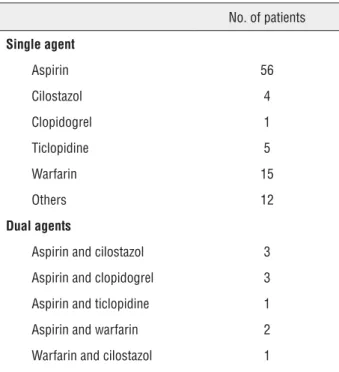
PSA level, total prostate volume, international nor-malized ratio (INR), biopsy cores, International Pros-tate Symptom Score (IPSS), body mass index (BMI), type of anesthesia, and DRE findings. The control group (group I) of 672 patients had never taken an-tithrombotic agents. Group II included patients who underwent TP biopsy while continuing antithrom-botic therapy (n=103), including 78 patients on an antiplatelet agent (56 on aspirin, 1 on clopidogrel, and 21 on another agent), 15 on an anticoagulant (warfarin), seven on dual antiplatelet agents, and three on both the antiplatelet and anticoagulant (Ta-ble-2). Because the number of patients taking anti-coagulant was too small to analyze, we combined those patients with the antiplatelet group, although these drugs have different mechanisms of action and produce a different biologic response. In group III (n=36), antithrombotic therapy was interrupted in accordance with a decision by the attending phy-sician or at the patient’s request. These agents were discontinued 7–10 days before TP biopsy and were resumed 1–2 days after completion of the procedure.
Biopsy protocol
A cleaning enema was administered before TP biopsy. For antimicrobial prophylaxis,
levofloxa-cin (500mg) or tosufloxalevofloxa-cin (300mg) was orally ad-ministered before the procedure. In general, the biop-sy protocol included a standard biop-systematic 14-core scheme, as described by Kawakami et al. (Figure-1) (15). When abnormal findings were observed du-ring pre-biopsy MRI or TRUS, additional targeted biopsies were performed. With the patient in the lithotomy position, the prostate gland was ima-ged using an ultrasound machine (ALOKA SSD- 2000, Aloka, Tokyo, Japan) equipped with a bi-planar 5/7.5-MHz TR probe (ALOKA UST- 672), and TRUS-guided TP biopsy was performed using a disposable 18-gauge needle (C.R. Bard, Inc., Covington, GA, USA). TP biopsy was performed using local anesthesia consisting of 1% lidocaine (n=756) as described previously (16), spinal anes-thesia (n=52), or general anesanes-thesia (n=3). Biopsies were performed by experienced urologists (6 sur-geons, mean experience of 17 years, range 6-32 years). After the procedure, the patients were hos-pitalized for 1 day to monitor and for treatment of any complications (i.e. acute urinary retention, hematuria or fever).
Morbidity assessment
All patients were evaluated around 2 we-eks after the TP biopsy at the first outpatient visit, during which they were asked about the inciden-ce of bleeding-associated events and other com-plications. Bleeding-associated events included gross hematuria, perineal hematoma, and rectal bleeding. These events noticed at least once were included. Gross hematuria was defined as passing blood or red urine. Perineal hematoma was defi-ned as a non-pulsatile mass >1.5cm in diameter diagnosed by visual examination and palpation of the perineum. Rectal bleeding was defined as the passage of bright blood on or in the stool due to needle penetration through the rectum. The inci-dence of hematospermia was not evaluated due to lack of data.
Overall complications were graded as follows: grade 1 (need for hospital admission wi-thout medication), grade 2 (need for any type of intervention including medication, catheterization or blood transfusion), or grade 3 (life-threatening complications resulting in intensive care unit ma-nagement or death).
Table 2 - The detail of continuing anti-thrombotic agents.
No. of patients
Single agent
Aspirin 56
Cilostazol 4
Clopidogrel 1
Ticlopidine 5
Warfarin 15
Others 12
Dual agents
Aspirin and cilostazol 3
Aspirin and clopidogrel 3
Aspirin and ticlopidine 1
Aspirin and warfarin 2
Statistical analysis
Comparisons between the three groups were performed using the Mann-Whitney U test or Kruskal-Wallis test for continuous variables and the chi-square test or Fisher’s exact test for categorical variables. Univariate logistic regres-sion analysis was used to identify the individual clinical factors predictive of hemorrhagic compli-cations.
Given the non-randomized nature of the study, we used propensity score matching (PSM) analysis to compare hemorrhagic events and com-plications between groups I and II for determining the risk of continuing antithrombotic agents du-ring TP biopsy. Group III was excluded from the analysis as it was difficult to precisely assess the relationship between resumption of antithrombo-tic agents and hemorrhagic complications. PSM was applied to correct for potential selection bias and to adjust for differences in baseline clinical characteristics. To derive the propensity score in
this study, patient characteristics were entered into a logistic regression model. We used the gre-edy nearest-neighbor matching method within a caliper of 0.2 of the standard deviation (17, 18). Matching factors included age, BMI, DRE findings, PSA level, total prostate volume, INR, IPSS, and type of anesthesia.
Statistical analyses were performed using JMP 9.0.2 (SAS Institute Inc., Cary, NC, USA) and the R 2.15.2. statistical system (R Foundation for Statistical Computing, Vienna, Austria). All P-va-lues <0.05 was considered statistically significant.
RESULTS
Histological examination revealed the pre-sence of prostate cancer in 383 patients (47.2%). Of 383 patients, the biopsy Gleason score was 5-6 in 61 (16.4%) patients, 7 in 181 (48.5%) patients, and 8-10 in 131 (35.1%) patients. Table-1 lists the characteristics of controls, patients continuing antithrombotic agents, and the interrupted
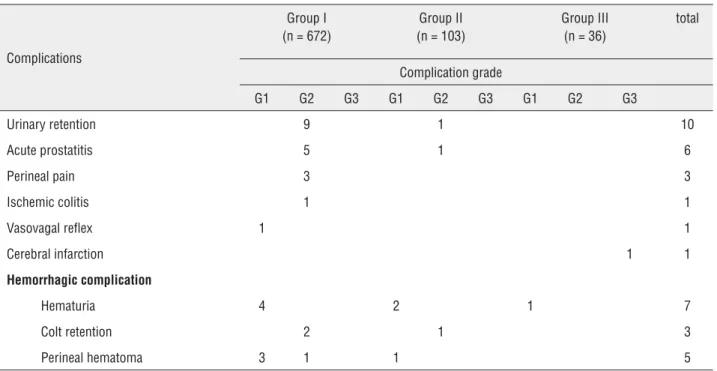
Table 3 - Incidence of complications among the three groups.
Complications
Group I (n = 672)
Group II (n = 103)
Group III (n = 36)
total
Complication grade
G1 G2 G3 G1 G2 G3 G1 G2 G3
Urinary retention 9 1 10
Acute prostatitis 5 1 6
Perineal pain 3 3
Ischemic colitis 1 1
Vasovagal reflex 1 1
Cerebral infarction 1 1
Hemorrhagic complication
Hematuria 4 2 1 7
Colt retention 2 1 3
Perineal hematoma 3 1 1 5
Table 4 - Incidence of bleeding associated events after PSM.
Group I (n = 84)
Group II (n = 84)
P-value
Gross hematuria 39 (46.4) 38 (45.2) 0.88
Perineal hematoma 0 (0) 2 (6.1) 0.15
Rectal bleeding 0 (0) 0 (0) 1.0
thrombotic agents groups before and after PSM. The matching analysis resulted in 84 well-ma-tched pairs of group I and II patients. There were no significant differences in the clinical variables among the 811 patients in the three groups, ex-cept for age, PSA level, INR, and DRE findings. In group II, higher age, longer INR, and more fre-quent abnormal DRE findings were observed.
Table-3 showed the incidence of compli-cations among the three groups. Of the 811 pa-tients included in this study, complications oc-curred in 37 patients (4.6%). Grade 1, 2, and 3 complications occurred in 12 (1.4%), 24 (2.9%), and one (0.1%) patients, respectively. The most frequent biopsy-related complication was urinary retention (1.2%). Although hemorrhagic
compli-cations occurred in 15 (1.8%) patients, many were grade 1 (73.3%) and no grade 3 complications oc-curred. One patient in group III whose aspirin tre-atment was interrupted 7 days before TP biopsy, was transferred to the emergency department 10 days after the procedure. The patient was diag-nosed with cerebral infarction requiring intensive care unit treatment.
Lastly, we evaluated the predictive factors for hemorrhagic complications in the 811 patients (Table-5). Univariate analysis revealed that he-morrhagic complications were significantly asso-ciated with a BMI <21kg/m2 (P=0.0058).
COMMENTS
We conducted a retrospective study inclu-ding 811 patients in whom TRUS-guided TP biop-sy was performed with or without continuation of antithrombotic agents during the procedure. Our study demonstrated that antithrombotic agents did not increase the frequency of bleeding-asso-ciated events or the risk of hemorrhagic complica-tions during TP biopsy.
An extended life span is accompanied by an increase in the incidence of prostate cancer among elderly patients with a history of cardio-vascular disease. Antithrombotic agents are rou-tinely administered to these patients to prevent thromboembolism. Until recently, antithrombotic agents were routinely interrupted before diagnos-tic prostate biopsy to avoid hemorrhagic com-plications; however, thromboembolism trigge-red by discontinuation of antithrombotic agents
may have life-threatening consequences. Of 36 patients in whom treatment with antithrombotic agents was interrupted in this study, cerebral in-farction occurred in one, who required treatment in the intensive care unit. Life-threatening risk of drug interruption-associated thromboembolism may prompt clinicians to not discontinue anti-thrombotic agents prior to prostate biopsy; howe-ver, the risk of drug continuation in relation to biopsy-related hemorrhagic complication remains to be determined.
The TP route has been less often employed than TR route because it appears more invasive than TR biopsy (19, 20). Recently, the introduc-tion of TRUS-guided extended TP biopsy incre-ased the use of the TP route because of its much lower risk of infection, rectal bleeding and po-tential for improved sampling from the anterior portion of the prostate, which may not be acces-sible via the TR route (21, 22). Although perineal hematoma is a TP biopsy-specific complication, severe cases requiring blood transfusion or en-doscopic intervention have not been reported. The absence of a free cavity between the prostate and perineum may be associated with a low he-morrhagic risk after TP biopsy.
Table 5 - Univariate logistic regression analysis for predicting the risk of hemorrhagic complications.
Variable Odds ratio (95% CI) P-value
Age, years (t70 vs <70) 1.48 (0.51-4.52) 0.47
PSA (t10 ng/mL vs. <10 ng/mL) 0.48 (0.11-1.52) 0.23
Total prostate volume (t30mL vs. <30mL) 1.74 (0.59-6.31) 0.35
INR (t1.04 vs. <1.04) 2.72 (0.97-7.85) 0.058
Biopsy cores (t15 vs. <15) N/A† 0.37
IPSS (t9 vs. <9) 0.23 (0.01-1.44) 0.18
BMI (<21 kg/m2 vs. t21 kg/m2) 4.52 (1.55-13.89) 0.0058
Local anesthesia (local vs. others) 1.04 (0.20-18.99) 0.97
Abnormal DRE 0.73 (0.24-2.68) 0.60
Continuing anti-thrombotic agent (yes vs no) 2.56 (0.70-7.65) 0.11
In the present study, hemorrhagic com-plications occurred in 1.8% of patients and most were self-remitting. According to the PSM analy-sis, no statistically significant difference was found in the incidence of gross hematuria, peri-neal hematoma, and rectal bleeding between con-trols (group I) and patients who continued anti-thrombotic agents (group II). Univariate analysis revealed that hemorrhagic complications were not associated with antithrombotic agents. These data indicate that hemorrhagic complications are rare after TP biopsy. Continued administration of an-tithrombotic agents does not increase the risk of hemorrhagic events or complications.
Our findings are consistent, in part, with the findings of Kariotis et al. (11), which indicated that younger patients with lower BMI receiving aspirin were at higher risk of developing hematu-ria after TR biopsy. It was assumed that patients with lower BMI were more sensitive to aspirin than obese patients (23). In this study, lower BMI (<21kg/m2) was associated with hemorrhagic
com-plications in all patients. This result suggests that patients with low BMI require careful attention and monitoring after TP biopsy.
This study has several limitations. First, this is a retrospective study, and although we uti-lized PSM analysis, this does not replace randomi-zation. Second, the sample size after PSM reduced. Among 103 patients with continued antithrombo-tic agents, only 84 were eligible for evaluation of the incidence of bleeding-associated events and hemorrhagic complications. A major weakness of PSM is the reduction in the number of participants to avoid poor matching pairs. Third, patient com-plications were not followed up for >2 weeks after the biopsy; thus, the possibility of late-onset com-plications cannot be ruled out.
CONCLUSIONS
Continued administration of antithrom-botic agents does not increase the risk of hemor-rhagic complications. It is not necessary to dis-continue antithrombotic agents during TP biopsy. Further multicenter prospective randomized con-trolled trials are needed to validate the safety of continuing antithrombotic treatment.
ABBREVIATIONS
BMI = body mass index
DRE = rectal examination
INR = international normalized ratio
IPSS = International Prostate Symptom Score
MRI = magnetic resonance imaging
PSA = serum prostate-specific antigen
PSM = propensity score matching
TP = transperineal
TR = transrectal
TRUS = transperineal ultrasound
CONFLICT OF INTEREST
None declared.
REFERENCES
1. Jemal A, Bray F, Center MM, Ferlay J, Ward E, Forman D. Global cancer statistics. CA Cancer J Clin. 2011;61:69-90. Erratum in: CA Cancer J Clin. 2011;61:134.
2. Connor SE, Wingate JP. Management of patients treated with aspirin or warfarin and evaluation of haemostasis prior to prostatic biopsy: a survey of current practice amongst radiologists and urologists. Clin Radiol. 1999;54:598-603. 3. Zhu JP, Davidsen MB, Meyhoff HH. Aspirin, a silent risk
factor in urology. Scand J Urol Nephrol. 1995;29:369-74. 4. Maulaz AB, Bezerra DC, Michel P, Bogousslavsky J. Effect of
discontinuing aspirin therapy on the risk of brain ischemic stroke. Arch Neurol. 2005;62:1217-20.
5. Wahl MJ. Myths of dental surgery in patients receiving anticoagulant therapy. J Am Dent Assoc. 2000;131:77-81. 6. Metersky ML, Nathanson I. Introducing the future of ACCP
Clinical Practice Guidelines. Chest. 2012;141:285-6. 7. Maan Z, Cutting CW, Patel U, Kerry S, Pietrzak P, Perry MJ, et
al. Morbidity of transrectal ultrasonography-guided prostate biopsies in patients after the continued use of low-dose aspirin. BJU Int. 2003;91:798-800.
8. Ihezue CU, Smart J, Dewbury KC, Mehta R, Burgess L. Biopsy of the prostate guided by transrectal ultrasound: relation between warfarin use and incidence of bleeding complications. Clin Radiol. 2005;60:459-63; discussion 457-8.
10. Halliwell OT, Yadegafar G, Lane C, Dewbury KC. Transrectal ultrasound-guided biopsy of the prostate: aspirin increases the incidence of minor bleeding complications. Clin Radiol. 2008;63:557-61.
11. Kariotis I, Philippou P, Volanis D, Serafetinides E, Delakas D. Safety of ultrasound-guided transrectal extended prostate biopsy in patients receiving low-dose aspirin. Int Braz J Urol. 2010;36:308-16.
12. Raheem OA, Casey RG, Galvin DJ, Manecksha RP, Varadaraj H, McDermott T, et al. Discontinuation of anticoagulant or antiplatelet therapy for transrectal ultrasound-guided prostate biopsies: a single-center experience. Korean J Urol. 2012;53:234-9.
13. Carmignani L, Picozzi S, Bozzini G, Negri E, Ricci C, Gaeta M, et al. Transrectal ultrasound-guided prostate biopsies in patients taking aspirin for cardiovascular disease: A meta-analysis. Transfus Apher Sci. 2011;45:275-80.
14. Chowdhury R, Abbas A, Idriz S, Hoy A, Rutherford EE, Smart JM. Should warfarin or aspirin be stopped prior to prostate biopsy? An analysis of bleeding complications related to increasing sample number regimes. Clin Radiol. 2012;67:e64-70.
15. Kawakami S, Kihara K, Fujii Y, Masuda H, Kobayashi T, Kageyama Y. Transrectal ultrasound-guided transperineal 14-core systematic biopsy detects apico-anterior cancer foci of T1c prostate cancer. Int J Urol. 2004;11:613-8.
16. Kubo Y, Kawakami S, Numao N, Takazawa R, Fujii Y, Masuda H, et al. Simple and effective local anesthesia for transperineal extended prostate biopsy: application to three-dimensional 26-core biopsy. Int J Urol. 2009;16:420-3. 17. Rosenbaum PR, Rubin DB. Constructing a control group
using multivariate matched sampling methods that incorporate the propensity score. The American Statistician 1985;39: 33-8.
18. D’Agostino RB Jr. Propensity score methods for bias reduction in the comparison of a treatment to a non-randomized control group. Stat Med. 1998;17:2265-81. 19. Noguchi M, Matsuoka K, Koga H, Kanetake H, Nakagawa
M, Naito S. A questionnaire survey of patient preparation and techniques for prostate biopsy among urologists in the Kyushu and Okinawa regions of Japan. Int J Clin Oncol. 2006;11:390-5.
20. Shandera KC, Thibault GP, Deshon GE Jr. Variability in patient preparation for prostate biopsy among American urologists. Urology. 1998;52:644-6.
21. Chun FK, Epstein JI, Ficarra V, Freedland SJ, Montironi R, Montorsi F, et al. Optimizing performance and interpretation of prostate biopsy: a critical analysis of the literature. Eur Urol. 2010;58:851-64.
22. Kawakami S, Yamamoto S, Numao N, Ishikawa Y, Kihara K, Fukui I. Direct comparison between transrectal and transperineal extended prostate biopsy for the detection of cancer. Int J Urol. 2007;14:719-24.
23. Greenblatt DJ, Abernethy DR, Boxenbaum HG, Matlis R, Ochs HR, Harmatz JS, et al. Influence of age, gender, and obesity on salicylate kinetics following single doses of aspirin. Arthritis Rheum. 1986;29:971-80.