CLINICAL MANIFESTATIONS OF PERIPHERAL NERVOUS
SYSTEM INVOLVEMENT IN HUMAN CHRONIC CHAGAS DISEASE
OSVALDO GENOVESE*, CARLOS BALLARIO* *, RUBEN STORINO***, ELSA SEGURA * * *, ROBERTO E. R. SICA *
ABSTRACT - We conducted a clinical and electromyographical study in patients with Chagas' disease in the indeterminate or chronic stages of the illness. Altogether 841 patients were examined. Only 511 were admitted within the protocol; the remainder patients were rejected because they showed other causes able to damage the nervous system. Fifty two (10.17%) out of the 511 patients showed signs and symptoms of peripheral nervous system involvement in the form of sensory impairment and diminished tendon jerks suggesting the presence of neuropathy. Forty five of them were submitted to a conventional electromyographical examination. Fifteen of mem showed normal results, while the remainder 30 disclosed a reduced interference pattern, being most of the remaining motor unit potentials fragmented or poliphasic, reduced sensory and motor conduction velocities and diminished amplitude of the sensory action potential. The findings suggest that some chagasic patients in the indeterminate or chronic stages of the disease may develop a clinical mild sensory-motor peripheral neuropathy.
K E Y WORDS: Chagas* disease, neuropathy, clinical assessment.
Manifestaciones clinicas de compromiso del sistema nervioso periférico en el estádio crônico de la enfermedad de Chagas
RESUMEN - El estúdio presente fue diseftado con ei objeto de pesquizar Ia existência de manifestaciones clinicas en pacientes afectados por enfermedad de Chagas, en estádio indeterminado o crônico, que tuviesen, ai menos, 2 reacciones serologicas positivas. En total fueron examinados 841 enfermos. De ellos solo 511 fueron admitidos en ei protocolo; los restantes fueron rechazados por mostrar Ia presencia de otras causas que hubiesen podido danar su sistema nervioso. Dentro de los 511 pacientes admitidos, 52 (10.17%) evidenciaron alteraciones objetivas y subjetivas de Ia sensibilidad y disminucion de los reflejos osteotendinosos. Estos signos y sintomas, que sugieren la presencia de neuropatia, podian combinarse de diferente manera. Como complemento dei examen clinico, se efectuo estúdio electromiografico convencional en 45 de estos pacientes. En 15 los hallazgos fueron normales, en tanto que en los restantes 30 pudo demostrarse reduccion de la capacidad de reclutamiento voluntário de unidad motora, presencia de potenciales de unidad motora fragmentados o polifasicos, reduccion de la velocidad de conduccion motora y sensitiva y disminucion de la amplitud dei potencial sensitivo. Los resultados obtenidos sefialan que una proporcion de los pacientes en el estádio indeterminado o crônico de la infeccion pueden desarrollar una moderada neuropatia sensitivo-motora con expresion clinica.
PALABRAS-CHAVES: enfermedad de Chagas, neuropatia, evaluacion clinica.
Peripheral nervous system involvement in chronic Chagas disease has been found in humans3
-5
-141
* and in experimental animals7
"1 3
'2 1
-2 2
by employing electrophysiological and anatomical techniques. However, clinical peripheral neurological manifestations have been seldom described in the literature'-2
. Most of those papers refer to single or, at most, few cases without a systematic searching of this compromise in the infected population.
Division Neurologia, Hospital Ramos Mejia, Universidad de Buenos Aires, Buenos Aires (*), Hospital Centenário, Universidad de Rosário, Rosário, Santa Fe (**); Instituto para el Diagnostico y Tratamiento de la Enfermedad de Chagas Dr. Fatala Chaben, Buenos Aires (***). Aceite: 24-Janeiro-1996.
The aim of this paper is to present the results obtained in a large series of patients with chronic Chagas' disease, looking for clinical signs and/or symptoms of peripheral nervous system damage. Preliminary and partial results have been published elsewhere6
.
MATERIAL AND METHODS
Eight hundred and forty one patients were examined during the last 3 years in the Chagas disease out-patient clinics at the Ramos Mejia and Centenário Hospitals at Buenos Aires and Rosário respectively. For avoiding inter-observer subjective variability the clinical examination in every patient was carried on only by 2 observers, O.G. at Buenos Aires and C.B. at Rosário.
The criteria for being included within the protocol were: a. Both sexes with age below 60 years'9
.
b. Positivity of at least 2 out of 3 serological diagnostic tests for Chagas' disease. c. Patients should have not received trypanosomicides drugs at any time previously.
d. Patients should have not been affected by any other disease able to damage the central or peripheral nervous systems at any time previously.
e. Patients should not be or have been in contact with toxics able to yield central or peripheral nervous systems involvement.
Three hundred and thirty (39%) patients were discarded because the following reasons: a. More than 60 years of age (n:20).
b. To show only one positive diagnostic serological test for Chagas' disease (n: 11). c. To have been treated with trypanosomicide drugs (n:18)
d. To have been afflicted by diseases able to damage the nervous system [leprosy (n:2), arthritis (n:2), diabetes (n:19), chronic renal failure (n:2), tuberculosis treated with isoniazid (n:8), severe depression on treatment (n:5), backpain or neckpain (n:ll), multiple trauma with peripheral nervous system involvement (n:l), stroke (n:3), electrical shock (n:l), parkinsonism (n:l), cysticercosis (n:l), brucellosis (n:l), hypothyroidism (n:6), poliomyelitis (n:2), neoplasms (n:2) and periodic paralysis (n:l)]
e. To have been in contact with toxics able to damage the nervous system [more than 40 g of alcohol daily (n: 146), organophosphate poisonings (n: 11), amiodarona (n: 16), Pb (n: 17), CO (n:2), diphenylhydantoin (n:5), snake bite (n:l), steroids (n:3), oil derivatives (n:9) and cocaine (n:2)].
Two hundred and twenty eight (44.6%) out of the remaining 511 patients were females and 283 (55.4%) were males. Their mean age was 36.9 +10.88 years, ranging between 18 and 59 years.
Seventy nine percent of these patients lived in rural areas, the remaining 21% inhabited small towns.
Seventy seven percent of them had mud brick houses, while the other 23% owned regular brick built houses.
Only 10% of the patients were aware about having been bitten by the Triatoma, developing a focal inflammatory lesion at the site of the sting. This was considered a definitive sign of primary infection.
Twenty nine percent of them knew that some of his/her relatives were also infected, 62% did not, and 9% knew that his/her relatives have been studied and proved not to be infected.
The areas where the patients came from and their percentages were as follows:
a. Provinces: Santiago del Estero (24%), Chaco (15%), Buenos Aires (10%), Tucuman (6%), Corrientes (5%), Cordoba (5%), Salta (3%), Jujuy (3%), Catamarca (3%), Entre Rios (2%), San Luis (2%), La Rioja (2%), Misiones (2%), Santa Fe (2%), Formosa (1%), L a Pampa (1%), San Juan (1%), Rio Negro (0.5%), Mendoza (0.5%).
b. Federal District (3%).
c. Neighboring Countries: Bolivia (5%), Paraguay (3%), Uruguay (0.5%), Chile (0.5%).
Patients were submitted to a clinical neurological protocol mainly designed to demonstrate involvement of the peripheral nervous system, though a complete neurological examination was carried on, searching for any central nervous system damage.
Fifty two (10.17%) out of the 511 patients admitted within the protocol showed one or more clinical neurological manifestation pointing out peripheral nervous system damage.
Sensory abnormalities, as expressed by paresthesias, touch and pain hyposthesia and vibration sense impairment were the main sensory findings (67.3%).
Diminished tendon jerks was often found in these patients (80.76%).
By combining the symptoms and signs observed, patients could be grouped "as follows: A. Only sensory abnormalities, 10 patiens (19.23%)
B. Only diminished tendon jerks, 17 patiens (32.69%)
C. Sensory abnormalities and diminished tendon jerks, 25 patients (48.07%).
The clinical features of all patients showing involvement of the peripheral nervous system are summarized in Figure 1. The mean age of this group was 35.5±10.15 years which did not differ significantly from the whole population age.
Sensory impairment, in the form of paresthesia and/on diminished sensation on pinprick and touch, was one of the most usual manifestation (67.3% of the affected subjects). Its distribution was variable; it was more frequently found in the lower limbs (28.84% of the affected subjects), though it could involve the four limbs (36.5%) and seldom was confined to the upper limbs (1.9%). Vibration sense impairment was present only in the lower limbs in 4 patients (7.7%).
Tendon reflexes were diminished in 80.76% of the patients, either in isolation or combined with sensory impairment. The most affected were the patellar and achilles reflexes.
No overt weakness was noted in any patient.
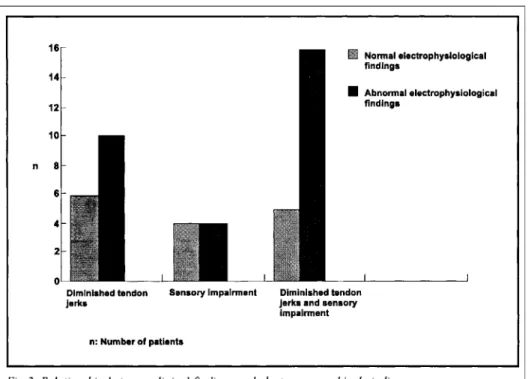
Fig 3. Relationship between clinical findings and electromyographical studies.
rence pattern and nerve conduction defects (19 patients); muscles mainly involved were the distal ones of the lower limbs. Figure 3 shows the relationship between the clinical and electrophysiological data. It can be seen that the electrophysiological abnormalities were present mainly in those patients who combined diminished tendon jerks and sensory impairment.
Sample validation - The number of patients in this study is about 0.022% of the total infected
population within the Country4
. They have been accepted into the protocol unselectively, constituting a random sample of those who have attended the Instituto para el Diagnostico y Tratamiento de la Enfer-medad de Chagas in Buenos Aires or el Centro de Diagnostico para la EnferEnfer-medad de Chagas of the Hospital Centenário in Rosário between 1991 and 1994 . The geographical percentual origin of these patients is in line with the prevalence of the disease in the different areas of the Country where the
patients came from2
". Bias yield by other pathologies have been avoided as much as possible by excluding those patients with any suspicion of having been affected by diseases, infections, accidents or toxics which might have damaged their nervous system. Also the fact that the same observer, one in each clinic, always performed the clinical examination minimized subjectivity in recording data.
Methods justification - The methodology employed for investigating these patients is the
usual in any neurological clinic; this is also true for the electromyographic searching. The reason for adopting these methods was that this attitude allows any neurologist to recognize the peripheral nervous system damage in chronic Chagas' disease patients in routine clinical and electromyo-graphical examinations which may be done anywhere and in field studies. Both of them are very easy procedures and also very cheap, because the basic electromyographical machine needed should be provided just with a one channel recording system and a single pulse stimulator.
It is a well known feature that Chagas' disease may involve the peripheral nervous system in
chronic infected patients31618
or in the chronic infected mouse experimental model7,9
was achieved employing electrophysiological and anatomical techniques for investigating humans and mice. However, even now it is not known which are the clinical implications of this compro-mise. The present survey has been conducted for searching such clinical involvement in a representative sample of patients with chronic Chagas' disease.
From the clinical viewpoint it was found that 10.17% of the patients chronically infected with T. cruzi had signs and/or symptoms of peripheral nervous system involvement. Most of the affected subjects showed a combination of sensory impairment and diminished tendon jerks. Both features suggest the presence of neuropathy, which mainly involve the lower limbs. This observation is in line with features previously disclosed in the experimental model, where it was found that the mice lower limbs and the spinal lumbar cord were the most affected structures712
.
The paramount manifestations of this neuropathy were the sensory disturbances. It is worthy to note that weakness was not noted in these patients. The sensory impairment predominance also is in line with findings of previous studies where it was observed, electrophysiologically, overt compromise of sensory fibres16
and mild involvement of motor axons1 7
. In the present investigation the figures obtained electrophysiologically showed a prominent damage of the sensory fibres.
The type of the neuropathy observed deserves some considerations. The slowness of conduction velocities in sensory and motor fibres suggest demyelination, though no signs of conduction block were found. However, the diminished amplitude of the sensory action potential and the muscle reduced voluntary interference pattern also signal axonal loss. Most probably both types of lesions are combined. These conclusions are also supported by earlier works where axonal loss, segmental and paranodal demyelination were described in the sural nerves of patients with this condition16
and in the sciatic nerve of mice experimentally infected9
.
In the present investigation we have not found clinical evidences of spinal motoneurones damage. However, their involvement was suggested by the presence of some polyphasic enlarged amplitude motor unit potentials in patients with a electromyographical reduced voluntary interference pattern. This observation is not a new one, because it was described previously in humans3 1 8
and agrees with the findings of Molina et al.1 2
who showed reduced number of large motoneurones in the spinal anterior horn of mice chronically infected with the Tulahuen strain of the T. cruzi. A likely explanation for these apparently at variance clinical results is that the amount of motoneurones involved does not reached the levels needed to give overt clinical manifestations.
Taken together, the present findings signal that about 10% of the subjects chronically infected may develop a predominantly sensory neuropathy which is mild enough as not to preclude the patients for doing their current toils. However, a shortcoming of this study is that it constitutes a transversal analysis and gives no clues of the outcome of the affected subjects. From mice studies, it is known that the damage of the peripheral nervous system may progress along time9
. Therefore, it is warranted to proceed this investigation further obtaining data on the follow-up of the symptomatic subjects.
REFERENCES
1. Chagas C. Les formes nerveuses d'un nouvelle trypanosomyase, T. Cruzi inocule par Tryatoma Megista. Nouv Iconogr Sapetriere 1913;26:1-10.
2. Collares-Moreira JV. A forma nervosa da moléstia de Chagas. Thesis, Faculdade de Medicina de Rio de Janeiro. Rio de Janeiro, 1925.
3. De Faria CR, Melo Souza SE, Rassi A. Evidencias eletromiograficas de desnervacao motora em pacientes na fase crônica da doença de Chagas. Rev Goiana Med 1977;23:125-130.
4. Esquivei M, Segura E. Estimacion dei numero de infectados chagasicos en Ia Argentina (carta al Editor). Medicina 1994;54:91-92.
5. Garcia Erro M, Genovese O, Correale J , Sica RER Neuromuscular transmission studies in human chronic Chagas' disease. Arq Neuropsiquiatr 1989;47:279-282.
7. Gonzalez Cappa SM, Sanz OP, Muller LA, Molina HA, Fernandez J , Rimoldi MT, Sica REP. Peripheral nervous system damage in experimental chronic Chagas' disease. Am J Trop Med Hyg, 1987;36:41-45. 8. Koberle F, Alcantara F. Mecanismo de destruição neuronal do sistema nervoso na moléstia de Chagas.
Hospital 1960;57:1057-1060.
9. Losavio A, Jones M, Sanz OP, Mirkin G, Gonzalez Cappa SM, Muchnik S, Sica REP. A sequential study of the peripheral nervous system involvement in experimental Chagas' disease. Am J Trop Med Hyg
1989;41:539-546.
10. Losavio A, Sica REP, Sanz OP, Mirkin G, Gonzalez Cappa SM, Muchnik S. Functional changes of the sciatic nerve in mice chronically infected with Trypanosoma cruzi. Medicina 1993;53:129-132. 11. Mirkin G, Jones M, Sanz OP, Rey RD, Sica REP, Gonzalez Cappa SM. Experimental Chagas' disease:
electrophysiology and cell composition of neuromyopatic inflammatory lesions in mice infected with myotropic and pantropic strains of Trypanosoma cruzi. Clin Immunol Immunopathol 1994;73:69-79. 12. Molina HA, Cardoni R, Rimoldi MT. The neuromuscular pathology of experimental Chagas' disease. J
Neurol Sci 1987;81:287-291.
13. Said G, Joskowits M, Barreira A, Eisen H. The neuromuscular pathology of experimental Chagas' disease. Ann Neurol, 1985;18:676-681.
14. Sanz OP, Ariustimufto G, Ratusnu AF, O'Neill E, Sica REP. An electrophysiological investigation of skeletal muscle in human chronic Chagas' disease. Arq Neuropsiquiatr 1978;36:319-326
15. Sanz OP, Ratusnu AF, Aristimufío G, O'Neill E, Sica REP. Despoblacion de neuronas motoras alfa en la enfermedad de Chagas crônica. Medicina, 1977;37:551.
16. Sica REP, Filipini D, Panizza M, Fumo T, Basso S, Lazzari J , Molina HA. Involvement of the peripheral sensory nervous system in human chronic Chagas' disease. Medicina, 1986;46:662-669.
17. Sica REP, Genovese O, Garcia Erro M. Peripheral motor nerve conduction studies in patients with chronic Chagas' disease. Arq Neuropsiquiatr 1991;49:405-408.
18. Sica REP, Sanz OP, Aristimufío G, Basso S, Fumo T, Pagano M, Taratuto A, Ratusnu AF, Colombi A. Muscle denervation in chronic Chagas' disease. Medicina 1979;39:579-588.
19. Sica REP, Sanz OP, Colombi A. The effects of aging upon the human soleus muscle: an electrophysiological study. Medicina, 1976;36:443-448.
20. Storino R, Barragan H. Epidemiologia. In Storino R, Milei J (eds). Enfermedad de Chagas. Buenos Aires: J . Mosby 1994.
21. Vichi FL. Moléstia de Chagas experimental: parasitismo na cadeina ganglionar simpática, medula espinal, gânglio raquideano, e musculatura estriada. Hospital 1963;64:131-138.