Cytogenetically Normal AML
Friederike Pastore1,2,3,4*, Philipp A. Greif1,2,3,4, Stephanie Schneider1, Bianka Ksienzyk1, Gudrun Mellert1, Evelyn Zellmeier1, Jan Braess5, Cristina M. Sauerland6, Achim Heinecke6, Utz Krug7, Wolfgang E. Berdel7, Thomas Buechner7, Bernhard Woermann8, Wolfgang Hiddemann1,2,3,4, Karsten Spiekermann1,2,3,4
1Laboratory for Leukemia Diagnostics, Dept. of Internal Medicine III, University Hospital Munich Großhadern, Ludwig-Maximilian-University (LMU), Munich, Germany, 2Clinical Cooperative Group Pathogenesis of Acute Myeloid Leukemia, Helmholtz Zentrum Mu¨nchen, German Research Center for Environmental Health, Munich, Germany,3German Cancer Consortium (DKTK), Heidelberg, Germany,4German Cancer Research Center (DKFZ), Heidelberg, Germany,5Dept. of Oncology and Hematology, Krankenhaus Barmherzige Bru¨der, Regensburg, Germany,6Institute of Biostatistics and Clinical Research, University of Muenster, Muenster, Germany, 7Dept. of Internal Medicine A, Hematology and Oncology, University of Muenster, Muenster, Germany,8German Society of Hematology and Oncology, Berlin, Germany
Abstract
NPM1mutations represent frequent genetic alterations in patients with acute myeloid leukemia (AML) associated with a
favorable prognosis. Different types ofNPM1mutations have been described. The purpose of our study was to evaluate the relevance of different NPM1 mutation types with regard to clinical outcome. Our analyses were based on 349NPM1 -mutated AML patients treated in the AMLCG99 trial. Complete remission rates, overall survival and relapse-free survival were not significantly different between patients withNPM1type A or rare type mutations. TheNPM1mutation type does not seem to play a role in risk stratification of cytogenetically normal AML.
Citation:Pastore F, Greif PA, Schneider S, Ksienzyk B, Mellert G, et al. (2014) TheNPM1Mutation Type Has No Impact on Survival in Cytogenetically Normal AML. PLoS ONE 9(10): e109759. doi:10.1371/journal.pone.0109759
Editor:Ralf Krahe, University of Texas MD Anderson Cancer Center, United States of America
ReceivedApril 26, 2014;AcceptedSeptember 6, 2014;PublishedOctober 9, 2014
Copyright:ß2014 Pastore et al. This is an open-access article distributed under the terms of the Creative Commons Attribution License, which permits unrestricted use, distribution, and reproduction in any medium, provided the original author and source are credited.
Data Availability:The authors confirm that, for approved reasons, some access restrictions apply to the data underlying the findings. The data cannot be made available in a public repository due to ethical restrictions (case sensitive private patient data). The data can be made available upon request, and requests may be sent to the corresponding author.
Funding:The authors have no support or funding to report.
Competing Interests:The authors have declared that no competing interests exist.
* Email: [email protected]
Introduction
The gene encoding nucleophosmin (NPM1), a nucleo-cytoplas-matic shuttling protein with prominent nucleolar localization is located on 5q35.1 and contains 12 exons.NPM1is involved in epigenetic control (binding of nucleic acids, centrosome duplica-tion), ribosomal protein assembly as molecular chaperon and regulation of the ARF-p53-tumor suppressor pathway [1,2].
NPM1 mutations can be found in 35% of patients with cytogenetically normal acute myeloid leukemia (AML). They are associated with a favorable prognosis in the absence of an additional internal tandem duplication in the fms-related tyrosine 3 gene (FLT3-ITD), female gender, high white blood count (WBC), high amount of bone marrow blasts as well as a high platelet count [1].
In the vast majority of cases NPM1 mutations result in a frameshift due to an insertion of four bases, which cluster in exon 12. Different types of NPM1 mutations have been described according to the inserted tetranucleotide, the most common being type A mutations (TCTG) in 80%, followed by type B (CATG) and type D (CCTG) mutations in about 10%, and a spectrum of other mutations accounting for 10% of cases. In rare cases, insertions from 2 to 9 bases can occur (e.g. types E, F) [1].
The alteredNPM1protein (NPM1c+) contains an additional C terminal nuclear export signal (NES) motif and loses at least one
tryptophan residue, causing an aberrant cytoplasmatic localization of the protein [3].
Little is known about the prognostic relevance of the variable
NPM1mutation types. InFLT3-ITDnegative patients, a Korean study found an adverse impact on overall survival (OS) and duration of complete remission (CR) inNPM1 mutations other than type A [4]. InFLT3-ITD positive patients, another recent study reported an adverse OS in NPM1 type A mutations [5] whereas - in contrast to Koh et al. - they did not observe an effect ofNPM1mutation type inFLT3-ITDnegative patients.
We aimed at studying the clinical relevance ofNPM1mutation types on prognosis in a large homogeneously treated cohort of cytogenetically normal AML patients.
Patients and Methods
Patients
Our analyses were based on a total of 783 patients with newly diagnosed cytogenetically normal AML treated within the randomized multicenter German AML Cooperative Group 99 (AMLCG99) trial comparing a double induction therapy with thioguanine, cytarabine and daunorubicin (TAD) and high dose mitoxantrone (HAM) versus HAM-HAM [6].
obtained from all patients in accordance with the Declaration of Helsinki.
Cytogenetic and molecular analyses
All cytogenetic and molecular analyses were performed on bone marrow aspirates. Cytogenetic analyses were based on the assessment of at least 20 metaphases and performed according to the international system of cytogenetic nomenclature (ISCN) guidelines [7]. Mutations of NPM1 [1], FLT3-ITD [8], the
FLT3-ITDmRNA level [9,10],CEBPA[11,12], were analyzed as previously described. The nomenclature of theNPM1 mutation type was performed according to the literature [1,13,14].NPM1
mutations other than type A mutations were grouped together as
rare type mutations (NPM1-rare), NPM1mutations other than type A, B or D were grouped together as other mutations (NPM1 -other).
Outcome Parameters
OS was calculated from the date of randomization until death from any cause. Surviving patients were censored at the date of last follow-up. Relapse-free survival (RFS) was determined for responders from the first day of CR until relapse or death from any cause. Patients in CR that did not experience a relapse were censored at the last disease assessment.
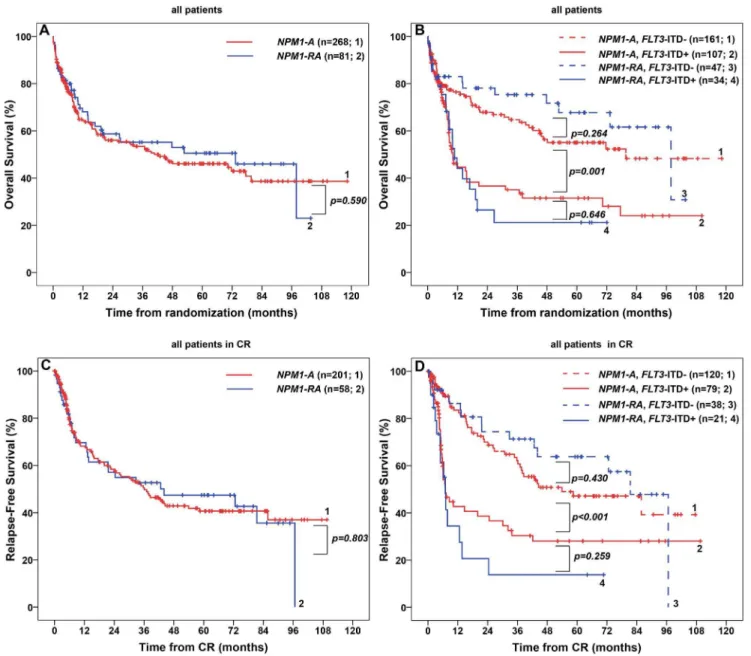
Figure 1. Overall Survival (OS) and Relapse-Free Survival (RFS) in 349 patients with cytogenetically normal acute myeloid leukemia
andNPM1mutation treated in the AMLCG99 study.(A) OS in patients withNPM1type A mutation versusNPM1rare type mutation. (B) OS in
patients withNPM1type A mutation versusNPM1rare type mutation with or without an additionalFLT3-ITD. (C) RFS in patients withNPM1type A mutation versusNPM1rare type mutation. (D) RFS in patients withNPM1type A mutation versusNPM1rare type mutation with or without an
additionalFLT3-ITD.Abbreviations: CR, complete remission;FLT3-ITD+, presence of an internal tandem duplication in the fms-related tyrosine 3 gene;FLT3-ITD-, absence of an internal tandem duplication in the fms-related tyrosine 3 gene;NPM1-A, mutation in the nucleophosmin gene
For patients who had undergone allogeneic transplantation according to the study protocol, OS and RFS times were censored at the time of transplantation.
Statistical Analysis
Continuous characteristics between patient groups were com-pared using the Mann-Whitney U test for 2 groups and the Kruskal-Wallis test for 3 groups. Thex2-test for was applied for categorical variables. Kaplan-Meier estimation for OS and RFS was performed comparingNPM1-mutated patients with a type A mutation (NPM1-A) versusNPM1-mutated patients with another type ofNPM1mutation (rare type: NPM1-RA) as well as both groups combined with either FLT3-ITD or withoutFLT3-ITD. In a second analysis, patients withNPM1mutations types A, B and D were analyzed independently and compared to patients carrying other mutations than A, B and D who were grouped together as ‘‘NPM1- other’’.
Hazard ratios and 95% confidence intervals between the different groups were estimated by Cox regression analyses.
Independent prognostic parameters for OS and RFS were identified by univariable Cox regression analyses and a multivar-iable Cox regression model using backward elimination with an exclusion significance level of 5%. For all analyses, a p-value,0.05 was considered significant. For the estimation of the median follow-up time, the reversed Kaplan-Meier method was applied [15].
Results
Patient characteristics
Analyses were performed in 349 NPM1-mutated patients of 667 patients with CN-AML treated within the AMLCG99 trial, after exclusion of 106 patients without information of theNPM1
mutation status. For an overview of patient selection, please refer toFigure S1 in File S1.
Out of 349 patients, 16% underwent allogeneic stem cell transplantation in first CR. Median follow-up for OS was 45.3 months. Median OS was 45.6 months with 151 events. In 74% of patients who achieved a CR, median RFS was 37.1 months with 115 events.
Patient characteristics are summarized inTable S1 in File S1. The selected 677 patients from whom the 349 NPM1-mutated patients were analyzed displayed similar patient characteristics and outcome (OS and RFS, not significantly different) as the unselected patients.
The majority of patients (77%) carried NPM1 type A mutations, followed by 9% with NPM1 type D, 5% with
NPM1type B mutations and 2% withNPM1type I mutations. All other mutations occurred in #1% of patients (Table S2 in File S1).
NPM1mutation type does not influence outcome
A) NPM1 mutation type A versus rare type mutations. We did not observe any significant difference between patients with NPM1 type A and rare mutations in clinical or molecular parameters, in particular, there was no difference regarding OS and RFS (Figures 1A and 1C, Table S1 in File S1).
In patients withNPM1mutation (NPM1+), the presence of an
FLT3-ITD (FLT3-ITD+) caused significant changes in WBC, LDH level, amount of bone marrow blasts and a decrease in OS and RFS compared to patients withoutFLT3-ITD (FLT3-ITD-) (Figure S2 in File S1). Table
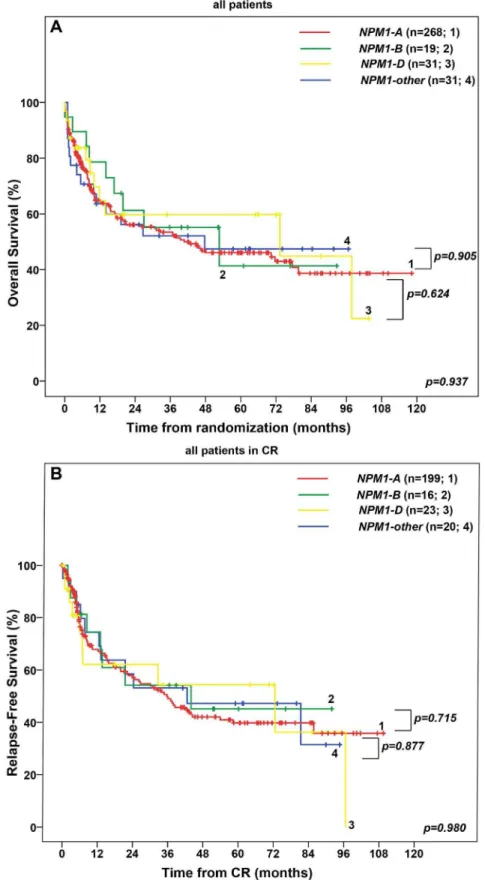
Figure 2. Overall Survival (OS) and Relapse-Free Survival (RFS) in 349 patients with cytogenetically normal acute myeloid leukemia
andNPM1mutation treated in the AMLCG99 study.(A) OS in patients withNPM1type A mutation versusNPM1type B mutation versusNPM1
type D mutation versusNPM1type other mutation. (B) RFS in patients withNPM1type A mutation versusNPM1type B mutation versusNPM1type D mutation versusNPM1type other mutation.Abbreviations: CR, complete remission;FLT3-ITD+, presence of an internal tandem duplication in the
fms-related tyrosine 3 gene;FLT3-ITD-, absence of an internal tandem duplication in the fms-related tyrosine 3 gene;NPM1-A, mutation in the nucleophosmin gene consisting of an insertion of the tetranucleotide TCTG;NPM1-B, mutation in the nucleophosmin gene consisting of an insertion
of the tetranucleotide CATG,NPM1-D, mutation in the nucleophosmin gene consisting of an insertion of the tetranucleotide CCTG,NPM1-other,
We did not observe any difference in patient characteristics, OS or RFS between NPM1-A/FLT3-ITD- versus NPM1-RA/
FLT3-ITD- patients (Figure 1B and 1D, Table S1 in File S1). Similar results were obtained for NPM1-A/FLT3-ITD+ versusNPM1-RA/FLT3-ITD+ patients, except for WBC which was higher in the rare type group (p = 0.005).
In multivariable Cox regression analysis, parameters with independent adverse impact on OS and RFS were older age, a high WBC and the presence of anFLT3-ITD. Importantly, the
NPM1 mutation type (NPM1-A versus NPM1-RA) was not significantly correlated with OS or RFS, neither in univariable, (Table S3 in File S1) nor in multivariable Cox regression models (Table 1).
Similar results were obtained for the effect ofNPM1-Aversus
NPM1-RAon OS and RFS in patients receiving chemotherapy only (without allogeneic transplantation in first CR), patients with de novo AML and patients,60 or$60 years (text and Figures S3, S4 and S5 in File S1).
B)NPM1mutation types A versus B versus D versus other mutations. We did not find a statistical difference with regard to OS and RFS in patients withNPM1type A, B, D and other mutations (p = 0.937, p = 0.980) (Figures 2A and 2B). Further-more, OS and RFS were similar between patients with type A, B, D and other mutations without an additionalFLT3-ITD(data not shown). NPM1-A/FLT3-ITD+ patients showed similar OS and RFS as patients with NPM1-B/FLT3-ITD+, NPM1-D/FLT3-ITD+andNPM1-other/FLT3-ITD+patiens (data not shown). In multivariable Cox regression analysis, older age, a high WBC and presence of a FLT3-ITD were associated with an adverse prognosis, whereas the type of NPM1 mutation (A versus B versus D versus other) was not significantly associated with OS or RFS (Table S4 in File S1). Similar results were obtained for patients not receiving allogeneic transplantation (text in File S1).
Conclusions and Discussion
The aim of this study was to assess the relevance of different
NPM1 mutation types with regard to clinical and molecular patient characteristics and outcome.
In the literature only few published studies have addressed this topic revealing controversial results. Koh et al who investigated only patients without an additionalFLT3-ITD, found a negative prognostic impact of rare type mutations on OS and duration of CR [4]. Their analyses were based on 18NPM1-mutated de novo AML patients, 13 of which had a type A mutation versus 5 with a rare type mutation. Thus, conclusions are limited due to small sample size and, furthermore, patients were not treated homoge-neously within a clinical trial.
In contrast, another study recently presented at the ASH meeting involving 603NPM1-mutated patients with intermediate risk karyotype showed a trend towards a longer OS in rare type versus type ANPM1mutations [5]. In the presence of an FLT3-ITD, type A patients had a worse OS compared to rare type mutations, whereas there was no difference between these groups in the absence of aFLT3-ITD.
Our study of a homogenous cohort with respect to treatment (all patients are treated within one clinical trial) and cytogenetics (all patients had a normal karyotype) did not reveal any difference in molecular and clinical parameters including CR rates, OS and RFS between type A and rare typeNPM1mutations. Even when our patients were stratified according toFLT3-ITDstatus the type of NPM1 mutation was not relevant for clinical outcome. This was also true comparing NPM1mutation types A, B, D versus
other. Moreover, the type of NPM1 mutation was not an independent prognostic factor in a multivariable analysis.
Except for the addition of a NES causing an aberrant cytoplasmatic localization of the mutated NPM1 protein, other biochemical consequences of differentNPM1mutation types on a protein level which might alter the binding ofNPM1targets have not been fully explored and warrant further investigation.
In light of the low frequency and diversity of rare NPM1
mutations, however, it is very challenging to assess their individual clinical relevance.
We conclude that the type ofNPM1mutation does not seem to play a role in risk stratification of cytogenetically normal AML.
Supporting Information
File S1 Data supplement.Text,NPM1mutation type does not influence outcome - Subgroup analyses. A)NPM1mutation type A versus rare type mutationsin 292 patients receiving chemotherapy only in 292 patients receiving chemotherapy only; in 330 patients with de novo AML; in patients,60 and$60 years of age. B)NPM1mutation types A versus B versus D versus other mutations in 292 patients receiving chemotherapy only. Table S1, Characteristics of NPM1-mutated patients and comparison between those with type A and rare type with or without a
FLT3-ITD. Table S2, Frequency of different types of NPM1
mutations. Table S3, Univariable Cox regression for overall survival (OS) and relapse-free survival (RFS). Table S4, Multivar-iable Cox regression models for OS and RFS in 349 NPM1 -mutated patients. Figure S1, Overview of patient Selection. Figure S2, Influence of aFLT3-ITDin 349NPM1-mutated patients on outcome. (A) OS in 349 NPM1-mutated patients. (B) RFS in
NPM1-mutated patients in CR. Figure S3, Overall Survival (OS) and Relapse-Free Survival (RFS) in 292 patients with cytogenet-ically normal acute myeloid leukemia and NPM1 mutation treated in the AMLCG99 study, not receiving allogeneic transplantation. (A) OS in patients withNPM1type A mutation versusNPM1rare type mutation. (B) OS in patients withNPM1
type A mutation versusNPM1rare type mutation with or without an additionalFLT3-ITD. (C) RFS in patients withNPM1type A mutation versusNPM1rare type mutation. (D) RFS in patients withNPM1type A mutation versus NPM1rare type mutation with or without an additional FLT3-ITD. Figure S4, Overall Survival (OS) and Relapse-Free Survival (RFS) in 330 patients with de novo cytogenetically normal acute myeloid leukemia and
NPM1 mutation treated in the AMLCG99 study. (A) OS in patients with NPM1 type A mutation versus NPM1 rare type mutation. (B) OS in patients withNPM1type A mutation versus
NPM1rare type mutation with or without an additional FLT3-ITD. (C) RFS in patients with NPM1 type A mutation versus
NPM1rare type mutation. (D) RFS in patients withNPM1type A mutation versusNPM1rare type mutation with or without an additional FLT3-ITD. Figure S5, Overall Survival (OS) and Relapse-Free Survival (RFS) in 197 patients,60 years and 152 patients $60 years with cytogenetically normal acute myeloid leukemia andNPM1mutation treated in the AMLCG99 study. (A) OS in patients,60 years withNPM1type A mutation versus
NPM1 rare type mutation. (B) OS in patients$60 years with
NPM1type A mutation versus NPM1 rare type mutation. (C) RFS in patients,60 withNPM1type A mutation versusNPM1
rare type mutation. (D) RFS in patients$60 withNPM1type A mutation versusNPM1rare type mutation.
Acknowledgments
We would like to thank all centers and patients that participated in the AMLCG99 trial.
Author Contributions
Conceived and designed the experiments: FP KS PAG WH. Wrote the paper: FP PAG SS BK GM EZ JB CMS AH UK WEB TB BW WH KS. Collection and assembly of data: FP SS BK GM EZ JB CMS AH UK WEB TB BW WH KS. Data analysis and interpretation: FP KS PAG WH. Final approval of manuscript: FP PAG SS BK GM EZ JB CMS AH UK WEB TB BW WH KS.
References
1. Falini B, Mecucci C, Tiacci E, Alcalay M, Rosati R, et al. (2005) Cytoplasmic nucleophosmin in acute myelogenous leukemia with a normal karyotype. N Engl J Med 352: 254–266. doi:10.1056/NEJMoa041974.
2. Federici L, Falini B (2013) Nucleophosmin mutations in acute myeloid leukemia: a tale of protein unfolding and mislocalization. Protein Sci 22: 545–556. doi:10.1002/pro.2240.
3. Falini B, Bolli N, Shan J, Martelli MP, Liso A, et al. (2006) Both carboxy-terminus NES motif and mutated tryptophan(s) are crucial for aberrant nuclear export of nucleophosmin leukemic mutants in NPMc+AML. Blood 107: 4514– 4523. doi:10.1182/blood-2005-11-4745.
4. Koh Y, Park J, Bae EK, Ahn KS, Kim I, et al. (2009) Non-A type nucleophosmin 1 gene mutation predicts poor clinical outcome in de novo adult acute myeloid leukemia: differential clinical importance of NPM1
mutation according to subtype. Int J Hematol 90: 1–5.
5. Alpermann T, Haferlach C, Dicker F, Eder C, Kohlmann A, et al. (2013) Evaluation Of DifferentNPM1Mutations In AML Patients According To Clinical, Cytogenetic and Molecular Features and Impact On Outcome. Blood 122: 51–51. Available: http://bloodjournal.hematologylibrary.org/content/ 122/21/51.abstract.
6. Bu¨chner T, Berdel WE, Haferlach C, Haferlach T, Schnittger S, et al. (2009) Age-related risk profile and chemotherapy dose response in acute myeloid leukemia: a study by the German Acute Myeloid Leukemia Cooperative Group. J Clin Oncol 27: 61–69. doi:10.1200/JCO.2007.15.4245.
7. Shaffer LG, McGowan-Jordan J, Schmid M (2013) ISCN 2013: An International System for Human Cytogenetic Nomenclature (2013) - Interna-tional Standing Committee on Human Cytogenetic Nomenclature. Karger publishers.
8. Thiede C, Steudel C, Mohr B, Schaich M, Scha¨kel U, et al. (2002) Analysis of
FLT3-activating mutations in 979 patients with acute myelogenous leukemia:
association with FAB subtypes and identification of subgroups with poor prognosis. Blood 99: 4326–4335.
9. Schnittger S, Schoch C, Dugas M, Kern W, Staib P, et al. (2002) Analysis of
FLT3 length mutations in 1003 patients with acute myeloid leukemia: correlation to cytogenetics, FAB subtype, and prognosis in the AMLCG study and usefulness as a marker for the detection of minimal residual disease. Blood 100: 59–66.
10. Schneider F, Hoster E, Unterhalt M, Schneider S, Dufour A, et al. (2012) The
FLT3ITD mRNA level has a high prognostic impact inNPM1mutated, but not inNPM1unmutated, AML with a normal karyotype. Blood 119: 4383–4386. doi:10.1182/blood-2010-12-327072.
11. Dufour A, Schneider F, Metzeler KH, Hoster E, Schneider S, et al. (2010) Acute myeloid leukemia with biallelic CEBPA gene mutations and normal karyotype represents a distinct genetic entity associated with a favorable clinical outcome. J Clin Oncol 28: 570–577. doi:10.1200/JCO.2008.21.6010.
12. Benthaus T, Schneider F, Mellert G, Zellmeier E, Schneider S, et al. (2008) Rapid and sensitive screening for CEBPA mutations in acute myeloid leukaemia. Br J Haematol 143: 230–239. doi:10.1111/j.1365-2141.2008.07328.x. 13. Schnittger S, Schoch C, Kern W, Mecucci C, Tschulik C, et al. (2005)
Nucleophosmin gene mutations are predictors of favorable prognosis in acute myelogenous leukemia with a normal karyotype. Blood 106: 3733–3739. doi:10.1182/blood-2005-06-2248.
14. Dohner K, Schlenk RF, Habdank M, Scholl C, Ru¨cker FG, et al. (2005) Mutant nucleophosmin (NPM1) predicts favorable prognosis in younger adults with acute myeloid leukemia and normal cytogenetics: interaction with other gene mutations. Blood 106: 3740–3746. doi:10.1182/blood-2005-05-2164. 15. Schemper M, Smith TL (1996) A note on quantifying follow-up in studies of