IN ST IT U T O D E C IÊ N C IA S B IO M ÉD IC A S A B EL S A LA Z A R
C
ar
me
n M
ar
ia d
a C
os
ta O
liv
eir
a. E
ffe
ct o
f a
cu
pu
nc
tu
re o
n
EE
G B
isp
ec
tra
l I
nd
ex i
n he
alt
hy v
olu
nte
er
s – a c
ro
sso
ve
r s
tu
dy
Eff
ec
t o
f a
cu
pun
ctu
re on E
EG B
isp
ec
tr
al I
nde
x i
n
he
al
th
y v
olun
te
er
s – a c
ro
sso
ve
r s
tu
dy
C
ar
m
en M
an
ra d
a C
os
ta O
liv
eir
a
Effect of acupuncture on EEG Bispectral
Index in healthy volunteers – a
crossover study
Carmen Maria da Costa Oliveira
M
2018M
.ICB
AS
2018
MESTRADOCarmen Maria da Costa Oliveira
EFFECT OF ACUPUNCTURE ON EEG BISPECTRAL INDEX IN
HEALTHY VOLUNTEERS – A CROSS-OVER STUDY
Dissertação de Candidatura ao grau de
Mestre em Medicina Tradicional Chinesa
submetida
ao
Instituto
de
Ciências
Biomédicas
de
Abel
Salazar
da
Universidade do Porto.
Orientador – Mestre Maria João Santos
Categoria – Assistente Convidada
Afiliação
– Instituto
de
CiênciasBiomédicas Abel Salazar da Universidade
do Porto
3
Abstract
Introduction: The demand for Anesthesia care is increasing worldwide. The administration of anaesthetic drugs is necessary in many surgical, diagnostic and therapeutic procedures, but is not without side effects. Use of acupuncture may decrease the anaesthetic requirements. The aim of our study is to evaluate if the placement of acupuncture needles on 6 cranial points - Yin Tang (EX-HN3); Baihui (Governor Vessel 20 (WHO – World Health Organization) Regens 20 (Heidelberg Model) and the “4 Wise man” (Heidelberg Model) decreases BIS (Bispectral Index) value in healthy volunteers. Material and Methods: A prospective, transversal, experimental randomized cross-over study on healthy volunteers was conducted. The inclusion criteria were healthy volunteers, over 18 years of age and willing to participate. A total of 9 participants concluded the study. The participants were blinded for the type of acupuncture session (vera versus sham) allocated by computer randomization. The sessions were done more than 14 days apart with b-BIS (Bilateral bispectral index) monitoring. Data gathered from the session was the BIS value after electrode placement (BIS 0), after 5, 10, 15 and 20 minutes of the needle placement and the time of the day the session took place. After the sessions the participants answered a brief questionnaire quantifying the experience on a 0 to 10 Likert scale, relating the topics of pain, relaxation, well-being, anxiety and satisfaction. Student’s t-test was applied to evaluate if there was a difference between the sham procedure and the vera procedure.
Results: Participants reported low levels of anxiety reported, and quite high levels of satisfaction. Objective measurements show considerable differences in the mean values between sham and vera cases. Statistically significant differences could not be found, considering a 5% significance level.
Discussion: Subjective reporting is different between sham and vera sessions, indicative of an impact of the correct needle placement. b-BIS measurement differences are statistically significant at a significance level of 7.5%, 15 minutes after needle placement for the left hemisphere.
Conclusion: In our study, the stimulation selected acupoints did not change the BIS values with a strong statistical significance. There is a potential benefit in decreasing anaesthetic drugs and its associated side effects that supports the continuation of the search for an acupuncture technique that might prove beneficial in the hospital patients. A follow-up study in a hospital setting is necessary to further delineate the best acupuncture strategy.
4
Resumo
Introdução: A necessidade de procedimentos anestésicos tem vindo a aumentar a nível mundial. A administração de fármacos anestésicos, necessária à realização dos diversos procedimentos cirúrgicos, diagnósticos e terapêuticos não é isenta de efeitos laterais. Aacupuntura poderá diminuir as necessidades anestésicas. O objetivo deste estudo é avaliar se a estimulação por acupuntura de 6 pontos craneais - Yin Tang (EX-HN3); Baihui (Governor Vessel 20 (WHO) Regens 20 (Heidelberg Model) and the “4 Wise man” (Heidelberg Model) diminui o valor de BIS em voluntários saudáveis.
Material e Métodos: Foi realizado um estudo prospetivo, randomizado, transversal, experimental de cross-over em voluntários saudáveis. Os critérios de inclusão foram: idade superior a 18 anos e interesse em participar no estudo. Foram incluídos 9 participantes. Os participantes foram randomizados e de forma cega realizaram 2 sessões de acupuntura (vera versus sham) sob monitorização de b-BIS, intercaladas por um período superior a 14 dias. Os dados recolhidos da sessão foram: valor de BIS 5 minutos após colocação de elétrodo (BIS 0), após 5, 10, 15 e 20 minutos da colocação das agulhas e a hora da realização da sessão. Após as sessões os participantes preencheram um questionário quantificando a experiência numa escala de Likert de o a 10, relacionada com: dor, relaxamento, sensação de bem-estar, ansiedade e satisfação. O teste t de Student foi aplicado para avaliar a existência de diferenças entre a sessão vera e a sham.
Resultados: Os participantes reportarem baixos níveis de ansiedade e elevados níveis de satisfação. Medições objetivas mostram diferenças consideráveis nos valores médios entre as sessões sham e vera. Não foram encontradas diferenças estatisticamente significativas considerando um nível de significância de 5%.
Discussão: O reporte subjetivo é diferente entre as sessões vera e sham, indicativo de um impacto observável do correto posicionamento das agulhas. As diferenças nas medições b-BIS são estatisticamente significativas a um nível de significância de 7,5%, 15 minutos após colocação das agulhas, para o hemisfério esquerdo.
Conclusões: No nosso estudo, a estimulação dos pontos de acupuntura selecionados não alterou o valor de BIS de forma estatisticamente significativa. Face ao potencial benefício na redução da dose de fármacos anestésicos e seus efeitos laterais, deve ser mantida a procura duma técnica de acupuntura adequada à população hospitalar. Esta estratégia deve ser suportada por estudos bem desenhados e realizados em ambiente hospitalar.
5
Disclosure
This project was sponsored by Medtronic in the form of BIS electrodes and loan of a BIS monitor.
The remaining expanses were supported by the main investigator. The participants of the study did not get paid to participate.
6
Acknowledgments
My gratitude to all those people who made the completion of this thesis possible:
To Medtronic,especially to Clara Figueiredo and José Cacheiro for their support and assistance.
To all the volunteers for their patience and generosity To Carlos and my children.
To my grandparents (still on my mind after all these years), my parents, sister and nephews.
To my uncles and cousins. To my friends.
To Professor Maria João Santos for her support
To Professor Jorge Machado, Professor Johannes Greten, Petra and all the faculty of the Traditional Chinese Medicine Master Course.
7
List of Abbreviations
ASYM - Asymmetry BC – Before Christ BIS – Bispectral Index
b-BIS – Bilateral bispectral index CDSA – Colour Density Spectral Array EEG – Eletroencephalogram
EX – Extraordinary meridian F - Frontal
FP – Frontal Pole FPz – Frontal Pole zero GE – General Eletrics HN - Head and neck Hz - Hertz
ICBAS – Instituto Ciências Biomédicas Abel Salazar n - number
PI - Cun
U.S. – United States
WHO – World Health Organization TCM – Traditional Chinese Medicine
8
Contents
Abstract ... 3 Resumo ... 4 Disclosure ... 5 Acknowledgments ... 6 List of Abbreviations ... 7 Contents ... 8 List of Figures ... 9 List of Tables ...10 Introduction ...11 Anesthesia ...11Bispectral Index TM (BIS TM) ...13
Traditional Chinese Medicine ...16
Heidelberg’s Model of Chinese Medicine ...16
Anesthesia and Acupuncture ...22
Material and Methods ...24
Aim ...24
Study Design ...24
Setting and participants ...24
Data Collection ...26 Procedures ...27 Equipment ...29 Variables ...31 Statistical Analysis...31 Results ...32 Sample characterization ...32 Results Analysis ...33 Discussion ...38 Discussion ...38 Study Limitations ...39 Conclusion ...40 References ...41 Attachments ...44
9
List of Figures
Figure 1 - The BIS Index is scaled to correlate with important clinical end points during
administration of anaesthetic agent (Kelley 2012) ...14
Figure 2 - BIS Index Range (Kelley 2012) ...14
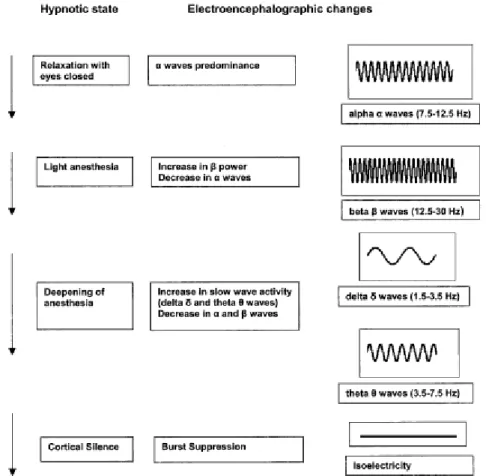
Figure 3 - Electroencephalographic changes with deepening of anaesthesia (Dahaba 2005) ...15
Figure 4 - Meaning of Yang and Yin - adapted from (Greten 2013) and (Porkert 2001) ...17
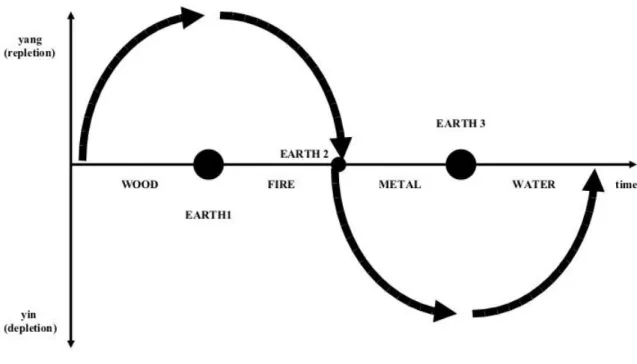
Figure 5 - The movement of the phases. The up and down movement of a phase may be represented as a sinus wave ...18
Figure 6 - Heidelberg Model’s functional vegetative symptoms with yang (up regulation) and Yin (down-regulation) (Greten 2013) ...19
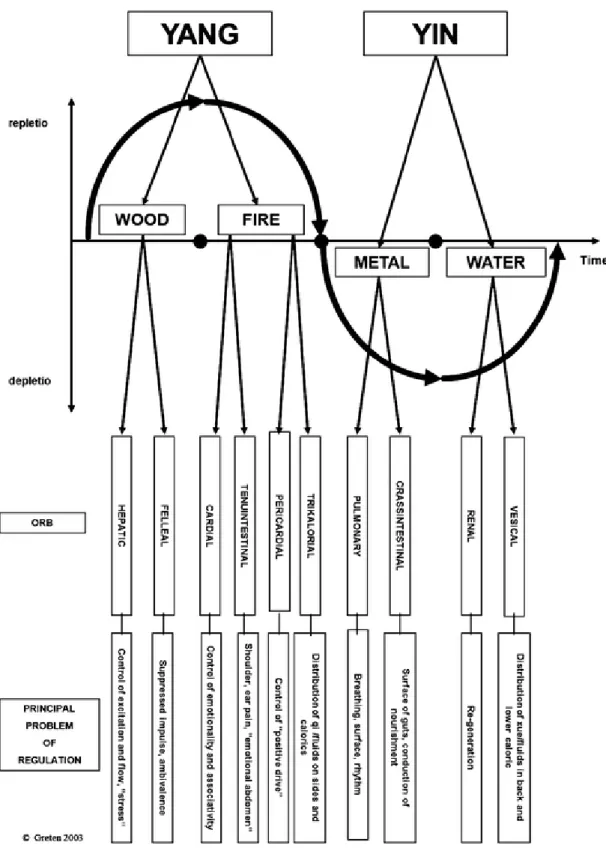
Figure 7 - Integrate model of the Phases and Orbs and Principal problem of Regulation (Greten 2013) ...21
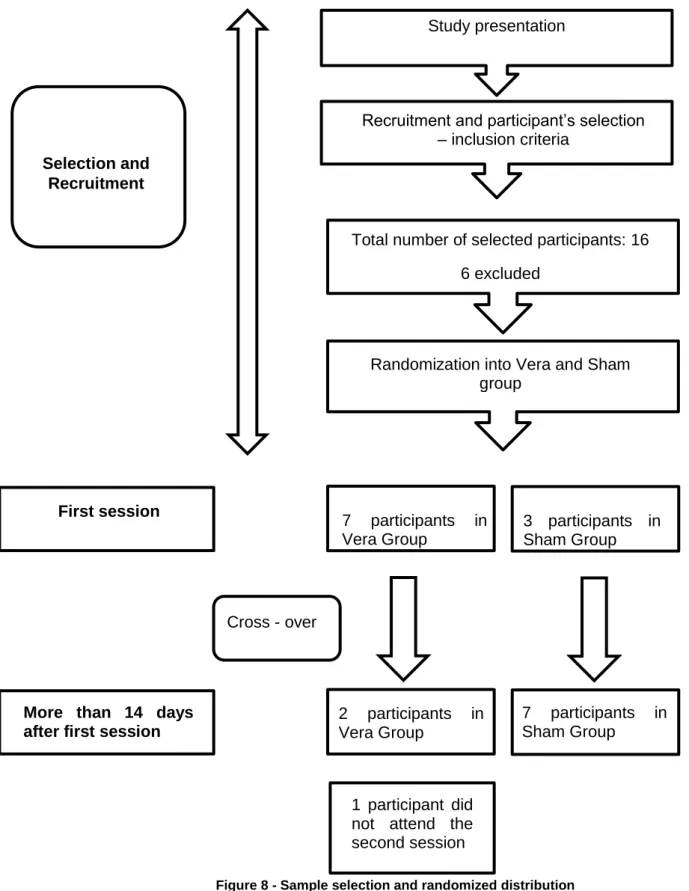
Figure 8 - Sample selection and randomized distribution ...25
Figure 9 - Timeline for Acupuncture Session ...26
Figure 10 - Recruitment Flowchart ...27
Figure 11 - Yin Tang location ...28
Figure 12 - Regens 20 and the “4 Wise men” location ...29
Figure 13 - Cun measurement of thumb...29
Figure 14 - b-BIS monitor ...30
10
List of Tables
Table 1 - Continuum of Depth of Sedation Definition of General Anesthesia and Levels of
Sedation/Analgesia ...12
Table 2 - Studies relating Acupuncture and BIS value ...23
Table 3 - Characteristics of participants ...32
Table 4 - t-Test BIS 15 L ...33
Table 5 - t-Test BIS 15 R ...34
Table 6 - b-BIS observed results ...34
Table 7 - b-BIS (vera-sham) differential results ...35
Table 8 - Questionnaire results ...35
Table 9 - Difference between Vera and Sham answers to questionnaires ...36
11
Introduction
Anesthesia
The WHO (World Health Organization) and the World Bank, highlight surgery as an important component for global health development (Weiser et al. 2016). They defined operations as procedures performed in operating theatres that require general or regional anaesthesia or profound sedation to control pain (Weiser et al. 2016).
Based on modelling of available data, it is estimated that 234.2 million of operations were performed worldwide in 2004 (Weiser et al. 2008) increasing to 312.9 million in 2012 (Weiser et al. 2016). This represents an increase in 38.2%. In Portugal, the annual surgical rate and volume between 2005-2011 was of 8439 operations per 100 000 population (Weiser et al. 2016).
Anaesthetic procedures are required to safely perform operations as well as some diagnostic and invasive therapeutic procedures. Anaesthesia involves the administration of several drugs in order to provide analgesia, amnesia, hypnosis, and muscle relaxation (Miller 2005). However, the administration of these drugs must minimize undesirable side effects or toxicity, maintain homeostasis and prevent injury (Miller 2005).
Anaesthesia care is not only required in operating theatres. There has been a shift from procedures being performed strictly in the operating room to less familiar places outside the operating room (Chang & Urman 2016), such as in radiologic imaging; diagnostic and interventional radiology, neuroradiology, cardiology, pneumology and gastroenterology; radiotherapy and psychiatry. These areas, known as outside the operating room anaesthesia care, represent a growing area of intervention (Chang & Urman 2016) (Barash 2013). These diagnostic or therapeutic procedures are also performed under anaesthesia care increasing the number of people submitted to anaesthesia worldwide. The therapeutic objective of providing anaesthesia is to achieve adequate drug concentrations at specific sites of action to produce the desired effect. The anaesthesiologist must select and administer appropriate drugs to provide tissue and receptor concentrations lower than those that produce unacceptable toxicity and higher than those that fail to provide effective therapy (within the therapeutic window) (Miller 2005). The administration of these drugs, thus produces different states, such as summarized in Table 1 (ASA 2014).
12 Minimal Sedation Anxiolysis Moderate Sedation/ Analgesia Deep Sedation/ Analgesia General Anesthesia Responsiveness Normal response to verbal stimulation Purposeful response to verbal or tactile stimulation Purposeful response following repeated or painful stimulation Unarousable even with painful stimulus
Airway Unaffected No intervention required Intervention may be required Intervention often required Spontaneous Ventilation
Unaffected Adequate May be
inadequate Frequently inadequate Cardiovascular Function Unaffected Usually maintained Usually maintained May be impaired
Table 1 - Continuum of Depth of Sedation Definition of General Anesthesia and Levels of Sedation/Analgesia
Committee of Origin: Quality Management and Departmental Administration (Approved by the ASA House of Delegates on October 13, 1999, and last amended on October 15, 2014)
It is understood that all anaesthetic drugs have side effects. Some of the most well-known are changes in the cardiovascular system (hypotension, arrhythmias); changes in the pulmonary system (bradipnea, hypoxia, airway obstruction); nausea and vomiting, delayed emergence, drug induce respiratory depression, delirium and agitation. It is even suggested that some of these side effects are better tolerated by some patients, and clinicians and administrators must make trade-offs among options with regard to desirable and undesirable properties. To optimize patient care, it is necessary to quantify how patients value these various outcomes (Macario et al. 1999) and delineate a tailored-anaesthesia care that might benefit from the inclusion of complementary treatments such as acupuncture.
13
Bispectral Index TM (BIS TM)
It is logical to think that different individuals may have different sensitivities to anaesthetics and that measuring a surrogate end point such as a processed EEG value, an evoked potential, or a functional neuroimaging signal indicative of integrated cortical activity might be a better indicator of anaesthetic depth than merely measuring delivered concentration (Barash 2013).
The anesthetic drugs are chosen based on the patient’s ideal or adjusted weight, age, procedure requirements and co-morbidities. EEG depth of anesthesia monitors have become increasingly ubiquitous in modern anesthetic practice and help to titrate the given drugs. There are several monitors, with the bispectral index (BIS, Covidien, Dublin, Ireland) and Entropy (GE Healthcare, Helsinki, Finland) being the 2 most commonly used (Ben-Menachem & Zalcberg 2014). In 1996, the U.S. (United States) Food and Drug Administration cleared the BIS Index as an aid in monitoring the effects of certain anesthetic agents (Kelley 2012).
The BIS Index is a processed EEG parameter with extensive validation and demonstrated clinical utility. It is derived utilizing a composite of measures from EEG signal processing techniques including bispectral analysis, power spectral analysis, and time domain analysis. These measures were combined via an algorithm to optimize the correlation between the EEG and the clinical effects of anesthesia, and quantified using the BIS Index range (Kelley 2012).
Bispectral analysis is a signal processing methodology that assesses relationships among signal components and captures synchronization within signals like the EEG. By quantifying the correlation between all the frequencies within the signal, bispectral analysis yields an additional EEG facet of brain activity (Kelley 2012).
The four key EEG features that characterized the full spectrum of anesthetic-induced changes were the degree of high-frequency (14 to 30 Hz) activation, the amount of low-frequency synchronization, the presence of nearly suppressed periods within the EEG, and the presence of fully suppressed (i.e., isoelectric, “flatline”) periods within the EEG. The algorithm enables the optimum combination of these EEG features to provide a reliable processed EEG parameter of anesthetic and sedative effect—the BIS™ Index. The BIS Index is a number between 0 and 100 scaled to correlate with important clinical end points and EEG states during administration of anesthetic agents Figure 1. BIS values near 100 represent an “awake” clinical state while 0 denotes the maximal EEG
14 effect possible (i.e., an isoelectric EEG) as can be seen in Figure 2 and Figure 3 (Kelley 2012) (Dahaba 2005).
Figure 1 - The BIS Index is scaled to correlate with important clinical end points during administration of anaesthetic agent (Kelley 2012)
15
Figure 3 - Electroencephalographic changes with deepening of anaesthesia (Dahaba 2005)
It is important to note that the BIS value provides a measurement of brain status derived from the EEG, not the concentration of a particular drug. For example, BIS values decrease during natural sleep as well as during administration of an anesthetic agent (Kelley 2012) (Dahaba 2005).
BIS™ systems display the BIS™ Index value as a single value, calculated from data gathered over the last 15 to 30 seconds of EEG recording and updated every second. Deriving the BIS Index value from several seconds of EEG data effectively “smooths” the data to prevent excessive fluctuations in BIS™ values. It also allows a value to be determined even if the EEG signal is briefly interrupted. When abrupt changes occur in hypnotic state—for example, during induction or rapid emergence—the BIS value may lag behind the observed clinical change by approximately 5 to 10 seconds (Kelley 2012). In certain circumstances, BIS™ values may not be an accurate reflection of the hypnotic state, such as: artefacts, hypothermia, hypoglycemia, hypoperfusion, neurological disorders (Kelley 2012) (Duarte & Saraiva 2009) (Dahaba 2005).
16
Traditional Chinese Medicine
Heidelberg’s Model of Chinese Medicine
The first mention of acupuncture and moxibustion in a medical text, dated with accuracy is the “Inner classic of the Yellow Sovereign” (Huangdi Neijing) and has been compiled at the beginning of the 2nd century BC (Porkert, M; Hempen 1995). By this time, the major conduits, acupoints, description of needle and needle technique were already described, (Porkert, M; Hempen 1995). Acupuncture is an integral part of an Ancient Chinese system of medicine that has been used for more than 2500 years, to treat disease and pain (Chernyak & Sessler 2005). It’s one of the 5 forms of treatment by Traditional Chinese Medicine (TCM) (Greten 2013), having spread from China to many parts of the world where it enjoys increasing popularity (Xia et al. 2013) (White 2007). TCM has already established itself in several countries but is often reduced to the level of Asian philosophy in the form of mystical philosophical remnants. Traditionally, acupuncture is based on a philosophy of balance and unity between the universe, living things and flow of energy that penetrates everywhere and everything (Chernyak & Sessler 2005). However for it successful integration and acceptance by Western Doctors its internal logic must be understood (Greten 2011) (Wang, Kain, et al. 2008).
In the I Ging, a book at least 700 years older than the Huangdi Neijing, we can find the basis for the concept that yang and yin, like one and zero, can form binary numbers which can be used to describe regulatory processes on an almost mathematical basis. The mathematical systems are based on circular functions such as the ones often seen in regulatory processes. Based on this contemporary understanding of acupuncture and TCM, the Heidelberg´s Model of Chinese Medicine offers rational access to TCM, based on the teaching of organ patterns (orbs/functional circles) (Greten 2013).
According to the Heidelberg’s Model, TCM is a system of findings and sensations designed to establish the functional vegetative state of the body. This state may be treated by Chinese pharmacotherapy, acupuncture, Chinese manual therapy (Tuina), Qigong or dietetics (Greten 2013).
Whenever the body is in a pathological state of dysregulation it’s mentioned as a hetheropathy, opposite to a well-regulated state as such, mentioned as orthopathy (Greten 2013).
17 Yang and Yin are very old concepts, originally meaning two sides of a hill, two functional aspects (Greten 2013). In Figure 4 we can see other terminologies used to explain these two concepts.
Yang Yin
Action Struction
More activity Less activity
Sunnier side of a hill Shadier side of a hill
Warmer Colder
Outside Inside
In the I Ging: 1 In the I Ging: 0
Ascending vector Descending vector
Figure 4 - Meaning of Yang and Yin - adapted from (Greten 2013) and (Porkert 2001)
Phases are part of circular process, describing cybernetic (regulatory) terms, when they refer to man are thus related to vegetative functional tendencies and its manifestations are named orbs. For a functional vegetative state the phases must be well balanced.
There are 5 phases (Figure 5):
Wood – provides the energetic potential Fire – transforms the potential into function Metal – is related to lack of energy
Water – is related to the regeneration of energy Earth – is the phase of transformation and evolution
18
Figure 5 - The movement of the phases. The up and down movement of a phase may be represented as a sinus wave
In Figure 5 we can observe that the yang phases (above the x axis), sympathetic functions are more dominant then in the yin phases (bellow the x axis), where parasympathetic activity is more present. Wood and Fire are associated to yang (repletion or excess) and Metal and Water to yin (depletion or deficiency). Earth is the turning point, the phase that initiates a change of direction.
19
Figure 6 - Heidelberg Model’s functional vegetative symptoms with yang (up regulation) and Yin (down-regulation) (Greten 2013)
In Figure 6 one can see a selection of vegetative functional mechanisms which in western medicine are seen as a cause of signs of hetheropathy. The upper part represents the symptoms in the language of TCM.
Orb is the clinical manifestation of a phase, named after a region of the body (body island), is a group of diagnostically relevant signs indicating the functional state of a body
20 island (body region), which correlates with the functional properties of a conduit (in the WHO nomenclature – meridian) (Greten 2013).
There are 12 orbs with different functions: 2 from Wood phase, 2 from Metal phase, 2 from Water phase, 2 from Earth phase and 4 from Fire phase. We can see their connections in Figure 7.
The Heidelberg Model also recognizes other conduits (other than the 12 above mentioned), such as the 8 extraordinary conduits, the Leading (Du mai) and Responding (Ren mai) Sinarteria as well as the existence of extra acupoints that are not specifically connected to any conduits.
Relating to consciousness, there are several ways to decrease perception, such as: Decreasing potential, acting on phase Wood
Decreasing the transformation of potential, acting on phase Fire Increasing energy´s regeneration, acting on phase Metal
21
22
Anesthesia and Acupuncture
Acupuncture and related techniques are an increasing practice in conventional medical settings and the number of patients willing to use these techniques is increasing (Chernyak & Sessler 2005). They may be used as adjuncts for perioperative anaesthesia management (Wang, Escalera, et al. 2008) not only to reduce the consumption of anaesthetics and analgesics (Wang et al. 2014), but also to reduce anaesthesia-related complications (Lu et al. 2015) and anxiety (Bae et al. 2014).
Relating pain therapy it is estimated that more that 3 million American adults used acupuncture in 2007, with chronic pain being the most common reason for seeking the acupuncture treatment (Zhang et al. 2014).
Nausea and vomiting are one of the most frequent complications in anaesthesia. Several societies have issued guidelines on the management of these complications. Amongst the pharmacological therapies one can find that the stimulation of Pericardium acupoint 6 reduces nausea, vomiting and the need for rescue antiemetics, with similar efficacy to that of prophylactic antiemetics such as ondansetron, droperidol, metoclopramide, cyclizine, and prochlorperazine (Gan et al. 2014).
However, several studies also found that acupuncture and related techniques did not significantly reduce pain during the operation, and not only failed to reduce, but actually increased anaesthetic requirements (Chernyak et al. 2005). Different articles, with different acupuncture techniques and different acupoints were used and this may have rendered the results contradictory (Liu et al. 2015) (Bagley 2005).
Considering acupuncture and anaesthesia and its effect on BIS value a literature review is summarized in Table 2. In some studies the BIS value was used for the assessment of anxiety in the preoperative settings and not for the assessment of anaesthetic depth.
23
Authors Population Acupoints
used Effect on BIS value Conclusion (Paraskeva et al. 2004) 49 surgical patients
Yin Tang Decreased effect Significant
decrease in BIS values (Litscher 2004) 25 healthy volunteers Yin Tang – acupressure, manual acupuncture and laser needle acupuncture
Decreased effect Awake volunteers
subjected to
acupressure at
Yin Tang can
have similar BIS
values to
anaesthetizes patients
(Wang et al.
2005)
61 parents Yin Tang -
acupressure
No differences May be used as a
treatment for parental anxiety (Cabrini et al. 2006) 10 healthy volunteers 9 acupoints:
Shen Men, Heart 7, Pericardium 6, Liver 3 and YinTang No differences No reduction of acupuncture on BIS value (Fassoulaki et al. 2007) 12 healthy volunteers Yin Tang - acupressure Decrease in BIS value Acupressure on
Yin Tang had
no effect on melatonin and -endorphin levels, but it was successful in producing stress relieve (Wang, Escalera, et al. 2008) 52 children undergoing general anaesthesia
Yin Tang – self-adhesive
acupressure beads
No differences Decreases pre
procedural anxiety
(Acar et al. 2013) 52 adult surgical patients
Yin Tang -
ear-press needle acupuncture Decrease in BIS value Decreases pre procedural anxiety
24
Material and Methods
Aim
The aim of this study was to assess if the placement of acupuncture needles on 6 cranial points - Yin Tang (EX-HN3); Baihui (Governor Vessel 20 (WHO) Regens 20 (Heidelberg Model) and the “4 Wise man” (Heidelberg Model) decreases BIS value in healthy volunteers.
Study Design
This is a prospective, transversal, experimental randomized cross-over study on healthy volunteers. The study was submitted to ICBAS (Instituto Ciências Biomédicas Abel Salazar) Ethic Committee for approval. All the information regarding the participants will be destroyed after a period of 12 months. The study took place between the period of 16th August and 26th of September.
Setting and participants
The participant selection was a convenience sample recruited by personal contact and invitation. A previous interview was conducted in order to explain the study’s methodology, its aims, acupuncture technique and possible side effects, handover of informed consent (Attachment 1) and to determine inclusion and exclusion criteria. A period of reflexion was allowed and depended on the participants will. After such period both sessions where schedule and before the first session questions were answered and informed consent was signed.
The inclusion criteria were healthy volunteers, over 18 years of age and willing to participate. By healthy volunteers we considered people who did not have any actual or previous neurologic disease; deficit or complaint, whose health condition was stable and caused no limitation to their daily life and does who did not take medications that affected or limited their daily life.
25 The exclusion criteria were underage, incapable of understanding the study or to sign the informed consent, unwilling to participate, incapable of attending both acupuncture sessions and pregnant women.
Figure 8 - Sample selection and randomized distribution
Study presentation
Selection and Recruitment
Recruitment and participant’s selection – inclusion criteria
Total number of selected participants: 16 6 excluded
Randomization into Vera and Sham group First session 7 participants in Vera Group 3 participants in Sham Group
More than 14 days after first session
2 participants in Vera Group 7 participants in Sham Group Cross - over 1 participant did not attend the second session
26
Data Collection
Demographic data from the participant’s was gathered from a pre-procedure questionnaire: age, gender, weight, height, qualification, employment.
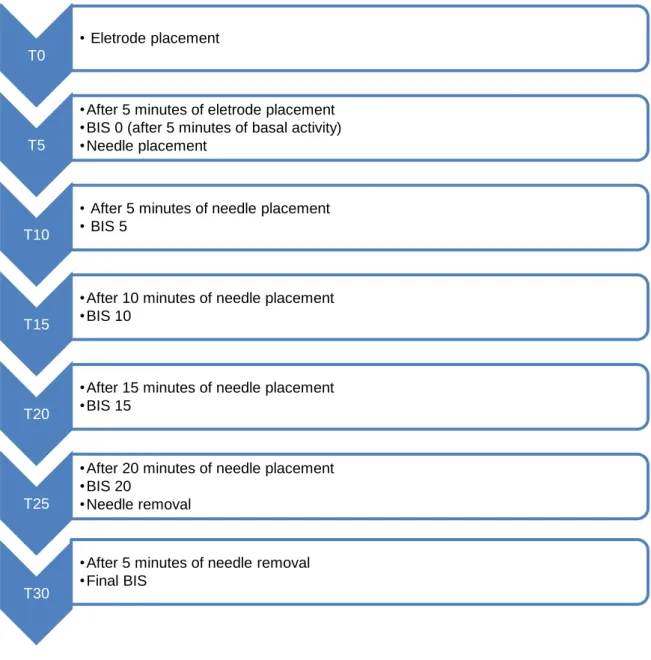
During the session the BIS value was recorded 5 minutes after electrode placement, being considered BIS 0. After 5, 10, 15 and 20 minutes of the needle placement the BIS value was registered. The final BIS was recorded 5 minutes after needle removal. The time of the day the session took place was also registered.
Figure 9 - Timeline for Acupuncture Session T0
• Eletrode placement
T5
•After 5 minutes of eletrode placement •BIS 0 (after 5 minutes of basal activity) •Needle placement
T10
• After 5 minutes of needle placement • BIS 5
T15
•After 10 minutes of needle placement •BIS 10
T20
•After 15 minutes of needle placement •BIS 15
T25
•After 20 minutes of needle placement •BIS 20
•Needle removal
T30
•After 5 minutes of needle removal •Final BIS
27 After the procedure the participants answered a brief questionnaire quantifying the experience on a 0 to 10 Likert scale, relating the topics of pain, relaxation, well-being, anxiety and satisfaction. A final open question on commentaries and/or other sensations was also considered (Attachment 2).
Procedures
The acupuncture sessions were conducted on the same place, by the same operator (qualified Anaesthesiologist, standard TCM training), on a safe and quiet environment maintaining background noise and stimuli (people’s conversation, road traffic per example). The 2 sessions were apart more than 14 days. After computer randomization the participants were schedule to Vera or Sham acupuncture session as showed in Figure 10Figure 10.
Figure 10 - Recruitment Flowchart
The participants were blind to the type of acupuncture they were given. Sham acupuncture was done by needling a few millimetres apart from the identified correct acupoints. The acupuncture was done with Tewa® acupuncture, single use, sterile, size 0.25x25 mm needles. There was no stimulation or manipulation of the needles after their placement. The 6 chosen points were:
Volunteer Recruitment Verum Acupuncture Sham Acupuncture Randomization Sham Acupuncture Verum Acupuncture
28 Yin Tang (EX-HN3) – Located on the anterior midline, between the eyebrows. It has the following functions:
- Calms the Shen (Functional capacity to put order into mental associativity and emotions, thus creating “mental presence” (Greten 2013))
- Improves nose pathologies - Soothes internal wind - Alleviates pain
- Commonly used extra point with a harmonising effect
Figure 11 - Yin Tang location
Baihui (Governor Vessel 20 (OMS) Regens 20 (Heidelberg Model) – Located in the centre of the top of the skull, in the vertex of hair, hence approximately 7 PI (Cun) distant from the posterior and 5 PI from the anterior border of the hair. It requires a locator to determine its position accurately and is usually painful. It has the following functions:
- Stabilising and regulating the hepatic orb
- Direct downward the hepatic yang, soothing ventus, supporting the cardial orb - Unclogging the sense openings
29 “4 Wise man” (Heidelberg Model) – Located 1 PI from Regens 20 in the four cardinal directions.
Figure 12 - Regens 20 and the “4 Wise men” location
The “4 Wise man” location in the figure above is the commonly described in the literature (Wang et al. 2012).
Cun is a Chinese measure of the width of a person's thumb at the knuckle
Figure 13 - Cun measurement of thumb Equipment
It was used the BIS TM Complete 4- channel monitor Figure 14 (Aspect Medical Systems Inc., Norwood, MA) coupled to BIS bilateral sensor with pre-gelled 6-electrode array placed on the forehead and temple which allows registration 4 EEG channels that correlate approximately to the FPz (Frontal Pole zero) and FP1/2 (Frontal Pole) and F7/F8 (Frontal) leads of international 10/20 system electrode placement Figure 15. Suitable electrode impedance was confirmed using the manufacture’s automatic checking routine and BIS sensor was changed as necessary. The b- BIS system was designed to allow larger brain coverage than conventional BIS because it may record and display four channels of EEG. The bilateral Central Density Spectral Array (CDSA) applies fast-Fourier transformation to convert raw EEG into a time-compressed and color-coded display for frequencies between 0 and 30 Hz, with blue representing low power, and green, yellow
30 and red representing successively higher power. Moreover, its use offers other advantages in comparison with the conventional BIS such as the asymmetry (ASYM) display which is a processed variable indicating the percentage of EEG power present in the left or right hemispheres with respect to total EEG power (Hernández-Hernández & Fernández-Torre 2016).
31
Figure 15 - b-Bis Eletrode Placement
Variables
BIS value was the main variable. Possible confounding factors were anxiety, sedative and anti-depressant medication, the time of the day the sessions took place.
The primary outcome was the BIS value throughout the acupuncture session. The secondary outcome was satisfaction, side effects, relaxation sensation.
Statistical Analysis
IBM SPSS version 25.0 and Microsoft Excel 2016 (version 1803) were used for the statistical analysis. Student’s t-test was applied in order to evaluate if there was a difference between the sham procedure and the vera procedure, for each of the 9 participants with 2 sessions. This analysis was applied to both BIS data and to the questionnaires performed. The categorical variables results will be presented as frequencies and percentages.
32
Results
Sample characterization
The sample size is small and the participant’s characteristics can be seen on Table 3. 55.5% (n= 5) of the participants were males, the ages were between 40 and 69 with a mean of 56.2 years. Concerning the weight and height, and calculating the body mass index, we can observe that 4 patients were overweight and 2 obese according to the WHO definition. 55.5 % (n=5) of the participants had College education, 22.2% (n=2) had Secondary school degree and 11.2% (n=1) had a Master’s degree. 55.5% (n=5) were employees, 22.2% (n=2) were pensioner already retired from their profession and 22.3% (n=2) had independent professions.
Participant Age Gender Weight (kg) Height (cm) Education Occupation 1 40 M 100 190 College education Engineer 2 43 F 62 160 Master’s Degree Professor 3 69 M 100 185 College education Pensioner 4 69 M 85 170 Secondary School Pensioner 5 64 F 86 160 Secondary School Nanny 6 69 M 90 170 College education Engineer 7 43 F 63 174 College
education Medical doctor
8 43 M 68 179 College
education Beekeeper
9 66 F 70 165 Secondary
School Secretary
33
Results Analysis
Given the relatively small number of participants, it was to be expected that statistically significant differences could not be found, considering a 5% significance level. This is the significance level commonly used in the literature as a reference for considering results as meaningful.
It must be pointed out however, that some of the observed measurements show considerable differences in the mean values between sham and vera cases. This lead to further detailed analysis for the b-BIS measurements 15 minutes after needles being applied. In particular for the left hemisphere, there is already statistical significance when considering a significance level of 7,5% (instead) of 5% (Table 4).
t-Test: Two-Sample Assuming Unequal Variances
Sham Vera Mean 87.22222 81.22222 Variance 61.19444 80.19444 Observations 9 9 Hypothesized Mean Difference 0 df 16 t Stat 1.513787 P(T<=t) one-tail 0.074791 t Critical one-tail 1.51213
Table 4 - t-Test BIS 15 L
It can be observed that the there is an observable difference in the mean value of the results. With the number of measurements (observations), in this case the difference is statistically significant for a significance level of 7,5%, i.e. t Stat is great than t Critical. At this level of significance, the null hypothesis can be rejected, and the Vera group shows indeed smaller BIS levels than the sham group.
This is however not the case for the other hemisphere, as it can be seen in Table 5. In this case there is also an observable difference in the mean value of the measured BIS levels. This difference is however not statistically significant at the significance level of 7,5 % (t Stat is smaller than t Critical) and the null hypothesis cannot be rejected. In opposition to the left hemisphere, in the right hemisphere the difference is not statistically significant.
34 t-Test: Two-Sample Assuming Unequal Variances
Sham Vero
Mean 86.33333 81.55556
Variance 56.25 79.52778
Observations 9 9
Hypothesized Mean Difference 0
df 16
t Stat 1.230079
P(T<=t) one-tail 0.118224 t Critical one-tail 1.51213
Table 5 - t-Test BIS 15 R
The results on Table 6 show a strong trend, not statistically significant for the sample size, were a stronger BIS level decrease can be observed for the vera group, when compared to the sham group (same participants).
Table 6 - b-BIS observed results
When considering the difference between vera BIS level and the sham BIS level for the same participant, it can be seen that for 5 out of the 9 participants (55.5%) there is a considerable decrease in BIS level in the vera session when comparing both sessions. Moreover, for 3 (33.3%) of the participants there is a decrease with a lower BIS level in the sham session, and for the remaining 2 (22.3%) there is no clear trend between sham and vera sessions.
Participant Sham Verum BIS0 L BIS 5 L BIS 10 L BIS 15 L BIS 20 L BIS final L BIS 0 R BIS 5 R BIS 10 R BIS 15 R BIS 20 R BIS final R
1 x 92 76 74 78 97 97 91 79 78 75 77 97 1 x 97 74 75 76 78 95 98 97 83 77 83 94 2 x 97 94 97 97 94 97 97 93 92 95 93 97 2 x 93 87 83 83 81 98 92 84 86 85 87 97 3 x 98 90 97 91 91 97 95 91 95 88 86 96 3 x 97 95 97 98 97 96 95 90 95 98 97 97 4 x 93 94 92 88 90 92 95 93 93 86 83 94 4 x 95 88 83 74 83 97 96 87 84 71 78 96 5 x 94 94 94 91 90 97 93 89 92 90 88 96 5 x 97 93 88 88 85 97 98 91 86 89 84 95 6 x 96 98 86 92 90 96 91 97 85 90 88 95 6 x 96 81 76 76 81 97 94 79 82 78 84 97 7 x 98 91 90 94 92 96 97 91 83 96 97 97 7 x 97 93 91 89 88 97 96 92 91 87 86 97 8 x 91 64 76 78 74 98 92 72 74 79 72 97 8 x 97 85 85 77 86 98 98 83 84 78 87 97 9 x 96 81 76 76 81 97 94 79 82 78 84 97 9 x 94 83 70 70 83 98 95 83 75 71 80 98
35
Table 7 - b-BIS (vera-sham) differential results
The time the sessions took place was identical in 6 participants, with a documented difference of less than 2 hours, and considerably apart in the other 3 (5, 10 and 12 hours apart). The majority of the sessions (n= 13, 72.3%) took place between 19 hours and 21 hours.
Regarding the questionnaires, there seems to be no relationship with the observed BIS results.
pain relaxation
well-being anxiety satisfaction
Question 1 2 3 4 5 1 Sham 1 9 8 3 8 1 Vera 4 8 7 0 8 2 Sham 5 9 9 0 8 2 Vera 2 8 8 0 8 3 Sham 3 5 5 0 8 3 Vera 3 6 6 0 10 4 Sham 8 4 5 0 4 4 Vera 6 8 5 0 4 5 Sham 6 8 8 0 8 5 Vera 5 6 6 0 7 6 Sham 0 8 8 0 10 6 Vera 8 9 9 0 10 7 Sham 1 8 8 0 9 7 Vera 3 8 8 0 9 8 Sham 0 3 8 0 5 8 Vera 2 4 6 5 5 9 Sham 1 9 10 0 10 9 Vera 2 9 10 0 10
Table 8 - Questionnaire results
Participant BIS0 L BIS 5 L BIS 10 L BIS 15 L BIS 20 L BIS final L BIS 0 R BIS 5 R BIS 10 R BIS 15 R BIS 20 R BIS final R
1 -5 2 -1 2 19 2 -7 -18 -5 -2 -6 3 2 4 7 14 14 13 -1 5 9 6 10 6 0 3 1 -5 0 -7 -6 1 0 1 0 -10 -11 -1 4 -2 6 9 14 7 -5 -1 6 9 15 5 -2 5 -3 1 6 3 5 0 -5 -2 6 1 4 1 6 0 17 10 16 9 -1 -3 18 3 12 4 -2 7 1 -2 -1 5 4 -1 1 -1 -8 9 11 0 8 -6 -21 -9 1 -12 0 -6 -11 -10 1 -15 0 9 2 -2 6 6 -2 -1 -1 -4 7 7 4 -1
36 The questionnaire conveys always a more subjective metric than the BIS measurements. It reports to the way the participants felt and perceived the intervention. Even so, it is interesting to observe very low levels of anxiety reported, and oppositely quite high levels of satisfaction. In these two regards, there is no observable difference if the participant was exposed to the sham procedure, or to the vera procedure.
Pain relaxation
well-being anxiety satisfaction
1 3 -1 -1 -3 0 2 -3 -1 -1 0 0 3 0 1 1 0 2 4 -2 4 0 0 0 5 -1 -2 -2 0 -1 6 8 1 1 0 0 7 2 0 0 0 0 8 2 1 -2 5 0 9 1 0 0 0 0
Table 9 - Difference between Vera and Sham answers to questionnaires
It is relevant to observe that there is a higher reporting of pain in the vera procedure compared to the sham procedure. Four of the participants (44.4%) report a considerable higher sensation of pain when answering the questionnaire.
In opposition, even if not so noticeable, there is also a lower reporting of well-being in the vera procedure. It is quite remarkable to verify the consistency of these events and answers, when taking in consideration the subjectivity of the questionnaire, and the fact that the sham and vera procedures were randomly assigned to each participant.
37 The participant’s comments are shown on Table 10. In 5 cases (55.5%) there were different and interesting comments supporting the vera versus sham sessions.
Comment
1 Sham Concern about what effect the acupuncture might have
1 Vero Enhance relaxation and meditation state
2 Sham Small increase in cardiac rhythm, tingling in the hands
2 Vero Increased bowel movements
3 Sham Back pain
3 Vero Itching in the puncture location
4 Sham Feeling of the needle throughout the session
4 Vero Pain during the puncture and throughout the session
5 Sham Good sensation, sleepy
5 Vero Sleepy, some form of relaxation
6 Sham No comments
6 Vero On the top of head a feeling like electrical impulses
7 Sham No comments
7 Vero No comments
8 Sham Less feeling of heavy head
8 Vero Itching on the forehead, feeling of heavy head, pain in top of head
9 Sham Full relaxation except for jaw
9 Vero Full relaxation except for jaw
38
Discussion
Discussion
The acupoints and strategy were based on available literature regarding the stimulation of Yin Yang (refer to Table 2). Since some of the studies did not find a statistically significant difference (Wang et al. 2005) (Cabrini et al. 2006) (Cabrini et al. 2006), we decided to add the Regens 20 and the 4 “Wise Kings”. The points were chosen due to their known sedative effect, the possibility of access during an anaesthetic procedure and limited injury due to direct visualization. These points are also amongst those selected by the WHO for basic training in acupuncture and could be safely used in a widespread scenario by qualified anaesthesiologists (WHO 1995). To our knowledge there are no other studies assessing the effect of these acupoints on BIS value.
For the number of participants the results may not lead to considerable statistical conclusions. There are however already some significant conclusions that can be taken for both subjective and objective measurements. These conclusions are backed up by the collected data and may be further extended when replicating the study to more participants.
In the subjective questionnaire the results show that for the participants there is a strong level satisfaction and a reduced level of anxiety in accordance to (Bae et al. 2014). These observations are independent of participants being in sham or vera sessions, which suggests that already accepting the procedure brings observable subjective improvements. The subjective results, when it concerns to the reported pain and well-being perception are significantly different between sham and vera sessions. Even if these are subjective measurements these are notwithstanding indicative of an impact of the correct needle placement, since the participants are unware if the procedure is sham or vera for the current session.
For the objective measurements obtained with the b-BIS monitor from Medtronic, the sham and vera sessions also show observable differences. The collected data proves that there is a statistically significant difference between sham and vera sessions. For the majority of measurements, as described in the results chapter, there are observable differences in the mean values. The statistical testing on these differences does not allow strong (significant) conclusions, which is to be expected given the reduced number of participants. This observation however is statistically significant at a significance level of
39 7.5%, 15 minutes after needle placement for the left hemisphere but not as evident as the one found in the work of (Fassoulaki et al. 2007) and (Acar et al. 2013)..
Study Limitations
The present study has some limitations. The samples size is small and there is a selection bias, since the participants were recruited from the investigators contact network. The answers to the questionnaires may be biased due to this same proximity and were not anonymous. The results cannot be extrapolated to the sick population one can find in hospitals and reveals an important limitation for the study. An operator bias may exist due to lack of experience in the field of acupuncture as recommended by the WHO in order to deepen the expertise in the field. The time for the study was found to be short and should have been in a different period of the year.
40
Conclusion
In our study, the stimulation of Reagens 20, Yin Tang and the 4 “Wise Kings”, did not change the BIS values with a strong statistical significance. Even though the sample was small and the participants healthy volunteers, there was a tendency towards an improvement. The potential benefits of decreasing anaesthetic drugs and its associated side effects when compared to the reduced harm of acupuncture support the continuation of the search for an acupuncture technique that might prove beneficial in the unhealthy, more anxious patients, one encounters in hospital environment.
A follow-up study, with a powered sample, in a hospital setting is necessary to further assert the optimal acupuncture strategy and adequate results.
41
References
Acar, H.V. et al., 2013. Acupuncture on Yintang Point Decreases Preoperative Anxiety.
The Journal of Alternative and Complementary Medicine, 19(5), pp.420–424.
Available at: http://www.liebertpub.com/doi/10.1089/acm.2012.0494.
ASA, 2014. Continuum of Depth of Sedation: Definition of General Anesthesia and Levels
of Sedation/Analgesia,
Bae, H. et al., 2014. Efficacy of Acupuncture in Reducing Preoperative Anxiety: A Meta-Analysis. Evidence-Based Complementary and Alternative Medicine, 2014, pp.1–12. Available at: http://www.hindawi.com/journals/ecam/2014/850367/.
Bagley, W.P., 2005. Timing of Acupuncture Stimulation. Anesthesia & Analgesia, 101(3), p.927. Available at: https://insights.ovid.com/crossref?an=00000539-200509000-00073.
Barash, P. et all, 2013. Clinical Anesthesia 7th editio. P. Barash, ed., Wolters Kluwer/Lippincott Williams & Wilkins.
Ben-Menachem, E. & Zalcberg, D., 2014. Depth of Anesthesia Monitoring. Anesthesia &
Analgesia, 119(5), pp.1180–1185. Available at:
https://insights.ovid.com/crossref?an=00000539-201411000-00026.
Cabrini, L. et al., 2006. Bispectral Index Evaluation of the Sedative Effect of Acupuncture in Healthy Volunteers. Journal of Clinical Monitoring and Computing, 20(5), pp.311– 315. Available at: http://link.springer.com/10.1007/s10877-006-9026-z.
Chang, B. & Urman, R.D., 2016. Non-operating Room Anesthesia. Anesthesiology Clinics,
34(1), pp.223–240. Available at:
https://linkinghub.elsevier.com/retrieve/pii/S1932227515001214.
Chernyak, G. et al., 2005. The Timing of Acupuncture Stimulation Does Not Influence Anesthetic Requirement. Anesthesia & Analgesia, 100(2), pp.387–392. Available at: https://insights.ovid.com/crossref?an=00000539-200502000-00016.
Chernyak, G. V & Sessler, D.I., 2005. Perioperative acupuncture and related techniques.
Anesthesiology, 102(5), pp.1031-49; quiz 1077–8. Available at:
http://www.ncbi.nlm.nih.gov/pubmed/15851892.
Dahaba, A.A., 2005. Different Conditions That Could Result in the Bispectral Index Indicating an Incorrect Hypnotic State. Anesthesia & Analgesia, 101(3), pp.765–773. Available at: https://insights.ovid.com/crossref?an=00000539-200509000-00030. Duarte, L.T.D. & Saraiva, R.Â., 2009. When the Bispectral Index (Bis) can Give False
Results. Brazilian Journal of Anesthesiology, 59(1), pp.99–109. Available at: http://linkinghub.elsevier.com/retrieve/pii/S0034709409700261.
Fassoulaki, A. et al., 2007. Acupressure on the Extra 1 Acupoint: The Effect on Bispectral Index, Serum Melatonin, Plasma ??-Endorphin, and Stress. Anesthesia & Analgesia, 104(2), pp.312–317. Available at: https://insights.ovid.com/crossref?an=00000539-200702000-00016.
Gan, T.J. et al., 2014. Consensus Guidelines for the Management of Postoperative Nausea and Vomiting. Anesthesia & Analgesia, 118(1), pp.85–113. Available at: https://insights.ovid.com/crossref?an=00000539-201401000-00013.
42 Greten, H., 2013. Understanding TCM – The Fundamentals of Chinese Medicine – Part I
6th ed., Heidelberg: Heidelberg School Editions.
Greten, H.J., 2011. Chinesische Medizin als vegetative Systembiologie. HNO, 59(12), pp.1160–1164. Available at: http://link.springer.com/10.1007/s00106-011-2409-6. Hernández-Hernández, M.A. & Fernández-Torre, J.L., 2016. Color density spectral array
of bilateral bispectral index system: Electroencephalographic correlate in comatose patients with nonconvulsive status epilepticus. Seizure, 34, pp.18–25. Available at: https://linkinghub.elsevier.com/retrieve/pii/S1059131115002642.
Kelley, S., 2012. Monitoring Consciousness Using the Bispectral Index TM (BISTM) During Anesthesia 2nd editio. S. Kelley, ed., Covidien.
Litscher, G., 2004. Effects of acupressure, manual acupuncture and Laserneedle acupuncture on EEG bispectral index and spectral edge frequency in healthy volunteers. European journal of anaesthesiology, 21(1), pp.13–9. Available at: http://www.ncbi.nlm.nih.gov/pubmed/14768918.
Liu, X. et al., 2015. Intraoperative and postoperative anaesthetic and analgesic effect of multipoint transcutaneous electrical acupuncture stimulation combined with sufentanil anaesthesia in patients undergoing supratentorial craniotomy. Acupuncture in
Medicine, 33(4), pp.270–276. Available at:
http://aim.bmj.com/lookup/doi/10.1136/acupmed-2014-010749.
Lu, Z. et al., 2015. Perioperative acupuncture modulation: more than anaesthesia. British
Journal of Anaesthesia, 115(2), pp.183–193. Available at:
https://linkinghub.elsevier.com/retrieve/pii/S0007091217311911.
Macario, A. et al., 1999. Which Clinical Anesthesia Outcomes Are Important to Avoid? The Perspective of Patients. Anesthesia & Analgesia, 89(3), p.652. Available at: https://insights.ovid.com/crossref?an=00000539-199909000-00022.
Miller, R. et all, 2005. Miller’s Anesthesia 6th editio. R. Miller, ed., Elsevier.
Paraskeva, A. et al., 2004. Needling of the Extra 1 Point Decreases BIS Values and Preoperative Anxiety. The American Journal of Chinese Medicine, 32(05), pp.789–
794. Available at:
http://www.worldscientific.com/doi/abs/10.1142/S0192415X04002363.
Porkert, M; Hempen, C., 1995. Classical Acupuncture - the Standard Textbook 1st ed., Muniche: Phainon Editions & Media GmbH.
Wang, H. et al., 2014. Transcutaneous electric acupoint stimulation reduces intra-operative remifentanil consumption and alleviates postintra-operative side-effects in patients undergoing sinusotomy: a prospective, randomized, placebo-controlled trial.
British Journal of Anaesthesia, 112(6), pp.1075–1082. Available at: http://linkinghub.elsevier.com/retrieve/pii/S000709121730795X.
Wang, S.-M. et al., 2005. Acupressure and Preoperative Parental Anxiety: A Pilot Study.
Anesthesia & Analgesia, 101(3), pp.666–669. Available at:
https://insights.ovid.com/crossref?an=00000539-200509000-00013.
Wang, S.-M., Escalera, S., et al., 2008. Extra-1 Acupressure for Children Undergoing Anesthesia. Anesthesia & Analgesia, 107(3), pp.811–816. Available at: https://insights.ovid.com/crossref?an=00000539-200809000-00017.
43
Anesthesia & Analgesia, 106(2), pp.602–610. Available at:
https://insights.ovid.com/crossref?an=00000539-200802000-00038.
Wang, Y. et al., 2012. Clinical Studies on Treatment of Earthquake-Caused Posttraumatic Stress Disorder Using Electroacupuncture. Evidence-Based Complementary and
Alternative Medicine, 2012, pp.1–7. Available at:
http://www.hindawi.com/journals/ecam/2012/431279/.
Weiser, T.G. et al., 2008. An estimation of the global volume of surgery: a modelling strategy based on available data. The Lancet, 372(9633), pp.139–144. Available at: http://linkinghub.elsevier.com/retrieve/pii/S0140673608608788.
Weiser, T.G. et al., 2016. Size and distribution of the global volume of surgery in 2012.
Bulletin of the World Health Organization, 94(3), p.201–209F. Available at:
http://www.who.int/entity/bulletin/volumes/94/3/15-159293.pdf.
White, P.F., 2007. Use of Alternative Medical Therapies in the Perioperative Period: Is It Time to Get on Board? Anesthesia & Analgesia, 104(2), pp.251–254. Available at: https://insights.ovid.com/crossref?an=00000539-200702000-00003.
WHO, 1995. Guidelines on Basic Training and Safety in Acupuncture,
Xia, Y., Ding, G. & Wu, G.-C. eds., 2013. Current Research in Acupuncture, New York, NY: Springer New York. Available at: http://link.springer.com/10.1007/978-1-4614-3357-6.
Zhang, R. et al., 2014. Mechanisms of Acupuncture–Electroacupuncture on Persistent Pain. Anesthesiology, 120(2), pp.482–503. Available at: http://insights.ovid.com/crossref?an=00000542-201402000-00035.
44
Attachments
Attachment 1 – Informed Consent Form
45 Attachment 1 – Informed Consent Form
C
ONSENTIMENTOI
NFORMADO,
L
IVRE EE
SCLARECIDO PARA PARTICIPAÇÃO EM INVESTIGAÇÃOde acordo com a Declaração de Helsínquia1 e a Convenção de Oviedo2
Por favor, leia com atenção a seguinte informação. Se achar que algo está incorrecto ou que não está claro, não hesite em solicitar mais informações. Se concorda com a proposta que lhe foi feita, queira assinar este documento.
Título do estudo: Effect of acupuncture on EEG Bispectral Index in healthy volunteers – a
crossover study (Efeito da acupuntura no valor do BIS em voluntários suadáveis – estudo crossover)
Enquadramento: O presente trabalho está enquadrado na realização de Tese de Mestrado,
Mestrado em Medicina Tradicional Chinesa do Instituto Ciências Biomédicas Abel Salazar, Universidade do Porto, tendo como orientadora a Professora Maria João Santos.
Explicação do estudo: Ao aceitar participar neste estudo será submetido a duas sessões de
acupuntura
O que é a acupuntura? A acupuntura é uma forma milenar de tratamento utilizada na Medicina Tradicional Chinesa, na qual são inseridas agulhas metálicas em pontos específicos do corpo Quais os efeitos laterais ? É geralmente uma técnica segura, com efeitos adversos graves muito raros (menos de um por cada 10.000)Os efeitos laterais podem ser:
- Sonolência, sendo desaconselhada a condução de a condução se isso acontecer
- Em cerca de 3% dos tratamentos surgem pequenas equimoses ou hemorragia no local da punctura
- Podem surgir sensação de dormência ou formigueiro perto do local de inserção das agulhas e durante o tratamento pode surgir dor ligeira no local
- Pessoas susceptíveis podem sofrem uma lipotimia (sensação de desmaio) ou tontura no 1º tratamento
- Efeitos laterais pouco frequentes incluem abortamento espontâneo, lesão de nervos, punção de orgãos (como punção de pulmão (pneumotórax)). Pode ocorrer infeção, no entanto serão utilizadas agulhas esterilizadas de uso único, em ambinete limpo e seguro.
Se aceitar realizar as sessões estas terão duração de 30 minutos, intervaladas no mínimo de 14 dias. Durante as sessões será monitorizado o valor do BIS (medida de sedação e profundidade anestésica), por elétrodo não invasivo colocado na testa. Estes valores serão registados e gravados durante toda a sessão, sendo destruídos após 12 meses do término do estudo. Para além da sessão de acupuntura terá de responder a um questionário acerca da sua ansiedade, sedação e experiência durante a sessão de acupuntura. Serão recolhidos alguns dados pessoais tais como idade, estatuto profissional, escolaridade, género. A realização das sessões será em ambiente de clínica privada. Não serão necessárias consultas ou exames para participar no estudo. Em qualquer momento poderá contactar a investigadora responsável para colocar questões sobre o estudo.
Condições e financiamento: Não está contemplado o pagamento de deslocações ou
contrapartidas e o estudo será financiado pela investigadora e através de apoios na aquisição dos elétrodos de monitorização BIS – Medtronic r. Não apresenta custos acrescidos para si. É salvaguardado o caráter voluntário da participação e a ausência de qualquer prejuízo, caso não queira participar. O presente estudo mereceu parecer favorável da Comissão de Ética do ICBAS.
Confidencialidade e anonimato: É-lhe garantida a possibilidade de, em qualquer altura, recusar
participar neste estudo sem qualquer tipo de consequências. Se aceitar participar neste estudo está a permitir de igual modo a utilização dos dados que de forma voluntária fornece, e que apenas serão utilizados para esta investigação e nas garantias de confidencialidade e anonimato
1
http://portal.arsnorte.min-saude.pt/portal/page/portal/ARSNorte/Comiss%C3%A3o%20de%20%C3%89tica/Ficheiros/Declaracao_Helsinquia_2008.pdf
2
46
que lhe são dadas pela investigadora. A sua identificação nunca será tornada pública e os contactos serão feitos em ambiente de privacidade. Não foi pedida autorização à Comissão Nacional de Proteção de Dados.
Em nome da equipa de investigação, agradeço a participação neste estudo científico Carmen Maria da Costa Oliveira, Médica Anestesiologista, nº OM 41099
Contacto Telefónico – 965741918
Endereço eletrónico – [email protected]
Local de trabalho – Rua Júlio Ramos, nº 60 4200-359 Porto
Assinatura: … … … ... … … … …... … … …
-o-o-o-o-o-o-o-o-o-o-o-o-o-o-o-o-o-o-
Declaro ter lido e compreendido este documento, bem como as informações verbais que me foram fornecidas pela pessoa que acima assina. Foi-me garantida a possibilidade de, em qualquer altura, recusar participar neste estudo sem qualquer tipo de consequências. Desta forma, aceito participar neste estudo e permito a utilização dos dados que de forma voluntária forneço, confiando em que apenas serão utilizados para esta investigação e nas garantias de confidencialidade e anonimato que me são dadas pela investigadora.
Nome: … … … …... … … … …... … … … Assinatura: … … … …... … … … … ... … … …
Data: …… /…… /………..
SE NÃO FOR O PRÓPRIO A ASSINAR POR IDADE OU INCAPACIDADE
(se o menor tiver discernimento deve também assinar em cima, se consentir)
NOME:……… BI/CDNº:...DATA OUVALIDADE …../..…/…...
GRAU DE PARENTESCO OU TIPO DE REPRESENTAÇÃO:...
ASSINATURA ………
E
STE DOCUMENTO É COMPOSTO DE2
PÁGINAS E FEITO EM DUPLICADO:
47 Attachment 2 – Questionnaire after procedure form
Questionário Estudo BIS
Responda por favor da forma que lhe parecer mais adequada: 1 – Quantifique a dor que sentiu durante a sessão
Numa escala de 0 a 10 em 0 é nada e 10 a pior dor que consegue imaginar que valor atribui à sua dor?
0 1 2 3 4 5 6 7 8 9 10
2 – Quantifique a sensação de relaxamento durante a sessão
Numa escala de 0 a 10 em 0 é nada e 10 a melhor sensação de relaxamento que consegue imaginar, que valor atribui ao seu relaxamento?
0 1 2 3 4 5 6 7 8 9 10
3- Quantifique a sensação de bem-estar durante a sessão
Numa escala de 0 a 10 em 0 é nada e 10 a melhor sensação de bem-estar que consegue imaginar, que valor atribuiao seu bem-estar?
0 1 2 3 4 5 6 7 8 9 10
4 – Quantifique a sua ansiedade durante a sessão
Numa escala de 0 a 10 em 0 é nada e 10 a pior sensação de ansiedade que consegue imaginar, que valor atribui à sua ansiedade?
0 1 2 3 4 5 6 7 8 9 10
5- Quantifique a sua satisfação com a sessão
Numa escala de 0 a 10 em 0 é muito insatisfeito e 10 muito satisfeito, que valor atribui à sua satisfação?
0 1 2 3 4 5 6 7 8 9 10