doi: 10.3389/fnmol.2020.00035
Edited by: Maria Rosário Almeida, University of Porto, Portugal Reviewed by: Fernando Peña-Ortega, National Autonomous University of Mexico, Mexico Cong Liu, University of Chinese Academy of Sciences, China *Correspondence: Ivo C. Martins [email protected] Regina Menezes [email protected]; [email protected]
†These authors have contributed
equally to this work
Received: 21 November 2019 Accepted: 20 February 2020 Published: 20 March 2020 Citation: Raimundo AF, Ferreira S, Martins IC and Menezes R (2020) Islet Amyloid Polypeptide: A Partner in Crime With Aβ in the Pathology of Alzheimer’s Disease. Front. Mol. Neurosci. 13:35. doi: 10.3389/fnmol.2020.00035
Islet Amyloid Polypeptide: A Partner
in Crime With Aβ in the Pathology of
Alzheimer’s Disease
Ana F. Raimundo
1,2,3†, Sofia Ferreira
1,2†, Ivo C. Martins
4* and Regina Menezes
1,2,3*
1iBET - Instituto de Biologia Experimental e Tecnológica, Oeiras, Portugal,2CEDOC - Chronic Diseases Research Center,Faculdade de Ciências Médicas, Universidade Nova de Lisboa, Lisbon, Portugal,3ITQB-NOVA, Instituto de Tecnologia
Química e Biológica António Xavier, Universidade Nova de Lisboa, Oeiras, Portugal,4Instituto de Medicina Molecular,
Faculdade de Medicina, Universidade de Lisboa, Lisbon, Portugal
Diabetes affects hundreds of millions of patients worldwide. Despite the advances
in understanding the disease and therapeutic options, it remains a leading cause of
death and of comorbidities globally. Islet amyloid polypeptide (IAPP), or amylin, is a
hormone produced by pancreatic β-cells. It contributes to the maintenance of glucose
physiological levels namely by inhibiting insulin and glucagon secretion as well as
controlling adiposity and satiation. IAPP is a highly amyloidogenic polypeptide forming
intracellular aggregates and amyloid structures that are associated with β-cell death. Data
also suggest the relevance of unprocessed IAPP forms as seeding for amyloid buildup.
Besides the known consequences of hyperamylinemia in the pancreas, evidence has
also pointed out that IAPP has a pathological role in cognitive function. More specifically,
IAPP was shown to impair the blood–brain barrier; it was also seen to interact and
co-deposit with amyloid beta peptide (Aß), and possibly with Tau, within the brain of
Alzheimer’s disease (AD) patients, thereby contributing to diabetes-associated dementia.
In fact, it has been suggested that AD results from a metabolic dysfunction in the brain,
leading to its proposed designation as type 3 diabetes. Here, we have first provided a
brief perspective on the IAPP amyloidogenic process and its role in diabetes and AD. We
have then discussed the potential interventions for modulating IAPP proteotoxicity that
can be explored for therapeutics. Finally, we have proposed the concept of a “diabetes
brain phenotype” hypothesis in AD, which may help design future IAPP-centered drug
developmentstrategies against AD.
Keywords: Aß-42, Alzheimer’s disease, amylin, diabetes, IAPP, protein aggregation
INTRODUCTION
Amyloidogenesis is a process by which peptides spontaneously self-assemble into higher order
structures, namely oligomers, protofibrils, and mature amyloid fibrils (
Martins et al., 2008;
Maurer-Stroh et al., 2010; Hauser et al., 2014
). These mature amyloid fibrils are highly ordered structures
with fibrillar aggregates derived from different amyloidogenic amino acid sequences that share
common features (
Maurer-Stroh et al., 2010
). The current consensus is that the amyloid fibrils
are not the main cause of toxicity (
Martins et al., 2008; Kuperstein et al., 2010; Hauser et al., 2014
).
This seems to be mostly down to precursor oligomers and protofibrils, which are associated with a
number of the so-called amyloid diseases, including type 2 diabetes mellitus (T2DM), Alzheimer’s
disease (AD), Parkinson’s disease, and cataracts (
Hauser et al.,
2014; Cremades and Dobson, 2018
).
T2DM, the most prevalent type of diabetes, is an islet amyloid
polypeptide (IAPP)-associated pathology (
Cukierman et al.,
2005; Westermark et al., 2011; Yang and Song, 2013
). Dementia
also represents a major public concern, affecting 50 million
people worldwide. AD, the most common form of dementia in
North America (
Alzheimer’s Association, 2016; Bondi et al., 2017;
Lane et al., 2018
), is associated with amyloid beta peptide 42
(Aß-42) (
Martins et al., 2008; Kuperstein et al., 2010
). The amyloid
hypothesis on AD pathology is, however, called into question
by the undeniable role of Tau aggregation and other important
players, as has been reviewed (
Makin, 2018
).
There is much evidence to support the close association
between T2DM and AD. IAPP (also known as amylin) and
Aß-42 were proven to co-deposit, contributing to AD onset and
progression (
Jackson et al., 2013; Wijesekara et al., 2017
). In
addition, it the molecular interaction between Tau and IAPP
was recently proved (
Arya et al., 2019
). At last, AD is associated
with insulin resistance and an imbalance of glucose levels in the
brain (
Cukierman et al., 2005; Yang and Song, 2013
), earning
the designation of type 3 diabetes (T3DM) (
de la Monte, 2014;
Kandimalla et al., 2017; Leszek et al., 2017
). Given these links,
we have reviewed the mechanisms of IAPP dysfunction in
diabetes and dementia, particularly in AD, thus adding to the
recent view of multi-factorial contributions to both diseases.
Furthermore, we have also discussed the potential interventions
for modulating IAPP proteotoxicity that can be explored for
therapeutics, encouraging new venues for treatment.
IAPP AND DIABETES
Diabetes mellitus (DM) is one of the major causes of premature
illness and mortality worldwide (
Federation, 2009
). High blood
glucose levels and glucose intolerance, as a consequence of a
defective insulin production/secretion by pancreatic β cells
(β-cells) or insulin sensitivity (
Stumvoll et al., 2005; Tan et al.,
2019
), are the typical clinical features of the disease. In T2DM,
impairment and loss of β-cell mass has been associated with
diverse pathological phenomena, including glucolipotoxicity,
islet cholesterol accumulation, and islet inflammation (
Poitout
and Robertson, 2002; Ishikawa et al., 2008; Brunham et al.,
2010; Donath and Shoelson, 2011
). Equally important are the
current views that regard IAPP dyshomeostasis, intracellular
accumulation of IAPP oligomers, and IAPP amyloid deposition
in the islets of Langerhans as detrimental events in β-cell
dysfunction and disease (
Kanatsuka et al., 2018
).
IAPP is a 37-amino acid neuroendocrine hormone that
plays an important role in regulating metabolism and glucose
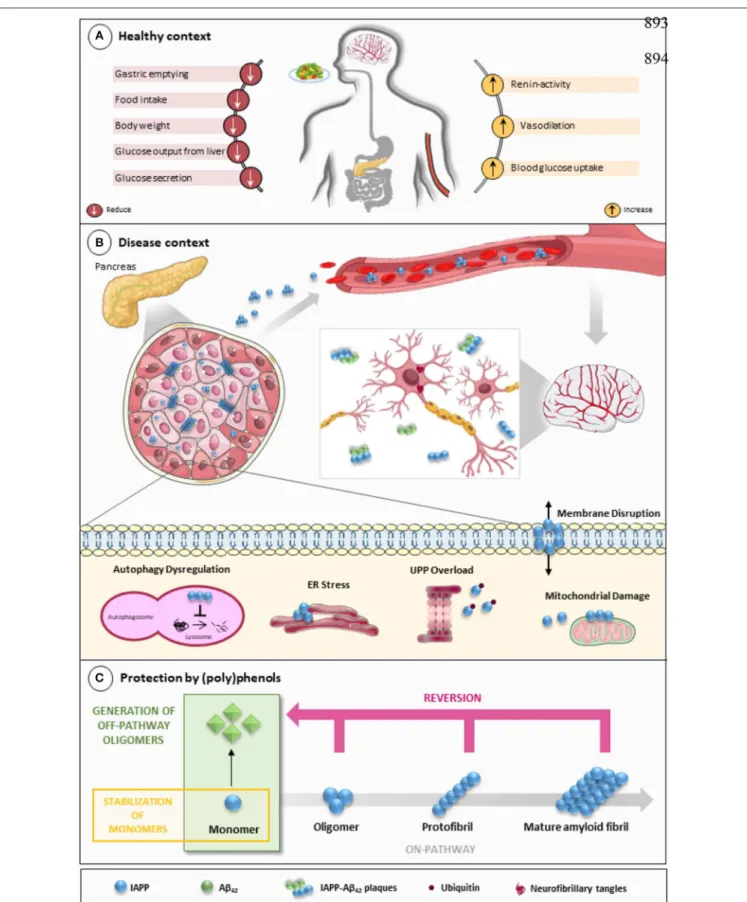
homeostasis (Figure 1A). In circulation, IAPP and insulin act as
synergistic partners: they stimulate the uptake of blood glucose
into muscle and fat tissues and inhibit the endogenous glucose
output from the liver, thus stabilizing the blood sugar levels
in post-meal conditions (
Zhang et al., 2016
). Physiologically,
IAPP also reduces the secretion of nutrient-stimulated glucagon,
regulates gastric emptying and satiation (
Lutz, 2010; Akter et al.,
2016
), and regulates blood pressure while having an effect on the
renin-angiotensin system (
Wookey et al., 1998
).
IAPP and insulin are co-secreted and processed by proprotein
convertase (PC) 1/3, PC 2, and carboxypeptidase E (
Yonemoto
et al., 2008
). During its biogenesis, IAPP is synthesized as
an 89-residue preprohormone (
Sanke et al., 1988
). Its signal
peptide is cleaved throughout the transport into the endoplasmic
reticulum (ER) to form proIAPP (
Akter et al., 2016
), which is
then processed in the late Golgi complex. To yield the mature
active form of the hormone, IAPP suffers amidation of the
C-terminal end, and a disulphide bond is formed between cysteines
at positions two and seven (
Westermark et al., 2011; Akter
et al., 2016; Bower and Hay, 2016
). Once produced, mature
IAPP is co-packaged with insulin in secretory granules of
β-cells to then be co-released in response to glucose (
Kahn et al.,
1993; Gedulin et al., 1997; Zhang et al., 2016
). In a
pre-diabetes/diabetes phenotypes, the increased production of insulin
is accompanied by augmented IAPP levels (
Kahn et al., 1991;
Mulder et al., 1996
). The overload and impairment of β-cell
processing machinery leads to the accumulation of unprocessed
IAPP forms (
Westermark et al., 2000; Paulsson et al., 2006
). These
events, together with the overwhelming of the ER, generate a
feed-forward cycle that promotes IAPP oligomerization, fibril
formation, and β-cell injury. Elevated proIAPP levels and
amyloid deposition in β-cells lacking PC1/3 and PC2 (
Marzban
et al., 2006
), as well as the presence of proIAPP in intracellular
fibrils (
Paulsson et al., 2006
), corroborate this idea. Despite
this, the role of unprocessed IAPP forms in the disease is not
fully understood.
Under pathological conditions, increased IAPP expression
and the generation of aberrant IAPP intermediates favor
misfolding, which leads to the formation of toxic aggregates
through a seeding-nucleation model, similar to prion replication
(
Mukherjee et al., 2017
). As misfolded molecules accumulate,
they build up into intracellular oligomers and larger amyloid
fibrils, which deposit in surrounding tissues, thus disrupting the
normal islet architecture and functioning (
Zhang et al., 2016
).
Deposits of aggregated IAPP are present in the pancreas of about
90% of T2DM patients, thus representing a histopathological
hallmark of the disease (
Westermark and Grimelius, 1973;
Mukherjee et al., 2017
). Corroborating the toxicity of these
aggregates in diabetes, the IAPP allele S20G, which raises IAPP
aggregation propensity (
Sakagashira et al., 2000
), has been
associated with premature onset diabetes and has accelerated
the decline of endogenous insulin secretion when compared to
non-S20G T2DM individuals (
Morita et al., 2011
). Moreover,
a transgenic mice model expressing human IAPP (hIAPP)
spontaneously developed amyloidosis, showing impaired insulin
production, β-cell loss, and fasting hyperglycemia (
Janson et al.,
1996
).
Although the link between IAPP aggregation and β-cell loss
seems to be convincing, there are some questions that remain
poorly understood, including (a) the initiation site and triggers
of amyloid formation, (b) the mechanisms of IAPP-mediated
toxicity in β-cell death, and (c) the nature of toxic IAPP
species (
Kanatsuka et al., 2018
). Initially, mature amyloid fibrils
were presumed to be the pathological structures (
Lorenzo and
FIGURE 1 | IAPP on physiological and pathological contexts and (poly)phenols-mediated protection. (A) In healthy conditions, IAPP is co-secreted with insulin to regulate glucose metabolism and homeostasis in a post-meal condition. Several functions are attributed to IAPP: slowing down gastric emptying, thereby reducing food intake and body weight; reducing glucose output from liver and glucagon secretion; and stimulating the renin-angiotensin system, vasodilation, and
FIGURE 1 | blood glucose uptake. (B) In disease conditions, IAPP pathological species deposit in the pancreas and in brain microvasculature where they induce the injury of small vessels and reach the brain parenchyma. In the brain environment, IAPP forms heterogeneous deposits with Aβ molecules increasing neurotoxicity. Proteostasis imbalance caused by Aβ/IAPP and tau may promote a set of molecular changes that culminate in glucose homeostasis dysregulation, cell death, and neurodegeneration. The molecular pathways of β-cell dysfunction are depicted: autophagy dysregulation; ER stress; UPP overload; membrane instability; and mitochondrial damage. (C) Protection mediated by (poly)phenols is associated with the stabilization of IAPP monomers, the remodeling of amyloids, protofibrils, and toxic oligomers to non-fibrillogenic “off-pathway” oligomers and monomers. Aβ, Amyloid beta; ER, Endoplasmic Reticulum; IAPP, Islet Amyloid Polypeptide; Ub, Ubiquitin; UPP, Ubiquitin Proteasome Pathway.
Yankner, 1996
), however, the current consensus is that toxicity is
mostly associated with soluble oligomers and protofibrils, which
may act as the trigger agents for β-cell depletion and diabetes
onset (
Haataja et al., 2008; Zhao et al., 2009; Zhang et al., 2016
).
Oligomeric IAPP species form ion-leaking pores in the
cell membranes (
Gurlo et al., 2010; Li et al., 2016b
), leading
to enhanced membrane fluidity, calcium dysregulation, and
decreased cell viability (
Huang et al., 2010
). IAPP oligomers have
also been found within disturbed mitochondrial membranes in
transgenic hIAPP mice and T2DM patients (
Gurlo et al., 2010
).
Unstable mitochondrial membrane potential induced by toxic
oligomers is thought to be involved in the overproduction of
reactive oxygen species (ROS), which are currently considered
to be potential initiators of IAPP toxicity (
Konarkowska et al.,
2005
). ER stress and impairment of proteasome function have
also been associated with hIAPP-induced toxicity (
Casas et al.,
2007; Gurlo et al., 2010
), however, in studies with cultured islets
producing IAPP at more physiological levels, ER stress was not
detected (
Hull et al., 2009
).
In heterozygous hIAPP+ mice with β cell–specific Atg7
deficiency (hIAPP
+Atg7
1βcellmice), the accumulation of toxic
oligomers, the loss of β-cells, and diabetes development is
linked to autophagy disruption, and this is suggestive of a role
for autophagy in IAPP toxicity (
Kim et al., 2014
). Moreover,
inhibition of lysosomal degradation in HIP (hIAPP transgenic)
rats increases hIAPP-mediated toxicity, whereas autophagy
stimulation protects β-cells against hIAPP-induced apoptosis
(
Rivera et al., 2011
). Chronic inflammation is also observed
in local and systemic amyloidosis due to the activation of the
NLRP3 inflammasome by hIAPP aggregates (
Masters et al.,
2010
). A general view of IAPP pathological mechanisms is given
in Figure 1B.
IAPP PATHOLOGY IN THE BRAIN
AD was considered for a long period to be caused by
Aβ amyloidogenesis and/or Tau aggregation (
Makin, 2018
).
Indeed, the presence of extracellular Aβ-42 amyloid plaques
and intracellular aggregates of hyperphosphorylated Tau are the
classical diagnostic markers of the disease (
Glenner et al., 1984;
Gotz, 2001; Gong et al., 2003
). Aβ exists mainly in two forms,
Aβ-40 and Aβ-42, composed of Aβ-40 and 42 amino acids, respectively,
and the increase of the Aβ-42/Aβ-40 ratio is strongly correlated
with AD severity (
Kuperstein et al., 2010
). Given the importance
of these players in disease pathophysiology, AD research has
been so focused on them that other possible agents have been
somewhat overlooked.
More recently, IAPP has emerged as a novel player in AD
pathology (
de la Monte and Wands, 2008; Wijesekara et al.,
2017; Norwitz et al., 2019; Qiu et al., 2019
). Notwithstanding,
the mechanisms by which IAPP contributes to AD pathology are
still unclear and deserve further enquiry. It is known that IAPP
and Aβ interact with each other and that IAPP promotes Aβ
aggregation in a seeding-like manner, leading to the formation
of cross-seeded oligomers (
Andreetto et al., 2010; Rezaei-Ghaleh
et al., 2011; Yan et al., 2014; Hu et al., 2015; Bakou et al., 2017;
Moreno-Gonzalez et al., 2017; Ge et al., 2018; Armiento et al.,
2019
). Interestingly, an aggregation blocker mimicking IAPP has
been proven to work against Aβ (
Yan et al., 2007
).
Hyperamylinemia has been pointed out as a possible trigger
for IAPP misfolding and aggregation, which may cause damage
in the brain (
Jackson et al., 2013
) and other organs by
various mechanisms that include the toxic gain-of-function of
IAPP aggregates and the loss of IAPP physiological functions
(
Westermark et al., 2011; Despa et al., 2012, 2014
). In addition,
IAPP dyshomeostais may affect other organs, particularly the
brain, in Aβ-42-dependent and -independent manners. This is
illustrated by studies showing that IAPP deposition impairs brain
function regardless of Aβ-42 pathology (
Srodulski et al., 2014
)
and that the brain of AD patients can also have IAPP deposits,
alone or in the presence of Aβ-42 (
Fawver et al., 2014
), even
if clinical signs of diabetes are absent (
Jackson et al., 2013;
Oskarsson et al., 2015
). A remarkable aspect is the fact that
the IAPP analog pramlintide is able to have a neuroprotective
effect, both in AD pathogenesis as well as on cognition in
general (
Adler et al., 2014
). This is in line with observations
that the key regions involved in Aβ-42-IAPP interaction—the
interface amino acid residues—are at the same time
high-affinity binding sites in both the cross- and self-aggregation of
these molecules (
Andreetto et al., 2010
). Pramlintide possibly
modulates these interactions by preventing them or promoting
the formation of biologically inactive fibrils. However, the in
silico cross seeding of Aβ-42 and IAPP fibril-like oligomers still
needs to be complemented with further experimental evidence
to support this hypothesis (
Berhanu et al., 2013
). In addition
to Aβ-42, it was also reported that the major component of
cerebrovascular plaques in the AD brain, the Aβ-40, can
cross-seed IAPP fibrillization, suggesting that these two peptides might
populate states that cross-interact (
O’Nuallain et al., 2004
). Other
mechanisms by which IAPP dyshomeostasis exacerbates Aβ-42
toxicity in the brain may include ROS generation (
Jhamandas and
MacTavish, 2004; Lim et al., 2010
) and the breakdown of insulin
degrading enzyme activity, which is responsible for insulin, IAPP,
and Aβ degradation (
Kurochkin and Goto, 1994; McDermott and
Gibson, 1997
).
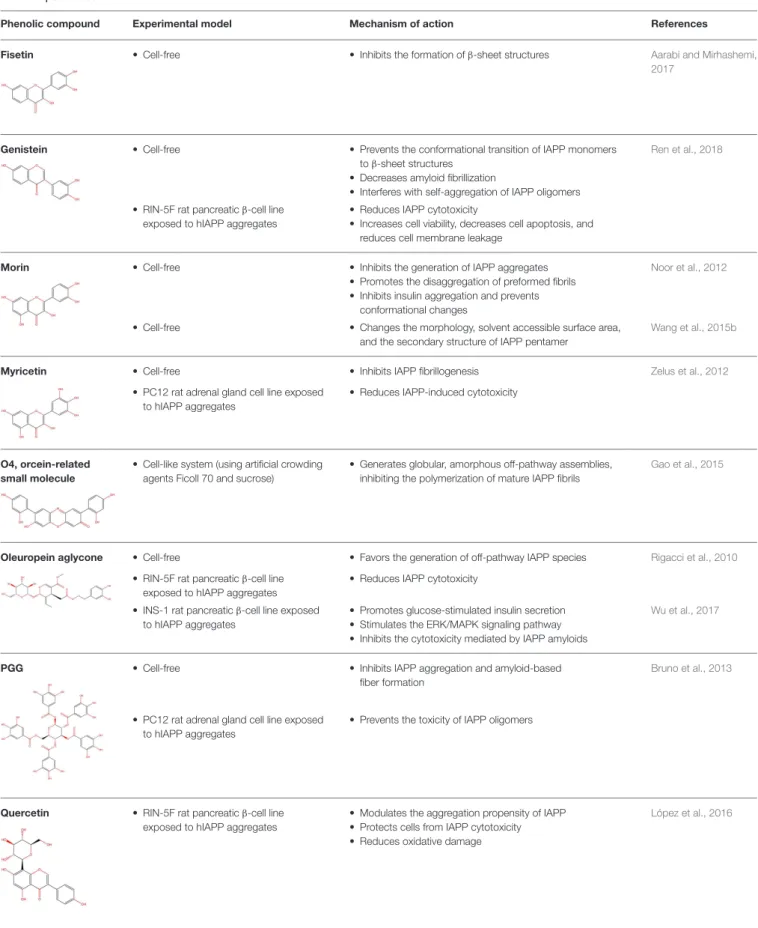
TABLE 1 | Effect of (poly)phenols on the aggregation of human IAPP.
Phenolic compound Experimental model Mechanism of action References
Baicalein • Cell-free • Inhibits the formation of β-sheet structures Mirhashemi, 2012
• Cell-free • Inhibits IAPP amyloid formation Velander et al., 2016
• INS-1 rat pancreatic β-cell line exposed to hIAPP aggregates
• Neutralizes IAPP-induced cytotoxicity in a dose depend manner
Curcumin • Cell-free • Modulates IAPP self-assembly by unfolding α-helix structures
Sparks et al., 2012
• Cell-free • Induces the dissociation of amyloid fibrils Shoval et al., 2008
• Cell-free • Alters the morphology and conformation of IAPP aggregates
Daval et al., 2010
• INS-1 rat pancreatic β-cell line exposed to hIAPP aggregates
• Protects cells against amyloid-induced toxicity
ECG • Cell-free • Reduces the rate constants of first nucleation step of amyloid fibril formation, inhibiting the first stages of this process
Kamihira-Ishijima et al., 2012
EGCG • Cell-free • Binds to specific conformers within an ensemble of IAPP monomers, affecting the oligomerization process and fibril assembly
Young et al., 2014a
• Cell-free • Delays the formation of β-sheet containing IAPP aggregates • Stabilizes non-fibrillar large aggregates during fibrillogenesis
Suzuki et al., 2012
• Cell-free • Inhibits the formation of IAPP-NH2fibrils
• Promotes the generation of IAPP-NH2
amorphous aggregates
Xu et al., 2017
• Cell-free • Remodels IAPP fibrils, but does not fully resolubilize them to unstructured monomers
Cao and Raleigh, 2012
• Cell-free • Presents an amyloid remodeling activity that is dependent on its auto-oxidation
Palhano et al., 2013
• Cell-free • Destabilizes IAPP oligomers
• Breaks the initial ordered pattern of two polymers, decreases their β-sheet content, and enlarges their conformational space
Wang et al., 2014
• Cell-free • Acts as an efficient amyloid inhibitor, especially in bulk solution
• Does not disaggregate amyloid fibrils at a phospholipid interface
Engel et al., 2012
• Cell-free • Binds to IAPP and induces the formation of amorphous aggregates
Franko et al., 2018
• Cell-free • Disaggregates preformed amyloid fibrils derived from IAPP Meng et al., 2010
• INS-1 rat pancreatic β-cell line exposed to hIAPP aggregates
• Protect cells against IAPP-induced cytotoxicity
• RIPHAT transgenic mice expressing hIAPP (sub-chronic administration)
• Reduces the amount of IAPP fibrils in the pancreas but does not alter the disease clinical signs
Franko et al., 2018
EGCG/Al(III) • Cell-free • Inhibits IAPP fibrillation Xu et al., 2016
EGCG:Zn(II) complex • Cell-free • Suppresses IAPP amyloid aggregation, both in the presence and absence of a lipid membranes • Promotes the stabilization of a helical structure of IAPP
Lee et al., 2019
• RIN-5F rat pancreatic β-cell line exposed to hIAPP aggregates
• Suppresses the cellular toxicity mediated by IAPP
Ferulic acid • Cell-free • Represses IAPP amyloid formation Mirhashemi, 2012
TABLE 1 | Continued
Phenolic compound Experimental model Mechanism of action References
Fisetin • Cell-free • Inhibits the formation of β-sheet structures Aarabi and Mirhashemi, 2017
Genistein • Cell-free • Prevents the conformational transition of IAPP monomers to β-sheet structures
• Decreases amyloid fibrillization
• Interferes with self-aggregation of IAPP oligomers
Ren et al., 2018
• RIN-5F rat pancreatic β-cell line exposed to hIAPP aggregates
• Reduces IAPP cytotoxicity
• Increases cell viability, decreases cell apoptosis, and reduces cell membrane leakage
Morin • Cell-free • Inhibits the generation of IAPP aggregates • Promotes the disaggregation of preformed fibrils • Inhibits insulin aggregation and prevents
conformational changes
Noor et al., 2012
• Cell-free • Changes the morphology, solvent accessible surface area, and the secondary structure of IAPP pentamer
Wang et al., 2015b
Myricetin • Cell-free • Inhibits IAPP fibrillogenesis Zelus et al., 2012
• PC12 rat adrenal gland cell line exposed to hIAPP aggregates
• Reduces IAPP-induced cytotoxicity
O4, orcein-related small molecule
• Cell-like system (using artificial crowding agents Ficoll 70 and sucrose)
• Generates globular, amorphous off-pathway assemblies, inhibiting the polymerization of mature IAPP fibrils
Gao et al., 2015
Oleuropein aglycone • Cell-free • Favors the generation of off-pathway IAPP species Rigacci et al., 2010
• RIN-5F rat pancreatic β-cell line exposed to hIAPP aggregates
• Reduces IAPP cytotoxicity
• INS-1 rat pancreatic β-cell line exposed to hIAPP aggregates
• Promotes glucose-stimulated insulin secretion • Stimulates the ERK/MAPK signaling pathway • Inhibits the cytotoxicity mediated by IAPP amyloids
Wu et al., 2017
PGG • Cell-free • Inhibits IAPP aggregation and amyloid-based fiber formation
Bruno et al., 2013
• PC12 rat adrenal gland cell line exposed to hIAPP aggregates
• Prevents the toxicity of IAPP oligomers
Quercetin • RIN-5F rat pancreatic β-cell line exposed to hIAPP aggregates
• Modulates the aggregation propensity of IAPP • Protects cells from IAPP cytotoxicity • Reduces oxidative damage
López et al., 2016
TABLE 1 | Continued
Phenolic compound Experimental model Mechanism of action References
Resveratrol • Cell-free • Stabilizes IAPP off-pathway oligomers Nedumpully-Govindan et al., 2016
• Cell-free • Inhibits the stacking of IAPP oligomers, avoiding its aggregation and accumulation
Jiang et al., 2011
• Cell-free • Promotes conformational changes of hIAPP1 pentamer (alters secondary structures, order degree,
and morphology)
Wang et al., 2015a
• Cell-free • Inhibits IAPP aggregation in the presence of
aggregation-fostering negatively charged lipid interfaces
Evers et al., 2009
• POPG model membrane • Promotes the generation of secondary structures (sheets and helices)
• Perturbs the interaction between IAPP and negative charged membranes
Lolicato et al., 2015
• INS-1 rat pancreatic β-cell line exposed to hIAPP aggregates
• Arrests IAPP fibril generation and associated cytotoxic effects at an early stage
Radovan et al., 2009
• INS-1 rat pancreatic β-cell line exposed to hIAPP aggregates
• Generates off-pathway non-toxic IAPP conformations • Enhances cell survival
Mishra et al., 2009
• INS-1 rat pancreatic β-cell line expressing hIAPP
• Decreases amyloid deposition and restores insulin secretion, though only when autophagy is not blocked
Lv et al., 2019
Resveratrol derivate • POPC/POPS model membrane • Eliminates amyloid growth and associated-membrane damage
Sciacca et al., 2018
Rosmarinic acid • Cell-free • Represses IAPP amyloidogenic aggregates by opening the β-sheet conformation of these structures
• Reduces IAPP-mediated toxicity
Zheng and Lazo, 2018
Rutin • Cell-free • Inhibits IAPP misfolding, disaggregates IAPP oligomers and reverts IAPP conformation toward the physiological state
Aitken et al., 2017
• FVB/NJ transgenic mice expressing hIAPP
• Slows diabetes progression
• SH-SY5Y human neuroblastoma cell line exposed to hIAPP aggregates
• Inhibits IAPP aggregation and reduces IAPP-induced neurotoxicity and oxidative stress
• Reduces the production of ROS and NO • Attenuates mitochondrial damage
Yu et al., 2015
• BV-2 mouse microglial cell line exposed to hIAPP aggregates
• Inhibits IAPP aggregation and reduces IAPP-induced neurotoxicity
• Increases GSH/GSSG ratio
• Reduces the production of MDA, GSSG and pro-inflammatory cytokines (TNF-α and IL-1β)
Salvianolic acid B • INS-1 rat pancreatic β-cell line exposed to hIAPP aggregates
• Suppresses membrane permeabilization, mitochondrial impairment, and cytotoxicity induced by IAPP • Inhibits the formation of lower order oligomers and fibrils
Cheng et al., 2013
Silibinin • Cell-free • Binds to specific conformers within an ensemble of IAPP monomers, affecting the oligomerization process and fibril assembly
Young et al., 2014a
• Cell-free • Favors the 3+ IAPP monomer preventing oligomerization • Disaggregates preformed fibrils into small
off-pathway oligomers
Young et al., 2014b
TABLE 1 | Continued
• Cell-free • Inhibits IAPP fibrillization through the suppression of toxic IAPP oligomerization
Cheng et al., 2012
• INS-1 rat pancreatic β-cell line exposed to hIAPP aggregates
• Reduces IAPP cytotoxicity in a dose-dependent manner
• INS-1 rat pancreatic β-cell line exposed to hIAPP aggregates
• Enhances estrogen receptors phosphorylation, leading to downregulation of ROS/RNS production induced by IAPP/Aβ-42
Yang et al., 2019a
• INS-1 rat pancreatic β-cell line exposed to hIAPP aggregates
• Protects cells from IAPP-induced apoptosis through activation of GLP-1R/PKA signaling
Yang et al., 2019b
8-β-d-Glucopyranosylgenistein
• Cell-free • Interacts with IAPP oligomers, preventing amyloid fibrillization
Jesus et al., 2014
• STZ-induced diabetic rats • Normalizes fasting hyperglycemia
• Ameliorates excessive post-prandial glucose excursions • Increases β-cell sensitivity and insulin secretion
Al(III), Aluminum III; Aβ, Amyloid beta; ECG, Epicatechin-3-Gallate; EGCG, Epigallocatechin-3-Gallate; ERK, Extracellular-Signal-Regulated Kinase; FVB/NJ, Friend Virus B NIH Jackson; GLP-1R, Glucagon-like Peptide-1 Receptor; GSH, Glutathione; GSSG, Glutathione disulfide; hIAPP, Human Islet Amyloid Polypeptide; hIAPP-NH2, Amidated Human
Islet Amyloid Poplypeptide; IL-1β, Interleukin-1beta; MAPK, Mitogen Activated Protein Kinase; MDA, Malondialdehyde; NO, Nitric Oxide; PGG, Pentagalloyl Glucose; PKA, Protein Kinase A; POPC, 2-oleoyl-1-pamlitoyl-sn-glyecro-3-phosphocholine; POPG, 2-oleoyl-1-pamlitoyl-sn-glyecro-3-glycerol; POPS, 1-palmitoyl-2-oleoyl-sn-glycero-3-phospho-l-serine; RNS, Reactive Nitrogen Species; ROS, Reactive Oxygen Species; STZ-induced diabetic rat, Streptozotocin-induced diabetic rat; TNF-α, Tumor Necrosis Factor-alpha; Zn(II), Zinc II.
As IAPP produced in the pancreas was shown to cross
the blood–brain barrier (
Banks et al., 1995; Banks and Kastin,
1998
) and to act on brain receptors, another important aspect
of IAPP pathophysiology in the brain is its role in neuronal
network function. Therefore, the effects of IAPP on neuronal
and glial cells have been investigated (
Chaitanya et al., 2011;
Xi et al., 2019
). As the primary site of IAPP action, the area
postrema (AP) is the brain structure best characterized in terms
of IAPP effects. While IAPP was shown to promote the formation
of AP neuronal projections in neonatal rodents, in adult
Wistar rats, IAPP injections were reported (1) to affect genes
controlling neurogenesis, particularly NeuroD1, (2) to increase
the number of newly proliferated AP-cells, and (3) to promote
differentiation of these cells into neurons (
Liberini et al., 2016
).
A study to investigate the mechanism by which IAPP modulates
neuronal excitability in AP neurons in rat brainstem slices
revealed that IAPP induced changes in excitatory responses of
neurons not displaying the hyperpolarization-activated cation
current. Furthermore, this study revealed that IAPP receptors
were mainly located on presynaptic glutamatergic terminals
connecting these neurons and that IAPP can increase glutamate
release enough to cause cell firing (
Fukuda et al., 2013
). Likewise,
hIAPP was shown to cause a dose-dependent membrane
depolarization and an increase in firing frequency in neurons of
the diagonal band of Broca, a cholinergic basal forebrain nucleus,
in rats (
Li and and Li, 2012
). Hence, IAPP dysregulation may have
important implications in neuronal function. IAPP receptors
were also proven to be mediators of the deleterious actions of
Aβ-42 in human neurons (
Jhamandas et al., 2011
). In this sense,
amylin receptors are seen as potential targets for AD therapies
(
Fu et al., 2017
).
AD is also considered a metabolic disease to a large extent.
It is clear that the brain loses its capacity to deal with glucose
and to respond to insulin and insulin-like growth factor (IGF)
(
Rivera et al., 2005; Liu et al., 2011; Talbot et al., 2012
). The
inability to respond to insulin and IGF leads to brain “starvation”
and neuronal loss (
de la Monte et al., 2009; de la Monte, 2012
).
Moreover, reducing the activity of the insulin/IGF signaling
cascade seems to protect from AD-like neurodegeneration in
nematodes, possibly by promoting more densely packed (and less
toxic) amyloid fibrils (
Cohen and Goedert, 2004; El-Ami et al.,
2014
). Thus, the link between AD and insulin/IGF exists, but it is
not easy to decipher. However, some of the mechanisms involved
are becoming clear. For example, the kinases that promote
Tau phosphorylation, causing cell death, become increasingly
activated due to insulin resistance (
Schubert et al., 2003, 2004
).
Then, Aβ-42 and its precursor protein levels also increase in the
brain as a result of insulin resistance (
Messier and Teutenberg,
2005
). One can state that, what could be called the “brain
diabetes phenotype,” i.e., increased resistance to insulin and to
IGF, can result in the appearance of classical AD molecular
biomarkers. Besides these clear links between diabetes and
AD-related peptides and proteins, the physiological functioning of
insulin and IGF promotes neuronal growth, differentiation, and
the formation of synapses, the lack of which is associated with
dementia (
Takeda et al., 2010; Westwood et al., 2014
). Overall,
insulin and IGF are required for synaptic plasticity and are
necessary for the cognitive function, the mechanisms of which are
only partially explained (
Qiu et al., 1998; Wickelgren, 1998; Zhao
and Alkon, 2001
). Oxidative stress is also associated with AD and
diabetes as well as advanced glycation end products (
Ramasamy
et al., 2011; Silveira et al., 2019
).
Although studies focusing on IAPP, insulin, and IGF are
stimulating and may lead to exciting developments, one must be
careful to draw definitive conclusions regarding multi-factorial
diseases such as AD, even if it has been analyzed through the
prism of the glucose metabolism. The road to a treatment for AD
is full of failed starts and drug-development pipeline failures even
if one (partially) understands the mechanism involved (
Berhanu
et al., 2013
). The fact that aging implies reductions in insulin
and IAPP release (
Dechenes et al., 1998
) provides important
clues that, in retrospect, should not have been overlooked for
so long (
Despa and Decarli, 2013
). The most powerful process
may be related to IGF-I, which has been shown to protect
and rescue hippocampal neurons from Aβ-42 neurotoxicity and
IAPP-induced toxicity, as a two-in-one solution. This was already
reported over 20 years ago (
Doré et al., 1997
), but, inexplicably,
it was somewhat ignored. This is no longer the case: the role of
IAPP in AD is not overlooked, as IAPP is even seen as the second
amyloid of AD pathology, a promising approach to understand
IAPP in relation to AD (
Fawver et al., 2014
). A curious finding
is that Aβ-42 directly activates the amylin-3 receptor subtype,
which may have major implications in AD pathology (
Fu et al.,
2012
) as well as in the “brain diabetes phenotype” that we have
proposed here. Moreover, it may also explain why pramlintide,
which acts on rat and human amylin receptors (
Gingell et al.,
2014
), can be protective in AD. Interestingly, Aβ-42 expressed
on human neurons can bind to amylin receptors (
Jhamandas
et al., 2011
), thereby triggering activation of apoptotic genes,
as IAPP does (
Jhamandas and Mactavish, 2012
). The activity
of these molecules on the brain may lead to neuronal death,
particularly in AD patients, thus explaining their phenotypic
profiles (
Kawarabayashi et al., 2001; Dubois et al., 2016; Li and
Huang, 2016; Li et al., 2016a
).
STRATEGIES FOR REDUCING IAPP
PROTEOTOXICITY USING NATURAL
COMPOUNDS
The links between IAPP and AD have not gone unnoticed,
with some authors presenting relevant reviews on the topic and
hinting at possible therapeutic strategies (
Despa and Decarli,
2013; Jackson et al., 2013; Bharadwaj et al., 2017;
Mietlicki-Baase, 2018
). The role of IAPP is undeniably relevant in
both diabetes and AD. Therefore, attempting to modulate
the oligomerization process or block its cytotoxicity is an
appealing venue for therapeutic strategies. Different approaches
have been attempted to block protein aggregation (Figure 1C).
Efforts have been made to interfere with the oligomerization
process itself by (i) stabilizing the monomer, (ii) remodeling
small oligomers from a fibrillogenic to non-fibrillogenic form,
thereby creating “off-pathway” oligomers, and (iii) reverting
fibrils to monomers or other intermediate species (
Pithadia
et al., 2016
; Table 1). Another strategy is to revert the
pathological effects of oligomers in cellular homeostasis,
such as ER stress, mitochondrial damage, cell membrane
permeabilization, autophagy impairment, inflammation, and
β-cell death (
Kiriyama and Nochi, 2018
).
The pleiotropic action of (poly)phenols toward chronic
diseases, particularly diabetes, is well-documented (
Bahadoran
et al., 2013; Panickar, 2013; Jasmin and Jaitak, 2019; Silveira et al.,
2019
). Most importantly, (poly)phenols have been linked to the
inhibition of aggregation of proteins such as IAPP and Aβ-42
(
Pithadia et al., 2016; Sequeira and Poppitt, 2017; Dhouafli et al.,
may interfere with different steps of the oligomerization process
(
Ladiwala et al., 2011
). The lower toxicity of these compounds
compared to synthetic molecules gives them an advantage as
future therapeutics. However, there is an urgent need for the
validation of their therapeutic potential in pre-clinical studies, as
most of the evidences derives from cell-free and in vitro assays
(Table 1).
Epigallocatechin gallate (EGCG) and resveratrol are the
most-studied compounds. EGCG has been proved to remodel
IAPP oligomers, create “off-pathway” intermediates, and prevent
monomers from shifting into β-sheet structures, a critical step in
early-stage aggregation processes (
Bieschke et al., 2010; Young
et al., 2014a; Nedumpully-Govindan et al., 2016
). Resveratrol
has also been suggested as an inhibitor of both IAPP and
Aβ-42 pathological effects. It was reported to lower intracellular
and secreted levels of Aβ-42 and also to stimulate intracellular
degradation (
Marambaud et al., 2005
). However, resveratrol
seems to be less effective than EGCG and inefficient in
preventing amyloid formation (
Tu et al., 2015
). In addition,
(poly)phenols have an important role in reducing
oligomer-induced cytotoxicity by modulating oxidative stress (
Chakrabarti
et al., 2013
), inflammation (
Apetz et al., 2014
), and autophagy
(
Rigacci et al., 2015
). A compilation of (poly)phenols as bioactive
components modulating IAPP toxicity is given in Table 1.
CONCLUDING REMARKS
This study shows how an “old story” can originate
ground-breaking knowledge and create new venues for a therapeutic
approach. The first high-impact paper describing IAPP as a
relevant factor for T2DM was published in 1994 (
Lorenzo et al.,
1994
). Since then, even though it took a long time for this field
to be pursued, knowledge has come a long way. It is now clear
that direct brain microvascular injury, leading to white matter
disease, is unequivocally originated by elevated IAPP levels in
diabetes (
Ly et al., 2017
), further supporting the “diabetes brain
phenotype” hypothesis that we have proposed here.
This change of approach is as cutting-edge as the finding that
amyloid fibrils precursors, but not the amyloid fibrils themselves,
are the cause of toxicity (
Martins et al., 2008
). We believe that
this study, and others that reflect on the role of IAPP in AD
in an unbiased manner (
Mietlicki-Baase, 2018
) complemented
by further experiments, will certainly pave the road to future
IAPP-centered drug development strategies against AD, as we
considering it as the result of a “diabetes brain phenotype.” Such
a view will certainly yield major therapeutic advances.
AUTHOR CONTRIBUTIONS
AR and SF wrote the manuscript. IM wrote and revised the
manuscript. RM designed the layout and wrote and revised
the manuscript.
FUNDING
e Tecnologia/Ministério da Educação e Ciência, through
national funds and co-funded by FEDER under the PT2020
Partnership Agreement. Funding from the INTERFACE
Programme, through the Innovation, Technology and Circular
Economy Fund (FITEC) is gratefully acknowledged. This study
was also supported by FCT via PTDC/BIA-MOL31104/2017
and UID/Multi/04462/2019-SubProj iNOVA4Health 44 to
RM and PD/BD/135504/2018 to AR. Sociedade Portuguesa
de Diabetologia for the Nuno Castelo-Branco Prize−2016,
attributed to RM, was also acknowledged. IM acknowledges
FCT-MCTES Program Concurso de Estímulo ao Emprego
Científico (CEECIND/01670/2017).
REFERENCES
Aarabi, M. H., and Mirhashemi, S. M. (2017). To estimate effective antiamyloidogenic property of melatonin and fisetin and their actions to destabilize amyloid fibrils. Pak. J. Pharm. Sci. 30, 1589–1593.
Adler, B. L., Yarchoan, M., Hwang, H. M., Louneva, N., Blair, J. A., Palm, R., et al. (2014). Neuroprotective effects of the amylin analogue pramlintide on Alzheimer’s disease pathogenesis and cognition. Neurobiol. Aging 35, 793–801. doi: 10.1016/j.neurobiolaging.2013.10.076
Aitken, J. F., Loomes, K. M., Riba-Garcia, I., Unwin, R. D., Prijic, G., Phillips, A. S., et al. (2017). Rutin suppresses human-amylin/hIAPP misfolding and oligomer formation in-vitro, and ameliorates diabetes and its impacts in human-amylin/hIAPP transgenic mice. Biochem. Biophys. Res. Commun. 482, 625–631. doi: 10.1016/j.bbrc.2016.11.083
Akter, R., Cao, P., Noor, H., Ridgway, Z., Tu, L.-H., Wang, H., et al. (2016). Islet amyloid polypeptide: structure, function, and pathophysiology. J. Diabetes Res. 2016:2798269. doi: 10.1155/2016/2798269
Alzheimer’s Association (2016). 2016 Alzheimer’s disease facts and figures. Alzheimers Dement. 12, 459–509. doi: 10.1016/j.jalz.2016.03.001
Andreetto, E., Yan, L. M., Tatarek-Nossol, M., Velkova, A., Frank, R., and Kapurniotu, A. (2010). Identification of hot regions of the Abeta-IAPP interaction interface as high-affinity binding sites in both cross-and self-association. Angew. Chem. Int. Ed. Engl. 49, 3081–3085. doi: 10.1002/anie.200904902
Apetz, N., Munch, G., Govindaraghavan, S., and Gyengesi, E. (2014). Natural compounds and plant extracts as therapeutics against chronic inflammation in Alzheimer’s disease–a translational perspective. CNS Neurol. Disord. Drug Targets 13, 1175–1191. doi: 10.2174/1871527313666140917110635
Armiento, V., Spanopoulou, A., and Kapurniotu, A. (2019). Peptide-based molecular strategies to interfere with protein misfolding, aggregation, and cell degeneration. Angew. Chem. Int. Ed. 59, 3372–84. doi: 10.1002/anie.201906908 Arya, S., Claud, S. L., Cantrell, K. L., and Bowers, M. T. (2019). Catalytic prion-like cross-talk between a key alzheimer’s disease tau-fragment r3 and the type 2 diabetes peptide IAPP. ACS Chem. Neurosci. 10, 4757–4765. doi: 10.1021/acschemneuro.9b00516
Bahadoran, Z., Mirmiran, P., and Azizi, F. (2013). Dietary polyphenols as potential nutraceuticals in management of diabetes: a review. J. Diabetes. Metab. Disord. 12:43. doi: 10.1186/2251-6581-12-43
Bakou, M., Hille, K., Kracklauer, M., Spanopoulou, A., Frost, C. V., Malideli, E., et al. (2017). Key aromatic/hydrophobic amino acids controlling a cross-amyloid peptide interaction versus cross-amyloid self-assembly. J. Biol. Chem. 292, 14587–14602. doi: 10.1074/jbc.M117.774893
Banks, W. A., and Kastin, A. J. (1998). Differential permeability of the blood-brain barrier to two pancreatic peptides: insulin and amylin. Peptides 19, 883–889. doi: 10.1016/S0196-9781(98)00018-7
Banks, W. A., Kastin, A. J., Maness, L. M., Huang, W., and Jaspan, J. B. (1995). Permeability of the blood-brain barrier to amylin. Life Sci. 57, 1993–2001. doi: 10.1016/0024-3205(95)02197-Q
Berhanu, W. M., Ya¸sar, F., and Hansmann, U. H. E. (2013). In silico cross seeding of Aβ and amylin fibril-like oligomers. ACS Chem. Neurosci. 4, 1488–1500. doi: 10.1021/cn400141x
Bharadwaj, P., Wijesekara, N., Liyanapathirana, M., Newsholme, P., Ittner, L., Fraser, P., et al. (2017). The link between type 2 diabetes and neurodegeneration: roles for amyloid-beta, amylin, and tau proteins. J. Alzheimers Dis. 59, 421–432. doi: 10.3233/JAD-161192
Bieschke, J., Russ, J., Friedrich, R. P., Ehrnhoefer, D. E., Wobst, H., Neugebauer, K., et al. (2010). EGCG remodels mature alpha-synuclein and amyloid-beta
fibrils and reduces cellular toxicity. Proc. Natl. Acad. Sci. U.S.A. 107, 7710–7715. doi: 10.1073/pnas.0910723107
Bondi, M. W., Edmonds, E. C., and Salmon, D. P. (2017). Alzheimer’s disease: past, present, and future. J. Int. Neuropsychol. Soc. 23, 818–831. doi: 10.1017/S135561771700100X
Bower, R. L., and Hay, D. L. (2016). Amylin structure-function relationships and receptor pharmacology: implications for amylin mimetic drug development. Br. J. Pharmacol. 173, 1883–1898. doi: 10.1111/bph.13496
Brunham, L. R., Kruit, J. K., Hayden, M. R., and Verchere, C. B. (2010). Cholesterol in beta-cell dysfunction: the emerging connection between HDL cholesterol and type 2 diabetes. Curr. Diab. Rep. 10, 55–60. doi: 10.1007/s11892-009-0090-x Bruno, E., Pereira, C., Roman, K. P., Takiguchi, M., Kao, P. Y., Nogaj, L. A., et al. (2013). IAPP aggregation and cellular toxicity are inhibited
by 1,2,3,4,6-penta-O-galloyl-beta-D-glucose. Amyloid 20, 34–38.
doi: 10.3109/13506129.2012.762761
Cao, P., and Raleigh, D. P. (2012). Analysis of the inhibition and remodeling of islet amyloid polypeptide amyloid fibers by flavanols. Biochemistry 51, 2670–2683. doi: 10.1021/bi2015162
Casas, S., Gomis, R., Gribble, F. M., Altirriba, J., Knuutila, S., and Novials, A. (2007). Impairment of the ubiquitin-proteasome pathway is a downstream endoplasmic reticulum stress response induced by extracellular human islet amyloid polypeptide and contributes to pancreatic beta-cell apoptosis. Diabetes 56, 2284–2294. doi: 10.2337/db07-0178
Chaitanya, G. V., Cromer, W. E., Wells, S. R., Jennings, M. H., Couraud, P. O., Romero, I. A., et al. (2011). Gliovascular and cytokine interactions modulate brain endothelial barrier in vitro. J Neuroinflammation 8:162. doi: 10.1186/1742-2094-8-162
Chakrabarti, S., Sinha, M., Thakurta, I. G., Banerjee, P., and Chattopadhyay, M. (2013). Oxidative stress and amyloid beta toxicity in Alzheimer’s disease: intervention in a complex relationship by antioxidants. Curr. Med. Chem. 20, 4648–4664. doi: 10.2174/09298673113209990152
Cheng, B., Gong, H., Li, X., Sun, Y., Chen, H., Zhang, X., et al. (2013). Salvianolic acid B inhibits the amyloid formation of human islet amyloid polypeptide and protects pancreatic beta-cells against cytotoxicity. Proteins 81, 613–621. doi: 10.1002/prot.24216
Cheng, B., Gong, H., Li, X., Sun, Y., Zhang, X., Chen, H., et al. (2012). Silibinin inhibits the toxic aggregation of human islet amyloid polypeptide. Biochem. Biophys. Res. Commun. 419, 495–499. doi: 10.1016/j.bbrc.2012.02.042 Cohen, P., and Goedert, M. (2004). GSK3 inhibitors: development and therapeutic
potential. Nat. Rev. Drug Discov. 3, 479–487. doi: 10.1038/nrd1415
Cremades, N., and Dobson, C. M. (2018). The contribution of biophysical and structural studies of protein self-assembly to the design of therapeutic strategies for amyloid diseases. Neurobiol. Dis. 109(Pt B), 178–190. doi: 10.1016/j.nbd.2017.07.009
Cukierman, T., Gerstein, H. C., and Williamson, J. D. (2005). Cognitive decline and dementia in diabetes–systematic overview of prospective observational studies. Diabetologia 48, 2460–2469. doi: 10.1007/s00125-005-0023-4
Daval, M., Bedrood, S., Gurlo, T., Huang, C. J., Costes, S., Butler, P. C., et al. (2010). The effect of curcumin on human islet amyloid polypeptide misfolding and toxicity. Amyloid 17, 118–128. doi: 10.3109/13506129.2010. 530008
de la Monte, S. M. (2012). Contributions of brain insulin resistance and deficiency in amyloid-related neurodegeneration in Alzheimer’s disease. Drugs 72, 49–66. doi: 10.2165/11597760-000000000-00000
de la Monte, S. M. (2014). Type 3 diabetes is sporadic Alzheimers
disease: mini-review. Eur. Neuropsychopharmacol. 24, 1954–1960.
de la Monte, S. M., Longato, L., Tong, M., and Wands, J. R. (2009). Insulin resistance and neurodegeneration: roles of obesity, type 2 diabetes mellitus and non-alcoholic steatohepatitis. Curr. Opin. Investig. Drugs 10, 1049–1060. de la Monte, S. M., and Wands, J. R. (2008). Alzheimer’s disease is type
3 diabetes-evidence reviewed. J. Diabetes Sci. Technol. 2, 1101–1113. doi: 10.1177/193229680800200619
Dechenes, C. J., Verchere, C. B., Andrikopoulos, S., and Kahn, S. E. (1998). Human aging is associated with parallel reductions in insulin and amylin release. Am. J. Physiol. 275, E785–91. doi: 10.1152/ajpendo.1998.275.5.E785
Despa, F., and Decarli, C. (2013). Amylin: what might be its role in Alzheimer’s disease and how could this affect therapy? Expert Rev. Proteomics 10, 403–405. doi: 10.1586/14789450.2013.841549
Despa, S., Margulies, K. B., Chen, L., Knowlton, A. A., Havel, P. J., Taegtmeyer, H., et al. (2012). Hyperamylinemia contributes to cardiac dysfunction in obesity and diabetes: a study in humans and rats. Circ. Res. 110, 598–608. doi: 10.1161/CIRCRESAHA.111.258285
Despa, S., Sharma, S., Harris, T. R., Dong, H., Li, N., Chiamvimonvat, N., et al. (2014). Cardioprotection by controlling hyperamylinemia in a “humanized” diabetic rat model. J. Am. Heart Assoc. 3:e001015. doi: 10.1161/JAHA.114.001015
Dhouafli, Z., Cuanalo-Contreras, K., Hayouni, E. A., Mays, C. E., Soto, C., and Moreno-Gonzalez, I. (2018). Inhibition of protein misfolding and aggregation by natural phenolic compounds. Cell Mol. Life Sci. 75, 3521–3538. doi: 10.1007/s00018-018-2872-2
Donath, M. Y., and Shoelson, S. E. (2011). Type 2 diabetes as an inflammatory disease. Nat. Rev. Immunol. 11, 98–107. doi: 10.1038/nri2925
Doré, S., Kar, S., and Quirion, R. (1997). Insulin-like growth factor I protects and rescues hippocampal neurons against β-amyloid- and human amylin-induced toxicity. Proc. Natl. Acad. Sci. U.S.A. 94, 4772–4777. doi: 10.1073/pnas.94.9.4772
Dubois, B., Padovani, A., Scheltens, P., Rossi, A., and Dell’Agnello, G. (2016). Timely diagnosis for Alzheimer’s disease: a literature review on benefits and challenges. J. Alzheimers Dis. 49, 617–631. doi: 10.3233/JAD-150692 El-Ami, T., Moll, L., Carvalhal Marques, F., Volovik, Y., Reuveni, H., and Cohen,
E. (2014). A novel inhibitor of the insulin/IGF signaling pathway protects from age-onset, neurodegeneration-linked proteotoxicity. Aging Cell 13, 165–174. doi: 10.1111/acel.12171
Engel, M. F., vandenAkker, C. C., Schleeger, M., Velikov, K. P., Koenderink, G. H., and Bonn, M. (2012). The polyphenol EGCG inhibits amyloid formation less efficiently at phospholipid interfaces than in bulk solution. J. Am. Chem. Soc. 134, 14781–14788. doi: 10.1021/ja3031664
Evers, F., Jeworrek, C., Tiemeyer, S., Weise, K., Sellin, D., Paulus, M., et al. (2009). Elucidating the mechanism of lipid membrane-induced IAPP fibrillogenesis and its inhibition by the red wine compound resveratrol: a synchrotron X-ray reflectivity study. J. Am. Chem. Soc. 131, 9516–9521. doi: 10.1021/ja8097417 Fawver, J. N., Ghiwot, Y., Koola, C., Carrera, W., Rodriguez-Rivera, J.,
Hernandez, C., et al. (2014). Islet amyloid polypeptide (IAPP): a second amyloid in Alzheimer’s disease. Curr. Alzheimer Res. 11, 928–940. doi: 10.2174/1567205011666141107124538
Federation ID. (2009). IDF Diabetes Atlas, 4th Edn. Montreal, CA: International Diabetes Federation.
Franko, A., Rodriguez Camargo, D. C., Böddrich, A., Garg, D., Rodriguez
Camargo, A., Rathkolb, B., et al. (2018). Epigallocatechin gallate
(EGCG) reduces the intensity of pancreatic amyloid fibrils in human islet amyloid polypeptide (hIAPP) transgenic mice. Sci. Rep. 8:1116. doi: 10.1038/s41598-017-18807-8
Fu, W., Patel, A., Kimura, R., Soudy, R., and Jhamandas, J. H. (2017).
Amylin receptor: a potential therapeutic target for Alzheimer’s
disease. Trends Mol. Med. 23, 709–720. doi: 10.1016/j.molmed.2017. 06.003
Fu, W., Ruangkittisakul, A., MacTavish, D., Shi, J. Y., Ballanyi, K., and Jhamandas, J. H. (2012). Amyloid beta (Abeta) peptide directly activates amylin-3 receptor subtype by triggering multiple intracellular signaling pathways. J. Biol. Chem. 287, 18820–18830. doi: 10.1074/jbc.M111.331181
Fukuda, T., Hirai, Y., Maezawa, H., Kitagawa, Y., and Funahashi, M. (2013). Electrophysiologically identified presynaptic mechanisms underlying amylinergic modulation of area postrema neuronal excitability in rat brain slices. Brain Res. 1494, 9–16. doi: 10.1016/j.brainres.2012.11.051
Gao, M., Estel, K., Seeliger, J., Friedrich, R. P., Dogan, S., Wanker, E. E., et al. (2015). Modulation of human IAPP fibrillation: cosolutes, crowders and chaperones. Phys. Chem. Chem. Phys. 17, 8338–8348. doi: 10.1039/C4CP04682J
Ge, X., Yang, Y., Sun, Y., Cao, W., and Ding, F. (2018). Islet amyloid polypeptide promotes amyloid-beta aggregation by binding-induced helix-unfolding of the amyloidogenic core. ACS Chem. Neurosci. 9, 967–975. doi: 10.1021/acschemneuro.7b00396
Gedulin, B. R., Rink, T. J., and Young, A. A. (1997). Dose-response for glucagonostatic effect of amylin in rats. Metabolism 46, 67–70. doi: 10.1016/S0026-0495(97)90170-0
Gingell, J. J., Burns, E. R., and Hay, D. L. (2014). Activity of pramlintide, rat and human amylin but not Abeta1-42 at human amylin receptors. Endocrinology 155, 21–26. doi: 10.1210/en.2013-1658
Glenner, G. G., Wong, C. W., Quaranta, V., and Eanes, E. D. (1984). The amyloid deposits in Alzheimer’s disease: their nature and pathogenesis. Appl. Pathol. 2, 357–369.
Gong, Y., Chang, L., Viola, K. L., Lacor, P. N., Lambert, M. P., Finch, C. E., et al. (2003). Alzheimer’s disease-affected brain: presence of oligomeric A beta ligands (ADDLs) suggests a molecular basis for reversible memory loss. Proc. Natl. Acad. Sci. U.S.A. 100, 10417–10422. doi: 10.1073/pnas.1834302100 Gotz, J. (2001). Tau and transgenic animal models. Brain Res. Brain Res. Rev. 35,
266–286. doi: 10.1016/S0165-0173(01)00055-8
Gurlo, T., Ryazantsev, S., Huang, C.-,j., Yeh, M. W., Reber, H. A., Hines, O. J., et al. (2010). Evidence for proteotoxicity in beta cells in type 2 diabetes: toxic islet amyloid polypeptide oligomers form intracellularly in the secretory pathway. Am. J. Pathol. 176, 861–869. doi: 10.2353/ajpath.2010.090532
Haataja, L., Gurlo, T., Huang, C. J., and Butler, P. C. (2008). Islet amyloid in type 2 diabetes, and the toxic oligomer hypothesis. Endocr. Rev. 29, 303–316. doi: 10.1210/er.2007-0037
Hauser, C. A., Maurer-Stroh, S., and Martins, I. C. (2014). Amyloid-based nanosensors and nanodevices. Chem. Soc. Rev. 43, 5326–5345. doi: 10.1039/C4CS00082J
Hu, R., Zhang, M., Chen, H., Jiang, B., and Zheng, J. (2015). Cross-seeding interaction between beta-amyloid and human islet amyloid polypeptide. ACS Chem. Neurosci. 6, 1759–1768. doi: 10.1021/acschemneuro.5b00192 Huang, C.-J., Gurlo, T., Haataja, L., Costes, S., Daval, M., Ryazantsev, S.,
et al. (2010). Calcium-activated calpain-2 is a mediator of beta cell dysfunction and apoptosis in type 2 diabetes. J.Biol. Chem. 285, 339–348. doi: 10.1074/jbc.M109.024190
Hull, R. L., Zraika, S., Udayasankar, J., Aston-Mourney, K., Subramanian, S. L., and Kahn, S. E. (2009). Amyloid formation in human IAPP transgenic mouse islets and pancreas, and human pancreas, is not associated with endoplasmic reticulum stress. Diabetologia 52, 1102–1111. doi: 10.1007/s00125-009-1329-4 Ishikawa, M., Iwasaki, Y., Yatoh, S., Kato, T., Kumadaki, S., Inoue, N., et al. (2008).
Cholesterol accumulation and diabetes in pancreatic beta-cell-specific SREBP-2 transgenic mice: a new model for lipotoxicity. J. Lipid. Res. 49, SREBP-25SREBP-24–SREBP-2534. doi: 10.1194/jlr.M800238-JLR200
Jackson, K., Barisone, G. A., Diaz, E., Jin, L. W., DeCarli, C., and Despa, F. (2013). Amylin deposition in the brain: a second amyloid in Alzheimer disease? Ann. Neurol. 74, 517–526. doi: 10.1002/ana.23956
Janson, J., Soeller, W. C., Roche, P. C., Nelson, R. T., Torchia, A. J., Kreutter, D. K., et al. (1996). Spontaneous diabetes mellitus in transgenic mice expressing human islet amyloid polypeptide. Proc. Natl. Acad. Sci. U.S.A. 93, 7283–7288. doi: 10.1073/pnas.93.14.7283
Jasmin, and Jaitak, V. (2019). A review on molecular mechanism of flavonoids as antidiabetic agents. Mini. Rev. Med. Chem. 19, 762–786. doi: 10.2174/1389557519666181227153428
Jesus, A. R., Dias, C., Matos, A. M., de Almeida, R. F. M., Viana, A. S., Marcelo, F., et al. (2014). Exploiting the therapeutic potential of 8-β-d-glucopyranosylgenistein: synthesis, antidiabetic activity, and molecular interaction with islet amyloid polypeptide and amyloid β-peptide (1–42). J. Med. Chem. 57, 9463–9472. doi: 10.1021/jm501069h
Jhamandas, J. H., Li, Z., Westaway, D., Yang, J., Jassar, S., and MacTavish, D. (2011). Actions of β-amyloid protein on human neurons are expressed through the amylin receptor. Am. J. Pathol. 178, 140–149. doi: 10.1016/j.ajpath.2010.11.022 Jhamandas, J. H., and MacTavish, D. (2004). Antagonist of the amylin receptor blocks beta-amyloid toxicity in rat cholinergic basal forebrain neurons. J. Neurosci. 24, 5579–5584. doi: 10.1523/JNEUROSCI.1051-04.2004
Jhamandas, J. H., and Mactavish, D. (2012). β-Amyloid protein (Aβ) and human amylin regulation of apoptotic genes occurs through the amylin receptor. Apoptosis 17, 37–47. doi: 10.1007/s10495-011-0656-3
Jiang, P., Li, W., Shea, J. E., and Mu, Y. (2011). Resveratrol inhibits the formation of multiple-layered β-sheet oligomers of the human islet amyloid polypeptide segment 22-27. Biophys. J. 100, 1550–1558. doi: 10.1016/j.bpj.2011.02.010 Kahn, S. E., Fujimoto, W. Y., D’Alessio, D. A., Ensinck, J. W., and Porte, D. Jr.
(1991). Glucose stimulates and potentiates islet amyloid polypeptide secretion by the B-cell. Horm. Metab. Res. 23, 577–580. doi: 10.1055/s-2007-1003759 Kahn, S. E., Verchere, C. B., D’Alessio, D. A., Cook, D. L., and Fujimoto, W.
Y. (1993). Evidence for selective release of rodent islet amyloid polypeptide through the constitutive secretory pathway. Diabetologia 36, 570–573. doi: 10.1007/BF02743276
Kamihira-Ishijima, M., Nakazawa, H., Kira, A., Naito, A., and Nakayama, T. (2012). Inhibitory mechanism of pancreatic amyloid fibril formation: formation of the complex between tea catechins and the fragment of residues 22-27. Biochemistry 51, 10167–10174. doi: 10.1021/bi3012274
Kanatsuka, A., Kou, S., and Makino, H. (2018). Correction to: IAPP/amylin and betacell failure: implication of the risk factors of type 2 diabetes. Diabetol. Int. 9, 143–157. doi: 10.1007/s13340-018-0363-1
Kandimalla, R., Thirumala, V., and Reddy, P. H. (2017). Is Alzheimer’s disease a Type 3 Diabetes? A critical appraisal. Biochim. Biophys. Acta Mol. Basis. Dis. 1863, 1078–1089. doi: 10.1016/j.bbadis.2016.08.018
Kawarabayashi, T., Younkin, L. H., Saido, T. C., Shoji, M., Ashe, K. H., and Younkin, S. G. (2001). Age-dependent changes in brain, CSF, and plasma amyloid (beta) protein in the Tg2576 transgenic mouse model of Alzheimer’s disease. J. Neurosci. 21, 372–381. doi: 10.1523/JNEUROSCI.21-02-00372.2001 Kim, J., Cheon, H., Taek Jeong, Y., Quan, W., Kim, K., Min Cho, J., et al. (2014).
Amyloidogenic peptide oligomer accumulation in autophagy-deficient β cells induces diabetes. J. Clin. Invest. 124, 3311–3324. doi: 10.1172/JCI69625 Kiriyama, Y., and Nochi, H. (2018). Role and cytotoxicity of amylin and
protection of pancreatic islet beta-cells from amylin cytotoxicity. Cell 7:95. doi: 10.3390/cells7080095
Konarkowska, B., Aitken, J. F., Kistler, J., Zhang, S., and Cooper, G. J. (2005). Thiol reducing compounds prevent human amylin-evoked cytotoxicity. FEBS J. 272, 4949–4959. doi: 10.1111/j.1742-4658.2005.04903.x
Kuperstein, I., Broersen, K., Benilova, I., Rozenski, J., Jonckheere, W., Debulpaep, M., et al. (2010). Neurotoxicity of Alzheimer’s disease Abeta peptides is induced by small changes in the Aβ42 to Aβ40 ratio. EMBO J. 29, 3408–3420. doi: 10.1038/emboj.2010.211
Kurochkin, I. V., and Goto, S. (1994). Alzheimer’s beta-amyloid peptide specifically interacts with and is degraded by insulin degrading enzyme. FEBS Lett. 345, 33–37. doi: 10.1016/0014-5793(94)00387-4
Ladiwala, A. R., Dordick, J. S., and Tessier, P. M. (2011). Aromatic small molecules remodel toxic soluble oligomers of amyloid beta through three independent pathways. J. Biol. Chem. 286, 3209–3218. doi: 10.1074/jbc.M110.173856 Lane, C. A., Hardy, J., and Schott, J. M. (2018). Alzheimer’s disease. Eur. J. Neurol.
25, 59–70. doi: 10.1111/ene.13439
Lee, Y. H., Lin, Y., Cox, S. J., Kinoshita, M., Sahoo, B. R., Ivanova, M., et al. (2019). Zinc boosts EGCG’s hIAPP amyloid Inhibition both in solution and membrane. Biochim. Biophys. Acta Proteins Proteom. 1867, 529–536. doi: 10.1016/j.bbapap.2018.11.006
Leszek, J., Trypka, E., Tarasov, V. V., Ashraf, G. M., and Aliev, G. (2017). Type 3 diabetes mellitus: a novel implication of Alzheimers disease. Curr. Top. Med. Chem. 17, 1331–1335. doi: 10.2174/1568026617666170103163403
Li, W., and Huang, E. (2016). An update on type 2 diabetes mellitus as a risk factor for dementia. J. Alzheimers Dis. 53, 393–402. doi: 10.3233/JAD-160114 Li, W., Wang, T., and Xiao, S. (2016a). Type 2 diabetes mellitus might be a
risk factor for mild cognitive impairment progressing to Alzheimer’s disease. Neuropsychiatr. Dis. Treat. 12, 2489–2495. doi: 10.2147/NDT.S111298 Li, X., Wan, M., Gao, L., and Fang, W. (2016b). Mechanism of inhibition of human
islet amyloid polypeptide-induced membrane damage by a small organic fluorogen. Sci. Rep. 6:21614. doi: 10.1038/srep21614
Li, Z. M., and Li, X. F. (2012). Functional coupling reactions of human amylin receptor and nicotinic acetylcholine receptors in rat brain neurons. Acta Psychol. Sin. 64, 69–74.
Liberini, C. G., Borner, T., Boyle, C. N., and Lutz, T. A. (2016). The satiating hormone amylin enhances neurogenesis in the area postrema of adult rats. Mol. Metab. 5, 834–843. doi: 10.1016/j.molmet.2016.06.015
Lim, Y. A., Rhein, V., Baysang, G., Meier, F., Poljak, A., Raftery, M. J., et al. (2010). Abeta and human amylin share a common toxicity pathway via mitochondrial dysfunction. Proteomics 10, 1621–1633. doi: 10.1002/pmic.200900651 Liu, Y., Liu, F., Grundke-Iqbal, I., Iqbal, K., and Gong, C. X. (2011). Deficient brain
insulin signalling pathway in Alzheimer’s disease and diabetes. J. Pathol. 225, 54–62. doi: 10.1002/path.2912
Lolicato, F., Raudino, A., Milardi, D., and La Rosa, C. (2015). Resveratrol interferes with the aggregation of membrane-bound human-IAPP: a molecular dynamics study. Eur. J. Med. Chem. 92, 876–881. doi: 10.1016/j.ejmech.2015.01.047 López, L. C., Varea, O., Navarro, S., Carrodeguas, J. A., Sanchez de Groot, N.,
Ventura, S., et al. (2016). Benzbromarone, quercetin, and folic acid inhibit amylin aggregation. Int. J. Mol. Sci. 17, 964. doi: 10.3390/ijms17060964 Lorenzo, A., Razzaboni, B., Weir, G. C., and Yankner, B. A. (1994). Pancreatic
islet cell toxicity of amylin associated with type-2 diabetes mellitus. Nature 368, 756–760. doi: 10.1038/368756a0
Lorenzo, A., and Yankner, B. A. (1996). Amyloid fibril toxicity in Alzheimer’s disease and diabetes. Ann. N. Y. Acad. Sci. 777, 89–95. doi: 10.1111/j.1749-6632.1996.tb34406.x
Lutz, T. A. (2010). The role of amylin in the control of energy homeostasis.
Am. J. Physiol. Regul. Integr. Comp. Physiol. 298, R1475–1484.
doi: 10.1152/ajpregu.00703.2009
Lv, W., Zhang, J., Jiao, A., Wang, B., Chen, B., and Lin, J. (2019). Resveratrol attenuates hIAPP amyloid formation and restores the insulin secretion ability in hIAPP-INS1 cell line via enhancing autophagy. Can. J. Physiol. Pharmacol. 97, 82–89. doi: 10.1139/cjpp-2016-0686
Ly, H., Verma, N., Wu, F., Liu, M., Saatman, K. E., Nelson, P. T., et al. (2017). Brain microvascular injury and white matter disease provoked by diabetes-associated hyperamylinemia. Ann. Neurol. 82, 208–222. doi: 10.1002/ana.24992 Makin, S. (2018). The amyloid hypothesis on trial. Nature 559, S4–S7.
doi: 10.1038/d41586-018-05719-4
Marambaud, P., Zhao, H., and Davies, P. (2005). Resveratrol promotes clearance of Alzheimer’s disease amyloid-beta peptides. J. Biol. Chem. 280, 37377–37382. doi: 10.1074/jbc.M508246200
Martins, I. C., Kuperstein, I., Wilkinson, H., Maes, E., Vanbrabant, M., Jonckheere, W., et al. (2008). Lipids revert inert Abeta amyloid fibrils to neurotoxic protofibrils that affect learning in mice. EMBO J. 27, 224–233. doi: 10.1038/sj.emboj.7601953
Marzban, L., Rhodes, C. J., Steiner, D. F., Haataja, L., Halban, P. A., and Verchere, C. B. (2006). Impaired NH2-terminal processing of human proislet amyloid polypeptide by the prohormone convertase PC2 leads to amyloid formation and cell death. Diabetes 55, 2192–2201. doi: 10.2337/db05-1566
Masters, S. L., Dunne, A., Subramanian, S. L., Hull, R. L., Tannahill, G. M., Sharp, F. A., et al. (2010). Activation of the NLRP3 inflammasome by islet amyloid polypeptide provides a mechanism for enhanced IL-1β in type 2 diabetes. Nat. Immunol. 11, 897–904. doi: 10.1038/ni.1935
Maurer-Stroh, S., Debulpaep, M., Kuemmerer, N., Lopez de la Paz, M., Martins, I. C., Reumers, J., et al. (2010). Exploring the sequence determinants of amyloid structure using position-specific scoring matrices. Nat. Methods 7, 237–242. doi: 10.1038/nmeth.1432
McDermott, J. R., and Gibson, A. M. (1997). Degradation of Alzheimer’s beta-amyloid protein by human and rat brain peptidases: involvement of insulin-degrading enzyme. Neurochem. Res. 22, 49–56. doi: 10.1023/A:1027325304203 Meng, F., Abedini, A., Plesner, A., Verchere, C. B., and Raleigh, D. P. (2010). The flavanol (-)-epigallocatechin 3-gallate inhibits amyloid formation by islet amyloid polypeptide, disaggregates amyloid fibrils, and protects cultured cells against IAPP-induced toxicity. Biochemistry 49, 8127–8133. doi: 10.1021/bi100939a
Messier, C., and Teutenberg, K. (2005). The role of insulin, insulin growth factor, and insulin-degrading enzyme in brain aging and Alzheimer’s disease. Neural. Plast. 12, 311–328. doi: 10.1155/NP.2005.311
Mietlicki-Baase, E. G. (2018). Amylin in Alzheimer’s disease: pathological peptide or potential treatment? Neuropharmacology 136(Pt B), 287–297. doi: 10.1016/j.neuropharm.2017.12.016
Mirhashemi, S. M. (2012). To evaluate likely antiamyloidogenic property of ferulic acid and baicalein against human islet amyloid polypeptide aggregation, in vitro study. Afr. J. Pharm. Pharmaco. 6, 671–676. doi: 10.5897/AJPP12.033 Mishra, R., Sellin, D., Radovan, D., Gohlke, A., and Winter, R. (2009). Inhibiting
islet amyloid polypeptide fibril formation by the red wine compound resveratrol. Chembiochem 10, 445–449. doi: 10.1002/cbic.200800762