LOCATION MODEL FOR CCA-TREATED
WOOD WASTE REMEDIATION UNITS
by
Helena Isabel Caseiro Rego Gomes
Dissertation submitted in partial fulfilment of the requirements for the Degree of Mestre em Ciência e Sistemas de Informação Geográfica
[Master in Geographical Information Systems and Science]
Instituto Superior de Estatística e Gestão de Informação da
LOCATION MODEL FOR CCA-TREATED
WOOD WASTE REMEDIATION UNITS
Dissertation supervised by
Professora Doutora Alexandra Branco Ribeiro Professor Doutor Víctor Lobo
LOCATION MODEL FOR CCA-TREATED WOOD WASTE
REMEDIATION UNITS
ABSTRACT
There is growing concern about the environmental impacts and increasing difficulty to dispose preservative treated wood products at the end of their service life. In the next decades, in Portugal, a significant increase is expected in the amounts of treated wood that annually needs to be properly disposed. The recycling of these wastes, containing chromium, copper and arsenic (in the case of CCA-treated wood), should only be made after its remediation, so planning and optimisation of the remediation units locations is of major importance.
The objective of this study is the development of a location model to optimise the location of remediation plants for the treatment of CCA-treated wood waste for further recycling, minimizing costs and respecting environmental criteria.
The location model was implemented with geographic information using Geographic Information Systems (ArcGIS 8.2 © ESRI). All the uses of treated wood products were considered, using soil occupation data and the results of a questionnaire sent to wood preservation industries.
Two different clustering methods (Self-Organizing Maps and K-means) were tested in different conditions to solve the multisource Weber problem using SOMToolbox for MATLAB.
MODELO DE LOCALIZAÇÃO DE UNIDADES DE REMEDIAÇÃO
DE RESÍDUOS DE MADEIRA PRESERVADA COM CCA
RESUMO
Os resíduos de madeira preservada têm originado uma preocupação ambiental crescente pela dificuldade em encaminhá-los para um destino final ambientalmente adequado. Prevêm-se aumentos significativos neste fluxo de resíduos nas próximas décadas, sendo que dezenas de milhares de m3 gerados anualmente em Portugal terão de ter um destino adequado. A reciclagem destes resíduos apenas deverá ser realizada após a sua remediação, pelo que o planeamento e optimização da localização de unidades de tratamento assumem uma grande importância.
O principal objectivo deste trabalho consiste em optimizar a localização de unidades de remediação de resíduos de madeira preservada, de forma a assegurar-lhes uma gestão adequada e a minimizar os custos.
O modelo de localização foi implementado com base em informação georreferenciada, utilizando Sistemas de Informação Geográfica (ArcGIS 8.2 © ESRI). Foram tidas em conta as utilizações dos diferentes produtos de madeira preservada, utilizando informação georreferenciada sobre o uso do solo e os resultados do inquérito enviado às indústrias de preservação de madeira.
Foram testados dois métodos diferentes de análise de clusters (Self-Organizing
Maps e k-means), em diferentes condições, para resolver este problema de
localização. O software utilizado foi o SOMToolbox para MATLAB.
KEYWORDS
CCA-treated Wood Waste Integrated Waste Management Location Models
Self-Organizing Maps (SOM) K-means
Optimisation
PALAVRAS-CHAVE
Resíduos de Madeira Preservada com CCA Gestão Integrada de Resíduos
Modelos de Localização
Self-Organizing Maps (SOM)
K-means
LIST OF ACRONYMS
ACA – Ammoniacal Copper Arsenate ACC – Acid Copper Chromate
ACQ – Ammoniacal Copper Quaternary ACZA – Ammoniacal Copper Zinc Arsenate BMW – Biodegradable Municipal Waste C&D – Construction and Demolition CBA – Copper Boron Azole
CC – Copper Citrate
CCA – Chromated Copper Arsenate CCB – Chromated Copper Borate
CDDC – Copper Dimethyldithiocarbamate CGA – Constructive Genetic Algorithm CPLP – Capacitated Plant Location Problem
CPLPSS – Capacitated Plant Location Problem with Single Source Constraints CSCLP – Capacitated Set Covering Location Problem
CZC – Chromated Zinc Chloride
DDAC – Didecylmethyl Ammonium Chloride EU – European Union
GIS – Geographic Information Systems
GRASP – Greedy Randomised Adaptive Search Procedure MCLP – Maximal Covering Location Problem
MFLP – Multiple Facility Location Problem MSW – Municipal Solid Waste
OFLR – Obnoxious Facility Location and Routing Model SOM – Self-Organizing Maps
USEPA – United States Environmental Protection Agency VNS – Variable Neighbourhood Search
ACKNOWLEDGMENTS
I would like to express my friendship and gratitude to my supervisors for their continuous support. Their encouragement and direction have been greatly appreciated and I could not have finished this work without their precious help. A special word of thanks goes to Eng. Dario Reimão who was a key element in the wood preservation study in Portugal and provided me important information and encouragement for the development of this dissertation.
Thanks are due to Eng. Rui Sanches (Xiloquímica) and to Eng. Joana Nunes (AIMMP) that helped me with the distribution of the wood preservation industries questionnaire. Thanks to all wood preservation units that answered the questionnaire.
Tanks to Eng. Paula Veríssimo, Eng. Américo Cruz and Eng. Jaime Martins, from PT Comunicações, who provided me essential information, as well as Eng. Tiago Rogado, from IEP.
I would also like to thank Prof. Fernando Bação for the excellent discussions about SOM and other data mining relating matters.
Above all, I am eternally grateful to my parents who have led me to this path and walked with me, and who are teaching me more important things than these. A big hug to my little sister that always was by my side and I know that I can count with.
And, last but not least, I would like to thank to my dear colleagues Madalena, Paula, Elisabete and Roberto for their friendship and support during the last two years. Good luck for your thesis!
TABLE OF CONTENTS
Page
ABSTRACT ...iii
RESUMO... iv
KEYWORDS ... v
PALAVRAS-CHAVE... v
LIST OF ACRONYMS... vi
ACKNOWLEDGMENTS...vii
1. INTRODUCTION... 1
1.1 Brief Problem Statement ... 1
1.2 Objectives... 2
1.3 Methodology... 3
1.4 Thesis Organization ... 3
2. INTEGRATED MANAGEMENT OF TREATED WOOD WASTE... 5
2.1 Introduction ... 5
2.2 Treated Wood Production and Use... 6
2.2.1 Production ... 6
2.2.2 Use... 10
2.2.3 Environmental Problems... 11
2.3 Management Options for Treated Wood Waste ... 13
2.3.1 Introduction ... 13
2.3.2 Minimization ... 13
2.3.3 Reuse... 15
2.3.4 Recycling... 17
2.3.5 Incineration with Energy Recovery ... 22
2.3.6 Disposal ... 24
2.4 Extended Producer Responsibility ... 25
2.5 Characterization of the Portuguese Situation ... 26
2.5.1 Legal Background ... 26
3. LOCATION PROBLEMS... 31
3.1 Introduction ... 31
3.2 Classification of Location Problems ... 32
3.2.1 Decision Space ... 32
3.2.2 Number of Facilities (New and Existing Facilities)... 33
3.2.3 Objective Function ... 34
3.2.4 Static and Dynamics Models... 35
3.2.5 Deterministic and Stochastic Models... 35
3.2.6 Allocation and Routing Models ... 36
3.2.7 Classification Schemes... 36
3.3 Location Problems ... 39
3.3.1 Weber problem... 39
3.3.2 Multifacility Weber Problem ... 40
3.3.3 Location-allocation Problems... 41
3.3.4 p-Median ... 42
3.3.5 p-Center ... 44
3.3.6 p-Dispersion Problem ... 45
3.3.7 Capacitated Plant Location Problem or Fixed Charge Location Problem ... 46
3.3.8 Uncapacitated Facility Location Problem... 48
3.3.9 Covering Problems ... 49
3.3.10 Hub Location Problem ... 51
3.3.11 Obnoxious Facility Location Problems... 52
3.3.12 Bicriteria Location or Push-pull Problems... 54
3.3.13 Summary... 55
3.4 Search Methods ... 56
3.4.1 Local Search ... 56
3.4.2 Tabu Search... 56
3.4.3 Greedy Randomised Adaptive Search Procedure... 57
3.4.4 Interchange Heuristics ... 58
3.4.5 Heuristic Concentration... 59
3.4.6 Variable Neighbourhood Search... 60
3.4.7 Scatter Search ... 61
3.4.8 Simulated Annealing ... 62
3.4.9 Genetic Algorithms... 64
3.4.10 Bionomic Algorithms ... 67
3.4.12 Branch and Bound ... 68
3.4.13 Voronoi Diagrams ... 69
3.4.14 Clustering Algorithms... 70
3.4.15 Neural Networks ... 71
3.4.16 Hybrid Heuristics... 72
3.5 Location Problems and GIS ... 75
4. MODEL IMPLEMENTATION ... 79
4.1 Inventory of CCA-treated Wood Waste in Portugal ... 79
4.1.1 Characterization of Treated Wood Production... 79
4.1.2 Estimation of Treated Wood Waste Production... 81
4.2 Location of CCA-treated Wood Waste... 85
4.3 Formulation of the Location Model for the Remediation Units... 89
4.4 Classification of the Location Model ... 92
4.5 Dataset and Methods Used... 92
4.6 Experimental Conditions ... 95
5. RESULTS AND DISCUSSION... 99
5.1 Results from Test 1 ... 99
5.2 Results from Test 2 ... 102
5.3 Discussion... 106
6. CONCLUSIONS AND FURTHER DEVELOPMENTS ... 111
7. REFERENCES... 114
APPENDICES Appendix I. Questionnaire sent to the preservation industries ... 132
Appendix II. MATLAB code ... 134
LIST OF TABLES
Table 2.1 – Amounts of preserved wood products made in Portugal in 1984 (Reimão &
Cockcroft, 1985). ... 10
Table 2.2 – Main routes of disposal of preserved wood waste (OECD, 2000)... 14
Table 2.3 – Limit values for wood chips used in the manufacture of derived timber products... 21
Table 2.4 – Classification of treated wood waste according to the European and Portuguese regulations. ... 27
Table 3.1 – Taxonomy developed by Brandeau & Chiu (1989)... 38
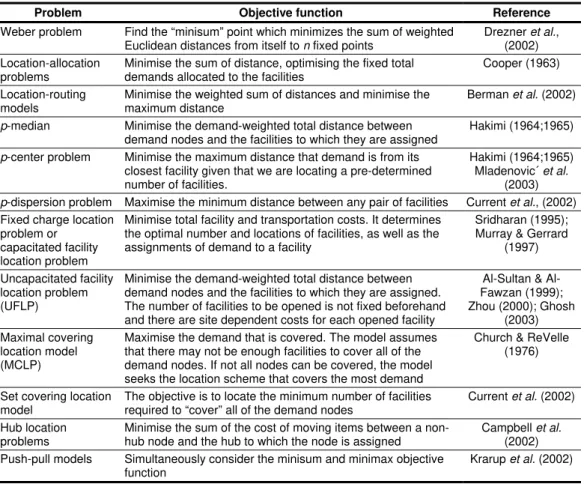
Table 3.2 – Objective function used in some location problems... 55
Table 4.1 – Service life of treated wood products... 84
Table 4.2 – Metadata of the geographic information used in the GIS model... 86
Table 4.3 – Data patterns generated for each data set. ... 96
Table 4.4 – Experimental conditions in Test 1. ... 97
Table 4.5 – Experimental conditions in Test 2 using SOM. ... 98
Table 4.6 – Experimental conditions in Test 2 using k-means. ... 98
Table 5.1 – Average distance (in km) to a remediation plant in Test 1... 100
Table 5.2 – Average distance (in km) to a remediation plant in Test 2 (over 30 runs) and best solution found in each experiment... 102
LIST OF FIGURES
Figure 1.1 – Methodology used for the elaboration of this study. ... 3
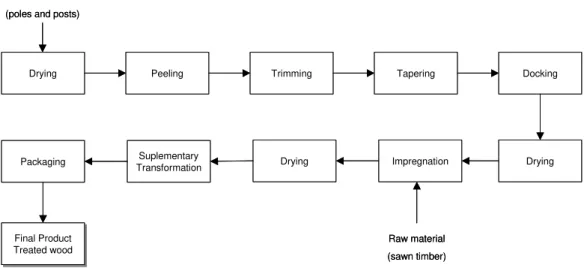
Figure 2.1 – Wood preservation process flow diagram (adapted from INETI, 2001). ... 7
Figure 2.2 – Location of wood preservation plants (marked with •) in Portugal [data from the National Statistics Institute (Instituto Nacional de Estatística), 2004]. ... 9
Figure 2.3 – Processes in the recycling of treated wood waste... 19
Figure 4.1 – Preservation products used in the preservation industries that answered to the questionnaire... 80
Figure 4.2 – Distribution of the treated wood products made in Portugal in the respondent industries. ... 81
Figure 4.3 – Mass balance approach for the inventory of CCA-treated wood [modified from Solo-Gabriele et al. (1998)]... 82
Figure 4.4 – Production, export and import of treated wood products in Portugal (m3), from 1992 to 2002 (data from the National Statistics Institute)... 83
Figure 4.5 – Estimated production of CCA-treated wood waste based on expected service life and in the different uses of treated wood products... 84
Figure 4.6 – Flowchart with the operations and commands used to implement the GIS location model with the software ArcGIS 8.2. ... 86
Figure 4.7 – Treated wood locations and quantities in 2022. ... 87
Figure 5.1 – Results for Test 1 for 5 remediation units... 101
Figure 5.2 – Results for Test 1 for 10 remediation units... 101
Figure 5.3 – Results for Test 1 for 15 remediation units... 101
Figure 5.4 – Results for Test 2 for 5 remediation units using SOM. ... 103
Figure 5.5 – Results for Test 2 for 5 remediation units using k-means. ... 103
Figure 5.6 – Results for Test 2 for 10 remediation units using SOM. ... 103
Figure 5.7 – Results for Test 2 for 10 remediation units using k-means. ... 103
Figure 5.8 – Results for Test 2 for 15 remediation units using SOM. ... 104
Figure 5.10 – Average run time for the 5 remediation units experiments. ... 104
Figure 5.11 – Average run time for the 10 remediation units experiments... 105
Figure 5.12 – Average run time for the 15 remediation units experiments... 105
Figure 5.13 – Comparison of the 10x1 and 5x2 SOM grids... 107
Figure 5.14 – Comparison of the 15x1 and 5x3 SOM grids... 107
Figure 5.15 – Delimitation of the areas to implement 5 remediation units... 108
Figure 5.16 – Delimitation of the areas to implement 10 remediation units... 108
Figure 5.17 – Delimitation of the areas to implement 15 remediation units... 108
1. INTRODUCTION
1.1 Brief Problem Statement
There is a growing concern about the environmental impacts and an increasing difficulty to dispose treated wood products at the end of their service life. In the next decades a significant increase is expected in the amounts of treated wood removed from service. For example, in the U.S.A. the total volume of treated wood removed from service was estimated to be near 8 million m3 in 1990, 9 million m3 in 2000, 15 million m3 in 2010 and about 18 million m3 in 2020 (McQueen et al., 1998). In Denmark, it was estimated that, until 2010, about 200 000 m3 of impregnated wood will end up as waste and must be handled (Ottosen & Christensen, 2004).
In Portugal, tens of thousands of cubic meters of treated waste wood will need to be properly disposed annually. This raises issues such as integrated waste management, environmentally sound solution, responsibility, and finding the appropriate locations to handle these hazardous wastes, minimizing costs.
Location decisions are frequently made at all levels of human organization from individuals to governments. Such decisions are often strategic in nature, involving large sums of capital resources and with long term economic effects. Location models provide a systematic means by which the decision-maker can explore the various alternatives in order to identify an optimal management strategy.
1.2 Objectives
According to the brief introduction to the studied problem, the main objectives of this dissertation are:
• Estimation of the magnitude of CCA-treated wood waste to be disposed in Portugal;
• Identification of the available management options for the preserved wood at the end of its service life;
• Identification of the key environmental and economical factors to be included in the optimisation model;
• Review of location problems and models, as well as of the different methods and heuristics used to solve these problems;
• Formulation of the location model for CCA-treated wood waste remediation units;
• Definition of the main constraints and identification of the model limitations;
• Simulation of different conditions and scenarios with discussion of the results;
• Testing and comparison of different methods to solve the location problem;
• Production of a final map with the visualization of the “optimal” locations for the remediation infrastructures;
1.3 Methodology
The methodology used in the development of this dissertation consists, essentially, in the following steps:
1. Extensive bibliographic review of location problems and treated wood waste management;
2. Collection and analysis of data in order to organize a database and identification of the key factors to be considered in the optimisation model; 3. Model implementation, discussion of results and identification of potential
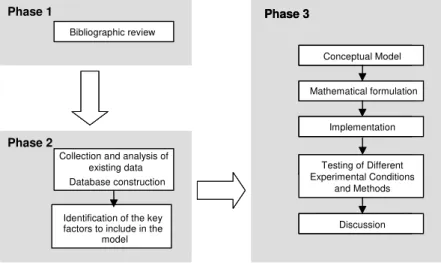
directions for further extensions and improvements. Figure 1.1 presents, in a graphic manner, the methodology used.
Bibliographic review ConceptualModel Mathematical formulation Sensibility analysis Discussion Implementation Phase 2
Phase 1 Phase 3
Collection and analysis of existing data Database construction Identification of the key factors to include in the
model Bibliographic review
Conceptual Model Mathematical formulation
Testing of Different Experimental Conditions
and Methods Discussion Implementation
Phase 2
Phase 1 Phase 3
Collection and analysis of existing data Database construction Identification of the key factors to include in the
model Bibliographic review ConceptualModel Mathematical formulation Sensibility analysis Discussion Implementation Phase 2
Phase 1 Phase 3
Collection and analysis of existing data Database construction Identification of the key factors to include in the
model Bibliographic review
Conceptual Model Mathematical formulation
Testing of Different Experimental Conditions
and Methods Discussion Implementation
Phase 2
Phase 1 Phase 3
Collection and analysis of existing data Database construction Identification of the key factors to include in the
model
Figure 1.1 – Methodology used for the elaboration of this study.
1.4 Thesis Organization
This thesis is organized as follows: Section 2 reviews the treated wood waste
resolution. It is also referred management options, after a brief introduction about the production and uses of preserved wood. The legal framework and the management options of treated wood waste in Portugal are also discussed.
the integration / interaction of location models and Geographic Information Systems (GIS).
he inventory of CCA-treated wood waste in Portugal is presented in Section 4. This inventory was based in a questionnaire sent to the preservation industries as well as in the collection and analysis of existing data. The GIS location model of CCA-treated wood is also explained in this section. The formulation of the location model is presented as well as the decision variables, assumptions, constraints and the experimental conditions tested.
Finally, Section 5 presents the results obtained and its discussion, followed by the Conclusions and Further Developments in Section 6.
2. INTEGRATED MANAGEMENT OF TREATED WOOD WASTE
2.1 Introduction
Treated wood removed from service that has no other useful application as a product is considered solid waste and generally did not represent a problem. However, recently in the European Union (EU) this waste was classified as hazardous, so there is a specific need to find an appropriate solution for its management.
Integrated solid waste management can be defined as the selection and application of suitable techniques, technologies, and management programs to achieve specific waste management objectives and goals (Tchobanoglous et al., 1993). A hierarchy in waste management can be used to rank actions to implement specific programs. In the case of the EU, the hierarchy promotes, in first place the prevention or reduction of waste generation and its harmfulness, followed by the recovery of waste through recycling, reuse or reclamation or any other process, aiming to recover secondary raw materials, and finally the use of waste as a source of energy.
Typical waste disposal options for treated wood waste such as incineration and landfill disposal are becoming more costly because of increasingly strict regulatory requirements. Also the development of appropriate alternative management strategies and technologies is constrained by the wide dispersal of treated wood, the poor quality of the material once it is removed from service and the absence of appropriate means to identify treated wood and separate it from untreated wood (Cooper, 2003). So the lack of developed collection, sorting, cleaning and marketing systems continues to be a major barrier to keep this waste stream out of landfills and to increase recycling.
Next, we discuss the production and use of treated wood, as well as the integrated management of its wastes at the end of service life.
2.2 Treated Wood Production and Use
2.2.1 ProductionAccording to the definition of the European Committee for Standardisation (CEN, 35th Meeting of CEN/TC 38), “wood preservatives are active ingredient(s) or
preparations containing active ingredient(s) which are applied to wood or wood based products themselves, or which are applied to non-wood substrates (e.g. masonry and building foundations) solely for the purpose of protecting adjacent wood or wood-based products from attack by wood-destroying organisms (e.g. dry rot and termites)”.
Three main types of preservatives are used: water based, organic solvent based and tar oils. The preservatives are applied to the surface of wood by pressure impregnation, by dipping or immersion and by thermal processing (immersion in a hot bath of preservative) (WBG, 1998). Application of vacuum helps to improve the effectiveness of the process and to recover some of the chemicals used. The most common waterborne chemicals are metal oxides, including chromated copper arsenate (CCA), acid copper chromate (ACC), ammoniacal copper arsenate (ACA), chromated zinc chloride (CZC) and ammoniacal copper zinc arsenate (ACZA) (Solo-Gabriele et al., 1998). CCA is actually the most used wood preservative worldwide (Villumsen, 2003).
CCA treated timber is green in colour (due to oxidised copper compounds) and becomes grey with age, looking similar to untreated weathered wood. It does not have a distinctive odour, like creosote treated wood.
CCA pressure-treating like any other preservation method can increase the wood’s serviceable life substantially, from perhaps 3-7 years for untreated wood, to as long as 60 years (Crawford et al., 2000). Using treated wood reduces consumption of wood resources and reduces costs because of lower maintenance and less frequent replacement. The actual serviceability of pressure-treated wood is dependent on factors including climate, site-specific conditions and type of use.
In Australia, North America (Canada and U.S.A.) and some European Countries (such as Denmark and Portugal), the majority of the wood is treated preventively at industrial scale with vacuum-pressure processes. The picture is different in other European countries, such as Germany, where preventive surface treatments (e.g. immersion, brushing and injection) at the small professional enterprise scale are the predominant methods used (OECD, 2003).
A generic vacuum-pressure process diagram of wood preservation in Portugal is presented in Figure 2.1.
Drying Peeling Trimming Tapering Docking
Drying Impregnation
Drying Suplementary
Transformation Packaging
Final Product Treated wood Final Product Treated wood Raw material (poles and posts)
Raw material (sawn timber)
Drying Peeling Trimming Tapering Docking
Drying Impregnation
Drying Suplementary
Transformation Packaging
Final Product Treated wood Final Product Treated wood Raw material (poles and posts)
Raw material (sawn timber)
Pressure processes are used to apply wood preservative by overcoming the resistance of the wood to deep penetration using pressure. The treatment is carried out in cylindrical airtight steel pressure/vacuum vessels. Two general categories of processes can be distinguished: the pressure-vacuum process and the double vacuum/low pressure process.
Generally, the pressure processes include the following steps (OECD, 2003): 1. Untreated wood is loaded onto small rails or tram cars (bogies) that are
pushed into the cylinder using forklifts or other mechanical means;
2. The cylinder door is sealed via a pressure tight door, either manually with bolts or hydraulically, and a vacuum applied to remove most of the air from the cylinder and the wood cells;
3. Treating solutions (either heated or at ambient temperature, depending on the system) are then pumped into the cylinder and the pressure is raised. The total treating times and cycles will vary, depending on the species of wood, the commodity being treated and the desired product retention, but in all instances the treating process remains a closed system.
4. The pressure is released and the excess solution is removed from the cylinder, typically by pumping and goes back to the storage tank for reuse.
5. A final vacuum may be applied to remove the excess preservative that would otherwise drip from the wood. This final vacuum may recover 20-60% of the gross amount of the preservative injected.
6. Final steps in the process are the unloading of the retort and storage of the treated wood.
plants at 17 places, with a total of 26 cylinders installed (Reimão & Cockcroft, 1985). In 1998 industrial wood preservation by vacuum/pressure included the same 14 enterprises with plants at 22 places and a total of 24 cylinders installed (Ribeiro, 1998). A description of the methods most used in the wood preservation industry in Portugal can be found in Ribeiro (1998).
Some semi-industrial plants are also used for treating wood by immersion or spraying tunnel using organic solvent preservatives. There are also a number of deluging machines and immersion tanks being used by enterprises that produce timber components for building construction (Reimão & Cockcroft, 1985).
The vacuum/pressure impregnation industry in Portugal is mostly located in the western part of the country, north of Lisbon, which is more densely populated and where the demand for timber is larger (see Figure 2.2). It is also located in the area of the maritime pine (Pinus pinaster) forests where the raw material is available (Reimão & Cockcroft, 1985).
Lisbon
Figure 2.2 – Location of wood preservation plants (marked with •) in Portugal [data from
equipment and agricultural or horticultural posts.
In the U.S.A and Canada, homeowners use treated wood extensively and so the distribution of treated wo is clo ulation distribution, i.e., in urban and subu (Cooper, 20
The greatest consume ber in P agricultural sector (see Table 2.1), mainly for ts, fruit tree orts and vineyard stakes
, 2002) and the majority were fenced with CCA-treated wood posts. Treated wood is also used
ds, gardens and golf courses. 2.2.2 Use
Examples of treated wood products are telephone and utility poles, railway ties, fence posts and dimension lumbers for outdoor construction. Applications of treated wood outdoors are, for example, house fronts (claddings), roof tiles, window frames, playing tools, garden houses, fences, landings, wharves, bridges, bank revetment, and acoustic barriers, among others. Domestic uses include decks, garden furniture, picnic tables, fences, playground
od waste sely related to the pop rban locations 03).
r of treated tim ortugal is the
fence pos supp
(Reimão & Cockcroft, 1985). Another great consumer is the construction of new highways that are fenced using treated wood posts. In 1984, there were already nearly 200 km of highways fenced using wooden posts (Reimão & Cockcroft, 1985). In 2001, Portugal had build 2601 km of highways (INE
on boardwalks in beaches, wetlan
Table 2.1 – Amounts of preserved wood products made in Portugal in 1984
(Reimão & Cockcroft, 1985).
Products Amounts produced (m3)
Railway sleepers 15000 Telephone poles 15000-20000 Agricultural posts 25000-35000
Sawn timber 10000
blic concern about environmental contamination caused by chemicals leaching from treated wood, both in service or disposed in landfills.
ntrations below CCA-treated decks (FPL, 2000; Townsend et al., 2001). High
o the chemicals used in the wood treatment. Among the chemicals contained in CCA-treated
991).)
m (VI) is a known teratogen and can also be a powerful and corrosive irritant to the skin and mucous membranes. Both Cr (VI) and As can be ingested 2.2.3 Environmental Problems
There is an increasing pu
Special attention has been dedicated to children exposure to CCA in playgrounds due to dislodgeable copper, chromium and arsenic from CCA-treated wood surfaces (EWG & HBN, 2001; Beck, 2002; Read, 2003; Stilwell et al., 2003). CCA-treated wood leach over time as noted by elevated soil conce
concentrations of Cu, Cr and As were detected in samples from rainwater, soil and sediments, river and estuary waters adjacent to the CCA-treated wood, contributing to potential direct and indirect human exposure routes (Breslin & Adler-Ivanbrook, 1998; FPL, 2000; Solo-Gabriele et al., 2000; Maas et al., 2002; Weis & Weis, 2002; Chirenjea et al., 2003; Townsend et al., 2003a). A study of soil contamination of wood preservation industrial sites in Portugal can also be found in Ribeiro (1998).
There are significant health risks associated with the exposure t
wood, arsenic is characterized by the highest human toxicity (Townsend et al., 2003a). The toxicological effects of the metals present in CCA, the impacts on nontarget organisms and on water quality are reviewed by Cox (1
Arsenic and chromium (VI) are both well recognized as strong carcinogens, and As has other detrimental health effects including cardiovascular disease, diabetes, anemia, skin lesions, vascular damage, and reproductive, developmental, immunological, and neurological effects (AWWA, 2004). Chromiu
impose tighter restrictions on its manufacture, use and disposal.
In Sweden, the National Chemicals Inspectorate introduced restrictions on the
In Japan, since 1997, the acceptable limit of arsenic in wastewater became
ntial uses has been instituted in Canada (PMRA, 2002).
and CCA-treated wood could not be marketed. However, an exception was made This growing body of scientific evidence that CCA-treated timber poses a danger to both humans and the environment caused authorities around the world to
In Greece, with the publication of the Decision 1930/18.12.85 of the Ministry of Agriculture, timber impregnated with CCA and CCB (Chromated Copper Borate) can not be used for structures which come in contact with human, food, animal fodder, drinking water and for interior structures (Adamopoulos & Voulgaridis, 1998).
use of chromium and arsenic containing preservatives in 1994, so that CCA may no longer be used above ground level with a few exceptions (Jermer et al., 2004). In Norway, the wood preservation industry has entered a voluntary agreement with the environmental authorities and the use of arsenic and chromium in wood preservation was phased out by October 2002 (Evans, 2004).
0.1 mg L-1. For this reason, Japanese wood preservation industries started to use other wood preservatives like Didecylmethyl Ammonium Chloride (DDAC), Ammoniacal Copper Quaternary (ACQ), Tanalith CuAz, copper-naphthate and zinc-naphthate. In the period of January to June 1997, the share of CCA preservatives was less than 30% in comparison to over 90% in the same period in 1996 (Suzuki, 1998).
In February 2002, the United States Environmental Protection Agency (USEPA) announced that manufacturers had agreed to voluntarily phase out the production of CCA-treated timber for residential uses over the following 2 years (USEPA, 2002) and, in January 2004, the USEPA has officially banned the manufacture of CCA-treated timber for residential use. A similar voluntary phase out for non-reside
way fencing, earth retaining structures, power poles and underground railway sleepers. Member
by June 2003 and June 2004 (in Portugal, until now, none of these measures has been implemented). This Directive does not apply to CCA-treated wood
ed ban on CCA treated wood will not resolve the issue of the existing treated wood in service that will end in
ement strategies that will recapture discarded CCA-treated wood to properly dispose of
within it (Solo-Gabriele et al., 2003).
tified in different countries. 2.3.2 Minimization
For tre od w involves the use of alternative chemicals preserv r/and e of substitute structural materials. These alternative for industrial purposes “provided that the structural integrity of the wood is required for human or livestock safety and skin contact by the general public
during the service is unlikely”. Such allowable uses included structural timber in
non-residential buildings and industrial premises, bridges and jetties (but not in marine waters), noise barriers, avalanche control, high
states should have adopted and published the Directive implement it by 30
already in place.
In spite of this environmental concern, the generaliz
the waste stream over the next years and that needs appropriate management, because a significant fraction of CCA remains within the treated wood product upon disposal. It would thus be imperative to develop disposal manag
the arsenic contained
2.3 Management Options for Treated Wood Waste
2.3.1 IntroductionIn this section, different management options for treated wood waste will be reviewed, considering the hierarchy for waste management, namely minimization, reuse, recycling, incineration and landfill disposal.
Table 2.2 presents the results of the OECD Workshop on Environmental Exposure Assessment to Wood Preservatives (OECD, 2000), where the main routes of disposal of preserved wood were iden
chemicals are thought to include products based on: copper and boron; chromium trioxide, copper and phosphoric acid; copper, didecylpolyethoxy-ammoniumborate; copper, didecyldimethylammoniumchloride; as well as
heat-treated wood (redu longed exposure to
about 200°C), acco 2).
It should be noted that wood preservation treatment plants could easily switch to the arsenic-free treatment, like ACQ, using their existing equipment
(Solo-Gab 0 et al., 2002).
Table 2.2 – Main routes of disposal of preserved wood waste (OECD, 2000).
Country Disposal of preserved wood waste
cing the rotting property of wood by pro
rding to the European Commission (Gendebien et al., 200
riele et al., 200 ; Gendebien
Australia
se - Landfill
- Recovery and reu Canada ion
- Landfill - Incinerat - Reuse
France - Landfill - Incineration with energy recovery
Germany
- Regulated reuse of untreated and treated wood - Incineration with energy recovery
- Removal of treated wood from waste stream and special incineration - Landfill
Japan - Regulated incineration
The Netherlands
- Depends on waste stream - Landfill
- Incineration
- Reuse: energy recover (also export) Portugal
- Landfill - Incineration - Reuse
Switzerland - Regulated incineration Sweden - Incineration
- Energy recovery - Landfill
USA - Landfill
- Hazardous levels incineration
e the wood with anti-swelling and anti-absorption characteristics, improve its dimensional stability and increase its resistance to fungi infestation
loride. Its utilization allows the recycling of plastic and the reduction of the use of CCA-treated wood (Solo-Gabriele et al., 1998; Cooper,
alternatives are the use of wood with natural resistance (like western red cedar, mahogany, and teak) and the use of other structural materials
es through design to minimize waste during construction. Development of standard kits for outdoor furniture,
hange in the character of the wood waste prior to using it for another purpose (e.g. chipping and biding with adhesives for wood based composite materials) (Solo-Gabriele et al., 1998).
corrosive to treatment plant equipment, in particular to that made of brass and bronze. The cost of ACQ- and CDDC-treated wood was 10 to 30% higher than CCA-treated wood (Solo-Gabriele et al., 1999).
Another study developed in Portugal showed that preservation made with the condensed material from the baking steam of expanded cork board production could provid
(Gil & Duarte, 1997).
Alternative materials to preserved wood include plastic lumber, a material composed of recycled plastics such as polyethylene, polypropylene, polystyrene, and polyvinyl ch
2003). Other
like concrete, steel, aluminium, brick, fibreglass, and stone (Solo-Gabriele et al., 1998). However more complete and quantitative full life cycle assessments are needed to be sure that the environmental benefits of alternative materials are significant.
It is also possible to reduce the treated wood wast
modular fence panels and decks would ensure a minimum of re-processing during construction, satisfying simultaneously the consumer requirements (Cooper, 2003).
2.3.3 Reuse
e than 60% (Adamopoulos & Voulgaridis, 1998). In Finland 50% to 70% of CCA-treated poles
ompost bins or the
s with these reuse options are related with the generation of There is a high potential for reuse of commercial products such as utility poles as the treated wood condition is often still very good. Products like treated poles are usually well preserved and in good condition for reuse. Many can be reused for the initial intended purpose or for posts, land pilings and retaining walls. In Canada, 75% of treated poles removed from service are reused (Cooper, 2003). In Greece, the reuse of poles is also high, reaching mor
are given to landowners at the end of its lifecycle for reuse in other field applications (Hohenthal, 2001). In Ireland replaced poles are sold for agricultural use (McDarby, 2001).
McQueen et al. (1998) reported a percentage of 18% of reuse of other treated wood products in plant boxes, mail boxes, flooring and framing for shed, garden stakes, stair steps, fencing around compost bins, dog houses, crab traps and walkways to piers and waterfront and other construction uses. Other possible solutions for reuse CCA treated wood are the framing for c
reuse as shims and braces in construction (McQueen et al., 1998).
In Portugal, when telephone lines in urban areas are replaced for buried cables, the poles are reused in other lines in rural areas, according to the Portuguese Telecom (PT Comunicações) (Martins, 2004).
Potential problem
contaminated sawdust and consequent human exposure (Solo-Gabriele et al., 1998). Additionally, there are limits to reuse because people frequently get rid of CCA-treated wood since it does not look good anymore. If the wood is not aesthetically pleasing, other people may not want to reuse it.
as wood cement, structural composites and particleboard has been identified as the recycling option with the highest potential
Conventional wood-based composites fall into three main categories based on
selves which prevent the adhesive contact with the wood (Solo-Gabriele et al., 1998).
ilable for leaching is much greater once the wood is mulched, there is a greater heavy
There is also the possibility of using recycled plastic (high-density polyethylene) and CCA-treated wood particles to make composites. Composites containing 2.3.4 Recycling
Increased use of waste wood by the composite industry using fiber and small particles appears to be inevitable (McKeever et al., 1995). Approximately 19 x 106 m3 year-1 of wood treated with CCA, pentachlorophenol and creosote will be available for recycling by 2020 (Felton & Groot, 1996). In Finland, it is estimated that the amount of treated wood waste for recycling before 2015 will reach 130000 m3 year-1 (Hohenthal, 2001). Incorporation of CCA waste wood in composite materials such
(Solo-Gabriele et al., 1998; Cooper, 2003).
the physical configuration of the wood: fibreboard, flakeboard and particleboard (Felton & Groot, 1996). Wood-based composites rely on adhesives such as urea-formaldehyde and phenol-formaldehyde for binding purposes. Treated wood can be recycled in composite materials as it is or after removing contaminants through a remediation process (Cooper, 2003). However, it is difficult to bind treated wood due to the brittle nature of CCA-treated wood fibres and the CCA chemical deposits them
In France, studies have been carried out for the preparation of concrete-wood composites to be used as filling material for road works (Deroubaix, 2004).
CCA-treated wood may also be shredded and used as mulch in right-of-ways, potting soil, and animal bedding. Such practices should be viewed with caution due to the potential for metals leaching. Given that the surface area ava
ibution (Cooper, 2003).
is to be recycled as mulch (Solo-Gabriele et al., 2001).
y, either by steam explosion (Shiau et al., 2000; Humar & Pohleven, 2001). Two recycling plants in Germany, with an annual capacity of around 50000 Mg1, apply a disintegration method developed in the
Fraunhofer Institute for Wood Research (WKI) (Speckels & Springer, 2001).
particles from recycled CCA-treated pine exhibited flexural bending properties higher than those made with either particles from virgin pine or recycled urea formaldehyde bonded particleboard (Cooper, 2003; Kamdem et al., 2004). The biological durability and the photo-protection properties were improved for samples containing recycled CCA-treated wood (Kamdem et al., 2004).
One of the major problems involving recycling is the sorting of treated wood waste. Treated products such as poles are easily recovered but residential CCA-treated wood presents a challenge to collection and transportation because of the increasing quantities and its widespread distr
The method for sorting should be effective, economically acceptable and fast enough. Use of electron paramagnetic resonance, colour spot reagents and other colorimetrical methods seems to be suitable (Humar & Pohleven, 2001). Laser-induced atomic emission spectroscopy and X-ray fluorescent analysis also have been used with good results (Peek, 1998). The sorting technologies, chemical stains and X-ray fluorescence (XRF), evaluated by Solo-Gabriele et al. (1999), showed considerable promise for sorting CCA-treated wood from other wood types. A pilot study using a XRF detector system reached 95% efficiency if recycled wood is to be used for fuel and at least 99.8% efficiency if the wood
After sorting, the next step is chipping of treated wood (see Figure 2.3). This process enables the easier handling of the wood in comparison with its original size and increases the surface area available for remediation. It may also be a preliminary step of the recycling process if the treated wood would be used as it is, without previous decontamination. Chipping of treated wood could be achieved either mechanicall
1
Different methods for wood preservative removal have been tested. The electrodialytic process1 at laboratorial scale obtained removal efficiencies of 93% of Cu; 95% of Cr and 99% of As from CCA treated sawdust (Ribeiro et al., 2000). At pilot scale, the best remediation efficiency was achieved in an experiment with an electrode distance of 60 cm (100 kg wood chips) and duration of 21 days. In this experiment 88% of Cu, 82% of Cr and at least 96% of As were removed from the wood (Villumsen, 2003).
Sorting Sorting
Chipping Chipping
Preservative extraction Preservative
extraction
Recycling Process Recycling Process
• Color spot reagent • Paramagnetic resonance • X-ray fluorescence • Mechanical • Steam explosion
• Bioremediation • Acid extraction
• Wood cement composites • MDF
• Fiberboard • Flakeboard • Particleboard • Mulch
• Electrodialytic remediation
Sorting Sorting
Chipping Chipping
Preservative extraction Preservative
extraction
Recycling Process Recycling Process
• Color spot reagent • Paramagnetic resonance • X-ray fluorescence • Mechanical • Steam explosion
• Bioremediation • Acid extraction
• Electrodialytic remediation
• Wood cement composites • MDF
• Fiberboard • Flakeboard • Particleboard • Mulch
Figure 2.3 – Processes in the recycling of treated wood waste.
Other decontamination processes include bioremediation. Results suggest that a dual remediation process involving acid extraction (0.8% oxalic acid extraction for 18 h) and exposure to metal-tolerant bacteria (7 days bacterial culture with
Bacillus licheniformis CC01) removes significant quantities of metals from
CCA-treated wood (78% of Cu, 97% of Cr and 93% of As) (Clausen & Smith, 1998; Clausen, 2000). However the evaluation of the properties of particleboard
1
extracted and bioremediated particles showed generally high leaching losses of remaining elements (Kartal & Clausen, 2001).
umar & Pohleven, 2001). Good results have also been obtained with Aspergillus niger fermentation, with 97% removal of arsenic (Kartal
EDTA has also shown good results (Shiau et
al., er
experiments with hydrogen peroxid d good results in extracting CCA (Kazi & Cooper, 1999).
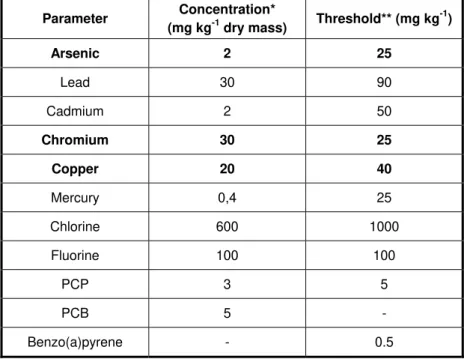
However, a significant question remains: what concentration of residual preservative in remediated wood would dictate its classification as treated material? The new German Ordinance in Waste Wood1 (Altholzverordnung), put in force in March 2003, specifies the limit values for wood chips used in the manufacture of derived timber products. There are also European Panel Federation (EPF) but the thresholds defined are considerably higher than the German limits (see Table 2.3).
made from recycled CCA-treated wood showed that the oxalic acid treatment may have caused a slight embrittling of the fibre before pressing or interfered with urea-formaldehyde resin adhesion, causing an increase in the modulus of elasticity and decreases in the modulus of rupture and in the internal bound (Clausen & Muehl, 2000; Clausen et al., 2001). The particleboard containing oxalic acid
Additionally, successful remediation of the chips was also accomplished through inoculation with fungi, achieving 98% removal of chromium. Among the wood destroying basidiomycetes that are tolerant to Cu, Cr, or As based preservatives, there are some species of the genus Antrodia (Poria) (Leithoff et al., 1995; Stephan et al., 1996; H
et al., 2004). In another study, the isolates of Meruliporia incrassata and Antrodia
radiculosa gave the highest percent degradation of CCA-treated wood (Illman et
al., 2000).
The chemical extraction with hot sulphuric or nitric acids, aqueous ammonia solutions, acetic and formic acids, chelating organic acids such as citric and tartaric acids or other ones such as
2000; Cooper, 2003; Kartal, 2003; Kartal & Kose, 2003). Likewise oth e showe
the criteria,
Table 2.3 – Limit values for wood chips used in the manufacture of derived timber
Parameter Concen n*
(mg kg- Threshold** (mg kg
-1)
products.
tratio
1
dry mass)
Arsenic 2 25
Lead 30 90
Cadmium 2 50
Chromium 30 25
Copper 20 40
Mercury 0,4 25
Chlorine 600 1000
Fluorine 100 100
PCP 3 5
PCB 5 -
Benzo(a)pyrene - 0.5
* German Ordinance on Waste Wood
** European Panel Federation (Deroubaix & Cornillier, 2004)
Recycling into composite products is technically feasible and shows considerable promise, but is constrained by the belief that composites do not need preservative protection, concerns that landfill disposal is only deferred and that the identity of the treatment is lost, as well as a general reluctance of composite manufacturers to include treated wood (Cooper, 2003). Additionally, the
such as comminution sawing (airborne particles and fumes) and composite manufacturing segregation of wood waste is a complex and highly expensive option, that relies on understanding the flows of wood waste and the provision of consistent feedstocks to manufacturers of recycled products (Suttie, 2004).
There are also health concerns with processing treated wood, namely worker exposure to air emissions associated with recycling processes
(Felton & Groot, 1996).
ion, the liquids cannot be used directly, but they are most probable usable in a diluted form (Villumsen, 2003).
Treated wood can be used for energy recovery purposes [in Waste-to-Energy
ated wood with coal has been tested in two power plants (Spanos et al., 2001).
Wood utilized for energy recovery purposes has the advantage that it lessens the
As containing solid residues (Deroubaix, 1998; Cooper, 2003; Ottosen &
ould also liquids from electrodialytic remediation pilot experiment as make-up water instead of tap water has been investigated and the results indicate that, due to problems with precipitation and/or incomplete fixat
2.3.5 Incineration with Energy Recovery
(WTE) units] or as a fuel in certain industrial operations such as cement kilns. Treated wood waste is also used in co-generation plants (Cooper, 1999; Cooper, 2003). In Greece, co-combustion of tre
In Sweden, the main option for waste wood management, both domestic and foreign (e.g. Germany, The Netherlands, Norway), is incineration with energy recovery (Jermer et al., 2004).
dependence on fossil fuels and eases the landfill burden through volume reduction (Solo-Gabriele et al., 1998).
In the European Union, the incineration of treated wood waste, namely wood wastes containing organochlorinated compounds or heavy metals, is covered by the Directive 2000/76/EC relative to waste incineration. In Denmark, one of the few countries with legislation on treated wood waste, the incineration of these wastes is banned (Ottosen & Christensen, 2004).
The incineration of CCA treated wood in conventional wood combustion equipment could lead to arsenic emissions and produce high concentration Cu, Cr and
be disposed as hazardous waste, due to metal contents or these ashes should be submitted to a remediation process before being disposed (Ottosen et al., 2003).
In fact, the authors of the pilot study of electrodialytic remediation concluded that
d of sort it out, would enable a significant cost reduction for the treatment of these wastes (Evans, 2004).
, which result in lower loss of ed to combustion (Deroubaix, 2004). Pyrolysis results in volatilisation of the volatile compounds whereas the mineral compounds after remediation of CCA treated wood waste it is possible to incinerate the wood in a municipal solid waste incinerator with energy recovery. There will be no risk of arsenic release and the copper and chromium rich ashes may be reused as a secondary raw material in the metal refining industry (Villumsen, 2003).
In Norway, during 2003, promising incineration tests were made, using a 10% mixture of CCA-treated wood in a common waste combustion site. Burning the treated wood with domestic waste, instea
Another important problem associated with the combustion of CCA-treated wood is the increase of several orders of magnitude in the levels of polychlorinated dibenzo-pdioxins and dibenzofurans (PCDD/Fs), compared to that of untreated timber (Tame et al., 2003). CCA-treated wood contains copper (II), which is known to catalyse the so-called de novo formation of PCDD/Fs. Comparable levels of PCDD/Fs would be expected in residual ash from burning CCA-treated wood in backyard fires, stoves and wood heaters, as a consequence of similar combustion conditions (Tame et al., 2003).
Pyrolysing the CCA treated wood waste may be a good solution since low temperatures and no oxidising agents are used
metals compar
and stored, ready to feed the subsequent stage where the metal particles are removed (Helsen et al., 1998; Deroubaix, 2004).
ortion of the treated wood waste. It is estimated that 80000 Mg of preservative treated wood waste (of which as much as 50% may be CCA treated)
t arsenic is the most important contributor to carcinogenic properties of landfill leachate, given the relatively high concentration of 1.6 mg L-1
with treated wood waste disposal is the deposition of these wastes in Construction and Demolition (C&D) landfills, which are generally unlined (Solo-Gabriele et al., 2000; Solo-Gabriele et al., 2.3.6 Disposal
Disposal is the last option in the waste management hierarchy. Landfill disposal does not recover any value from the used product and potentially presents some problems of soil and groundwater contamination if the landfill is not properly conceived or explored. However it is one of the waste management options that absorb a great p
are committed to landfill every year in the United Kingdom (Suttie, 2004).
The European Union (EU) has taken an aggressive stance against landfill disposal of all organic material, including wood, with the Council Directive 1999/31/EC of 26 April. By 2005, biodegradable municipal waste going to landfills must be reduced to 75% of the total amount (by weight) of biodegradable municipal waste produced in 1995. So, in the European Union countries, the amount of wood disposed in landfills must be substantially reduced or even totally avoided.
CCA treated wood is the most relevant source for the arsenic in municipal solid waste (MSW) that is subject to easy leaching in landfills (Gendebien et al., 2002). The report of the European Commission about Hazardous Household Waste (HHW) refers a detailed study for the German Environmental Agency that further concluded tha
in MSW landfills (Gendebien et al., 2002). The German study estimates that over a period of an hundred years, a total of 1.2 g arsenic will be emitted per tonne of waste, which is equivalent to 24% of the arsenic content of MSW.
nd As to the subjacent soils and groundwater.
y also focuses on the monitoring of groundwater, assessing copper, chromium (III and VI) and arsenic.
Polluter Pays Principle. The manufacturer must take responsibility for wastes generated by his product and for its disposal at the end
. The added cost to the manufacturer will eventually be passed on to the consumer, and the most successful manufacturer will be the one that
In 1998, the Finnish Environment Institute and Finnish Wood Preserving Industry signed a branch agreement where industry was obligated to take care of treated wood at the end of service life (Tãhkãlã, 2002). In 2000, the Finnish Wood Preserving Industry established a company – DemoliteOy – to manage treated 2001), enabling the leaching of Cr, Cu a
In Australia, a review of the treated wood waste landfill disposal risks recommended improvements in existing landfills and the development of new lined landfills that could accept large quantities of treated timber (Pruszinski, 1999). This stud
2.4 Extended Producer Responsibility
There is a growing demand by regulatory agents and consumers for Extended Producer Responsibility of all manufactured goods, which is basically the application of the
of its life cycle.
This policy instrument is going to play an increasing role in achieving waste reduction, requiring producers to take responsibility for their products at the end of their lives, and to recover and recycle an increasing proportion of the materials embodied in them
minimizes the cost.
ish Wood Preserving Association). This organization collects separately treated wood that is crushed
ergy and using the ashes in metallurgical processes
from September 9. This law establishes the general principles and applicable rules relating to waste
general principle that the producer is responsible for its produced waste. Also, in the case the producer cannot be
“Instituto dos
Resíduos”) and regionally, via the five Coordinating Commissions for Regional
In the above-mentioned legal document (“Decreto-Lei nº 239/97”), waste is divided into five legally defined waste types, according to their origin, nature and wood waste. The main shareholder is FWPA (Finn
and burned, recovering en (Tãhkãlã, 2002).
2.5 Characterization of the Portuguese Situation
2.5.1 Legal BackgroundThe Portuguese legal framework for waste management is defined in the executive order law 239/97 (“Decreto-Lei nº 239/97”), dated
management and final destination responsibilities. Waste management comprises the collection, transportation, storage, treatment, valorisation and elimination of waste, including monitoring of waste final disposal installations after its closure, as well as the planning of such operations.
The Portuguese law establishes the
known or determined, the waste holder is responsible for waste disposal and for its management costs. Responsibility for waste collection and treatment lies traditionally with the municipalities, currently associated in two different types of municipal waste management systems.
The Environmental Ministry (“Ministério do Ordenamento do Território e do
Ambiente”) is the government body responsible for the Portuguese policy on
waste. It acts at a central level, through the Waste Institute (
04/EC of 22 December 1994, establishing the list of Hazardous Wastes. This Decision was
1/573/EC.
The ch,
transposed this European legal framework to the Portuguese Law. Treated wood waste can be classified with the codes showed in Table 2.4.
2 ication of treated wood waste according to the European and
Code Description
composition: hazardous waste, industrial waste, municipal waste, medical waste and other wastes. Different management mechanisms and responsibilities for are foreseen according to each of waste types.
The term ‘hazardous waste’ is defined in Council Directive on Hazardous Waste 91/689/EEC. This Directive was followed by a Council Decision 1994/9
replaced by Commission Decision 2000/532/EC, which established a new list of hazardous and non-hazardous wastes. This Decision has been amended by the Commissions Decisions 2001/118/EC, 2001/119/EC and 200
ordinance 209/2004 (“Portaria Nº 209/2004”), dated from 3rd Mar
Table .4 – Classif
Portuguese regulations.
03 01 04* Sawdust, shavings, cuttings, wood, particle board and veneer containing dangerousubstances s 15 01 10* Packaging containing residues of or contaminated by dangerous substances 17 02 04* Wood containing or contaminated with dangerous substances in construction and demolition wastes 20 01 37* Wood containing or contaminated with dangerous substances in municipal waste including separately collected fractions * stands for hazardous waste
The management of hazardous wastes should be carried out with special care and separately from the other waste types in compliance with all the national and European legal requirements.
At the beginning of 2004, the executive order law 3/2004 (“Decreto-Lei
Nº 3/2004”), dated from January 3, established the legal framework for obtaining
egradable municipal waste (BMW), was transposed to the Portuguese law by the executive order law 152/2002
(“Decreto-country has now to implement the
Portugal has lacked proper urban and industrial waste management for many
ts made in municipal solid waste management, Portugal has been delaying the implementation of hazardous waste management systems,
f of a protocol established with the Environmental Ministry (the former “Ministério das Cidades,
of about 1,14 x 10⁻¹ kg m-3 of treated wood was determined) (Borrego et al., 2003). Considering the 2002 production of The Council Directive 1999/31/EC, of 26 April, on the landfill of waste, including the targets for reducing the biod
Lei Nº 152/2002”), from 23rd May. The
necessary measures to avoid the biodegradable waste deposition, in order to accomplish to the European targets.
2.5.2 Treated Wood Waste Management
years. The collection and treatment of solid waste was recently initiated and only in 2002 was announced that the more that 300 municipal uncontrolled dumps that existed in Portugal were sealed and recovered.
Regardless the effor
mostly for political reasons. This results in illegal dumping of hazardous wastes and, consequently, in severe contamination problems that at this time cannot be correctly evaluated.
The latest development in this area was the inventory of the industrial waste (referred to the year 2001) developed by six Portuguese Universities in collaboration with the National Statistics Institute (INE), on behal
Ordenamento do Território e Ambiente”). This study obtained a total annual
production of approximately 254000 Mg of industrial hazardous waste that result directly from the national industrial activity (Santana et al., 2003).
sidered (referred to the year 1998). According to this plan, the annual amount of wood
bout the importance of any of these management options. Anyway, Portugal lacks an installation with
e incineration in cement kilns.
producers and is responsible for the proper final destination of the wastes. The producers have to pay a tax to assure the collection, sorting and, treated wood products (117904 m3), approximately 13,4 Mg of treated wood waste are produced annually in Portugal, in the form of sawdust, shavings, cuttings, wood, particleboard and veneer.
Another important document is the National Plan for the Prevention of Industrial Wastes (PNAPRI), where the wood preservation section is also con
waste produced in the preservation industries in Portugal is 1754 m3 (INETI, 2001), what corresponds to approximately 1123 Mg of wood waste. Nevertheless this study does not discriminate between treated and non-treated wood.
The only information available about management of treated wood waste in Portugal is the one presented in Table 2.2, from the OECD Workshop on Environmental Exposure Assessment to Wood Preservatives (OECD, 2000). According to OECD, in Portugal the treated wood waste is disposed in landfills, incinerated or reused, but there is no information a
appropriate conditions to incinerate hazardous wastes (there are only three municipal waste incinerators) and the Portuguese Government has also rejected the hazardous wast
According to the Portuguese Telecom (“PT Comunicações”), all telephone poles that reach the end of their service life are removed and sold to construction builders for reuse.
Portugal has been implementing extended producer responsibility systems for some specific waste streams like packaging, batteries, tyres, medicines, vehicles at end of life and, in a near future, waste oils and discarded electrical and electronic equipment. All these systems have a management society that represents the
discussion establishes the obligation of a hazardous waste inventory previous to the eginning of the works and a declaration to the competent authorities of the uantities and management operations / operators of all C&D waste.
Another gap in the Portuguese law is the management of Construction and Demolition (C&D) waste stream that can be a significant source of treated wood waste. It is important to sort the treated wood from these activities and to assure an appropriate final destination. The project of law currently in
3. LOCATION PROBLEMS
3.1 Introduction
The purpose of location problems is to determine where to place a set of facilities (resources) in order to optimise certain objectives, such as minimizing transportation costs, providing equitable service to customers, maximizing market share captured and/or minimizing the time taken to deliver services, subject to specific constraints. Facility location models can differ in their objective function, the metric distance applied, the number and size of the facilities to locate and several other decision constraints (Hale & Moberg, 2003).
Facility location models are used in a wide variety of applications, in the public and private sectors: airports, bus stops, restaurants, fire stations, hospitals, waste treatment plants, warehouses are only some examples [see Current et al. (2002) for an extensive review of location problems applications].
Location models are also application specific, that is, their structural form (objectives, constraints and variables) is determined by the particular location problem under analysis. Consequently, a general location model that is appropriate for all potential or existing applications does not exist.
Another problem is the difficulty to establish a continuous knowledge transfer between the researchers since, for example, operational researchers have a completely different way of describing their solution approaches than regional planners. As a consequence, improved and new solutions are not used because those that need the practical solution to a location problem do not understand the language in which the solution has been stated (Bender et al., 2002).
To deal with these problems, some classification schemes have been proposed, in order to enrich scientific discussions and to eliminate misunderstandings in verbal model descriptions (Brandeau & Chiu, 1989; Eiselt et al., 1993; Hamacher & Nickel, 1998).
In this section the classification and definition of the most important location problems are presented, as well as the main search methods cited in literature. The integration and interaction of location models and GIS is also discussed.
3.2 Classification of Location Problems
Different criteria are used, together or separately, to identify and classify location problems. The common elements in these problems are the demand points, located in space and with a demand specified and the facilities to be located, in order to optimise the objectives considered and respecting the specified constraints.
3.2.1 Decision Space
in many contexts such as telecommunication, transportation and electric power systems (Cruz et al., 2003).
A further distinction in network problems is the location of the demand points and the location of the facilities. Demand points may be located at the nodes and also anywhere along the links between the nodes. In the latter case the demand points can also be treated as nodes, which are sometimes called pseudo-nodes because they only connect two links. Usually the demand points are assumed to be at the nodes and the facilities may either be located at the nodes and along the links or only at the nodes. In the former case it is called absolute location and, in the latter case, it is called vertex location problem (Rooij, 2000).
Continuous location models are often used as first approximations to real world problems, as a method to find out which regions are the most promising ones to be studied with more precision, since discrete or network models are more difficult to implement due to the necessity of huge amounts of data and to the complexity of the problems (Plastia, 2002).
There are also location problems in which facilities are extensive, i.e. those that can not be represented by isolated points, but as some dimensional structures, such as straight lines, line segments, polygonal curves or circles. A review on continuous location problems of dimensional structures can be found in Díaz-Báñez et al. (2004).
3.2.2 Number of Facilities (New and Existing Facilities)
Competition models or competitive location models involve the case where a competitor has the capability to readjust to any location decisions other competitors make over predefined time frames. If you locate a new branch that exploits a poorly served area of your competitor, he may, over a period of time, relocate a branch or locate a new one to recover some of that lost market. Thus, in making a location decision, it becomes necessary to analyse what response your competitor may have to keep from a lost of business. Competition models are often addressed by game theory and simulation (Eiselt & Laport, 1995; Ahn
et al., 2004).
In practice, many location problems occur in three different settings (Rooij, 2000): i) there are no restrictions on the location of facilities and there are no existing facilities (general problem); ii) locate new facilities in addition to existing facilities (additional or incremental facility location problem); iii) locate additional facilities and possibly close down some existing facilities (reorganization problem).
3.2.3 Objective Function
The dichotomy between public versus private sector problems is a common way of classification. Profit maximization and capture of larger market shares are the main criteria in private applications, while social cost minimization, universality of service, efficiency and equity are the objectives in the public sector (Marianov & Serra, 2002).
![Figure 2.2 – Location of wood preservation plants (marked with •) in Portugal [data from the National Statistics Institute (Instituto Nacional de Estatística), 2004a]](https://thumb-eu.123doks.com/thumbv2/123dok_br/15757239.639066/22.892.335.543.589.1030/location-preservation-portugal-national-statistics-institute-instituto-estatística.webp)