1 Financial support: CNPq-PRONEX / FAPESPA #2268 e #089/2010; CNPq #486351/2006-8, #620037/2008-3 e #476744/ 2009-1; CAPES-PROCAD #182/2007; FINEP IBN-Net (Brazilian Neuroscience Institute Net). E-mail: [email protected]
VISUAL ASSESSMENT BY PSYCHOPHYSICAL METHODS OF PEOPLE
SUBJECTED TO OCCUPATIONAL EXPOSURE TO ORGANIC SOLVENTS1
Eliza MEliza MEliza Maria da CEliza MEliza Maria da Caria da Caria da Costa Britaria da Costa Britosta Brito Lacosta Britosta Brito Laco Laco Laco Lacerererererdadadadada D
DD D
Dorororora Fora Fa Fa Fa Fix ix ix Vix ix VVVVenturenturenturenturaenturaaaa L
LL L
Luiz Cuiz Cuiz Cuiz Cuiz Carlos de Lima Silvarlos de Lima Silvarlos de Lima Silvarlos de Lima Silveirarlos de Lima Silveireireireiraaaaa
Abstr Abstr Abstr Abstr
to which the individuals are exposed. Factors such as alcohol and tobacco can inter-fere with the correlation of the results.
Key KeyKey Key
Keywwwwwororororords: ds: ds: ds: ds: Organic solvents. Occupacional exposure. Visual psichophisics. Color vision. Contrast sensitivity.
Organic solvents are substances composed of hydrocarbons that are liquid at temperatures from 0 to 250 oC (Occupational Safety and Health Information Series [OSHS], 1998) to which millions of people worldwide are exposed due to its widespread use in industry, agriculture, university and houses. The wide applicability of these substances makes this exposure may be due to several factors, foremost among them the occupational factor because this is the most aggressive to human health. The great demand of organic solvents chronically exposed workers has made this an important point of discussion in occupational medicine and thus led to increasingly detailed studies on the subject (Hanninen et al., 1976, Mergler et al., 1990; Ahmadi et al. 2002; Boeckelmann & Pfister, 2003, Semple et al., 2007). Most occupational exposure to organic solvents occurs for mixtures of solvents, and inhalation route is the main pathway of contact for the organism (Hanninen et al. 1976; Mikkelsen, 1980, Olsen et al., 1980, Pfister et al. 1999; NOHSC, 1990; Boeckelmann & Pfister, 2003).
Gunnarsson et al. 1992; Chancellor et al. 1993; Schulte et al. 1996; Graham et al., 1997).
The visual function has been used as an important indicator neurointoxication by organic solvents (Baelum et al., 1982, Horan et al. 1985). An abnormal vision may be related to the presence and may be the earliest symptom of optic neuropathies (Rosen, 1965), encephalopathy (Paalysaho et al., 2007), cognitive impairment (Dick et al., 2004) and other neurotoxical effects (Mutray et al., 1995, Ihrig et al., 2003).
Organic solvents are responsible for changes in different parts of the visual system. Among the tests used for visual assessment of subjects exposed to occupational mixture of organic solvents, the psychophysical tests stand out for their efficiency in detecting changes, revealing losses before the onset of clinical phenomena evident, and the possibility of analysis of different functions visual separately (Lacerda et al., 2009).
This paper presents a brief review of the psychophysical tests that have been described in literature as the most suitable for assessing color vision and contrast sensitivity of subjects due to occupational exposure to organic solvents.
Psychophysical assessment of color vision of subjects due
to occupational exposure to organic solvents
D15 desaturated test of Lanthony (D15D)
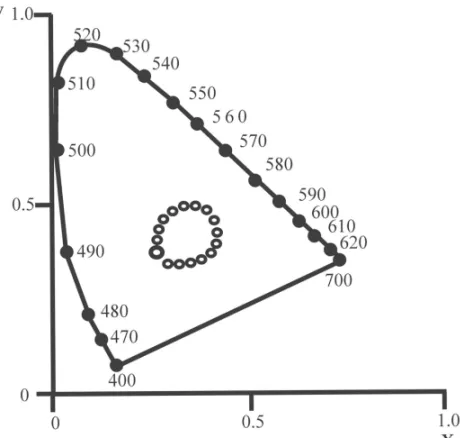
The D15 desaturated test of Lanthony (D15D) is based on the ability of the subject order 15 pieces of desaturated hues approximately equidistant from each other along a boundary provisions of color space whose center is an achromatic region (Figure 1), each eye is tested separately and the results are quantitatively evaluated by color confusion index (CCI) (Bowman, 1982). The ICC has a value when all the pieces are properly positioned and increases as the number of errors the subject. It can be calculated by the following formula:
With the use of desaturated test Lanthony D15d or loss of color vision can be classified into losses to the axis red-green confusion, losses to the axis of blue-yellow confusion and diffuse losses (Verriest, 1963, Geller & Hudnell, 1997). This method is similar to Test Farnsworth D-15, a
ICC =
valor de erro do examinando ___________________________
shorter version of only 15 pieces of test 100-Munsell Hues of Farnswoth (Farnsworth, 1943). However, D15d the hues of the pieces are more desaturated, which allows the detection and quantification of dichromatic subjects more accurately than in the Farnsworth D-15 – a test used to screen for congenital defects (Birch, 2001).
The D15d is the most sensitive test described in the literature for assessment of color vision in subjects exposed to organic solvents and this is due to the fact of enabling the detection of subclinical loss of color vision, be especially sensitive to visual impairments of blue-yellow vision and, moreover, have the great advantage for portability and quick application of the methodology. It is a test for the detection of loss of color vision acquired in workers exposed to organic solvents (Mergler & Blain, 1987).
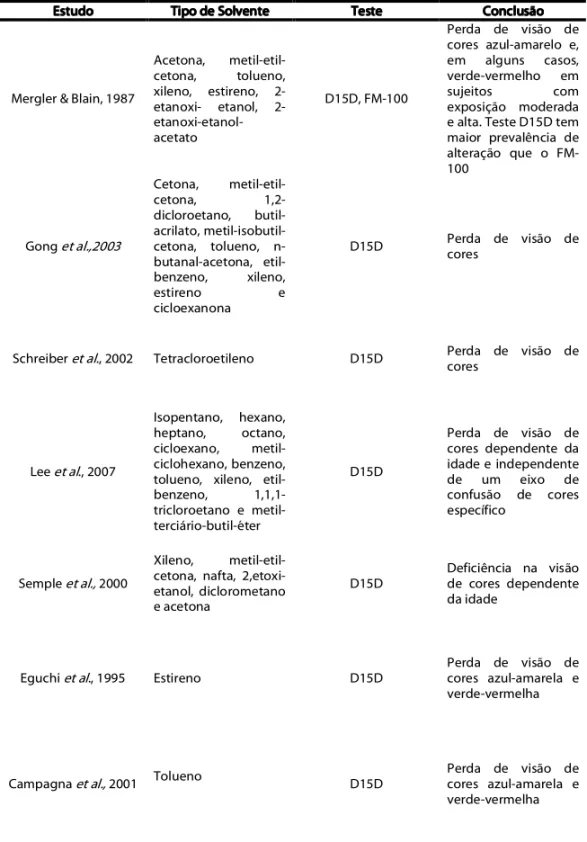
To D15d studies using the assessment of subjects due to occupational exposure to organic solvents have revealed loss of color vision. For example, the study by Mergler and Blain (1987) studied the color vision of workers exposed to mixtures of organic solvents such as acetone, methyl ethyl ketone, toluene, xylene, styrene, 2-etanoxi-ethanol, ethanol-2-etanoxi acetate. These authors observed a prevalence of 52.2% loss of color vision in subjects with moderate or high exposure. These losses occurred for blue-yellow vision, and in some cases, also for red-green vision.
Similar results were obtained in workers chronically exposed to mixed solvents containing ketone, methyl ethyl ketone, 1, 2-dichloroethane, butyl acrylate, methyl isobutyl ketone, toluene, n-butanal, acetone, ethyl-benzene, xylene, styrene and cyclohexanone (Gong et al., 2003), and residents of apartments with laundry and laundry employees exposed to tetrachloroethylene (also known as tetrachloroethene or perc) (Schreiber et al., 2002).
The association of color vision deficiency with evidence of chronic encephalopathy in subjects exposed to organic solvents suggests that an altered color vision for these subjects is an important risk factor for neuropsychological disorders (Semple et al., 2000), including the cognitive loss (Dick et al., 2002).
However, not all color vision deficiency in occupational exposure detected by D15d is directly related to cognitive impairment. This was observed in the study of painters with color vision deficiency that when underwent cognitive testing showed no correlation between the degree of visual loss and the degree of cognitive impairment (Ihrig et al., 2003, Dick et al., 2004)However, not all color vision deficiency in occupational exposure detected by D15d is directly related to cognitive impairment. This was observed in the study of painters with color vision deficiency that when underwent cognitive testing showed no correlation between the degree of visual loss and the degree of cognitive impairment (Ihrig et al., 2003, Dick et al., 2004).
Figure 1. Localization of D15d caps in the CIE1931 color space. Circles indicated each cap starting from the reference cap (larger circle).
Farnsworth-Munsell 100 Hue Color Vision Test (FM-100)
FM-100 is based on the ability of the subject to order 85 pieces painted with shades of the same saturation and brightness and photopic lighting in a sequence of chromatic color space.
Each eye is tested separately and the results are quantitatively evaluated according to the error value of the subject (Farnsworth, 1957). Each hue has a number of planning, unknown by the subject tested. The magnitude of the error is calculated for each piece. It is proportional to the distance between the position made by the subject and the correct position of the piece.
mentioned above, the FM-100 was important for the detection of false positives obtained by D15d (Mergler & Blain, 1987).
Color vision defects associated polyneuropathy has also been described for occupational exposure to n-hexane, in which the error values in part (blue-yellow or red-green) and total (blue-yellow over red-green) were significantly higher in exposed subjects compared with control subjects (Issever et al., 2002).
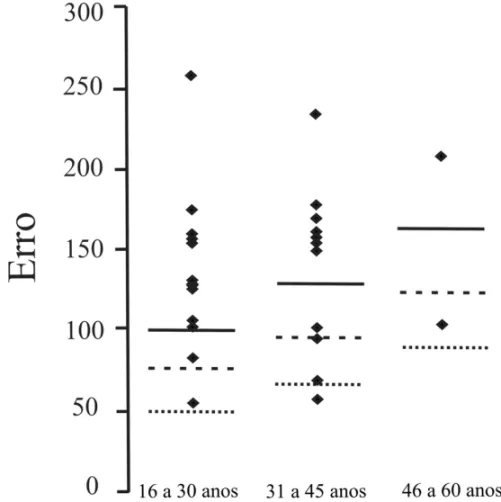
Subjects exposed to organic solvents had higher mean values of error in the FM-100 than subject of the control group and the damage of color vision is associated with the presence of chronic encephalopathy or may be caused by chronic encephalopathy induced by exposure to solvents, so the use of FM-100 can generate indicators for the stage of encephalopathy (Paallysaho et al., 2007). Occupational exposure to styrene does not result in error values in the FM-100 subjects exhibited significantly higher compared with control subjects, although subjects tended to be more exposed to the axis error of confusing colors suggesting that exposure to moderate concentrations of styrene can cause loss of color vision (Fallas et al., 1992).
! "
! "
!
# $# % && ' ( ) * ! + , # $# -+ . % &&
/ , "&&0
" 1 1
1
1 ( !
!
# $# '
) 1 , "&&" # $# '
2 , "&&
3 ) !
) !
) ! 1 (
!
1 (
4 1 5
# $# ' ! 6 76 , "&&& 8
6 " ! # $# # 6
-) , $ # $#
'
( )
, "&& # $#
'
( )
Table 1 summarized the studies discussed above.
, # $#
'
( ) +
, "&&& # $#
+ 5
6 +9 :
# ; , "&&" # $#
+ 5
6
3) , "&&0 # $#
/
+
# ; , "&&< # $#
/
+
3) , "&&0 # $#
'
= 6 !
4 "$ $$
3 , "&&" > ) ! % &&
# 6
-=
' ? ) , "&& % &&
#
= +
6 @
% , " % &&
A 6
.
-! 6
2 , "&& "& &B 2 "& &
% && (
'
Psychophysical assessment of spatial luminance contrast
vision of subjects due to occupational exposure to organic
solvents
Multivision Contrast Test Vistech MCT 8000
Test Multivision Contrast Vistech MCT 8000 (Vistech Consultants, Dayton, Ohio) is a test chart printed using controlled techniques and advanced photographic and printing devices in order to minimize loss of the quality of the printed image and maximize the accuracy of measurements of spatial frequency, orientation and contrast of visual stimuli used in testing. The MCT 8000 Vistech is used to evaluate the vision of luminance contrast in five spatial frequencies, 1.5, 3, 6, 12 and 18 cycles per degree of visual angle or cpd. The pack contains visual stimuli distributed in five rows and seven columns. Each of the five lines is filled by seven circles showing sinusoidal gratings, in which the luminance varies along one dimension, and is constant in the dimension perpendicular to this. The luminance contrast decreases on each line of the first into the seventh element, while the spatial frequency increases from one line to the next, from top to bottom. Along each line stimuli also vary randomly oriented and can be oriented vertically, tilted to the right or left-leaning.
In this test, the subject whose vision is being evaluated is instructed to respond in what direction the network is being presented – tilted to the right, leaning left or vertically. Proceeding from left to right on each row of stimuli, the subject is asked to identify the orientation of the sinusoidal grating presented in each stimulus, the contrast of the last correctly identified stimulus is thus considered as the contrast threshold for spatial frequency line corresponds to the stimuli presented. It is necessary, then from row to row, checking the contrast threshold for the set of spatial frequencies that comprise the test. The result is a set of five points on the chart contrast sensitivity (inverse of contrast threshold) as a function of spatial frequency which is about the role of spatial contrast sensitivity to luminance of the subject tested.
Vision Test System Contrast VCTS Vistech 6500
The Vision Test System Contrast VCTS 6500 (Vistech Consultants) consists of a panel of stimuli similar to the MCT 8000, measuring 68.6 x 94.0 cm and consisted of five rows and nine columns with 45 rounds of 74 stimuli occupying mm in diameter, separated by 3 mm distance, networks containing sinusoidal vertical, inclined to the left of the 15th or 15th to the right, presented the subject to be tested with average luminance of 100 cd/m2. The contrast of the stimulus decreases horizontally from left to right, columns corresponding to columns numbered from 1 to 9, and the spatial frequency increases from top to bottom, lines corresponding to the letters A to E, corresponding to spatial frequencies of 1.5, 3, 6, 12 and 18 cpd in viewing distance recommended by the manufacturer of 3 m.
The subject is instructed to view the stimuli sequentially, row by row (from top to bottom) from left to right, identifying the orientation of the grating and responding vertical, tilted left, tilted to the right or not see the grating. The contrast of the last stimulus of each line orientation whose grating had correctly identified by the subject corresponds to the contrast threshold in the spatial frequency corresponding to the line and contrast sensitivity, as already mentioned, is the inverse of contrast threshold. Lighting conditions recommended by the manufacturer, 30-60 ftL if the subject is able to see the grating presented lower contrast, their contrast sensitivity is between 100-300 at the four lowest spatial frequencies presented and slightly below 100 for the highest spatial frequency tested.
Boeckelmann and Pfister (2003) used this test in the study of contrast sensitivity of painters exposed to organic solvent mixtures containing acetone, 2-butoxietil-acetate, n-butyl acetate, 2-ethoxyethanol, ethyl acetate, ethyl-benzene, isopropyl-benzene, 1-methoxy-2-propanol, ethyl acetate, ethyl benzene, isopropyl benzene, 1-methoxy-2propanol, toluene and xylene. The painters had significantly lower contrast sensitivity than the control at all spatial frequencies. The loss in contrast sensitivity was associated with visual acuity significantly affected.
Functional Acuity Contrast Test – F.A.C.T 101
This procedure for evaluating the sensitivity to luminance contrast was used by Schreiber et al. (2002) who studied residents of apartments with laundry and laundry employees exposed to tetrachloroethylene, also known as tetrachloroethene, or perc. These individuals were exposed, both residents and workers, had reduced contrast sensitivity in the control group for all spatial frequencies. These losses, as in the study by Boeckelmann and Pfister (2003), are accompanied by visual impairment.
Determination of the spatial contrast sensitivity to luminance by computerized test
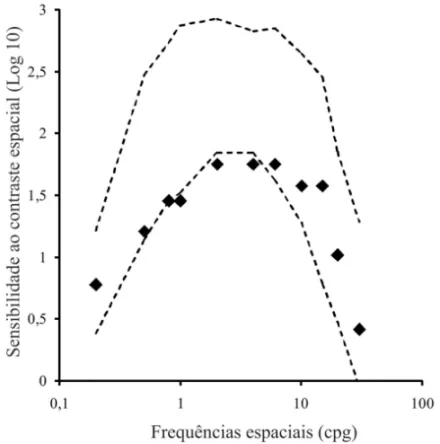
In the Laboratory of Neurophysiology “Eduardo Oswaldo-Cruz” (Institute of Biological Sciences) and Laboratory of Tropical Neurology ( Tropical Medicine Nucleus), UFPA, a computerized test designed to assess the spatial contrast sensitivity to luminance to 11 spatial frequencies (Botelho de Souza, 1995, Silveira et al., 2003, Rodrigues et al., 2007).
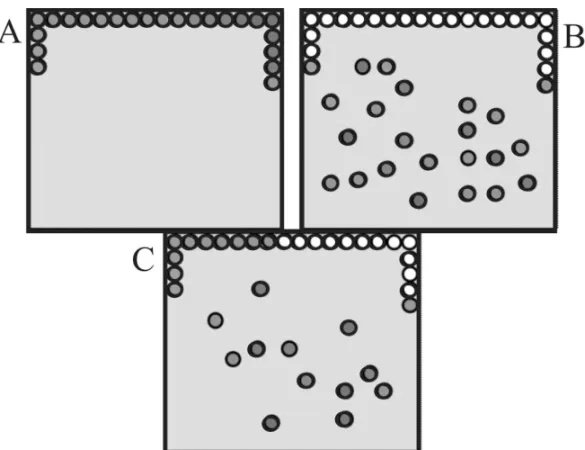
The test consists of a program written in C + +, which generates a screen cathode ray stimuli composed of stationary isochromatic gratings (CIE 1976, white: u = 0.182, v ‘= 0474) whose luminance varies sinusoidally in the horizontal direction. Mean luminance of the stimulus is 43.5 cd/ m2, regardless of changes in spatial frequency and contrast. Eleven spatial frequencies are used: 0.2, 0.5, 0.8, 1, 2, 4, 6, 10, 15, 20 and 30 cpd. The pattern is displayed in a rectangular window measuring 6.5° by 5° of visual angle at a distance of 3 m when it is presented (Figure 4) (Rodrigues, 2003).
! !
" # $ %
& ' ( ) *
+ ( '
,
-. / 0
1(
2 !
!
!
! !
$ -3 $ %
1
( ) * 4
% 52
1
( ) * 4
6 #
+ 6 "
7512
& '
( ) * '
Table 2 summarizes the studies discussed before.
Table 2. Psychophysical studies of luminance contrast of solvent exposed workers.
Correlation between results of visual psychophysical
assessment of subjects exposed to occupational solvents
and the levels of biomarkers and environmental
Monitoring the effects of exposure to organic solvents on the visual system is very important because being able to use that knowledge to prevent or minimize the damage caused by the interaction of these substances to the body and also to subsidize the creation of environmental standards have a wider application in the health of workers and the general population (Amorim, 2003).
assessment, information about dose-exposure time-response for each type of exposure and the degree of intoxication of individuals examined in order that changes in visual perception have been identified as early signs of neurotoxicity (Rosen, 1965; Baelum et al., 1982, Horan et al. 1985, Mutray et al., 1995, Ihrig et al., 2003, Dick et al. 2004; Paalysaho et al., 2007).
One way to quantify exposure to organic solvents is to relate the working time and daily activity of subjects exposed and half-life of substances to which subjects are exposed. Color vision of painters exposed to mixed solvents that were included xylene, methyl ethyl ketone, naphtha, 2-ethoxy ethanol, acetone and dichloromethane, was assessed with the D15d and correlated the results with two methods of measurement of exposure widely used, the index of recent exposure indicating exposure in the last 12 months for each subject tested and chronic exposure index is a measure of cumulative exposure throughout the working time of the individual, observing a positive correlation between the extent of commitment and the degree of visual exposure (Semple et al, 2000).
In a study of color vision of painters exposed only to toluene was used as a marker of environmental organic solvent level in a sample of air from the work environment obtained by chromatography and the biological indexes as markers of cumulative exposure to toluene and total hydrocarbons, which considers the dosage of these substances in the air of work environment during working hours and according to the chemistry employed during this period. These data were compared with results obtained with the D15d and there was a significant correlation between the impairment of color vision and the levels of toluene in the air (environmental marker) and index of cumulative exposure to toluene and total hydrocarbon (biomarkers) (Campagna et al., 2001).
Workers in a petrochemical distillation factory exposed to solvent mixtures containing isopentane, hexane, heptane, octane, cyclohexane, methyl cyclohexane, benzene, toluene, xylene, ethyl benzene, 1,1,1-trichloroethane and methyl tertiary- butyl ether and whose color vision was tested with D15D, it was observed that visual impairment was correlated with exposure levels and working time, and a visual impairment compared versus highest exposure for the left eye (Lee et al., 2007).
sensitivity to luminance obtained with VCTS Vistech 6500, observing a weak correlation (Boeckelmann & Pfister, 2003). In addition, similar work evaluating painters exposed to mixed organic solvents not specified was not found significant association between these two parameters (Ihrig et al., 2003).
As is noted, however, the concentrations of organic solvents or metabolites in the body exposed are not directly related to exposure time. It is known, for example, the existence of genes that encode enzymes responsible for metabolism of organic solvents and that the polymorphism modifies the absorption and the risk of neurotoxical effects between individuals (Söderkvist et al., 1996). Factors including age and susceptibility differences between individuals in the pattern of absorption of organic solvents are involved in the metabolism and compensatory processes, also explaining the difference in results between subjects exposed to mixtures of organic solvents (Schreiber et al., 2002). Thus it is important from markers that make direct measurements of concentrations of organic solvents or their metabolites in the body.
We studied subjects chronically exposed to mixed solvents containing ketone, methyl ethyl ketone, 1,2 dichloroethane, butyl acrylate, methyl isobutyl ketone, toluene, n-butanal, acetone, ethyl benzene, xylene, styrene and cyclohexanone, performing measurements of mandelic acid, hippuric acid and methyl hippuric acid in urine (metabolites of styrene, toluene and xylene) and gas chromatography of urine samples (xylene). Results were correlated with the results of quantitative assessment of color vision with the vision and D15d contrast with the MCT 8000 Vistech. Methyluric acid concentration in urine was positively correlated with contrast sensitivity for spatial frequencies in which the subjects showed the greatest loss of contrast sensitivity (6 and 12 cpd) (Gong et al., 2003). These results are similar to those found by Campagna et al. (1995).
of four workers were also measured other metabolites of tetrachlorethylene, creatinine, mercapturic acid and N-acetyl-S-(1,2,2-triclorovinil)-L-cysteine by gas chromatography / mass spectrometry. Positive correlations were observed, dose-dependent changes between the visual and environmental and biological markers (Schreiber et al., 2002).
In another study also observed a positive correlation between the color vision losses in workers exposed to styrene, D15d quantified with the environmental label taken as the concentration of styrene in the atmosphere and biomarker considered as the concentration of mandelic acid in urine (Eguchi et al., 1995).
The interference of alcoholic beverages and tobacco by
individuals due to occupational exposure to organic
solvents on the results of visual psychophysical tests
In the study of subjects chronically exposed to a mixture of solvents containing ketone, methyl ethyl ketone, 1,2 dichloroethane, butyl acrylate, methyl isobutyl ketone, toluene, n-butanal, acetone, ethyl benzene, xylene, styrene and cyclohexanone, and assessed by color vision and luminance contrast vision, we found that smoking affects the visual contrast sensitivity (Gong et al., 2003). A similar result was found by Eguchi et al. (1995). It was found no interference of smoking and consumption of alcoholic beverages in the evaluation of vision using D15d and MCT 8000 (Gong et al., 2003). In addition, workers in a petrochemical distillation factory exposed to solvent mixtures containing isopentane, hexane, heptane, octane, cyclohexane, methyl cyclohexane, benzene, toluene, xylene, ethyl benzene, 1,1,1-trichloroethane and methyl-tertiary-butyl ether, in painters exposed to toluene and in workers exposed to styrene assessed by color vision D15d, consumption of alcohol and smoking had no effect on the results of visual evaluation (Lee et al., 2007, Campagna et al., 2001, Eguchi et al., 1995).
A
AA
A
Avvvvvaliação visual de sujeitaliação visual de sujeitaliação visual de sujeitos expostaliação visual de sujeitaliação visual de sujeitos expostos expostos expostos de fos expostos de fos de fos de fos de forma ocupacional a solvorma ocupacional a solvorma ocupacional a solventorma ocupacional a solvorma ocupacional a solvententententes ores ores orgânices ores orgânicgânicgânicgânicososososos atr
atratr
atr
atraaaaavés de métvés de métvés de métvés de métodos psicvés de métodos psicodos psicofísicodos psicodos psicofísicofísicofísicofísicososososos
Resumo:
Resumo:Resumo:
Resumo:
usa-dos nesse tipo de avaliação são de ordenamento de matizes, como o Teste D15 Dessaturado de Lanthony e o Teste dos 100 Matizes de Farnsworth-Munsell, e avalia-ção de sensibilidade ao contraste espacial de luminância, como MCT 8000 Vistech, VCTS 6500 Vistech e FACT 101. Em geral esses testes descrevem perda de discrimina-ção de cores, afetando tanto o eixo azul-amarelo quanto o eixo verde-vermelho, e diminuição da sensibilidade ao contraste de luminância principalmente para as fre-quências espaciais mais baixas. Existe correlação positiva entre os resultados da ava-liação psicofísica e vários marcadores biológicos e ambientais, mas essa correlação depende do marcador e do tipo de solvente ao qual os indivíduos são expostos. Fa-tores como alcoolismo crônico e tabagismo inveterado podem interferir no proces-so de correlacionar esses resultados.
P P P P
Palaalaalaalaalavrvrvrvras-chavras-chavas-chaas-chaas-chavvvve: e: e: e: e: Solventes orgânicos. Exposição ocupacional. Psicofísica visual. Visão de cores. Sensibilidade ao contraste.
E E E E
Evvvvvaluation visuelle par des méthodes psyaluation visuelle par des méthodes psyaluation visuelle par des méthodes psyaluation visuelle par des méthodes psyaluation visuelle par des méthodes psychophchophchophchophchophysiques de personnes soumises àysiques de personnes soumises àysiques de personnes soumises àysiques de personnes soumises àysiques de personnes soumises à une exposition pr
une exposition pr une exposition pr une exposition pr
une exposition profofofessionnelle aux solvofofessionnelle aux solvessionnelle aux solvessionnelle aux solvants oressionnelle aux solvants orants orants organiquesants organiquesganiquesganiquesganiques
Résumé: Résumé: Résumé: Résumé:
Résumé: Les solvants organiques sont des substances neurotoxiques que peuvent causer des effets préjudiciables dans le système visuel. L’exposition professionnelle de ces types de substances est commune parce qu’ils sont utilisés dans une grande variété d’activités. Ces effets peuvent être quantifiés par des tests spécifiques de psychophysique. Les tests les plus utilisés dans cette évaluation sont, pour la vision des couleurs, le Lanthony Panel D-15 désaturé et le test Farnsworth-Munsell 100-Hue, et pour l’évaluation de la sensibilité au contraste, le MCT 8000 Vistech, le VCTS 6500 Vistech et le FACT 101. Généralement, ces tests révèlent une réduction de discrimination des couleurs, des effets dans les axes bleu-jaune et rouge-vert, et une diminution de sensibilité au contraste, spécialement dans les basses fréquences spatiales. Il y a une corrélation positive entre les résultats psychophysiques et les marqueurs biologiques environnementaux, mais cette corrélation dépend du marqueur et du type de solvant auquel le sujet a été exposé. Des facteurs tels que l’alcool et le tabac peut nuire à la corrélation des résultats.
M M M M
E EE E
Evvvvvaluación visual mediantaluación visual mediantaluación visual mediantaluación visual mediantaluación visual mediante méte méte méte méte métodos psicodos psicofísicodos psicodos psicodos psicofísicofísicofísicofísicos de las personas sometidas aos de las personas sometidas aos de las personas sometidas aos de las personas sometidas aos de las personas sometidas a exposición labor
exposición laborexposición labor exposición labor
exposición laboral a solval a solval a solvental a solval a solvententententes ores ores ores ores orgánicgánicgánicgánicgánicososososos
Resumen: Resumen:Resumen: Resumen:
Resumen: Los solventes orgánicos son sustancias neurotóxicas que pueden causar efectos dañinos en el sistema visual. La exposición ocupacional a estas sustancias es común, ya que se utilizan en una amplia variedad de actividades. Estos efectos pueden ser cuantificados por las pruebas psicofísicas específicas. Las pruebas más utilizadas para la evaluación de la visión del color son las pruebas de acuerdo, tales como el Panel de Lanthony D-15 desaturado de prueba y la prueba de Farnsworth-Munsell 100-hue, y para evaluar la sensibilidad al contraste, pruebas impresas panel como el MCT 8000 VISTECH, VCTS 6500VISTECH, y el hecho 101 pruebas. En general, estas pruebas demuestran que las pérdidas de color la discriminación en el eje azul-amarillo y rojo-verde, y una disminución de la sensibilidad al contraste, sobre todo a bajas frecuencias espaciales. Hay una correlación positiva entre los resultados de estudios biológicos y psicofísicos marcadores del medio ambiente, pero esta relación depen-de depen-de la marca y depen-del tipo depen-de disolvente para que los individuos estén expuestos. Factores tales como el alcohol y el tabaco pueden interferir con la correlación de los resultados.
P PP P
Palabralabralabralabralabras claas claas claas clavas clavvvve:e:e:e:e: Disolventes orgánicos. Exposición Ocupacional. Psicofísica Visual. Visión del color. Sensibilidad al contraste.
Ref
RefRef
Ref
Refererererencerencencencenceseseseses
Ahmadi, A., Jonsson, P., & Flodin, U. (2002). Interaction between smoking and glutathione S-transferase polymorphisms in solvent-induced chronic toxic encephalopathy. Toxicology and Industrial Health, 18, 289-296.
Amaducci, L., Arfaioli, C., Inzitari, D., & Marchi, M. (1982). Multiple sclerosis among shoe and leather workers: an epidemiological survey in florence.Acta Neurologica Scandinavica, 65, 94-103.
Amorim, L. C. A. (2003). Os biomarcadores e sua aplicação na avaliação da exposi-ção aos agentes químicos ambientais. Revista Brasileira de Epidemiologia, 6, 1-13.
Baker, E. L. (1994). Review of recent research on helth effects of occupational exposure to organic solvents. Journal of Occupational Medicine, 36, 1079-1092.
Birch J. (2001). Diagnosis of defective colour vision (2nd ed.). Oxford, UK: Butterworth-Heinemann.
Boeckelmann, I., & Pfister, E. A. (2003). Influence of occupational exposure to organic solvent mixtures on contrast sensitivity in printers. Journal of Occu-pational Environmental Medicine, 45, 25-33.
Botelho de Souza, C. R. (1995). Sistema de avaliação visual: análise orientada a objetos utilizando a metodologia OMT. Trabalho de Conclusão de Curso de Graduação em Ciência da Computação, Centro de Ciências Exatas e Natu-rais, Universidade Federal do Pará Belém, PA.
Bowman, K. J. (1982). A method for quantitative scoring method the Farnsworth Panel D-15. Acta Ophtalmologica, 60, 907-916.
Braga, A. M. (1996). Aplicação combinada dos métodos de Booch e OOSE na modelagem de um Software para avaliação psicofísica da capacidade de dis-criminação de cores. Trabalho de Conclusão de Curso de Graduação em Ciên-cia da Computação, Centro de CiênCiên-cias Exatas e Naturais, Universidade Fe-deral do Pará, Belém, PA.
Campagna, D., Mergler, D., Huel, G., Belanger, S., Truchon, G., & Ostiguy, C. (1995). Visual dysfunction among styrene-exposed workers. Scandinavian Journal of Work, Environment & Health, 21, 382-390.
Campagna, D., Stengel, B., Mergler, D., Limasset, J. C., Diebold, F., Michard, D. et al. (2001). Color vision and occupational toluene exposure.Neurotoxicology and Teratology, 23, 473-480.
Chancellor, A. M., Slattery, J. M., Fraser, H., & Warlow, C. P. (1993). Risk factors for motor neuron disease: A case-control study based on patients from the Scottish Motor Neuron Disease Register. Journal of Neurology, Neurosurgery and Psychiatry, 56, 1200-1206.
Dick, F., Semple, S., Osborne, A., Soutar, A., Seaton, A., Cherrie, J. W. et al. (2002). Organic solvent exposure, genes, and risk of neuropsychological impairment. Quarterly Journal of Medicine, 95, 379-387.
Eguchi, T., Kishi, R., Harabuchi, I., Yuasa, J., Arata, Y., Katakura, Y. et al. (1995). Impaired colour discrimination among workers exposed to styrene: relevance of a urinary Metabolite. Occupational and Environmental Medicine, 52, 534-538.
Fallas, C., Fallas, J., Maslard, P., & Dally, S. (1992). Subclinical impairment of colour vision among workers exposed to styrene. British Journal of Industrial Medicine, 49, 679-682.
Farnsworth, D. (1943). The farnsworth-munsell 100-Hue and dichotomous tests for color vision. Journal of the Optical Society of America, 33, 568-578.
Farnsworth, D. (1957). The farnsworth-munsell 100-Hue test for the examination of Color Discrimination (Manual). Baltimore: Kollmorgen.
Flodin, U., Söderfeldt, B., Noolind-Brage, H., Fredriksson, M., & Axelson, O. (1988). Multiple scleroses, solvents and pets. A case referent stud.Archives of Neurology, 45, 620-623.
Geller, A. M., & Hudnell, H. K. (1997). Critical issues in the use and analysis of the Lanthony Desaturete Color Vision test. Neurotoxicology and Teratology, 19, 455-465.
Gong, Y., Kishi, R., Kasai, S., Katakura, Y., Fujiwara, K., Umemura, T. et al. (2003). Visual dysfunction in workers exposed to a mixture of organic solvents. NeuroToxicology, 24, 703-710.
Graham, A. J., Macdonald, A. M., & Hawkes, C. H. (1997). British motor neuron disease twin study. Journal of Neurology, Neurosurgery and Psychiatry, 62, 562-569.
Gregersen, P., Angelso, B., Nielsen, T. E., Norgaard, B., & Uldal, C. (1984). Neurotoxic effects of organic solvents in exposed workers: An occupational, neuropsychological and neurological investigation. American Journal of In-dustrial Medicine, 5, 201-205.
Gregersen, P., Klausen, H., & Elsnab, U. C. (1987). Chronic toxic encephalopathy in solvent-exposed painters in Denmark 1976-1980: Clinical cases and social consequences after a 5 year follow up. American Journal of Industrial Medicine, 11, 399-417.
Hänninen, H., Eskelinen, L., Husman, K., & Nurminen, M. (1976). Behavioral effects of long term exposure to a mixture of organic solvents.Scandinavian Journal of Work, Environmental & Health, 4, 240-255.
Herpin, G., Gargouri, I., Gauchard, G. C., Nisse, C., Khadhraoui, M., Elleuch, B., et al. (2009). Effect of chronic and subchronic organic solvents exposure on ba-lance control of workers in plant manufacturing adhesive materials. Neurotoxicity Research, 15,179-186.
Horan, J. M., Kurt, T. L., Landrigan, P. J., Melius, J. M., & Singal, M. (1985). Neurologic dysfunction from exposure to 2-t-butylazo-2-hydroxy-5-methylhexane (BHMH): A new occupational neuropathy. American Journal of Public Health, 75, 513-517.
Ihrig, A., Nasterlack, M., Dietz, M. C., Hoffmann, J., & Triebig, G. (2003). Pilot study on prevalence of color vision dysfunction in long-term solvent-exposed painters. Industrial Health, 41, 39-42.
Iregren, A., Anderson, M., & Nylen, P. (2002). Color vision and occupational chemical exposures: II Visual functions in non-exposed subjects.NeuroToxicology, 23, 35-45.
Isserver, H., Malat, G., Sabuncu, H. H., & Yuksel, N. (2002). Imparirment of colour vision in patients with n-hexane exposure-dependent toxic polyneuropaty. Journal of Occupational and Environmental Medicine, 52, 183-186.
Lacerda, E. M. C. B. (2010). Avaliação psicofísica visual cromática e acromática de sujeitos expostos de forma crônica ocupacional à mistura de solventes or-gânicos. Dissertação de Mestre em Ciências, Programa de Pós-graduação em Neurociências e Biologia Celular, Instituto de Ciências Biológicas, Universi-dade Federal do Pará, Belém, PA.
Lacerda, E. M. C. B., Lima, M. G., Souza, G. S., Rodrigues, A. R., Teixeira, C. E. C., Ventu-ra, D. F. et al. (2008). Avaliação psicofísica de pessoas expostas de modo crô-nico ocupacional a solventes orgâcrô-nicos: sensibilidade ao contraste espacial e temporal de luminância, discriminação de cores e perimetria estática de humphrey. Anais do I Congresso IBRO / LARC de Neurociências da América Latina, Caribe e Península Ibérica. Búzios, Rio de Janeiro.
Lacerda, E. M. C. B., Souza, G. S., Rodrigues, A. R., & Silveira, L. C. L. (2009). Neurotoxicidade dos solventes orgânicos. Neurociências, 5, 165-173.
Association for Research in Vision and Ophthalmology (ARVO). Annual Meeting Abstract Search and Program Planner, Fort Lauderdale, Florida. Investigative Ophthalmology & Visual Science, 51, E-Abstract 6303/D975.
Lee, E.-H., Eum, K. D., Cho, S.-I., Cheong, H.-K., & Paek, D. M. (2007). Acquired dyschromatopsia among petrochemical industry workers exposed to benzene. NeuroToxicology, 28, 356-363.
Lee, S. H., & Lee, S. H. (1993). A study on the neurobehavioral effects of occupatio-nal exposure to organic solvents in Korean workers. Environmental Research, 60, 227-232.
Lemasters, G. K., Livingston, G. K., Lockey, J. E., Olsen, D. M., Shukla, R., New, G. et al. (1997). Genotoxic changes after low-level solvent and fuel exposure on aircraft maintenance personnel. Mutagenesis, 12, 237-243.
Linz, D. H., De Garmo, P. L., Morton, W. E., Wiens, A. N., Coull, B. M., & Maricle, R. A. (1986). Organic solvent induced encephalopathy in industrial painters. Journal of Occupational Medicine, 28, 119-125.
Mergler, D., & Blain, L., (1987). Assessing color vision loss among solvent-exposured workers. American Journal of Industrial Medicine, 12, 195-203.
Mergler, D., Belanger, S., De Grosbois, S., & Vachon, N. (1988). Chromal focus of acquired chromatic discrimination loss and solvent exposure among printshop workers. Toxicology, 49, 341-348.
Mergler, D., Bowler, R., & Cone, J. (1990). Colour vision loss among disabled workers with neuropsychological impairment. Neurotoxicology & Teratology, 12, 669-672.
Mikkelsen, S. (1980). A cohort study of disability pension and death among painters with special regard to disabling presenile dementia as an occupa-tional disease. Scandinavian Journal of the Society Medical, 16, 34-43.
Morrow, L. A., Ryan, C. M., Goldstein, G., & Hodgson, M. J. (1989). A distinct pattern of personality disturbance following exposure to mixtures of organic solvents. Journal of Occupational Medicine, 31, 743-746.
Muttray, A., Wolters, V., Mayer-Popken, O., Schicketanz, K. H., & Knietzko, J. (1995). Effect of subacute occupational exposure to toluene on color vision. Interna-tional Journal of OccupaInterna-tional Medicine and Environmental Health, 8, 339-345.
Olsen, J., & Sabroe, S. (1980). A case-reference study of neuropsychiatric disorders among workers exposed to solvents in the danish wood and furniture industry. Scandinavian Journal of the Society Medical, 16, 44-49.
Occupational Safety and Health Information Series. (1998). Chronic organic solvent neurotoxicity. Diagnostic criteria. New Zealand: Author.
Päällysaho, J., Näsänen, R., Mäntyjärvi, M., Kaukiainen, A., & Sainio, M. (2007). Colour vision defects in occupational chronic solvent encephalopathy.Human & Experimental Toxicology, 26, 375-383.
Pfister, E., Böckelmann, I., Darius, S., & Wurthmann, C. (1999). Einbeziehung psychopathologischer verfahren zur objektivierung von neurotoxischen früheffekten durch blei und lösemittelgemische. Fortschritte der neurologie-psychiatrie, 67, 435-440.
Rodrigues, A. R. (2003). O desenvolvimento de aplicativos de avaliação psicofísi-ca visual em estações de trabalho IBM RISC 6000. Dissertação de Mestrado em Ciências, Programa de Pós-graduação em Ciências Biológicas, Centro de Ciências Biológicas, Universidade Federal do Pará, Belém, PA.
Rodrigues, A. R., Souza, C. R. B., Braga, A. M., Rodrigues, P. S. S., Silveira, A. T., Damin, E. T. B. et al. (2007). Mercury toxicity in the Amazon: Contrast sensitivity and color discrimination of subjects exposed to mercury. Brazilian Journal of Medical and Biological Research, 40, 415-424.
Rosen, J. A. (1965). Pseudoisochromatic visual testing in the diagnosis of disseminated sclerosis. Transactions of the American Neurological Association, 90, 283-284.
Rosenberg, N. (1989). Nervous system effects of toluene and other organic solvents. Western Journal of Medicine, 5, 571-572.
Schreiber, J. S., Hudnell, H. K., Geller, A. M., House, D. E., Aldous, K. M., Force, M. S. et al. (2002). Apartment residents’ and day care workers’ exposures to tetrachloroethylene and deficits in visual contrast sensitivity. Environmental Health Perspective, 110, 655-664.
Schulte, P. A., Burnett, C. A., Boeniger, M. F., & Johnson, J. (1996). Neuro degenerative diseases: Occupational occurrence and potencial risk factors 1982 through 1991. American Journal of Public Health, 86, 1281-1288.
Silveira, L. C. L., Damin, E. T. B., Pinheiro, M. C. N., Rodrigues, A. R., Moura, A. L. A., Côrtes, M. I. T. et al. (2003). Visual dysfunction following mercury exposure by breathing mercury vapour or by eating mercury-contaminated food. In: J. D. Mollon, J. Pokorny & K. Knoblauch (Eds.), Normal and defective colour vision (pp. 407-417). Oxford, England: Oxford University Press.
Smargiassi, A., Mutt, A., De Rosa, A., De Palma, G., Negrotti, A., & Calzetti, S. (1999). A case-control study of ocupational and enviromental risk factors for Parkinson´s disease in the Emilia-Romagna region of Italy. Neurotoxicology, 19, 709-712.
Söderkvist, P., Ahamadi, A., & Akerback, A. (1996). Glutathione S-transferase M1 null genotype as a risk modifier for solvent-induced chronic toxic encephalopathy. Work, Environment & Health, 22, 360-363.
Verriest, G. (1963). Further studies on acquired deficiency of colour discrimination. Journal of the Optical Society of America, 53, 185-95.
Eliza M Eliza M Eliza M Eliza M
Eliza Maria da Caria da Caria da Caria da Caria da Costa Britosta Britosta Britosta Britosta Brito Laco Lacero Laco Laco Lacerererdaerdadada, Professor at the After-Graduation Program inda Neurosciences and Cellular Biology, Biological Sciences Institute, Federal University of Pará. Address: Av. Generalíssimo Deodoro, 92, Umarizal. Zip Code: 66055-240, Belém, Pará. E-mail:[email protected]
D D D D
Dororororora Fa Fa Fa Fa Fix ix ix Vix ix VVVVenturenturenturenturenturaaaaa, Professor at the Psychology Institute, University of São Paulo. Address: Av. Professor Mello Moraes, 1721, Cidade Universitária. Zip Code: 00508-030, São Paulo, SP. E-mail: [email protected]
L LL L
Luiz Cuiz Cuiz Cuiz Carlos de Lima Silvuiz Carlos de Lima Silvarlos de Lima Silvarlos de Lima Silvarlos de Lima Silveireireireireiraaaaa, Professor at the Center for Tropical Medicine and the Biological Sciences Institute, Federeal University of Pará. Address: Av. Generalíssimo Deodoro, 92, Umarizal. Zip Code: 66055-240, Belém, Pará. E-mail: [email protected]