(1) Departamento de Fonoaudiologia, Universidade Federal da Bahia, UFBA, Salvador, Bahia, Brasil.
(2) Instituto de Ciências da Saúde, Universidade Federal da Bahia, UFBA, Salvador, Bahia, Brasil.
(3) UNIME (União Metropolitana de Educação e Cultura), Lauro de Freitas, BA, Brasil.
Conlict of interest: non-existent
Determining the mandibular range of motions
in children from Bahia state
Determinação da amplitude dos movimentos mandibulares
em crianças do estado da Bahia
Silvia Damasceno Benevides(1) Roberto Paulo Araujo(2) Camila de Oliveira Ribeiro(2) Sandra Maria Ferraz Mello(3)
Received on: July 11, 2015 Accepted on: November 26, 2015
Mailing address: Silvia Benevides
Departamento de Fonoaudiologia, Instituto de Ciências da Saúde Universidade Federal da Bahia
Av. Reitor Miguel Calmon, s/n, Vale do Canela
Salvador – BA – Brasil CEP: 40110-902
E-mail: [email protected]
doi: 10.1590/1982-0216201618110515
ABSTRACT
Purpose: to determine the range of mandibular movements according to age, gender and height in
Brazilian children, from Bahia State.
Methods: the research was conducted on 181 children, aged 8 to 12 years. All asymptomatic for
Temporomandibular Disorders, according to the Research Diagnostic Criteria/ Temporomandibular Disorders RDC/TMD, RDC /TMD. We carried out the measurement of the amplitude of the maximum mouth opening, right laterality, left laterality and protrusion, being measured with millimeter measure-ments Digital Caliper Starret Serie 799. To statistical analysis was used the SPSS (Statistical Package for the Social Sciences) on version 17 and the STAT on version 11.
Results: 1. Male / height (≥ 131.45 to 146.05cm); maximum mouth opening from 48.07 to 50.29
mm; right laterality from 8.19 to 8.55mm; left laterality from 7.88 to 8.51 mm; and protrusion from 6.72 to 8.30mm. 2. Female / height (≥ 129.68 to 142.64 cm): maximum mouth opening from 47.15 to 50.71mm; right laterality from 7.27 to 8.58mm; left laterality from 7.66 to 8.21mm; and protrusion from 6.51 to 7.22mm. 3. Male / age: maximum mouth opening from 47.52 to 50.84mm; right laterality from 7.76 to 8.85 mm; left laterality from 7.93 to 9.36 mm; protrusion from 6.60 to 8.50 mm. 4.Female / age: maximum mouth opening from 47.16 to 50.7 mm; right laterality from 7.53 to 8.60 mm; left laterality from 7.42 to 8.30mm; protrusion from 6.41 to 7.48mm.
Conclusion: values of the range of mandibular movements according to age, gender and height, for the
studied population, were described and can aid in the functional evaluation of the masticatory system.
Keywords: Temporomandibular Joint; Range of Motion, Articular; Child; Temporomandibular Joint
Disorders
RESUMO
Objetivo: determinar a amplitude dos movimentos mandibulares de crianças brasileiras, do Estado da
Bahia, de acordo com a idade, gênero e altura.
Métodos: participaram do estudo 181 escolares de 8 a 12 anos, todos assintomáticos para Disfunção
Temporomandibular, segundo o Research Diagnostic Criteria/ Temporomandibular Disorders, RDC/ TMD. Realizaram-se as medidas da amplitude da abertura bucal máxima, lateralidade direita, lateralidade esquerda e protrusão. As medidas foram feitas com o paquímetro digital Starret Serie 799. A análise estatística foi STAT versão 11. Aplicou-se a regressão multivariada das medidas obtidas destacando-se gênero, idade e altura como interferentes para amplitude dos movimentos mandibulares (P0,05).
Resultados: 1. masculino/altura (131,45 ≥ 146,05cm); abertura bucal máxima 48,07 a 50,29mm;
late-ralidade direita 8,19 a 8,55mm; latelate-ralidade esquerda 7,88 a 8,51mm e protrusão 6,72 a 8,30mm. 2. feminino/altura (129,68 ≥ 142,64cm): abertura bucal máxima 47,15 a 50,71mm; lateralidade direita 7,27 a 8,58mm; lateralidade esquerda 7,66 a 8,21mm e protrusão 6,51 a 7,22mm. 3. masculino /idade: abertura bucal máxima 47,52 a 50,84mm; lateralidade direita 7,76 a 8,85mm; lateralidade esquerda 7,93 a 9,36mm; protrusão 6,60 a 8,50mm. 4. feminino/idade: abertura bucal máxima 47,16 a 50,7mm; latera-lidade direita 7,53 a 8,60mm; lateralatera-lidade esquerda 7,42 a 8,30mm; protrusão 6,41 a 7,48mm.
Conclusão: os valores da amplitude dos movimentos mandibulares de acordo com idade, gênero e altura,
para a população estudada, foram descritos e podem contribuir como um referencial que pode auxiliar na avaliação funcional do sistema mastigatório.
Descritores: Articulação Temporomandibular; Amplitude de Movimento Articular; Criança; Transtornos
da Articulação Temporomandibular Original articles
INTRODUCTION
The static and dynamic relations between anatomical structures of tempormandibular joint (TMJ), occlusal areas and neuromuscular condition participate in the masticatory system functions, both in normal and pathological conditions1.
Deviations in the TMJ and/or its functioning, charac-terized by the presence of signs and symptoms of TMD
(Temporomandibular joint disorder)2, although they
are more prevalent in adults, may also be observed in children3. For the diagnosis, it is necessary to perform a thorough investigation. Among various parameters for the clinical examination, mandibular movements are highlighted.
During clinical examination, limitations of mandibular movements can be observed which represent an important signal in the clinical status of
TMD4. Thus, knowledge about the mandibular range
of motion (MRMs) has been the subject of interest of many researchers, since this is an important tool for assessing the masticatory functional status4. Normal reference of the mandibular range of motion are now well established in adults. However, few studies address the benchmarks of mandibular movements measured in children 5,6.
Relying on these reference parameters, in addition to assisting the evaluation of the masticatory system for diagnosis, it also contributes to the management of the treatment, since it may indicate stage of evolution of the treatments performed, and even help in the use of the most appropriate therapeutic option in the treatment of patients suffering from TMD7. Among the studies that address the mandibular movements in children4,6,8,9, few are related to possible factors that inluence in deter-mining the range of these movements6,8,10. The high inter and intraindividual variability of these movements makes this assessment dificult8. Thus, to elucidate reference parameters of the mandibular dynamics, this study aimed to establish the standard mandibular range of motions according to age, gender and height (cm) for children 8-12 years in the Brazilian population.
METHODS
It is a descriptive, analytical, cross-sectional, obser-vational study.
This study was registered in SISNEP/CONEP, under No. 307495 and approved by the Research Ethics Committee of the Dentistry College at Federal University of Bahia, according to the Opinion N°.17/10
and all the competent people signed the Free and Informed Consent Term.
The research was conducted with 181 students, of both genders, aged 8-12 years, living in São Francisco do Conde, Bahia, and the guardians signed, agreeing to the “Free and Informed Consent Term”.
As an exclusion criteria, non-collaborator patients were listed; with facial trauma histories and head and neck surgery4; presenting clinical status suggestive for neurological alterations and craniofacial malforma-tions; absence of central incisors, clinical signs of TMD, according to the RDC / TMD index11,12 and loss of 5 or more posterior dental elements6. To check for the compliance with the inclusion and exclusion criteria, a questionnaire was administered to parents or guardians of children and a screening was made with them.
Individual assessments were made and obtained measures of the range of maximal mouth opening (MMO), excursive movements of right laterality (RL), left (LL) and protrusion (PROT).
a) MMO: The volunteer was asked to perform the
mouth opening up to the painless limit and considered the maximum interincisal distance, having as reference the incisal edge of the right upper and lower incisors, including the extent of the vertical trespass9;
b) PROT: From the status of the teeth in occlusion, it was measured the distance from the labial surface of the lower incisors to the incisor side of the upper ones. Then, the volunteer was asked to protrude the mandible by sliding it against the maxille, followed by measuring the horizontal distance from the labial surface of the upper incisors to the incisal edge of the lower ones. The sum resulted in the protrusion measure of the mandible9;
c) RL / LL: The child was asked to displace the jaw to the maximum to the right and measured the horizontal distance between the dental midline of the upper central incisors and lower central incisors or between the labial frenulum. The same procedure was used to measure left lateral excursion9. For the procedure, the subject was instructed to disocclude the teeth.
The occlusion variables, facial typology, bruxism and electromyography of masseter and temporal, weight, height and age were evaluated and underwent a multivariate regression of measurement obtained, where gender, age and height were highlighted as interfering in range of mandibular motion. Thus, these last three variables were used for the determination of mandibular movements.
The anthropometric assessments of weight and height were measured and recorded by a team of nutri-tionist researchers. The occlusion and facial typology were researched by an orthodontist. Bruxism and teeth clenching was investigated through a questionnaire with those guardians and the masseter surface and anterior temporal electromyography, bilaterally, was measured through MIOTEC equipment with Miotool 400 software, 4-channel, Low Pass ilter, a speciic function for calculating the Root Mean Square (RMS).
In the statistical treatment, the results were expressed as percentage, mean and standard deviation and inferential statistical techniques were used: t-Student test with equal variances, simple and multiple linear regression with variable selection method. Veriication of equality of variance hypothesis was performed using the F test (Levene). The margin of error used in the decision of the statistical tests was 5.0%. The “software” of statistics used for obtaining statistical calculations was the SPSS (Statistical Package for Social Sciences), version 17 and STAT in version 11.
RESULTS
The sample consisted of 181 students, 91 (50.3%) were male and 90 (49.7%) were female. There was no difference between genders, except for the RL and PROT (Table 1). The age of respondents ranged from 8 to 12 years, averaged 9.70 ± 1.39 years.
Table 1. Mean and standard deviation of mandibular range of motion according to gender
Variable
Variables
MMO RL LL Prot
Mean ± S.D Mean ± S.D Mean ± S.D Mean ± S.D
Gender
Male 49,59 ± 5,03 8,40 ± 1,74 8,45 ± 1,95 7,60 ± 1,90
Female 49,06 ± 4,43 7,77 ± 1,87 8,02 ± 1,91 6,89 ± 1,74
Value for p p(1) = 0, 454 p(1) = 0,019* p(1) = 0,134 p(1) = 0,009* (*): Signiicant difference to the level of 5,0%
(1): Equal t-Student test.
Maximal mouth opening (MMO); Right laterality (RL); Left laterality (LE); Protrusion (Prot)
Before determining the values for the MRMs, some variables that could present interference on these were studied. Therefore, multivariate regression was applied, including the following variables: age, gender, weight, height, electrical activity of the masseter and temporal muscles bilaterally, occlusion, face type, bruxism and clenching of sleep and waking (Table 2). Among all the analysis, the results indicated that the
Table 2. Results of mandibular range of motion regression with independent variables
Motion Variable Coeficient Value for p
MMO
Height 0,14 p < 0,001*
Bruxism while awake - 2,30 p = 0,034* Bruxism during sleep 2,32 p = 0,002*
RL Gender 0,59 p = 0,028*
Height 0,03 p = 0,033*
LL Age 0,29 p = 0,005*
Prot
Age 0,31 p = 0,001*
Gender 0,61 p = 0,026*
Type of face 0,45 p = 0,030*
The data represent the multivariate regression analysis adjusted for mandibular range of motion Maximal mouth opening (MMO); Right laterality (RD); Left laterality (LL); Protrusion (Prot)
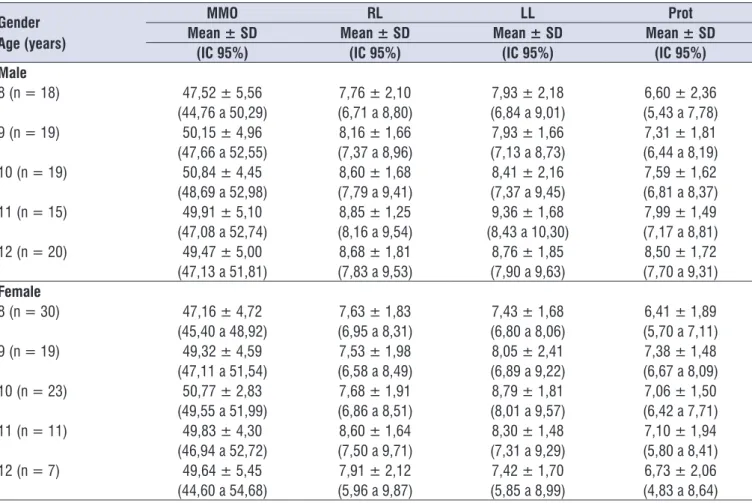
Table 3. Mean and interval of conidence for variables of standard for mandibular motion according to gender and age
Gender Age (years)
MMO RL LL Prot
Mean ± SD Mean ± SD Mean ± SD Mean ± SD
(IC 95%) (IC 95%) (IC 95%) (IC 95%)
Male
8 (n = 18) 47,52 ± 5,56 7,76 ± 2,10 7,93 ± 2,18 6,60 ± 2,36
(44,76 a 50,29) (6,71 a 8,80) (6,84 a 9,01) (5,43 a 7,78) 9 (n = 19) 50,15 ± 4,96 8,16 ± 1,66 7,93 ± 1,66 7,31 ± 1,81
(47,66 a 52,55) (7,37 a 8,96) (7,13 a 8,73) (6,44 a 8,19) 10 (n = 19) 50,84 ± 4,45 8,60 ± 1,68 8,41 ± 2,16 7,59 ± 1,62
(48,69 a 52,98) (7,79 a 9,41) (7,37 a 9,45) (6,81 a 8,37) 11 (n = 15) 49,91 ± 5,10 8,85 ± 1,25 9,36 ± 1,68 7,99 ± 1,49
(47,08 a 52,74) (8,16 a 9,54) (8,43 a 10,30) (7,17 a 8,81) 12 (n = 20) 49,47 ± 5,00 8,68 ± 1,81 8,76 ± 1,85 8,50 ± 1,72
(47,13 a 51,81) (7,83 a 9,53) (7,90 a 9,63) (7,70 a 9,31) Female
8 (n = 30) 47,16 ± 4,72 7,63 ± 1,83 7,43 ± 1,68 6,41 ± 1,89 (45,40 a 48,92) (6,95 a 8,31) (6,80 a 8,06) (5,70 a 7,11) 9 (n = 19) 49,32 ± 4,59 7,53 ± 1,98 8,05 ± 2,41 7,38 ± 1,48
(47,11 a 51,54) (6,58 a 8,49) (6,89 a 9,22) (6,67 a 8,09) 10 (n = 23) 50,77 ± 2,83 7,68 ± 1,91 8,79 ± 1,81 7,06 ± 1,50
(49,55 a 51,99) (6,86 a 8,51) (8,01 a 9,57) (6,42 a 7,71)
11 (n = 11) 49,83 ± 4,30 8,60 ± 1,64 8,30 ± 1,48 7,10 ± 1,94
(46,94 a 52,72) (7,50 a 9,71) (7,31 a 9,29) (5,80 a 8,41)
12 (n = 7) 49,64 ± 5,45 7,91 ± 2,12 7,42 ± 1,70 6,73 ± 2,06
aged 4 to 15 years also found no differences between genders.
In an analysis conducted with 303 children aged 6 to 14 which investigated the inluence of gender in the MRM, showed no difference between these variables13. Contrary to what was found in studies in children, researches indicated statistically signiicant differences between genders in population comprised of adolescents14 and adults15, revealing that sexual maturity, in which the differentiation of various physical characteristics of the human being occurs, seems to be impactful, also, with regard to mandibular range of motions4,13.
In the present study, age proved interfering on the MRMs, consistent with indings of Sousa et al.10 who also found similar differences by investigating the mandibular range of motions in children 6-14 years. Machado, Medeiros and Felicio’s 6 research revealed differences among children 6-12 years.
Comparing the height and range of the other mandibular movements, signiicant differences were found for MMO, RL and protrusion. The results are in accordance with the records of the scientiic literature, since relations were found between this variable and the mandibular range of motions in children6,8,10. The
DISCUSSION
This study appointed some variables that might be interfering with mandibular movements. Considering the genres and having the comparison between them performed, the MRMs presents no statistically signiicant differences, except for the RL movements 8.40±1,74mm for males and 7.77±1,87mm for females and PROT 7.60±1,90mm, for males and 6.89±1,74mm, for females (p<0.05) (Table 2).
Although not signiicant, it is observed in this study that the mean values of MRMs were higher in boys than in girls, in accordance with other studies6,8, differ-ently from what was found in the study that investigated the mandibular movement of children between 6 and 10 years, divided into symptomatic groups to TMD and asymptomatics13. As a result, the authors concluded that for opening the mouth when compared between genders, there was a higher average present in girls, though the representation has not been signiicant either.
Research conducted with a sample of 212 children aged between 3 and 11 years did not reveal signiicant differences between the mandibular range of motions and gender7, conclusion agreed with the indings in this study. Abou-Atme et al.8 in his research of 102 children
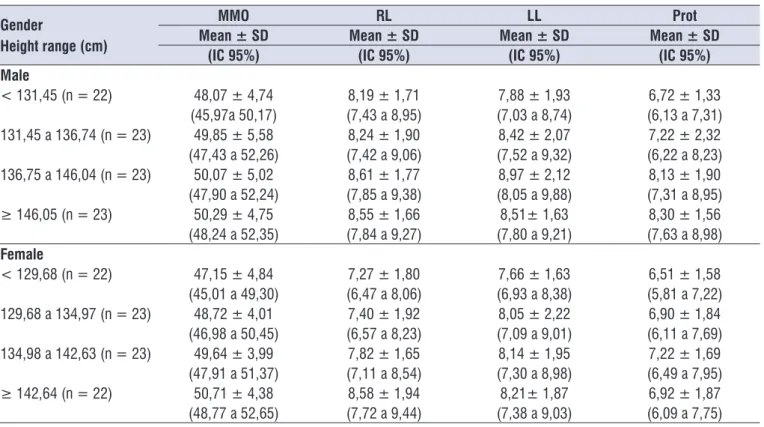
Table 4. Mean and interval of conidence for variables of mandibular range of motion according to gender and height range
Gender
Height range (cm)
MMO RL LL Prot
Mean ± SD Mean ± SD Mean ± SD Mean ± SD
(IC 95%) (IC 95%) (IC 95%) (IC 95%)
Male
< 131,45 (n = 22) 48,07 ± 4,74 8,19 ± 1,71 7,88 ± 1,93 6,72 ± 1,33 (45,97a 50,17) (7,43 a 8,95) (7,03 a 8,74) (6,13 a 7,31) 131,45 a 136,74 (n = 23) 49,85 ± 5,58 8,24 ± 1,90 8,42 ± 2,07 7,22 ± 2,32 (47,43 a 52,26) (7,42 a 9,06) (7,52 a 9,32) (6,22 a 8,23) 136,75 a 146,04 (n = 23) 50,07 ± 5,02 8,61 ± 1,77 8,97 ± 2,12 8,13 ± 1,90 (47,90 a 52,24) (7,85 a 9,38) (8,05 a 9,88) (7,31 a 8,95) ≥ 146,05 (n = 23) 50,29 ± 4,75 8,55 ± 1,66 8,51± 1,63 8,30 ± 1,56 (48,24 a 52,35) (7,84 a 9,27) (7,80 a 9,21) (7,63 a 8,98) Female
value of 49,47mm and maximum of 50,77mm for males and 49,64mm and 50,77mm for females (Table 3).
Cortese et al.6 evaluated 212 children, aged 3-11 years. They obtained the following averages as values for the MMO: at 7 and 8 years, 41,92mm; at 9 years, 45,34mm and at 10 and 11 years, 46,14mm. For these ages, values of this research have been shown much higher (Table 3).
Different from the purpose of this study, where reference values were separated by age, Leles et al.18 described by normal ranges the reference measures for the minimum and maximum range for the mouth opening in children with an average of 6.7 years. The voluntary mouth opening (VMO) and assisted mouth opening (AMO) were measured. The authors proposed the normal limits as follows: VMO33mm and VMO51mm; AMO35mm and AMO54mm.
There has been a wide range of referential mean values of MRMs in children. The authors comment that the differences in values found in studies may be due to changes arising from the growth process, individual variations and methodology applied2,7,14. Higher values of the mandibular movement measures found in puberty may be justiied by ligament hyper-lassitude veriied during this phase19.
The values found in this research of MRMs according to height was rarely observed in other studies.
For MMO, Landtwing20 found the following
minimum and maximum values corresponding to
height: 8 years (39,5mm / 54,0mm and 129,11cm); 9 years (37,8mm/60,4mm and 134,01cm); 10 years (37,0mm/60,2mm and 138,39cm); 11 years (43,0mm/61,2mm and 144,49cm) and 12 years (44,0mm/64,4mm and 150,51cm). Despite being dificult to compare, due to differences in the presen-tation, it is observed that the interval between the minimum and maximum values of this study is lower for the height ranges analyzed (Table 4).
Sousa et al.10 correlated the MRMs (MMO, RL,
LL and PROT) with height. The sample consisted of 303 children of both genders and age 6-14 years. Consistent with the presented results, the authors described mean values of MMO, RL, LL and protrusion, in relation to height ranges, but not separated by gender. At the height range between 126 to 135cm, the research pointed to the value of the MMO 42,27mm. With 136cm to 145cm, 44,52mm was found, and the height included between 146 to 155cm, the MMO was in 46,44mm. In this study, higher values of the MMO were obtained in children who were in the height same pattern seems to be repeated in adult
popula-tions, as suggested by the study which identiied a correlation of height with MMO7.
Mandibular movements studied in this research are discussed below.
Maximal Mouth Opening
The mouth opening is an important parameter to measure the mandibular mobility and, in the presence of alterations, it also contributes to the understanding of the severity of its functional disorder16.
Cattoni and Fernandes17 identiied the maximum interincisal distance in children 7-11 years. The age range was very close to this study, however the values obtained by the authors were lower. For the age of 8 years, the values 43,54mm for boys and 43,85mm for girls are highlighted. This research found the average 47,52mm and 47,16mm for males and females, respectively (Table 2). At age 11, the authors obtained 47,95mm (male) and 42,30mm (female), but at this
research, slightly higher values were found, where
measures were 49,47mm for boys and 49,83mm for girls. It is noteworthy that, unlike the methodology of this study, the authors did not consider the overbite in their measurements.
With measurement method similar to the research in question, Hanazaki et al.9 veriied the parameters of mandibular range of motions of opening, protrusion and laterality in 142 children 6-12 years old. The averages found for the maximum values at the age of 8 years were described by 47,6mm for both boys and girls and, at 11 years, 49,5mm for boys and 52,6mm for girls. These values are close to what was observed for these ages (Table 3).
In the research of Ribeiro et al.13 91 children aged 6-10 years were evaluated. The authors described the MMO values of 42,36mm and 43,28mm for males and females, respectively. In the present study, higher
values for MMO for males (47,52mm) and female
(47,16mm) were observed. However, it is important to mention that these records refer to children with slightly older ages. Population study of 1011 children and adolescents aged 10 to 17, separated by age group, described the average of 50.0mm reference value for the MMO, at age range of 10-13 years14. When
separated by gender, values were represented by
side. In this work, the results were different, as it was not found the prevalence of higher values in any particular side. The authors found the average difference between RL and LL was 1,24mm in women, and 2,09mm in men. In conclusion, values were suggested which may be tolerated as “deviations” of symmetrical movements that are represented by up to 1.2 mm for women, 2.1mm for men. Leles et al.18 established intervals for normal values in the excursive movements (EM) and
described by EM˃4mm and EM˂10mm.
It is noteworthy considering the laterotrusion differences R and L to establish reference values in populations. Authors support the theory that there are functional differences between the right and left laterotrusion due to the action of the lower beam of the lateral pterygoid muscle, though further studies are necessary on the clinical importance of individual differ-ences between R and L lateralities14,22.
The relation of height and laterality was observed in the study by Sousa et al.10, where children included in the height of 126 to 135cm, the values for RL and LL were 7,91mm and 7,74mm, respectively. For height between 136 and 145cm, it was found 8,68mm (RL) and 8,53mm (LL) and in the range of 146 to 155cm, the authors showed 9,27mm (RL) and 9,11mm (LL).
This research showed minimal differences (˂1mm)
compared to the values reported by the authors (Table 4)
Protrusion
Hamazaki et al.9 from his survey of 142 children
aged 6 to 12 years, determined the values for the
protrusive movement at the age of 8 years as 8,4 mm (male) and 9,0mm (female); and 10 years as 8,8mm (male) and 8,3mm (female). The measures of this study at the highlighted ages of 8 and 10 years, were lower
than the values mentioned above, in both genders.
Averages of 6,6mm and 7,99mm for boys and 6,41mm and 7,10 mm for girls (Table 3).
The protrusive motions studied by Cortese et al7 were described as follows: for ages 7 and 8 years (4,07mm); 9 years (5,21mm) and 10 and 11 years (4,57mm) and in this study, higher values were obtained, such as: at age 8 (6,41mm); 9 years (7,38mm); 10 (7,06mm) and 11 (7,10mm) (Table 3).
The study of Hirsch et al14 showed that protrusion can be considered limited if its measurement is less than 5 mm, even with no need of treatment.
In correspondence with the height, the protrusion was analyzed by Ribeiro et al.13 where children who ranges mentioned. There was a difference of little over
4 mm for both genders (Table 4).
Abou-Atme et al.8 analyzed the MMO in 102 children 4-15 years. Children of average age of 9,1 years and height of 134,2cm showed value 45,8mm for MMO. The indings in question point to slightly higher values in both genders and approximate height ranges. However, the purpose of this study was to determine MMO according to height, divided by gender, and not to a general age average, MMO and height, as reported by the authors.
Laterality
The maximum mandibular lateral excursion is studied in adults, but research addressing these movements, considering the functional development of TMJ during the period of growth, i.e. in children are scarce10,16.
The results of this research showed that the lateral movement of both R and L were increasing at 8 up to 11 years (Table 3). Registration for this movement at 12 years were lower than previous ages, but the number of children at this age was small.
Hirsch et al.14 conducted a study of children who were between 10 and 13 years and obtained the following values: RL 10,1mm; LL 10,4mm. When considering the genre, the measures observed were RL 10,1mm and 10, 2 mm; LL 10.5 mm and 10,7mm. All corresponding to females and males, respectively. In this research, the mean values at the ages of 10 and 12 years for the RL and LL were lower. It was found 8,60mm and 8,68mm for males and 7,68mm and 8,69mm for RL and LL in female children.
Reicheneder et al.16 highlighted higher values in children with respect to this research both in RL and in LL. The group consisted of children from 6,3 to 10,3 years (average of 8,7 years), where the lateral excursion R was 11,0 mm and left was represented by 10,6mm.
The average of maximum limit for lateral movements was identiied by Hamazaki et al.9, where they found at the age of 8 years measures 8,3mm and 8,1 mm, and for 11 years, the mean values of 8,5mm and 7,6mm, for males and females, respectively. The results presented corresponding values of RL and LL very close to the indings of the authors (Table 3).
factors and dental signiicance. Saudi Med J. 2010;31(4):369-73.
8. Abou-Atme YS, Chedid N, Melis M, Zawawi KH. Clinical measurement of normal maximum mouth opening em children. J CraniomandibPract. 2008;26(3):191-6.
9. Hamazaki CM, Kawaura R, Bianchini EMG, Assencio-Ferreira VJ. Range of motion analises in children. Rev Cefac. 2002;4(1):35-40.
10. Sousa LM, Nagamine HM, Chaves TC, Grossi DB, Regalo SCH, Oliveira AS. Evaluation of mandibular range of motion in Brazilian children and its correlation to age, height, weight, and gender. Braz Oral Res. 2008;22(1):61-6.
11. Maydana AV, Tesch RS, Denardin OVP, Ursi WJS, Dworkin SF. Possible etiological factors in temporomandibular disorders of articular origin with implications for diagnosis and treatment. Dental Press J Orthod. 2010;15(3):78-86.
12. Dworkin SF, Leresche L. Research diagnostic criteria for temporomandibular disorders: review, criteria, examinations and speciications, critique. J Craniomandib Disord. 1992;6(4):301-55.
13. Ribeiro BG, Costa JM, Gomes CAFP, El Hage Y, Arruda EEC, Gonzalez TO et al. Evaluation of temporomandibular disordes in children. Cons Saude. 2011 ;10(4):729-34.
14. Hirsch C, John MT, Lautenschlager C, List T. Mandibular jaw movement capacity in 10–17-yr-old children and adolescents: normative values and the inluence of gender, age, and temporomandibular disorders. Eur J Oral Sci. 2006;14(6):465-70. 15. Hilgenberg PB, Saldanha ADD, Cunha CO, Rubo
JH, Conti PCR. Temporomandibular disorders, otologic symptoms and depression levels in tinnitus patients. J Oral Rehab. 2012;39:239-44.
16. Reicheneder CA, Peter P, Baumert U, Gedrange T. Growth-Related Differences in maximum laterotrusion and retrusion between children and adults. Angle Orthodontist. 2009;79(2):265-70.
17. Cattoni DM, Fernandes FDM. Maximum interincisal distance in children in mixed dentition period. Rev Dental Press Ortodon Ortop Facial. 2005;10(1):117-21.
18. Leles RC, Neto JJSM, Giro EMA, Compagnoni MA. Normal mandibular range of movement in children. Rev Fac Odontol São José dos Campos. 2000;3(2):121-6.
19. Cunto DCL, Moroldo MB, Liberatore DI, Imach E. 105 Hiperlaxitud articular: estimación de occupied the range from 126 to 135cm, the
corre-sponding value of the protrusive motion was 6,49mm; for 136 to 145cm, the protrusion of 7,46mm was found and the height between 146 to 155cm, the protrusion was 8,23mm. This work revealed values very close to those described by the authors (Table 4).
Taking into account the results obtained and commented so far, it should be noted that scientiic research for MRMs addresses more the MMO, missing data on movements in the horizontal plane (RL, LL and protrusion)2,9,17. It is believed that the fact is due to difi-culties related to small age group for carrying out such movements22. However, in this study, after directions and little training, children showed no impediments for the execution of movements that could compromise collection.
CONCLUSION
The values of the mandibular range of motion according to age, gender and height, for the population studied, were described and could serve as a reference parameter to be used that can aid in the functional evaluation of the masticatory system.
REFERENCES
1. Stiesch-Scholz M, Demling A, Rossbach A. Reproducibility of jaw movements in patients with craniomandibular disorders. J Oral Rehabil. 2006;33(11):807-12.
2. Gonçalves DA, Dal Fabbro AL, Campos JA, Bigal ME, Speciali JG. Symptoms of temporomandibular disorders in the population: an epidemiological study. J Orofac Pain. 2010;24(3):270-8.
3. Bertoli FMP, Losso EM, Moresca RC. Evaluation of temporomandibular disordes in children. RSBO. 2009;6(1):77-84.
4. Machado BCZ, Medeiros AM, Felicio CM. Mandibular movement range in children. Pró-Fono R Atual Cient. 2009: 21:189-94.
5. Santos ECA, Bertoz FA, Pignatta LMB, Arantes F de M. Clinical evaluation of signs and symptoms of children’s temporomandibular dysfunction. Dental Press J Orthod. 2006;11(2):29-34.
6. Cortese SG, Oliver LM, Biondi AM. Determination of range of mandibular movements in children without temporomandibular disorders. J Craniomandib Pract. 2007;25(3):200-5.
suprevalencia en niños en edad escolar. Arch argent pediatr 2001;99(2):105-10.
20. Landtwing K. Evaluation of the normal range of vertical mandibular opening in children and adolescent with special reference to age and stature. J MaxFac Surg. 1978;6(3):157-62.
21. Turp JC, Alpaslan C, Gerds T. Is there a greater mandibular movement capacity towards the left? Veriication of an observation from 1921. J Oral Rehabil. 2005;32:242-7.