Invited Review
Physiological adaptations of ruminants and their potential relevance for
production systems
Marcus Clauss
1*, Jürgen Hummel
2 1 University of Zurich, Vetsuisse Faculty, Clinic for Zoo Animals, Exotic Pets and Wildlife, Zurich, Switzerland. 2 University of Göttingen, Department of Animal Sciences, Göttingen, Germany.ABSTRACT - Herbivores face the dilemma that the level of feed intake is negatively related to factors that determine digestive efficiency, such as thoroughness of ingesta comminution by chewing, and retention of digesta in the digestive tract. Ruminants have evolved particular adaptations to solve this dilemma. Most ruminants share the characteristic of “digesta washing”: fluid moves through their digestive tract faster than particles, thus effectively washing very fine particles, such as bacteria, out of the digesta plug. As the forestomach is followed by auto-enzymatic digestion, this allows a continuous, increased harvest of microbes from the forestomach. True rumination only evolved twice, in the camelids and the true ruminants. These both evolved a density-dependent sorting mechanism based on physical separation of the digesta by the process of flotation and sedimentation, ensuring that the process of rumination is applied to large particles. Differences in this sorting mechanism might facilitate a faster digesta processing in true ruminants as compared with camelids. The hallmark of ruminant digestive anatomy is the omasum, in which the fluid required for both digesta washing and the reticular separation mechanism is re-absorbed. In ruminants of the tribe Bovini, the omasum has reached the largest size and this group has a particularly great forestomach fluid throughput. Increasing the degree of digesta washing even more should increase microbial harvest from the forestomach and reduce the susceptibility to acidosis. At the same time, it should result in a metabolic state of the microbiome more tuned towards biomass production and less towards methanogenesis. Enhancing the forestomach fluid throughput by selective breeding could represent a promising way to further advance the productivity of the ruminant digestive tract.
Key Words: cattle, digesta washing, foregut fermenter, microbial harvest, microbiome
© 2017 Sociedade Brasileira de Zootecnia ISSN 1806-9290
www.sbz.org.br
R. Bras. Zootec., 46(7):606-613, 2017
Introduction
Domestic ruminants are special. In contrast to domestic
pigs, camelids, or horses, they belong to a family (Bovidae)
that comprises an enormous extant variety of more than
100 species (Fritz et al., 2009b). This difference in species
diversity between bovids on the one hand, and suids,
camelids, or equids on the other hand, has been interpreted
as a result of a displacement of previously more speciose
large herbivore groups by ruminants (Janis et al., 1994).
Ruminant species cover a large variety of ecological niches
and hence display a large variety of morphophysiological
adaptations (Hofmann, 1989; Kay, 1989; Woodall and
Skinner, 1993; Beuchat, 1996; Cain et al., 2006; Zerbe et al.,
2012). On the one hand, certain production systems, in
particular more extensive systems, sometimes might benefit
from employing this existing variety of ruminant species to
increase the overall efficiency of resource use (Arsenault
and Owen-Smith, 2002; Odadi et al., 2011; Riginos et al.,
2012), but not always (Prins and Fritz, 2008). On the other
hand, one could consider the variety of existing ruminant
morphophysiologies as a pool from which one might choose
certain traits as targets for selective breeding in domestic
ruminant breeding programs (Clauss et al., 2010b). This
short review is concerned with this latter option.
In particular, our approach focuses on digestive
physiology. Evidently, any characteristic could be chosen
as a target for selective breeding. For example, given the
variety of dental traits (Archer and Sanson, 2002; Heywood,
2010; Kaiser et al., 2010) and hypsodonty (Mendoza et al.,
2002; Damuth and Janis, 2011; Jordana et al., 2012) in
ruminants, one could consider breeding domestic ruminants
for more complex and higher-crowned teeth, if there
was evidence that the production potential of domestic
ruminants was constrained by the durability of their teeth.
Given the variety of muzzle width (Gordon and Illius, 1988;
Received: December 19, 2016Accepted: March 25, 2017
*Corresponding author: [email protected] http://dx.doi.org/10.1590/S1806-92902017000700008
How to cite: Clauss, M. and Hummel, J. 2017. Physiological adaptations of ruminants and their potential relevance for production systems. Revista Brasileira de Zootecnia 46(7):606-613.
Janis and Ehrhardt, 1988; Tennant and MacLeod, 2014) in
ruminants, one could consider breeding domestic ruminants
for wider muzzles to enhance their foraging efficiency, if
muzzle width was identified as a constraint. The focus we
place herein on digestive physiology is, at the moment, a
subjective one.
Basic ruminant digestive physiology
Herbivore digestive physiology can be conceptualized
as the dilemma to maximize feed intake while also
maximizing diet quality and diet digestibility (Hume, 2005).
The level of feed intake is typically negatively related
with digesta mean retention time (Müller et al., 2013), a
major determinant of digestibility. The intake-retention
time relationship can be modulated by gut capacity (Clauss
et al., 2007) and the retention time-digestibility relationship
can be modulated by particle size reduction (i.e., chewing
efficiency; Clauss et al., 2009d).
The exceptional reduction of ingesta particle size that
functional ruminants achieve is the hallmark of ruminant
digestive physiology (Fritz et al., 2009a), which allows
them to increase intake (as compared with non-ruminant
foregut fermenters) without compromising digestibility
(Schwarm et al., 2009; Clauss et al., 2015). This increased
chewing efficiency is not achieved by a particular dental
design, but by a density-depending sorting mechanism in
the forestomach, which separates the small particles from
the large ones that are then regurgitated to be masticated
again (i.e., rumination) (Lechner-Doll et al., 1991). Although
merycism (i.e., regurgitation and re-mastication) and the
presence of comparatively fine digesta particles have
been reported in non-ruminant foregut fermenters such as
kangaroos (Schwarm et al., 2013; Vendl et al., 2017) and
proboscic monkeys (
Nasalis larvatus
) (Matsuda et al.,
2011; Matsuda et al., 2014), true rumination linked to a
sorting mechanism and with a physiologically fixed motor
sequence (Gordon, 1968) only evolved twice, in the camelids
and the taxonomic ruminants. While there appears to be
no functional difference in the forestomach particle sorting
mechanism between these two functional ruminant groups
(Dittmann et al., 2015b), a major difference between them
is the generally lower metabolism and lower feed intake in
camelids (Dittmann et al., 2014). This may be linked to a
less efficient morphophysiological design of their sorting
mechanism (Dittmann et al., 2014; Dittmann et al., 2015b;
Pérez et al., 2016); however, conclusive physiological
studies are lacking.
In taxonomic ruminants, the particle sorting mechanism
is based on a flotation-sedimentation mechanism in the
reticulum (Sutherland, 1988; Baumont and Deswysen,
1991), for which a high moisture content is an important
prerogative (Clauss et al., 2009b; Hummel et al., 2009;
Clauss et al., 2017). The sorting mechanism automatically
leads to the outflow of the fluid from the reticulum together
with small particles. This fluid could represent a burden on
the enzyme-secreting function of the abomasum and small
intestine (that would have to compensate for the dilution
effect with increased secretion rates). The omasum has
been interpreted as the organ that reabsorbs this fluid and
hence facilitates an efficient sorting mechanism and a great
fluid throughput linked to high feed intake (Clauss and
Rössner, 2014).
With this great fluid throughput, the ruminant
forestomach displays a similar characteristic to most
other foregut fermenters (with the exception of primates):
a relatively faster movement of fluid vs. particles, (i.e.,
a “washing” or “flushing” of the forestomach contents;
Müller et al., 2011). It has been claimed that an important
effect of such a “digesta washing” is the efficient harvest
of microbes from the forestomach (Hummel et al., 2008b;
Müller et al., 2011; Hummel et al., 2015).
Comparative ruminant digestive
morphophysiology
Although morphological differences of the digestive
tract between ruminant species had been known for a
long time (Garrod, 1877; Neuville and Derscheid, 1929;
Langer, 1973), it was the seminal, comparative works of
Hofmann (1973; 1988; 1989) and, to a less well-known
extent, of Kay (1989), that placed these differences in a
comprehensive ecological framework. This framework
suggested convergences between feeding types (browser,
intermediate feeder, grazer). Many of the resulting
hypotheses were later corroborated by statistical evaluations
(Pérez-Barbería et al., 2004; Clauss et al., 2008a; Meier et al.,
2016). However, in many cases, correlations of investigated
characteristics with the percentage of grass in the natural
diet included substantial scatter, though being significant.
The major challenge in these studies was not the statistical
evaluation, but the development of an explanatory concept
of biological validity.
Explanatory approach I: fibre content of forages
in specimens of different feeding types did not support this
hypothesis (Woodall, 1992). Instead, the proportions of
different fibre types (hemicellulose, cellulose, lignin) were
demonstrated to differ between grass and browse forages,
as well as the fermentation behaviour of these forages
(Hummel et al., 2006). This in turn links to hypotheses of
grazers requiring longer digesta retention times and hence
a larger rumen (Clauss et al., 2003; Clauss et al., 2010a).
However, many other differences between grazers and
browsers cannot be logically linked to fibre characteristics.
For example, there is no logical concept why a high-fibre
diet should be linked to small salivary glands or why a
low-fibre diet should be linked to a more voluminous large
intestine, as proposed in Hofmann (1989).
Explanatory approach II: various characteristics of
forages and different niche characteristics
Various differences between forages might be linked to
differences characterising the anatomy and physiology of
browsers and grazers. Among these properties of forages
might be their growth form, their spatial arrangement,
the heterogeneity of their harvestable units, their physical
resistance to mastication, and their content of phytoliths
and secondary plant compounds (reviewed in Clauss et al.,
2008b). Corresponding adaptations of ruminants include
those related to oral and dental processing (Archer and
Sanson, 2002; Clauss et al., 2008a; Heywood, 2010; Kaiser
et al., 2010; Meier et al., 2016) or behavioural foraging
strategies (Searle and Shipley, 2008). Other components of
observed differences that had also been originally linked to
the feeding type differences, such as the length of intestinal
sections (Hofmann, 1989), were probably best explained by
concepts completely unrelated to feeding types (Woodall
and Skinner, 1993).
Explanatory approach III: a cohesive set of observations
Evident relationships between plant properties and the
oral and dental processing apparatus notwithstanding, the
observed differences between species in the anatomy and
physiology of the forestomach and related structures still
begged for a coherent explanation. In terms of anatomy,
these included drastic differences in salivary gland size
(Hofmann et al., 2008), intraruminal papillae distribution
(Clauss et al., 2009c), height of the reticular crests (Clauss
et al., 2010a), or omasum size (Clauss et al., 2006a). In terms
of physiology, these related mainly to distinct differences
in the relative retention times of fluids and particles in the
reticulorumen (Hummel et al., 2005; Clauss et al., 2006b;
Dittmann et al., 2015a). In the analyses of the adaptive
values of these characteristics, we recently introduced the
terms “moose-type” and “cattle-type” ruminants.
Moose-type species are characterised by a low throughput of
relatively viscous fluid (produced by large salivary glands)
and a corresponding lack of stratification of rumen contents
and intraruminal papillae gradient, low reticular crests, and
small omasa. Cattle-type ruminants are characterised by a
high throughput of a non-viscous fluid (produced by small
salivary glands) and corresponding well-stratified rumen
contents and an intraruminal papillae gradient, higher
reticular crests, and larger omasa (to absorb the higher
amount of fluid passing through the reticulorumen;
cattle-type) (Clauss et al., 2010b). We chose this terminology to
avoid circular reasoning when comparing the botanical
composition of the diet (“browser-grazer diet”) with the
adaptations of the species (“browser-grazer anatomy/
physiology”).
Explanatory approach IIIa: maximizing stratification?
A first hypothesis developed to explain these patterns
was based on the finding that rumen contents of a browser
did not seem to stratify
in vivo
as previously reported
for grazers (Clauss et al., 2001) and that, in captivity,
browsing ruminants had larger faecal particles (i.e. a lesser
particle size reduction efficiency) than grazing ruminants
(Clauss et al., 2002). We note that both findings have been
corrected since (Hummel et al., 2008a; Clauss et al., 2009a;
Clauss et al., 2009b). Based on those early observations, a
theory was developed that linked the throughput of great
amounts of a low-viscosity fluid in cattle-type ruminants
to adaptations whose ultimate objective was considered to
be the enhancement of the natural tendency of grass forage
to stratify in the rumen, thus facilitating a more efficient
selective particle retention, size reduction via rumination, and
hence digestibility (Clauss et al., 2003; Clauss et al., 2008b).
When this theory was tested experimentally, however, results
indicated that the particle retention and sorting mechanism
did not differ fundamentally between a moose-type and a
cattle-type species, even though differences in rumen content
stratification, rumen fluid viscosity, and the relative rumen
fluid throughput could be demonstrated (Lechner et al.,
2010; Clauss et al., 2011; Lauper et al., 2013).
Explanatory approach IIIb: optimizing microbial harvest
of microbes from the forestomach. This idea was first
proposed by Hummel et al. (2008b) and has been elaborated
since (Clauss et al., 2010b; Müller et al., 2011; Dittmann
et al., 2015a). Hummel et al. (2015) demonstrated with an
example calculation that because of the digesta washing
effect, cattle-type ruminants could have a 10% higher
microbial efficiency, quantified as the amount of microbial
nitrogen produced in the rumen per unit of fermented
organic matter.
The concept suggests that moose-type ruminants
have adopted a strategy of defending themselves against
secondary plant compounds by salivary tannin-binding
proteins, which render the saliva comparatively viscous.
Because the production of these proteins becomes the
limiting step in saliva release, they have large salivary
glands; yet, they do not achieve great amounts of saliva
output. Lower amounts of saliva in combination with a high
saliva viscosity reduce the tendency of rumen contents to
stratify. Therefore, they lead to a homogenous intraruminal
papillae formation pattern, make lower reticular crests
understandable (to avoid complete emptying during
reticular contractions that would cause a slow refilling of
the reticulum because of the small amount of viscous saliva
available), and do not require considerable omasal tissue
for re-absorption (Clauss et al., 2010b).
Such moose-type ruminants are typically browsers.
However, among the cattle-type ruminants, there is no clear
association between the degree by which their characteristics
are expressed and the percentage of grass in their natural
diet (Codron and Clauss, 2010). In other words, the most
extreme grazers are not necessarily the most extreme
cattle-type ruminants. This was exemplified by Clauss
and Hofmann (2014) listing a series of species from the
taxonomic group of cattle, which have the most prominent
cattle-type characteristics, yet consume higher amounts of
browse (i.e., more “intermediate-type” diets) than strict
grazers. This seeming contradiction could be resolved if
the focus is no longer placed on adaptations to properties of
the respective forages (grass or browse). Rather, we think
that it is more promising to put the focus on an optimization
of microbial harvest, which may be beneficial on any kind
of forage. This new concept considers the different
cattle-type ruminants as different stages in an evolution towards
optimized microbial harvest from the forestomach.
Digesta washing, microbial harvest, microbial
metabolism
A variety of
in vitro
assays (Isaacson et al., 1975;
Meng et al., 1999; Fondevila and Pérez-Espés, 2008) and
in vivo
experiments with domestic ruminants (Harrison et al.,
1975; Wiedmeier et al., 1987b; Froetschel et al., 1989;
Bird et al., 1993) support the concept that an increased fluid
throughput through the rumen, in other words, an increase
in the relative passage of fluid (as compared with particles)
or an enhanced “digesta washing”, increases the microbial
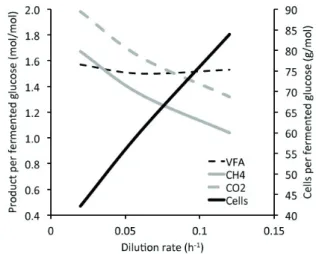
yield from the rumen system (Figure 1). This is probably due
to an increased microbial flow to the lower digestive tract.
Additionally, the metabolic state of the ruminal microflora
is most likely tuned to faster growth rates probably fuelled
by a higher digestive capacity of the microbes, with the
majority of microbial cells in the growth and reproductive
stages (Isaacson et al., 1975; Hummel et al., 2015). Such a
shift in microbial metabolism (Shi et al., 2014) might also
lead to a decrease in methane yield (Isaacson et al., 1975;
Van Nevel and Demeyer, 1979). This shift might occur
because of an effect similar to the “partitioning factor”
of feeds, that is, the degree by which they trigger energy
transfer into microbial growth or into short-chain fatty acid
and hence also CH
4production (Blümmel et al., 1997; Moss
and Newbold, 2000). A higher fluid throughput due to a
higher saliva production should also be protective against
acidosis. Carefully designed experiments are warranted
to test the effect of differentially increasing rumen fluid
throughput, by infusion of artificial saliva via fistula
(Rogers et al., 1979), or by pharmacologically enhancing
saliva production (Wiedmeier et al., 1987a; Wiedmeier et al.,
1987b; Froetschel et al., 1989; Bird et al., 1993), not only
on measures of digestive efficiency, pH, and microbial and
methane yield, but also on the metabolic state (Shi et al.,
2014) of the microbiome itself.
Selective breeding for digesta washing?
It has been suggested that domestic ruminants could
be selected for increased digestive efficiency, based on
phenotypic characteristics of the way digesta moves
through their digestive tract (Hegarty, 2004). Ruminants
can actually be bred to differ in the mean retention time
of digesta (Thompson et al., 1989; Smuts et al., 1995;
Goopy et al., 2014). Variation in ruminal digesta retention
time is currently considered the most likely explanation for
the inherited differences in methane emissions
(Pinares-Patiño et al., 2013). Frothy bloat in cattle is associated with
decreased saliva production (Gurnsey et al., 1980) and
decreased ruminal fluid passage rates (Okine et al., 1989).
A report of a successful breeding program to reduce bloat
susceptibility (Morris et al., 1997) therefore suggests that
increased saliva flows can be achieved. Given the evidence
from wild ruminants that not only retention time in general,
but the difference between fluid and particle retention in
the rumen is a species-specific and hence genetic/heritable
characteristic, selective breeding for this measure would
theoretically be feasible, if appropriate proxies could be
found to evaluate phenotypes.
Conclusions
The diversity of ruminant species can be considered
a catalogue of genetically fixed, morphophysiological
characteristics that could, in theory, be exploited in domestic
species by selective breeding. Some characteristics of that
catalogue have most likely been selected indirectly during
the process of breeding for phenotypes of high production
value. For example, although reticulorumen volume is
not a direct selection criterion, a particularly voluminous
reticulorumen most likely results as an effect of breeding
for phenotypes with a high intake capacity for a high
milk yield. Other characteristics, such as those related
to dental anatomy and durability, could be interesting in
respect to intentions to prolong domestic ruminant lifespan.
We propose that the characteristic of pronounced digesta
washing and the associated microbial harvest and change
of the microbial metabolism could represent a target for
selective breeding that could further improve the efficiency
of domestic ruminants.
Acknowledgments
MC thanks Izabelle Auxiliadora Molina de Almeida
Teixeira for the invitation to contribute to the 1st International
Meeting of Advances in Animal Science in Jaboticabal,
São Paulo, Brazil, in June 2016.
References
Archer, D. and Sanson, G. 2002. Form and function of the selenodont molar in southern African ruminants in relation to their feeding habits. Journal of Zoology 257:13-26.
Arsenault, R. and Owen-Smith, N. 2002. Facilitation versus competition in grazing herbivore assemblages. Oikos 97:313-318. Baumont, R. and Deswysen, A. G. 1991. Mélange et propulsion du
contenu du réticulo-rumen. Reproduction Nutrition Development 31:335-359.
Beuchat, C. A. 1996. Structure and concentrating ability of the mammalian kidney: correlations with habitat. American Journal of Physiology 271:R157-R179.
Bird, A. R.; Croom, W. J.; Bailey, J. V.; O’Sullivan, B. M.; Hagler, W. M.; Gordon, G. L. and Martin, P. R. 1993. Tropical pasture hay utilization with slaframine and cottonseed meal: ruminal characteristics and digesta passage in wethers. Journal of Animal Science 71:1634-1640.
Blümmel, M.; Steingass, H. and Becker, K. 1997. The relationship between in vitro gas production, in vitro microbial biomass yield and N incorporation and its implications for the prediction of voluntary feed intake of roughages. British Journal of Nutrition 77:911-921.
Cain, J. W.; Krausman, P. R.; Rosenstock, S. S. and Turner, J. C. 2006. Mechanisms of thermoregulation and water balance in desert ungulates. Wildlife Society Bulletin 34:570-581.
Clauss, M.; Lechner-Doll, M.; Behrend, A.; Lason, K.; Lang, D. and Streich, W. J. 2001. Particle retention in the forestomach of a browsing ruminant, the roe deer (Capreolus capreolus). Acta Theriologica 46:103-107.
Clauss, M.; Lechner-Doll, M. and Streich, W. J. 2002. Faecal particle size distribution in captive wild ruminants: an approach to the browser/grazer dichotomy from the other end. Oecologia 131:343-349.
Clauss, M.; Lechner-Doll, M. and Streich, W. J. 2003. Ruminant diversification as an adaptation to the physicomechanical characteristics of forage. A reevaluation of an old debate and a new hypothesis. Oikos 102:253-262.
Clauss, M.; Hofmann, R. R.; Hummel, J.; Adamczewski, J.; Nygren, K.; Pitra, C.; Streich, W. J. and Reese, S. 2006a. The macroscopic anatomy of the omasum of free-ranging moose (Alces alces) and muskoxen (Ovibos moschatus) and a comparison of the omasal laminal surface area in 34 ruminant species. Journal of Zoology 270:346-358.
Clauss, M.; Hummel, J. and Streich, W. J. 2006b. The dissociation of the fluid and particle phase in the forestomach as a physiological characteristic of large grazing ruminants: an evaluation of available, comparable ruminant passage data. European Journal of Wildlife Research 52:88-98.
Clauss, M.; Streich, W. J.; Schwarm, A.; Ortmann, S. and Hummel, J. 2007. The relationship of food intake and ingesta passage predicts feeding ecology in two different megaherbivore groups. Oikos 116:209-216.
Clauss, M.; Hofmann, R. R.; Streich, W. J.; Fickel, J. and Hummel, J. 2008a. Higher masseter mass in grazing than in browsing ruminants. Oecologia 157:377-385.
Clauss, M.; Fritz, J.; Bayer, D.; Hummel, J.; Streich, W. J.; Südekum, K.-H. and Hatt, J.-M. 2009a. Physical characteristics of rumen contents in two small ruminants of different feeding type, the mouflon (Ovis ammon musimon) and the roe deer (Capreolus capreolus). Zoology 112:195-205.
Clauss, M.; Fritz, J.; Bayer, D.; Nygren, K.; Hammer, S.; Hatt, J.-M.; Südekum, K.-H. and Hummel, J. 2009b. Physical characteristics of rumen contents in four large ruminants of different feeding type, the addax (Addax nasomaculatus), bison (Bison bison), red deer (Cervus elaphus) and moose (Alces alces). Comparative Biochemistry and Physiology A 152:398-406.
Clauss, M.; Hofmann, R. R.; Fickel, J.; Streich, W. J. and Hummel, J. 2009c. The intraruminal papillation gradient in wild ruminants of different feeding types: implications for rumen physiology. Journal of Morphology 270:929-942.
Clauss, M.; Nunn, C.; Fritz, J. and Hummel, J. 2009d. Evidence for a tradeoff between retention time and chewing efficiency in large mammalian herbivores. Comparative Biochemistry and Physiology A 154:376-382.
Clauss, M.; Hofmann, R. R.; Streich, W. J.; Fickel, J. and Hummel, J. 2010a. Convergence in the macroscopic anatomy of the reticulum in wild ruminant species of different feeding types and a new resulting hypothesis on reticular function. Journal of Zoology 281:26-38. Clauss, M.; Hume, I. D. and Hummel, J. 2010b. Evolutionary
adaptations of ruminants and their potential relevance for modern production systems. Animal 4:979-992.
Clauss, M.; Lechner, I.; Barboza, P.; Collins, W.; Tervoort, T.; Südekum, K.-H.; Codron, D. and Hummel, J. 2011. The effect of size and density on the mean retention time of particles in the reticulorumen of cattle (Bos primigenius f. taurus), muskoxen (Ovibos moschatus) and moose (Alces alces). British Journal of Nutrition 105:634-644.
Clauss, M. and Hofmann, R. R., 2014. The digestive system of ruminants, and peculiarities of (wild) cattle. p.57-62. In: Ecology, evolution and behaviour of wild cattle: implications for conservation. Melletti, M.; Burton, J., eds. Cambridge University Press, Cambridge UK.
Clauss, M. and Rössner, G. E. 2014. Old world ruminant morphophysiology, life history, and fossil record: exploring key innovations of a diversification sequence. Annales Zoologici Fennici 51:80-94.
Clauss, M.; Steuer, P.; Erlinghagen-Lückerath, K.; Kaandorp, J.; Fritz, J.; Südekum, K.-H. and Hummel, J. 2015. Faecal particle size: digestive physiology meets herbivore diversity. Comparative Biochemistry and Physiology A 179:182-191.
Clauss, M.; Fritz, J.; Tschuor, A.; Braun, U.; Hummel, J. and Codron, D. 2017. Dry matter and digesta particle size gradients along the goat digestive tract on grass and browse diets. Journal of Animal Physiology and Animal Nutrition 101:61-69.
Codron, D. and Clauss, M. 2010. Rumen physiology constrains diet niche: linking digestive physiology and food selection across wild ruminant species. Canadian Journal of Zoology 88:1129-1138. Damuth, J. and Janis, C. M. 2011. On the relationship between
hypsodonty and feeding ecology in ungulate mammals, and its utility in palaeoecology. Biological Reviews 86:733-758. Dittmann, M. T.; Hummel, J.; Runge, U.; Galeffi, C.; Kreuzer, M.
and Clauss, M. 2014. Characterising an artiodactyl family inhabiting arid habitats by its metabolism: low metabolism and maintenance requirements in camelids. Journal of Arid Environments 107:41-48. Dittmann, M. T.; Hummel, J.; Hammer, S.; Arif, A.; Hebel, C.; Müller,
D. H. W.; Fritz, J.; Steuer, P.; Schwarm, A.; Kreuzer, M. and Clauss, M. 2015a. Digesta retention in gazelles in comparison to other ruminants: Evidence for taxon-specific rumen fluid throughput to adjust digesta washing to the natural diet. Comparative Biochemistry and Physiology A 185:58-68.
Dittmann, M. T.; Runge, U.; Ortmann, S.; Lang, R. A.; Moser, D.; Galeffi, C.; Schwarm, A.; Kreuzer, M. and Clauss, M. 2015b. Digesta retention patterns of solutes and different-sized particles in camelids compared with ruminants and other foregut fermenters. Journal of Comparative Physiology B 185:559-573.
Fondevila, M. and Pérez-Espés, B. 2008. A new in vitro system to study the effect of liquid phase turnover and pH on microbial fermentation of concentrate diets for ruminants. Animal Feed Science and Technology 144:196-211.
Fritz, J.; Hummel, J.; Kienzle, E.; Arnold, C.; Nunn, C. and Clauss, M. 2009a. Comparative chewing efficiency in mammalian herbivores. Oikos 118:1623-1632.
Fritz, S. A.; Bininda-Emonds, O. R. and Purvis, A. 2009b. Geographical variation in predictors of mammalian extinction risk: big is bad, but only in the tropics. Ecology Letters 12:538-549.
Froetschel, M. A.; Amos, H. E.; Evans, J. J.; Croom, W. J. and Hagler, W. M. 1989. Effects of a salivary stimulant, slaframine, on ruminal fermentation, bacterial protein synthesis and digestion in frequently fed steers. Journal of Animal Science 67:827-834. Garrod, A. H. 1877. Notes on the visceral anatomy and osteology of
the ruminants, with a suggestion regarding a method of expressing the relations of species by means of formulae. Proceedings of the Zoological Society of London:2-18.
Goopy, J. P.; Donaldson, A.; Hegarty, R.; Vercoe, P. E.; Haynes, F.; Barnett, M. and Oddy, V. H. 2014. Low-methane yield sheep have smaller rumens and shorter rumen retention time. British Journal of Nutrition 111:578-585.
Gordon, I. J. and Illius, A. W. 1988. Incisor arcade structure and diet selection in ruminants. Functional Ecology 2:15-22.
Gordon, J. G. 1968. Rumination and its significance. World Review of Nutrition and Dietetics 9:251-273.
Gurnsey, M. P.; Jones, W. T. and Reid, C. S. W. 1980. A method for investigating salivation in cattle using pilocarpine as a sialagogue. New Zealand Journal of Agricultural Research 23:33-41.
Harrison, D. G.; Beever, D. E.; Thomson, D. J. and Osbourn, D. F. 1975. Manipulation of rumen fermentation in sheep by increasing the rate of flow of water from the rumen. Journal of Agricultural Science, Cambridge 85:93-101.
Hegarty, R. S. 2004. Genotype differences and their impact on digestive tract function of ruminants: a review. Australian Journal of Experimental Agriculture 44:459-467.
Heywood, J. J. N. 2010. Functional anatomy of bovid upper molar occlusal surfaces with respect to diet. Journal of Zoology 281:1-11. Hofmann, R. R. 1973. The ruminant stomach. East African Literature
Bureau, Nairobi.
Hofmann, R. R. 1988. Morphophysiological evolutionary adaptations of the ruminant digestive system. p.1-20. In: Aspects of digestive physiology in ruminants. Dobson, A. and Dobson, M. J., eds. Cornell University Press, Ithaca, NY.
Hofmann, R. R. 1989. Evolutionary steps of ecophysiological adaptation and diversification of ruminants: a comparative view of their digestive system. Oecologia 78:443-457.
Hofmann, R. R.; Streich, W. J.; Fickel, J.; Hummel, J. and Clauss, M. 2008. Convergent evolution in feeding types: salivary gland mass differences in wild ruminant species. Journal of Morphology 269:240-257.
Hume, I. D. 2005. Concepts of digestive efficiency. p.43-58. In: Physiological and ecological adaptations to feeding in vertebrates. Starck, J. M. and Wang, T., eds. Science Publishers, Enfield NH. Hummel, J.; Clauss, M.; Zimmermann, W.; Johanson, K.; Norgaard, C.
Hummel, J.; Südekum, K.-H.; Streich, W. J. and Clauss, M. 2006. Forage fermentation patterns and their implications for herbivore ingesta retention times. Functional Ecology 20:989-1002. Hummel, J.; Fritz, J.; Kienzle, E.; Medici, E. P.; Lang, S.; Zimmermann,
W.; Streich, W. J. and Clauss, M. 2008a. Differences in fecal particle size between free-ranging and captive individuals of two browser species. Zoo Biology 27:70-77.
Hummel, J.; Steuer, P.; Südekum, K.-H.; Hammer, S.; Hammer, C.; Streich, W. J. and Clauss, M. 2008b. Fluid and particle retention in the digestive tract of the addax antelope (Addax nasomaculatus) – adaptations of a grazing desert ruminant. Comparative Biochemistry and Physiology A 149:142-149.
Hummel, J.; Südekum, K.-H.; Bayer, D.; Ortmann, S.; Hatt, J.-M.; Streich, W. J. and Clauss, M. 2009. Physical characteristics of reticuloruminal contents of cattle in relation to forage type and time after feeding. Journal of Animal Physiology and Animal Nutrition 93:209-220.
Hummel, J.; Hammer, S.; Hammer, C.; Ruf, J.; Lechenne, M. and Clauss, M. 2015. Solute and particle retention in a small grazing antelope, the blackbuck (Antilope cervicapra). Comparative Biochemistry and Physiology A 182:22-26.
Isaacson, H. R.; Hinds, F. C.; Bryant, M. P. and Owens, F. N. 1975. Efficiency of energy utilization by mixed rumen bacteria in continuous culture. Journal of Dairy Science 58:1645-1659. Janis, C. M. and Ehrhardt, D. 1988. Correlation of the relative muzzle
width and relative incisor width with dietary preferences in ungulates. Zoological Journal of the Linnean Society 92:267-284. Janis, C. M.; Gordon, I. J. and Illius, A. W. 1994. Modelling equid/ ruminant competition in the fossil record. Historical Biology 8:15-29.
Jordana, X.; Marín-Moratalla, N.; DeMiguel, D.; Kaiser, T. M. and Köhler, M. 2012. Evidence of correlated evolution of hypsodonty and exceptional longevity in endemic insular mammals. Proceedings of the Royal Society B 279:3339-3346.
Kaiser, T. M.; Fickel, J.; Streich, W. J.; Hummel, J. and Clauss, M. 2010. Enamel ridge alignment in upper molars of ruminants in relation to their natural diet. Journal of Zoology 281:12-25. Kay, R. N. B. 1989. Adaptation of the ruminant digestive tract to diet.
Acta Veterinaria Scandinavica 86(Suppl.):196-203.
Langer, P. 1973. Vergleichend-anatomische Untersuchungen am Magen der Artiodactyla. II. Untersuchungen am Magen der Tylopoda und Ruminantia. Gegenbaurs Morphologisches Jahrbuch 119:633-695.
Lauper, M.; Lechner, I.; Barboza, P.; Collins, W.; Hummel, J.; Codron, D. and Clauss, M. 2013. Rumination of different-sized particles in muskoxen (Ovibos moschatus) and moose (Alces alces) on grass and browse diets, and implications for rumination in different ruminant feeding types. Mammalian Biology 78:142-152. Lechner, I.; Barboza, P.; Collins, W.; Fritz, J.; Günther, D.;
Hattendorf, B.; Hummel, J.; Südekum, K.-H. and Clauss, M. 2010. Differential passage of fluids and different-sized particles in fistulated oxen (Bos primigenius f. taurus), muskoxen (Ovibos moschatus), reindeer (Rangifer tarandus) and moose (Alces alces): rumen particle size discrimination is independent from contents stratification. Comparative Biochemistry and Physiology A 155:211-222.
Lechner-Doll, M.; Kaske, M. and von Engelhardt, W. 1991. Factors affecting the mean retention time of particles in the forestomach of ruminants and camelids. p.455-482. In: Physiological aspects of digestion and metabolism in ruminants. Tsuda, T.; Sasaki, Y. and Kawashima, R., eds. Academic Press, San Diego CA.
Matsuda, I.; Murai, T.; Clauss, M.; Yamada, T.; Tuuga, A.; Bernard, H. and Higashi, S. 2011. Regurgitation and remastication in the foregut-fermenting proboscis monkey (Nasalis larvatus). Biology Letters 7:786-789.
Matsuda, I.; Tuuga, A.; Hashimoto, C.; Bernard, H.; Yamagiwa, J.; Fritz, J.; Tsubokawa, K.; Yayota, M.; Murai, T.; Iwata, Y. and Clauss, M. 2014. Faecal particle size in free-ranging primates supports ‘rumination’ strategy in the proboscis monkey (Nasalis larvatus). Oecologia 174:1127-1137.
Meier, A. R.; Schmuck, U.; Meloro, C.; Clauss, M. and Hofmann, R. R. 2016. Convergence of macroscopic tongue anatomy in ruminants and scaling relationships with body mass or tongue length. Journal of Morphology 277:351-362.
Mendoza, M.; Janis, C. M. and Palmqvist, P. 2002. Characterizing complex craniodental patterns related to feeding behaviour in ungulates: a multivariate approach. Journal of Zoology 258:223-246. Meng, Q.; Kerley, M. S.; Ludden, P. A. and Belyea, R. L. 1999.
Fermentation substrate and dilution rate interact to affect microbial growth and efficiency. Journal of Animal Science 77:206-214. Morris, C. A.; Cullen, N. G. and Geertsema, H. G. 1997. Genetic
studies of bloat susceptibility in cattle. Proceedings of the New Zealand Society of Animal Production 57:19-21.
Moss, A. R. and Newbold, C. J. 2000. The impact of hexose partitioning on methane production in vitro. Reproduction Nutrition Development 40:211-212.
Müller, D. W. H.; Caton, J.; Codron, D.; Schwarm, A.; Lentle, R.; Streich, W. J.; Hummel, J. and Clauss, M. 2011. Phylogenetic constraints on digesta separation: variation in fluid throughput in the digestive tract in mammalian herbivores. Comparative Biochemistry and Physiology A 160:207-220.
Müller, D. W. H.; Codron, D.; Meloro, C.; Munn, A.; Schwarm, A.; Hummel, J. and Clauss, M. 2013. Assessing the Jarman-Bell Principle: scaling of intake, digestibility, retention time and gut fill with body mass in mammalian herbivores. Comparative Biochemistry and Physiology A 164:129-140.
Neuville, H. and Derscheid, J. M. 1929. Recherches anatomiques sur l’okapi (Okapia johnstoni). IV. L’estomac. Revue de Zoologie et de Botanique Africaine 16:373-419.
Odadi, W. O.; Karachi, M. K.; Abdulrazak, S. A. and Young, T. P. 2011. African wild ungulates compete with or facilitate cattle depending on season. Science 333:1753-1755.
Okine, E. K.; Mathison, G. W. and Hardin, R. T. 1989. Relations between passage rates of rumen fluid and particulate matter and foam production in rumen contents of cattle fed on different diets
ad lib. British Journal of Nutrition 61:387-395.
Pérez, W.; König, H. E.; Jerbi, H. and Clauss, M. 2016. Macroanatomical aspects of the gastrointestinal tract of the alpaca (Vicugna pacos) and dromedary (Camelus dromedarius). Vertebrate Zoology 66:419-425.
Pérez-Barbería, F. J.; Elston, D. A.; Gordon, I. J. and Illius, A. W. 2004. The evolution of phylogenetic differences in the efficiency of digestion in ruminants. Proceedings of the Royal Society B 271:1081-1090.
Pinares-Patiño, C. S.; Hickey, S. M.; Young, E. A.; Dodds, K. G.; MacLean, S.; Molano, G.; Sandoval, E.; Kjestrup, H.; Harland, R.; Hunt, C.; Pickering, N. K. and McEwan, J. C. 2013. Heritability estimates of methane emissions from sheep. Animal 7:316-321. Prins, H. H. T. and Fritz, H. 2008. Species diversity of browsing and
grazing ungulates: consequences for the structure and abundance of secondary production. p.179-200. In: The ecology of browsing and grazing. Gordon, I. J. and Prins, H. H. T., eds. Springer, Berlin Heidelberg.
Riginos, C.; Porensky, L. M.; Veblen, K. E.; Odadi, W. O.; Sensenig, R. L.; Kimuyu, D.; Keesing, F.; Wilkerson, M. L. and Young, T. P. 2012. Lessons on the relationship between livestock husbandry and biodiversity from the Kenya Long-term Exclosure Experiment (KLEE). Pastoralism 2:1-22.
fluid dilution rate with mineral salts. Journal of Dairy Science 62:1599-1605.
Schwarm, A.; Ortmann, S.; Wolf, C.; Streich, W. J. and Clauss, M. 2009. More efficient mastication allows increasing intake without compromising digestibility or necessitating a larger gut: comparative feeding trials in banteng (Bos javanicus) and pygmy hippopotamus (Hexaprotodon liberiensis). Comparative Biochemistry and Physiology A 152:504-512.
Schwarm, A.; Ortmann, S.; Fritz, J.; Rietschel, W.; Flach, E. J. and Clauss, M. 2013. No distinct stratification of ingesta particles and no distinct moisture gradient in the forestomach of nonruminants: the wallaby, peccary, hippopotamus, and sloth. Mammalian Biology 78:412-421.
Searle, K. R. and Shipley, L. A. 2008. The comparative feeding bahaviour of large browsing and grazing herbivores. p.117-148. In: The ecology of browsing and grazing mammals. Gordon, I. J. and Prins, H. H. T., eds. Springer, Heidelberg.
Shi, W.; Moon, C. D.; Leahy, S. C.; Kang, D.; Froula, J.; Kittelmann, S.; Fan, C.; Deutsch, S.; Gagic, D.; Seedorf, H.; Kelly, W. J.; Atua, R.; Sang, C.; Soni, P.; Li, D.; Pinares-Patiño, C. S.; McEwan, J. C.; Janssen, P. H.; Chen, F.; Visel, A.; Wang, Z.; Attwood, G. T. and Rubin, E. M. 2014. Methane yield phenotypes linked to differential gene expression in the sheep rumen microbiome. Genome Research 24:1517-1525.
Smuts, M.; Meissner, H. H. and Cronje, P. B. 1995. Retention time of digesta in the rumen: its repeatability and relationship with wool production of Merino rams. Journal of Animal Science 73:206-210. Sutherland, T. M. 1988. Particle separation in the forestomach of
sheep. p.43-73. In: Aspects of digestive physiology in ruminants. Dobson, A. and Dobson, M. J., eds. Cornell University Press, Ithaca, NY.
Tennant, J. P. and MacLeod, N. 2014. Snout shape in extant ruminants. PLoS One 9:e112035.
Thompson, B. C.; Dellow, D. W. and Barry, T. N. 1989. The effect of selection for fleece weight upon urea metabolism and digestive function in Romney sheep. Australian Journal of Agricultural Research 40:1065-1074.
Van Nevel, C. J. and Demeyer, D. I. 1979. Stoichiometry of carbohydrate fermentation and microbial growth efficiency in a continous culture of mixed rumen bacteria. European Journal of Applied Microbiology and Biotechnology 7:111-120.
Vendl, C.; Munn, A.; Leggett, K. and Clauss, M. 2017. Merycism in western grey (Macropus fuliginosus) and red kangaroos (Macropus rufus). Mammalian Biology 86:21-26.
Wiedmeier, R. D.; Arambel, M. J.; Lamb, R. C. and Marcinkowski, D. P. 1987a. Effect of mineral salts, carbachol, and pilocarpine on nutrient digestibility and ruminal characteristics in cattle. Journal of Dairy Science 70:592-600.
Wiedmeier, R. D.; Arambel, M. J. and Walters, J. L. 1987b. Effect of orally administered pilocarpine on ruminal characteristics and nutrient digestibility in cattle. Journal of Dairy Science 70:284-289.
Woodall, P. F. 1992. An evaluation of a rapid method for estimating digestibility. African Journal of Ecology 30:181-185.
Woodall, P. F. and Skinner, J. D. 1993. Dimensions of the intestine, diet and faecal water loss in some African antelope. Journal of Zoology 229:457-471.