Vol.53, n. 3: pp. 643-652, May-June 2010
ISSN 1516-8913 Printed in Brazil BRAZILIAN ARCHIVES OF
BIOLOGY AND TECHNOLOGY
A N I N T E R N A T I O N A L J O U R N A L
Growth,
Sporulation
and
Production
of
Bioactive
Compounds by
Bacillus subtilis
R14
André Lacerda Ulysses de Carvalho
1, Fábio Henrique Portella Corrêa de Oliveira
1, Rosa
de Lima Ramos Mariano
2, Ester Ribeiro Gouveia
1and Ana Maria Souto-Maior
1*1Departamento de Antibióticos; Universidade Federal de Pernambuco; Cidade Universitária; 50670-901; Recife -
PE - Brasil. 2Departamento de Agronomia/Fitossanidade; Universidade Federal Rural de Pernambuco; Dois Irmãos; 52171-030; Recife - PE - Brasil
ABSTRACT
The physiology of B. subtilis R14 was investigated in minimal medium under excess-oxygen and oxygen-limited conditions. Growth and efficient sporulation could be achieved in excess-oxygen culture on medium with readily metabolizable carbon and nitrogen sources, which allowed high growth rate and high biomass yield. A short transition phase between the exponential growth and sporulation could be attained by formulating a medium with a well-balanced C/N ratio. Under oxygen-limitation, but in the presence of essential nutrients (i.e. excess-nutrient cultivation), B. subtilis R14 produced bioactive compounds, which showed activity against several phytopathogenic bacteria. Under anaerobic condition, the organism did not grow neither through fermentation nor anaerobic respiration. However, addition of pyruvate to the medium allowed its growth through fermentation and anaerobic respiration.The knowledge acquired in this work could be relevant both for the design of a production process as well as for the formulation of an effective commercial biocontrol product.
Key words:Bacillus subtilis, batch cultivation, oxygen availability, antimicrobial activity
*Author for correspondence: [email protected]
INTRODUCTION
The genus Bacillus is one of the most utilized in
the biocontrol of phytopathogens. This genus comprehends a heterogeneous group of
Gram-positive, aerobic or facultative anaerobic,
endospore-forming bacteria (Fritze, 2004). The endospores are thermotolerant structures, resistant to dryness, ultraviolet radiation and organic solvents. These properties, associated to the ability of producing peptide antibiotics, contribute to its utilization to the biocontrol of several root and
foliar diseases (Backman et al., 1997; Kloeper,
1997; Melo, 1998; Jacobsen et al., 2004; Schisler
et al.,2004;). Bacilli control the bacteria that cause
the plant disease through a variety of mechanisms of action, such as competition, systemic resistance
induction and antibiotic production. The
mechanism of antibiosis has been shown to be one of the most important (Thomashow and Weller, 1996). Among several peptide antibiotics, they produce lipopeptides, which are amphiphilic compounds with surfactant activity (Zuber et al., 1993).
Marahiel, 1997). Several strains of B. subtilis produce cyclic lipopeptides, among them surfactin, which is one of the most powerful biosurfactant known (Mulligan, 2004). Surfactin behaves as a
very powerful surfactant because of its
amphiphilic nature, with a polar amino acid head
and a hydrocarbon chain. Transcription of the srfA
operon is the major point of regulation of surfactin production, and it has turned out to involve a complex array of controlling elements including
autoregulation, phosphorylation cascades,
extracelullar signaling, and interplay with the regulation of different developmental pathways (Chater and Bibb, 1997).
B. subtilis R14 is an epiphytic isolate obtained
from the surface of cabbage leaves (Brassica
oleraceae var. capitata L. cv. Midori) (Assis et al.,
1996; 1997). The efficiency of this isolate as a
biocontrol agent was investigated againstthe black
rot of crucifers, caused by Xanthomonas
campestris pv. campestris, and the bacterial fruit
blotch of melon, caused by Acidovorax avenae
subsp. citrulli. In greenhouse experiments, the
isolate eliminated the black rot of kale when tested
against three isolates of X. campestris pv.
campestris in all application periods tested (Assis
et al., 1996). When submitted to field tests, this
isolate had its efficiency corroborated, reducing
73% of the disease on cabbage (Assis et al.,1997).
The control of the bacterial fruit blotch was
investigated in vivo by treating the infected yellow
melon seeds with broths of B. subtilis R14
cultivation (Santos et al., 2006). The treatments,
with and without cells, showed no significant difference, indicating that the disease reduction occurred due to the presence of bioactive compounds produced during the cultivation. The
mechanism of antibiosis was confirmed in vitro
against nine strains of X. campestris pv.
campestris, and the compounds produced were
characterized as lipopeptides (Monteiro et al., 2005).
The production of secondary metabolites is normally associated with the bacterium’s response to a growth-limiting environment. Faced with the
depletion of essential nutrients, B. subtilis can
adopt several responses, including motility, secretion of extracellular enzymes, competence for genetic transformation, antibiotic production, and
finally sporulation. Depending on the
environmental signal, one or more of these alternative processes can be stimulated or inhibited
(Smith, 1993). The actual choice depends upon the activity of an elaborated signal transduction network, which ultimately affects two key transcription factors, Spo0A and AbrB (Phillips
and Strauch, 2002). In B. subtilis R14, the
production of bioactive compounds was observed in batch cultivation on complex medium under
oxygen limitation (Monteiro et al.,2005).
In this work, the physiology of B. subtilis R14 was
investigated on defined growth media in excess-oxygen and excess-oxygen-limited batch cultures to identify stimuli for lipopeptide synthesis and sporulation. Both spores and lipopeptides are products of interest for the development of a commercial biological control agent. Furthermore,
the bioactivity of compounds produced by B.
subtilis R14 was investigated in vitro against
several important phytopathogenic bacteria.
Bacterial fruit blotch (Acidovorax avenae subsp.
citrulli) is the main constraint for the cultivation of
melon, watermelon and other cucurbits in the world and in Brazil, where it can cause losses in the production between 40-50%, reaching up to 100% in the rainy season (Sales Júnior and
Menezes, 2001). Crown gall (Agrobacterium
tumefaciens) affects the plants belonging to 140
genera of more than 60 families. Infected plants with tumors at their crowns or on their main roots have reduced yields and may die (Agrios, 1997).
Fire blight of apple and pear (Erwinia amylovora)
does not occur in Brazil. However, in United States, it is only managed by the combination of
several control measures and antibiotic
applications leading to the development of resistant bacterial strains (Agrios, 1997). Soft rot
(Pectobacterium carotovorum) on several hosts
occurs in the field, in transit, and especially in storage. It reduces the market value of crops and increase the expenses for preventive measures
(Agrios, 1997). Bacterial wilt (Ralstonia
solanacearum) of potato, tomato and many other
hosts is also one of the most important plant diseases worldwide. The high variability of the pathogen allied to the colonization of the plant vascular system make its control extremely difficult (Agrios, 1997). Black rot of crucifers
(Xanthomonas campestris pv. campestris) is
transmitted by the seeds and often causes severe
losses (Agrios, 1997). Bacterial canker (X.
campestris pv. viticola) is the main bacteriosis
cultivation of susceptible cultivars such as Red Globe, Itália, Festival and Benitaka, among other (Nascimento and Mariano, 2004).
MATERIALS AND METHODS
Microorganism
B. subtilis R14, isolated from the surface of
cabbage (B. oleraceae var. capitata L. cv. Midori)
leaves, was used in this work. The microorganism belongs to the Culture Collection of the Laboratory of Phytobacteriology of the Federal Rural University of Pernambuco (Brazil). The
isolate was preserved on nutrient agar slants at 5°
C and subcultured every three months during this work.
Cultivation media
For excess-oxygen cultivation, the medium consisted of (per liter of distilled water): glucose,
10 g; (NH4)2SO4, 2 g; K2HPO4, 13.6 g;
MgSO4·7H2O, 0.2 g; trace elements solution, 10
mL. The trace elements solution consisted of (per
liter of distilled water): CaCl2, 0.42 g;
FeSO4·7H2O, 2.29 g; MnCl2·4H2O, 0.10 g; ZnCl2,
0.17 g; CuCl2, 0.03; CoCl2·6H2O, 0.06; and
Na2MoO4·2H2O, 0.06; pH 7.
For anaerobic cultivation, performed in test tubes,
the medium was buffered and glucose
concentration was reduced to minimize pH variation. The medium consisted of (per liter of
distilled water): glucose, 5 g; (NH4)2SO4, 4 g;
K2HPO4, 13.6 g, KH2PO4, 4 g; MgSO4.7H2O, 0.2
g. Growth was also investigated on medium containing a mixture of ammonium and nitrate:
NaNO3, 2 g, and (NH4)2SO4, 2 g; and on medium
containing nitrate as the sole nitrogen source:
NaNO3, 4 g. Furthermore, cultivations were also
performed with the addition of sodium pyruvate (5 g) to all the investigated media. Parallel aerobic cultures were also carried out in large diameter test tubes as control experiments. The tubes were placed in a rotatory shaker at 250 rpm.
Since biomass yield was expected to decrease
during oxygen-limited cultivation, the
concentrations of glucose and ammonium sulphate were increased to (per liter of distilled water):
glucose, 40 g; (NH4)2SO4, 8 g. This allowed the
production of bioactive compounds at detectable levels. Higher concentrations were not used to avoid the substrate inhibition. Growth was also investigated on medium containing a mixture of
ammonium and nitrate: NaNO3, 4 g, and
(NH4)2SO4, 4 g; and on medium containing nitrate
as the sole nitrogen source: NaNO3, 8 g.
Cultivation conditions
Inocula were grown in Fernbach flasks on
glucose/(NH4)2SO4 medium in a rotatory shaker
(model C25KC, New Brunswick Scientific), at 37° C and 250 rpm, and 5% (v/v) was used to inoculate the bioreactor. The cultivations were performed in an instrumented 4-liter
working-volume batch bioreactor (BiofloIII, New
Brunswick Scientific). For excess-oxygen culture, the aeration and agitation rates were kept at 1 vvm and 700 rpm, respectively, and cultivations were carried out at 30° C and 37° C. For oxygen-limited culture, no forced aeration was used and the agitation was reduced to 300 rpm. Cultivations were carried out at 37 °C in this case. All the experiments were performed in duplicates.
For anaerobic condition, the cultivations were not carried out in the bioreactor, but in test tubes, which were incubated at 37 °C in anaerobic
Gaspak jars under an H2-CO2 atmosphere. In this
case, the experiments were made in triplicates.
Antimicrobial activity of bioactive compounds
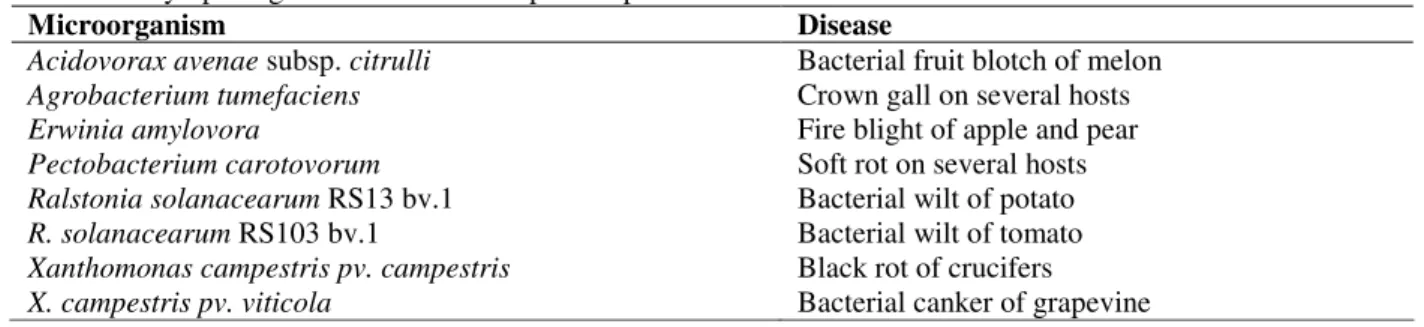
Bioactive compounds produced during oxygen-restricted cultivation were tested against the phytopathogenic bacteria listed in Table 1, where the respective plant disease was specified. A sample from one of the cultivations was passed through a C-18 column to recover the bioactive compounds, which were eluted with methanol, and then tested against all the listed bacteria. The activity test was performed as described in the analytical methods below.
Analytical methods
Biomass concentration was determined
spectrophotometrically at 600 nm (Hewlett Packard 8453). Spore concentration was expressed as colony forming units (CFU) per mL, after leaving the sample at 80 ºC for 15 min, diluting, and plating on nutrient agar medium. Glucose and
(NH4)2SO4 concentrations were assayed utilizing
(mm). To quantify the production of bioactive
compounds during the cultivations, the
phytopathogenic bacterium Agrobacterium
tumefaciens was used as test microorganism, since
preliminary studies had shown that, among the phytopathogenic bacteria investigated in this study, it was the most sensitive to the compounds
produced by B. subtilis R14.
Table 1 - Phytopathogenic bacteria and respective plant disease.
Microorganism Disease
Acidovorax avenae subsp. citrulli Bacterial fruit blotch of melon
Agrobacterium tumefaciens Crown gall on several hosts
Erwinia amylovora Fire blight of apple and pear
Pectobacterium carotovorum Soft rot on several hosts
Ralstonia solanacearum RS13 bv.1 Bacterial wilt of potato
R. solanacearum RS103 bv.1 Bacterial wilt of tomato
Xanthomonas campestris pv. campestris Black rot of crucifers
X. campestris pv. viticola Bacterial canker of grapevine
RESULTS AND DISCUSSION
Many biocontrol agents are difficult to formulate as products. The sporulating Gram-positive
bacteria, such as Bacillus and Streptomyces, offer
biological solutions to the formulations problems (Emmert and Handelsman, 1999). The endospores are thermotolerant structures and resistant to dryness, ultraviolet radiation and organic solvents. These properties, associated to the ability of producing peptide antibiotics, contribute to
Bacillus utilization in commercial formulations for
the biocontrol of several plant diseases. When
producing biomass of Bacillus spp. for biological
control, the production should be designed to maximize the production of efficacious spores rather than vegetative cells. On the other hand, the physiology of the vegetative cells are responsible for the field activity of the biological agent.
B. subtilis R14 was isolated from the surface of
cabbage leaves and has been shown to be effective as a biocontrol agent (Assis et al., 1996; 1997). Lipopeptides produced by this play a major role in the reduction of the incidence of the bacterial fruit blotch of melon and the black rot of crucifers observed in greenhouse and field trials (Monteiro
et al.,2005; Santos et al., 2006).
Aerobic cultivations
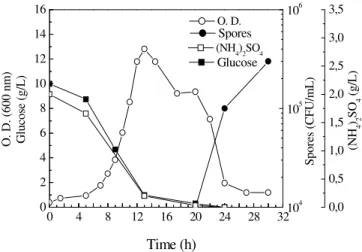
Figure 1 and Figure 2 present the results obtained
during cultivation under excess-oxygen
availability at 30°C and 37°C, respectively.
Growth rate during the exponential phase at 30°C
was half than at 37°C (data not shown), while the
maximum biomass concentration reached was the
same. The production of bioactive compounds was not detected during the exponential phase in either
cases. This was not surprising, since
microorganisms grow fast when nutrient are abundant and readily available, and antibiotic production nearly always takes place only after rapid growth has ceased.
Growth and sporulation are two means by which
Bacillus ensures survival under all environmental
conditions. In its natural environment, it is during
the transition state that B. subtilis excretes several
enzymes and bioactive compounds to degrade the complex substrates and ensures that other bacteria and fungi are prevented from invading its ecological niche. Sporulation is usually considered the last resort to be embarked upon when all other attempts to grow, compete and survive have been exhausted. In the bioreactor environment, to attain a rapid sporulation, a short stationary phase was planned by using a balanced C/N ratio in the medium. As shown in Figures 1 and 2, due to the characteristic of the formulated medium, the transition from the exponential to stationary phase was rapid, and consequently, the production of bioactive compounds could not be detected in the
post-exponential growth phase. A balanced C/N
ratio resulted in the depletion of glucose and ammonium sulphate concomitantly, and, as a last mean of survival, sporulation occurred in both the cases in response to exhaustion of these nutrients. At 24 hs of cultivation, the maximum spore
concentration of 108 CFU/mL was attained at
37°C. Due to the slower growth rate, a lower spore
concentration, around 105 CFU/mL, was observed
0 2 4 6 8 10 12 14 16
0 4 8 12 16 20 24 28 3210
4 105 106 0,0 0,5 1,0 1,5 2,0 2,5 3,0 3,5 O . D . (6 0 0 n m ) G lu co se ( g /L ) Time (h) O. D. Glucose (N H4 )2 S O4 ( g /L ) S p o re s (C F U /m L ) Spores
(NH4)2SO4
Figure 1 - Time course of cell growth, substrate consumption, and sporulation, during aerated cultivation of Bacillus subtilis R14 at 30° C
0 2 4 6 8 10 12 14 16
0 4 8 12 16 20 24 28 32 0,0
0,5 1,0 1,5 2,0 2,5 3,0 3,5 104 105 106 107 108 109 O. D. O . D . (6 0 0 n m ) G lu co se (g /L ) Glucose (N H4 ) 2 S O4 (g /L ) Time (h)
(NH4)2SO4
S p o re s (C F U /m L ) Spores
Figure 2 - Time course of cell growth, substrate consumption, and sporulation, during aerated cultivation of Bacillus subtilis R14 at 37° C.
Anaerobic cultivations
B. subtilis, considered for a long time as a strict
aerobe, can also grow anaerobically either by utilizing nitrate or nitrite as an electron acceptor or by fermentation in the absence of electron acceptors (Nakano and Hullet, 1997; Nakano and
Zuber, 1998). To verify whether B. subtilis R14
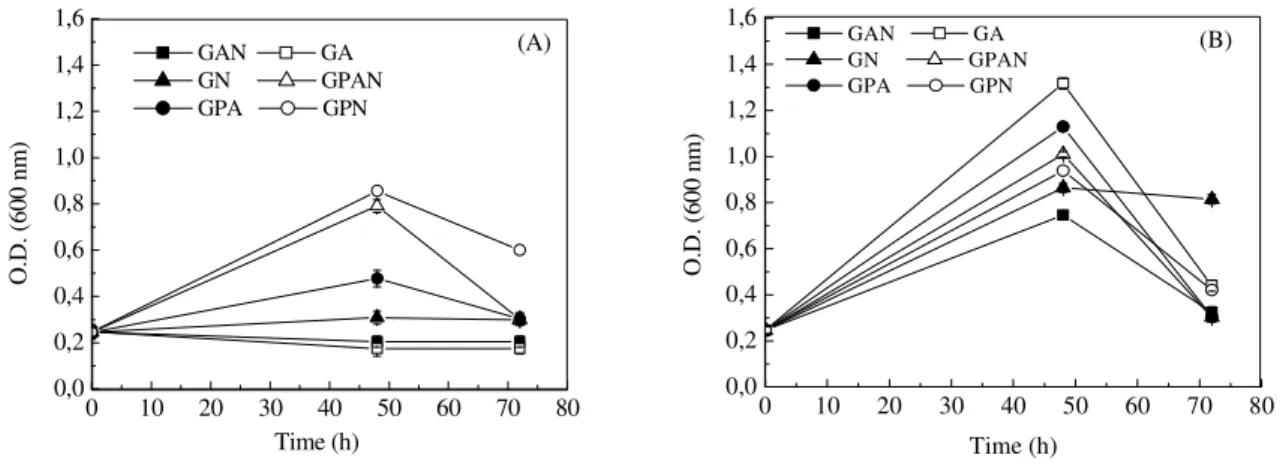
could grow under strict anaerobic condition, cultures were carried out in anaerobic jars using minimal media containing ammonium sulphate
and/or sodium nitrate (Fig. 3). Neither
fermentation nor nitrate respiration could be observed under these conditions. After 72 hs of inoculation, no growth was observed in any case studied. However, these results were not
unexpected. It has been shown that B. subtilis has
a very inefficient glucose fermentation system, which requires the addition of pyruvate or mixture of amino acids to support growth on minimal
0 10 20 30 40 50 60 70 80 0,0
0,2 0,4 0,6 0,8 1,0 1,2 1,4 1,6
(A)
O
.D
.
(6
0
0
n
m
)
Time (h)
GAN GA
GN GPAN
GPA GPN
0 10 20 30 40 50 60 70 80
0,0 0,2 0,4 0,6 0,8 1,0 1,2 1,4 1,6
(B)
O
.D
.
(6
0
0
n
m
)
Time (h)
GAN GA GN GPAN GPA GPN
Figure 3 - Time course of cell growth of Bacillus subtilis R14 in different cultivation media at 37°C: (A) anaerobic growth and (B) aerobic growth. GAN - Glucose + ammonium sulphate + sodium nitrate sodium; GA - Glucose + ammonium sulphate; GN - Glucose + sodium nitrate; GPAN - Glucose + sodium pyruvate + ammonium sulphate + sodium nitrate; GPA - Glucose + sodium pyruvate + ammonium sulphate; GPN - Glucose + sodium pyruvate + sodium nitrate.
To study the influence of the addition pyruvate to
the growth of B. subtilis R14 in anaerobiosis,
sodium pyruvate was added to the minimum media used previously. In all of the cultivations carried out on medium containing glucose and pyruvate as carbon sources, microbial growth was detected (Fig. 3). Growth in the presence of pyruvate can be attributed to the induction of the gene that codifies the pyruvate dehydrogenase (PDH), which catalyzes the synthesis of acetyl-CoA from
pyruvate (Nakano et al., 1997; Nakano and Zuber
1998; Nakano and Zuber, 2002). In the media containing sodium nitrate, higher yield on biomass was observed in relation to growth on media containing ammonium sulphate as the sole nitrogen source. When nitrate was present in the medium, it was reduced to nitrite, corresponding to an anaerobic respiration, which yields 36 to 38
ATP molecules (Ramos et al., 2000; Sonenshein,
2002). In the absence of nitrate, growth may occur by the fermentative pathway, in which energy is generated by phosphorylation at the substrate level (energy yield of 2 ATP molecules) (Nakano and Zuber, 1998).
Oxygen-restricted cultivations
Bacillus spp. are involved in the control of plant
diseases through a variety of mechanisms of action, such as competition, systemic resistance
induction, and antibiotics production. The
mechanism of antibiosis has been shown to be one of the most important (Thomashow and Weller,
1996). Among several peptide antibiotics, Bacillus
spp. produce lipopeptides, which are amphiphilic compounds with surfactant activity (Zuber et al., 1993). The production of both antimicrobial and
surfactant activities occur during the growth of B.
subtilis R14 on solid and liquid complex media
(Monteiro et al.,2005). For this strain, it has been
shown that antibiosis has a major role in the reduction, observed in greenhouse and field trials, of the incidence of black rot of crucifers and fruit blotch of melon.
The soil, a natural habitat for B. subtilis, contains
numerous anaerobic microenvironments, and many genes required for antibiotic production by
B. subtilis are induced by oxygen limitation
(Nakano and Zuber, 2002). The soil also contains an abundant source of nitrate. To assess the influence of oxygen limitation and the presence of nitrate on the production bioactive compounds by
B. subtilis R14, cultivations were carried out under
oxygen limitation in different glucose media, containing ammonium sulphate, sodium nitrate or both nitrogen sources at 37 °C.
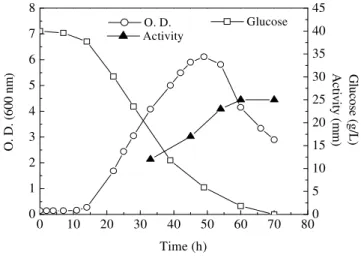
pattern, indicating that oxygen limitation took place. Growth ended after 50 hs of cultivation, when carbon and nitrogen were still available, but oxygen might be depleted. Growth could not proceed further since fermentation does not occur in anaerobiosis in minimal medium as shown in
the anaerobic jar cultivation experiments.
Increasing bioactive compound concentrations
were detected throughout the oxygen-limited growth. At 75 hs of cultivation, a maximum bioactivity was observed (~ 21 mm) when growth
was already declining. The biomass yield on
consumed glucose was much lower than under excess-oxygen cultivation, and sporulation was not observed under this restricting condition.
0,0 0,2 0,4 0,6 0,8 1,0 1,2 1,4 1,6
0 1 2 3 4 5 6 7 8 9
0 10 20 30 40 50 60 70 80
0 5 10 15 20 25 30 35 40 45
O
.D
.
(6
0
0
n
m
)
Time (h) O.D.
(N
H4 )2
S
O4
(
g
/L
) (NH4)2SO4
G
lu
co
se
(
g
/L
)
A
ct
iv
it
y
(
m
m
)
Glucose Activity
Figure 4 - Time course of cell growth, substrate consumption, and bioactive compound production, during oxygen-restricted cultivation of Bacillus subtilis R14 at 37° C, with ammonium sulphate as sole nitrogen source.
Figure 5 shows the results on growth and product
formation by B. subtilis R14 using glucose and
sodium nitrate as the sole nitrogen source. A linear growth pattern was observed as when ammonium sulphate was present as the sole nitrogen source (Fig. 4), but a higher biomass yield was obtained. As in the previous case, growth proceeded for about 50 hs. The longer lag phase observed in this
case could be attributed to the fact that the inoculum was grown on glucose and ammonium sulphate medium. The production of bioactive compounds was also observed during the restricted growth phase. The maximum activity (~25 mm) was higher and attained earlier, at around 60 hs of cultivation.
0 1 2 3 4 5 6 7 8
0 10 20 30 40 50 60 70 800
5 10 15 20 25 30 35 40 45
O
.
D
.
(6
0
0
n
m
)
O. D.
G
lu
co
se
(g
/L
)
A
ct
iv
ity
(m
m
)
Time (h)
Glucose Activity
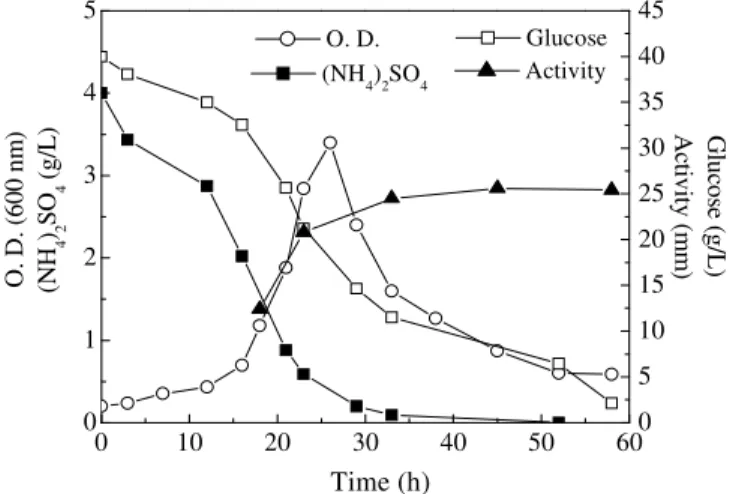
Figure 6 shows the results obtained when ammonium and nitrate were used together as nitrogen sources during oxygen limitation. Growth rate was enhanced when compared to the previous case. Growth ended before 30 hs of cultivation, when ammonium was nearly depleted. The maximum biomass obtained was higher than that obtained with ammonium sulphate and lower than that obtained with sodium nitrate. This result could indicate that while ammonium was used solely as nitrogen source, nitrate might have been used as a final electron acceptor. Even though, the growth was not observed on this medium under anaerobic conditions, nitrate reductase has been
isolated from B. subtilis cultured under low
aeration (Nakano and Zuber, 1998). As in the two previous cases, bioactive compounds production occurred throughout the oxygen-limited growth.
At around 35 hs of cultivation, maximum bioactivity, equal to the one obtained with nitrate as sole nitrogen source, was already attained. For one of the oxygen-restricted cultivations, the
activity of the compounds produced by B. subtilis
R14 was tested against other important
phytopatogenic bacteria besides Agrobacterium
tumefaciens. All the bacteria tested were sensitive
to the compounds as shown in Table 2. The inhibition halos were similar or larger than those
obtained for X. campestris pv. campestris and
Acidovorax avenae subsp. citrulli, causal agents of
the black rot of crucifers and the bacterial fruit blotch of melon, respectively, which have both
shown to be efficiently controlled by B. subtilis
R14 (Assis et al., 1996; 1997; Monteiro et al.,
2005; Santos et al.,2006).
0 1 2 3 4 5
0 5 10 15 20 25 30 35 40 45
0 10 20 30 40 50 60
O
.
D
.
(6
0
0
n
m
)
(N
H4 )2
S
O4
(
g
/L
)
Time (h) O. D. (NH4)2SO4
G
lu
co
se
(g
/L
)
A
ct
iv
ity
(m
m
)
Glucose Activity
Figure 6 - Time course of cell growth, substrate consumption, and bioactive compound production, during oxygen-restricted cultivation of Bacillus subtilis R14 at 37° C, with ammonium sulphate and sodium nitrate as nitrogen sources.
Table 2 - Activity of bioactive compounds produced by B. subtilis R14 during oxygen-limitation against phytopathogenic bacteria.
Microorganism Halo (mm)
Agrobacterium tumefaciens 26.3 ± 0.1
R. solanacearum RS103 bv.1 15.8 ± 0.1
Pectobacterium carotovorum 15.9 ± 0.1
Xanthomonas campestris pv. viticola 14.5 ± 0.2
X. campestris pv. campestris 13.6 ± 0.2
Acidovorax avenae subsp. citrulli 12.1 ± 0.2
Erwinia amylovora 11.8 ± 0.2
ACKNOWLEDGEMENT
The authors are grateful to Fundação de Amparo à Ciência e Tecnologia do Estado de Pernambuco (FACEPE) and Coordenação de Aperfeiçoamento de Pessoal de Nível Superior (CAPES) for the financial support.
RESUMO
A fisiologia de B. subtilis R14 foi investigada em
meio mínimo em condições de excesso e limitação de oxigênio. Crescimento e esporulação eficientes foram obtidas em culturas com excesso de oxigênio em meio contendo fontes de carbono e nitrogênio de fácil assimilação, que permitiram alta taxa de crescimento e alto rendimento em biomassa. Uma fase de transição curta, entre o crescimento exponencial e a esporulação, pode ser obtida pela formulação de um meio com razão C/N balanceada. Sob limitação de oxigênio, mas
em presença de nutrientes essenciais, B. subtilis
R14 produziu compostos bioativos. Os compostos apresentaram atividade contra várias bactérias fitopatogênicas. Sob condição de anaerobiose, o microrganismo não cresceu, nem através de fermentação nem de respiração anaeróbica. A adição de piruvato ao meio permitiu o crescimento, tanto através de fermentação como de respiração anaeróbica. O conhecimento adquirido neste trabalho é relevante tanto para o projeto do processo de produção quanto para a formulação de um produto comercial eficiente para biocontrole.
REFERENCES
Agrios, G.N. (1997), Plant diseases caused by prokaryotes: bacteria and mollicutes. In- Plant pathology, ed. G.N. Agrios. Academic Press, New York
Assis, S.M.P.; Mariano, R.L.R.; Michereff, S.J.; Coelho, R.S.B. (1996), Biocontrol of Xanthomonas campestris pv. campestris on kale with Bacillus spp. and endophytic bacteria. In- Advances in biological control of plant disease, ed. T. Wenhua. China Agricultural University Press, Beijing
Assis, S.M.P.; Mariano, R.L.R.; Michereff, S.J.; Coelho, R.S.B. (1997), Antagonism of Bacillus spp. to Xantomonas campestris pv. campestris on cabbage phyloplane in the field. In- Proceedings of the Fourth International Workshop on Plant Growth-Promoting Rhizobacteria, eds. A. Ogoshi et al., Present Status and Future Prospects, Sapporo, 1997
Backman, P.A.; Wilson, M.; Murphy, J.F. (1997), Bacteria for biological control of plant diseases. In-
Environmentally safe approaches to crop disease control, eds. N.A.Rechcigl and J.E. Rechcigl. VCH, Weinheim
Chater, K.F.; Bibb, M.J. (1997), Regulation of bacterial antibiotic production. In- Biotechnology: products of secondary metabolism, eds. H.J. Rehm and G. Reed. VCH, Weinheim
Emmert, E.A.B.; Handelsman, J. (1999), Biocontrol of plant disease: a (Gram-) positive perspective. FEMS Microbiol Lett., 171, 1-9
Fritze, D. (2004), Taxonomy of the genus Bacillus and related genera: the aerobic endospore-forming bacteria. Phytopathology, 94,1245-1248
Jacobsen, B.J.; Zidack, N.K.; Larson, B.J. (2004), The role of Bacillus-based biological control agents in integrated pest management systems: plant diseases.
Phytopathology, 94, 1272-1275
Kloepper, J.W. (1997), Current status and future trends in biocontrol research and development in the U. S.. In- Proceedings of the International Symposium of Clean Agriculture, Japan, 1997
Melo, I.S. (1998), Agentes microbianos de controle de fungos fitopatogênicos. In- Controle biológico, eds. I.S. Melo and J.L. Azevedo. Embrapa, Jaguariúna Monteiro, L.; Mariano, R.L.R.; Souto-Maior, A.M.
(2005), Antagonism of Bacillus spp. against
Xanthomonas campestris pv. campestris. Brazilian Archives of Biology and Technology, 48, 23-29 Mulligan, C.N. (2004), Environmental applications for
biosurfactants. Environ Pollut., 133, 183-198
Nascimento, A.R.P.; Mariano, R.L.R. (2004), Cancro bacteriano da videira: etiologia, epidemiologia e medidas de controle. Ciência Rural, 34, 301-307 Nakano, M.M.; Hulett, F.M. (1997), Adaptation of
Bacillus subtilis to oxygen limitation. FEMS Microbiol Lett. 157, 1-7
Nakano, M.M.; Dailly, Y.P.; Zuber, P.; Clark, D.P. (1997), Characterization of anaerobic fermentative growth of Bacillus subtilis: identification of fermentation end products and genes required for growth. J Bacteriol.,179, 6749-6755
Nakano, M.M.; Zuber, P. (2002), Anaerobiosis. In-
Bacillus subtilis and its closets relatives: from genes to cells , eds. A.L. Sonenshein et al., American Society for Microbiology, Washington
Nelson, E.B. (2004), Microbial dynamics and interactions in the spermosphere. Annu Rev Phytopathol., 42,271-309
Ongena, M.; Jacques, P.; Touré, Y.; Destain, J.; Jabrane, A.; Thonart, P. (2005), Involvement of fengycin-type lipopeptides in the multifaceted biocontrol potential of Bacillus subtilis. Appl Microbiol Biotechnol., 69, 29-38
Phillips, Z.E.V.; Strauch, M.A. (2002), Bacillus subtilis
sporulation and stationary phase gene expression.
Cell Mol Life Sci., 59, 392-402
Ramos, H.C.; Hoffmann, T.; Marino, M.; Nedjari, H.; Presecan-Siedel, E.; Dressen, O.; Glaser, P.; Jahn, D. (2000), Fermentative metabolism of Bacillus subtilis: physiology and regulation of gene expression. J Bacteriol., 182, 3072-3080
Sales Júnior, R,. Menezes, J.B. (2001), Mapeamento das doenças fúngicas, bacterianas e viróticas do cultivo do melão no Estado do Rio Grande do Norte – RN. Relatório técnico. Escola Superior de Agricultura de Mossoró, Mossoró
Santos, E.R.; Gouveia, E.R.; Mariano, R.L.R.; Souto-Maior, A.M. (2006), Controle biológico da mancha-aquosa do melão causada por compostos bioativos produzidos por Bacillus spp. Summa Phytopathol., 32, 376-378
Schisler, D.A.; Slininger, P.J.; Behle, R.W.; Jackson, M.A. (2004), Formulation of Bacillus spp. for biological control of plant diseases. Phytopathology, 94, 1267-1271
Smith, I. (1993), Regulatory proteins that control late-growth development. In- Bacillus subtilis and other Gram-positive bacteria, eds. A.L. Sonenshein et al. American Society for Microbiology, Washington Sonenshein, A.L. (2002), The Kreb citric acid cycle. In-
Bacillus subtilis and other Gram-positive bacteria,
eds. A.L. Sonenshein et al. American Society for Microbiology, Washington
Thomashow, L.S.; Weller, D.M. (1996), Current concepts in the use of introduced bacteria for biological disease control: mechanisms and antifungal metabolites. In- Plant-Microbe Interactions, eds. G. Stacey and N.T. Keen. New York, Chapman and Hall, v. 1, p. 187-235
Zuber, P.; Nakano, M.M. Marahiel, M.A. (1993), Peptide antibiotics. In- Bacillus subtilis and other Gram-positive bacteria, eds. A.L. Sonenshein et al. American Society for Microbiology, Washington Zuber, P.; Marahiel, M.A. (1997), Structure, function,
and regulation of genes encoding multidomain peptide synthetases. In- Biotechnology of Antibiotics,
ed. W.R. Strohl, 2nd edn. Marcel Dekker, New York