FUNDAÇÃO GETULIO VARGAS
ESCOLA DE ADMINISTRAÇÃO DE EMPRESAS DE SÃO PAULO
ANDRÉ BUENO SAAB
THE EFFECTS OF PRICE ON PRODUCT’S PERCEIVED RISK AND OVERALL BENEFITS IN B2B CONTEXT
SÃO PAULO 2017
ANDRÉ BUENO SAAB
THE EFFECTS OF PRICE ON PRODUCT’S PERCEIVED RISK AND OVERALL BENEFITS IN B2B CONTEXT
Dissertação de Mestrado apresentada à Escola de Administração de Empresas de São Paulo da Fundação Getulio Vargas, como requisito para obtenção do título de Mestre em Administração de Empresas.
Campo de Conhecimento: Estratégias de Marketing
Orientador: Dr. Delane Botelho
SÃO PAULO 2017
Saab, André Bueno.
The effects of price on product’s perceived risk and overall benefits in B2B context / André Bueno Saab. - 2017.
101 f.
Orientador: Delane Botelho
Dissertação (mestrado) - Escola de Administração de Empresas de São Paulo.
1. Negócios. 2. Preços. 3. Risco (Economia). I. Botelho, Delane. II. Dissertação (mestrado) - Escola de Administração de Empresas de São Paulo. III. Título.
ANDRÉ BUENO SAAB
THE EFFECTS OF PRICE ON PRODUCT’S PERCEIVED RISK AND OVERALL BENEFITS IN B2B CONTEXT
Dissertação de Mestrado apresentada à Escola de Administração de Empresas de São Paulo da Fundação Getulio Vargas, como requisito para obtenção do título de Mestre em Administração de Empresas.
Campo de Conhecimento: Estratégias de Marketing
Data da aprovação: __/__/____
Orientador: Dr. Delane Botelho
Banca examinadora:
_____________________________ Prof. Dr. Delane Botelho (Orientador) FGV-EAESP
_____________________________ Prof. Dr. Luiz Artur Ledur Brito FGV-EAESP
_____________________________
Prof. Dr. José Afonso Mazzon FEA-USP
Dedico essa dissertação aos meus sócios da SBK Business, Lino, Richard, Monica e Paula, seus clientes (que me ajudaram na amostra), aos meus familiares, meus amigos e meus pais.
Sobretudo, dedico a três pessoas que fizeram um enorme sacrifício de convivência para que eu pudesse concluir o mestrado: minha esposa, Michele, e minhas duas filhas, Lara e Helena. Com amor, para vocês.
AGRADECIMENTOS
Agradeço primeiramente ao meu orientador, Professor Delane Botelho, com quem aprendi enormemente durante o mestrado (e continuo aprendendo). Um verdadeiro mestre. Agradeço muito aos membros da banca de qualificação e de defesa, professores Luiz Brito e José Mazzon, que iluminaram o caminho para essa dissertação.
Agradeço aos demais professores da EAESP FGV, em especial à Tânia Veludo e à Eliane Brito, que me enriqueceram demais neste período.
Várias pessoas me ajudaram nas diferentes fases dessa dissertação e sou muito grato a elas:
Durante o processo de coleta de dados, várias pessoas, colegas, amigos, parentes e até desconhecidos me ajudaram. Não foi fácil obter 271 respostas de gerentes e empreendedores em três semanas. Foi graças a todas essas pessoas que consegui uma amostra substancial como essa. Assim, agradeço muito a todos que ajudaram reenviando o link da pesquisa para suas redes de contato, em especial ao Alexandre Mattar (Hyperativa), Bruno Bourdeaux, Carine Bastos (e seu marido), Carla Abdalla, Carol Zanette, Carolina Batista (Itaú), Cecília Lobo Araújo, Cintia Mattar (Natura), Cris Bourdeaux (Natura), Cristiano Amaral, Daniel Bastos (Usiminas), Dani Cassoti (Unilever), Daniela Dal Fabbro, Davi Hoffman, Denise Sofiatti, Diogo Dias (Ambev), Érico Bueno (Telefônica), Farah Braga, Frederico Faciolli (Itaú), Giancarlo Esposito (Silcon), Kavita Hamza, Larissa Stolar, Lino Rodrigues, Maíra Heinzelmann, Marcos Amaral, Mônica Canedo, Paula Kuwamoto, Paulo Thiago Mansur, Pedro Bojikian (Microsoft), Richard Burgers, Roberto Andrade, Rodolfo Morgado (CBMM), Rodrigo Dal Fabbro (Anhaguera), Sheila Ramalho, Simone Bueno, Suzana Battistela, Tiago da Costa (CBMM) e Victor Marcolini. Com certeza estou esquecendo algumas pessoas que me ajudaram. Por favor, desculpe-me e obrigado pela ajuda novamente! Em especial agradeço ao Genésio Vasconcelos e ao Renato Seguchi que deram contribuições expressivas para a obtenção da amostra. Não posso deixar de agradecer aos clientes da SBK Business que também contribuíram nessa fase, gerentes, diretores e presidentes da Agro Amazônia, John Deere, CBMM, Embraer, IBS-Energy, Marcopolo, Rhodia, Silcon, Tracbel, Usiminas, Syngenta, entre outras empresas.
Durante a análise dos dados, contei com contribuições relevantes como as do Professor Laredo, Victor Nogami, Bruno Bourdeaux, Karin Tamura (Marketing Data), Manoel Galdino, Wiliam Ramalho e Andressa Nahas (AKN Consultoria Estatística), a quem agradeço.
Algumas pessoas fizeram um enorme favor me ajudando a revisar a dissertação. Agradeço muito a Larissa Stolar, Linda Stolar, Suzana Battistella, Wiliam Ramalho e Bruno Bourdeaux.
Não posso deixar de agradecer aos meus sócios na SBK Business que me ajudaram de diversas formas e me apoiaram nessa empreitada, Prof Lino Rodrigues, Richard Burgers, Mônica Canedo e Paula Kuwamoto.
Por fim, agradeço demais os meus amigos, sobretudo ao Bruno Bourdeaux, Kavita Hamza e Wiliam Ramalho por terem sempre me apoiado muito, seja para ingressar, seja para concluir o mestrado.
Agradeço à minha madrinha Linda Stolar, e família, por terem me cedido a casa para estudar, quando foi preciso, assim como o apoio do restante da família, tios, tias, primos e finalmente meus pais, que sempre me estimularam.
Finalmente, agradeço muito à minha esposa Michele, uma verdadeira companheira que me ajudou, motivou, direcionou e me deixou tranquilo quando foi preciso para me dedicar ao mestrado, fazendo, junto comigo, vários sacrifícios para que este sonho pudesse se realizar. Michele, muito obrigado por tudo meu amor! Esse mestrado também é seu.
“Quem, de três milênios não é capaz de se dar conta, vive na ignorância, na sombra, à mercê dos dias, do tempo” Goethe
ABSTRACT
B2B price scholarship most frequently assumes that organizational purchase is a rational, free-bias activity, in line with theory of choice. Heuristics, such as price-quality effect, are rarely applied in theories, frames and models to explain how purchase managers respond to price stimuli. However, new studies in B2B sets have been suggesting that price response may not be as rational as the prevailing perspective had assumed. Trying to shed light on the issue of behavioral response to price stimuli in B2B sets, this study undertook a laboratory experiment to test the effects of price on product’s perceived risk (as the uncertainty of adverse outcome due to purchase decision) and product’s overall benefits. This experiment also tested as possible moderators (i) decision importance, (ii) experience at buying tasks and (iii) product type (search vs. credence). Findings gave support to the behavioral hypothesis that managers do take price to make judgments about product’s perceived risk (main effect), effect known as price-quality effect, one kind of heuristic. None of the proposed moderators could individually moderate the main effect. However, experience in buying tasks and product type could simultaneously moderate the main effect, in a second order interaction, but not exactly as hypothesized. Experienced managers, under search products judgment, as well as inexperienced managers, under credence products judgment, took price to make inferences on product’s perceived risk. The main conclusions are that (i) organizational price response is not as rational and bias free as the prevailing perspective had assumed and (ii) moderation of price-quality effect in B2B is more complex and sophisticated than previous studies had proposed. Finally, the study discusses implications for theory building and price management in B2B.
RESUMO
O estudo de preços no B2B frequentemente assume que as compras organizacionais são uma atividade racional, isenta de viés, convergindo com a teoria da escolha. Heurísticas, como o efeito preço-qualidade, raramente são utilizadas em teorias, estruturas e modelos para explicar como gerentes de compra respondem ao estímulo do preço. Entretanto, novos estudos no B2B têm sugerido que a resposta ao preço talvez não seja tão racional como a perspectiva prevalente assume. Com o intuito de jogar luz sob a questão da resposta comportamental ao preço em ambientes B2B, este estudo realizou um experimento de laboratório para testar os efeitos do preço no risco percebido (como a probabilidade de resultados adversos em função da escolha de um produto) e na percepção de benefícios gerais do produto. Este experimento também testou como moderadores (i) importância da decisão, (ii) experiência em atividades de compra e (iii) tipo de produto (produto de busca vs. crença). Resultados sustentam a hipótese comportamental de que gerentes utilizam o preço para realizar julgamentos sobre a risco do produto (efeito principal), conhecido como efeito preço-qualidade, um tipo de heurística. Nenhuma das variáveis propostas foi capaz de moderar o efeito principal individualmente. Entretanto, experiência em atividades de compra e tipo de produto moderaram simultaneamente o efeito principal, em uma interação de segunda ordem, mas não exatamente da forma como havia sido proposta. Gerentes experientes, em julgamentos de produtos de busca, assim como gerentes inexperientes, em julgamentos de produto de crença, utilizaram o preço para inferir o risco do produto. As principais conclusões são (i) a resposta organizacional ao preço não é tão racional e isenta de vieses quanto a perspectiva prevalente assume e (ii) a moderação do efeito preço-qualidade no B2B é mais complexa e sofisticada do que o assumido em estudos anteriores. Por fim, o estudo discute implicações para a construção de teoria e para a gestão de preço no B2B.
SUMMARY
CHAPTER 1 - INTRODUCTION ... 15
CHAPTER 2 - THEORY AND HYPOTHESES ... 20
2.1 A. Behavioral Science, Heuristics and Rationality Violation ... 20
2.2 The Price-Quality Effect in B2C sets ... 22
2.3 The Price-Quality Effect in B2B sets ... 26
CHAPTER 3 – METHOD... 37
3.1 Research Method ... 37
3.2 General Design & Sampling Method ... 37
3.3 Products’ Selection for the Experiment ... 40
3.4 Role-Playing Scenario Building ... 43
3.5 Manipulation checks ... 49
3.6 Measurements ... 50
CHAPTER 4 – RESULTS AND DISCUSSION ... 55
4.1. Results ... 55
4.1.1 Perceived Risk ... 55
4.1.2 Overall Benefits ... 58
4.2. Discussions ... 61
CHAPTER 5 – FINAL REMARKS ... 66
5.1. Main Conclusions ... 66
5.2. Implications for Price Management and Theory Building ... 68
5.3. Limitations and Future Studies Proposition ... 69
REFERENCES ... 71
Appendix Section ... 77
A. Research Instrument ... 77
B. Sample Description ... 90
C. Role Playing Scenario ... 93
D. Risk Scales’ Evaluation ... 94
E. Reference Scales ... 95
F. Sample Size ... 96
G. Testing ANOVA’s Assumptions ... 97
H. Procedure to Validate Statistical Findings ... 100
Figures List
Figure 1 – Conceptual Interaction Frame
Figure 2 – Pretest Results for Product Classification (average, from 0 to 100) Figure 3 – Pretest Results for Decision Importance (average, from 0 to 100)
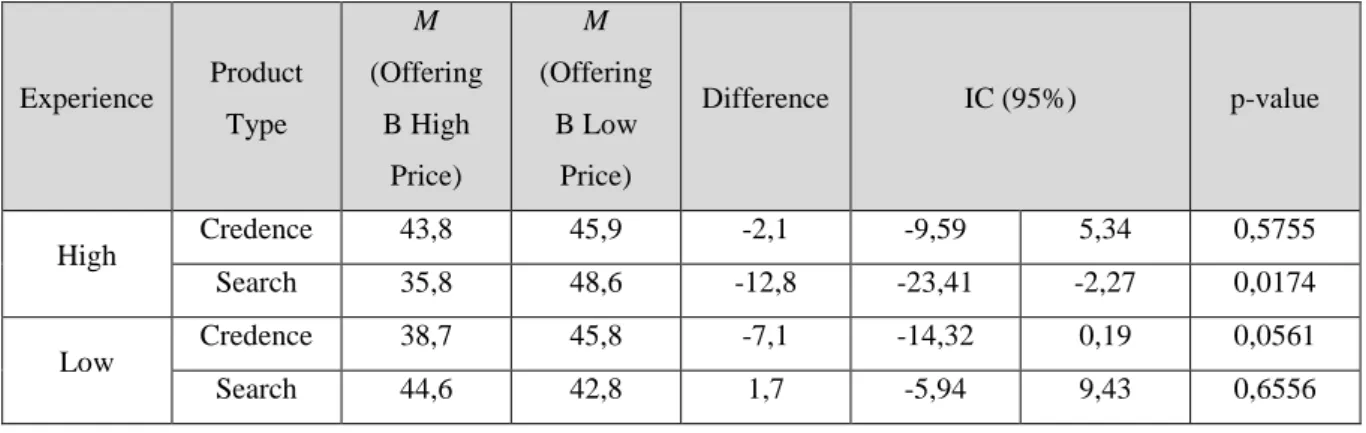
Figure 4 – Effect of Price on Product’s Perceived Risk moderated by Experience Level and Product Type simultaneously (H3a and H4a)
Figure 5 - Consent Term
Figure 6 - Autobiographical Recall Question
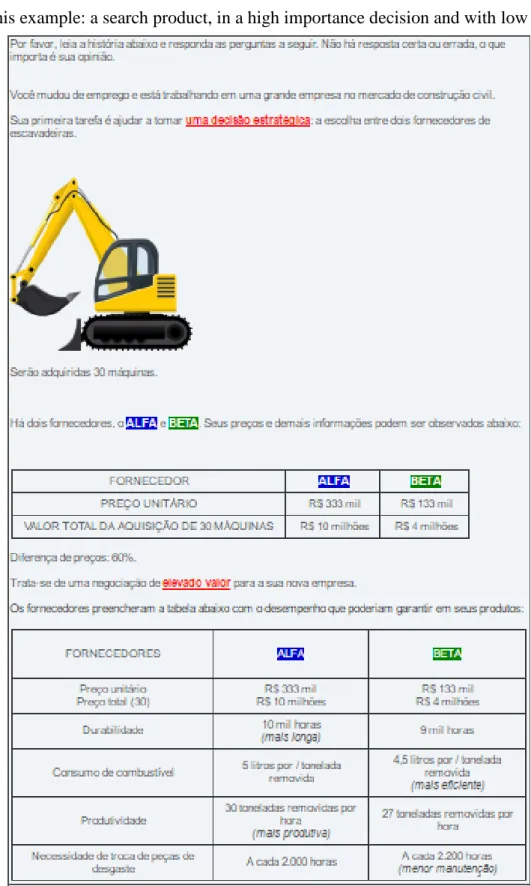
Figure 7 – Measuring the Experience at Buying Tasks Figure 8 – Role Playing Scenario 1
Figure 9 – Role Playing Scenario 2 Figure 10 – Role Playing Scenario 3 Figure 11 – Role Playing Scenario 4 Figure 12 – Role Playing Scenario 5 Figure 13 – Role Playing Scenario 6 Figure 14 – Role Playing Scenario 7 Figure 15 – Role Playing Scenario 8 Figure 16 – Price Manipulation Check Figure 17 – Benefit Perception Measurement Figure 18 – Product’s Perceived Risk Measurement Figure 19 – Decision Importance Manipulation Check Figure 20 – Product Type Manipulation Check
Figure 22 – Organization’s Size, Organization’s Revenue and Probe Question Figure 23 – Histogram of Age Distribution
Figure 24 – Histogram of Job Title Distribution Figure 25 – Histogram of Job Title Distribution Figure 26 – Role Playing Scenario Manipulation
Figure 27 – Single item scales for perceived risk and perceived benefits Figure 28 – Distribution of Residuals (Offering A – Overall Benefits) Figure 29 – Distribution of Residuals (Offering B – Overall Results) Figure 30 – Distribution of Residuals (Offering A – Perceived Risk) Figure 31 – Distribution of Residuals (Offering B –Perceived Risk)
Tables List
Table 1 – Dissertation’s Structure
Table 2 – Main PQE pioneer empirical studies in B2C Table 3 – Hypotheses’ Summary
Table 4 – Products and Services selected for the experiment Table 5 – Decision Importance manipulation clues
Table 6 – Roles for the Offering A & B at the experiment Table 7 – Cues provided for search products assessment Table 8 – Cues provided for credence services assessment
Table 9 – Price and purchase cost (unitary price x quantities) differences across conditions Table 10 – Group’s Age and General Seniority Level Analysis
Table 11 – Summary of ANOVA’s Results (Offering B – product’s perceived risk) Table 12 – Orthogonal Contrast Post Hoc tests
Table 13 – Results’ Summary
Table 14 – Analysis of Scales Regarding Measurement of perceived risk Table 15 – Table 15 – Treatment Sample Size
Table 16 – Results for ANOVA assumptions test (p-value)
15
CHAPTER 1 - INTRODUCTION
Few decisions in business are more important than setting prices. Price simultaneously impacts two key elements in marketing management: it directly determine the seller organization’s profitability and it strongly influences customers purchase decision (De Toni, Mazzon and Milan, 2015; De Toni and Mazzon, 2013; Winer, 2012 and Baker, Marn and Zawada, 2010). Price has also another special property which adds to its importance: it can powerfully contribute to position a product image, as much as a communication campaign would do (Winer, 2012), working as a signal of quality and risk in product’s judgments (Rao and Monroe 1989) in the context of purchase decisions.
The behavioral process of inferring a product’s risk and benefits by its price level has been vastly researched for decades in B2C sets by marketing scholars (De Toni et. al., 2015; De Toni and Mazzon, 2013, Ding, Ross and Rao, 2010; Völckner and Hofmann, 2007; Rao, 2005; Stiving, 2000; Shiv, Carmon and Ariely, 2000; Rao and Sieben, 1992; Schindler, 1991; Rao and Monroe, 1989; Lichtenstein and Burton, 1989; Obermiller, 1988; Monroe and Krishnan, 1985; Rao, 1993; Rao and Monroe, 1988; Jacoby, Olson and Haddock, 1971; Olander, 1970; Newman and Becknell, 1970; McConnell, 1968; Stafford and Enis, 1969; Tull and Gonsior, 1964; Leavitt, 1954 and Scitovszky, 1945) who named it as price-quality effect, PQE (acronym for Price-Quality Effect, used from now on in this dissertation), which refers generally to the behavioral phenomena in which decision makers use price to make judgments and inferences about product’s quality or risk (Monroe, Rikala and Somervuori, 2015). For example, a business manager, working for a construction company, who participates in an internal purchase process to buy a set of trucks, feels that offering A will be more reliable, with lower chances of failure for instance, than offering B, because offering A is much more expansive than B. To cope with the complexity and uncertainty of this decision of choosing among competing offerings, this fictional manager simplifies it: “if offering A is more expansive, it is probably better, more reliable”. This simplification process is a heuristic, a mental short cut employed to deal with complexity and uncertainty (Iyer, Xiao, Sharma and Nicholson, 2015 and Katsikopoulos, 2011).
The journal Industrial Marketing Management published a special issue (2015) of behavioral and psychological aspects of B2B pricing which truly inspired this dissertation. Three articles (Iyer et. al., 2015; Monroe et. al., 2015; Hinterhuber, 2015) specifically underscored that
price-16 quality effect (PQE) in B2B, despite its importance to understand the behavioral response to price stimuli in organizational settings, still an unexplored theme with only a few studies done so far, and most important, with contradictory results among them. The scholarship of behavioral price in B2B regarding PQE sharply contrast with B2C research which has developed a plethora of studies on this issue, as mentioned above.
Industrial marketing scholarship most often has developed rational and normative theories, models and frameworks (Iyer et. al., 2015; Monroe et. al., 2015) to explain how organizations respond to price (Cressman, 2012; Anderson and Wynstra, 2010; Baker et. al., 2010; Anderson, Kumar and Narus, 2008; Hinterhuber, 2004; Ulaga and Chacour, 2001 and Anderson, Thomson and Wynstra, 2000). Heuristics, such as PQE, are rarely present in this stream of literature to explicate response to price in organizational settings. The idea that professional managers take rational decisions, free from heuristic processes, which reflects the prevailing view of price scholarship in B2B, is well aligned with theory of choice (classical economic theory), which claims that decision makers know exactly what they are buying, have perfect information and cognitive ability enough to take rational and bias-free purchase decisions (Hinterhuber, 2015; Ariely, 2009 and Scitovszky, 1945).
Recent studies on B2B marketing (Iyer et. al., 2015; Monroe et. al., 2015; Hinterhuber, 2015 and Moosmayer, Schuppar and Siems, 2012), however, have been suggesting that organizational buyers may be not so rational as the prevailing perspective would assume. These scholars underscore that organizations, in particular circumstances, may also respond to price in a heuristic way, resembling individual consumers, who frequently take price as a cue to infer risk and benefits (Hinterhuber, 2015; Iyer et. al., 2015; Völckner and Hofmann, 2007; Ding et. al., 2010 and Rao and Monroe, 1989).
Thus, there is research gap. Price literature in B2B has been underpinned by the idea that managers and organizations take price in bia-free process. New streams claim that managers and organizations are not as rational as the prevailing perspective assumes. Finding out if PQE can be observed in B2B contexts would shed light on this gap. Furthermore, recognizing this heuristic manifestation (PQE) in the B2B environment, and identifying the moderate variables that could enhance or defuse this effect, would represent a rupture with the prevailing B2B scholarship paradigm on price, which assumes that managers’ response to price stimuli is rational and that organizational decision makers are bias-free. Thus, this dissertation questions
17 the presumed rationality of organizational purchase, suggesting that such activity has more psychological elements than the prevailing research paradigm has thought.
Therefore, this dissertation’s research questions are: Do managers take price to infer
product’s perceived risk and overall benefits? If so, which are the moderate variables that can enhance this effect?
More specifically, a laboratory experiment was undertaken to:
a) Test, in the B2B environment, the PQE (Price-Quality Effect);
b) Test, in a B2B environment, the moderation power of the following variables on PQE:
i. Decision importance
ii. Buyers’ experience on purchase tasks
iii. Product type (search product vs. credence product)
c) Discuss, vis-à-vis the above results, theoretical and managerial implications for B2B price research.
Additionally, it is expected that this dissertation’s outcome may yield an article to be published primarily at the Industrial Marketing Management journal, since this was the periodic that proposed researches on psychological aspects of B2B price. Yet, this study’s proposition is also in line with Marketing Science Institute’s research priority agenda (MSI, 2016), which calls B2B researchers to identify critical paths to purchase in B2B environment using causal models. Finally, this research may engender three different kinds of contribution based on Summer’s (2001) guidelines for relevant research development. First, this study may bring new empirical evidence to shed light at the unexplored domain of B2B behavioral aspects of price. It narrows a research gap, previously identified by different authors (Iyer et. al., 2015; Monroe et. al., 2015
18 and Hinterhuber, 2015), which refers to the lack of empirical studies on behavioral aspects of B2B pricing, specifically related to PQE. Second, this research will bring contributions to price theory development by identifying the moderate variables that better explain the relationship among price and product’s perceived risk, as well as price and product’s overall benefits. The identification of moderate variables shall improve prediction power of price’s theories in B2B. Third, its conclusions may bring insights for business managers from B2B marketing and sales teams, who struggles to deliver a minimal level of profitability due to limited pricing understanding. The most important insight practitioners can draw from this study is the idea that, under specific conditions (moderate variables), low price policies or discounts might not only lower business profitability, but also might jeopardize business’s offerings attractiveness, thus becoming not only unnecessary but also harmful. At the proposed conditions, business managers from marketing and commercial teams should avoid low price policies, defending sales profitability, as well as their offering’s attractiveness. To adequately exploit eventual customers’ bias, avoiding unnecessary and harmful price cuts, business managers from marketing and commercial areas will also have to enhance their ability to identify if the proper conditions hold true in each business transaction. If managers develop this ability, they will be able to enhance business profitability with low risk of market share loss. Avoiding this unnecessary and harmful price cuts shall have a significant impact in business overall profitability, since price variation is the most powerful profitability driver, when compared to variable costs gains, fix costs gains, and sales volumes increments (Baker et. al., 2010), thus having significant practical implications for managers’ performance and organizations’ results. The dissertation structure is divided in seven blocks that can be seen at the Table 1.
19 Table 1 – Dissertation’s Structure
CHAPTERS BRIEF CONTENT
1) Introduction Introduction, research question, theoretical gaps, relevance and expected contributions
2) Theory and Hypotheses Theories and concepts from which proposed hypotheses and moderate variables emerged
3) Method
Sample method and description, experiment design, independent and dependent variables, pretests, role-playing scenario, manipulation checks, scales and measurements
4) Results and Discussion ANOVA’s assumptions test and hypotheses test’s results; hypotheses test analysis, additional theories and speculations to explain unexpected results
5) Final Remarks Study’s goals and conclusion; implications for theory building and price management, study’s limitation and future search propositions
References Literature references
Appendix Research instrument; sample description; sample size; role playing scenario details; scales evaluation; ANOVA´s assumptions test and residual analysis
There are 5 chapters, Introduction, Theory and Hypotheses, Method, Results and Discussion and Final Remarks, References and Appendix containing details about research instrument, sample size and sample characteristics, scales and references, testing ANOVA´s assumptions and residual analysis.
20
CHAPTER 2 - THEORY AND HYPOTHESES
2.1 A. Behavioral Science, Heuristics and Rationality Violation
Marketing researchers have already produced a vast array of studies demonstrating that response to pricing stimuli has a strong behavioral and psychological component (Iyer et. al., 2015; Hinterhuber, 2015; Monroe et. al. 2015; Rao and Monroe 1989). Since Simon (1955) coined the term bounded rationality in the fifties, opening a new path of Behavioral Economic studies (and later on winning a Nobel Prize for that), behavioral research has developed a long way.
In financial decision contexts, where it would be expected a highly rational decision making behavior, such as stocks trading, scholars (Campbell 2014; Alter e Oppenheimer 2006) have identified that cognitive bias play a strong role in decision making. Stocks from firms with names hard to pronounce presented an inferior performance compared to other firms, when market goes down (Thomas, Simon and Kadiyali 2010). Consumer behavior research has already found that even in purchase process of high involvement and high stakes, such as purchasing a real state good (e.g. house or apartment), consumers behave under severe cognitive bias in response to price stimuli. For instance, precise prices, instead of rounded, can make a difference in the way consumers perceived a real state’s price magnitude and it also affects consumer’s willingness to pay (Thomas et. al., 2010). Similar to B2B traditional literature on price, previous scholarship presumed that within a high evolvement purchase context, consumers would act rationally analyzing different offers, and weighing their benefits, prices and risks.
Different studies, thus, in different context in which previous literature had presumed decision makers would act very rationally, have been demonstrating that rationality actually plays a minor role in guiding decision maker’s behavior. It also suggests that cognitive bias may be found in different environments and processes, even in the contexts where it would not be previously expected.
When Simon coined the term bounded rationality in the 1950’s, he was not thinking specifically on the PQE. He was building a long-range theoretical frame to explain why decision makers deviate from the assumptions of classical theory of choice. “Price-quality effect” is just one
21 important manifestation of this phenomenon conceptualized by Simon, as seen above. Thus, the “price-quality effect” is not a standalone odd behavior performed by a small group of foolish consumers. It is rather a small part of a broader phenomenon called heuristics, that manifests itself in different decision process contexts.
Heuristics are simple rules and mental shortcuts employed by decision makers to cope with complexity of decision making process (Iyer et. al., 2015). Heuristics can also be defined by models for making inferences that (1) rely heavily on human core capacities, (2) do not necessarily use all available information and process the information they use by simple computations and (3) are easy to understand, apply, and explain (Katsikopoulos, 2011). Heuristics have been studied in managerial decision process for long time now (Katsikopoulos, 2011 and Tversky and Kahneman, 1974), but it has also been researched in different decision making contexts such as medicine diagnosis and military decisions, among others. Undertaking heuristic can be harmful to decision making. Generally, the outcome of heuristic decisions diverges from the optimal and rational decision result (Ariely, 2009). However, it not always necessarily jeopardizes decision making process. Heuristics can be very competitive, when compared to optimization methods, in making inferences about the future (Katsikopoulos, 2011) for example. They can help solving problems faster, with less information and more accurately when compared to sophisticated analytical models (Gigerenzer and Gaissmaier, 2011). Heuristics strongly characterizes decision making process, in many different context, but specially in business environment, simply because decision makers perform their task under severe cognitive and time constraints. As Simon (1955) pointed, decision makers work under limited rationality. The employment of heuristics to simplify and solve decision business problems, such as the “price-quality effect”, leads to systematic biased behavior (Iyer et. al., 2015) that can be understood and can also be predicted.
The heuristics of inferring benefits from price levels violets basic principles of choice theory model (Hinterhuber, 2015 and Scitovistky,1945). Tversky and Kahneman (1986) explain that choice theory assumed that preferences are: (i) complete (“for any set of different options, agent knows which are his preferences on each option”); (ii) transitive (“if option A is preferred over option B, and option B is preferred over option C, then option A must be preferred over option C”); (iii) invariant (“different representations of the same choice problem should yield the same preference, thus variations of form that do not affect outcomes should not affect the choices”). The heuristics of price signaling benefits (PQE), proposed above as complementary view to
22 explain B2B price responce, seem to violets the last mentioned principle of invariance. The interpretation of this research is that if invariance principle is correct, agents should assign a utility value to offering’s benefits regardless of price level. However, recent literature (Iyer et. al., 2015; Hinterhuber, 2015; Monroe et. al., 2015 and Kumar and Grisaffe’s 2004) has acknowledged that B2B decision makers, in some conditions, have their perceptions about offering’s benefits influenced by price levels, violating invariance principle of rationality of choice theory. This idea, that PQE directly violets principle of choice theory seemed to be supported by others authors as well (Hinterhuber 2015; Ariely, 2009 and Scitovszky, 1945). One of the first scholars who thought about how prices can affect consumer’s perceptions was Scitovszky (1945) who underpinned that this idea, while very appealing to explicate how people respond to price, would wreak the whole theory of choice which presumes that buyers assess offering’s risk and benefits independently of its price level. If invariance principle is correct, one of the tenets of theory of choice, agents should assign a utility value according to offering’s benefits regardless of price level. If prices’ variation affect utility values playing also an informative role for decision makers (beyond price’s allocative role), then invariance principle, one of the assumptions of theory of choice, is under question.
2.2 The Price-Quality Effect in B2C sets
The scholarship evolution on PQE in B2C was not a linear and straight forward one, though. It has been made upon ambiguous and contradictory results over the decades and a few integrative studies which tried to reconcile results. In the B2B arena, it is not different. The main difference between both settings is that B2C has a plethora of empirical studies undertaken since the 1950’s, as Rao and Monroe (1989) observed, while B2B scholarship has only four empirical studies identified on the theme (Monroe et. al., 2015 and Dodds, Avila and Wahlers, 1993). The pioneer experiments in B2C settings on PQE were undertaking from the 1950’s to the 1970’s (Leavitt, 1954; Tull and Gonsior, 1964; McConnell, 1968; Stafford and Enis, 1969 and Jacoby et al. 1971). The former two empirical studies (Leavitt, 1954 and Tull and Gonsior, 1964) found strong evidence of PQE, but suffered criticism by using poor statistical and methodological approach (Rao and Monroe, 1989). They were also criticized because they simulate product decisions having only price as a cue for quality judgments. To gain realism,
23 scholars realized that multi cue experiments were better. The latter three experiments (McConnell, 1968; Stafford and Enis, 1969 and Jacoby et al.,1971) solved the methodological flaws and the single cue issue. They employed rigorous statistical approach and performed multi cue experiments (adding other cues such as product brand, product sample, product characteristics and store prestige). Those studies generally concluded that indeed price interacted with perceived quality, but not in all circumstances. The Table 2 below summarizes the characteristics from the main empirical studies on PQE from the 1950’s to the 1970’s.
Table 2 – Main PQE pioneer empirical studies in B2C
Study Methodology
Summary
Dependent Variables and Scale
Cues Main Findings Observation
Leavitt (1954)
4 products (cooking sherry, moth flakes, razor blade and floor wax); 60 subjects; 4 products x 2 price levels; Each subject had to take 4 decisions across 2 pair of the same brands (fictional) with 2 levels of prices (low x high)
Discrete product choice
Single: price “Prices might have
more than one meaning to consumers... Higher prices may sometimes increase, rather than decrease, consumer’s willingness to purchase product” (p.
209)
Study was considered methodologically flawed and highly artificial due to single cue factor
Tull and Gonsior (1964)
4 products (aspirins, salt, floor wax, liquid shampoo); 60 subjects; 4 products x 3 brands (price
levels); Each subject had to take 4 decisions across 3 different (fictional) brands of the same product
(with different prices); median prices information
for each product were provided as a reference information Discrete product choice Single: price (reference price information was provided to subjects) “Consumers relied heavily on price as a predictor of quality when there was substantial degree of uncertainty involved in the purchased decision” (p. 191)
Study suffered later criticism for poor statistical analysis and highly artificial due to single cue factor
24
McConnell (1968)
1 product (beer); 60 subjects had to try 3 different brands (fictional)
of beer (which were the same product). Prices vary
across the different fictional brands. Overall product quality (beer) in a single item 5-point scale Multi cue: price and product
sample
High-price beer was the best quality one, and the low-price beer the worst quality one. Price, in the absence of other cues, was a powerful factor in determining how the brands were perceived
Rigorous statistical analysis was introduced; some scholars regarded this experiment as single cue one (although product sample is also another cue)
Stafford and Enis (1969)
1 product (carpet); 178 subjects; product sample was cut off from the same
roll; 2 price levels (high and low) x store brand (high prestigious x low
prestigious) Overall product quality (carpet) in a single item 5-point scale
Multi cue: price, store brand and product sample
Store information statically moderated the price-quality relationship. When store information was present, price-quality effect was manifested. Jacoby et al.
(1971)
1 product (beer); 136 subjects (beer drinkers);
2x2x2x3 factorial experiment; 2 levels of price (present x absent),
brand name (present x absent) and compositional
beer samples (present x absent) x 3 beer samples
Overall quality (beer) in a single graphic item 0-100-point scale
Multi cue: price, brand and
product characteristics
Price was used as a cue of quality when it was the only cue available but not when embedded in multi cue settings.
More real and complex experiment. Price manipulation did not fully occur here.
Source: author
Further on, many empirical studies tested the PQE with different methodological approaches, reaching sometimes contradictory outcomes. Monroe (1973) systematized the knowledge on the PQE twice, first time in 1973 and second time, with Rao in 1989, when they also performed a meta-analysis of 36 empirical studies on the theme, trying to identify possible explanations to reconcile clashing results. They found that multi cue studies did not necessarily weaken the PQE, as previously thought. They concluded that if cues pointed to the same directions, price would be a strong cue for quality inferences. The author did not conclude, however, that single cues’ experiment were preferable over multi cues’, or that single cues’ were as realistic as multi cue’s. They also found that within subject designs do generate larger effects than between subjects’ design, which could partially explain outcomes variation. Most of all, they identified that high prices manipulations lead to more statistically significant results, while low price manipulations leading more frequently to null results, proposing one important factor to reconcile those previous contradictory outcomes (Rao and Monroe, 1989). Völckner and Hofmann (2007) undertook another meta-analysis on PQE with 71 empirical studies from 1989
25 to 2006, thirteen years later from the second meta-analysis. This last meta-analysis found that PQE is stronger in within subjects’ design, in convergence with the previous meta-analysis undertaken in 1980’s. They also found that high price products and European samples enhance PQE. They also conclude that PQE is weaker in services and durable goods. Their investigation also suggests that respondents who are familiar with the product rely less on price to make judgments. Finally, they concluded that number of cues does not affect PQE significantly. They did not question though the idea that multi cues’ experiments are more realistic, thus still valid. In summary, B2C researches in PQE found clear evidence that consumers use price as a sign of quality and risk in decision contexts. Scholarship on PQE has produced relevant methodological insights for researchers who try to examine this effect. There is evidence that number of cues does not weaken the effect. Both meta-analysis converged for this conclusion. In addition, the idea that multi cues experiment tend to be more realistic remains valid. Within subject design also seems to produce larger effect, according to both integrative studies. Other factors such as price manipulation, product type, experience in buying tasks and product’s familiarity, moderate PQE in consumer environment, according to these overall studies. One last interesting finding that these integrative studies did not mention though is that PQE might not only yielded a bias in consumer judgment, but it also may affect actual performance, working as a placebo. In a field experiment, scholar tested whether discounted energy drinks would lead to a decrease in consumer’s performance at cognitive tasks (Shiv et. at., 2000). Subjects had the same drink, but with different price information (one group had a regular drink and other a discounted drink). Researchers found that price not only affects perceived quality, but it also surprisingly affects actual cognitive performance as well (Rao, 2005) suggesting that price interacts with deep psychological mechanisms of consumers. This conclusion suggests that price has an even deeper effect in consumers’ cognitive processes.
If price has such a profound effect in consumer’s judgments, and even in actual product’s performance, it is hard to imagine that managers in organizational decision processes are not biased by different price levels while assessing competing offerings.
26 2.3 The Price-Quality Effect in B2B sets
In B2B sets, the research evolution on PQE has been characterized by sporadic empirical studies and conflicting results, sometimes suggesting that organizational response to price stimuli indeed may be bias-free, converging with traditional B2B price literature scholarship as well as theory of choice.
The first experiment in a B2B set (White and Cundiff, 1978) found null results, regarding their main hypothesis that managers would take price to assess quality. It employed three real products, with a multi cue setting (country origin and technical information as additional cues), in a simulation of quality assessment, with a purchase background. Scholars suggested that this result (null) could be attributed to the low level of price manipulation of about 10%, one of the factor that would be pointed out, furthered on, as explanatory for null results (Rao and Monroe, 1989) in PQE integrative studies.
Another experiment, repeating one of products used previously (dictation system – which as a recorder device), also found null results (Lambert, 1981), regarding the main hypothesis that manager would take price to judge product’s quality. In this second attempt, other cues were eliminated, resulting a single cue experiment. Author speculated that: (i) buyers could be highly knowledgeable on the specific product tested, weaken the effect of price on perceived quality; (ii) possibility of experiment´s artifacts jeopardizing its results (research instrument, scales and method) and (iii) finally, he discussed about PQE not being generalizable in B2B sets.
More than a decade later, an experiment with MBA students who worked with purchase activities was undertaken (Dodds et. al., 1993). Its main hypothesis was that price presence would affect organizational buyer’s offerings´ evaluation. Generally, authors found that price affected buyer´s evaluation of different offerings, suggesting that indeed price was used by professional buyers as a cue to infer quality, contrary to the normative view that that buyers separate the task of benefit´s evaluation and price´s evaluation (Dodds et. al., 1993). The authors concluded that “clearly the notion that industrial buyer is rational has come under suspicion” (p. 83).
Eleven years later, a survey was undertaken to test how extrinsic cues such as industry leadership, innovational and customer focus could affect purchase managers perceived quality and perceived value across service and goods contexts (Kumar and Grissafe, 2004). One of the
27 study’s hypotheses was that price would have a positive impact on perceived quality. Scholars found a strong support for the behavioral hypothesis that perceived price indeed influenced perceived quality. Their conclusion is that “even in B2B sets, where buyers are well versed with various suppliers and their prices levels, buyers who find difficult to assess quality may use price to gauge quality” (p. 65).
As can be seen above, B2B previous studies are ambiguous regarding actual manifestation of PQE in organizational settings. Recent literature (Iyer et. al., 2015; Hinterhuber, 2015; Monroe et. al., 2015; Kumar and Grisaffe’s 2004), as well as empirical one (Dodds, et. al., 1993), however, has acknowledged that B2B decision makers, in some conditions, may have their perceptions about offering’s risk and benefits influenced by price levels, violating choice theory principle of rationality (Tversky and Kahneman, 1986).
Seminal literature (Johnston & Lewin’s, 1996, Webster and Wind, 1972, Tversky and Kahneman, 1974, Simon, 1955) gives strong support to presume that B2B response to price stimuli is rationally constrained and, thus, may employ heuristics, such as PQE, to cope with complexity. The buying center, as the set of managers from distinct areas who are responsible to carry out or influence purchase activities, works under organizational constraints such as time, resources and information (Johnston & Lewin’s, 1996 and Webster and Wind, 1972). These managers are also cognitively constrained (Katsikopoulos, 2011 and Ariely, 2009). All these constraints together (information, cognitive capacity and time) engender uncertainty in decision making processes (Johnston & Lewin’s, 1996). In this context, decision makers do not search for the optimum choice (choice theory) while assessing their buying alternatives. Instead, mangers look for the alternative that meets required criteria, and not the optimum alternatives. Thus, managers try to overcome decision problems not optimizing decision itself, but lowering decision’s effort, process known as satisficing behavior (Simon, 1955). While not committed to optimum decision, decision makers are always motivated to reduce the risk associated with their purchase decision (Johnston & Lewin’s, 1996). Once managers take decisions under uncertainty and are prompt to engage in risk reduction strategies, they will employ heuristics for decision making process (Katsikopoulos, 2011; Ariely, 2009 and Tversky and Kahneman, 1974), such as taking price to infer an offering’s risk and benefits level (Iyer et. al., 2015; Hinterhuber, 2015; Monroe et. al., 2015; Kumar and Grisaffe’s 2004 and Dodds, et al., 1993). Risk can be conceptualized as a multidimensional construct, with subdimensions such as social, psychological, financial, functional (Brown, 2011; Hawes & Barnhouse, 1987; Henthorne &
28 LaTour, 1992; Mitchell, 1995). But it also can be conceptualized as a unidimensional concept (Gordon and Bruner, 2013, Dowling and Staelin, 1994). This study will assume precisely one specific dimension of risk, the uncertainty dimension (thus, a unidimensional approach towards risk). Uncertainty refers to the likelihood of an adverse outcome as a result of a purchase decision (Brown, 2011 and Dowling and Staelin, 1994). Possibly, price may affect all dimensions of risk, but with different weights and probabilities. This study will concentrate on the uncertainty dimension because it is the one most likely to manifest the PQE. In this way, this study partially departures from previous’ ones, done in B2B, which examined the effects of price on multidimensional constructs such as perceived quality, which may partially explain why some of the previous studies may have arrived at null results, regarding their behavioral hypotheses.
Kahneman and Frederick (2005), argue that decision makers have a dual cognitive system to help them perform judgments. According to the two-systems perspective, “System 1” would be a primitive mode to process automatically, effortlessly and intuitively judgment problems while “System 2” would be a reasoning mode to take slow, deliberate, thoughtful, reflective conscious decisions. “System 1” explains for intuitive beliefs and heuristics in judgment (such as PQE). “System 2”, the reasoning, has a limited mental capacity. It is also responsible to roughly choose when “System 1” is suitable to take decisions (Sloman, 2002, Stanovich and West, 2000). Researchers are still trying to understand why “System 2” let the intuitive mode take over some decisions that would be better dealt with reasoning and not intuition (Kahneman and Frederick, 2005). Research’s do know that this “flaw” is related to its metal constraints above mentioned (Sloman, 2002, Stanovich and West, 2000). Thus, heuristics (such as PQE) are more likely to manifest itself at intuitive, overall risk assessments, and not in elaborate and thoughtful risk analysis. Estimating product’s overall probability to produce adverse outcomes, in another words, estimating the level of uncertainty (one specific dimension of risk) associated with a product choice, seems to be a more intuitive judgment, typically carried out by system 1. Thus, heuristics are more likely to be found in this type of judgment. Thinking about all the adverse consequences, such as psychological, functional, financial, among others, certainly reflects a more elaborate and thoughtful mental process, typically carried out by System 2, thus less likely to be carried out with the aid of heuristics such as PQE. Thus, less likely to be under biased judgment. This argument justifies why – departing from previous studies that tried, with little success, to examine the effects of price on perceived quality – this study will focus on the concept of product’s perceived risk, as the uncertainty acception (as the probability inference
29 of an adverse outcome produce by a product´s choice), one of many dimensions of the risk construct. Therefore, in summary, this study does not take a full approach at the construct of risk (towards all its dimensions, psychological, functional, financial among others), but it concentrates specifically on the uncertainty dimension. The main justification for this decision, given the above conceptualizations, theories and ideas, is that this approach will facilitate the observation of PQE heuristics.
The same reasoning applies to product’s overall benefit assessment. Heuristics are more likely to take place at intuitive judgments about overall benefits. If managers have to deeply think about all this construct’s dimensions, “system 2” shall take place lowering the possibilities to employ heuristics to assess benefits.
Therefore, given the above arguments, this study proposes that managers will take price to infer product’s probability to yield an adverse outcome, in another words, product’s perceived risk, as well as overall benefits. When price is lower, managers will infer that chances of an adverse outcome are higher. When price is higher, managers will infer that chances of an adverse outcome are lower.
Thus, this research states that:
Hypothesis 1a (H1a). Lower prices will lead managers to perceive
higher product’s risk while higher prices will lead them to perceive lower product’s risk.
Hypothesis 1b (H1b). Lower prices will lead managers to perceive
lower overall benefits while higher prices will lead them to perceive higher overall benefits.
Purchase decisions can greatly vary in its importance. Some of these choices can be decisive to an organization’s survival, thus they are highly strategic (e.g. buying a new technological platform that will determine its whole modus operandi). Other decisions can be trivial and have no impact on organization’s performance (e.g. buying furniture to its new office). Buying
30 centers will be reconfigured to cope with decision relevance (Brown, 2011, Johnston & Lewin’s, 1996 and Webster and Wind, 1972). Strategic and risky decisions will be taken by robust, resourceful and senior buying centers in which senior managers will take part in a more elaborate and thoughtful decision process. In the context of a strategic decision, more resources, information and more cognitive capacity will be gathered in order to reduce decision’s uncertainty (Johnston & Lewin’s, 1996). Heuristics are mental simplifications employed to deal with complexity and uncertainty (Iyer et. al., 2015 and Katsikopoulos, 2011). They are likely to be found at “system 1” mode (Kahneman and Frederick, 2005). Routine purchases of low risk product groups are more likely to be undertaken under “system 1” mode (intuitive mode). Strategic decisions, with high impact for organizations, will be more likely to be taken under “system 2” (thoughtful mode). Buying center managers will thus be less likely to employ heuristics (such as PQE) in more strategic decisions, in which they will try to follow a more analytical process to decide. Thus, this article postulates that in more important decisions, PQE will be less likely to manifest itself, while in less important decisions PQE will be more likely to manifest itself:
Hypothesis 2a (H2a). In less important decisions price will be used
by managers to judge product’s risk. In important decisions, managers will not use price to judge product’s risk. Thus, decision importance will moderate PQE. Under less important decisions, lower prices will signal higher risk and higher prices will signal lower risk.
Hypothesis 2b (H2b). In less important decisions price will be used
by managers to judge product’s overall benefits. In important decisions, managers will not use price to judge product’s overall benefits. Thus, decision importance will moderate PQE. Under less important decisions, lower prices will signal lower overall benefits and higher prices will signal higher overall benefits.
31 An experiment with wine experts and regular consumers (nonexperts) was undertaken to compare their quality assessment (Lockshin, 1993). Scholar found that non-experts relied on price to assess quality (heuristic process) while experts relied on taste. This conclusion suggests that familiarity with the product, and experience in a broader sense, may moderate PQE. In B2C, different empirical studies examined, with conflicting results, the influence of expertness and experience on PQE (Rao and Monroe, 1989).
Other researchers tested product knowledge and experience as moderator in PQE, but failed on attempt to find the main effect itself in a B2B set (Lambert, 1981 and White and Cundiff, 1978). Finally, some studies succeed in their attempt to grasp PQE in B2B (Dodds et. al., 1993 and Kumar and Grissafe, 2004), but failed to find an interaction between the main effect of price on product’s perceived quality with expertise in buying tasks. Both, high and low experienced managers, manifested PQE in those studies. In summary, B2C studies arrived in the conclusion that experience may moderate PQE while B2B scholars conclude that even experienced managers are biased. So, clearly there seem to be little consensus about the proposition of experience as a moderate variable for PQE in B2B.
Literature which examines the relationship between heuristics and experience brings also ambiguous thoughts as well. Tversky and Kahneman (1986) postulate that “experienced decision makers often do better than novices” (p. 273-274) and also that “learning surely occurs, for both individuals and organizations” (p. 274). They seem to acknowledge that experience may reduce the use of heuristics: “there is no doubt that learning and selection do take place and tend to improve efficiency” (p. 274). However, they also argue that learning does not happen by magic. It requires certain conditions, such as “immediate feedback system of results clearly attached with actions taken” (p. 274). They alert that these conditions are hardly available casting doubts if companies and individuals do improve their decision performance with experience.
One must be careful not to confound the two concepts of product familiarity (Lambert, 1981 and White and Cundiff, 1978), and experience at buying tasks (Dodds et. al., 1993 and Kumar and Grissafe, 2004). There may be an association between them (such as buyers highly knowledgeable at one product are also very experienced buyers), but not necessarily. Both concepts are worth to be furthered investigated, but this study will specifically focus on experience at buying tasks. Understanding if experienced buyers are more (or less) susceptible
32 to PQE heuristic could have significant theoretical and managerial implications. If experience can moderate the PQE, it would be an elixir against bias behavior in purchase process.
There seem to be little consensus from the empirical studies in B2B. Additionally, There seem to be theoretical ambiguity about experience’s real power to moderate PQE. Experience is such an important issue according to heuristics theory. Thus, given the above conceptualization and discussion, this study will assume the intuitive perspective, partially supported by Tversky and Kahneman (1986), that experience at buying task may lead to a more thoughtful judgment while less experience at buying tasks may lead to simplifications and metal shortcuts. Therefore:
Hypothesis 3a (H3a). Inexperienced managers will take price to
judge product’s risk, while experienced managers will not. Thus, experience will moderate PQE. Inexperienced managers under low price will perceive higher risk and under high price will perceive lower risk.
Hypothesis 3b (H3b). Inexperienced managers will take price to
judge product’s overall benefits, while experienced managers will not. Thus, experience will moderate PQE. Inexperienced managers under lower price will perceive lower overall benefits and under higher price will perceive higher benefits.
Economist have developed a classification scheme, for products and services, based on the easiness (or difficulty) to assess it during a choice judgment (Darby and Kamy, 1973). Products and services would be classified in Search type, Experience type or Credence type, according to its easiness (or difficulty) to evaluate them. This product classification schemata, known in literature as SEC framework (Search, Experience and Credence yielding the acronym SEC) has been used in different studies regarding product´s judgment and uncertainty (Ford, Smith and Swasy, 1988; Mitra, Reiss and Capella, 1999; Klein, 1998; Hsieh, Chiu and Chiang, 2005). Search products are those which have attributes that can be easily assessed priory to its purchase. Typically, these attributes are objectively measured and are available at judgment
33 context, prior to purchase. These attributes are directly related with the product’s performance such as energy consumption, productivity, durability and so on. Experience goods are those that cannot be easily verified prior to its purchase. Thus, they require that the decision maker actually try the good in order to form a clear judgment of its quality, performance and risk. They are typically services that need to be experienced, such as hotels and restaurants services, in which one only has a full picture of its quality after experimenting it. Experience services may have some objective attributes but rely much in subjective assessment. Credence goods are those products and services that are difficult to assess even after experimentation. Characteristically, their performance cannot be easily verified by someone who is not very familiar with it (Brown, Zablah, Bellenger and Johnston, 2001 and Darby and Kamy, 1973). They require specific and technical knowledge to be evaluated. Thus, credence services have an opaque assessment. Health, legal and IT services can be classified under this concept due to its technical nature. While some products and services can be easily identified as search or credence type, it is important to note that some other products and services (and offerings, which may be a combination of product and service in a transaction point) may display a dual characteristic. Some product’s attributes may be easily verifiable prior to purchase, such as a truck’s consumption of gas, while others attributes require experimentation, such as truck’s technical services for maintenance.
What it is clear from SEC framework is that some products and services entail much more uncertainty during a purchase judgment than others. As mentioned before, heuristics are a shortcut to deal with judgment uncertainty. So, certain product types, harder to be assessed, may lead to a more intense manifestation of heuristics. Typically, services with a high level of technicality, or specificity, by which non-experts cannot make clear judgment about them are the ones more likely to manifest heuristics. So, credence services will entail more uncertainty than search products, which performance attributes can be easily verified prior to purchase, lowering their decision uncertainty. Thus, due to its opaque assessment nature, in order to evaluate a credence service (which entails higher uncertainty), managers will rely on heuristics such as PQE. Thus:
Hypothesis 4a (H4a). Under a credence product judgment, managers
will use price to infer risk and under search product they will not. Thus, product type will moderate PQE. Under credence type, lower
34 prices will lead managers to perceive higher product’s risk while
higher prices will lead them to perceive lower product’s risk.
Hypothesis 4b (H4b). Under a credence product judgment, managers
will use price to infer overall benefits and under search product they will not. Thus, product type will moderate PQE. Under credence type, lower prices will lead managers to perceive lower product’s overall benefits while higher prices will lead them to perceive lower product’s overall benefits.
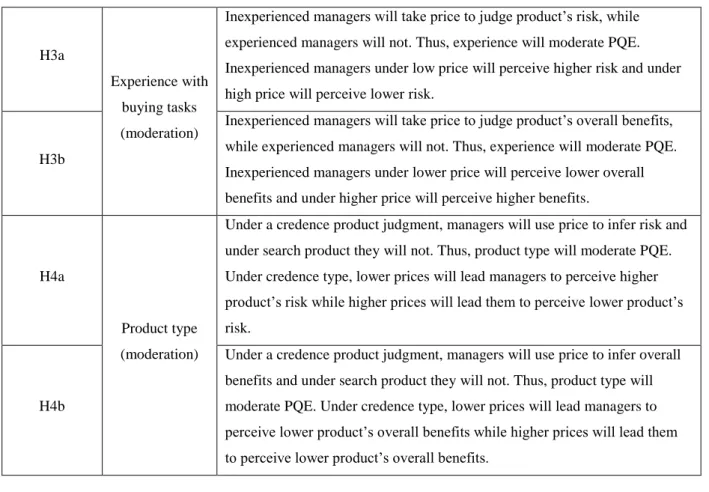
Table 3 summarizes the above discussed hypotheses identifying the ones related to the moderation role in PQE and the main effect:
Table 3 – Hypotheses’ Summary
Hypotheses Variable & Interaction Type Description H1a Price (main effect)
Lower prices will lead managers to perceive higher product’s risk while higher prices will lead them to perceive lower product’s risk.
H1b Lower prices will lead managers to perceive lower overall benefits while
higher prices will lead them to perceive higher overall benefits.
H2a
Decision Importance (moderation)
In less important decisions price will be used by managers to judge product’s risk. In important decisions, managers will not use price to judge product’s risk. Thus, decision importance will moderate PQE. Under less important decisions, lower prices will signal higher risk and higher prices will signal lower risk.
H2b
In less important decisions price will be used by managers to judge product’s overall benefits. In important decisions, managers will not use price to judge product’s overall benefits. Thus, decision importance will moderate PQE. Under less important decisions, lower prices will signal lower overall benefits and higher prices will signal higher overall benefits.
35
H3a
Experience with buying tasks (moderation)
Inexperienced managers will take price to judge product’s risk, while experienced managers will not. Thus, experience will moderate PQE. Inexperienced managers under low price will perceive higher risk and under high price will perceive lower risk.
H3b
Inexperienced managers will take price to judge product’s overall benefits, while experienced managers will not. Thus, experience will moderate PQE. Inexperienced managers under lower price will perceive lower overall benefits and under higher price will perceive higher benefits.
H4a
Product type (moderation)
Under a credence product judgment, managers will use price to infer risk and under search product they will not. Thus, product type will moderate PQE. Under credence type, lower prices will lead managers to perceive higher product’s risk while higher prices will lead them to perceive lower product’s risk.
H4b
Under a credence product judgment, managers will use price to infer overall benefits and under search product they will not. Thus, product type will moderate PQE. Under credence type, lower prices will lead managers to perceive lower product’s overall benefits while higher prices will lead them to perceive lower product’s overall benefits.
As can be noticed above, all hypotheses related to product’s perceived risk are the “a” ones. Hypotheses related to overall benefits are the “b” ones. Hypotheses 1 a and b refer to the main effect of price on perceived risk and overall benefits respectively. Hypotheses 2 to 4 refer to the moderate variables. The Figure 1 illustrates the interaction among the variables from the above developed hypotheses:
Figure 1 – Conceptual Interaction Frame
price decision importance buyers´ experience at buying tasks product´s type perceived risk overall benefits
H2a H2b H3a H3b H4a H4b
H1a
36 Thus, according to the hypotheses above, if proposed moderators all work
simultaneously, and not affecting each other, but only affecting PQE itself, the heuristics of price on judgment will manifest itself at its strongest level of intensity in a context of a (i) low importance decision, (ii) with an unexperienced manager who is judging a (iii) credence type of product. In this context, lower price offerings will be perceived with highest risk and lowest overall benefits. Higher price offerings will be perceived with lowest risk and highest overall benefits. PQE heuristic will not manifest itself in a context of a (i) very important decision, (ii) with an experienced manager who is judging a (iii) search type of product. In this context, managers will judge product’s risk and benefits regardless price changes. Their assessment, in this context, of product’s risk and overall benefits, will not change even if prices are changed so. Managers will form their judgment independent of price (resembling the rational manager describe in theory of choice, reference for B2B price literature).
37
CHAPTER 3 – METHOD
3.1 Research Method
This research’s purpose is to investigate the effect of price on product’s perceived risk and overall benefits, as well as to identify the variables that can moderate this effect. Considering this purpose and hypotheses proposed above, a partially controlled experiment design was chosen as the research method in order to manipulate product price, decision importance and product type to determine their effect on product’s perceived risk and overall benefits. This study will not be a fully controlled experiment because one moderate variable (Experience at Buying Tasks) will be measured and not manipulated. Experimental design methods allow to manipulate independent variables to test their effect on dependent variables (Crano & Brewer, 2014), thus it is the suitable research method to answer the research question which is verify if managers take price to infer product’s perceived risk and overall benefits and to identify moderate variables.
3.2 General Design & Sampling Method
A laboratory experiment was undertaken to test the above hypotheses with organizational decision makers. The experiment design was a 2 (high price vs. low price) x 2 (important decision vs. unimportant decision) x 2 (experienced managers x unexperienced managers) x 2 (search good vs. credence good). Price and product’s type (search vs. credence) were manipulated in a between subject design. Decision importance was manipulated in a within subject design. Subjects’ experience in buying task was measured, not manipulated. So, the main independent variable was (i) price and dependent variables were (i) product’s perceived risk (as the probability inference of adverse outcomes due to product’s choice) and (ii) product’s overall benefits level. The independent moderate variables were (i) decision importance; (ii) experience at buying tasks and (iv) product type.
Around 700 managers (from different areas, working in different organizations) received in their personal or professional e-mails accounts, an invitation to participate in the research. A contact database from a management consulting company (SBK Business) was used for this
38 purpose. This database was composed of a diverse set of organizations, with different sizes, markets, segments, sectors, regions, products and country of origin. The invited participants were also asked to forward the research link to their own network of contacts, from inside and outside their organizations, in a snowball process to enlarge the sample. Many of them followed this request contributing to expand the sample invitation (and actual sample size). Also, a professional social media was used to recruit participants. An invitation post was placed in an academic research web forum for business supply issues. The invitation post asked managers (members who participate in that web forum), to take part in the research. The snow ball process to spread the research link as well as the professional social media post have entailed sample variety decreasing any eventual sample bias risk. Since only willing to participate managers eventually engaged at the research, convenience was used. In three weeks of data gathering, 271 subjects participated in. Since each of them assessed two different decisions (high vs low importance), study’s total data points are 542.
Research’s target group was any manager (from any managerial area), or any entrepreneur, who participate, anyhow, in purchase activities. Research invitation clearly stated this target audience for this study. Three probe questions were undertaken, as filters, to guarantee that sample was not contaminated with outsiders from the target group (for more details about the research instrument, see appendix A – Research Instrument). These three probe question’s goal was to assure that sample formed a homogeneous group regarding the study’s target audience stated above (managers and entrepreneurs). After the consent term, subjects had to recall a purchase decision which they had participated recently. That was the first probe question, a recall probe question. They had to fill the product or service that was being purchased, the year and the criteria that were used in that particular decision. Subjects had also to declare their job title and their age, respectively second and third probe questions. Job titles such as analyst, managers, directors, consultants, supervisors, owners, CEOs, VPs, buyers, salesmen, among others, were accepted. Job titles such as intern, assistant, operator would mean elimination from the sample. However, no subject reported to have less than 18 years old, nor reported any job positions that meant to be discarded. That was a sign that research invitation might have worked well to drive out outsiders from the target group. As many as 118 participants applied at the research link but did not fill the recall question, ending their participation at that point. Probably, a fraction of those participants realized that they did not have any experience at all to report, which would make them an outsider from the study’s target group. The sample has been externally formed by a homogeneous group of manager, since all subjects are managers or