Genetic stability in synthetic wheat accessions: cytogenetic evaluation as a
support in breeding programs
Estabilidade genética em acessos de trigos sintéticos: avaliação citogenética como apoio em programas de melhoramento genético
Patrícia Frizon1 Sandra Patussi Brammer2* Maria Imaculada Pontes Moreira Lima2 Ricardo Lima de Castro2 Carolina Cardoso Deuner1
ISSNe 1678-4596
INTRODUCTION
Wheat (Triticum aestivum L.) is a staple food grain that will play an increasingly important role as human populations continue to grow. Wheat plant originated millions of years ago from the natural hybridization between two diploid species, Triticum
urartu Gandylian and Aegilops speltoides Á. Löve, creating the tetraploid wheat Triticum dicoccoides Schrank. About 10,000 years later, the domestication of this cereal had contributed to the evolution of Triticum durum Desf., which was hybridized with the wild species Aegilops tauschii Coss to produce the hexaploid wheat T. aestivum (AABBDD) (MUJEEB-KAZI et al., 1996).
1Universidade de Passo Fundo (UPF), Passo Fundo, RS, Brasil.
2Empresa Brasileira de Pesquisa Agropecuária (Embrapa Trigo), Passo Fundo, RS, Brasil. E-mail: [email protected].
ABSTRACT: Synthetic wheat is developed by crossing tetraploid species (Triticum turgidum, AABB) with a diploid species (Aegilops
tauschii, DD), followed by chromosome duplication through the use of colchicine to restore the resultant sterile hybrid to a fertile hexaploid
plant. The main importance of producing synthetically improved wheat is to increase their genetic variability and to incorporate genes that code for resistance to biotic and abiotic stressors. This study aimed to evaluate the presence of micronuclei (MN) and the meiotic index (MI) in the tetrad phase in synthetic wheat accessions and cultivars (Triticum aestivum) stored at the Germplasm Bank of Embrapa Trigo (Brazil), in order to identify and select genetically stable accessions for plant improvement. Five plants were collected by genotype, prior to anthesis, and
the tissues were fixed in Carnoy solution. Cytological slides were prepared by the smash method, and the cells were dyed with 1% acetocarmine
and observed under an optical microscope. Presence of MN was observed in all genotypes analyzed, and variability of genetic stability was
reported in the two years of analysis. In 2014, the highest MI of synthetic wheat accessions was 96.86% and the lowest was 46.32%. In 2015, the highest MI was 96.60% and the lowest was 47.96%. Based on the results, some genotypes were considered meiotically stable and suitable
for use in wheat breeding programs.
Key words: Aegilops tauschii, meiotic index, micronuclei.
RESUMO: Trigos sintéticos são resultados do cruzamento entre uma espécie tetraploide (Triticum turgidum, AABB) e uma espécie diploide
(Aegilops tauschii, DD) originando um híbrido estéril, seguido por duplicação cromossômica, por meio de colchicina, para restabelecer
um trigo hexaploide fértil. A principal importância do uso de trigos sintéticos no melhoramento é que possibilitam aumentar a variabilidade genética, bem como introgredir genes de resistência a estresses bióticos e abióticos. O presente estudo teve como objetivo avaliar a presença
de micronúcleos (MCN) e índice meiótico (IM) na fase de tétrades, em acessos de trigos sintéticos e cultivares testemunhas (T. aestivum),
armazenadas no Banco de Germoplasma da Embrapa Trigo, a fim de selecionar os acessos estáveis geneticamente e disponibilizar ao melhoramento. Cinco plantas por genótipos, na fase anterior à antese, foram coletadas e fixadas em solução Carnoy. As lâminas citológicas foram preparadas pelo método de maceração e a coloração das células com carmim acético 1%. As observações foram em microscópio óptico. Observou-se a presença de micronúcleos em todos os genótipos analisados e foi encontrado variabilidade quanto à estabilidade genética nos dois anos de análises. Em 2014, o percentual máximo de IM dos acessos de trigos sintéticos foi de 96,86% e o mínimo de 46,32%. Em 2015, o percentual de IM máximo foi de 96,60% e o mínimo de 47,96%. Com base nos resultados, alguns genótipos foram considerados meioticamente estáveis e, poderão ser utilizados em programas de melhoramento genético de trigo.
Palavras-chaves: Aegilops tauschii, índice meiótico, micronúcleo.
Synthetic hexaploid wheat plants are
produced by artificial crossbreeding between tetraploid
species, such as Triticum turgidum (genome AABB, 2n = 28), and the diploid wild relative Ae. tauschii (genome DD, 2n = 14), and successively undergoing chromosome doubling with colchicine to create a hexaploid genome (AABBDD) (TRETHOWAN & VAN GINGEL, 2009). The genetic diversity reported in the D genome of Ae. tauschii is much higher than that in the common wheat (REIF et al., 2005; NAGHAVI & MARDI, 2010).
Cytogenetic studies compare wild and cultivated populations on the basis of their chromosome characteristics during cell division. Regardless of an adequate supply of germplasm, breeding programs required knowledge of the reproductive mode, number of chromosomes, and meiotic behavior within and between compatible species in order to select strains for crossbreeding (MENDES-BONATO et al., 2006). Wild and crossbred plants have variable meiotic behavior among genotypes. As such, genotypes may be anomalous (e.g., produce micronuclei (MN)) in the meiotic and post-meiotic phases, resulting in limited fertility of the male gametes (DAMASCENO JUNIOR et al., 2010).
Calculation of the meiotic index (MI) is a simple procedure for evaluating the regularity of the meiotic process, and since it is a quick cytological technique, the degree of meiotic stability is readily reported (LOVE, 1951). In this context, this study evaluated the genetic stability of synthetic wheat accessions stored at the Active Germplasm Bank (BAG) of the Empresa Brasileira de Pesquisa Agropecuária (Embrapa Trigo), Passo Fundo, RS, Brazil, by analyzing the MN and MI, in order to identify superior accessions for use in crossbreeding programs aiming to increase genetic variability and diversity, as well as to introgress genes with resistance to biotic and abiotic stressors.
MATERIALS AND METHODS
Twenty synthetic wheat accessions from the International Maize and Wheat Improvement Center (CIMMYT, Mexico) were evaluated and stored at the BAG of Embrapa Trigo; namely, CIGM88.1351-OB, CIGM90.896, CIGM90.909, CIGM92.1629, CIGM92.1666, CIGM92.1680, CIGM92.1696, CIGM92.1698, CIGM92.1706, CIGM92.1713, CIGM92.1849, CIGM93.200, CIGM93.205, CIGM93.225, CIGM93.268, CIGM93.294, CIGM93.298, CIGM93.302, CIGM93.403, and CASW94Y00054S. Six
traditional varieties of wheat also stored at the BAG were witness cultivars; namely, ‘BR 18 Terena’, ‘BRS Guamirim’, ‘BRS 194’, ‘BRS 179’, ‘Frontana’, and ‘Sumai 3’. The test was carried out
in an experimental field of Embrapa Trigo (latitude 28° 15′ 46′′ S, longitude 52° 24′ 24′′ W, and altitude
684m) in 2014 and 2015.
Cytogenetic analyses were performed in the Laboratory of Biotechnology, Cytogenetic Department at Embrapa Trigo. The randomized block design included 26 treatments and three replications. Each genotype was sown in a part composed of a 5-m line with 60 suitable seeds per linear meter. The test was carried out according to the wheat and triticale production manual (REUNIÃO, 2014).
Five ears of wheat per genotype (treatment) were randomly collected prior to anthesis. The ears
were fixed in Carnoy fixative (absolute ethanol:glacial
acetic acid, 3:1), for 24 hours at room temperature, and stored in 70% ethanol at -20°C. Slides were prepared for cytological evaluation using three anthers of a same
flower and the medial portion of an ear. The anthers were
crushed and stained with 1% acetocarmine. Variables analyzed were normal tetrads and presence of MN.
Each treatment was carried out with five replicates; an ear and a slide represented each repetition. The first
200 entire tetrads were counted and analyzed for the presence or absence of MN. A Zeiss Axio Lab optical
microscope (×400 magnification) and Pinnacle Studio
Plus software were used for the analysis.
The MI was calculated according to LOVE (1949), where MI = (number of normal tetrads/ number of tetrads analyzed) × 100. Cultivars for which the MI was >90% were considered meiotically stable. In 2014, the accession CIGM92.1629 was not statistically analyzed for tetrads with MN and MI, because the tetrad phase was not reported. In 2015, however, this genotype was statistically analyzed. After angular transformation (arcsine square root of the proportion) and checking variance homogeneity with the Cochran test at 1%, statistical analysis was performed using the software Genes (CRUZ, 2013),
first by analysis of variance and then with the
Scott-Knott test at 5% probability.
RESULTS AND DISCUSSION
Analysis of variance of the 2014 and 2015
test results showed significant differences between
treatments with respect to the presence of MN and the
MI, according to the F-test at a significance level of 5%
(Table 1 and 2). Pearson’s product-moment correlation
the magnitude of the correlation coefficient may indicate the importance of the genotype‒environment interaction
effect, taking into account differences in environmental conditions between years (interaction effect year versus genotype). It is noteworthy to point out the genotypes that outperformed in both years of evaluation.
In 2014, the variable grain with MN formed three statistically different groups (Table 3). Twenty-one wheat genotypes showed tetrads with <20% MN (group C). Two synthetic wheat accessions showed between 30% and 40% MN (group B), and another two accessions had between 50% and 55% (group A). The MI of 21 genotypes, including witness cultivars and synthetic wheat accessions, showed a percentage of >80% (group A). However, only two accessions had a MI of <70% in group B, and two accessions had a MI of <50% in group C.
In 2015, the variability in the MN and MI percentages of tetrads was higher. With regard to the
MN percentages, four groups were distinct. The first
group (group A) had genotypes with >40% MN; the second group (group B) had genotypes with between 25% and 31% MN; and the third group (group C) had genotypes with between 10% and 25% MN (Table 4). Genotypes with minor abnormalities below these values were grouped into group D. For the MI, 15 accessions had a value >90% (including six cultivars from group A), seven accessions had a value between 89% and 75% (Group B), two accessions had a value between 75% and 70% (Group C), and two accessions had values of <60%.
In 2014 and 2015, six witness cultivars were in the group with superior MI values. However, synthetic wheat accessions with higher MI had different MI values. In 2014, accession Table 1 - Analysis of variance and Pearson correlation coefficients for the presence of micronuclei in 2014 and 2015, Embrapa Trigo, Passo
Fundo/RS.
---ANOVA MN 2014--- ---ANOVA MN 2015---
FV GL SQ QM F GL SQ QM F
Treatments 24 420,07017 17,5029 7.9268** 251 3,9155 0,156618 12,1147**
Residue 100 220,8083 2,20808 104 1,3445 0,012928
Total 124 640,8785 129 5,2599
Mean 2,92808 0,33304
CV (%) 50,7486 34,1408
r=0.52
r = correlation coefficient of Pearson at 5% probability.
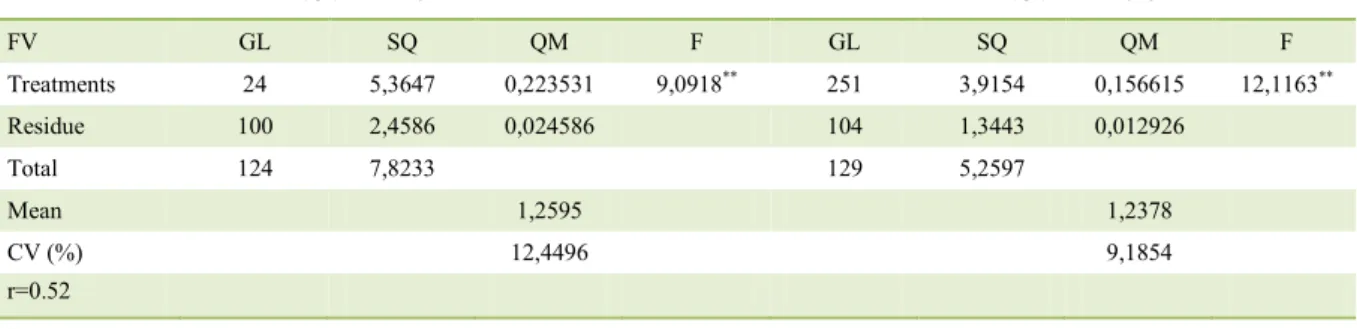
Table 2 - Analysis of variance and Pearson correlation coefficients for meiotic index in 2014 and 2015, EmbrapaTrigo, Passo Fundo/RS.
---ANOVA MI 2014--- ---ANOVA MI 2015---
FV GL SQ QM F GL SQ QM F
Treatments 24 5,3647 0,223531 9,0918** 251 3,9154 0,156615 12,1163**
Residue 100 2,4586 0,024586 104 1,3443 0,012926
Total 124 7,8233 129 5,2597
Mean 1,2595 1,2378
CV (%) 12,4496 9,1854
r=0.52
CIGM93.403 had a MI of 96.86%, and in 2015 accession CIGM93.294 had a MI of 96.60%. This study found MN in all the genotypes. In a study with synthetic wheat accessions, MN were the major abnormality reported in dyad and tetrad genotypes (REZAEI et al., 2010).
MN may be defined as structures
resulting from entire chromosomes or chromosome fragmentation that are lost in cell division, and; therefore, are not included in the nuclei of daughter cells, remaining in the cytoplasm of interphase cells (HEDDLE, 1973). During telophase, the nuclear envelope is formed around the entire chromosome or missing chromosome, which decondenses and gradually takes on the morphology of the interphase nucleus, except for size (since it is much smaller than its core, hence the name “micronucleus”) (FENECH, 2000). These abnormalities in hexaploid synthetic
wheat species, which undergone high genotype‒
environment interactions (REZAEI et al., 2010).
Cytomixis, which is the migration of genetic material, gene products, and organelles among meiocytes through cytoplasmic connections or cytomictic channels (FALISTOCCO et al., 1995), may cause MN formation, especially when associated with prophase (BOLDRINI, PAGLIARINI& VALLE, 2006).
A possible explanation for the high rates of MN in synthetic wheat is; however, because this
germplasm results from artificial hybridization.
In addition, the synthetic wheat genome is a combination of T. turgidum × Ae. tauschii (REZAEI et al., 2010), causing the meiotic cycle to vary in different genomes, which may cause meiotic instability (OETTLER, 2005).
In addition to these genetic reasons, abiotic factors may also cause the fragmentation of the genetic material, producing cells with MN (DIEGUES et al., 2015). Although cellular repair mechanisms
are efficient, MN formation is due to chromosomal
Table 3 - Cytogenetic evaluation in accessions of synthetic wheats and control cultivars: percentage of tetrad with micronucleus (MN) and meiotic index (IM) in 2014, Embrapa Trigo, Passo Fundo/RS.
Genotype MN Group Genotype IM Group
CIGM92.1706 55,46 a BRS 179 98,98 a
CIGM93.268 53,68 a BRS Guamirim 97,96 a
CIGM93.205 38,10 b Sumai 3 97,58 a
CIGM92.1680 30,20 b CIGM93.403 96,86 a
CIGM90.896 19,20 c CIGM92.1666 96,68 a
CIGM93.294 18,96 c Trigo BR 18 96,56 a
CIGM93.302 13,44 c CIGM93.298 96,34 a
CIGM90.909 12,96 c CASW94Y00054S 96,12 a
CIGM93.200 11,56 c BRS 194 94,70 a
CIGM93.225 10,50 c CIGM92.1696 94,08 a
Frontana 10,28 c CIGM88.1351-OB 92,82 a
CIGM92.1849 09,36 c CIGM92.1698 91,80 a
CIGM92.1713 09,28 c CIGM92.1713 90,72 a
CIGM92.1698 08,20 c CIGM92.1849 90,64 a
CIGM88.1351-OB 07,18 c Frontana 89,72 a
CIGM92.1696 05,92 c CIGM93.225 89,50 a
BRS 194 05,30 c CIGM93.200 88,44 a
CASW94Y00054S 03,88 c CIGM90.909 87,04 a
CIGM93.298 03,66 c CIGM93.302 86,56 a
Trigo BR 18 03,44 c CIGM93.294 81,04 a
CIGM92.1666 03,32 c CIGM90.896 80,80 a
CIGM93.403 03,14 c CIGM92.1680 69,82 b
Sumai 3 02,42 c CIGM93.205 61,90 b
BRS Guamirim 02,04 c CIGM93.268 46,32 c
BRS 179 01,02 c CIGM92.1706 44,54 c
abnormalities, often related to environmental factors (MAJER et al., 2001).
In 2014, for example, a synthetic wheat accession with higher MN percentage was CIGM92.1706 (55.46%), which was collected for tetrad analysis in the second half of October, when the minimum and maximum temperatures and relative humidity were above normal. Likewise, in 2015, synthetic wheat accessions with a higher MN percentage (group A) were those undergoing the tetrad phase at the end of October, when the average minimum and maximum temperatures and relative humidity were again above normal. The relative humidity was 9.6% above normal for that month.
Relative humidity variations may affect MN formation in the tetrad phase (SPÓSITO et al., 2015). In a study with wheat, OMIDI et al. (2014) noted that varieties had the lowest amounts of abnormalities in normal environmental conditions.
Several varieties had significant increases in meiotic
changes as the temperature increased.
Accessions with a high incidence of MN are not recommended for use in crossbreeding, since the material contained in these MN may ultimately
influence gene expression in nuclear ribosomal
DNA, mitochondrial DNA, and chloroplast DNA. This fact may also cause very important evolutionary implications, alter the variability of produced meiospores, and have an effect on the viability and ploidy level of pollen grains (DIEGUES et al., 2015). In this study, the MN percentage in group C averaged 7.86%, the lowest in 2014. In 2015, group D had an average of 6.06% MN. Other MN patterns, lower than those reported in this study, have already been found in synthetic wheat accessions. This may
be a further indication of environmental influences,
since the characteristics of the evaluated sites differed greatly.
Table 4 - Cytogenetic evaluation in accessions of synthetic wheats and control cultivars: percentage of tetrad with micronucleus (MCN) and meiotic index (IM) in the year 2015, Embrapa Trigo, Passo Fundo/RS.
Genotype MN Genotype MI
CIGM90.896 52,04 a BRS 179 99,54 a
CIGM92.1629 43,62 a Trigo BR 18 97,06 a
CIGM93.268 30,38 b CIGM93.294 96,60 a
CIGM93.205 26,94 b Frontana 96,20 a
CIGM92.1696 22,50 c BRS Guamirim 96,08 a
CIGM92.1680 16,66 c CIGM93.302 95,84 a
CIGM88.1351-OB 15,42 c CIGM92.1713 95,30 a
CIGM92.1698 14,58 c CASW94Y00054S 92,50 a
CIGM90.909 14,08 c CIGM92.1849 92,50 a
CIGM92.1706 12,74 c BRS 194 92,04 a
CIGM93.298 11,58 c CIGM92.1666 91,56 a
Sumai 3 09,36 d CIGM93.200 91,14 a
CIGM93.225 09,02 d CIGM93.403 91,12 a
CIGM93.403 08,88 d CIGM93.225 90,98 a
CIGM93.200 08,86 d Sumai 3 90,64 a
CIGM92.1666 08,44 d CIGM93.298 88,42 b
BRS 194 07,96 d CIGM92.1706 87,26 b
CIGM92.1849 07,50 d CIGM90.909 85,92 b
CASW94Y00054S 07,50 d CIGM92.1698 85,42 b
CIGM92.1713 4,70 d CIGM88.1351-OB 84,58 b
CIGM93.302 4,16 d CIGM92.1680 83,34 b
BRS Guamirim 3,92 d CIGM92.1696 77,50 b
Frontana 3,80 d CIGM93.205 73,06 c
CIGM93.294 3,40 d CIGM93.268 69,62 c
BR 18 Terena 2,94 d CIGM92.1629 56,38 d
BRS 179 0,46 d CIGM90.896 47,96 d
With regard to the MI, 15 out of the 19 synthetic wheat accessions were in group A, which was the group with superior MI percentages in 2014 (average 90.63%). Four genotypes were in the second and third groups (B and C), with an average MI of <70%. In 2015, nine synthetic wheat accessions in group A had an average MI of 93.13%. Seven accessions in group B had an average MI of 84.63%. Four synthetic accessions of the remaining two groups had an average MI of <72.5%. Genotypes with a MI of <90% may result in reproductive issues when involved in crossbreeding, because they are considered cytogenetically unstable, and this may ultimately make
chromosome pairing difficult (LOVE, 1951).
Both in 2014 and 2015, the wheat cultivar ‘BRS 179’ had maximum MI and minimum MN percentages. The average MI in cultivars was 95.91% and 95.26% in 2014 and 2015, respectively, both in group A. Comparatively, studies with species of the Caricaceae family had higher MI percentages in cultivated than in wild species (DAMASCENO JUNIOR et al., 2010). The MI of 19 genotypes of synthetic wheat accessions ranged from 44.54% to 96.86% in 2014. In 2015, the maximum and minimum MI of synthetic wheat was 96.60% and 47.96%, respectively. In both years, variability of the genetic stability of the wheat products was noted. In an Iranian study with synthetic wheat accessions, the lowest MI was 99% (ARABBEIGI et al., 2010).
When interspecific hybrids are the object
of study, such as synthetic wheat, it is essential to know the meiotic behavior of the species before using them in crossbreeding. The meiotic behavior in plants is related to their degree of fertility, and formation of functional gametes is controlled by genes that guarantee a normal meiotic process (PAGLIARINI,
2000). The identification of more stable genotypes
using cytological analysis; therefore, permits both the planning of seed production of cultivars to be launched, and support their potential use to produce new wheat populations (POZZOBON et al., 2011).
CONCLUSION
This study found variability (due to genetic and environmental factors) in the genetic stability of synthetic wheat accessions in both years that the experiment was carried out. Thus, only meiotically stable genotypes should be incorporated in crossbreeding studies involving hybridization, with the aim to increase the genetic variability of wheat plants and introgression of genes with resistance to biotic and abiotic stressors.
ACKNOWLEDGEMENTS
Universidade de Passo Fundo (UPF), Fundação de Amparo à Pesquisa do Estado do Rio Grande do Sul (FAPERGS), Empresa Brasileira de Pesquisa Agropecuária (EMBRAPA TRIGO).
REFERENCES
ARABBEIGI, M. et al. Meiotic behavior of wild, synthetic and cultivated wheats. Cytologia, Tokyo, v. 75, p. 169-175, 2010. Available from: <https://www.jstage.jst.go.jp/article/ cytologia/75/2/75_2_169/_pdf>. Accessed: Jan. 12, 2016. doi: 10.1508/cytologia.75.169.
BOLDRINI, K. R. et al. Cell fusion and cytomixis during microsporogenesis in Brachiaria humidicola (Poaceae). South African Journal of Botany, Scottsville, v. 72, p. 478-481, 2006. Available from: <http://ac.els-cdn.com/S025462990600038X/1-s2.0-S025462990600038X-main.pdf?_tid=f26caf5e-eb79-11e5b454000 00aab0f01&acdnat=1458134649_129739d109a99edb603d1fca47 8c2497>. Accessed: Nov. 15, 2015. doi: 10.1016/j.sajb.2005.11.004.
CRUZ, C. D. GENES - a software package for analysis in experimental statistics and quantitative genetics. Acta Scientiarum, Maringá, v. 35, p. 271-276, 2013. Available from: <http://periodicos.uem.br/ojs/index.php/ActaSciAgron/article/ view/21251/pdf_1>. Accessed: Oct. 12, 2015. doi: 10.4025/ actasciagron.v35i3.21251.
DAMASCENO JUNIOR, P. C et al. Meiotic behavior of Carica
papaya and Vasconcelle amonoica. Caryologia, Firenze, v. 63,
p. 229-236, 2010. Available from: <http://www.tandfonline.com/ doi/s/10.1080/00087114.2010.10589732#aHR0cDovL3d3dy50Y W5kZm9ubGluZS5jb20vZG9pL3BkZi8xMC4xMDgwLzAwMD g3MTE0LjIwMTAuMTA1ODk3MzJAQEAw>. Accessed: Sept. 14, 2015. doi: 10.1080/00087114.2010.10589732.
DIEGUES, P. I. et al. Meiotic behavior and pollen viability in the species Jatropha curcas L. Ciências Agrárias, Londrina, v. 36, p. 141-150, 2015. Available from: <http://www.uel.br/revistas/uel/ index.php/semagrarias/article/view/14926/16036>. Accessed: Oct. 17, 2015. doi: 10.5433/1679-0359.2015v36n1p141.
FALISTOCCO, E.et al. Cytomixis in pollen mother cells of diploid Dactylis, one of origins of 2n gametes. Journal of Heredity, Washington, v. 86, n. 6, p. 448-453, 1995.
FENECH, M. The in vitro micronucleus technique. Mutation Research, Amsterdan, v. 455, p. 81-95, 2000. Available from: <http:// ac.els-cdn.com/S0027510700000658/1-s2.0-S0027510700000658-main.pdf?_tid=3acd9d06-eb7c-11e5-896500000aacb35e&acdn at=1458135630_cb3a7cbb2adfcae4030dc024f7af08f0>. Accessed: Nov. 18, 2015. doi: 10.1016/S0027-5107(00)00065-8.
HEDDLE, J. A. A rapid in vitro test for chromosomal damage. Mutation Research, Amsterdam, v. 18, n. 2, p. 187-190, 1973. Available from: <http://ac.els-cdn.com/0027510773900353/1- s2.0-0027510773900353-main.pdf?_tid=a6b678f8-eb7c-11e5-a01c-00000aacb35f&acdnat=1458135811_0cdaf8406ffac2239f a62b20d7972bdc>. Accessed: Nov. 22,2015. doi: 10.1016/0027-5107(73)90035-3.
MAJER, B. J. et al. Use of the micronucleus assay with exfoliated epithelial cells as a biomarker for monitoring individuals at elevated risk of genetic damage and in chemoprevention Trials. Mutation Research, Amsterdam, v. 489, p. 147-172, 2001. Available from: <http://ac.els-cdn.com/S1383574201000680/1- s2.0-S1383574201000680-main.pdf?_tid=38f4fe0a-eb7e-11e5-bd3800000aacb35d&acdnat=1458136485_4963b0e96d72fd1 d5cca4f037ce017dc>. Accessed: Nov. 21, 2015. doi: 10.1016/ S1383-5742(01)00068-0.
MENDES-BONATO, A. B. et al. Chromosome number and meiotic behavior in Brachiaria jubata (Gramineae). Journal of Genetics,
Bengaluru, v. 85, p. 83-87, 2006. Available from: <file:///C:/Users/
citogenetica/Downloads/83%20(1).pdf>. Accessed: Nov. 18, 2015. doi: 10.1007/BF02728976.
MUJEEB-KAZI, A. et al. Conservation of the genetic variation of
Triticum tauschii in synthetic hexaploid wheats and its potential
utilization for wheat improvement. Genetic Resources and Crop Evolution, Dordrecht, v. 43, p. 129-134, 1996. Available from: <https://link.springer.com/article/10.1007%2FBF00126756#pa ge-1>. Accessed: Nov. 25, 2015. doi: 10.1007/BF00126756.
NAGHAVI, M. R.; MARDI, M. Characterization of genetic variation among accessions of Aegilops tauschii. Journal of Molecular Microbiology and Biotechnology, Switzerland, v. 18, p. 93-96, 2010. Available from: <http://www.msmbb.org. my/apjmbb/html181/181u.pdf>. Accessed: Nov. 29, 2015. doi: 10.1270/jsbbs.61.347.
OETTLER, G. The fortune of a botanical curiosity triticale: past present and future. Journal of Agricultural Science, Toronto, v. 143, p. 329-346, 2005. Available from: <https://www.researchgate. net/publication/231847496_The_fortune_of_a_botanical_ curiosity_Triticale_Past_present_and_future>. Accessed: Jan. 12 2016. doi: 0.1017/S0021859605005290.
OMIDI, M. et al. The influence of terminal heat stress on meiosis
abnormalities in pollen mother cells of wheat. Cytologia,Tokyo, v.
79, p. 49-58, 2014. Available from: <https://www.researchgate.net/
publication/289537748_The_Influence_of_Terminal_Heat_Stress_
on_Meiosis_Abnormalities_in_Pollen_Mother_Cells_of_Wheat>. Accessed: Dec. 18, 2015. doi: 10.13140/RG.2.1.2721.2887.
PAGLIARINI, M.Q.S. Meiotic behavior of economically important plant species: the relationship between fertility and male sterility. Genetics and Molecular Biology, Ribeirão Preto, v. 23, n. 4, p. 997-1002, 2000. Available from: <http://www.scielo.br/pdf/gmb/ v23n4/6262.pdf>. Accessed: Nov. 03, 2015. doi: 10.1590/S1415-47572000000400045.
POZZOBON, M. T. et al. Meiosis and pollen viability in advanced pepper strains. Horticultura Brasileira, Brasília, v. 29, p. 212-216, 2011. Available from: <http://www.scielo.br/pdf/hb/v29n2/ a13v29n2.pdf>. Accessed: Oct. 23, 2015.
REIF, J. C. et al. Wheat genetic diversity trends during domestication and breeding. Journal Theoretical and Applied Genetics, Warsaw, v. 110, p. 859-864, 2005. Available from: <https://link. springer.com/article/10.1007%2Fs00122-004-1881-8#/page-1>. Accessed: Oct. 25, 2015. doi: 10.1007/s00122-004-1881-8.
REZAEI, M. et al. Meiotic behaviour of tetraploid wheats
(Triticum turgidum L.) and their synthetic hexaploid wheat
derivates influenced by meiotic restitution and heat stress.
Journal of Genetics, Bengaluru, v. 89, p. 401-407, 2010. Available from: <https://link.springer.com/article/10.1007%2 Fs12041-010-0058-2#/page-1>. Accessed: Nov. 12, 2015. doi: 10.1007/s12041-010-0058-2.
SPÓSITO, J. C. V. et al. Genetic instability in plants associated
with vehicular traffic and climatic variables. Ecotoxicology and Environmental Safety, v. 120, p. 445-448, 2015. Available from: <http://ac.elscdn.com/S0147651315300014/1s 2 . 0 S 0 1 4 7 6 5 1 3 1 5 3 0 0 0 1 4 m a i n . p d f ? _ t i d = d c 7 3 b a 4 4 -e b 8 3 - 11 -e 5 - 9 5 b 4 0 0 0 0 0 a a c b 3 6 1 & a c d n a t = 1 4 5 8 1 3 8 9 0 7 _ b4d62e407cce0b363494e85bbab52ed0>. Accessed: Nov. 17, 2015. doi: 10.1016/j.ecoenv.2015.06.031.