M
ONOMATERIAL ECOLOGICAL BUILDINGS
,
WITH
M
OPATEL
®AND
E
COPIERRA
®CONCRETE
.
CASE STUDY
Livia MIRON
Scientific researcher II degree, Doctor of Civil Engineering, INCD URBAN INCERC Iasi Branch, HT Laboratory, e-mail: [email protected]
Constantin MIRON
Scientific researcher II degree, Doctor of CivilEngineering, INCD URBAN INCERC Iasi Branch, Manager of Iasi Branch, e-mail: [email protected]
Petrache TELEMAN
Senior engineer, Administator at EGM SA, Belgium, General Manager at SC MOPATEL PROIET Ltd, Romania, e-mail:[email protected]
Abstract. This paper presents a case study performed on a pilot building from Gainesti, Suceava county. The constructive system used is unique in that it employs a monomaterial, namely ecological concrete of type MOPATEL® or
ECOPIERRA®. These types of concrete, created by eng. Petrache Teleman,
possess international patents and have received awards in Brussels, but they are not yet used in Romania. These materials can be used integrally to make all the constructive elements of a building – load-bearing elements (floors, beams, pillars, walls) as well as the secondary elements of a partly finished building, such as screeds or non-load-bearing masonry. The constructive system also uses ecological mortars which integrally ensure the interior and exterior finishing. The final result is a building practically made from a single type of material, in which the effect of thermal bridges is reduced to a maximum. The MOPATEL and ECOPIERRA types of concrete have a mechanical resistance similar to regular concrete, but they also have superior thermal insulation qualities (between 0.09 and 0.28 W/mK), they are permeable to the transfer of water vapours from the interior to the exterior of the building, and, in certain compositions, they can also be considered waterproof.
Key words: Energy efficiency, healthy living, CO2 adsorption, durable
buildings, clean environment.
1. Introduction
As a complex policy challenge, support for eco-innovation requires a coordinated approach, most notably among innovation, research and environmental policy.
The implementation of eco-innovation measures has to be done in close collaboration between the factors involved in innovation, research and environmental
policy, and the innovation policy must deliver a set of objectives and a strategy shared by all concerned stakeholders. Environmental policy agencies will have to
cooperate more systematically with
innovation policy-makers. Equally,
Eco-innovation encompasses novel or
significantly improved solutions
introduced at any stage of the product or service life (‘from cradle to grave’). The
so-called ‘end-of pipe’ or curative
technologies are, however, the least efficient solutions from this point of view. Resource and energy efficiency becomes of key importance as preventive measures minimizing material inputs and decreasing levels of waste throughout the production and use process (Reid and Mieszinki, 2008; UNEP, 2010; CIOB Annual Review, 2010)
The idea of creating a building out a single material belongs to Edison, who patented it in 1917. Concrete prefabricated buildings meet the criteria of stability and resistance. However, their thermo-energetic response cannot be accepted under the new conditions imposed by the EPBD directive (2010/31/UE - recast) unless the base material is associated with other thermal insulation materials to ensure the required energy performance. Modern designers of concrete structures have been awakened to reality by NJIT (New Jersey Institute of Technology) Assistant Professor Matt Burgermaster who resurrected Edison’s idea in the scientific session Science
Daily (June 1st, 2011) at the 64th annual
meeting of the Society of Architectural
Historians (Burgermaster, 2011).
Edison invented a single-pour system for concrete construction as a novel application of this material's dynamic behaviour and speculated on its role in the development of a type of integrated building anatomy that, perhaps inadvertently, also invented the idea of a seamless architecture.
Originally motivated by the objective of providing a cost-effective prototype for the working-class home, this early experiment eventually entered mass-production.
Edison's 1917 patent proposed a building-sized mould that leveraged the intrinsically
dynamic capacity of concrete to form itself into a variety of shapes and sizes, limited only by the design of its framework.
The invention's potential efficiencies resided in the distribution of this material as a continuous flow through an entire building instead of being confined to the prefabrication of its constituent parts.
By physically integrating all interior and exterior building components and their
associated functions of structure,
enclosure, and infrastructure within a single, monolithic concrete cast, all aspects of assembly were eliminated.
This radical proposition - a seamless architecture - was built by Edison before it was conceptualized by the European avant-garde (such as Le Corbusier and the Bauhaus) with whom it later became associated.
Edison's approach to invention remains as radical today as it was a century ago. Professor Matt Burgermaster said, “my hope is that this 'lost' chapter in the early history of concrete construction will demonstrate that Edison not only left a mark on the field of architecture right here in our back-yard, but that his unique approach to design thinking offers a model for how today's architects and designers can add value to the process of technological problem-solving."
Superadobe (sandbag and barbed wire)
technology (US patent #5,934,027,
#3,195,445) (Cal - Earth The California Institute of Earth Art, 2013) is a large,
long adobe. It is a simple adobe, an
Fig. 1. Wall of Superadobe constructi on
Stabilizers such as cement, lime, or asphalt emulsion may be added. This technology is offered free to the needy of the world, and licensed for commercial use. This concept was originally presented by architect Nader Khalili to NASA for building habitats on the moon and Mars, as “Velcro-adobe”. It comes from years of meditation, hands-on research and development, and searching for simple answers to build with earth. The system can be used for structural arches, domes and vaults, or conventional rectilinear shapes. The same method can build silos, clinics, schools, landscaping elements, or infrastructure like dams, cisterns, roads, bridges, and for stabilizing
shorelines and watercourses. In
Superadobe, the ancient earth architecture of the Middle East using sun-dried mud bricks is fused with its portable nomadic culture of fabrics and tensile elements, not just through design and pattern, but through the structure itself. Structural design uses modern engineering concepts like base-isolation and post-tensioning. The innovation of barbed wire adds the tensile element to the traditional earthen structures, creating earthquake resistance despite the earth's low shear strength. The innovation of sandbags adds flood resistance, and easy construction, while the earth itself provides insulation and fire-proofing.
This constructive system can only be applied for small buildings, but it involves the use of a support material (usually a synthetic one) in order to make the base adobe.
We may state that, until today, there are
no known worldwide complete
construction systems which use a single type of material. In the most part of the
current systems, using different
components and materials, often
complementary, but sometimes opposite to the point that they must be separate by other materials, which means that the building as a whole presents itself as a set of heterogeneous materials. This often has a negative influence as much on the technical quality as on the overall construction cost. We see that the construction market is flooded by thousands of materials and
components harmful both for the health of the population and for the natural
environment and that this already costs
enormously (asbestos, for example). However, civil society does nothing to reduce the huge costs in terms of health insurance and remediation of sites.
These costs will only increase, since we will only know the harmful effect of such and such materials after a long period of time, as was the case with asbestos.
It is noted that the same findings have been made by many actors in the construction field and that they have tried
to introduce on the building market noble
materials such as wood (especially), clay,
limestone, and other stones.
However, their use has remained confined to the construction of individual houses, their cost of returns being more expensive than other systems.
2. Monomaterial constructive system
2.1. Description of the constructive system
respect to the health of those who will live in and use the buildings erected on its basis, as well as to the environment. The conception of the ecological building system is based on using a single type of material, which is an ecological concrete and mortar composite. This composite can be made in the entire range of densities and mechanical / energy characteristics, and it can be used for all
load-bearing, closing or finishing
elements necessary for the construction of a wide range of buildings: homes, social and cultural objectives, offices and so on.
From a financial point of view, the proposed integrated building system saves about 85-90% of the shuttering usually needed on construction sites.
Factored into the total cost of the concrete usually cast on construction sites, the saving of shuttering leads to a 35% drop of the final cost.
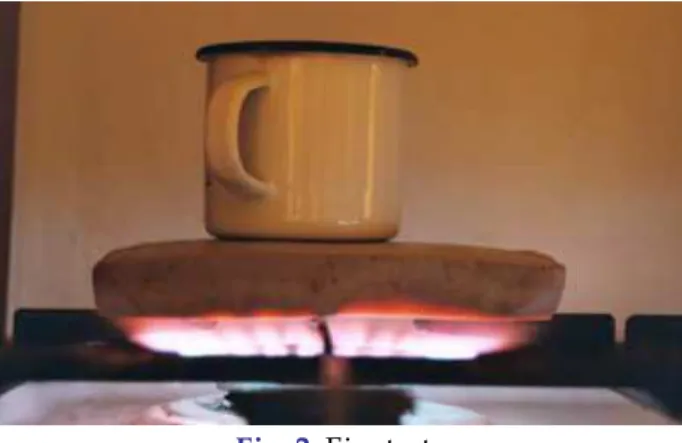
This ecological material, patented in a European Union country, Belgium (Teleman, 2006) through two inventions of engineer Petrache Teleman, mainly uses lime and natural wood residue of any kind, as well as other raw/natural materials, such as cork and clay pellets. It presents remarkable thermal and sound insulation qualities, it is ecologically durable, and it has antibacterial, permeable properties, etc. However, its most impressive and valuable quality is the capacity to absorb the polluting emissions from the atmosphere, which are represented by the carbon oxide compounds.
This material is composed entirely of noble
components, ecological construction
materials and possesses European patents (eng. Petrache Teleman) for 2 types of light and green concrete trademark names - MOPATEL and ECOPIERRA. MOPATEL and ECOPIERRA concrete types received gold and silver medals in the "construction
materials" category at the EUREKA 2003 Inventions Exhibition in Brussels and the certificate of merit at the EXPOCONSTRUCT show in May, 2004, in Bucharest.
2.2. Technical characteristics of Mopatel® and Ecopiera® concrete
The ecological ECOPIERRA® and
MOPATEL® concrete types are produced
in three ranges:
− Strong, with a density of 1.400 -1.700
kg/m3, whose main characteristic is
its high resistance to compression, its elasticity module being similar to that of light concrete.
− Medium, with a density of 1.100 -
1.400 kg/m3, having high mechanical
resistance and great sound and thermal proofing properties.
− Light, with a density of 800 - 1.000
kg/m3, mainly used as thermal and
sound insulating materials.
The MOPATEL® and ECOPIERRA® light
ecological concrete with thermo-insulating properties are resistant to fire, have good plasticity, good thermal and sound insulating qualities and ensure a resistance to tensile strength similar to that of classic concrete. They are characterized by a permeability similar to that of the air, allowing the elimination of condensed vapours and toxic gas. They can be coloured in any shade, which gives a clean look to walls made from this material so that they do not require any further finishing.
Table 1. Main technical characteristics of MOPATEL and ECOPIERA concrete
Characteristic – Unit of measure
Measured value
Executing Laboratory
Density - kg/m3
-ECOPIERRA® Strong 1235…1480 -ECOPIERRA® Medium 1200 -1400 - ECOPIERRA® Light 1000-1200 - MOPATEL® Strong 1100 -MOPATEL® Medium 870…920
- MOPATEL® Light 745…810
CSTC Belgium INCERC
Thermal conductivity
λ10 - W/mK
-ECOPIERRA® Strong 0,348 -ECOPIERRA® Medium 0,22..0,25 - ECOPIERRA® Light 0,17 …0,22 - MOPATEL® Strong 0,271..0,331 -MOPATEL® Medium 0,202.. 0,215
- MOPATEL® Light 0,09 ..0,160
INCERC
Resistance to compression - N/mm2
- ECOPIERRA® Strong 11,2 …22,56 - MOPATEL® Strong 9,037 .. 12,0 -MOPATEL® Medium 4,792..5,539
- MOPATEL® Light 0,533..1,022
CSTC Belgium,
ARGEX SA Belgium,
INCERC
Water absorption - %
ECOPIERRA® Strong 2,73 …3,97
ARGEX SA Belgium
Resistance to water
vap-our – MOPATEL® Strong 16.6..17.2
CSTC Belgium
2.3. Case study – pilot building
The inventor of these materials has erected an experimental building in Gainesti, Suceava using these types of concrete. The building functions as his production workshop. It was finished in the winter of the year 2011.
Fig. 3. Eureka Exhibition - 2003
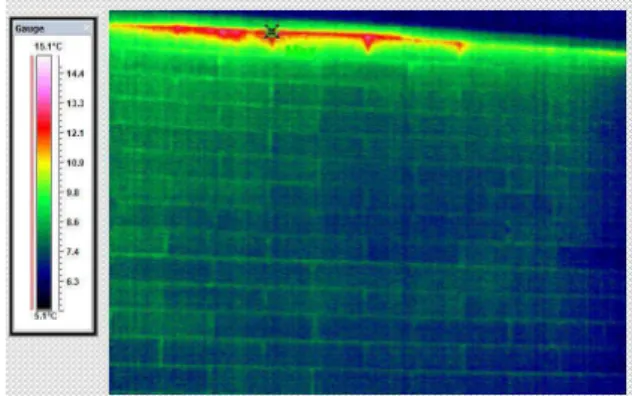
Fig. 4. Infrared image of the wall made from 40cm
Mopatel masonry blocks.
Fig. 5. Isotherms between 2.10 …3 0C black dots
and 3,10 …40 C blue dots
Fig. 6. Percentage distribution of tem peratures
on the sur face of the exter ior wall fr om 40cm Mopatel masonry blocks (Fig. 4, 5) (temperature
between 1.50C …4.50C – 78.9% fr om the total
surface )
We should mention that the measurement was conducted soon after the heating source of the building was also finalized. The homogenous quality of the building made with this constructive system is illustrated below by the thermal images captured during the study.
Fig. 7. Infrared image of the wall made from
20cm MOPATEL masonry blocks
Fig. 8. Isotherms between 60 …7 0C black dots
and 70 …80 C blue dots
Fig. 9. Percentage distribution of temperatures on
the surface of the exterior wall from 20cm Mopatel masonry blocks (Fig. 7, 8) (temperature between 5.5
0C …8.50C – 81.6% from the total surface)
As this is a pilot experimental building, the walls have been made from Mopatel Light masonry blocks with a thickness of 40cm and 20cm, using a mortar with identical composition.
3. Conclusion
In this monitoring stage, the measured values are not important as absolute values, since the measurement was made under conditions that do not involve reaching stationary regime parameters. The building continues to be monitored and the conclusions of the study will become available in the coming years. The workshop had been heated only for about a week, the average interior temperature
being of circa 12 0C, while the exterior
temperature was around -30C (minus
three Celsius degrees). The interior of the building had freshly plastered areas. The thermal imaging measurement has only a qualitative value, aiming to show the uniformity of the temperature field on the exterior wall made from MOPATEL 40cm masonry blocks of light concrete.
REFERENCES
Reid A., Mieszinki M. (2008), Final Report - Sectorial innovation watch in Europe eco-innovation, Systematic Eco – Innovati on Report, Brussels.
United Nations Environmental Programme (UNEP) (2010), Sustainable Build and Construction Initiative
CIOB- The Chartered Institute of building (2010), CIOB Annual Review 2010
Burgermaster M. (2011), Edison's "Single-Pour System: Inventing Seamless Architecture, 64th annual meeting of the Society of Architectural Historians, New Orleans, USA
*** Cal- Earth The California Institute of Earth Art and Architecture, California (2013), SUPERADOBE Technology for constructing Buildings, Landscape, Retaining walls, Flood and Erosion control, and infrastructure, http://calearth.org/building-designs/what-is-superadobe.html
Teleman P. (2006), PCT/BE2006/000048 – Patent for MOPATEL and ECOPIERA ecological concrete.