ISSN 0104-6632 Printed in Brazil
www.abeq.org.br/bjche
Vol. 33, No. 01, pp. 33 - 45, January - March, 2016 dx.doi.org/10.1590/0104-6632.20160331s20140258
*To whom correspondence should be addressed
Brazilian Journal
of Chemical
Engineering
EFFECTIVE ALKALINE PEROXIDE OXIDATION
PRETREATMENT OF SHEA TREE SAWDUST FOR
THE PRODUCTION OF BIOFUELS: KINETICS OF
DELIGNIFICATION AND ENZYMATIC
CONVERSION TO SUGAR AND SUBSEQUENT
PRODUCTION OF ETHANOL BY FERMENTATION
USING
Saccharomyces cerevisiae
A. O. Ayeni
1,2, J. A. Omoleye
2, F. K. Hymore
2and R. A. Pandey
1*1Environmental Biotechnology Division, National Environmental Engineering Research Institute,
Nehru Marg, Nagpur 440020 Maharashtra, India. Phone: + 917122240097; Fax: + 917122249961
*
E-mail: [email protected]; [email protected]
2
Department of Chemical Engineering, Covenant University, km 10 Idiroko Road, Canaan land Ota, Nigeria.
(Submitted: December 26, 2014 ; Revised: March 19, 2015 ; Accepted: April 15, 2015)
Abstract - Shea tree sawdust delignification kinetic data during alkaline peroxide pretreatment were investigated at temperatures of 120 °C, 135 °C, and 150 °C. The activation energy during delignification was 76.4 kJ/mol and the Arrhenius constant was calculated as 8.4 x 10⁶ per min. The reducing sugar yield for the treated to the untreated biomass was about 22-fold. Enzymatic hydrolysis conditions studied were; time (72 h and 96 h), substrate concentration (20, 30, 40, and 50 g/L), and enzyme loadings (10, 25, 40, 50 FPU/g dry biomass), which showed the optimum conditions of 96 h, 40 g/L, and 25 FPU/g dry biomass at 45 °C hydrolysis temperature. At the optimized enzymatic hydrolysis conditions, the reducing sugar yield was 416.32 mg equivalent glucose/g treated dry biomass. After 96 h fermentation of treated biomass, the ethanol obtained at 2% effective cellulose loading was 12.73 g/L. Alkaline peroxide oxidation pretreatment and subsequent enzymatic hydrolysis improved the ethanol yield of the biomass.
Keywords: Alkaline peroxide oxidation; Fermentation; Vitellaria paradoxa; Optimization; Pretreatment; Enzymatic hydrolysis.
INTRODUCTION
Bioenergy is a renewable resource because of the short life cycle compared to the fossil fuel alterna-tive. Plants and plant-derived materials (biomass) are important feed-stocks for lignocellulosic biofuels. The biomass cell wall structure is rigid and hard to
con-sist of four major chemical components: cellulose, lignin, hemicellulose, and extractives. In ethanol production from lignocellulose, it is necessary to remove the lignin and extractives from the wood, leaving primarily the wood polymer carbohydrates, cellulose and hemicellulose. There are bottlenecks for efficient ethanol production from lignocellulosic materials, among these the presence of lignin sur-rounding the cellulose acts as a physical barrier, re-ducing the available sites for enzymatic hydrolysis (Krishna and Chowdary, 2000; Kim and Lee, 2006). Lignin is responsible for the integrity, structural ri-gidity, and prevention of the swelling of lignocellu-loses. Lignin constitutes the most recognized factor that is responsible for the resistance of lignocellulo-sic materials to enzymatic degradation by limiting the enzyme accessibility. Alkaline peroxide oxidation pretreatment is one method that has been discovered to improve the accessibility of lignocellulosic bio-mass to cellulolytic enzymes (Kumar et al., 2009). This pretreatment approach has been studied exten-sively (Ayeni et al., 2013b; Wei and Cheng, 1985; Gould, 1984; Gould et al., 1989; Qi et al., 2009; Li
et al., 2013). Studies on cellulosic biomass delig-nification (lignin removal) usually involve two dif-ferent approaches, assuming that the lignocellulosic material contains one type of lignin, and that the material is composed of several species (usually initial, bulk, and residual lignin) dissolving at differ-ent rates (Kleinert, 1975; Springer, 1963). The most usual approach is to assume that the different lignin species react consecutively according to first-order kinetics. In the several species of lignin approach, the different phases observed during delignification correspond to changes in the mechanism that con-trols the reaction rate of the overall process (Parajó
et al., 1995; Vázquez et al., 1995). The chemical kinetics of alkaline pretreatment processes have been demonstrated in the scientific literature (Kleinert, 1966; Kim and Holtzapple, 2006). The Shea tree,
Vitellaria paradoxa, is rich in carbohydrate and lig-nin contents (Ayeni et al., 2014). The Shea tree, which furnishes a woody (hardwood) lignocellulosic material, is typically a savannah woodland tree spe-cies. This tree is small to medium-sized, 10–15 m tall with a diameter ranging from 0.3 to 1 m. It is native to African countries. It occurs on an estimated 1 million km2 between western Senegal and north-western Uganda. The exotic species is found in the Dominican Republic and Honduras (Sallé, 1991). The trunk of the Shea tree makes excellent charcoal and is favoured as a source of high quality wood fuel once the tree has passed the fruit bearing age (Kris-tensen and Lykke, 2003). The carbohydrates
(cellu-lose and hemicellu(cellu-lose) are suitable precursors for enzymatic hydrolysis conversion to fermentable sug-ars. The high lignin content also makes the Shea tree wood a suitable material to produce other fuels and chemicals. Lignin can also be burnt for its high heat-ing value (Ladisch, et al. 1979).
Previously (Ayeni et al., 2013b), we achieved up to 60% cellulose conversion, 80% hemicellulose solu-bilization, and 17% lignin removal with an alkaline peroxide assisted wet air oxidation (APAWAO) pre-treatment of Shea tree sawdust (under optimized conditions: reaction temperature of 150 °C, 45 min reaction time, 1% H2O2 (v/v), and 1.0 MPa air
pres-sure). This was compared to alkaline peroxide oxida-tion (APO) pretreatment (reacoxida-tion temperature of 150 °C, 45 min reaction time, 1% H2O2 (v/v)) with
53.86% cellulose conversion, 70% hemicellulose solubilization and 11% lignin removal. We also re-ported that the APAWAO conditions enhanced the enzymatic convertibility of treated samples to reduc-ing sugars from an initial 177.89 mg equivalent glu-cose/g dry biomass (APO conditions) to 263.49 mg equivalent glucose/g dry biomass. In this study, the kinetics of delignification were evaluated during the pretreatment APO process at three operating tem-peratures. The enzymatic convertibility (using cellu-lase and β-glucosidase enzymes and a 4-day hydroly-sis period) under the optimized pretreatment condi-tions (150 °C, 45 min, 1% H2O2 (v/v) and 1.0 MPa
air pressure) was investigated at varying dry biomass loadings of 2, 3, 4, and 5% with corresponding in-creases in enzyme loadings. Enzymatic conversions without β-glucosidase supplements were also con-sidered for hydrolysis at 45 °C for 4 days. Further-more, the ferment ability of the treated solids using simultaneous saccharification and fermentation meth-ods was evaluated.
MATERIALS AND METHODS
Raw Material
T 0 v te fi p 1 si ti sh ac an In β T b M ex E fo al V si w st ab up th ax p The average .09 to 0.51 ested raw m erial was car ine particles retreatment. 05 °C for 3 ieved materi ightly and ke
hortly after. cetone, calci nd were pur ndia, hydrog -glucosidase Trichoderma rown liquid) Mumbai, Ind xperiments. Experimenta Response s or the optim lkaline pero
Vitellaria par
ite design (C with central a tatistical mod bles (Ayeni e
p of 20 base he cube, 6 a
xial). Figure retreatment e Effective A Brazili particle size mm, which material. The
rried out to m (which appe
The dried ( h to a dry m als were stor ept at 26 °C The chemic ium hydroxid rchased from gen peroxide e from Him
reesei cellu ) was kindly dia. Deionize
al Set Up
surface metho mization of th xide oxidati
radoxa sawdu CCD) experim and axial poi
del for the o
et al., 2013b) e runs (8 cub axial points, e 1 shows th experimental
F
Alkaline Peroxide
ian Journal of Ch
es therefore made up 73 screening of minimize the eared in the f using a conv matter conten red in plastic C. The mater als used in t de, D-glucos m ThermoFi e from E-Me media Labor ulases (in t y provided ed water w
odology (RSM he process v ion (APO) p ust based on ments. A 23 nts was used ptimization . The CCD d be points, 4 c
and 2 cente e schematic l set up.
Figure 1: Sc
Oxidation Pretre
hemical Engineer
varied betwe 3% of the h f dried raw m e effects of v form of dust) vection oven nt of 88%) a c bottles capp rials were u this study w se, and ethan sher Scienti erch, India, a
ratories, Ind the form of by M/s Zyt was used in
M) was adop variables in pretreatment central comp five level CC d to develop
of process v design was m center points er points on diagram of
hematic diag
eatment of Shea T
ring Vol. 33, No.
een har- ma-very ) on n at and ped sed were nol, ific, and dia. f a tex, all pted the t of po-CD the vari-ade s in the the con (M IL im An tur set Ox Ca tw H2 com ach mi H2 Ca by Af slu Th liq tio 7. we a c sol tre the (D of ma we
gram of the p
Tree Sawdust for
01, pp. 33 - 45,
The pretre nsisted of a Model_4578,
., USA) equ mpellers with
n independen re in the rea t point valu xidative pretr a(OH)2-H2O2
ween 9.0 g to
2O2 based o
mbination o hieved at 1. ixed with 5
2O2. The slu
a(OH)2 accor
y running co fter the spec urry were all he pretreated quid fractions on was washe A portion eighed and d
convection o lid left after eated biomas e enzymatic Dowe and Mc the wet pret atic digestibi ell as the deli
pretreatment
the Production of
January - March
atment proc a 1.8 L vo Floor stand uipped with
external hea nt controller actor regulate
es with con reatments w
2 solution. L
30.0 g with on the centra
of Ca(OH)2
.0 MPa. 30 00 mL of d urry was ad rdingly. Each old water th
cified reacti lowed to coo
slurry was s s by vacuum ed with wate of the wet dried to a con
oven in ord r pretreatmen ss in terms o c hydrolysis cMillian, 200
treated biom ility and ferm ignification o
reactor setup
f Biofuels
h, 2016
cess experim olume batch HP/HT, Par double six-ating embedd r maintained ed to within nstant stirring
ere achieved Lime loadin correspondin al composit
2-H2O2-air
g of dry s distilled wat djusted to p h reaction w hrough the i
on time, th ol to ambien separated into m filtration. T er until the p t pretreated
nstant weigh der to determ
nt and the a f dry biomas s and ferme 08). The rem mass was use ment ability o
of the raw bi
p.
mental set u h Parr react
rr Instrument -blade turbin ded in a jacke d the temper n ±2 °C of th
g at 21 rad/ d by the use ngs varied b ng volumes e design. Th pressure w substrate we ter containin pH 11.5 wi was terminate
internal loop he reactor an nt temperatur o the solid an The solid fra pH approache
biomass w ht at 105 °C
Delignification Parameters
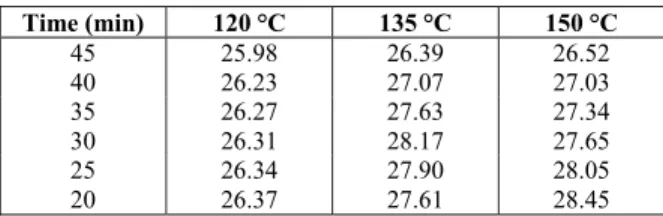
Kinetic data for the pretreatment were evaluated at different temperatures (120 °C, 135 °C, and 150 °C) and a kinetic model for the wood waste delignifica-tion with lime as a funcdelignifica-tion of temperature was de-termined. For each of these isothermals, the com-position of pretreated sawdust was determined at reaction times 20, 25, 30, 35, 40, and 45 min. Pre-treatment reaction kinetics is an important tool for the economics of a process since reactor volume, and hence the capital equipment requirement, is said to be proportional to the residence time in the reactor (Li et al., 2013). The kinetics of delignification were studied by following the amount of lignin removed from the pretreated solids (Table 1) and analyzed on the basis of the proportion of the total lignin re-moved with time (Esteves et al., 2005).
Table 1: Lignin remaining (%w/w) based on dry weight of pretreated biomass.
Time (min) 120 °C 135 °C 150 °C
45 25.98 26.39 26.52 40 26.23 27.07 27.03 35 26.27 27.63 27.34 30 26.31 28.17 27.65 25 26.34 27.90 28.05 20 26.37 27.61 28.45
The reaction was considered to be irreversible and to follow a second order as:
Lignin L Oxygen O Product P → (1)
The reaction rate, rL could be expressed as:
L
r dL / dt k L O
(2)
If oxygen is in excess, the concentration of oxygen can be considered to be constant, giving the equation:
L
r dL / dt k L
(3)
The reaction is now pseudo first-order and the re-lationship can be expressed as:
dL / dt k L
(4)
where dL/dt = lignin removal rate; k = chemical reaction rate constant; L = residual lignin after pre-treatment.
It has also been established that alkaline pulping is a first order, pseudo homogenous reaction and that
the rate of change of lignin removed per unit mass of solid is related to the product of the amount of lignin remaining in the solid mass and the concentration of the alkali (Correira et al., 2001). Integrating Equa-tion (4) shows it is a straight line relaEqua-tionship:
0
ln L / L k tC (5)
where L = total lignin content at time t, L0 = total
lignin content at time t = 0
The rate constant, k, is obtained from the linear regression coefficient. The temperature dependence of the rate constant is characterized by the value of the energy of activation (Nelson, et al., 1987). The energy of activation is the minimum energy that must be possessed by reacting molecules before the reaction can occur. k is related to temperature by the Arrhenius Law:
Ea /RT
k A exp (6)
where A = Arrhenius constant; Ea = activation energy;
R = gas constant = 8.314 kJ/mole·K; T = absolute tem-perature (K).
The activation energy (Ea) of delignification was
calculated for each kinetically homogeneous lignin fraction from the logarithmic form of the Arrhenius equation (ln k = ln A – Ea/RT) by plotting ln k against
1/T with the slope equal to Ea/R (Figure 2(B))
(Es-teves et al., 2005), ln A is the intercept from where the Arrhenius constant is calculated. The kinetics of delignification was established by assuming the ma-terial contains one type of lignin.
Material Balances and Biomass Composition
Effective Alkaline Peroxide Oxidation Pretreatment of Shea Tree Sawdust for the Production of Biofuels 37
Brazilian Journal of Chemical Engineering Vol. 33, No. 01, pp. 33 - 45, January - March, 2016
at 105 °C in a convection oven. The extractives con-tent was calculated as the difference in weight be-tween the raw and extracted material (Ayeni et al.,
2013b; Blasi et al., 1999; Li et al., 2004, Lin et al.,
2010). Mineral components were determined by ashing at 575 °C for 6 h. The hemicellulose content was determined by transferring 1 g of dried biomass from the extractive analysis into a 250 mL Erlen-meyer flask. 150 mL of 0.5 mol/L NaOH solution was added to the dried biomass. The mixture was boiled for 3 hours and 30 minutes with distilled water. The residue was dried to a constant weight at 105 °C and later cooled in a desiccator and weighed. The hemicellulose content was calculated as the differ-ence between the sample weight before and after this treatment (Ayeni et al., 2013b; Blasi et al., 1999; Li
et al., 2004, Lin et al., 2010). Lignin content was de-termined as the summation of Klason lignin and acid soluble lignin on the extractive free samples by the National Renewable Energy Laboratory standard pro-cedures (Sluiter et al., 2008). Cellulose content was determined by difference, assuming only ash, extrac-tives, hemicelluloses, lignin were present in the bio-mass (Ayeni et al., 2013b; Blasi et al., 1999; Li et al., 2004, Lin et al., 2010). The raw biomass compo-sitional analysis, percent weight by weight, estimated cellulose content of 45.90%, hemicellulose: 20.31%, lignin: 29.90%, extractives: 1.89%, and ash: 2.04%.
Enzymatic Conversion of Treated and Untreated Biomass
The action of cellulase and β-glucosidase en-zymes on the treated and untreated biomass was evaluated. In 30 mL culture tubes (arranged in parallel
for sampling different time points) were added 20,
30, 40, and 50 g/L wet treated and washed-only
untreated biomass samples. A commercial prepara-tion of Trichoderma reesei cellulases (activity of 57.8 FPU/mL) and β-glucosidase (Extra pure, CAS No.: 9001-22-3, with an activity of 10 IU/mg solid) were added at loadings which corresponded to the increased substrate concentrations (Table 2).
The activity of the cellulase enzymes was deter-mined in terms of filter paper units. A linear glucose standard curve using the absolute amounts of glucose standards (mg/0.5 mL) was plotted against absorb-ance at 540 nm. This graph was used to determine the concentration of reducing sugars in the sample tubes, which had to be incubated with cellulase en-zyme solutions of varying dilutions at 50 °C for 60 min. The value of 2.0 mg of reducing sugar as glu-cose from 50 mg of filter paper (4% conversion) in 60 min was used for calculating filter paper cellulase units (FPU). (Ghose, 1987). β-glucosidase activity was determined by the method described by Bailey and Linko (1990).
An appropriate volume of distilled water was added until the 10 mL final volume including 0.05 M sodium acetate buffer, pH 4.8. The reaction mixture was placed in an orbital shaking incubator (Scigenics Biotech, Chennai, India) maintained at a temperature of 45 °C and at 14 rad/s.At specified periods, culture tubes were removed and 1 mL aliquot samples were taken for sugar analysis (Dowe and McMillan, 2008). Hydrolyzed samples were centrifuged at 2254 gravities for 5 min to remove residual solids and total reducing sugars was quantified with DNS (3,5-dinitrosalicylic acid) assay (Ayeni et al., 2013a; Miller, 1959).
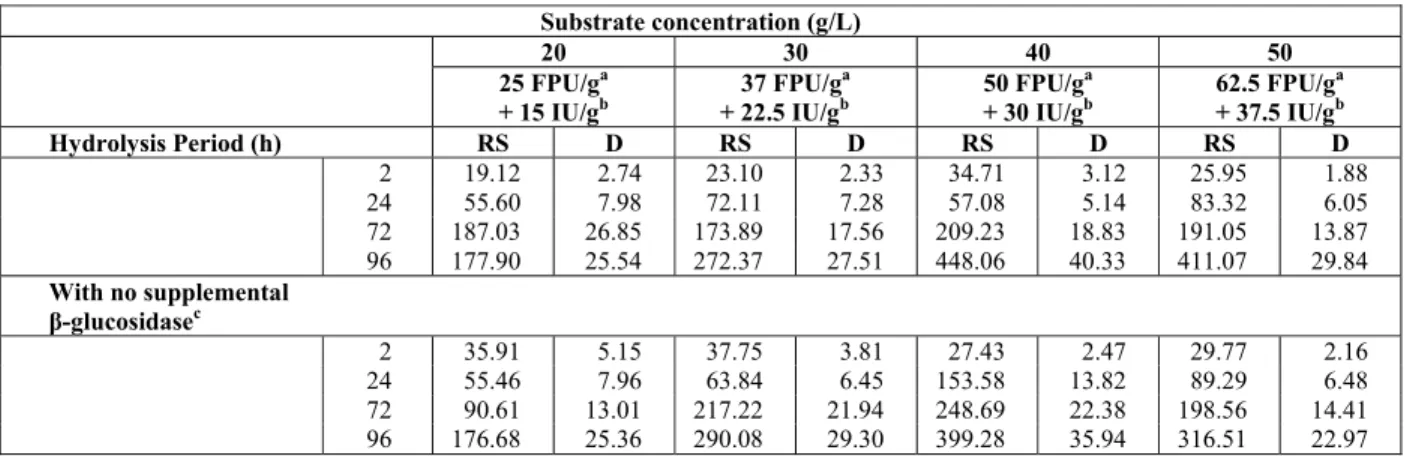
Table 2: 4-D effect of substrate concentration with corresponding increase in enzyme concentration and incubation period on the enzymatic saccharification of pretreated sawdust; conditions of 150oC, 1% H2O2,
1.0 MPa, and 45 min.
Substrate concentration (g/L)
20 30 40 50 25 FPU/ga
+ 15 IU/gb
37 FPU/ga + 22.5 IU/gb
50 FPU/ga + 30 IU/gb
62.5 FPU/ga + 37.5 IU/gb
Hydrolysis Period (h) RS D RS D RS D RS D
2 19.12 2.74 23.10 2.33 34.71 3.12 25.95 1.88
24 55.60 7.98 72.11 7.28 57.08 5.14 83.32 6.05
72 187.03 26.85 173.89 17.56 209.23 18.83 191.05 13.87
96 177.90 25.54 272.37 27.51 448.06 40.33 411.07 29.84
With no supplemental
β-glucosidasec
2 35.91 5.15 37.75 3.81 27.43 2.47 29.77 2.16
24 55.46 7.96 63.84 6.45 153.58 13.82 89.29 6.48
72 90.61 13.01 217.22 21.94 248.69 22.38 198.56 14.41
96 176.68 25.36 290.08 29.30 399.28 35.94 316.51 22.97
a
Cellulase enzyme loading. bβ
-glucosidase loading. c
Calibration curves (using glucose as a standard) were used to determine the reducing sugar concen-trations (Chang et al., 1998). The sample was diluted properly so that the measured absorbance was in the linear range. Reducing sugar yields were expressed as mg equivalent glucose/g dry substrate (treated substrate as cellulose and hemicellulose). Further-more, hydrolysis results (% digestibility; as substrate conversion), were expressed in terms of the theoreti-cal or total polysaccharide in the treated substrate (Yoo et al., 2011).
Reducing sugar obtained (g/g) x 0.9 x1 00 % Digestibility=
Treated substrate cellulosehemicellulose g/g
(7)
Wet treated biomass was used for the enzymatic hydrolysis and fermentation steps. Sugar yields were also expressed as dry biomass based on equivalent material balance of wet treated sample (Dowe and McMillan, 2008).
Ethanol Fermentation Process
The sugar from the pretreatment process solid fraction was fermented to ethanol through simultane-ous saccharification and fermentation (SSF) by Sac-charomyces cerevisiae kindly provided by Purti Power and Sugar Ltd., Distillery Division, Nagpur, India. The S. cerevisiae inoculum culture medium was pre-pared aseptically in a 250 mL shaking flask covered with a cotton stopper with 100 mL of medium con-taining 3 g/L malt extract, 3 g/L yeast extract, 5 g/L peptone, and 10 g/L glucose, and incubated on a rotary shaker at 130 revolution per minute and 32 ±
2.0 °C for 24 h. All media were sterilized by auto-claving at 121 °C for 30 min. The cells were harvested for SSF fermentation to a final optical density (OD) of 0.6 measured at 600 nm (Dowe and McMillan, 2008). SSF was performed under anaerobic condition, made possible by making the rubber stoppered flasks air-tight with Teflon tape and thereafter covered with aluminum foil, in sterile 250 mL shaking flasks with the incubator shaker at 30 ± 2.0 °C for 96 h. 5 mL of inoculum culture were added into the 50 mL working volume, sterilized for the fermentation of the pre-treated solids. The pH of the medium was adjusted to 4.8 ± 0.2 with 0.05 M citrate buffer. With a total sam-ple size of 50 g (total working volume for fermenta-tion was 50 mL), the desired cellulose effective load-ings of 2% (w/w) and 3% (w/w) were considered, which were equivalent to 1.0 g and 1.5 g of cellulose,
respectively, in treated substrate. The cellulase load-ing (filter paper activity = 57.8 FPU/mL) was 25 FPU/g cellulose and the concentration of yeast ( Sac-charomyces cerevisiae) inoculum was 10% (v/v). At the end of fermentation period, 5 mL of mixture were removed and centrifugation was performed at 4,500 revolution per minute for 5 min (Dowe and McMillan, 2008). The supernatant after centrifuga-tion was used for the ethanol estimacentrifuga-tion.
The ferment ability of the pretreated solids was characterized by the equation (Dowe and McMillan, 2008):
f 0
% theoretical ethanol yield
EtOH – EtOH
x1 00% 0.51 f Biomass 1.111
(8)
where [EtOH]f = ethanol concentration at the end of
the fermentation (g/L) minus any ethanol produced from the enzyme and medium,
[EtOH]0 = ethanol concentration at the beginning
of the fermentation (g/L), which should be zero, [Biomass] = dry biomass concentration at the begin-ning of the SSF (g/L), f = Cellulose fraction of the dry biomass (g/g),
0.51 = Conversion factor for glucose to ethanol based on the stoichiometric biochemistry of the etha-nol fermentation,
1.111 = factor that converts cellulose to equiva-lent glucose.
The ethanol yield was calculated as a percentage of the theoretical yield on the basis of the total effec-tive cellulose in the pretreated material, in other words, the % theoretical ethanol yield can also be given as % cellulose conversion. The control fermen-tation (without biomass samples) was performed and the result was subtracted from the test fermentations for each biomass loading.
Ethanol analysis was carried out from the absorb-ance of the sample using the dichromate assay method (Ayeni et al., 2014; Bennet, 1971); acid di-chromate solution (0.1 M Cr2O7
in 5 M H2SO4) was
D n b p ex (A m p w ea co ra ti o h 2 th fi in te ta p m si 1 y en du sl w co en in 2 ca th fo st ti 5 an o k b 2 ti ce g en RE Determinatio nification During the etween 8.1 a erimental co xceed 17% u Ayeni, et al.
moved calcula eratures sug within the tes
ase of delig onnected wit aw biomass ion may also
f catalyst use aviour of de (A) and the he slope of th igure. The r ncreased with emperatures ants, which fu
Lignin re eratures (ca mass) were e
ions; 150 °C 35 °C, y = = -0.0005X nergy of the ust waste w lope of ln k a was calculate
onstant was nergies for s n the scient
006). In alka ane bagasse han wood an or delignifica tover and su ions were re 4.21 kJ/mol nd Holtzapp xidative pre raft delignif etween 110 006, Dolk e
ion in alkali elluloses hav ies than woo nergy, 74.6
Effective A
Brazili
ESULTS AND
on of the Kin
e pretreatme and 12.3% w onditions. T under enhanc
, 2013b). Th ated for the ggested hig sted values. T gnification du th the high li
(Ayeni et al
have been h ed (Ca(OH)2
elignification values of ra he straight lin results indica h increasing
there were m further increa
maining at alculated on
estimated ba C, y = -0.002
0.002X + 3. X + 3.2828, R
e delignificat as derived u against 1/T. T
d to be 76.4 8.4 x 10⁶/mi some lignoce tific literatu aline conditi may have nd, as a resul
ation (Kim a ugarcane bag
eported to h l and 31.47 ple, 2006; F etreatment, t fication of w 0–130 kJ/mo
et al. 1989). ne condition ve lower deli ody biomass. kJ/mol, for
Alkaline Peroxide
ian Journal of Ch
D DISCUSS netic Parame ent process, was observed The delignifi ced pretreatm he proportion three differe gh composit The hindranc uring pretrea ignin content
l., 2013b). H hindered beca
). The first-o process is s ate constants nes are presen ated that the temperature more collisio sed the rate o the three o dry weight ased on the 6X + 3.3999 3724, R2= 0
R2 = 0.8177. tion of the p using Equatio The activatio 4 kJ/mole and in (Figure 2( elluloses hav ure (Kim an
ions, corn sto more favour lt, lower acti and Hotlzapp gasse under have activati kJ/mol, resp Fuentes et al
the activatio wood were re ol (Kim an Therefore, ns, most non
ignification a In this study r the Shea t
Oxidation Pretre
hemical Engineer
SION
eters for Del
lignin remo d under the ication did ment conditi ns of lignin ent process te tional stabi ce posed to atment may t (29.9%) in High delignifi ause of the ty order kinetic
hown in Fig s obtained fr nted in the sa e rate consta e. At increas ons of the re of reaction.
operating te of treated b e linear regr 91, R2 = 0.99 0.7525; 120 The activat pretreated sa on (5) from on energy va d the Arrhen (B)). Activat e been repor nd Holtzapp over and sug rable structu ivation energ ple, 2006). C
alkaline con ion energies
pectively (K
l., 2011). W on energies
eported to v nd Holtzapp
for delignifi n-woody lig activation en y, the activat tree sawdust
eatment of Shea T
ring Vol. 33, No.
lig-oval ex-not ons re- em-ility the be the ica-ype be-gure rom ame ants sing eac- em- bio- res-971; °C, tion aw-the alue nius tion rted ple, gar-ures gies orn of Kim With for vary ple, ica- no- ner-tion t is hig los tre tre par 74 k, tio of tur du bet bel (20 als rea pre cre Sh un be Fu du dif Fig lig ma me bio
Tree Sawdust for
01, pp. 33 - 45,
gher than va ses. As a res eatment cond ee sawdust h red to some .6 kJ /mol is is said to be on during pre the biomass re between uring delignif
tween 31.8 low the valu 006) and Do so reported t actions have etreatments epancy in de hea tree sawd nder the prev due to the urthermore, t uring pretrea
fferences.
gure 2: Kine gnin content. aining at the ent versus ti omass.
the Production of
January - March
alues for som sult, in the li ditions, the a has been est e other woo s lower. The e affected by etreatments a s (Miguel et
110–200 °C fication of E
kJ/mol and ues reported olk et al., (19 that wood p effects on a (Dang and elignification dust relative vailing pretr
variations in the very sta atments may
(A
(B etics of delign . (A) logarit operating te me; (B) Arr
f Biofuels
h, 2016
me non-woo ight of the p activation en tablished. H
dy biomass, value of the y the chemi and the struc
al., 1999). C, the activa
Eucalyptus gl
98.4 kJ/mol d by Kim an 989). Several particle size alkaline pene Nguyen, 20 n activation e to other w
eatment con n pretreatme able conditi y have acco
A) B) nification bas thmic plots emperatures rhenius plot dy lignocell prevailing pr nergy of Sh However, com
, the value e rate constan
cal concentr ctural featur At a temper ation energi
lobulus varie l, which we nd Holtzapp l other autho and diffusio etration durin 008). The di
energy of th woody bioma
nditions, cou ent condition ions of lign ounted for th
Effect of Enzymatic Hydrolysis on Treated and Untreated Biomass
Our earlier studies established that a combination of air and hydrogen peroxide as oxidizing agents increased the delignification of Vitellaria paradoxa
sawdust leading to increased enzymatic hydrolysis of treated biomass (Ayeni et al., 2013a; Ayeni et al.,
2013b; Ayeni et al., 2014). It was pointed out that, under the optimized pretreatment conditions (150 °C, 45 min, 1%H2O2, and 1.0 MPa air pressure), at 2%
pretreated biomass loading, enzymatic hydrolysis temperature of 50 °C, and hydrolysis period of 72 h, the total reducing sugars obtained were 263.49 mg equivalent glucose/g dry biomass. Defining a single optimum for enzymatic hydrolysis is impossible. End products of the hydrolysis (mainly cellobiose and glucose, which may also include the furan com-pounds as furan and hydroxylmethyl furfural (HMF)) (Andrić et al., 2010) may also inhibit the enzyme activity, the build-up of any of these products nega-tively affects cellulose hydrolysis. The concentration of the cellulase enzyme complex has a high impact on the conversion of the cellulose. The maximum cellulase activity for most fungal-derived cellulases and β-glucosidase was reported to occur at 50 ± 5 °C and a pH between 4.0 and 5.0 (Gregg et al., 1998). At lower temperatures, the hydrolysis rate per unit of active enzyme is slower, but so is enzyme denatura-tion (Kaar and Holtzapple, 2000). The optimum tem-perature and pH is not only a function of the raw material and the enzyme source, but is also highly dependent on the hydrolysis time. The optimal con-ditions change with the hydrolysis residence time (Tengborg et al., 2001), and are also dependent on the source of the enzymes. In order to improve on our previous studies (Ayeni et al., 2013a; Ayeni et al., 2014), enzymatic digestibility was evaluated considering increasing substrate concentrations, hy-drolysis time, and hyhy-drolysis temperature, as well as increasing enzyme loadings. The effects of substrate concentration variation (20, 30, 40, and 50 g/L) with and without supplemental β-glucosidase, hydrolysis temperature (45 °C), enzyme loadings, as well as hydrolysis time (96 h) on digestibility were investi-gated as pretreatment conditions. The results for the pretreated sawdust material after saccharification for the pretreatment conditions 150oC, 1% H2O2, 1.0
MPa air pressure are given in Table 2. The effects of substrate concentration variation (20, 30, 40, and 50 g/L) with and without supplemental β-glucosidase, hydrolysis temperature (45 °C), and enzyme load-ings, as well as hydrolysis time (96 h), on digestibil-ity were investigated in the pretreatment conditions.
With a cellulase enzyme loading of 25 FPU/g treated substrate, the reducing sugar yield was 187.03 mg/g dry biomass in 72 h. A higher reducing sugar yield (274 mg/g dry biomass) was obtained with the same enzymatic hydrolysis but different pretreatment con-ditions; 170 °C, 1.0 MPa, and 10 min (Ayeni et al.,
2013a). The effect of temperature on biomass pre-treatment and enzymatic hydrolysis may have ac-counted for this variation. In this study, the results showed that reducing sugar yields increased with 20, 30, 40 g/L substrate concentrations considered up to the fourth day of hydrolysis. It showed that more sugar is likely to be produced if the hydrolysis time was increased beyond 96 h. The optimum tempera-ture and pH are not only a function of the raw mate-rial and enzyme source, but are also highly depend-ent on the hydrolysis time (Martín, et al., 1988). This also showed that the enzymes were still active to cause more hydrolysis at the reduced hydrolysis temperature of 45 °C. However, for 50 g/L substrate concentration and 62.5 FPU/g dry biomass loading, the sugar yield was 411.07 mg glucose equivalent/g dry biomass, which was lower than the sugar yield at 40 g/L and 50 FPU/g dry biomass loading (448.06 mg/g dry biomass). Increasing the substrate concen-tration to 50 g/L caused decreased hydrolysis, de-spite increased enzyme loadings. This is probably due to end product inhibition, other inhibitors or inefficient mixing. Furthermore, reducing sugar
yields without supplemental β-glucosidase were
th fi le w re en fo w an co sa en F ti m zy m E in an lo ib ti tu en li fr tr d u co tr 3 m m th re han adding inding an op enge for futu with no β-glu eduction in t
nzyme. Figure 3 s or untreated with no supp
nd washed r omparing th awdust. Con nzymatic hyd
Figure 3: 4-d ion on the su mass. Concen ymatic hydr ment conditio Enzyme hydr ndicated in T
The substr nd 50 g/L) w oadings and bility were in igated the eff ure of poplar nzymatic hy ime pretreatm rom 62 mg reated) to as
ry biomass ( sing the su orresponding reated bioma 99.28 mg/g material of 19 maximum red he condition eported for p
Effective A
Brazili
β-glucosida ptimum leve ure study. Th
ucosidase ad the inhibitiv
shows the en biomass sa plemental β -aw biomass he enzymatic ncentrations drolysis of tr
d Effect of tim ugar yield fo ntrations in p rolysis of pr ons: 150 °C, rolysis cond Table 2. rate concentr with corresp supplementa nvestigated. ffects of pretr
r wood (ligni ydrolysis and ment enhance equivalent g much as 62 (treated at 15 ubstrate con g increases ass reducing dry biomass 9.08 mg/g d ducing sugar
s specified w poplar wood
Alkaline Peroxide
ian Journal of Ch
se suppleme l of addition he yields of ddition may ve effects of
nzymatic hy amples and t glucosidase. was used as c digestibility
in prime no reated sampl
me and subst or untreated a prime notati retreated sam
1% H2O2, 1.
ditions: same
ration variati ponding incre al β-glucosid Chang et al.
reatment tim in content of d concluded ed the reduci glucose/g dry 22 mg equiv 50 °C and 6 h ncentration v in enzymes g sugars con s as compar dry biomass (
r yield in th was 42.4% l d (Chang et
Oxidation Pretre
hemical Engineer
ents. Howev n offers a ch reducing su
be due to glucose on
ydrolysis resu treated samp The untrea s the control y of the trea otation indic les.
trate concent and treated b ion indicate mples. Pretre
0 MPa, 45 m e conditions
ion (20, 30, ease in enzy dase on dige
., (2001) inv me and tempe f about 25%) d that oxidat ing sugar yie y biomass (u valent glucos
h). In this stu variations w s loadings, ncentration w red to untrea
(Figure 3). T his study un
lower than t
al., 2001). T
eatment of Shea T
ring Vol. 33, No.
ver, hal-ugar the the ults ples ated for ated cate tra- bio- en- eat-min. as 40, yme est- ves- era-) on tive elds un-se/g udy, with the was ated The nder that The dif ma cie nce En loa cel suf Fig Pre 45 sid pH 7, tifi al. wi inc ple sug nen tre red loa ma 30 of ma con low rem nin enz som yie
Tree Sawdust for
01, pp. 33 - 45,
fference in v aterial comp ency of the entration, an
nzyme Load
Whether th adings higher
llulase loadin fficient was a
gure 4: 4-d E etreatment co min. Enzym dase/g dry bi H 4.8, 40 g/L
Sugar yield 10 and 15 F fic literature
, 1988). Af th 10 FPU/g cubation tem e (2000) co gars yield w n et al., (200 eated (at 200 ducing suga adings corre ass. They dis
FPU/g dry 40 °C, 20 aximum suga
nversion of w sugar yiel moval during n in the softw zyme loadin me importa elds were ob
the Production of
January - March
values may h position, pret
different en nd reaction pe
ding Studies
ere are signi r than 25 FPU
ngs less than also investig
Effect of enzy onditions: 15 me hydrolysi
iomass, 45 ° substrate co
ds with lower FPU/g dry bi (Kaar and H fter lime pre g dry biomas mperature and
oncluded tha was about 610 04) investiga °C) softwoo ar using two sponding to scovered tha
biomass, un g/L substrat ar yield of 25 f polysaccha
d was partly g pretreatme wood was re ng results sh ant features. btained at hig
f Biofuels
h, 2016
have been c treatment co nzymes used
eriod.
ificant yield U/g dry biom
n 25 FPU/g gated (Figure
yme loading o
50 °C,1% H
s conditions °C hydrolysi oncentration.
r enzyme loa iomass) exis Holtzapple, 20
etreatment o s enzyme loa d 100 h, Kaar at the optim 0 mg/g dry b ated wet air od enzymatic o cellulase m
5, 10, 30 F at using the h
nder hydroly te concentrat 57 mg/g dry aride) was a y caused by
ent (between emoved). In hown in Fig Higher re gher enzyme
caused by ra onditions, eff d, enzyme c
benefits fro mass or wheth biomass we e 4).
on sugar yield H2O2, 1.0 MP
: 5UI β-gluc s temperatur
adings (1, 3, st in the scie 000; Martín f corn stove ading at 40 ° r and Holtza mum reducin
biomass. Pal oxidation pr c hydrolysis mixtures wi PU/g dry bi highest load ysis condition
tion for 24 biomass (55 achieved. Th
the low lign n 24–42% li this study, th gure 4 conta educing sug e loadings (f
example 25 FPU to 50 FPU/g dry biomass in the 4-day hydrolysis time. The 4-4-day reducing sugar yield at 50 FPU/g dry biomass for 150 °C, 1%H2O2, 1.0
MPa air pressure, 45 min pretreatment conditions was 482.40 mg/g dry biomass, while at 25 FPU/g dry biomass the yield was 416.32 mg/g dry biomass (about a 22-fold increase compared to untreated biomass). The 25 FPU/g dry biomass loading was found to be adequate with this material (Figure 4), but further improvements in pretreatment efficiency would ena-ble decreasing to more economical enzyme dosages. Further inspections show that the sugar yield was about 2.5 times higher after 96 h (416.32 mg/g) from the 24 h (170.51 mg/g) hydrolysis period. It is ex-pected that, at longer periods and low temperature (in this case 45 °C), hydrolysis should increase until a constant value is attained in which the enzymes were supposed to have been exhausted or their ac-tions stopped by inhibitors. Cellulase loadings greater than 25 FPU/g dry biomass may have caused the cellulose sites to be saturated by the enzymes.
Fermentation of Treated Biomass
After 72 h fermentation, the quantity of ethanol obtained (g/L) at 2% effective cellulose loading was 10.69 g/L (% theoretical ethanol yield: 31.03%) for pretreatment at 150 °C, 1%H2O2, 1.0 MPa air
pres-sure, and 45 min. At an increased effective cellulose loading of 3%, the ethanol obtained did not signifi-cantly increase (12.43 g/L with theoretical ethanol yield of 29.56%). The % theoretical ethanol yields (based on cellulose conversion) for the pretreatment conditions were higher at 2% effective cellulose loading than at 3% effective cellulose loading. The ethanol concentration tended to be higher at 3% sub-strate loading, but at this loading the % theoretical ethanol yields were much lower than that at 2% sub-strate loading. This implies that more of the cellulose was converted at 2% loading than at 3% substrate loading. The ethanol yield at 3% loading showed that more reducing sugar was produced by enzymatic hydrolysis and was probably more quickly assimi-lated by yeast for cell growth and ethanol production than at 2% loading. For the 96 h fermentation period, the corresponding ethanol values for the 2% and 3% biomass loadings did not appreciably increase. At 2% effective cellulose loading, the quantity of nol obtained was 12.73 g/L (32.75% theoretical etha-nol yield). The 3% cellulose loading it corresponded to 13.84 g/L with 33.44% theoretical ethanol yield. The ethanol yield at 2% cellulose loading was comparable to the 3% cellulose loading. Yeast may have acted faster on the 2% cellulose loading than
the 3% cellulose loading. At high cellulose loading, the increased glucose monomers may also be inhibit-ing the actions of the microbes. Cellulose conversion at 2% substrate loading should be more appropriate for the SSF under the conditions considered. How-ever, more of the substrate will be needed for the fermentation process. Generally, the low ethanol yield in this study is connected to the high lignin content because cellulose accessibility to cellulases is largely limited by the anatomical structure of the plant cell wall (Pu et al., 2013). Lignin interferes with enzymatic hydrolysis by blocking access to cellulase and irreversibly binding hydrolytic enzyme. Lignin inhibits the enzymes during hydrolysis. In future studies, to remedy and reduce the recalcitrant nature of the biomass, addition of extra nutrients and minerals [in the form of yeast extract, bacto tryptone (casein extract)] to the fermentation broth will be taken into consideration. Extra nutrients and minerals can increase the ethanol concentration at very short incu-bation periods (Lissens et al., 2004). Furthermore, a combination of both hemicellulase and cellulase enzymes could cause increased enzymatic hydrolysis in the biomass-to-ethanol process.
CONCLUSIONS
This study proved the efficiency of alkaline perox-ide oxidation pretreatment on a woody biomass,
Vitellaria paradoxa (Shea tree) sawdust. The pre-treatment caused appreciable disruption of the bio-mass structure making cellulose more accessible to the enzymatic complex. Significant increases in reducing sugar yield were observed for the treated relative to the untreated biomass. For the kinetics of delignification, the results indicated the activation energy to be 76.4 kJ/mole and the Arrhenius constant was calculated as 8.4 x 10⁶/min. After pretreatment (optimized conditions of 150 °C, 1% H2O2, 1.0 MPa
Effective Alkaline Peroxide Oxidation Pretreatment of Shea Tree Sawdust for the Production of Biofuels 43
Brazilian Journal of Chemical Engineering Vol. 33, No. 01, pp. 33 - 45, January - March, 2016
loading after 96 h fermentation by Saccharomyces cerevisiae was 12.73 g/L. In all, the Shea tree was found to be challenging due to the high lignin con-tent. However, in an integrated bio-refinery, the un-dissolved lignin can be available for energy produc-tion by combusproduc-tion, and for conversion to other fuels and chemicals.
As a result of the recalcitrant nature of the bio-mass, further improvements in pretreatment and the enzymatic digestibility are needed.
ACKNOWLEDGEMENTS
The author (A.O.A) is grateful to the Council of Scientific and Industrial Research (CSIR), New Delhi, India and The World Academy of Sciences for the Advancement of Science in Developing Countries (TWAS), Italy, for the award of a CSIR-TWAS fel-lowship for Research and Advanced Training tenable at National Environmental Engineering Research Institute (NEERI), Nagpur, India. The Nigerian Con-servation Foundation and Chevron Nigeria Limited are appreciated for the Chief S.L. Edu research grant award. Also appreciated is the management of Cove-nant University, Ota, Nigeria for granting a one-year leave for this study.
REFERENCES
Ayeni, A. O., Omoleye, J. A., Mudliar, S. N., Hy-more, F. K. and Pandey, R. A., Utilization of lig-nocellulosic waste for ethanol production: Enzy-matic digestibility and fermentation of pretreated shea tree sawdust. Korean Journal of Chemical Engineering, 31(7), 1180-1186 (2014).
Ayeni, A. O., Banerjee, S., Omoleye, J. A., Hymore, F. K., Giri, B. S., Deskmukh, S. C., Pandey, R. A. and Mudliar, S. N., Optimization of pretreatment conditions using full factorial design and enzy-matic convertibility of shea tree sawdust. Bio-mass and Bioenergy, 48, 130-138 (2013a). Ayeni, A. O., Hymore, F. K., Mudliar, S. N.,
Desk-mukh, S. C., Satpute, D. B., Omoleye, J. A. and Pandey, R. A., Hydrogen peroxide and lime based oxidative pretreatment of wood waste to enhance enzymatic hydrolysis for a biorefinery: Process parameters optimization using response surface methodology. Fuel, 106, 187-194 (2013b).
Andrić, P., Meyer, A. S., Jensen, P. A. and Dam-Johansen, K., Reactor design for minimizing prod-uct inhibition during enzymatic lignocellulosic hydrolysis II. Quantification of inhibition and
suitability of membrane reactors. Biotechnology Advances, 28, 407-425 (2010).
Bailey, M. J. and Linko, M., Production of β -gluco-sidase by Aspergillus oryzae in submerged biore-actor cultivation. Journal of Biotechnology, 16, 57-66 (1990).
Bennet, C., Spectrophotometric acid dichromate method for the determination of ethyl alcohol. American Journal of Medical Technology, 37, 217-220 (1971).
Blasi, C. D., Signorelli, G., Di Russo, C. and Rea, G., Product distribution from pyrolysis of wood and agricultural residues. Industrial Engineering and Chemistry Research, 38, 2216-2224 (1999). Chang, V. S., Nagwani, M., Kim, C. and Holtzapple,
M. T., Oxidative lime pretreatment of high-lignin biomass. Applied Biochemistry and Biotechnol-ogy, 94, 1-28 (2001).
Chang, V. S., Nagwani, M. and Holtzapple, M. T., Lime pretreatment of crop residues bagasse and wheat straw. Applied Biochemistry Biotechnol-ogy, 74, 135-159 (1998).
Correira, F., Roy, D. N. and Goel, K., Chemistry and delignification kinetics of Canadian industrial hemp. Journal of Wood Chemistry and Technol-ogy, 21, 97-111 (2001).
Dang V. O. and Nguyen K. L., A universal kinetic model for characterization of the effect of chip thickness on kraft pulping. Bioresource Technol-ogy, 99, 1486-1490 (2008).
Dolk, M., Yan, J. F. and McCarthy, J. L., Lignin 25. Kinetics of delignification of western hemlock in flow through reactors under alkaline conditions. Holzforschung, 43(2), 91-98 (1989).
Dowe, N. and McMillan, J., SSF experimental proto-cols: Lignocellulosic biomass hydrolysis and fer-mentation: Laboratory analytical procedure (LAP). Golden, CO: National Renewable Energy Labora-tory; Jan. NREL Report No.: TP-510-42630. Con-tract No.: DE-AC36-99-G010337. Sponsored by the U.S. Department of Energy (2008).
Esteves, B., Gominho, J., Rodrigues, J. C., Miranda, I. and Pereira, H., Pulping yield and delignifica-tion kinetics of heartwood and sapwood of mari-time pine. Journal of Wood Chemistry and Tech-nology, 25, 217-230 (2005).
Fuentes, L. G., Rabelo, S. C., Filho, R. M. and Costa, A. C., Kinetics of lime pretreatment of sugarcane bagasse to enhance enzymatic hydrolysis. Ap-plied Biochemistry and Biotechnology, 163, 612-625 (2011).
agricultural residues to enhance enzymatic sac-charification. Biotechnology and Bioengineering, 26, 46-52 (1984).
Gould, J. M., Jasberg, B. K., Fahey, G. C. and Ber-ger, L. L., Treatment of wheat straw with alkaline hydrogen peroxide in a modified extruder. Biotech-nology and Bioengineering, 33, 233-236 (1989). Gregg, D. J., Boussaid, A. and Saddler, J. N.,
Techno-economic evaluation of a generic wood to-ethanol process: Effect of increased cellulose yields and enzyme recycle. Bioresource Technology, 63, 7-12 (1998).
Kaar, W. E. and Holtzapple, M. T., Using lime pre-treatment to facilitate the enzyme hydrolysis of corn stover. Biomass and Bioenergy, 18, 189-199 (2000).
Kim, S. and Holtzapple, M. T., Delignification kinet-ics of corn stover in lime pretreatment. Biore-source Technology, 97, 778-785 (2006).
Kim, T. H. and Lee, Y. Y., Fractionation of corn stover by hot-water and aqueous ammonia treat-ment. Bioresource Technology, 97, 224-232 (2006). Kleinert, T. N., Mechanisms of alkaline
delignifica-tion 1. The overall reacdelignifica-tion pattern. Tappi Journal, 49, 53-57 (1996).
Kleinert, T. N., Ethanol-water delignification of wood. Rate constants and activation energy. Tappi Jour-nal, 58, 170-171 (1975).
Krishna, S. H. and Chowdary, G. V., Optimization of simultaneous saccharification and fermentation for the production of ethanol from lignocellulosic biomass. Journal of Agricultural and Food Chem-istry, 48, 1971-1976 (2000).
Kristensen, M. and Lykke, A. M., Informant-based evaluation of use and conservation preferences of savanna trees in Burkina Faso. Economic Botany, 57(2), 203-217 (2003).
Kumar, P., Barrett, D. M., Delwiche, M. J. and Stroeve, P., Methods for pretreatment of ligno-cellulosic biomass for efficient hydrolysis and bio-fuel production. Industrial Engineering Chemistry Research, 48, 3713-3729 (2009).
Ladisch, M. R, Flickinger, M. C. and Tsao, G. T., Fuels and Chemicals from biomass. Energy, 4(2), 263-275 (1979).
Li, S., Xu, S., Liu, S., Yang, C. and Lu, Q., Fast py-rolysis of biomass in free-fall reactor for hydro-gen-rich gas. Fuel Process Technology, 85, 1201-1211 (2004).
Li, Z., Chen, C. H., Hegg, E. L. and Hodge, D. B., Rapid and effective oxidative pretreatment of woody biomass at mild reaction conditions and low oxidant loadings. Biotechnology for Biofuels, 6, 19 (2013).
Lin, L., Yan, R., Liu, Y. and Jiang, W., In-depth in-vestigation of enzymatic hydrolysis of biomass wastes based on three major components: Cellu-lose, hemicelluCellu-lose, and lignin. Bioresource Tech-nology, 101, 8217-8223 (2010).
Lissens, G., Klinke, H., Verstraete, W., Ahring, B. and Thomsen, A. B., Wet oxidation pretreatment of woody yard waste: Parameter optimization and enzymatic digestibility for ethanol production. Journal of Chemical Technology and Biotechnol-ogy, 79, 889-895 (2004).
Martín, C., Negro, M. J., Alfonsel, M. and Sáez, R., Enzymatic hydrolysis of lignocellulosic biomass
from Onopordum nervosum. Biotechnology and
Bioengineering, 32, 341-344 (1988).
Miguel, A. G., Rodriguez, F., Santos, A., Oliet, M., Garcia-Ochoa, F. and Tijero, J., Kinetics of Euca-lyptus globulus delignification in methanol-water medium. Industrial Engineering and Chemistry Research, 38, 3324-3322 (1999).
Miller, G. L., Use of dinitrosalicylic acid reagent for determination of reducing sugar. Analytical Chemistry, 31, 426-428 (1959).
Mosier, N., Wyman, C. E., Dale, B., Elander, R., Lee, Y. Y., Holtzapple, M. T. and Ladish, M., Fea-tures of promising technologies for pretreatment of lignocellulosic biomass. Bioresource Technol-ogy, 96, 673-686 (2005).
Nelson, P. J. and Gniel, G. M., Delignification of
Eucalyptus woods during alkali pulping. 4th International Symposium on Wood and Pulping Chemistry, 125-129 (1987).
Palonen, H., Thomsen, A. B., Tenkanen, M., Schmidt, A. S. and Viikari, L., Evaluation of wet oxidation pretreatment for enzymatic hydrolysis of soft-wood. Applied Biochemistry and Biotechnology, 117, 1-17 (2004).
Parajó, J. C., Alonso, J. L. and Santos, V., Kinetics of catalysed organosolv processing of pine wood. Industrial and Engineering Chemistry Research, 34, 4333-4341 (1995).
Pu, Y., Hu, F., Huang, F., Davidson, B. H. and Ra-gauskas, A. J., Accessing the molecular structure basis for biomass recalcitrance during dilute acid and hydrothermal pretreatments. Biotechnology for biofuels, 6, 15, (2013).
Qi, B., Chen, X., Shen, F., Su, Y. and Wan, Y., Op-timization of enzymatic hydrolysis of wheat straw pretreated by alkaline peroxide using response sur-face methodology. Industrial and Engineering Chemistry Research, 48, 7346-7353 (2009). Sallé, J., Boussim, A., Raynal-Roques, A. and Brunck,
Effective Alkaline Peroxide Oxidation Pretreatment of Shea Tree Sawdust for the Production of Biofuels 45
Brazilian Journal of Chemical Engineering Vol. 33, No. 01, pp. 33 - 45, January - March, 2016
des Tropiques, 228, 11-23 (1991).
Sluiter, A., Hames, B., Ruiz, R., Scarlata, C., Sluiter, J., Templeton, D. and Croker, D., Determination of structural carbohydrates and lignin in biomass: Laboratory analytical procedure (LAP). Golden, CO: National Renewable Energy Laboratory; April. NREL Report No.: TP-510-42618. Con-tract No.: DE-AC36-99-G010337. Sponsored by the U.S. Department of Energy (2008).
Springer, E. L., Harris, J. F. and Neil, W. K., Rate studies of the hydrotropic delignification of aspen wood. Tappi Journal, 46, 551-555 (1963).
Tengborg, C., Galbe M. and Zacchi, G., Influence of enzyme loading and physical parameters on the en-zymatic hydrolysis of steam pretreated softwood. Biotechnology Progress, 17, 110-117 (2001). Vázquez, G., Antorrena, G. and Gonzalez, J.,
Ki-netics of acid-catalysed delignification of Euca-lyptus globulus wood by acetic acid. Wood Sci-ence and Technology, 29, 267-275 (1995). Wei, C. J. and Cheng, C. Y., Effect of hydrogen
per-oxide pretreatment on the structural features and the enzymatic hydrolysis of rice straw. Bio-technology and Bioengineering, 27, 1418-1426 (1985).
Yoo, C. G., Lee, C. W. and Kim, T. H., Optimization of two stage fractionation process for lignocel-lulosic biomass using response surface methodol-ogy (RSM). Biomass and Bioenergy, 35, 4901-4909 (2011).