Ricardo Filipe Chorão da Silva Vieira
Licenciado em Engenharia do Ambiente
The Role of Qualitative Data and Systems
Thinking in Addressing Service Decline in
Market Towns
Dissertação para obtenção do Grau de Doutor em
Ambiente
Orientador: M. Paula Antunes, Professor, Faculdade de
Ciências e Tecnologia, Universidade Nova de Lisboa
Júri:
Presidente: Prof. Doutor José Paulo Barbosa Mota Arguente(s): Prof. Doutor Serafin Corral Quintana
Prof. Doutor Tiago Morais Delgado Domingos
Vogais: Prof. Doutora Ana Isabel Loupa Ramos
Prof. Doutor Rui Jorge Fernandes Ferreira dos Santos
Prof. Doutor Nuno Miguel Ribeiro Videira Costa
Declaração dos Direitos de Cópia
Título da tese: “The Role of Qualitative Data and Systems’ Thinking in Addressing Service Decline in
Market Towns”
O autor desta tese foi apoiado financeiramente por uma bolsa de doutoramento da Fundação para a Ciência e Tecnologia (FCT), com a referência SFRH/BD/18535/2004/2853.
Declaro que compus esta tese e que nenhuma parte foi submetida noutra universidade. Todas as fontes de informação foram especificamente referenciadas.
A Faculdade de Ciências e Tecnologia e a Universidade Nova de Lisboa têm o direito, perpétuo e sem limites geográficos, de arquivar e publicar esta dissertação através de exemplares impressos reproduzidos em papel ou em forma digital, ou por qualquer outro meio conhecido ou que venha a ser inventado, e de a divulgar através de repositórios científicos e de admitir a sua cópia e distribuição com objetivos educacionais ou de investigação, não comerciais, desde que seja dado crédito ao autor e editor.
Ricardo Filipe Chorão da Silva Vieira
Acknowledgements
I would like to acknowledge Sigrid Stagl and Tiago Domingos for their interest and support when developing a theme for this research and applying for a fellowship. To Andy Smith (Sussex University), John Gowdy (Rensselaer Polytechnic Institute, USA), the many academic staff from the Sustainability Research Institute at the University of Leeds and the many participants in the conferences where I have presented results from this research for their helpful discussions, comments and suggestions.
For their valuable support in carrying out the fieldwork, enthusiasm, diligently helping and/or recruiting participants for the interviews, providing and receiving the photographic cameras, or making possible the exhibition with the results, Heather Witham, Claire Jaggard, Sandy Shallcross, Elizabeth Vooght, the Thornbury Town Council reception, and Di Aldrich. To all the participants in this research, in particular the ones from the two pilot studies, who knowing their results would not be directly used in the research, they have still shown interest in participating.
Resumo
O retalho em cidades pequenas e vilas é um importante contribuinte para o orçamento local e influencia a perceção de qualidade-de-vida. É especialmente relevante para aqueles com dificuldades de mobilidade (ex.: população mais idosa, cidadãos de nível económico mais baixo). Tem vindo a ser reportado um declínio nestas cidades pequenas e vilas um pouco por todo o mundo.
Esta investigação teve como objetivo estudar o fenómeno do declínio do retalho e identificar modos de lidar com o mesmo, usando um caso de estudo, Thornbury, em Inglaterra. Esta investigação experimentou com o uso de diferentes métodos para analisar o declínio do retalho em cidades pequenas e vilas. Fez uso de métodos participativos (photo-surveys e multicriteria mapping) para gerar conhecimento empírico que foi criticamente discutido e analisado. A interpretação da informação recolhida foi efetuada usando os próprios participantes e usando também uma abordagem de sistemas (diagramas de sistemas e teoria das armadilhas sociais). Esta investigação afasta-se das perspetivas económica e de ordenamento urbano por fazer uso de diferentes métodos e conceitos usados em várias áreas (ex.: antropologia, processos de decisão e economia ecológica).
Esta investigação desenvolveu um modelo conceptual para descrever o declínio do retalho e identificou a existência de objetivos e interesses da população, em conflito, como uma causa adicional do declínio. A presente investigação permitiu um avanço no conhecimento através da identificação de causas potenciais para estes objetivos em conflito, pouco referidas na literatura, concluindo que algumas das medidas usadas para lidar com o declínio do retalho contribuem para agravar as causas do próprio declínio. São apresentados ainda algumas medidas que podem ser usadas para lidar com o declínio do retalho, implicações para os processos de decisão e uma reflexão sobre os métodos usados em termos do contexto de cidades pequenas e vilas.
Abstract
Retail services are a main contributor to municipal budget and are an activity that affects perceived quality-of-life, especially for those with mobility difficulties (e.g. the elderly, low income citizens). However, there is evidence of a decline in some of the services market towns provide to their citizens. In market towns, this decline has been reported all over the western world, from North America to Australia.
The aim of this research was to understand retail decline and enlighten on some ways of addressing this decline, using a case study, Thornbury, a small town in the Southwest of England. Data collected came from two participatory approaches: photo-surveys and multicriteria mapping. The interpretation of data came from using participants as analysts, but also, using systems thinking (systems diagramming and social trap theory) for theory building. This research moves away from mainstream economic and town planning perspectives by making use of different methods and concepts used in anthropology and visual sociology (photo-surveys), decision-making and ecological economics (multicriteria mapping and social trap theory). In sum, this research has experimented with different methods, out of their context, to analyse retail decline in a small town.
This research developed a conceptual model for retail decline and identified the existence of conflicting goals and interests and their implications for retail decline, as well as causes for these. Most of the potential causes have had little attention in the literature. This research also identified that some of the measures commonly used for dealing with retail decline may be contributing to the causes of retail decline itself. Additionally, this research reviewed some of the measures that can be used to deal with retail decline, implications for policy-making and reflected on the use of the data collection and analysis methods in the context of small to medium towns.
Table of Contents
List of Figures ... xiii
List of Tables ... xv
Symbols and Acronyms ... xvii
1. Introduction ... 19
1.1. The Relevance of this Study ... 19
1.2. Service Decline in Market Towns ... 22
1.3. Scope and Research Questions ... 27
1.4. Structure of the Thesis ... 29
2. Study Area and Methods... 33
2.1. Study Area ... 33
2.2. Research Design ... 38
2.3. Ethical Considerations Regarding Data and Confidentiality ... 41
3. Using Photo-surveys to Inform Participatory Town Planning Processes: Lessons from practice .... 43
Abstract ... 43
3.1. Introduction ... 44
3.2. Photography Based Surveys ... 45
3.3. Case study: Thornbury, Southwest of England ... 51
3.4. Discussion... 62
3.5. Conclusions ... 68
3.6. Addenda to the Chapter: a reflection on the future of photo-surveys in an Era of digital photography ... 69
4. A Conceptual Model for Retail Decline in Market Towns: combining participatory photo-surveys with system dynamics ... 71
Abstract ... 71
4.1. Introduction ... 71
4.3. Developing a Systems Map to Describe Dynamics of Retail in a Town Centre ... 77
4.4. Case-Study: Photo-surveys in Thornbury ... 84
4.5. Understanding retail decline in Thornbury ... 90
4.6. Conclusions ... 100
5. Addressing Retail Decline through Stakeholder Appraisal ... 103
Abstract ... 103
5.1. Introduction ... 104
5.2. The Relevance of Values and Priorities in Decision-making ... 105
5.3. Multi-Criteria Mapping ... 107
5.4. Framing the Elicitation Process ... 110
5.5. Intermediary Results: Options, Criteria and Uncertainty ... 113
5.6. Overall Results ... 126
5.7. The results from MCM and the conceptual model of retail decline ... 140
5.8. Reflection on the use of MCM for Town Revitalisation Strategies ... 143
5.9. Summary and Conclusions ... 155
6. Social Traps in Retail Decline in Small to Medium Towns ... 159
Abstract ... 159
6.1. Introduction ... 160
6.2. Social Traps ... 161
6.3. Retail Decline in Small to Medium Towns ... 166
6.4. Case Study ... 168
6.5. Results and Discussion ... 173
6.6. Conclusions ... 185
7. Conclusions ... 187
7.1. Understanding Retail Decline ... 188
7.2. Addressing Retail Decline ... 191
7.3. Reflection on the Methods Used ... 193
7.4. Further Research ... 198
References ... 201
A1. Appendix to Chapter 4 ... 209
List of Figures
Fig. 1.1. Number of Supermarket stores in England and Scotland in 2004 and 2010 ... 22
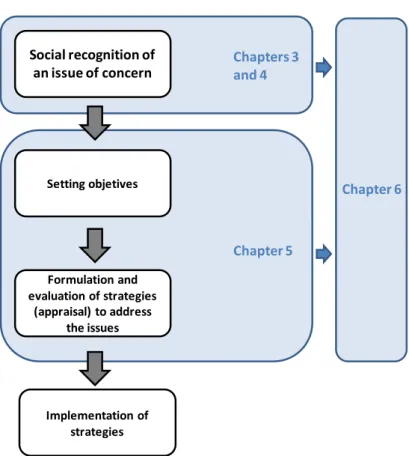
Fig. 1.2. Some issues within the policy making process for addressing town service decline27 Fig. 1.3. Relationship between the chapters from this thesis and the policy-making process30 Fig. 2.1. Location of Thornbury ... 34
Fig. 2.2. West of England’s traffic situation 2006 - 2016 ... 37
Fig. 2.3. Current and the projected library building ... 38
Fig. 2.4. Research design ... 39
Fig. 3.1. Example of a log-sheet ... 55
Fig. 3.2. Vandalised skate park ... 56
Fig. 3.3. Street lightning in Christmas ... 56
Fig. 3.4. Bus, representing the lowering quality of bus services ... 57
Fig. 3.5. Sensory garden ... 58
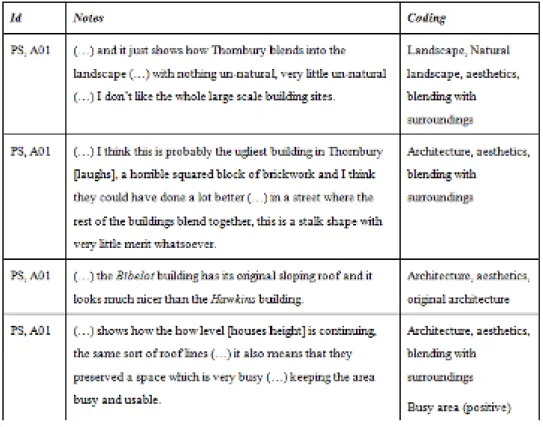
Fig. 3.6. Example of coded extracts from the transcript of participant A01’s interview ... 58
Fig. 3.7. St. Mary’s church - a historical building in Thornbury ... 59
Fig. 3.8. ‘A healthy leisure activity and the faces of satisfaction of those working’ ... 60
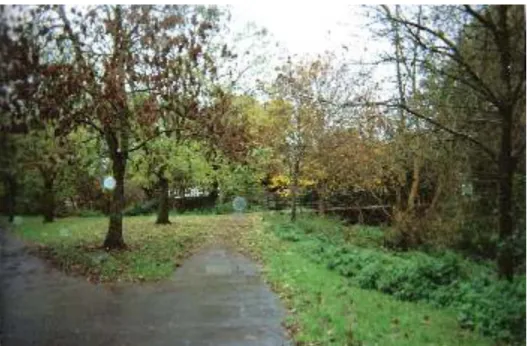
Fig. 3.9. The streamside walks: pleasant green areas in Thornbury ... 60
Fig. 3.10. Empty commercial premises in Thornbury’s town centre ... 61
Fig. 3.11. A supermarket out-of-town ... 61
Fig. 3.12. Locally owned and managed shop ... 62
Fig. 3.13. Advertisements on the Thornbury’s local webpage and local radio ... 65
Fig. 3.14. Local people and the Armstrong Hall Complex notice board ... 65
Fig. 3.15. Anti-social behaviour ... 67
Fig. 3.16. Anti-social behaviour ... 68
Fig. 4.1. Stock of shops in a town centre as a function of opening and closing shops ... 74
Fig. 4.2. General CLD for retail in a town centre... 77
Fig. 4.3. Relation between housing, people and jobs ... 78
Fig. 4.4. Relation between public and private transport ... 79
Fig. 4.5. Factors contributing to customer attraction ... 80
Fig. 4.6. Relation between out/edge-of-town retail and retail in the town centre ... 81
Fig. 4.7. Reinforcing feedback loops related with competition between in town and out/edge of town retail ... 82
Fig. 4.9. Location of South Gloucestershire in the South west of England ... 84
Fig. 4.10. Current and the projected library building ... 86
Fig. 4.11. Distance travelled to work by the Thornbury population ... 91
Fig. 4.12. Thornbury residents’ mode of travel to work ... 93
Fig. 4.13. Financial aid to retailers CLD ... 97
Fig. 5.1. Interest-influence matrix for stakeholder groups selection ... 112
Fig. 5.2. Criteria weights for all participants ... 118
Fig. 5.3. Average differences between optimistic and pessimistic scores (points) ... 122
Fig. 5.4. Average differences between pessimistic and optimistic scorings ... 123
Fig. 5.5. Contribution of scoring variability in each criterion to total variability ... 124
Fig. 5.6. Extreme and Average ranks for all participants ... 127
Fig. 5.7. Ranks for individual participants ... 128
Fig. 5.8. Average ranks for economic and technical criteria, for all participants ... 135
Fig. 5.9. Average ranks of options for criteria not usually used in town retail revitalisation 136 Fig. 5.10. Commercial property owners’ appraisal: weights and ranks ... 137
Fig. 5.11. Specialists appraisal: weights and ranks ... 139
Fig. 5.12. Average ranks for all participants and all participants except specialists ... 140
Fig. 5.13. CLD for the relation between retailers’ costs and the number of retail shops in a town centre ... 142
List of Tables
Table 1.1. Main ecological economics concepts used in this research ... 28
Table 1.2. Structure of this thesis ... 30
Table 2.1. Shops in Thornbury town centre ... 36
Table 2.2. Main methods used in this research ... 41
Table 3.1. Summary of results from the Health-Check questionnaires ... 52
Table 3.2. Some characteristics from the participants in the photo-survey ... 54
Table 3.3. Abstract or non-material aspects represented in the photo-surveys ... 66
Table 4.1. Summary of the elements the literature identifies as contributing to retail decline83 Table 4.2. Aspects related with retail services ... 87
Table 4.3. Thornbury’s transport & accessibility issues ... 87
Table 4.4. Aspects related with other services in Thornbury ... 89
Table 4.5. Aspects related with sense of community and social capital ... 90
Table 4.6. Summary of the changes in Thornbury related with retail decline ... 98
Table 5.1. Core options ... 110
Table 5.2. Discretionary options ... 111
Table 5.3. Participants recruited ... 112
Table 5.4. Discretionary options selected for the appraisal ... 113
Table 5.5. Additional options defined by participants ... 114
Table 5.6. Average number of criteria used by participants ... 115
Table 5.7. Criteria defined by participants ... 116
Table 5.8. Quantitative information on the criteria ... 118
Table 5.9. Positive aspects of core options ... 131
Table 5.10. Main elements from the conceptual model for retail and the criteria ... 141
Table 5.11. Summary of main appraisal points from participants regarding each option ... 142
Table 5.12. Qualitative and quantitative criteria ... 150
Table 6.1. Social trap definition ... 161
Table 6.2. Types of system traps ... 163
Table 6.3. Aspects related with retail services in the photo-surveys ... 169
Table 6.4. Criteria groups ... 172
Table 6.5. Short- and long-term consequences from out-of-town shopping ... 173
Table 6.7. Policies for dealing with social traps in Thornbury ... 183
Table A1.1. Response rates for the Thornbury’s Health-check audit ... 209
Table A2.1. Additional options by residents (participant ID) ... 211
Table A2.2. Additional options by local authorities (participant ID between brackets) ... 212
Table A2.3. Additional options by retailers and commercial property owners (participant ID)212 Table A2.4. Additional options by specialists (participant ID between brackets) ... 213
Table A2.5. Criteria definitions ... 213
Symbols and Acronyms
# Number
AC After Christ (after year 0)
APPSSG All-Party Parliamentary Small Shops Group
BC Before Christ (before year 0)
CLD Causal Loop Diagrams
Defra Department for Environment, Food & Rural Affairs
DIY “do it yourself”
DM Deliberative Mapping
DVD Digital Versatile Disc
EU European Union
Fig. Figure
Foe Friends Of the Earth
ID Identification (refers to participants’ codes in the MCM study)
IGD Institute of Grocery Distribution
IT Information Technology
M.I.T. Massachussetts Institute of Technology
MCDA Multicriteria Decision Aids
MCM Multicriteria Mapping
nef New Economics Foundation
NIMBY “Not In My Back Yard”
OECD Organisation for Economic Co-operation and Development
Phone Telephone
PS Photo-surveys
RDA Regional Development Agency
RQ# Research Question number #
SD Standard Deviation
SGCSPPT South Gloucestershire Council Strategic Partnership and Planning Team
TV Television
UK United Kingdom
Vet Veterinary
1.
Introduction
1.1. T
HE
R
ELEVANCE OF THIS
S
TUDY
Market towns have strong historical roots. Originally, they were the central point for farmers from surrounding areas to gather and sell their produce. Nowadays, for many of these towns, this function belongs to the past. However, market towns still have relevant functions. Firstly, they contain several historical buildings, features and places, which contribute to local heritage, identity and continuity for local populations.
Secondly, as their market role faded, other services arose, and market towns now provide other services and sources of wellbeing to their surrounding small towns and villages (Powe and Shaw, 2004; Lowe and Ward, 2007; Findlay and Sparks, 2008), helping to sustain rural communities. These include health, education, leisure and retail services, which are particularly relevant for the elderly, the disabled and low-income consumers because of their mobility difficulties, having trouble travelling out-of-town to access these services.
Retail services end up occupying much space in these towns and therefore they are a main contributor to the municipal budget through property and commercial taxes (Rotem-Mindali, 2012). Retail is considered an activity that affects city liveability and perceived quality-of-life (Razin, 2007 in Rotem-Mindali, 2012). Neighbouring municipalities often struggle to attract both consumers and investors to the local retail centres (Findlay and Sparks, 2008; Rotem-Mindali, 2012). Therefore, retail development has become an arena of competition for municipalities over retail entrepreneurs (Rotem-Mindali, 2012).
However, there is evidence of a decline in some of the services market towns provide to their citizens (e.g. Besser, 2009; Kures and Ryan, 2012; McManus et al., 2012), whether this be retail, transport, health, education or even, social capital.
need to travel further afield for services, going less and less to town centres, decreasing the incentives for town regeneration. This brings impacts in terms of the local economy. The further reduction in small independent local businesses will lead to spending to be made out-of-town. This impacts on the local communities as some studies suggest that 50% of turnover from local retailers is returned to the local economy. However large retailers may return as little as 5% to the local economy (Foe, 2005). There can also be impacts in terms of employment reduction, with a nation-wide closure of small independent retail, substituted by larger chain stores and supermarkets. As small independent retail is envisaged as one of the most accessible sectors for entrepreneurs, this substitution from in town small independent retail by out-of-town (and edge-of-town) larger chain stores and supermarkets leads to higher barriers for entrepreneurs to entry retail, giving rise to a loss of entrepreneurship (APPSSG, 2006).
In terms of social impacts, retail decline in small and medium towns brings accessibility issues (already mentioned above), but also, impacts on the diversity of retail and products available to citizens in their towns. Diversity relates to the range of shops. Much retail is lost and substituted by large chain stores and supermarkets, which are less characteristic and more homogenous. Additionally, the small shop forms a form of regular social contact for many (nef, 2004). Therefore, losing local retail can lead to a reduction on social contact by some.
Environmental impacts are related to increased travel in private cars, which leads to increased consumption of fossil fuels, carbon dioxide emissions and air quality degradation.
However, some authors disagree that such a decline is taking place. They argue that population, employment and businesses in rural areas are in fact growing (e.g. Lowe and Ward, 2007; McDonald et al., 2013). With the improvement in telecommunications, services such as internet banking, internet shopping, email and even working from home are becoming increasingly widespread (Lowe and Ward, 2007; Pratt, 2009; Rotem-Mindali, 2012). Therefore, services may just be changing format. At the same time, some market towns have been experiencing a growth in community groups and volunteering activities (e.g. Herbert-Cheshire, 2000; O'Toole and Burdess, 2005). These supply many services to the community where the market and local authorities fail to provide them; for instance, leisure and evening entertainment. This high level of community participation is what Kim and Kaplan (2004) defined as social support.
In the UK, independent convenience stores have declined 11% (5000 stores) between 2000 and 2005, 2000 of which were closed in 2005 (APPSSG, 2006). Between 1965 and 1990, 15% of small rural settlements saw their last general food shop close down. From 1991 to 1997, 4000 rural settlements were found in this situation (APPSSG, 2006). Between 2000 and 2004, there was the closure of 12,000 rural retailers (The Grocer, 2001), which has been an average of closure around 300 shops a year. Between January 2005 and October 2005 around 700 newsagents went out of business (APPSSG, 2006). In terms of financial services in the UK, there has been a decline in the number of bank branches. Between 2002 and 2007, 11% of bank and building society branches
closed1, and it is estimated that between 2012 and 2018 there will be an average of five bank branch closures per week2. In terms of Post Office branches, between 2003 and 2009, 28% of the Post
Office network in the UK was shut under closure programmes (Department for Business Innovation & Skills, 2010). These changes have a high impact in rural communities.
One of the main causes pointed out for this retail decline is the growth of out-of-town, larger chain stores and supermarkets. Supermarket numbers have been rising (see Fig. 1.1). According to the Institute of Grocery Distribution (IGD), a research and training charity on the food and consumer industry in the UK, supermarket numbers have been rising to the point where for each £1 spent in retail in the UK, 54.9 pence were spend in supermarkets 3.
Off course, this is not just a problem that small to medium towns face, but also a problem affecting cities and urban centres. From retail fragmentation to abandoned stores, building and neighbourhoods, retail revitalisation measures have been pursued also in urban studies literature (Weaver, 2013; Kures and Ryan, 2012; Rotem-Mindali, 2012).
Several governments have recognised this potential decline in the services provided by market towns, for example the UK launched The Market Towns Initiative in 2001 with the goal of assessing the
needs and potential of market towns and to agree and deliver economic, social and environmental improvements (Caffyn, 2004).
1 Metro newspaper:
http://www.metro.co.uk/money/60510-bank-branch-closures-soar-over-five-years#ixzz22r3lezME (last accessed: August 2012).
2 The Telegraph (18/02/2012):
http://www.telegraph.co.uk/finance/personalfinance/consumertips/banking/9089106/Five-bank-branches-to-close-each-week-by-2018-group-warns.html (last accessed: August 2012).
Fig. 1.1. Number of Supermarket stores in England and Scotland in 2004 and 2010
Source: BBC News UK, 22nd December 20104.
1.2. S
ERVICE
D
ECLINE IN
M
ARKET
T
OWNS
1.2.1. CHANGES OCCURRING IN MARKET TOWNS
Service decline can be seen as caused by a mismatch between the temporal scales of the changes in urban physical environment and socio-economic demand (Nijkamp, 1980; Jeffrey and Pounder, 2000). The urban physical environment has a 50–60-year period of change (Barnett and Bai, 2007), meaning that planning decisions from 60 years ago still condition today’s urban landscape and day -to-day lives. However, the socio-economic demand on urban infrastructure and services changes much faster, with turnovers of up to 10 years (Jeffrey and Pounder, 2000). The most common socio-economic changes identified in the literature for service decline in market towns are changes in residents’ characteristics, communications, accessibility and transport, and changes in the retail structures (Powe and Shaw, 2004; Phillipsonet al., 2006; Pratt, 2009; Rotem-Mindali, 2012).
1.2.1.1 Changes in residents’ characteristics
Changes in residents’ characteristics occur mainly in terms of demographic changes and migrations from the urban to the rural environment. The population in market towns is ageing (Lowe and Ward, 2007), which causes the decreased mobility of citizens; this contrasts with an increasing time availability for retirees to use the town and out-of-town amenities (Powe and Shaw, 2004).
Migrants from the urban to the rural can have a high impact on the towns. This is because: first, their lifestyles are more linked with urban areas and, second, if the migrants work out-of-town, the location of the workplace affects where the population shops (van Berkel and Verburg, 2011; Bittner and Sofer, 2013; Powe and Shaw, 2004). Migration is mainly encouraged by technological developments (such as telecommunications) combined with changes in the ease and costs of travel, which create the conditions for firms and individuals to relocate to rural settlements. New incomers may also contribute to an increase in social capital, as they are more adapted to new forms of communication and able to develop new networks (e.g., McManus et al., 2012; Park et al., 2012).
Lack of affordable housing affects the arrival of new citizens and thus changes the influence migrants have in town services. In fact, housing affordability has been presented as a key driver of social reconfiguration of many areas (Gallent and Robinson, 2011; Pratt, 2009).
1.2.1.2 Changes in communication networks, accessibility and transport
Changes in communication networks, accessibility and transport occur mostly because of availability of the internet, road proliferation, and decreased costs of private transport, amongst others. Apart from what was discussed in section 1.2.1.1, technological developments also provide the conditions for decentralised shopping opportunities, such as shopping in large retail areas out-of-town (Ahmedet al., 2008; Courtneyet al., 2007; Lowe and Ward, 2007; Kures and Ryan, 2012; Rotem-Mindali, 2012) and home working.
Car ownership has been increasing, together with congestion levels and daily travel (Ahmed et al.,
2008; Brake and Nelson, 2007; Koroneos and Nanaki, 2007). In the EU-155, citizens’ daily travel
increased from 32 km in 1991 to 37 km in 1999 (Koroneos and Nanaki, 2007). This dependence on private cars raises issues of equality, as low income citizens will have reduced access to services, employment and leisure (Ahmed et al., 2008; Dibben, 2003). Moreover, the increase in car use impacts on the quality and number of public transport and town services (Brake and Nelson, 2007), air quality and levels of energy consumption (Brake et al., 2007; Koroneos and Nanaki, 2007; Robèrt et al., 2007). Private cars and the associated infrastructure have social and economic impacts, including: traffic accidents; the dominance of cars in terms of area presence and space used; segregation between buildings, sites, and land uses and increased time needed for moving people and goods (Mazza and Rydin, 1997; Robèrtet al., 2007).
1.2.1.3 Changes in retail structures
With the decrease in the economic importance of agriculture, market towns face a shift in citizens from producers to consumers/users, with a concomitant need for an increase in the diversity of services (Besser and Miller, 2013; Brittner and Sofer, 2013). Retail is just one of these services, traditionally offered by small owner-managed shops, with a high level of local products for sale. However, retail formats and the way people shop have been changing, from small in-town shops to
5 Austria, Belgium, Denmark, Finland, France, Germany, Greece, Ireland, Italy, Luxembourg, Netherlands,
larger out-of-town (and edge-of-town) retailers, increased chain stores, and increased internet-shopping opportunities (Rotem-Mindali, 2012). According to the New Economics Foundation (nef, 2003) and Thomas and Bromley (2002 and 2003), sometimes these changes have been accelerated by measures trying to protect town centres. For example, the UK planning policies aiming at the protection of the identity of town centres from homogenisation from major retail stores, (e.g., the 2009
Planning Policy Statement 4, Planning for economic growth) introduced a series of restrictions on new retail developments inside town centres. Commercial developers that do not wish to comply with these restrictions end up developing their projects out-of-town. These new out-of-town retailers compete with local retailers, attracting consumers from the town centres and contributing to the increase in the use of private cars (Brake and Nelson, 2007; Caffyn, 2004; nef, 2003).
1.2.1.4 Other changes
Regional planning policies can also contribute to the degradation of towns. In the UK, for example, regional prioritisation of urban rather than rural settlements harms small and medium-sized towns. These new planning and development policies focus for restructuring and modernising regions on eight of the largest provincial cities and not regional units (Ravetz et al., 2004). Thus they lead to preferential funding and project development and approval for cities (Gibbs, 1997; Phillipson et al., 2006). They also lead to the centralisation of services, as they are relocated from within towns to neighbouring larger urban centres. A similar situation can be seen in other countries (e.g, in Portugal, Lopes, 2000 and Australia, McDonald et al., 2013). Another changing factor pointed out in the literature (APPSSG, 2006) for the UK retail sector is the rents paid by retailers to commercial property owners, which are upward only rental contracts - where rents of property can only raise and rarely decline.
Broader-scale factors, such as globalisation (increasing global competition in, for example, food markets), climate-change and EU regulations (e.g. re-orientation of the Common Agriculture Policy), all end up having effects on small towns, which therefore need to respond to challenges that are not just local.
1.2.2. RESPONSES FOR ADDRESSING RETAIL DECLINE
In the literature on urban studies, many measures dealing with the decline in retail can be found.
control and limit the size of supermarkets, thus ensuring the town centre as the primary focus of development (nef, 2003 and 2004) and policies on local competition.
There are policies more focused on fiscal interventions, using mechanisms to provide incentives both for customers and for investors/retailers. Examples of these are: business rate relieves for small retailers, support for community development finance initiatives, and the use of customer incentives, such as customer card schemes (nef, 2003 and 2004; Powe and Shaw, 2004). Several types of customer incentives can be identified in the literature, such as shop vouchers (to be used in local shops), also referred to as a type of community currency (Richey, 2007), leisure vouchers (with leisure discounts), community competitions, school awards and customer (or loyalty) card schemes.
There are also information & education policies. Examples of alternatives for addressing retail decline could be: providing information on the local economic flows (as suggested by nef, 2003 and 2004), using local media to provide information on local retail, vouchers and other promotions (Powe and Shaw, 2004), and education through employee skill levels (McGrath and Vickroy, 2003).
Other movements constitute alternatives to local development. Although not necessarily directed into addressing retail decline, these movements focus more on development as a whole, dealing with retail amongst other aspects. These are, for example, the slow city movement and the transition towns’ movement. The slow city movement was formed in October 1999 by four mayors in Italy (Knox, 2005). The goal was to foster the development of places that enjoy a robust vitality based on good food, healthy environments, sustainable economies and the seasonality and traditional rhythms of
community life. These ideas led to a charter with a 54-point list of pledges6. In 2001, the first 28 slow
cities were certified. All 28 charter members were Italian. By early 2005, the list had grown to 44 (including now towns in Germany, Norway and the UK), and more than a dozen other towns were actively seeking certification through pilot programmes in Italy, England, Brazil, Switzerland, Greece and Croatia (Knox, 2005). More than 100 other towns from around the world have inquired about joining.
The transition town movement began in Totnes, UK, in 2006 (Scott-Cato and Hillier, 2010). Transition town initiatives seek to build cohesive sustainable communities to prepare for a future with limited fossil fuels and a changing climate (Ingebrightsen and Jakonsen, 2012; Richardson et al., 2012; Scott-Cato and Hillier, 2010). To become a transition town, a town must sign up to a list of criteria set by the Transition Network (Scott-Cato and Hillier, 2010). It is an informal movement, searching for proactive responses to climate change, alternative ways of organising the economy, targeting behavioural change and involving the community from the town.
1.2.3. DECISION-MAKING PROCESSES IN TOWNS
According to the literature (e.g. Department for Communities and Local Government, 2009; OECD, 1993; Voß and Kemp, 2006), in general, we can define four main phases in decision-making processes:
(i) the identification of issues of concern, (ii) setting objectives,
(iii) the identification of a set of strategies, evaluation of these and selection of which strategies to pursue to address the issues of concern, and
(iv) the implementation of the options chosen, with consequent monitoring of efficiency and progress towards the goals.
Step (iii) usually involves defining a set of criteria, evaluating the options under these criteria and making a final decision on which options to implement.
In the UK, at the local level, local authorities are generally caught between national, regional and local objectives and priorities, through the different levels of policy and planning documents (Allmendinger et al., 2003; DEFRA et al., 2007). The definition of options to address the main issues or to reach the objectives set is usually undertaken by specialists within the local authorities, with some input from the public, which is surveyed by using, amongst others, public surveys (Allmendinger et al., 2003). Other main tools for the identification of policy alternatives at the local level within the UK are advisory groups and task forces, public hearings, free phone lines and the internet.
Evaluation of options is often strongly influenced by monetary evaluation tools such as cost-benefit or cost-effectiveness analyses (Gamper and Turcanu, 2007; Stagl, 2007; Stirling and Mayer, 2000). Cost-benefit analysis is a monetary evaluation of individuals’ preferences on the costs and benefits of alternatives (Munda, 2006; Ealeset al., 2003; Martínez-Alieret al., 1998). Cost-effectiveness analysis aims to identify the cheapest alternative for achieving an objective (Eales et al., 2003), rather than to compare costs and benefits. Efforts have been made to incorporate environmental and other values not generally included within market prices, through the use of several economic valuation
techniques7 (Pearman et al., 1996; Harris, 2002; Aragonés-Beltrán et al., 2008) or by complementing
them with environmental and risk assessments (Eales et al., 2003; Campaign for Better Transport, 2007; Department for Communities and Local Government, 2009). Before a final decision is made, a document detailing the final options and the results from the appraisal is made public and subject to consultation.
Some authors suggest that such process, in particular the monetary evaluation of options, can lead to difficulties in accommodating/promoting a sustainable development path. This is because of their inability to deal with the complexity of the issues brought by sustainable development such as dealing with long-term planning and diverse side-effects (Harris, 2002); uncertainty; and the existence of
multiple legitimate values, stakes and priorities at play (Martínez-Alier et al., 1998; Munda, 2006). Some of the aspects one might ask throughout the policy process are identified in Fig. 1.2.
Fig. 1.2. Some issues within the policy making process for addressing town service decline
1.3. S
COPE AND
R
ESEARCH
Q
UESTIONS
This research is focused on policy-making processes in small and medium towns. The main novelty introduced by this research is to take an ecological economics perspective. Ecological economics is a scientific approach that incorporates (philosophical) principles from ecology and neoclassical economics into a single discipline to manage resource use. This seems an appropriate approach for studying town service decline and it has had little use. One of the main features of ecological economics is that it is very diverse and inclusive in terms of perspectives and theories and its methodological pluralism. The main relevant features from ecological economics used in this research are presented in Table 1.1.
Social recognition of na issue of concern
Setting objetives
Formulation and evaluation of strategies
(appraisal) to address the issues
Implementation of strategies
Whether the definition of objetives has systematically been excluding certain values?
Is there agreement that there is a town service decline?
Is there agreement on the relevance and scale of the issue of concern?
Whose views were included in the definition and evaluation of strategies?
Which strategies were selected?
Bottlenecks in the effectiveness of strategies
Side-effects of strategies
Table 1.1. Main ecological economics concepts used in this research
Ecological economic
features considered in
this researcha
How they were included
Integrating different
scientific areas
Integrating different concepts, theories and methods: town planning , visual methods, values, uncertainty, MCDA, psychology
Integrating science
and policy
Considering decision-making processes as part of the problem and as a part of the solution.
Existence of multiple
legitimate values in
society
Using participatory approaches (e.g. multicriteria mapping and photo-surveys)
Acceptance of the
existence of
uncertainty on system
behaviour
Investigating for dominating feed-back loops (Chapter 4), best and worst case situations (Chapter 5), and for potential social traps (Chapter 6) – allowing for a better understanding of the town “behaviour” and identifying some bottlenecks on the implementation of strategies to address retail decline
Qualitative (as well as
quantitative) data
The use of in-depth qualitative interviews, visual methods and multicriteria mapping
a. E.g. Costanza (1989 and 1996), Norgaard, (1989). MCDA – Multicriteria Decision Aids.
The main research questions of this research are:
RQ1: What are the dynamics (causes and possible ways of addressing) of retail decline in market towns?
RQ2: What insights can be gained with the adoption of a methodological pluralism perspective, as advocated by ecological economics, to study town service decline?
The first research question is answered by the following sub-research questions, through a reflection on the Chapters 3 through 6:
RQ1.1: What is actually changing in market towns?
RQ1.2: What are the causes and the mechanisms driving this change?
RQ1.3: What appropriate responses can be developed to address town service decline?
RQ2.1: What are the advantages and limitations of using photo-surveys in the context of town planning?
RQ2.2: What are the advantages and limitations of combining systems diagramming with participatory tools such as photo-surveys in the context of town planning?
RQ2.3: What are the challenges and major advantages of using multicriteria mapping (MCM) at the town level?
RQ2.4: What is the usefulness of social trap theory for addressing retail decline in market towns?
Though empirically based, the research will be guided by concepts from ecological economics and with a critical realist approach for dealing with issues of uncertainty on the outcomes of policy-making and multiple legitimate values in society. This is explored in a context of a small town, Thornbury. Thornbury is a small market town in the South West of England. Thornbury presented many of the problems other towns across Europe presented, namely a reduction of service provision.
The expected contributions of this research are to advance the literature on town planning and retail revitalisation (e.g. rural studies, land use, rural planning) by developing and critically discussing empirical knowledge, generated by the involvement of stakeholders. However, there are also relevant insights into the use of the analytical methods, such as photo-surveys (visual methods), multicriteria mapping (a MCDA method) and systems thinking stemming from their use at the town planning context. These will be discussed throughout the thesis.
1.4. S
TRUCTURE OF THE
T
HESIS
Fig. 1.3. Relationship between the chapters from this thesis and the policy-making process
Table 1.2. Structure of this thesis
Chapters Objectives Main methods Main outcomes
Chapter 3a
Discuss some of the advantages and limitations of photo-surveys in the context of town planning
Photo-surveys Applicability of photo-surveys in town planning: main advantages and disadvantages
Chapter 4
Explore the perceptions of working and living in market towns for their residents and provide a better
understanding some mechanisms in Thornbury influencing retail decline
Photo-surveys and systems
diagramming/ theory development
Main mechanisms and variables changing in Thornbury
Social recognition of an issue of concern
Setting objetives
Formulation and evaluation of strategies
(appraisal) to address the issues
Implementation of strategies
Policy making process
Chapters 3 and 4
Chapter 5
Chapters Objectives Main methods Main outcomes
Chapter 5
Initiate a discussion about how to judge policy options for town revitalisation and the extent to which different ways of judging these options may or may not contribute to improved town revitalisation strategies, compared to traditional decision-making
Multicriteria mapping
Understanding on how well the objectives/values used for the appraisal of town renewal policies represent citizens’ concerns; identification of barriers to the implementation of policy options; the performance of policy options under the set of criteria defined by participants; and a reflection on the use of MCM at the local level
Chapter 6
Identify social traps in Thornbury and ways of responding to these social traps
Discussion of findings from Chapters 4 and 5, under a social trap perspective/ theory development
Identification conflicts of values and interests leading to social traps; identification of causes of retail decline; identification of measures to address retail decline
Chapter 7
What are the implications of these findings to the
understanding of town service decline?
Discussion on findings from Chapters 3 to 6/ further research
Summary of what is town service decline (what is changing) and the causes and processes involved; policy implications. Evaluation of the approach followed in this research. Future work
2.
Study Area and Methods
A central issue of this research is to understand town service decline, which includes some of the mechanisms (social and political) which can be contributing to, or influencing the service decline. The focus of research has been on the employment of methods that enable the researcher to understand and identify some of these mechanisms. This is explored in the context of Thornbury, a small market town in the south west of England. This chapter describes the study area and the research design employed in this thesis.
2.1. S
TUDY
A
REA
The study area for this research is Thornbury, a small market town in the UK with 12 250 habitants (Census 2001), which, from the turn of the millennium, was facing some of the symptoms of service decline, such as a decline in retail services in the town centre, in the number of post-office branches, and in public transport services.
2.1.1. DESCRIPTION OF THORNBURY
Thornbury is a small market town in South Gloucestershire, South West of England (Fig. 2.1). It is located 19 km North from the city (on the north fringes of Bristol’s green belt). At the time of this research, it was seen as an urban area in a rural county. Thornbury’s local authority was South Gloucestershire District Council, with offices in Thornbury and Yate. Thornbury also had a town council, located on the main street, the High Street.
is also a Tudor castle in Thornbury, the home of Edward Stafford, Duke of Buckingham, a medieval lane and a variety of architectural styles, including Tudor and Victorian.
Fig. 2.1. Location of Thornbury
On the right: Source: South Gloucestershire Council.
Thornbury is a central point for several villages and smaller towns, most of these with populations below 1000 habitants. They are for example: Almondsbury, Alveston, Aust, Berkley, Cromball, Falfield, Oldbury-on-Severn, Olveston, Pilning/Severn Beach, Rangeworhty and Tytherington. The services and infrastructure that Thornbury provided to its citizens and surrounding towns and villages included employment, health services (through its hospital), education, commercial facilities, leisure (through the green areas, cafés, the sports centre, the library), business meeting space, and other services offered by the District council offices amongst others.
Thornbury has an active community, which voluntarily organises several events in the town, such as the Victorian Fair, the Christmas Lights event, Thornbury in Bloom and the Arts Festival. There are also a high number of clubs and organisations such as Sustainable Thornbury, the community transport 4Towns Vale Link, a local website myThornbury.com, the local radio ThornburyFM, the museum, the library, the green waste composting initiative and several sports clubs.
2.1.2.
THORNBURY’S
MAIN CHALLENGES
main retail facilities in Thornbury: the St. Mary Centre, an open-air shopping centre, and a Tesco store at the edge of the town. The Scottish Metropolitan plc, also known as the peer-group by the local population, managed the St. Mary Centre. St. Mary Centre was the largest shopping area in Thornbury, located right at the heart of the town centre. This centre was built during the 1970s and 1980s (The Planning Practice et al., 1996). The Tesco store was opened at the edge-of-town in December 1995 (The Planning Practiceet al., 1996).
Thornbury started to present many of the problems other towns across Europe present, namely an apparent reduction of service provided to its citizens and visitors. There was an ageing population, which has been identified as a critical issue for the whole South West of England by the integrated regional strategy and the regional economic strategy for the region (South West RDA, 2006). There was also pressure for increasing amounts of housing (South West RDA, 2006). According to the Core Strategy for South Gloucestershire (South Gloucestershire Council, 2008), South Gloucestershire
would need to accommodate 30 800 new houses by 2026 for the growing population numbers, from which 2300 houses were to be in Thornbury and its surrounding areas. This represented a huge pressure to find land for building and could jeopardise green field areas (including Bristol’s green belt).
To what concerns retailing services, during the late 1990s the building of a major retail facility at Cribbs Causeway resulted in the prediction, by the Planning Practice et al. (1996), of the potential decline in town centre services, due to a shift from local to out-of-town shopping. By the turn of the millennium out-of-town shopping was mostly done on the Mall at Cribbs Causeway, the Broadmead, and the Galleries in Bristol (Gregory, 2001). In 2006, in Thornbury, no record was being taken on the number of empty premises.
Initial visits to the town centre during 2006 revealed 30 independently owned shops, 17 chain stores spread over 18 types of retail (see Table 2.1) and three closed spaces. Retailers such as department and catalogue stores (e.g. Argos), off license (although existent in Thornbury), household items (furniture, kitchen, etc.), cinema/theatre, Electronic/IT (TVs, phones, computer, etc.), DIY/builders’ merchant and Camera/photo developing shops were non-existent in Thornbury town centre. In 2007, two additional retail spaces closed down (a video rental store and a supermarket).
Table 2.1. Shops in Thornbury town centre
Source: author’s own survey.
Type of shop Number of shops in
the town centre
Food retailer (butcher, baker, supermarket, etc.) 4
Newsagents/tobacconists 1
Stationary/books 2
Restaurant/takeaway/fast food/coffee shop 8
Pub/bar 4
Professional (insurance, accountancy, legal, etc.) 3
Estate agents 2
Health care shop/pharmacy 2
Clothing retailer (shoes, accessories, etc.) 2
Pet shop/pet supplies/vets 1
Barber/hair saloons/beauticians and cosmetics 1
Toys/sports/cycling/outdoor leisure 1
Mechanics/car accessories/petrol station 2
Music/games/DVD/video (includes rentals) 1
Garden centre/florists 1
Dry cleaning/launderette 1
Travel agents 1
Other (betting shop, casino, taxis, antiques, watch repairers, charity shop, cobblers, jewellers, etc.)
Fig. 2.2. West of England’s traffic situation 2006 - 2016
Left: situation for 2006. Right: situation for 2016. Source: images adapted from West of England Sub-region (2007).
2.1.3. INITIATIVES FOR RESPONDING TO THORNBURY CHALLENGES
Dealing with housing pressures, ageing population (South West RDA, 2006) and adequacy of services to this population, the decreasing retail services and the increasing traffic is a challenging task for Thornbury’s planning and decision-making bodies. In order to get the financial support needed to deal with such challenges, Thornbury engaged in the Market Towns Initiative. In parallel, South Gloucestershire council has also been conducting a series of consultations within the community for the preparation of the Community Strategy, which is running from 2009 until 2015. The consultation processes were aimed at identifying the main issues that local residents and businesses felt should be addressed in the Community Strategy.
The Market Towns Initiative would be used as a part of the Community Strategy development process and implementation. As a requirement for the Market Towns Initiative, Thornbury developed the Town Centre Strategy Group, a partnership composed of representatives from Thornbury’s Town Council, Chamber of Commerce, some local businesses, South Gloucestershire Council and the St. Mary
Centre8. In 2006, an audit entitled Health-Check was developed by the Town Centre Strategy Group, aimed at identifying issues relating to the economy, environment, society and community life and transport. A survey of households, small business and visitors detailing their concerns with the development of the town was later conducted, between July and August 2007, with five questionnaires targeted at Thornbury’s households and businesses. Overall, 5500 questionnaires were sent out for the Thornbury community survey, and a 3.5% response rate was obtained.
Further to this, as a way of revitalising Thornbury’s town centre, a refurbishment of the library building was proposed, to redevelop the library building from a single storey to a three-storey building which could accommodate commercial and office space, as well as to improve the library facilities (Fig. 2.3). Under this project, the current library would be moved from the ground floor to the first floor. The ground floor would accommodate a retailer, whose details were not provided by the council; and the top floor would accommodate Thornbury Motors’ offices, a local car retailer. The basis for such as
project was that the retailer on the ground floor would attract people to the town centre, therefore improving the retail conditions around the town centre in general. This project proved highly controversial, and at the beginning of this empirical research, no decision by the council on whether to move forward with the proposal had been made.
Fig. 2.3. Current and the projected library building
Left: current library building. Right: schematised outcome from the refurbishment of the library building.
2.2. R
ESEARCH
D
ESIGN
Fig. 2.4. Research design
Investigate on the state of the system Investigate on how the system behaves Interviews Secondary data Multicriteria mapping Photo-surveys Analysis by participants Systems’ diagrams (theory building) Criteria, barriers, bottlenecks, other aspects affecting the functioning of different measures Social traps identification (theory building) Reflection on the methods used
What are the dynamics of retail and retail decline in market towns?
What insights be gained with the adoption of a methodological pluralism
perspective to study town service
decline?
Thornbury
Study area
Aims
Data collection methods
Data analysis methods
Answer research
The empirical research started with an identification of the main issues affecting Thornbury’s living and working environment, together with citizens from Thornbury. The aim was to understand if there is sense of town decline amongst town residents and workers and at the same time, to unravel some of the social relationships and perceptions towards addressing retail decline. This phase of the research was an essential component of the author’s learning process (due to cultural differences and lack of living experience in the town), establishing contacts and participating in some of the social networks. Chapter 3 reports on the results from this first contact with Thornbury. The empirical work was based on a photo-survey, where participants were asked to take photographs of positive and negative aspects of living and working in Thornbury and were subsequently interviewed. This is a method that has had little use in town planning, but widely used in visual sociology and anthropology, and could serve as a complement to other tools already used in town planning processes (such as surveys and questionnaires). The use of such method allowed for a discussion on its use for town planning, which is the focus of the Chapter.
The results obtained were then interpreted and complemented with the literature on market towns and with some secondary data on Thornbury to identify some of the main elements and mechanisms that are changing in Thornbury and could be understood as causes or even service decline itself. For this analysis, we used system thinking tools, in particular systems diagramming, to develop a conceptual model to describe retail decline. This analysis is described Chapter 4.
The second stage in this research explores strategies to address town service decline. This is achieved by focusing on the discussion of options for tackling town decline described in the literature, but also, on contributing to improve the quality of the processes of evaluating and selecting which options to implement. Chapter 5 tests the use of multicriteria mapping (MCM) to identify the relevant criteria to use in town appraisal processes considering the perspectives of different stakeholders. This method allows each participant to define his/her own appraisal criteria. These criteria participants felt relevant to include when evaluating retail decline options, were compared with criteria commonly used in town planning decision-making processes, in order to understand if there are differences, as these differences can result on the choice of one option over another. Chapter 5 also analyses participants’ comments and appraisals of the different options and potential barriers that can affect the performance of each option. This information helps understanding some of the social, cultural and political mechanisms in Thornbury, providing valuable information on understanding retail decline and bottlenecks in addressing it.
Chapter 6 makes use of all qualitative data gathered through Chapters 3 to 5 to identify if retail decline can be seen as a social trap, possible ways of dealing with these social traps and investigating whether traditional ways of dealing with retail decline are contributing to address these social traps.
The information gathered through Chapters 3 to 6 allow understanding what is the decline happening in Thornbury and the internal and possible external factors and mechanisms feeding this decline. It also allows understanding some ways of dealing (and ways not dealing) with retail decline.
Table 2.2. Main methods used in this research
Chapters Data sources Data
collection
methods
Data analysis methods
Chapter 3
Residents in Thornbury and surrounding villages, selected through a snowballing technique
Photo-surveys Analysis of the photos by participants. Comparison of results with the literature on photo-surveys.
Chapter 4
Chapter 3 and literature Theory development and exploration using systems diagramming.
Chapter 5
Stakeholders from
Thornbury, selected through a stakeholder analysis
Multicriteria mapping
Analysis of the criteria selected by participants; ranks of the options per participant and per criteria; best and worst case scenarios of each option.
Chapter 6
Chapters 3, 4 and 5 and literature on Thornbury
Theory development and exploration under the light of social trap theory.
2.3. E
THICAL
C
ONSIDERATIONS
R
EGARDING
D
ATA AND
C
ONFIDENTIALITY
Given the nature of the data, i.e. some of participants’ personal information and their views on several aspects regarding Thornbury, written data was handled according to the University of Leeds Code of
Practice on Data Protection9. When recruiting for, and at the beginning of each interview, participants were advised as to why the data was being collected and the purposes to which it would be used. This involved informing them about the research project as a whole, the outcomes, the intent to conduct an exhibition with the photographs, and the intent to produce reports with the main results from the research. They were also informed that these two forms of presenting the results would be as far as the role of the researcher would go, but participants were encouraged to do what they wished with the report.
Participants were informed at the beginning of the interviews that anonymity would be assured. During the data analysis, participants were assigned codes to replace their real names; other personal and institutional information was also treated as confidential.
Before all interviews, a form was provided to the participants asking for their permission to audio-record the interviews, and informing them that if they wished to stop the interview at any point they were free to do so.
All of the data that were collected from interviews was kept safe from unauthorised access and accidental loss or destruction (as copies of the data in different formats were made). Transcriptions of audio-recordings were made and accessed only by the main researcher and audio-recordings will be destroyed as soon as data analysis is finished.
3.
Using Photo-surveys to Inform
Participatory Town Planning Processes:
Lessons from practice
10A
BSTRACT
Photography based methods have been under-utilised as a participatory tool to inform urban planning and decision making processes on citizens’ concerns, although they present several potential advantages in terms of facilitating communication on complex aspects to decision-makers. In this Chapter we explore the potentialities and limitations of Photo-Surveys (PS) for this purpose drawing upon the case of Thornbury, a small town in the Southwest of England. We organised a PS exercise where participants were asked to take photos on positive and negative aspects of their town. Participants were then interviewed to discuss their photos.
PS allowed obtaining high amount of in-depth information with a lower number of participants than other methods, helping to build an improved understanding of some of the issues identified. Some of the PS criticisms found in the literature such as reliability and objectivity in the interpretation of results (photos) and depth of the information gathered could be demystified. One of the main findings was that aspects that could be deemed as of difficult visual representation (e.g. feelings, past events, abstract aspects) were present in the photos.
Given the low number of participants, views gathered cannot be seen as representative, but they provide interesting insights about living in Thornbury and support reflection upon the use of the method. PS also worked as an entry point to some of Thornbury’s social networks, allowing the author
10 This chapter was published at the Land Use Policy journal. Full reference: da Silva Vieira, R., Antunes, P.
to get acquainted with the community, thus paving the ground for further participatory work. However, there some issues regarding anonymity that will need to be dealt with.
PS asks for little knowledge on the town and on the main issues affecting the population, and therefore, can be useful for developing surveys and questionnaires, as a tool for participatory rural appraisal or participatory active research. It can also be used for gathering views in the early stages of the evaluation of plans and projects, explore an issue more in deep including an array of stakeholder perspectives on the matter.
Keywords: Photo-survey; citizen participation; visual representation; visual method
3.1. I
NTRODUCTION
Photo-surveys are a type of visual method that makes use of photographs that can be produced by participants and interpreted by the participants themselves or the researcher. Photo-surveys have been used in areas such as visual sociology, anthropology and public health to gather the views from either subjects whose verbal communication can be difficult such as young people when expressing their values and feelings, or subjects speaking on sensible matters such as HIV, young mothers, homelessness. Gathering views from these communities is extremely valuable for local policy-making. Further to this, photo-surveys are claimed to provide documentation of traditional knowledge, which is deemed relevant in areas such as adaptive management (Dougill et al., 2006), and improved awareness and engagement on local issues (see Petheram et al., 2012). All of these aspects are extremely valuable when dealing with planning issues with some degree of complexity and uncertainty.
Some of the issues identified above are not covered by traditional methods such as questionnaires/surveys, who sacrifice the richness of information in order to obtain consistent and statistically meaningful conclusions on social preferences (Creighton, 2005; Sherren et al., 2010).
However, photo-surveys have mostly remained an under-utilised method in planning and decision-making processes. This might be for several main reasons. One is the risk of bias that can be introduced by the researcher when framing and interpreting the photographs. The other is the ethics vacuum existing to what concerns the use of photographs (regarding issues of anonymity in terms of specific buildings, car number plates, people represented in the photos), especially if they are taken by participants rather than the researcher. Furthermore, there is the risk of biases towards aspects more prone to visual representation (Gauntlett and Holzwarth, 2006; Moore et al., 2008).