i
Ana Clara Caleiro Coelho de Carvalho
Licenciada em Ciências da Engenharia e Gestão Industrial
Digital Startups Accelerators:
Characteristics and Evolution Trends
Dissertação para obtenção do Grau de Mestre em Engenharia e Gestão Industrial
Orientador: Professor António Grilo, Professor Auxiliar com
Agregação, FCT-UNL
iii
Ana Clara Caleiro Coelho de Carvalho
Licenciada em Ciências da Engenharia e Gestão Industrial
Digital Startups Accelerators:
Characteristics and Evolution Trends
Dissertação para obtenção do Grau de Mestre em Engenharia e Gestão Industrial
Orientador: Professor António Grilo, Professor Auxiliar com Agregação, FCT-UNL
v
Digital Startups Accelerators: Characteristics and Evolution
Trends
Copyright:
Ana Clara Caleiro Coelho de Carvalho, Faculdade de Ciências e Tecnologia da Universidade Nova
de Lisboa
vii
ix
Some people have been most helpful during the development of this master dissertation and I would like to thank them in a very special way.
To my supervisor, Professor António Grilo, I would like to thank for his help, support, guidance and availability during the development of this thesis.
To Professor Aneesh Zutshi and Professor Joaquim Pina, for their support throughout the entire time. To Beta-i team, I would like to thank for having welcomed me into the company and having helped during my process of understanding the accelerator sector.
To my parents, Clara and António, I would like to thank for always having supported me and for having believed in me ever since I was a little child. My accomplishments are yours too, because it is due to both of you that I have become the person I am today.
To my cousin Telma, I would like to thank for her friendship and support.
To my dearest friends Francisco, João, Jessica, Maria, Matilde, Mariana, Beatriz, Joana and Susana, I would like to thank for cheering me up in the bad times and making me laugh until my stomach hurts. To Professor Ayana Mateus, whom I met when I had ‘Probabilidades e Estatística’, I would like to thank for her friendship and for always having been nice to me ever since the first class.
To Professor Ruy Costa, I would like to thank for having given me access to documents related to statistical analysis.
xi
In a period where economies face challenges on a global scale, entrepreneurship is an alternative and viable option for many people. Due to the considerable impact it has on the economic development of a region, many authors have studied this subject throughout the years, so the literature available is quite rich and complete.
Entrepreneurial ecosystems include numerous entities that interact with each other in unique symbiosis relationships and these entities may be startups, universities, the government, investors and organizations that provide support to the startups in their development stages, such as accelerators, incubators and co-working spaces. However, some of these entities, especially the startup accelerators, are still very recent, since the first one was only launched in 2005. For that reason, there still is not an in-depth study on this subject and there are not many rigorous conclusions with regards to the nature and impact of these organizations, that are believed to play a very important role in the development of startups.
Therefore, this dissertation is motived by that lack of rigorous knowledge on the subject of accelerators. The development of a research work of this kind may be a valuable contribution for the current knowledge on the subject, as well as for future research.
The objective of this dissertation is to analyse the actual and future trends of accelerators, considering a worldwide scale, with a particular focus on their business models, acceleration programs, strategies, challenges and priorities for the future. This thesis is based on an in-depth literature review, which includes the most relevant concepts about entrepreneurship and accelerators. Following the literature review, there is an empirical study that is based on an online survey that was carried out amongst accelerators, which benefits from its strong statistical component. Moreover, there are Case Studies based on some organizations’ business models, that are relevant for the analysis.
Throughout this research work, we concluded that accelerators are a worldwide phenomenon, due to the impact they have both in the development of the startups, as well as in the economic development of the region they operate in. Moreover, these organizations have different business models and, according to their nature and characteristics, they have distinct ways of facing the challenges and priorities for the future.
xiii
Numa era em que as economias enfrentam constantes desafios numa escala global, o empreendedorismo surge para muitos como uma opção alternativa e viável. Dado o considerável impacto que este apresenta a nível de desenvolvimento económico de uma região, vários autores dedicaram-se a investigar o tema ao longo dos anos, pelo que a literatura disponível é bastante rica e completa.
Os ecossistemas de empreendedorismo contemplam um vasto leque de entidades que interagem em relações únicas de simbiose, de onde se destacam as startups, as universidades, o governo, os investidores e as entidades que prestam apoio às startups em fase de desenvolvimento, as quais incluem aceleradoras, incubadoras e espaços de co-working. Porém, algumas destas entidades, especialmente as aceleradoras de startups, são ainda bastante recentes, visto que a primeira surgiu apenas em 2005. Como tal, ainda não existe um estudo aprofundado sobre o tema nem existem muitas conclusões rigorosas acerca da natureza e impacto destas entidades, que se crê desempenharem um papel preponderante no desenvolvimento de muitas startups.
Assim, esta dissertação é motivada por essa lacuna de conhecimento rigoroso no que diz respeito a aceleradoras. O desenvolvimento de um trabalho académico neste âmbito poderá constituir um apoio valioso para o estado do conhecimento atual, bem como para futuras abordagens e estudos.
O objetivo deste trabalho passa por analisar as tendências atuais e num futuro próximo das aceleradoras a nível mundial, com enfoque nos seus modelos de negócio, programas de aceleração, estratégias, desafios e prioridades para o futuro. Este trabalho académico assenta numa abrangente revisão bibliográfica, que contempla os conceitos mais relevantes sobre empreendedorismo e aceleradoras. A este levantamento bibliográfico segue-se o estudo empírico que foi realizado com base num inquérito online a aceleradoras, o qual beneficia de uma forte componente estatística. Existem ainda Casos de Estudo que foram desenvolvidos com base em modelos de negócios de algumas aceleradoras, que se consideraram pertinentes para análise.
Assim, a partir deste estudo concluiu-se que as aceleradoras constituem um fenómeno de escala mundial, pelo impacto que têm no desenvolvimento das startups e do próprio desenvolvimento económico do local onde operam. Para mais, estas organizações variam no que respeita aos seus modelos de negócio e, consoante a sua natureza e características, apresentam formas distintas de encarar os desafios e prioridades para o futuro.
xv
Chapter 1 - Introduction ... 29
1.1 Context ... 29
1.2 Research Objectives ... 31
1.3 Methodology ... 32
1.3.1 Research Design ... 32
1.3.2 Data Collection Methods ... 33
1.4 Research Questions ... 35
1.5 Organization of the dissertation ... 35
Chapter 2 – Entrepreneurship and Entrepreneurial Ecosystems ... 37
2.1 Defining Entrepreneurship and Entrepreneur ... 37
2.2 Entrepreneurial Ecosystem and Environment ... 40
2.3 Entrepreneurial Ecosystem Actors ... 45
2.3.1 Startups ... 45
2.3.2 Government ... 51
2.3.3 Corporations ... 51
2.3.4 University ... 53
2.3.5 Support organizations ... 53
2.3.6 Investors ... 56
Chapter 3 - Accelerators ... 61
3.1 Definition ... 61
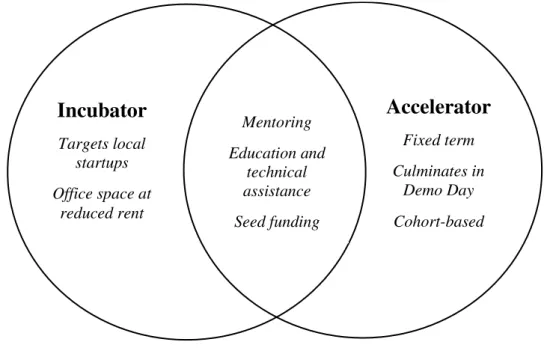
3.2 Differences between an accelerator and other entities ... 63
3.3 The rise of accelerators during the last years ... 66
3.4 Accelerators in the world ... 68
xvi
3.6.1 Benefits for startups ... 73
3.6.2 Benefits for other stakeholders ... 76
3.7 Different types of acceleration programs ... 77
3.7.1 Pre-acceleration ... 77
3.7.2 Generic acceleration ... 78
3.7.3 Vertical acceleration ... 78
3.8 Funding ... 79
3.8.1 Funding of the accelerator ... 80
3.9 Equity ... 82
3.10 Internationalization ... 83
3.11 Accelerators’ Key Performance Indicators (KPI’s) ... 84
3.12 Future of acceleration ... 85
Chapter 4 – Results: Descriptive Statistics ... 87
4.1 Overview of the survey ... 87
4.2 Descriptive statistics and assumptions ... 89
4.3 Country where the organization comes from (Sample size: 50 answers) ... 89
4.4 Nature of the organization (Sample size: 50 answers) ... 90
4.5 Number of people working full-time at the organization (Sample size: 50 answers) ... 90
4.6 Acceleration in more than one country (Sample size: 50 answers) ... 91
4.7 International startups (Sample size: 44 answers) ... 91
4.8 Equity in 2015 (Sample size: 50 answers) ... 92
4.9 Equity in 2016 (Sample size: 32 answers) ... 92
4.10 Equity in 2015 vs Equity in 2016 (Sample size: 32 answers) ... 93
4.11 Equity amount in 2015 (Sample size: 19 answers) ... 93
4.12 Equity amount in 2016 (Sample size: 15 answers) ... 94
4.13 Generic acceleration (Sample size: 50 answers) ... 94
xvii
4.16 Organizations that run each different combinations of programs (Sample size: 44 answers) 96
4.17 Acquisitions & Mergers (Sample size: 32 answers) ... 96
4.18 Metrics (Sample size: 50 answers) ... 97
4.19 Number of startups in 2015 ... 98
4.19.1 Total number of startups in the generic programs in 2015 (Sample size: 25 answers) 98
4.19.2 Total number of startups in the vertical programs in 2015 (Sample size: 7 answers) 98
4.19.3 Total number of startups in the pre-acceleration programs in 2015 (Sample size: 3 answers) 99
4.19.4 Total amount of startups in the generic, vertical and pre-acceleration programs in 2015 (Sample size: 0 answers) ... 99
4.20 Number of startups in 2016 ... 99
4.20.1 Total number of startups in the generic programs in 2016 (Sample size: 28 answers) 99
4.20.2 Total number of startups in the vertical programs in 2016 (Sample size: 24 answers)
100
4.20.3 Total number of startups in the pre-acceleration programs in 2016 (Sample size: 25
answers) 100
4.20.4 Total number of startups in the generic, vertical and pre-acceleration programs in
2016 (Sample size: 20 answers) ... 101
4.21 Variation in the number of startups in the programs between 2015 and 2016... 101
4.21.1 Variation between the number of startups in the generic programs between 2015 and
2016 (Sample size: 18 answers) ... 102
4.21.2 Variation between the number of startups in the vertical programs between 2015 and
2016 102
4.21.3 Variation between the number of startups in the pre-acceleration programs between
2015 and 2016 (Sample size: 3 answers) ... 103
xviii
4.24 Funding of the generic programs (Sample size: 26 answers) ... 111
4.25 Priorities for 2016 (Sample size: 30 answers)... 112
4.26 Challenges for the future (Sample size: 23 answers) ... 114
Chapter 5 – Results: Statistical Inference ... 121
5.1 Statistical procedure ... 121
5.2 Correlations using the Kendall Tau-b coefficient ... 123
5.3 Principal Component Regression (PCR) ... 125
5.3.1 Value for the entrepreneur who takes part in the generic programs ... 125
5.3.2 Strategic reasons to run generic acceleration ... 127
5.3.3 Challenges for the future with regards to accelerators that run generic acceleration 129 5.3.4 Challenges for the future with regards to accelerators that may or may not run generic acceleration ... 131
Chapter 6 – Results: Case Studies ... 135
6.1 Structuring of the Case Studies ... 135
6.2 Case Studies ... 136
6.2.1 TechStars & UP Global ... 136
6.2.2 NUMA ... 138
6.2.3 Bethnal Green Ventures ... 140
6.2.4 500 Startups ... 143
6.2.5 Beta-i ... 145
Chapter 7 – Addressing the Research Questions ... 149
7.1 How are accelerators evolving around the world? ... 149
7.2 What characterizes the dynamics of acceleration programs? ... 151
Chapter 8 – Conclusions, Limitations and Recommendations for Future Research ... 153
8.1 Conclusions ... 153
xix
Bibliography ... 152
Appendix I………...161
Appendix II...……….………176
Appendix III…………...………213
xxi
Figure 1.1 – Main elements of the entrepreneurial ecosystem ... 30
Figure 1.2 - Data Collection Methods ... 34
Figure 2.1 - Domains of the Entrepreneurship Ecosystem ... 43
Figure 2.2 - Innovation ecosystem ... 44
Figure 2.3 - Scalable startup ... 46
Figure 2.4 - Core elements of venture creation process ... 49
Figure 2.5 - Model showing the relationship between opportunity, propensity to enterprise, and ability to enterprise ... 49
Figure 2.6 - Correlation between the environmental conditions and the core elements of new venture creation ... 50
Figure 3.1 - Venn diagram of incubator and accelerator characteristics ... 65
Figure 3.2 - Location of the programs in 2014 ... 68
Figure 3.3 - Corporate Accelerators divided by Sector Focus ... 72
Figure 3.4 - Collaboration benefits reported by startups and scale-ups ... 74
Figure 4.1 - Main topics included in the survey that was carried out amongst accelerators ... 87
Figure 4.2 - Identification of the 3 profiles of answers ... 88
Figure 4.3 - Percentage of organizations from each country ... 89
Figure 4.4 – Percentage of each type of organization ... 90
Figure 4.5 - Percentage of people working full time at the organization ... 90
Figure 4.6 - Percentage of organizations that run or do not run acceleration program(s) in more than one country ... 91
Figure 4.7 - Percentage of organizations with 0% and 50-80% international startups ... 91
Figure 4.8- Percentage of organizations that took or did not take equity in 2015 ... 92
Figure 4.9 - Percentage of organizations that will or will not take equity in 2016 ... 92
Figure 4.10 - Comparison of the trends of equity in 2015 and 2016 ... 93
Figure 4.11 - Percentage of organizations that run or do not run generic acceleration ... 94
Figure 4.12 - Percentage of organizations that run or do not run vertical acceleration ... 95
Figure 4.13 - Percentage of organizations that run or do not run pre-acceleration ... 95
Figure 4.14 - Percentage of organizations with each combination of programs ... 96
Figure 4.15 - Percentage of organizations that will do acquisitions/mergers in 2016 ... 97
Figure 4.16 - Percentage of organizations that use each metric ... 97
xxii
Figure 4.19 - Percentage of organizations that have selected each option as their second priority for 2016 ... 113 Figure 4.20 - Percentage of organizations that selected each option as their third priority for 2016 .. 114 Figure 5.1 - Object Points Labeled by Casenumber applied to the topic ‘Value for the entrepreneur who
takes part in the generic programs’ ... 126 Figure 5.2 - Object Points Labeled by Casenumber applied to the topic ‘Strategic reasons to run generic
acceleration’ ... 128 Figure 5.3 - Object Points Labeled by Casenumber applied to the topic ‘Challenges for the future with
regards to accelerators that run generic acceleration’ ... 130 Figure 5.4 - Object Points Labeled by Casenumber applied to the topic ‘Challenges for the future with
xxiii
xxiv
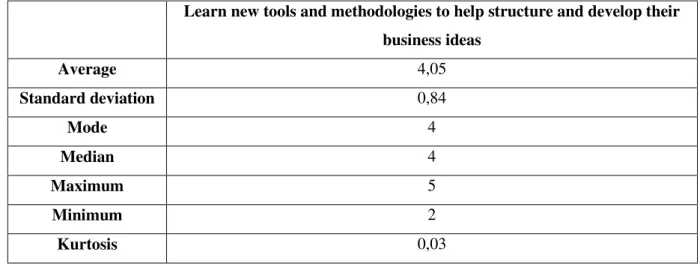
Table 4.21 - Descriptive statistics on ‘Learn new tools and methodologies to help structure and develop
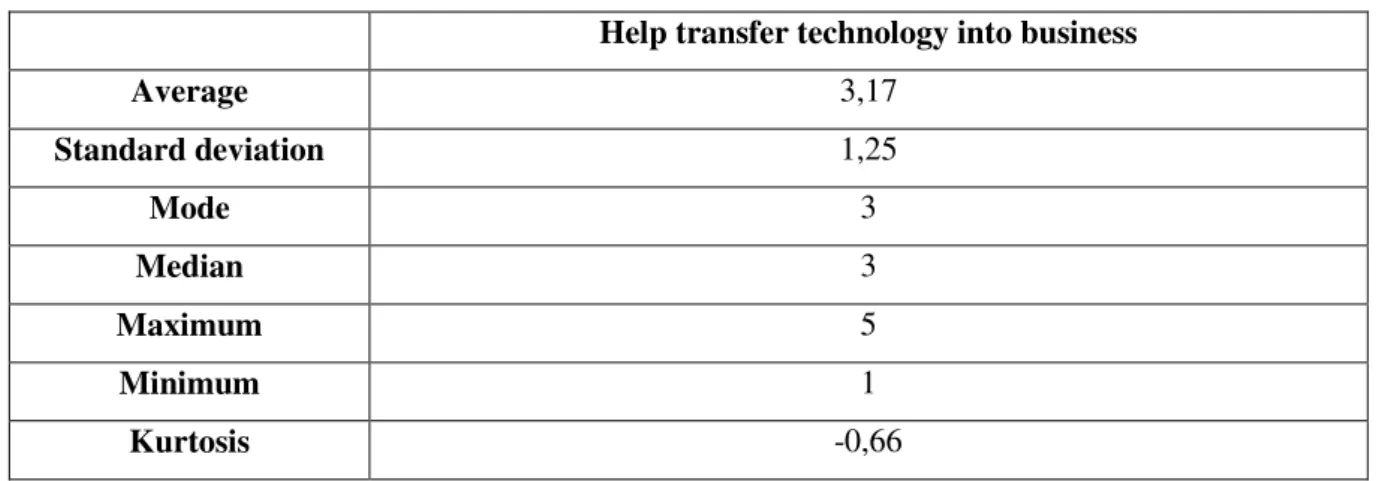
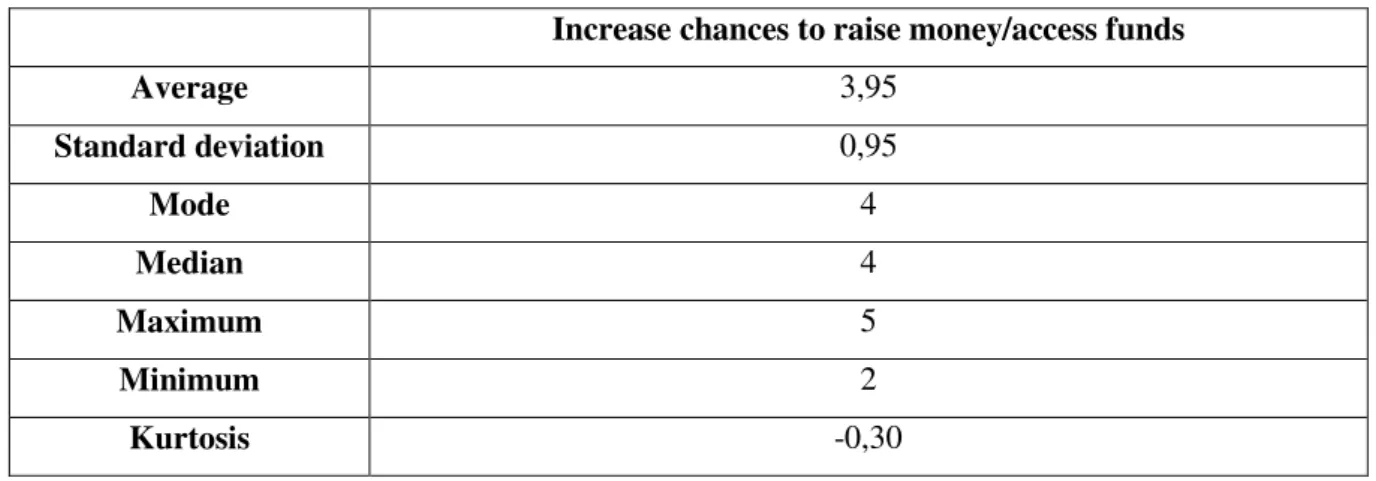
their business ideas’... 107 Table 4.22 - Descriptive statistics on ‘Learn tools and strategies to help scale-up their business’ ... 108 Table 4.23 - Descriptive statistic on 'Discuss their business challenges with experienced mentors' .. 108 Table 4.24 - Descriptive statistics on 'Network extensively' ... 109 Table 4.25 - Descriptive statistics on 'Increase chances to raise money/access funds' ... 109 Table 4.26 - Descriptive statistics on 'Having access to a working space' ... 110 Table 4.27 - Descriptive statistics on 'Prepared to face difficulties or barriers along the way' ... 110 Table 4.28 - Descriptive statistics on 'Benefit from accountability (encouraged to report progress to mentors/staff)' ... 111 Table 4.29 - Challenges for the future ... 114 Table 4.30 - Descriptive statistics on the challenge 'Measure value delivered' ... 115 Table 4.31 - Descriptive statistics on the challenge ‘Build credibility’ ... 115 Table 4.32 - Descriptive statistics on the challenge ‘Create global network to help startups go global’ ... 116 Table 4.33 - Descriptive statistics on the challenge ‘Attract quality startups’ ... 116 Table 4.34 - Descriptive statistics on the challenge 'Attract quality mentors' ... 117 Table 4.35 - Descriptive statistics on the challenge 'Attract funding for startups' ... 117 Table 4.36 - Descriptive statistics on the challenge ‘Optimize internal processes’ ... 118 Table 4.37 –Descriptive statistics on the challenge ‘Increase competition in acceleration industry’ 118 Table 4.38 - Descriptive statistics on the challenge ‘Financial sustainability of acceleration business
model’... 119 Table 5.1 - Model Summary for the topic ‘Value for the entrepreneur who takes part in the generic
programs’ ... 125 Table 5.2 - Component Loadings for the topic ‘Value for the entrepreneur who takes part in the generic
programs’ ... 126 Table 5.3 - Model Summary for the topic ‘Strategic reasons to run generic acceleration’ ... 127 Table 5.4 - Component Loadings for the topic ‘Strategic reasons to run generic acceleration’ ... 128 Table 5.5 - Model Summary for the topic ‘Challenges for the future with regards to accelerators that run
generic acceleration’... 129 Table 5.6- Component Loadings for the topic ‘Challenges for the future with regards to accelerators that
run generic acceleration’ ... 130 Table 5.7 - Model Summary for the topic ‘Challenges for the future with regards to accelerators that
xxv
xxvii
BA Business Angel
CEO Chief Executive Officer EIR Entrepreneur-in-Residence IoE Internet of Everything IoT Internet of Things IT Information Technology
MIT Massachusetts Institute of Technology NPS Net Promoter Score
NYC New York City
SaaS Software as a Service
SME Small and Medium-sized Enterprises
UK United Kingdom
29
Chapter 1
Introduction
he purpose of this section is to present the context of this dissertation and to further explain the reasons that led to this research work. It will provide a description regarding the objectives of this dissertation and the methodology that was used throughout its development. Moreover, this section presents the research questions that were chosen to analyze, as well as the organization of the dissertation, in which there is a brief preview of each chapter that is part of this work.
1.1
Context
An entrepreneur is a person who organizes and manages a business undertaking, assuming the risk for the sake of profit (Hull & Bosley, 1980). Mescon & Montanari (1981) simply define an entrepreneur as a founder of a new business. According to Bygrave & Hofer (1991), the act of becoming an entrepreneur is related to changing the external environment from one state (the one without the venture) to another (the one with the venture) and it also stands for a basic discontinuity in the competitive structure of the industry involved.
However, it is widely accepted that the field of entrepreneurship does not have a single unified and accepted definition for the term ‘entrepreneurship’ (Gedeon, 2010). In his research, this author considered two very important dimensions in terms of analyzing and defining entrepreneurship: the Risk Theory of Profit and the Dynamic Theory of Profit.
Isenberg (2011) claims that risk may be perceived as intrinsic to entrepreneurship because the entrepreneur participates in an activity that will only generate value, if at all, later. The reason leading to entrepreneurs making such risky investments is that they actually perceive their risks to be lower than
other people’s because they understand they have some asset, information, assessment, idea or ability. Entrepreneurs, in the widest economic sense, usually buy inputs low, transform them through risk, and sell them high. Therefore, entrepreneurship is believed to play a very important role in the continued growth and development of national and even international economy (Lashgarara, 2014).
30
Just as the natural world may be perceived as an ecosystem, entrepreneurial businesses may as well be understood as ecosystems. In this dissertation, the various elements that are part of the entrepreneurial ecosystem are carefully analyzed, in order to understand their importance and contribution to the ecosystem. Figure 1.1 represents the main elements that are part of the entrepreneurial ecosystem.
Entrepreneurship may exist in a variety of ways: if one decides to launch a restaurant, one may be perceived as an entrepreneur and someone who launches a mobile app may as well be called an entrepreneur. A startup is a temporary organization that looks for a scalable, repeatable and profitable business model. The startup business model is considered to be a canvas covered with ideas and guesses. However, it has no customers and minimal customer knowledge (Blank & Dorf, 2012). Hence, it is a special type of entrepreneurship. In this dissertation, there is a particular focus on digital entrepreneurship and digital startups.
Accelerators are part of the organizations that provide support to startups and this research work is mainly focused on these entities. As an entrepreneur, it is probably a goal to launch a business as profitable as possible, but if one looks forward to developing a startup, some help is required and this is where accelerators can be most helpful. Generally, these organizations look forward to helping the new digital ventures early in their lifecycle (Birdsall et al., 2013), using a lean startup approach.
Figure 1.1 – Main elements of the entrepreneurial ecosystem
Entrepreneurial ecosystem Government
Corporations
Universities
Startups Investors
31
The accelerator sector is still quite recent and the first accelerator, named Y Combinator, was only founded in 2005 by Paul Graham. Initially, it was founded in Massachusetts, but soon moved to Silicon Valley (Cohen & Hochberg, 2014).
Accelerators represent a new incubation model, which has developed into an umbrella term for any program that offers structured mentoring, networking opportunities and access to funding. During the last decade, the popularity of accelerator programs has increased all over the world, as a way of support for early–stage ventures. Funded by a mix of investors, public bodies or large corporates, these programs usually provide space, money, mentoring and guidance to classes of entrepreneurs to help them rapidly grow and turn their idea into a concrete and real business (Clarysse, Wright, & Hove, 2015).
Initially, many accelerator programs were generalist, accepting entrepreneurs whose businesses were directed at a variety of different industry verticals. As the time passed by, many accelerators have started to focus on a specific industry and those are named vertical accelerators. Some of these are: Surge in Houston, Texas, which focuses on acceleration of energy startups or Kaplan EdTech located in New York, which is mainly focused on education-related startups (Cohen & Hochberg, 2014).
There are other significant differences amongst accelerators besides being horizontally or vertically focused. Accelerators may get funding through a variety of ways: government, sponsorships and events, private funding by corporations, research reports, innovation scouting for larger companies, grants and rentals or Entrepreneur-in-Residence programs. Other differences are related to the accelerators deciding to go international or staying local.
1.2
Research Objectives
The aim of this dissertation is to study and acquire knowledge about the current and future trends of accelerators worldwide, with regards to their business models, acceleration programs, strategies, priorities and challenges for the future. Therefore, it is an objective to provide a study of interest to the community closely related to the acceleration and entrepreneurship sector.
In order to achieve such objective, this dissertation includes a literature review regarding entrepreneurship, entrepreneurial ecosystems and accelerators, so that it is possible to be aware of what other authors and researchers have concluded about the subject so far and also to analyze the relevant concepts that are mentioned in this research work.
32
Having defined the research questions, a survey was developed based on the concepts and definitions that had been previously included in the theoretical contextualization. By analyzing the results, it was possible to provide a reliable generalist portrait of accelerators worldwide, with the identification of some interesting conclusions. This was mostly accomplished through the quantitative analysis based on descriptive statistics that was carried out on the data, as well as the statistical inference operated on the data.
Moreover, some Case Studies were structured and developed in order to further analyze relevant aspects about accelerators. The accelerators that were included in the Case Studies’ chapter had some distinguishable features with regards to their business models that made them interesting and worth studying.
After the data collection, an analysis of the results was conducted and the research questions were addressed. Finally, some conclusions were reached, the limitations of the study were presented, as well as some recommendations and advice for future research.
1.3
Methodology
In this part of the chapter, the methodology used to conduct this study will be depicted. This section includes an overview of the research design, followed by the data collection methods that were used.
1.3.1
Research Design
The methodology used plays a very important role in the outcome of the study, as it will depict and justify the methods that were selected for the research. Therefore, the various stages that were part of the research process for this dissertation were:
1. Literature review: theoretical contextualization on the subject; 2. Identification of the research questions;
3. Development of the survey: definition of the research design, development of a preliminary version of the survey, feedback from Professor António Grilo, Professor Aneesh Zutshi, Beta-i and NESTA and development of the final version of the survey;
33
5. Identification of interesting situations based on the results of the survey;
6. Development of the Case Studies: structuring of the Case Studies, interview with accelerators via Skype, analysis of the collected data and development of the Case Studies;
7. Addressing the Research Questions.
The purpose of the literature review was to gather information and relevant knowledge on the scope of study and to provide a robust theoretical contextualization that would be most useful for the upcoming stages of the research. The literature review includes theoretical foundation on entrepreneurship, entrepreneurial ecosystems and their actors as well as a more detailed analysis of accelerators and related aspects such as the various programs offered, their business models, the benefits for the stakeholders that are connected to the accelerator or what is expected to happen in the future of acceleration.
Once the literature review was complete, it was possible to identify the research questions that this dissertation would address. In order to address them, a survey was developed. At first, it was important to define the research design and the preliminary version of the survey, which were later analysed by Professor António Grilo, Professor Aneesh Zutshi, the startup accelerator Beta-i and NESTA. Having taken into consideration the valuable comments that were made, some adjustments were done in order to reach the final version of the survey, which would be sent to numerous accelerators across the world. Once the data was collected, the results were analysed in two different dimensions: firstly, a quantitative analysis was carried out, mostly based on descriptive statistics and secondly, it was considered pertinent to run statistical inference on the data, in order to reach interesting conclusions and correlations. The analysis of the results of the survey led to the identification of some interesting situations and trends. In order to further analyse those aspects, some Case Studies were developed. Interviews via Skype were conducted with specific accelerators that had distinctive and relevant business models and the information that was collected was then carefully analysed, in order to structure and develop the Case Studies. Finally, having collected and analysed all the information, it was possible to address the research questions.
1.3.2
Data Collection Methods
34
In order to properly structure and develop the literature review, several sources were used, such as books, websites, academic reports and journals. The field of entrepreneurship has a considerable amount of information available, so it was necessary to filter and select the reliable and essential information for the purpose of this dissertation. Therefore, there was a great sense of carefulness in the process of data collection and the information that was selected mostly came from well-known authors and institutions whose studies benefit from assured quality. While the field of entrepreneurship had a wide variety of information available, the subject of accelerators was not so well-documented. In that way, some sources were particularly useful such as NESTA’s reports or the research work conducted by Yael Hochberg and Susan Cohen.
The literature review led to the identification of the research questions and to the realization that it would be useful to provide a complete study on accelerators and their main defining traits. Therefore, the development of a survey was the most suitable option to gather information on the former topics. In order to properly structure and develop the survey, websites with valuable tips and information on survey development were consulted. The objective of conducting an online survey was to collect quantitative data and this method was chosen because it offered the possibility of evaluating and quantifying the
respondents’ perspectives on their own accelerators, while facilitating the access to the potential
respondents.
The analysis of the results from the survey led to the identification of interesting situations that would benefit from further analysis, through the development of Case Studies. In order to do so, academic reports on this subject were consulted and those were the guidelines to the development of the Case Studies that are part of this research.
Literature Review
•Books
•Websites
•Academic reports
•Journals
Survey
•Information about survey development
•Websites with tips for survey development
Case Studies
•Academic reports focused on Case Studies
35
1.4
Research Questions
Once the literature review was complete, it was possible to identify the research questions that this dissertation would address. Since accelerators are a relatively new phenomenon, there is not much reliable information available on these entities, so we realized it would be of great value to provide a complete study on the main characteristics and trends of these organizations. Based on the information that was collected, we understood it was important to analyse their main defining features, including the acceleration programs, the strategic reasons that lead them to running a certain type of program, the value that entrepreneurs get out of the various programs offered, relevant aspects of their business models, their strategies, priorities and challenges for the future. Therefore, we defined two research questions that included the former topics:
How are accelerators evolving around the world?
What characterizes the dynamics of the acceleration programs?
1.5
Organization of the dissertation
This dissertation is organized into eight chapters. The first chapter contains an introduction to the topic of this research, which includes a theoretical contextualization, the identification of the research objectives, the description of the methodology that was used and the identification of the research questions.
The second and third chapters provide a theoretical review of the existing literature related to the scope of this study.
The second chapter is focused on entrepreneurship and entrepreneurial ecosystems, and this section includes an analysis of the various actors that are part of the ecosystem. In that way, pertinent concepts such as startups, investors (Business Angels and Venture Capitalists), support organizations (incubators, co-working spaces and accelerators) and other entities related to the ecosystem are carefully explained, according to what has been concluded in previous research conducted by academic scholars.
36
In the fourth, fifth and sixth chapters the main results of this research work are presented and analyzed. The fourth chapter is focused on the quantitative analysis based on descriptive statistics, which provides a valuable portrait of accelerators worldwide. The fifth chapter is related to the statistical inference and this is where some correlations and Principal Components Analysis are presented, leading to the identification of interesting conclusions. The sixth chapter includes some Case Studies of accelerators, which further analyze topics studied in the two previous chapters.
The seventh chapter includes an analysis of the results and this is where the research questions are addressed. Finally, the eight chapter is focused on the conclusions of the dissertation, including recommendations and limitations of the research as well. Table 1.1 briefly explains the organization of this dissertation.
Table 1.1 - Organization of the dissertation
Chapter 1 - Introduction Context
Research Objectives Methodology Research Questions
Organization of the dissertation Chapter 2 – Entrepreneurship
and Entrepreneurial Ecosystems
Defining Entrepreneurship and Entrepreneur Entrepreneurial Ecosystem and Environment Entrepreneurial Ecosystem Actors
Chapter 3 – Accelerators Definition
Differences between an accelerator and other entities Rise of accelerators during the last years
Accelerators in the world
Types of accelerators and acceleration programs
Benefits of acceleration programs for startups and other stakeholders
Funding Equity
Internationalization KPIs
Future of acceleration
Chapter 4 – Results:
Quantitative analysis
Generalist portrait of accelerators worldwide, based on descriptive statistics
Chapter 5 – Results: Statistical Inference
Correlations, principal components analysis and linear regression with regards to accelerators
Chapter 6 – Results: Case Studies
Case Studies about different accelerators Chapter 7 – Addressing the
Research Questions
Summary of the main facts and relevant information, important to address the Research Questions
Chapter 8 – Conclusions,
Limitations &
Recommendations
37
Chapter 2
Entrepreneurship and Entrepreneurial
Ecosystems
he aim of this chapter is to introduce the literature considered to be relevant to the scope of this research work, in order to provide the reader a proper background in terms of concepts related to entrepreneurship and entrepreneurial ecosystems. Moreover, this section includes an overview of the various elements that are part of the entrepreneurial ecosystem, such as startups, investors, support organizations, universities and government.
2.1
Defining Entrepreneurship and Entrepreneur
Different researchers have concluded that the field of entrepreneurship does not have a well-accepted, unified and consistent definition. Even in the academic literature, there are some inconsistencies
regarding the definitions of “entrepreneurship” and “entrepreneur”, which reveals some barriers in understanding this phenomenon and the related actors (Anamaria Berea, 2013). Bygrave & Hofer, (1991) suggested that in the absence of a widely accepted definition of an entrepreneur, it is the responsibility of each researcher to state clearly what the term refers to in a certain situation. These
authors suggested to shift the focus from ‘the characteristics and functions of the entrepreneur’ to focus, instead, on the nature and ‘characteristics of the entrepreneurial process’. Furthermore, they have argued
that an Entrepreneurial Event involves the creation of a new organization to pursue an opportunity (Bygrave, 1989) and that the Entrepreneurial Process involves all the functions, activities and actions related to the perceiving of opportunities and the idealization of organizations to pursue them. Based on these two last definitions, the former authors have defined an entrepreneur as someone who perceives an opportunity and creates an organization to pursue it.
38
In order to avoid problems regarding definitions, scholars have applied different adjectives to the word
‘entrepreneurship’ so that sub-domain terms are created, such as ‘corporate entrepreneurship’, ‘social
entrepreneurship’, ‘opportunity entrepreneurship’ and others (Gedeon, 2010). According to this author, there is now a great variety of sub-domain entrepreneurship terms in the literature, which come from different theories and apply to different aspects of entrepreneurship.
Motoyama & Watkins (2014) brought back a study conducted by Van de Ven in 1993, in which it was stated that the lack of research on the subject was due to past academic studies only focusing on individual characteristics and behaviors of individual entrepreneurs. Those past studies tried to analyze who the entrepreneurs were and what type of individual traits led them to success. Spilling (1996) also stated that literature regarding entrepreneurship had a bias towards focusing upon individual actors developing new ventures. This may be suitable when one is focused on the development of individual ventures or on behavior and traits of entrepreneurs. However, in order to analyze the economic development at the community level, this approach is not sufficient. Shane & Venkataraman (2000) agreed that entrepreneurship literature was focused on the relative performance of individuals or firms in the context of a small or new businesses. Gartner (1988) commented on the problems related to defining the field in terms of the individual alone, concluding that entrepreneurship researchers have generated incomplete definitions that do not withstand the scrutiny of other scholars.
Neck et all (2004) stated that regions of high entrepreneurial activity are important for research, but the various forces and actors that are part of this activity cannot be studied independently. According to
Malecki (1997), “entrepreneurship is a process as well as a phenomenon”. In that way, it is reasonable to view a region of high entrepreneurial activity as a system in addition to the previous research that analyzed the actions of individual actors, events and organizations independently.
Shane & Venkataraman (2000) argued that although the phenomenon of entrepreneurship provides research questions for many different scholarly fields, scholars are fundamentally concerned with three sets of research questions regarding entrepreneurship:
why, when, and how opportunities for the creation of goods and services start to exist;
why, when, and how some people and not others discover and exploit these opportunities;
39
The Risk Theory of Profit
There are some authors such as Cantillon (1755), that defined an entrepreneur as the farmer or merchant who bore the risks associated with purchasing inputs at given price to produce and sell later at an uncertain price. Later, Hawley (1907) reinforced this idea by stating that the assumption of risk is the most essential function of the entrepreneur and that the rewards of enterprise primarily come to the owner due to the assumption of responsibility and risk. Gedeon (2010) also brought back other risk-related definitions:
Palmer (1971), who suggested that the entrepreneurial function involves primarily risk measurement and risk taking within a business organization;
Hull & Bosley (1980), who defined an entrepreneur as someone who organizes and manages a business undertaking, assuming the risk for the sake of profit.
Dynamic Theory of Profit
The Dynamic Theory of Profit starts with neoclassical economic theory which proposes that profits arise as a result of dynamic change from the static equilibrium state of perfect competition (Hayek, 1937). Gedeon (2010) brought back some definitions which are related to the Dynamic Theory of Profit:
Schumpeter (1934) who argued that ‘the carrying out of new combinations we call ‘enterprise’;
the individuals whose function is to carry them out we call ‘entrepreneurs’;
Ely & Hess (1937) who argued that an entrepreneur is ‘the person or group of persons who
assume the task and responsibility of combining the factors of production into a business
organization and keeping this organization in operation’.
On the other hand, Anamaria Berea (2013) defined entrepreneurship as a highly interdisciplinary area of research in social science, that studies the formation of these private business organizations from individual entrepreneurial actions. According to Ahmad & Seymour (2006), entrepreneurs are those who look forward to generating value, through the creation or expansion of economic activity, by identifying and exploiting new products, processes or markets.
40
but may include, the creation of new organizations. Different authors, such as Amit, Glosten & Mueller (1993) argue that entrepreneurship can also occur within an existing organization.
2.2
Entrepreneurial Ecosystem and Environment
Ecosystems exist in the natural world in a variety of ways. The word ‘ecosystem’ was first introduced
around 1930 by English botanist Arthur Tansley, who is known for being the pioneer of ecology. Sir Arthur Tansley referred to a localized community of living organisms interacting with each other and their particular environment of air, water, mineral soil and other different elements. These organisms interact with each other in a variety of ways: they influence each other and their terrain, they compete and collaborate, share and create resources and coevolve. Furthermore, they are susceptible to external disruptions, to which they adapt together (Deloitte, 2015). Just as the natural world may be perceived as an ecosystem, entrepreneurial businesses may as well be understood as ecosystems.
Ecosystems are dynamic and co-evolving communities of various actors who create new value through more and more productive and sophisticated models that include both collaboration and competition (Deloitte, 2015). Mason & Brown (2014) defined an entrepreneurship ecosystem as ‘a set of interconnected entrepreneurial actors, entrepreneurial organizations, institutions and entrepreneurial processes which formally and informally coalesce to connect, mediate and govern the performance
within the local entrepreneurial environment’. A robust interconnection of entrepreneurial activities and resources might make a valuable contribution to a healthy entrepreneurial dynamic that works as an encouragement for business development and innovation (Papacosta et al., 2015).
Ecosystems may have different shapes, sizes and varieties and they allow and encourage the participation of different sized organizations, and often individuals. Together, they manage to create, scale, and serve markets, going beyond the capabilities of any single organization. This enables the existence of a healthy and balanced ecosystem (Deloitte, 2015). Previous research that has been conducted has shown the importance of different, single elements of an entrepreneurial system with regards to the overall macroeconomic development of a region (Neck et al., 2004).
41
Entrepreneurial ecosystems are very much a dynamic rather than a static phenomenon (Mayer, 2013) and they provide businesses access to sharp minds and smart resources, which may be located with suppliers, customers, research organizations or independently. Moreover, ecosystems thinking provides a new mindset that is able to capture a significant shift in the economy and the business landscape. Relationships, partnerships, networks, alliances, and collaborations have undeniable importance that keeps growing as the time passes by. It is becoming increasingly possible for firms to activate assets they do not own or control, to engage and mobilize more and more participants and to facilitate much more complex coordination of their expertise and activities (Deloitte, 2015).
It is also important to mention that entrepreneurial ecosystems can be industry specific. There is, for instance, the pharmaceuticals cluster in Copenhagen or the mobile cluster in North Jutland, Denmark. They may have evolved from a single industry to include several industries. In addition, they are geographically bounded but not confined to a specific geographical scale (campus, city or region, for instance). They are also not related to particular sizes of city: there are some small cities such as Austin, Texas or Cambridge that benefit from having thriving entrepreneurial ecosystems. Entrepreneurial ecosystems tend to emerge in locations that have place-specific resources. Such ecosystems tend to be located in places in which people wish to live, because of their cultural attractions or their physical features which may provide opportunities for outdoor activities (Mason & Brown, 2014).
An important feature of entrepreneurial ecosystems is that their growth is driven by a process of
‘entrepreneurial recycling’ (Mason & Harrison, 2006). Entrepreneurs who have managed to launch
successful companies which they have gone on to sell, usually leave the company shortly after it is sold. However, they keep involved in the cluster, reinvesting their fortune and experience to create more entrepreneurial action. Some of them will likely become serial entrepreneurs, starting new businesses; some will become business angels, providing startup funding for new businesses and offering others the opportunity to learn from their experience, while others may even set up a venture capital fund. Others become advisers and mentors, board members and get involved in teaching entrepreneurship. The entrepreneurial recycling process is mostly driven by exits. Preferably, entrepreneurs and other management shareholders should become wealthy to a point in which they do not need to work again, so that they can entirely focus on creating and supporting more entrepreneurial activity (Mason & Brown, 2014).
Silicon Valley is arguably the most famous and successful entrepreneurial ecosystem. Therefore, it has been the envy of regional economic developers and the living laboratory for many academic researchers who try to understand how those communities have come to exist and to thrive. These Silicon Valley observers have been focused not only on description but replication as well. The wealth and job creation
42
Gnyawali & Fogel (1994) refer to an ‘entrepreneurial environment’ as a combination of factors that are
important regarding the development of entrepreneurship. There are two different perspectives on this subject: firstly, it refers to the economic, sociocultural, and political factors that have influence on people's disposition and capacity to engage in entrepreneurial activities; secondly, it refers to the availability of assistance and support services that may facilitate the startup process. These authors have grouped the environmental conditions into five dimensions: government policies and procedures, socioeconomic conditions, entrepreneurial and business skills, financial support to businesses and non-financial support to businesses. Table 2.1 includes the various elements that are part of each of these dimensions.
Table 2.1 - A Framework for Entrepreneurial Environments
(Source: adapted from Gnyawali & Fogel, 1994)
Government Policies
and Procedures
Restrictions on imports and exports
Provision of bankruptcy laws
Entry barriers
Procedural requirements for registration and licensing
Number of organizations for entrepreneurs to report to
Rules and regulations governing entrepreneurial activities
Laws to protect proprietary rights
Socioeconomic
conditions
Public attitude towards entrepreneurship
Presence of experienced entrepreneurs
Successful role models
Existence of people with entrepreneurial traits
Recognition of exemplary entrepreneurial performance
Proportion of small firms in the population of firms
Diversity of economic activities
Extent of economic growth
Entrepreneurial and
Business Skills
Technical and vocational education
Business education
Entrepreneurial training programs
Technical and vocational training programs
Availability of information
Financial Assistance
Venture capital
Alternative sources of financing
Low-cost loans
Willingness of financial institutions to finance small entrepreneurs
Credit guarantee program for startup enterprises
Competition amongst financial institutions
Non-financial
Assistance
Counselling and support services
Entrepreneurial networks
Incubator facilities
Government procurement programs for small businesses
Government support for research and development
Tax incentives and exemptions
43 Policy
Finance
Culture
Supports Human
Capital Markets
Figure 2.1 - Domains of the Entrepreneurship Ecosystem
Nowadays, there is a considerable amount of models of entrepreneurial ecosystems. In 2011, Isenberg developed an influential and useful approach, in which he articulated what he named an
‘entrepreneurship ecosystem strategy for economic development’. Such approach is a novel and cost-effective strategy for stimulating economic accomplishment. The author claims that this approach has
the potential to ‘replace’ or to become a ‘pre-condition’ to, cluster strategies, innovation systems, knowledge economy or national competitiveness policies. Isenberg (2011) argued that the need for an ecosystem strategy comes from the observation that when we look at societies where entrepreneurship occurs with any regularity or is self-sustaining, we realize that a unique, complex environment or ecosystem has evolved.
In his research, Isenberg (2011) has identified six domains within the entrepreneurial ecosystem: a favorable culture, conducive policies, availability of finance, human capital, markets for products and a wide variety of institutional supports, as represented in Figure 2.1.
(Source: adapted from Isenberg, 2011)
Figure 2.1 shows a diagram containing the various domains that have an influence on the entrepreneur’s choices and achievement. However, it is important to mention that these generic domains contain countless elements that interact in very complex ways. Consequently, the process of pinpointing
Entrepreneurship Leadership Government
Financial capital
Success stories Societal norms Early customers
Networks
Labor
Educational Institutions
44 Startups
Corporations
Governments Institutions
Investors
common causal paths is of restricted value. This leads to the author emphasizing the importance of the framework, since each ecosystem emerges under a distinctive set of surroundings and circumstances,
because no one can replicate someone else’s ecosystem (Isenberg, 2011). Chapman (2011) has also
identified the five basic elements of the ecosystem: human capital, financial capital, deal flow and other metrics, mentors and models (knowledgeable community) and infrastructure.
Fang et al. (2015) have conducted a research regarding the entrepreneurial ecosystem too, claiming that there are five entities in every ecosystem that are very important regarding the creation and sustaining of the startup ecosystem: startups, corporations, educational institutions, governments and investors. There are also three essential roles within the ecosystem: the ignitor to promote ecosystem creation, the connector to maximize the connections between the five entities and the lever to differentiate it from
other ecosystems. The authors have named this model ‘The Power of 5’. Fang et al. (2015) concluded that each entity has a specific function within the ecosystem and provides an exclusive benefit:
1. Startups: spur job creation in the community as startup founders transform ideas into concrete businesses;
2. Corporations: provide entrepreneurs an outlet to solve industry and specific company problems, as well as connections to new talent;
3. Governments: implement policies to attract startups through taxes, incentives, grants and funding; 4. Educational institutions: infuse young talent with significant skill sets and provide educational mentorship;
5. Investors: fund early-stage startups and connect portfolio companies to potential customers and mentors in their network.
Figure 2.2 - Innovation ecosystem
(Source: adapted from Fang et al., 2015) Accelerating
45
Figure 2.2 represents the various elements that are part of the innovation ecosystem, according to Fang et all (2015).
The needs of these entities vary, but each of them requires access to the other. Because of that, ecosystem stakeholders are more and more interdependent. For instance, customers for startups may be corporations, educational institutions or governments. Corporations may have access to breakthrough innovation by directly interacting with startups, or through introductions via other corporations, investors, educational institutions and the government. These intricate relationships require each of the five to think and act as a maximalist, contributing while joining forces, so that when success is achieved, each of the ecosystem’s partners benefits from that. In order to build startup ecosystems, certain economic actors are required and it is expected that they will equally and reciprocally support each other. Healthy and strong ecosystems require that each of these five entities works together because their needs are interdependent and success is co-created. Maximizing the role these actors play is vital to create and preserve a vivacious startup ecosystem (Fang et al., 2015).
2.3
Entrepreneurial Ecosystem Actors
2.3.1
Startups
A startup is not a smaller version of a large company. In that way, a startup is a temporary organization that looks for a scalable, repeatable and profitable business model. Basically, the startup business model is a canvas covered with ideas and guesses, but it has no customers and minimal customer knowledge (Blank & Dorf, 2012).
46
(Source: adapted from Blank & Dorf, 2012)
Startup Lifecycle
It is also important to be aware of the startup lifecycle. According to Marmer & Bjoern (2011), if one understands at which stage the startup is in its lifecycle, it is easier to assess the progress. These authors have stated that the startup lifecycle is made of six stages and each stage has different levels of substages. This tree structure allows a more detailed assessment by being able to pinpoint the main drivers of
progress at each stage. The first four top-level stages are based on Steve Blank's 4 Steps to the Epiphany, but one key difference is that the ones that are presented (Marmer Stages) are product centric instead of company centric. Therefore, the six stages are:
1) Discovery; 2) Validation;
3) Efficiency; 4) Scale;
5) Profit Maximization;
6) Renewal. Scalable
Startup Transition Company
Business Model found Product/Market fit Repeatable sales model
Manager hired
Cash-flow breakeven Profitable Rapid Scale New Senior Management
47 1) Discovery
In the Discovery stage, the startups look forward to validating whether they are solving a meaningful problem and whether anyone would be interested in such solution that they are presenting. During this stage, there are different events happening, such as the formation of the founding team, different customer interviews being conducted, the definition of the value proposition and the creation of minimally viable products. Moreover, the team usually joins an accelerator or incubator, friends and family become responsible for the financing round and the first mentors and advisors take part in the journey. The Discovery stage usually lasts for 5 to 7 months (Marmer & Bjoern, 2011).
2) Validation
In the Validation stage, the startups are looking forward to getting early validation that people take interest in their product through the exchange of money or attention. During this stage, there are other
events happening such as the refinement of core features, the registration of the initial user growth,
implementation of metrics and analytics, the achievement of seed funding, hiring of the first important customers, pivot of their business model if it is necessary, getting the first paying customers and working
on product market fit. This stage lasts for around 3 to 5 months (Marmer & Bjoern, 2011).
3) Efficiency
In the Efficiency stage, startups improve their business model, as well as the efficiency of their customer acquisition process. At this stage, startups should be able to efficiently get customers, so that they can avoid scaling with a leaky bucket. In this stage, there are other events happening, such as the improvement of value proposition, the examination of user experience and the improvement of the conversion funnel. During this stage, there is the accomplishment of viral growth as well as the discovery of repeatable sales process and/or scalable customer acquisition channels. No funding round takes place during this stage, as it is recommended to wait until the next stage before raising more funds. The Efficiency stage has an average duration of 5 to 6 months (Marmer & Bjoern, 2011).
4) Scale
During this stage, the goal is to drive growth and further development of the venture aggressively. This stage lasts for around 7 to 9 months. During this stage, the main events are related to massive customer acquisition, back-end scalability improvements, first executive hires, process implementation and establishment of departments (Marmer & Bjoern, 2011).
5) Profit Maximization
48
operational insufficiencies, internally as well as externally, and providing efficient and effective solutions to improve profitability through operational optimization (removal of redundant costs, optimum utilization of resources and improving the gross profit margin) (Compendium Nancial, 2012). During this process, the customer acquisition process keeps happening and there are substantial funding rounds. The main goal is to expand reach and operation to grow profits.
6) Renewal
This stage includes the identification of new markets and products for the business. The goal is to reinvent parts of the business through new solutions. In case there is no renewal, the interest will diminish.
Elements related to new venture creation
Different scholars agree that the more conducive the business environment, the more likely that new businesses will emerge and grow. It is likely that people will be encouraged and feel ready to start a new business when the surrounding social environment values entrepreneurship, when a wide variety of opportunities are available for entrepreneurs, and when they have enough knowledge and skills that are necessary to start and manage a business.
If potential entrepreneurs do not face difficulties or barriers during the startup process and if they are self-assured that outside expertise could be obtained easily whenever it is necessary, the willingness and capability to start a business may be further enhanced (Gnyawali & Fogel, 1994). There are some key
factors that may influence a person’s desire and decision to start a business, and potentially increase it. Such factors are, for instance, one’s perception of desirability and viability of starting a business
(Shapero & Sokol, 1982) or one’s propensity and goal to start a business and his or her understanding of the environmental forces (Learned, 1992).
Vesper (1990) identified four important elements related to venture creation: a profitable business opportunity, technical know-how of the entrepreneur, business know-how of the entrepreneur and entrepreneurial initiative.
49
(Source: adapted from Gnyawali & Fogel, 1994)
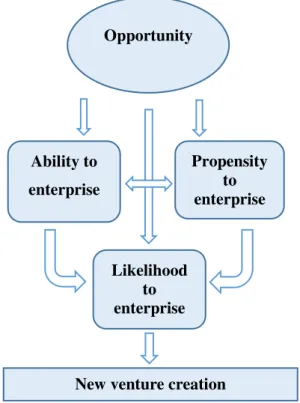
Therefore, a high level of opportunity, propensity to enterprise, and ability to enterprise will positively
correlate with one’s likelihood to enterprise.
(Source: adapted from Gnyawali & Fogel, 1994)
Figure 2.5 represents a model of the relationship between opportunity, propensity to enterprise and ability to enterprise. The model shows that the process of developing capable entrepreneurs and increasing their probability of enterprising consists of developing varied business opportunities in the
Core elements of venture creation process
Opportunity
Opportunity refers to the extent to which possibilities
and prospects for new ventures exist and the extent
to which entrepreneurs may influence their chances for
success through their own actions (Gnyawali & Fogel,
1994) Propensity to
Enterprise People that have an
urge for brilliance, willingness to take reasonable risk, and wish to be independent
are very likely to become entrepreneurs
(McClelland, 1961)
Ability to Enterprise
Ability to enterprise refers to the sum of technical and
business capabilities necessary to start and
manage a business (Vesper, 1990)
Figure 2.4 - Core elements of venture creation process
Opportunity Ability to enterprise Propensity to enterprise Likelihood to enterprise
New venture creation
50
environment, improving people's propensity to enterprise, and developing their capability to enterprise. An important role of the entrepreneurial environment is to help entrepreneurs develop their propensity to enterprise, as well as their ability to enterprise. The importance of each dimension of the environmental factors is variable, according to the availability of opportunities for business startup and the general level of propensity and ability of people to start an enterprise (Gnyawali & Fogel, 1994). Therefore, the former authors have decided to relate the environmental conditions and the core elements of new venture creation. Usually, the availability of opportunities is a crucial factor for improving the propensity and ability to enterprise and therefore the likelihood to enterprise. The dimension of the environment that is directly related to the opportunity is related to government policies and procedures. The likelihood of business startup increases if there is a suitable legal and institutional framework for efficient functioning of the markets. On the other hand, the dimension of the environment that is related to the propensity to enterprise is socioeconomic factors: the bigger the importance that entrepreneurial values and behaviors have for society, the larger the proportion of skilled entrepreneurs and role models. The dimension of the environment related to the ability to enterprise is the level of entrepreneurial and business skills: the greater the availability of technical and training related to business, the greater the ability of the prospective entrepreneurs to start and undertake a business (Gnyawali & Fogel, 1994).
(Source: adapted from Gnyawali & Fogel, 1994)
Figure 2.6 represents the interconnectivity between the opportunity, ability to enterprise, propensity to enterprise, and likelihood to enterprise and the various dimensions that are connected to these.
Opportunity
Ability to enterprise
Propensity to enterprise
Likelihood to enterprise
New venture creation
Socioeconomic factors
Financial assistance
Non financial assistance Entrepreneurial
& Business skills
Government
policies &
procedures