ISSN 2231-4261
ORIGINAL ARTICLE
Abstract:
Background: It has been reported that hyperlipidemia plays a central role in the development of atherosclerosis and oxidative stress. Embilica officinalis also known as Amla or Indian Gooseberry acts as antihyperlipidemic and antioxidant. Its active ingredients contains tannins, gallic acid and flavonoids. Aim & Objectives: It was aimed to evaluate the effect of ethanolic extract of Emblica officinalis on histopathology of kidney and on biochemical parameters in hyperlipidemic albino Wistar rats.
Material and Methods: Extraction of dried fruits of
Emblica officinalis was done by Soxhlet apparatus 0
using 99% ethanol at 60 C for 24 hours and also phytochemical analysis was done. Group I served as normal control. Group II was fed with isocaloric diet. Group III was fed with hyperlipidemic diet. Group IV was fed with isocaloric diet for 21 days + Embilica officinalis for 21 days. Group V was fed with hyperlipidemic diet for 21 days+ Embilica officinalis
for 21 days. The dose of ethanolic extract of Emblica officinalis was taken as 100mg/kg body weight daily.
Results: Percent body weight gain, kidney weight and nephro-somatic index significantly improved in hyperlipidemic rats treated with Emblica officinalis. There was a significant improvement in serum electro-lyte and kidney markers. It was found that there were focal glomerular lesions with thickening of glomerulus in the kidneys of rats on hyperlipidemic diet and normal renal histology of rats on hyperlipidemic diet treated with Emblica officinalis.
Conclusion: It can be concluded that Emblica
Effect of Ethanolic Extract of
Emblica officinalis
on Histopathology of Kidney and
on Biochemical Parameters in Hyperlipidemic Albino Rats
1 2 3 4 5
Bheemshetty S. Patil , Shankreppa D. Desai , Pallavi S. Kanthe , Potekar R. M. ,Shivkumar H. 1
Department of Anatomy, Shri B M Patil Medical College Hospital and Research Centre, BLDE 2
University, Bijapur-586001(Karnataka)India, Sridevi Institute of Medical Science and
3 4
Research Centre Tumkur-(Karnataka)India, Department of Physiology, Department of 5
Pathology, Department of Pharmacology, BLDEA's College of Pharmacy, Bijapur-586001 (Karnataka)India
officinalis may be a good, natural therapeutic agent against hyperlipidemic diet induced oxidative damage and nephrotoxicity.
Keywords: Emblica officinalis, Hyperlipidemic diet, Histopathology of Kidney, Kidney markers, Nephrotoxicity, Serum electrolyte
Introduction:
Medicinal plants are nature's gift for human beings to boost a disease free healthy life. Various medicinal plants are present in a class of herbal preparations of the Indian medicine system [1]. Among many of these herbal drugs Embilica officinalis is one of the precious herbal drug, commonly known as Indian gooseberry or Amla which belongs to the family of Euphorbiacae. Amla is very rich in nutrition and can be an important dietary source of Vitamin C, minerals and amino acids etc [2]. The plant also contains phenolic compounds such as tannins, saponins, phyllembelin and embilicanin. The fruit of Amla shows antioxidant, antidiabetic, hypolipidemic, antibacterial and hepatoprotective properties [3]. Along with these functions Embilica officinalis
also may produce beneficial effects on kidney functions. Kidney contributes major role in electrolyte balance and Blood Pressure (BP) regulation. BP is regulated by renal handling of
+ -
under the control of renin angiotensin mechanism. In this way it maintains homeostasis of the body [4]. In the present study we tried to find out the effect of Embilica officinalis on histopathology of kidney in hyperlipidemic rats. We have given a hyperlipidemic diet to induce hyperlipidemia in albino Wistar rats to develop an animal model expressing changes in kidneys and kidney markers (serum creatinine and blood urea). High fat diets lead to atherosclerosis. It is a condition that involves the interplay of several factors like oxidation of lipoproteins and atherosclerotic plaques formation [5]. This pathogenesis could induce renal vasoconstriction followed by hypoxic condition in the kidney which promotes further ischemic renal injury. The hypoxic tissue produces reactive oxygen species (ROS) more than antioxidant present in the renal tissue. Amla as an antioxidant contains gallic acid which is a multiple hydroxyl group compound. It donates its proton to break the chain reaction of free radicals acting as an inhibitor to lipid peroxidation [6]. It was aimed to explore the nephroprotective effect of ethanolic extract of Embilica officinalis on renal dysfunction and pathological destructions in a hyperlipidemic rat model.
Material and Methods Materials:
Healthy and good quality fresh, mature, Emblica
officinalis (Amla) fruits were procured from the
market, in the months of November–December 2012, and were identified and authenticated by the Department of Botany K.C.P. Science College, Bijapur. Extraction process was conducted in the Department of Pharmacology, BLDEA college of Pharmacy, Bijapur.
Extraction:
300gms of the powder of dried fruits of Emblica
officinalis (Amla) was extracted with 99% ethanol
◦
using Soxhlet apparatus at a temperature 60 C for 24 hours. The solvent was evaporated under
vacuum which gave semisolid mass with respect to the dried powder.
Study design:
Experimental Animals:
Albino Wistar rats weighing 180 to 250gms were obtained from animal house of Shri B M Patil Medical college Hospital and Research Centre, Bijapur. All animals were acclimatized for 7 days
0
to the laboratory conditions at 22-24 C maintaining a 12- hour light/dark cycle. All the experimental procedures were performed in accordance with the approval of the Institutional Animal Ethics Committee (IAEC) of Shri B M Patil Medical college Hospital and Research Centre, Bijapur. All care of animals was taken as per the guidelines of ICMR on animal research (2006) during the experiment as well as at the time of sacrifice. This study was undertaken in the Department of Anatomy. The newborn and old and diseased rats were excluded.
Preparation of Isocaloric Diet:
For 1kg of diet, 180gm of casein, 620gm of carbohydrate, 200gm of fat and 1% of multi vitamin and 2% NaCl were taken [7].
Preparation of Hyperlipidemic Diet:
For 1kg of diet, 180gm of casein, 520gm of carbohydrate, 300gm of fat and 1% of multi vitamin and 2% NaCl were taken [8].
Experimental Protocol
All the rats were divided into following five groups with 6 rats in each group.
Group I served as normal control fed with water and food ad libitum, Group II was fed with isocaloric diet for 42 days, Group-III was fed with high fat diet for 42 days, Group IV was fed with isocaloric diet for 21 days and ethanolic extract of
Emblica officinalis (EEO) for 21 days each and
Sample collection
Every alternate week (six rats) one group of animals were sacrificed by cervical dislocation at the end of the last dose with an overnight fast. Blood was collected in normal tubes for the separation of serum, by doing retro-orbital puncture, before sacrificing the animals.
Tissue collection for histopathology:
After proper dissection of animal kidneys were isolated immediately and fixed in 10% neutral buffered formalin solution for 24 hours [10]. The fixed tissues were processed routinely and then embedded in paraffin, sectioned to 3–5 µm thickness, de-paraffinized, and rehydrated using standard techniques. The extent of hyperlipidemic (high fat diet) induced necrosis was evaluated by assessing morphological changes in kidney sections stained with Hematoxylin and eosin (HandE), using standard techniques.
Gravimetry:
Estimation of Body Weight and Renal-somatic Index of Albino Wister rats:
Procedure 1:
The total body weight of each rat was recorded on the first day (beginning of experiment), Group I was fed with water and food ad libitum, Group III and V were fed with hyperlipidemic diet and Group II and IV were fed with iso-caloric diet for 21days and the weight was measured. The same
st nd
diet was continued from 21 to 42 day. In addition Group IV and V were treated with EEO. Procedure 2:
nd
After 42 day again weight was measured and after overnight fast rats were sacrificed. With proper dissection right side kidney was collected and weight was measured to the nearest of 0.1 mg ona digital weighing machine. Further the somatic index was calculated by the formula of kidney weight/ total body weight.
Estimation of Biochemical Parameters (Renal Markers and Serum Electrolytes):
+
Blood Urea, Serum Creatinine, Serum Na
+ ++ -
(Sodium), K (Potassium), Ca (Calcium) and Cl were analyzed by Meril Diagnostic Kit Method.
Statistical Analysis:
Values were expressed as Mean ± SD. To determine the significance of inter group differences, one way ANOVA followed by 'Post Hoc t tests' were used. P≤0.05 was considered statistically significant.
Results: Gravimetry
st
At 21 day: It was observed that there was a significant increase in percent body weight gain in Group III as compared to Group I (p< 0.05). Group IV showed a significant decrease in % body weight gain as compared to Group III (p< 0.05).
renal-JKIMSU, Vol. 4, No. 3, July-September, 2015
Groups Group I Group II Group III Group IV Group V ANOVA
F Value P value
st
On 21 day 14.2 ± 4.7 18.5 ± 4.1 a
21±1.0 c
15±3.8 19.8±1.7 5.2 0.0061
nd
On 42 day 14.5 ± 2 16.8 ± 1.4 a,b
8.9±3 a,b
8.9±3 c,d
14.6±2.1 12.2 0
Table 1: Effect of Ethanolic Extract of Emblica officinalis on Percent Body Weight Gain
Values are expressed as mean ±SD. ANOVA followed by Post Hoc Tukey's multiple comparison test. Superscript a, b, c, d express significant difference between groups, a depicts comparison with Group I, b depicts
comparison with Group II, c depicts comparison with Group III and d depicts comparison with Group V (*P value is≤
0.05). Group I -normal control rats, Group II - Isocaloric diet fed rats, Group III- hyperlipidemic diet fed rats, Group IV- EEO fed rats, Group V-hyperlipidemic + EEO fed rats
nd
At 42 day: It was observed that there was a significant decrease in percent body weight gain in Group III and IV as compared to Group I and II (p< 0.05). Group V showed a significant increase in percent body weight gain as compared to Group III and IV (p<0.05).
It was observed that there was significant decrease in body weight of Group II compared to Group I (p<0.05). There was significant increase in body weight of Group III compared to Group II
(p<0.05). Kidney weights of Group II and Group III were lower compared to group I. Group IV which showed significant increase in kidney weight compared to Group II and Group III. Group V showed a significant relation with Groups I, II, III and IV (p<0.05). There was a significant decrease in renal somatic index of Group II and Group III compared to Group I. Group V showed significant relation of renal somatic index to Group II and III (p<0.05).
Table 2: Effect of Ethanolic Extract of Emblica officinalis on Renal Somatic Index
Parameters Group I Group II Group III Group IV Group V ANOVA
F Value P value Body weight
(gm) 253 ± 11.4
a
228 ± 19.3 b
254 ± 9.6 236 ± 6.2 234 ± 10.2 6.24 0.002
Kidney
weight (gm) 2.6 ± 0.1 0.8 ± 0.1a 0.6 ± 0.09a 2.5 ± 0.1b,c 2.1 ± 0.2a,b,c,d 223.1 0 Renal somatic
Index 0.01 ± 0.0 0.003 ± 0.0a 0.002 ± 0.00a 0.01 ± 0.0b,c 0.009 ± 0.0b,c 229.3 0
Values are expressed as mean ±SD. ANOVA followed by Post Hoc Tukey's multiple comparison test. Superscript a, b, c, d express significant difference between groups, a depicts comparison with Group I, b depicts
comparison with Group II, c depicts comparison with Group III and d depicts comparison with Group V (* P value is≤
0.05). Group I -normal control rats, Group II - Isocaloric diet fed rats, Group III- hyperlipidemic diet fed rats, Group IV- EEO fed rats, Group V-hyperlipidemic + EEO fed rats
Parameters Group I Group II Group III Group IV Group V ANOVA
F Value P value
Blood Urea (mg%) 31±4.1 28±6.0 30±6.2 31±5.2 27±7.0 0.7 0.6717
S. Creatinine (mg%) 0.9±0.1 0.8±0.2 0.7±0.3 0.9±0.1 0.8±0.2 0.7 0.376
+
Na (mEq/L) 139±2.0 143±5.0 140±1.5 139±1.8 141±4.9 2.89 0.2514
+
K (mEq/L) 4.9±0.7 a
6.4±0.6 b
4.6±1 b
4.8±0.7 4.7±0.6b 4.03 0
++
Ca (mg/dl) 8.6±0.08 a
9.9±0.5 b
8.7±0.1 b
8.6±0.1 8.7±0.2b 13.2 0
-Cl (mEq/L) 98±0.9 97±0.9 97±1.3 97±1.2 98±1.2 0.5 0.2459
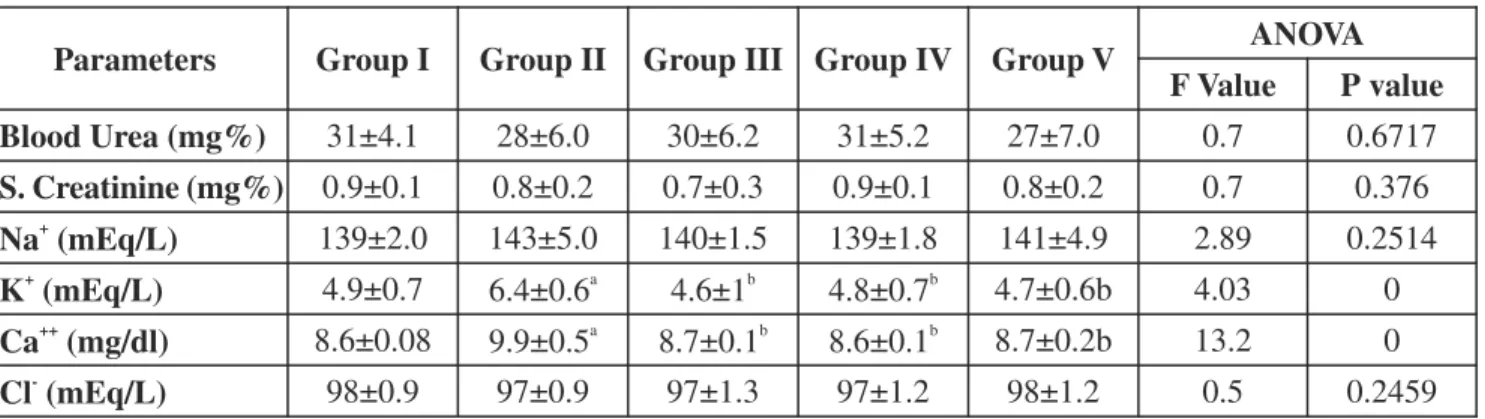
Table 3: Effect of Ethanolic Extract of Emblica officinalis on Kidney Markers and Serum Electrolytes
Values are expressed as mean ±SD. ANOVA followed by Post Hoc Tukey's multiple comparison test. Superscript a, b, c, d express significant difference between groups, a depicts comparison with Group I, b depicts
comparison with Group II, c depicts comparison with Group III and d depicts comparison with Group V (* P value is≤
Biochemical Parameters:
No significant differences for Blood Urea, Serum
-Creatinine and Serum Cl among all Groups was
+ +
observed. It is observed that the values for Na , K ,
++
Ca were all significantly higher for Group II. All the other groups had similar values.
Histopathology of Kidney:
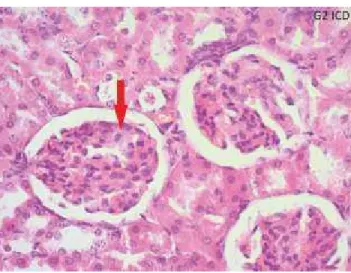
Photomicrography of H and E stained kidney of Group III hyperlipidemic (high fat diet) rats showed focal glomerular lesions including thickening of the glomerulus and normal renal tubules, whereas Group I normal control, Group II isocaloric diet, Group IV isocaloric diet with EEO and Group V hyperlipidemic diet with EEO showed normal microscopic architecture of kidney.
JKIMSU, Vol. 4, No. 3, July-September, 2015
Fig. 1: Control Group showing Normal Parenchyma and No Histopathologic Changes
(H and E satin 40X) G-Glomerular, S-Space of Urine, BC- Bowmen's Capsule, P-Proximal
tubule, D-Distal tubule, EA- Efferent arteriole, AA- Afferent Arteriole
Fig. 2: Iso-caloric Group II Rat Kidney showing Normal Architecture of Kidney and
No Histopathologic changes (H and E 40X)
Fig. 3: H and E stained 10 X kidney of Group III Hyperlipidemic (High fat diet) Rats showing Focal Glomerular Lesions including Thickening of the Glomerular Microscopy.
G-Glomerular, BC- Bowmen's Capsule, P-Proximal Tubule, D-Distal Tubule
Fig. 5: Histopathology of H and E Stained 100X Kidney of Group III Hyperlipidemic
(High Fat Diet) Rats showing Glomerular Thickening
Fig. 4: Histopathology of H and E Stained 100 X Kidneys of Group III Hyperlipidemic (High
Fat Diet) Rats showing Focal Glomerular Lesions Including Thickening of the Glomerulus and Normal Renal (DCT) Tubules
Fig.6: Rat Kidney of Group IV Showing Normal Architecture of Kidney and No
Histopathological Changes (HandE 40X)
Fig.7: H and E stained (40 X) Kidney of Group V Hyperlipidemic (High fat diet) Rats
Discussion:
The study was aimed to demonstrate the nephroprotective effect of EEO to prevent the development of renal dysfunction and alteration of histopathology of kidney which are assessed by biochemical and renal markers in a hyper-lipidemic rat model. Studies on such models significantly add to the knowledge towards enriching in the field of medical research. Hyperlipidemic animal models expressed changes in renal markers, biochemical parameters and histopathology of kidney. As Emblica
officinalis being a potent antioxidant it exerts free
radical scavenging activity and shows preventive role against fat induced renal toxicity [11].
It was observed no histopathologic change and no alteration of renal markers were found in rat kidneys of Group V and they also retained normal body weight. It indicates that EEO has exerted nephroprotective effect in rat kidney even when it was given hyperlipidemic diet. EEO has revealed to attenuate hyperlipidemia in Group V. EEO may be helpful to restore renal functioning due to its presence of gallic acid and tannins [6]. An increase in percent body weight gain in rats treated with EEO (Group IV) was observed compared to
st
control rats (Group I) at 21 day (p<0.05). Also there was a significant increase in percent body weight gain in rats treated with EEO (Group IV) compared to hyperlipidemic rats treated with EEO
nd
(Group V) at 42 day (p<0.05). There was a significant decrease in percent body weight gain in rats treated with Embilica officinalis (Group
nd
IV) compared to control rats at 42 day (p<0.05). Adis et al found that serum creatinine and bilirubin levels increased significantly in contrast media group compared to control group. Pretreatment with EEO demonstrated its nephroprotective effect by attenuating the severity of renal pathological damage and improving renal functioning [6]. In contrast we found non
significant decrease in serum creatinine and blood urea in Group V compared to Group I. Eteng et al
showed a slight non significant increase in serum (Na+) level for Group I (100mg/kg body weight) Wistar rats [12].
+ +
We observed that Na and K levels were significantly lower in Group III, IV and V compared to Group II (p<0.05). Also there was
+
significant increase in levels of K in group II
++
compared to Group I (p<0.05). Ca level was significantly higher in Group II compared to Group I (p<0.05). Increased serum levels of triglycerides and cholesterol causes to lipid accumulation in different organs and tissues like arterial wall, liver, kidney and muscles [13]. In our study we observed the effect of (high fat diet) hyperlipidemia on the kidneys of albino Wistar rats. The hyperlipidemia caused minimum percent of lipid accumulation in kidney tissue. Histo-pathology of renal corpuscles exhibited normal appearance in Groups I and II (Fig.1, Fig.2) whereas Group III showed the prominent increase in the glomerular capillaries (Fig. 3, 4 and 5). Microscopic study of high fat diet i.e. Group III rat kidney showed focal glomerular lesions including thickening of glomerular changes and completely decreased space (space for urine) between glomerulus and Bowmen's capsule. Epithelial cell lining of renal tubules were hemorrhagic and appeared dilated compared to normal histology of kidney. Fig. 6 and 7 both show normal histopatho-logy, Fig. 4 and 5 show changes due to hyperlipi-demia and Fig. 7 shows normal histopathology after high fat diet and treatment with EEO.
Experimental studies have shown that hyperlipidemic diet may be associated with increased oxidative stress in animals [14].
In our study we tried to assess the influences of
Emblica officinalis on renal functions and
histopathology of kidneys in albino Wistar rats fed with hyperlipidemic diet.
Conclusion:
In conclusion, we describe hereby distinctive renal glomerular ultrastructural injury associated with hyperlipidemia and markedly reduced alteration in renal glomerular histopathology when treated with fruit extract of Emblica officinalis. We would like to state that fruit extract
of Embilica officinalis plays a protective role
against hyperlipidemic diet induced oxidative damage and nephrotoxicity. The mechanistic pathways by which Embilica officinalis acts as a protective therapeutic against that particular toxin
is not fully clear except its antioxidant property. Further investigations are necessary to find the active functional group(s) of the compound(s) of
Embilica officinalis. However extensive clinical
studies are required to establish the efficacy and safety of Embilica officinalis for treating multiple pathologies associated with hyperlipidemia.
Acknowledgement:
I sincerely thank to Dr Kusal K Das, Prof. Dept of Physiology, Shri B M Patil Medical College, Bijapur for his valuable suggestions during conducting present study as well as in writing manuscript.
References 1. Krishnaveni M, Mirunalini S.Therapeutic potential of
Phyllanthus Emblica (Amla): the Ayurvedic wonder.
Indian J Clin Biochem2010; 25(4):419-24.
2. Anju Lama and Hiteswar Saikia. Effects of Emblica
officinalis (AMLA) on Serum Lipids and
Atherogenesis in Albino Rats Fed with High Fat Diet. Indian Medical Gazette 2013; 271- 275.
3. Patel Snehal S, Goyal Ramesh K, Shah Rajendra S. Experimental study on effect of hydroalcoholic extract of Emblica officinalis fruits on glucose homeostasis and metabolic parameters. Ayu 2013, 34(4): 440- 444. 4. Filler J S. Adaptation to Renal Injury. Robert M.
Brenner, Barry M. Brenner,Harrison's Principles of
th
Internal Medicine.17 ed. New York,NY : McGraw-Hill;2008: 1639- 1642.
5. Bhathena Jasmine, Kulamarva Arun, Martoni Christopher. Diet-induced metabolic hamster model of nonalcoholic fatty liver disease. Diabetes Metab Syndr Obes 2011; 4: 195- 203.
6. Adis Tasanarong, Supranee Kongkham, Arunporn Itharat. Antioxidant effect of Phyllanthus Emblica
extract prevents contrast-induced acute kidney injury.
BMC Complement Altern Med. 2014; 14:138.
7. American Institute of Nutrition. Report of the AIN adhoc committee on standards of nutritional studies. J Nut 1977; 107: 1340-1348.
8. Mani DN, Bawankule D U, Saroj BK. Hyperlipidemic
model: Studying lipid profile in small experimental animal. Int J Pharm Pharm Sci 2012; 4(2): 337-340. 9. Devjani Chakraborty and Ramtej Verma.Ameliorative
effect of Emblica officinalis aqueous extract on Ochratoxin-induced lipid peroxidation in the kidney and liver of mice. Int J Occup Med Environ Health
2010; 23(1):63-73.
10. Manal K. Abdel - Rahman, Elham M. Mahmoud. Re-evaluation of individual and combined garlic and flaxseed diets on hyperlipidemic rats. Pak J Nutr 2009, 8(1): 1-8.
11. Manish K. Singh, Shailendra Dwivedi et al. Arsenic induced hepatic toxicity and its attenuation by fruit extract of Embilica Officinalis (Amla) in mice. Ind J Clin Biochem 2014; 29(1):29-37.
12. M. U Eteng, H. A. Ibekwe et al. Effect of vitamin C on serum lipids and electrolyte profile of albino wistar rats. Nigerian Journal of Physiological Sciences 2006, 21 (1-2): 15-19.
13. Manar E Selim,Olfat M Yousef et al.Hyperlipidemia aggravates renal disease in bacteremic male albino rats.
Journal of Medical Science. March 2013,1;(1): 9-22 14. Xu L, Liu Y, Wang T et al. Development and validation
of a sensitive and rapid non aqueous LC- ESI MS/MS method for measurement of diosgenin in the plasma of normal and hyperlipidemic rats: A comparative study. J Chrom B 2009; 877: 1530-6.
*Author for Correspondence: Dr. Bheemshetty S. Patil, Department of Anatomy, Shri B M Patil Medical College,