CLAUDIO MINERBO
THE DIMENSIONS OF TRUST IN INTERORGANIZATIONAL RELATIONSHIPS: HOW BUYER AND SUPPLIER PERSPECTIVES DIFFER?
CLAUDIO MINERBO
DIMENSIONS OF TRUST IN INTERORGANIZATIONAL RELATIONSHIPS: HOW BUYER AND SUPPLIER PERSPECTIVES DIFFER?
Dissertação de mestrado apresentada à Escola de Administração de Empresas de São Paulo da Fundação Getulio Vargas como requisito para obtenção do título de Mestre em Administração de Empresas.
Campo de conhecimento:
Gestão de Operações e Competitividade
Orientadora: Prof. Dr. Susana Carla Farias Pereira
Minerbo, Claudio.
Dimensions of trust in interorganizational relationships: how buyer and supplier perspectives differ? / Claudio Minerbo. - 2016.
97f.
Orientador: Susana Carla Farias Pereira
Dissertação (mestrado) - Escola de Administração de Empresas de São Paulo.
1. Confiança. 2. Logística empresarial. 3. Clientes e fornecedores - Relacionamento. I. Pereira, Susana Carla Farias. II. Dissertação (mestrado) - Escola de Administração de Empresas de São Paulo. III. Título.
DIMENSIONS OF TRUST IN INTERORGANIZATIONAL RELATIONSHIPS: HOW BUYER AND SUPPLIER PERSPECTIVES DIFFER?
Dissertação de mestrado apresentada à Escola de Administração de Empresas de São Paulo da Fundação Getulio Vargas como requisito para obtenção do título de Mestre em Administração de Empresas.
Campo de conhecimento:
Gestão de Operações e Competitividade
Orientadora: Prof. Dr. Susana Carla Farias Pereira
Data da aprovação:
___/ ___/ ______
Banca examinadora:
__________________________________________ Prof. Dr. Susana Carla Farias Pereira (Orientadora) FGV- EAESP
__________________________________________ Prof. Dr. Barbara Flynn
FGV- EAESP / Indiana University
__________________________________________ Prof. Dr. Marcos Andre Mendes Primo
I dedicate this work to my family ...
... my dear wife Ana Paula, who was always
very patient and supported me during these
intense years, even when my mind was in
other places,
... my loved sons Julien and Patrick, who at
the age of 16 and 10 years old were subject
to discuss trust and relationships during the
Eu gostaria de agradecer aos profissionais e professores, que também são meus amigos, e que
sempre tiveram a disposição de contribuir e fazer com que este trabalho se tornasse realidade:
Profª Drª. Susana Carla Farias Pereira, minha orientadora, por estar sempre disponível,
compartilhar sua expertise e direcionar este trabalho
Profª Drª. Barbara Flynn e Profª Drª. Priscila Miguel, por terem participado da banca de
qualificação e contribuído de forma valiosa em todos os momentos
Prof. Dr. Marcos Andre Mendes Primo, pela sua contribuição na banca examinadora Prof Dr. Edmilson, pela sua valiosa contribuição durante o trabalho
Prof Dr. Carlos Cordón, do IMD, por prover um ponto de vista gerencial e internacional Shirley Simão, da Publicare, e Manuel Santos, da Abralog, por tornarem possível a coleta
de dados
Sueli e Daniela Daffre, da SD&W, pela expertise e suporte estatístico
Aos meus colegas da FGV-EAESP, por compartilharem suas opiniões durante e após as
conducted for a long time and through Transaction Cost Economics, Social Exchange Theory
and Marketing Channels, three gaps were found in the literature to be explored.
First, there is an ongoing debate around three conceptual streams on the multidimensionality
of trust and how it should be operationalized and measured - as a multidimensional construct
defined by non dominant dimensions, a construct based on two dominant dimensions
(affective and calculative), or as a single dimensional construct. Second, there is still some
ambiguity in how the dimensions of trust have been defined and operationalized, leading to
artifacts of measurement equivalence and contradicting results. Third, the different
perceptions that buyers and suppliers may have in each dimension of trust and its
consequence to logistics performance is still unclear.
This research examines trust in buyer-supplier relationship in one empirical study with two
independent samples in the logistics sector in Brazil: one examines buyers‘ perceptions and
the second examines suppliers‘ perceptions. The two studies are then compared in order to
determine the different perceptions of trust and implications to logistics performance.
Multivariate analysis show that trust seems to be present in interorganizational relationships,
and is the buyer´s perception of trust on the supplier that has a stronger relationship with
logistics performance. At the same time, buyers have a more negative perception of suppliers
in measurable dimensions of trust (competence and performance), while no differences were
found in social aspects of trust (honesty and benevolence), and this may be a result of
environment and cultural characteristics. Data analysis showed that trust can be defined as a
multi-dimensional construct but should be measured as a single-dimensional construct driven
by competence and credibility.
This study contributes to practice by suggesting how managers could better leverage
interorganizational trust to improve logistics performance.
conduzida sob as perspectivas da Teoria de Custos de Transação, Teoria das Trocas Sociais e
Canais de Marketing, três importantes lacunas na literatura requerem investigação.
Primeiro, está em andamento um debate conceitual sobre a multi-dimensionalidade da
confiança, e como ela deve ser operacionalizada e medida, e que se divide em três correntes
de pensamento - um construto multidimensional definido por dimensões não dominantes, um
construto baseado em duas dimensões dominantes (afetiva e calculativa), ou um construto
unidimensional. Segundo, existe ambiguidade em como as dimensões da confiança são
definidas, levando a artefatos de equivalência nas escalas e resultados contraditórios.
Terceiro, as diferentes percepções que compradores e fornecedores podem ter em cada
dimensão da confiança e seu impacto na performance logística ainda não estão claros.
Esta pesquisa empírica examina a confiança nas relações entre compradores e fornecedores no
setor de logística no Brasil, através de duas amostras e estudos independentes: um examina a
percepção dos compradores e o outro examina a dos fornecedores. Em seguida, os dois
estudos são comparados para determinar as diferentes perspectivas da confiança e as
implicações na performance logística.
A análise multivariada mostrou que a confiança parece estar presente nas relações
interorganizacionais, e é a percepção do comprador que possui maior relação com a
performance logística. Ao mesmo tempo, compradores percebem fornecedores de forma mais
negativa nas dimensões mensuráveis (competência e performance), enquanto não foram
encontradas diferenças nos aspectos sociais (honestidade e benevolência), o que pode ser
resultado do ambiente e cultura pesquisados. As análises mostraram que, apesar da confiança
poder ser definida como um construto multidimensional, ela deve ser operacionalizada como
um construto unidimensional direcionado pela competência e credibilidade.
Este estudo contribui para a prática sugerindo formas de aumentar a confiança
interorganizacional para aumento da performance.
LIST OF FIGURES:
Figure 1: Article identification and selection process ... 10
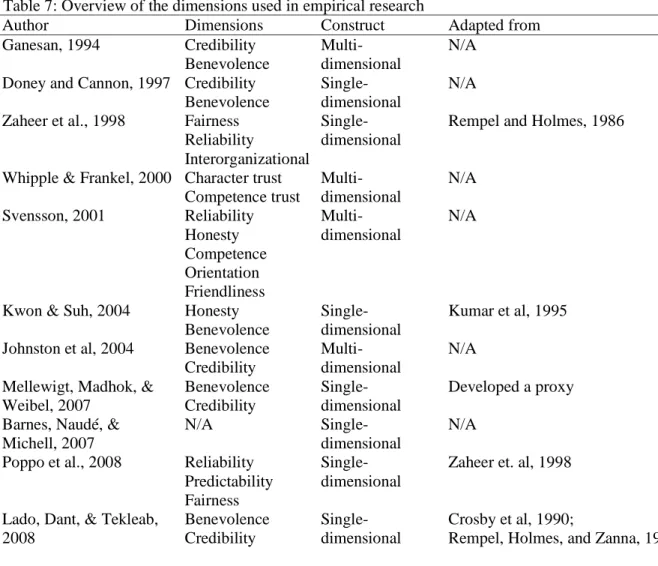
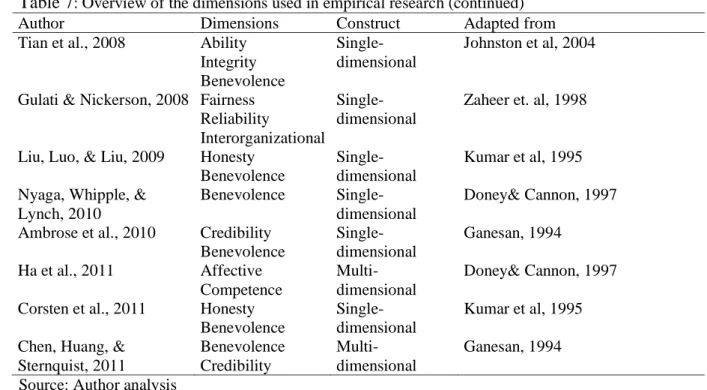
Figure 2: Overview of the dimensions of trust used in empirical research ... 27
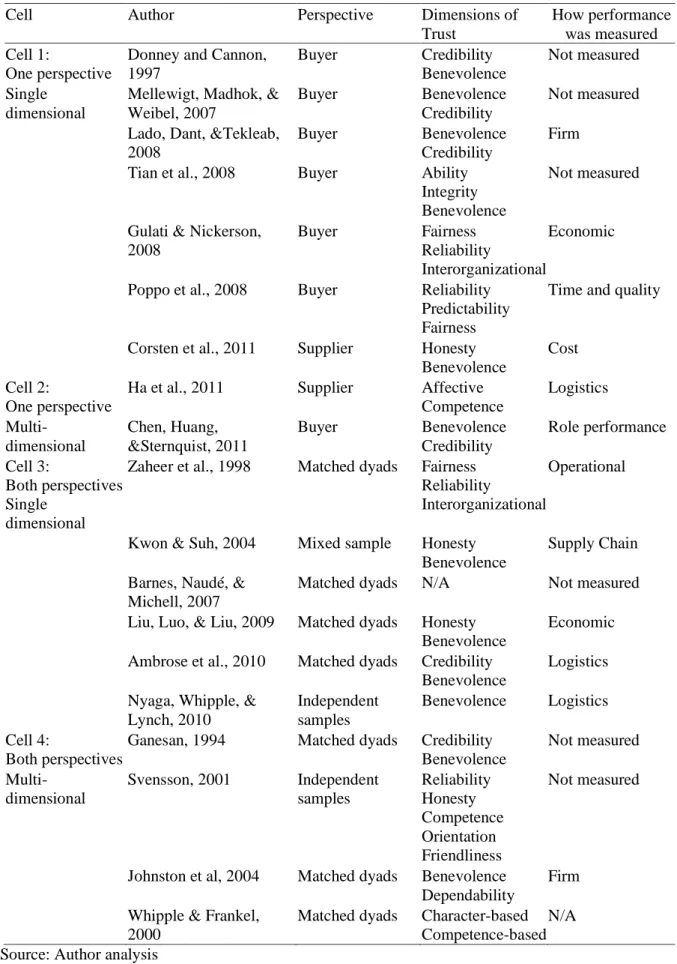
Figure 3: Findings according to survey perspective and dimension of trust ... 32
Figure 4: Research model and hypothesis ... 37
Figure 5: Perception of trust according to contract value and relationship time ... 51
Figure 6: Model with the four dimensions of trust ... 54
Figure 7: Model with affective and calculative trust ... 56
Figure 8: Model with single dimension trust ... 59
Figure 9: Regression residual plots ... 63
Figure 10: Relationship between trust and performance ... 71
LIST OF TABLES: Table 1: Summary of articles examined in the reviews... 11
Table 2: Theoretical approaches used in the reviewed articles ... 12
Table 3: Example of the phrases used to define trust ... 13
Table 4: Streams on how trust is operationalized ... 16
Table 5: IOT and performance according to TCE, SET and RM ... 24
Table 6: Number of times each performance measurements was cited in reviewed article ... 26
Table 7: Overview of the dimensions used in empirical research ... 28
Table 8: Articles according to the dimensions of trust, survey perspectives and performance 33 Table 9: Criteria to select the relationship partner to be surveyed ... 41
Table 10: Logistics performance dimensions used in reviewed articles ... 44
Table 11: Measurements for the research model - Buyer version in English ... 45
Table 12: Respondent´s industry category ... 48
Table 13: Relationship time and contract annual value ... 48
Table 14: T-test and ANOVA test for wave 1 and 2 ... 49
Table 15: Sample descriptive statistics ... 50
Table 16: Perception of trust according to contract value and relationship time ... 50
Table 17: Convergent validity: Factor loadings and reliability coefficients ... 53
Table 18: CFA fit measurements acceptable values ... 54
Table 19: Construct correlations in the measurement model ... 55
Table 20: Model fit indexes - buyer and supplier samples ... 55
Table 21: Convergent validity- model with affective and calculative dimensions (buyer sample)... 57
Table 22: Fit indexes- model with affective and calculative dimensions (buyer sample) ... 57
Table 23: Convergent validity- model with affective and calculative dimensions (supplier sample)... 58
Table 24: Fit indexes- model with affective and calculative dimensions (supplier sample) .... 58
Table 25: Construct validity- model with single dimension construct ... 59
Table 26: Example of parametric tests ... 61
Table 27: Regression results ... 63
Table 28: Equality of means for buyer and supplier samples... 64
APPENDIX:
Appendix 1: Number of articles according to key words and journals ... 84
Appendix 2: Invitation Letter ... 85
Appendix 3: Measurements for the dimensions of trust - Portuguese version ... 86
Appendix 4: Copy of the questionnaire - supplier version ... 87
SUMMARY 1 Introduction ... 3
2 Literature review... 9
2.2 Theoretical perspectives used in the literature review ... 11
2.3 Definition of Trust ... 12
2.3.1 The elements of Trust ... 12
2.3.3 The multidimensional aspect of trust... 15
2.4 Interorganizational trust and performance ... 17
2.4.1 Trust and performance in the economic perspective ... 17
2.4.2 Trust and performance in the social perspective ... 20
2.4.3 Trust and performance in Relationship marketing ... 22
2.4.4 Synthesis: relationship between interorganizational trust and performance ... 24
2.5 The dimensions of interorganizational trust ... 27
2.6 Comparing buyers´ and suppliers´ perceptions on trust ... 31
2.7 Summary of the literature review and research model proposed ... 36
3 Methodology ... 38
3.1 Research strategy ... 38
3.2 Scope and delimitation ... 39
3.3 Sample and data collection procedures ... 40
3.3.3 Buyer and supplier samples ... 41
3.4 Measurement instruments ... 42
3.5 Questionnaire pre-testing ... 46
4 Data analysis ... 47
4.1 Initial sample analysis ... 47
4.1.1 Control variables... 50
4.1.2 Conclusion: initial data analysis ... 51
4.2 Construct validity ... 52
4.2.1 Convergent validity ... 52
4.2.2 Discriminant validity: proposed model ... 53
4.2.3 Model with two dominant dimensions: convergent and discriminant validity .. 55
4.2.4 Model with trust as a single dimensional construct - construct validity ... 59
4.2.5 Construct validity: conclusion ... 60
5 Analysis and results ... 61
5.1 Relationship between trust and performance ... 62
5.2 Comparing buyer and supplier perceptions ... 64
6 Discussion and implications to theory and management... 65
6.1 Discussion: trust operationalized as a multi dimensional construct ... 65
6.2 Discussion: Different perceptions on trust between buyers and suppliers ... 68
6.3 Discussion: Relationship between trust and performance ... 70
7 Contribution, areas for further development and limitations ... 72
8 References ... 75
1 Introduction
Research on trust has been conducted for a long time and through different perspectives such
as economics (Dyer & Chu, 2000; Gulati, 1995; Williamson, 2008), sociological (Blau, 1965;
Deutsch, 1958; Granovetter, 1985) and relationship marketing (Morgan& Hunt, 1994; Ring &
Ven, 1994; Swan & Nolan, 1985), and it seems to exist certain unanimity that trust is a
mechanism based on credibility and expectation, and that the actions from the partner
organization will have a positive outcome to the relationship (E. Anderson & Weitz, 1989; J.
C. Anderson & Narus, 1990; Blau, 1965; Deutsch, 1958; Doney & Cannon, 1997; Dyer &
Chu, 2000; Ganesan, 1994; Morgan& Hunt, 1994; Ring & Ven, 1994; Rousseau, Sitkin, Burt,
& Camerer, 1998; Swan & Nolan, 1985; Zaheer, Mcevily, & Perrone, 1998; Zaheer &
Venkatraman, 1995).
Moreover, central to the success of supply chain management of entire industries is the
effective management of buyer-supplier relationships, and many researchers suggested that
supply chain partners should consider interorganizational trust (IOT) as a core factor to create,
develop and maintain close relationship among supply chain partners (Ambrose, Marshall, &
Lynch, 2010; Autry & Golicic, 2010; Ha, Park, & Cho, 2011; Kwon & Suh, 2004).
Interorganizational trust describes the extent to which organizational members have a
collectively-held orientation toward the partner firm (Zaheer et al., 1998), and the positive
relationship between IOT and performance is also well documented by the three more adopted
theoretical perspectives on this subject (Blomqvist, 1997; Delbufalo, 2012; Seppänen,
Blomqvist, & Sundqvist, 2007): Transaction Cost Economics (TCE), Social Exchange Theory
(SET) and Relationship marketing (RM).
According to TCE, higher levels of interorganizational trust have a positive effect on firm
performance because it reduces opportunism and enables more informal governance, which
ultimately leads to lower transaction, negotiation and measurement costs (Corsten, Gruen, &
Peyinghaus, 2011; Grover & Malhotra, 2003; Heide & John, 1988; Poppo & Zenger, 2002;
Rindfleisch & Heide, 1997; Williamson, 2008; Zaheer & Venkatraman, 1995).
A basic assumption in SET is that transaction partners enter into an exchange with the
Blau, 1965; Cropanzano & Mitchel, 2005, Emerson, 1976; Lambe, Wittmann, & Spekman,
2001). According to SET, as the length of a relationship increases over time, bonds of
attraction become embedded in the relationships, generate trust and lead to behaviors that
discourage opportunism. As a consequence, transactors may rely on governing mechanisms
based on social sanctions instead of formal contracts to protect their interests (Dyer & Chu,
2000; Granovetter, 1985). However, the relationship between length of relationship, trust and
performance is not straight forward because instability of organizational personnel,
occurrence of problems, stage of the relationship and excess of trust may weaken efficiency
(Ambrose et al., 2010; Doney & Cannon, 1997; Dyer & Chu, 2000; Jap & Anderson, 2003;
Tian, Lai, & Daniel, 2008; Villena, Revilla, & Choi, 2011).
In RM, commitment and trust are antecedents of long term partnerships, and organizations
gain higher benefits from engaging in strong customer relationships rather than weak-linked
short term transactions because they develop long term partnerships and common strategic
orientation that fosters cooperation and risk taking (Anderson & Narus 1990; Hingley 2005;
Morgan and Hunt, 1994, Morgan & Smircich 1980).
In order to conduct a literature review on the dimensions of trust, the different perceptions
between buyers and suppliers, and the relationship between trust and performance, a search
methodology was adapted from a systematic review on manufacturing, organizational and
supply chain agility conducted by Gligor & Holcomb, (2012). A total of 87 articles were
collected and fully reviewed and are listed in the reference section (the list has 103 articles
including the ones specific to the research methodology).
The review of these articles revealed three important gaps: (1) the ambiguity that still exists in
defining and measuring the dimensions of trust (Doney & Cannon, 1997; Lado, Dant, &
Tekleab, 2008; Lai et al., 2012; Svensson, 2001), (2) the theoretical limitations on the
similarities and differences on how the dimensions of interorganizational trust are perceived
by buyers and suppliers (Ganesan, 1994; Svensson, 2001; Whipple & Frankel, 2000), and (3)
the scarce research in the service industry and in emerging economies aside Asia (Delbufalo,
2012; Lee & Johnsen, 2012).
Trust has been operationalized as a multi-dimensional construct and more than 20 different
definition and measurement instruments of these dimensions is seen because they have been
sometimes referred as different terminologies for the same dimension, and sometimes as
different dimensions with similar terminologies. For example, credibility, integrity and
honesty have been referred in terms of an expectancy that the partner's word or written
statement can be relied on (Doney & Cannon, 1997; Kumar, Scheer, & Steenkamp, 1995; Lai
et al., 2012). At the same time, credibility and reliability have also been referred in terms of
competence, which is the belief that a trading partner is expert, reliable and has the needed
capabilities to perform the expected task and fulfill the promised role obligations (Komiak &
Benbasat, 2004; Zacharia, Nix, & Lusch, 2011; Ganesan, 1994; Andersen & Kumar, 2006).
Therefore, to conduct this study it will be necessary to clearly determine which dimensions
will be used and how they will be defined.
The theoretical limitations of research that examine the similarities and differences in the
perception of trust between buyers and suppliers were found by analyzing articles that
empirically studied the relationship between trust and performance considering both
perspectives (buyer and supplier) and measuring trust as a multi-dimensional construct.
Articles that fulfilled these two criteria (Ganesan, 1994; Johnston, McCutcheon, Stuart, &
Kerwood, 2004; Svensson, 2001; Whipple & Frankel, 2000) only suggest that buyer and
suppliers have different perceptions of the relationship or that the constructs may be of
different importance, but did not examine the different perspectives on the dimensions of trust
in interorganizational relationships. In neither it was clear which dimensions of trust
contribute to alliance success nor have the specific objective of comparing the relative
significance of different dimensions of trust with performance.
Articles that examined both perspectives but modeled trust as a single-dimensional construct
cannot provide insights about the different dimensions of trust (Ambrose et al., 2010; Barnes,
Naudé, & Michell, 2007; Kwon & Suh, 2004; Liu, Luo, & Liu, 2009; Nyaga, Whipple, &
Lynch, 2010; Zaheer et al., 1998). Articles that considered only one perspective but modeled
trust as a multi-dimensional construct (Z. Chen, Huang, & Sternquist, 2011; Ha et al., 2011)
allowed only to examine how significant the dimensions may be in a relationship, but they did
not use the same dimensions of trust and therefore it was not possible to compare their
Finally, it is still necessary to investigate interorganizational trust in service industry contexts
because empirical research on trust and supply chain management appear to be concentrated
in few manufacturing industry sectors or physical goods (Blomqvist, 1997; Burgess, Singh, &
Koroglu, 2006; Delbufalo, 2012; Seppänen et al., 2007). In the few examples of research in
services, Nyaga et al. (2010) had 95% of their sample in industrial or retail industry and only
5% in transportation, and Ross et al. (1997) examined insurance firms and their agents. Other
articles that seemed to research supply chains focused mainly on industries that handle
physical goods, such as Hingley (2005) that investigated the nature and management of power
in the UK fresh food channel, Lee & Johnsen (2012) that investigated both the smaller
supplier and larger customer in the Taiwanese electro-electronic business, Donada &
Nogatchewsky (2006) that worked on lord and vassal relationships in the agri, pharma and air
industries, Gulati & Sytch (2007) in the auto industry and Ambrose et al. (2010) that surveyed
information and communication technology equipment manufacturers.
The motivation for proposing another study in such investigated area came from more than 25
years of experience that the researcher has in designing, implementing and managing logistics
operations in different industries. Practical examples on how trust impacts performance
associated with the gaps found in the literature made the researcher feel the need to
theoretically understand if buyers and suppliers have different perceptions of trust and the
consequences of the differences to performance. This is in line with Gulati (2007), who
argumented that the starting point for all research must be subjecting hunches to managerial
insight, probing more deeply into the problems, and naturally aligning academic and practice
interests. Another reason was that the researcher felt that a more practical direction was
needed to help managers apply this understanding to improve the logistics performance of
their firms.
For example, when working to improve field service operations for a telecom company, the
lack of trust between the supplier of such services and his client was impeding the
implementation of improvement initiatives in the operation, but it was not clear in which
dimensions trust were lacking and where the companies could focus to improve trust and
unleash the roadblocks. In an opposite example, when implementing a new logistics model in
a retail bank, the existence of high trust between the companies allowed to quickly propose,
test and solve critical issues, reducing the operational ramp-up time and quickly stabilizing
client, and as a result did not suggest nor test different solutions to improve this client´s
operation. In this case, it was unclear which dimensions of trust were contributing to the
success or failure of these relationships. The researcher also observed that relationships are
often defined based on a snapshot of an operation in a particular moment, and with time trust
declined, friction occurred, performance suffered and the supplier was ultimately replaced at a
large transition cost for both companies. This seemed to be contrary to common sense, where
trust and relationship strength should increase with time, but again it was not clear which
dimensions of trust could be addressed to sustain a relationship and avoid such consequences.
This research aims to address these gaps by answering the following question:
How do buyers´ and suppliers´ perspectives of the dimensions of trust differ?
More specifically, it has the following objectives:
Examine the impact of each dimension of trust on logistics performance from two
perspectives: the buyer and the supplier
Investigate the perceived similarities and differences of the dimensions of trust from the
same two perspectives.
To attend these objectives, this research will be based in a survey in the Logistics industry in
Brazil, having trust measured as a multi-dimensional construct and considering the buyer and
supplier perspectives. A survey is entailed in this case because the dimensions and scales to
measure trust are well developed and do not need to be created, but tested, to extend the
existing theory (Eisenhardt & Graebner, 2007; Gulati, 1995; Seppänen et al., 2007). Two
independent samples and mirrored questionnaires will be required for the survey, one for
suppliers and another one for buyers, and the unit of analysis will be the buyer – supplier
relationship.
The Logistics industry was selected for this study because: (i) it´s a service, (ii) logistics is
relevant because about half of total logistics expenditures in Western Europe and the United
States are directed toward outsourced services and globalization of operations will only
reinforce this trend (Moorman, Deshpandé, & Zaltman, 1993), and (iii) the researcher´s
expertise in this area allow to naturally align academic and practice interests without
It is expected that this research will bring managerial and academic contributions. By
understanding buyers and suppliers´ perspectives of the dimensions of trust, managers may
focus on specific areas of their relationship with a trading partner to increase outsourcing
performance.
This research may also bring a different perspective by combining the different dimensions of
trust in a single survey, which is different from analyzing trust as a single dimensional
construct or assessing trust as one of several antecedents to performance. Conducting a survey
using existing constructs and scales will also contribute to the literature by testing if previous
relationships between the dimensions of trust and performance can be replicated in a different
environment such as services and other emerging markets.
This document has the following structure: section 2 reviews the literature, including the
definition of trust, the relationship between interorganizational trust and performance, the
dimensions of trust that will be considered in this study and the differences in buyer and
supplier´s perceptions on trust. Research hypothesis will be proposed along the literature
review. The research methodology is then detailed in section 3, including sample and data
collection procedures, and data analysis procedures. References and appendixes are presented
2 Literature review
The objective of this section is provide a comprehensive view of interorganizational trust, and
is organized in seven sections: (2.1) explain the process by which articles were identified and
selected, (2.2) identify the theoretical perspectives that will be used in this study, (2.3) define
interorganizational trust, (2.4) explains the relationship between trust and performance, (2.5)
shows dimensions used to measure trust in empirical research, (2.6) shows how buyers and
suppliers perceive trust. Section 2.7 summarizes the literature review, and research hypothesis
are formulated along the review.
2.1 Article identification and selection process
In order to identify and select articles for this research, a search methodology was adapted
from a systematic review on manufacturing, organizational and supply chain agility
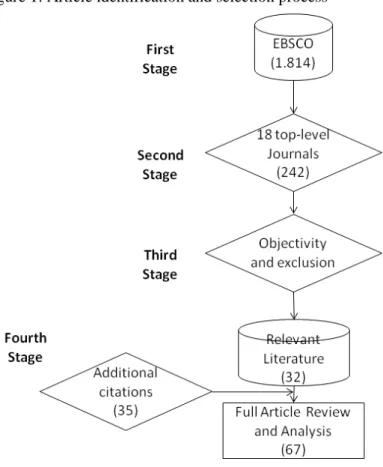
conducted by Gligor & Holcomb, (2012), and followed a four stage approach (a graphical
illustration of this process is presented in Figure 1).
In the first stage, eleven key terms were developed to identify and select articles in the
EBSCO Business Source Premier database, including "interorganization*",
"inter-organization*", "literature", "trust", "review", "buyer-seller", "buyer supplier",
"relationship*", "performance", "supply chain*", "services", "logistics" and "b2b". Those
terms were amended to create search strings with the Boolean connector AND in the title of
the articles, leading to 1.814 publications. A similar process was applied in Portuguese to
select articles in two specific top journals published in Brazil: RAE and RAC.
In a second stage, a only articles published in 18 top-level international journals and the 2
local journals were selected, resulting in 242 articles. These journals were identified based on
two criteria: a list of 17 journals in the "management" category from the 2013 JCR Social
Science Edition related to management, marketing or operations and with an impact factor
greater than 1.8 were identified. Then, this list was confronted with a list of what the
academic institutions actually use in evaluating faculty research (Meredith, Steward, & Lewis,
list of top-level journals and number of articles that were selected for deeper analysis can be
found on Appendix 1.
Figure 1: Article identification and selection process
Note: ( ) indicate the number of articles in each phase Source: Adapted from Gligor & Holcomb, (2012)
In a third stage, the objectivity of the assessment was assured by reading the titles of all 242
articles to determine substantive context and indicate if they were related to this study. For
example, "Examining supply chain relationships: Do buyer and supplier perspectives on
collaborative relationships differ?" (Nyaga et al., 2010), or "Measuring inter-organizational
trust—a critical review" (Seppänen et al., 2007) were selected, while "Perceived Buyer
Confidence in Buyer-Supplier Relationships" (Chao, Emmanuel; Kato, M. Paul, 2014), or
"Comply or defy? An empirical investigation of change requests in buyer-supplier
relationships" (Crosno, Jody L.; Dahlstrom, Robert; Manolis, Chris, 2015) were discarded. In
this stage, article abstracts were read in the case the title did not provide a clear context
indication. This lead to an initial list of 32 unique articles that were read and analyzed in
Given that not all articles are accessible on EBSCO database or may be relevant even if they
used other terms in their titles or were published in other journals, in a fourth stage the
researcher traced and reviewed citations from the 32 papers during the deeper analysis to find
additional relevant work. The inclusion for new articles through citations and revision ceased
when theoretical saturation, or the point at which incremental learning is minimal because the
researchers are collecting information seen before, was reached (Eisenhardt, 1989). At the end
of this stage 35 new articles were added.
As a result, 67 articles were collected and fully reviewed at the end of the above process.
Finally, 20 articles specific to the theoretical perspectives (TCT, SET and Marketing
Channels) were added, leading to a total of 87 articles fully analyzed in the literature review.
The reference section lists 104 articles because 17 articles specific to the research
methodology were added.
2.2 Theoretical perspectives used in the literature review
Within the 87 reviewed articles, three comprehensive reviews about measurement and
operationalization of trust were used to define which theoretical perspectives should be
considered in the literature review: Blomqvist (1997) analyzed how trust is approached and
defined in various disciplines, Seppänen et al. (2007) evaluated the advancements and
setbacks in terms of measuring inter-organizational trust, and Delbufalo (2012) focused on
inter-organizational trust outcomes in supply chains.
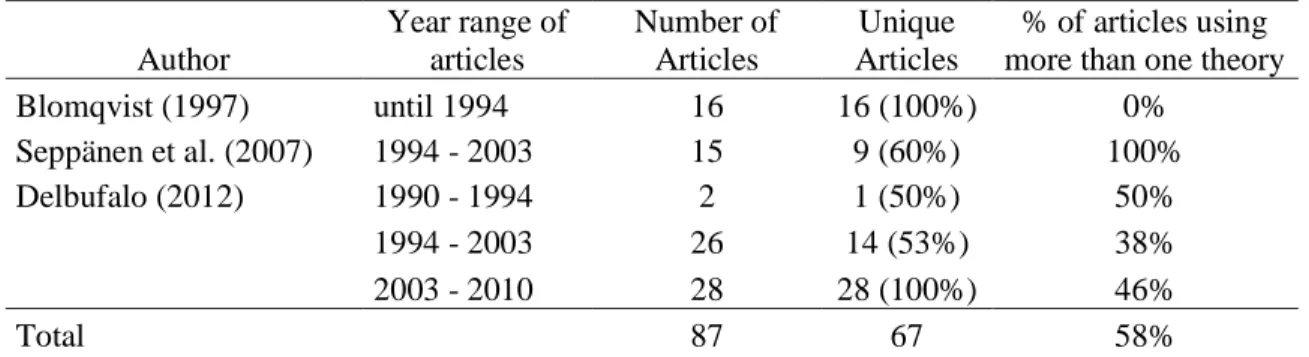
Table 1: Summary of articles examined in the reviews
Author
Year range of articles
Number of Articles
Unique Articles
% of articles using more than one theory
Blomqvist (1997) until 1994 16 16 (100%) 0%
Seppänen et al. (2007) 1994 - 2003 15 9 (60%) 100%
Delbufalo (2012) 1990 - 1994 2 1 (50%) 50%
1994 - 2003 26 14 (53%) 38%
2003 - 2010 28 28 (100%) 46%
Total 87 67 58%
Source: Author analysis of selected reviews
These three reviews were selected due to their relevance: they cover 25 years of publications
Deutch (1958) to articles published in 2010 and 77% of the examined articles (67 out of 87)
were unique (not repeated among the reviews), even considering the year range (or date
overlap) of the articles (Table 1).
Table 1 also shows that nearly 50% of the articles are based on more than one theoretical
perspective, except for Blomqvist (1997) that classified the articles based on only one
theoretical discipline (thus the 0%). This may be an indication that it is necessary to examine
more than one theoretical perspective to achieve a comprehensive view of trust, and that
direction will be followed in this study.
According to these reviews (Table 2), the more adopted theoretical perspectives are the Social
Exchange Theory (SET), Transaction Cost Economics (TCE) and Relationship marketing.
These perspectives will be the foundation of this literature review.
Table 2: Theoretical approaches used in the reviewed articles
Theoretical approach Author Social Exchange Theory (SET) Transaction Cost Economics (TCE) Relationship marketing Relational View Theory (RVT) Resource Dependence Theory (RDT) Resource Based View (RBV) Other theories
Blomqvist (1997) 8 4 8 0 0 0 0
Seppänen et al. (2007) 5 7 5 4 2 1 6
Delbufalo (2012) 29 25 4 4 6 4 8
Total 42 36 17 8 8 5 14
Source: Author analysis of selected reviews
2.3 Definition of Trust
The objective of this section is to synthesize how trust has been defined in previous research,
and define how it will be operationalized in this study.
2.3.1 The elements of Trust
Researchers across different disciplines have published substantive work proposing various
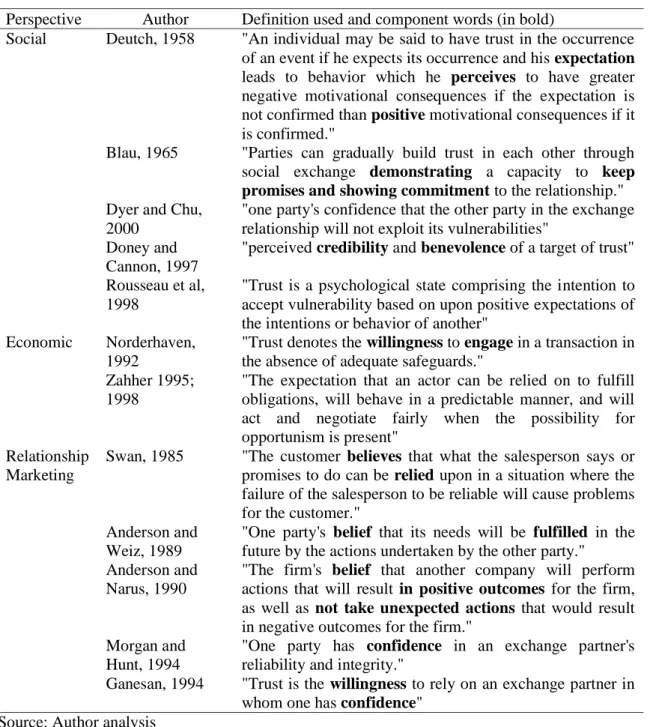
phrases to define trust (Table 3), and it seems that trust can be defined based on four common
First, trust can be seen as a mechanism of "credibility" or "reliability" and it has been cited
under different definitions such as one party keeping promises (Blau, 1965), fulfilling prior
requirements, outcomes or obligations (Ring & van de Ven, 1994; Zaheer & Venkatraman,
1995), avoiding failure that may cause problems(Swan & Nolan, 1985), and encompassing
anticipation, stability and consistency (Ganesan, 1994; Zaheer et al., 1998). In a business
context it means fulfilling what is considered a good service, which can be measured in terms
of quality or on-time delivery, for instance.
Table 3: Example of the phrases used to define trust
Perspective Author Definition used and component words (in bold)
Social Deutch, 1958 "An individual may be said to have trust in the occurrence
of an event if he expects its occurrence and his expectation leads to behavior which he perceives to have greater negative motivational consequences if the expectation is not confirmed than positive motivational consequences if it is confirmed."
Blau, 1965 "Parties can gradually build trust in each other through
social exchange demonstrating a capacity to keep promises and showing commitment to the relationship." Dyer and Chu,
2000
"one party's confidence that the other party in the exchange relationship will not exploit its vulnerabilities"
Doney and Cannon, 1997
"perceived credibility and benevolence of a target of trust"
Rousseau et al, 1998
"Trust is a psychological state comprising the intention to accept vulnerability based on upon positive expectations of the intentions or behavior of another"
Economic Norderhaven,
1992
"Trust denotes the willingness to engage in a transaction in the absence of adequate safeguards."
Zahher 1995; 1998
"The expectation that an actor can be relied on to fulfill obligations, will behave in a predictable manner, and will act and negotiate fairly when the possibility for opportunism is present"
Relationship Marketing
Swan, 1985 "The customer believes that what the salesperson says or
promises to do can be relied upon in a situation where the failure of the salesperson to be reliable will cause problems for the customer."
Anderson and Weiz, 1989
"One party's belief that its needs will be fulfilled in the future by the actions undertaken by the other party." Anderson and
Narus, 1990
"The firm's belief that another company will perform actions that will result in positive outcomes for the firm, as well as not take unexpected actions that would result in negative outcomes for the firm."
Morgan and Hunt, 1994
"One party has confidence in an exchange partner's reliability and integrity."
Ganesan, 1994 "Trust is the willingness to rely on an exchange partner in
The second element is that trust is uncertain and based on a positive expectation (Deutsch,
1958; Rousseau et al., 1998); willingness and belief (Anderson & Weitz 1989; Anderson &
Narus 1990; Swan & Nolan 1985; Zaheer & Venkatraman 1998); confidence (Dyer & Chu,
2000; Ganesan, 1994; Morgan& Hunt, 1994) or perception (Doney & Cannon, 1997) from
one party to another.
The third element refers to the actual actions that are institutionalized between the partner
organizations through their practices and routines (Deutsch, 1958). They can be tangible, such
as transactions (Noorderhaven, 1992), negotiations (Zaheer et al., 1998) and actions (E.
Anderson & Weitz, 1989), or intangible such as specific situations (Swan & Nolan, 1985)
norms, behaviors or intentions (Dyer & Chu, 2000; Rousseau et al., 1998) among the involved
actors. In other words, an expectation is fulfilled by means of events.
The fourth and last element implies that the result of actions and events produce a result to the
relationship, which can be in the form of consequences (Deutsch, 1958); commitment (Blau,
1965); safeguards (Noorderhaven, 1992); problems (Swan & Nolan 1985), psychological state
(Rousseau et al., 1998) or exploitation of one´s vulnerabilities (Dyer & Chu, 2000). Positive
results will lead to the fulfillment of the relationship and enable trust.
Therefore, it may be inferred that, although there is large variety of definitions for trust, it
seems to exist certain consensus that trust it is a social mechanism based on the credibility and
expectations that the actions between the partner organizations will have a positive outcome
to their relationship.
2.3.2 The operationalization of trust in academic research
Trust can be operationalized as a reciprocal concept, being potentially a cause, a mediating
variable, or an effect, and it is the author´s hypothesis in the study and not the theoretical
perspective (SET, TCE or MKT) that account how it is operationalized. Trust as a cause has
been considered as a predictor of successful negotiation and conflict resolution (Deutsch,
1958), a factor that lowers transactional, governance and conflict resolution (Dyer & Singh,
1998; Williamson, 2008; Zaheer et al., 1998), or a factor that has significant influence on
Trust has been theorized as a variable that mediates successful relationships instead of
independent antecedents of outcomes (Morgan & Hunt 1994), or mediates between
collaborative activities and relationship outcomes (Nyaga et al., 2010), or mediates between
strong ties and receipt of useful knowledge in dyadic exchanges (Levin & Cross, 2004).
Trust can be a consequence of the greater interdependence with alliance partners (Dyer &
Chu, 2000; Dyer & Singh, 1998; Kumar et al., 1995; Teece & Pisano, 1994), or become
embedded in organizations due to relationship history and repeated positive outcomes of
interactions (Ambrose et al., 2010; Dyer & Chu, 2000; Granovetter, 1985).
Finally, trust can also have an interdependence perspective with time. An empirical study
(Poppo et al. 2008) showed that expectations of continuity play a central role in generating
interorganizational trust, while past interactions play a facilitating role in producing trust. In
other words, after time the direct effect of prior history on trust is no longer positive and the
relationship becomes mediated by expectations of continuity.
Considering that, in this research interorganizational trust will be operationalized as a cause
rather than a consequence or mediating variable because the objective is to examine how it
impacts logistics performance.
2.3.3 The multidimensional aspect of trust
There is an ongoing debate on the multi-dimensionality of trust around three different
research streams on how trust should be operationalized and measured: as a multidimensional
construct defined and measured by non dominant theoretical dimensions, as a construct based
only on two dominant theoretical dimensions, or as a single global construct (Table 4).
The literature provides examples of empirical studies that have reached discriminant validity
when modeling trust in two dimensions, although no standard definition exists for these
dimensions as the following examples on benevolence, credibility and dependability will
show: Ganesan (1994) developed a model to test long-term orientation in a buyer/seller
relationship and conceptualized trust as credibility and benevolence, and found that they are
and operationalized trust with the same two dimensions (credibility and benevolence) to study
trust in the context of guanxi practice and obtained similar results. Johnston et al. (2004)
conceptualized trust in two dimensions (benevolence and dependability) to study the effects
of supplier trust on performance and found that that they are relatively distinct.
Table 4: Streams on how trust is operationalized
Research stream Examples of Dimensions References
No standard definition
benevolence, credibility, honesty and dependability as different constructs
Z. Chen et al. (2011); Doney & Cannon (1997); Ganesan (1994); Johnston et al. (2004); Kumar et al. (1995)
Two dominant constructs
Affective (i.e. goodwill) and Calculative (i.e. competence, deterrence, credibility)
Andersen & Kumar (2006); E. Anderson & Weitz (1989); Donada & Nogatchewsky (2006); Dyer & Chu (2000); Gulati (1995); Ha et al. (2011); Ring & van de Ven (1994); Seppänen et al. (2007); Zaheer & Venkatraman (1995)
One dimensional and global measurement
Combine honesty,
reliability and benevolence in one single construct
Corsten et al. (2011); Kwon & Suh (2004); Medlin & Quester (2002); Seppänen et al. (2007); Zaheer et al. (1998)
Source: Author analysis
However, there are also examples of studies that modeled trust in two dimensions but did not
find discriminant validity. Contrary to Ganesan (1994) and Z. Chen et al. (2011), Doney &
Cannon (1997) examined trust in Buyer-Seller relationships and found that the same two
dimensions of trust (benevolence and credibility) are highly correlated and could not
discriminate between them. Kumar et al. (1995) found convergent validity when trust was
modeled in two constructs, benevolence and honesty, but their discriminant validity and
hypothesis test only discuss trust as a construct, indicating that at some point of their study
these dimensions were combined.
In a second stream, scholars suggest that trust is a multi-dimensional construct but with only
two dominant theoretical dimensions. The first is related to affective aspects of the
relationship and is often measured as goodwill (Ring & Van de Ven, 1992) or affective trust
(Andersen & Kumar, 2006; Ha et al., 2011; Seppänen et al., 2007). The second is more
related to measurable aspects of the relationship, such as confidence, credibility or
predictability of a partner, and is often measured as competence (E. Anderson & Weitz, 1989;
Blomqvist, 1997; Donada & Nogatchewsky, 2006; Ha et al., 2011; Seppänen et al., 2007),
deterrence trust (Gulati, 1995) or calculative trust (Dyer & Chu, 2000; Tian et al., 2008;
The third stream of research argue that inter-organizational should be treated as a
one-dimensional, global measure because of the difficulties in its operationalization and
measurement (Medlin & Quester, 2002; Seppänen et al., 2007). Examples of articles that
defined trust in more than one dimension and measured in a global scale are Zaheer et al.
(1998) with fairness and reliabilily; Kwon & Suh, (2004) with honest, trustfull, reliable and
benevolent, and Corsten et al.(2011) with honesty and benevolence. Interestingly, these
articles did not explain the reasons for using a single dimensional scale despite of defining
trust as a multidimensional construct.
Based on above discussion it is possible to perceive that several different dimensions have
been used to operationalize trust, but there is a lack of studies that discuss the
multidimensionality of trust in a same empirical model, and this is one additional gap that this
research will address.
2.4 Interorganizational trust and performance
This section will provide an understanding on the relationship between trust and performance
based on the 87 reviewed articles and through each of the 3 proposed theoretical perspectives:
Transaction Cost Economics (TCE), the Social Exchange Theory (SET) and Relationship
marketing. A synthesis of these perspectives will be presented at the end of this section.
2.4.1 Trust and performance in the economic perspective
The economic perspective was initially supported by the Transaction Cost Economics (TCE)
that emerged on the Works of Coase (1937) and Williamson (1981, 2008). According to this
theory, economic exchange is conducted by "transactions" (or "units of exchange"),there is a
cost to conduct such transactions, and the "firm" is viewed as a governance structure that
supports the system. Every transaction has an economic cost (the cost of running the system)
and firms will conduct an activity internally through hierarchical governance as long as the
transaction costs are lower than conducting the same transaction in the market. In other
words, the greater the transaction costs, the more hierarchical the contract will be (Coase,
structural level (Verwaal, Commandeur, & Verbeke, 2008; Williamson, 1981), others have
used it to explain decisions within structures, processes or spanning-agents (Andersen &
Kumar, 2006; Corsten et al., 2011; Mellewigt, Madhok, & Weibel, 2007; Narayandas &
Rangan, 2004).
TCE is based on two human and three environmental factors (Heide & John 1988; Rindfleisch
& Heide 1997; Zajac & Olsen 1993; Grover & Malhotra 2003). The human factors are
bounded rationality, which is the result of the cognitive limitations that decision makers have
to receive, store, evaluate and consider all possible alternatives to make rational and effective
decisions. The second human factor is opportunism, which assumes that, given the
opportunity, individuals will unscrupulously seek to attend their self-interests at the expense
of the other through behaviors such as cheating, lying, and subtle forms of violation of
agreements.
One environmental factor is asset specificity, defined by the investment in specific human
(e.g. training people to a certain partner), physical (e.g. investment in tools and equipment to
support a specific partner), and not tangible (e.g. customized processes to support an
operation) relationship resources required to perform an exchange, and that have limited or no
value outside the specific transaction. The other environmental factors are environmental
uncertainty (e.g. unpredictability of new technologies, demand volume and variety), and
behavioral uncertainty that is related to the difficulty in anticipating and comprehending the
behavior and decisions made by the individuals involved in the transaction.
The combination of these factors results in exchange hazards, and legal contracts are the most
common safeguard governance mechanism employed in western economies to these
hazardous exchange (Dyer, 1997), which ultimately are costly to be crafted, updated and
monitored and increase transaction costs. Specific assets and opportunism lead to the
necessity to create safeguarding mechanisms to reduce switching costs and exit barriers of the
investments for when a relationship is terminated, and therefore reduce the likelihood of
opportunistic behavior (Rindfleisch & Heide 1997; Zajac & Olsen 1993; Heide & John 1988;
Poppo & Zenger 2002; Zaheer & Venkatraman 1995). For example, a service provider or a
client that invests in specific equipment and training may have difficulty in replacing them in
the case a relationship is terminated, and they may exploit the situation by demanding several
adopt contracts that specify the required actions and conditions of contractual breach and a
framework for resolving disputes.
Uncertainty and bounded rationality impact negotiation costs (ex-ante) because of the
complexity and difficulty in anticipating, adapting and formalizing efficient contracts or
agreements to possible changing situations (Heide & John, 1988; Zajac & Olsen, 1993). For
example, a company operating in high demand uncertainty would require the parties to incur
considerable transaction costs associated with ongoing negotiations to specify a
comprehensive contingent contract unless the complexity and change could be predicted with
precision (Grover & Malhotra, 2003).
Opportunism, bounded rationality and environmental uncertainty impact measurement and
monitoring costs (ex-post) because when performance is difficult to measure parties have
incentives to limit their efforts toward fulfilling the agreement. In this case, they may either
limit resources to measure performance and realize lower performance, or spend resources to
create more complex contracts or mechanisms that specify delivered service levels to
guarantee that agreements are being followed and enforced (Poppo & Zenger, 2002;
Rindfleisch & Heide, 1997). The interaction among these factors is not limited to these
examples, for instance Grover & Malhotra (2003) empirically confirmed that bounded
rationality and opportunism increase transaction costs under the conditions of high asset
specificity and high uncertainty, while Lai et al. (2012) demonstrated that in highly uncertain
environments partners are more likely to behave opportunistically regardless the other factors.
Relational trust can function as an effective substitute to complex contracts and lead to lower
costs and increased performance because they enable balancing formal contracts with
non-contractual, self-enforcing safeguards. As examples, a survey in the Information Systems (IS)
industry conducted by Poppo & Zenger (2002) shows that, as contracts become increasingly
customized and more complex, the use of more relational norms also increase as managers
develop more relational governance, leading to better exchange performance; Zaheer &
Venkatraman (1995) showed that in the insurance industry trust serves as a substitute for the
need for control; Corsten et al. (2011) demonstrated that suppliers who identify with buyers in
the European automotive industry build trust and are more likely to deploy relation-specific
investments and exchange information more informally about unexpected events or changes;
a substitute and a complement that moderates the relationship between asset specificity and
contractual complexity.
In summary, under the TCE perspective the combination of bounded rationality, opportunism,
asset specificity and uncertainty results in exchange hazards, and the most common safeguard
to these hazardous exchanges are complex contracts that increase transaction costs because
they are complex to de crafted and monitored. Trust can function as an alternative and more
effective relational, self-enforcing safeguard that reduces the potential for opportunistic
behavior, leading to lower transaction costs and higher performance.
2.4.2 Trust and performance in the social perspective
One limitation in TCE is the focus on minimizing costs from only one point of view (the
buyer) and the absence of a relationship between trust, opportunism and the dynamics of
relations that may create value (Zajac & Olsen, 1993). The Social Exchange Theory (SET) is
based on social mechanisms to address this limitation.
SET´s basic assumption is that the actors involved in an exchange enter into and maintain
relationships with the expectation that acting in a trustworthy manner will be rewarding either
economically or socially through reputation and prestige (Autry & Golicic, 2010; Blau, 1965;
Cropanzano & Mitchel, 2005). In other words, SET can be based on two premises: (1)
exchanges involve economic and/or social outcomes (2) that over time increase firms‘ trust
and commitment of each other and lead to relational norms that govern the exchange
relationship (Emerson, 1976; Lambe et al., 2001).
The first premise suggests that dyadic business relationships often have a strong
non-economic component due to the tendency for commercial relationships to be interwoven with
personal ones (Zaheer & Venkatraman, 1995). In this context, the social embeddedness of
economic actions is noteworthy (Granovetter, 1985), where embeddedness refers to the
"The embeddedness argument stresses the role of concrete personal relations and structures
(or 'networks') of such relations in generating trust and discouraging malfeasance."
(Granovetter, 1985, p. 490).
In premise two, positive outcomes and relational norms are time dependent, meaning that
embeddedness may arise from the length of a relationship. It is expected that, as the duration
and intensity of interactions between transactors increase, bonds of attraction develop
embedded relationships that generate trust and lead to expected behavior and discourage
opportunism and malfeasance (Granovetter, 1985). In the same direction, Dyer & Chu (2000)
suggested that embeddedness is not only a result of the development of personal relationships
over time, but it also require a high degree of stability of organizational personnel at both
organizations to produce relationship-based trust (embedded ties). For example, Ambrose et
al. (2010) found that the perceptions of trust as an attitudinal dimension of buyer-supplier
relationships are congruent because the respondents in their sample have been in the
relationship for an extended length of time.
As a result, if a transaction is embedded within a broader reciprocal social relationship, then
transactors may rely on governing mechanisms based on social sanctions such as withdrawal
of respect, prestige, and/or banishment to protect their interests(Dyer & Chu, 2000). This lead
to the same implication about other governance mechanism than formal contracts discussed in
the previous section about TCE.
However, some studies also show that the relationship between relational norms, relationship
length and performance is not always straightforward. Initially, Jap & Anderson (2003)
pointed that the positive effects of trust may diminish when trouble occurs, maybe because
more players examine or question the relationship. In this direction, Autry & Golicic (2010)
examined the cyclical linkage between relationship strength and performance in buyer–
supplier relationships, and observed that periodic fluctuations of complacency toward the
relationship had an alternating pattern of stronger and weaker effects on performance over
time.
More recently, Villena et al. (2011) considered the ―dark side‖ of social capital in buyer
-supplier relationships, suggesting that high trust and reliance on trust may weaken the
capital dimensions: the cognitive, related to the pursuit of common shared culture and goals;
relational that refers to trust, respect, and friendship developed with time; and structural that
refers to the impersonal configuration of linkages between parties. Although the results
confirmed that the three forms of social capital have a positive relationship to strategic and
operational performance, it also showed that structural and relational capital lead to an
inverted curvilinear with performance. They suggested that, initially, the promotion of
frequent, close social interactions allows access and exploitation of synergies that lead to
superior performance, as additional social capital is accumulated there is a reduction in
objectivity and more ineffective decisions that begin to outweigh the benefits.
In summary, the SET extends TCE´s perspective and provide explanations on how trust can
function as an effective relational, self-enforcing safeguard against exchange hazards.
Following the premise that business relationships have a strong non-economic component,
over time trust becomes embedded in the relationships, leading to commitment and more
relational governance that discourage opportunism. However, it is also possible that high trust
may weaken the efficiency because more ineffective decisions can be made as social capital is
accumulated or trust may diminish when problems occur.
2.4.3 Trust and performance in Relationship marketing
While TCE emphasizes that trust lowers transaction costs to explain the nature of governance
in interfirm relationships and SET explains how trust can function as a relational safeguard to
govern the exchange process against exchange hazards, RM refers to all marketing activities
directed toward establishing, developing, and maintaining successful relational exchanges
(Morgan & Hunt, 1994).
According to Morgan & Hunt (1994) and Selnes (1998), a common accepted definition for
relationship marketing is the one provided by Grönroos (1994 p.6):
‗‗Relationship Marketing is to establish, maintain, and enhance relationships with customers
and other partners, at a profit, so that the objectives of the parties involved are met. This is
This means that buyers have to make decisions regarding if a relationship should be
established (first time purchase), continued (repurchase), enhanced in scope (increase
commitment with the supplier) or terminated. One underlying assumption in RM is that
organizations do not act alone, but firms gain higher benefits from engaging in strong
customer relationships rather than attempting to profit via larger numbers of weak-linked
short term transactions (Morgan and Hunt, 1994). For example, social capital and transaction
cost theories were applied in a study in the construction industry to provide evidence that
relationship strength influences performance, and that this relationship is associated in the
form of an upward deviation-amplifying spiral (Autry & Golicic, 2010). Research on
mutuality in the textile industry (Johnsen & Ford, 2008) also indicated that small suppliers
have similar goals to their large customers, and both parties would adapt to maintain
long-term development of the relationship; Ganesan (1994) indicated that dependence due to
specific assets also plays a role in determining long-term orientation, although an element of
trust is also necessary for parties to have long-term orientation.
Another assumption is that commitment and trust between exchange partners is an antecedent
and underlying foundation of relational exchange and long term partnership orientation. It
reduces perceived uncertainty, facilitates risk-taking behavior, fosters cooperative orientation
and increases confidence that short-term inequities will be resolved over a long period
(Anderson & Narus 1990; Hingley 2005; Morgan & Smircich 1980). For example, a study in
high-technology markets (de Ruyter, Moorman, & Lemmink, 2001) showed a positive impact
on affective commitment and trust in supplier–customer relationships, which in turn lead to an
intention to remain in a relationship. Ganesan (1994) dyadic analysis on retailers showed that
satisfaction with prior relationship outcomes increases trust and commitment in a relationship;
Anderson & Weitz (1989) found that older and established dyads are more trusting and
possess built-in inertia to continue the relationship.
A third assumption identified in the marketing literature is the characterization and transition
of trust at different stages of a relationship. In a seminal work, Dwyer, Schurr, Oh, & Robert
(1987) defined five stages of a relationship, where the first three (search and selection,
defining purpose, and boundary definition) focus on developing the structure of a relationship,
the fourth is centered in value creation, and the fifth is where stability is cemented by
structural bonds, cooperation, and commitment. Jap & Ganesan (2000) suggested that the
against opportunism is contingent on the relationship phase, with explicit contracts being
more effective in exploratory and decline phases and relational norms in maturity stages.
In summary, RM aims to identify, establish, maintain and enhance relationships with
stakeholders at a profit. Strong long term relationships reduce perceived uncertainty,
facilitates risk taking behavior and is an antecedent to relational exchange, leading to higher
profits that could be obtained through weak-linked short term transactions. Trust is an
underlying foundation in RM, and may have different characteristics depending on the
relationship phase.
2.4.4 Synthesis: relationship between interorganizational trust and performance
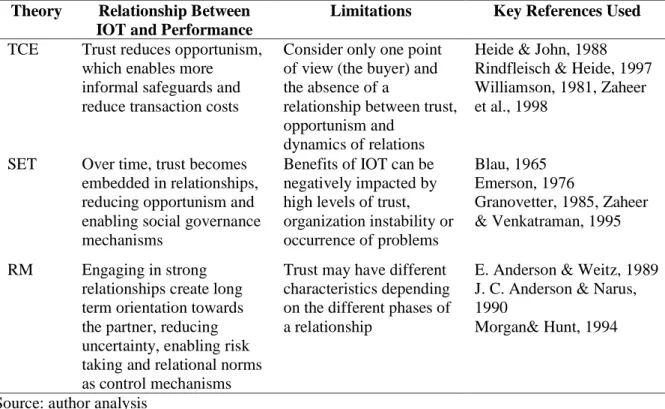
TCE, SET and RM are three perspectives that view trust in a complementary manner.
According to these perspectives, it is expected that interorganizational trust reduces
uncertainty and opportunism, enables more informal safeguards and governance mechanisms,
and creates longer term orientation between firms (Table 5).
Table 5: IOT and performance according to TCE, SET and RM
Theory Relationship Between
IOT and Performance
Limitations Key References Used
TCE Trust reduces opportunism,
which enables more informal safeguards and reduce transaction costs
Consider only one point of view (the buyer) and the absence of a
relationship between trust, opportunism and
dynamics of relations
Heide & John, 1988 Rindfleisch & Heide, 1997 Williamson, 1981, Zaheer et al., 1998
SET Over time, trust becomes
embedded in relationships, reducing opportunism and enabling social governance mechanisms
Benefits of IOT can be negatively impacted by high levels of trust, organization instability or occurrence of problems
Blau, 1965 Emerson, 1976
Granovetter, 1985, Zaheer & Venkatraman, 1995
RM Engaging in strong
relationships create long term orientation towards the partner, reducing uncertainty, enabling risk taking and relational norms as control mechanisms
Trust may have different characteristics depending on the different phases of a relationship
E. Anderson & Weitz, 1989 J. C. Anderson & Narus, 1990
Morgan& Hunt, 1994
As trust increases, it is expected that the costs required to craft and monitor contracts become
lower and risk taking becomes higher, leading to better performance. The complementarity of
these perspectives is due to the fact that TCE focuses on the transaction, SET brings the
notion of time and embeddedness and RM focus on long term relationships.
Based on the three theoretical perspectives that were revised, the following hypothesis will be
entertained:
Hypothesis 1: Trust has a positive relationship with performance
2.4.5 Performance
Operational and logistics performance may be viewed as a subset of the larger notion of firm
or organizational performance (Chow, Heaver, & Henriksson, 1994), and this section will
define how performance will be measured by exploring the similarities and differences
between operational and logistics performance.
A literature review of studies that addressed performance in five leading logistics journals
between 1982 and 1992 (Chow et al., 1994) revealed that performance is a multi-dimensional
construct, and defining "one best way" to measure it may be a futile exercise. The
multi-dimensionality of performance was also supported by other reviews such as one conducted on
the value delivered from buyer–supplier relationships over time (Terpend, Tyler, Krause, &
Handfield 2008) and another that investigated different performance measurement systems
(Tezza, Bornia, & Vey 2010).
Among the different performance measurements, quality, cost, speed/lead-time/cycle-time
and delivery are cited in both operational and logistics literature, and found as the most
frequently used measurements (Conceição & Quintão, 2004; Flynn, Huo, & Zhao, 2010;
Schoenherr & Swink, 2012; Terpend et al., 2008; Villena et al., 2011; Zacharia et al., 2011).
Others measurements such as flexibility (I. J. Chen & Paulraj, 2004; Ha et al., 2011), agility
(Ha et al., 2011) and customer service (Daugherty et al., 2006; Zacharia et al., 2011) have also
been cited but not as commonly as the previous ones.
On the other hand, operations and logistics do not adopt these performance measurements in