
Dezembro, 2017
Bárbara Alexandra Jerónimo Henriques Rocha
Licenciada em Ciências da Engenharia Civil
Influence of climate control strategies and the impact of
visitors on the conservation of cultural heritage
Dissertação para obtenção do Grau de Mestre em Engenharia Civil – Perfil de Construção
Orientador: Doutor Fernando M. A. Henriques, Professor Catedrático, Faculdade de Ciências e Tecnologia da Universidade Nova de Lisboa
Júri:
Presidente: Professora Doutora Ildi Cismasiu
Arguente: Professor Doutor Luís Gonçalo Correia Baltazar
Influence of climate control strategies and the impact of visitors on the conservation of cultural heritage
Copyright © Bárbara Alexandra Jerónimo Henriques Rocha, Faculdade de Ciências e Tecnologia, Universidade Nova de Lisboa.
i
Acknowledgements
I would like to thank Professor Fernando M. A. Henriques for the opportunity to produce this text in the first place and for the support whenever it was needed as well as for the incalculable ways in which he conveyed enlightenment, providing the necessary theoretical and scientific foundations during the years I studied in this establishment. Another notable mention was also the dedicated involvement and assistance throughout this entire process, that certainly contributed to a great extent to how eventually this work got completed, namely engineer Hugo Entradas Silva.
On a more personal note I have of course a deep recognition of the invaluable help and unconditional love from my family and friends whom I am very fortunate to have in my life and were incredible supporters on this journey, always with the encouragement and understanding whenever they were needed.
iii
Abstract
Given the current issues surrounding the environmental control in museums, particularly revolving around hygrothermal conditions of the internal microclimate, it is important to gain perspective by looking into the past and asserting how it shaped present circumstances on defining climate control strategies. Developments witnessed in science and technology over the past century attest to new approaches and dynamic methodologies that seek to cut energy costs and move from stringent targets to more flexible specifications, opting for simpler and passive measures that intend to be more sustainable. However, differing views exist on these pertaining issues, which accounts for disparities in operating methods and applied standards all over the world that further amplifies the discussion.
Tourism can be seen be seen as one of the foremost agents for cultural exchange as well as a major vehicle in facilitating the preservation of cultural heritage with the allocation of resources for its maintenance. However, this relationship between tourism and Heritage Places can often be seen as conflicting in nature, by the fact that it can both lead to opportunities as well as potential complications. Visitors in museum buildings have therefore an impact in the preservation of cultural heritage, given that they influence the internal climate, particularly in terms of hygrothermal conditions, which could possibly induce new concerns as well as hinder their sustainable management.
For the present study, an account on the level of climate control strategies used throughout the past century was performed through an exhaustive literature review along with an evaluation of its impact on the sustainability of cultural heritage as well as an analysis of the influence of tourism on its conservation. Therefore, the current work evaluates the impact that tourism, specifically if practiced in an unsustainable way, may infer to the overall preservation of artefacts, mainly on the prediction of mechanical, biological and chemical damage risks. With the aid of a simulation software – EnergyPlus – a model of a generic room from the National Museum of Ancient Art in Lisbon (Portugal) (NMAA) was generated and virtually placed for each district of Portugal, varying also the number in visitors per hour, aiming to estimate – from a risk-based approach – the influence this concerning topic in today’s society has on the internal climate and ultimately the preservation of the artefacts being displayed. In terms of risk assessment, the results show that each increase in occupancy aggravates the potential for damage in each of the considered cases. A geographical distribution of risk is also evidenced, presented in maps, which indicates certain regions where risk is higher than others.
v
Resumo
Devido aos problemas actuais em torno do controlo ambiental nos museus, essencialmente ligados às condições higrotérmicas no seu interior, é importante examinar o passado e avaliar de que forma é que este moldou as circunstâncias actuais, com vista a obter uma perspectiva mais abrangente sobre o assunto. Os desenvolvimentos na ciência e tecnologia atestam a possibilidade de utilizar novas abordagens e metodologias dinâmicas com o intuito de reduzir os custos de energia e progredir de estratégias de controlo rigorosas para especificações mais flexíveis por forma a alcançar a sustentabilidade. Contudo, continuam a existir diferentes pontos de vista sobre este tema, evidenciados por disparidades nos métodos operacionais e especificações aplicadas em diferentes instituições, o que amplia ainda mais a discussão.
O turismo poder ser visto como um dos maiores agentes de impulsionamento para a interculturalidade, enriquecimento pessoal e do país, ao mesmo tempo que proporciona os recursos monetários para a manutenção necessária ligada à conservação do património. Contudo, esta dinâmica pode ter uma natureza por vezes conflictuosa, nomeadamente a sua interacção com o património cultural, no sentido em que não apenas possibilita oportunidades, mas também induz algumas pressões na sua gestão. Os visitantes em museus têm um impacto no contexto da conservação, visto que influenciam o clima interior, necessariamente em relação às condições higrotérmicas, o que pode levar a comprometer a sua integridade.
O estudo apresentado avalia o impacto que o turismo, praticado de forma insustentável, pode inferir à preservação geral dos artefactos, principalmente devido aos riscos de degradação mecânica, biológica e química inerentes às condições higrotérmicas que se verificam no interior. Com a ajuda de um software de simulação – Energy Plus – foi gerado um modelo, correspondente a uma sala genérica do MNAA (Museu Nacional da Arte Antiga), o qual foi virtualmente colocado em cada distrito de Portugal Continental, também em Ponta Delgada e Funchal, variando o número de visitantes por hora com o objectivo de estimar, a partir de uma abordagem de avaliação de risco, – a qual recorre a correlações com funções de dano existentes na literatura – as implicações que esta temática, tão relevante na sociedade de hoje, tem na preservação do património cultural.
Quanto à avaliação de risco, os resultados denunciam que o aumento em número de visitantes por horas de facto induz um agravamento quanto à possibilidade de degradação de acordo com cada caso verificado. A distribuição geográfica desta consideração também é exposta, em mapas, os quais evidenciam um padrão aliado a algumas regiões que apresentam um maior risco.
vii
Index
1 INTRODUCTION ... 1
Foreword ... 1
Objectives and scope ... 3
Dissertation outline ... 3
2 INDOOR ENVIRONMENTAL PARAMETERS ... 5
Contextualizing Museum Buildings ... 5
Historical Buildings and the concept of Thermal Inertia... 6
Temperature in the Building Context ... 10
Relative Humidity in the Building Context ... 11
3 MECHANISMS OF DEGRADATION TO COLLECTIONS – MECHANICAL, BIOLOGICAL AND CHEMICAL... 17
3.1 General considerations ... 17
3.1.1 Temperature as an agent of deterioration ... 17
3.1.2 Relative Humidity as an agent of deterioration ... 20
4 THE DEVELOPMENT OF ENVIRONMENTAL STANDARDS AND CLIMATE CONTROL STRATEGIES ... 25
Early 20th Century Conservation Field Considerations ... 25
Post WW II and the Generalization of Active Mechanical Climate Control ... 27
Since mid-20th century – Development of Mechanic Climate Systems and Human Comfort Zone ... 29
Zone of Safety ... 29
The Museum Environment by Garry Thomson ... 30
The Pursuit of Maintaining Narrow Ranges in Climate Control ... 32
Research and Developments in the late 20th Century – New Perspectives ... 32
From Rigid Specifications to More Flexible Approaches ... 36
viii
Michalski’s Proofed Fluctuation Concept ... 37
The Advent of a Risk Management Approach ... 37
New Guidelines and Standards in 1990s ... 38
New Millennium and a Re-examination of Museum Practice ... 41
Lack of consensus in the field ... 42
The Guiding Principles defined by Environmental Standards and Guidelines ... 42
Recent Developments ... 49
5 SUSTAINABILITY AND TOURISM ... 53
Sustainability and Management ... 53
Climate Change and Worldwide Energy and Resource Deficiency Problems ... 53
The Dynamic Interaction Between Tourism and Cultural Heritage ... 56
6 METHODOLOGY ... 59
General Considerations ... 59
Climate in Portugal ... 59
Touristic activity ... 63
Importance of simulation in this context ... 65
Computational Modelling – Energy Plus ... 66
Simulation Model ... 67
Results Processing ... 71
Statistical Analysis ... 71
Performance Index ... 72
ASHRAE Specification ... 72
Risk Assessment and Damage Functions ... 73
Final classification ... 76
7 RESULTS ... 79
Indoor climate characterization ... 79
ix
ASHRAE Classification ... 85
Risk-Assessment ... 92
Mechanical Degradation ... 92
Biological Degradation ... 93
Chemical Degradation ... 95
8 FINAL REMARKS ... 97
Conclusions ... 97
xi
Index of Figures
Figura 2.1 - Example of the concept of thermal inertia ... 7
Figure 2.2 - Scheme of heat gains inside a museum building ... 10
Figura 2.3 - Psychometric Chart ... 13
Figure 2.4 - Possible circumstances of a building affected by infiltrating water, adapted from ... 14
Figure 3.1 - Embrittled low-quality paper, a chemically unstable material that deteriorates notably faster at warm temperatures ... 18
Figure 3.2 - Mould growth on a book exposed to conditions of high relative humidity ... 21
Figure 3.3 - Loss of paint in a polychrome wooden sculpture caused by large fluctuations in relative humidity ... 22
Figure 3.4 - Crack variations related to climate fluctuations. Credit: Stefan Michalski, CCI ... 23
Figure 4.1 - Storage of paintings at Manod during WWII ... 28
Figure 5.1 - Final Energy Consumption for 28 countries in EU. ... 55
Figure 5.2 - Final Energy Consumption according to sectors ... 55
Figure 5.3 - Final Energy Consumption for considered sectors. ... 55
Figure 5.4 - Final Energy Consumption in Portugal. ... 56
Figure 6.1 Air temperatures registered from 1971 to 2010: a) Mean annual, b) Average minimum temperature in Winter, c) Average maximum temperature in Summer ... 60
Figure 6.2 Total Precipitation from 1971-2010: a) Annual, b) Winter, C) Summer ... 60
Figure 6.3 Distribution of temperature in the island of S. Miguel in the period of 1971-2010: a) Annual average; b) Average minimum temperature in winter; c) Average maximum temperature in summer ... 61
Figure 6.4 Average total precipitation in the archipelagos ... 62
Figure 6.5 Total number of visitors in both Museums and Monuments ... 64
Figure 6.6 National and Foreign visitors in monuments and museums from 2010 to 2016 ... 64
Figure 6.7 Geometric Model used for the simulation using EnergyPlus ... 68
Figure 6.8 Definition of Schedule: Compact for this model ... 69
Figure 6.9 Definition of occupancy in respect to its radiant and sensible heat. ... 70
Figure 6.10 Definition of lighting in this model ... 70
xii Figure 6.12 Risk assessment of biological degradation according the isopleth method defined by
Sedlbauer for the substrate type... 75 Figure 7.1 Geographical distribution of the acceptance of Classes AA and As for the three cases of 6,
12 and 18 visitors per hour ... 90 Figure 7.2 Geographical distribution of the acceptance of Class B for the three cases of 6, 12 and 18
xiii
Index of Tables
Table 4.1 - Effect of Incorrect RH and Incorrect Temperature on Museum Materials, adapted from
Michalski 1994 ... 35
Table 4.2 - Thermo-hygrometer values recommended to ensure the optimum conditions of chemical-physical preservation of the artefacts, adapted from UNI 10829 ... 39
Table 4.3 - Classification of Climate Control Potential in Buildings (adapted from ASHRAE)... 40
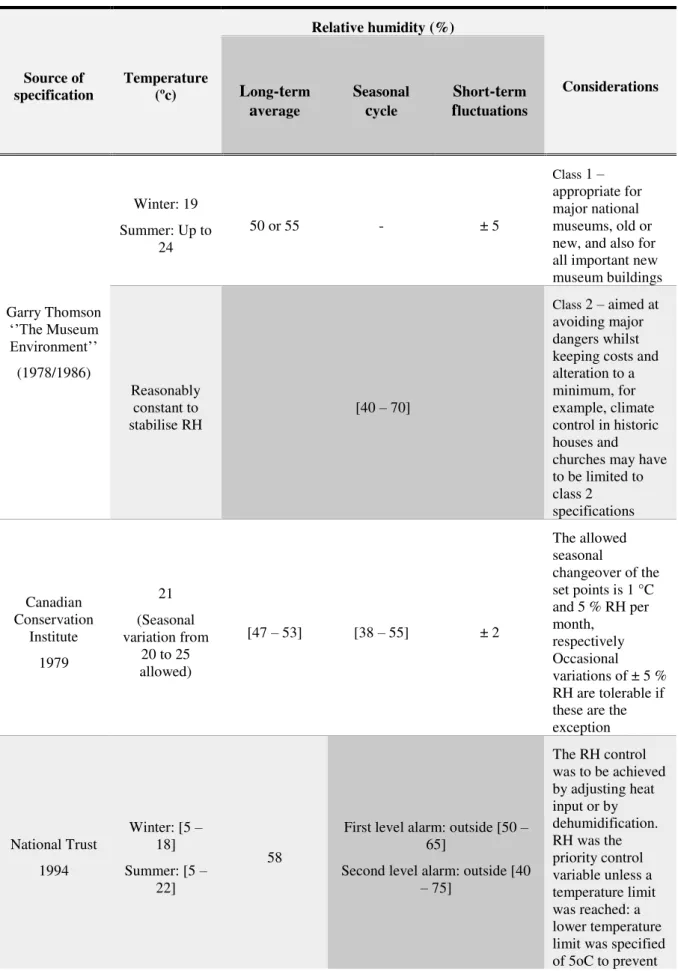
Table 4.4 - Summary of Standards and Guidelines formulated since 1970s until recently. ... 43
Table 4.5 - Temperature and relative humidity specifications according to FCT-UNL ... 50
Table 6.1 The external climate considering the climatic data used in the simulation ... 62
Table 6.2 Defined characteristics for the simulation of the model ... 68
Table 6.3 Ventilation flow respective to each case of occupancy ... 69
Table 6.4 Hygrometry according to each of the cases of visitor’s number considered ... 71
Table 6.5 Static Targets used and their respective Temperature and Relative Humidity ranges ... 72
Table 6.6 Microclimatic classification. ... 77
Table 7.1 Statistical Analysis of Temperature values for each district and visitors per hour ... 79
Table 7.2 Statistical Analysis of Relative Humidity values for each district and visitors per hour ... 81
Table 7.3 Performance Index considering 6 visitors per hour ... 83
Table 7.4 Performance Index considering 12 visitors per hour ... 84
Table 7.5 Performance Index considering 18 visitors per hour ... 85
Table 7.6 ASHRAE Classification considering 6 visitors per hour ... 86
Table 7.7 ASHRAE Classification considering 12 visitors per hour ... 87
xv
Abbreviations and Simbology
ASHRAE AIC AAMD CCI CFC CTF EN ECTN FCT FEA HVAC ICCROM ICOM IIC IPI IT NMAA NGL NMDC PAS UNESCO UNI UNL WMO A
American Society of Heating and Air-conditioning Engineers, Inc American Institute for Conservation
Association of Art Museum Directors The Canadian Conservation Institute Climate for Culture
Conduction Transfer Function European Standard
European Cultural Tourism Network Faculdade de Ciências e Tecnologias Finite Element Analysis
Heating, ventilation, and air conditioning
International Centre for the Study of the Preservation and Restoration of Cultural Property International Council of Museums
Institute for International Conservation Image Permanace Institute
Thermal Insulation
National museum of ancient art of Lisbon (Portugal) National Gallery of London
National Museums Director’s Conference Publicly Available Specification
United Nations Educational, Scientific and Cultural Organization Ente Nazionale Italiano di Unificazione
xvi RH
𝐻𝑅 ̅̅̅̅
𝑇̅
q ΔT
ΔRH
T 𝑣
U e λ
R
ρ
C
pRelative Humidity [%]
Mean annual of relative humidity Mean annual of temperature Heat flux [W/m2]
Temperature variation Relative Humidity variation Temperature [˚C]
Concentration of water vapour
Coefficient of thermal transfer [W/m2.˚C] Thickness [m]
Thermal Conductivity [W/m.˚C] Thermal Resistance [(m2.˚C)/W]
Density [kg/m
3]
1
1
INTRODUCTION
Foreword
The inherent value of cultural heritage is "to bear a unique or at least exceptional testimony to the master of the human capability, exhibiting an important c of the past as well as maintaining it for future generations to come’’[1]. By being aware of its significance, a sense of involvement in assuring its conservation is induced upon entities responsible to accomplish that goal.
Cultural heritage represents not only one of the most important facets that embodies the identity, traditions and practices of a country, particularly with the significance of its evolution throughout history, but also an integral part of modern life, given that it stimulates the economy, especially with touristic activity [2].
The evolution of the ideals underlying the values and benefits behind the conservation of cultural heritage can be studied through developments in raised concerns and subsequent focus by several international charters. After the second world war, the Institute for International Conservation (IIC) and the International Centre for the Study of the Preservation and Restoration of Cultural Property (ICCROM) were founded, respectively in 1950 and 1959, by one of the United nation’s agencies – UNESCO – formally implementing the phase described as ‘scientific conservation’ with the ultimate intention of promoting the preservation of cultural property. It resulted in the drafting of charters and recommendations on how to form decisions that could have a positive impact in this regard. These basic principles were firstly introduced in the Athens Charter in 1931 [3], which was used as the primary driving force for the following international movements that took place by publishing documents that asserted the invaluable necessity of preserving and caring for the world’s cultural assets. The Athens charter was adequately updated by the Venice Charter in 1964 [4], which defined the basic principles and the action frameworks adequate to the protection of monuments and other structures of pieces which have acquired cultural significance with the passing of time, stressing the need to preserve the authenticity and integrity of such important historical assets, particularly with the need of proper documentation whenever an intervention was to take place.
In 1972 the World Heritage Committee was established by the UNESCO as ‘’an Intergovernmental Committee for the Protection of the Cultural and Natural Heritage of Outstanding Universal Value’’[5]. The intangible value rooted in these cultural assets situated all over the world, sets in place an intricate form of control established by charters and operative guidelines implemented over the past years, that devise a web of policies with the intent to guarantee heritage’s conservation. Concurrent to this period of attested growing awareness, it was felt the need to set conservation in its wider context by including the sustainable, economic and social concerns. In 1975 with the European Charter of the Architectural Heritage, several elements of sustainable development were introduced and associated to the protection of the built cultural heritage [6].
Sustainable Development is a well-recognized term at this point, described in [7] as ‘’development that meets the needs of the present without compromising the ability of future generations to meet their own needs’’.
2 All forms of cultural heritage can amount to forces such as tourism that can aid in its maintenance by generating revenue. Since the main concern is towards providing a safeguard indoor environment for the display of both collections and heritage, which in some cases relies upon an active form of control, resulting in an excessively high energy consumption whenever inadequate and too stringent specifications are applied.
When considering the preservation of any type of material, it is possible to find some agents of deterioration that may constitute a risk for the collections, though in this text the focus is in respect to only Temperature (T) and Relative Humidity (RH). If not properly accounted for, these agents of deterioration may jeopardize the safety of the artwork. In accordance to climate management strategies chosen for prevention of deterioration, energy costs should also be invoked in this context given the rising importance of sustainability but never jeopardizing the conservation [9]. High energy consumption may lead to unbearable costs to institution budgets, as well as the environment, however it could be avoided by an increase of knowledge and understanding that should aim towards a sustainable future in all facets – conservation, environment and economy –whilst fully respecting and maintaining the outstanding value embedded in the artwork [10]. Hence, the search for sustainability being considered a very real and current challenge for museums, as they should be able to guarantee the conservation of collections as well as visitor’s comfort with low energy strategies.
Strict climate control strategies were generalized and implemented in the past [11], when energy costs were not yet a matter of concern and sustainability still had not crossed the minds of the conservation professionals, whose methods were based on stringent requirements both for temperature and for relative humidity. This indisputable correlation between rising energy costs and the strict control implemented to the indoor climate was first specified by Marion Mecklenburg at the Smithsonian and more recently confirmed with comparisons applied to a sampling of historical house museums in the work presented in David Artigas’s thesis [12]. In this regard, the escalating energy costs and the need to manage the care of collections in a way that does not compromise the ideals before mentioned – of sustainable development and environmental responsibility – has led to a more complex approach to that of the already implemented, evidencing an essence that is deeply rooted in social, economic and environmental considerations.
Due to advances in technology in recent decades giving rise to the ability of a continuous measurement of temperature and relative humidity values, it is now possible to quantify each one of these factors of decay and their effect on the environment. This allows for a systematic analysis that informs the rate of deterioration, something incredibly important when considering the preservation of collections. As it is, environmental monitoring provides a better understanding of how to both efficiently preserve collections and reduce energy consumption.
These developments prompted a recent shift into more dynamic approaches such as day/night differences, seasonal variations and set points regulated without harming the collections whilst still managing to have sensibly the same conditions, regarding the duration of the year. Nevertheless, the geographical location is important to be considered for each specific case, as the external climate drives changes in the indoor environment within a building that directly affects the artwork. Thus, the suitability of more passive approaches is awarded to wherever the climate is benign enough for it to be considered.
3
Objectives and scope
This work aims to contextualize the inherent complexity associated to the museum environment, particularly in terms of how the internal hygrothermal conditions affect the processes of degradation in the preservation of cultural heritage.
The past certainly shapes the present as well as the future. It is then important to look back at history for the understanding of how climate control in museums was established and the reason for their current specifications, particularly how it shifted along with the way in which society evolved according to social, political and economic developments. Current environmental standards had their origin in decades of compromises and limitations between the different factors that weigh in on the decision-making process of the preservation of valuable artwork, against damage inducing effects that manifest on the environment in which they are displayed. In this context, the focus regarding the agents of deterioration is on Temperature and Relative Humidity.
A case study is then presented, directed towards an assessment of the impact that a variation in the visitor’s numbers per hour has on the conservation of cultural heritage. A simulation of a generic room located in a historical building that houses the MNAA in Portugal was performed, using, for that purpose, the software EnergyPlus and its available climatic data. In this regard, all the districts in the continental territory as well as two from Madeira and Açores – respectively Funchal and Ponta Delgada – were considered for each occupancy – namely 6, 12 and 18 visitors per hour.
The results were then accordingly assessed, more specifically: a statistical understanding of the mean values, seasonal variations and short-term fluctuations of both Temperature and Relative Humidity; an examination of how these conditions fared according to relevant and persisting targets present in literature, using for such end the concept of Performance Index; it was also determined whether or not the generated hygrothermal conditions in fact complied with the ASHRAE classification dedicated to museums and other cultural buildings, explicitly the estimated percentage of time that the values were within each class, for both seasonal and short-term fluctuations; and finally a risk assessment that took into account the simulated internal hygrothermal conditions for each district, in accordance to damage functions that exist in literature, which enabled an evaluation of the mechanical, biological as well as chemical processes of degradation.
Dissertation outline
In order to facilitate the examination of this text and with the intent of possibly providing a full comprehension of the obtained results, for the first three chapters a theoretical account of the matters discussed is established. As it is, there’s a division in 5 chapters, each specified below:
4 In the second chapter, a general contextualization of museum buildings as well as an assessment, particularly to do with the role that the indoor environmental parameters play, specifically temperature and relative humidity, in the internal microclimate. Is also attested the concept of thermal inertia inherent to historical buildings, a relevant type of museum building to be taken into account.
The third chapter appoints to the mechanisms of degradation – that is mechanical, biological and chemical – that constitute a problem to the preservation of cultural heritage. The internal microclimate is dependent on several factors, though the focus in this text is restricted to the two fundamental parameters of temperature and relative humidity. There is a continuous examination in the pursuit of the appropriate climate control guidelines when managing collections and where they are housed. In an attempt to minimize the damaging effects to the art-work, ranges were set regarding low, high and fluctuations about mean values for these two agents of deterioration. In the fourth chapter, the history and developments of climate control are presented up until today’s reality where sustainability is driving the search for the best and innovative methodologies in the environmental control framework. Thus, it provides a comprehensive understanding of the socio-economical as well as scientific progress that characterizes the manner in which stringent measures gave way to more flexible and dynamic approaches in the recent past.
The fifth chapter takes into account today’s society, such as the adequate equilibrium between somewhat conflicting variables, mainly to do with energy efficiency, sustainability, as well as the problematics of climate change and mass tourism.
In the sixth chapter, the methodology for this work is presented, with an account of all the considerations that were made regarding the simulation of a case study specific to Portugal using EnergyPlus. Not only to do with the input information that was necessary for an accurate performance but also a detailed analysis of how the results were processed for the intended propose of the study – an assessment of what an increase in visitor’s number induces in terms of preservation of the artwork, namely in regard to indoor hygrothermal conditions.
The seventh chapter presents the results, obtained from several simulations, allowing for an evaluation of the impact that each of the proposed varying visitor’s numbers have on the preservation of cultural heritage, respective to each district that was considered. A statistical analysis is presented, with the intent to characterize the interior condition of both temperature and relative humidity as well as a Performance Index which indicates the percentage of time that these parameters meet the imposed static reference targets, obtained from literature. An account on risk assessment in regard to mechanical, biological and chemical degradation as well as the ASHRAE classification were also presented.
5
2
INDOOR ENVIRONMENTAL PARAMETERS
Contextualizing Museum Buildings
Museums are implemented in different types of buildings, either modern construction or old historic heritage. This is important to take into account when pondering over preservation strategies, since each have their own particularities that certainly have an influence on the internal environment. Overall, when considering the indoor environmental conditions, it is a basic understanding that they are directly affected by several external factors, namely the solar radiation, heat and moisture conduction through surfaces, air exchanges through openings, and depending on the regional climate, architecture and material composition of the envelope as well as its orientation and internal loads related to the lights, HVAC systems and human presence. In this regard, given the function that is presented in this text to the building itself – as a museum facility – it is important to realise the conflict that arises in terms of preventing both the degradation of the art-work and the inherent value in heritage buildings, that house collections, as well as taking into account the human factor and the expectations associated with thermal comfort. The latter is also an integral part of internal vapour sources, for people release moisture by the work of their regular metabolism, via breathing and transpiration, and as such can have a significant impact on the interior environment.
Apart from the recognition of being an economic resource and a substantial aid to the preservation and maintenance of the collections, mass tourism constitutes a reason for concern for the preservation of collections and buildings, particularly due to the transport of pollutants, with the emissions of water vapour and heat to the interior climate, compromising its stability. It could be a limiting factor in the use of natural ventilation, when the number of visitors is very high, as there is a demand for a refresh rate that can only be provided by mechanical aid, such as HVAC systems [13].
Given the fact that the air inside buildings comes from the outside, the purpose of these systems is to modify the external conditions to make them suitable for use indoors, certainly if the needs are that of fresh air, cooling, heating, humidifying and dehumidifying, which accounts for energy consumption. As it is, geography is a crucial factor in preservation measures, since the regional climate to a specific building will determine the environment that collections will experience and as such, the greater the difference between the desired indoor conditions and the natural climate the more demanding those systems will have to be.
There are also the condensation risks in building surfaces, that is a frequent concern most particularly in northern climates. For instances, when considering winter conditions, the necessity of humidification to balance out the drop in internal RH levels, due to heating to human comfort levels, may indeed result in such problems. It becomes evident the existence of a conflict between museum specifications for objects that require certain ranges in environmental parameters for their safe preservation, along with the need to prevent damage in building elements, human comfort as well as with energetic considerations.
6 rare exceptions. Upon consideration of a full scale building climate control, in order to preserve the collections housed in historic buildings, particularly with recognition to the building envelope’s limitations given its historic value, the New Orleans Charter for Joint Preservation of Historic Structures and Artefacts was formulated in 1991, so as to promote this philosophy [14].
As mentioned, building envelopes where collections are housed are exposed to a variety of external hazards that, if not efficiently accounted for can have serious impacts on the inside climate. So, the properties assigned to the envelope will certainly determine the potential for a more passive control approach since airtightness, insulation and hygrothermal inertia will reduce the way outdoor variations affect the interior in a manner that is specific for each type of building [15]. Seeing as modern building’s structure is substantially different from ancient ones, varied issues concerning the control of the interior environment are going to be presented. Primarily they have vast expanses of glass façade, a small ratio of wall area to volume and the thickness of the walls is much smaller, which allows for a higher sensibility regarding the daily cycles in temperature, leading to thermal stabilization being therefore compromised. Their only inherent protective quality is thermal insulation, and on the other hand their airtightness, specifically designed according to current regulated air exchange rates for air quality, that combined with heat and moisture exchangers allow for the relative humidity buffering of some materials, which uncontrolled air exchange, typical of old construction, previously made ineffective [15]. In this case, considering buildings such as museums, depending on the climate, they are usually designed with a complementary mechanic system to provide the stable conditions needed for the preservation of collections. Therefore, the thermal gains or losses are counterbalanced by mechanical aid.
Historical Buildings and the concept of Thermal Inertia
Of course, when considering another perspective, seeing as though a large amount of collections are also kept in historic houses, monuments and churches, the situation differs considerably and is indeed a concerning topic in conservation science [16], since there is a compromise between the target indoor climate and the preservation of both collections and the building elements as well as the minimum required human comfort in their operation [17]. When considering monuments and churches and the way they are affected by external temperatures, the nature of their own construction implies a considerable mass in their walls, which allows for the depiction of the concept of thermal inertia. This concept infers the quantity of heat transferred in a body with a certain mass and specific heat
7 influence of external variations in temperature. Resulting in a lower temperature span/range that is presented on the interior of the envelope, as the highest and lowest values for variation in external temperature are more prominent than the ones on the inside. These considerations are illustrated in Figure 2.1, where a) indicates the sinusoidal variations in external temperatures – Tas – with which an average value can be determined, assuming
the internal temperature – Ti – as constant.
Figure 2.1 - Example of the concept of thermal inertia, adapted from [18]
These buildings, built in the past, were initially conceived to deal with climate passively, through proper design regarding materials and other considerations upon their construction, such as air leakage to an extent that allowed for the necessary exchange with the exterior, in order to maintain favourable conditions on the inside climate. Indeed, the area/volume ratio of the envelope, the use of single pane glass windows and uncontrolled air leakage are far from the cases applied in recent construction, however they were efficient enough throughout the centuries in preserving a lot of the artwork. Churches for instance, have massive structures and also contain a considerable amount of moisture absorbing materials, from porous renders to wooden works of art, which allow for effective thermal and humidity buffering processes. They are also considered to have small rates of air exchange, allowing for the internal conditions to slowly follow outdoor changes, so that the seasonal cycle is attenuated and the short-term fluctuations are significantly flattened [19]. However, as societal dynamics evolve along with the passing of time, particularly in the usage and re-usage of historical buildings, new needs arise possibly hindering the integrity of these outstanding remembrances of history.
T
em
per
atu
re
Flu
x
Flu
x
Flu
x
8 In natural ventilated buildings, particularly when considering that most historical buildings seldom have a tightly sealed envelope [20], it can be expected that the indoor conditions will respond to the outdoor conditions. This might constitute a problem in winter, when colder temperatures from the outside air infiltrate to the inside, where they are met by a warmer climate due to the seasonal delaying effects on internal temperatures, as result of their high thermal inertia. A sudden change in outdoor temperature will affect the indoor RH, given the temperature difference presented by the incoming air and the inside surface. As a result, there is an added concern in the risk of condensation on cold indoor surfaces, especially in the spring. When the hot air from the exterior infiltrates to the inside, and comes into contact with surfaces that still retain colder conditions accumulated throughout the winter, it will be cooled, inducing an increase in relative humidity in the area close to the surface, giving rise to a potential condensation of water vapour on that cold surface. An analogue situation is presented usually in northern cold climates, that resort to humidification to balance out the drop in humidity levels caused by the use of heating, to the lower range of human comfort levels. As it is, this transfer of humidity to the interior air may result in the rise of the dew point 1of indoor air and if it surpasses the external air temperature could potentially lead to
condensation, when this warm interior air meets the cold surfaces affected by the external climate. Condensation problems are of great concern for historic buildings, to the detriment of the valuable art-work housed inside as well as their own structure, such as the rotting of wooden elements, mould growth on interior finishes, corrosion of metals and spalling of masonry [21].
Another aspect to consider is that this infiltrated air contains microorganisms as well as pollutants. These microorganisms find the adequate conditions to grow in moderate air temperatures and cold moist surfaces. If the indoor conditions and substrate are favourable to the appearance of superficial condensation in walls, or even in objects, usually more prone to appear in corners or areas where the air is more stagnant and surfaces that remain colder and moister, this constitutes an adequate environment for the development of mould. Evidently, in a museum environment this aspect leads to consequences of great extent, as the integrity of collections becomes compromised.
Over this prospect, an inherent natural variability in temperature and relative humidity conditions, most commonly induced in the term microclimate, is presented on the interior of this type of buildings – naturally ventilated ones. For several centuries that is undoubtedly what provided the vital conditions for long-term preservation of the art-work and the building itself as well as the permanence of people. Now however, given the complex requirements when considering a museum facility, specifically when this type of buildings is used for such a purpose, these factors are often seen as liabilities. Energy efficiency in historical buildings is a daunting task to ensure, either due to technical constraints or to limitations because of the cultural value associated to the envelope. Any intervention with the intent to improve its thermal performance, has the hindrance of the cultural value associated to the building, bearing in mind the integrity of the materials, as well as the unaccounted repercussions that a retrofitting of walls or windows would impose on the original climatic conditions. This could potentially give rise to other problems such as condensation on wall surfaces with either low vapour permeability or hygrothermal favourable conditions, since the excess moisture produced could be to such an extent that would compromise the previously established natural microclimate. Then, those measures could possibly be considered more unfavourable than
1The dew point temperature is the temperature to which a parcel of moist air must be cooled at constant atmospheric pressure and constant
9 beneficial. Mechanical systems that control the internal climate and human presence may also completely change the natural equilibrium as previously mentioned.
When attempting to take a more active approach in controlling the instability that affects the environment where objects are displayed, the problems associated with the installation of air-conditioning in these massive historic buildings, which ideally requires a well-sealed envelope with appropriate levels of insulation, may compromise not only their authenticity but also their efficiency.
The installation of HVAC systems presents a risk to the structure and the building envelope, particularly with the introduction of ventilation ductwork, having to destroy walls and floors for that purpose, but also since the structure of many historic buildings is not designed to withstand the high moisture content of humidified air [22]. Furthermore, when the air that is blown intermittently reaches the walls and certain places where art-work is being displayed, gradients of moist/dry and cool/warm air are generated and moved by internal air motions, resulting in repeated cycles of temperature and relative humidity fluctuations or the transport of airborne pollutants and dust particles that may be deposited in the surfaces of objects [13]. In this account, often enormous financial and also technical efforts are required, not only investment-wise but also on ongoing expenses particularly to do with extensive maintenance and appropriate control [23].
So as to reduce infiltrations of external air and pollutants, there is a current practice in these types of buildings, mainly commercial and museums, to maintain air intake higher than air exhaust resulting in a higher indoor pressure than outdoors. Thus creating an internal artificial microclimate, not always in equilibrium with the many variables at play, particularly heat and moisture transfers when it comes to balancing the influence of visitors, air leakage and exchanges between air and surfaces [16].
The referred term microclimate can be understood as a more specific focus of the climate of an isolated area, as
10 Undoubtedly, physical and ambient environments in which heritage collections are housed have a significant impact on their long-term preservation. Deterioration is not entirely unavoidable and it assuredly is a multiplier of known and controllable causes. The major agents are indeed environmental, but that is not to say there are no other causes that should not be taken into consideration, such as random occurrences that might potentially endanger the integrity of the art-work. At this point it should be relevant to mention that not only temperature and relative humidity account for the environmental problems that concern the welfare of collections. Other factors, such as light (UV or artificial radiation), indoor and outdoor airborne pollutants, microorganisms as well as time itself also bring added worries for the management of the indoor climate, that not only is supposed to safeguard the collections but that also has to do so while displaying them to the public. Given the complexity of this spectrum of parameters, which have an influence in the degradation of the art-work and the limited scope intended for the matter in this text, only the hygrothermal conditions of the environment, namely temperature and relative humidity, are going to be analysed in greater detail in the following points.
Temperature in the Building Context
The understanding of atmospheric thermodynamics in environmental diagnostics is an absolute necessity for the ability to understand the processes that affect cultural heritage, particularly how causes manifest effects and deterioration mechanisms.
When heat reaches the inside surface of a wall or window, it is transmitted to the interior climate through radiation and convection. As presented above, depending on the orientation of these elements, directly in contact with the external environment, the influence of solar radiation and other factors, a considerably different amount is going to make it through. As it is, rooms in the interior or with less external elements will have significantly different requirements than those located more outwardly, since they are better shielded and the effects can be smoothed out. Of course, this also applies to the ground floor rooms where a large portion of the heat is able to be stored there [16]. As it can be understood, there are considerable differences between museum rooms. This may be explained in part by exposure, by the construction materials employed, or the very nature and characteristics of the objects exhibited in a particular room, and also when considering mechanical climate control factors such as heating, humidifying or ventilating. Figure 2.2 ilustrates a summarized scheme of the heat gains in a museum building.
11 When air comes into contact with surfaces that variate in temperature, from colder to warmer conditions, it suffers a change in its density favouring the ascension of warmer air, since its less dense, and the descent of colder air, given its higher density. In buildings, the air cooling occurs in a localized area near the inside surfaces of external elements, so that when considering winter conditions lower temperatures are registered in comparison with the ambient conditions. It is important to take into account that relative humidity adjacent to that inner surface is higher in winter and spring conditions than the rest of the air in the environment. This happens due to the drop in temperature suffered by the air that comes into contact with the cooler surface [18], and of course the inverse variability that defines the connection of these two parameters.
A natural convective motion is induced, and considering a closed room with no additional sources of heat or moisture, air density regulates the distribution of the air inside, in that warm and lighter air will rise to the top, and the cold and denser air will find the floor. For this reason, a thermal layering tends to form, that is, a stable atmospheric stratification with temperature increasing with height. As might be expected, in a museum environment there are several factors and mechanisms that can impact that natural equilibrium. Apart from given assurances such as people and lighting, internal sources of heat or moisture in cases where there is an existing artificial climate control in action, whether it be with heaters, humidifiers and dehumidifiers, air-conditioning or ventilation of any sort, either forced or just the simple fact of open windows and doors, it is evident that they increase the complexity of the distribution of indoor air. There is an inherent intermittent use associated with these systems, and also the fact that they are located in specific spots, so that they continually generate discrepancies in the internal microclimate. One example are fans, that destroy the aforementioned thermal layering that is naturally established. Given that indoor temperatures are determined by the exchange of all these diverse parameters, a distinction should emerge from natural factors to the building usage and the type of climate control implemented [16].
For instances, temperature variations affecting air movements will certainly be responsible for the transport and deposition of pollutants to the detriment of art-work and monument surfaces. In the specific case where there is a radiant floor, for example, near a wall that has valuable works of art, it could be frescoes or paintings, the warm air that rises through convection forces could contain airborne particle matter or pollutants and if the surface allows for their deposition, this will undoubtedly constitute a danger to the art-work [27].
The best indoor conditions can be achieved when thermal inertia of walls, floor and ceiling are similar between them – since when they differ, the internal stability changes according to the season. For the particular case of churches, there is a shorter time-lag to the variations of seasons affecting the ceiling when compared to the ground floor. Subsequently, in the summertime, as the ceiling is warmer and the floor cooler this will generate an internal layering with a vertical thermal gradient, opposed to the situation presented in winter where the cooler ceiling and warmer floor affect the air stability, compromising it [16].
Relative Humidity in the Building Context
Atmospheric air always contains a certain quantity of water vapour mixed with other diverse gases, giving purpose to the fact that hygrometry aims to determine the moisture content of the air at a given temperature [28].
12 ‘’moist’’ conditions. Thus environmental monitoring and atmospheric thermodynamics are useful tools in environmental diagnostics, those being essential for the improvement of knowledge regarding the basic processes that affect cultural heritage, evidencing causes, effects and deterioration mechanisms [16]. So, for a proper measure of hygrothermal conditions it becomes necessary to find methods that best evaluate them. When considering temperature, it is fairly known that it can be expressed in either Kelvin, Centigrade or Fahrenheit, however, when it comes to defining humidity, the decision upon which parameters to use is certainly more nuanced. There are indeed several parameters to choose from, each with their own individual characteristics, but in the end, it all comes down to trying to best define the concept of humidity in a given context and ambient. In this specific field, even though other parameters such as vapour pressure or dew point temperature could potentially be used by engineers that consult on climate control systems, every content regarding the care for collections, when humidity as a factor of deterioration is concerned, it is facilitated for consultants through specifications in which relative humidity is the parameter [25].
Assuredly, there can often emerge some difficulty in the comprehension of this specific parameter, particularly in the ambiguity of its name. The term relative, in itself, induces a variability when considering the link between different quantities. It is a ratio, presented in percentage, that can be expressed either between the concentration of water vapour with the saturation value or the partial water vapour pressure to the saturation pressure at the same temperature. The fact of it being a ratio makes it indifferent to the choice of which unit of concentration to use. As it is, the reason for it being expressed as relative is the association between the actual amount of water vapour that is contained in the air, and the maximum quantity that it could possibly contain at the same temperature, which translates the dependence on the association of two variables. One that is a characteristic of the environment itself - the quantity of water vapour that exists in reality - and another that assumes the same value for a given temperature - the saturation value [18][29].
13
Figure 2.3 - Psychometric Chart, adapted from [18]
14
Figure 2.4 - Possible circumstances of a building affected by infiltrating water, adapted from [25]
There is a general understanding to the fact that construction materials, whether organic or inorganic both have porosities in their constitution. In open porous materials, necessarily the way they interact with different hygrothermal conditions in an indoor environment can be described in the adsorption and desorption phenomena. The first term refers to the adherence of water vapour on the surface of the porosities of solids, whereas the latter, as can easily be understood, is the opposite, that is the release of water vapour content from the porous cavities. However, a distinct hysteresis effect is observed in this process, as there is a higher moisture content exchange in the adsorption trend [31]. In most mineral binding materials, such as concrete and mortars, this effect is highly accentuated, yet on a contrast note when considering other materials, essentially wood and certain stone types, the hysteresis effect is considered to be practically null and therefore negligible in practice [18].
This is how the moisture content of organic and inorganic porous materials, used in building construction, establishes equilibrium with the values of RH and temperature in their immediate environment - these materials are named as hygroscopic. A typical porous surface will adsorb a higher amount of water vapour as the RH progressively rises. This effect is even heightened by the existence of hygroscopic salts in the pores, such as chlorate or nitrates, that have the ability to adsorb great quantities of water vapour affecting the normal behaviour of the material.
15 Considering the possibility of the non-existence of adequate surfaces for adsorption/desorption exchanges, there must be nonetheless an equilibrium between the water vapour content in the air, either produced or transported inside. According to the mass conservation principle, the entire exterior water vapour that infiltrates a room along with the amount that is produced inside and is either condensed or evaporates from the surfaces, has to be the exact same as the amount removed by ventilation and/or diffusion through building materials along with the portion that gathers inside [18].
In unheated churches, the interior microclimate is regulated by how the building features can respond to the outside climate. It was previously mentioned that historic buildings such as these benefit from their massive walls by flattening the changes in outside temperature, with their high thermal inertia, but their interiors also accommodate large volumes of moisture-absorbing materials, in either porous renders or wood, acting as an effective temperature and humidity buffers [34]. Therefore, this buffering provided by church walls is considered to be far from negligible and assuredly beneficial to its furniture and wall paintings housed inside.
Materials such as stones, bricks, pottery, plasters and frescoes that have soluble salts in their existing pores are affected by microclimatic changes. Taking the example of an historic building being affected by rising water from a saturated terrain. Given that the building has existed long enough for that water to ascend by capillarity and if soluble hygroscopic salts exist in that soil, nitrates for instances, they will eventually be dissolved in that water and migrate through the wall. Being hygroscopic, their adsorption of water vapour is considerable, therefore they are going to be affected by cycles in relative humidity following the changes in environmental conditions that can originate their crystallization or dissolution. As it is, anomalies are going to arise in the materials and art-work, particularly derived from efflorescence and crypto florescence phenomena. The first indicates the level reached by capillary rise where water evaporates, where the salts will be deposited on the surface of the material for high levels of RH and the latter occurs when levels of relative humidity drop below a specific range and manifests itself in the underlying layer of the coating of the building, which can lead to the delamination and flaking of the material, for usually the salts occupy a volume larger than the one that can be contained within the pores of the materials, something incredibly disastrous when in a perspective of heritage conservation [16][35].
17
3
MECHANISMS OF DEGRADATION TO
COLLECTIONS
–
MECHANICAL,
BIOLOGICAL AND CHEMICAL
3.1
General considerations
As specified before, buildings where museums are housed are defined by an internal microclimate that is dependent of several factors, though the focus in this text being restricted to the two fundamental parameters: RH and temperature. Following the previous broader scope of how they influence and operate inside the building context into a more concentrated approach to the object level within a collection, emerges a conflict between three distinct degradation processes that dictate how the materials are going to react. These mechanisms have a mechanical, biological and chemical origin and it is useful to individualize their analysis, given the fact that not all objects respond in the same way to climate variations. Over the prospect that most of the museums are populated by mixed collections, certainly these three processes, according to different values of temperature and RH, will have a particular and sometimes conflicting effect on different properties of objects as will be presented on the following points.
In a management perspective, there is a continuous search for appropriate climate control guidelines for collections, that are essentially formulated to define allowable ranges and fluctuations to these two parameters in an attempt to minimize the damaging effects to the art-work. Degradation in museum objects could be affected by mould growth, through the transport of microorganisms present in the air. It could also be due to inherent chemical changes, such as hydrolysis and oxidation. Since the vast majority of cultural objects are organic, their mechanical properties are also dramatically altered, swelling and shrinking whenever there are variations of temperature and relative humidity over time. It then becomes apparent the need for their control and the appliance of the best methods for their safeguard [36][17]. In accordance to that underlying principle, questions arise regarding low, high and fluctuations about mean values for both considered agents of deterioration, RH and temperature, that will be presented below.
3.1.1
Temperature as an agent of deterioration
18 extreme temperatures in the perspective of regular objects, whereas in unstable materials summertime high temperatures are a problem, for example old film, that is best preserved in cold temperatures [37]. Although most objects are not directly affected by air temperature, there is a need for its control as variations induce differential expansions in materials and tensile strengths between the surface and the subsurface layers and can also have indirect effects in the environment within a collection space, as previously mentioned that a change in temperature causes RH changes. So that organic hygroscopic materials, that adsorb and release moisture in the air to reach equilibrium, such as wood, paper or leather, may shrink and become brittle when a rise in temperature drops the relative humidity for example. Indeed the rates of the many deterioration mechanisms increase right along with temperature, biological activity being of great concern, as well as damaging chemical processes that accelerate exponentially when temperature elevates, with an approximation for organic materials, in that reaction rate doubles with each 5ºC rise [38].
High temperatures promote the deterioration of collections by the increase of chemical reactions, they therefore assume an important role in museum climate control. The decay is mostly caused by acid hydrolysis, that affects materials that are acidic in nature such as paper – as in Figure 3.1 – photographic material, rubber and plastics or those of which become acidic from exposure to industrial pollutants, for example, as the cases of textiles and leather. Physical characteristics of materials are also affected whenever temperature is too high, some will distort irreversibly, such as many common plastics, while others may deform in the base of magnetic media tapes (analogue and digital), also waxes present in oil paintings may melt or soften.
Figure 3.1 - Embrittled low-quality paper, a chemically unstable material that deteriorates notably faster at warm temperatures adapted from [39]
19 deterioration processes that affect museums worldwide. Indeed, mild to moderate temperatures in the range of 25-30ºC particularly play an important role but the mould germination depends also on the RH, the quality of the substrate, its structure and the chemistry, as well as further environmental variables such as air pollution, ventilation, light, in which they all have a substantial influence in defining the adequate conditions for its germination. Preventive models exist, necessarily the isopleths system, to determine fungal growth particularly given the fact that temperature, RH and substrate have to simultaneously allow, over a certain period of time, the appropriate conditions to trigger fungal growth. So that for different substrate types several graphs combining temperature, RH, germination time and growth rate are considered to determine if and at what rate fungal growth occurs [40]. This microbiological manifestation, particularly covering the surface of stones and other materials, causes not only a visual impact that should be averted, but it also favours conditions to the deposition of airborne particular matter that, along with the deposited material, create a composite layer that alters the surface characteristics, namely the thermal conductivity, water balance, porosity and water vapour diffusion inside the material, affecting in this way the established hygrothermal equilibrium of the material, with the alteration of important processes such as the adsorption and desorption of water vapour [16].
20 When considering the response time in materials to fast fluctuations, particularly their ability to attenuate them, it is understandable that the shorter the fluctuation the thinner the layer affected in its bulk will be. Yet, seeing as though the artistic value in museum objects and monuments lies specifically on the superficial layer, shorter temperature fluctuations, such as daily ones, are perceived as a greater threat to collections rather than seasonal ones, that even though more prolonged in time are indeed less dangerous as they have a slower rate than the penetration of heat in the material, resulting in no significant stresses between the external layer and the interior one [16]. So, if the object is subjected to a fluctuation that surpasses its ability to respond evenly, an internal temperature gradient is generated, causing internal stress and accelerating fatigue failure as it does when moisture is concerned [43], due to repeated cycles that accumulate that stress, with the result of visible damage to vulnerable materials, particularly brittle ones, that is, where there is very little or none capacity for plastic deformation, with examples such as glass, ceramics and old oil paints that fall under this category [41]. The outer layer of stones is also prone to thermal cycles by the advent of mechanical damage, beginning at the discontinuities and interfaces between the different minerals in their composition, resulting in internal tensions that damage the surface. In assessing dangerous daily fluctuations one of the most important examples are the freezing-thawing cycles that induce mechanical damage to materials.
3.1.2
Relative Humidity as an agent of deterioration
Relative humidity plays a predominant role in the conservation, due its considerable influence in the different degradation mechanisms [44] and is the remaining parameter considered in this dissertation. A recurring and already specified problem emerges since it is not possible to define universal safe ranges given the diverse effects of RH on each degradation processes and their variation in a mixed collection environment. As such, it is useful to analyse this parameter in light of individual limitations that induce damage such as lower and higher extremes and fluctuations about a mean, as made previously for temperature.
The way that indoor climate fluctuations affect the equilibrium moisture content in objects results from several factors, such the solar exposure, exposure to air flows and heat sources, or even the object constitution. The exposure to high RH values could result in the mould germination and the fluctuations can induce dimensional changes, specifically in hygroscopic organic materials, with repeated swelling or shrinking consequently leading to deformations and cracking, or even chemical reactions such as corrosion in metals that could be exacerbated if they are contaminated with salts.
21 All the deterioration rates climb rapidly with increasing RH and if the objects were to be subjected to RH values above the limit of 75%, they could potentially suffer a range of diverse problems, from dimensional changes that increase significantly for every increment up to 100% RH, to germination of mould (Figure 3.2) [39]. RH causes the disintegration or discolouring of materials such as skin, leather, textiles, paper, wood, paint and glass, and also the fact that above that value there is a rapid growth of water content that is always present in the surface of metals, exponentially adding to their corrosion [46]. Some minerals deliquesce above certain critical RH values, that is, they form a salt solution by adsorbing moisture from the air, due to their hygroscopic character, which promotes the attachment of moisture to the surface of metallic objects, particularly the cases of archaeological iron and bronze, most vulnerable to this occurrence, thus determining the formation of an aggressive agent that activates and even intensifies their corrosion [25]. Other impurities such as dust, that also accumulate on those surfaces may aggravate this condition, attracting moisture as well and possibly contaminating it with the soluble acidic impurities of the atmosphere.
Figure 3.2 - Mould growth on a book exposed to conditions of high relative humidity, adapted from [39]
Apart from extremely vulnerable archival materials such as acidic paper, magnetic tape, film, that decay very rapidly through acid hydrolysis, and thus require extreme control to stop the reaction process to proceed, maintaining them below 0%, in regards to chemical reactions that can lead to the deterioration of materials in museums, there’s certainly an added concern to maximum levels permitted to relative humidity, so as not to compromise the preservation of vulnerable and unstable objects at display, mainly due to the acceleration of metal corrosion, the fading of dye materials, the decrease of paper and cloth resistance and also the deterioration of certain glass materials [47]. Chemical processes in many objects are therefore dependent on or accelerated by water content, increasing reaction speed correspondingly in hygroscopic materials as RH rises.
22
Figure 3.3 - Loss of paint in a polychrome wooden sculpture caused by large fluctuations in relative humidity, adapted from [39]
When comparing a rapid change in RH affecting a hygroscopic collection with a certain response time, an internal RH gradient is generated, which can lead to physical damage. The fluctuations considered to be the most stressful for an item are the ones longer than its response time, but shorter than the stress relaxation time. As such, it should be noted that the different relaxation times for gesso, wood, paint and varnish all strongly increase by both low RH and temperature, leading up to possibly more damage in this regard. Indeed, a variation in RH affects the moisture content of hygroscopic materials, ranging from rigid materials such as wood, glues and ivory, to more flexible ones that include papers, parchments and textiles and also to a lesser extent gessoes and paints, resulting in a dimensional response [45]. It is important to point out at this consideration, that physical damage is particularly due to dimensional changes in materials that are restrained from movement, seeing as though no problems are presented whenever they are free to expand and contract [25]. In this respect, a slow RH change over time does lead restrained objects to a deformation stress, which can become so intense that permanent deformation occurs, whereas for short fluctuations, only the most superficial part of the object responds to this change, hence the constraint in movement that the bulk produces. As it is, variations in humidity levels not only affect severely the interior of wooden artefacts such as furniture, for example, but also induce spalling of paint (Figure 3.3), loosening of joints and surface damage in other complex assemblies of materials.
23
![Figure 2.1 - Example of the concept of thermal inertia, adapted from [18]](https://thumb-eu.123doks.com/thumbv2/123dok_br/16588698.738868/27.892.274.604.266.755/figure-example-concept-thermal-inertia-adapted.webp)
![Figure 2.2 - Scheme of heat gains inside a museum building adapted from [26]](https://thumb-eu.123doks.com/thumbv2/123dok_br/16588698.738868/30.892.272.617.857.1104/figure-scheme-heat-gains-inside-museum-building-adapted.webp)
![Figure 2.3 - Psychometric Chart, adapted from [18]](https://thumb-eu.123doks.com/thumbv2/123dok_br/16588698.738868/33.892.250.645.113.486/figure-psychometric-chart-adapted.webp)
![Figure 3.1 - Embrittled low-quality paper, a chemically unstable material that deteriorates notably faster at warm temperatures adapted from [39]](https://thumb-eu.123doks.com/thumbv2/123dok_br/16588698.738868/38.892.292.602.591.992/figure-embrittled-quality-chemically-unstable-material-deteriorates-temperatures.webp)
![Figure 3.2 - Mould growth on a book exposed to conditions of high relative humidity, adapted from [39]](https://thumb-eu.123doks.com/thumbv2/123dok_br/16588698.738868/41.892.387.508.434.608/figure-mould-growth-exposed-conditions-relative-humidity-adapted.webp)
![Figure 4.1 - Storage of paintings at Manod during WWII, adapted from [54]](https://thumb-eu.123doks.com/thumbv2/123dok_br/16588698.738868/48.892.206.690.216.527/figure-storage-paintings-manod-wwii-adapted.webp)
![Table 4.3 - Classification of Climate Control Potential in Buildings (adapted from ASHRAE) [78]](https://thumb-eu.123doks.com/thumbv2/123dok_br/16588698.738868/60.892.112.788.316.1008/table-classification-climate-control-potential-buildings-adapted-ashrae.webp)
![Figure 5.2 - Final Energy Consumption according to sectors data obtained from [95]](https://thumb-eu.123doks.com/thumbv2/123dok_br/16588698.738868/75.892.143.758.108.354/figure-final-energy-consumption-according-sectors-data-obtained.webp)
![Figure 5.4 - Final Energy Consumption in Portugal, data obtained from [95].](https://thumb-eu.123doks.com/thumbv2/123dok_br/16588698.738868/76.892.135.758.292.650/figure-final-energy-consumption-portugal-data-obtained.webp)
