Copyright © 2014 Revista Latino-Americana de Enfermagem
This is an Open Access article distributed under the terms of the Creative Commons Attribution Non-Commercial License (CC BY-NC).
This license lets others distribute, remix, tweak, and build upon your work non-commercially, and although their new works must also acknowledge you and be non-commercial, they don’t have to license their derivative works on the same terms.
DOI: 10.1590/0104-1169.3006.2380
www.eerp.usp.br/rlae
Corresponding Author: Edna Apparecida Moura Arcuri Rua Aquiramun, 186 Bairro: Alto de Pinheiros
CEP: 05446-030, São Paulo, SP, Brasil E-mail: [email protected]
Sandra Regina Ramos Silva
1Edna Apparecida Moura Arcuri
2Adriana Paula Jordão Isabella
3Silvia Maria Arcuri
4Jair Lício Ferreira Santos
51 MSc, Professor, Universidade Mogi das Cruzes, São Paulo, SP, Brazil. Professor, Universidade Nove de Julho, São Paulo, SP, Brasil. 2 PhD, Full Professor, Universidade Guarulhos, Guarulhos, SP, Brazil.
3 MSc, Full Professor, Universidade Nove de Julho, São Paulo, SP, Brazil.
4 PhD, Physician, Associação Congregação de Santa Catarina, Hospital Santa Catarina, São Paulo, SP, Brazil. 5 PhD, Full Professor, Faculdade de Medicina de Ribeirão Preto, Universidade de São Paulo, Ribeirão Preto, SP, Brazil.
Objective: to identify, in 2011, rates of hypertension, cardiovascular and gestational problems
in subjects presenting high blood pressure in 1982, when correct cuff size was used, according
to the American Heart Association Arm Circumference/Cuff Width ratio of 0.40. Methods: high blood pressure was defined in 2011 as systolic ≥ 115 mmHg and diastolic ≥ 80mmHg, resulting in 20 subjects between 39 and 43 years old. (Risk Group). They were compared to 20 subjects
from the original sample with lower blood pressure values (Control group). Results: the rates of
hypertension, cardiovascular and gestational problems were significantly higher (Fisher: p=0.02)
in the Risk Group, with one case of cardiovascular death. Our findings arouse speculations about
whether, if a proper cuff had been used in clinical practice, the complications and death could have
been avoided. Conclusions: data suggest compliance with the use of cuff width corresponding to
40% of arm circumference, despite polemics concerning cuff availability and difficulties of using
many sizes.
Descriptors: Arterial Pressure; Adolescent; Hypertension; Risk Factors.
Rev. Latino-Am. Enfermagem 2014 Jan.-Feb.;22(1):3-10.
Background
In 1901, Von Recklinghausen observed that the
Riva Rocci cuff, 4.5 cm wide, led to blood pressure (BP)
overestimation. Such effects were also studied in classical
works performed between the 1930’s and 1980’s, which
also revealed problems of BP underestimation caused
by larger cuffs. These studies were reviewed in 1996,
when a century of the Riva-Rocci sphygmomanometer
was celebrated(1). Controversial aspects of the data
regarding cuff sizes remain unclear until date.
From 1951 to 1993, the American Heart Association
(AHA) recommended an arm circumference/cuff width
(AC/CW) ratio of 0.40 and cuff length reaching at
least 80% of AC, to avoid over or underestimated BP
readings(2-3). The ratio 0.40 was also recommended
for use in children and adolescents. Despite the ratio
recommendation, a standard cuff 9 cm large was
introduced to be used in adolescents, and the standard
cuff for adults (12 cm) was also indicated for grown
children(4). A contradiction between the theoretical
framework and the recommended practice remained in
the most recent AHA revision for cuff size (2005), which
unsuccessfully attempted to change the ratio value(5).
In 1982, we applied the traditional AHA
recommendation for cuff width (ratio 0.4) to measure BP
in 999 subjects from the University of São Paulo (USP),
10-59 years old, 299 students, 300 faculty members and 400 oficials. Among them, 99 were adolescents from 10 to 14 years old(6), and a ifth revealed hypertensive BP
values in 1982, when measured with the recommended
0.40 ratio.
Objective
To evaluate, after 29 years, the rates for
hypertension, cardiovascular and gestational problems
(target events) in adolescents presenting high BP values
in 1982, when cuff width corresponding to 40% of arm
circumference was used in compliance with the American
Heart Association recommended ratio 0.40.
Methods
A longitudinal study (1982-2011) was performed in
1982 on the University of São Paulo Campus and in 2011
at places the subjects followed had chosen.
Administrative and ethical requirements
The 1982 study was performed at the University
of São Paulo School of Pedagogy, following approved
faculty proceedings valid at that time. The present study
(2011) received approval from the Ethics Committee
at the University Guarulhos under number 16/2007
(SISNEP/228). All participants were informed about the
study goals and variables, as well as the conditions of
their participation. They gave formal written consent,
indicating their understanding and agreement to
participate in the study.
Recruitment
Subjects were initially contacted by phone or
internet. Each of them could choose the place to be
interviewed. Although the main aim of the present study
was not to measure BP, we realized that this was an
attractive reason to increase cooperation.
Design
In 1982, 99 subjects between 10 and 14 years
old were studied at the USP Campus as part of a
larger protocol. From this original sample, we selected subjects with a systolic BP ≥ 115mmHg and diastolic ≥ 80mmHg in 1982, completing 20 subjects considered
as the Risk Group (RG) in 2011. For each of them, a
colleague from the original 1982 sample was selected,
who had similar socio-demographic characteristics
(sex, ethnic and age) and who presented normal BP
values in 1982. These 20 subjects were evaluated as
Control Group (CG). In other words, the total sample
included 40 subjects in 2011, 39-43 years old, 22 of
them women, 50% in each group.
Observers and equipment
The use of a double stethoscope facilitated the
training between two observers, both nurses. They
used two Tycos aneroid manometers because they were
easier and quicker to remove from one cuff to another,
so as to attend to different AC, at one-minute intervals.
Tested weekly against a mercury manometer, the
aneroid matched this gold standard equipment at the
middle third of the mercury scale (0 mmHg) across the
data collection period (only two mmHg differences were
observed at the superior and inferior thirds of the scale
manometer).
Blood pressure measurement procedure in 1982
It is important to note that BP was measured under
a strict protocol to avoid observer, equipment and
environment errors, as well as any alarming subject
brachial biceps to apply the AHA ratio 0.4 in order to
identify the appropriate cuff size, which the authors
named “correct cuff”. This cuff was selected from a kit
with several widths, varying per centimeter from 7 to
14 cm. The width/length proportion of all cuffs was 1:2.
Therefore, cuff width corresponded to 40% of AC and
cuff length to 80%, as recommended(6). The arm was
placed at the level of the fourth intercostal space, the
back resting against the chair backrest. After placing
the cuff on the left arm, the subject was asked to stay comfortably for ive minutes, relaxing as much as possible physically and mentally. Good compliance was observed
after explaining the importance of subject collaboration
to reach BP levels near to their resting ones. After one
initial measurement, allowing the subjects to familiarize
with the measurement procedure, three measurements
were performed to calculate the mean value. The criterion to determine diastolic pressure was the ifth Korotkoff sound, as currently recommended. Weight
and height measurements were taken to calculate the Body Mass Index. Identiication of adolescents with high BP values led researchers to advise their parents
to take them for cardiovascular check-up, keeping in
mind that only the standard cuff was available in the health units where they were classiied as healthy subjects in 1982.
Blood pressure measurement procedure in 2011
The measurement was similar to that adopted
in 1982. Weight and height were referred to calculate
BMI. To reach the main goal, the subjects were
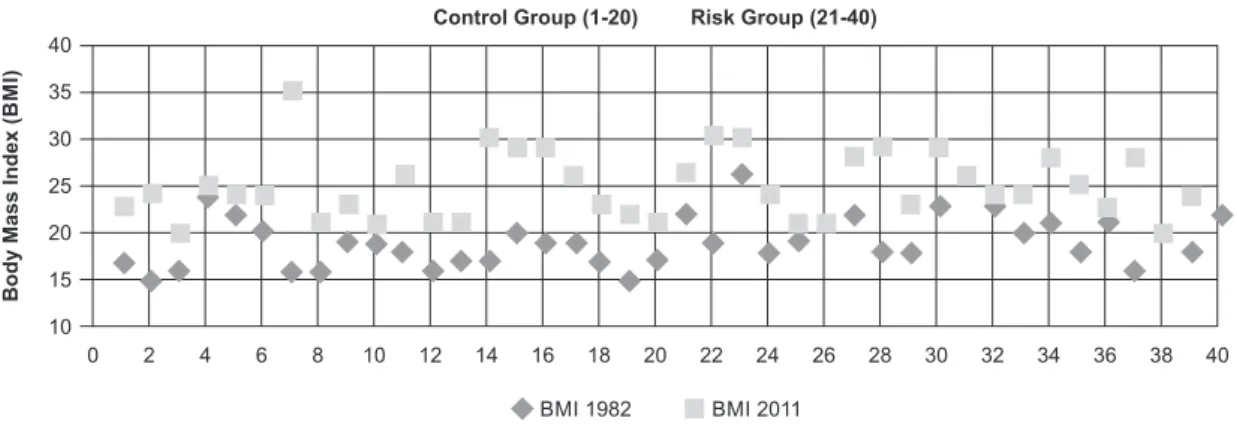
Figure 1 - Body Mass Index distribution as a function of year and groups. São Paulo, SP, Brazil, 2011
asked about hypertension and cardiovascular and
gestational problems diagnosed in health services or medical ofices between 1982 and 2011. Data regarding one man’s death (25 years old) was obtained
from his mother.
Analyses
Data were analyzed using the Statistical Program
for the Social Sciences (SPSS 20). Categorical data
related to groups were compared using Fisher’s
Exact Test.
Results
Descriptive results for Arm Circumference and Body Mass Index
After 29 years, most subjects had an increase in
BMI in 2011 relative to 1982, due physical changes from
adolescence to adulthood. We found a greater number of
overweight subjects in the RG in 2011 when compared
to the BMI distribution in 1982, although the only obese found in 2011 was identiied in the CG (see Figure 1). The presence of underweight subjects in 1982 as well as
in 2011 is noteworthy.
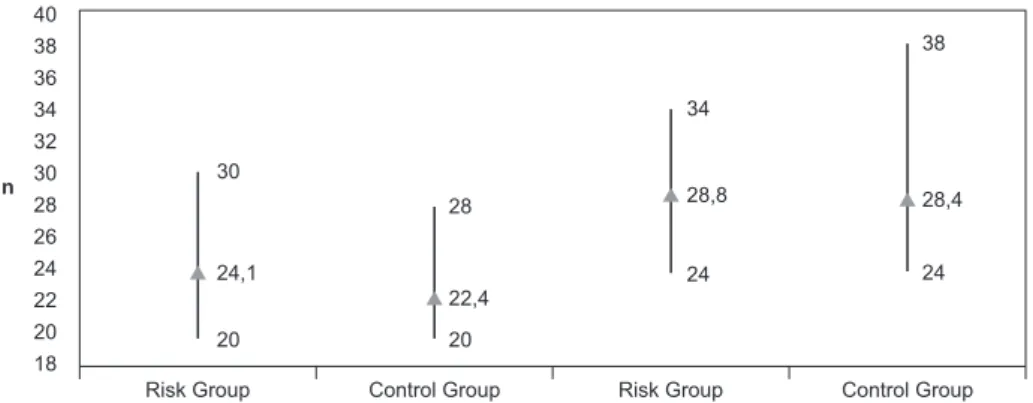
Figure 2 presents data regarding AC in both groups.
The graph reveals a wide range in AC distribution,
particularly in 2011 (CG), varying from 24 to 38cm. It is
important to note that, even in 2011, the mean AC does
not reach 29 cm. The individual values for AC can be
observed in Figure 3.
0 40
35
30
25
20
15
10
2 4 6 8 10 12 14 16 18 20 22 24 26 28 30 32 34 36 38 40
Control Group (1-20) Risk Group (21-40)
Body Mass Index
(B
M
I)
Rev. Latino-Am. Enfermagem 2014 Jan.-Feb.;22(1):3-10.
Figure 2 - Arm Circumference distribution in 1982 (left) and 2011(right): mean; maximum
value and minimum value. São Paulo, SP, Brazil, 2012
Figure 3 - Individual Arm Circumference distribution as a function of year and groups. São Paulo, SP,
Brazil, 2011
40 38 36 34 32 30 28 26 24 22 20 18
Risk Group
n
Control Group Risk Group Control Group
30
24,1
20
28
22,4
20
34
28,8
24 24
28,4 38
0 40
38
36
34
32
30
28 26
24 22 20
18
2 4 6 8 10 12 14 16 18 20 22 24 26 28 30 32 34 36 38 40
Control Group (1-20) Risk Group (21-40)
Arm Circumference
(A
C
)
AC 2011 AC 1982
None of the subjects had AC reaching 30 cm in
1982 and only seven cases of AC > 30 cm were found
in 2011, when they were 39-42 years of age. This is a relevant inding in relation to the inappropriateness of the standard cuff (12cm) in the sample subjects.
Results for hypertension, cardiac or gestational disorder rates
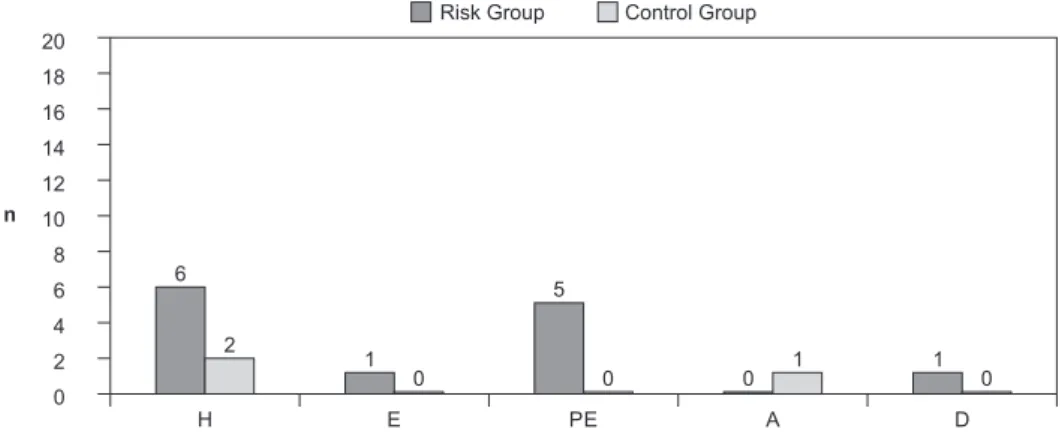
We found a statistically signiicant (Fisher: p=0.02) higher rate for the target events (hypertension and
cardiac or gestational disorders) in the RG (55.0%)
relative to the CG (10.0%). The distinct health problems found in both groups are displayed in igure 4.
In the RG, we found nine subjects with 12 target
events. Among them, six were diagnosed as hypertensive
in 2011, but only three were under drug treatment. Four females from RG informed ive pregnancy events. One had two episodes of pre-eclampsia and is currently
under hypertensive treatment. Another had eclampsia in the irst pregnancy and pre-eclampsia in the second one, resulting in two miscarriages. Her third and
fourth pregnancies were successful after hypertension
treatment since the beginning of the gestational period. One male (25 years old) died after a cardiac ibrillation, at the University of São Paulo campus, subsequent to a
soccer game. His BP values in 1982 (10 years old) were
126/89 mmHg and heart rate 96. In the control group,
one subject had presented arrhythmia not associated
with hypertension and another one had only one episode
Figure 4 - Absolute frequency (n) related to diagnosed events: rates for hypertension,
cardiac or gestational complications and death as a function of groups. São Paulo, SP,
Brazil, 2011
20
18
16
14
12
10
8
6
4
2
0
H E PE A D
Control Group Risk Group
6
H: Hypertension / E: Eclampsia / PE: Pre Eclampsia / A: Arrhythmia / D: Death 2
1
5
0 0 0 1 1 0
n
Discussion
Our data shows important differences between
the risk and control groups in the target events:
hypertension, cardiovascular and gestational disorders
and cardiovascular death rates. These results arouse
serious concerns regarding BP evaluation during
childhood and adolescence. The European Society of
Hypertension emphasized “the growing evidence that
children and adolescents with mild BP elevations are
much more common than it was thought in the past”(7).
A recent review emphasized the higher prevalence of
hypertension in adolescents with the increase in obesity
worldwide(8). Despite the marked increase in Body Mass
Index in children and teenagers in the last two decades, our indings suggest the use of the appropriate cuff in all of them. The lack of AC size knowledge and cuff errors in the ield of hypertension diagnosis is a subject of our concern, as recently discussed(9). Although cuff size is frequently mentioned in scientiic literature, researchers’ attention has been focused only on overweight and
obese subjects with large arms. Knowledge regarding AC is poor because researchers adapt their scientiic observations according to the cuff size available. Cuff
unavailability is a common fact at health institutions(10),
resulting in studies of hypertensive, diabetics and obese
patients in which only one or two size cuff are employed.
Furthermore, there is a shortage of studies showing the
correspondence between BMI and AC, as well as the use
of proper AC cuff in the general population.
Studies from distinct countries indicate that
millions of adolescent females and young women have
arm circumferences lower than 28 cm(11-12). We expected
a low AC mean in 1982 due to the subjects’ age range.
However, even in 2011, many of them did not reach
30cm in AC. It should be emphasized that, when the
ratio 0.40 is applied to an arm circumference of 30
cm, the traditional 12 cm standard cuff suits the arm
perfectly, avoiding over or underestimated BP readings.
Our data suggest that the subjects were vulnerable to
have their BP readings underestimated in 1982 and that
many of them continued under risk up to 2011.
In a study performed in 430 hypertensive patients,
the majority overweight or obese (BMI 29.6±0.60), 61% of the subjects had AC ≥ 30 cm (12). According to the author, the use of larger cuffs avoided BP overestimation
in these patients. Nevertheless, no mention was made
to those with AC lower than 30 cm (29%), leading to
the possible masking of a hypertension diagnosis,
particularly in women(13). On the opposite, in another
North American study performed in 2424 adults (1484
female), it was concluded that “the AC/CW ratio is an
important independent contributor to inter-individual
variation in BPM”(12). Furthermore, due to the common
multi cardiovascular risk found in obese as well as
diabetics and hypercholesterolemics, only obese subjects
have been a source of concern in the hypertension and
cardiology areas, resulting in important questions: How
could the actual BP values be in children, adolescents,
anorexics, top models and lean women? Which is the
correct BP value in normal weighted subjects with thin
arms?
In 1980, the use of the adult standard cuff to
Rev. Latino-Am. Enfermagem 2014 Jan.-Feb.;22(1):3-10.
emphasized(4). Our indings led us to state that this is
an equivocal statement that can result in AC/CW ratio
changes that can reach 0.50 or more in the leanest arm.
This probably happened with the adolescents evaluated
in the health units in 1982, when check up results led
them to be diagnosed as “normal blood pressure status”.
Unfortunately, up to date, most hospital units do not
follow the recommendations of pediatric societies and
even a nine-cm cuff (adolescent cuff) is available only in
some university hospitals or special areas.
Our indings suggest that the recommended AHA ratio is appropriate to avoid BP measurement errors.
After 1951, when the ratio was proposed, attempts to
solve cuff size problems led AHA to recommend cuffs
9, 12 and 15 cm in width (AHA 1980 guidelines)(4),
supported by the demonstration of ratio 0.39 being
the best one to avoid errors(14). It was the irst national
step in the USA to improve decisions towards the
cuff phenomenon, but this recommendation was not
understood. A table for corrections of errors was
introduced in the following revision, in 1988(15). However,
the interindividual variation found in BPM studies
resulted in discrepant values and controversies(16-17), making the author of the irst table declare the need for further studies(18). In Brazil, we observed an important
variation among subjects, resulting in largely scattered
data, strongly discouraging the use of tables to correct
cuff size errors(19). The table introduced in 1988 was
not kept; another AHA revision was published in 1993,
recommending a ten-cm cuff for lean subjects(3). The
next statement in 2005(5) not only suspended the use of
such cuff, but also changed the ratio recommendation, raising it to 0.46. In view of the scientiic community’s reaction, the committee published a statement on the
need for further studies(20), in response to a Letter to
the Editor. Fortunately, a cuff for small persons was
proposed in the most recent guidelines of the European
Society of Hypertension(21).
The higher hypertension rates found in the RG in our study are in line with indings from adult subjects detected in the original USP sample(6). The evidence of
cardiovascular and gestational complications after
six-seven years following high-risk subjects led the authors
to offer an explanation(22) for the higher mortality rates
found in lean people living in the Middle East, in a study
including more than 11000 subjects(23). The authors found
an inverted correlation between Body Mass Index (BMI)
and mortality in hypertensive subjects. We suggested
that the long time without diagnosis (hypertension
silent phase) due to cuff BP errors allows the disease to
advance. Furthermore, after a hypertension diagnosis is
established, lean persons may be mistreated due to BP
underestimation, resulting in an uncontrolled situation.
This also explains the favorable treatment in obese due
to the overestimation of anti hypertensive drugs.
The gestational problems rates we found raise
questions about blood pressure measurement during
pregnancy. In the RG, one woman presented an episode
of pre-eclampsia and one of eclampsia, losing two babies.
After anti hypertensive treatment, she had two healthy
babies. As demonstrated, the use of the standard cuff
to evaluate pregnant women, many of them adolescents
or young adult with lean arms, can result in BP
underestimation(11), masking a pre-eclampsia diagnosis
in its early stage, as observed in this study.
We did not expect to ind cardiovascular death among the subjects in our young original sample. As
described in the results, the application of the ratio
0.40 in 1982 permitted the detection of hypertensive
values in a 10-year-old boy. But the use of the standard
cuff in his cardiovascular evaluation underestimated BP
readings and, in view of “normal BP readings”, no other
attempts to verify risk were made.
Limitations
Our sample is small and we have dificulties to discuss our data in view of the international literature because this is the irst and only study employing AHA AC/CW ratio in children and adolescents. This
methodological approach has been used during many
years only by Brazilian nurses(24), focusing on several
aspects of educational approaches to blood pressure
measurement(25). The lack of data from other countries
imposes a limitation to analyze the cuff size effect
phenomena, an important factor that delays knowledge
advancement on a phenomenon that has turned into
one of the most controversial issues in hypertension
diagnosis(9).
Perspectives
Our indings led to speculate as to whether, if a proper cuff had been used in clinical practice, the
relevant complications found in the studied subjects
could have been better addressed. The authors suggest two points to improve knowledge on the matter. The irst is to identify AC in different countries around the world
in addition to height, weight and waist circumference.
The second is to conduct prospective studies in larger
samples to observe the cuff width effect. We believe
can control for this variable and observe the real cuff
width effect. The use of a large range of cuff widths may diminish the polemic surrounding controversial indings from experiments performed in different groups: lean,
normal and obese subjects. The main reason for polemics
and discrepancies in hypertension and cardiovascular
studies, as well as of any associated variable, such as
resistance to hypertension treatment, results from the
lack of cuff size control and failure in applying the 0.40
ratio in BPM studies.
Conclusions
The application of the AHA CW/AC 0.40 ratio in our
research protocol in 1982 enabled us to detect alarming
BP levels in adolescents (Risk Group). Their families were
advised regarding the need for a cardiovascular checkup,
but the use of the standard cuff in health units resulted
in “normal health status” on that occasion. Compared
to those exhibiting normal BP values in 1982, we found signiicant differences (p=0.02) when analyzing the Risk and Control groups, for hypertension, gestational
complications and cardiovascular death. The analysis
of the AHA guidelines from 1951 to 2005 indicates
discrepancies between the theoretical framework and
the recommendation for cuff size to be used in the
clinical practice. We speculate that, if a correct cuff had
been used also in clinical practice in the Risk Group, the
related problems could have been better addressed. We
thus suggest compliance with the AHA CW/AC 0.40 ratio
in clinical and research protocols, despite the polemic
discussion regarding the cuff width or cuff length effects
in the BP readings or other CW/AC.
References
1. O´Brien E. Review: a century of confusion: which
bladder for accurate blood pressure measurement. J
Human Hypertens. 1996;10:565-72.
2. Bordley III J, Connor CAR, Hamilton WF, Kerr WJ,
Wiggers CJ. Recommendations for human blood pressure
determinations by sphygmomanometers. Circulation.
1951;4:503-9.
3. Perloff D, Grim C, Flack J, Frohlich ED, Hill M,
McDonald M, Morgenstern BZ. Human blood pressure
determination by sphygmomanometry. Circulation.
1993;88:2460-70.
4. Kirkendall WM, Feinleib M, Freis ED, Mark
AL. Recommendation for human blood pressure
determination by sphygmomanometer. Circulation.
1980;62(5):1146A-55A.
5. Pickering TG, Hall JE, Apple LJ, Falkner BE, Graves
J, Hill MN, et al. Recommendations for Blood Pressure
Measurement in Humans and Experimental Animals.
Hypertension. 2005;45:142-61.
6. Arcuri EAM. Estudo comparativo da medida de
pressão arterial com manguito de largura correta e com
manguito de largura padrão [tese de Doutorado]. São
Paulo (SP): Universidade de São Paulo; 1985.
7. European Society of Hypertension, Lurbe E, Cifkova
R, Cruickshank JK, Dillon MJ, Ferreira I, Invitti C, et
al. Management of high blood pressure in children and
adolescents. J Hypertens. 2009;27:1719-42.
8. Feber J, Ahmed M. Hypertension in children: new
trends and challenges. Clin Sci. 2010;119:151-61.
9. Arcuri EAM. Fatores de erro na medida da pressão
arterial: a influência do manguito. Hipertensão.
2011;14(2):21-32.
10 Veiga EV, Arcuri EAM, Cloutier L, Santos JLF Blood
pressure measurement: arm circumference and
cuff size availability. Rev. Latino-Am. Enfermagem.
2009;17(4):455-61.
11. Oliveira SMJV, Arcuri EA, Santos JLF. Cuff
width influence on blood pressure measurement
during pregnant-puerperal cycle. J Adv Nurs. 2002;
38(2):180-9.
12. Rastam L, Prineas RJ, Gomez-Marin 0. Ratio of cuff
width/arm circumference as a determinant of arterial
blood pressure measurements in adults. J Intern Med.
1990;227:225-32.
13. Graves JW. Prevalence of blood pressure cuff size in
a referral practice of 430 adult hypertensives. Blood Pres
Monit. 2001;6:17-20.
14. Geddes LA, Tivey R. The importance of cuff width in
measurement of blood pressure indirectly. Cardiov Res
Bull. 1976;14:69-78.
15. National High Blood Pressure Education Program
(NHBPEP)/ National Heart, Lung, and Blood Institute
(NHLBI) and American Heart Association (AHA)
Working Meeting on Blood Pressure Measurement:
Recommendations for human blood pressure
determination by sphygmomanometers. Circulation.
1980;62:1146A-1155A.
16. Ragan C, Bordley III J. The accuracy of clinical
measurements of arterial blood pressure. Bull Johns
Hopkins Hosp. 1941;69:504-28.
17. Holland WW, Humerfelt S. Measurements of blood
pressure comparison of intra-arterial and cuff values. Br
Med J. 1964;2:1241-3.
18. Pickering G. High blood pressure. 2nd ed. London:
Rev. Latino-Am. Enfermagem 2014 Jan.-Feb.;22(1):3-10.
Received: Nov. 16th 2012 Accepted: Aug. 5th 2013 19. Arcuri EAM, Santos JLF, Silva MR. Correct width
cuff versus standard cuff: wide scattering imposes a
limitations to the use of tables for correction of errors
in indirect blood pressure determination. Braz J Med Biol
Res. 1986;24(2):265-80.
20. Pickering TG, Hall JE, Apple LJ, Falkner BE, Graves J,
Hill MN, et al. Response to Recommendations for blood
pressure measurement in Humans and Experimental
Animals. Hypertension 2006;48:5-6.
21. Guidelines for the Management of Arterial
Hypertension. The Task Force for the Management
of Arterial Hypertension of the European Society of
Hypertension (ESH) and of the European Society of
Cardiology (ESC). J. Hypertens. 2007;25(6):1105-87.
22. Arcuri EAM, Santos JLF, Rocha e Silva M. Is early
diagnosis of hypertension a function of cuff width? J
Hypertens 1989;7:S60-S61.1.
23. Goulbourt U, Holtzman E, Cohen-Mandelzwieg L,
Neufeld HN. Enhanced risk of coronary heart disease
mortality in lean. Hypertension 1987; 10:22-8.
24. Arcuri EAM, Araújo TL, Veiga EV, Oliveira SMJV,
Lamas JLT, Santos, JLF Pesquisa da medida da pressão
no Brasil e a produção científica dos enfermeiros da
área. Rev Esc Enferm USP. 2007;41(2):292-8.
25. Alavarce DC, Pierin AMG. Elaboração de uma
hipermídia educacional para o ensino do procedimento
de medida da pressão arterial. Rev Esc Enferm USP.