Sequential Cross-Sectional Surveys in Orange
Farm, a Township of South Africa, Revealed a
Constant Low Voluntary Medical Male
Circumcision Uptake among Adults despite
Demand Creation Campaigns and High
Acceptability
Esaie Marshall1,2, Reathe Rain-Taljaard3, Motlalepule Tsepe3, Cornelius Monkwe3, Florence Hlatswayo3, Simphiwe Tshabalala3, Simphiwe Khela3, Lindo Xulu3,
Dumazile Xaba3, Tebogo Molomo3, Thobile Malinga3, Adrian Puren4,5, Bertran Auvert1,6,7*
1Institut National de la Santé et de la Recherche Médicale, Unit 1018, Centre for Research in Epidemiology and Population Health, Villejuif, France,2Faculty of medicine, Research Unit 4184, Faculty of Medicine, University of Burgundy, Dijon, France,3Progressus Research and Development, Johannesburg, South Africa,4National Institute for Communicable Diseases, National Health Laboratory Service, Johannesburg, South Africa,5Faculty of Health Sciences, University of the Witwatersrand, Johannesburg, South Africa,
6Assistance Publique—Hôpitaux de Paris, Hôpital Ambroise Paré, Boulogne-Billancourt, France,7Faculty of Medicine, University of Versailles-Saint Quentin, Versailles, France
Abstract
Background
WHO recommends a male circumcision (MC) prevalence rate higher than 80% to have a substantial impact on the HIV-AIDS epidemic in Eastern and Southern Africa. Orange Farm, a township in South Africa, has a free-for-service voluntary medical male circumci-sion (VMMC) clinic in operation since 2008. Following an intense campaign from 2008 to 2010, MC prevalence rate increased to 55.4% (ANRS-12126). Ongoing and past VMMC campaigns focused on youths, through school talks, and adults at a community level. The main objective of the study was to assess the change in MC prevalence rate among adults aged 18–19 and 18–49 years in the past 5 years.
Methods
A cross-sectional survey (ANRS-12285) was conducted among a random sample of 522 adult men in 2015. MC status and characteristics of participants were collected through a genital examination and a face-to-face questionnaire.
Results
MC prevalence rate among young adult men aged 18–19 years increased markedly from 61.2% (95%CI: 57.4% to 65.0%) in 2010 to 87.5% (76.0% to 94.6%) in 2015 (p<0.001). In
a11111
OPEN ACCESS
Citation:Marshall E, Rain-Taljaard R, Tsepe M, Monkwe C, Hlatswayo F, Tshabalala S, et al. (2016) Sequential Cross-Sectional Surveys in Orange Farm, a Township of South Africa, Revealed a Constant Low Voluntary Medical Male Circumcision Uptake among Adults despite Demand Creation Campaigns and High Acceptability. PLoS ONE 11(7): e0158675. doi:10.1371/journal.pone.0158675
Editor:Charlene S. Dezzutti, University of Pittsburgh, UNITED STATES
Received:April 1, 2016
Accepted:June 20, 2016
Published:July 18, 2016
Copyright:© 2016 Marshall et al. This is an open access article distributed under the terms of the
Creative Commons Attribution License, which permits unrestricted use, distribution, and reproduction in any medium, provided the original author and source are credited.
Data Availability Statement:All relevant data are within the paper.
the same period, among men aged 18–49 years, MC prevalence rate varied slightly from 55.4% (53.6% to 57.1%) to 56.7% (52.4% to 60.9%). In 2015, 84.9% (79.2% to 89.5%) of uncircumcised adult men reported that they were willing to be circumcised. However, we estimated that only 4.6% (11/237; 2.5% to 7.9%) of the uncircumcised men underwent cir-cumcision in 2015, despite 117/185 (63.2%; 95%CI: 56.1% to 69.9%) who reported that they were definitely willing to become circumcised.
Conclusions
In Orange Farm, VMMC campaigns were successful among the youth and led to a suffi-ciently high MC prevalence rate to have a substantial impact in the future on the HIV-AIDS epidemic. However, despite high acceptability and a free VMMC service, VMMC campaigns since 2010 have failed to increase MC prevalence rate among adults to above 80%. These campaigns should be revisited.
Introduction
Three randomized controlled trials have shown that male circumcision (MC) reduces the risk of heterosexual transmission of HIV infection to men by approximately 60% [1–3]. Following these trials, WHO and UNAIDS recommended in 2007 the use of voluntary medical male cir-cumcision (VMMC) to fight the HIV-AIDS epidemic in countries with a low MC prevalence rate and a high HIV prevalence rate [4], conditions which correspond to most of the countries of Eastern and Southern Africa. A MC prevalence rate of 80% was recommended by WHO and UNAIDS as the target required to have a substantial impact on the HIV-AIDS epidemic [5].
Following the WHO and UNAIDS recommendation, a list of 14 priority countries in Africa was established and the rollout of VMMC was implemented, funded in the most part by PEP-FAR. Over time, the MC prevalence in these countries increased, but coverage, which is the MC prevalence rate, varies substantially between countries. As of December 2014, while Ethio-pia, Kenya and Tanzania have already reached 80% coverage targets, Lesotho, Malawi, Namibia, Rwanda and Zimbabwe have low coverage, ranging from 6% to 26% [6]. It is uncer-tain whether an 80% MC prevalence rate will be reached in all the priorities countries.
The township of Orange Farm, located in South Africa, one of the priority countries, has been a pioneer in VMMC. It was the study area where the first randomized controlled circumcision trial (ANRS-1265) was conducted and, to the best of our knowledge, where the first VMMC roll-out (ANRS-12126) was implemented in the period 2008–2010. This rollout led to an increase in
the adult MC prevalence rate from 12% in 2008 to 53% in 2011 [7]. Since 2010, and similar to many other places in Africa, routine VMMC demand creation has been organized, through school talks, advertisements and periodic door-to-door distribution of fliers. The main objective of this study was to assess the changes in MC prevalence rate in the past 5 years among men aged 18–49 years and to assess whether an 80% coverage rate had been reached. The secondary
objec-tives were to identify demographic characteristics of uncircumcised men, determine knowledge and attitudes associated with MC, and to estimate the annual uptake of MC in the community.
Methods
Study setting
This study was conducted in the township of Orange Farm, in which the adult population is estimated to be 110,000 residents. The township is located approximately 40km from
collection and analysis, decision to publish, or preparation of the manuscript.
Johannesburg, in the Gauteng province. The province has experienced one of the most severe HIV epidemics in the world, with HIV prevalence estimated at 30% among antenatal women in 2011 [8]. In this township, a clinic offering free-for-service VMMC has been operating since 2008. It accepts males from the age of 10 years old.
Surveys
A cross-sectional biomedical survey (ANRS-12285) was conducted among a random sample of men between August and September 2015. A first random sample of 34 clusters was obtained among the 346 clusters obtained from Statistics South Africa Enumerator Area aerial photo-graphs. In each of the 34 clusters, a systematic sample of 1 in 5 of the households was selected [9]. Voluntary, written informed consent was obtained from men aged 18–49 years. All men
who stayed at least 2 nights in the household in the past 7 days and who spoke English or one of the 2 main local languages (Sesotho and IsiZulu) were eligible. Each participant was inter-viewed at home using an anonymous, structured and standardized questionnaire. Interviews were followed by individual and confidential HIV and STI counselling and testing. Participants underwent a clinical examination performed by a trained male nurse to assess their clinical MC status (presence or absence of foreskin). Participants with symptomatic STIs were treated free of charge at the study site or at local health facilities according to the national STI syndro-mic management treatment guidelines. Individuals who tested positive for HIV were referred for appropriate care and treatment. Among 981 eligible households, 870 accepted to participate in the study, which corresponds to a response rate of 88.5%. In these 870 households, 696 men were eligible and 522 men accepted to participate in the study, which corresponds to a response rate of 75.0%.
During the survey, the following background characteristics were collected; age group, eth-nic group, religion, alcohol consumption, education level, occupation, current and previous marital status, parenthood status, monthly income and length of stay in Orange Farm. Other collected factors were HIV testing history and self-assessment of HIV infection risk level. Fac-tors related to knowledge and attitude regarding MC were also collected. For men reporting themselves as uncircumcised, willingness to become circumcised and the main reason for not being circumcised were collected. For circumcised men, we collected the main reason for being circumcised and the date of circumcision. We observed that some men made false claims of being circumcised. As a result and because the collection of data preceded the genital examina-tion, these men were excluded from the data collected specifically from uncircumcised men (willingness to become circumcised and main reason for being uncircumcised).
The Human Research Ethics Committee (Medical) of the University of the Witwatersand, Johannesburg, South Africa, granted ethical clearance for the study on January 19th2015 (M140946).
Statistical analysis
Results
Characteristics of survey participants
Among the 522 men taking part in the survey, the mean age (median; interquartile range) was 30.5 years (28.9; 23.0 to 37.1). The prevalence rate of MC was 296/522 (56.7%; 95%CI: 52.4% to 60.9%), which is significantly different from 80% (p<0.001).
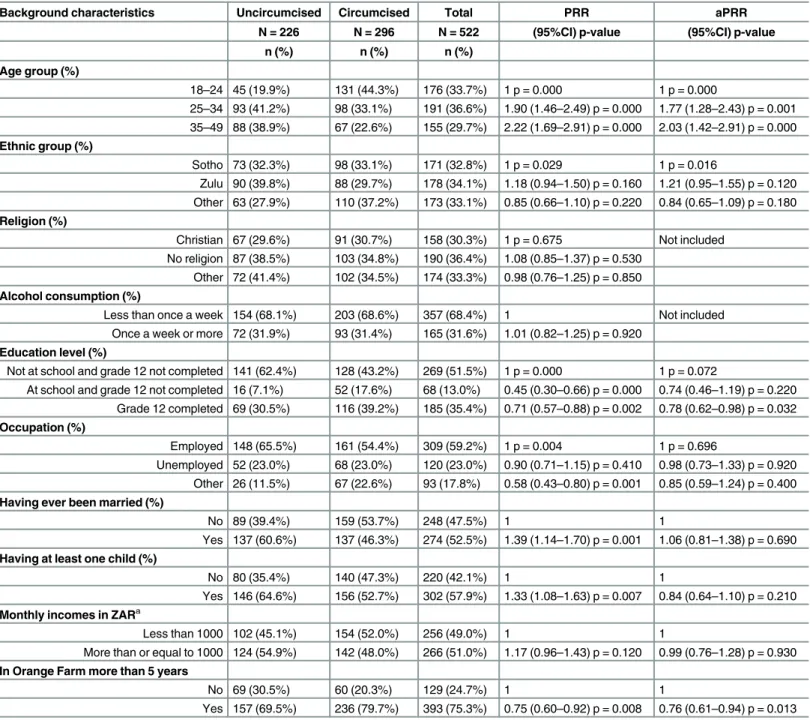
Table 1indicates the background characteristics of the sample. Approximately 75% of the participants reported being residents of Orange Farm for five years or longer. The Sesotho and IsiZulu ethnic groups each represent one third of the population. More than half of the partici-pants reported to be employed and half of the participartici-pants left school without having com-pleted the 12thgrade.
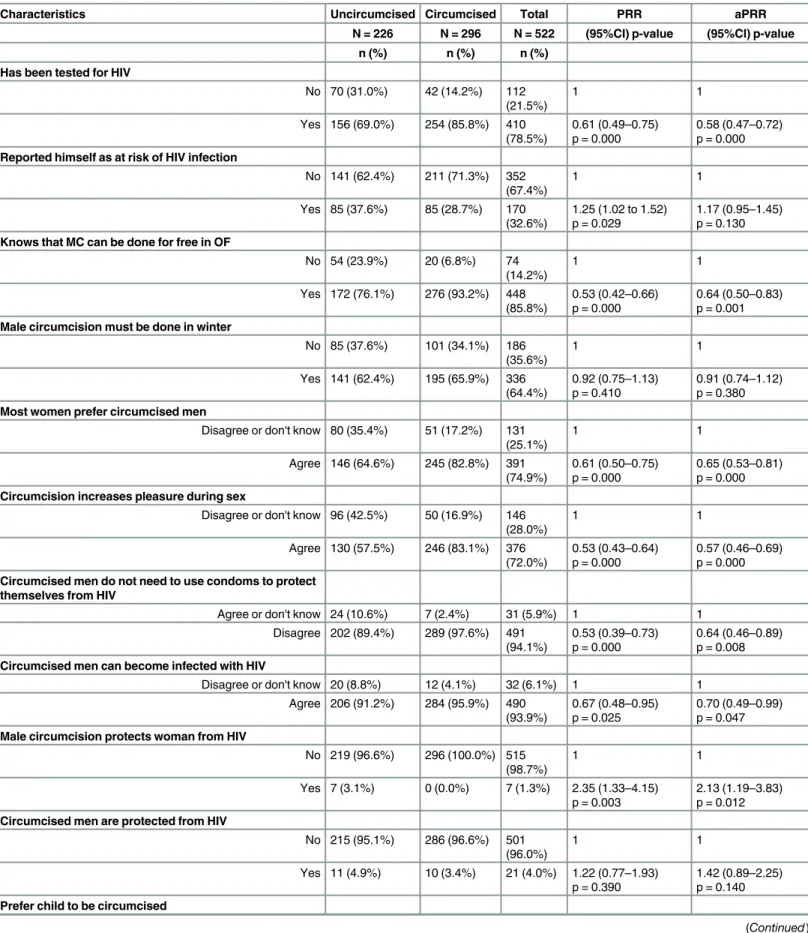
Table 2indicates the other characteristics of the participants. Approximately 75% of uncir-cumcised men knew about free-of-charge circumcision in Orange Farm. The majority of the participants had good knowledge regarding MC and preferred to have their male children cir-cumcised. For example, nearly all men reported that a circumcised man can become infected with HIV and that a woman having unprotected sex with a circumcised man is not protected against HIV infection.
MC prevalence rate over time
Fig 1represents the variation with time of the MC prevalence rate among adults aged 18 to 49 years. This prevalence rate increased only very slightly between 2010–2011 and 2015, from
55.4 to 56.7% (p = 0.60). However, when controlling for age group, we found an aPRR of 1.15 (95%CI: 1.05 to 1.25) p = 0.002. Knowing that the time since the 2010–2011 survey was 4.5
years, this aPRR corresponds to an average increase per year of 3.1% (95%CI: 1.2% to 8.6%).
Fig 2represents the variation with time of the MC prevalence rate among adults aged 18 to 19 years. This prevalence rate increased from 9.5% in 2007–2008 to 87.5% (42/48; 95%CI:
76.0% to 94.6%) in 2015, a value not significantly different from 80% (p = 0.28).
Among adults aged 20 to 29 years the MC prevalence increased from 56.9% (1146/2013) to 61.8% (144/233) between 2010–2011 and 2015, which corresponds to an aPRR adjusted on age
group of 1.10 (0.98–1.23) p = 0.10.
Among the circumcised men, 11 reported to have been circumcised in the past 12 months. The proportion of circumcised men among those who were uncircumcised 12 months ago was estimated as 11/(226+11), corresponding to an uptake rate of 4.6% (95%CI: 2.5% to 7.9%) per year.
Reported MC status
Among the 337 men who reported to be circumcised, 41 (12.2%; 95%CI: 9.0% to 16.0%) were in fact uncircumcised. Among the 185 men who reported to be uncircumcised 0 (95%CI: 0.0% to 1.3%) were in fact circumcised. To report having attended an initiation school was not a good marker of the MC status as 88/131 (67.2%; (95%CI: 58.8% to 74.8%) were circumcised, while the number of circumcised men among those reporting to not have attended an initiation school was 208/391 or 53.2% (95%CI: 48.2% to 58.1%).
Characteristics of uncircumcised men
lower, the proportion reporting being at risk of HIV infection was 17% higher, the proportion reporting that MC increases pleasure during sex was 43% lower, the proportion reporting that circumcised men do not need to use condoms to protect them from HIV was also 36% lower,
Table 1. Background characteristics of the sample surveyed in 2015 and association with male circumcision status.
Background characteristics Uncircumcised Circumcised Total PRR aPRR
N = 226 N = 296 N = 522 (95%CI) p-value (95%CI) p-value
n (%) n (%) n (%)
Age group (%)
18–24 45 (19.9%) 131 (44.3%) 176 (33.7%) 1 p = 0.000 1 p = 0.000
25–34 93 (41.2%) 98 (33.1%) 191 (36.6%) 1.90 (1.46–2.49) p = 0.000 1.77 (1.28–2.43) p = 0.001 35–49 88 (38.9%) 67 (22.6%) 155 (29.7%) 2.22 (1.69–2.91) p = 0.000 2.03 (1.42–2.91) p = 0.000
Ethnic group (%)
Sotho 73 (32.3%) 98 (33.1%) 171 (32.8%) 1 p = 0.029 1 p = 0.016
Zulu 90 (39.8%) 88 (29.7%) 178 (34.1%) 1.18 (0.94–1.50) p = 0.160 1.21 (0.95–1.55) p = 0.120 Other 63 (27.9%) 110 (37.2%) 173 (33.1%) 0.85 (0.66–1.10) p = 0.220 0.84 (0.65–1.09) p = 0.180
Religion (%)
Christian 67 (29.6%) 91 (30.7%) 158 (30.3%) 1 p = 0.675 Not included No religion 87 (38.5%) 103 (34.8%) 190 (36.4%) 1.08 (0.85–1.37) p = 0.530
Other 72 (41.4%) 102 (34.5%) 174 (33.3%) 0.98 (0.76–1.25) p = 0.850
Alcohol consumption (%)
Less than once a week 154 (68.1%) 203 (68.6%) 357 (68.4%) 1 Not included Once a week or more 72 (31.9%) 93 (31.4%) 165 (31.6%) 1.01 (0.82–1.25) p = 0.920
Education level (%)
Not at school and grade 12 not completed 141 (62.4%) 128 (43.2%) 269 (51.5%) 1 p = 0.000 1 p = 0.072
At school and grade 12 not completed 16 (7.1%) 52 (17.6%) 68 (13.0%) 0.45 (0.30–0.66) p = 0.000 0.74 (0.46–1.19) p = 0.220 Grade 12 completed 69 (30.5%) 116 (39.2%) 185 (35.4%) 0.71 (0.57–0.88) p = 0.002 0.78 (0.62–0.98) p = 0.032
Occupation (%)
Employed 148 (65.5%) 161 (54.4%) 309 (59.2%) 1 p = 0.004 1 p = 0.696
Unemployed 52 (23.0%) 68 (23.0%) 120 (23.0%) 0.90 (0.71–1.15) p = 0.410 0.98 (0.73–1.33) p = 0.920 Other 26 (11.5%) 67 (22.6%) 93 (17.8%) 0.58 (0.43–0.80) p = 0.001 0.85 (0.59–1.24) p = 0.400
Having ever been married (%)
No 89 (39.4%) 159 (53.7%) 248 (47.5%) 1 1
Yes 137 (60.6%) 137 (46.3%) 274 (52.5%) 1.39 (1.14–1.70) p = 0.001 1.06 (0.81–1.38) p = 0.690
Having at least one child (%)
No 80 (35.4%) 140 (47.3%) 220 (42.1%) 1 1
Yes 146 (64.6%) 156 (52.7%) 302 (57.9%) 1.33 (1.08–1.63) p = 0.007 0.84 (0.64–1.10) p = 0.210
Monthly incomes in ZARa
Less than 1000 102 (45.1%) 154 (52.0%) 256 (49.0%) 1 1
More than or equal to 1000 124 (54.9%) 142 (48.0%) 266 (51.0%) 1.17 (0.96–1.43) p = 0.120 0.99 (0.76–1.28) p = 0.930
In Orange Farm more than 5 years
No 69 (30.5%) 60 (20.3%) 129 (24.7%) 1 1
Yes 157 (69.5%) 236 (79.7%) 393 (75.3%) 0.75 (0.60–0.92) p = 0.008 0.76 (0.61–0.94) p = 0.013
acut-off value was the median value CI: confidence interval
PRR: prevalence rate ratio obtained using Poisson regression
aPRR: adjusted PRR on the covariates in the table having a univariate p-value0.20 ZAR: South African Rand
Table 2. Characteristics related to HIV and male circumcision of the sample surveyed in 2015 and association with male circumcision status.
Characteristics Uncircumcised Circumcised Total PRR aPRR
N = 226 N = 296 N = 522 (95%CI) p-value (95%CI) p-value
n (%) n (%) n (%)
Has been tested for HIV
No 70 (31.0%) 42 (14.2%) 112 (21.5%)
1 1
Yes 156 (69.0%) 254 (85.8%) 410 (78.5%)
0.61 (0.49–0.75) p = 0.000
0.58 (0.47–0.72) p = 0.000
Reported himself as at risk of HIV infection
No 141 (62.4%) 211 (71.3%) 352 (67.4%)
1 1
Yes 85 (37.6%) 85 (28.7%) 170 (32.6%)
1.25 (1.02 to 1.52) p = 0.029
1.17 (0.95–1.45) p = 0.130
Knows that MC can be done for free in OF
No 54 (23.9%) 20 (6.8%) 74 (14.2%)
1 1
Yes 172 (76.1%) 276 (93.2%) 448 (85.8%)
0.53 (0.42–0.66) p = 0.000
0.64 (0.50–0.83) p = 0.001
Male circumcision must be done in winter
No 85 (37.6%) 101 (34.1%) 186 (35.6%)
1 1
Yes 141 (62.4%) 195 (65.9%) 336 (64.4%)
0.92 (0.75–1.13) p = 0.410
0.91 (0.74–1.12) p = 0.380
Most women prefer circumcised men
Disagree or don't know 80 (35.4%) 51 (17.2%) 131 (25.1%)
1 1
Agree 146 (64.6%) 245 (82.8%) 391 (74.9%)
0.61 (0.50–0.75) p = 0.000
0.65 (0.53–0.81) p = 0.000
Circumcision increases pleasure during sex
Disagree or don't know 96 (42.5%) 50 (16.9%) 146 (28.0%)
1 1
Agree 130 (57.5%) 246 (83.1%) 376 (72.0%)
0.53 (0.43–0.64) p = 0.000
0.57 (0.46–0.69) p = 0.000
Circumcised men do not need to use condoms to protect themselves from HIV
Agree or don't know 24 (10.6%) 7 (2.4%) 31 (5.9%) 1 1 Disagree 202 (89.4%) 289 (97.6%) 491
(94.1%)
0.53 (0.39–0.73) p = 0.000
0.64 (0.46–0.89) p = 0.008
Circumcised men can become infected with HIV
Disagree or don't know 20 (8.8%) 12 (4.1%) 32 (6.1%) 1 1 Agree 206 (91.2%) 284 (95.9%) 490
(93.9%)
0.67 (0.48–0.95) p = 0.025
0.70 (0.49–0.99) p = 0.047
Male circumcision protects woman from HIV
No 219 (96.6%) 296 (100.0%) 515 (98.7%)
1 1
Yes 7 (3.1%) 0 (0.0%) 7 (1.3%) 2.35 (1.33–4.15) p = 0.003
2.13 (1.19–3.83) p = 0.012
Circumcised men are protected from HIV
No 215 (95.1%) 286 (96.6%) 501 (96.0%)
1 1
Yes 11 (4.9%) 10 (3.4%) 21 (4.0%) 1.22 (0.77–1.93) p = 0.390
1.42 (0.89–2.25) p = 0.140
Prefer child to be circumcised
and the proportion reporting that circumcised men can become infected with HIV was 30% lower.
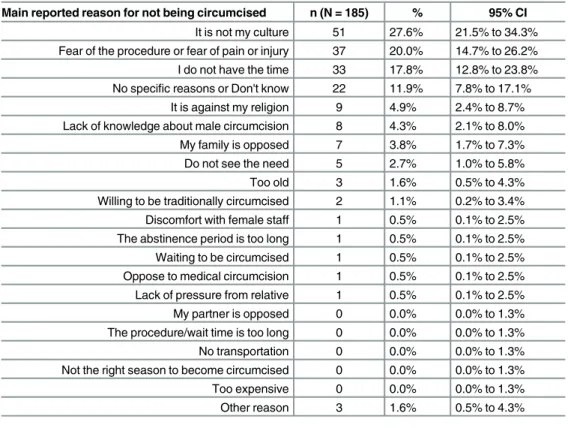
Table 3summarizes the main reasons reported by uncircumcised men for not being circum-cised. 65.4% of the reasons were accounted for by the following responses: "It is not my cul-ture", "Fear of the procedure, fear of pain or injury", and "I do not have the time".
Among the 185 uncircumcised men, 117 (63.2%; 95%CI: 56.1% to 69.9%) reported that they were "Definitely" willing to become circumcised in the future, and 40 (21.6%; 95%CI: 16.2% to 28.0%) said "Maybe". As a result, a total of 157/185 84.9%; 95%CI: 79.2% to 89.5%) were not opposed to undergoing circumcision. Six uncircumcised men reported that they were "Unlikely" (3.2%; 95%CI: 1.4% to 6.6%) and 22 reported as being "Definitively not" (11.9%; 95%CI: 7.8% to 17.1%) willing to undergo circumcision in the future. Among those 28 men not willing to undergo circumcision, 15 reported that their culture or religion was the main reason for not being circumcised (53.6%; 95%CI: 35.5% to 70.9%).
Main reason for being circumcised
The main reasons for being circumcised are given inTable 4. Approximately 63% of the partic-ipants reported the three following main reasons "To reduce the risk of getting HIV", "Because of tradition or religion" and "Hygiene".
Discussion
Main results
Using sequential, independent and random cross-sectional surveys conducted over a period of 7.5 years in the township of Orange Farm, we observed that the prevalence rate of MC among adults aged 18–49 remained almost stable between 2010–2011 and 2015. However, the late
adolescent MC prevalence rate among men aged 18–19 years was just over 80%. The vast
majority of the uncircumcised adults reported that they would be willing to undergo circumcision.
Trends over time
In Orange Farm, an 80% MC coverage has already been achieved among young adults. This high coverage among young adults likely results from the intense campaigns among schools that was started with the Bophelo Pele project in 2008 [12] and repeated each year. The cam-paigns have led to a change of social norms regarding MC among the youth. To sustain the high coverage of MC among the youth, school talks and the free VMMC clinic in Orange Farm
Table 2.(Continued)
Characteristics Uncircumcised Circumcised Total PRR aPRR
N = 226 N = 296 N = 522 (95%CI) p-value (95%CI) p-value
n (%) n (%) n (%)
No 15 (6.6%) 1 (.3%) 16 (3.1%) 1 1
Yes 211 (93.4%) 295 (99.7%) 506 (96.9%)
0.44 (0.30–0.66) p = 0.000
0.45 (0.30–0.68) p = 0.000
CI: confidence interval
PRR: prevalence rate ratio obtained using Poisson regression
aPRR: adjusted PRR on the covariates of theTable 1having a univariate p-value0.20
must be maintained. The reason for this success among the youth may be the fact that MC is now culturally and socially more acceptable for the youth than for adults [13,14].
A consequence of the high MC prevalence rate among the youth is that MC prevalence rate is expected to increase among adults with the replacement of generations. This increase will, however, take time. Our study showed that the increase among adults is unlikely to be expected from the current VMMC demand creation in Orange Farm, as the MC prevalence rate has remained relatively stable since 2011. The current demand creation is less intensive than the initial implementation during the 2008–2010 period. For example, between 2008 and 2010
thirty-six field workers were recruiting men for VMMC in Orange Farm. After 2010 this was reduced to two or three.
The results obtained in Orange Farm cannot be immediately extrapolated to other settings. Orange Farm is, however, considered as having similar characteristics to other townships in South Africa. The fact that MC prevalence rate is stable among adults despite the history of VMMC, some ongoing VMMC demand creation activities and the presence of a free-for-ser-vice VMMC clinic in the township is not reassuring. Coverage of 80% among adults may be difficult to obtain in South Africa.
In order to obtain MC coverage of 80% in the 14 priority countries, 20.8 million VMMCs will have to be performed [5]. To have reached the target mid-point of 10.4 million MCs is a
Fig 1. Male circumcision (MC) prevalence rate among men aged 18–49 years obtained in three independent cross-sectional surveys conducted in Orange Farm in the years 2007–2008, 2010–2011 and 2015.
remarkable success [15] obtained mainly thanks to PEPFAR funding but also due to political investment in these countries. 80% MC coverage has already been obtained in Ethiopia, Kenya and Tanzania. The experience in Orange Farm draws attention to the challenges in achieving the required coverage of 80% in some settings.
Barriers to MC program success
The important factors associated with being uncircumcised were age and ethnic group. Such factors have already been found to be important in other studies conducted in Eastern and Southern African countries where MC prevalence was low in the 2000s [16–20]. As also found in several other studies, the main reported reasons for not being circumcised were related to culture and fear of pain. Reasons that may be relatively easily addressed are fear of pain and lack of time, which represented almost 36% of the reasons mentioned by the participants [16,18,19,21].
Limitations
We acknowledge that our study has two limitations that need to be considered. Firstly, the response rate among participants was approximately 75%. The fieldworkers reported that about half of the reasons given for refusing to participate in the survey were related to the
Fig 2. Male circumcision (MC) prevalence rate among men aged 18–19 years obtained in three independent cross-sectional surveys conducted in Orange Farm in the years 2007–2008, 2010–2011 and 2015.
necessity to have a genital examination. The potential bias could not be assessed because no data were collected among those who refused to participate in the survey. Such a response rate is common among cross-sectional surveys. Secondly, we observed that 12% of men made false claims of being circumcised. As a result, and described in the Methods section, the analyses of the willingness to become circumcised and the main reason for being uncircumcised were con-ducted among 185 men only instead of 226.
Conclusion
Our study showed that uncircumcised men have accurate knowledge about MC, which shows that convincing uncircumcised men to become circumcised is not a question of diffusing knowledge. To obtain coverage of 80% from the current MC prevalence rate of 56%, approxi-mately 55% (24/100-56) of uncircumcised men must be convinced to undergo circumcision. This should be feasible as our study showed that 63% of uncircumcised men reported that they were "definitely" willing to become circumcised. However, it is unlikely that the current meth-ods of demand creation used to encourage circumcision will be successful in achieving the 80% coverage among adult males in the near future. Indeed, as shown in this study, approximately 75% of the uncircumcised men interviewed for this survey in Orange Farm had lived in this community for more than 5 years, and thus were exposed to the intense campaign of 2008–
2010 and the subsequent campaigns from 2011. In this context, the current VMMC campaigns among adults in Orange Farm should be revisited and new approaches devised and tested to convince uncircumcised men to undergo circumcision. Among these new possible approaches, motivational talks and financial incentives should be considered [22–24].
Table 3. Main reason given by uncircumcised men for not being circumcised.
Main reported reason for not being circumcised n (N = 185) % 95% CI
It is not my culture 51 27.6% 21.5% to 34.3% Fear of the procedure or fear of pain or injury 37 20.0% 14.7% to 26.2% I do not have the time 33 17.8% 12.8% to 23.8% No specific reasons or Don't know 22 11.9% 7.8% to 17.1%
It is against my religion 9 4.9% 2.4% to 8.7% Lack of knowledge about male circumcision 8 4.3% 2.1% to 8.0% My family is opposed 7 3.8% 1.7% to 7.3% Do not see the need 5 2.7% 1.0% to 5.8%
Too old 3 1.6% 0.5% to 4.3%
Willing to be traditionally circumcised 2 1.1% 0.2% to 3.4% Discomfort with female staff 1 0.5% 0.1% to 2.5% The abstinence period is too long 1 0.5% 0.1% to 2.5% Waiting to be circumcised 1 0.5% 0.1% to 2.5% Oppose to medical circumcision 1 0.5% 0.1% to 2.5% Lack of pressure from relative 1 0.5% 0.1% to 2.5% My partner is opposed 0 0.0% 0.0% to 1.3% The procedure/wait time is too long 0 0.0% 0.0% to 1.3% No transportation 0 0.0% 0.0% to 1.3% Not the right season to become circumcised 0 0.0% 0.0% to 1.3%
Too expensive 0 0.0% 0.0% to 1.3%
Other reason 3 1.6% 0.5% to 4.3%
CI: confidence interval
Acknowledgments
The authors would like to thank Agenda Gumbo from Progressus (South Africa) for his contri-bution to this study.
Author Contributions
Conceived and designed the experiments: BA RRT. Performed the experiments: RRT MT CM FH ST LX DX TM SK. Analyzed the data: EM BA. Wrote the paper: EM BA AP RRT.
References
1. Auvert B, Taljaard D, Lagarde E, Sobngwi-Tambekou J, Sitta R, Puren A. Randomized, controlled inter-vention trial of male circumcision for reduction of HIV infection risk: the ANRS 1265 Trial. PLoS Med. 2005; 2: e298. PMID:16231970
2. Bailey RC, Moses S, Parker CB, Agot K, Maclean I, Krieger JN, et al. Male circumcision for HIV preven-tion in young men in Kisumu, Kenya: a randomised controlled trial. Lancet. 2007; 369: 643–56. PMID:
17321310
3. Gray RH, Kigozi G, Serwadda D, Makumbi F, Watya S, Nalugoda F, et al. Male circumcision for HIV prevention in men in Rakai, Uganda: a randomised trial. Lancet. 2007; 369: 657–66. PMID:17321311
4. WHO-UNAIDS. Technical Consultation on Male Circumcision and HIV Prevention: Research Implica-tions for Policy and Programming. New Data Male Circumcision HIV Prev Policy Programme Implic. 2007; Available:http://www.who.int/hiv/mediacentre/MCrecommendations_en.pdf
5. WHO-UNAIDS. Joint Strategic Action Framework to Accelerate the Scale-Up of Voluntary Medical Male Circumcision for HIV Prevention in Eastern and Southern Africa 2012–2016 [Internet]. Geneva; 2011. Available:http://www.who.int/hiv/pub/strategic_action2012_2016/en/
6. WHO-UNAIDS. UNAIDS World AIDS day report [Internet]. Geneva; 2015. Available:http://www. unaids.org/sites/default/files/media_asset/WAD2015_report_en_part01.pdf
7. Auvert B, Taljaard D, Rech D, Lissouba P, Singh B, Bouscaillou J, et al. Association of the ANRS-12126 male circumcision project with HIV levels among men in a South African township: evaluation of effectiveness using cross-sectional surveys. PLoS Med. 2013; 10: e1001509. doi:10.1371/journal. pmed.1001509PMID:24019763
Table 4. Main reason given by circumcised men for being circumcised.
Main reason for being circumcised n (N = 296) % 95% CI
To reduce the risk of getting HIV 130 43.9% 38.3% to 49.6%
Because of tradition or religion 61 20.6% 16.3% to 25.5%
Hygiene 51 17.2% 13.3% to 21.8%
Peer pressure 15 5.1% 3.0% to 8.0%
To become a man 6 2.0% 0.9% to 4.1%
Parental decision 6 2.0% 0.9% to 4.1%
To avoid pain or problems during sex 4 1.4% 0.5% to 3.2%
Medical MC to avoid traditional MC 3 1.0% 0.3% to 2.7%
No specific reason 3 1.0% 0.3% to 2.7%
My wife or girlfriend asked me to do so 2 0.7% 0.1% to 2.1%
Because it is necessary before getting married 2 0.7% 0.1% to 2.1%
For sex pleasure 2 0.7% 0.1% to 2.1%
To solve a penis problem 2 0.7% 0.1% to 2.1%
Don't know 1 0.3% 0.0% to 1.6%
Did not like his uncircumcised penis 1 0.3% 0.0% to 1.6%
Other 7 2.4% 1.1% to 4.6%
CI: confidence interval MC: male circumcision
8. National Department of Health P. The 2010 National antenatal sentinel HIV and syphilis prevalence survey in South Africa. 2011 pp. 50–53.
9. Vaughan Liwen. Statistical Methods for the Information Professional. Second edition. New jersy, USA: Information Today, Inc; 2003.
10. Clopper C, Pearson ES. The use of confidence or fiducial limits illustrated in the case of the binomial. Biometrika. 1934; 26: 404–413. doi:10.1093/biomet/26.4.404
11. R Development Core Team. R: a language and environment for statistical computing. R Foundation for Statistical Computing. Vienna, Austria; 2005.
12. Lissouba P, Taljaard D, Rech D, Doyle S, Shabangu D, Nhlapo C, et al. A model for the roll-out of com-prehensive adult male circumcision services in African low-income settings of high HIV incidence: the ANRS 12126 Bophelo Pele Project. PLoS Med. 2010; 7: e1000309. doi:10.1371/journal.pmed. 1000309PMID:20652013
13. Mahler HR, Kileo B, Curran K, Plotkin M, Adamu T, Hellar A, et al. Voluntary Medical Male Circumci-sion: Matching Demand and Supply with Quality and Efficiency in a High-Volume Campaign in Iringa Region, Tanzania. Sansom SL, editor. PLoS Med. 2011; 8: e1001131. doi:10.1371/journal.pmed. 1001131PMID:22140366
14. Westercamp N, Bailey RC. Acceptability of Male Circumcision for Prevention of HIV/AIDS in Sub-Saha-ran Africa: A Review. AIDS Behav. 2007; 11: 341–355. doi:10.1007/s10461-006-9169-4PMID:
17053855
15. WHO-UNAIDS. Voluntary medical male circumcision for HIV prevention in 14 priority African countries in East and Southern Africa. [Internet]. Geneva; 2015. Report No.: WHO / HIV/2015.21. Available:
http://apps.who.int/iris/bitstream/10665/179933/1/WHO_HIV_2015.21_eng.pdf?ua=1&ua=1
16. Kong X, Ssekasanvu J, Kigozi G, Lutalo T, Nalugoda F, Serwadda D, et al. Male circumcision cover-age, knowledge, and attitudes after 4-years of program scale-up in Rakai, Uganda. AIDS Behav. 2014; 18: 880–884. doi:10.1007/s10461-014-0740-0PMID:24633740
17. Ssekubugu R, Leontsini E, Wawer MJ, Serwadda D, Kigozi G, Kennedy CE, et al. Contextual Barriers and Motivators to Adult Male Medical Circumcision in Rakai, Uganda. Qual Health Res. 2013; 23: 795– 804. doi:10.1177/1049732313482189PMID:23515302
18. Hatzold K, Mavhu W, Jasi P, Chatora K, Cowan FM, Taruberekera N, et al. Barriers and Motivators to Voluntary Medical Male Circumcision Uptake among Different Age Groups of Men in Zimbabwe: Results from a Mixed Methods Study. Tang JW, editor. PLoS ONE. 2014; 9: e85051. doi:10.1371/ journal.pone.0085051PMID:24802746
19. Westercamp N, Bailey RC. Acceptability of Male Circumcision for Prevention of HIV/AIDS in Sub-Saha-ran Africa: A Review. AIDS Behav. 2006;
20. Herman-Roloff A, Llewellyn E, Obiero W, Agot K, Ndinya-Achola J, Muraguri N, et al. Implementing Vol-untary Medical Male Circumcision for HIV Prevention in Nyanza Province, Kenya: Lessons Learned during the First Year. Gray R, editor. PLoS ONE. 2011; 6: e18299. doi:10.1371/journal.pone.0018299
PMID:21483697
21. Jones D, Cook R, Arheart K, Redding CA, Zulu R, Castro J, et al. Acceptability, Knowledge, Beliefs, and Partners as Determinants of Zambian Men’s Readiness to Undergo Medical Male Circumcision. AIDS Behav. 2014; 18: 278–284. doi:10.1007/s10461-013-0530-0PMID:23757123
22. Thirumurthy H, Masters SH, Rao S, Bronson MA, Lanham M, Omanga E, et al. Effect of providing con-ditional economic compensation on uptake of voluntary medical male circumcision in Kenya: a random-ized clinical trial. JAMA. 2014; 312: 703–711. doi:10.1001/jama.2014.9087PMID:25042290
23. Lundahl B, Burke BL. The effectiveness and applicability of motivational interviewing: a practice-friendly review of four meta-analyses. J Clin Psychol. 2009; 65: 1232–1245. doi:10.1002/jclp.20638PMID:
19739205