(1) Universidade Estadual de Goiás, Goiânia, Goiás, Brasil.
(2)’Faculdade de Medicina de Ribeirão Preto, Universidade de São Paulo, Ribeirão Preto, São Paulo, Brasil.
Conflict of interests: Nonexistent
Identification of risk factors in infants
participating in a Follow-up program
Cibelle Kayenne Martins Roberto Formiga(1)
Laryssa Pereira da Silva(1)
Maria Beatriz Martins Linhares(2)
Received on: May 29, 2017 Accepted on: April 16, 2018
Mailing address:
Profa. Cibelle Kayenne M. R. Formiga Universidade Estadual de Goiás, Campus ESEFFEGO
Avenida Anhanguera, nº 3228 - Setor Vila Nova
CEP: 74.643.010 - Goiânia, Goias, Brasil E-mail: [email protected]
ABSTRACT
Purpose: to identify the main health risk factors of infants participating in a follow-up
program.
Methods: a longitudinal prospective study conducted with 540 high-risk infants
observed in the follow-up clinic of the Hospital Materno Infantil in Goiânia in the State of Goiás, Brazil. All biological data of the infants from birth, prenatal, and postnatal periods were collected through assessment sessions with their mothers and medical chart reviews. Data were analyzed through binary logistic regression to identify the highest-risk variables for the infants’ health.
Results: in a predictive analysis, the findings showed that neonatal risk was
statisti-cally associated with a lower Apgar score at the fifth minute of life, male infants, and longer hospital stay. Infants with increased neonatal risk were more likely to show alte-rations identified in cranial ultrasound examinations. Moreover, the longer hospital stay was related to mixed breastfeeding after discharge.
Conclusion: the main risk factors for the health of high-risk infants in the follow-up
program were: low Apgar score at the fifth minute; male sex; longer hospital stay; alterations detected in transfontanellar ultrasound; and mixed feeding after discharge.
INTRODUCTION
Neonates (NB) at risk are defined as those who are exposed to situations with a higher risk of unfavorable progress, and who are more likely to have higher mortality and morbidity than average1.
The Ministry of Health considers that at-risk children have at least one of the following criteria: low birth weight (<2500g); less than 37 weeks of gestational age (GA); severe asphyxia (Apgar <7 at the fifth minute of life); hospitalization or complications in the maternity ward; adolescent mother (<18 years); mother with low level of education (<8 years of education); residence in a risky area; and/or a history of child death (<5 years) in the family. Among these, low birth weight (LBW) and prematurity1 are highlighted.
Risk factors include the association of environ-mental (extrinsic) and biological (intrinsic) mother and child factors, which may often be associated, leading to a cumulative risk effect2. As for maternal/
fetal complications, the presence of only one isolated maternal complication is rare, and the more factors present, the stronger the risk to the baby’s growth and development3.
Several studies show changes in the profile of NB at risk, including a higher prevalence of female gender, single mothers with less than 20 years of age, and low socioeconomic status4. In the literature, a relationship
is found between maternal risk factors associated with LBW and premature birth, including lifestyle, socioeco-nomic factors, and clinical conditions. Most mothers are between 20 and 29 years of age, have hyper-tension, urinary tract infection, monthly income below two minimum wages, pregnancy stress, and lack of or inadequate prenatal care4.
With scientific advances and improved health care in recent decades there has been a reduction in neonatal mortality, but children worldwide continue to die every year despite the availability of evidence-based solutions5.
longitudinal follow-up, made up of multidisciplinary teams that follow the baby at risk, helping to identify and prevent diseases during primary care2,11, and contributes to define actions to minimize delays and/or sequelae in a differentiated and proactive manner2.
The integration of the team in this program provides an integral care to the infants and their respective families, and consists of a pediatrician, a neonatol-ogist, a neurolneonatol-ogist, a physiotherapist, a psycholneonatol-ogist, a speech therapist, a nutritionist, an occupational therapist, and a social worker. Each professional has a defined role within the program, and the exchange of information is necessary for an adequate approach to the children and their families2. The present study is
warranted by the importance of the theme for profes-sionals and researchers who deal with child devel-opment, especially physiotherapists and speech therapists who aid these children during the hospital stay and follow-up after discharge.
The objective of the study is to identify the main biological and socioeconomic risk factors associated with the occurrence of prematurity and low birth weight in infants attending a follow-up program in the city of Goiânia, state of Goiás, Brazil.
METHODS
This study was planned according to the Guidelines and Regulatory Norms of Research, and was approved by the Human and Animal Research Ethics Committee (CEPHA) of the General Hospital of Goiânia (HGG), Protocol CEPHA-HGG No. 73/2004. The mothers who agreed to participate signed the informed consent form.
for Babies I (CRIB I); and the Clinical Risk Index for Babies II (CRIB II).
All of the instruments for data collection were applied by a physical therapy team that was trained and managed by the first author. The mothers were interviewed during the period of infants’ hospitalization in the neonatal intermediate care unit (NICU). The data collected were related to gestation, delivery, immediate postpartum period, and socioeconomic and environ-mental conditions of the family. In addition, the infor-mation was complemented with a search in hospital records for the adequate fulfillment of neonatal clinical risk indicators (NMI, CRIB I, and CRIB II).
Data Analysis
The collected data were tabulated and analyzed through the Statistical Package for Social Sciences (SPSS), version 23.0. Initially, a descriptive analysis of the main characteristics of the sample was performed. Then, a Spearman correlation analysis was performed between the biological and socioeconomic variables. The variables that presented statistically significant differences were included in the Binary Logistic Regression analysis model. The regression models generated in the study will be described below. For the dependent variable, neonatal risk according to the NMI (low or high neonatal risk), the independent variables were: birth weight; fifth-minute Apgar; NB gender; days of hospitalization; and weight at discharge. For the variable predicted cranial ultrasound (normal or
altered) the predictors were: NMI score; gestational age; birth weight; and fifth-minute Apgar score. For the predicted variable feeding after discharge (exclusive and non-exclusive breastfeeding) the predictors were: days of hospitalization; gestational age; and birth weight. A level of statistical significance of p≤0.05 was considered.
RESULTS
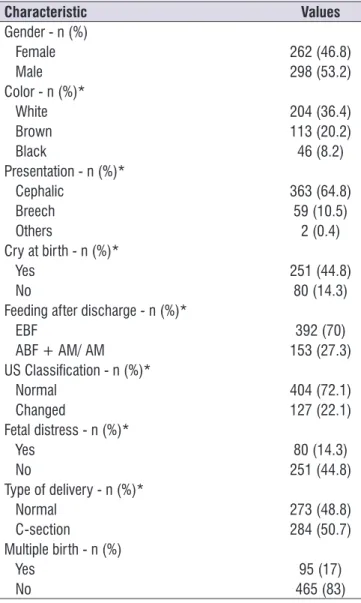
A total of 540 neonates and their mothers who participated in the follow-up was selected. The mean birth weight was 1,888.8g (± 1,753.12), the mean birth length was 43.9cm (± 4.23), and the gestational age was 33.4 weeks (233.92 days ± 175, 5). The sample consisted of 92.40% preterm infants, 7.60% term infants. The mean fifth-minute Apgar was 8 (± 1.39). The mean time of hospitalization was 25 days (± 21.25). The mean post-discharge weight was 1,963.6g (± 390.71), and exclusive breastfeeding was the most frequent (70%).
Mothers had a mean age of 23.8 years, with a minimum of 13 and a maximum of 43 years. The mean number of visits performed during prenatal care was 5.47. The most frequent gestational complication was urinary tract infection (UTI) in 39.5% of pregnant women, followed by pregnancy-specific hypertension (PSH) in 25.4%; 18.2% had anemia and 17.9% had preeclampsia. Among the less frequent complications presented were bleeding, water breaking, polyhy-dramnios/oligohydramnios, sexually transmitted diseases (STDs), diabetes, and others. The main biological and socioeconomic characteristics of the mothers are described in Table 2.
There was a prevalence of stable marital status and occupational activity within the home. The most frequent maternal level of education was illiterate and elementary school, followed by high school. The more frequent types of residence were own home and rental. Regarding the socio-demographic characteristics, the average number of rooms in the household was 5.1, and the average family income was 2.4 minimum wages. (The average minimum wage in the data collection period was BRL 303.33.) Seventy-seven percent of heads of families were employed, with 58.9% having either no schooling or only elementary education, and 20% with high school education.
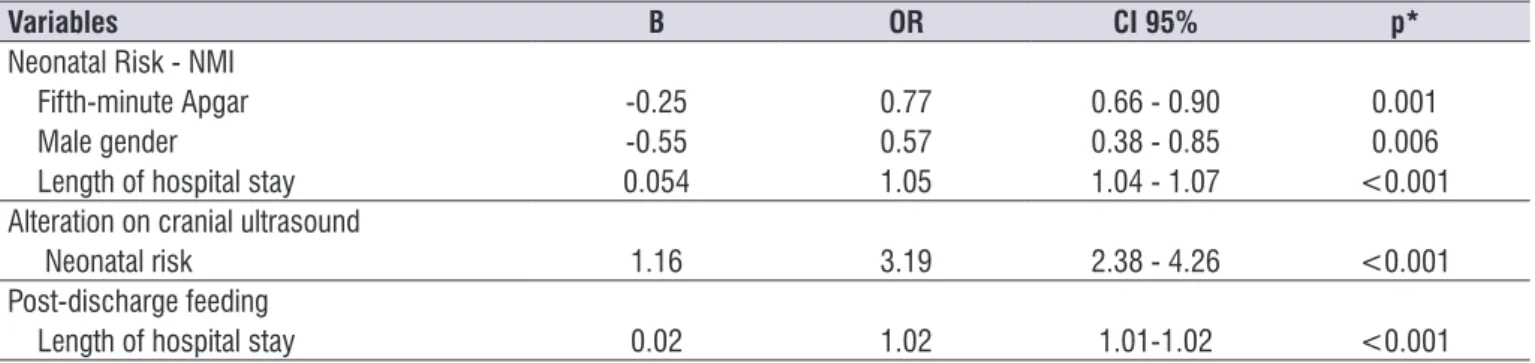
Significant results from the regression analysis of the predicted outcome and predicting variables are described in Table 3. Neonates with lower Apgar scores at the fifth minute, male gender, and longer hospital stay had a higher neonatal risk. In addition, greater neonatal risk increased the probability of the baby presenting changes in transfontanellar ultrasound (US), and longer hospital stay increased the practice of combination feeding after hospital discharge.
Table 1. Newborn characteristics
Characteristic Values
Gender - n (%)
Female 262 (46.8)
Male 298 (53.2)
Color - n (%)*
White 204 (36.4)
Brown 113 (20.2)
Black 46 (8.2)
Presentation - n (%)*
Cephalic 363 (64.8)
Breech 59 (10.5)
Others 2 (0.4)
Cry at birth - n (%)*
Yes 251 (44.8)
No 80 (14.3)
Feeding after discharge - n (%)*
EBF 392 (70)
ABF + AM/ AM 153 (27.3)
US Classification - n (%)*
Normal 404 (72.1)
Changed 127 (22.1)
Fetal distress - n (%)*
Yes 80 (14.3)
No 251 (44.8)
Type of delivery - n (%)*
Normal 273 (48.8)
C-section 284 (50.7)
Multiple birth - n (%)
Yes 95 (17)
No 465 (83)
EBF – exclusive breastfeeding; AM – artificial milk; US -
Table 2. Maternal biological and socioeconomic characteristics
Characteristics Values
Biological
Mean (SD) Age 23.8 (± 6.010)
Prenatal consultations 5.47 (± 2.198)
Complications
N (%) UTI 221 (39.5)
Hypertension 142 (25.4)
Anemia 102 (18.2)
Pre-eclampsia 100 (17.9)
Bleeding 79 (14.1)
Water Breaking 60 (10.7)
Polyhydramnios/Oligohydramnios 54 (9.6)
STDs 19 (3.4)
Diabetes 10 (1.8)
Others 86 (15.4)
Sociodemographic
Mean Number of rooms 5.1
Family income (wages) 2.4
N (%) Marital statusa
Stable union 342 (61.1)
Non-stable union 112 (20)
Level of educationb
No schooling/Primary 224 (40)
High School 222 (39.6)
Undergraduate/Post-graduate 11 (2)
Occupationc
At home 315 (56.3)
Out of home 139 (24.8)
Type of residenced
Own 206 (36.8)
Rented 172 (30.7)
Others 76 (13.6)
Social Levele
Class D/E 317 (56.6)
Class B/C 143 (25.5)
Class A 0 (0)
UTI – urinary tract infection; STD – sexually transmitted diseases. a18.9% of parents did not respond. b18.4% did not respond about level of education. c18.9% did not respond about current occupation. d18.9% did not respond about type of residence. e17.9% did not respond about the
DISCUSSION
The importance of analyzing the profile of newborns at risk and their mothers is based on the need for early identification of risk factors that need priority attention within follow-up programs. This allows for decision-making on the reduction of neonatal mortality and avoidance of future consequences on child development.
In Brazil, there are few health services with at-risk neonatal follow-up programs. Thus, the present study helps in the identification of the epidemiological profile of mothers and newborns at risk participating in a follow-up program in a public hospital.
Within the biological characteristics of the NB, those found in the present study were shown to be like those found in the literature addressing risk factors. Male gender was the most frequent. Mean weight at birth was 1,888.8g, and mean gestational age was 33 weeks, like those of other studies12,13. With low weight and
gesta-tional age being the main risk characteristics, they are indicted as the most important variables closely related to long periods of hospitalization of the newborn13,14.
The biological factors related to the need for hospi-talization in a neonatal ICU are preventable, which
with hypoxic-ischemic encephalopathy and, conse-quently, cerebral palsy16.
The results obtained in this study showed respi-ratory failure (RF) as the most frequent complication in the NB, followed by jaundice and neonatal infection. RF may be associated with the need for ventilatory mechanical support and ICU stay, or appear as a complication during hospitalization16,17. The prevalence
found in the present study was like that of another study, in which 29% of the newborns developed RF, and 21.8% infection. These complications, when added up, represent 50.8% of the cases of morbidity due to hospitalization18. The relatively high number of hospital
stays of the newborns in this study may be related to the incidence of the complications found.
The mean maternal age of 23.8 years, with a minimum of 13 and a maximum of 43 years is consistent with findings in the literature14,18. The extremes of
maternal age <19 and >35 years may be associated with an increase in the incidence of low birth weight, if they are cumulative with insufficient prenatal care19,20.
The number of prenatal consultations found in this study is considered low and is associated, in several studies, with maternal and neonatal complications.
Table 3. Result of binary logistic regression for identifying neonatal risk according to the Neonatal Medical Index, changes on ultrasound and feeding after hospital discharge
Variables B OR CI 95% p*
Neonatal Risk - NMI
Fifth-minute Apgar -0.25 0.77 0.66 - 0.90 0.001
Male gender -0.55 0.57 0.38 - 0.85 0.006
Length of hospital stay 0.054 1.05 1.04 - 1.07 <0.001
Alteration on cranial ultrasound
Neonatal risk 1.16 3.19 2.38 - 4.26 <0.001
Post-discharge feeding
Length of hospital stay 0.02 1.02 1.01-1.02 <0.001
like that in the study by Oliveira et al.14 where the first
two complications were the same. UTI is a source of relevant maternal complication. In the study by Vettore et al.22 conducted in Rio de Janeiro, pregnant women
with UTI were mostly adolescents, diabetic, and/or anemic, and started prenatal care late. The same study reports that there is a deficit in the clarification of the risks of UTI, which may be influenced by the mothers’ educational level, and health professionals’ difficulty in communication. Only half of the women in the study reported being informed about the risks of pregnancy concomitant with a UTI.
According to the present study, there was a preva-lence of a low level of education or lack of education of both the mother and the head of the family. Mothers having low levels of education or no education is directly related, in other studies, with the occurrence of newborn low birth weight, and a higher incidence of neonatal mortality19,21. According to Voss et al.23, maternal education has a significant effect on the neurological development of the child, especially in extremely low birth weight infants.
In another study conducted in Australia to describe the relationship between maternal education and child health up to 12 months of age, it was found that children of mothers who had not completed primary and secondary education by the time of pregnancy had a 57% higher probability of having respiratory infection in the first year of life, in addition to a higher risk of infant mortality18 compared to those of mothers with higher
education. These data corroborate the relationship between low levels of education and the presence of the characteristics of risk found in this study, reinforcing the need for special support and follow-up for parents with low levels of education.
Regarding socioeconomic indicators, families had an average income of 2.4 minimum wages, with a prevalence of economic classes D and E. Most of the heads of the family were employed, and mothers were housewives. Pregnant women with incomes below two minimum wages associated with stressful situations were twice as likely to have preterm infants20.
According to the regression analysis, the neonatal risk related to the NMI score was statistically associated with lower Apgar scores at the fifth minute, male gender, and longer hospital stay. According to studies in the literature, the male gender is related to higher biological risks that contribute to death, such as premature birth, severe neonatal infection, and neonatal
encephalopathy. The conclusion is that there is greater vulnerability in the male gender than in the female24,25.
The male gender is also related, in the study by Neubauer et al.26, with a higher hospital readmission
rate after discharge, mainly caused by respiratory problems. Peacock et al.27 found an association
between the male gender and longer hospital stays, as well as a higher incidence of abnormalities on ultrasound.
Fifth-minute Apgar is considered the best predictor of the first-minute score. A low Apgar score at the fifth minute was strongly associated with increased risk of neonatal and infant death, attributable to the presence of anoxia or infection28.
The presence of changes in the US was associated with an increased neonatal risk. US is a convenient and useful method to detect intracranial lesions in at-risk NBs. In one study, infants born at 33-34 weeks who required mechanical ventilation or surfactant use, had low Apgar scores at five minutes, or neurological abnormalities were more likely to have abnormal cranial ultrasounds29.
Longer hospital stay was related to combination feeding after hospital discharge. Breastfeeding or use of human milk is limited in infants treated in the neonatal ICU, generating the need for artificial milk. According to the study by Davanzo et al.30, factors that impede
breastfeeding are related to mother-baby separation, fragility and limited neurological competence of the newborn, anxiety and stress after the birth of a high-risk baby, and maternal difficulty to produce milk.
The same study found a low rate (28%) of high-risk newborns who were exclusively breastfed, although these infants would be more likely to benefit from exclusive breastfeeding29. Another study found that
receiving breast milk after discharge resulted in better scores on the Bayley Child Development Scale (Bayley-III) in both genders, emphasizing the impor-tance of breastfeeding for infant development24.
High neonatal risk is associated with unfavorable socioeconomic conditions, insufficient prenatal care, low maternal and paternal level of education, and a relatively high average number of hospitalization days. The importance of follow-up is based on the possibility of identifying and preventing several maternal factors during pregnancy that may lead to risk factors and future complications in the newborn.
environmentally vulnerable babies. In this sense, there is a growing need for Brazil to implement new follow-up programs, and to maintain the existing ones. The formation of multidisciplinary teams would allow for the exchange of knowledge and the identification of newborns at high and low risk, factors contributing to the early detection of delays in child development. Eligible cases can, then, be referred for early inter-vention services.
CONCLUSIONS
The main risk factors for the health of babies partici-pating in follow-up were: low Apgar score at the fifth minute; male gender; longer hospital stay; presence of changes in transfontanellar ultrasound; and combi-nation feeding after hospital discharge. Other risk factors were low birth weight, complications due to ICU stay, inadequate prenatal care, low parental education, and low family income. The results point to the need for greater attention to maternal and neonatal risk factors on the part of professionals working in follow-up programs for babies at risk.
REFERENCES
1. Brasil. Ministério da Saúde, Secretaria de Atenção à Saúde. Departamento de Ações Programáticas Estratégicas, 2ª ed., 2012.
2. Formiga CKMR, Linhares MBM. Follow-up do desenvolvimento do bebê de risco. In: Sarmento JV, Carvalho FA, Peixe AAF (Orgs). Fisioterapia respiratória em pediatria e neonatologia. Barueri: Manole; 2011. p. 556-73.
3. Costa AL, Araujo Júnior E, Lima JW, Costa FS. Fatores de risco materno associados à necessidade de unidade de terapia intensiva neonatal. Rev Bras Ginecol Obstet. 2014;36(1):29-34.
4. Golke C, Mesquita MO. Fatores de risco gestacional para o baixo peso ao nascer em puérperas
7. Gaiva MAM, Fujimori E, Sato APS. Mortalidade neonatal em crianças com baixo peso ao nascer. Rev Esc Enferm USP. 2014;48(5):778-86.
8. Gardosi J, Madurasinghe V, Williams M, Malik A, Francis A. Maternal and fetal risk factors for stillbirth: population based study. BMJ. 2013;346(108):1-14. 9. Esposito G, Ambrosio R, Napolitano F, Di Giuseppe
G. Women’s knowledge, attitudes and behavior about maternal risk factors in pregnancy. PLoS ONE. 2015;10(12):1-12.
10. Sobaih BH. Neonatal follow-up program: Where do we stand? Sudan J Paediatr. 2012;12(1):21-6. 11. Adams M, Borradori-Tolsa C, Bickle-Graz M,
Grunt S, Weber P, Capone Mori A et al. Follow-up assessment of high-risk newborns in Switzerland. Pediatrics. 2014;25(5):6-10.
12. Menezes LSH, Alcântra MSV, Silva ACO, Paz AC. Perfil do desenvolvimento motor em recém-nascidos pré-termos atendidos no ambulatório de follow-up. Rev. Para. Med. 2013;27(1):57.
13. Eken MK, Tüten A, Ozkaya E, Dinc E, Şenol T, Karatekin G et al. Evaluation of the maternal and fetal risk factors associated with neonatal care unit hospitalization time. J Matern Fetal Neonatal Med. 2016;29(21):3553-7.
14. Oliveira CS, Casagrande GA, Grecco LC, Golin MO. Perfil de recém-nascidos pré-termo internados na unidade de terapia intensiva de hospital de alta complexidade. ABCS Health Sci. 2015;40(1):28-32. 15. Mucha F, Franco SC, Silva GAG. Frequência e
características maternas e do recém-nascido associadas à internação de neonatos em UTI no município de Joinville, Santa Catarina - 2012. Rev. Bras. Saúde Matern. Infant. 2015;15(2):201-8. 16. Salustiano EMA, Campos JADB, Ibidi SM, Ruano
30. Davanzo R, Monasta L, Ronfani L, Brovedani P, Demarini S. Breastfeeding at NICU discharge: a multicenter Italian study. J. Hum. Lact. 2012;29(3):374-80.
Brasil e regiões brasileiras, segundo variáveis sócio-demográficas. Rev. Saúde Públ. Santa Cat. 2015;8(1):69-82.
20. Silva TRSR. Nonbiological maternal risk factor for low birth weight on Latin America: a systematic review of literature with meta-analysis. Einstein. 2012;10(3):380-5.
21. Barbeiro FMS, Fonseca SC, Tauffer MG, Ferreira MSS, Silva FP, Ventura PM et al. Fetal deaths in Brazil: a systematic review. Rev Saúde Pública. 2015;49(22):1-15.
22. Vettore MV, Dias M, Vettore MV, Leal MC. Assessment of urinary infection management during prenatal care in pregnant women attending public health care units in the city of Rio de Janeiro, Brazil. Rev Bras Epidemiol. 2013;16(2):338-51.
23. Voss W, Jungmann T, Wachtendorf M, Neubauer AP. Long-term cognitive outcomes of extremely low-birth-weight infants: the influence of the maternal educational background. Acta Pædiatrica. 2012;101(6):569-73.
24. Månsson J, Fellman V, Stjernqvist K. Extremely preterm birth affects boys more and socio-economic and neonatal variables pose sex-specific risks. Acta Pædiatrica. 2015;104(5):514-21.
25. Lawn JE, Blencowe H, Oza S, You D, Lee ACC, Waiswa P et al. Every newborn: progress, priorities, and potential beyond survival. Lancet. 2014;384(9938):189-205.
26. Neubauer V, Griesmaier E, Ralser E, Kiechl-Kohlendorfer U. The effect of sex on outcome of preterm infants - a population-based survey. Acta Pædiatrica. 2012;101(9):906-11.
27. Peacock JL, Marston L, Marlow N, Calvert SA, Greenough A. Neonatal and infant outcome in boys and girls born very prematurely. Pediatric Research. 2012;71(1):305-10.
28. Iliodromiti S, Mackay DF, Smith GCS, Pell JP, Nelson SM. Apgar score and the risk of cause-specific infant mortality: a population-based cohort study. Lancet. 2014;384(9956):1749-55.