(Annals of the Brazilian Academy of Sciences) ISSN 0001-3765
www.scielo.br/aabc
Plant-derived antimalarial agents: new leads and efficient phythomedicines.
Part I. Alkaloids
ALAÍDE B. OLIVEIRA1, MARIA FÂNI DOLABELA1,2, FERNÃO C. BRAGA1, ROSE L.R.P. JÁCOME1,
FERNANDO P. VAROTTI1 and MARINETE M. PÓVOA3
1Departamento de Produtos Farmacêuticos, Faculdade de Farmácia, Universidade Federal de Minas Gerais, Av. Antônio Carlos, 6.627, 31270-901 Belo Horizonte, MG, Brasil
2Faculdade de Farmácia, ICS, Universidade Federal do Pará, 68075-110 Belém, PA, Brasil 3Laboratório de Malária, Seção de Parasitologia, Instituto Evandro Chagas,
BR-316, km 7 s/n, B. Levilândia, 67030-000 Ananindeua, PA, Brasil
Manuscript received on January 13, 2009; accepted for publication on July 9, 2009; contributed byALAÍDEB. OLIVEIRA*
ABSTRACT
Malaria remains one of the most serious world health problem and the major cause of mortality and morbidity in the endemic regions. Brazil is among the 30 high-burden countries and most of the cases occur in the Legal Amazonian Region. New chemotherapeutical agents are needed for the treatment of malaria. Many plant species are used in traditional medicines of malarious countries and a relatively few number of these have been investigated for evaluation of their antimalarial effect. Still lower is the number of those that have had the active natural compounds isolated and the toxicity determined. This area is, then, of great research interest. A discovery project of antimalarial natural products from plants traditionally used to treat malaria must includein vitroandin vivoassays as well as bioguided isolation of active compounds. The final products would be antimalarial chemical entities, potential new drugs or templates for new drugs development, and/or standardized antimalarial extracts which are required for pre-clinical and clinical studies when the aim is the development of effective and safe phythomedicines. This review discusses these two approaches, presents briefly the screening methodologies for evaluation of antimalarial activity and focuses the activity of alkaloids belonging to different structural classes as well as its importance as new antimalarial drugs or leads and chemical markers for phytomedicines.
Key words:natural products, alkaloids, antimalarial activity, medicinal plants, phytomedicines.
INTRODUCTION
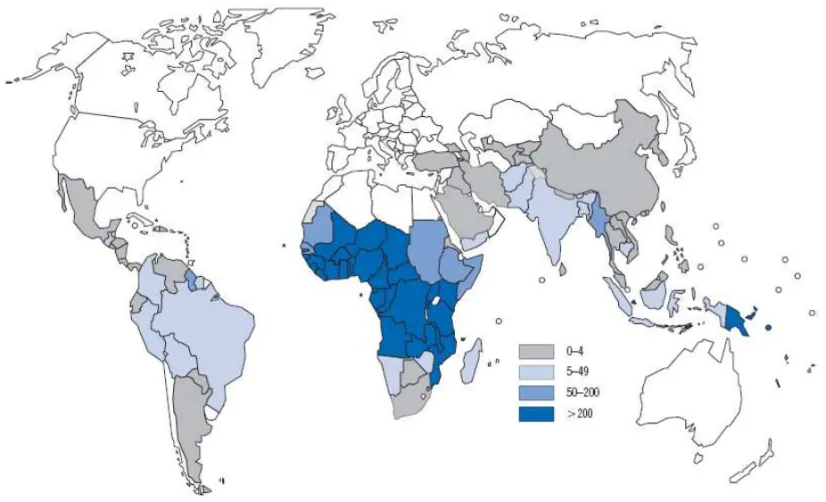
Malaria remains one of the most prevalent infectious disease in the world. In 2006, there were approximately 247 million cases of malaria and 3.3 billion people that were at risk of the disease. Nearly 1 million deaths, mostly of children under the age of 5, were caused by malaria. There are currently 109 malarious countries and territories, of which 45 are within the World Health Organization (WHO) African region (WHO 2008).
*Member Academia Brasileira de Ciências Correspondence to: Alaíde Braga de Oliveira E-mail: [email protected]
Fig. 1 – Estimated incidence of malariaper1000 population, 2006 (WHO 2008).
In the Americas, Brazil reported the highest num-ber of malaria cases (549,184 in 2007), and 1.4 million cases have been estimated. This estimate represents over half of the total number of cases for the WHO region of the Americas. More than 350,000 cases were reported annually over the period from 2001-2007, with a maxi-mum of 603,532 cases occurring in 2005. Transmission occurred mainly in the Brazilian Legal Amazon Region, where 10–15% of the population is at risk. Almost all of the reported malaria cases in this region are con-firmed. In 2007, 19% of these were caused by P. fal-ciparum. Brazil is among the thirty high-burden coun-tries (WHO 2008). Intense migration to agricultural and mining areas in the Legal Amazon Region, in conjunc-tion with inappropriate living condiconjunc-tions and inadequate health care, limits the effectiveness of interventions that are designed to control the disease. Insufficient human and other resources and technical and managerial weak-nesses at the local level are also to blame (Chaves and Rodrigues 2000, Taiul 2003, WHO 2005).
To strengthen the global response to the disease, the Roll Back Malaria (RBM) Partnership was launched
in 1998 by the WHO in a partnership with the United Nations Children’s Fund (UNICEF), the United Nations Development Programme (UNDP) and the World Bank. The aim of this partnership was to bring together the major stakeholders in a fight against malaria. Parti-cipants included the governments of malaria-endemic countries, international organizations, private founda-tions, non-governmental organizafounda-tions, and research and academic institutions. The principal goal was to reduce the rate of malaria-related mortality by 50% by 2010. In 2005, the World Health Assembly resolved to “ensure a reduction in the burden of malaria of at least 50%, by 2010, and by 75%, by 2015”. This resolution has been interpreted as meaning a reduction in malaria-related morbidity as well as mortality. The reference year for measuring changes in morbidity and mortality was taken as 2000 (WHO 2008).
THE DISEASE, AETIOLOGICAL AGENTS AND VECTORS
manifesta-tions can include headache, periodically recurrent fever (every 48 to 72 h), chills, myalgia, sudoresis, hepato-and splenomegalia, prostration, hepato-and the presence of high anaemia in cases of severe malaria in children and pregnant women. SevereP. falciparumhuman malaria can include neurological symptoms, such as delirium and convulsions, metabolic acidosis, multi-organ system failure and, if not properly treated, it can lead to coma and death (Fidock et al. 2004, Brasil 2006).
The aetiological agents of malaria are protozoans that belong to the genusPlasmodium, phyllum Apicom-plexa, and family Plasmodidae. Four species of malaria parasites are pathogenic to humans: P. falciparum, P. vivax,P. ovale, andP. malariae. P. ovaleseems to be limited to sub-Saharan Africa and some islands of the western Pacific, whereasP. falciparumandP. vivaxare prevalent in endemic malarial countries, such as Brazil. P. falciparumis the agent of severe and potentially fatal human malaria (Krettli et al. 2001, Brasil 2006, 2007).
The vectors of the malarial parasites are mos-quitoes of the genus Anopheles (family Culicidae). There are approximately 430 known species of Ano-pheles, but only 30–50 of them transmit malaria. Trans-mission to humans occurs via a bite of the infected fe-male mosquito. In humans, the parasites grow and mul-tiply, first in the liver cells, and then in red blood cells. In the liver cells, there is an initial round of replica-tion (exo-erythrocytic schizogony), after which they un-dergo asexual multiplication in erythrocytes (erythro-cytic schizogony). This process results in the destruc-tion of erythrocytes and the release of daughter parasites (merozoites). The blood stage parasites are responsi-ble for the clinical manifestations of the disease, and are the source of infection to mosquitoes (CDC 2008). Non-treated or inadequately treated individuals can be sources of infection to mosquitoes for a period of 2–3 years; the mosquitoes themselves remain infectious un-til death (Brasil 2006).
DRUGS CURRENTLY USED FOR THE TREATMENT OF MALARIA
The treatment of human malaria aims to interrupt the blood schizogony (intraerythrocytic asexual multiplica-tion) that causes the pathogenesis and clinical symp-toms of the infection. Prompt and effective treatment
is probably the most cost-effective method of malaria control. Oral treatment prevents progression to a se-vere state of the disease and the resultant complications. If the drugs are administered effectively, a decrease in overall malaria-related morbidity and mortality may be achieved. However, most people living in endemic areas have little or no access to diagnosis and treatment. Fur-thermore, the treatment is commonly inadequate due to the lack of availability of quality-assured, effective drugs (Guérin et al. 2002, Fidock et al. 2004).
Most of the antimalarial drugs that are currently in use belong to the classes of aminoquinolines (chloro-quine, amodia(chloro-quine, primaquine), quimolinomethanol derivatives (quinine, mefloquine, halofantrine), diami-nopyrimidines (pyrimethamine), sulfonamides (sulfa-doxine, sulfadiazine), biguanides (proguanil and deriv-atives), antibiotics (tetracyclines, doxycyclin, clinda-mycin), sesquiterpenes (artemisinin, dihydroartemisinin, arteether, artemether, artesunate) and naphtoquinones (atovaquone) (Chart 1) (Guérin et al. 2002).
The available drugs exert their effects as blood schizonticides (artemisinin and derivatives, quinolines, folate inhibitors, atovaquone). Few drugs that belong to the classes of 8-aminoquinolines and folate inhibi-tors are as effective as liver schizonticides (asexual liver schizogony) (Guérin et al. 2002). Primaquine, an 8-aminoquinoline, is the only commercially available drug that destroys hypnozoites (a latent form of parasite that is observed in infections byP. vivax; it remains in the liver for variable periods of time, and causes relapses of the disease). This drug is also active against gameto-cytes, a human parasitic form that initiates the malarial cycle upon its ingestion by mosquitoes, (Brasil 2006).
The most widely used antimalarial drugs are chlo-roquine (CQ) and the combination of sulfadoxine-pyri-doxamine (SP). In most regions of endemic malaria, the effectiveness of these drugs is declining at an ever accel-erating rate, with consequent increases in malaria-related morbidity and mortality (Guérin et al. 2002, Fidock et al. 2004, WHO 2005).
CQ-1.1 Quinoline based drugs
1.2 Sesquiterpenes: artemisinin and derivatives
1.3 Nucleic acid inhibitors: antifolates (sulphonamides, sulphones, pirymethamine, biguanides, triazine metabolites, quinazolines)
1.4 Atovaquone (1,4-naphthoquinone)
2.1 Primaquine (quinoline)
Chloroquine Primaquine Amodiaquine
Quinine Mefloquine
Artemisinine Sodium artesunate Artemether R = CH3
Arteether R = CH2CH3
Atovaquone
Chart 1 – Classes of antimalarial drugs in clinical use (Guérin et al. 2002).
resistant strains of P. falciparum. Nowadays, CQ re-sistance has spread to the majority of malaria endemic areas, and this drug has become increasingly ineffective (Fidock et al. 2004).
The antimalarial drug combination therapy that was proposed by the WHO in 2001 includes A rtemi-sinin-based CombinationTherapy (ACT). It combines
artemisinin and its derivatives with existing antimal-arial drugs. Several artemisinin-based pharmaceutical variants, including artesunate-amodiaquine, artemether-lumefantrine (Coartemr), artesunate-mefloquine, and
dihydroartemisinin-piperaquine (Artecomr), are
avail-able. Artemether-lumefantrine (Coartemr) is currently
malaria (the most lethal form of the disease). The drug has passed extensive efficacy and safety trials and is rec-ommended as a first- or second-line treatment for un-complicated falciparum malaria. Atovaquone-proguanil (Malaroner) is one of the non-artemisinin combination
therapies (WHO 2005, 2008).
Questions regarding the affordability and accessi-bility of these high cost artemisinin and atovaquone com-binations for communities in poor countries (Koech 2006) are being addressed by the Roll Back Malaria (RBM) Partnership. RBM is working to make the drugs available for use in the public sector of these countries. By the end of 2006, ACT was the first-line treatment for P. falciparuminfections in a total of 66 countries, and in almost all countries in the African, South-East Asia and Western Pacific regions. By June 2008, only four countries and territories worldwide had not yet adopted ACT as the first-line treatment forP. falciparum malaria. Free treatment with ACT is more widely avail-able in the South-East Asia and Western Pacific regions than in the African Region (WHO 2008). In Brazil, the combination artemether-lumefantrine (Coartemr) has
been used for malaria falciparum since October 2006. Fortunately, the prevalent infections in Brazil are caused byP. vivaxandP. malariae (Brasil 2006). The lower number of infections by P. falciparum is certainly an important factor that explains the affordability of this treatment in Brazil.
New antimalarial drugs are urgently needed. Not only should these drugs be efficacious against resistantP. falciparumstrains, but, to ensure good compliance, they should provide a cure within a reasonable length of time (3 days or less), they should be safe and of low cost, and they should be available in an appropriate formulation for oral use (Wright 2005a, Fidock et al. 2004).
PLANT-DERIVED ANTIMALARIAL AGENTS
The first antimalarial drug was quinine (1). In 1820, it was isolated by the French scientists Pelletier and Caven-tou from the bark of theCinchona spp.(Rubiaceae) tree that was used by Peruvian Indians. Plant materials were taken to Europe by Jesuits in the XVII century. The struc-ture of quinine was established by Rabe in 1908, and its synthesis was accomplished in 1944 by Woodward and Doering. However, its synthetic production by industrial
means is both complex and costly. Quinine is still used today, and it is currently derived by extraction from the Cinchona spp., which grow wild in South America and are cultivated in Java (Boulos et al. 1997).
Quinine was used as a template for the synthesis of CQ in 1940. Despite the prevalence of CQ-resistantP. falciparumstrains, it was, until recently, the only drug available for malaria chemotherapy. Over the last 30 years, the situation worsened and the increasing preva-lence of resistant strains ofP. falciparumwas the major factor responsible for the increase in mortality that oc-curred mainly in Africa (WHO 2005).
Despite intensive efforts to produce new synthetic antimalarial drugs, the most significant recent contribu-tions came from research on medicinal plants that con-tained artemisinin. In 1972, this compound was iso-lated fromArtemisia annua; this plant species has had many traditional uses in China for several millennia. Artemisinin represents a new structure of antimalarial pharmacophore that comprises an endoperoxide sesqui-terpene lactone. Semi-synthetic derivatives, including arteether, artemether and sodium artesunate, are used in-creasingly more often (Wright 2005b). Although they are effective against CQ-resistantP. falciparum as sin-gle therapeutic agents, to minimize the risks of recrude-scence and the development of resistance, a combina-tion treatment with a second antimalarial drug is recom-mended (WHO 2005).
The newest antimalarial drug is atovaquone (Mala-roner). This synthetic
2-alkyl-3-hydroxynaphthoqui-none compound is an analogue of lapachol (a prenylna-phthoquinone from the Tabebuia species (Bignonia-ceae). The discovery of this drug provided a novel lead for antimalarials that resulted in the development of atovaquone. When used in combination with proguanil (Malaroner) (Looareesuwan et al. 1999), this compound
is effective for the treatment of malaria; however, the high cost of this drug precludes its wide-scale use in many malaria endemic countries (Fidock et al. 2004).
APPROACHES TO ANTIMALARIAL DRUG DISCOVERY
of the drug itself. Several important ongoing efforts in-clude the following:
– optimization of therapy with available drugs, in-cluding the use of combined therapy;
– development of analogues of existing agents; – discovery of natural antimalarial products;
– investigation of compounds that were originally de-veloped to treat other diseases;
– evaluation of drug resistance reversers; and – chemotherapeutic exploitation of novel molecular
targets (Rosenthal 2001, 2003).
As the last category benefits from recent advances in both malaria research and genomics, it is most likely to result in the identification of new classes of drugs. Transgenic malaria parasites that express green fluores-cent proteins have been produced. This advancement has led to the development of new high-throughput as-says (HTS). As a number of new antimalarial therapies will likely be needed in the coming years, it is important to pursue multiple strategies for drug discovery (Rosen-thal 2001, 2003).
Antimalarial drug development is constrained by the same factors as any drug development program; new agents must demonstrate efficacy, be safe and have ad-ditional properties that are required for the specific dis-ease indication. In the case of malaria, the most press-ing need is for a drug that can be used for widespread treatment of the disease in developing countries. Con-sidering resource limitations in this setting, it is gener-ally agreed that new antimalarials should be adminis-tered orally, that they should be effective with single-daily dosing, and that curative regimens should be short (ideally 1–3 days in length). Therefore, the prime con-sideration in antimalarial drug development is economic in nature. First, antimalarial drugs that are to be widely used in endemic areas must be very inexpensive. In-deed, considering the severe poverty that exists in most of the malarious countries and the inexpensive cost of the currently available drugs (especially chloroquine, which costs less than U$0.1 pertreatment), even U$1 pertreatment is probably restrictive. Second, since kets for malaria are primarily in poor countries, mar-keting opportunities are generally limited; therefore,
investment in antimalarial drug discovery and develop-ment has been insubstantial and highly dependent on support from outside of the large pharmaceutical com-panies. Such support includes grants that are issued to academic and industry groups by research agencies and new public-private partnerships; however, this imbal-ance remains large (Rosenthal 2003).
ANTIMALARIAL DRUG DISCOVERY:
IN VITROASSAYS
Most of the antimalarial drugs currently in use were not developed on the basis of rationally selected tar-gets, but by investigation of traditional medicinal plants (quinine and artemisinin), synthesis of analogues (CQ, mefloquine, primaquine, atovaquone), chemical modifi-cation of an active natural product (arteether, artemether, artesunate), or by assaying drugs that were used against other infectious pathogens (antifolates, antibiotics) (Fi-dock et al. 2004).
In vitroscreens for compound activity require the ability to culture P. falciparum in vitro in human ery-throcytes (Trager and Jensen 1976). Typically, parasites are propagated in leukocyte-free erythrocytes with 2– 5% haematocrit at 37◦C under a reduced oxygen atmo-sphere (typically 3–5% O2, 5% CO2, 90–92% N2), in tissue culture (RPMI 1640) media that contains either human serum or Albumax (a lipid-rich bovine serum al-bumin) (Fidock et al. 2004).
A traditional and low-cost assay for testing small numbers of samples relies on the microscopic scoring of parasitized and uninfected erythrocytes. Briefly, par-asites are incubated with test samples for 48 and 72 hours, and then the parasitaemias of treated and con-trol groups are determined by microscopically counting Giemsa-stained smears (Trager and Jensen 1976). Al-though this methodology is extremely labour-intensive and time consuming, it is accurate and has the advan-tage of permitting observation of the effect of test sam-ples on different intraerythrocytic stages of the parasite (Fidock et al. 2004, Krettli et al. 2009).
are cultured in the presence of different concentrations of test compounds in media that contains reduced con-centrations of hypoxanthine. Afterwards, [3 H]-hypo-xanthine is added for an additional period of incuba-tion before cell harvesting and measurement of the radioactive counts. IC50 values can be determined by linear regression analyses of the linear segments of the dose-response curves (Desjardins et al. 1979). [3 H]-hypoxanthine incorporation is thein vitromethodology that is most commonly used to assay antimalarial ac-tivity. However, as a result of utilization of a radioac-tive compound, it is a somewhat costly and complex technique, which limits its utility for resource-poor in-stitutions and high-throughput screening (Fidock et al. 2004, Krettli et al. 2009).
Recently, a protocol for chemotherapy studies was established that uses aP. falciparumstrain transformed with the green fluorescent protein (PfGFP) that can be quickly and specifically quantified by flow cytometry. In comparison to other methodologies, the PfGFP as-say showed similar results to those obtained with the standard radioisotopic method. In vivoassays that em-ployed the rodent-parasiteP. berghei transformed with GFP to screen for the blood schizonticidal effect have been previously reported by the same group of Brazil-ian researchers (Sanchez et al. 2007).
Novel DNA-based fluorimetric methods that used PicoGreenr(Invitrogen – Molecular ProbesTM) to as-sess the susceptibility of parasites to antiplasmodial compounds were recently reported. PicoGreenr is a
fluorochrome that selectively intercalates into double-stranded DNA (dsDNA), which results in a marked increase in fluorescence emission. A positive correla-tion was observed between the amount of PicoGreenr
fluorescence and the percentile of parasitaemia between 0.1% and 15%. This method yielded IC50values for CQ and pyrimethamin that were statistically similar to those obtained by use of the [3H]-hypoxanthine assays of
P. falciparumlines 3d7(CQS) and K1(CQR). Moreover, as this method is not time-consuming, it may soon replace the traditionalin vitrodrug sensitivity assays (Quashie et al. 2006).
Of the biochemical assays, a colorimetric method has been developed for the detection of lactate dehydro-genase (LDH); this enzyme participates in glycolysis –
a cytosolic pathway used for energy production in Plas-modia. P. falciparumLDH (pLDH) has been structur-ally characterized and found to differ from human LDH at both the structural and immunological levels. Plas-modiaspecies are dependent on LDH for the metabol-ism of carbohydrates. pLDH is used for the conversion of lactate into pyruvate, which is the last step in glycol-ysis; however, only pLDH can use coenzyme 3-acetyl-pyridine adenine dinucleotide (APAD). In the presence of APAD, the detection of LDH is specific for the par-asite enzyme. Its determination is carried out in the presence of nitro blue tetrazolium (NBT) which is re-duced to a formazan derivative that is detected at 650 nm (Wright 2005b, Fidock et al. 2004, Deharo et al. 2000). More recently, with advances in our knowledge of the biochemistry of malarial parasites, the mechanisms of action of older drugs have been elucidated, and poten-tial targets for new drugs have been identified (Fidock et al. 2004). Targets that are shared between the para-site and the human host offer opportunities for chemo-therapy when structural differences can be exploited. About 20 potential molecular targets with known in-hibitors have been identified forP. falciparum. As more parasite molecular targets are validated by genomics pro-grammes, the use of HTS technology and other mod-ern approaches is expected to increase (Pink et al. 2005, Itokawa et al. 2008, Queiroz et al. 2009).
For example, the antimalarial activity of the di-hydrofolate inhibitors pyrimethamine and proguanil is in part due to their relative selectivity for the parasite enzyme. Other potential targets in this group are cys-teine proteases and farnesyl transferases. Alternatively, targets can be selected from enzymes or biosynthetic pathways that are present in the malaria parasite, but absent in humans. Potential selective targets for anti-malarial drug discovery that have recently been identi-fied are components of type II fatty acid biosynthesis and mevalonate-independent isoprenoid synthesis path-ways; this last one is now identified as the 2C-methyl-D-erythritol-4-phosphate (MEP) pathway. Both of these targets are present on the apicoplast – an intracellular compartment in the intra-erythrocytic P. falciparum trophozoite (Fidock et al. 2004, Rosenthal 2003).
been developed (Rathore et al. 2006). Malaria para-sites contain acidic food vacuoles in which erythrocyte haemoglobin is hydrolyzed. These vacuoles appear to be the site of action of a number of existing antimalar-ial drugs. In the oxygen-rich lysozome-like food vac-uoles, several parasite proteases (for example, plamep-sins, falcipain 2, metallopeptidases) participate in the hydrolysis of haemoglobin, leading to the production of Fe(ii) haem, which is rapidly oxidized to Fe(iii) haematin, before being sequestered as an inert pigment called haemozoin (also known asβ-haematin or malaria
pigment). Free haem is extremely toxic to the parasite as it affects cellular metabolism by inhibiting enzymes, peroxidizing membranes and producing free radicals. Therefore, detoxification of haem is absolutely neces-sary for uninterrupted growth and proliferation of the parasite. The detoxification of haem occurs rapidly, via polymerization into the insoluble nontoxic crystalline hemozoin that can be synthesized in the laboratory. Al-though haem detoxification is a unique drug target, this process is not yet fully understood (Rhatore et al. 2006, Sullivan 2002, Deharo et al. 2002).
Several antimalarials have been shown to exert their effect by interacting with haem (Rhatore et al. 2006). Among the proposed theories for the inhibition of haem detoxification, numerous studies have shown that quinolines, such as chloroquine, quinine and amo-diaquine, bind noncovalently to iron protoporphyrin IX (FPIX) and prevent its conversion to non-toxic hemo-zoin (Rathore et al. 2006, Leed et al. 2002, Warhurst 1981).
Spectroscopic studies and conformational analyses that aimed to investigate the correlation between struc-tural aspects of the quinolines and antimalarial activity have been described (apud Silva et al. 2005). Based on quantitative molecular modelling studies, a pharma-cophore that supports binding of the quinuclidine sp3 nitrogen to the iron atom and π-π interactions of the
aromatic quinoline moiety with the FP IX porphyrin ring was proposed (Silva et al. 2005, 2001, 1997).
Most of these assay methodologies can be applied to pure natural or synthetic compounds, as well as to plant extracts. However, although the most extensively used techniques are the traditional microscopic and ra-dioisotopic ([3H]-hypoxanthine) assays, the LDH and
haem-targeted assays are being explored (Wright et al. 2001, Steele et al. 2002, Ajaiyeoba et al. 2005).
Compounds that exhibit goodin vitroactivity (for example, IC50 ≤ 1µM for pure compounds) can be tested against a range of geographically distinctP. fal-ciparum lines with different drug-resistance profiles. This approach will allow for determination of whether or not resistance to the existing antimalarial drugs re-duces the sensitivity of the parasite to the compounds under evaluation. Crude extracts that display an IC50
≤ 50µg/ml against P. falciparum can be submitted to in vitro bioguided isolation-purification processes to pursue the development of pure active natural prod-ucts. Promising compounds, crude extracts and semi-purified extracts that display promisingin vitroactivity can be submitted to in vivo assays for testing of their antimalarial effects.
ANTIMALARIAL DRUG DISCOVERY:
IN VIVO ASSAYS
In vivo evaluations of antimalarial activity begin with the use of the rodent malaria parasites P. berghei, P. yoelli,P. chabaudiandP. vinckei. The most widely used model for initial drug evaluation is the P. berghei -in-fected mouse model. These evaluations involve a four-day suppressive test, in which the efficacy of four daily doses is measured by comparisons of blood parasitae-mia (on day four after infection) and survival times of treated and untreated mice. Test samples can be admin-istered by intraperitoneal, intravenous, subcutaneous or oral routes. CQ is often used as a positive control. Ac-tive compounds identified in the four-dayin vivoassays can subsequently be further examined through the use of several secondary tests in mice. These tests include assays that define the optimal dose, type of affected par-asitic activity and potential to induce resistance (Fidock et al. 2004).
have been well characterized in bothAotusandSaimiri species, which has provided a clearer prediction of hu-man efficacy and pharmacokinetics than rodent models. Therefore, these models present a logical transition to clinical studies (Fidock et al. 2004).
Considering the requisites for an antimalarial drug candidate (particularly with respect to low cost), a nat-ural product can only be used if it is abundant, easily isolated and is produced in widely growing plant species or in a plant that can be cultivated. Alternatively, a less ubiquitous natural product may be produced by cultured plant tissues or may serve as a template for the synthesis of related compounds. Moreover, if an antiplasmodial natural product is derived from traditionally used plants, attention must be drawn to the rights of local peoples as set out by the Convention on Biological Diversity (CBD) that was held in Rio de Janeiro, Brazil, in 1992 and has been ratified by 170 nations.
As manufactured drugs are generally costly, ex-ploitation of the well recognized potential of natural products is not a guarantee of low prices. This limi-tation is exemplified by artemisinin and its derivatives. Without the support of governmental programs, these drugs would be economically unviable and/or unafford-able to many people who live in malarious endemic areas. However, it is important to draw attention to the fact that plant-derived antimalarials have made and con-tinue to make a great contribution to malaria chemother-apy. Not only has this approach led to the production of newer drugs, but it has also led to the discovery of new lead molecules (Kirby 1996, Wright 2005a, b).
Most of the currently used antimalarial drugs have been developed from knowledge and investigation of medicinal plants. This relationship is especially appli-cable to those with a reputation for use of traditional (popular, indigenous, folkloric) medicines. Extracts of a large number of plant species, including many that are used in traditional medicines, have been evaluated forin vitroantiplasmodial activity and some have been testedin vivo(usually in mice infected with P. berghei or P. yoelli; for reviews, see Tagboto and Townson 2001, Schwikkard and van Heerden 2002, Carvalho et al. 1991). In some cases, the active constituents have been isolated and their structures have been elucidated (for reviews, see Saxena et al. 2003, Krettli et al. 2001),
but relatively few have been further studied to assess their potential as lead compounds for the development of new antimalarial drugs (Wright 2005a).
In the following section, potent, natural antiplas-modial products (with a particular emphasis on alka-loids) will be discussed. Other classes of active plant constituents will be the subject of a forthcoming publi-cation. Finally, remarks on the use of traditional medi-cines and/or phytomedimedi-cines for the treatment of mal-aria will be made.
ALKALOIDS: NEW LEADS FOR ANTIMALARIAL DRUGS?
Alkaloids are one of the major classes of natural prod-ucts that exhibit antimalarial activity. Indeed, quinine, the first antimalarial drug, belongs to this class. Over 100 alkaloids from higher plants were reported to de-monstrate significant antimalarial activity in studies pub-lished from 1990 to 2000; some of these were more po-tent than chloroquine (Saxena et al. 2003). Herein, some of the active reported alkaloids are grouped according to their structural classes.
Bisbenzylisoquinolines are a large and diverse group of alkaloids that occur in many plant species, par-ticularly in members of the Menispermaceae, Berberi-daceae, Ranunculaceae, Annonaceae and Monimiaceae. Many of the plants that contain these compounds have reputations as medicinals in the folklore of various cul-tures. In an effort to discover new antimalarial agents from natural sources, Angerhofer and co-workers tested 53 bisbenzylisoquinoline alkaloids that were isolated via phytochemical studies and bioassay-directed frac-tionation. The cytotoxicity of the isolates was assayed against KB cells (human oral epidermoid carcinoma), and their selectivity for inhibiting the growth of intra-erythrocytic malaria parasites was evaluated. The in vitro Selectivity Index (SI) for each compound has been defined as the ratio ED50(KB cells) / IC50 (P. fal-ciparum) (Angerhofer et al. 1999).
hu-man KB cells. More than half of the tested compounds showed selective antiplasmodial activity, with an SI of
>100-fold greater toxicity towards one or both of the
P. falciparumclones (D6 and W2), relative to KB cells. Three alkaloids that contained only one diaryl ether bridge were considered as promising compounds. These alkaloids combined low KB cell cytotoxicity with high antiplasmodial activity (IC50 <200 nM) and SI>100: the biscoclaurine analogues (+)-neothalibrine (D6 IC50 47 nM; SI 215; W2 IC50135 nM; SI 75) and (+)-temu-conine (D6 IC50 213 nM, SI>150; W2 IC50 227, SI
>140) and the bisreticuline derivative, (+)-malekulatine
(D6 IC50 61 nM, SI>490; W2 IC50 164, SI >180) (Chart 2). These results show that the antiplasmodial and cytotoxic effects of bisbenzylisoquinoline alkaloids are influenced by the configuration at chiral centres and by substituents on the aromatic rings. However, it was observed that a decrease in lipophilicity, as in quaternar-ized or N-oxide derivatives, resulted in the loss of both toxicity and antiplasmodial activity. This loss was prob-ably a consequence of altered membrane permeability (Angerhofer et al. 1999).
Newly identified phenolic aporphine-benzyliso-quinolinealkaloids isolated from the roots ofThalictrum faberiUlbr.(Ramunculaceae) were shown to be more ac-tive against CQRP. falciparumclones (W2; IC50<25 ng/ml) than against CQS clones (D6; IC50>100 ng/ml). Selectivity indexes ranging from 9.4 to 65.7 were ob-served for 3-hydroxy-6’-desmethylthalifaboramine (A), 3-hydroxythalifaboramine (B) and 6’-desmethylthalyfa-boramine (C) (Chart 2), whereas these indexes were
>540 and>1,800 for quinine against theP. falcipa-rumclones W2 and D6, respectively (Lin et al. 1999).
Amorphinanalkaloid, which was biogenetically derived from benzylisoquinolines via aporphines, was recently isolated fromStrychnopsis thouarssi(a Menis-permaceae plant species that is endemic to Madagascar) and it was named tazopsine (tazo =malaria) (Carraz
et al. 2006) (Chart 2). This plant is the only ingredi-ent in a widely used remedy that is reputed to provide specific protection against malaria. Stem bark decoc-tion has shown weak activity against the FcB1 strain of P. falciparumerythrocytic stagesin vitro(IC50 34.0± 9.4µg/ml). The traditional use of this plant to prevent
malaria led to the in vitro evaluation of its effect on
liver stages of P. yoelli andP. falciparum. Bioassays of plant decoction in cultured mouse primary hepato-cytes infected with P. yoelli sporozoites produced an IC50 of 8.5±0.7µg/ml with hepatic forms that were completely eliminated at concentrations of 20µg/ml or
higher. Bioguided isolation of active compounds led to the identification of tazopsine, which is the major constituent of the plant material (0.56% w/w). How-ever, it has been shown to be cytotoxic in mice and in cultured human cells, which has motivated the syn-thesis of a series of derivatives that are active against culturedP. yoelli (IC50 < 50µM) and of which NCP-tazopsine (N-cyclopentylNCP-tazopsine) (Chart 2), with the lowest IC50 value (3.3±0.05µM), is the most prom-ising. Dose-dependent inhibition ofP. falciparum hep-atic stages was also obtained with NCP-tazopsine, whereas no detectable effect on the multiplication ofin vitrocultured erythrocytic stages (3D7 and FCR3 lines) was observed. The IC50 values and the therapeutic in-dices for NCP-tazopsine do not differ substantially from those of licensed prImaquine. This is a novel class of antimalarial drugs with outstanding inhibitory activity againstPlasmodiumhepatic stages (Carraz et al. 2006).
Naphtylisoquinolines, comprising > 70 natural
alkaloids and>150 derivatives, are a new class of
1S, 1´S; R1=H; R2= CH3(+) - neothalibrine
1R, 1´S; R1= CH3; R2= H (+)-temuconine (+)-malekulatine
R = H, Tazopsine
1: R = R1 = H, R2 = OH, R3 = Me R = cyclopentyl (semi-synthetic derivative) 2: R = R3 = H, R1 = Me, R2 = OH
3: R = R1 = R2 = R3 = H
Chart 2 – Structures of biogenetically derived benzylisoquinoline alkaloids with selective anti-plasmodial activity (Angerhofer et al. 1999, Carraz et al. 2006).
thollonii, exists as two configurations of semi-stable atropo-diastereomers. This compound exhibited good antiplasmodial activity against both CQS (NF4 IC50 22 ng/ml) and CQR (K1 IC50 21 ng/ml)P. falciparum strains (Chart 3). Indeed, it was only approximately 5–10 fold weaker than the standards artemisinine (2.8 and 1.1 ng/ml) and chloroquine (4.4 and 65 ng/ml) (Bringmann et al. 2002). Habropetaline A, from Try-phyophyllum peltatum (Ancistrocladaceae), displayed strong antiplasmodial activity againstP. falciparum(K1 strain IC50 1.2 ng/ml; NF4 strain: IC50 1.2 ng/ml), as was expected by its close structural similarity to dion-copeltine A (Bringmann et al. 2003).
In addition to monomeric structures, the naphtyli-soquinoline group of alkaloids includes a few dimeric natural derivatives. Examples of the latter include mi-chellamines, such as michellamine B (Chart 3), which is a highly effective inhibitor of the replication of human immunodeficiency virus (HIV-1 and HIV-2). Monome-ric alkaloids have been shown to be useful as build-ing blocks or intermediates for the synthesis of novel dimeric arylisoquinoline compounds. The isolation of monomeric and dimeric arylisoquinolie alkaloids, their partial or total synthesis, the preparation of derivatives from synthetic or naturally occurring compounds, and the use of such derivatives for the prevention and
treat-ment of malaria infections are the subjects of several patents (Bringmann et al. 2000).
Cryptolepine, anindoloquinolinealkaloid (Chart 4), is the major constituent (this alkaloid constitutes over 1% of its weight) and the most potent antiplasmodial compound derived fromCryptolepis sanguinolenta. A decoction of the roots of this climbing shrub is used in West Africa for the treatment of malaria. Further-more, its major constituent, cryptolepine, has potent effects against both CQS (D6 IC50 27.0 ±0.3 ng/ml) and CQR P. falciparumstrains in vitro(K1 IC50 33.0
±0.1 ng/ml, W2 IC50 41.0 ±0.5 ng/ml); however, cytotoxic effects have been observed. It has been de-monstrated that cryptolepine intercalates with DNA and stabilizes the topoisomerase II-DNA covalent complex; thus, the scission of DNA by topoisomerase is stimu-lated (Cimanga et al. 1997, Wright et al. 2001).
Dioncophylline C Dioncopeltine A
Habropetaline A Korupensamine A
Michellamine A
Chart 3 – Naphtyisoquinoline alkaloids: antimalarial (monomeric) and anti-HIV (dimeric) naphtylisoquinoline (François et al. 1997, Bring-mann and Feineis 2001).
N N
R1 CH3
R2
R1 = R2 = H, Cryptolepine
R1 = R2 = Br , 2, 7- Dibromocryptolepine
N N
CH3
R
R = H, Neocryptolepine R = Br, 2 - Bromoneocryptolepine
Chart 4 – Antimalarial cryptolepine, neocryptolepine and syntetic bromo derivatives (Wright 2001a, b, Jonckers et al. 2002, Wright 2005).
Plasmodium falciparum(K1). After being injected i.p. at a dose of 25 mg/kg/day into mice that were infected with Plasmodium berghei, parasitaemia was reduced by 90% and there was no apparent toxicity. Cytotoxi-city was also reduced. Not only did this derivative show a lower tendency to intercalate with DNA, like cryp-tolepine, it also inhibited the formation of β-hematin
(Wright et al. 2001, Wright 2005a). Neocryptolepine, a minor alkaloid that is isolated together with crypto-lepine from the roots ofC. sanguinolenta, has also de-monstrated antimalarial activity. It has a lower potency than cryptolepine, but it is also less cytotoxic. A series of synthetic neocryptolepine derivatives was screened and 2-bromoneocryptolepine was identified as a favourable lead compound that exhibited both good antimalarial activity (IC50 4.0µM, P. falciparum W2 strain) and very low cytotoxicity (MRC-5 cells, IC50 > 32µM) (Jonckers et al. 2002).
Mono- and bis-indole alkaloids have been isol-ated from several plants that are traditionally used to treat malaria in different continents. The most active compounds are those that originate from plants that be-long to the generaStrychnos(Loganiacae) andAlstonia (Apocynaceae). A review covering the indole alkaloids that have high antiplasmodial activitiesin vitroandin vivo, and favourable selectivity indices (SI=CC50/IC50) was published recently (Frederich et al. 2008).
Isostrychnopentamine
R1= H, R2= H Usambarine
Ochrolifuanine A 5´- 6´ Usambarensine (Dihydrousambarensine)
Sungucine Strychnogucine B
Chart 5 – Structures of indolomonoterpenoid alkaloids fromStrychnos spp.with selective antiplasmodial activity (Frederich et al. 2002, 2003).
bis-indole alkaloids (Frederich et al. 2003). However, it was inactive inP. berghei-infected mice at a dose of 30 mg/kg/day. Differences in the biology of CQR P. falciparumstrains and the CQSP. berghei strain used in that study were considered to explain the negativein vivoresult, since it had been shown that this alkaloid was essentially active against CQR strains ofP. falci-parum, and a CQS P. berghei strain was used in that study (Frederich et al. 1999). FromS. icaja (tradition-ally used in Cameroon to treat malaria), several and bis-indole alkaloids have been isolated. The
mono-indole alkaloids have not shown significant antiplasmo-dial activity. The most active were derivatives of the bis-indole sungucine, of which strychnogucine B, with an IC50 of 85 nM (W2, CQR), has shown a favourable SI (176, W2) (Philippe et al. 2007) (Chart 5).
villalstonine and macrocarpamine were the most active against the CQR K1 strainin vitro(IC50270 and 360 nM, respectively) (Wright et al. 1993, Keawpradub et al. 1999). Voacamine, isolated fromTabenamontana fuchsiaefoliaA. DC. (synonymPeschiera fuchsiaefolia (DC) Miers), has been traditionally used to treat mal-aria in Brazil, Africa and the Dominican Republic. This compound was effective against the CQR W2 strain both in vitroandin vivo, and it had a good SI (IC50=411 nM, SI=47) (Frederici et al. 2000) (Chart 6).
Antiplasmodial indole alkaloids have recently been isolated from Geissospermum andAspidosperma species (family Apocynaceae) that occur in tropical and sub-tropical regions of the Americas. Geisospermumis a small genus of trees (includingG. laeve,G. sericeum, G. vellosii, andG. argenteum) that are found in Brazil and French Guiana, and are traditionally used for the treatment of malaria (Brandão et al. 1992, Milliken and Albert 1996, 1997, Bertani et al. 2005). These plants are traditionally consumed as bark decoctions.
The antiplasmodial activity of a hydromethanol ex-tract ofG. sericeumbark that was collected in the state of Roraima, in Brazil, showed an IC50 of 1.78µg/ml, against a CQRP. falciparumstrain (K1). From alkaloi-dal fractions, four alkaloids were isolated: geissoschizo-line and flavopereirine, which were previously isolated fromG. vellosiiandG. laeve, and geissoschizoline N4 -oxide and 1,2-dehydrogeissoschizoline, which are novel natural indolomonoterpenoid derivatives (Steele et al. 2002; Chart 7). Flavopereirine, aβ-carboline alkaloid,
was the most active of the four compounds that were assayed against K1 (CQR) and T9-96 (CQS) strains of P. falciparum(IC50=11.53 and 1.83µM, respectively), but it also showed moderate cytotoxicity against KB cells (IC50 =10.7µM), with essentially no selectivity against the K1 strain. Geissoschizoline and its N4-oxide lacked both cytotoxicity and antiplasmodial activity at 40µM. The 1,2-dehydro derivative showed moderate
antiplasmodial activity against both K1 and T9-96 strains (IC50 of 27.26 and 35.37µM, respectively) and some selectivity was indicated by the finding that less than 50% inhibition of KB cells was observed at 40µM,
using the MTT method. It should be emphasized that the crude MeOH-H2O (9:1) extract was shown to have greater antiplasmodial activity than the isolated
alka-loids. In addition, even the alkaloidal fractions obtained by sequential extractions with Et2O, CHCl3and EtOAc were less active (with IC50 values of 10.15, 2.21 and 2.47µg/ml, respectively). This result suggests that
com-pounds other than alkaloids might be responsible for the antiplasmodial activity ofG. sericeum(Steele et al. 2002). The antiplasmodial activity displayedin vitroby the crude extract ofG. sericeumand some of its alka-loidal constituents seem to confirm earlier reports de-scribing the traditional use of this plant for the treat-ment of malaria by populations from the Amazonia re-gion (Milliken and Albert 1997, Brandão et al. 1992).
Up to 1983, 46 species ofAspidospermahad been chemically investigated (Bolzani et al. 1987). This num-ber increased to 55 by 1996 (Pereira et al. 2007). Hun-dreds of indolomonoterpenoid alkaloids have been iso-lated and their structures have been determined mainly by spectrometric methods. These compounds represent a valuable library of rich structural diversity and great interest for bioprospection. In fact, an antineoplasic drug, Elliptinium (Celiptiumr)
(9-hydroxy-2-methylel-lipticinium acetate) is a semi-synthetic derivative of the cytotoxic alkaloid ellipticine (Chart 8); it was initially isolated from theOchrosiaspecies (Apocynaceae) but it also occurs in theAspidosperma species (Pereira et al. 2007). Elliptinium is marketed in France for the treat-ment of breast cancer (Cragg and Newman 2005).
Aspidosperma spp., which is found from Mexico to Argentina (Marcondes-Ferreira Neto 1988), is another genus of the Apocynaceae family that includes some species that have been traditionally used for the treat-ment of malaria. These species include A. nitidum (Brandão et al. 1992), A. desmanthum (Milliken and Albert 1997),A. auriculatum(Barbosa et al. 2003), and A. megalocarpon(Weniger et al. 2001). Further investi-gation of the Aspidosperma species, as part of the quest for bioactive alkaloids, has been a task of phy-tochemists for the last few years (Weniger et al. 2001, Mitaine-Offer et al. 2002, Jácome et al. 2004, Andrade-Neto et al. 2007).
Villalstonine Macrocarpamine
Voacamine
Chart 6 – Structures of indolomonoterpenoid alkaloids fromAlstonia spp. with selective antiplasmodial activity (Frederici et al. 2000).
Geissoschizoline Geissoschizoline N4- oxide
1,2-Dehydrogeissoschizoline Flavopereirine
Chart 7 – Structures of indole andβ-carboline alkaloids fromGeissospermum sericeum(Steele et al. 2002).
Ellipticine Ellipticinium Aspidocarpine
R = H, R1= H, R2= H apisdospermine
R = H, R1= H, R2= OCH3
10-methoxy-aspidospermidine
R = HCO, R1= H, R2= H
N-formyl-aspidospermidine
R = HCO, R1= OCH3, R2= H vallesine
R = CH3CO, R1= OCH3, R2= H aspidospermine
R = CH3CO, R1= OH, R2= H
demethyl-aspidospermine*
R = CH3CO, R1= H, R2= H
demethoxy-aspidospermine
R = C2H5CO, R1= OCH3, R2= H palosine
*semi-synthetic compound
R = C2H5CO, R1= H, R2= H haplocine
R = C2H5CO, R1= OCH3, R2= H fendlerine
R = C2H5CO, R1= OCH3, R2= OCH3
aspidoalbine
R = CH3CO, R1= OCH3, R2= H
aspidolimidine
Chart 9 – Antiplasmodial aspidospermane alkaloids fromAspidosperma pyrifoliumandA. mega-locarpon(Mitaine-Offer et al. 2002).
(Mitaine-Offer et al. 2002; Chart 9). CQR (FcM29 – Cameroon) and CQS (Nigeria) isolates ofP. falciparum were used for evaluation after 24 h and 72 h. Cytotox-icity against the human fibroblast cell line (NIH 3T3) was determined after 24 h and 72 h, which allowed for estimation of the SIs for antiplasmodial activity. Most of the alkaloids that have been assayed have demon-strated better antiplasmodial activity after incubation for 72 h. According to the IC50values, the compounds were ranked into one of two groups: the most active (eight al-kaloids), with IC50values between 3.2 and 15.4µM, and the less active ones (four alkaloids), with IC50values be-tween 22.6 and 52.6µM. The first group of compounds is
structurally characterized by the presence of a free ethyl group, whereas the corresponding carbons are involved in a tetrahydrofuran ring in the less active alkaloids. The three most active antiplasmodial compounds, 10-methoxy-aspidospermidine, N-formyl-aspidospermine, and aspidospermine (Chart 9), were shown to be less cy-totoxic. The SIs for these alkaloids, after 72 h, were 22.7, 15.6 and 8.3, respectively (Mitaine-Offer et al. 2002).
Once again, the antiplasmodial activity of constituents from plants that have been traditionally used to treat malaria was experimentally confirmed. Indeed, the an-tiplasmodial activity of a crude extract ofA. megalocar-pon that was collected in Bolivia and assayed against F32 and D2 strains of P. falciparum (IC50 of 25 and 8µg/ml, respectively) has been previously reported
(Deharo et al. 2001).
Recently, ellipticine and aspidocarpine (Chart 8) were isolated from the trunk bark ofAspidosperma var-gasii and A. desmanthum, respectively. Both of these were collected from the Ducke Reserve, in Manaus, state of Amazonas, Brazil, and have shown a remark-able in vitro activity against the multi-drug resistant K1 strain ofP. falciparum(with IC50 values of 73 and 19 nM, respectively) (Andrade-Neto et al. 2007). Ellip-ticine is highly cytotoxic and was used as a template for the development of Elliptinium (Celliptiumr), an
cyto-toxicity and, thus, a favourable antimalarial selectivity is expected (Andrade-Neto et al. 2007).
Plants belonging to the Rutaceae family are a source of different classes of alkaloids, such as benzo-phenantridines, quinolines, furoquinolines, 2-alkylqui-nolines and acridines (Michael 2003, Waterman 1999). Representatives of these classes have been found in spe-cies that have folkloric antimalarial reputations and their antiplasmodial activities have been evaluated (summarized in the following section).
Benzofenantridinealkaloids (Chart 10) were iso-lated by bioassay-guided fractionation of the trunk bark ofZanthoxylum rhoifolium; this species was tra-ditionally used in French Guiana to treat and prevent malaria. The antiplasmodial activity was concentrated in the alkaloid fraction, which comprised seven benzo-phenantridine alkaloids, of which nitidine was the most potent againstP. falciparum(IC50 <0.27µM). The in-vestigation of a trunk bark decoction that was employed as a traditional remedy revealed the presence of alka-loids, including nitidine; therefore the traditional use of Z. rhoifoliumfor the treatment of malaria was jus-tified (Julian et al. 2006). Zanthoxylumspecies are fre-quently used to treat malaria in Madagascar. Z. tsiha-mimposa is used either alone or in combination with other plants to relieve malarial symptoms, such as tired-ness and muscular aches. Five alkaloids that were iso-lated from the stem bark were assayedin vitro for an-tiplasmodial activity against P. falciparum (FCM 29); IC50 values in the range of 459.1 to 87.7µM were ob-tained. The most potent alkaloid was the quinoloneγ
-fagarine, which had an IC50 of 98.4µM (Randrianariv-elojosia et al. 2003; Chart 10). Nitidine was also iso-lated by biossay-guided fractionation of extracts from Toddalia asiatica, a Rutaceae used by the Pokot tribe of Kenya as the major antimalarial component. Frac-tions containing nitidine showed IC50 values againstP. falciparumin the range of 9 to 108µg/ml. Moreover, no
cross-resistance was observed between chloroquine and nitidine (Gakunju et al. 1995).
From Esenbeckia febrifuga, a Rutaceae plant spe-cies popularly used in Brazil to treat malaria,γ-fagarine
and skimmiamine were shown to be the most active of the five alkaloids that were isolated (Chart 10). Skim-miamine was more potent against the W2 strain (IC50=
75.3±2.7µM; 19.5±0.7µg/ml), whereasγ-fagarine
was more active against the 3d7 strain (IC50 =109.8± 18.3µM; 25.0±4.2µg/ml). However, an ethanol
ex-tract from the stems was more active (IC50 = 15.5± 0.7µg/ml) than either of these alkaloids, which
indi-cates the existence of more active, non-isolated com-pounds or synergy between the various constituents (Dolabela et al. 2008).
Seven alkaloids were isolated fromTeclea tricho-carpa(synon. Toddalia trichocarpa) from Kenya. Of these alkaloids, two (normelicopicine and arborinine) displayed limitedin vitroactivity againstP. falciparum strains (HB3 and K1). Normelicopicine was also shown to be active againstP. berghei-infected mice (32% sup-pression of parasitaemia at a dose of 25 mg/kg/day) in addition to having low in vitro KB cell cytotoxicity (IC50>328µM) (Mauriithi et al. 2002; Chart 10).
Acridonealkaloids derived from species that be-long to the generaCitrus(GlycosmisandSeverimia) and are members of the family Rutaceae were tested for an-timalarial activityin vitroagainst P. yoelli andin vivo against P. berghei- and P. vinckei-infected mice. At a concentration of 10µg/ml in vitro, seven out of the 30 tested alkaloids inhibited 90% or more of the parasite growth. AgainstP. yoelli, they were shown to be either equally or more effective than chloroquinein vitro(94%
±4 growth inhibition). Of the seven or more active
alka-loids, atalaphillinine was the only one to be tested forin vivoactivity. A daily dose of 50 mg/kg of this alkaloid was injected i.p. into mice for a period of three days. Marked prophylactic activity againstP. berghei- andP. vinckei-infected mice was observed by days 4 and 5 af-ter infection. Very few intraerythrocytic parasite forms were seen in blood smears and they had completely dis-appeared by day 9 or 10. No sign of recrudescence was observed on day 30. Moreover, no obvious acute toxi-city was observed in mice for 30 days after administra-tion, whereas all control mice died between days 6 and 8. No acute toxic effect was observed after injection (i.p.) of a single dose of 150 mg/kg into mice (Fujioka et al. 1989; Chart 10).
ef-Nitidine γ - Fagarine
Skimmiamine Normelicopicine
Aorborinine Atallaphillinine
Acronycine Dihydroacronycine glycoside
Chart 10 – Antiplasmodial alkaloids fromRutaceousplant species.
fect of 23 furoquinoline and acridone alkaloids against CQR (W2) and CQS (HB3) clones of P. falciparum have been reported (Basco et al. 1994). The assayed alkaloids included isolates from three New Caledo-nian plants (Geijera balansae, Sarcomelicope glauca and Sarcomelicope dogniensis) and derivatives that were obtained by chemical modifications and the dimer-ization of acronycine. Fourteen alkaloids had IC50 < 10µg/ml against the W2 strain. Most of the active
alka-loids were more than twice as active against the resistant clone than they were against the susceptible one. The most active alkaloid was an O-pyranoglycoside deriva-tive of acronycine (Chart 10), which had an IC50 of 0.60µg/ml (Basco et al. 1994).
Acronycine (Chart 10) also exhibits antitumor ac-tivity. Its toxicity was investigated in mice and its
clin-ical efficacy and tolerance were evaluated in a phase II study. However, acronycine was only moderately active against P. falciparum (IC50 of 7.03 and 1.44µg/ml in HB3 and W2 strains, respectively) (Basco et al. 1994).
extraor-R = CH3 , 2-methoxy-6-choroacridone 3-(6, 6, 6)-Trifluorohexyloxy-6-chloroacridone R = H, 2-hydroxy-6-chloroacridone
Chart 11 – Antimalarial synthetic haloalkoxy-acridones (Winter et al. 2006).
Angustureine Galipeine
Cuspareine Galipinine
Chart 12 – Antiplasmodial tetrahydroquinoline alkaloids fromGalipea officinalis(Jacquemond-Collet et al. 2002).
dinary potential for development as therapeutic agents to treat or prevent malaria in humans. The influence of substituents at positions 2, 3 and 6 of the tricyclic acridone skeleton was investigated, and led to the de-velopment of over 30 synthetic derivatives. Thein vitro activities of these derivatives were evaluated against D6 (CQR) and Dd2 (multidrug-resistant) strains of P. falciparum. The results clearly point to the influence of an ether group at position 2, with the corresponding phenolic derivatives displaying significantly decreased antimalarial activity. This effect is exemplified by 2-hydroxy-6-chloroacridone, which showed IC50values of 190 and 260 nM on D6 and Dd2 strains, respectively. A similar profile was observed for substitutions at posi-tion 3. The most potent synthetic acridones supported O-alkyl chains that terminated in trifluoromethyl groups at positions 2 or 3 of the tricyclic system. These com-pounds exhibitedin vitroantimalarial IC50values in the nanomolar and picomolar ranges, and were not cyto-toxic to cultured murine splenic lymphocytes at con-centrations that were up to 100,000-fold higher. The most potent antimalarial compound ever synthesized or tested in a laboratory (as asserted by Winter and
col-laborators) had an IC50 value of approximately 1 pM. It was proposed that the haloalkoxyacridones exert their effects through inhibition of aP. falciparum mitochon-drial component – the cytochrome bc1 complex (Winter et al. 2006; Chart 11).
The genus Galipea (family Rutaceae) contains approximately 14 species, which occur across Central America (Costa Rica, Panama, Guatemala, Nicaragua), in Southern Brazil and Bolivia, and in other parts of South America (Pirani 2004).
Tetrahydroquinolinealkaloids were isolated from the trunk bark ofG. officinalis (Chart 12). This tradi-tional medicinal plant from Venezuela, commonly named angostura bark, is reputed to be the source of a tonic and stimulant that is used against fever (Jacque-mond-Collet et al. 1999). Hexane, chloroform extracts and pure alkaloids were tested for theirin vitroactivity against P. falciparumstrains. The IC50 values ranged from 1.8 to 40.0µg/ml against a CQS strain (Nigerian)
and 0.09 to 38.0µg/ml against CQR strains (FcB1 and
assessed on a HeLa cell line. IC50 values ranged from 5.8 to>50µg/ml, and the SI for galipinine varied from
10 (Nigerian strain) to >100 (FcM29 strain, 24 h=
91.5; 72 h>5000) (Jacquemond-Collet et al. 2002).
TRADITIONAL ANTIMALARIAL PLANTS
The traditional use of plants for the treatment of hu-man malaria and fevers all over the world has been widely documented. The number of investigations into their effectsin vitroandin vivois increasing; however, little is known about their efficacy and safety. The vali-dation of plants that are traditional treatments for mal-aria is currently stimulating the interest of researchers across the world. A significant development in this area was the founding of RITAM (Research Initiative on Traditional Antimalarial Methods). The aim of this global network, which was initiated by Dr. G. Bodeker, Oxford, UK, is to further research on the traditional me-dicines for malaria and to make a significant contribu-tion to global malaria control through the use of plant-based antimalarials, insect repellents and vector control. RITAM has established international partnerships with over 30 countries, including African countries (Willcox and Bodeker 2004).
A review by Willcox and Bodeker (2004) on tradi-tional herbal medicines for malaria in three continents revealed that 1277 plant species from 160 families have been classified according to their importance for the treatment of malaria. However, only eight clinically-controlled trials have thus far been reported; these have involved falciparum and vivax malaria. It would be worth mentioning the results that have been obtained with Cryp-tolepis sanguinolenta, Artemisia annua and Dichroa febrifuga. C. sanguinolenta(aqueous extract) has been revealed to be a promising treatment for malaria falci-parum; not only was the time taken for parasite clear-ance (3.3 days) only one day longer than that observed with CQ (2.2 days), but the clearance of the fever was achieved in a shorter time than with CQ (36 and 48 hours, respectively). A trial that compared quinine with infusions of A. annuafor the treatment of malaria fal-ciparum also demonstrated good parasite clearance with the plant infusions (at day 7, 77% for A. annua infu-sion and 91% for quinine); however, recrudescence was experienced by a high proportion of patients. Earlier
studies (in 1947 in China) had reported good results, but undesirable side effects with Dichroa febrifuga (apud Willcox and Bodeker 2004).
In South America, the RAVREDA (RedeA mazô-nica deVigilância daResistência a Drogas A ntimalá-ricas – Amazonian Network for Vigilance of Antimalar-ial Drug Resistance), which was created in 2001, is a project whose goal is to furnish technical support to gov-ernmental actions that are aimed at controlling malaria in the Legal Amazon region (PAHO 2007). This project is supported by USAID (UnitedStatesAgency forI nter-nationalDevelopment), and the regional South Ameri-can net is under the coordination of the Pan AmeriAmeri-can Health Organization – PAHO (Organização Pan-Ameri-cana da Saúde – OPAS). The participating countries are Brazil, Bolivia, Equator, Guiana, Peru, Suriname and Venezuela (Brasil 2007). However, unlike RITAM, the RAVREDA project does not include research on anti-malarial plants.
CONCLUDING REMARKS
The alkaloid quinine, which is derived from the South AmericanCinchona species, was traditionally used as an antimalarial remedy by the Incas in Peru. It was the first drug to be introduced for malaria chemotherapy and served as a template for the synthesis of chloroquine (a quinoline that has been used since the 1940’s). The po-tential of alkaloids as antimalarials has been widely doc-umented and concisely presented in this paper. As some of the active plants that produce alkaloids carry a rep-utation for traditional usage, further investigations that include both pre-clinical and clinical assays are encour-aged. Moreover, the pharmacokinetic properties of crude and semi-purified plant extracts can be improved by ap-propriate formulation using pharmaceutical technology. In this regard, current research on new antimalarial agents faces two distinct avenues: the search for new chemical entities (NCE) of natural or synthetic origin, and the development of phytomedicines.
com-pounds with moderate to low activity that possess rel-atively simple structures. The synthesis of compounds and/or their analogues from the latter group could be undertaken. Plant species that produce alkaloids of the first group are potential candidates for the development of phytomedicines, whereas alkaloids from the second group could represent templates for the production of synthetic drugs.
Will the research on traditional plants contribute to the discovery of new antimalarial drugs? Of this, there is no doubt. Atovaquone, artemisinin and its semi-synthetic derivatives are remarkable examples of the diverse contribution of natural products to the develop-ment of effective antimalarial drugs. These drugs are particularly valuable for the treatment of chloroquine-resistant parasites.
Although several potent antiplasmodial alkaloids have been described in this review, most of them have only been evaluated usingin vitroassays. Few of them have been evaluated for cytotoxicity, and even smaller is the number of those that have been assayedin vivo. As many of these compounds are found in low concen-trations in various plant species and usually as part of complex mixtures, their isolation and purification are highly expensive. In these situations, the benefits to be obtained from the development of phytomedicines (with the known active compounds being useful as chemical or biological markers to guarantee product quality) are evident.
The validation of traditional plant remedies has limitations, such as the prioritization of plant species for research, a lack of information on the ethnobotany of these plants (location and abundance, parts used, form of use, duration of treatment), and the definition of dosages due to variations in the concentrations of active ingredients in a plant species (Willcox and Bo-deker 2004, Bourdy et al. 2007). For each of these questions, there are scientific and technical solutions. At the present time, the more serious questions con-cern biodiversity, property rights, equitable distribution of benefits from the use of traditional medicines, and their sustainable use and conservation.
It should be stressed that a basic requirement for the validation of a medicinal plant is the standardization of the extracts that are to be evaluated.
Standardiza-tion includes identificaStandardiza-tion and quantificaStandardiza-tion of chemi-cal and/or biologichemi-cal markers to ensure the development of efficient and safe phytomedicines in a short period of time and at a low cost. It is well known that both the qualitative and quantitative contents of secondary metabolites in a plant are susceptible to marked varia-tions; these contents are influenced by intrinsic factors (ontogeny and phenology), abiotic factors (light, mois-ture, nutrient availability), and biotic factors (different physiological and growth stages; Harborne 2001). As a result, standardization is obligatory.
Finally, we present a streamlined process adapted from Fidock and collaborators (2004) emphasizing the role of traditional medicinal plants in the research and development of antimalarial phytopharmaceuticals (new drugs and/or phytomedicines) (Fig. 2).
ACKNOWLEDGMENTS
To Conselho Nacional de Desenvolvimento Científico e Tecnológico (CNPq) and Fundação de Amparo à Pesquisa do Estado de Minas Gerais (FAPEMIG) for financial support and fellowships (CNPq IA/ABO, II/ FCB; FAPEMIG PDJ/FPV). To Dr. Luzia H. Carvalho (CPRR/FIOCRUZ, Belo Horizonte, MG) for valuable suggestions.
RESUMO
Bioguided fractionation screening of plant extracts
Antiplasmodial natural products
assays in drug-sensitive and -resistant
strains
Target-inhibitor structure and design
studies in rodent malaria models
Medicinal chemistry and lead optimization
Compound selection Drug
combination
Extract standardization Enzyme
assay
Activity > 90%: dose ranging treatments
Onset of action and recrudescence
Prophylactic activity
generation of drug resistance
Preclinical development
Clinical development
Fig. 2 – General approach for antimalarial drug discovery and phytomedicines development (adapted from Fidock et al. 2004). Discovery starts withPlasmodium falciparum in vitroscreening of plant extracts, followed by bioguided fractionation of active extracts, resulting in the isolation of antiplasmodial compounds. At this stage, active target enzymes can be employed in biochemical screens, which may well support molecular modeling and design of potential active compounds, based on target-inhibitor interactions.In vitroassays comprise determination of IC50against sensitive and resistant strains ofPlasmodium falciparumand such results may allow selecting templates for chemical optimization.In vivoassays include tests for suppression of parasitaemia in rodents. In combination,in vitroandin vivostudies are directed towards template selection. Compounds showing activity above 90% are subjected to further studies aiming at evaluating recrudescence, prophylactic efficacy and resistance development. Alternatively, standardized extracts (phytomedicines) could be developed in a shorter and less expensive pipeline.
novos fármacos, e/ou extratos padronizados, com atividade antimalárica, os quais são necessários para estudos pré-clínicos e clínicos quando o objetivo é o desenvolvimento de fitoterá-picos (fitomedicamentos) eficazes e seguros. A presente revi-são discute estas duas abordagens, apresenta resumidamente as metodologias de bioensaios para avaliação de atividade antimalárica e focaliza a atividade de alcalóides pertencen-tes a diferenpertencen-tes classes estruturais bem como sua importância como fármacos ou protótipos e como marcadores químicos de fitoterápicos.
Palavras-chave:produtos naturais, alcalóides, atividade anti-malárica, plantas medicinais, fitoterápicos.
REFERENCES
AJAIYEOBAEET AL. 2005. Antimalarial ethnobotany: in vitroantiplasmodial activity of seven plants identified in the Nigerian middle belt. Pharm Biol 42: 588–591. ANDRADE-NETOVF ET AL. 2007. In vitroinhibition of
Plasmodium falciparum by substances isolated from Amazonian antimalarial plants. Mem Inst Oswaldo Cruz 102: 359–365.