REHAB 2017
Proceedings of the 3
rdInternational Conference
on Preservation, Maintenance and Rehabilitation
of Historical Buildings and Structures
Braga, Portugal 14-16 June Edited by Rogério Amoêda Sérgio Lira Cristina PinheiroREHAB 2017
Proceedings of the 3
rdInternational Conference on Preservation,
Maintenance and Rehabilitation of Historical Buildings and Structures
Edited by
Rogério Amoêda, Sérgio Lira & Cristina Pinheiro
© 2017 The Editors and the Authors
All rights reserved. No part of this book may be reproduced, stored in a retrieval system, or transmitted, in any form or by any means, without prior written permission from the Publisher.
ISBN 978-989-8734-24-2 eISBN 978-989-8734-23-5
Published by
Green Lines Instituto para o Desenvolvimento Sustentável Green Lines Institute for Sustainable Development Av. Alcaides de Faria, 377 S.12
4750-106 Barcelos, Portugal [email protected] http://greenlines-institute.org 1st edition, June 2017
Published in electronic format. Print on demand
Legal Notice
1 INTRODUCTION. A GENERAL APPROACH TO THE STATE-SUBSIDIZED HOUSING PROGRAMMES IN 20TH CENTURYPORTUGAL
This article is an extension of the research project entitled ‘Mapping Public Housing: A critical review of the State-subsidized residential architecture in Portugal (1910-1974)’ [PTDC/CPC-HAT/1688/2014]. The project focused on the role of the State as a provider of housing, with a view to the development of a common ground for upholding decisions in terms of the environmental, social and economic fields related to housing management and to architectural heritage management and protection.
The article proposes the analysis of the following set of multi-family housing buildings: the Rainha D. Leonor Housing Complex, the Housing Block at Duque de Saldanhaand theRamaldeResidential Unit, municipal initiatives built between the early 1940s and the mid-1950s. In a short introduction, we will approach the main characteristics of the public housing programmes, focusing on the transition from the single-family house model to the multi-family housing block. We will see how the architectural design fostered social and urban transformations and the effective consequences of property transfer from the public to the private domain with respect to the maintenance of the buildings.
Affordable 20
thcentury housing in Porto. The transformation
processes under scope
G. Lameira, L. Rocha & M. Cruz
Centre for Studies in Architecture and Urbanism (CEAU-FAUP, Porto), Porto, Portugal
ABSTRACT: In Portugal, as in other countries, multifamily housing in the urban context is prevalent in large and important cities such as Lisbon and Porto. Although this housing type in Lisbon dates back to the 17th century, in Porto the first examples appear only in the firsthalf of
the 20th century. Between the early 1920s and the late 1960s, this reality brought about the
emergence of multiple types of housing buildings, carried out by different types of promoters, such as private individuals, real estate developers, and public and cooperative housing initiatives, the latter being more constrained at an economic level. This paper focuses specifically on state-subsidized and municipal housing initiatives and proposes the analysis of a set of buildings constructed in these decades in Porto: the Rainha D. Leonor Housing Complex, the Housing Block at Duque de Saldanha,and theRamalde Residential Unit. The aim is to identify types and levels of architectural interventions in the common areas of the buildings and, simultaneously, to establish the relationship between the ownership of the buildings and its levels of transformation in the present day. The methodology to achieve these objectives is based on archival research (primary sources), bibliographic survey (secondary sources) and terrain research (visits to case studies). Thus, this study will focus on a comparative analysis of the original architectural project and the recent interventions. More than a reflection on strategies for valorisation, rehabilitation or reuse, this paper aims to discussthe ongoing social, economic and environmental transformations and their effects on the preservation of the originality/identity of these buildings.
1.1 Public housing programmes in Portugal
1.1.1 From single-family to multi-family housing: architectural types and social models In Portugal, the single-family housing model remained a preference for most initiatives of state-provided housing until very late in the 20th century. Philanthropic actions (1900-1930), related
mainly to an ‘industrial paternalism’ that sought out cheap, simple and fast investments, saw the model of the single-family, single-floor row houses as adequate for housing the working classes. Built in small-scale sets, scattered throughout the city, these houses certainly provided a shelter for the families but fell short in terms ofexpected comfort, namely: the shared toilets outside the common space, a communal all-purpose room for eating and cooking, and one or two small rooms that afforded neither privacy nor the necessary living space for the family.
With the arrival of the dictatorial regime of the Estado Novo in 1933, the government passed legislation toadvance and control a new social order, one in which housing was a key element. Although some neighbourhoods incorporated architectural features that enhanced comfort and living conditions, they continued as single-family, single-floor houses, designed in a sort of rural arrangement that was as far from anything resembling the traditional urban fabric in the scale of the modern city.
The Affordable Houses Programme proposed a gradual increase in the houses’ scale by adding an upper floor to the single-floor house (strongly related to poverty) and by arranging the urban sets in a more rational design. Nevertheless, anchored in a small-scale street and surrounded by a front and back yard, the neighbourhoods suffered from disproportionalitywith regard to the housing units built per square meter. In addition, the rent prices were too high for the working-class families and the legislation excluded the unemployed. We can safely say that the Affordable Houses Programme was thus not targeted to the poor, but to the middle classes that supported the political regime.
In the 1940s it became obvious that this housing model would be unable to provide housing for those in need of it. A new programme was then created proposing smaller rental apartments, aggregated in housing blocks. These neighbourhoods changed public housing in many respects: in the architectural language (introducing modern elements, concepts and approaches to design), in the urban concepts (compliance with the Athens Charter and, therefore, introducing the communal green spaces), in the infrastructure of the housing buildings (including well-equipped service areas: kitchen, laundry and sewing rooms, complete bathrooms and the independent living room), and, no less important, in the social model arising from these urban arrangements. A sense of collectiveness started to emerge, introducing the notion of community as a social unit into the previous idea of family so cherished by the dictatorship.
Being subject to a system of rent to buy (after 25 years of paying rent, the title to the house would be transferred to the family), these buildings passed from the public to the private sphere, which allowed for the apartments to be sold. Therefore, not only do they remain in use, but their resident population has changed.
1.1.2 Research questions and case studies
Given this architectural, urban, social and political context, we will approach the following housing sets with two research questions in mind:
1. The specificity of the multifamily housing sets and long-term maintenance. 2. The relationship between the property regime and the maintenance actions.
The Housing blocklocated in Duque de Saldanha Street [1938-1940], a municipal building initiative in Porto, has 115 small rental units,distributed in two buildings1. It represents an
isolated multifamily initiative at the time whenthe first Affordable Houses programme (Decree nº23052) was implemented and clearly focusing on single-family houses.
This complex has two separate buildings, one facing the street and the other a U-shaped edificedefining an inner yard. It was meant specifically for renting (as opposed to the houses built under the Affordable Houses Programme, which were set on a system of ‘rent to buy’)2”.
The Ramalde Residential Unit [1949-1952] is located near Boavista Avenue in the western part of the city, occupying a lot of considerable size. This housing settlement resulted from the intention to build affordable houses, “Casas de Renda Económica” (CRE), with funds from REHAB 2017 R. Amoêda, S. Lira & C. Pinheiro (eds.)
878
Social Security via“HabitaçõesEconómicas - Federação de Caixas de Previdência (HE-FCP)”, in 1947.
The Affordable RentHouses Programme3 rested on a specific regulation framework, namely
Law nº2007,dated May 7th 1945, which allowed for the construction of housing blocks of up to
four-storeys high, for rent or sale according to the promoting organisation4.
The Porto Municipal Council incorporated this aim into an urban transformation perspective and proposed a specific plan for the area, including housing and other types of buildings. This plan underwent several adjustments, being reduced to the construction of 26 collective housing buildings, in a two-stage process. The project would be awarded to the architect Fernando Távora5.
In this paper,we will focus on a set of buildings built during the first phase, with the same architectural characteristics and located on an autonomous triangular plot. Although these buildings were originally built to be rented, the presence of the apartments on the real estate market, and even the interventions observed on the building façades, suggest that these buildings were divided into autonomous units meant to be sold. This process found legitimization ina later legislative framework, namely Law nº2092, dated 9th April 1958, and
Decree nº419, dated 4th October 19776.
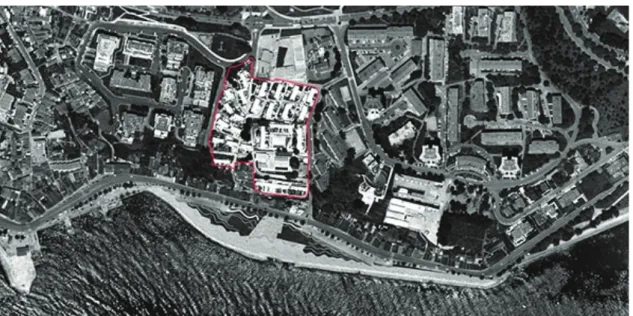
The Rainha D. Leonor housing complex, or theSobreiras7 housing complex, is a project of
municipal initiative designed by the architect Luísd’AlmeidaEça, a result of the urban restructuring that preceded the Plano Regulador da Cidade do Porto[1952] and a response to the necessary rehousing of the resident population in precarious conditions.
This housing complex was part of the “Houses for Poor Families” programme (“Casas para FamíliasPobres” – Decree nº34486 dated 8th April 1945)8 whose main objective was to help in
solving the problem of housing for the working classes and in promoting the construction of housing for very low monthly income familieswithin a simplified system with regard to the conditions required for the occupation of “Affordable Houses”9.
The project was divided into two construction phases: the first one, completed in 1953, comprised 150 houses, placed in a set of buildings with two levels and direct access. The second phase included 100 dwellings in five blocks of four floors with a distributed system in a gallery, which was concluded in 1955.This article mainly analyses the actions resulting from the general intervention project carried out on the dwellings built in the first phase by the municipal authorities as an experience of overall requalification.
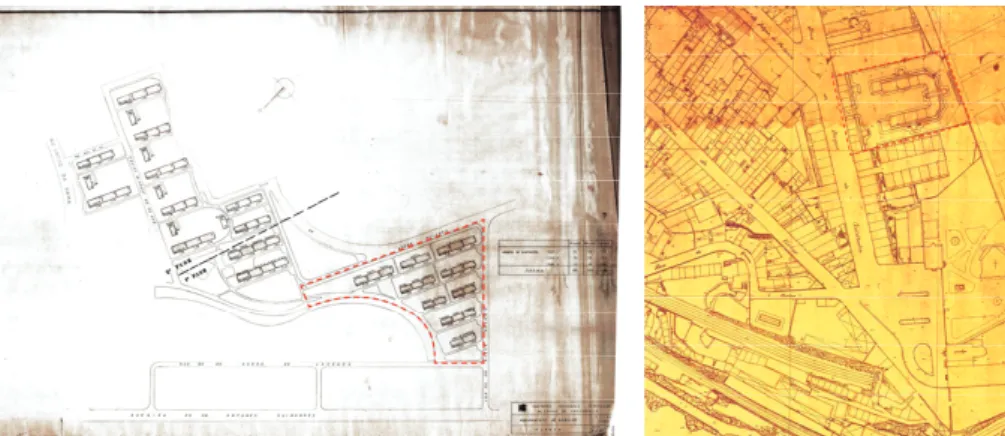
Figure 1. RamaldeResidential Unit. General Plan. 1st
and 2nd phases. ©Departamento do Património
Imobiliário do IGFSS [delegação Norte], ontheleft.
Figure 2. Housing block, Duque de Saldanha Street.©Arquivo Histórico Municipal do Porto, ontheright.
Figure 3. Rainha D. Leonor housing complex. ©Inês Lobo. Courtesy Ana Lima.
Figure 4. Rainha D. Leonor housing complex. Opening. ©Domus Social. Courtesy Ana Lima.
2 THREE PARTICULAR PORTO CASE STUDIES: INTERVENTION ACTIONS IN COMMON AREAS OF MULTIFAMILY HOUSING BUILDINGS
2.1 Building preventive maintenance. The case of the Housing block in Duque de Saldanha Street
The Housing block in Duque de Saldanha Street has represented a municipal neighbourhood since its construction. During the last decade, two requalification actionstook place, being referred to specifically as “preventive maintenance of the façades in common areas”.These building interventions were commissioned by Domus Social10in 2005 and 2016, and focused on
the maintenance and renovation of areas such as roofs, façades, common stairs and windows. Accordingly, in 2015 Domus Socialcarried out the Rehabilitation of sewage and rainwater networks, including paving and improvement of the Playground11.
The current research did not locate evidence of interventions within the apartment units. A recent visit to this building complex inearly 2017 revealed that, although it exhibits the general maintenance works described,the residents intervened individually and on their own apartments over time. As the living space inside the apartments was small, this meant ongoing individual modifications with a view to enlarge the interior spaces, as in closing off balconies with frames in aluminiumand the individual adaptation of the entry areas. These interventions only occurred on the rear façades.
The original window frames, made of wood and using single-paned glass, remain unchanged in all units and common areas, and have been painted and repaired, as well as the blinds.
REHAB 2017 R. Amoêda, S. Lira & C. Pinheiro (eds.)
880
Someresidents mention that the apartments have well-known problems such as moisture on the walls, and they confirm that all maintenance works inside their homes must be carried out by the residents.
Figures 5-6. Housing block in Duque de Saldanha Street. View from the street.
Figures 7-8. Housing block in Duque de Saldanha Street. Views from the inner yard.
Figures 9-10. Housing block in Duque deSaldanha Street. Views from the inner yard.
2.2 General intervention of the ensemble. The case of the Rainha D. Leonor housing complex The first phase of the Rainha D. Leonor housing complex was the subject of a requalification project approved in 2005. The official tender by the Porto Municipal Council was intended to
significantly improve the living conditions of the dwellings and simultaneously restore the uniform language of the housing complex. The tender also foresaw the vertical association between adjacent houses as a solution for the small size of the interior spaces, though with maximum cost containment.
As a result, the project selected for the requalification, by the Inês Lobo architectural studio, proposed a set of intervention actions for both inside the dwellings, via the implementation of new typologies, and the private and common exterior spaces, for the requalification and maintenance of the public spaces12.
This proposal presented the alternative solution of joining two dwellings horizontally, which doubled both the interior area and private exterior area. The new internal organization succeeded in significantlyreducing the circulation spaces, providing a more autonomous kitchen space and adding a laundry space and storage spaces. The living room represented the central living space.
On the outside, the main action was the removal of the outbuildings in the gardens to recover the initial use of these spaces.
However, in spite of the profound changes, the residents continued to carry out individualized interventions, which was confirmed in a visit to the housing complex in early 2017. The changes identified include chromatic variations on the balconies and the placement of awnings, tables and storage closets in the private outdoor spaces. These actions mainly addressed the residents’the need to expand the living spaceand to personalisethe entrance spaces.
In addition, although the intervention action took place between 2005 and 2014 (still recent), some pathologies such as fissures and blistering on the exterior coatings are already visible.
Subsequently, in September 2015, the Porto City Council announced a new tender for the rehabilitation of the second phase of the housing complex. The work awarded to Aythya-InvestimentosImobiliários, Lda. in February 2016 aimed to demolish the existing blocks and build new buildings with at least 58 social housing units to accommodate resident households. In return, in order to reduce costs for the municipality, this model provided for the transfer of
The project of general intervention of the first phase of the housing complex underscored the advantages of preserving the homogeneity of the ensemble and the improving the housing conditions with more extensive interventions both outdoorsvia coatings and treatment of the covering materials, and indoorsvia infrastructures systems and the rearrangement of space. However, this model does not appear to have taken into account the objectives proposed for the second phase.
Figures 11-12. Rainha D. Leonor. General views.
REHAB 2017 R. Amoêda, S. Lira & C. Pinheiro (eds.)
882
Figures 13-15. Rainha D. Leonor.Recent interventions carried out by the residents. 2.3 Private interventions. The case of the Ramalde Residential Unit
As mentioned, the nine buildings under analysis in this paper went through a process in which ownership changed hands, one with consequences for the current state of the buildings. Naturally, the new owners aimed to improvetheirhousing conditions, taking action according to their needs and economical possibilities.
Several interventions can be observed in the common areas, in different units and with distinct approaches, confirming the lack of a common understanding amongst the residents: window frames and the handrails on the balconies have been substituted, some balconies were closed, and the building façades were painted separately.
The main façade and the rear façade of the buildings reveal a similar lack of common intervention strategies.
In very few units, the original window frames remain, but this is an exception and they are in very poor condition. The solutions found to improve this particular element are quite diverse, in terms of materials and even construction options,as seen in Figures 16-23. In some cases, the recesses on the façades that were connected to the windows were simply closed, producingan obvious impact on the original aesthetics of the building.The same happened with the handrails on the balconies, which were substitutedwith dissimilar materials and design solutions.
In general, the common staircases did not undergo major interventions, only exhibiting signs of maintenance painting.
Figures. 18-20. RamaldeResidential Unit. Interventions in the window frames.
Figures 21-23. RamaldeResidential Unit. Interventions in the window frames and painting. 3 CONCLUSION
In this paper, we analysed three sets of state-subsidized multifamily housing, in order to study the maintenance actions that took place in each case over the years. Our approach was twofold: on the one hand, we took into consideration the specificity of the multifamily housing sets regarding long-term maintenance; on the other hand, we searched for the relationship between the ownership regime and the maintenance actions observed.
Regarding the specificities of multifamily housing buildingsin the context of state-subsidized housing in the 20th century in Portugal, we acknowledge the small scale of the buildings,
underpinned by the legal restrictions in force at the time the buildings were constructed. In some cases, the buildings are in fact very similar in size and shape to single or bi-family houses (ex: theRainha D. Leonor housing complex). This reinforces the need to outline the multifamily buildings’ differential characteristics - the sharing of a minimal distributive space and the existence of a common roof - in order to reframe the maintenance actions. Thus, in spite of the importance the interior of the dwellings assumes as the main terrain for the residents’ investments, it is in the common areas and on the outside of the building that a global action regarding maintenance can take place. The methodology we followed gave priority to the analysis of these spaces over that of the private interiors.
REHAB 2017 R. Amoêda, S. Lira & C. Pinheiro (eds.)
884
This perspective was then combined with an analysis of the maintenance actions that took the ownership regime into account. Being originally state-subsidized, these three housing sets are presently in different situations. Some of them have become private property belonging the residents via the rent-to-buy option; others remain publicly-owned (municipal or State-owned) property. This distinction has had its consequences, as will be seen.
In general, we can conclude that the buildings’ level of transformation strongly varies according to current ownership of the dwellings.
When the property belongs to the State (or the Municipality) the maintenance actions tend to be minimal and only on the exterior of the building (e.g. Housing Block in Duque de Saldanha). Nevertheless, in this situation, even if not prevalent, global refurbishment projects can take place - either regarding the roof, the infrastructures and the common spaces of the building, or the apartments. In some specific cases, a set of intervention actionsboth outside and inside the dwelling wasdone in order to significantly improve the living conditions (e.g. theRainha D. Leonor housing complex) and also restore the uniform language of the housing complex. Very often in these situations, the residents find themselves apart from the decision process, their individual action being diminished. Furthermore, the residents continue to carry out individualized interventions to improve and increase the housing space (the same in the Housing Block in Duque de Saldanha).In this particular case, the consideration of intermediate rehabilitation measures, that include equally the apartments’ interior, could be relevant to enhance the inhabitants’ quality of life.
When ownership of the property is transferred to the inhabitants, a very different situation can be observed, as in the Ramalde Residential Unit. Given the fact that the building is composed by several dwellings that belong to the residents, the common areas suffer from lack of maintenance, and a global position regarding the building may not occur. This fact contrasts with the stronger investments in the dwellings’ interior and with the exterior expression of occasional interventions. In spite of this deficit in the approach to the building as a whole, the residents are generally more satisfied in this case. The feeling of taking care of what belongs to them and of making lifelong investments in their property seems to supersede the insufficiencies felt with any partial and incomplete maintenance procedures.Some policy changes that may improve affordable housing standard in this particular situation could involve Municipal financial support, being this residential complex a modern paradigm in Porto; closer proximity between the professionals or specialists and the inhabitants, and naturally the implementation of condominium regulations.
This been said, we must question the relationship of the housing sets with the urban environment over time. Where the individual actions seem to address the families’ needs with ease, the urban fabric, the urban landscape and the collective culture appear endangered. If it is true that the residents seem to be able to resolve their own problems, who is then in charge of the collective ones?
ENDNOTES
1 About the Housing block located in Duque de Saldanha Street, cf. Gonçalves (2015, 2016) and Trevisan
(2013).
2 “By focusing the Affordable Houses Programme on a principle of ‘rent to buy’ - in which a monthly rent
included the house payments and life insurance and reinsurance - the regime was putting some of its fundamental principles into writing. The term ‘rent to buy’ is self-explanatory: the state allows the sale of the property under some conditions that, if not strictly followed, could imply the loss of that property, and in several cases, it did. This notion of impending threat was not only an instrument which the Portuguese regime resorted to within the Affordable Houses Programme, but also one that can be seen as an example of social control.” (Ramos, Silva, p.261).
3 This programme was implemented in a different framework from the Affordable Houses Programme
(1933).
4 https://dre.pt/application/file/610537.
5 About CRE and the RamaldeResidential Unit cf. Tavares, 2010, 2013, 2015 and Vasconcelos, 2009. 6 “1-Many of the families that live in affordable rent houses built by Social Security have, over the years,
been able to purchase these houses under individual ownership and to facilitate their acquisition, they have sought recourse in Base VIII of Law nº2092, dated April 9, 1958”.
7 Name commonly used given its location in the Sobreirasarea, between Lordelo do Ouro and Foz, in
Porto.
8 Ministério das Obras Públicas e comunicações (1945) Decreto-lei n.º 34486, Série I, número 73,
Imprensa Nacional de Lisboa.
9 “The Government recognizes the advantage in attending to such requests or needs [serious local
housing crises] without having to resort to legal action for each particular case. And so, in order to solve the most pressing cases, itproposes the construction of 5000 houses over a period of five years for poor families throughout the country, in accordance with local requirements […]. This official tender will allow for the accommodation of very low monthly income families […]”(DL34486: 233).
10 CMPH – DomusSocial – Empresa de Habitação e Manutenção do Município do Porto, E. M.
11 Procedureannouncementn.º 2438/2015, in Diário da República, II série, Abril 23, 2015.
12 Cf. Lima, A. (2012), Habitação mínima e apropriação do espaço: O Bairro Rainha D. Leonor,
IntegratedMaster’sThesis, FAUP, Porto. ACKNOWLEDGEMENTS
This paper was written as part of the CEAU/ Mapping Public Housing project, which is co-financed by the European Regional Development Fund (ERDF) through COMPETE 2020 - Operational Programme Competitiveness and Internationalisation (POCI) and national funds from FCT under the PTDC/CPC-HAT/1688/2014 project.
Assignment co-financed by the European Regional Development Fund (ERDF) through the COMPETE 2020 - Operational Programme Competitiveness and Internationalization (POCI) and national funds by the FCT under the POCI-01-0145-FEDER-007744 project.
REFERENCES
AA/VV. 2009. “Conjunto de habitação municipal Rainha D. Leonor, Porto”. JA 236 Ser Pobre, quaterly journal of Association of Architects– Portugal, ISSN-0870-1504.
Câmara Municipal do Porto. 1966. Plano de Melhoramentos: 1956-1966. CMP, Porto.
Gonçalves, E. 2015. O alojamento operário portuense nas primeiras décadas do século XX: da Casa Familiar ao Bloco Comunitário. In V. B. Pereira (Ed.), O Estado, a habitação e a questão social na cidade do Porto, vol. 2, Porto, Edições Afrontamento.
Gonçalves, E. 2016. Bairros de habitação popular no Porto, 1899-1933. A prática de uma arquitetura e económica, saudável e cómoda nas vésperas do moderno. [PhD Thesis] FAUP, Porto.
Lima, A. 2012. Habitação mínima e apropriação do espaço: O Bairro Rainha D. Leonor. Integrated Master’sThesis, FAUP, Porto.
Ramos, R., Gonçalves, E. & Silva, S. 2014. From the Late 19th Century House Question to Social Housing Programs in the 30s: the Nationalist Regulation of the Picturesque. Portugal, docomomo Journal, nº 51, 60-67. ISSN: 1380-3204.
Restivo, J. 2014. Habitação pública no Porto: Intervir para qualificar. [PhD Thesis] FEUP, Porto. Silva, S. D. & Ramos, R. 2015. Housing, Nationalism and Social Control: The First Years of The
Portuguese Estado Novo’s Affordable Houses Programme. In J. C. Leal, et.al. (Eds.), Southern modernisms from A to Z and back again, 255 - 274. Porto: Centro de Estudos Arnaldo Araújo - CESAP/ESAP, Instituto de História da Arte - FCSH/UNL. ISBN: 978-972-8784-66-9.
Tavares, M. 2013. Leituras de um percurso na habitação em Portugal, as Habitações Económicas – Federação de Caixas de Previdência. In N. Portas (Coord.), Habitação para o maior numero, Portugal, os anos de 1950-1980, Lisboa, CML, IHRU, 21-45. ISBN: 978-972-98508-8-2
Tavares, M. 2010. Habitações Económicas – Federação de Caixas de Previdência: uma perspectiva estratégica [nos anos 50 e 60 em Portugal]. Actas 1º CIHEL, Desenho e realização de bairros para populações com baixos rendimentos, Lisboa, Argumentum, 47-51. ISBN: 978-972-8479-72-5.
Tavares, M. 2015. Casas a Norte: as HE num processo de continuidade. In V. B. Pereira (Ed.), O Estado, a habitação e a questão social na cidade do Porto, vol. 2, Porto, Edições Afrontamento.
Trevisan, A. 2013. Influências Internacionais na Arquitectura Moderna no Porto (1926-1956). [PhD Thesis] Universidad de Valladolid.
Vasconcelos, D. S. 2009. Um bairro moderno no Porto. O bairro de Ramalde de Fernando Távora, Integrated Master’sThesis, FAUP, Porto.
REHAB 2017 R. Amoêda, S. Lira & C. Pinheiro (eds.)