an introduction to the philosophy of science
• • • • • • • • • • • • • • • • • • • • • • • • • • • • • • • • • • • • • • • • • • • • • • • • • • • • • • • • • • •
T H E O RY A N D R E A L I T Y
• • • • • • • • • • • • • • • • • • • • • • • • • • • • • • • • • • • • • • • • • • • • • • • • • • • • • • • • • • •
P E T E R G O D F R E Y- S M I T H
Peter Godfrey-Smith is associate professor of philosophy and of his-tory and philosophy of science at Stanford University. He is the author of Complexity and the Function of Mind in Nature.
The University of Chicago Press, Chicago 60637 The University of Chicago Press, Ltd., London © 2003 by The University of Chicago All rights reserved. Published 2003 Printed in the United States of America
12 11 10 09 08 07 06 05 04 03 1 2 3 4 5
isbn: 0-226-30062-5 (cloth) isbn: 0-226-30063-3 (paper)
Library of Congress Cataloging-in-Publication Data
Godfrey-Smith, Peter.
Theory and reality : an introduction to the philosophy of science / Peter Godfrey-Smith.
p. cm. — (Science and its conceptual foundations) Includes bibliographical references and index.
isbn0-226-30062-5 (alk. paper) — isbn0-226-30063-3 (pbk. : alk. paper)
1. Science—Philosophy. I. Title. II. Series. q175 .g596 2003
501—dc21
2002155305
Contents
Preface• xi
A Note for Those Teaching with the Book• xiii
1 Introduction • 1 1.1 Setting Out 1
1.2 The Scope of the Theory 2 1.3 What Kind of Theory? 5
1.4 Three Answers, or Pieces of an Answer 8
1.5 Historical Interlude: A Sketch of the Scientific Revolution 13 Further Reading 18
2 Logic Plus Empiricism • 19 2.1 The Empiricist Tradition 19 2.2 The Vienna Circle 22
2.3 Central Ideas of Logical Positivism 25 2.4 Problems and Changes 30
2.5 Logical Empiricism 34
2.6 On the Fall of Logical Empiricism 37 Further Reading 37
3 Induction and Confirmation • 39 3.1 The Mother of All Problems 39
3.2 Induction, Deduction, Confirmation, and Explanatory Inference 40 3.3 The Ravens Problem 46
3.4 Goodman’s “New Riddle of Induction” 50 Further Reading 56
4 Popper: Conjecture and Refutation • 57
4.3 Popper on Scientific Change 61
4.4 Objections to Popper on Falsification 63 4.5 Objections to Popper on Confirmation 67
4.6 Further Comments on the Demarcation Problem 71 Further Reading 74
5 Kuhn and Normal Science • 75 5.1 “The Paradigm Has Shifted” 75 5.2 Paradigms: A Closer Look 77 5.3 Normal Science 79
5.4 Anomaly and Crisis 82 5.5 Wrap-up of Normal Science 84
Further Reading 86
6 Kuhn and Revolutions • 87 6.1 Considerable Upset 87
6.2 Revolutions and Their Aftermath 88
6.3 Incommensurability, Relativism, and Progress 91 6.4 The X-Rated “Chapter X” 96
6.5 Final Thoughts on Kuhn 98 Further Reading 101
7 Lakatos, Laudan, Feyerabend, and Frameworks • 102 7.1 After Structure 102
7.2 Lakatos and Research Programs 103 7.3 Laudan and Research Traditions 108 7.4 Anything Goes 110
7.5 An Argument from History That Haunts Philosophy 113 7.6 Pluralism and the Ramblings of Madmen 115
7.7 Taking Stock: Frameworks and Two-Process Theories of Science 117 Further Reading 121
8 The Challenge from Sociology of Science • 122 8.1 Beyond Philosophy? 122
8.2 Robert Merton and the “Old” Sociology of Science 122 8.3 The Rise of the Strong Program 125
8.4 Leviathan and Latour 128 Further Reading 135
9.3 The Case of Primatology 139 9.4 Feminist Epistemology 141
9.5 Science Studies, the Science Wars, and the Sokal Hoax 144 Further Reading 148
10 Naturalistic Philosophy in Theory and Practice • 149 10.1 What Is Naturalism? 149
10.2 Quine, Dewey, and Others 150
10.3 The Theory-Ladenness of Observation 155 Further Reading 162
11 Naturalism and the Social Structure of Science • 163 11.1 Science as a Process 163
11.2 Kitcher and the Division of Scientific Labor 167 11.3 Social Structure and Empiricism 169
Further Reading 172
12 Scientific Realism • 173 12.1 Strange Debates 173
12.2 Approaching Scientific Realism 174 12.3 A Statement of Scientific Realism 174 12.4 Challenges from Traditional Empiricism 180 12.5 Metaphysical Constructivism 181
12.6 Van Fraassen’s View 183
12.7 Representation, Models, and Truth (Optional Section) 186 Further Reading 189
13 Explanation • 190 13.1 Knowing Why 190
13.2 The Rise and Fall of the Covering Law Theory of Explanation 191 13.3 Causation, Unification, and More 194
13.4 Laws and Causes (Optional Section) 200 Further Reading 201
14 Bayesianism and Modern Theories of Evidence • 202 14.1 New Hope 202
14.2 Understanding Evidence with Probability 203 14.3 The Subjectivist Interpretation of Probability 205 14.4 Assessing Bayesianism 208
14.5 Scientific Realism and Theories of Evidence 210 14.6 Procedural Naturalism (Optional Section) 214
Further Reading 217
15 Empiricism, Naturalism, and Scientific Realism? • 219 15.1 A Muddy Paste? 219
15.2 The Apparent Tensions 220 15.3 Empiricism Reformed 221 15.4 A Last Challenge 227 15.5 The Future 230
xi
Preface
This book is based mainly on lectures given at Stanford University during the last eleven years. So the book is a distillation of lectures, but not only of lectures. It also bears the influence of innumerable comments, questions, and papers by students over that time, together with remarks made by col-leagues and friends.
The book is written primarily for students, but it is intended to be ac-cessible to a fairly wide audience. I assume no background knowledge in philosophy at all in the reader. My primary aim is to introduce some of the main themes in the philosophy of science, while simultaneously telling an accessible and interesting story about how the field has developed in the last one hundred years or so. In telling this story I have been led to describe the connections between philosophy and other disciplines, and the chang-ing intellectual climate in which theories of science have been offered, in more detail than many introductory books do. I have also tried, in some places, to capture some of the atmosphere of the debates, and the person-alities of the protagonists.
Two anonymous referees for the University of Chicago Press also made helpful criticisms.
For detailed and exceptionally useful comments on entire near-final drafts, resulting in numerous improvements, I am indebted to Karen Ben-nett, Kim Sterelny, and Michael Weisberg.
Other improvements resulted, as always, from the insight, good sense, deft touch, and unique perspective of David Hull, the editor of the Science and Its Conceptual Foundations series. At the University of Chicago Press, Susan Abrams was constantly enthusiastic about the project and did a great job throughout. It is a rare pleasure to work with an editor like Susan. I am also grateful to Stanford University for much financial and intellectual sup-port over the last eleven years. This supsup-port has included several grants, in-cluding most recently a Martha Sutton Weeks Fellowship.
xiii
A Note for Those Teaching with the Book
The book is organized chronologically, especially until chapter 10, and fol-lowing the chronology is probably the most appropriate way to teach a course using the book. However, there is also a way to use the book in a course that follows a more thematic organization. Approached this way, chapters 1 and 2 are background; chapters 3, 4, 10, and 14 form a block focused on issues about evidence, testing, and theory choice; chapters 5– 11 discuss scientific change and the social organization of science, along with the interaction between these topics and epistemological questions; chapters 12 and 13 address issues more on the metaphysical than the epis-temological side of the philosophy of science. The book might also be used, of course, as a supplement to lectures and readings with a very different or-ganization.
1
1
• • • • • • • • • • • • • • • • • • • • • • • • • • • • • • • • • • • • • • • • • • • • • • • • • • • • • • • • • • • • • • • • • • • • • • • • • • • • • • • • • • • • • •
Introduction
1.1 Setting Out
This book is a survey of roughly one hundred years of argument about the nature of science. We’ll look at a hundred years of argument about what science is, how it works, and what makes science different from other ways of investigating the world. Most of the ideas we will examine fall into the field called “philosophy of science,” but we will also spend a good deal of time looking at ideas developed by historians, sociologists, psychologists, and others.
The book mostly has the form of a “grand tour” through the decades; ideas will be discussed in roughly the order in which they appeared. Note the word “roughly” in the previous sentence; there are exceptions to the histor-ical structuring of the book, and I will point out some of them as they arise. Why is it best to start with older ideas and work through to the present? One reason is that the historical development of general ideas about sci-ence is itself an interesting topic. Another reason is that the philosophy of science has been in a state of fermentation and uncertainty in recent years. A good way to understand the maze of options and opinions in the field at the moment is to trace the path that brought us to the state we’re in now. But this book does not only aim to introduce the options. I will often take sides as we go along, trying to indicate which developments were probably wrong turns or red herrings. Other ideas will be singled out as being on the right track. Then toward the end of the book, I will start trying to put the pieces together into a picture of how science works.
have also turned out to have an importance that extends well outside of philosophy. They have made a difference to developments in many other ac-ademic fields, and some of the debates have reverberated much further, af-fecting discussions of education, medicine, and the proper place of science in society.
In fact, throughout the latter part of the twentieth century, all the fields concerned with the nature of science went on something of a roller-coaster ride. Some people thought that work in the history, philosophy, and soci-ology of science had shown that science does not deserve the dominating role it has acquired in Western cultures. They thought that a set of myths about the trustworthiness and superiority of mainstream science had been thoroughly undermined. Others disagreed, of course, and the resulting de-bates swirled across the intellectual scene, frequently entering political dis-cussion as well. From time to time, scientific work itself was affected, espe-cially in the social sciences. These debates came to be known as the “Science Wars,” a phrase that conveys a sense of how heated things became.
The Science Wars eventually cooled down, but now, as I write these words, it is fair to say that there is still a great deal of disagreement about even the most basic questions concerning the nature and status of scientific knowledge. These disagreements usually do not have much influence on the day-to-day practice of science, but sometimes they do. And they have huge importance for general discussions of human knowledge, cultural change, and our overall place in the universe. This book aims to introduce you to this remarkable series of debates, and to give you an understanding of the present situation.
1.2 The Scope of the Theory
If we want to understand how science works, it seems that the first thing we need to do is work out what exactly we are trying to explain. Where does science begin and end? Which kinds of activity count as “science”?
Unfortunately this is not something we can settle in advance. There is a lot of disagreement about what counts as science, and these disagreements are connected to all the other issues discussed in this book.
There is consensus about some central cases. People often think of physics as the purest example of science. Certainly physics has had a heroic history and a central role in the development of modern science. Molecu-lar biology, however, is probably the science that has developed most rap-idly and impressively over the past fifty years or so.
counter hints of controversy. A few have suggested that theoretical physics is becoming less “scientific” than it used to be, as it is evolving into an es-oteric, mathematical model–building exercise that has little contact with the real world (Horgan 1996). And molecular biology has recently been acquiring connections with business and industry that make it, in the eyes of some, a less exemplary science than it once was. Still, examples like these give us a natural starting point. The work done by physicists and mo-lecular biologists when they test hypotheses is science. And playing a game of basketball, no matter how well one plays, is not doing science. But in the area between these clear cases, disagreement reigns.
At one time the classification of economics and psychology as sciences was controversial. Those fields have now settled into a scientific status, at least within the United States and similar countries. (Economics retains an amusing qualifier; it is often called “the dismal science,” a phrase due to Thomas Carlyle.) There is still a much-debated border region, however, and at the moment this includes areas like anthropology and archaeology. At Stanford University, where I teach, this kind of debate was one element of a process in which the Department of Anthropology split into two sep-arate departments. Is anthropology, the general study of humankind, a fully scientific discipline that should be closely linked to biology, or is it a more “interpretive” discipline that should be more closely connected to the humanities?
The existence of this gray area should not be surprising, because in con-temporary society the word “science” is a loaded and rhetorically powerful one. People will often find it a useful tactic to describe work in a border-line area as “scientific” or as “unscientific.” Some will call a field scientific to suggest that it uses rigorous methods and hence delivers results we should trust. Less commonly, but occasionally, a person might call an in-vestigation scientific in order to say something negative about it—to sug-gest that it is dehumanizing, perhaps. (The term “scientistic” is more often used when a negative impression is to be conveyed.) Because the words “science” and “scientific” have these rhetorical uses, we should not be sur-prised that people constantly argue back and forth about which kinds of intellectual work count as science.
now mostly associate with mathematics and geometry. Around the seven-teenth century, when modern science began its rise, the fields that we would now call science were more usually called “natural philosophy” (physics, astronomy, and other inquiries into the causes of things) or “natural his-tory” (botany, zoology, and other descriptions of the contents of the world). Over time, the term “science” came to be used for work with closer links to observation and experiment, and the association between science and an ideal of conclusive proof receded. The current senses of the term “science” and the associated word “scientist” are products of the nineteenth century. Given the rhetorical load carried by the word “science,” we should not expect to be able to lay down, here in chapter 1, an agreed-on list of what is included in science and what is not. For now we will have to let the gray area remain gray.
A further complication comes from the fact that philosophical (and other) theories differ a lot in how broadly they conceive of science. Some writers use terms like “science” or “scientific” for any work that assesses ideas and solves problems in a way guided by observational evidence. Sci-ence is seen as something found in all human cultures, even though the word is a Western invention. But there are also views that construe “sci-ence” more narrowly, seeing it as a cultural phenomenon that is localized in space and time. For views of this kind, it was only the Scientific Revolu-tion of the sixteenth and seventeenth centuries in Europe that gave us sci-ence in the full sense. Before that, we find the initial “roots” or precursors of science in ancient Greece, some contributions from the Arab world and from the Scholastic tradition in the late Middle Ages, but not much else. So this is a view in which science is treated as a special social institution with a definite history. Science is something that descends from specific people and places, and especially from a key collection of Europeans, including Copernicus, Kepler, Galileo, Descartes, Boyle, and Newton, who all lived in the sixteenth and seventeenth centuries.
To set things up this way is to see science as unlikethe kinds of investi-gation and knowledge that routinely go along with farming, architecture, and other kinds of technology. So a view like this need not claim that people in nonscientific cultures must be ignorant or stupid; the idea is that in order to understand science,we need to distinguish it from other kinds of investigation of the world. And we need to work out how one approach to knowledge developed by a small group of Europeans turned out to have such spectacular consequences for humanity.
of understanding we would eventually like to have. However we choose to use the word “science,” in the end we should try to develop both
1. a general understanding of how humans gain knowledge of the world around them and
2. an understanding of what makes the work descended from the Scientific Revo-lution differentfrom other kinds of investigation of the world.
We will move back and forth between these two kinds of questions through-out the book.
Before leaving this topic, there is one other possibility that should be mentioned. How confident should we be that all the work we call “sci-ence,” even in the narrower sense described above, has that much in com-mon? One of the hazards of philosophy is the temptation to come up with theories that are too broad and sweeping. “Theories of science” need to be scrutinized with this problem in mind.
1.3 What Kind of Theory?
This book is an introduction to the philosophy of science. But most of the book focuses on one set of issues in that field. Within the philosophy of sci-ence, we can distinguish between epistemologicalissues and metaphysical issues (as well as issues that fall into neither category). Epistemology is the side of philosophy that is concerned with questions about knowledge, evi-dence, and rationality. Metaphysics, a more controversial part of philos-ophy, deals with general questions about the nature of reality. Philosophy of science overlaps with both of these.
Most of the issues discussed in this book are, broadly speaking, episte-mological issues. For example, we will be concerned with questions about how observational evidence can justify a scientific theory. We will also ask whether we have reason to hope that science can succeed in describing the world “as it really is.” But we will occasionally encounter metaphysical is-sues, and issues in the philosophy of language. The discussion will intersect with work in the history of science and other fields as well.
logicaltheory of science. That is, we should try to understand the abstract structure of scientific theories and the relationships between theories and evidence. A third option is that we should try to come up with a method-ology,a set of rules or procedures that scientists do or should follow. In more recent years, philosophers influenced by historical work have wanted to give a general theory of scientific change.
A distinction that is very important here is the distinction between de-scriptiveand normativetheories. A descriptive theory is an attempt to de-scribe what actually goes on, or what something is like, without making value judgments. A normative theory does make value judgments; it talks about what should go on, or what things should be like. Some theories about science are supposed to be descriptive only. But most of the views we will look at do have a normative element, either officially or unofficially. When assessing general claims about science, it is a good principle to con-stantly ask: “Is this claim intended to be descriptive or normative, or both?” For some people, the crucial question we need to answer about science is whether or not it is “objective.” But this term has become an extremely slippery one, used to mean a number of very different things. Sometimes objectivity is taken to mean the absence of bias; objectivity is impartiality or fairness. But the term “objective” is also often used to express claims about whether the existenceof something is independent of our minds. A person might wonder whether there really is an “objective reality,” that is to say, a reality that exists regardless of how people conceptualize or de-scribe it. We might ask whether scientific theories can ever dede-scribe a real-ity that exists in this sense. Questions like that go far beyond any issue about the absence of bias and take us into deep philosophical waters.
Because of these ambiguities, I will often avoid the terms “objective” and “objectivity.” But the questions that tend to be asked using those terms will be addressed, using different language, throughout the book. And I will return to “objectivity” in the final chapter.
science textbooks to have an early section describing “the scientific method,” but recently textbooks seem to have become more cautious about this.
I said that much twentieth-century philosophy of science aimed at de-scribing the logicalstructure of science. What does this mean? The idea is that the philosopher should think of a scientific theory as an abstract struc-ture, something like a set of interrelated sentences. The philosopher aims to give a description of the logical relations between the sentences in the theory and the relations between the theory and observational evidence. Philosophy can also try to describe the logical relations between different scientific theories in related fields.
Philosophers taking this approach tend to be enthusiastic about the tools of mathematical logic. They prize the rigor of their work. This kind of phi-losophy has often prompted frustration in people working on the actual history and social structure of science. The crusty old philosophers seemed to be deliberately removing their work from any contact with science as it is actually conducted, perhaps in order to hang onto a set of myths about the perfect rationality of the scientific enterprise, or in order to have noth-ing interfere with the endless games that can be played with imaginary the-ories expressed in artificial languages. This kind of logic-based philosophy of science will be discussed in the early chapters of this book. I will argue that the logical investigations were often very interesting, but ultimately my sympathy lies with those who insist that philosophy of science should have more contact with actual scientific work.
If looking for a recipe is too simplistic, and looking for a logical theory is too abstract, what might we look for instead? Here is an answer that will be gradually developed as the book goes on: we can try to describe the sci-entific strategyfor investigating the world. And we can then hope to de-scribe what sort of connectionto the world we are likely to achieve by fol-lowing that strategy. Initially, this may sound vague or impossible, or both. But by the end of the book I hope to show that it makes good sense.
about truth, about justification, and about the connections between theo-ries and reality. The philosophical problems refused to go away.
Philosophers themselves differ a great deal about what kind of input from these neighboring fields is relevant to philosophy. This book is writ-ten from a viewpoint that holds that philosophy of science benefits from lots of input from other fields. But the argument that philosophy of science needs that kind of input will not be given until chapter 10.
1.4 Three Answers, or Pieces of an Answer
In this section I will introduce three different answers to our general ques-tions about how science works. In different ways, these three ideas will be recurring themes throughout the book.
The three ideas can be seen as rivals; they can be seen as alternative starting points, or paths into the problem. But they might instead be con-sidered as pieces of a single, more complicated answer. The problem then becomes how to fit them together.
The first of the three ideas is empiricism.Empiricism encompasses a di-verse family of philosophical views, and debates within the empiricist camp can be intense. But empiricism is often summarized using something like the following slogan:
Empiricism:The only source of real knowledge about the world is experience.
Empiricism, in this sense, is a view about where allknowledge comes from, not just scientific knowledge. So how does this help us with the philosophy of science? In general, the empiricist tradition has tended to see the differ-ences between science and everyday thinking as differdiffer-ences of detail and degree.The empiricist tradition has generally, though not always, tended to construe science in a broad way, and it has tended to approach questions in the philosophy of science from the standpoint of a general theory of thought and knowledge. The empiricist tradition in philosophy has also been largely pro-science; science is seen as the best manifestation of our ca-pacity to investigate and know the world.
So here is a way to use the empiricist principle above to say something about science:
Empiricism and Science:Scientific thinking and investigation have the same basic pattern as everyday thinking and investigation. In each case, the only source of real knowledge about the world is experience. But science is especially successful be-cause it is organized, systematic, and especially responsive to experience.
So “the scientific method,” insofar as there is such a thing, will be routinely found in everyday contexts as well. There was no fundamentally new ap-proach to investigation discovered during the Scientific Revolution, ac-cording to this view. Instead, Europe was freed from darkness and dogma-tism by a few brave and brilliant souls who enabled intellectual culture to “come to its senses.”
Some readers are probably thinking that these empiricist principles are empty platitudes. Of courseexperience is the source of knowledge about the world—what elsecould be?
For those who suspect that basic empiricist principles are completely trivial, an interesting place to look is the history of medicine. The history of medicine has many examples of episodes where hugebreakthroughs were made by people willing to make very basic empirical tests—in the face of much skepticism, condescension, and opposition from people who “knew better.” Empiricist philosophers have long used these anecdotes to fire up their readers. Carl Hempel, one of the most important empiricist philosophers of the twentieth century, liked to use the sad example of Ig-naz Semmelweiss (see Hempel 1966). Semmelweiss worked in a hospital in Vienna in the mid-nineteenth century; he was able to show by simple em-pirical tests that if doctors washed their hands before delivering babies, the risk of infection in the mothers was hugely reduced. For this radical claim he was opposed and eventually driven out of the hospital.
An even simpler example, which I will describe in some detail to pro-vide a change from the usual case of Semmelweiss, has to do with the dis-covery of the role of drinking water in the transmission of cholera.
Cholera was a huge problem in cities in the eighteenth and nineteenth centuries, producing death from terrible diarrhea. Cholera is still a prob-lem whenever there are poor people crowded together without good sani-tation, as it is transmitted from the diarrhea through drinking water. In the eighteenth and nineteenth centuries, there were various theories of how cholera was caused—this was before the discovery of the role of bacteria and other microorganisms in infectious disease. Some thought the disease was caused by foul gases, called miasmas,exuded from the ground and swamps. In London, John Snow hypothesized that cholera was spread by drinking water. He mapped the outbreak of one epidemic in London in 1854 and found that it seemed to be centered on a particular public water pump in Broad Street. With great difficulty he persuaded the local author-ities to remove the pump’s handle. The outbreak immediately went away.
well-being. This is also the kind of case that shows the attractiveness of even very simple empiricist views.
You might be thinking that we can just end the book here. Empiricism wins; looking to experience is a sure-fire guarantee of getting things right. Those who are tempted to think that no problems remain might consider a cautionary tale that follows up the Snow story. This is the tale of brave Doctor Pettenkofer.
Some decades after Snow, the theory that diseases like cholera are caused by microorganisms—the “germ theory of disease”—was developed in de-tail by Robert Koch and Louis Pasteur. Koch isolated the bacteria respon-sible for cholera quite early on. Pettenkofer, however, was unconvinced. To prove Koch wrong, he dranka glass of water mixed with the alleged cholera germs. Pettenkofer suffered no ill effects, and he wrote to Koch saying he had disproved Koch’s theory.
It is thought that Pettenkofer might have had high stomach acid, which can protect people against cholera infection. Or perhaps the cholera germs had died in that sample. Clearly Pettenkofer was lucky; Koch was right about what causes cholera. But the case reminds us that direct empirical tests are no guaranteeof success.
Some readers, I said, might be thinking that empiricism is true but too obvious to be interesting. Another line of criticism holds that empiricism is false, because it is committed to an absurdly simple picture of thought, belief, and justification. The empiricist slogan I gave earlier suggests that experiences pour into the mind and somehow turn into knowledge. It turns out to be very difficult to refine basic empiricist ideas in a way that makes them more psychologically realistic. Empiricists do not deny that reason-ing, including very elaborate reasonreason-ing, is needed to make sense of what we observe. Still, they insist that the role of experience is somehow funda-mental in understanding how we learn about the world. Many critics of empiricism hold that this is a mistake; they see it as a hangover from a sim-plistic and outdated picture of how belief and reasoning work. That debate will be a recurring theme in this book.
I now turn to the second of the three families of views about how sci-ence works. This view can be introduced with a quote from Galileo, one of the superheroes of the Scientific Revolution:
single word of it; without these, one wanders about in a dark labyrinth. (Galileo [1623] 1990, 237–38, emphasis added)
Putting the point in plainer language, here is the second of the three ideas.
Mathematics and Science:What makes science different from other kinds of inves-tigation, and especially successful, is its attempt to understand the natural world using mathematical tools.
Is this idea an alternative to the empiricist approach, or something that can be combined with it? Perhaps surprisingly, an emphasis on mathematical methods has often been used to argue against empiricism. Sometimes this has been because people have thought that mathematics shows us that there must be another route to knowledge beside experience; experience is asource of knowledge, but not the onlyimportant source. Alternatively, we might claim that empiricism is trivial: of course knowledge is based on ex-perience, but that tells us nothing about what differentiates science from other human thought. What makes science special is its attempt to quan-tify phenomena and detect mathematical patterns in the flow of events.
Nonetheless, it is surely sensible to see an emphasis on mathematics as something that can be combined with empiricist ideas. It might seem that Galileo would disagree; Galileo not only exalted mathematics but praised his predecessor Copernicus for making “reason conquer sense [experience]” in his belief that the earth goes around the sun. But this is a false opposition. In suggesting that the earth goes round the sun, Copernicus was not ignor-ing experience but dealignor-ing with apparent conflicts between different aspects of experience, in the light of his background beliefs. And there is no ques-tion that Galileo was a very empirically minded person; an emphasis on ob-servations made using the telescope was central to his work, for example. So avoiding the false oppositions, we might argue that mathematics used as a tool within an empiricist outlookis what makes science special.
of a role for mathematics. Biology nowcontains many mathematical parts, including modern formulations of Darwin’s theory of evolution, but this is a more recent development.
So not all of science—and not all of the greatest science—makes much use of mathematics to understand the world.
The third of the three families of ideas is newer. Maybe the unique fea-tures of science are only visible when we look at scientific communities.
Social Structure and Science:What makes science different from other kinds of in-vestigation, and especially successful, is its unique social structure.
Some of the most important recent work in philosophy of science has had to do with exploring this idea, but it took the input of historians and soci-ologists of science to bring philosophical attention to bear on it.
In the hands of historians and sociologists, an emphasis on social struc-ture has often been developed in a way that is strongly critical of the em-piricist tradition. Steven Shapin argues that mainstream empiricism often operates within the fantasy that each individual can observationally test hypotheses for himself (Shapin 1994). Empiricism is supposed to urge that people be distrustful of authority and go out to look directly at the world. But of course this is a fantasy. It is a fantasy in the case of everyday knowl-edge, and it is an even greater fantasy in the case of science. Almost every move that a scientist makes depends on elaborate networks of cooperation and trust. If each individual insisted on testing everything himself, science would never advance beyond the most rudimentary ideas. Cooperation and lineages of transmitted results are essential to science. The case of John Snow and cholera, discussed earlier in this section, is very unusual. Snow looks like a “lone ranger” striding up to the Broad Street water pump (with crowds of empiricists cheering in the background). And even Snow must have been dependent on the testimony of others in his assessment of the state of the cholera epidemic before and after his intervention at the pump. So trust and cooperation are essential to science. But who can be trusted? Who is a reliable source of data? Shapin argues that when we look closely, a great deal of what went on in the Scientific Revolution had to do with working out new ways of policing, controlling, and coordinating the ac-tions of groups of people in the activity of research. Experience is every-where. The hard thing is working out which kindsof experience are rele-vant to the testing of hypotheses, and working out who can be trusted as a source of reliable and relevant reports.
have begun to develop theories of how science works that emphasize social organization but are also intended to fit in with a form of empiricism (Hull 1988; Kitcher 1993). These accounts of science stress the special balance of cooperation and competition found in scientific communities. People sometimes imagine that seeking individual credit and competition for sta-tus and recognition are recent developments in science. But these issues have been important since the time of the Scientific Revolution. The great scientific societies, like the Royal Society of London, came into being quite early—1660 in the case of the Royal Society. A key part of their role was to handle the allocation of credit in an efficient way—making sure the right people were rewarded, without hindering the free spread of ideas. These societies also functioned to create a community of people who could trust each other as reliable co-workers and sources of data. The empiricist can argue that this social organization made scientific communitiesuniquely responsive to experience.
In this section I have sketched three families of ideas about how science works and what makes it distinctive. Each idea has sometimes been seen as thestarting point for an understanding of science, exclusive of the other two. But it is more likely that they should be seen as pieces of a more com-plete answer. The first and third ideas—empiricism and social structure— are especially important. These we will return to over and over again. Part of the challenge for philosophy of science in the years to come lies in inte-grating the insights of the empiricist tradition with the role for social or-ganization in understanding science. That does require significant changes to traditional empiricist ideas.
1.5 Historical Interlude: A Sketch of the Scientific Revolution
Before diving into the philosophical theories, we will take a brief break. Several times already I have mentioned the Scientific Revolution. People, events, and theories from this period carry special weight in discussions of the nature of science. So in this section I will give a historical sketch of the main landmarks, many of which will appear from time to time in later chapters. Before setting out, I should note that there is a good deal of con-troversy about how to understand this period of history; for example, some historians think that the whole idea of christening this period “The Scien-tific Revolution” is a mistake, as this phrase makes it sound like there are sharp boundaries between one totally unique period and the rest of history (Shapin 1996). But I will use the phrase in the traditional way.
Europe, and the Scientific Revolution itself fed into further processes of change. In religion, the Catholic Church had been challenged by Protes-tantism. The Renaissance of the fifteenth and sixteenth centuries had in-cluded a partial opening of intellectual culture. Populations were growing (recovering from the Black Death), and there was increased activity in com-merce and trade. Traditional hierarchies, including intellectual hierarchies, were beginning to show strain. As recent writers have stressed, this was a time in which many new, unorthodox ideas were floating around.
The worldview that had been inherited from the Middle Ages was a combination of Christianity with the ideas of the ancient Greek philoso-pher Aristotle. The combination is often called the Scholastic worldview, after the universities or “Schools” that developed and defended it. The earth was seen as a sphere positioned at the center of the universe, with the moon, sun, planets, and stars revolving around it. A detailed model of the motions of these celestial bodies had been developed by Ptolemy around 150 a.d.(the sun was placed between Venus and Mars).
Aristotle’s physical theory distinguished “natural” from “violent” or unnatural motion. The theory of natural motions was part of a more gen-eral theory of change in which biological development (from acorn to oak, for example) was a central guiding case, and many events were explained using the idea of purpose.
Everything on earth was considered to be made up of mixtures of four basic elements (earth, air, fire, and water), each of which had natural ten-dencies. Objects containing a lot of earth, for example, naturally fall to-ward the center of the universe, while fire makes things rise. Unnatural mo-tions, such as the motions of projectiles, have an entirely different kind of explanation. Objects in the heavens are made of a fifth element, which is “incorruptible,” or unchanging. The natural motion for objects made of this fifth element is circular.
Some versions of this picture included a mechanism (using the term loosely) for the motions of sun, planets, and stars. For example, each body orbiting the earth might be positioned on a crystalline sphere that revolved around the earth. Ptolemy’s own model was harder to interpret in these terms; Ptolemy is sometimes thought to be most interested in giving a tool for astronomical prediction (though interpreters differ on this).
same basic placement of the sun, moon, earth, and the known planets that modern astronomy has. But the theory was made more complicated by his insistence, following Aristotle and Ptolemy, that heavenly motions must be circular. Both the Ptolemaic system and Copernicus’s system saw most or-bits as complex compounds of circles, not single circles. Ptolemy’s and Copernicus’s systems were about equally complicated, in fact. Writers seem to differ on whether Copernicus’s theory was much more accurate as a pre-dictive tool. But there were some famous phenomena that Copernicus’s theory explained far better than Ptolemy’s. One was the “retrograde mo-tion” of the planets, an apparently erratic motion in which planets seem to stop and backtrack in their motions through the stars.
Copernicus’s work aroused interest, but there seemed to be compelling arguments against taking it to be a literally true description of the universe. Some problems were astronomical, and others had to do with obvious facts about motion. Why does an object dropped from a tower fall at the foot of the tower, if the earth has moved a considerable distance while the object is in flight? Copernicus’s 1543 book had an extra preface written by a cler-gyman, Andreas Osiander, who had been entrusted with the publication, urging that the theory be treated just as a calculating tool. This became a historically important statement of a view about the role of scientific the-ories known as instrumentalism,which holds that we should think of the-ories only as predictive tools rather than as attempts to describe the hidden structure of nature.
The situation was changed dramatically by Galileo Galilei (1564–1642), working in Italy in the early years of the seventeenth century. Galileo vig-orously made the case for the literal truth of the Copernican system, as op-posed to its mere usefulness. Galileo used telescopes (which he did not invent but did improve) to look at the heavens, and he found a multitude of phenomena that contradicted Aristotle and the Scholastic view of the world. He also used a combination of mathematics and experiment to be-gin the formulation of a new science of motion that would make sense of the idea of a moving earth and explain familiar facts about dropped and thrown objects. Galileo’s work eventually aroused the ire of the pope; he was forced to recant his Copernican beliefs by the Inquisition and spent his last years under house arrest. (Galileo was treated lightly in comparison with Giordano Bruno, whose refusal to disown his unorthodox specula-tions about the place of the earth in the universe led to his being burned at the stake in Rome, for heresy, in 1600.)
obsession with finding mathematical harmony (including musical tunes) in the structure of the heavens. Kepler’s model of the universe, also developed around the start of the seventeenth century, had the earth and other plan-ets moving in ellipses,rather than circles, around the sun. This led to mas-sive simplification and better predictive accuracy.
So far I have mentioned only changes in astronomy and related areas of physics, and I have taken the discussion only to the early part of the seven-teenth century. Part of what makes this initial period so dramatic is the re-moval of the earth from the center of the universe, an event laden with sym-bolism. Another field that changed in the same period is anatomy. In Padua, Andreas Vesalius (publishing, like Copernicus, in 1543) began to free anatomy from dependence on ancient authority (especially Galen’s con-clusions) and set it on a more empirical path. Influenced by Vesalius’s school, William Harvey achieved the most famous breakthrough in this pe-riod, establishing in 1628 the circulation of blood and the role of the heart as a pump.
The mid-seventeenth century saw the rise of a general and ambitious new theory about matter: mechanism.The mechanical view of the world combined ideas about the composition of things with ideas about causa-tion and explanacausa-tion. According to mechanism, the world is made up of tiny “corpuscles” of matter, which interact only by local physical contact. Ultimately, good explanations of physical phenomena should only be given in terms of mechanical interactions. The universe was to be understood as operating like a mechanical clock.
Some, like René Descartes (1596–1650), thought that an immaterial soul and a traditional God must be posited as well as physical corpuscles. Though many figures in the Scientific Revolution held religious views that were at least somewhat unorthodox, most were definitely not looking for a showdown with mainstream religion. Most of the “mechanical philoso-phers” retained a role for a Christian God in their overall pictures of the world. (If the world is a clock, who set it in motion, for example?) How-ever, the idea of dropping souls, God, or both from the picture was some-times considered.
In England, Robert Boyle (1627–91) and others embedded a version of mechanism into an organized and well-publicized program of research that urged systematic experiment and the avoidance of unempirical specula-tion. In the mid-seventeenth century we also see the rise of scientific soci-eties in London, Paris, and Florence. These socisoci-eties were intended to or-ganize the new research and break the institutional monopoly of the (often conservative) universities.
The period ends with the work of Isaac Newton (1642–1727). In 1687 Newton published his Principia,which gave a unified mathematical treat-ment of motion both on earth and in the heavens. Newton showed why Kepler’s elliptical orbits were the inevitable outcome of the force of gravity operating between heavenly bodies, and he vastly improved the ideas about motion on earth that Galileo (and others) had pioneered. So impressive was this work that for hundreds of years Newton was seen as having es-sentially completed those parts of physics. Newton also did immensely in-fluential work in mathematics and optics, and he suggested the way to move forward in fields like chemistry. In some ways Newton’s physics was the culmination of the mechanical worldview, but in some ways it was “post-mechanical,” since it posited some forces (gravity, most importantly) that were hard to interpret in mechanical terms.
So by the end of the seventeenth century, the Scholastic worldview had been replaced by a combination of Copernicanism and a form of mecha-nism. As far as method is concerned, a combination of experiment and mathematical analysis had triumphed (though people disagreed about the nature of the triumphant combination). This ends the period usually re-ferred to as the Scientific Revolution. But the changes described above fed into further changes, both intellectual and political. Chemistry began a pe-riod of rapid development in the middle to late eighteenth century, a pepe-riod sometimes called the Chemical Revolution. The work of Lavoisier, espe-cially his description of oxygen and its role in combustion, is often taken to initiate this “revolution,” though it was in the nineteenth century, with the work of Dalton, Mendeleyev, and others, that the basic features of modern chemistry, like the periodic table of elements, were established.
Linnaeus had systematized biological classification in the eighteenth century, but it was the nineteenth century that saw dramatic developments in biology. These developments include the theory that organisms are comprised of cells, Darwin’s theory of evolution, the germ theory of dis-ease, and the work by Mendel on inheritance that laid the foundation for genetics.
in a way modeled on the understanding of the physical world achieved dur-ing the Scientific Revolution.
• • • • • • • • • • • • • • • • • • • • • • • • • • • • • • • • • • • • • • • • • • • • • • • • • • • • • • • • • • • • • • • • • • • • • • • • • • • • • • • • • • • Further Reading
The topics in this chapter will be discussed in detail later, and references will be given then. Two other introductory books are worth mentioning, though. Hempel’s Philosophy of Natural Science(1966) was for many years the standard introduc-tory textbook in this area. It opens with the sintroduc-tory of Semmelweiss and is a clear and reasonable statement of mainstream twentieth-century empiricism. Alan Chalmers’s What Is This Thing Called Science?(1999) is also very clear; it presents a different view from Hempel’s and the one defended here.
For all the topics in this book, there are also reference works that readers may find helpful. Simon Blackburn’s Oxford Dictionary of Philosophyis a remarkably useful book and is fun to browse through. The Routledge Encyclopedia of Philos-ophyis also of high quality. The Blackwell Companion to the Philosophy of Science has many short papers on key topics (though many of these papers are quite ad-vanced). The Stanford Online Encyclopedia of Philosophyis still in progress but will be a very useful (and free) resource.
There are many good books on the Scientific Revolution, each with a different emphasis. Cohen, The Birth of a New Physics(1985), is a classic and very good on the physics. Henry, The Scientific Revolution and the Origins of Modern Science (1997), is both concise and thorough. It has an excellent chapter on mechanism and contains a large annotated bibliography. Schuster 1990 is also a useful quick sum-mary, and Dear’s Revolutionizing the Sciences(2001) is a concise and up-to-date book with a good reputation. But Toulmin and Goodfield’s Fabric of the Heavens (1962), an old book recently reprinted, is my favorite. It focuses on the conceptual foundations underlying the development of scientific ideas. (It is the first of three books by Toulmin and Goodfield on the history of science; the second, The Archi-tecture of Matteris also relevant here.)
Kuhn’s Copernican Revolution(1957), is another classic, focused on the early stages, as the title suggests. Shapin’s Scientific Revolution(1996), is not a good in-troduction to the Scientific Revolution but is a very interesting book anyway. There are several good books that focus on particular personalities. Koestler, The Sleep-walkers(1968), is fascinating on Kepler, and Sobel, Galileo’s Daughter(1999), is also good on Galileo (and his daughter, a nun leading a tough life). The standard biography of the amazingly strange Isaac Newton, by Robert Westfall, comes in both long (1980) and short (1993) versions.
For a history of medicine, covering the whole world, see Porter, The Greatest Benefit to Mankind(1998).
19
2
• • • • • • • • • • • • • • • • • • • • • • • • • • • • • • • • • • • • • • • • • • • • • • • • • • • • • • • • • • • • • • • • • • • • • • • • • • • • • • • • • • • • • •
Logic Plus Empiricism
2.1 The Empiricist Tradition
The first approach to science that we will examine is a revolutionary form of empiricism that appeared in the early part of the twentieth century, flourished for a time, was transformed and moderated under the pressure of objections, and then slowly became extinct. The earlier version of the view is called “logical positivism,” and the later, moderate form is more usually called “logical empiricism.” There is variation in terminology here; “logical empiricism” is sometimes used for the whole movement, early and late. Although we will be looking at fossils in this chapter, these remnants of the past are of great importance in understanding where we are now.
Before discussing logical positivism, it will be helpful to go even further back and say something about the empiricist tradition in general. In the first chapter I said that empiricism is often summarized with the claim that the only source of knowledge is experience. This idea goes back a long way, but the most famous stage of empiricist thought was in the seventeenth and eighteenth centuries, with the work of John Locke, George Berkeley, and David Hume. These “classical” forms of empiricism were based upon the-ories about the mind and how it works. Their view of the mind is often called “sensationalist.” Sensations, like patches of color and sounds, ap-pear in the mind and are all the mind has access to. The role of thought is to track and respond to patterns in these sensations. This view of the mind is not implied by the more basic empiricist idea that experience is the source of knowledge, but for many years such a view was common within empiricism.
second aspect, made vivid by David Hume, is inductive skepticism:why do we have reason to think that the patterns in past experience will also hold in the future?
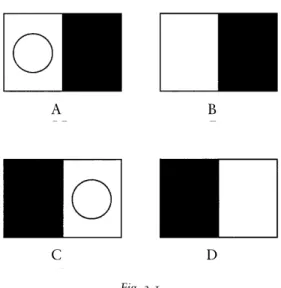
Empiricism has often shown a surprising willingness to throw in the towel on the issue of external world skepticism. (Hume threw in the towel on both kinds of skepticism, but that is unusual.) Many empiricists have been willing to say that they don’t care about the possibility that there might be real things lying behind the flow of sensations. It’s only the sen-sations that we have any dealings with. Maybe it makes no sense even to try to thinkabout objects lying behind sensations. Perhaps our concept of the world is just a concept of a patterned collection of sensations. This view is sometimes called “phenomenalism.” During the nineteenth century, phe-nomenalist views were quite popular within empiricism, and their oddity was treated with nonchalance. John Stuart Mill, an English philosopher and political theorist, once said that matter may be defined as “a Perma-nent Possibility of Sensation” (1865, 183). Ernst Mach, an Austrian physi-cist and philosopher, illustrated his phenomenalist view by drawing a pic-ture of the world as it appeared through his left eye (see fig. 2.1; the shape in the lower right part of the image is his elegant mustache). All that exists is a collection of observer-relative sensory phenomena like these.
about the world. Kant also held that mathematics gives us real knowledge of the world but does not require experience for its justification.
Empiricists must indeed avoid overly simple pictures of how experience affects belief. The mind does not passively receive the imprint of facts. The active and creative role of the mind must be recognized. The trick is to avoid this problem while still remaining true to basic empiricist principles. As I said above, in the history of philosophy the term “rationalism” is often used for a view that opposes empiricism. In the more recent discus-sions of science that we are concerned with here, however, the term is gen-erally not used in that way. (This can be a source of confusion; see the glos-sary.) The views called “rationalist” in the twentieth century were often forms of empiricism; the term was often used in a broad way, to indicate a confidence in the power of human reason.
So much for the long history of debate. Despite various problems, empiricism has been a very attractive set of ideas for many philosophers. Empiricism has often also had a particular kind of impact on discussions Logic Plus Empiricism 21
Fig. 2.1
outside of philosophy. Making a sweeping generalization, it is fair to say that the empiricist tradition has tended to be (1) pro-science, (2) worldly rather than religious, and (3) politically moderate or liberal (though these political labels can be hard to apply across times). David Hume, John Stu-art Mill, and Bertrand Russell are examples of this tendency. Of the three elements of my generalization, religion is the one that has the most counter-examples. Berkeley was a bishop, for example, and Bas van Fraassen, one of the most influential living empiricist philosophers, is also religious. But on the whole it is fair to say that empiricist ideas have tended to be the allies of a practical, scientific, down-to-earth outlook on life. The logical positivists definitely fit this pattern.
2.2 The Vienna Circle
Logical positivism was a form of empiricism developed in Europe after World War I. The movement was established by a group of people who were scientifically oriented and who disliked much of what was happening in philosophy. This group has become known as the Vienna Circle.
The Vienna Circle was established by Moritz Schlick and Otto Neurath. It was based, as you might expect, in Vienna, Austria. From the early days through to the end, a central intellectual figure was Rudolf Carnap. Car-nap seems to have been the kind of person whose presence inspired awe even in other highly successful philosophers.
Logical positivism was an extreme, swashbuckling form of empiricism. The term “positivism” derives from the nineteenth-century scientific phi-losophy of Auguste Comte. In the 1930s Carnap suggested that they change the name of their movement from “logical positivism” to “logical empiri-cism.” This change should not be taken to suggest that the later stages in the movement were “more empiricist” than the earlier stages. The opposite is true. In my discussion I will use the term “logical positivism” for the in-tense, earlier version of their ideas, and “logical empiricism” for the later, more moderate version. Although Carnap suggested the name change in the mid-1930s, the time during which logical positivist ideas changed most markedly was after World War II. I will spend some time in this section de-scribing the unusual intellectual and historical context in which logical positivism developed. In particular, it is easier to understand logical posi-tivism if we pay attention to what the logical positivists were against.
losophy that would settle, once and for all, the problems that philosophy had been concerned with. Some problems would be solved, and other prob-lems would be rejected as meaningless. Logical positivist views about lan-guage were influenced by the early ideas of Ludwig Wittgenstein ([1922] 1988). Wittgenstein was an enigmatic, charismatic, and eccentric philoso-pher of logic and language who was not an empiricist at all. Some would say that the positivists adapted Wittgenstein’s ideas, others that they mis-interpreted him.
Though they did admire some philosophers, the logical positivists were distressed with much of what had been going on in philosophy. In the years after Kant’s death in 1804, philosophy had seen the rise of a number of systems of thought that the logical positivists found pretentious, obscure, dogmatic, and politically harmful. One key villain was G. W. F. Hegel, who worked in the early nineteenth century and had a huge influence on nineteenth-century thought. Hegel was famous for his work on the relation between philosophy and history. He thought that human history as a whole was a process in which a “world spirit” gradually reached consciousness of itself. For Hegel, individuals are less important than the state as a whole, especially the role of the state in the grand march of historical progress. These ideas were taken to support strong forms of nationalism. Hegel’s was an “idealist” philosophy, since it held that reality is in some sense spir-itual or mental. But this is not a view in which each person’s reality is made up in some way by that person’s ideas. Rather, a single reality as a wholeis said to have a spiritual or rational character. This view is sometimes called “absolute idealism.”
factual meaning the claim might be intended to convey has been smothered with misused language.
People sometimes describe the history of this period as if it was a pitched battle between logical positivism and absolute idealism. That is not how things went. In the early twentieth century, there were many kinds of philosophy jostling and wrangling in Europe. There was a “back to Kant” movement going on (as there seems to be now; perhaps this will happen every hundred years). Another philosopher who came to seem an especially important rival to logical positivism was Martin Heidegger.
Earlier I gave a quick summary of Hegel’s ideas. It is much harder to do that for Heidegger. Heidegger is sometimes categorized as an existential-ist. Perhaps he is the most famously difficult and obscure philosopher who has ever lived. I will borrow the summary reluctantly given by Thomas Sheehan in the entry for Heidegger in the Routledge Encyclopedia of Phi-losophy(1998): “He argues that mortality is our defining moment, that we are thrown into limited worlds of sense shaped by our being-towards-death, and that finite meaning is all the reality we get.” Simplifying even more, Heidegger held that we must understand our lives as based, first and fore-most, upon practical coping with the world rather than knowledge of it. All our experience is affected by the awareness that we are traveling toward death. And the best thing we can do in this situation is stare it in the face and live an “authentic” life.
This picture of life might seem to make some sense (especially on a bad day). But Heidegger combined his descriptions of how it feels to live in the world with abstract metaphysical speculation; especially notorious are his discussions of the nature of “Nothing.” Heidegger also had one point in common with some (though not all) absolute idealists: his opposition to liberal democratic political ideas.
Heidegger was seen as a key rival by the logical positivists. Carnap gave humorous logical dissections of Heidegger’s discussions of Nothing in his lectures. Interestingly, recent work has shown that Carnap and Heidegger understood each other better than was once supposed (Friedman 2000).
work as assisting the development of a scientific, internationalist, and prac-tical outlook on society (Galison 1990).
The Vienna Circle flourished from the mid-1920s to the mid-1930s. Logical positivist ideas were imported into England by A. J. Ayer in Lan-guage, Truth, and Logic(1936), a vivid and readable book that conveys the excitement of the time. Under the influence of logical positivism, and the philosophy of G. E. Moore and Bertrand Russell, English philosophy abandoned absolute idealism and returned to its traditional empiricist em-phasis, an emphasis it has retained (more or less) ever since.
In continental Europe the story turned out differently. For we have now, remember, reached the 1930s. The development of logical positivism ran straight into the rise of Adolf Hitler.
Many of the Vienna Circle had socialist leanings, some were Jewish, and there were certainly no Nazis. So the logical positivists were persecuted by the Nazis, to varying degrees. The Nazis encouraged and made use of pro-German, anti-liberal philosophers, who also tended to be obscure and mystical. In contrast to the logical positivists, Martin Heidegger joined the Nazi party in 1933 and remained a member throughout the war.
Many logical positivists fled Europe, especially to the United States. Schlick, unfortunately, did not. He was murdered by a deranged former stu-dent in 1936. The logical positivists who did make it to the United States were responsible for a great flowering of American philosophy in the years after World War II. These include Rudolf Carnap, Hans Reichenbach, Carl Hempel, and Herbert Feigl. In the United States the strident voice of logi-cal positivists was moderated. Partly this was because of criticisms of their ideas—criticisms from the side of those who shared their general outlook. But the moderation was no doubt partly due to the different intellectual and political climate in the United States. Austria and Germany in the 1930s had been an unusually intense environment for doing philosophy.
2.3 Central Ideas of Logical Positivism
Logical positivist views about science and knowledge were based on a gen-eral theory of language; we need to start here, before moving to the views about science. This theory of language featured two main ideas, the analytic-synthetic distinctionand the verifiability theory of meaning.
is the standard example of an analytically true sentence. “All bachelors are bald” is an example of a synthetic sentence, in this case a false one. Ana-lytic truths are, in a sense, empty truths, with no factual content. Their truth has a kind of necessity, but only because they are empty.
This distinction had been around, in various forms, since at least the eighteenth century. The terminology “analytic-synthetic” was introduced by Kant. Although the distinction itself looks uncontroversial, it can be made to do real philosophical work. Here is one crucial piece of work the logical positivists saw for it: they claimed that all of mathematics and logic is analytic. This made it possible for them to deal with mathematical knowl-edge within an empiricist framework. For logical positivism, mathematical propositions do not describe the world; they merely record our conven-tional decision to use symbols in a particular way. Synthetic claims about the world can be expressed using mathematical language, such as when it is claimed that there are nine planets in the solar system. But proofs and in-vestigations within mathematics itself are analytic. This might seem strange because some proofs in mathematics are very surprising. The logical posi-tivists insisted that once we break down such a proof into small steps, each step will be trivial and unsurprising.
Earlier philosophers in the rationalist tradition had claimed that some things can be known a priori; this means known independently of experi-ence.Logical positivism held that the only things that seem to be knowable a priori are analytic and hence empty of factual content.
A remarkable episode in the history of science is important here. For many centuries, the geometry of the ancient Greek mathematician Euclid was regarded as a shining example of real and certain knowledge. Im-manuel Kant, inspired by the immensely successful application of Euclid-ean geometry to nature in Newtonian physics, even claimed that Euclid’s geometry (along with the rest of mathematics) is both synthetic and know-able a priori. In the nineteenth century, mathematicians did work out al-ternative geometrical systems to Euclid’s, but they did so as a mathemati-cal exercise, not as an attempt to describe how lines, angles, and shapes work in the actual world. Early in the twentieth century, however, Einstein’s revolutionary work in physics showed that a non-Euclidean geometry is true of our world. The logical positivists were enormously impressed by this development, and it guided their analysis of mathematical knowledge. The positivists insisted that pure mathematics is analytic, and they broke geometry into two parts. One part is purely mathematical, analytic, and says nothing about the world. It merely describes possible geometrical sys-tems. The other part of geometry is a set of synthetic claims about which geometrical system applies to our world.
I turn now to the other main idea in the logical positivist theory of lan-guage, the verifiability theory of meaning.This theory applies only to sen-tences that are not analytic, and it involves a specific kind of “meaning,” the kind involved when someone is trying to say something about the world. Here is how the theory was often put: the meaning of a sentence consists in its method of verification.That formulation might sound strange (it al-ways has to me). Here is a formulation that sounds more natural: knowing the meaning of a sentence is knowing how to verify it. And here is a key ap-plication of the principle: if a sentence has no possible method of verifica-tion, it has no meaning.
By “verification” here, the positivists meant verification by means of observation.Observation in all these discussions is construed broadly, to include all kinds of sensory experience. And “verifiability” is not the best word for what they meant. A better word would be “testability.” This is be-cause testing is an attempt to work out whether something is true orfalse, and that is what the positivists had in mind. The term “verifiable” gener-ally only applies when you are able to show that something is true. It would have been better to call the theory “the testability theory of meaning.” Sometimes the logical positivists did use that phrase, but the more standard name is “verifiability theory,” or just “verificationism.”
Verificationism is a strong empiricist principle; experience is the only source of meaning, as well as the only source of knowledge. Note that ver-ifiability here refers to verver-ifiability in principle,not in practice. There was some dispute about which hard-to-verify claims are really verifiable in principle. It is also important that conclusiveverification or testing was not required. There just had to be the possibility of finding observational evi-dence that would count for or against the proposition in question.