ORIGINAL
ARTICLE
Assessment of the effectiveness of a home-based care
program for patients coinfected with tuberculosis and
human immunodeficiency virus after discharge from a
reference hospital in South-Eastern Brazil
Authors
Carlos Alessandro Plá Bento1
Enio Roberto Pietra Pedroso2
1Master’s Degree in
Tropical Medicine at Health Science’s(Infectology and Tropical Medicine) Postgraduate Course by the Medicine School of Universidade Federal de Minas Gerais. Hospital Eduardo de Menezes (HEM) - Fundação Hospitalar do Estado de Minas Gerais (FHEMIG), Belo-Horizonte, MG, Brazil.
2Full Professor at
Departamento de Clínica Médica of the Medicine School of Universidade Federal de Minas Gerais - Centro de Pós-Graduação em Medicina Tropical da Faculdade de Medicina da Universidade Federal de Minas Gerais (FM-UFMG), Belo-Horizonte, MG, Brazil
Submitted on: 03/03/2010 Approved on: 06/29/2010
Correspondence to:
Carlos Alessandro Plá Bento
Hospital Eduardo de Menezes, Rua Dr. Cristiano Resende, 2213 – Bonsucesso, 30622-020, Belo Horizonte, MG, Brazil.
Fax: 55 31 3328 5029 E-mail:
We declare no confl ict of interest.
ABSTRACT
The effectiveness of tuberculosis treatment delivered by a home-based care program to patients coinfected with HIV was compared with that of a service provided by outpatient departments. A retrospective study was made of a cohort of coinfected patients discharged from hospital between January 1998 and December 2002 who had been followed-up for one year within one of these pro-grams. Two-hundred-and-forty-three patients who met the inclusion criteria were grouped accord-ing to their treatment program (group 1 received home-based care; group 2 attended outpatient departments) and then paired one-to-one across the groups by gender, age and level of education. Only 48 patients from each group could be paired. Apart from the duration of HIV infection, there were no statistically signifi cant differences (P < 0.05) between patients in the two groups with respect to social-demographic status and clinical or laboratory characteristics. In group 1, 75.0% of patients attained successful tuberculosis treatment compared with 72.9% of those in group 2 (P = 0.816). Treat-ment was abandoned by 22.9% of patients in group 1 and by 54.2% of those in group 2 (P = 0.008). The death rate within one year after discharge was 20.8% for group 1 compared with 6.3% for group 2 (P = 0.334). Although both programs achieved a similar success rate in the treatment of tuberculosis, patients receiving outpatient care were three to eight-times more likely to abandon the program. The importance of assigning patients at-risk of abandoning treatment to a home-based care program after discharge from hospital is emphasized.
Keywords: AIDS; tuberculosis; treatment outcome; adherence to treatment; home-based care.
[Braz J Infect Dis 2010;14(6):594-600]©Elsevier Editora Ltda.
INTRODUCTION
Tuberculosis (TB) is one of the most impor-tant complications of HIV infection1 and
re-quires multi-drug therapy over an extended period. Consequently, for both infections, close adherence to the treatment regime and careful monitoring of drug resistance are critical program issues.2 The successful
treatment of TB requires appropriate medi-cation as well as continuous supervision by medical staff including the direct observa-tion of drug intake and monitoring of the disease throughout the treatment by bac-teriological examination of the sputum. If all of these criteria are met, the control of TB is one of the most cost-effective health interventions.3 However, the number of
TB cases is increasing worldwide, and the HIV pandemic is considered to be one of its major causes.4,5 In developed countries
an increase in cases was due to coinfection with HIV, and paradoxically, the increase in longevity with the emergence of TB in the elderly. These groups have accumulated and caused cohabiting institutional outbreaks. Poorer countries, on the other end, kept and maintained high incidence rates increased in most of them between past and present decades.6 Among the intermediate
coun-tries, some have experienced a gradual re-duction in the incidence of TB, as is the case of Brazil.7,8 TB is known to accelerate the
progression of HIV and is associated with decreased survival.9 Moreover, TB and HIV
have a number of characteristics in com-mon and there is a clear requirement for an evidence-based international strategy to combat both diseases.10
intro-duction of highly active antiretroviral therapy (HAART) has resulted in a significant therapeutic breakthrough in the treatment of HIV-patients, non-adherence to the prescribed regime remains a formidable barrier to the success of the treatment,11,12 and innovative
approach-es are required in order to increase accapproach-ess and adherence to HAART, particularly amongst problematic sectors of the community.12-14 Since 1995, the Ministry of Health in
Brazil has guaranteed the availability of HAART for all citizens suffering from AIDS by the establishment of a comprehensive national program referred to as the Pro-grama de Alternativas Assistenciais.15 This program
en-compasses both specialized assistance service (Serviços de Atendimento Especializado; SAE) that is delivered by outpatient departments of hospitals, and home therapy assistance (Assistência Domiciliar Terapêutica; ADT), the home-based care service of which is provided by interdis-ciplinary teams.
Clearly, the access of HIV-patients to HAART is es-sential in order to reduce the incidence of HIV-related TB.16 However, very few reports have compared the
ef-fectiveness of the intervention provided by the ADT program with that of self-administered treatment su-pervised by SAE in the follow-up of coinfected TB/HIV patients, especially those recently discharged from hospital.9,17 In order to compare the two programs, the
success rate of TB treatment and the adherence to tu-berculostatic and antiretroviral therapies of patients diagnosed with TB/HIV were monitored over a period of one year following their discharge from a hospital in Belo Horizonte (MG, Brazil) specializing in infectious and parasitic diseases.
METHODS
Study design
Details of the study were presented and approved by the Ethical Committee of UFMG and Hospital Eduardo de Menezes. A retrospective study of a cohort of HIV-diag-nosed patients18 that were treated for TB in the Hospi-tal Eduardo de Menezes – Fundação HospiHospi-talar do Esta-do de Minas Gerais (HEM-FHEMIG) during the period from January 1st, 1998 to December 31st, 2002 was con-ducted using the hospital records as reference materials. Patients were followed up for one year after their dis-charge from hospital except when a subject abandoned the program or died during the period.
Study population
HIV-diagnosed patients were classified into two groups: group 1 consisted of patients who were followed up by the ADT program organized by HEM-FHEMIG
imme-diately after their discharge, whilst group 2 included patients who were followed up by the SAE program or-ganized either by HEM-FHEMIG or by the Centro de Referência e Treinamento em Doenças Infecciosas e Para-sitárias Orestes Diniz (Prefeitura Municipal de Belo Hori-zonte and Hospital das Clínicas da Universidade Federal de Minas Gerais). Within each group, all patients older than 18 years, of both gender, and living in the metro-politan area of Belo Horizonte were initially included in the study. Patients who had left the hospital against medical advice, patients who had not engaged in one of the two care programs indicated above, patients who had returned to the hospital within seven days of their formal discharge, patients who had been transferred to other medical centers, and patients who had disappeared were excluded from the study.
A total of 240 patients were initially included in the study. The 57 patients comprising group 1 had been fol-lowed up by ADT for a variable length of time, accord-ing to the protocol adopted by the team, and were even-tually transferred to one of the SAE programs. Patients received weekly home visits of up to three members of an interdisciplinary team composed of physicians, nurs-es and aidnurs-es, physical therapist, psychologist and social assistant. They earned their medications according to demand and control of use was done by counting the tablets allowing immediate assessment of adherence to therapy. A caregiver was selected and trained to give the medications and perform the care directed by the team.
The 183 patients forming group 2 had been followed up exclusively by one or both of the SAE programs. Pa-tients in this group collected their medicines at one-to three-monthly intervals from an outpatient department and were examined by a consultant infectious diseases specialist at that time. The type of assistance delivered to the patients after their discharge had been defined accord-ing to appropriate medical criteria duraccord-ing their period of hospital confinement. On this occasion, each patient had been accompanied by a relative or a community member who had accepted the responsibility of looking after them and making sure that the medications were taken as rec-ommended by the medical team.
Selection of patients
Determination of treatment outcome
At the conclusion of the follow-up period, patients were classified as having (I) adhered to the treatment, (II) aban-doned the treatment, or (III) died (regardless of the cause of death). Patients were deemed to have adhered to the treatment if they continued their TB medication for more than 80% of the time previously specified and failed with the antiretroviral treatment for less than 30 days. Patients who had adhered to the treatment were deemed to have received a successful TB treatment if they completed the treatment regimen and achieved clinical recovery,19 or if
they attained a cure of the disease (that is, two consecu-tive negaconsecu-tive bacilloscopy tests and presenting clinical recovery).
Statistical analysis
All data were recorded using appropriate standard-ized forms. Statistical analyses were carried out using SPSS (SSPS Inc., Chicago, IL) version 11.0 software. Descriptive and univariate analyses employing the χ2
test and Fischer’s exact test were used to detect statisti-cally significant differences between categories. Contin-uous variables were tested by comparison of their mean values within a 95% confidence interval. In order to perform multiple regression univariate analysis, all vari-ables presenting P < 0.25 were considered: differences were deemed significant at P < 0.05.
RESULTS
Of the total 240 patients, 57 were included in group 1 and 183 patients in group 2. Adherence to treatment one year after hospital discharge was achieved in 50.9% of patients in group 1 and 53% of those in group 2. The abandonment of treatment one year after hospital dis-charge was developed by 28.1% of patients in group 1 and 42.1% of patients in group 2 with p = 0.129 with a relative risk (RR) of 0.65 confidence interval (CI) 95% from 0.37 to 1.13. The death occurred in 21% of patients in group 1 and 4.9% of patients in group 2. The comple-tion of TB treatment was achieved by 73.7% of patients in group 1 versus 72.7% in group 2 with p = 0.882 95% CI from -0.14 to 0.12.20
Only 48 patients from group 1, originally comprising 57 individuals, could be paired with patients of group 2, thus the total number of patients included in the study was 96. Other than the duration of HIV infection, there were no statistically significant differences between pa-tients in groups 1 and 2 with respect to their social-demo-graphic status or their clinical or laboratory characteris-tics at discharge from the hospital.
The average age of all patients was 34.8 years, 62.5% were males, 89.6% had attended school for 8 years
maximum and 65.6% lived in the city of Belo Hori-zonte. Most of the patients were single (63.5%) and in 47.9% of the cases HIV infection had resulted from sexual intercourse with men. The average duration of in-fection for patients of group 1 was 27.8 months (stand-ard deviation {SD} = 39.1 months), whilst in group 2 the average was 18.1 months (SD = 33.7 months), val-ues that were signifi cantly different at P < 0.001 (Table 1). The average time of hospital confi nement was 58.1 days for patients of group 1 and 48.2 days for those of group 2.
Prior to the start of the therapeutic program, 40 pa-tients (83.3%) of group 1 presented an average T CD4+ lymphocyte count of 182.6 cells/mm3 (SD = 49.0), and
39 patients (81.3%) of group 2 exhibited an average T CD4+ lymphocyte count of 151.0 cells/mm3 (SD = 37.6).
When the results were dichotomized with respect to the T CD4 lymphocyte count level of 200 cells/mm3, 68.3%
of group 1 and 45.5% of group 2 have shown values be-low this level, a difference between groups that was not significant (P = 0.678). The mean value of log10(viral
load) for patients in group 1 was 4.01 (equivalent to 10233 copies/mm3 of viral RNA; SD = 1.52), whilst
in group 2 the mean value was 4.52 (equivalent to 33,113 copies/mm3 of viral RNA; SD = 1.34). When the
results were dichotomized with respect to the median baseline HIV level for log10(viral load) of 2.6 (equivalent
to 400 copies/mm3 of viral RNA), 26.5% of group 1 and
12.1% of group 2 presented values below this level, a differ-ence between groups that was not signifi cant (P = 0.122).
The average incidence of opportunistic infection pri-or to entry into one of the scheduled therapy programs was 3.5 for group 1 and 3.0 for group 2. Mycobacterio-sis was diagnosed definitely in 34.4% of the patients, and for the majority (63.6%), the presence of Mycobacterium tuberculosis was confirmed. The lungs were the organs most frequently affected by the disease (47.9%). The therapy regimens employed rifampicin, isoniazid and pirazinamide (scheme S1; 57.3%), or S1 reinforced with etambutol (scheme R-S1; 25%), or one of the regimens containing streptomycin (17.7%).
Table 1. Statistical comparison of the parameters, determined prior to discharge from hospital, of TB patients coinfected with HIV who were to be supported by either an ADT (group 1) or an SAE (group 2) program
Initial parameters P valuea
Treatment schedule for TB prescribed for 6 months 0.669
Treatment schedule for TB prescribed for 9 months 0.668
Treatment schedule for TB prescribed for 12 months 0.374
Site of TB infection: lungs 0.414
Site of TB infection: miliary 0.665
Site of TB infection: disseminated 0.460
Site of TB infection: pleural 0.064
Site of TB infection: lymph nodal 0.653
Site of TB infection: central nervous system 0.117b
Site of TB infection: osteoarticular 0.315
Site of TB infection: urinary tract 0.315
Site of TB infection: others 0.504
Source of infection: sexual intercourse with men 0.290
Source of infection: sexual intercourse with women 0.996
Source of infection: intravenous drug users 0.916
Source of infection: receivers of blood products 0.367
TB therapy employed: S1c 0.149
TB therapy employed: R-S1d 0.157
TB therapy employed: scheme including streptomycin 0.789
Definite diagnosis for Mycobacteriosis 0.566
Definite diagnosis for Mycobacterium tuberculosis 0.553b
Period of HIV infection < 0.001
T CD4+ lymphocyte count < 200 cells/mm3 0.678
Viral load < 2.60 log10 (equivalent to 400 copies of viral RNA) 0.122
aDetermined using the χ2 test unless otherwise indicated. bDetermined using Fisher’s exact test.
cTreatment scheme S1: rifampicin, isoniazid and pirazinamide. dAs treatment scheme S1 but reinforced with etambutol.
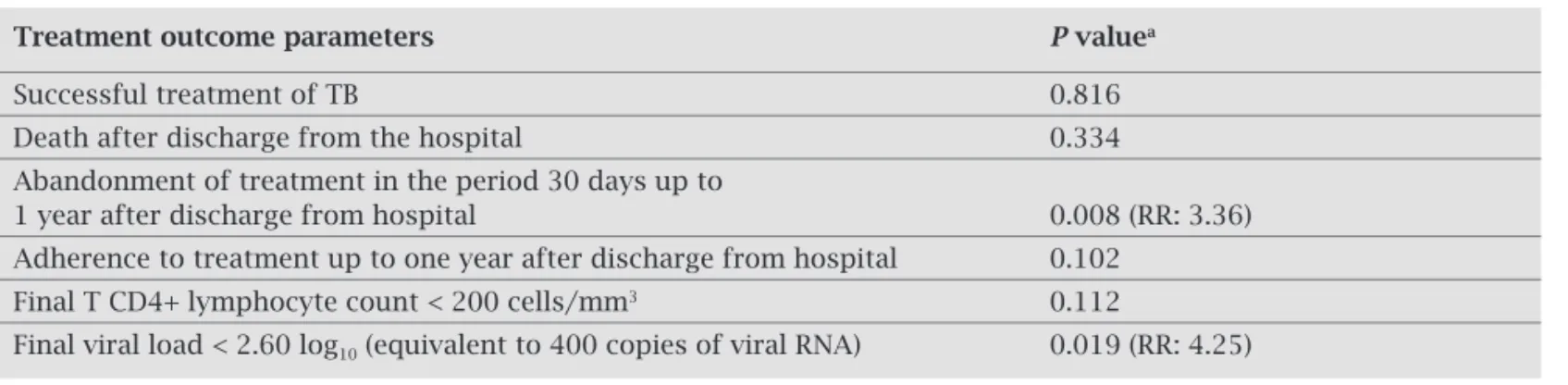
Table 2. Statistical comparison of treatment outcome parameters, determined one year after discharge from hospital, of TB patients coinfected with HIV supported by either an ADT (group 1) or an SAE (group 2) program
Treatment outcome parameters P valuea
Successful treatment of TB 0.816
Death after discharge from the hospital 0.334
Abandonment of treatment in the period 30 days up to
1 year after discharge from hospital 0.008 (RR: 3.36)
Adherence to treatment up to one year after discharge from hospital 0.102 Final T CD4+ lymphocyte count < 200 cells/mm3 0.112
Final viral load < 2.60 log10 (equivalent to 400 copies of viral RNA) 0.019 (RR: 4.25)
Logistic regression analysis of the data (Table 3) indi-cated a signifi cant association, within a 95% confi dence in-terval, between abandonment of treatment and the program scheduled for group 2 (P = 0.042; RR = 8.09). The differ-ence between the initial and the fi nal mean values of the T CD4+ lymphocyte count for group 1 was 160.5 cells/mm3
(SD = 49.0) and for group 2 was 74.1 cells/mm3 (SD = 37.6).
When the results from the two groups were dichotomised with respect to 200 cells/mm3, a P value of 0.112 was
ob-tained according to the χ2 test, indicating that the difference
between the groups was not signifi cant. The mean log10(viral
load) value determined one year after discharge from the hospital was reduced to 1.46 (equivalent to 29 copies of viral RNA) for group 1 patients compared with 0.73 (equivalent to fi ve copies of viral RNA) for those in group 2, values that were not signifi cantly different within the 95% confi dence in-terval. However, when dichotomised with respect to the level of log10(viral load) of 2.6 (equivalent to 400 copies of viral
RNA) there was a signifi cant correlation with the treatment program (P = 0.019) such that group 1 patients presented a 4.25-fold greater likelihood of attaining a viral load of less than 400 copies/mm3 of viral RNA compared with patients
in group 2.
DISCUSSION
The only signifi cant differences that could be detected, prior to their discharge from hospital, between patients in the two groups was that those in group 1 had been infected with HIV for a longer period than those in group 2. This is in line with the tendency to treat those patients with more complex disorders in their own homes since, if HIV-therapy is not effectively delivered, the progression of the infection results in an increase in morbidity.21
There was no signifi cant difference between the success rates of the TB therapy for patients treated under the ADT or the SAE program, and treatment outcome was similar to that established in an analogous survey conducted in São Paulo in which 74% of HIV coinfected patients attained a cure and 18% abandoned the therapy during the prescribed period.22 The TB cure rate achieved by this study were higher
than the rates obtained by other national surveys with pa-tients coinfected with HIV who achieved TB cure rates be-low 58.8%.23-25 However, the success rates recorded for both
groups of patients in the present study were lower than those observed in previous studies26-32 of populations,
con-taining varying percentages of HIV-infected patients, that had been treated under a directly observed therapy (DOT)
Table 3. Multivariate analysis of TB patients coinfected with HIV who were supported by either an ADT (group 1) or an SAE (group 2) program and who had abandoned therapy during a one year period after discharge from hospital
Program Variablesa P valueb
ADT Treatment schedule for TB prescribed for 12 months 0.847
Source of infection: use of intravenous drugs 0.063
TB therapy employed: S1c 0.616
TB therapy employed: scheme including streptomycin 0.877
Definite diagnosis for Mycobacteriosis 0.143
Site of TB infection: lungs 0.740
Number of previous hospital confinements 0.835
SAE Treatment schedule for TB prescribed for 12 months 0.045 (RR: 8.09)
Source of infection: sexual intercourse with women 0.798
Definite diagnosis for Mycobacteriosis 0.108
Number of previous hospital confinements 0.086
Duration of previous hospital confinements 0.220
Gender 0.540
Age 0.574
aOnly variables presenting P < 0.25 were considered in the analysis. bRR, relative risk.
program. Furthermore, the number of patients who attained a cure under either treatment program in the present sur-vey did not reach the 85% standard set by the World Health Organization.10,33
Various studies have indicated that the success rate of TB therapy in patients coinfected with HIV is low not only be-cause of a higher rate of morbidity amongst such patients, but also because the access to such groups is more diffi cult.17,27,34
Furthermore, there is copious evidence to suggest that TB can accelerate the progression of HIV infection and thus reduce the chances of survival.3,35 In the present study, the rate of
morbidity was higher amongst patients included in group 1 (20.8%) compared to group 2 (6.3%), although the differ-ence was not statistically signifi cant (P = 0.816). Interfering factors, such as the distribution of patients between the ADT and SAE programs, may have contributed to this result de-spite the similarity of the other parameters between the two groups. Since the study was of a retrospective nature, none of the parameters measured were under strict control.
Patients in the SAE program were, typically, three-times more likely to abandon their treatment than those in the ADT program. Moreover, amongst patients whose TB therapy was prolonged (i.e. ca. 12 months), those in group 2 were eight-times more likely to abandon the treatment compared with their counterparts in group 1.
Within TB treatment, the necessary levels of adherence are signifi cantly different from those demanded for adequate HIV-treatment, mainly because of the need to control the se-lection pressure of HIV-resistant strains.36 It is thus accepted
that TB patients need to take at least 80% of the prescribed tuberculostatic drugs in order to attain a complete cure,19,34,36
whilst HIV-patients need to take at least 95% of the antiret-rovirals prescribed for an indefi nite period.11,12,37,38 Since the
proportion of patients presenting a fi nal load of less than 400 copies/mm3 of viral RNA was statistically superior in group
1, it is clear that adherence to the antiretroviral treatment was observed by most of the patients included in the ADT pro-gram. Therefore, it is suggested that short term TB treatments (of 6 to 9 months) for patients coinfected with HIV can be followed-up by either ADT or SAE programs with compara-ble results. However, for TB treatments requiring longer peri-ods of medication (ca. 12 months) and almost total adherence to the regime, the follow-up of HIV coinfected patients would be more appropriate if provided under a ADT program.
The TB treatment delivered by both ADT and SAE pro-grams offered to HIV-patients needs to be improved in order for the success rate to be raised to the levels recommended by the World Health Organization.10 New strategies must be
designed in order to reach the more problematic sectors of the community including, for example, the adoption of spe-cial techniques for drug addicts and much closer collabora-tion with community health carers. Such work must be un-dertaken in an integrated manner by interdisciplinary teams
of home-carers and those from outpatient departments.39
TB patients, coinfected with HIV, for whom a long duration therapy is prescribed should preferably be assisted by an ADT program. In further considerations of ADT programs, other parameters that infl uence adherence to treatment must be considered, the treatment success rate and adherence must be constantly checked and compared with SAE and DOT programs,37 and the follow-up period of patients must be
longer than one year in order to allow for the evaluation of possible fatigue to antiretroviral adherence.40
ACKNOWLEDGMENTS
The authors wish to thank the team of Assistência Domiciliar Terapêutica do Hospital Eduardo de Menezes, the members of staff of SAME/HEM, SAME HC-UFMG and CTR Or-estes Diniz, Aleida Nazareth for helping with the statistical analysis and the team of Editione - Editoração e Consultoria Científi ca S/C Ltda for editorial help.
REFERENCES
1. Secretaria de Assistência à Saúde. Programa Nacional de DST/ AIDS. Co-infecção TB/HIV/AIDS. Brasília: Ministério da Saúde, 1994. 20 p.
2. Farmer P, Leandre F, Mukherjee J, Gupta R, Tarter L, Kim JY. City-based treatment of advanced HIV disease: introduc-ing DOT-HAART (directly observed therapy with highly ac-tive antiretroviral therapy). Bull World Health Org 2001; 79: 1145-51.
3. Pushpananthan S, Walley JD, Wright J. Tuberculosis in Swazi-land: a health needs assessment in preparation for a commu-nity-based program. Trop Doctor 2000; 30: 216-20.
4. de Albuquerque MF, Albuquerque SC, Campelo AR et al. Ra-diographic features of pulmonary tuberculosis in patients in-fected by HIV: is there an objective indicator of co-infection? Rev Soc Bras Med Trop 2001; 34: 369-72.
5. Bleed D, Dye C, Raviglione MC. Dynamics and control of global tuberculosis epidemic. Curr Opinion Pulm Med 2000; 6: 74-9.
6. Chaisson RE, Martinson NA. Tuberculosis in Africa – Combat-ing an HIV-Driven Crisis. N Engl J Med 2008; 358:1089-92. 7. Hijjar MA, Procópio MJ, Freitas LMR, Guedes R, Bethlem EP.
Epidemiology of tuberculosis in the world, Brazil and Rio de Janeiro. Pulmão RJ 2005; 14 (4):310-14.
8. Bierrenbach AL, Gomes ABF, Noronha EF, de Souza MFM. Tuberculosis incidence and cure rates, Brazil, 2000-2004. Rev Saúde Pública 2007; 41 (supl.1):24-33.
10. World Health Organization. An expanded DOTS Framework for Effective tuberculosis control: Annex III TB/HIV. [http:// www.who.int/tb/dots/framework Accessed in 26th April 2005].
11. Ickovics JR, Cameron A, Zackin R et al. Consequences and de-terminants of adherence to antiretroviral medication: results from adult AIDS trial group protocol 370. Antiretroviral Ther 2002; 7: 185-93.
13. Mitty JA, Flaningan T. Community-based interventions for marginalized populations. Clin Infect Dis 2004; 38: 373-5. 14. Mitty JA, Stone VE, Sands M, Macalino G, Flaningan T.
Direct-ly observed therapy for the treatment of people with human immunodefi ciency virus infection: a work in progress. Clin Infect Dis 2002; 34: 984-90.
15. Manual de diretrizes técnicas para elaboração e implan-tação de programas de prevenção e assistência das DST/ AIDS no local de trabalho. Brasília: Ministério da Saúde, 1998. 213 p.
16. Corbett EL, Watt CJ, Walker N et al. The growing burden of tuberculosis: global trends and interactions with the HIV epi-demic. Arch Int Med 2003; 163: 1009-21.
17. Miti S, Mfungwe V, Reijer P, Maher D. Integration of tubercu-losis treatment in a community-based care program for per-sons living with HIV/AIDS in Ndola. Zambia. Int J Tuberculo-sis Lung Dis 2003; 7(Suppl 1): S92-8.
18. Diagnóstico sorológico da infecção pelo HIV. Portaria 488 de 17 de junho de 1998. Brasília: Ministério da saúde. [http://www.aids.gov.br. Accessed in 20th March 2001]. 19. Hill A.R., Manikal V.M., Riska P.F. Effectiveness of di-rectly observed therapy (DOT) for tuberculosis: a review of multinational experience reported in 1990-2000. Medicine 2002; 81: 179-93.
20. Bento CAP. Estudo do papel da intervenção de serviço de As-sistência Domiciliar para pacientes co-infectados por HIV/TB recém desospitalizados de hospital referência em Belo Hori-zonte – MG sobre a interrupção das terapias anti-retroviral e tuberculostática. Dissertação (Mestrado). 2006. UFMG. Facul-dade de Medicina.
21. Palella Junior FJ, Delaney KM, Moorman AC et al. Declining morbidity and mortality among patients with advanced hu-man immunodefi ciency virus infection. New Eng J Med 1998; 338: 853-60.
22. Atomiya NA, Uip DE, Leite OH. Evaluation of disease patterns, treatment and prognosis of tuberculosis in AIDS patients. Braz J Infect Dis 2002; 6: 29-39.
23. Maruza M, Ximenes R, Lacerda H. Desfecho do tratamento e confi rmação laboratorial do diagnostic de tuberculose em pa-cientes com HIV/AIDS no Recife, Pernambuco, Brasil. J Bras Pneumol. 2008; 34(6):394-403.
24. de Oliveira H, Marin-León L, Gardinali J. Análise do progra-ma de controle da tuberculose em relação ao tratamento, em Campinas – SP. J Bras Pneumol 2005; 31(2):133-8.
25. Diniz L, Garrett D, Gerhardt G. Resultados do tratamento de tuberculose em capitais brasileiras – 2002. Bol Pneumol Sanit 2006; 14(2):71-84.
26. Kamolraratanakul P, Sawert H, Lertmaharit S et al. Rand-omized trolled trial of directly observed treatment (DOT) for patients with pulmonary tuberculosis in Thailand. Trans Royal Soc Trop Med Hygiene 1999; 93: 552-7.
27. Rodger AJ, Toole M, Lalnuntluangi B, Muana V, Deutschmann P. DOTS-based tuberculosis treatment and control during civil confl ict and HIV epidemic. Churachandpur District. India. Bull World Health Organ 2002; 80: 451-6.
28. China tuberculosis control collaboration. Results of directly ob-served short-course chemotherapy in 112.842 Chinese patients with smear-positive tuberculosis. Lancet 1996; 347: 358-62. 29. Maciel E, Silva A, Meireles W, Fiorotti K, Hadad D, Dietze R.
Tratamento supervisionado em pacientes portadores de tubercu-lose utilizando supervisores domiciliares em Vitória, Brasil. J Bras Pneumol 2008; 34(7):506-13.
30. Gabardo B. Avaliação da Efetividade do tratamento supervisio-nado no controle da tuberculose pulmonar bacilífera em Curitiba – PR. Bol Pneumol Sanit 2006; 14(2):91-7.
31. Gazetta CE, Vendramini SHF, Ruffi no-Netto A, Oliveira MRC, Villa TCS. Estudo descritivo sobre a implantação da estratégia de tratamento de curta duração diretamente observado controle da tuberculose em São José do Rio Preto e seus impactos (1998-2003). J Bras Pneumolol 2007; 33(2):192-8.
32. Falcão AB. Estudo comparativo do tratamento supervisionado da tuberculose com o auto-administrado. Bol Pneumolol Sanit 2006; 14(1):21-5.
33. World Health Organization Global Tuberculosis Program. Treat-ment of tuberculosis: guidelines for national programs. 2nd ed. WHO/TB/97.220. Geneva: World Health Organization, 1997. 34. Wobeser W, Yuan L, Naus M. Outcome of pulmonary
tubercu-losis treatment in the tertiary care setting-Toronto 1992/93. Tu-berculosis treatment completion study group. CMAJ 1999; 160: 789-94.
35. Penerger TV, Sudre P, Lundgren JD, Hirschel B. Does the onset of tuberculosis in AIDS predict shorter survival? Results of a cohort study in 17 European countries over 13 years. AIDS in Europe Study Group. BMJ 1995; 311: 1468-71.
36. Liechty CA, Bangsberg DR. Doubts about DOT: Antiretroviral therapy for resource-poor countries. AIDS 2003; 17: 1383-7. 37. Altice FL, Mostashari F, Friedland GH. Trust and acceptance of
and adherence to antiretroviral therapy. J Acquir Immune Defi c Syndr 2001; 28: 47-58.
38. Peterson DL, Swindells S, Mohr J et al. Adherence to protease in-hibitor therapy and outcomes in patients with HIV infection. Ann Intern Med 2000; 133: 21-30.
39. Harries AD, Hargreaves NJ, Chimzizi R, Salaniponi FM. Highly ac-tive antiretroviral therapy and tuberculosis control in Africa: syner-gies and potential. Bull World Health Organ 2002; 80: 464-9. 40. Bangsberg DR, Mundry LM, Tulsky JP. Expanding DOT