Effect of Packing Types on the Dimensional Accuracy
of Denture Base Resin Cured by the Conventional
Cycle in Relation to Post-pressing Times
Rafael Leonardo Xediek CONSANI1
Saide Sarckis DOMITTI1
Marcelo Ferraz MESQUITA1
Simonides CONSANI2
1Department of Prosthodontics, and 2Department of Dental Materials, School of Dentistry of Piracicaba, UNICAMP, Piracicaba, SP, Brazil
This study investigated the dimensional stability of denture bases influenced by packing methods, in relation to post-pressing times, in the Clássico acrylic resin which was prepared according to manufacturer recommendations. Forty maxillary wax bases were made and randomly assigned into 2 groups of 20 specimens each according to the conventional and RS system packing methods. In each method, the specimens were subdivided into immediate, 6, 12 and 24 h post-pressing times. The dough of the acrylic resin was packed in metallic flasks and processed in a water bath curing cycle at 74oC for 9 h. After cooling at room temperature, the bases were removed from the
flasks, finished and fixed on stone casts with instantaneous adhesive. The resin base-stone cast sets were transversally sectioned into 3 sections and the base-stone gap measured at 5 points in each section. The data were submitted to ANOVA and Tukey’s test, which showed that the RS system had a smaller base distortion compared to conventional packing, with the exception of the 24-h post-pressing time. There was a statistically significant difference between the packing methods only in section C (posterior palatal zone). In the conventional packing method, the immediate and 6 h times demonstrated values with no statistically significant difference between them, as well as between the 12 and 24 h post-pressing times.
Key Words: dimensional change, denture base, packing methods, post-pressing time.
Correspondence: Dr. Rafael Leonardo Xediek Consani, Rua Dr. José Vizioli 255, 13400-450 Piracicaba, SP, Brasil. Fax: +55-19-430-5218. e-mail: [email protected]
INTRODUCTION
A critical factor in the retention and stability of the complete denture is the dimensional change that occurs during polymerization shrinkage (1-4). This change may be partially compensated by water absorp-tion (5), by the resilience of the gengival mucosa (6), and by the saliva film formed between the resin base and the soft support tissue (7,8).
In addition, the base is also responsible for arti-ficial teeth fixation and distribution of chewing forces over the tissue-bearing area, and other factors may influence the base dimensional stability, such as the resin-flasking method and the time-temperature corre-lation during the curing methods (9).
Some authors consider the most effective curing method to be the conventional cycle in a water bath at least 65oC for 9 h (10,11). Therefore, the dimensional change of the denture processed by different techniques may not be compensated after the resin base processing (12). The inaccuracy in the flange area may also cause instability and pressure points on the soft tissues, and the greatest effect of linear shrinkage is usually on the posterior palatal region of the maxillary denture, result-ing in a gap between this area and the denture (13-15). A close adaptation to the soft tissue is required for the stability of a denture and the most important physical force in the retention is the saliva film thickness (16).
cooling, and strain caused by stress release during deflasking causes diminished adaptation of the denture to the tissue. Therefore, the discrepancy between the base and supporting tissues is an important factor in the control of the amount of force necessary to dislodge the dentures (17). The stress released later, gain or loss of water, and incomplete denture polymerization are fac-tors responsible for the dimensional change occurring after removal of the denture from the stone cast and the most likely causes for denture instability (18). How-ever, the magnitude of these changes is not large and, in almost all instances, it is within the range of –0.1 to 0.4% and, according to patient reaction, these changes do not significantly affect the serviceability of the denture (19).
The purpose of this study was to verify the dimensional change of the denture bases processed according to the conventional and RS system packing methods in relation to the immediate, 6, 12 and 24 h acrylic resin post-pressing times.
MATERIAL AND METHODS
Forty maxillary stone casts were poured in Herodent Soli-Rock class III dental stone (Vigodent, Rio de Janeiro, RJ, Brazil) using a ratio of 30 mL water to 100 g powder. The stone casts were randomly as-signed into 2 groups of 20 specimens each according to the conventional and RS tension packing methods. In each method, the specimens were subdivided into im-mediate, 6, 12 and 24 h post-pressing times.
A uniform denture baseplate wax pattern was made on each stone cast with a 1.5 mm thickness. The casts with wax patterns were invested in dental stone according to routine procedures. The samples were flasked in the lower part of traditional brass flasks with Star class II dental plaster (Chaves, Fortaleza, CE, Brazil). Petroleum jelly was used as a separating me-dium between the plaster in the lower part of the flask and the Herodent Soli-Rock class III dental stone used in the upper portion. After 1 hour, the flasks were placed in boiling water to soften the baseplate wax. The flask parts were separated, the wax removed, and the stone cleaned with boiling water and liquid detergent (ODD, Bombril-Cirio, São Paulo, SP, Brazil). Two coats of Isolak sodium alginate (Clássico Dental Prod-ucts, São Paulo, SP, Brazil) were used as a mould separator.
Clássico standard PMMA (Clássico Dental Prod-ucts, São Paulo, SP, Brazil) was used with a monomer:polymer ratio of 1:3 (by volume). The rec-ommended mixing ratio of 37.5 g powder to 15 mL liquid was used according to manufacturer instructions for each flask pressing. The prepared dough was packed according to one of the post-pressing times for both conventional and RS system packing methods. A plas-tic sheet was used as a separating medium between the gypsum and the acrylic resin during the initial flasking closure. After the flask was opened, the plastic sheet was removed and the acrylic resin excess trimmed. In the conventional packing method, the final closure was performed using aLinea H 2000 hydraulic press (São Paulo, Brazil) with a load of 1.250 kgf for 5 min. The flasks were transferred to a flask carrier and immersed in water according to the post-pressing times and main-tained at 74oC for 9 h. In the RS system packing method, the final closure was made with a similar pressure condition and performed with the flask set between the two plaques of the RS system method. The system is an
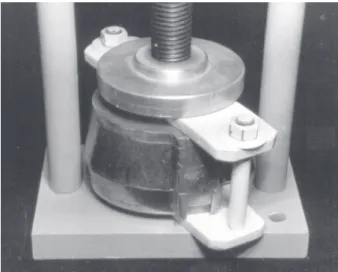
Figure 1. Flask pressed between the metallic plaques of the RS tension system.
assembly composed of 2 iron plaques (150x40x8 mm). The lower plaque possesses a screw, 9 mm in diameter, soldered at each end. The upper part possesses 2 holes, with a cross section diameter of 10 mm, in which the screws are trespassed before final flask closure. After final flask closure, the screw-nuts are turned in the screws (Figure 1) before press releasing to avoid resin mass distortion by opening the two flask parts. After the post-pressing times, all flasks were immersed in water and maintained at 74oC for 9 h.
After the curing cycle, the flasks were removed and allowed to bench cool before the bases were deflasked, trimmed, and fixed onto their corresponding casts with Super Bonder instantaneous adhesive (Loctite, São Paulo, SP, Brazil) placed on the ridge crest of the stone cast. The resin base-stone cast sets were transver-sally sectioned into 3 sections, corresponding to the distal of canines (A), mesial of first molars (B), and posterior palatal zone (C). The gap between the resin base and stone cast was measured at five points in the right and left ridge crests, at the midline, and at the right and left marginal limits (Figure 2) using a Leitz linear optical comparator microscope (Wetzlar, Germany) with a travelling stage capable of measuring 0.001 mm. Each measurement was repeated three times and the average was used as the linear gap distance for that point. The measurements were made at 5 points for each one of the 3 sections, until the completion of 5 samples averaged together in each individual section.
The data were submitted to ANOVA and Tukey’s test at a level of significance of 5%.
RESULTS
The base discrepancies influenced by the acrylic resin packing methods independently of the other fac-tors showed that the RS system method (0.164 ± 0.040) was significantly different (p<0.05) compared to the conventional method (0.177 ± 0.055).
The dimensional change values due to the packing methods influenced by post-pressing times (Table 1) showed statistically significant differences in the immediate, 6 and 12 h post-pressing times. In the 24 h post-pressing time, the discrepancy values for the RS system (0.159 ± 0.035) was similar compared with the conventional packing method (0.142 ± 0.035). In the conventional method, the values for the immediate and 6 h post-pressing times were statistically similar as were the 12 and 24 h times. There was no statistically significant difference among the post-pressing times in the RS system packing method.
Independently of the post-pressing times (Table 2), the results analyzed in the 3 sections showed statis-tically significant differences between the two packing methods only in section C (posterior palatal zone). In this section, the RS system promoted less discrepancy when compared to the conventional method.
DISCUSSION
The dimensional change occurring during the complete denture procedure has been recognized by several authors (4,15,18) and still continues to be the major disadvantage of the process.
Table 1. Dimensional change (means ± SD; mm) in the denture base in relation to post-pressing time and packing method.
Post-pressing time Packing method
Conventional RS system
Immediate 0.210 ± 0.054a 0.165 ± 0.057 *
6 hours 0.196 ± 0.073a 0.162 ± 0.034*
12 hours 0.171 ± 0.018b 0.142 ± 0.032*
24 hours 0.142 ± 0.035b 0.159 ± 0.035
*p<0.05 compared to conventional method at the same post-pressing time.
ap>0.05, immediate and 6 h post-pressing times in the conventional
method.
bp>0.05, 12 and 24 h post-pressing times in the conventional
method.
There were no statistically significant differences among post-pressing times in the RS system.
Table 2. Dimensional change (means ± SD; mm) in the denture base in relation to section and packing method.
Packing method Section
A B C
Conventional 0.144 ± 0.020 0.159 ± 0.040 0.227 ± 0.058 RS system 0.141 ± 0.025 0.144 ± 0.026 0.208 ± 0.027*
Sections: A = distal of canines; B = mesial of first molars; C = posterior palatal zone.
In this study, the smaller values for the RS system packing method compared with the conven-tional method, independently of the other factors, indicates that the dimensional change occurred in the denture base was influenced by the resin packing method. When the post-pressing time was analyzed, the smaller base discrepancies occurred at immediate, 6 and 12 h post-pressing times. This fact signifies that the RS system packing method was not able to decrease the discrepancy occurred at 24 h in the conventional pack-ing method, probably influenced by the longer delay prior to the resin curing start. An earlier study also demonstrated smaller discrepancy when the denture base was processed by the conventional curing cycle after 12 and 24 h post-pressing times (20).
The base stability depends only upon the nature of the stress produced during processing as well as its later release which is responsible for the greatest di-mensional change occurring after the denture deflasking and is considered to be the most likely cause of denture dimensional stability (18).This study shows that the RS system packing method, which avoids flask opening, influenced the magnitude of the stress release when compared to conventional packing, which permits flask opening prior to placing the flask in the clamp.
Although the RS tension packing method de-creased the dimensional change magnitude, base distortion is an inevitable shortcoming of the acrylic resin and one of the factors that may contribute to the level of denture stability, independently of the post-pressing time at which the resin is cured afterwards.
Previous reports have demonstrated that the den-ture base presents the greatest discrepancy at the posterior palatal seal (3,8,12,16). In this study, the mean dimensional changes incurred in both packing methods were statistically different only in section C, independently of the post-pressing times. The RS sys-tem packing method had a greater influence in section C, where the gap magnitude was smaller than that obtained by the conventional packing method. This result showed that the RS system was able to decrease the stress release in this sealing area, improving the base adaptation on the stone cast.
The greatest mean discrepancies of the pro-cessed denture base were observed in section C with both resin-packing methods. An earlier study showed that discrepancies ranging from 0.23 to 0.58 mm may not be easily corrected after base processing (12). The
discrepancies obtained in this study with the RS system were smaller than that shown in the literature, and may be able to produce a more accurate denture base, mini-mizing the inaccuracies promoted by the conventional resin packing procedure. This degree of dimensional change that occurred in the denture posterior palatal seal was also noted in previous studies investigating other denture procedure variables (8,13,14).
The acrylic resin post-pressing times established in this study for the start of the curing cycle was not the most significant factor in determining the magnitude of the dimensional changes occurring in the RS system packing method. The discrepancy means did not dem-onstrate statistically significant differences among all post-pressing times. This fact may be due to the similar stress release promoted by the RS system packing method during the acrylic resin flask pressure.
Conversely, when the conventional packing method was considered, the statistical similarities were coupled between immediate and 6 h, and between 12 and 24 h post-pressing times. In this packing method, the delay in the curing start may have influenced the dimensional change magnitude allowing the statistical similarity to be observed only between close post-pressing times. Thus, the shorter times showed values with greater discrepancy when compared with the longer post-pressing times. Less denture base discrepancy was also demonstrated in an earlier study when the acrylic resin dough was processed in the conventional curing cycle after the 12 and 24 h post-pressing times (20).
Similar levels of relieved internal stress from the resin mass before the curing cycle in the immediate, 6, 12 and 24 hours post-pressing times in the RS system packing method were responsible for these results with no statistically significant differences. This influence was not verified in the conventional packing method due to the prior stress relief before the curing cycle. After denture deflasking, the distortion caused by the relieved stress was more evident in the posterior palatal seal, a region more susceptible to strain when compared with the anterior and median zones.
RESUMO
Este estudo investigou a alteração dimensional de bases de prótese total influenciada pelos métodos de prensagem em relação ao tempo de pós-prensagem da resina acrílica Clássico, proporcionada e manipulada de acordo com as recomendações do fabricante. Quarenta bases superiores em cera foram feitas e separadas aleatoriamente em 2 grupos de 20 corpos-de-prova de acordo com os métodos de prensagem convencional e pelo sistema RS de contensão. Em cada método os corpos-de-prova foram divididos de acordo com os tempos pós-prensagem imediato, 6, 12 e 24 horas. A massa de resina acrílica foi prensada em mufla metálica e polimerizada em banho de água aquecida a 74oC por 9 horas. Após esfriar em temperatura ambiente, as bases
de resina foram removidas das muflas, acabadas e fixadas nos modelos de gesso com adesivo instantâneo. O conjunto base de resina-modelo de gesso foi seccionado transversalmente em 3 secções e o espaço entre base-modelo medido em 5 pontos em cada secção. Os resultados foram submetidos à ANOVA e ao teste de Tukey (5%) e demonstraram que: o sistema RS promoveu menor distorção da base quando comparado com a prensagem convencional, com exceção do tempo pós-prensagem de 24 horas. Houve diferença estatística significativa entre os métodos de prensagem somente na secção C. No método convencional, os tempos imediato e de 6 horas mostraram valores sem diferença estatística significativa entre si, assim como entre os tempos pós-prensagem 12 e 24 horas.
REFERENCES
1. Harman IM. Effects of time and temperature on polymerization of a methacrylate resin denture base. J Am Dent Assoc 1949;38: 188-203.
2. Peyton FA. Packing and processing denture base resins. J Am Dent Assoc 1950;40:520-528.
3. Anthony DH, Peyton FA. Evaluations of dimensional accuracy of denture bases with a modified comparator. J Prosthet Dent 1959; 9:683-692.
4. Becker CM, Smith DE, Nicholls JI. The comparison of denture-base processing techniques. II. Dimensional changes due to pro-cessing. J Prosthet Dent 1977;37:450-459.
5. Wong DMS, Cheng LYY, Chow TW, Clark, RKF. Effect of processing method on the dimensional accuracy and water
sorp-tion of acrylic resin dentures. J Prosthet Dent 1999;81:300-304. 6. Jacobson TE, Krol AJ. A contemporary review of the factors
involved in complete dentures. Part III: Support. J Prosthet Dent 1983;49:306-313.
7. Craig RG, Berry GC, Peyton FA. Physical factors related to denture retention. J Prosthet Dent 1960;10:459-467.
8. Polyzois GL. Improving the adaptation of denture base by an-chorage to the casts: a comparative study. Quintessence Int 1990;21:185-190.
9. Yeung KC, Chow TW, Clark RKF. Temperature and dimensional changes in the two-stage processing technique for complete den-tures. J Dent 1995;23:245-253.
10. Zissis A, Huggett R, Harrison A. Measurement methods used for the determination of dimensional accuracy and stability of den-ture base materials. J Dent 1991;19:199-206.
11. Anusavice KJ. Phillip’s science of dental materials. 10th ed. Philadelphia: WB Saunders; 1996.
12. Chen JC, Lacefield WR, Castleberry DJ. Effect of denture thick-ness and curing cycle on the dimensional stability of acrylic resin dentures during processing. Dent Mater 1988;4:20-24. 13. Consani RLX, Domitti SS, Rizzatti-Barbosa CM, Consani S.
Effect of commercial acrylic resins on the dimensional accuracy of the maxillary denture base. Braz Dent J 2002;13:57-60. 14. Firtell DN, Green AJ, Elahi JM. Posterior peripheral seal
distor-tion related to processing temperature. J Prosthet Dent 1981;45:598-601.
15. Sanders JL, Levin B, Reitz PV. Comparison of adaptation of acrylic resin cured by microwave energy and conventional water bath. Quintessence Int 1991;22:181-186.
16. Turck MD, Lang BR, Wilcox DE, Meiers JC. Direct measure-ment of dimensional accuracy with three denture-processing tech-niques. Int J Prosthodont 1992;5:367-372.
17. Takamata T, Setcos JC, Phillips RW, Boone ME. Adaptation of acrylic resin denture as influenced by the activation mode of polymerization. J Am Dent Assoc 1989;119:271-276.
18. Grunewald AH, Paffenbarger GC, Dickson G. The effect of mold-ing processes on some properties of denture resins. J Am Dent Assoc 1952;44:269-284.
19. Mowery WE, Burns CL, Dickson G, Sweeney WT. Dimensional stability of denture base resins. J Am Dent Assoc 1958;57:345-353.
20. Consani RLX, Domitti SS, Correr Sobrinho L, Sinhoreti MAC. Efeito do tempo pós-prensagem da resina acrílica na alteração dimensional da base de prótese total. Pesqui Odontol Bras 2001;15:112-118.