www.bjorl.org
Brazilian
Journal
of
OTORHINOLARYNGOLOGY
ORIGINAL
ARTICLE
Diagnostic
value
of
repeated
Dix-Hallpike
and
roll
maneuvers
in
benign
paroxysmal
positional
vertigo
夽
Cenk
Evren
a,∗,
Nevzat
Demirbilek
a,
Mustafa
Suphi
Elbistanlı
b,
Füruzan
Köktürk
c,
Mustafa
C
¸elik
baMedilifeBeylikduzuHospital,DepartmentofOtolaryngology-HeadandNeckSurgery,Istanbul,Turkey
bBakirkoyDr.SadiKonukTrainingandResearchHospital,DepartmentofOtolaryngology-HeadandNeckSurgery,Istanbul,Turkey cBülentEcevitUniversity,FacultyofMedicine,DepartmentofBiostatistics,Zonguldak,Turkey
Received21September2015;accepted11March2016 Availableonline22April2016
KEYWORDS
Dix-Hallpike maneuver; Repeat; Vertigo
Abstract
Introduction:Benign Paroxysmal Positional Vertigo (BPPV) is the most common peripheral vestibulardisorder.TheDix-HallpikeandRollmaneuversareusedtodiagnoseBPPV.
Objective: ThisstudyaimstoinvestigatethediagnosticvalueofrepeatedDix-HallpikeandRoll maneuversinBPPV.
Methods:WeperformedDix-Hallpikeandrollmaneuversinpatientswhoadmittedwith periph-eralvertigoanamnesisandmetourcriteria.Thepresentstudyconsistsof207patientsranging inagefrom16to70(52.67±10.67).Weconductedthesamemaneuverssequentiallyonemore timeinpatientswithnegativeresults.Wedetectedpatientswhohadnegativeresultsinfirst maneuverandlaterdevelopedsymptomandnystagmus.Weevaluatedpost-treatmentsuccess andpatientsatisfactionbyperformingDizzinessHandicapInventory(DHI)atfirstadmittance andtwoweeksaftertreatmentinallpatientswithBPPV.
Results:Ofatotalof207patients,wediagnosed139infirstmaneuver.Wediagnosed28more patients insequentially performed maneuvers.The remaining40 patients were referred to imaging. Therewas asignificantdifference between pre-andpost-treatmentDHIscores in patientswithBPPV(p<0.001).
Conclusion: Performingthe diagnosticmaneuversonlyonemore time invertigopatients in the first clinical evaluation increases the diagnosis success inBPPV. Canalith repositioning maneuversareeffectiveandsatisfactorytreatmentmethodsinBPPV.
© 2016 Associac¸˜ao Brasileira de Otorrinolaringologia e Cirurgia C´ervico-Facial. Published by Elsevier Editora Ltda. This is an open access article under the CC BY license (http:// creativecommons.org/licenses/by/4.0/).
夽 Pleasecitethisarticleas:EvrenC,DemirbilekN,ElbistanlıMS,KöktürkF,C¸elikM.DiagnosticvalueofrepeatedDix-Hallpikeandroll maneuversinbenignparoxysmalpositionalvertigo.BrazJOtorhinolaryngol.2017;83:243---8.
∗Correspondingauthor.
E-mail:[email protected](C.Evren).
PeerReviewundertheresponsibilityofAssociac¸ãoBrasileiradeOtorrinolaringologiaeCirurgiaCérvico-Facial.
http://dx.doi.org/10.1016/j.bjorl.2016.03.007
PALAVRAS-CHAVE
Manobrade Dix-Hallpike; Repetic¸ão; Vertigem
Valordiagnósticodarepetic¸ãodasmanobrasdeDix-Hallpikeeroll-testnavertigem
posicionalparoxísticabenigna
Resumo
Introduc¸ão:Vertigemposicionalparoxísticabenigna(VPPB)éadisfunc¸ãovestibularperiférica maiscomum.AsmanobrasdeDix-Hallpikeeroll-testsãousadasparadiagnosticaraVPPB.
Objetivo:Este estudo teve como objetivo investigar o valor diagnóstico da repetic¸ão das manobrasdeDix-Hallpikeeroll-testnaVPPB.
Método: ManobrasdeDix-HallpikeeRoll-testforamrealizadasnospacientesqueforam inter-nadoscomhistóriadevertigemperiféricaeeramadequadosaosnossoscritérios.Opresente estudocontoucom207pacientesnafaixaetáriade16-70anos(52,67±10,67).Fizemosumavez maisasmesmasmanobrassequencialmentenospacientescomresultadosnegativos. Detecta-mosospacientesquetiveramresultadosnegativosnaprimeiramanobraequeposteriormente desenvolveram sintomase nistagmo.Avaliamos o sucesso pós-tratamento ea satisfac¸ão do pacientemedianteoInventáriodaDeficiênciaFísicanaVertigem(DizzinessHandicapInventory
-DHI)naprimeiraadmissãoeduassemanasapósotratamentoemtodosospacientescomVPPB.
Resultados: De207pacientes,139foramdiagnosticadosnaprimeiramanobra.Diagnosticamos mais 28 pacientesnasmanobras feitas consecutivamente.Os 40 pacientesrestantesforam encaminhadosparaexamesdeimagem.Houvediferenc¸asignificativaentreosescoresdoDHI pré-epós-tratamentonospacientescomVPPB(p<0,001).
Conclusão:A realizac¸ãodasmanobrasdiagnósticasapenas maisumavez nospacientescom vertigemnaprimeiraavaliac¸ãoclínicaaumentouosucessododiagnósticoemVPPB.Asmanobras dereposicionamentocanalicularsãométodoseficazesesatisfatóriosdetratamentonaVPPB. © 2016 Associac¸˜ao Brasileira de Otorrinolaringologia e Cirurgia C´ervico-Facial. Publicado por Elsevier Editora Ltda. Este ´e um artigo Open Access sob uma licenc¸a CC BY (http:// creativecommons.org/licenses/by/4.0/).
Introduction
Vertigo is separated into two as vertigo of central or peripheral origins. More than 90% of vertigo consists of BenignParoxysmalPositionalVertigo(BPPV),acute periph-eral vestibulopathy, and Meniere disease. Central vertigo is accompanied by neurologicsymptoms such asdiplopia, dysarthria, incoordination, drowsiness, and weakness. It is milder but lasts longer. Nystagmus resulting from posi-tionalmaneuversincentrallesionshasnolatencyorfatigue as in BPPV, appears immediately after positional maneu-vers,andatthesameamplitudeandfrequencyinrepeated maneuvers.1,2
Benignparoxysmalpositionalvertigoisdefinedas dizzi-nesswhichmaylastforafewsecondsoruptooneminute duetosudden movements ofthe head andaccompanying nystagmus. It is the most commonly observed peripheral vestibulardisorderinthepracticeofear,nose,andthroat.3
Diagnosis of BPPV, which decreases qualityof life consid-erably and is a common disorder, can be established by anamnesisanddetectionofpositionalnystagmus.
Certain theories exist regarding the development of BPPV.Schuknechtsupportsthecupulolithiasistheory,which is based on the attachment of otolithic debris to the cupula in crista ampullaris.4 Hall et al. propose the
the-oryofcanalithiasis, whichis basedonfree-floatingdebris in the canal.5 Both these theories support the presence
of foreign particles in semisirculer canal as a cause of vertigo.5
Detectionoftheinvolved canalinBPPVis importantin terms of the treatment to be performed. To establish a diagnosisofposteriorcanalBPPV,characteristicnystagmus shouldbeconfirmedbytheDix-Hallpike(DH)maneuverand thisisoneofthediagnosticcriteria.6Whereassupinehead
rollmaneuver(Pagnini-McCluremaneuver)isusedto demon-stratehorizontalcanalBPPV.Generally,onlyonemaneuver canbeperformedinpatientsinpolyclinicconditions.3,6---9
Patients with positive results after diagnostic maneu-vers are administered appropriate treatment maneuvers whilepatientswithnegativemaneuverresultsarereferred to other branches considering central or internal reasons even if their anamneses are peripheral.3,6---9 More
inva-sive and costly additional examinations are requested to establishadiagnosisincludingMagneticResonanceImaging (MRI),ComputerizedTomography(CT),Doppler, Electronys-tagmography(ENG),Videonystagmography(VNG),bithermal caloricmaneuver,etc.8,9
Many studies have reported incorrect negative results withDHmaneuver.10---14 Viirreetal.haveindicatedthat,in
10%---20%ofpatientswithnosymptomorexaminationfinding afterDHandrollmaneuvers,diagnosiswasestablishedwith sequentialrepetitionofDHmaneuver.12Theysuggestedthat
Table1 Female-maleratios.
Valid Frequency Percentage Validpercentage Cumulativepercentage
Male 98 47.3 47.3 47.3
Female 109 52.7 52.7 52.7
Total 207 100.0 100.0
Inthisstudy,weaimedtoinvestigatethediagnosticvalue ofrepeatedDix-HallpikeandRollmaneuversinBPPV.
Methods
We prospectively evaluated 207 patients (52.67±10.67) aged between 16 and 70 who admitted to our Hospital EarNoseThroatClinicbetweenDecember2013andMarch 2015describing positionalvertigo.Thestudy protocolwas approvedbytheethicalboardofthehospital(no.104).
We questioned the duration and type of vertigo, any accompanyinghearingloss,tinnitus,auralfullness, neuro-logicaldeficit concomitantoftheattacks(facial paralysis, mental haziness, power loss, syncope, etc.), systemic disease, continuous drug use, and history of trauma. All patients were performed pure tone audiometry and stapediusreflextestsoasnottoomitanyadditional middle-innerearpathology.
Patients with gaze-evoked nystagmus(30◦ horizontally
andvertically), positiveresultoftheDHmaneuverinboth right and left head-hanging positions, evidence of ongo-ingcentralnervoussystemdisease(e.g.transientischemic attack), otitis media, otosclerosis, vestibular complaints otherthanpositionalvertigo,andpatientswhowereunable totolerateDHmaneuverwereexcluded.
All patients underwent DH and roll maneuver follow-ingear---nose---throatandneurologicalevaluations. Frenzel glasseswereusedinallpatients.
The first DH maneuver was performed with a clinical examination chair extended into the horizontal position. Patients were seated upright, their heads turned 45◦ to
eitherrightorleft,andthenpositionedflatwithextension oftheheadontheneck.ThediagnosisofBPPVrequireda positiveDH maneuver withthefollowing criteria:1) brief latency between the onsetof nystagmusand vertigo and headpositioning,and2)observationofaparoxysmal upbeat-ingandtorsional(fastcomponentofthesuperiorpoleofthe eye beatingtoward the undermostear)nystagmus associ-atedwithaperceptionofvertigo.15
Patients withnegative DH maneuver results were per-formed roll maneuver subsequently. Roll maneuver was performedinsupineposition,withtheheadfixedat30◦of flexionandrotatedtorightorleft.Patientswithgeotropicor ageotropichorizontalnystagmuswerediagnosedwith hori-zontalcanalBPPV.16
PatientswithpositiveresultsinfirstDHandroll maneu-verswerenamedasGroup1.Patientsdescribingpositional vertigoandwithnegativeDHandrollmaneuverresultswere immediately (after30 seconds)performed second DH and rollmaneuvers.Resultswererecorded.Patientswith posi-tiveresultsinsecondDHandrollmaneuverswerenamedas Group2.
Patientswithpositivemaneuverresultswereperformed Epley maneuver for the posterior canal and barbeque maneuver for the horizontal canal. None of the patients wereadministeredbonevibratorordrugtreatment.
Patientswithnegativemaneuverresultswerereferredto MRIexaminationtodistinguishanyorganiclesionsintheir centralnervoussystems.Allpatientswererequiredto com-pletetheTurkishversionoftheDizzinessHandicapInventory (DHI)beforemaneuver.Two tothreedaysafterthe Epley and barbeque maneuver procedures, DH and roll maneu-verswererepeatedfor controlpurposes. Maneuverswere repeatedinpatientswithongoingpositivityintwotothree dayintervalsandforamaximumofthreetimesforoneside. Recoverywasconsideredwithimprovedsymptomsand neg-ativityincontrolDHandroll maneuvers.Allpatientswere requiredtorecompletetheDHIaftertwoweeksfromfirst arrival.Patientswithnegativemaneuver results werenot requiredtocompletetheDHI.
StatisticalanalyseswereperformedwithSPSS19.0 soft-ware (SPSS Inc., Chicago, IL, USA). Descriptive statistics were expressed as frequency and percentage. The Chi-square test was used to determine differences between groups. Relatedmeasures wereevaluatedwith the McNe-mar’stest.Pairedsamplest-testwasusedtocompare pre-andpost-treatmentDHIresults.Ap-valueoflessthan0.05 wasconsideredstatisticallysignificantforalltests.
Result
Patients’ femaletomaleratio(Table 1)and demographic data(Table2)wererecorded. Atotal of 207patients (98 males,109females)admittedwithcomplaintofvertigo.
Ofthe207patients,135(65%;58males,77females)had positiveresultsinthefirstDHmaneuver.These135patients weredirectedtoEpleymaneuver.Theremaining72patients wereperformedrollmaneuver.Fourpatients(2%;3males, 1female)withpositive resultsweredirectedtobarbeque maneuver.Inotherwords,ofthe207patients,wediagnosed 139 in the first DH and roll maneuvers and treated them (Group1).
Table 2 Clinical and demographic characteristics of patientswithBPPV.
Affectedside(right/left) 1/1.5
Affectedcanal Posteriorcanal97.7% Horizontalcanal2.3% Durationofvertigo(days) 6.3±9.8
Table3 Comparisonofgroups.
Group1 Total
− +
Group2
− Count 40 139 179
%withingroup2 21.3 78.7 100.0 %withingroup1 55.5 100.0 86.5
+ Count 28 0 28
%withingroup2 100.0 0.0 100.0 %withingroup1 38.9 0.0 13.5
Total
Count 68 139 207
%withingroup2 32.8 67.2 100.0 %withingroup1 100.0 100.0 100.0
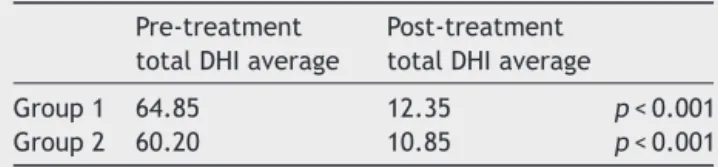
Table4 Differencebetweengroupsregardinggeneral sub-scaleDizzinessHandicapInventoryscore.
Pre-treatment totalDHIaverage
Post-treatment totalDHIaverage
Group1 64.85 12.35 p<0.001 Group2 60.20 10.85 p<0.001
DHI,DizzinessHandicapInventory.
WerepeatedtheDHmaneuverimmediatelyafterthefirst DHandrollmaneuversin68patientswithnegativeresults. Ofthesepatients, 28 (13males,15 females) hadpositive results.Nopatienthadpositive resultafterrepeatingthe rollmaneuver(Group2).Fortypatientswithnegativeresults inallmaneuversweredirectedtoMRI.Noorganicpathology wasdetectedinanyofthesepatients.
Asaresult,wediagnosed135patients(65%)inthefirstDH maneuverandfourpatients(2%)inthefirstrollmaneuver. Oftheremaining68patients,wediagnosed28inthesecond DHmaneuver.Thisratewas13%ofthegrandtotaland41% oftheremaining68patients.
Of the 207 patients, we detected BPPVin 139 in first maneuver andin 167 in second maneuvers. A comparison of the groups revealed a significant difference(p<0.001) (Table3).
An analysis of the relationship between age groups showed no significant difference between patients aged below and above 50 in terms of the results of Group 1 (p=0.748)andGroup2(p=0.378).
Areviewoftherelationshipbetweensexesdemonstrated no significant difference between males and females in terms of the results of Group 1 (p=0.084) and Group 2 (p=1.000).
AcomparisonoftotalDHIscoresbeforemaneuversand afterrecoveryrevealed astatistically significant improve-mentinpatients(p<0.001)(Table4).
Norelapsewasdetectedduringthethree-month follow-up of patients who were performed Epley and barbeque maneuvers.Nocomplicationdeveloped.
Discussion
Benign paroxysmal positionalvertigo is the most common typeofdizzinessingeneralpractice.Itisresponsibleforup to25%ofallinstancesofvertigo.BPPVisgenerallyobserved infifthandsixthdecades.Itisthemostcommoncauseof vertigoafteraheadinjury.17,18
Patients with BPPV most commonly report discrete, episodicperiodsofvertigolasting1minuteorlessandoften modificationsor limitationsoftheirgeneralmovementsto avoidprovokingthevertiginousepisodes.19Othersymptoms
of BPPV include disequilibrium, increased risk of falling and fear of falling, light headedness, nausea, decreased activity levels, anxiety, impaired vision, headache, and vomiting.11---18
Theepisodesareoften provokedbyeveryday activities andcommonlyoccurwhenrollingoverinbedortiltingthe headtolookupward(e.g.toplaceanobjectonashelfhigher thanthehead)orbendingforward(e.g.totieshoes).13,18
Detection of the involved canal in BPPV is important in terms of the treatment to be performed. When the pathology isidentified,success rates mayincreasein first maneuver with the appropriate treatment.20 While DH
is maneuver is used to detect posterior canal involve-ment, roll maneuver is used to detect horizontal canal involvement.8,9,11---13
Sinceposteriorcanalinvolvementisfrequentlyobserved or involvement of posterior or superior canals is consid-eredbasedonhistoryandexistenceofrotatorynystagmus in a case with suspected BPPV, diagnosis should be first attempted tobe made withmaneuver.The DHmaneuver isthegoldstandardfordiagnosingBPPV.11,13,18
Posterior canal BPPV has been said to account for 60%---90%ofallBPPVcases,andhorizontalcanalBPPV(also calledLateralcanalBPPV)for5%---30%ofthecases.21,22
Hori-zontalandanteriorcanalvariantsarelessprevalentbecause theyarenotinagravity-dependentposition.Inastudyby Cakiretal.,posteriorcanalBPPVwastheconfirmed diagno-sisin144(85.2%),horizontalcanalBPPVin20(11.8%)and anteriorcanalBPPVin2(1.2%)patients.22 Inourstudy,we
detectedposteriorcanalinvolvementin97.7%and horizon-tal canal involvement in 2.3% of all patients. Noanterior canalinvolvementwasidentified.
Therefore,a negativeDH maneuverdoes not necessar-ily ruleoutthediagnosis ofposteriorcanal BPPV.Because of thelowernegativepredictivevaluesof theDH maneu-ver, it has been suggested that this maneuver may need toberepeatedat aseparatevisittoconfirm thediagnosis andavoidafalse-negativeresult.Inastudy,Lopez-Escamez etal.indicatedasensitivityof82%andspecificityof71%in DHmaneuverinposteriorcanalBPPV.23HanleyandO’dowd
statedapositivepredictivevalueof83%andanegative pre-dictivevalueof52%.17Forthisreason,anegativeresultinDH
maneuverdoesnoteliminateadiagnosisofposteriorcanal BPPV.10,12,24
Factorsaffecting the diagnostic value of DHmaneuver includethespeedofmovementsduringmaneuver,thetime of day, and the angle of the occipital plane during the maneuver.24 Burstonetal.foundnoevidencethattimeof
Inourstudy,weperformedthemaneuverssequentially, resulting in positive results in 28 of 68 patients who had negativeresultsinfirstmaneuvers.Inotherwords,we mise-valuated28patientsinfirstmaneuvers.SimilarlywithViirre etal.,webelievethatthiscondition wasprobablydueto debris that was dispersed throughout the posterior canal formingaclotthatismoreeffectiveindisplacingthecupula duringthebriefperiodoflyingsupine.12
Brandt et al. indicated that inappropriately treated BPPV may continue for months.26 Therefore, it is
impor-tanttomake a correctdiagnosis. Incases withsuspected BPPV, canalith repositioning maneuver is the frequently attempted treatment. Successful results were achieved with one administration of Epley’s canalith repositioning maneuver designed to repose the endolymphatic debris fromtheposterior semicircularcanalintothevestibuleor Semont’s releasing maneuver.24,27 Epley, Wolf, and
Ruck-enstein demonstrated success rates of 97%, 93.4%, and 70% with one maneuver, respectively.4,28 CRP or
modi-fiedEpleymaneuver areusually ineffectivefor horizontal canalBPPV.8,22,29,30Variationsoftherollmaneuver(Lempert
maneuverorbarbecuerollmaneuver)arethemostwidely publishedtreatmentsforhorizontalcanalBPPV.8,22,30,31
Dizziness HandicapInventoryis a 25article scale eval-uating functional, emotional, and physical quality of life inpatients withvertigoandbalance disorder.32,33 DHIwas
reportedtobeascalewhichmayassistcliniciansinthe diag-nosisandfollow-upofpatientswithBPPV.10Improvedquality
of life was observed in patients with BPPV after treat-mentwithcanalithrepositioningmaneuvers.23Andreetal.
showedthattheBrazilianversionofDHIadministeredbefore andaftertreatmentinBPPVisbeneficialinassessing treat-ment efficiency.7 In that study, the researchers obtained
improved functional, emotional and physical parameters as well asquality of life withDHI in patients withBPPV. Similarly, in ourstudy,an analysis ofDHI resultsrevealed significant improvement after maneuvers in both patient groups.WeachievedlowerDHIscoresbyperformingtheDH maneuver a second time ina vertigo population who had negativeresultsinfirstDHmaneuver.
Themostcommon‘‘complication’’ofBPPVrepositioning treatment is canalconversion. Consideringthepopulation age in which it is usually performed, there is a surpris-ingsparsityofliteratureoncervicalspineandneurological complications.29,34 Inourstudy,patientsweresuccessfully
treatedwithoutanycomplication.
Repeated DH maneuver in misdiagnosed patients may reduce the costof the treatment bypreventing unneces-sarydiagnostictests.Patientsmaybediagnosedfasterwhile costly and inconvenient additional examinations may not berequired.Furtherstudiesareneededwhethertoseeif repeatedDH maneuver will reduce the cost of the treat-ment.
Thefactthatwedidnotuseobjectivemethodssuchas ENGorVNGmaybealimitationofthisstudy.
Conclusion
Performing the diagnostic maneuversonly one more time invertigopatientsinthefirstclinicalevaluationincreases the diagnosis success in BPPV. Canalith repositioning
maneuversareeffectiveandsatisfactory treatment meth-odsinBPPV.
Conflicts
of
interest
Theauthorsdeclarenoconflictsofinterest.
References
1.Baloh RW. Differentiating between peripheral and central causesofvertigo.JNeurolSci.2004;221:3.
2.HalmagyiGM,CremerPD.Assessmentandtreatmentof dizzi-ness.JNeurolNeurosurgPsychiatry.2000;68:129---34. 3.Bruintjes TD, Companjen J, van der Zaag-Loonen HJ, van
Benthem PP. A randomised sham-controlled trial to assess the long-termeffect ofthe Epley manoeuvre for treatment ofposterior canalbenignparoxysmal positional vertigo. Clin Otolaryngol.2014;39:39---44.
4.Schuknecht HF. Cupulolithiasis. Arch Otolaryngol. 1969;90:765---8.
5.HallSF,RubyRRF,McClureJA.Themechanicsofbenign parox-ysmalpositionalvertigo.JOtolaryngol.1979;8:151---8. 6.Furman JM,CassSP. Benignparoxysmal positionalvertigo. N
EnglJMed.1999;341:1590---6.
7.Andre APR, Moriguti JC, Moreno NS. Conduct after Epley’s manevrainelderlywithposteriorcanalBPPVintheposterior canal.BrazJOtorhinolaryngol.2010;76:300---5.
8.BhattacharyyaN, BaughRF, OrvidasL, Barss D,BronstonLJ, CassS,etal.AmericanAcademyofOtolaryngology-Headand Neck SurgeryFoundation. Clinical practiceguideline: benign paroxysmal positional vertigo. Otolaryngol Head Neck Surg. 2008;139:47---81.
9.Vanni S, Pecci R, Casati C, Moroni F, Risso M, Ottoviani M, etal.STANDING,afour-stepbedsidealgorithmfordifferential diagnosisofacutevertigointheEmergencyDepartment.Acta OtorhinolaryngolItal.2014;34:419---26.
10.NorréME.Diagnosticproblemsinpatientswithbenign paroxys-malpositionalvertigo.Laryngoscope.1994;104:1385---8. 11.KramerPD,KleimanDA.Dix-Hallpikemanevraresultsarenot
influencedbythetimeofdayofthemanevra.ActaOtolaryngol. 2005;125:145---7.
12.Viirre E, Purcell I, Baloh RW. The Dix-Hallpike manevra and the canalith repositioning manevra. Laryngoscope. 2005;115:184---7.
13.WhitneySL,MarchettiGF,MorrisLO.Usefulnessofthe dizzi-nesshandicapinventoryinthescreeningforbenignparoxysmal positionalvertigo.OtolNeurotol.2005;26:1027---33.
14.HiltonM,PinderD.TheEpleymanoeuvreforbenignparoxysmal positionalvertigo---asystematicreview.ClinOtolaryngolAllied Sci.2002;27:440---5.
15.DixR,HallpikeCS.Thepathology,symptomatologyand diagno-sisofcertaincommondisordersofthevestibularsystem.Ann OtolRhinolLaryngol.1952;6:765---78.
16.McClureJA.HorizontalcanalBPV.JOtolaryngol.1985;14:30---5. 17.HanleyK,O’DowdT.Symptomsofvertigoingeneralpractice: a prospective study of diagnosis. Br J Gen Pract. 2002;52: 809---12.
18.VonBrevernM,RadtkeA,LeziusF,FeldmannM,ZieseT,Lempert T, et al. Epidemiology of benign paroxysmal positional ver-tigo:apopulationbasedstudy.JNeurolNeurosurgPsychiatry. 2007;78:710---5.
20.CohenHS,KimballKT.Effectivenessoftreatmentsfor benign paroxysmalpositionalvertigooftheposteriorcanal.Otol Neu-rotol.2005;26:1034---40.
21.MoonSY,KimJS,KimBK,KimJI,LeeH,SonSI,etal.Clinical characteristicsofbenignparoxysmalpositionalvertigoinKorea: amulticenterstudy.JKoreanMedSci.2006;21:539---43. 22.CakirBO,ErcanI,CakirZA,CivelekS,SayinI,TurgutS.What
is thetrue incidenceofhorizontal semicircularcanalbenign paroxysmal positional vertigo? Otolaryngol Head Neck Surg. 2006;134:451---4.
23.Lopez-Escamez JA, Gamiz MJ, Fernandez-Perez A, Gomez-FinanaM.Long-termoutcomeandhealthrelatedqualityoflife inbenignparoxysmalpositionalvertigo.EurArch Otorhinolaryn-gol.2005;262:507---11.
24.NunezRA,CassSP,FurmanJM.Shortandlongtermoutcomesof canalithrepositioningforbenignparoxysmalpositionalvertigo. OtolaryngolHeadNeckSurg.2000;122:647---52.
25.Burston A, MossmanS, WeatherallM.Are therediurnal vari-ations in the results of the Dix-Hallpike manoeuvre? J Clin Neurosci.2012;19:415---7.
26.BrandtT, Daroff RB.Physicaltherapy for benign paroxysmal positionalvertigo.ArchOtolaryngol.1980;106:484---5.
27.Haynes DS, Resser JR, Labadie RF, Girasole CR, Kovach BT, SchekerLE,etal.Treatmentofbenignpositionalvertigousing thesemontmanevra: efficacyinpatientspresenting without nystagmus.Laryngoscope.2002;112:796---801.
28.RuckensteinMJ.TherapeuticefficacyoftheEpleycanalith repo-sitioningmanevra.Laryngoscope.2001;111:940---5.
29.Herdman SJ, Tusa RJ. Complications of the canalith repo-sitioning procedure. Arch Otolaryngol Head Neck Surg. 1996;122:281---6.
30.HornibrookJ.Horizontalcanalbenignpositionalvertigo.Ann OtolRhinolLaryngol.2004;113:721---5.
31.Nuti D, Agus G, Barbieri MT, Passali D. The manage-mentofhorizontal-canal paroxysmal positionalvertigo. Acta Otolaryngol.1998;118:455---60.
32.ArdicFN, Topuz B,Kara CO. Impactof multipleetiology on dizzinesshandicap.OtolNeurotol.2006;27:676---80.
33.HanssonEE,ManssonNO,HakanssonA.Balanceperformance andself-perceived handicapamongdizzy patientsinprimary healthcare.ScandJPrimHealthCare.2005;23:215---20. 34.BerginM,Bird P,WrightA. Internalcarotid arterydissection