ABSTRACT
Osteoporosis is a skeletal disorder characterized by compromised bone strength that predisposes a person to increased fracture risk. Fractures are often associated with increased morbidity, higher mortality, loss of function and even psychological consequences. Pharmacotherapeutic interventions (e.g., bisphosphonates, selective estrogen receptor modu-lators, calcitonin, and teriparatide) in women with postmenopausal osteoporosis provide substantial reduction in fracture risk over and above risk reduction with calcium and vitamin D supplementation alone. The importance of nutritional support along with an appropriate exercise regimen, avoiding smoking and excessive alcohol use is to be empha-sized along with the pharmacologic approach to osteoporosis. Despite the effectiveness of therapy with pharmacologic agents, most patients who start therapy do not remain on treatment for more than 1 year. (Arq Bras Endocrinol Metab 2006;50/4:755-763)
Keywords:Bone loss; Calcium and vitamin D supplementation; Bisphos-phonates; Selective estrogen receptor modulators; Calcitonin; Hormonal replacement; Teriparatide
RESUMO
Atualização no Tratamento da Osteoporose.
Osteoporose é uma doença esquelética caracterizada pelo compro-metimento da força óssea que predispõe ao aumento do risco de fratu-ra na pessoa. As ffratu-ratufratu-ras são sempre relacionadas com aumento da morbidade, alta mortalidade, perda funcional e mesmo conseqüências psicológicas. Intervenções farmacoterapêuticas (por exemplo, bisfos-fonatos, moduladores seletivos dos receptores de estrogênios, calcitoni-na e teriparatida) calcitoni-na mulher com osteoporose pós-menopausa resultam numa redução substancial do risco de fratura, superior ao risco obtido com suplementação de cálcio e vitamina D somente. A importância do suporte nutricional junto com série de exercícios apropriados, o evitar o tabagismo e uso excessivo de álcool devem ser enfatizados junto com a abordagem farmacológica da osteoporose. Apesar da efetividade da terapia com agentes terapêuticos, a maioria dos pacientes que ini-ciam tratamento não o mantém por mais de um ano. (Arq Bras Endocrinol Metab 2006;50/4:755-763)
Descritores:Perda óssea; Suplementacão de cálcio e vitamina D: Bisfos-fonatos; Moduladores seletivos dos receptores de estrogênio; Calcitoni-na; Terapia hormonal; Teriparatida
João Li ndolfo C. Borges
John P. Bi lezi ki an
U niversidade Católica de Brasília (JLCB), DF, Brazil; and College of Physicians and Surgeons (JPB), Colum bia U niversity, N ew Y ork, N Y U SA .
O
ST EO PO RO SI S I S A D I SEASE characterized by reduced bone strength and increased susceptibil-ity to fragilsusceptibil-ity fractures. The reduction in bone strength is a function of reduced bone mass and abnormal bone quality, including deteriorated microarchitecture, abnormally high bone turnover, damage accumulation, and mineralization deficits. O steoporosis is often asymptomatic for many years until the fracture occurs. These fractures and their consequences, which include pain, disability, deformi-ty, psychological perceptions of reduced self-worth and self-esteem, and sometimes premature death, are well recognized clinical sequelae of osteoporosis.WHEN TO MEASURE BMD: GUIDELINES FROM AACE, NAMS, NOF
The American Association of Clinical Endocrinologists (AAC E), N orth American M enopause Society (N AMS), and N ational O steoporosis Foundation (N O F) provide recommendations for the identifica-tion of patients in need of therapy (table 1) (1-3). According to AACE, all women aged ≥ 65 years, women ≥40 years with a history of fracture not caused by severe trauma, and younger peri- and post-menopausal women who have clinical risk factors for fractures should be assessed for osteoporosis (1).
N AMS recommends that BMD be measured in all women with medical causes of bone loss, in all patients ≥65 years regardless of the presence of addi-tional risk factors, and in younger postmenopausal women with ≥1 risk factor. Measurement of BMD at the total hip in women ≥60 years may be more accu-rate because spinal measurements may be unreliable in older patients due to degenerative joint disease. Spine BMD testing may be more useful in younger post-menopausal women for 2 reasons: 1) There are fewer
degenerative spine changes in younger women and 2) bone loss occurs faster in the spine than in the hip and thus allows earlier detection of osteoporosis (2).
The N O F recommends BMD testing in women aged ≥ 65 years regardless of risk factors, younger postmenopausal women with ≥ 1 risk factor, and all postmenopausal women with fracture.
WHEN TO MEASURE BMD: GUIDELINES FROM AACE, NAMS, NOF
The AACE guidelines identify 3 categories of women who may benefit from pharmacologic treatment: women with postmenopausal osteoporosis (e.g., those with low-trauma fracture or low BMD ), women with borderline-low BMD (T-scores ≤ -1.5) if risk factors are present, and women in whom nonpharmacologic therapy has been demonstrated to be inadequate for preventing bone loss or fracture (1).
The N AMS guidelines are somewhat more con-servative than the AACE guidelines in identifying patients who require treatment. Treatment is recom-mended in all postmenopausal women with prior ver-tebral or hip fracture or with total hip or spine T-scores < -2.5 and in postmenopausal women with total hip or spine T-scores from -2.0 to -2.5 and ≥1 addi-tional risk factor (1,2).
According to NO F, therapy should be initiated in women with T-scores < -2.0 by hip DXA with no risk factors, those with T-scores < -1.5 and ≥1 risk factor, and all patients with a prior vertebral or hip fracture (3).
OVERVIEW: TREATMENT OF BONE DISEASE
O steoporosis responds to treatment. In addition to lifestyle changes such as improved diet and increased exercise, there are a number of effective,
well-tolerat-Who should receive treatment?
National Osteoporosis Foundation
• Women with BMD T-scores < -2.0 by hip DXA with no risk factors
• Women with BMD T-scores < -1.5 by hip DXA with ≥1 risk factor
• Women with a prior verte-bral or hip fracture
North American Menopause Society
• Postmenopausal women with total hip or spine T-scores < -2.5
• Postmenopausal women with total hip or spine Tscores from -2.0 to -2.5 and ≥1 risk factor for fracture
• All postmenopausal women with osteoporotic vertebral fracture (no BMD needed)
American Association of Clinical Endocrinologists
• Women with low-trauma frac-ture and low BMD
• Women with BMD T-scores ≤-2.5
• Women with borderline-low BMD (T-score ≤-1.5) with risk factors
• Women in whom nonpharma-cologic measures are ineffective
Table 1.Guidelines for treatment of patients with postmenopausal osteoporosis.
ed therapies that may dramatically reduce fracture risk. In addition to reducing fracture risk, other therapeutic goals are noteworthy: stabilizing or increasing bone mass; relieving symptoms of fractures and skeletal deformity; and maximizing physical function (1). To achieve these goals, the U S Surgeon General has made several recommendations (4). These are based upon adequate calcium and vitamin D intake, physical activ-ity, and fall prevention. A second set of recommenda-tions includes identifying and treating secondary caus-es of osteoporosis. A third set of recommendations includes pharmacotherapeutic interventions to im-prove bone density and reduce the risk of fracture.
Physical activity
Physical activity is particularly important for the accru-al of optimaccru-al peak bone mass in young adulthood. It is also important in the middle and later years but for dif-ferent reasons. In the older adult, weight training, for example, does not have a major impact on BMD at all sites (5). Lower impact exercises, such as walking, have an even smaller effect to increase BMD . H owever, exercise is always recommended because it improves mobility, muscle function, balance and, consequently, is likely to reduce the risk of falling (6).
Nutrition and calcium/vitamin D supplementation
Good nutrition and a balanced diet are important for normal growth and development. Adequate calcium intake is considered to be a most important factor that helps in the attainment and maintenance of bone mass. A double-blind, placebo-controlled study enrolled 301 healthy postmenopausal women, half of whom had a usual daily calcium intake of < 400 mg/ day; the other half had an intake of 400 to 650 mg/ day (8). Subjects were randomized to 2 years of therapy with placebo or calcium 500 mg/ day, formulated as either calcium carbonate or calcium citrate malate. Although calcium supplementation did not affect bone loss from the spine in early postmenopausal women with low calcium intake, there were small gains in BMD at the femoral neck and radius and reductions in BMD loss at the spine among women who had been post-menopausal for ≥6 years and who had received calci-um citrate malate. Calcicalci-um carbonate maintained BMD at the femoral neck and radius, but had no effect on spine BMD (8). A second trial, conducted in healthy postmenopausal women who received calcium or placebo for 4 years (median intake, 640 mg/ day at 4 years), found sustained, significant reductions in the rate of loss of total body BMD in the calcium group
throughout the study period (9). Significantly fewer fractures occurred in the calcium group compared with the placebo group.
Vitamin D is essential for the intestinal absorp-tion of calcium. Serum concentraabsorp-tions of 25-hydrox-yvitamin D decline with age, necessitating supplemen-tation in the majority of older women (7). Combining vitamin D supplementation with calcium has been shown to reduce risk of fracture. In a 3-year, double-blind study conducted in men and women aged ≥65 years, 389 subjects were randomized to calcium (500 mg/ day) plus 700 international units (IU ) of vitamin D 3 (7). Compared with placebo, combined therapy significantly increased BMD at the femoral neck and spine and over the total body. These differences were significant at 1 year; at 3 years, only total body BMD was significantly improved by calcium/ vitamin D ther-apy. Furthermore, the incidence of nonvertebral frac-ture was significantly reduced among subjects who received active therapy.
The recommended dietary intake of calcium (table 2) is 1,000 mg/ day for men and women aged ≤ 50 years. For those > 50 years, the recommended intake is 1,200 mg/ day (10). The current recom-mended dietary intake for vitamin D (table 2) is 400 IU / day for men and women aged 51 to 70 years and 600 IU / day for those ≥71 years (11). Women at risk for deficiency due to inadequate sunlight exposure should receive up to 800 IU / day (2).
Fall prevention and bone protection
Pharmacologic intervention
Bisphosphonates, selective estrogen receptor modula-tors (SERMs), calcitonin, teriparatide, and estrogen reduce the risk of fracture. It is important to note that the reductions in fracture afforded by these agents are in addition to the reductions obtained with calcium and vitamin D alone. In modern clinical trials with these agents, comparisons are made with “placebo” groups in which calcium and vitamin D are provided.
Bisphosphonates
Bisphosphonates are stable analogues of pyrophos-phate that have a strong affinity for bone hydroxyap-atite. These agents inhibit bone resorption by reduc-ing the recruitment and activity of osteoclasts and increasing apoptosis (16-18). Bone formed while patients are receiving bisphosphonate treatment is his-tologically normal (19).
Alendronate
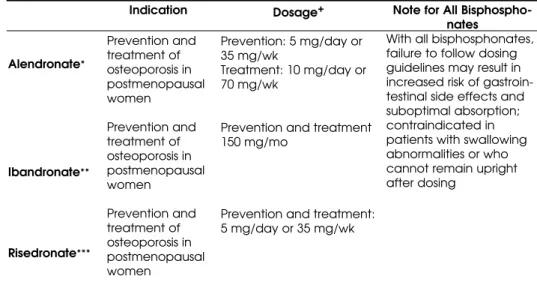
Alendronate sodium (table 3) is indicated for the pre-vention (5 mg daily and 35 mg weekly) and treatment (10 mg daily and 70 mg weekly) of osteoporosis in postmenopausal women (20). It has been shown to increase bone mass and reduce the incidence of frac-tures of the spine and hip in postmenopausal women with osteoporosis. For the prevention of osteoporosis, Alendronate should be considered in postmenopausal women who are at risk for osteoporosis and in whom maintenance of bone mass and reduction in risk of future fracture are indicated. Alendronate is also indi-cated to increase bone mass in men, and to treat glu-cocorticoid-induced osteoporosis and Paget’s disease of bone in both men and women (20).
The efficacy of Alendronate 10 mg once daily in increasing bone mass has been tested in 4 double-blind, placebo-controlled clinical studies conducted in postmenopausal women with osteoporosis aged 44 to 84 years. These studies included 2 clinical 3-year trials of identical design, one of which was performed in the U nited States and the other multinationally (20). In these studies, significant increases in BMD relative to
baseline and placebo were observed at each measure-ment site; total body BMD also increased significant-ly. Two-year extension studies showed continued increases in BMD measured at the lumbar spine and hip trochanter, plus maintenance of BMD at the femoral neck, forearm, and total body (20).
The effect of Alendronate on fracture incidence was evaluated in the randomized, double-blind, place-bo-controlled Fracture Intervention Trial (FIT) (21). Among patients with ≥1 baseline radiographic verte-bral fracture, Alendronate significantly reduced the risk of recurrent vertebral fracture, symptomatic verte-bral fracture, hip fracture, and distal radius fracture at 3 years. In a 4-year study conducted in patients with low bone mass but without a baseline radiographic vertebral fracture, Alendronate resulted in significant reductions in risk of new vertebral fracture and any symptomatic fracture (22). The risk of clinical verte-bral fracture, hip fracture, or distal radius fracture was not reduced significantly in this patient population. In a combined analysis of the U S and multinational 3-year studies (which included patients with or without baseline vertebral fracture), there was a statistically sig-nificant reduction in fractures among those who were treated with Alendronate and had ≥ 1 vertebral frac-ture (20). Among women ≥ 6 months postmeno-pausal, Alendronate prevented bone loss in the major-ity of patients at the spine, hip, and total body and reduced the rate of bone loss at the forearm by approx-imately 50%. U se of 70 mg Alendronate weekly has been associated with the same increases in bone densi-ty and reduction in bone turnover markers that are seen with daily 10 mg dosing.
Risedronate
Risedronate sodium (5 mg daily and 35 mg weekly) is indicated for the treatment and prevention of osteo-porosis in postmenopausal women (table 3) (23). For the treatment of osteoporosis, Risedronate is indicated to increase BMD and reduce the incidence of vertebral fractures and a composite of nonvertebral sis-related fractures. For the prevention of
osteoporo-Calcium
Vitamin D
Use
Supplementation recommended for most men and women aged > 50 yr
Supplementation recommended for most men and women
Dosage
Total intake 1,000 to 1,500 mg/day (adjust dosage according to dietary calcium intake)
Age 51 to 70 yr: 400 IU/dayAge ≥70 yr: 600 IU/day In patients at risk for deficiency because of inade-quate sunlight exposure: 800 IU/day
Table 2.Recommendations for calcium and vitamin D supplementation.
sis, Risedronate is indicated to maintain bone mass and reduce risk of fracture in women at risk for osteoporo-sis. Risedronate is also indicated for the prevention and treatment of glucocorticoid-induced osteoporosis and for Paget’s disease (23).
To date, 4 studies have assessed the effect of Risedronate on BMD . D aily Risedronate is associated with increases in BMD at the spine, hip, and distal radius as compared with placebo (23). An additional study demonstrated the therapeutic equivalence of Risedronate 35 mg once weekly in increasing BMD over 1 year (23).
The efficacy of once-daily Risedronate in reduc-ing fracture was examined in 2 similar randomized, placebo-controlled, double-blind studies that enrolled approximately 4,000 postmenopausal women with radiographic evidence of previous vertebral fractures (23). Treatment with once-daily Risedronate resulted in significant reductions in the risk of new and wors-ening fractures together (33% to 49% relative risk reduction after 3 years) and new fractures alone (41% to 49% relative risk reduction after 3 years). In these trials, daily Risedronate significantly reduced the inci-dence of nonvertebral osteoporosis-related fractures over 3 years (39% relative risk reduction) and reduced nonvertebral fracture incidence from 16% to 11%. When the studies were combined, there was an overall
36% reduction in relative risk. In a subanalysis of these studies, patients who received Risedronate had a sig-nificantly smaller loss of height than in those who received placebo (23).
Ibandronate
Ibandronate sodium (2.5 mg once daily or 150 mg once monthly) is indicated for the prevention and treatment of osteoporosis in postmenopausal women (table 3) (24-26). In the treatment of osteoporosis, Ibandronate is indicated to reduce the incidence of vertebral fractures. Ibandronate is also indicated to maintain bone mass and reduce the risk of fracture in postmenopausal women at risk for osteoporosis (24).
The efficacy of Ibandronate in treating post-menopausal osteoporosis was assessed in a random-ized, double-blind, placebo-controlled study conduct-ed in women with osteoporosis and 1 to 4 prevalent vertebral fractures (24). O ral daily (2.5mg) or inter-mittent Ibandronate (between-dose interval of > 2 months), delivering a similar cumulative exposure, were evaluated in 2,946 osteoporotic women with prevalent vertebral fracture. Significant reduction in incident vertebral fracture risk by 62% and 50%, respectively, was shown after 3 years. Ibandronate sig-nificantly reduced the incidence of new vertebral frac-ture by compared with placebo, but it did not have an
Alendronate*
Ibandronate**
Risedronate***
Indication
Prevention and treatment of osteoporosis in postmenopausal women
Prevention and treatment of osteoporosis in postmenopausal women
Prevention and treatment of osteoporosis in postmenopausal women
Dosage+
Prevention: 5 mg/day or 35 mg/wk
Treatment: 10 mg/day or 70 mg/wk
Prevention and treatment 150 mg/mo
Prevention and treatment: 5 mg/day or 35 mg/wk
Note for All Bisphospho-nates
With all bisphosphonates, failure to follow dosing guidelines may result in increased risk of gastroin-testinal side effects and suboptimal absorption; contraindicated in patients with swallowing abnormalities or who cannot remain upright after dosing
Table 3.Bisphosphonates.
Adapted from manufacturer prescribing information for individual drugs (20,24), and Am J Med (27).
+All bisphosphonates should be taken on an empty stomach, first thing in the morning, with 8 oz of water (no other liquid), ≥30 minutes before (Ibandronate 1 hour before) eating or drinking. Patients should remain upright (sitting or standing) during this interval.
*Fosamax; Merck & Co., Inc., Whitehouse Station, NJ.
**Boniva or Bonviva; Roche Laboratories, Inc., Nutley, NJ.
effect on nonvertebral osteoporotic fractures. Iban-dronate was shown to significantly increase BMD at the lumbar spine, total hip, femoral neck, and trochanter compared with placebo. Ibandronate 150 mg once monthly was shown not only to be compara-ble to the 2.5 mg daily dosage in terms of bone densi-ty gains and bone turnover reductions but actually to have significantly greater effects than daily Iban-dronate after 2 year of treatment (26).
Bisphosphonate dosing
The oral bioavailability of bisphosphonates is low, rang-ing from 0.6 to 3% of the rang-ingested dose. When dosrang-ing recommendations are followed, the safety profile of bis-phosphonates is generally favorable. U pper gastroin-testinal discomfort (e.g., heartburn, dyspepsia, and abdominal pain) is the most common adverse events. Esophagitis has been reported with Alendronate (20). A vague myalgic syndrome also occurs infrequently. O f particular concern are recent reports of osteonecrosis of the jaw among patients receiving bisphosphonates (28). H owever, it should be noted that the majority of these patients (87%) were receiving high-dose intravenous bisphosphonates, either Zoledronate (31%) or Pami-dronate (57%) (28) for indications other than osteo-porosis (e.g., breast cancer, multiple myeloma).
Bisphosphonates have unique and relatively complicated dosing requirements (table 3). In order to achieve optimum absorption and tolerability, these guidelines must be followed closely. Patients should take their pill with a full glass of plain water and avoid food and beverages for ≥ 30 minutes after morning dosing (60 minutes for Ibandronate). Importantly, patients must remain upright for ≥ 30 (Alendronate and Risedronate) or ≥60 (Ibandronate) minutes. Fail-ure to follow these guidelines increases the risk of esophageal side effects and reduces absorption of the medication (20,23,24).
Both Alendronate and Risedronate are available in once-weekly formulations. Ibandronate is available as a once monthly formulation. The more intermittent dosage regimens have efficacy and tolerability similar to that of the corresponding daily formulations with regard to surrogate markers, bone mineral density and bone turnover markers (28,29). O nce-weekly or once-month-ly regimens may improve compliance and persistence with medication by increasing convenience, reducing pill burden, and lowering dosing frequency (32,33).
SERMS, teriparatide, calcitonin and estrogens Raloxifene (60 mg once daily) is the only SERM cur-rently approved for the prevention and treatment of
osteoporosis (table 4). It acts as an estrogen agonist on bone and lipid metabolism and as an estrogen antago-nist in the breast and endometrium (34). Raloxifene is effective in preventing postmenopausal bone loss and reducing the risk of vertebral fractures by 30% in patients with prevalent vertebral fractures and 50% in patients without a prior vertebral fracture over 3 years (35). Reduction of nonvertebral fractures has not been demonstrated.
Raloxifene is taken daily. Its nonskeletal effects include reductions in serum lipids and, in cross sec-tional studies, a 76% reduction in the risk of breast cancer in women with osteoporosis (p< 0.001) (36). Very recent results of the STAR trial indicate that there is a significant reduction in invasive breast cancer incidence among women taking Raloxifene (see article by D iez-Perez). Raloxifene increases the risk of deep vein thrombosis and pulmonary embolism to a similar extent as hormone therapy (37).
Estrogen therapy
Although hormone therapy increases bone mass and red u ces t h e risk o f fract u re in lo wrisk po st -menopausal women, increases in the risk for breast cancer, stroke, thrombotic events, and cardiovascu-lar disease associated with the combined use of con-jugated equine estrogens and medroxyprogesterone acetate were shown in the Women’s H ealth Initia-tive Trial to outweigh its skeletal benefit (table 4) (38,39). Although the effects of estrogen on frac-ture risk in women with osteoporosis have not been evaluated, the efficacy in an osteopenic population at lower risk argue for a positive effect on a higher risk population. H ormone therapy is not approved for the treatment of osteoporosis because the fracture data required by the U S Food and D rug Adminis-tration (FD A) were never submitted.
Teriparatide
Teriparatide [PTH (1-34)] is the first 34 N-terminal amino acids of parathyroid hormone. PTH (1-34) is believed to contain in its sequence all the classical actions of the full length PTH (1-84) peptide. In a study of 1,637 postmenopausal women, a subcutaneous once-daily 20 mg dosage of the human recombinant form of teriparatide reduced the incidence of new verte-bral fractures in postmenopausal women by 65% (40). Compared with placebo, teriparatide also resulted in a 53% reduction in the risk of new nonvertebral fracture after a mean of 18 months of therapy (41).
side effects, including nausea and headache. H ypercal-cemia is usually mild and transient (41). H igh doses of teriparatide have been shown to cause osteosarcoma in rats; however, long-term clinical studies have not demonstrated an increased frequency of tumors in bone or other tissues in humans (40).
Calcitonin
Calcitonin is a peptide produced by thyroid C cells that inhibits bone resorption by inhibiting osteoclast activity (34). Salmon calcitonin is FD A-approved for the treatment of osteoporosis in women who have been postmenopausal for ≥5 years. It is usually deliv-ered as a daily intranasal spray that provides 200 IU of the drug (table 4). Although nasal calcitonin is approved for the treatment of osteoporosis, the effect of nasal calcitonin on fracture risk is not stated in its prescribing information (42). O ne trial (43) showed that the intranasal formulation reduced vertebral frac-ture by 33% to 36%, but an effect on nonvertebral or hip fracture risk was not observed (43,44). Calcitonin is generally considered safe, although some patients experience rhinitis and, rarely, epistaxis (3).
SUMMARY
O steoporosis is a major public health problem. Frac-tures may have a profound impact on quality of life.
Many patients who sustain a hip fracture do not regain full mobility, often requiring nursing home care. Post-menopausal women should therefore be screened for osteoporosis risk factors and have their BMD tested, if indicated, in accordance with current guidelines. Knowledge of a patient’s BMD helps physicians in diagnosing osteoporosis, making the decision to treat, and in monitoring treatment effects.
Primary care providers are ideally placed to assess their patients’ risk for fracture. The data sum-marized in this review confirm that a variety of effec-tive, well-tolerated treatments for osteoporosis provide fracture risk reduction over and above risk reduction with calcium and vitamin D alone. Two keys to reduc-ing fracture rate are first to target treatment to patients who are at increased risk of fracture and then to devel-op strategies to improve compliance. In this latter regard, weekly and monthly dosing of bisphospho-nates would appear to have advantages over daily dos-ing regimens.
REFERENCES
1. Hodgson SF, Watts NB, Bilezikian JP, Clarke BL, Gray TK, Harris DW, et al; AACE Osteoporosis Task Force. American Association of Clinical Endocrinologists medical guide-lines for clinical practice for the prevention and treatment of postmenopausal osteoporosis 2001 edition, with select-ed updates for 2003. Endocr Pract 2003;9:544-64.
Raloxifene
Teriparatide*
Calcitonin
Certain estrogens
Dosage
60 mg/day
20 µg/day (subcutaneous injection)
200 IU/day intranasally; alternate nostrils daily
Various doses and regimens
Notes
• May reduce risk of breast cancer; improves lipids
• Associated with increased risk of deep vein thrombosis and pulmonary embolism
• Teriparatide given to rats for most of their lifetime caused some rats to develop a form of bone cancer
• Use of the drug for > 2 years not recom-mended
• Generally safe; patients may experience rhinitis or epistaxis
• Increased risk of thrombosis and stroke
Indications
Prevention and treatment of postmenopausal osteoporosis
Treatment of osteoporosis in postmenopausal women at high risk for fracture
Treatment of postmenopausal osteoporosis in women who have been menopausal for
≥5 yr
Prevention of postmenopausal osteoporosis
Table 4.Raloxifene, teriparatide, and calcitonin.
Adapted from National Osteoporosis Foundation (3), JAMA (36), Cancer Res Treat (37), Eli Lilly, Company (40), N Engl J Med (41), Novartis Pharmaceutical Corp. (42), and Am J Med (27).
2. North American Menopause Society. Management of postmenopausal osteoporosis position statement of the North American Menopause Society. Menopause 2002;9:84-101.
3. National Osteoporosis Foundation. Physician’s Guide to Prevention and Treatment of Osteoporosis. Available at: <http://www.nof.org/_vti_bin/shtml.dll/physguide/index .htm>. Accessed in April 27, 2005.
4. US Department of Health and Human Services. Bone health and osteoporosis: A report of the Surgeon General Rockville, MD. US Dept of Health and Human Services, Pub-lic Health Service, Office of the Surgeon General, 2004. 5. Going S, Lohman T, Houtkooper L, Metcalfe L,
Flint-Wag-ner H, Blew R, et al. Effects of exercise on bone miFlint-Wag-neral density in calcium-replete postmenopausal women with and without hormone replacement therapy. Osteo-poros Int 2003;14:637-43.
6. Fiatarone MA, Marks EC, Ryan ND, Meredith CN, Lipsitz LA, Evans WJ. High-intensity strength training in nonagenari-ans effects on skeletal muscle. JAMA 1990;263:3029-34. 7. Dawson-Hughes B, Harris SS, Krall EA, Dallal GE. Effect of
calcium and vitamin D supplementation on bone densi-ty in men and women 65 years of age or older. N Engl J Med 1997;337:670-6.
8. Dawson-Hughes B, Dallal GE, Krall EA, Sadowski L, Sahy-oun N, Tannenbaum S. A controlled trial of the effect of calcium supplementation on bone density in post-menopausal women. N Engl J Med 1990;323:878-83. 9. Reid IR, Ames RW, Evans MC, Gamble GD, Sharpe SJ.
Long-term effects of calcium supplementation on bone loss and fractures in postmenopausal women a ran-domized controlled trial. Am J Med 1995;98:331-5. 10. National Institutes of Health, Office of Dietary
Supple-ments. Dietary Supplement Fact Sheet. Available at: <http://ods.od.nih.gov/factsheets/calcium.asp>. Accessed in March 1, 2006.
11. National Institutes of Health, Office of Dietary Supple-ments. Dietary Supplement Fact Sheet: Vitamin D. Avail-able at: <http://ods.od.nih.gov/factsheets/vitamind. asp>. Accessed in March 1, 2006.
12. NIH Consensus Panel on Osteoporosis Prevention, Diag-nosis, and Therapy. Osteoporosis prevention, diagDiag-nosis, and therapy. JAMA 2001;285:785-95.
13. O’Loughlin JL, Robitaille Y, Boivin JF, Suissa S. Incidence of and risk factors for falls and injurious falls among the com-munity-dwelling elderly. Am J Epidemiol 1993; 137: 342-54. 14. National Osteoporosis Foundation. Patient Info: Fall Pre-vention. Available at: <http://www.nof.org/patientinfo/ fall_prevention.htm>. Accessed in April 27, 2005. 15. Parker MJ, Gillespie LD, Gillespie WJ. Hip protectors for
preventing hip fractures in the elderly. Cochrane Data-base Syst Rev 2004;3:CD001255.
16. Adachi K, Chole RA. Inhibition of osteoclast recruitment at a local site by 1-hydroxyethylidene-1,1-bisphospho-nate (HEBP). Ann Otol Rhinol Laryngol 1990;99:738-41. 17. Carano A, Teitelbaum SL, Konsek JD, Schlesinger PH,
Blair HC. Bisphosphonates directly inhibit the bone resorption activity of isolated avian osteoclasts in vitro. J Clin Invest 1990;85:456-61.
18. Hughes DE, Wright KR, Uy HL, Sasaki A, Yoneda T, Rood-man GD, et al. Bisphosphonates promote apoptosis in murine osteoclasts in vitro and in vivo. J Bone Miner Res 1995;10:1478-87.
19. Harris ST, Watts NB, Genant HK, McKeever CD, Hangart-ner T, Keller M, et al. Effects of Risedronate treatment on vertebral and nonvertebral fractures in women with postmenopausal osteoporosis a randomized controlled trial. Vertebral Efficacy With Risedronate Therapy (VERT) Study Group. JAMA 1999;282:1344-52.
20.Fosamax (Alendronate sodium) tablet and oral solution [prescribing information]. Whitehouse Station, NJ: Merck & Co., Inc., 2004.
21. Black DM, Cummings SR, Karpf DB, Cauley JA, Thomp-son DE, Nevitt MC, et al. Fracture Intervention Trial Research Group. Randomised trial of effect of Alen-dronate on risk of fracture in women with existing verte-bral fractures. Lancet 1996;348:1535-41.
22. Cummings SR, Black DM, Thompson DE, Applegate WB, Barrett-Connor E, Musliner TA, et al. Effect of Alen-dronate on risk of fracture in women with low bone den-sity but without vertebral fractures results from the Frac-ture Intervention Trial. JAMA 1998;280:2077-82.
23.Actonel (Risedronate sodium tablets) [prescribing infor-mation]. Kansas City, MO: Aventis Pharmaceuticals Inc.,
2004.
24.Boniva (Ibandronate sodium) tablets [prescribing infor-mation]. Nutley, NJ: Roche Laboratories Inc., 2005. 25. Chesnut III CH, Skag A, Christiansen C, Recker R,
Stakkestad JA, Hoiseth A, et al. Effects of oral Iban-dronate administered daily or intermittently on fracture risk in postmenopausal osteoporosis. J Bone Miner Res 2004;19:1241-9.
26. Reginster JY, Adami S, Lakatos P, Greenwald M, Stepan JJ, Silverman SL, et al. Efficacy and tolerability of once-monthly oral ibandronate in postmenopausal osteo-porosis: 2-year results from the MOBILE study. Ann Rheum Dis 2006;65:654-61.
27. Grass M, Dawson-Hughes B. Preventing osteoporosis-related fractures: An overview. Am J Med 2006;119:S3-11. 28. Ruggiero SL, Mehrotra B, Rosenberg TJ, Engroff SL. Osteonecrosis of the jaws associated with the use of bis-phosphonates a review of 63 cases. J Oral Maxillofac Surg 2004;62:527-34.
29. Delaney MF, Hurwitz S, Shaw J, LeBoff MS. Bone density changes with once weekly Risedronate in post-menopausal women. J Clin Densitom 2003;6:45-50. 30. Emkey R. Alendronate and Risedronate for the
treat-ment of postmenopausal osteoporosis clinical profiles of the once-weekly and once-daily dosing formulations.
MedGenMed 2004;6:6. [serial online]
31. Gordon MS, Gordon MB. Response of bone mineral den-sity to once-weekly administration of Risedronate.
Endocr Pract 2002;8:202-7.
33. Cramer JA, Amonkar MM, Hebborn A, Suppapanya N. Does dosing regimen impact persistence with bisphos-phonate therapy among postmenopausal osteoporotic women? J Bone Miner Res 2004;19:S448. [abstract M434] 34. Delmas PD. Treatment of postmenopausal osteoporosis.
Lancet 2002;359:2018-26.
35. Ettinger B, Black DM, Mitlak BH, Knickerbocker RK, Nick-elsen T, Genant HK, et al. Multiple Outcomes of Ralox-ifene Evaluation (MORE) investigators. Reduction of ver-tebral fracture risk in postmenopausal women with osteoporosis treated with raloxifene results from a 3-year randomized clinical trial. JAMA 1999;282:637-45. 36. Cummings SR, Eckert S, Krueger KA, Grady D, Powles TJ,
Cauley JA, et al. The effect of raloxifene on risk of breast cancer in postmenopausal women results from the MORE [Multiple Outcomes of Raloxifene Evaluation] ran-domized trial. JAMA 1999;281:2189-97.
37. Cauley JA, Norton L, Lippman ME, Eckert S, Krueger KA, Purdie DW, et al. Continued breast cancer risk reduction in postmenopausal women treated with raloxifene 4-year results from the MORE [Multiple Outcomes of Ralox-ifene Evaluation] trial. Breast Cancer Res Treat 2001;65:125-34.
38. Rossouw JE, Anderson GL, Prentice RL, LaCroix AZ, Kooperberg C, Stefanick ML, et al. Writing Group for the Women’s Health Initiative Investigators. Risks and bene-fits of estrogen plus progestin in healthy post-menopausal women principal results from the Women’s Health Initiative randomized controlled trial. JAMA 2002;288:321-33.
39. Cauley JA, Robbins J, Chen Z, Cummings SR, Jackson RD, LaCroix AZ, et al. Women’s Health Initiative Investi-gators. Effects of estrogen plus progestin on risk of frac-ture and bone mineral density the Women’s Health Ini-tiative randomized trial. JAMA 2003;290:1729-38.
40.Forteo (teriparatide rDNA origin) injection 750 µg/3 mL [prescribing information]. Indianapolis, IN: Eli Lilly and Company; 2004.
41. Neer RM, Arnaud CD, Zanchetta JR, Prince R, Gaich GA, Reginster JY, et al. Effect of parathyroid hormone (1-34) on fractures and bone mineral density in post-menopausal women with osteoporosis. N Engl J Med 2001;344:1434-41.
42.Miacalcin (calcitonin-salmon) nasal spray [prescribing information]. East Hanover, NJ: Novartis Pharmaceuti-cals Corp.; 2003.
43. Chesnut CH 3rd, Silverman S, Andriano K, Genant H, Gimona A, Harris S, et al. PROOF Study Group. A ran-domized trial of nasal spray salmon calcitonin in post-menopausal women with established osteoporosis the Prevent Recurrence of Osteoporotic Fractures Study.
Am J Med 2000;109:267-76.
44. Cranney A, Tugwell P, Zytaruk N, Robinson V, Weaver B, Shea B, et al. Osteoporosis Methodology Group and the Osteoporosis Research Advisory Group. Meta-analyses of therapies for postmenopausal osteoporosis. VI. Meta-analysis of calcitonin for the treatment of post-menopausal osteoporosis. Endocr Rev 2002;23:540-51.
Address for correspondence:
João Lindolfo C. Borges
Clínica de Endocrinologia e Metabologia Centro Clínico do Lago, sala 305
SHIS QI 09 Brasília, DF