Safety criteria to start early mobilization in
intensive care units. Systematic review
INTRODUCTION
he survival rates of the critically ill have increased in the past years;
consequently, the number of morbidities such patients develop arising from
long stays at the intensive care unit (ICU) has also increased.
(1-3)Within this
context, early mobilization (EM) performed in a safe manner might reduce
such deleterious efects.
Information on safety criteria for EM in adult ICUs were initially
published by Stiller and Philips,
(4)followed by Stiller.
(5)Both studies were
Thais Martins Albanaz da Conceição1, Ana Inês Gonzáles2, Fernanda Cabral Xavier Sarmento de Figueiredo1, Danielle Soares Rocha Vieira2, Daiana Cristine Bündchen2
1. Hospital Universitário Polydoro Ernani de São Thiago), Universidade Federal de Santa Catarina - Florianópolis (SC), Brazil.
2. Department of Physical Therapy, Universidade Federal de Santa Catarina - Araranguá (SC), Brazil.
Mobilization of critically ill patients
admitted to intensive care units should
be performed based on safety criteria.
he aim of the present review was to
establish which safety criteria are most
often used to start early mobilization for
patients under mechanical ventilation
admitted to intensive care units. Articles
were searched in the PubMed, PEDro,
LILACS, Cochrane and CINAHL
databases; randomized and
quasi-randomized clinical trials, cohort
studies, comparative studies with or
without simultaneous controls, case
series with 10 or more consecutive cases
and descriptive studies were included.
he same was performed regarding
prospective, retrospective or
cross-sectional studies where safety criteria
to start early mobilization should be
described in the Methods section.
Two reviewers independently selected
potentially eligible studies according
to the established inclusion criteria,
extracted data and assessed the studies’
Conflict of interest: None.Submitted on January 14 2017 Accepted on April 24 2017
Corresponding author: Thais Martins Albanaz da Conceição Hospital Universitário Polydoro Ernani de São Thiago
Universidade Federal de Santa Catarina - Campus Universitário
Rua Professora Maria Flora Pausewang, s/nº - Trindade
Caixa Postal: 5.199
Zip code: 88036-800 - Florianópolis (SC), Brazil E-mail: [email protected]
Responsible editor: Alexandre Biasi Cavalcanti
Critérios de segurança para iniciar a mobilização precoce em
unidades de terapia intensiva. Revisão sistemática
ABSTRACT
Keywords:
Hospitalization;
Rehabilitation; Respiration, artiicial;
Early ambulation; Critical care; Patient
safety
methodological quality. Narrative
description was employed in data
analysis to summarize the characteristics
and results of the included studies;
safety criteria were categorized as
follows: cardiovascular, respiratory,
neurological, orthopedic and other.
A total of 37 articles were considered
eligible. Cardiovascular safety criteria
exhibited the largest number of
variables. However, respiratory safety
criteria exhibited higher concordance
among studies. here was greater
divergence among the authors regarding
neurological criteria. here is a need to
reinforce the recognition of the safety
criteria used to start early mobilization
for critically ill patients; the parameters
and variables found might contribute to
inclusion into service routines so as to
start, make progress and guide clinical
practice.
based on physiological principles and the authors’ clinical
experience. Gosselink et al.,
(1)together with the European
Respiratory Society & European Society of Intensive
Care Medicine,
recommend that patient mobilization
ought to be performed under adequate monitoring and
with due safety. In turn, Hodgson et al.
(6)cited evidence
provided by clinical studies and participants’ consensus.
Finally, Sommers et al.
(7)formulated evidence-based
recommendations for efective and safe EM in the ICU
setting.
Rehabilitation of ICU patients depends on
various factors, such as previous physical strength and
functioning, level of cooperation, devices connected and
the prevalent mobilization culture in each individual
service.
(8-10)Some studies have shown that EM is safe
and feasible;
(11-13)however, there is not yet a consensus
on its outcomes. Some studies
(3,6,13-17)have described
potential beneits, such as reduction of the duration of
mechanical ventilation (MV), length of stay in the ICU
and the hospital, sedation and duration of delirium and
hospital costs, in addition to improvement of the clinical
and functional outcomes at hospital discharge. However,
these results disagree with those from randomized
controlled studies
(18-20)showing that early and intensive
mobilization does not change patient functioning and
quality of life either at discharge or 6 months after
hospital discharge.
For outcomes to be favorable, knowledge of the
relationship among potential beneits, eligibility for
EM and its related adverse events are relevant.
(6,21)Even
though the rate of adverse events is equal to or lower than
4%,
(14,22-25)patients need to be thoroughly assessed based
on safety criteria before starting EM.
(6)Yet, the safety
criteria used vary among diferent types of ICUs. As a
function of this lack of standardization of safety criteria,
there is no consensus on which should be used to start
EM so as to minimize risk. To provide increasingly more
consistent grounds for clinical practice, the aim of the
present study was to establish, by means of a systematic
review, the most widely used safety criteria to start EM for
patients under MV and admitted to the ICU.
METHODS
he present systematic review followed the
recommendations formulated in Preferred Reporting Items
for Systematic Reviews and Meta-Analyses
(PRISMA).
(26)Inclusion criteria
he following types of studies were included:
randomized clinical trials, prospective and retrospective
studies, case series with at least 10 consecutive patients
and studies with independent or parallel group design.
Determination of design followed the classiication
formulated by the Cochrane Collaboration.
(27)Randomized clinical trial protocols and care delivery
protocols were also included. Patients had to be over 18
years old, admitted to the ICU and under MV for more
than 24 hours. Articles in Portuguese, English, Spanish
and French were included. Articles had to contain, in the
Methods section, a description of the safety criteria used
to start EM.
Exclusion criteria
Articles in which safety criteria to start EM in patients
admitted to the ICU and under MV were not described
were excluded. In addition, review studies, monographs/
dissertations/theses, annals, chapters from books and
experts’ points of view or opinions were excluded.
Search strategy
he search was independently performed by two
investigators in the PubMed, Physiotherapy Evidence
Database (PEDro), Literatura Latino-Americana e do
Caribe em Ciências da Saúde (LILACS; in English: Latin
American and Caribbean Health Sciences Literature),
Cochrane and Cumulative Index to Nursing and Allied
Health Literature (CINAHL) electronic databases from
the time the databases were launched to May 2015.
As per the review aims, the search followed PRISMA
recommendations
(26)and considered the concepts of
target patient and intervention of the PICO strategy,
i.e., concepts control and outcome were not included in
the search strategy. Outcomes were not deined as search
criteria.
from the authors. To complement the electronic search,
a manual search was performed based on the references
cited in the included articles.
Study selection
Two investigators independently conducted a search for
potentially eligible studies. Articles were irst categorized
according to title. Next, their abstracts were analyzed, and
only potentially eligible articles were selected. Cases of
disagreement were solved by a third examiner, who made
the inal decision on the eligibility of such articles.
Methodological quality
Randomized clinical trials were assessed according to
the PEDro scale,
(28)which consists of 11 items to evaluate
a study’s methodological quality (internal validity and
statistical information). With the exception of the irst,
each item with an airmative answer was attributed a
score of 1 in the inal overall classiication (score: 0 to 10).
Studies with scores of 7 to 10 were considered as high
quality, 5 to 6 as intermediate quality and 0 to 4 as low
quality
.
(29)It should be noted that the PEDro score was
not used as an inclusion or exclusion criterion but as an
indicator of the quality of the scientiic evidence provided
in the included articles.
Data extraction and variable selection
Data relative to safety criteria were independently
extracted from each eligible study by two examiners and
recorded on a standardized data extraction form. he safety
criteria were categorized as cardiovascular, respiratory,
neurological, orthopedic and other; the corresponding
variables and parameters were entered in a speciic form.
Regarding the variables relative to each safety criteria, only
the ones cited in at least three articles were considered.
RESULTS
A total of 1,943 articles were located, and 1,462 were
selected for triage. A total of 1,223 articles were excluded
based on their titles and 96 additional studies based on
their abstracts. A total of 143 articles were selected for
full-text analysis. Finally, 37 studies were included for
systematic review, as they met the inclusion and exclusion
criteria (Figure 1).
he sample size varied from 11 to 2,176 participants,
for a total of 6,641 patients from both genders, with
an age range of 45.2 to 75.2 years old, and admitted to
clinical, surgical or general ICU.
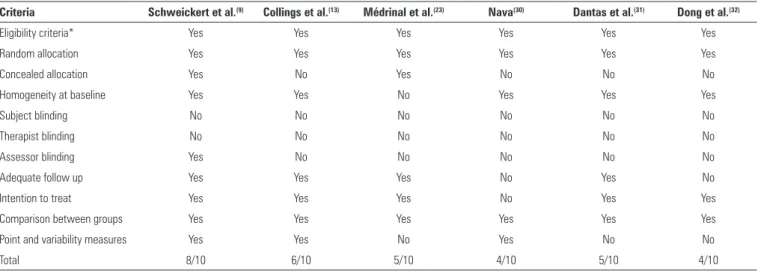
Table 1 describes the methodological quality of the
randomized clinical trials.
(9,13,23,30-32)hree out of six studies
were registered in
PEDro,
(9,13,30)and the corresponding
score was available in the database. he other three
studies
(23,31,32)were scored based on full-text analysis
and examiner consensus. Scores varied from 4 to 8.
No study was scored on the items related to patient
and therapist blinding; in one single study, assessors
were blinded
.
(9)Two studies exhibited the minimum
score, 4,
(30,32)and only Schweickert et al.’s
(9)study had a
score of 8.
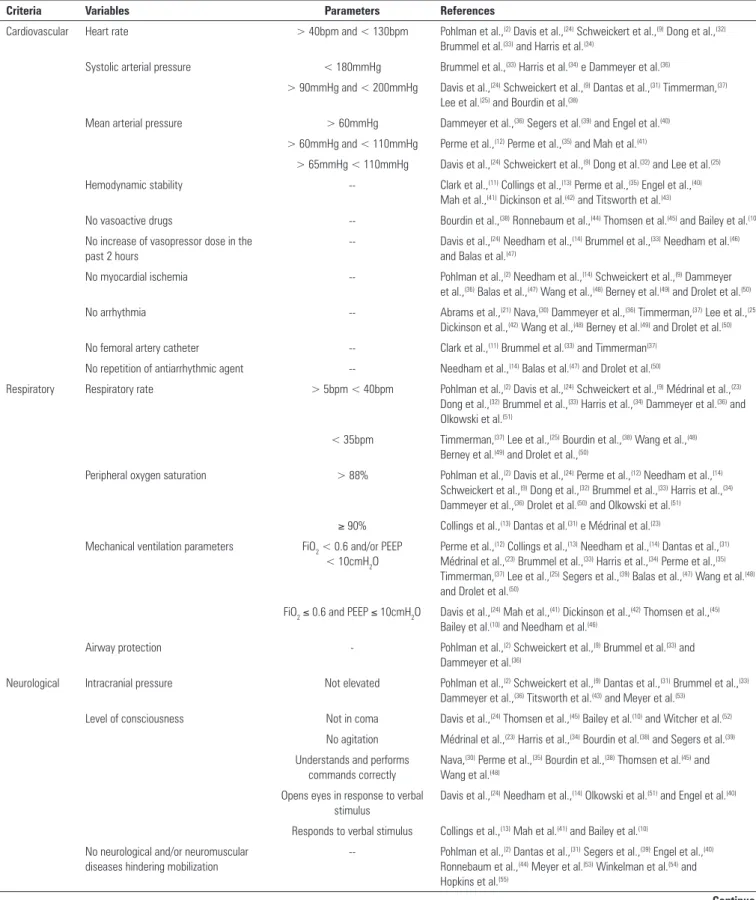
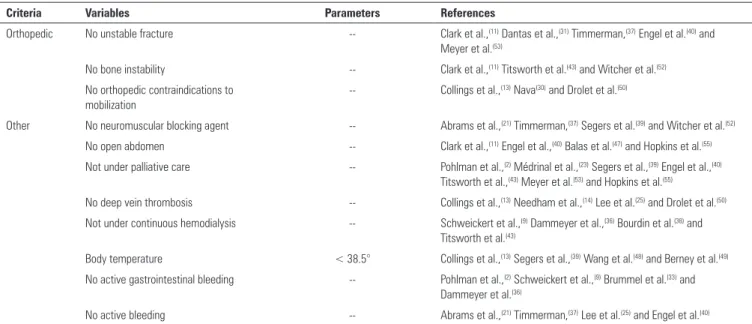
he safety criteria to start EM are described in
table 2. As is shown, the cardiovascular criteria exhibited
the largest number of variables (9 total), among which
absence of myocardial ischemia, absence of arrhythmia
and hemodynamic stability stood out. None of the selected
studies reported parameters for tolerated dose of vasoactive
drugs or drug combination to attain hemodynamic
stability; therefore, these variables could not be quantiied.
Relative to the respiratory criteria, variables related
with MV - fraction of inspired oxygen (FiO
2) < 0.6 and/
or positive end-expiratory pressure (PEEP) < 10cmH
2O
- were the ones with highest concordance, being cited by
14 authors.
As concerns the neurological criteria, the patients’ level
of consciousness was subjectively assessed. herefore, this
variable exhibited greater variation.
Figure 1 - Flowchart of the search process
Table 1 - Methodological classification of articles according to the PEDro scale
Criteria Schweickert et al.(9) Collings et al.(13) Médrinal et al.(23) Nava(30) Dantas et al.(31) Dong et al.(32)
Eligibility criteria* Yes Yes Yes Yes Yes Yes
Random allocation Yes Yes Yes Yes Yes Yes
Concealed allocation Yes No Yes No No No
Homogeneity at baseline Yes Yes No Yes Yes Yes
Subject blinding No No No No No No
Therapist blinding No No No No No No
Assessor blinding Yes No No No No No
Adequate follow up Yes Yes Yes No Yes No
Intention to treat Yes Yes Yes No Yes Yes
Comparison between groups Yes Yes Yes Yes Yes Yes
Point and variability measures Yes Yes No Yes No No
Total 8/10 6/10 5/10 4/10 5/10 4/10
* Not included in the final score.
DISCUSSION
he present study stands out for having systematically
assessed the safety criteria most widely employed to start
EM for critically ill patients under MV and admitted to
the ICU according to their individual clinical condition
and the invasive devices connected to them.
According to the literature, prolonged immobilization
of critically ill patients has negative repercussions on the
musculoskeletal, cardiovascular and respiratory systems,
the skin and cognition.
(41,56)To prevent and minimize
such efects, immediate physical therapy intervention
is necessary, provided the patient exhibits the clinical
stability needed to meet the vascular and oxygen demands
posed by this type of intervention.
(7,57)Cardiovascular criteria were the most often cited; this
inding might be accounted for by the fact that upon
being stimulated, bedridden patients with a long stay
at the hospital require additional cardiovascular work
to maintain their blood pressure, cardiac output and
adequate and constant cerebral blood low.
(58)On these
Table 2 - Located safety criteria with corresponding categories, variables, parameters and references
Criteria Variables Parameters References
Cardiovascular Heart rate > 40bpm and < 130bpm Pohlman et al.,(2) Davis et al.,(24) Schweickert et al.,(9) Dong et al.,(32) Brummel et al.(33) and Harris et al.(34)
Systolic arterial pressure < 180mmHg Brummel et al.,(33) Harris et al.(34) e Dammeyer et al.(36)
> 90mmHg and < 200mmHg Davis et al.,(24) Schweickert et al.,(9) Dantas et al.,(31) Timmerman,(37) Lee et al.(25) and Bourdin et al.(38)
Mean arterial pressure > 60mmHg Dammeyer et al.,(36) Segers et al.(39) and Engel et al.(40)
> 60mmHg and < 110mmHg Perme et al.,(12) Perme et al.,(35) and Mah et al.(41)
> 65mmHg < 110mmHg Davis et al.,(24) Schweickert et al.,(9) Dong et al.(32) and Lee et al.(25) Hemodynamic stability -- Clark et al.,(11) Collings et al.,(13) Perme et al.,(35) Engel et al.,(40)
Mah et al.,(41) Dickinson et al.(42) and Titsworth et al.(43)
No vasoactive drugs -- Bourdin et al.,(38) Ronnebaum et al.,(44) Thomsen et al.(45) and Bailey et al.(10)
No increase of vasopressor dose in the past 2 hours
-- Davis et al.,(24) Needham et al.,(14) Brummel et al.,(33) Needham et al.(46) and Balas et al.(47)
No myocardial ischemia -- Pohlman et al.,(2) Needham et al.,(14) Schweickert et al.,(9) Dammeyer et al.,(36) Balas et al.,(47) Wang et al.,(48) Berney et al.(49) and Drolet et al.(50)
No arrhythmia -- Abrams et al.,(21) Nava,(30) Dammeyer et al.,(36) Timmerman,(37) Lee et al.,(25) Dickinson et al.,(42) Wang et al.,(48) Berney et al.(49) and Drolet et al.(50)
No femoral artery catheter -- Clark et al.,(11) Brummel et al.(33) and Timmerman(37) No repetition of antiarrhythmic agent -- Needham et al.,(14) Balas et al.(47) and Drolet et al.(50)
Respiratory Respiratory rate > 5bpm < 40bpm Pohlman et al.,(2) Davis et al.,(24) Schweickert et al.,(9) Médrinal et al.,(23) Dong et al.,(32) Brummel et al.,(33) Harris et al.,(34) Dammeyer et al.(36) and Olkowski et al.(51)
< 35bpm Timmerman,(37) Lee et al.,(25) Bourdin et al.,(38) Wang et al.,(48) Berney et al.(49) and Drolet et al.,(50)
Peripheral oxygen saturation > 88% Pohlman et al.,(2) Davis et al.,(24) Perme et al.,(12) Needham et al.,(14) Schweickert et al.,(9) Dong et al.,(32) Brummel et al.,(33) Harris et al.,(34) Dammeyer et al.,(36) Drolet et al.(50) and Olkowski et al.(51)
≥ 90% Collings et al.,(13) Dantas et al.(31) e Médrinal et al.(23) Mechanical ventilation parameters FiO2 < 0.6 and/or PEEP
< 10cmH2O
Perme et al.,(12) Collings et al.,(13) Needham et al.,(14) Dantas et al.,(31) Médrinal et al.,(23) Brummel et al.,(33) Harris et al.,(34) Perme et al.,(35) Timmerman,(37) Lee et al.,(25) Segers et al.,(39) Balas et al.,(47) Wang et al.(48) and Drolet et al.(50)
FiO2≤ 0.6 and PEEP ≤ 10cmH2O Davis et al.,(24) Mah et al.,(41) Dickinson et al.,(42) Thomsen et al.,(45) Bailey et al.(10) and Needham et al.(46)
Airway protection - Pohlman et al.,(2) Schweickert et al.,(9) Brummel et al.(33) and Dammeyer et al.(36)
Neurological Intracranial pressure Not elevated Pohlman et al.,(2) Schweickert et al.,(9) Dantas et al.,(31) Brummel et al.,(33) Dammeyer et al.,(36) Titsworth et al.(43) and Meyer et al.(53)
Level of consciousness Not in coma Davis et al.,(24) Thomsen et al.,(45) Bailey et al.(10) and Witcher et al.(52)
No agitation Médrinal et al.,(23) Harris et al.,(34) Bourdin et al.(38) and Segers et al.(39) Understands and performs
commands correctly
Nava,(30) Perme et al.,(35) Bourdin et al.,(38) Thomsen et al.(45) and Wang et al.(48)
Opens eyes in response to verbal stimulus
Davis et al.,(24) Needham et al.,(14) Olkowski et al.(51) and Engel et al.(40)
Responds to verbal stimulus Collings et al.,(13) Mah et al.(41) and Bailey et al.(10) No neurological and/or neuromuscular
diseases hindering mobilization
-- Pohlman et al.,(2) Dantas et al.,(31) Segers et al.,(39) Engel et al.,(40) Ronnebaum et al.,(44) Meyer et al.(53) Winkelman et al.(54) and Hopkins et al.(55)
Criteria Variables Parameters References
Orthopedic No unstable fracture -- Clark et al.,(11) Dantas et al.,(31) Timmerman,(37) Engel et al.(40) and Meyer et al.(53)
No bone instability -- Clark et al.,(11) Titsworth et al.(43) and Witcher et al.(52)
No orthopedic contraindications to mobilization
-- Collings et al.,(13) Nava(30) and Drolet et al.(50)
Other No neuromuscular blocking agent -- Abrams et al.,(21) Timmerman,(37) Segers et al.(39) and Witcher et al.(52)
No open abdomen -- Clark et al.,(11) Engel et al.,(40) Balas et al.(47) and Hopkins et al.(55)
Not under palliative care -- Pohlman et al.,(2) Médrinal et al.,(23) Segers et al.,(39) Engel et al.,(40) Titsworth et al.,(43) Meyer et al.(53) and Hopkins et al.(55)
No deep vein thrombosis -- Collings et al.,(13) Needham et al.,(14) Lee et al.(25) and Drolet et al.(50)
Not under continuous hemodialysis -- Schweickert et al.,(9) Dammeyer et al.,(36) Bourdin et al.(38) and Titsworth et al.(43)
Body temperature < 38.5° Collings et al.,(13) Segers et al.,(39) Wang et al.(48) and Berney et al.(49) No active gastrointestinal bleeding -- Pohlman et al.,(2) Schweickert et al.,(9) Brummel et al.(33) and
Dammeyer et al.(36)
No active bleeding -- Abrams et al.,(21) Timmerman,(37) Lee et al.(25) and Engel et al.(40)
FiO2 - fraction of inspired oxygen; PEEP - positive end-expiration pressure
... continuation
Continue... Table 3 - Design of selected studies, intensive care unit type, mobilization protocol and description of adverse events
Study type Reference Country N ICU type Mobilization protocol Adverse events
Randomized clinical trial
Collings et al.(13) United Kingdom 11 General Sitting on the edge of the bed and passive chair
transfer
Two AEs: desaturation due to ventilator circuit condensation (1) and HR elevation above 80% of the upper HR limit before mobilization (1)
Randomized clinical trial
Schweickert et al.(9) United States 104 Clinical Passive, active-assisted and active mobilization,
sitting on the edge of the bed, activities of daily living training, transfer, standing, walking
Two AEs: desaturation below 80% and loss of radial artery catheter
Randomized clinical trial
Dong et al.(32) China 60 General Active mobilization, sitting on the edge of the
bed, transfer, standing and walking
One AE: postural hypotension
Randomized clinical trial
Médrinal et al.(23) France 12 General Passive mobilization and sitting on the edge of
the bed
AEs in less than 3% of interventions
Randomized clinical trial
Dantas et al.(31) Brazil 59 General Positioning, stretching, passive mobilization,
active-assisted exercise, sitting on the edge of the bed, resistance training, ergometric bicycle, transfer, balance training and walking
Not reported
Randomized clinical trial
Nava(30) Italy 80 Respiratory Passive and active mobilization, sitting on the
edge of the bed, transfer, respiratory muscle training specific exercises, ergometric bicycle and walking
Not reported
Prospective study Balas et al.(47) United States 296 General No protocol; authors recorded whether patients
performed daily physical therapy and were mobilized out of bed
Seven cases of unplanned extubation (p = 0.98)
Partly prospective, partly retrospective
study
Needham et al.(14) United States 57 Clinical Transfer, sitting on the edge of the bed, standing
and walking
Four AEs, not characterized
Retrospective study Dickinson et al.(42) United States 1,112 Surgical Passive and active mobilization, positioning,
sitting on the edge of the bed, standing, chair transfer and walking with or without support
Not reported
Retrospective study Ronnebaum et al.(44) United States 28 General Passive and active mobilization in bed,
stretching, transfer, gait training
Study type Reference Country N ICU type Mobilization protocol Adverse events
Retrospective study Abrams et al.(21) United States 35 Clinical Passive and active-assisted mobilization in
bed, positioning, sitting on the edge of the bed, transfer, standing, marching in place and ambulation
Not reported
Retrospective study Witcher et al.(52) United States 68 Neurological Passive and active mobilization, sitting on the
edge of the bed, standing and walking
Not reported
Retrospective study Clark et al.(11) United States 2,176 Trauma and
burns
Passive mobilization, sitting on the edge of the bed, active exercise, transfer, walking
None
Retrospective study Olkowski et al.(51) United States 25 Neurosurgical Positioning, education program, functional
training and therapeutic exercise
AEs in 5.9% of sessions; MAP < 70 mmHg (9 patients), MAP > 120 mmHg (7 patients) and HR > 130 bpm (1 patient)
Retrospective study Lee et al.(25) Korea 99 Clinical Neuromuscular electrical stimulation, passive
and active mobilization, mobilization in bed, transfer, standing, therapeutic exercise and walking
26 potential AEs (5%; 95%CI 3.4-7.3%) in 17 patients (17.2%; 95%CI 10.6-26.4%). ECMO use was independently associated with AEs, OR 5.8 (95%CI 2.2-15.6, p < .001)
Retrospective study Engel et al.(40) United States 294 General Mobilization, standing, chair transfer, gait training Accidental device loss. Not quantified
Case series Winkelman et al.(54) United States 19 General No specific protocol. Passive mobilization, sitting
out of bed and walking were considered as therapeutic activity
Not reported
Case series Segers et al.(39) Belgium 50 General Neuromuscular electrical stimulation None
Case series Pohlman et al.(2) United States 49 General Passive, active-assisted and active mobilization,
sitting on the edge of the bed, balance training, standing, marching in place and ambulation
AEs in 16% of sessions (80/498). Desaturation (6%), HR elevation over 20% (4.2%), asynchrony/tachypnea (4%), agitation/ discomfort (2%) and device loss (0.8%)
Case series Drolet et al.(50) United States 426 General Education program, walking with or without aids Not reported
Case series Davis et al.(24) United States 230 General Education program, positioning in bed,
mobilization in bed training, transfer and therapeutic exercise
1 AE/171 sessions: postural hypotension
Case series Thomsen et al.(45) United States 104 Respiratory Sitting on the edge of the bed, chair transfer,
functional activities, walking with walker and/or with or without additional aids
Not reported
Case series Hopkins et al.(55) United States 72 Respiratory Passive and active mobilization, sitting on the
edge of the bed, transfer and walking
Not reported
Case series Harris et al.(34) United States 21 Cardiological Passive and active mobilization, sitting on the
edge of the bed, transfer and walking
Not reported
Case series Perme et al.(35) United States 77 Cardiovascular Sitting on the edge of the bed, chair transfer
and walking
None
Case series Titsworth et al.(43) United States 170 Clinical Positioning, passive and active mobilization,
sitting on the edge of the bed, transfer, standing and walking
None
Case series Bourdin et al.(38) France 20 Clinical Mobilization in and out of bed, transfer with and
without support, walking
AEs in 3% of sessions (13/424): desaturation (< 88%) for more than 1 minute (4 patients), unplanned extubation (1 patient), postural hypotension (1 patient) and muscle tone drop (7 patients)
Case series Bailey et al.(10) United States 103 Respiratory Sitting on the edge of the bed and out of bed,
walking
AEs in less than 1% of activities (14/1,449); most frequent: falls without injury, hypotension, desaturation, displacement of gastric feeding tube and one episode of hypertension
Case series Berney et al.(49) Australia 74 General Mobilization in bed, marching in place,
sitting-rising up training and walking
None
Independent group design
Wang et al.(48) Australia 33 General Passive mobilization, mobilization in bed,
standing (with and without support) and marching in place
None
... continuation
ICU - intensive care unit; AE - adverse event; HR - heart rate; PAM - mean arterial pressure; CI - confidence interval; ECMO - extracorporeal membrane oxygenation; OR - odds ratio.
Study type Reference Country N ICU type Mobilization protocol Adverse events
Independent group design
Mah et al.(41) United States 59 Surgical Passive and active mobilization, sitting on the
edge of the bed, standing, chair transfer and walking
None
Randomized clinical trial protocol
Brummel et al.(33) United States - - Passive mobilization, sitting on the edge of the
bed, standing, walking and activities of daily living training
Not reported
Randomized clinical trial protocol
Meyer et al.(53) United States 200 Surgical Positioning, passive and active mobilization,
sitting on the edge of the bed, transfer, standing and walking
Not reported
Care delivery protocol Timmerman(37) United States - - Passive mobilization, sitting on the edge of the
bed, standing, chair transfer and walking
Not reported
Care delivery protocol Perme et al.(12) United States - - Education, positioning, mobilization in the bed,
transfer, walking and therapeutic exercise
Not reported
Care delivery protocol Dammeyer et al.(36) United States 388 Clinical Activities in bed, sitting on the edge of the bed,
marching in place and ambulation
Not reported
Care delivery protocol Needham et al.(46) United States 30 Clinical Passive and active mobilization, sitting on the
edge of the bed, transfer and walking
AEs in 1% of sessions, not specified
... continuation
high doses of vasopressors are not it to start or advance
in the therapy.
(21)he same was the case for the results
corresponding to hemodynamic stability, mentioned in
seven studies, and the lack of use of vasoactive drugs, cited
by four authors.
Speciically concerning devices inserted on the
femoral region, the observational study by Perme et al.
(35)demonstrated the safety of mobilization based on a large
number of sessions (210) and performed activities (630).
Presence of a femoral catheter is no reason to restrict
this practice, as it is no longer a contraindication for
mobilization of the critically ill.
(35)Stiller
(5)observed that
mobilization might be limited by the devices connected
to patients. However, there is disagreement regarding
patients subjected to hemodialysis; ive among the studies
included in the present review contraindicate mobilization
in such cases. In contrast, Hodgson et al.
(6)and Wang
et al.
(48)assert that mobilization of patients in the ICU
setting is safe and feasible. Finally, Wang et al.
(48)conclude
that intervention does not cause displacement, hematoma
or bleeding, while successive interruptions might interfere
with the outcomes of therapy.
he respiratory criteria exhibited higher concordance
among the included studies. In this regard, we emphasize
peripheral oxygen saturation (SpO
2), mentioned in 14
studies, 11 of which consider SpO
2> 88% safe to start
mobilization. According to Stiller and Philips
(4)and Amidei
et al.,
(59)SpO
2
is a safe and individualized monitoring
parameter to incorporate into clinical practice. his
inding is similar to the ones reported by Stiller et al.
(5)and Gosselink et al.,
(1)according to whom SpO
2
> 90%
with 4% oscillation is indicative of satisfactory respiratory
reserve to tolerate mobilization.
As a function of the need for MV in critically ill
patients, they are beneited by advances in intensive care
and new approaches to MV.
(39)he feasibility and safety
of mobilization of patients with artiicial airways have
already been demonstrated, provided the latter are secured
and in their proper place.
(12)Twenty studies mentioned
ventilation parameters; 14 of them cited FiO
2< 0.6 and/
or PEEP < 10 cmH
2O. FiO
2< 0.6 was also selected by
Gosselink et al.
(60)as a criterion to start their mobilization
protocol. Similar parameters are recommended by
Hodgdon et al.
(6)and Sommers et al.,
(7)who consider FiO
2
≤ 0.6 and PEEP ≤ 10 cmH
2O to be safe for mobilization
of the critically ill.
Among the neurological criteria, assessments of
intracranial pressure (ICP) and level of consciousness
stood out. Witcher et al.
(52)considered that patients with
elevated IPC and in whom deep sedation is combined
with neuromuscular blockers are not candidates for
participation in EM protocols and daily sedation
interruption. Other reasons hindering EM are paralysis
or paresis, cognitive dysfunction and abnormal brain
perfusion, in addition to the use of devices for continuous
brain monitoring.
(17,52)or maintenance of the minimally required levels are
recommended to enable a more trustworthy assessment,
in addition to reducing the severity of complications
associated with stays in the ICU.
(9,46)he present systematic
review found that the patients’ level of consciousness
was not assessed in an objective manner, with the help
of scales, but subjectively, resulting in a wide variation
of parameters. his inding might be explained by the
various aims and methods of the studies; some of them
required patients to be awake and cooperate with the
treatment suggested, while in others, patients were under
deep sedation.
Adverse events are usually associated with respiratory
or cardiovascular complications and with the devices
connected to patients.
(25)Collings et al.
(13)asserted that
such events are a relection of the limited individual reserve
of patients and might manifest the physiological changes
expectably induced by exercise.
(2)Adverse events do not
increase hospital costs or length of stay at the hospital.
(13)Some indings do not relect the situation in clinical
practice. Patients under palliative care are often not
included in study populations due to their extreme frailty
and lack of chances for a cure with treatment and their
consequent higher odds for treatment not to modify their
functioning.
(61)herefore, one might infer that authors
intend to avoid bias in their studies. However, when one
considers that the standard physical therapy practices
in the ICU setting are similar to the ones reported
in studies, the aforementioned assertions difer from
Marcucci’s view,
(62)according to whom physical therapy is
complementary to palliative care, has a preventive nature,
afords symptom relief and, whenever possible, provides
patients an opportunity to develop and maintain their
functional independence.
Safety criteria might go beyond the clinical and
physiological ones, as shown in the present study.
Restrictions in human and material resources might result
in limitations to the mobilization of the critically ill, in
addition to the particularities of each individual patient,
which should always be emphasized. For EM to become
essential and indispensable in the rehabilitation of the
critically ill, professionals, physical therapists in particular,
should be able to assess and suggest a safe treatment,
adequate to the patient and duly monitored, so that the
potential beneits of mobilization result in patient gains.
For outcomes to be systematically favorable to patients,
multidisciplinary staf members should have the required
knowledge and be in continuous harmony.
(32)Study limitations
To the best of our knowledge, the present is the irst
systematic review that analyzed the safety criteria used to
start EM. However, as the study was based on the methods
used in the analyzed studies, some limitations must
be pointed out. First, as in any systematic review, there
was potential for bias selection; however, we employed a
broad-scoped search strategy so as to include the largest
possible number of articles, analysis was independently
performed by two reviewers and the exclusion criteria
were clearly documented. Second, in some articles,
the information was considerably limited (or provided
substantially limited information on the methods used).
hird, comparisons between studies were diicult due
to the heterogeneity between samples and divergence in
methods; the diversity of results, derived from the aims of
each individual study, posed a true challenge to the present
review. In addition, we should observe that the articles
provided little information as to the occurrence of adverse
events, which could have contributed to the interpretation
of some data and helped readers in the choice of measures
to adopt in clinical practice. hese shortcomings stress the
need for articles to include good descriptions of methods
and information in general to facilitate reproducibility and
the consolidation of the scientiic evidence in this ield.
CONCLUSION
Cardiovascular criteria were the most frequently cited
in the analyzed studies, exhibiting the largest number of
variables. For respiratory criteria, the variables related to
mechanical ventilation exhibited the highest concordance
among authors. he authors considerably diverged in
relation to neurological criteria, with lack of consensus
mainly for assessment of the level of consciousness.
Pacientes críticos internados em unidade de terapia intensiva
devem ser mobilizados com base em critérios de segurança.
O objetivo desta revisão foi veriicar os critérios de segurança
mais utilizados para iniciar a mobilização precoce em pacientes
sob ventilação mecânica internados em unidade de terapia
intensiva. Os artigos foram pesquisados nas bases de dados
PubMed, PEDro, LILACS, Cochrane e CINAHL, tendo sido
incluídos ensaios clínicos randomizados e controlados, ensaios
clínicos quase randomizados, coortes, estudos comparativos
com ou sem controles simultâneos, séries de casos com dez ou
mais casos consecutivos, e estudos descritivos. O mesmo foi
feito para estudos prospectivos, retrospectivos e transversais,
nos quais, em sua metodologia, deveria constar a descrição
dos critérios de segurança utilizados para iniciar a mobilização
precoce. Dois revisores selecionaram, independentemente,
estudos em potencial, de acordo com os critérios de inclusão,
extraíram os dados e avaliaram a qualidade metodológica. Na
análise dos dados, foi utilizada descrição narrativa para resumir
as características e os resultados dos estudos obtidos, sendo os
critérios de segurança categorizados nos seguintes subgrupos:
cardiovasculares, respiratórios, neurológicos, ortopédicos e
outros. Obtivemos 37 estudos elegíveis. O critério de segurança
cardiovascular apresentou o maior número de variáveis
identiicadas. No entanto, o critério de segurança respiratório
apresentou maior concordância. Houve maior divergência entre
os autores em relação aos critérios neurológicos. Faz-se necessário
reforçar o reconhecimento dos critérios de segurança utilizados
para segurança da mobilização precoce do paciente crítico, ao
mesmo tempo em que os parâmetros e as variáveis encontradas
poderão auxiliar na incorporação à rotina dos serviços, com a
intenção de iniciar, progredir e guiar a prática clínica.
RESUMO
Descritores:
Hospitalização; Reabilitação; Respiração
arti-icial; Deambulação precoce; Cuidados críticos; Segurança do
paciente
REFERENCES
1. Gosselink R, Bott J, Johnson M, Dean E, Nava S, Norrenberg M, et al. Physiotherapy for adult patients with critical illness: recommendations of the European Respiratory Society and European Society of Intensive Care Medicine Task Force on Physiotherapy for Critically Ill Patients. Intensive Care Med. 2008;34(7):1188-99.
2. Pohlman MC, Schweickert WD, Pohlman AS, Nigos C, Pawlik AJ, Esbrook CL, et al. Feasibility of physical and occupational therapy beginning from initiation of mechanical ventilation. Crit Care Med. 2010;38(11):2089-94. 3. Pandullo SM, Spilman SK, Smith JA, Kingery LK, Pille SM, Rondinelli RD,
et al. Time for critically ill patients to regain mobility after early mobilization in the intensive care unit and transition to a general inpatient floor. J Crit Care. 2015;30(6):1238-42.
4. Stiller K, Phillips A. Safety aspects of mobilising acutely ill inpatients. Physiother Theory Pract. 2003;19(4):239-57.
5. Stiller K. Safety issues that should be considered when mobilizing critically ill patients. Crit Care Clin. 2007;23(1):35-53.
6. Hodgson CL, Stiller K, Needham DM, Tipping CJ, Harrold M, Baldwin CE, et al. Expert consensus and recommendations on safety criteria for active mobiliza-tion of mechanically ventilated critically ill adults. Crit Care. 2014;18(6):658. 7. Sommers J, Engelbert RH, Dettling-Ihnenfeldt D, Gosselink R, Spronk PE,
Nollet F, et al. Physiotherapy in the intensive care unit: an evidence-based, expert driven, practical statement and rehabilitation recommendations. Clin Rehabil. 2015;29(11):1051-63.
8. Ntoumenopoulos G. Rehabilitation during mechanical ventilation: Review of the recent literature. Intensive Crit Care Nurs. 2015;31(3):125-32. 9. Schweickert WD, Pohlman MC, Pohlman AS, Nigos C, Pawlik AJ,
Esbrook CL, et al. Early physical and occupational therapy in mechanically ventilated, critically ill patients: a randomised controlled trial. Lancet. 2009;373(9678):1874-82.
10. Bailey P, Thomsen GE, Spuhler VJ, Blair R, Jewkes J, Bezdjian L, et al. Early activity is feasible and safe in respiratory failure patients. Crit Care Med. 2007;35(1):139-45.
11. Clark DE, Lowman JD, Griffin RL, Matthews HM, Reiff DA. Effectiveness of an early mobilization protocol in a trauma and burns intensive care unit: a retrospective cohort study. Phys Ther. 2013;93(2):186-96.
12. Perme C, Chandrashekar R. Early mobility and walking program for patients in intensive care units: creating a standard of care. Am J Crit Care. 2009;18(3):212-21.
13. Collings N, Cusack R. A repeated measures, randomised cross-over trial, comparing the acute exercise response between passive and active sitting in critically ill patients. BMC Anesthesiol. 2015;15:1.
14. Needham DM, Korupolu R. Rehabilitation quality improvement in an intensive care unit setting: implementation of a quality improvement model. Top Stroke Rehabil. 2010;17(4):271-81.
15. Nawa RK, Lettvin C, Winkelman C, Evora PR, Perme C. Initial interrater reliability for a novel measure of patient mobility in a cardiovascular intensive care unit. J Crit Care. 2014;29(3):475.e1-5.
16. Nydahl P, Ruhl AP, Bartoszek G, Dubb R, Filipovic S, Flohr HJ, et al. Early mobilization of mechanically ventilated patients: a 1-day point-prevalence study in Germany. Crit Care Med. 2014;42(5):1178-86.
17. Klein K, Mulkey M, Bena JF, Albert NM. Clinical and psychological effects of early mobilization in patients treated in a neurologic ICU: a comparative study. Crit Care Med. 2015;43(4):865-73.
18. AVERT Trial Collaboration group. Efficacy and safety of very early mobilisation within 24 h of stroke onset (AVERT): a randomised controlled trial. Lancet. 2015;386(9988):46-55
19. Moss M, Nordon-Craft A, Malone D, Van Pelt D, Frankel SK, Warner ML, et al. A randomized trial of an intensive physical therapy program for patients with acute respiratory failure. Am J Respir Crit Care Med. 2016;193(10):1101-10.
20. Morris PE, Berry MJ, Files DC, Thompson JC, Hauser J, Flores L, et al. Standardized rehabilitation and hospital length of stay among patients with acute respiratory failure: a randomized clinical trial. JAMA. 2016;315(24):2694-702.
21. Abrams D, Javidfar J, Farrand E, Mongero LB, Agerstrand CL, Ryan P, et al. Early mobilization of patients receiving extracorporeal membrane oxygenation: a retrospective cohort study. Crit Care. 2014;18(1):R38. 22. Adler J, Malone D. Early mobilization in the intensive care unit: a systematic
review. Cardiopulm Phys Ther J. 2012;23(1):5-13.
24. Davis J, Crawford K, Wierman H, Osgood W, Cavanaugh J, Smith KA, et al. Mobilization of ventilated older adults. J Geriatr Phys Ther. 2013;36(4):162-8. 25. Lee H, Ko YJ, Suh GY, Yang JH, Park CM, Jeon K, et al. Safety profile and
feasibility of early physical therapy and mobility for critically ill patients in the medical intensive care unit: Beginning experiences in Korea. J Crit Care. 2015;30(4):673-7.
26. Moher D, Liberati A, Tetzlaff J, Altman DG; Prisma Group. Preferred reporting items for Systematic reviews and meta-analyses: the PRISMA statement. Ann Intern Med. 2009;151(4):264-9.
27. Ryan R, Hill S, Broclain D, Horey D, Oliver S, Prictor M; Cochrane Consumers and Communication Review Group. Study Design Guide [Internet]. June 2013. [cited 2017 Oct 24]. Avalable from: http://cccrg.cochrane.org/sites/ cccrg.cochrane.org/files/public/uploads/Study_design_guide2013.pdf 28. Maher CG, Sherrington C, Herbert RD, Moseley AM, Elkins M. Reliability of
the PEDro scale for rating quality of randomized controlled trials. Phys Ther. 2003;83(8):713-21.
29. Bündchen DC, Gonzáles AI, Noronha M, Brüggemann AK, Sties SW, Carvalho T. Ventilação não invasiva e tolerância ao exercício na insuficiência cardíaca: uma revisão sistemática e metanálise. Braz J Phys Ther. 2014;18(5):385-94.
30. Nava S. Rehabilitation of patients admitted to a respiratory intensive care unit. Arch Phys Med Rehabil. 1998;79(7):849-54.
31. Dantas CM, Silva PF, Siqueira FH, Pinto RM, Matias S, Maciel C, et al. Influence of early mobilization on respiratory and peripheral muscle strength in critically ill patients. Rev Bras Ter Intensiva. 2012;24(2):173-8. 32. Dong ZH, Yu BX, Sun YB, Fang W, Li L. Effects of early rehabilitation
therapy on patients with mechanical ventilation. World J Emerg Med. 2014;5(1):48-52.
33. Brummel NE, Jackson JC, Girard TD, Pandharipande PP, Schiro E, Work B, et al. A combined early cognitive and physical rehabilitation program for people who are critically ill: the activity and cognitive therapy in the intensive care unit (ACT-ICU) trial. Phys Ther. 2012;92(12):1580-92. 34. Harris CL, Shahid S. Physical therapy-driven quality improvement to
promote early mobility in the intensive care unit. Proc (Bayl Univ Med Cent). 2014;27(3):203-7.
35. Perme C, Nalty T, Winkelman C, Kenji Nawa R, Masud F. Safety and efficacy of mobility interventions in patients with femoral catheters in the ICU: a prospective observational study. Cardiopulm Phys Ther J. 2013;24(2):12-7. 36. Dammeyer JA, Baldwin N, Packard D, Harrington S, Christofferson B,
Christopher J, et al. Mobilizing outcomes: implementation of a nurse-led multidisciplinary mobility program. Crit Care Nurs Q. 2013;36(1):109-19. 37. Timmerman RA. A mobility protocol for critically ill adults. Dimens Crit Care
Nurs. 2007;26(5):175-9; quiz 180-1.
38. Bourdin G, Barbier J, Burle JF, Durante G, Passant S, Vincent B, et al. The feasibility of early physical activity in intensive care unit patients: a prospective observational one-center study. Respir Care. 2010;55(4):400-7. 39. Segers J, Hermans G, Bruyninckx F, Meyfroidt G, Langer D, Gosselink R.
Feasibility of neuromuscular electrical stimulation in critically ill patients. J Crit Care. 2014;29(6):1082-8.
40. Engel HJ, Tatebe S, Alonzo PB, Mustille RL, Rivera MJ. Physical therapist-established intensive care unit early mobilization program: quality improvement project for critical care at the University of California San Francisco Medical Center. Phys Ther. 2013;93(7):975-85.
41. Mah JW, Staff I, Fichandler D, Butler KL. Resource-efficient mobilization programs in the intensive care unit: who stands to win? Am J Surg. 2013;206(4):488-93.
42. Dickinson S, Tschannen D, Shever LL. Can the use of an early mobility program reduce the incidence of pressure ulcers in a surgical critical care unit? Crit Care Nurs Q. 2013;36(1):127-40.
43. Titsworth WL, Hester J, Correia T, Reed R, Guin P, Archibald L, et al. The effect of increased mobility on morbidity in the neurointensive care unit. J Neurosurg. 2012;116(6):1379-88.
44. Ronnebaum JA, Weir JP, Hilsabeck TA. Earlier mobilization decreases the length of stay in the intensive care unit. J Acute Care Phys Ther. 2012;3(2):204-10.
45. Thomsen GE, Snow GL, Rodriguez L, Hopkins RO. Patients with respiratory failure increase ambulation after transfer to an intensive care unit where early activity is a priority. Crit Care Med. 2008;36(4):1119-24.
46. Needham DM, Korupolu R, Zanni JM, Pradhan P, Colantuoni E, Palmer JB, et al. Early physical medicine and rehabilitation for patients with acute respiratory failure: a quality improvement project. Arch Phys Med Rehabil. 2010;91(4):536-42.
47. Balas MC, Vasilevskis EE, Olsen KM, Schmid KK, Shostrom V, Cohen MZ, et al. Effectiveness and safety of the awakening and breathing coordination, delirium monitoring/management, and early exercise/mobility bundle. Crit Care Med. 2014;42(5):1024-36.
48. Wang YT, Haines TP, Ritchie P, Walker C, Ansell TA, Ryan DT, et al. Early mobilization on continuous renal replacement therapy is safe and may improve filter life. Crit Care. 2014;18(4): R161.
49. Berney S, Haines K, Skinner EH, Denehy L. Safety and feasibility of an exercise prescription approach to rehabilitation across the continuum of care for survivors of critical illness. Phys Ther. 2012;92(12):1524-35. 50. Drolet A, DeJuilio P, Harkless S, Henricks S, Kamin E, Leddy EA, et al. Move
to improve: the feasibility of using an early mobility protocol to increase ambulation in the intensive and intermediate care settings. Phys Ther. 2013;93(2):197-207.
51. Olkowski BF, Devine MA, Slotnick LE, Veznedaroglu E, Liebman KM, Arcaro ML, et al. Safety and feasibility of an early mobilization program for patients with aneurysmal subarachnoid hemorrhage. Phys Ther. 2013;93(2):208-15.
52. Witcher R, Stoerger L, Dzierba AL, Silverstein A, Rosengart A, Brodie D, et al. Effect of early mobilization on sedation practices in the neurosciences intensive care unit: a preimplementation and postimplementation evaluation. J Crit Care. 2015;30(2):344-7.
53. Meyer MJ, Stanislaus AB, Lee J, Waak K, Ryan C, Saxena R, et al. Surgical Intensive Care Unit Optimal Mobilisation Score (SOMS) trial: a protocol for an international, multicentre, randomised controlled trial focused on goal-directed early mobilisation of surgical ICU patients. BMJ Open. 2013;3(8):e003262.
54. Winkelman C, Higgins PA, Chen YJ. Activity in the chronically critically ill. Dimens Crit Care Nurs. 2005;24(6):281-90.
55. Hopkins RO, Miller RR 3rd, Rodriguez L, Spuhler V, Thomsen GE. Physical therapy on the wards after early physical activity and mobility in the intensive care unit. Phys Ther. 2012;92(12):1518-23.
56. Parry SM, Puthucheary ZA. The impact of extended bed rest on the musculoskeletal system in the critical care environment. Extrem Physiol Med. 2015;4:16.
57. Nordon-Craft A, Moss M, Quan D, Schenkman M. Intensive care unit-acquired weakness: implications for physical therapist management. Phys Ther. 2012;92(12):1494-506.
58. Toccolini BF, Osaku EF, de Macedo Costa R, Teixeira SN, Costa NL, Candia MF, et al. Passive orthostatism (tilt table) in critical patients: clinicophysiologic evaluation. J Crit Care. 2015;30(3):655.e1-6.
59. Amidei C, Sole ML. Physiological responses to passive exercise in adults receiving mechanical ventilation. Am J Crit Care. 2013;22(4):337-48. 60. Gosselink R, Clerckx B, Robbeets C, Vanhullebusch T, Vanpee G,
Segers J. Physiotherapy in the intensive care unit. Neth J Crit Care. 2011;15(2):66-75.
61. Meneguin S, Ribeiro R. Dificuldades de cuidadores de pacientes em cuidados paliativos na estratégia da saúde da família. Texto Contexto Enferm. 2016;25(1):e3360014.