SENSORY QUALITY DISCRIMINATION OF ARABICA COFFEE
Diego Egídio Ribeiro1, Flávio Meira Borém2, Cleiton Antônio Nunes3, Ana Paula de Carvalho Alves4,
Claudia Mendes dos Santos5, José Henrique da Silva Taveira6, Laryanne Lopes de Carvalho Dias7 (Received: May 31, 2017; accepted: September 19, 2017)
ABSTRACT: This study was conducted to investigate the potential of organic acids and bioactive compounds present in rawbeans to differentiate the sensory quality of coffee from different genotypes and processing methods. During the 2010, 2011 and 2012 crop seasons, beverage quality was analyzed, as well as the profile of organic acids and bioactive compounds caffeine, trigonelline and chlorogenic acids (3,4 and 5-CQA) in raw coffee beans from genotypes Bourbon Amarelo and Acaiá. The samples were collected in commercial fields with altitudes ranging from 932 to 1391 m, in the municipality of Carmo de Minas, MG, Brazil. Two processing methods were adopted: dry process (natural) and wet process (mechanically pulped and demucilaged coffee). All harvest and post-harvest procedures were carried out according to the main technologies for the production of specialty coffees. The sensory analysis was performed using the methodology proposed by the Specialty Coffee Association of America (SCAA). Chemical analyses were performed by High performance liquid chromatography. Data were investigated using Principal Component Analysis (PCA). The variations in the contents of organic acids and bioactive compounds were due to the coffee processing method. For genotypes Bourbon Amarelo and Acaiá, the differences in the organic acid profile, associated with caffeine, trigonelline and chlorogenic acids (3,4 and 5-CQA), were essential to differentiate the quality of mechanically pulped and demucilaged coffee. No significant differences were observed in the sensory quality of natural coffee due to the analysis of organic acids and bioactive compounds.
Index terms: Coffea arabica L., sensory analysis, mechanical demucilaging, natural coffees, chromatographyc analyses. PERFIL DE ÁCIDOS ORGÂNICOS E BIOATIVOS NA DISCRIMINAÇÃO
DA QUALIDADE SENSORIAL DE CAFÉ ARABICA
RESUMO: Este estudo foi desenvolvido para investigar o potencial dos ácidos orgânicos e bioativos presentes no grão cru para discriminar a qualidade sensorial do café proveniente de diferentes genótipos e métodos de processamento. Durante as safras 2010, 2011 e 2012, foram analisadas a qualidade da bebida do café e o perfil de ácidos orgânicos e dos bioativos, cafeína, trigonelina e ácidos clorogênicos (3,4 e 5-CQA) do grão cru de amostras dos genótipos Bourbon Amarelo e Acaiá. As amostras foram coletadas em lavouras comerciais com altitudes variando entre 932 a 1391 m, no município de Carmo de Minas, MG, Brasil. Os métodos de processamento adotados foram: via seca (café natural) e via úmida com descascamento e desmucilamento mecânico do fruto. Todos os procedimentos de colheita e pós-colheita foram realizados conforme as principais tecnologias para produção de cafés especiais. A análise sensorial foi realizada utilizando-se a metodologia da Associação Americana de Cafés Especiais (SCAA). As análises químicas foram realizadas por Cromatografia líquida de alta eficiência. Os dados foram investigados aplicando-se a Análise de Componentes Principais (ACP). Os métodos de processamento se diferenciaram devido às variações nos teores de ácidos orgânicos e bioativos analisados. Para os genótipos Bourbon Amarelo e Acaiá, as diferenças no perfil de ácidos orgânicos associado com cafeína, trigonelina e ácidos clorogênicos (3,4 e 5-CQA) foram determinantes para discriminar a qualidade do café descascado e desmucilado mecanicamente. Não foram observadas diferenças na qualidade sensorial do café natural através dos teores de ácidos orgânicos e compostos bioativos presentes em grãos de café.
Termos para indexação: Coffea arabica L., análise sensorial, desmucilamento mecânico, cafés naturais, análises cromatográficas.
1 INTRODUCTION
Although the common coffee market represents the majority of all coffee transacted worldwide, the specialty coffee segment has stood out in the international market (Associação Brasileira de Cafés Especiais - BSCA, 2017).
1,2,4,5,7Universidade Federal de Lavras/UFLA - Departamento de Engenharia - Cx. P. 3037 -37.200-000 - Lavras - MG - [email protected], [email protected], [email protected], [email protected], [email protected]
3Universidade Federal de Lavras/UFLA - Departamento de Ciências dos Alimentos - Cx. P. 3037 - 37.200-000 - Lavras - MG [email protected]
6Universidade Estatual de Goiás/UEG - Departamento de Engenharia -75.920-000 - Santa Helena de Goiás/GO - [email protected]
Their exotic and rare flavor makes specialty coffees an increasingly valued product, which justifies incentives for research and technological innovations in the pursuit of quality production. Coffee producing countries increasingly show an interest in understanding the factors that influence beverage quality (AVELINO et al., 2005). Brazil is
al., 1995; MAZZAFERA; CARVALHO, 1992). However, there are still uncertainties about the differentiation of coffee sensory quality with the concept related to the pleasure that the beverage can offer from the profile of chemical precursors present in raw coffee beans.
Thus, this study aimed to characterize the profile of organic acids, together with the bioactive compounds present in raw beans and to investigate the potential of these compounds in the differentiation of sensory quality of coffees from different genotypes and processing methods.
2 MATERIALS AND METHODS 2.1 Sample characterization
Throughout the three crop seasons (2010, 2011, and 2012), representative samples of Coffea arabica L. genotypes (Bourbon Amarelo and Acaiá) were collected in the municipality of Carmo de Minas (-22°6’, -45°8’), Minas Gerais, Brazil. The environment was characterized by altitudes ranging between 932 and 1391 m, avarege annual temperature of 19.1 ºC, and average rainfall of 1568 mm (IBGE, 2009).
The Bourbon Amarelo genotype was chosen, since it has exhibited a large potential for high quality, and Acaiá was chosen once it is a widely commercial genotype cropped (BORÉM, 2012). Dry and Wet processing methods were evaluated, as they are the most traditional ways of processing coffee wordwide (BORÉM et al., 2014).
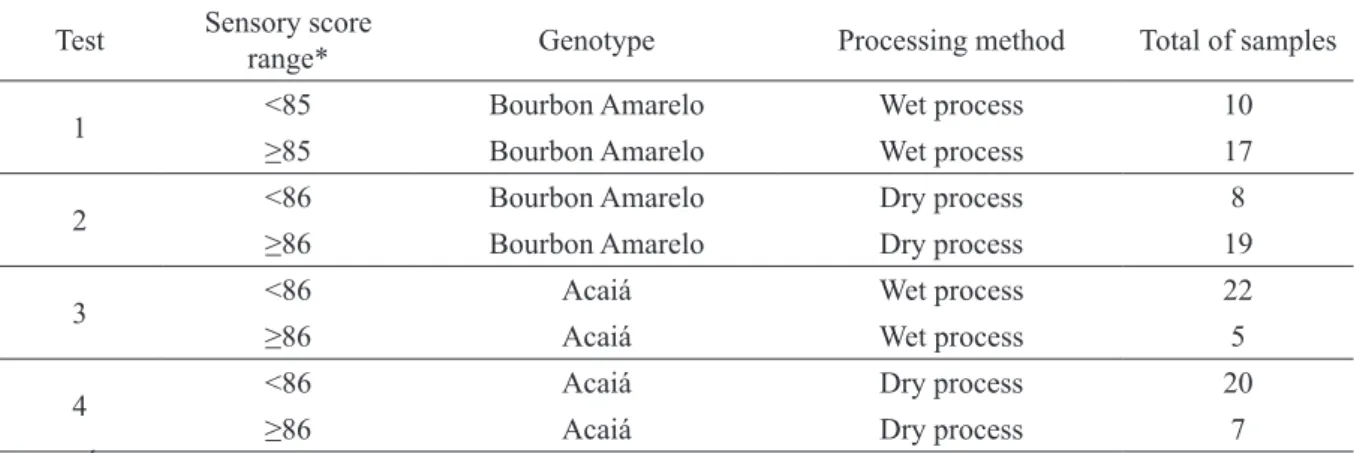
The research was separately conducted in four independent sample groups, which are wet processed Bourbon Amarelo, dry processed Bourbon Amarelo, wet processed Acaiá, and dry processed Acaiá. For each studied group, 27 samples were collected in three crop seasons. The relationship of the final sensory score and the chemical compounds was investigated. Thus, two patterns of sensory quality were undertaken following the results found in previous studies based on the correspondence analysis of coffee quality and processing (BORÉM, 2012).
Therefore, the analyses of the goup of wet processed Bourbon Amarelo samples obeyed the two ranges of sensory scores (bellow 85 points and equal or above 85 points). For the other three groups of samples, the two ranges of sensory scores was studied (bellow 86 points and equal or above 86 points). Due to the differences in the final sensory scores of the samples, each tested group had unbalanceed number of samples (Table 1). traditionally known as a supplier of large amounts
of common and low-priced coffees. However, its participation in the specialty coffee market has great increasing potential due to environmental variations, besides the technological level adopted in its coffee cultivation (GIOMO; BORÉM, 2011).
Beverage quality is the main characteristic that differentiates specialty from common coffees. Its complexity is mainly determined by the flavor acquired during roasting of chemical compounds present in raw coffee beans, recognized as quality precursors (ALPIZAR et al., 2004; FARAH et al., 2005; RIBEIRO et al., 2016). Although the chemical matrix of raw beans has high complexity due to the great number of substances, organic acids and bioactive compounds have been recognized in the literature as potential sensory quality descriptors of coffee (BORÉM et al., 2016; FARAH et al., 2005).
Organic acids have important organoleptic properties that interfere with some sensory characteristics of coffee. Since most organic acids consist of volatile compounds, the most influenced beverage attributes are flavor and fragrance. It has been demonstrated that higher concentrations of acids significantly affect the perception of basic flavors, particularly sweet (GALLI; BARBAS, 2004). Furthermore, another important characteristic of the beverage affected by organic acids is acidity (LINGLE, 2011). In general, acids present in coffee account for about 11% of the weight of raw beans and about 6% of the weight of roasted beans. The main acids present in raw coffee beans are citric, malic and quinic, besides chlorogenic acids (GINZ et al., 2000).
Another group of compounds of great importance in the definition of coffee sensory quality are those bioactive, trigonelline, caffeine and chlorogenic acids. Trigonelline and chlorogenic acids are recognized as precursors of other volatile compounds that directly contribute to the taste and aroma of roasted coffee (RIBEIRO et al., 2016). On the other hand, caffeine is associated with undesirable bitterness, which may depreciate the beverage, depending on its concentration (BORÉM et al., 2016).
In Brazil and in the world, several studies were conducted with the objective to understand the relationship between the contents of some chemical compounds and the differentiation of species and cultivation environment, the evaluation of roasting degree, functional properties and also coffee quality (AVELINO et al., 2005; BERTRAND et al., 2008; BICCHI et
2.2 Harvest and post-harvest technologies adopted in sample obtention and preparation
In order to evaluate the maximum sensory quality potential, each sample was harvested manually and selectively, and only ripe fruits were collected. Subsequently, the fruits were immersed in water and separated by density difference; only ripe and dense fruits were used. After hydraulic separation, a part of the selected fruits was directly led to drying in full sun, representing the “dry process method”, resulting in the natural coffee. The other part represented the “wet process method”, in which the fruits were subjected to mechanical pulping and demucilaging, by completely removing the mesocarp adhered to the endocarp, resulting in parchment coffee. All procedures related to processing and drying were carried out following the recommendations of good post-harvest coffee practices (BORÉM et al., 2014).
After drying, the samples were stored in a temperature controlled chamber at 10 °C and 60% relative humidity for a period of 30 days. Subsequently, the samples were processed by separating the beans into shape and size. Only flat beans of 16 to 18/64-inch sieves were selected. All defective beans were then removed from the sample. This procedure aimed at standardization and, above all, the minimization of interferences that were not related to the varieties analyzed and processing methods. Finally, each sample was submitted to sensory and chemical analyses. 2.3 Sensory analysis
Sample roasting and sensory analysis were performed according to the methodology
TABLE 1 - Samples obtained during crop seasons and their respective sensory score range for each studied group, wet processed Bourbon Amarelo, dry processed Bourbon Amarelo, wet processed Acaiá, and dry processed Acaiá.
Test Sensory score range* Genotype Processing method Total of samples
1 <85 Bourbon Amarelo Wet process 10
≥85 Bourbon Amarelo Wet process 17
2 <86 Bourbon Amarelo Dry process 8
≥86 Bourbon Amarelo Dry process 19
3 <86 Acaiá Wet process 22
≥86 Acaiá Wet process 5
4 <86 Acaiá Dry process 20
≥86 Acaiá Dry process 7
*(BORÉM, 2012)
proposed by the Specialty Coffee Association of America – SCAA (LINGLE, 2011). The samples were evaluated by four panelists, trained and certified for the analysis of specialty coffees. At each evaluation, five cups of coffee were sampled and scored in the range of 0 to 10 points for each of the following attributes: fragrance/aroma, uniformity, absence of defects, sweetness, taste, acidity, body, balance and overall impression. The final score represented the sum of the attributes, summarized in a single value from the arithmetic mean among the panelists. Each processing method was evaluated separately.
2.4 Chemical analyses
For the chemical analyses, raw coffee beans were ground for about 1 minute in an 11A basic mill (IKA, Brazil), adding liquid nitrogen to facilitate grinding and avoid sample oxidation. After grinding, the samples were conditioned in Falcon tubes and stored in deep freeze at -80 ºC until the analyses were performed.
2.4.1 Organic acids
For the extraction of organic acids, 250 mg of ground raw coffee were weighed and placed in 1.5 mL Eppendorf tubes, with 1 mL of deionized water (resistivity: 18.2 MQ). The solution was stirred for 10 minutes. Subsequently, it was diluted to 10 mL and a 20 μL filtered aliquot was analyzed by high performance liquid chromatography.
Based on the methodology described by Jhan et al. (2002), 10mM of perchloric acid at a constant flow rate of 0,6 mL/min were used as the mobile phase. The chromatography column used was SCR 1014 (7.9 mm 30 cm) at 50 °C, monitored by UV spectrophotometry at 210 nm.
Standard solutions of the acids of interest were used to identify chromatographic peaks, by comparing retention times and calculating their concentrations in the samples. The final contents of organic acids were given as a percentage of dry matter (% m.s). The following organic acids were quantified: citric, tartaric, malic, quinic, succinic, lactic and acetic.
2.4.2 Bioactive compounds
The analyzed bioactive compounds were caffeine, trigonelline and chlorogenic acids (3-CQA, 4-CQA and 5-CQA). For extraction, 100 mg of ground raw coffee were placed in a 2x12 cm test tube, with a screw cap, and mixed with 5 mL of 70% methanol (HPLC grade), prepared in 18.2 MΩ ultrapure water. The tubes were capped half-way, placed in a water bath at 60 °C for 1 hour and stirred every 10 minutes.
After centrifugation for 10 minutes at 12,000 rpm in 1.5 mL Eppendorf tubes, the supernatant solution was diluted to 1:10 with ultrapure water. After the filtration of a 0.20-μm membrane, 20 μL of the samples were injected into the Shimadzu chromatograph.
The concentrations of the compounds were determined simultaneously, using HPLC. The system consisted of two LC-20AT pumps and a UV-Vis SPD-20A detector (Shimadzu, Kyoto, Japan). Samples and standard solutions were analyzed on a 100-5C18 Nucleodur column, 250 mm x 3.0 mm, 5-μL (Macharey-Nagel). Analyses were performed by isocratic elution of methanol to HPLC/10 mM citric acid, pH 2.5 (25:75), at room temperature and a flow rate of 0.7 mL.min-1.
The Labsolutions software (Shimadzu) was used to process the data. The results were defined by the relationship between the peak areas of caffeine, trigonelline and 5-CQA and the respective known concentration patterns. The other isomers, 3-CQA and 4-CQA, were quantified using the area of standard 5-CQA, combined with molar extinction coefficients, according to the methodology adapted from Farah et al. (2005). The final contents of caffeine, trigonelline, 3-CQA, 4-CQA and 5-CQA were given as a percentage of dry matter (% m.s).
2.5 Statistical analysis
In total, this study comprised four experimental designs, formed by four independente groups, wet processed Bourbon Amarelo, dry processed Bourbon Amarelo, wet processed Acaiá, and dry processed Acaiá (Table 1).
Once the dataset presented groups of unbalanced number of samples and multiple variables, each group was independently submitted to the multivariate analysis. Then, the relationship of the organic acid profile with bioactive compounds determined in raw beans with beverage quality was investigated through Principal Component Analysis (PCA), using the Chemoface statistical software (NUNES et al., 2012). The considered chemical variables were the final contents of the determined compounds. All data were centered on the mean.
3 RESULTS AND DISCUSSION
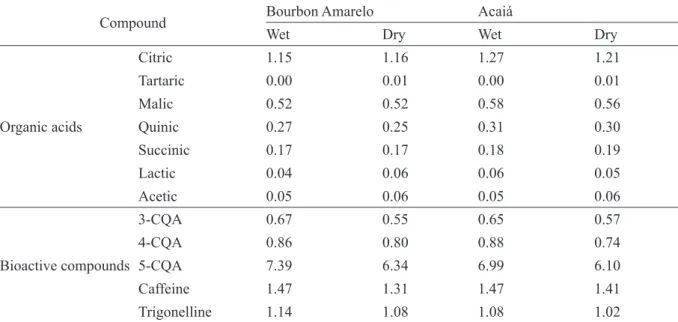
Table 2 shows the mean contents of organic acids and bioactive compounds for samples of genotypes Bourbon Amarelo and Acaiá, dry and wet process.
The organic acid found at the highest concentration in raw coffee beans was citric. Malic, quinic and succinic acids were found in amounts below 0.6%. Lactic and acetic acids were found in amounts below 0.1%. Although found with very low average contents (0.01%), tartaric acid was only identified in samples processed using the dry method.
In relation to bioactive compounds, the isomer 5-CQA was found at higher amounts, compared to the other chlorogenic acids identified. Trigonelline and caffeine had mean contents above 1% (Table 2).
The composition of organic acids and trigonelline, caffeine and chlorogenic acids (3,4 and 5-CQA) found in this study are in agreement with the values reported in previous studies, which quantified these compounds (KY et al., 2001; ROGERS et al., 1999).
The results for the investigation of organic acids and bioactive compounds with coffee sensory quality for each sample group are shown below.
3.1 Wet processed Bourbon Amarelo samples Figure 1 shows the scores of organic acids and bioactive compounds for Bourbon Amarelo samples processed using the wet method. For this group, ten samples with a final score below 85, and seventeen with scores equal or above 85, were classified.
Although the first component accounts for almost all data variability, sample differentiation did not occur solely due to this component. In some cases, multivariate phenomena require a third component to explain the differences between the data.
Thus, in this study, investigations were performed considering the first three principal components which, together, accounted for 99.13% of the variability among the samples of this group (Figure 1).
It is possible to observe the formation of two distinct groups, according to the considered scores. These results show that samples classified with scores equal to or greater than 85 show differences in organic acids and bioactive compounds in relation to those classified with scores below 85 (Figure 1).
TABLE 2 - Mean contents (% m.s) of organic acids and bioactive compounds for each sample group.
Compound Bourbon Amarelo Acaiá
Wet Dry Wet Dry
Organic acids Citric 1.15 1.16 1.27 1.21 Tartaric 0.00 0.01 0.00 0.01 Malic 0.52 0.52 0.58 0.56 Quinic 0.27 0.25 0.31 0.30 Succinic 0.17 0.17 0.18 0.19 Lactic 0.04 0.06 0.06 0.05 Acetic 0.05 0.06 0.05 0.06 Bioactive compounds 3-CQA 0.67 0.55 0.65 0.57 4-CQA 0.86 0.80 0.88 0.74 5-CQA 7.39 6.34 6.99 6.10 Caffeine 1.47 1.31 1.47 1.41 Trigonelline 1.14 1.08 1.08 1.02
FIGURE 1 - Scores of the three principal components for organic acids and bioactive compounds of wet process Bourbon Amarelo samples. Note: Final scores: samples classified with scores below 85 (<85); Samples classified with a score equal to or greater than 85 (>=85).
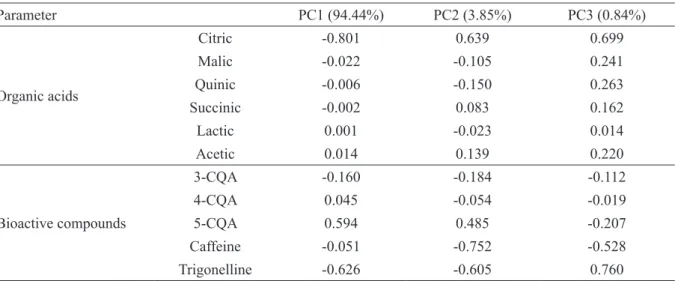
Table 3 shows the weights of organic acids and bioactive compounds for the first three principal components of Bourbon Amarelo samples processed using the wet method.
Among the analyzed compounds, the contents of citric acid and trigonelline were those with the highest weights, showing values greater than 0.60 for the three principal components.
The other organic acids, malic, quinic, succinic and acetic, made more relevant contributions to the third principal component.
TABLE 3 - Weights of organic acids and bioactive compounds for the first three principal components of wet processed Bourbon Amarelo samples.
Parameter PC1 (94.44%) PC2 (3.85%) PC3 (0.84%) Organic acids Citric -0.801 0.639 0.699 Malic -0.022 -0.105 0.241 Quinic -0.006 -0.150 0.263 Succinic -0.002 0.083 0.162 Lactic 0.001 -0.023 0.014 Acetic 0.014 0.139 0.220 Bioactive compounds 3-CQA -0.160 -0.184 -0.112 4-CQA 0.045 -0.054 -0.019 5-CQA 0.594 0.485 -0.207 Caffeine -0.051 -0.752 -0.528 Trigonelline -0.626 -0.605 0.760
However, lactic acid made less relevant contributions for the three components analyzed (Table 3). These results allow to infer that the explanation of the phenomenon does not occur only from citric acid. Although they had lower weights, malic, quinic, succinic and acetic acids contributed to the improvement of data spatialization, allowing sample differentiation.
In relation to the other bioactive compounds, all made important contributions between the principal components, especially 5-CQA and caffeine. However, despite the greater participation of one or another compound, the origin of the scores was explained by the variability in the profile of the analyzed compounds.
3.2 Dry processed Bourbon Amarelo samples Figure 2 presents the scores of organic acids and bioactive compounds of Bourbon Amarelo samples processed using the dry method. In this sample group, eight received final scores below 86 and nineteen were classified with scores equal to or greater than 86.
The first three principal components accounted for 91.92% of the variability between samples. Even considering the third principal component, it was not possible to observe a spatial distribution capable of forming distinct groups.
Samples classified with scores below 86 and samples with scores equal to or greater than 86 were not differentiated. These results show that the samples of the two final scores do not show variability in the profile of organic acids and bioactive compounds present in raw beans
(Figure 2). Therefore, these chemical compounds found in dry processed Bourbon Amarelo coffee samples could not be related to their final sensory score, which means that those compounds do not interfere in the final quality of this coffee.
3.3 Wet processed Acaiá samples
The scores for the profile of organic acids and bioactive compounds of wet processed Acaiá samples are shown in Figure 3. For this sample group, twenty-two samples classified with scores below 86 and five classified with scores equal to or greater than 86 were found.
These results show that samples classified with scores below 86 and with scores equal to or greater than 86 were separated due to differences in the profile of organic acids and bioactive compounds (Figure 3).
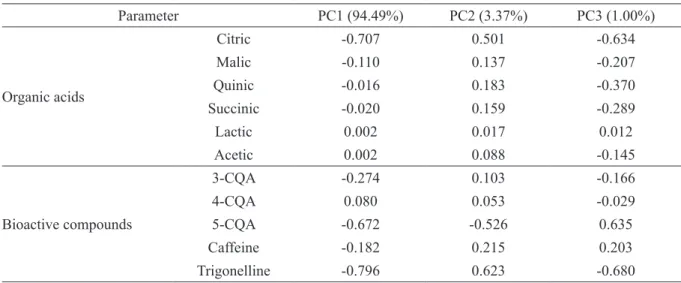
Table 4 shows the weights of the compounds analyzed for the first three principal components of Acaiá samples processed using the wet method.
Among the compounds, citric acid, 5-CQA and trigonelline made the highest contributions to the three principal components. In relation to the other organic acids, lactic acid showed the lowest weights. Among the other bioactive compounds, 4-CQA made the lowest contributions.
3.4 Dry processed Acaiá samples
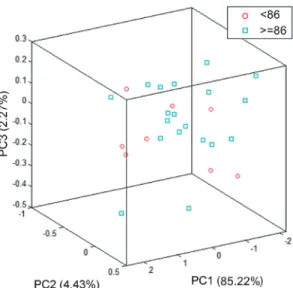
The scores for the profile of organic acids and bioactive compounds of dry processed Acaiá samples are shown in Figure 4. Overall, twenty samples had scores below 86 and seven received a final score equal to or greater than 86 in this group.
Samples scored below 86 and samples classified with scores equal to or greater than 86 were not differentiated (Figure 4). Therefore, the results show that the differences in the profile of organic acids and bioactive compounds were not determining for final quality.
The results found for coffee samples processed by the dry method do not evidence the contribution of organic acids and bioactive compounds present in raw beans to the description
FIGURE 2 - Scores of the three principal components for organic acids and bioactive compounds of dry processed Bourbon Amarelo samples. Note: Final scores: samples classified with scores below 86 (<86); Samples classified with a score equal to or greater than 86 (>=86).
FIGURE 3 - Scores of the three principal components for organic acids and bioactive compounds of wet processed Acaiá samples. Note: Final scores: samples classified with scores below 86 (<86); Samples classified with a score equal to or greater than 86 (>=86).
of coffee quality by themseves. In addition, this phenomenon does not occur consistently between the combinations involving both genotypes and the dry method that were comprised in this study.
It is clear that the explanation for this phenomenon depends directly on processing method, so that when the coffees are mechanically pulped and demucilaged, there is a well defined separation between samples, according to the final scores considered.
TABLE 4 - Weights of organic acids and bioactive compounds for the first three principal components of Acaiá samples processed using wet method.
Parameter PC1 (94.49%) PC2 (3.37%) PC3 (1.00%) Organic acids Citric -0.707 0.501 -0.634 Malic -0.110 0.137 -0.207 Quinic -0.016 0.183 -0.370 Succinic -0.020 0.159 -0.289 Lactic 0.002 0.017 0.012 Acetic 0.002 0.088 -0.145 Bioactive compounds 3-CQA -0.274 0.103 -0.166 4-CQA 0.080 0.053 -0.029 5-CQA -0.672 -0.526 0.635 Caffeine -0.182 0.215 0.203 Trigonelline -0.796 0.623 -0.680
FIGURE 4 - Scores of the three principal components for organic acids and bioactive compounds of Acaiá samples processed using the dry method. Note: Final scores: samples classified with scores below 86 (<86); Samples classified with a score equal to or greater than 86 (>=86).
However, for genotypes Bourbon Amarelo and Acaiá, the formation of distinct groups was not observed when the dry process was adopted.
According to the results found by Borém (2012), coffees with scores above 85 for the group of yellow fruit varieties (Bourbon Amarelo) and coffees with scores above 86 for the group of red fruit varieties (Acaiá) occur when the wet processing method is adopted. Thus, the results found in this study allow to associate the organic acid and bioactive profile found in raw beans of coffee samples of both genotypes processed wet.
The strong impact of processing on the final chemical composition of raw coffee beans is recognized in the literature. Some studies prove differences in seed metabolic activity among processing methods (VÁZQUEZ-RAMOS; SANCHEZ, 2003; ZHANG et al., 1993). It is also believed that these differences lead to variations in chemical composition through degradation mechanisms activated during processing.
From the physiological point of view, the removal of parts that constitute the fruit favors
embryo germination (BYTOF et al., 2005). It is believed that germination occurs differentially in seeds during pulping, due to the removal of inhibitors present in the exocarp and mesocarp. Thus, coffee pulping and demucilaging would trigger various reactions related to germination, such as reserve mobilization, resulting in different metabolic profiles, compared to the dry method. However, in addition to the compounds that are part of the coffee reserve mechanism, compounds present at lower concentrations, such as organic acids and those bioactive, may also show significant variations as a function of transformations resulting from processing (LELOUP et al., 2004; RIBEIRO, et al., 2016).
On the other hand, one of the hypotheses for the variability in the final coffee bean composition is the longer drying time, associated to the lower water removal rate, as possible factors responsible for the occurrence of reactions that degrade different compounds, observed with greater intensity in coffees processed using the dry method, compared to those processed using the wet method (LELOUP et al., 2004). This implies the possible changes in the chemical matrix of the natural coffee, resulting in coffees with variable sensory profiles. The results found in this study reinforce the effect of these factors, since it was not possible to find a defined profile for the analyzed compounds in dry processed samples, capable of associating with differences in beverage quality. In samples whose fruit was mechanically pulped and demucilaged, it was possible to associate beverage quality with the profile of organic acids and bioactive compounds present in raw beans.
Ripe fruits show the highest manifestation of all biochemical steps required for seed or bean formation (DAMATTA et al., 2007). However, shortly after plant removal, the chemical matrix does not represent the same found after drying (BYTOF et al., 2005; KLEINWÄCHTER; SELMAR, 2010; KNOPP; BYTOF; SELMAR, 2006). Therefore, considering the effect of the environment on the chemical constituents of freshly harvested coffee and all changes that occur during processing and after drying, some questions can be asked, such as which method represents the greatest impact on the original chemical matrix of beans? Based on the analysis of organic acids and bioactive compounds performed in this study, the observed results allow to infer that the removal of the exocarp and mesocarp from the fruits provided the smallest changes in the dry matter chemical
matrix, in relation to fresh beans. On the other hand, the chemical matrices described in natural coffees were completely different for genotypes Bourbon Amarelo and Acaiá.
From the point of view of chemical aspects related to quality, organic acids at low concentrations are responsible for many fragrances found in coffee. There is also the relationship of each acid with the taste revealed in the beverage. As for example, the characteristic lemon flavor due to citric acid, the buttery flavor of lactic acid, as well as the apple flavor from malic acid. However, these sensations are frequently more noticeable in the form of pleasant odors found in roasted and ground beans than in coffee flavors (LINGLE, 2011). Furthermore, organic acids also contribute to the formation of acidity in the beverage. Although they do not present the highest content among the acids present in coffee, organic acids tend to produce higher amounts of hydrogen ions. This increase in the concentration of hydrogen ions is associated with the acidity perceived in the beverage (LINGLE, 2011).
In the search for a better understanding of the relationship between organic acid composition and sensory characteristics of coffee, Borém et al. (2016) found that the mean contents of lactic, acetic, malic and citric acids did not allow coffee differentiation in terms of sensory quality.
In the literature, there is a large number of studies aiming to establish a relationship between the bioactive compounds, caffeine, trigonelline and 3,4 and 5-CQA present in raw beans, with the sensory profile of coffee (BERTRAND et al., 2008; CAMPA et al., 2004; FARAH et al., 2006). Among these compounds, trigonelline has been indicated as a strong candidate to explain the reasons for coffee quality. However, trigonelline, as well as other bioactive compounds, is not able to determine the final beverage quality in isolation. For this study, the joint analysis of the organic acid profile, associated with the main bioactive compounds, was essential in the quality description of mechanically pulped and demucilaged coffee.
The description of differences among coffee genotypes, processing methods, and the final beverage quality concerning chemical composition is still a challenge for researchers (BORÉM, 2012; BYTOF et al., 2005). Therefore, this study is important to contribute to elucidate the phenomena of coffee quality.
From the point of view of beverage quality description, according to the protocol for the analysis of specialty coffees (SCAA, 2009), coffees classified with scores below 85 are described
as premium, and coffees with scores equal to or above 85 are described as specialty origin, representing two distinct coffee categories. Thus, based on these descriptions and the results found in this study, it is possible to infer that there are marked differences in the sensory profile of coffee among the categories, representing a transition of quality standard. In this study, this transition was revealed through the SCAA methodology, using the final score as the main parameter. Although this type of methodology is of commercial and non-scientific application, it effectively represents the observations on the concept of quality practiced in the specialty coffee market.
4 CONCLUSION
Based on the results found in this study, it is concluded that:
It is possible to differentiate the sensory quality of mechanically pulped and demucilaged coffee from the organic acid profile, associated with bioactive compounds caffeine, trigonelin and chlorogenic acids (3,4 and 5-CQA), determined in raw beans.
It is not possible to differentiate the sensory quality of natural coffee through the analysis of organic acids and bioactive compounds present in raw beans.
5 ACKNOWLEDGEMENTS
The authors are grateful to Universidade Federal de Lavras (UFLA), Conselho Nacional de Desenvolvimento Científico e Tecnológico (CNPq), Fundação de Amparo à Pesquisa do Estado de Minas Gerais (FAPEMIG), Coordenação de Aperfeiçoamento de Pessoal de Nível Superior (CAPES), Empresa de Pesquisa Agropecuária de Minas Gerais (EPAMIG) and Instituto Nacional de Ciência e Tecnologia do Café (INCT/Café).
6 REFERENCES
ALPIZAR, E. et al. Incidence of elevation on chemical composition and beverage quality of coffee in Central America. In: ASIC 2004. 20th International Conference on Coffee Science, Bangalore, India, 11-15 October 2004. Association Scientifique Internationale pour le Café (ASIC), 2005. p. 322-327. ASSOCIAÇÃO BRASILEIRA DE CAFÉS ESPECIAIS, BSCA. Café especial: produção no Brasil deve ultrapassar Colômbia em menos de dois anos. Varginha, 2017. Disponível em: <http:// bsca.com.br/noticia.php?id=453>. Acesso em: 20 de mai. 2017.
AVELINO, J. et al. Effects of slope exposure, altitude and yield on coffee quality in two altitude terroirs of Costa Rica, Orosi and Santa María de Dota. Journal of the Science of Food and Agriculture, London, v. 85, n. 11, p. 1869-1876, May. 2005.
BERTRAND, B. et al. Comparison of the effectiveness of fatty acids, chlorogenic acids, and elements for the chemometric discrimination of coffee (Coffeaarabica L.) varieties and growing origins. Journal of agricultural and food chemistry, Washington, v. 56, n. 6, p. 2273-2280, Mar. 2008.
BERTRAND, B. et al. Climatic factors directly impact the volatile organic compound fingerprint in green Arabica coffee bean as well as coffee beverage quality. Food chemistry, London, v. 135, n. 4, p. 2575-2583, July. 2012.
BICCHI, C. P. et al. Characterization of green and roasted coffees through the chlorogenic acid fraction by HPLC-UV and principal component analysis. Journal of Agricultural and Food Chemistry, Washington, v. 43, n. 6, p. 1549-1555, 1995.
BORÉM, F. M. Protocolo de identidade, qualidade e rastreabilidade para embasamento da indicação geográfica dos cafés da Mantiqueira. In: BORÉM, F. M. (coord.). Relatório Final de Prestação de Contas. Edital CNPq/MAPA/SDA Nº 064/2008. Lavras: UFLA, 2012. 128p.
BORÉM, F. M.; ISQUIERDO, E. P.; TAVEIRA, J. H. S. Coffee Processing. In: BORÉM, F. M. (Org.). Handbook of coffee post-harvest technology. Norcross, Georgia: Gin Press, 2014. v. 1, p. 49-68. BORÉM, F. M. et al. The relationship between organic acids, sucrose and the quality of specialty coffees. African Journal of Agricultural Research, Ebene, v. 11, n. 8, p. 709-717, Fev. 2016.
BYTOF, G. et al. Influence of processing on the generation of γ-aminobutiric acid in green coffee beans. European Food Research Technology, Heidelberg, v. 220, n. 3, p. 245-250, Nov. 2005.
CAMPA, C. et al. Trigonelline and sucrose diversity in wild Coffea species. Food Chemistry, Oxford, v. 88, n. 1, p. 39-43, Nov. 2004.
DAMATTA, F. M. et al. Ecophysiology of coffee growth and production. Brazilian Journal of Plant Physiology, Londrina, v. 19, n. 4, p. 485-510, Oct./ Dec. 2007.
FARAH, A. et al. Effect of Roasting on the Formation of Chlorogenic Acid Lactones in Coffee. Journal of Agricultural and Food Chemistry, Washington, v. 53, n. 5, p. 1105-1113, Feb. 2005.
FARAH, A. et al. Correlation between cup quality and chemical attributes of Brazilian coffee. Food Chemistry, London, v. 98, n. 2, p. 373-380, 2006. GALLI, V.; BARBAS, C. Capillary electrophoresis for the analysis of short-chain organic acids in coffee. Journal of Chromatography A, Amsterdam, v. 1032, n. 2, p. 299-304, Mar. 2004.
GINZ, M. et al. Formation of aliphatic acids by carbohydrate degradation during roasting of coffee. European Food Research and Technology, Berlin, v. 211, p. 404-410, Jan. 2000.
GIOMO, G. S.; BORÉM, F. M. Cafés especiais no Brasil: opção pela qualidade. Informe Agropecuário, Belo Horizonte, v. 32, n. 261, p. 7-16, mar/abr. 2011. INSTITUTO BRASILEIRO DE GEOGRAFIA E ESTATÍSTICA. Cidades. Rio de Janeiro, 2009. Disponível em: <ftp://geoftp.ibge.gov.br/MME2007/ MG/CARMO%20DE%20MINAS.pdf>. Acesso em: 15 nov. 2016.
JHAM, G. N. et al. Comparison of GC and HPLC for the quantification of organic acids in coffee. Phytochemical Analysis, Sussex, v. 13, n. 2, p. 99– 104, Mar/Apr. 2002.
KLEINWÄCHTER, Maik; SELMAR, Dirk. Influence of drying on the content of sugars in wet processed green Arabica coffees. Food chemistry, London, v. 119, n. 2, p. 500-504, Mar. 2010.
KNOPP, S.; BYTOF, G.; SELMAR, D. Influence of processing on the content of sugars in green Arabica coffee beans. Food Research Technology, Mysore, v. 223, p. 195-201, Dec. 2006.
KY, C. L. et al. Caffeine, trigonelline, chlorogenic acids and sucrose diversity in wild coffeaarabica L. and C. canephora P. accessions. Food Chemistry, London, v. 75, n. 2, p. 223-230, Nov. 2001.
LELOUP, V. et al. Impact of wet and dry process on green coffee composition and sensory characteristics.
In: INTERNATIONAL CONFERENCE IN COFFEE SCIENCE, 20., 2004, Bangalore. Proceedings… Bangalore: ASIC, 2004. CD ROM.
LINGLE, T. R. The coffee cupper´s handbook: systematic guide to the sensory evaluation of coffee´s flavor. 4. ed. Long Beach: Specialty Coffee Association of America, 2011. 66 p.
MAZZAFERA, P.; CARVALHO, A. Breeding for low seed caffeine content of coffee (Coffea L.) by interspecific hybridization. Euphytica, Wageningen, v. 59, n. 1, p. 55-60, Nov. 1991.
NUNES, C. A. et al. Chemoface: a novel free user-friendly interface for chemometrics. Journal of the Brazilian Chemical Society. São Paulo, v. 23, n. 11, p. 2003-2010, Nov. 2012.
RIBEIRO, D. E. et al. Interaction of genotype, environment and processing in the chemical composition expression and sensorial quality of Arabica coffee. African Journal of Agricultural Research, Ebene, v. 11, n. 27, p. 2412-2422, July. 2016.
ROGERS, W. J. et al. Changes to the content of sugars, sugar alcohols, myo-inositol, carboxylic acids and inorganic anions in developing grains from different varieties of Robusta (Coffea canephora) and Arabica (C. arabica). Plant Science, Limerick, v. 149, n. 2-3, p. 115-123, Dec. 1999.
SPECIALTY COFFEE ASSOCIATION OF AMERICA. 2009. SCAA Protocols - Cupping Specialty Coffee. Long Beach: SCAA. 2009. 7p. VAAST, P. et al. Fruit thinning and shade improve bean characteristics and beverage quality of coffee (CoffeaarabicaL.) under optimal conditions. Journal of ScienceFood and Agriculture, Sussex, v. 86, n. 1, p. 197-204, Oct. 2006.
VÁZQUEZ-RAMOS, J. M.; SÁNCHEZ, M. P. The cell cycle and seed germination. Seed Science Research, Cambridge, v. 13, n. 02, p. 113-130, June 2003. ZHANG, J. Z. et al. Two classes of isocitratelyase genes are expressed during late embryogeny and postgermination in Brassica napus L. Molecular and General Genetics, New York, v. 238, n. 1-2, p. 177-184, Apr. 1993.