Designing Technology-Mediated Tasks for Language Teaching: A
Methodological Framework
Dil Öğretimi İçin Teknoloji Destekli Görev Tasarımı: Metodolojik Bir
Çerçeve
António Manuel Bernardo Lopes*, Raúl Ruiz-Cecilia** Received: 28.11.2016 Accepted: 16.12.2016 Published: 28.04.2017
ABSTRACT: PETALL (Pan-European Task-based Activities for Language Learning) is a European-funded project aiming at the promotion of foreign languages learning through ICT-based tasks. For that purpose, the project consortium has offered teacher training courses and has produced samples of best practices in which technologies play a major role. These tasks have been trialled and evaluated in the neighbouring countries in a network of collaborative partnerships in teaching and research, which allowed the designers of the tasks to receive constructive feedback from peers and end-users (teachers and learners). This article first provides an overview of the project (namely its rationale, literature review, implementation and evaluation processes, and the dissemination and exploitation strategies), before explaining in greater detail the procedures employed by the consortium in the setting-up of a methodological framework to be used in the designing and trialling of ICT-based tasks. The different stages of the designing process are described, as well as the criteria for the validation of the proposed samples. The template used by the designers is explained and an analysis of the set of tasks is also provided. In the end, some closing remarks based on the outcomes of the project are given.
Keywords: Task-based Language Teaching; ICT; Common European Framework; European projects; Teacher Training.
ÖZ: PETALL (Pan-European Task-based Activities for Language Learning) yabancı dilin BIT-odaklı görevlerle öğretimini teşvik etmeyi amaçlayan Avrupa fonlu bir projedir. Bu amaçla, proje konsorsiyumu öğretmen eğitimi kursları düzenlemiş ve teknolojinin çok önemli bir rol oynadığı en iyi uygulamalardan örnekler ortaya koymuştur., Bu görevler, bunları tasarlayanların paydaşlarından ve son kullanıcılardan (öğretmenler ve öğrenciler) yapıcı dönütler almasına imkan veren öğretim ve araştırma alanında işbirlikçi ortaklık ağları kurmuş olan komşu ülkelerde denenmiş ve değerlendirilmiştir.Bu makale öncelikle projeye genel bir bakış (projenin gerekçesi, literatür taraması, uygulama ve değerlendirme süreçleri, yayma ve tanıtma stratejileri) ardından da çok daha detaylı bir şekilde BIT-odaklı görevlerin tasarlanma ve denenmesinde kullanılan metodolojik çerçevenin kurulmasında konsorsiyum tarafından uygulanan süreçleri sunmaktadır. Önerilen örneklerin onaylama ölçütlerinin yanı sıra tasarlama sürecinin farklı aşamaları da makalede tanımlanmıştır. Tasarımcıların kullandığı şablonlar açıklanmış ve hazırlanan görevlerin analizi verilmiştir. Sonuç kısmında ise projenin çıktılarına dayanan kapanış bölümü bulunmaktadır.
Anahtar Sözcükler: Görev-odaklı Dil Öğretimi; BIT; CEFR; Avrupa Projeleri, eğitimde yenilik; Avrupa Bilgisayar Ehliyeti; Öğretmen Eğitimi; İşbirliği.
1. INTRODUCTION
Among the several language teaching methods and approaches currently in use all over Europe, Task-based Language Teaching (TBLT) has been receiving an increased attention on the part of practitioners, researchers and other stakeholders. The Common European Framework
of Reference for Languages (CEFR) has played an instrumental role in its promotion, as it
regards learners not as passive recipients of information, but as social agents to be equipped with the right communicative competences to ensure the successful accomplishment of their goals through meaningful actions. Mastering a language requires knowing how to use it in a socially appropriate way, with tangible results and benefits. This action-oriented approach signals an important shift in relation to previous language learning paradigms as it shows
*
Prof., School of Education and Communication, University of Algarve, Campus da Penha, Portugal, [email protected] **
learners that language is not confined to textbooks or classroom activities, but is rather to be used in a multiplicity of situations eliciting different attitudes and strategies. The CEFR features a whole chapter on TBLT, where the concept of task is broadly defined as “a feature of everyday life in the personal, public, educational or occupational domains” and whose accomplishment hinges on “the strategic activation of specific competences in order to carry out a set of purposeful actions in a particular domain with a clearly defined goal and a specific outcome” (p. 157).
Studies, publications and projects have further sharpened this focus on TBLT. From 2005 an international consortium has been organising biennial international conferences and more recently, in 2015, the International Association for Task-Based Language Teaching (IATBLT) was founded. The European Commission, too, has been funding several projects where TBLT is a key component.
PETALL, Pan-European Task-based Activities for Language Learning, funded within the scope of the Lifelong Learning Programme, aims to promote the learning of foreign languages through technology-mediated tasks, by providing samples of good practice in line with the CEFR, and by offering a set teacher training courses. Coordinated by the University of Algarve (Portugal), PETALL involves partners from nine other countries (Germany, Greece, Hungary, Italy, the Netherlands, Serbia, Spain, Turkey and the UK). Tandems formed by teacher training institutions and practice schools represent each country.
After a brief presentation of the overall architecture of the project, a methodological framework for technology-mediated task designing is proposed and discussed. A synthetic analysis of the tasks is also provided, followed by some conclusions.
2. PETALL: ITS ORIGINS AND RATIONALE
The national curricula of most countries echo the CEFR and are unambiguous about the benefits of TBLT. In Spain, for instance, the Ministry of Education, Culture and Sports recently decreed that the teaching of Spanish (FL) must rely on “the accomplishment of certain real-life tasks and the achievement of certain ends, while simultaneously applying, through the most appropriate strategies, a series of skills of various kinds” (ECD/1308/2015). In Portugal, the statutory programme for ELT also speaks of strategies and tasks entailing discovery and problem analysis and resolution (Moreira, Moreira, Roberto, Howcroft, and Almeida, 2001).
However, a survey conducted in 2011 for the ETALAGE project (European Task-based
Activities in Language Learning: A Good Practices Exchange) showed that a significant number
of teachers felt reluctant about TBLT. Besides the prevalence of traditional approaches, four issues accounted for this resistance: the difficulty in adapting existing tasks to the specific needs of their classes; the amount of work that goes into the preparation of a task; the monitoring of groups of learners communicating in the foreign language; finally, lack of support or training to meet the requirements of this approach (Lopes, 2012).
The consortium thus agreed to submit a new project to address these issues. ICT-based tasks would have to be flexible enough to be used in as many settings as possible, meeting the needs of a wide variety of teachers working in different educational contexts, but with a particular focus on secondary education, as learners at this level are expected to already master those minimal linguistic skills necessary for interaction with other people. One of the ways to achieve this goal would be to set up transnational networks of teachers collaborating in the joint development, implementation and evaluation of the tasks. On the other hand, it was necessary to offer teachers specialized training in this area so as to overcome some of the practical difficulties and to provide the methodological and conceptual framework for a more nuanced
understanding of TBLT. The courses would entail the analysis of samples of good practices, the evaluation of the ICT resources for such tasks, and the designing of ICT-based tasks.
Therefore, the project objectives centred on the promotion of transnational collaboration for the development of ICT-based tasks adaptable to different educational contexts, the setting-up of an online repository for the tasks, the improvement of the quality of teacher training in ICT-based TBLT and the development of their digital competence.
3. LITERATURE REVIEW
The integration of ICT in TBLT is a field of research that is gaining momentum. For over a decade, authors such as Nunan (1989, 2004), Willis and Willis (2001) and Ellis (2003, 2006) laid the foundations of the theoretical framework of TBLT. However, their work focused mainly on face-to-face personal interaction, usually in traditional classroom settings, with little or no reference to ICT-based communication. The latter aspect demands a differentiated approach, not least because of the fact that the languages themselves have suffered from the impact that ICT has had on people’s lives. In this sense, Schrooten (2006) sought to explain the potential of ICT for language learning, arguing that ICT allows a high degree of differentiation, elicits a high degree of learner motivation and involvement, offers enriched content and allows a more intense, multisensory learning process. It also makes teaching more efficient, since teachers can focus more on supporting learners and less on delivering content. Although these reasons justify the use of ICT in TBLT, he did not discuss the latter approach.
When it comes to the interrelation between ICT and tasks, Chapelle (2001) stated that the learners’ communicative competence would rely more and more on the acquisition of “electronic literacies” (skills required to communicate effectively with electronic media), and that, consequently, it was important for both teachers and researchers to study and understand “the nature of the unique technology-mediated tasks learners can engage in for language acquisition and how such tasks can be used for assessment”. Teachers should seize the learners’ computer-using experiences and turn them into meaningful language learning experiences (2001, p.2). However, Chapelle did not examine any strategies that could translate those experiences into classroom activities. Subsequently, Thomas and Reinders’s collection of studies (2010) sought to address the challenges raised by Chapelle. Their intention was “to initiate a closer dialogue between these areas of theory, research and practice in order to explore synergies and differences as well as potential future directions” (2010, p.1). The authors argued that the diversity of interactive learning technologies currently available in the language classroom, ranging from interactive whiteboards to mobile devices, can be conjugated with project-oriented tasks that can bring learners closer to the interactive experience of real-life situations. However, since the volume does not feature reviews of research or theory, it lacks an integrative overview that would offer a more systematic treatment of the research. This overview would be attempted shortly afterwards by Lai and Li (2011) and Shehadeh and Coombe (2012). A further development was González-Lloret and Ortega’s Technology-Mediated TBLT (2014). Both authors resume Chapelle’s thesis, by arguing that the “addition of new technologies to people’s lives is never neutral, as it affects them, their language, and their personal knowledge and relations”. The pedagogical consequence is that “once technological design mediates tasks the technology becomes not just a vehicle of instruction or delivery, but instead spearheads a set of new demands and actions which in and of themselves become target tasks – and hence part of the curriculum” (2014, p.6-7). Some of the studies included in the collection provide not only examples, but also empirical evidence of the learning benefits that derive from the implementation of task-based activities in the language classroom. Studies of a similar nature, some with practical advice to teachers, have also come to light recently
(González-Lloret, 2015; Hadadi, Abbasi, and Goodarzi, 2014; Kurek, 2015; Martins, 2015; Roessingh, 2014; Schmid and Whyte, 2014; Tsai, 2015).
The concerns expressed by the authors above point to two important conclusions: on the one hand, language teaching can no longer ignore the impact that digital technologies have had on the ways learners use language; on the other, tasks constitute the most effective way to conjugate the learners’ use of language, their digital literacy, and the communicative potential of new technological resources. The PETALL project seeks precisely to address this set of issues by showing teachers the importance of the technological dimensions of communication, in which languages are put to new uses and speakers are challenged to adapt themselves to new resources and means of expression.
4. IMPLEMENTATION, DISSEMINATION AND EXPLOITATION
We pooled the expertise of universities and practice schools to design samples of good practice of ICT-based tasks for language learning. The lifecycle of the project consisted of four stages. The first one was devoted to the design of samples of good practice—four per tandem, two in collaboration with the tandem in one neighbouring country and two with the other neighbouring tandem. In the course of the second stage tasks were trialled in schools of the neighbouring tandem, evaluated by end-users, and reviewed by a team of independent experts hired for this purpose from the Polytechnic Institute of Guarda (IPG). The resulting documents, in particular the reports produced by the reviewers, helped in the subsequent improvement of the tasks. A template was used by the reviewers to guarantee uniformity in the evaluation of all the tasks. Besides the six criteria discussed in the next section (authenticity, motivation, meaning, purpose, process and/or outcome, social interaction) this evaluation also took into account the adequacy of the task to the prescribed CEFR level, its adaptability to the different school curricula and the feasibility of its use in the teaching of different languages. It further looked into the relevance of the product that was being proposed, the quality of the planning programme, the relevance and functionality of the resources employed and the learner’s assessment in terms of the learning objectives and outcomes of the task. The third stage was devoted to the design and implementation of national training courses for pre-service or in-service teacher and their evaluation by trainees. Again, the team of independent experts examined the course reports and the results of the trainees’ evaluation. Finally, the last stage was the translation of all the products (40 tasks and 10 national courses) from English into the languages of the consortium (including Scottish Gaelic), and their publication on the PETALL multilingual website (http://petallproject.eu), available to practitioners from July 2016. Meanwhile, users from all over the world can propose their own tasks for publication there. The search box that appears in every page of the website allows teachers to look for specific key words, topics, CEFR language levels or resources used in the tasks.
Since the project inception, great strides have been made towards its dissemination, the intention being to spread the project outcomes, achieve a certain impact by addressing the appropriate target groups (teachers, trainers, policy makers), and raise awareness of the potential of European partnerships. Each tandem developed their own dissemination and exploitation plan. Actions range from participation in international scientific meetings (over fifty events so far, reaching a significant number of teachers from infant education to adult and tertiary education) and publication of scientific papers in refereed journals. Contacts with professional associations have been made and workshops run at national and local levels. A glocal perspective was adopted where global issues are transformed into exoteric discourses highlighting the straightforward use of the project products in the classroom. The engagement with TBLT and the Pan-European nature of PETALL is expected to lead to further research and collaborative work with the contacts made during its dissemination.
5. A METHODOLOGICAL FRAMEWORK FOR TECHNOLOGY-MEDIATED
TASK DESIGNING
Designing tasks proves a challenging testing ground not only for the teacher’s conceptual understanding of the precepts of TBLT, but also for creative practice. From the very beginning, the consortium discussed different perspectives of TBLT and established a framework within which the tasks could be methodologically conceptualised and designed. Nevertheless, more than the command of the theoretical knowledge of TBLT, the consortium’s major concern was the effectiveness of the tasks, i.e. making sure that they would actually develop “learners’ communicative competence” (Hymes, 1972).
It was agreed that the tasks should meet six criteria:
a) Authenticity: Is the task meaningful to the learners in terms of their real-life experience? Does it make them tackle challenges arising in real-world settings?
b) Motivation: How far does it meet the learners’ needs and engage their interest? Are they motivated and willing to carry it through despite occasional difficulties?
c) Meaning: Is it focused on meaning and communication-based language use or does it revolve around form and the mechanics of the language? Are the learners constructing, conveying and negotiating meanings? Are they inferring the contents of another person’s thoughts and trying to make themselves understood?
d) Purpose: Do they understand that the task serves a purpose or aims to achieve concrete goals? Do they find that it useful and relevant in their future lives?
e) Process and/or outcome: The task can either rely on a process, be directed towards establishing an outcome, or both. Either way, learners must always be the driving force behind the progress of the task.
f) Social interaction: Are they actively engaged in negotiated interaction with each other in the target language? Do they feel that they can find support from their peers in the group? Does the task entail different roles?
These criteria stem from Jane Willis’s characterisation of effective tasks, namely the learners’ engagement in the activity, the focus on meaning, clear outcomes, success based on outcome and the relation to the real world (2009). It is out of the interplay of these aspects that the tasks can be said to address the difficulties that learners face in communicatively challenging contexts, as they raise their awareness of language-in-use and of the strategies leading to greater autonomy (Hassan et al. 2005). A task can be considered authentic insofar as it simulates a real-life situation, and yet it may fail to engage the learner. If it does not motivate the learner or if appears to serve no goal whatsoever, it can hardly be said to be pedagogically effective. By the same token, there are many classroom activities that require social interaction, but they are not tasks if they fail to connect meanings to the learners’ life-experience.
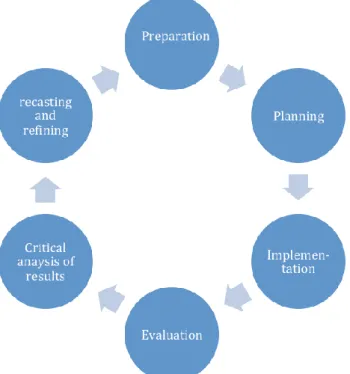
Another condition for the designing process was the definition of a systematized set of procedures to lend coherence and cohesion to the body of tasks. These procedures, arranged in a cycle, range from preparation and planning to evaluation and critical analysis of results, followed by the recasting of the task. This continuous evaluation of the task is essential to guarantee that problems are identified and duly analysed, and other possibilities mapped out, concerns already voiced by Johnson (2003), who defended the need for an approach to task designing based on research methodology and on the validation of the procedures for data collection and analysis.
The six-step process that we proposed roughly corresponds to two of the three dimensions of Richards and Rodgers’s model of method (1982, 2004), which in turn rests on Anthony’s proposal (1963). In their attempt to bridge theory and practice, Richards and Rodgers advanced the distinction of “approach”, “design” and “procedure”, where “approach” is seen as the set of
beliefs and theories about language and the language learning and teaching process, “design” as the means by which theory is translated into form and function of the instructional materials and activities, and finally “procedure” as the techniques and practices used in the classroom resulting from the approaches and designs adopted. In a similar vein, Hampel (2006) also proposed three levels of theory, design and implementation in the design of tasks in synchronous online environments. Since our approach had already been established from the outset (TBLT), what mattered now was to define how to go from the “design” stage to the “procedure” stage, and then back to the “design” so as to review and/or consolidate the didactic architecture of a sample of good practice that “travels well”.
The process can be summarised using the following diagram:
Figure 1. Task design cycle
Preparation lays the groundwork that will render the task pedagogically relevant. The
learners’ needs have to be identified and the nature of such needs understood, either through needs analysis, empirical evidence based on classroom observations, or a nuanced understanding of the learners’ demands and expectations. The guidelines that govern the teacher’s work must also be taken into account, including the learning goals set by the syllabus or the curriculum, as well as the CEFR descriptors and the “can do” focus. On the other hand, the teacher cannot overlook the actual conditions under which the task is going to be carried out, particularly available materials, resources and facilities.
Planning, perhaps the most demanding and time-consuming part of the process, entails
organising the implementation of the task in terms of objectives, contents, resources, products, the different stages to be worked through and the evaluation tools to be applied. Difficulties and problems have to be anticipated and solutions safeguarded. Planning should not focus on the main task alone, but also consider warm-up and consolidating activities.
Implementation is a critical moment that can have a determining effect on the success of
the whole project. The teacher’s experience and confidence plays a decisive role here. Besides the simultaneous monitoring of the groups and the pedagogical assistance that he/she is
expected to offer, the teacher must also be ready to conduct classroom observations and gather information about what is going on, without overlooking the difficulties and the possible resistance of learners to some aspects of the task.
Evaluation gives learners the opportunity to give their feedback based on the criteria
explained above. Furthermore, it also provides information about the learners’ progress and guarantees full transparency of the teaching and learning process. The data collected can be either of a quantitative or of a qualitative nature (instead of a questionnaire, the teacher may decide to interview the learners, talk to the whole class on a more informal basis, or follow a semi-structured format). Besides measuring the degree of satisfaction and adequacy, the evaluation tools must take into account the objectives and needs identified in the course of the preparation phase.
Critical analysis of results is based not only on the facts and figures provided by the
learners in their evaluation of the task, but also on a judgement of their outcomes and products, and on the teacher’s perceptions of the whole process. The analysis and interpretation of the data collected from both the evaluation and the observational tools serves to identify vulnerabilities and weaknesses that need to be addressed, as well as the aspects that require strengthening.
Recasting and refining is a part of the quality assurance process. The results will tell the
teacher how far the objectives were fulfilled, the learners’ needs met and their skills developed. If the task somehow falls short of the required standards or fails to serve the goals for which it was conceived, then it should be recast, leading the teacher to reflect on the whole process, including the preparation stage.
In order to guarantee uniformity in the design of the tasks, the consortium agreed that a template should be made available to all partners. It was also agreed that the information to be entered on the template should provide a thorough but practical guide to the whole process of implementation of the tasks. The layout of the template should, in a sense, mirror the principles of the framework, but also help teachers explore and visualise the most critical aspects of the task. The PETALL steering group members, who had worked together in the former ETALAGE project, decided to revise its template, which already covered the main dimensions of task design, including situation, theme, CEFR levels and descriptors, skill(s), product(s), success factors and planning. The latter entailed a systematic description of the implementation process, detailing its successive stages, the different roles played by the learners and the teacher, the resources to be marshalled and extra activities to consolidate acquired skills and knowledge. However, a revision was necessary as the EACEA’s final assessment of the ETALAGE had already spotted some weaknesses: the samples were either too sketchy or lacked extended treatment, failed to provide practical hints for teachers and lacked additional methodological or didactic comments. It was also considered that the reason why the lessons themselves had been selected as samples of best practice was not clear. In order to address the criticisms made by the EACEA’s evaluator, beneficial additions and changes would have to be made to the template.
The PETALL template features the following fields: 1. Overview
1.1. Linguistic dimension
1.1.1. CEFR Level: Tasks may target one or several CEFR levels, in which case the teacher needs to make the necessary adjustments.
1.1.2. Skill(s): Tasks may seek to develop all macro-skills (Writing; Reading; Speaking; Listening), but may focus instead on production, comprehension, or specific micro-skills. 1.1.3. Duration: number of minutes and/or number of sessions to help teachers schedule the activities throughout the term.
1.1.4. Target language: tasks are expected to be used in the teaching of any language. However, in this case the teaching staff were asked to specify the language(s) in which the task was trialled.
1.2. ICT dimension
1.2.1. ICT resources: The teacher’s command of the resources required (e.g. online dictionaries and grammars, software, websites, apps, etc.) to implement the task is a sine qua non.
1.2.3. ICT skills: This project seeks to strike a balance between language-in-use and technology. ICT-related skills the learners are expected to develop or consolidate are no less important than language skills (Griaznova, 2016).
2. Detailed description of the task
2.1. Situation/theme(s): Situations and themes can vary greatly, but in general the official syllabi seek to cover the most relevant ones (for example, the topic “professions” can range from job interviews, résumé writing and entrepreneurship to the development of hard and soft skills, etc.).
2.2. “I can do” statements: In order to make sure that the tasks proposed were in tune with the CEFR, we resorted to the descriptors in table 2, section 3.4. These descriptors lend methodological coherence to the whole set of tasks.
2.3. Product: In some tasks, the learners are expected to come up with a product or output. Products can be motivating, as they give learners a sense of achievement (Loftus, Tiernan, and Cherian, 2014; Palmgren-Neuvonen and Korkeamäki, 2014).
2.4. Process: The sequence of steps is to be detailed here. The methodical planning of the task cycle (which can follow the model proposed by Willis (1996)), including an explanation of its different stages, provides teachers with the sequential framework of actions to be undertaken. 2.5. Division of roles (optional): Division of roles (if any) can bring learners closer to real-life situations. Besides, knowing what is expected from the different actors (either in social or functional terms) should facilitate communication and coordination.
2.6. Consolidating activities suggested or follow-up plan: Reinforcers (activities aimed at memorizing vocabulary, improving pronunciation or consolidating grammar, for example) play a pivotal role in guaranteeing that the activities are translated into effective learning. With such consolidating activities, the whole learning process comes to a full circle.
2.7. Success factors and/or evaluation criteria: Success factors (including the learning style, the learner’s assumption of responsibility, the learning environment, etc. (Alberth, 2011; Ali and Elfessi, 2004) depend on the nature and objectives of the task. In some cases, an assessment grid may be advisable.
2.8. Authors’ identification: To facilitate contacting and to foster accountability.
2.9. Acknowledgements: In case the task was adapted from an already existing activity and permission given by its original author, or the designing of the task received the support from people outside the consortium.
3. Didactic added-value of the task and other information
3.1. Practical hints for teachers: Teachers who have already implemented the task are in a better situation to anticipate problems and provide practical advice on, for example, equipment or the learners’ reactions and attitudes.
3.2. Additional methodological or didactic comments: The task needs to be justified in methodological terms. As the task results from the collaboration between universities and schools, a more theoretical view of the model can always be complemented with more practical understanding of the process.
3.3. Reasons why this task is a model of best practices: The proponents are to reflect on the quality and relevance of the task, and the benefits that the learners and teachers may derive from it.
3.4. Impact that it is expected to have on the teaching practices and attitudes: Since one of the aims of the project is the promotion of technology-mediated TBLT, the task is expected to help
teachers find in this type of approach the motivation for pedagogical innovation and quality enhancement.
3.5. Reasons why this task travels well: One of the major concerns of the consortium was to ensure the adaptability of the task in different cultural, linguistic and educational settings. Its trialling in the neighbouring countries served to round off some edges, improve its design and enable its deliverability to learners and teachers from other countries.
3.6. Rationale and/or theoretical underpinnings of the task: The task must mirror the consortium’s methodological positions and core concepts.
6. ANALYSIS OF THE SET OF TASKS PRODUCED
The set of 40 samples of ICT-based tasks produced by the consortium was later analysed in order to assess how far the methodological framework proposed had helped to design tasks that were consistent with the one of major objectives of the project, namely to ensure the adaptability of the tasks to different educational contexts, especially at the level of secondary education. Another concern in this analysis was to determine what kind of digital skills teachers gave priority to in the development of the tasks. For this purpose, the set of tasks was examined in terms of:
a) topics, to see how far they matched the ones contemplated in language syllabi of the different countries of the consortium;
b) the CEFR level, to determine whether the tasks were suitable for the skills and competencies expected in secondary education;
c) the language macro-skills addressed, to ascertain whether greater emphasis was placed on the development of the production skills, namely writing and speaking;
d) the digital skills that the tasks entailed, which indirectly indicated what language skills were being mobilised (for example, oral production in videos, writing in online creative writing programmes, etc.).
As far as the first parameter of analysis is concerned, the set of tasks covers topics that range from identity, history, local culture, youth and gastronomy to travelling, environment, health, education, economy, sports and technology. Other more specific subtopics were covered under each macro-topic. For example, in the task “Addictions - there’s a way out”, learners can talk not only about health in general, but also about the body, the diseases caused by drug and alcohol consumption, the risks of smoking or of overweight. On the other hand, some tasks address several macro-topics at the same time, as in the case of “Planning a trip to Edinburgh”, where topics such as travelling, history and local culture complement each other. All the topics present in the set of tasks are in line with the syllabi of secondary education in most countries. During the Portuguese national course, offered in close collaboration with the Italian tandem, while attempting to facilitate the coordination of the work of the transnational groups of trainees, a series of general topics and respective subtopics were identified as being common not only to the syllabi of both countries but were also present in the language textbooks published in other countries. The list of topics used in the teacher training courses is available in the project website at: http://petallproject.eu/petall/images/List_of_topics_and_subtopics_for_the_tasks.pdf It identifies eight general topics (Nature; Professions; The Youth; Health; Education; Society; Culture and Science & Technology) and respective subtopics, in a total of 63. On close examination, it becomes evident that the general topics match those of the tasks designed by the members of the consortium. This fact revealed the thematic commonalities that exist across Europe, and which the set of tasks of the project has thrown into sharp relief.
In relation to the second aspect, it should be noted that most tasks, developed as they were mainly for secondary education, already entail a basic command of the language. As a result, while only 7,5% are A1 level, most tasks range from A2 (32,5%) to B2 (42,5%), with B1
scoring 72,5%. Only 5% reach levels C1 and C2. However, it should be pointed out that these tasks in general could be adapted to levels other than the ones for which they were originally designed, provided the teacher takes into account the language skills and communicative abilities of the learners.
Figure 2. Distribution of the CEFR levels of the 40 samples of tasks
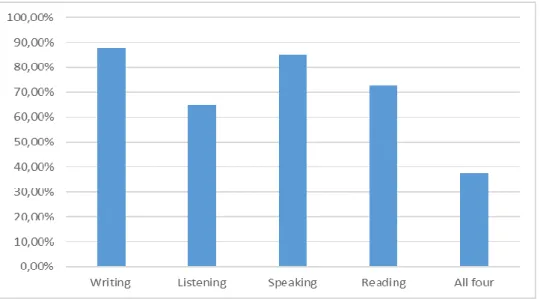
In terms of the third aspect, the four language macro skills (Writing; Reading; Speaking; Reading) addressed by the tasks, it should be stressed that most of them put an emphasis on production skills (Writing: 87,5%; Speaking: 85%), although comprehension also bears some weight, especially Listening (72,5%; Reading: 65%). Nevertheless, a balance is sought in most tasks, as they combine several skills at the same time. In fact, more than a third of them, i.e. 37,5%, combine all four macro-skills. The prevalence of production skills underscores the concern for a more proactive involvement of the learner in the communicative process.
Figure 3. Language macro-skills addressed in the 40 samples of tasks
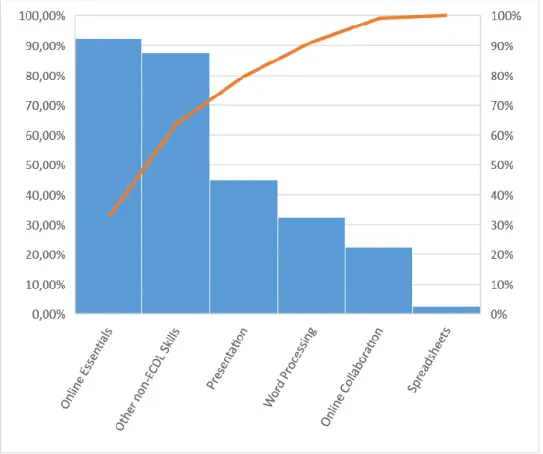
Finally, as digital literacy constitutes a central component of the project, an analysis of the European Computer Driving License skills (ECDL Foundation, 2007) and other non-ECDL was also conducted. All tasks develop “Computer Essentials” skills, namely knowledge of basic
concepts, informed use of devices and networks, creation and management of files, and knowledge of data security procedures. The vast majority of them (92,5%) address “Online Essentials” skills (search of information, web browsing, e-mailing and other forms of online communication), whereas “Presentation” skills (which imply an understanding of the concept and competence in the use of the respective software) account for almost half of the tasks (45%). In turn, “Word Processing” skills (the ability to employ a word processor to create, format and finish written documents) are developed in 32,5% of the tasks, while 22,5% focus on “Online Collaboration” (use of online collaborative applications, including social media, teleconferencing, learning environments, virtual office and calendars). “Spreadsheets” skills are present in just one task (2,5%). This has caused some concern among the members of the consortium as knowledge of the basic skills of numeracy are currently a fundamental component of the learners’ communicative competence.
Figure 4. Digital literacy (including both ECDL and non-ECDL) skills addressed in the 40 samples of tasks
Equally relevant are other (non-ECDL) skills, present in 87,5%, symptomatic of the rapid diversification, flexibility, ease of access and user-friendliness of resources (especially those available online). This becomes apparent in the great variety of forms of communication that the tasks elicit, including ads, live presentations, video documentaries, animations, comic strips, web quests, storytelling, talk shows and televised debates. In fact, the prevalence of non-ECDL skills, in particular those associated with multimedia, not only shows how far ICT resources have travelled since the original ECDL was first conceived as part of the eEurope Targets 2001/2002, but also underscores the need for a more constructive, responsive and flexible attitude towards the innovative nature of technology on the part of both teachers and learners. The prevalence of multimedia products in the set of tasks (25 of them, which represents 62.5% of the total, propose videos, animations, interactive walls, digital storytelling, among other multimedia products, as opposed to the other 37.5%, which put forward more traditional ICT
products, such as PowerPoint presentations, blogs or e-mailing) signals the possibility of an evolution towards a greater interdependence between verbal and non-verbal codes in language learning, which entails uses of the language within an intersemiotic context of cultural communication processes, and which the traditional classroom activities do not usually address.
7. CONCLUSIONS
The analysis of the set of tasks proposed by the project shows that the topics covered allow the tasks to “travel well”, as these topics can be found in the language syllabi of secondary education across Europe and are not exclusive of a country or culture. On the other hand, the CEFR levels chosen are in tune with those expected of secondary education students in the countries of the project consortium, although one must point out that recently the Directorate-General for Education and Culture (DGEC) acknowledged that “understandings of the CEFR levels may differ significantly across jurisdictions” (DGEC, 2015). Another fact established by the analysis is that the tasks seek to foster the development of the production skills, as well as a more pro-active attitude on the part of the learner during the implementation of the task. In order to achieve that, the consortium proposed the use of ICT resources that implied the creation of products, most of which integrate language and other semiotic systems. This intersemiotic complementarity, which lies at the heart of multimedia contents, does not represent a form of demotion of language in the contemporary communication processes, but rather allows us to perceive its adaptability to the conditions imposed by the new forms of communication, and as a consequence new uses of language must be learnt. These tasks are also meant to address this challenge.
Taking into account not only the evaluation made by the independent reviewers, but also the comments by the EACEA’s evaluator of the progress report, as well as the feedback from the end-users, the consortium, though not eschewing the need for further scrutiny and quality improvement, agrees that the work carried out in terms of task design and evaluation has helped all those involved to better understand the precepts of TBLT and to apply them in a methodologically consistent way.
In their overall evaluation of the tasks, the team of reviewers praised the consortium for “this innovative project uniting the CEFR, ICT, and TBLT/TBLL” and stated that this “collaborative work crossing borders is a model to be followed and […], with adequate dissemination of the project, the results will be useful and productive for language teachers at many levels of education” (Instituto Politécnico da Guarda [IPG], 2016). In turn, the EACEA independent expert also acknowledged in the progress report that the samples of tasks are of good quality and that “the project is well positioned within the concepts of the CEFR and the products so far bear a clear identification of the language competence levels, the pedagogic understanding of task-oriented approach as well as a clear focus of the project on ICT competences and ICT resources to be used” (EACEA, 2014).
This project is meant to be a contribution to pedagogical innovation in language teaching in the sense that it seeks to facilitate the teachers’ work in their initial approach to technology-mediated TBLT, while providing the examples they need to develop their own proposals. Furthermore, during the teacher training courses delivered in each country of the consortium (and whose detailed course plans, previously approved by the respective national bodies (when
required), are available in the PETALL project website at
http://petallproject.eu/petall/index.php/en/products-services/teacher-training-courses) were also
scrutinised by the team of reviewers and it became evident for the trainers that teachers are currently willing to embrace the approach proposed by the project, all the more so because there are more ICT resources available in the classroom, most feature a user-friendly interface design and the teachers themselves rely more and more on technology to plan their activities and interact with their learners. The samples of tasks offered by the project and analysed in the
section above not only show alternative ways to give the learners skills and strategies to act in a technologically interconnected world, but also help teachers design their own activities, enhancing their creativity and empowering them to make a positive impact on the teaching quality of their schools, as the methodological framework, materialised in the template used for the designing of the tasks, guides them through the design process in a systematic manner (with a reference to the CEFR descriptors, the methodical planning of the task cycle, the division and definition of roles, the establishment of evaluation criteria, etc.) and a reflexive way (as seen, for example, in section 3 of the template), without imposing any constraints on topics, activities, resources or skills. Besides, as the topics chosen for tasks can match those of other subjects taught at school, teachers have the possibility of articulating their work with that of the teachers of other subjects. The diversity of resources employed, products designed, topics covered and competences developed shows that ICT-based TBLT provides a rich field for the teachers to explore their creativity, while seeking to address the learners’ long-run needs.
8. REFERENCES
Alberth, A. (2011). Critical success factors in online language learning. TEFLIN Journal, 22 (1), 16-33.
Ali, A. & Elfessi, A. (2004). Examining students performance and attitudes towards the use of information technology in a virtual and conventional setting. The Journal of Interactive Online Learning (Online), 2(3). [Available online at: http://goo.gl/RCXqcl], Retrieved on May 12, 2016.
Anthony, E. (1963). Approach, method and technique. English Language Teaching, 17(2). 63-57.
Chapelle, C. (2001). Computer applications in second language acquisition: Foundations for teaching, testing and
research. Cambridge: Cambridge University Press.
Directorate-General for Education and Culture [DGEC] (2015). Study on comparability of language testing in
Europe. [Available online at:
http://ec.europa.eu/dgs/education_culture/repository/languages/library/documents/edl-report_en.pdf], Retrieved on December 4, 2016.
EACEA (2015). LLP progress report assessment sheet. Project number: 530863-LLP-1-2012-1NL-KA2MP. Brussels: EACEA.
ECDL Foundation (2007). European computer driving licence/international computer driving licence syllabus
version 5.0. Dublin: European Computer Driving Licence Foundation Ltd. [Available online at:
http://goo.gl/ECbviT], Retrieved on May 12, 2016.
Ellis, R. (2003). Task-based language learning and teaching. Oxford: Oxford University Press.
Ellis, R. (2006). The methodology of task-based teaching. Asian EFL Journal, 8(3), 19-45. [Available online at http://goo.gl/BtN4rQ], Retrieved on April 24, 2016.
González-Lloret, M. (2015). A practical guide to integrating technology into task-based language teaching. Washington: Georgetown University Press.
González-Lloret, M. & Ortega, L. (Eds.). (2014). Technology-mediated TBLT: Researching technology and tasks. Amsterdam: John Benjamins.
Griaznova, E. (2016). The development of ICT-competencies of the students at foreign language lessons as the basis for successful learning and cognitive activity. Pacific Science Review. 6(4), 226-229.
Hadadi, A., Abbasi, H., & Goodarzi, A. (2014). Developing competencies for using the interactive whiteboard to implement communicative language teaching in the english (foreign language) classroom. Proceedings of the
International Conference on Current Trends in ELT, Procedia - Social and Behavioral Sciences, 98, 618-620.
Hampel. R. (2006). Rethinking task design for the digital age: A framework for language teaching and learning in a synchronous online environment. ReCALL, 18, 105-121.
Hassan, X., Macaro, E., Mason, D., Nye, G., Smith, P., & Vanderplank, R. (2005). Strategy training in language
learning – a systematic review of available research. In: Research Evidence in Education Library. London:
EPPI-Centre, Social Science Research Unit, Institute of Education, University of London. [Available online at https://goo.gl/3F1SGm], Retrieved on April 14, 2016.
Hymes, D. (1972). On communicative competence. In J.B. Pride & J. Holmes (Eds.), Sociolinguistics (pp. 269-293). Harmondsworth: Penguin.
Instituto Politécnico da Guarda [IPG] (2016). PETALL reviewers’ comments. Guarda: IPG. [Available online at https://goo.gl/SC3JSA], Retrieved on December 6, 2016.
Johnson, K. (2003). Designing language teaching tasks. Basingstoke: Palgrave Macmillan.
Kurek, M. (2015). Designing tasks for complex virtual learning environments. Bellaterra: Journal of Teaching and
Learning Language and Literature, 8(2), 13-32.
Lai, C. & Li, G. (2011). Technology and task-based language teaching: A critical review. CALICO Journal, 28(2), 498-521.
Loftus, M., Tiernan, P., & Cherian, S. (2014). Students' readiness to move from consumers to producers of digital video content: A cross-cultural analysis of Irish and Indian students. Education & Information Technologies, 19(3), 569-582.
Lopes, A. (2012). Changing teachers’ attitudes towards ICT-based language learning tasks. The EUROCALL Review, 20. [Available online at http://goo.gl/LB0WQZ], Retrieved on June 2, 2016.
Martins, M. (2015). How to effectively integrate technology in the foreign language classroom for learning and collaboration. International Conference on New Horizons in Education, Paris, France, 174, 77-84.
Moreira, A., Moreira, G., Roberto, M. T., Howcroft, S. J., & Almeida, T. (2001). Programa de Inglês: Nível de
Continuação – 10.º, 11.º e 12.º Anos. Lisboa: Ministério da Educação.
Nunan, D. (1989). Designing tasks for the communicative classroom. Cambridge: Cambridge University Press. Nunan, D. (2004). Task-based language teaching. Cambridge: Cambridge University Press.
Palmgren-Neuvonen, L. & Korkeamäki, R. (2014). Review article: Group interaction of primary-aged students in the context of a learner-generated digital video production. Learning, Culture and Social Interaction. 3(1), 1-14. Richards, J. & Rodgers, T. (1982). Method: Approach, design and procedure. TESOL Quarterly, 16, 153-168. Richards, J. & Rodgers, T. (2004). Approaches and methods in language teaching. Cambridge: Cambridge
University Press.
Roessingh, H. (2014). Teachers' roles in designing meaningful tasks for mediating language learning through the use of ICT: A reflection on authentic learning for young ELLs. Canadian Journal of Learning and Technology, 40(1), 1-24.
Shehadeh, A. & Coombe, C. (Eds.). (2012). Task-based language teaching in foreign language contexts: Research
and implementation. Amsterdam: John Benjamins.
Schmid, E. & Whyte, S. (2014). Teaching languages with technology: Communicative approaches to interactive
whiteboard use. London: Bloomsbury.
Schrooten, W. (2006). Task-based language teaching and ICT: Developing and assessing interactive multimedia for task-based language teaching. In K. Branden (Eds.), Task-based language education: from theory to practice (pp. 129-150). Cambridge: Cambridge University Press.
Tsai, S. (2015). Implementing courseware as the primary mode of task-based ESP instruction: A case study of EFL students. Computer Assisted Language Learning, 28(2), 171-186.
Thomas, M. & Reinders, H. (2010). Task-based language learning and teaching with technology. New York: Continuum.
Willis, D. & Willis, J. (2001). Task-based language learning. In R. Carter & D. Nunan (Eds.), The Cambridge guide
to teaching English to speakers of other languages (pp. 173-179). Cambridge: Cambridge University Press.
Willis, J. (1996). A framework for task-based learning. Harlow, UK: Longman Addison-Wesley.
Willis, J. (2009). Great results with task-based language teaching. Birmingham: Aston University. [Available online at http://goo.gl/6kx0aL], Retrieved on May 28, 2016.
Uzun Özet
Avrupa çapında şu an kullanımda olan çeşitli dil öğretim yöntem ve yaklaşımları içerisinde Göreve Dayalı Dil Öğretimi (GDDÖ) birçok uygulayıcı, araştırmacı ve ilgili diğer kişiler tarafından gittikçe büyüyen bir ilgi görmektedir. Avrupa Dilleri Öğretimi Ortak Çerçeve Programı (ADÖÇ) bu ilginin artmasında önemli bir rol oynamıştır. Bu program, öğrencileri pasif bilgi alıcılar olarak değil, anlam ifade eden eylemleri sayesinde hedeflerini başarıyla gerçekleştirmelerini sağlayacak doğru iletişim becerilerine sahip toplumsal temsilciler olarak kabul eder. Bir dilde uzmanlaşmak, elle tutulur sonuç ve faydalar sağlamanın beraberinde dili topluma uygun bir şekilde kullanmayı bilmeyi gerektirir. Eylem odaklı bu yaklaşım, dilin ders kitapları ya da sınıfta yapılan etkinliklerden ibaret olmayıp farklı yaklaşım ve stratejilerin oluşumunu sağlayan durumların çeşitliliği içinde kullanıldığını öğrencilere gösterdiği için önceki dil öğrenim yaklaşımlarına istinaden önemli bir değişime işaret eder. ADÖÇ, GDDÖ üzerine geniş bir fasıl içerir. Bu fasıl içerisinde, görev içeriği için “kişisel, kamusal, eğitsel veya mesleki alanlarda günlük hayatın bir özelliği” olarak geniş bir tanımlama yapılırken gerçekleştirilmesinin ise “açık şekilde tanımlanmış bir hedefe ve sonuca sahip olup belirli bir alanda amaca yönelik bir dizi eylemi sürdürmek için belirli becerilerin stratejik aktivasyonu”na bağlı olduğu belirtilir (s.157). Yapılan çalışmalar, yayınlar ve projeler, GDDÖ için gösterilen ilgiyi oldukça belirgin hale getirmiştir. Uluslararası konsorsiyum, 2005’ten bu yana iki yılda bir uluslararası konferanslar düzenlemektedir. Daha yakın zamanda, 2015’te ise Uluslararası Göreve Dayalı Dil Öğretimi Derneği kurulmuştur. Ayrıca, Avrupa Komisyonu da GDDÖ’nün önemli bir parçası olduğu çeşitli projelere fon sağlamaktadır. Hayatboyu Öğrenme Programı kapsamında finanse edilen PETALL (Pan-Avrupa Dil Öğrenimi için Göreve Dayalı Etkinlikler), ADÖÇ uyarınca iyi uygulama örnekleri sağlayıp birçok öğretmen eğitim kursu vererek teknoloji destekli görevler ile yabancı dil öğrenimini geliştirmeyi amaçlamaktadır. PETALL, Algarve Üniversitesi (Portekiz) tarafından düzenlenmek üzere dokuz farklı ülkeden (Almanya, Yunanistan, Macaristan, İtalya, Hollanda, Sırbistan, Türkiye ve İngiltere) ortaklara sahiptir. Öğretmen eğitim kurumları ve konuşma okulları tarafından oluşturulan tandem gruplarındaki kişiler bu ülkelerin her birini temsil eder. Projenin genel yapısı hakkında kısa bir bilgilendirmenin ardından teknoloji destekli görev tasarımı için metodolojik bir çerçeve önerilip tartışılmıştır. Görevlerin bireşimsel analizinin yapılmasının ardından ise sonuç bölümü eklenmiştir. Çoğu ülkenin milli müfredatı ADÖÇ’ü yansıtmaktadır ve GDDÖ’nün kazançlarını açık bir şekilde tanımlamıştır. Mesela, İspanya’da Eğitim, Kültür ve Spor Bakanlığı son zamanlarda İspanyolca (YD) öğretiminin “çok çeşitli becerilerden oluşan en uygun stratejiler aracılığıyla gerçek hayatta belirli görevlerin başarılıp istenilen sonuçların elde edilmesiyle eşzamanlı olarak bunların uygulamaya geçirilmesi” (ECD/1308/2015) ibaresine dayanması gerektiğine karar verdi. Portekiz’de ise, İDÖ (İngiliz Dili Öğretimi) için yasal program da sorun analiz ve çözümünün yanı sıra keşfetmeyi sağlayan strateji ve görevlerden söz eder. (Moreira ve diğerleri 2001). Ancak, ETALAGE projesi (Avrupa Dil Öğreniminde Göreve Dayalı Etkinlikler: Bir İyi Uygulama Değişimi) için 2011’de yürütülen bir anket ise önemli sayıda öğretmenin GDDÖ konusunda isteksiz olduğunu gösterdi. Geleneksel yaklaşımların yanısıra bu isteksizliği açıklayan dört sorun tespit edildi: mevcut görevleri sınıfın ihtiyaçlarına uyarlamakta yaşanan sıkıntı; görevin hazırlığı için harcanan çalışma miktarı; yabancı dilde iletişim kuran öğrenci gruplarının izlenmesi; ve son olarak, bu yaklaşımın gerekliliklerini karşılamak için gereken destek ve eğitimin eksikliği (Lopes, 2012). Konsorsiyum, bu yüzden bu sorunları ele almak adına yeni bir proje sunmaya karar verdi. Bilgi ve iletişim teknolojilerine (BİT) dayalı görevler, farklı eğitim bağlamlarında çalışan çeşitli sayıda öğretmenin ihtiyaçlarını karşılayabilecek şekilde mümkün olduğunca çok ortamda uygulanabilir esneklikte olmak zorunda olacak. Bu hedefi başarmanın bir yolu ise, görevlerin ortak gelişimi, uygulanması ve değerlendirilmesi için bir araya gelmiş uluslararası bir öğretmen ağı kurmak olacaktır. Bunun yanı sıra, uygulamada yaşanan bazı sorunların üstesinden gelinmesi ve GDDÖ’nün daha detaylı bir şekilde anlaşılması için metodolojik ve içeriksel bir çerçeve sağlamak adına öğretmenlere bu alanda özel bir eğitim sunmak da gerekliydi. Kurslar, iyi uygulama örneklerinin analizi, bu tür görevler için gerekli BİT kaynaklarının değerlendirilmesi ve BİT’e dayalı görevlerin tasarımını zorunlu kılacaktır. Böylelikle bu projenin amaçları, farklı eğitim bağlamlarına uyarlanabilen BİT’e dayalı görevlerin geliştirilmesi, görevler için online bir havuzun oluşturulması, BİT’e dayalı GDDÖ kapsamında öğretmen eğitiminin kalitesinin yükseltilmesi ve dijital becerilerinin geliştirilmesi için gerekli uluslararası işbirliğinin artırılması üzerinde yoğunlaşmıştır.