Early menarche and blood pressure in adulthood: systematic
review and meta-analysis
S. Bubach
1,2, C. Loret De Mola
3, R. Hardy
4, J. Dreyfus
5, A.C. Santos
6,7, B.L. Horta
2 1Department of Health Sciences, Federal University of Espírito Santo, São Mateus 29932-540, Brazil
2
Postgraduate Programme in Epidemiology, Federal University of Pelotas, Pelotas 96020-220, Brazil
3
Department of Nursing, Federal University of Pelotas, Pelotas 96010-610, Brazil
4
MRC Unit for Lifelong Health and Ageing at UCL, University College London, London WC1B 5JU, UK
5
School of Public Health, University of Minnesota, Minneapolis, MN 55455, USA
6
EPI-Unit, Institute of Public Health, University of Porto, Porto 4050-600, Portugal
7
Department of Clinical Epidemiology, Predictive Medicine and Public Health, University of Porto Medical School, Porto 4200-319, Portugal *Address correspondence to Susana Bubach, E-mail: [email protected]
A B S T R A C T
Background It has been reported that early menarche is associated with high blood pressure and hypertension. However, some studies have failed to observe such association. We carried out a systematic review and meta-analysis on the association of early menarche with hypertension and high blood pressure in adulthood.
Methods PUBMED, SciELO, Scopus and LILACS databases were searched. Studies that evaluated the association of early menarche with hypertension or high blood pressure, among women aged 20 years or more were included. Random effects models were used to pool the estimates. Meta-regression was used to evaluate the contribution of different co-variables to heterogeneity.
Results We identified 17 studies with 18 estimates on the association of early menarche with hypertension and high blood pressure. The odds of hypertension/high blood pressure was higher among women with early menarche [pooled (OR):1.25; 95% confidence interval (CI):
1.17–1.34; P < 0.001]. In the meta-regression analysis, studies evaluating 1500 subjects or more had a higher pooled OR [1.27; 95%CI (1.19;1.36)] than those with less participants. Although funnel plots showed some asymmetry, Egger tests were not statistically significant. Therefore, it is unlikely that the observed association was to publication bias.
Conclusions Early menarche is associated with hypertension among adult woman. Keywords blood pressure, hypertension, menarche, meta-analysis, puberty, review
Introduction
Worldwide, the prevalence of early menarche (≤11 years) has increased.1–7 It has been suggested that early menarche could be associated with a higher risk of obesity8 and the development of metabolic cardiovascular risk factors.9–12
For example, Lakshman et al.9 reported that early menar-che was associated with high systolic and diastolic blood pressure and risk of hypertension. Heys et al.13, evaluated Chinese women aged 50 or more, and also reported that the odds of high blood pressure was higher among women who had early menarche (≤12.5 years) [odds ratio (OR): 1.34 (95% confidence interval (CI): 1.09; 1.65)] in comparison to those whose age at menarche was ≥14.5 years. Another
study, in the UK,14 also observed among woman aged between 40 and 69 years that early menarche (≤11 years) was associated with higher odds of hypertension [OR:1.13 (95% CI: 1.10; 1.16)], in relation to those whose menarche was at 13 years.
However, other studies have failed to observe such associ-ation.12–15 Previous systematic review on the association
S. Bubach, Professor of Public Health C. Loret De Mola, Professor of Epidemiology R. Hardy, Professor of Epidemiology J. Dreyfus, Research
A.C. Santos, Professor of Public Health B.L. Horta, Professor of Epidemiology
between age at sexual maturation and cardiometabolic risk factors (Prentice; Viner, 2013) reported that there was an increased risk of high blood pressure among those who mature early, but the studies were heterogeneous and some of them assessed men and women. Besides that given the heterogeneity among the studies examining the association of early age at menarche with hypertension and high blood pressure among adult woman, we decided to carry out a sys-tematic review and meta-analysis. Furthermore, we evaluated whether design related characteristics were associated with the heterogeneity among the studies.
Materials and methods
Following the PRISMA (Preferred Reporting Items for Systematic review and Meta-Analysis),16two researchers (S.B. and C.L.M.) carried out independent electronic searches on the PUBMED, SciELO, Scopus and LILACS databases cov-ering the entire period of each database (last access on 16 March 2016), with no language restrictions, following the study protocol.
We included studies that assessed the association of early menarche with systolic and/or diastolic blood pressure or hypertension/high blood pressure among women aged 20 years and older. If the study compared more than two groups of age at menarche, the extremes were compared, i.e. the lowest (early) with the highest menarche age category (late), which was the reference category. Studies that ana-lyzed the association in specific groups, such as women with polycystic ovary syndrome, hirsutism, hyperandrogenia,17–19 lupus,20anorexia,21 Type 1 diabetes,22Turner’s syndrome,23 pregnant24or athletes25were excluded.
In the literature search, each of the menarche terms (menarche; menstrual; maturation; puberty; menstruation) were combined with the blood pressure terms ‘blood pres-sure’, hypertension, hypotension, systolic, diastolic and arter-ial. In the LILACS database, we used the term ‘pressure’ instead of ‘blood pressure’, because the later was not accepted. The databases do not provide universal coverage of the published studies. For this reason, we searched differ-ent databases, decreasing the likelihood of missing eligible manuscripts.
After excluding the duplicates, titles and abstracts were perused in order to exclude the clearly irrelevant studies. This process was done by two researchers independently. The remaining full texts were assessed and only those meet-ing the inclusion criteria were included in the meta-analysis. The selection of studies was carried out, independently, by two researchers. Disagreements were solved by consensus. In addition, we perused the reference lists of the included
studies and searched for studies citing the included manuscripts.
Figure 1 shows the study selection flow diagram based on PRISMA16recommendations. If the study explored the association between early menarche and blood pressure, but did not report the corresponding measures of association or did not provide the appropriate estimate, we requested the information from the authors. We contacted authors of 13 manuscripts that appeared to have the data required to be included in the meta-analysis: three26–28 provided the requested information, one29 did not have access to data for further analysis, one evaluated the same studied popula-tion as another study30 included in the review, and others did not return the mail or did not provide data. Therefore, six26–29,31,32were included in this meta-analysis.
Two researchers independently extracted the data from the included studies, using an electronic form. The forms were compared and disagreements were solved by consen-sus. Study quality was not assessed. But, we extracted infor-mation on the following methodological characteristics that could be source of heterogeneity among the studies33: year of publication, sample size, country of data collection, study design, type of population studied (e.g. population-base, hos-pital or professional category), early and late menarche age categories, source of information on menarche age, age at assessment of blood pressure, length of recall of information on age at menarche, losses to follow-up, control for con-founding, blood pressure measurement (e.g. techniques and methods of measurement, type of equipment), definition of hypertension and effect measures.
Separate analyses were performed for the studies that reported the mean difference in systolic or diastolic blood pressure and for those that reported the OR for hypertension (or high blood pressure, at least>130/85 mmHg), comparing women who presented early menarche with those having menarche at an older age. Initially, studies were combined using fixed effects models and heterogeneity was assessed using Q test and I2. If the Q test was statistically significant or I2was>50%, estimates were pooled using random effects models.34Meta-regression was used to assess the contribution of co-variables (sample size, study design, early and later menarche age categories, adjustment for confounders) to the heterogeneity among the studies. The percentage of the vari-ance of the heterogeneity that was explained by the co-variables was estimated. If the inclusion of the co-variable increased the heterogeneity, the estimate on the change in the measure of heterogeneity was truncated to zero. Funnel plot and Egger test were employed to investigate the possibility of publication bias. The analyses were carried out using the soft-ware Stata®version 12.1 for Windows.
Results
We identified 21 088 records and, after duplicates were excluded, 14 322 titles and abstracts were evaluated. Of these, 47 texts were selected for full-text reading and 13 manuscripts were included in our review. Additionally, we included four of six papers, which were identified in the search of reference lists and studies citing the manu-scripts identified in the electronic search. Therefore, 17 studies9,12–15,26–32,35–39 were include in the meta-analysis. Figure1shows the study selectionflow chart.
Table 1 presents the main characteristics of the included studies. Two were published before 2007, 11 were carried out in high income countries, 11 were cohort studies, and
one was a birth cohort. Thirteen studies defined early menarche as age≤11 years.
The length of recall of age at menarche was heteroge-neous, ranging from<1 year to over 40 years. Eight studies adjusted the estimates for confounding factors.
Figure 2 shows that in 13 of 17 studies, early menarche increased the odds of hypertension, and 4 of these 13 studies had CIs that included the reference. In the pooled analysis, early menarche increased the odds of hypertension/high arterial pressure [pooled random effects OR: 1.25 (95% CI: 1.17–1.34; P< 0.001)]. Heterogeneity was high (I284.6%).
For systolic and diastolic blood pressure, the heterogen-eity was also high and the pooled random mean difference
was 0.80 mmHg (95% CI:−1.52–3.12; P = 0.50) (I2 87.5%) and 0.14 mmHg (95% CI: −1.17–1.46; P = 0.83) (I2 84.3%) between early and later menarche categories, for systolic and diastolic blood pressure, respectively (Fig.2).
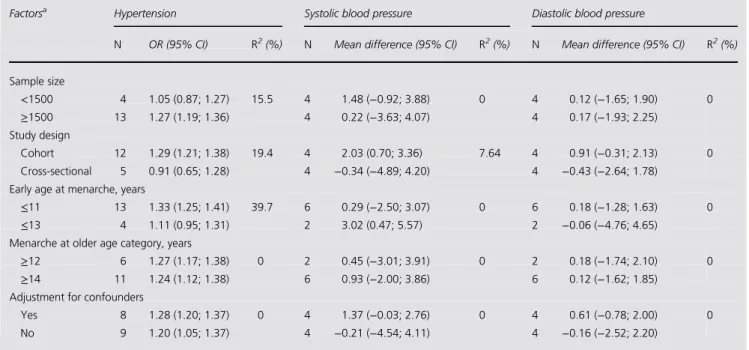
Table 2 shows that those studies whose sample size was ≥1500 reported a higher effect measure than those with
smaller samples, but the difference between the categories was not statistically significant. This variable explained 15.5% of the heterogeneity among studies. Study design explained 19.4% of the heterogeneity and the cohort studies reported higher odds of hypertension than the cross-sectional ones with a statistically significant difference [pooled random
Table 1 Summary of studies included in meta-analyses
First author/year Sample Study design Origin Age of assessment
Menarche Adjustment HTN definition
Early Late
Cui, 2006 37 965 Cohort Japan 40–79 ≤13 ≥17 No History of HTN
Hardy, 2006c 738 Cohort England 53 ≤12a ≥13a Childhood and adult SES, BW,
BMI at 7 years, MES at 53 years
BP≥ 130/85 mmHg
12.25b 14.58b BMI and height at 7 years —
Heys, 2007 7108 Cohort China 50–94 <12.5 ≥14.5 Age, EDU, PREG BP≥ 130/85 mmHg or
treatment of previously diagnosed HTN
Kivimäki, 2008 794 Cohort Finland 30–39 ≤11.9 ≥14 No —
Santos, 2008 1207 Cross-sectional Portugal 40 or more <12 ≥12 Age, MS, EDU, OC, SES, TPA, AC, SS
BP> 130/80 mmHg
He, 2009 101 415 Cohort USA 30–55 ≤12 ≥15 No History of HTN
100 547 24–44 No History of HTN
Lakshman, 2009 15 807 Cohort England 40–80 08–11 15–18 Age, EDU, OC, OCU, HRT, parity
Medication use
Mendoza, 2010 1975 Cross-sectional Spain 45–78 <11 ≥11 No Medication use
Stöckl, 2011 1536 Cross-sectional Germany 32–81 <12 >15 No Diagnostic of HTN, medication
use or BP> 140/90 mmHg Akter, 2012 1423 Cross-sectional India 29–56 <12 >13 Age, EDU, MS, TP,
OCU, PREG
Diagnostic of HTN, medication use or BP≥ 130/85 mmHg
Mueller, 2012 34 022 Cohort Singapure 45–74 ≤12 ≥17 No Ever had/being physician
report for high BP
Glueck, 2013 268 Longitudinal USA 30–46 ≤10 ≥16 No BP≥ 130/85 mmHg or
medication use prescribed by a physician
Dreyfus, 2015 1791 Cohort USA 42–59 <12 ≥14a Age, race, PHDM, OCU, SS,
PAL, AC, EDU, HTN medications
BP≥ 130/85 mmHg or medication use
≥12b
-Canoy, 2015 1 217 840 Cohort England 50–64 ≤10 ≥17 No Ever had/being treated for
HTN
Cao, 2015 1625 Longitudinal China 54–65 <12 ≥12 Age BP≥140/90 mmHg
Day, 2015 152 959 Cohort England 40–69 08–11 13 BW, age, age2 Ever had/being physician
report for HTN
Lim, 2016 4463 Cross-sectional Korea 28–45 <12 ≥16 No BP≥ 130/85 mmHg or
medication use
aHypertension/high blood pressure;bSystolic and diastolic blood pressure;cBirth cohort.
AC, alcohol consumption; BP, blood pressure; BW, birth weight; EDU, education level; HRT, hormone replacement therapy use; HTN, hypertension; OC, occupation; OCU, oral contraceptive use; MES at 53 years: menopausal status at 53 years; MS, marital status; PAL, physical active level; PHDM, parental history of diabetes; PREG, number of pregnancies; SS, smoking status; TP, use of tobacco products TPA, total physical active.
effects OR: 1.29 (95% CI: 1.21–1.38; P < 0.001) I286.0%]. Those studies that considered an age at menarche ≤11 as early menarche, reported higher odds for hypertension/high
blood pressure, compared to those that considered menarche at an age≤13 as early menarche. Early menarche categoriza-tion explained 39.7% of the heterogeneity among the studies.
Fig. 2 (a) Random effects meta-analysis of OR in studies that evaluating hypertension and age at menarche categorical. (b) Random effects meta-analysis of mean difference in studies that evaluated continuous systolic blood pressure and age at menarche categorical. (c) Random effects meta-analysis of mean dif-ference in studies that evaluating continuous diastolic blood pressure and age at menarche categorical.
The pooled random effect OR was higher among those stud-ies that adjusted the estimates for confounding variables [pooled random effects OR: 1.28 (95% CI: 1.20–1.37; P < 0.001) I255.9%].
When the analysis was restricted to those studies that defined early menarche as age ≤11 years old, with cohort design, and sample size≥1500, the pooled effect for systolic blood pressure was 1.69 mmHg (95% CI: −0.18; 3.56; P = 0.077) and 1.34 mmHg (95% CI: 0.80; 1.88; P< 0.001) for diastolic blood pressure.
Supplementary Figures 1–3 shows that there was some asymmetry in the funnel plots, but the Egger tests were not statistically significant [hypertension/high blood pressure – P = 0.05; systolic blood pressure – P = 0.561; diastolic blood pressure– P = 0.302].
Discussion
Mainfinding of this study
Early menarche was associated with a higher odds of hyper-tension in adulthood. Systolic and diastolic blood pressure levels were also higher among women who presented early menarche, but the CIs included the reference. Therefore, the higher mean systolic and diastolic blood pressure among women who presented early menarche may have been due to chance. Heterogeneity among studies was high and it was
observed that part of this heterogeneity derived from differ-ences among the studies regarding sample size, study design, and categorization of age at menarche.
What is already known on this topic
It has been reported an inverse association between age at menar-che and blood pressure/prevalence of hypertension.9,13,32,40
Heys et al.13 observed an increase in the OR for high blood pressure in women with early menarche (<12.5 years), compared to those with late menarche (≥14 years) (OR: 1.11; 95% CI: 1.09–1.65), even after adjusting for age, schooling and parity.
Other study9also found a tendency to increase the preva-lence of hypertension with a reduction in the age of menarche.
A previously published systematic review8 observed that six studies reported that early sexual maturation was asso-ciated with an increased risk of high blood pressure among men and women.
What this study adds
Those that defined early age at menarche as ≤11-year-old9,12,14,15,26,27,29–31,35–37 reported a stronger association than the ones that used higher ages as cut-off point. Such
Table 2 Univariate meta-regression and pooled OR of hypertension and mean differences of continuous systolic and diastolic blood pressure comparing women presenting early and late menarche, in subgroups at methodological factors
Factorsa Hypertension Systolic blood pressure Diastolic blood pressure
N OR (95% CI) R2(%) N Mean difference (95% CI) R2(%) N Mean difference (95% CI) R2(%) Sample size <1500 4 1.05 (0.87; 1.27) 15.5 4 1.48 (−0.92; 3.88) 0 4 0.12 (−1.65; 1.90) 0 ≥1500 13 1.27 (1.19; 1.36) 4 0.22 (−3.63; 4.07) 4 0.17 (−1.93; 2.25) Study design Cohort 12 1.29 (1.21; 1.38) 19.4 4 2.03 (0.70; 3.36) 7.64 4 0.91 (−0.31; 2.13) 0 Cross-sectional 5 0.91 (0.65; 1.28) 4 −0.34 (−4.89; 4.20) 4 −0.43 (−2.64; 1.78)
Early age at menarche, years
≤11 13 1.33 (1.25; 1.41) 39.7 6 0.29 (−2.50; 3.07) 0 6 0.18 (−1.28; 1.63) 0
≤13 4 1.11 (0.95; 1.31) 2 3.02 (0.47; 5.57) 2 −0.06 (−4.76; 4.65)
Menarche at older age category, years
≥12 6 1.27 (1.17; 1.38) 0 2 0.45 (−3.01; 3.91) 0 2 0.18 (−1.74; 2.10) 0
≥14 11 1.24 (1.12; 1.38) 6 0.93 (−2.00; 3.86) 6 0.12 (−1.62; 1.85)
Adjustment for confounders
Yes 8 1.28 (1.20; 1.37) 0 4 1.37 (−0.03; 2.76) 0 4 0.61 (−0.78; 2.00) 0
No 9 1.20 (1.05; 1.37) 4 −0.21 (−4.54; 4.11) 4 −0.16 (−2.52; 2.20)
aThe reference category is a second in each factor.
R2(%), % heterogeneity explained; N, number of studies. Mean difference expressed in mmHg.
specificity in the association suggests that early menarche is associated with high blood pressure.
One explanation for the association between early menarche and hypertension could be that early menarche is associated with a higher risk of obesity41and adiposity in adulthood.42,43 In turn, obesity is associated with higher blood pressure levels.44–47 Hence, the association observed in the present review might be mediated by body composition in adulthood. However, none of the studies included in this meta-analysis estimated the indirect effect of body composition in the associ-ation between early menarche and hypertension.
Besides adiposity, other mechanisms may explain this association. One such mechanism is the speed of matur-ational development, because blood pressure during puberty increases mainly due to the peak of growth,48which is high-er among women who mature early, possibly having long-term effects on blood pressure.40Moreover, early exposure to high levels of estrogen due to early menarche can increase the risk of developing hypertension. Evidence suggests that blood pressure tends to increase in situations where serum levels of estrogen are higher, such as in the third trimester of pregnancy, the use of oral contraceptive or estrogen-based hormone replacement therapy.49
On the other hand, we did not to observe an association of early menarche with systolic and diastolic blood pressure. We only observed an association between early age at menarche and hypertension. Thisfinding could be due to an effect of age at menarche only at the extremes of the blood pressure distribution, having no impact on the distribution of the variable. Besides the smaller number of studies asses-sing mean pressure, most of the studies identified (seven out of eight) in this meta-analysis did not adjust the estimates for anti-hypertensive medication use or exclude from the analysis women who took such medication, which may have underestimated the associations. Therefore, further studies on this subject should control the estimates for medication use or exclude women taking anti-hypertensive medications.
In addition, certain methodological characteristics may have underestimated the association. When the analysis was restricted to those studies that defined early menarche as age ≤11 years, with cohort design, and sample size ≥1500, the pooled effect was larger pooled effect – systolic blood pres-sure: 1.69 mmHg [(95% CI:−0.18; 3.56) I2 72.3%, P: 0.08].; pooled effect – diastolic blood pressure: 1.34 mmHg [(95% CI: 0.80; 1.88) I20%, P < 0.001], suggesting that the hetero-geneity in definition of early menarche may have underesti-mated the association. Furthermore, the stronger association among those studies that used a more strict definition of early menarche reinforces the evidence that early menarche may be associated with higher systolic blood pressure. Because the CI
included the nullity, we cannot exclude that this association was due to chance.
In spite of a certain asymmetry in funnel plot, we believe that the observed association between early menarche and hypertension was not due to publication bias. The magnitude of the association was similar among the studies that assessed over 1500 women and<1500 women, which is the opposite of what would be expected if such bias was present.50
The definition of hypertension varied among the studies, but the observed association was not due to this heterogen-eity in the definition of hypertension. Even among those studies that used the most recent criteria to define hyperten-sion,51early menarche was associated with a higher odds of hypertension [1.31 (95% CI: 1.20; 1.43) I264.4%, P: 0.038].
In this systematic review and meta-analysis, we observed an association between early menarche and risk of hyperten-sion. Evidence indicates that the body composition of adult-hood is an important mediator of this association.14,28 Therefore, suggesting that by blocking the development of obesity, the mechanism of action of early menarche will be blocked. Consequently, this is further evidence on the public health importance of combating obesity.
Limitations of this study
The exclusion of six studies (Supplementary Table 1) that did not report quantitative data on the association of early menarche with hypertension or mean blood pressure could have biased the pooled effect away from the null, if the excluded studies did notfind statistically significant associa-tions. On the other hand, four of these studies reported that early age at menarche was associated with a high risk of hypertension or blood pressure. And, if these studies had been included in this review the pooled effect would be higher with a lower P-value. Therefore, the observed asso-ciations were not due to the exclusion of potentially eligible studies. Furthermore, late menarche was not evaluated in this review, although some papers have found that it is also associated with poor health outcomes.26,31
Conclusion
In conclusion, besides the high heterogeneity among studies, the present review and meta-analysis suggests that early menarche is associated with hypertension among adult women.
Supplementary data
Supplementary data are available at the Journal of Public Healthonline.
Acknowledgement
We would like to thank MRC National Survey of Health and Development, UCL.
Authors’ contributions
S.B.: conception and design of the study, acquisition of data, analysis and interpretation data, drafting the article, final approval of the version to be submitted; C.L.M.: acquisition of data, analysis and interpretation data, revising it critically for important intellectual content, final approval of the ver-sion to be submitted; R.H., J.D., A.C.S.: acquisition of data, revising it critically for important intellectual content, final approval of the version to be submitted; B.L.H.: conception and design of the study, analysis and interpretation data, drafting the article, revising it critically for important intellec-tual content,final approval of the version to be submitted.
References
1 Duarte MSF. Physical maturation: a review with special reference to Brazilian children. Cad Saúde Pública 1993;9(Suppl. 1):S71–84. 2 Keiser-Schrama SMPFM, Mul D. Trends in pubertal development
in Europe. Hum Reprod Update 2001;7:287–91.
3 Hwang JY, Shin C, Frongillo EA, Shin KR, Jo I. Secular trend in age at menarche for South Korean women born between 1920 and 1986: the Ansan study. Ann Hum Biol 2003;30:434–42.
4 Malina RM, Reyes REP, Tan SK, Buschang PH, Little BB, Koziel S. Secular change in height, sitting height and leg length in rural Oaxaca southern Mexico: 1968–2000. Ann Hum Biol 2004;31:615–33.
5 MacDowell MA, Brody DJ, Hughes JP. Has age at menarche chan-ged? Results from the national health and nutrition examination sur-vey (NHANES) 1999–2004. J Adolesc Health 2007;40:227–31. 6 Harris MA, Prior JC, Koehoorn M. Age at menarche in the
Canadian population: secular trends and relationship to adulthood BMI. J Adolesc Health 2008;43:548–54.
7 Belachew T, Hadley C, Lindstrom D, Getachew Y, Duchateau L, Kolsteren P. Food insecurity and age at menarche among adolescent girls in Jimma zone southwest Ethiopia: a longitudinal study. RB& E2011;9:125.
8 Prentice P, Viner RM. Pubertal timing and adult obesity and cardio-metabolic risk in women and men: a systematic review and meta-analysis. Int J Obes 2013;37:1036–43.
9 Lakshman R, Forouhi NG, Sharp SJ et al. Early age at menarche associated with cardiovascular disease and mortality. J Clin Endocrinol Metab2009;94:4953–60.
10 Ong KK, Elks CE, Wills AK et al. Associations between the puber-tal timing-related variant in LIN28B and BMI vary across the life course. J Clin Endocrinol Metab 2011;96:E125–129.
11 Mueller NT, Duncan BB, Barreto SM et al. Earlier age at menarche is associated with higher diabetes risk and cardiometabolic disease
risk factors in Brazilian adults: Brazilian longitudinal study of adult health (ELSA-Brasil). Cardiovas Diabetol 2014;13:1–8.
12 Lim SW, Ahn JH, Lee JA, Kim DH, Seo J, Lim JS. Early menarche is associated with metabolic syndrome and insulin resistance in pre-menopausal Korean women. Eur J Pediatr 2016;175:97–104. 13 Heys M, Schooling M, Jiang C et al. Age of menarche and the
meta-bolic syndrome in China. Epidemiology 2007;18:740–6.
14 Day FR, Elks CE, Murray A, Ong KK, Perry JRB. Puberty timing associated with diabetes, cardiovascular disease and also diverse health outcomes in men and women: the UK Biobank study. Scientific Reports 2015;5:1–12.
15 Akter S, Jesmin S, Islam M et al. Association of age at menarche with metabolic syndrome and its components in rural Bangladeshi women. Nutr metab 2012;9:1–7.
16 Liberati A, Altman DG, Tetzlaff J et al. The PRISMA statement for reporting systematic reviews and meta-analyses of studies that evaluate healthcare interventions: explanation and elaboration. PLoS Med2009;6:e1000100.
17 Rotterdam ESHRE/ASRM-Sponsored PCOS consensus workshop group. Revised 2003 consensus on diagnostic criteria and long-term health risks related to polycystic ovary syndrome (PCOS). Fertil Steril 2004;81:19–25.
18 Norman RJ, Dewailly D, Legro RS, Hickey TE. Polycystic ovary syndrome. Lancet 2007;370:685–97.
19 Azevedo MF, Costa EC, Oliveira AIN et al. Níveis pressóricos ele-vados em mulheres com síndrome dos ovários policísticos: prevalência e fatores de risco associados. Rev Bras Ginecol Obstet 2011;33:31–6.
20 Selzer F, Sutton-Tyrrell K, Fitzgerald S, Tracy R, Kuller L, Manzi S. Vascular stiffness in women with systemic lupus erythematosus. Hypertension2001;37:1075–82.
21 Soliman A, De Sanctis V, Elalaily R. Nutrition and pubertal devel-opment. Indian J Endocrinol Metab 2014;18:S39–47.
22 Schweiger B, Klingensmith GJ, Snell-Bergeon JK. Menarchal timing in type 1 diabetes through the last 4 decades. Diabetes care 2010;33: 2521–3.
23 De Groote K, Demulier L, De Backer J et al. Arterial hypertension in Turner syndrome: a review of the literature and a practical approach for diagnosis and treatment. J Hypertens 2015;33:1342–51. 24 Rebelo F, Farias DR, Mendes RH, Schlüssel MM, Kac G. Blood
pressure variation throughout pregnancy according to early gesta-tional BMI: a Brazilian cohort. Arq Bras Cardiol 2015;104:284–91. 25 Georgopoulos NA, Roupas ND, Theodoropoulou A, Tsekouras A,
Vagenakis AG, Markou KB. The influence of intensive physical training on growth and pubertal development in athletes. Ann N Y Acad Sci2010;1205:39–44.
26 Hardy R, Kuh D, Whincup PH, Wadsworth MEJ. Age at puberty and adult blood pressure and body size in a British birth cohort study. J Hypertens 2006;24:59–66.
27 Santos AC, Ebrahim S, Barros H. Gender, socio-economic status and metabolic syndrome in middle-aged and old adults. BMC Public Health2008;8:62.
28 Dreyfus JG, Lutsey PL, Huxley R et al. Age at menarche and risk of type 2 diabetes among African-American and white women in the
atherosclerosis risk in communities (ARIC) study. Diabetologia 2012; 55:2371–80.
29 Mendoza N, Galliano D, Salamanca A et al. Lowering the age at menarche and risk of early menarche in a population of Spanish postmenopausal women during the past two decades. Menopause Int 2010;16:111–4.
30 He C, Zhang C, Hunter DJ et al. Age at menarche and risk of type 2 diabetes: results from 2 large prospective cohort studies. Am J Epidemiol2010;171:334–44.
31 Glueck CJ, Morrison JA, Wang P, Woo JG. Early and late menarche are associated with oligomenorrhea and predict metabolic syndrome 26 years later. Metabolism 2013;62:1597–1606.
32 Kivimäki M, Lawlor DA, Smith GDL et al. Association of age at menarche with cardiovascular risk factors, vascular structure, and function in adulthood: the cardiovascular risk in young Finns study. Am J Clin Nutr2008;87:1876–82.
33 Horta BL, Kramer MS, Platt RW. Maternal smoking and the risk of early weaning: a meta-analysis. Am J Public Health 2001;91:304–7. 34 Higgins JP, Thompson SG. Quantifying heterogeneity in a
meta-analysis. Stat Med 2002;21:1539–58.
35 Stöckl D, Meisinger C, Peters A et al. Age at menarche and its asso-ciation with the metabolic syndrome and its components: results from the KORA F4 study. PLos ONE 2011;6:e26076.
36 Canoy D, Beral V, Balkwill A et al. Age at menarche and risks of coronary heart and other vascular diseases in a large UK Cohort. Circulation2015;131:237–44.
37 Cao X, Zhou J, Yuan H, Chen Z. Cumulative effect of reproductive factors on ideal cardiovascular health in postmenopausal women: a cross-sectional study in central south China. BMC Cardiovasc Disord 2015;15:176–82.
38 Cui R, Iso H, Toyoshima H et al. Relationships of age at menarche and menopause, and reproductive year with mortality from cardio-vascular disease in Japanese postmenopausal women: the JACC study. J Epidemiol 2006;16:177–84.
39 Mueller NT, Odegaard AO, Gross MD, Koh WP, Yuan JM, Pereira MA. Age at Menarche and Cardiovascular Disease Mortality in Singaporean Chinese Women: The Singapore Chinese Health Study. Ann Epidemiol 2012;22:717–22.
40 Remsberg KE, Demerath EW, Schubert CM, Chumlea WC, Sun SS, Siervogel RM. Early menarche and the development of cardio-vascular disease risk factors in adolescent girls: the Fels longitudinal study. J Clin Endocrinol Metab 2005;90:2718–24.
41 Trikudanathan S, Pedley A, Massaro JM et al. Association of female reproductive factors with body composition: the Framingham heart study. J Clin Endocrinol Metab 2013;98:236–44.
42 Feng Y, Hong X, Wilker E et al. Effects of age at menarche, repro-ductive years, and menopause on metabolic risk factors for cardio-vascular diseases. Atherosclerosis 2008;196:590–7.
43 Chen L, Zhang C, Yeunget E et al. Age at menarche and metabolic markers for type 2 diabetes in premenopausal women: the biocycle study. J Clin Endocrinol Metab 2011;96:E1007–1012.
44 Kannel WB, Brand N, Skinner JJ, Dawber TR, McNamara PM. The relation of adiposity to blood pressure and development of hyperten-sion: the Framingham study. Ann Intern Med 1967;67:48–59. 45 Guo S, Chi E, Wisemandle W, Chumlea WMC, Roche AF,
Siervogel RM. Serial changes in blood pressure from childhood into young adulthood for females in relation to body mass index and maturational age. Am J Hum Biol 1998;10:589–98.
46 Lawlor DA, Benfield L, Logue J et al. Association between general and central adiposity in childhood, and change in these, with cardio-vascular risk factors in adolescence: prospective cohort study. BMJ 2010;341:c6224.
47 Chen X, Du H, Zhang J et al. Adiposity and blood pressure among 55 000 relatively lean rural adults in southwest of China. J Hum Hypertens2015;29:522–9.
48 Shankar RR, Eckert GJ, Saha C, Tu W, Pratt JH. The change in blood pressure during pubertal growth. J Clin Endocrinol Metab 2005; 90:163–7.
49 Dubey RK, Oparil S, Imthurn B, Jackson EK. Sex hormones and hypertension. Cardiovasc Res 2002;53:688–708.
50 Egger M, Smith GD, Schneider M, Minder C. Bias in meta-analysis detected by a simple, graphical test. BMJ 1997;315:629–40. 51 Abel N, Contino K, Jain N et al. Eighth joint National committee
(JNC8) guidelines and the outpatient management of hypertension in the African-American population. N Am J Med Sci 2015;7: 438–45.