ISBN: 1646-8929
IETWorking PapersSeries
No. WPS04/2019
Ana Paula Gil
(email: [email protected])
António Brandão Moniz
(email: [email protected])
José de São José
(email: [email protected]) Bettina Krings (email: [email protected]) Bárbara Bäckstrom (email: [email protected])
The role and use of welfare technology in
elderly care: the case of Portugal
IET/CICS.NOVA
Enterprise and Work Innovation pole at FCT-UNL Centro Interdisciplinar de Ciências Sociais
Faculdade de Ciências e Tecnologia Universidade Nova de Lisboa Monte de Caparica
The role and use of welfare technology in
elderly care: the case of Portugal
Authors 1:
Ana Paula Gil, FCSH Nova University of Lisbon
António Brandão Moniz, FCT Nova University of Lisbon José de São José, University of Algarve
With the collaboration of CICS.NOVA collaborators:
Bettina-Johanna Krings (KIT)
Bárbara Bäckström (Open University)
Abstract 3
1. Introduction 4
2. Some facts and figures about Portuguese demography 6
3. Digital competence among elderly 9
3.1. Current status of the use of technology and social innovations in elderly care 11
3.2. Policy initiatives 13
3.2.1. e-Health 14
3.2.2 Health and social care 15
3.2.3. Social Care and Long-term care 16
3.2.4. Digital competences 19
3.3. Best practices - the use of different technologies and innovations 20
4. Implications for elderly, staff and working places 22
4.1. Effects on organisation of care work 23
4.2. Education and further training of staff 25
4.3. Education for elderly 26
5. Challenges and risks (integrity, ethical and economical) 27
6. Societal debates, regulations, best practices 29
7. Future perspectives and reflections 30
Abstract
The paper presents facts and figures about Portuguese demography and its relation to the national institutional organisation of long-term care system. Hereby, the focus lies on “Digital Competence among long-term care system” where are presented elements of the current status of the use of technology and social innovations in elderly care institutions, specific policy initiatives and some “best practices” on the use of different technologies and innovations in Portugal. Second, the following chapters provides the “Implications for elderly, staff and working places” with regard to information technologies (IT) applied in the care work, or as mentioned in this report, to “welfare technologies”. There it is analysed the digital effects on organisation of work in long-term care system, the education problems and further training of care staff. The final chapters are about the challenges and risks of the use of technology in care work (covering the topics of integrity, ethical and economical
challenges and risks), the societal debates, regulations and best practices, and, finally, the future perspectives and reflections.
Keywords: National care system, Elderly care institutions, Digital technologies, Care work,
Portugal, Technology assessment
1. Introduction
This report was produced by the Observatory of Technology Assessment (OAT) of the research centre CICS.NOVA at Nova University of Lisbon, from June to September 2019.
The Observatory is an associate member of European Parliamentary Technology Assessment (EPTA) since 2018. The EPTA partners advise parliaments on the possible social, economic and environmental impact of new sciences and technologies. That is also the case for OAT in Portugal. The common aim among the EPTA members is to provide impartial and high quality accounts and reports of developments in issues such as for example bioethics and biotechnology, public health, environment and energy, information and communication technologies (ICT), and research and development (R&D policy. As EPTA aims to advance the establishment of technology assessment as an integral part of policy consulting in parliamentary decision-making processes in Europe, each year it takes place a conference where the members present the situation of each country in relation to a specific topic. This year, the chosen topic was the welfare technology in elderly care.
In this national report, we first present some facts and figures about Portuguese demography and its relation to the institutional organisation of long-term care system. Hereby, the focus lies on “Digital Competence among long-term care system” where we present some elements of the current status of the use of technology and social innovations in elderly care institutions, specific policy initiatives and some “best practices” on the use of different technologies and innovations in Portugal.
Second, the following chapters provides the “Implications for elderly, staff and working places” with regard to information technologies (IT) applied in the care work, or as mentioned in this report, to “welfare technologies”. There we analyse the digital effects on organisation of work in long-term care system, the education problems and further training of care staff. The final chapters are about the challenges and risks of the use of technology in care work (covering the topics of integrity, ethical and economical challenges and risks), the societal debates, regulations and best practices, and, finally, the future perspectives and reflections. The future problems of demographic change cannot be solved only with the help of technologies. As Krings underlines, “for some years now, perspectives have been launched in public and scientific discussions that build on the negative connotation of ‘ageing society’ in the near future. These scenarios suggest that there will be many-sided emergencies already in the next generation” (Krings, 2014). In the near future an increased need for care will be necessary. Mirrored by the current nursing situation with regard to institutional care, the future care work is highly problematic. Krings concludes also that, as a rule, institutional and social framework conditions are as little included in the forecasts as the "health and education policy decisions" of the last decades, which provokes a "lack of qualified nurses" (Hülsken-Giesler, 2008 and Krings, 2014). These theoretical frameworks are present in this report and we have tried to analyse the Portuguese situation in terms of relation of welfare technology development and its application to the elderly care work considering the fragilities of the social and economic structures in Portugal. These fragilities affect the labour market in this
sector of health services, as well the innovation capacities and the organisational settings that need a strong modernisation process considering integration of family care structures and institutional ones.
The report was developed within a very short timeframe, and it was not possible to include all the aspects that the topic deserves, namely a more complete literature review and a complete data collection and further analysis. This should be taken into consideration. Thus, the report is a first attempt to collect information on care work and the use of ICT in the sector, which needs a systematic and further research work.
2. Some facts and figures about Portuguese demography
The current population of Portugal is 10,219,798 and the population density in Portugal is 112 per Km2 (289 people per mi2), corresponding the total land area of 91,590 Km2 (35,363 sq.
miles). The majority of the Portuguese population (65.9 %) is urban (6,743,854 people in 2019) and the median age is 44.3 years (United Nations Population Division, 2019).
Changes in the composition by age groups of the resident population in Portugal reveal the ageing of the population in recent years, as has indeed been the case in most developed countries. As a result of the falling birth rate and increased longevity in recent years, in Portugal there has been a fall in the young population (0 to 14) and the working age population (15 to 64), alongside an increase in the elderly population (65 and older). In 2015, 2.1 million people, almost 20% of the Portuguese population, were 65 and older. The proportion of elderly people in the population has been growing and this trend is expected to continue. At age 65, Portuguese can expect to live more years but the proportion of life expectancy free of disability, is substantially smaller among women than men, because women report more disability at any specific age and because they live longer (84, 3 women and 78,1, men). Women can expect to live another 21.8 years when they reach age 65, comparing with men (18 years) but the number of healthy life years for men at age 65 is greater than for women (the life expectancy with activity limitation for women is 71% and for men, 57%). This tendency is similar in about half of EU countries (OECD, 2018:87).
According to national projections, in 2030, the elderly are expected to represent approximately 26% of the population, increasing to 29% in 2060. The number of people aged over 80 will more than double between 2015 and 2060 and is expected to rise from 614 000 to 1 421 000 people.
The number of elderly people has long exceeded the number of young people in Portugal, and the ageing index 2 reached 140 elderly for each 100 young people in 2015 (please, see Table 1). In turn, the old-age dependency ratio, which lets us gauge the ratio of elderly people compared to the number of people of working age, has been continuously rising in recent decades, with 31 elderly people for each 100 people of working age in 2015 (please, see Table 1).
As already mentioned, the ageing of the population originates from two factors: increased longevity and the decline in fertility. In 2015, average life expectancy at 65 in Portugal was more than 19 years in average (close to 21 years for women and 17 years for men) 3, which means 86 years for women and 82 for men (please, see Table 1). The fertility rate (average number of children born per woman) was 1.30 in 2015, while it had been 1.55 in 2000 and, going back further, 2.25 in 1980. Demographic projections suggest an improvement in this indicator (1.6 in 2060), even so below the minimum limit for generation replacement (2.1).
2 Reflects the ratio of elderly people compared to the number of young people.
3 With regard to the indicator that measures healthy life expectancy at 65 years of age, the most recent year
with statistical information for Portugal is 2014 and presents for women 5.6 years after 65 in which they can expect to live a healthy life and 6.9 years for men after the age of 65.
Table 1. Elderly population in Portugal, 2010-15 and forecast 2030-60
Source: INE, 2017
The ageing of the resident population in Portugal throughout the period under consideration contributed decisively to developments in the structure of the labour market. In this respect, in 2015, people aged 55 and over represented 19.5% of the total active population, while 14.8% were aged between 55 and 64. The inactive population presented a rise of 6.5% of people aged 55 and over who, in 2015, represented 47.8% of the total inactive population (45% in 2011 – 2.8 pp. more), of whom 36.5% were 65 and over.
Figure 1. Age pyramid, Portugal 2012 and scenario projections for 2060
Source: Instituto Nacional de Estatística, 2014
According to the National Strategy for a Healthy and Active Ageing (Estratégia Nacional para o Envelhecimento Ativo e Saudável ENEAS 2017-2025), is also noteworthy the increase in the population aged 80 and over. In 1971, this population represented 1.43% of the resident population in Portugal, representing 5.84% in 2015. (PORDATA, 2015).
Demographic projection suggests that the increase of people over 80 will reach 16% by 2060, when was 5% in 2013 (Eurostat, 2015). Public debate about the impact of longevity has been largely polarized on the issue of sustainability of social security systems 4. Another debated topic is the status of the caregiver (July 2019) that was recently approved. It was defined a support allowance for caregivers and specific measures regarding the caregivers' contributory career. However, these measures, so far, have not been yet implemented in practice. According to the Survey of Health, Ageing and Retirement in Europe applied in 2015 (SHARE), 70% of informal care in Portugal is provided daily by women over 50 (OECD, 2017: 209). These demographic trends interconnect with other trends found in Portuguese family structures and dynamics, among which the increase in female participation in the labour market stands out5. In 2017, 54% of Portuguese women aged 15 years and over were in the labour market (in 1986 the percentage was 46,5), a fact that contrasts with the reality of other southern European countries, such as Italy and Greece with values of female activity below 45%6. In addition, the great majority of Portuguese female workers have full-time jobs (in 2018, only 12,3% had part-time jobs).7 As Portuguese women have traditionally been the main carers of older people, their increasing participation in the labour market, mostly in a full-time basis, put limits in their availability to provide care. This trend contributes greatly to the phenomenon commonly called “caring gap” (increased demand for care for older people and decreased supply of caregivers). In this scenario of a caring gap, ICTs may offer interesting possibilities to deal with it.
4 On this issue, see the study of Amílcar Moreira on Financial and Social Sustainability of the Portuguese Pension System
(Moreira, 2019)
5 For a detailed overview of the changes in Portuguese family structures and dynamics, please see Delgado and
Wall (2014).
6 https://www.pordata.pt/Europa/Taxa+de+actividade+total+e+por+sexo-1754 7
https://www.pordata.pt/Portugal/Popula%c3%a7%c3%a3o+empregada+a+tempo+parcial+no+total+de+popul a%c3%a7%c3%a3o+empregada+do+sexo+feminino+(percentagem)-556
3. Digital competence among elderly
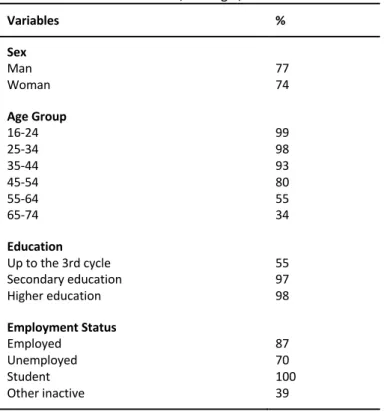
The use of a computer and the internet has increased over time among the Portuguese population, including also the older population (Dias, 2012). If we look at the proportions of people, aged 16 to 74, who used the internet in the last 12 months, we find a strong increase: it was 53% in 2010 and 75% in 2018, an increase of 22 percentage points (INE, 2018). The more regular use of internet (at least once a week, but not every day) has also increased over time in all age groups, but according to data available in the webpage of the Active Ageing Index, in 2016 the proportion of Portuguese people aged 55 to 74 who had this frequency of use was 36%, clearly below the average of the European Union (EU) in the same year, which was 53,9%. In fact, and according to UNECE, the use of ICT by older persons aged 55-74 at least once a week (including everyday) was 24.0% in 2014 8.
Despite this general trend of increasing use of the internet, however, clear disparities are found according to age and other factors. Starting by age, internet use decreases significantly with increasing age: in 2018, while in the age groups under 55 the proportion of internet users was always greater than 80%, in the age group 55-64, it was 55% and in the age group 65-74, it decreases significantly to 34% (Table 1).
Table 2. Characterization of people aged 16-74 who used the internet in the last 12 months, Portugal, 2018
Variables % Sex Man Woman 77 74 Age Group 16-24 25-34 35-44 45-54 55-64 65-74 99 98 93 80 55 34 Education Up to the 3rd cycle Secondary education Higher education 55 97 98 Employment Status Employed Unemployed Student Other inactive 87 70 100 39 Source: INE (2018) 8https://statswiki.unece.org/pages/viewpage.action?pageId=76287845
The internet use is also lower among those with lower levels of education and who are in the category “other inactive”, which includes retired people (Table 1). There is no significant difference between man and woman with respect to internet use. However, data available in the webpage of the Active Ageing Index for the year of 2016, show that among those aged 55 to 74 there was more men than women using the internet regularly (40% and 32%, respectively)9.
With respect to the statistical association between, internet use and level of education, it is worth mentioning that, in 2018, 21,2% of the older population (65+) does not have any level of schooling, and that more than a half (52,5%) has only four years of schooling 10. Only a minority of the older population (7,3%) has a university degree 11.
When we compare the proportion of internet use among older people in Portugal with the proportion of internet use among older people in other countries of the European Union (EU), we verify that the Portuguese proportion is one of the lowest ones. In 2018, 29% of the Portuguese older adults aged 65-74 used the internet, on average, at least once a week, proportion significantly below the European average of 52% 12. It is also important to note that among older people the proportion of users of mobile internet (e.g. internet on mobile phones and laptops) is even lower (Cardoso et al., 2015). As Carneiro and Rodrigues verified the “rates of ICT usage vary proportionally to the increase of education levels and inversely to the age level” (Carneiro and Rodrigues, 2007: 312), which means that whenever the higher is the education level the higher the probability to use ICT, and the higher the age the less probability to access ICT. This means that older people have major probability to use ICT if their education level is higher, which also means an increased digital competence.
Interestingly, in a study carried out in 2009, the low proportion of internet users among older people was in contrast with the high proportion of older people who used television and mobile phone (Dias, 2012). In the same study, it was found that all respondents used these two technologies. This is supported by another study, mainly with respect to the use of mobile phones (Gil, 2014). This means that television and mobile phone, and perhaps other technologies such as radio, might function as relevant interfaces between older people and the digital world.
Why does the internet use in Portugal decrease significantly with increasing age, and why is there a low proportion of internet users among the older population? Two main reasons have been identified: 1) digital illiteracy; 2) high costs of equipment and services (Dias, 2012). With respect to digital illiteracy, the evidence shows that only 16% of the Portuguese population
9https://statswiki.unece.org/pages/viewpage.action?pageId=76287845 10 https://www.pordata.pt/Portugal/Popula%c3%a7%c3%a3o+residente+com+15+a+64+anos+e+65+e+mais+anos+por+n%c3 %advel+de+escolaridade+completo+mais+elevado+(percentagem)-2266 11 https://www.pordata.pt/Portugal/Popula%c3%a7%c3%a3o+residente+com+15+a+64+anos+e+65+e+mais+anos+por+n%c3 %advel+de+escolaridade+completo+mais+elevado+(percentagem)-2266 12 https://www.pordata.pt/Europa/Indiv%c3%adduos+que+acederam+%c3%a0+Internet++em+m%c3%a9dia++pelos+menos+ uma+vez+por+semana++em+percentagem+do+total+de+indiv%c3%adduos+por+grupo+et%c3%a1rio-1486
aged 55 to 74 have basic digital skills to operate autonomously in the digital world, while the proportion for the general population is 47% (Coelho, 2017). Confirming the importance of digital illiteracy, the main reason identified by older people to not use the internet is the lack of basic digital skills (Cardoso et al., 2015).
In what concerns the costs of equipment and services, public authorities must pay more attention to these costs, as most of older people in Portugal have low income. At this respect, it should be emphasized that, in 2013, 78,6% of social security pensioners received amounts below the minimum wage 13. It should also be emphasized that at-risk-of-poverty rates among older people are high: in 2017 the rate before social transfers was 89,7 % and the rate after social transfers was 17,7% 14.
3.1. Current status of the use of technology and social innovations in
elderly care
A study conducted by the Barometer of the Adoption of Telehealth and Artificial Intelligence in the Health System (Barómetro da Adoção de Telessaúde e de Inteligência Artificial no
Sistema da Saúde) concluded that, in 2019, telehealth, as a component of the digital health
care, is adopted by the majority of the institutions/organizations that provide health services. The most provided telehealth services are synchronic (in real time) medical appointments and screening appointments (BTIA, 2019).
The vast majority of the health professionals who have participated in this study agree that telehealth has an important role in remote monitoring of users with chronic diseases, in sharing clinical data that contributes to a higher level of user’s compliance to prescribed therapies, and in decreasing the number of hospital readmissions. It is important to add that 47% of the respondents believe that telehealth improve the relationship between users and professionals. Finally, this study also identified the perspectives of the health professionals regarding the main obstacles to the implementation of telehealth: 1) reduced broadband internet coverage and internet access; 2) low level of users’ literacy in telehealth; 3) low level of health professionals’ motivation to use telehealth.
Despite the introduction of telehealth services in the majority of healthcare institutions/organizations, and the positive views of health professionals regarding telehealth, the available evidence shows that the use of telehealth by Portuguese people is still residual. The survey entitled Network Society in Portugal (Inquérito Sociedade em Rede em Portugal) shows that, in 2006, only 0,3% of the respondents used online medical/health services (Espanha et al., 2007). The most sought online services were scheduling medical appointments and diagnostic exams, medical prescription requests, and clarification of doubts. Moreover, 13 https://www.pordata.pt/Portugal/Pensionistas+de+invalidez+e+velhice+do+regime+geral+da+Seguran%C3%A7a+Social+co m+pens%C3%B5es+inferiores+ao+sal%C3%A1rio+m%C3%ADnimo+nacional+(percentagem)-2007 14 https://www.pordata.pt/Portugal/Taxa+de+risco+de+pobreza+por+grupo+et%c3%a1rio+antes+e+ap%c3%b3s+transfer%c3 %aancias+sociais-3009
only a minority of the respondents showed interest in using online medical services in the future (9,5%) (Espanha et al., 2007).
The same survey revealed that 20% of the Portuguese population aged 15 or overused the internet to search information about general issues related with health and wellness. This survey also shows the importance of age in respect to this practice, as the highest proportions are found in the age groups 25-34 and 35-44. Only 17% of those inserted in the age group 55+ was looking for information about health issues on the internet. Interestingly, there are more women looking for this information (22%) than men (17,6%). In what regards frequency, the majority of internet users who search for this information do so from time to time (56,7%). Hence, while the e-health (in its broad sense) is, on one hand, a growing reality in Portugal and, in another hand, an approach well accepted by health professionals, its effective use by older people is still low. We believe that this is explained, to a large extent, by the high levels of digital illiteracy among older people in Portugal and, to a lesser extent, by the high levels of health illiteracy. It is widely accepted that health literacy refers to “The degree to which individuals have the capacity to obtain, process, and understand basic health information and services needed to make appropriate health decisions” (Ratzan and Parker, 2000). Drawing on this definition, a study conducted in 2014 (Espanha e Ávila, 2016) found that the health literacy among the Portuguese people (aged 15 or over) is still very limited: 1) the results of the General Health Literacy Index showed that Portugal had 11% of respondents with an inadequate level of literacy and around 38% with a problematic one; 2) on the Healthcare Literacy Index, 45.4% of the Portuguese population exhibited limited literacy ; 3) in what the Disease Prevention Literacy Index was concerned, 45.5% of respondents also exhibited limitations; 4) on the Health Promotion Literacy Index 48.9% of the respondents demonstrated to have excellent or sufficient levels of literacy. With the exception of the last index, Portugal exhibited proportions of literacy below the average for the European countries included in the study.
Other findings of the study by Espanha e Ávila (2016) revealed that health literacy (in all indices) is statistically associated with age and level of education: 1) the older the respondent, the lower the level of health literacy; 2) the lower the level of education, the lower the level of health literacy. These associations are also found with respect to digital literacy.
Lifelong learning programs are widespread across Europe and other regions of the world, and these might contribute to enhance the education and general literacy of older people. However, in Portugal the adherence to lifelong learning is relatively low among those aged 55 to 69: in 2011, 18.9% participated in lifelong learning activities, 2.3% in formal education, 17.5% in non-formal education and 52.0% in informal learning, while the percentages for the total population are 45.9%, 15.4%, 39.2% and 66.9%, respectively (INE, 2013).
3.2. Policy initiatives
The National Strategy for Active and Healthy Ageing (ENEAS) is a proposed strategy that meets the objectives included in the National Health Plan (Portugal. Ministry of Health. General Directorate of Health, 2015) and various Programs: WHO Global Action Plan on Healthy Ageing, EU Proposals for Action to Promote Active and Healthy Ageing and Solidarity between Generations, and with the 2030 Agenda on its integrated and inseparable sustainable development objectives, in particular Goal 3: “Ensure healthy lives and promote well-being for everyone at any age” (United Nations, 2015) ”(SNS 2017).
ENEAS aims to promote health and well-being of older persons and to recognize the benefits and importance of active and healthy ageing throughout life cycle. ENEAS aims is to: “raise awareness of the importance of active ageing and intergenerational solidarity and promote changing attitudes towards ageing; promote cooperation and intersectorality in the implementation of the National Strategy for Active and Healthy Ageing; Contribute to the development of policies that improve the quality of life of the older persons”. (SNS 2017: 16). Hence, a general goal of ENEAS is to ensure full integration and participation of older persons in society. The integration and participation of older people in society have also been concerns of many organisations and local authorities in Portugal. Among the initiatives promoting the integration and participation of the older persons in society are those that reduce the isolation and loneliness of older people and ensure living environments that seek to create new social habits, stimulate skills and rebuild social and affective networks through participation in sports and cultural activities.
This strategy promotes initiatives and practices that reduce the impact of chronic diseases and improve health access and care services; promote lifelong education and training focusing on the promotion of health literacy and social participation.
ENEAS defined a set of action guidelines and measures structured around four strategic axes, focused on health and social interventions, based on multidisciplinary approach:
A. Health - Promotion of initiatives and practices aimed at reducing the impact of
chronic diseases and reducing physical and mental capacity in older people and enhancing their autonomy;
B. Participation – Promotion of lifelong education and training including
strategies for promotion of health literacy and encouraging the creation of physical and social environments that protect and enhance the integration and participation of older people in society;
C. Safety - Support initiatives and practices which minimise risks and promote
the well-being and safety of older people;
D. Monitoring and research – Promote research in the area of active and healthy ageing, enhancing needs assessment, development, monitoring and evaluation of interventions and the dissemination of good practices and innovation (DGS, 2017)
3.2.1. e-Health
In the domain of e-health, the introduction of an integrated ICT system in the National Health Service (Serviço Nacional de Saúde – SNS) began to be noticed especially in the 90’s with the launch of the Integrated System of Hospital Information, known by the acronym SONHO. This tool was designed with the purpose of managing the users’ data in and between hospitals. It comprises two sub-tools:
1. System of Medical Support (Sistema de Apoio ao Médico), a platform that integrates the clinical and administrative data related with medical appointments and other medical acts);
2. System of Nursing Support (Sistema de Apoio à Prática de Enfermagem), a platform similar to the first one, but with respect to nursing acts.
In the domain of e-health, the Ministry of Health has put in practice, since 2010, several projects that offer several possibilities to users and health professionals:
1. e-Agenda: created in 2010 with the aim of making it possible to schedule medical appointments and to ask for prescriptions through the internet, telephone and other online mechanisms;
2. Surgery Registration Management Integrated System (Sistema Integrado de Gestão de Inscritos para Cirurgia - e-SIGIC): this offers the users with scheduled surgeries the possibility of consulting their position in the waiting lists;
3. Electronic Health Record (Registo de Saúde Eletrónico – RSE): this is a citizens’ electronic health registry, which provides access, to both users and health professionals, to relevant clinical information;
4. Geographic Information System based on the Web (Sistema de Informação Geográfica baseado na Web – WEBSIG): this is a web platform based on a geographic information system, which provides performance indicators related with the National Plan of Health (Espanha, 2013).
Still in the domain of e-health, in 2012 the Portuguese Government created the new User’s Portal (Portal do Utente), a measure integrated in the Platform of Health Data (Plataforma de Dados da Saúde), which integrated, with some adjustments, the four projects mentioned above. In the User’s Portal the users can make some health records and have access to online services, such as medical appointments. In 2016, these services were made available to mobile phones through the app My SNS.
Also, in 2016, the Portuguese Government created the National Center of Telehealth (Centro Nacional de TeleSaúde) with the aim of strengthening the national strategy for the promotion of telemedicine and ICT use among users and professionals. Since this year, this center started to coordinate the NHS24 (SNS24), an online service of the National Health Service through
which it is possible to get access to the Electronic Health Record, to ask for medical appointments, among other services.
More recently, the Portuguese Government launched, in 2017, the National Strategy for the Ecosystem of Health Information 2020 (Estratégia Nacional para o Ecossistema de Informação de Saúde 2020), which will provide multiple platforms of digital services to guarantee the access and share of information, as well as the simplification and dematerialization of records and processes in the National Health Service (NHS). In the same year, the European Observatory of Health Systems recognized Portugal as an example of good practice, given that it was the first European country with electronic certificate of death.
3.2.2 Health and social care
In the context of health policies, the National Health Plan 2012-2020 is a fundamental pillar of reform of the health system, oriented towards clinical quality, prevention and the promotion of healthy lifestyles, aiming to achieve health gains for the Portuguese population in general. One of the goals proposed by the National Health Plan for 2020 is to improve healthy life expectancy at age 65, that as we noted earlier there are still inequalities in healthy life years by socioeconomic and educational status at this age. A wide range of policies is required to increase healthy life expectancy and reduce inequalities, is recognised by OECD. These policies include greater efforts to prevent health problems starting early in life, promote equal access to care for the whole population, and better manage chronic health problems when they occur to reduce their disabling effects (OECD, 2017: 86).
In the domain of social care/long term care, Portugal also continued to implement the National Network for Continued Integrated Care (RNCCI), set up in 2006, under the joint responsibility of the Ministry of Health and the Ministry of Labour, Solidarity and Social Security, with a focus on the coordination and organisation of “long-term care”, providing structured responses to people in a state of dependency, at different levels of functionality in all life stages. Meanwhile, in 2016, the Government established as one of its priorities the expansion and improved integration of this Network. The National Coordination Commission of the RNCCI was created for this purpose and the RNCCI 2016-2019 Development Plan was presented. According to this Plan, “it is clear that the Network is intended for people who, regardless of their age, are in a state of dependency”. However, 10 years after its creation, it is evident that most of its users are aged 65 and over (about 85%) and that records of its use by Children and Young People are merely isolated cases. It is therefore important to pay special attention to understanding the ageing process with all its determining factors and also to structure and extend the response to other age groups and other conditions, such as severe mental illness and dementia, situations with a very broad clinical spectrum and specificity of responses, as is mentioned in the mentioned Development Plan.
3.2.3. Social Care and Long-term care
Since the 1990s, the Portuguese government has invested in care services for older people through two parallel programs set up to develop an integrated network of services: ‘Pares’, a program for widening the network of social facilities, and the National Network for Integrated Continuous Care.
The social responses network includes nursing homes (profit and non-profit), which are more social oriented, distinguished from the National Network for Integrated Continuous Care (mainly convalescence, medium-term and rehabilitation units), with services which are more health oriented.
Portugal has mixed long-term care, composed of a network of services, including care centres, home-based services and nursing homes (‘residential structures for older people’).
● Daycare centres;
● Home-based services: offers meals-on-wheels, cleaning, laundry and assistance with personal care (through one- to two-hour visits per day), but permanent care at home is not provided.
● Nursing homes (long-term and palliative care) for highly dependent persons ● Residential care (protected flats)
2000 2005 2010 2014 Home-based care services
Number of home-based care
services 1.667 2.160 2.485 2.650
Number of users per
home-based services 49 473 73 575 90 570 104 551
Day-centres
Number of day-centres 1624 1822 1973 2048
Number of users 51876 60352 62472 64705
residential structures for older people (ERPIS)
Numbers of Erpis 1469 1487 1870 2315
Number of users 55 523 60 884 71261 89666
Fonte: GEP, Carta Social - http://www.cartasocial.pt
The number of users of home-based care services increased considerably, from 49 473 users in 2000 to 104 551 in 2014. Daycare centres began to develop in an experimental way in the mid-1970s, with the aim of helping an individual to remain in his/her own socio-familial context for as long as possible and offering an alternative to institutional care (Carta Social, 2000).
Between 1986 and 1995, the number of day care centres increased steadily (+55% from the previous period of 1975–85) (Joël et al., 2010)
The number of centers rose in the beginning of 1990s as did the number of users: in 1987 there were 11370 users and in 2014 there were 64705. These establishments are mainly run by the private non-profit sector, which has agreements with the social security Institute. Providers in the private non-profit sector, which are financially supported by the state (payment depends on family income).
Nursing homes (“Erpis”) offer support through collective accommodation, meals, health care and leisure activities. In the early 1980s, only 2% of the population aged 65 and older had places in nursing homes. The number of nursing homes continued to increase in the 90s, and between 2000 and 2014, the users also increased from 55.523 to 89.666. By 2011, 70% of people living in collective social support dwellings (4% of the 65+ age group) were women
aged over 80 with severe care needs (including cognitive and physical impairments) (Gil, 2018).
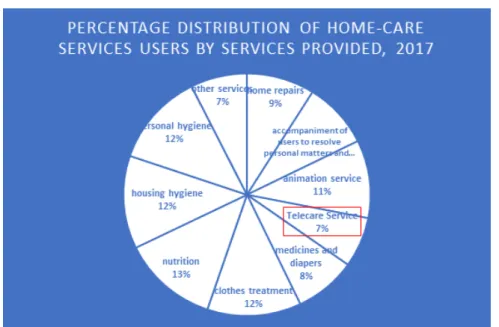
Most elderly people value their independence and would prefer to continue to live in their own homes. In Portugal, the majority of older adults (96%) live at home and 4% in institutional household. Among those aged 85 and over (16,4%), the share was higher than the group of 65- 84 (2,6%) and the proportion of very old women (> 85) living in an institutional household was considerably higher than the corresponding share among very old men (Eurostat, 2015). According to GEP (2017), nursing homes and home-care services revealed an increased (70% and 71%, respectively), compared to 2000. In 2017, there were about 7,300 responses (nursing homes, home-care services and day care), of which 37% corresponded to home care services. In home-care services, in addition to basic services (meals, personal hygiene, housework, laundry), other services are provided (animation, accompaniment of users to resolve personal matters and legal obligations, home-repairs and telecare). The telecare, in 2017 represented 6,7% of the total services provided.
Fig. 2 Home-care services, 2017
Fonte: GEP-MTSSS, Carta Social
A research held at University of Aveiro explicitly says that “the Portuguese in-home care services have never been adequately studied or identified. This is because of the lack of classification of variables related to the care receiver and to the demographic and organizational context in which it is inserted” (Martin, Oliveira, & Duarte, 2013). The study concluded that the rural context denoted a lack of diversity of services and the number of organizations available is reduced which implies less time spent with the customers. The more dependent customers at the time of registration in large organizations benefit more from the services. Finally, in-home care services are underused and are oriented to treat those that
have a family caregiver. Overall, in-home care in Portugal still has much to achieve when compared with other European countries (Martin, Oliveira, & Duarte, 2013).
3.2.4. Digital competences
In 2012 the Portuguese government launched the Portugal Digital Agenda (Agenda Portugal Digital), which will last until 2020. One of the main objectives of this agenda is to promote the digital inclusion and the regular use of the internet among disadvantaged populations, including older people. Three years later, the Portuguese Foundation for Science and Technology (Fundação para a Ciência e a Tecnologia - FCT) delineated the National Strategy for Inclusion and Digital Literacy (Estratégia Nacional para a Inclusão e Literacia Digitais) for the period of 2015 to 2020 (FCT webpage). The aims of this national strategy are:
a) To reduce the proportion of non-users of internet;
b) To mobilize an operational structure to offer face-to-face training (places, equipment and trainers);
c) To stimulate the development of pedagogical materials to (self) training; d) To enhance the digital skills of the Portuguese population;
e) To create a multi-stakeholder intervention network (the ICT Network and Society); f) To promote the improvement of the interface between online services and citizens
(accessibility and usability) (cf. FCT webpage).
More recently, in 2017, the Portuguese Government developed the National Initiative for Digital Skills e.2030 (Iniciativa Nacional Competências Digitais e.2030), which expects that by 2030 every Portuguese household will have internet access, and the proportion of regular internet users will rise to 90% (Portugal INCoDe 2030 webpage).
Other institutional actors have made contributions to reduce the digital exclusion among older people, such as non-governmental agencies, Third Age Universities and private companies. These actors have intervened in different domains: 1) the development and certification of digital skills; 2) the promotion of the contact with the new Information and Communication Technologies (ICT); 3) the promotion of a secure and informed use; 4) the enhancement of the trainers and care providers’ capacities to promote digital literacy (Coelho, 2017).
Senior universities play an important role not only in occupation but also in lifelong learning, one of the pillars of the European Union's Active Ageing strategy. Lifelong learning is one of the goals of RUTIS (The Network of Senior Universities), “it means for a more positive, active or successful old age” (in RUTIS 15). At the collective level, “it is in the interest that the society is made up of healthy people. The healthier and more active older people are, the greater the sustainability of health and social support services.” (In RUTIS)
Currently, “In Portugal, RUTIS has more than 45,000 students, 300 entities and 5,500 volunteer teachers.” (RUTIS). These institutions operate during working hours, following the school calendar, that is, they perform exactly the same vacation periods, as regular primary
and secondary education. The subjects taught are various: “the most popular being computer science, health, history, English and citizenship.”(RUTIS). To be able to attend these schools, students must be at least 50 years old and may be subject to a monthly payment of around € 12.
Within senior universities there are some programs to highlight. The program (IPL60 +) has the flow aims: “occupation of seniors with educational, cultural, sports and recreational activities; develops lifelong training; intergenerationality, physical and psychological well-being; maximizes the intellectual capital of seniors; strengthens the social relations; encourages social (re) integration; promote feeling of usefulness and confidence of individuals and family relationships; deconstructs the social image of the incapable elderly; promotes the exercise of citizenship, the dissemination of skills and the realization of personal ambitions, giving greater visibility and social protagonism of seniors” (Pimentel and Faria, 2016)
3.3. Best practices - the use of different technologies and innovations
In collaboration with the 24-hour health line and the General Directorate of Health, an elderly health monitoring system has been developed based on a dedicated telephone line and back office support system (Linha24).
The University of Coimbra, together with the other members of the consortium “Ageing@Coimbra” supports a holistic ecosystem of stakeholders and it implements innovative practices to manage cognitive ageing, dementia, vision impairment, human kinetics and mobility.
This consortium aims for early diagnosis and management of cognitive ageing, dementia and vision impairment. It boasted good results, such as the 1350 patients/yearly under specialty evaluation in the medical consultation of dementia. It had also created over 100 jobs within different projects under the consortium organization. They also have succeeded that 18.5% of the patients integrated in the detection programme to have biomarkers. Such successes have led to the adoption of some of the solutions and tools transferred into national level.
The Ageing@Coimbra consortium cluster for human kinetics and mobility in senior people involves partners that are national references for neurology, rheumatology, osteoporosis, human kinetics and territory planning. The results of the close cooperation between the partners are numerous: physically frail seniors experience greater mobility between care settings and in the city; an improved efficiency of care pathways in the primary Care Unit with waiting periods reduced by 50%; reduced operational costs due to electric care for seniors; over 200 jobs created (inside Portugal and outside).
The innovation model for ICT technological transfer in health and well-being aims to support the transfer of the innovation e-health ecosystem of Coimbra at the highest standards at the European level. The model facilitates the development of innovative products, the creation of new companies and of highly qualified jobs, giving a boost to the economy through e-health technology. The partners are achieving good results in terms of business volume and system usage. Just to give a few examples, one of the partners reached in 2012 a business volume
of € 9 million in 2012, with 10.500 professional users, while another partner developed an open source solution for electronic medical prescription, which is currently available to more than 850 healthcare providers, covering more than 5 million people 16.
4. Implications for elderly, staff and working places
Portugal has a mixed long-term care, composed of a social network of services, including care centres, home-based services and nursing homes (‘residential structures for older people’), and the National Network for Integrated Continuous Care 17. In this case the human resources are not allocated according to patients’ needs as in other European countries, but by the number of weekly hours of care a patient is entitled to receive from each professional category (Lopes, Mateus and Hernández-Quevedoc, 2018: 213).
In terms of legislation relating to the provision of home care services, the Article 64 of the Portuguese Constitution states “the right to health protection is guaranteed through a national health service (NHS) which is universal, general and, depending on the socio-economic status of citizens, largely free of charge.”
According to article 2003 of the Civil Law Code, descendents (to the 2nd degree) are responsible for providing any indispensable care in terms of sustenance, housing and clothing to their parents. If the family cannot provide such care, the Social Security takes over responsibility.
Home care services are a social solution consisting of individualised care for people and their families, who cannot assure their basic needs and/or daily living activities, in a permanent or temporary way, due to sickness, handicap, advanced age or other reasons (Despacho Normativo n° 62/99 de 12 de November). However, and regarding HCBS, “the nursing, medical and rehabilitation care is provided at home between 8am to 8pm to people with functional dependence by teams working in primary care centres. Individuals without a caregiver, in need of 24 h care or only social care are excluded (Lopes, Mateus and Hernández-Quevedoc, 2018: 213).
Due to demographic changes, the number of people with chronic diseases has increased and the lack of long-term and palliative care is now more visible. Portugal now has new social and health needs which demand new and diverse solutions.
These solutions should be adjusted to different groups of dependent people and to the different stages of the disease. At the same time, they should facilitate the autonomy and involvement of patients. The involvement of families, as well as support for the reconciliation of professional and family obligations, should be reinforced 18.
17 D.R. Decree-Law 101/2006. D.R. I Serie A, 6th of July – Creation of the Portuguese National Network for Long-term
Integrated Care (Rede Nacional de Cuidados Continuados Integrados) (in Portuguese) 2006: 3856–65. http://www.acss.min-saude.pt/wp-content/uploads/2016/10/Decreto-Lei101 2006-1.pdf.
18General information provided by Alzheimer Europe on the Portuguese case
4.1. Effects on organisation of care work
Despite the public investments, in long-term care system, in the last decade (mainly in the National Network of Integrated Long-term Care – consolidated in 2008) some operational limitations have been identified in this integrative care, mainly related with different professional cultures and practices (Santana et.al. 2014). Poor investments in palliative care units or home-care teams (integrated and palliative care) are the critical issues pointed out to the National Network of Integrated Long-term Care. In addition, mental health services are suffering serious insufficiencies at the level of accessibility, equity and quality of care (Ministério da Saúde, 2008) as well as the network of services and social facilities regulated by the Ministry of Labour, Solidarity and Social Security, in which nursing homes, day centres, home-based care services are included.
The network of services (nursing homes, day centres, home-based care services), both profit and non-profit institutions, must have a license provided by the Social Security Institute, which implies meeting all the associated requirements according to the legislation which defines the conditions of organisation, operation and installation conditions (Ordinance nº 67/2012). According to article 8, a residential structure provides a set of activities and services:
a) nutrition that is adequate to the needs of residents, respecting medical prescriptions; b) Personal hygiene care;
c) Laundry service; d) Hygienic spaces;
e) Socio-cultural, recreational and occupational activities aimed at contributing towards an environment of healthy relationships among residents which stimulate and maintain their physical and mental capacities;
f) Support for carrying out everyday activities; g) Nursing care, as well as access to health care;
h) Administration of drugs (...) a residential structure must have staff who ensure services are provided 24 hours a day.
The residential structure, in addition to the technical director, must have at least:
a) One part-time social activities officer or social educator or geriatrician, for every 40 residents;
b) One nurse, for every 40 residents; c) One care assistant, for every 8 residents;
d) One care assistant for every 20 residents, with a possibility of more staff to help at night;
e) One person in charge of domestic services in establishments with a capacity greater than or equal to 40 residents;
f) One ancillary staff member for every 20 residents.
Whenever the residential structure accommodates elderly people in situations involving considerable dependency (dementia, cardiovascular diseases), the ratios of nursing staff, direct and care assistants are as follows: a) One nurse, for every 20 residents; b) One care assistant, for every 5 residents; c) One ancillary staff member for every 15 residents.
The home-based care services have to be available every day of the week, also guaranteeing, whenever necessary, the support on Saturdays, Sundays and holidays (Portaria n.º 38/2013). The home-based care services (“SAD” – serviço de apoio domiciliário) must meet the conditions to least four of the following care and services:
a) Hygiene and personal comfort care; b) Hygiene housing;
c) Provision and support in the meals, respecting the diets with prescription; d) Treatment of clothing for the personal use of the user;
e) Activities of animation and socialization, namely, animation, leisure, culture, acquisition of goods and goods food, payment of services, travel to community entities;
f) Tele-assistance service.
According the 9.° article (Portaria n.º 38/2013), human resources (professional staff, manager and care workers) must have “a) an appropriate training for their work; b) communication competencies and friendly relationship that allow to adopt an attitude of listening and observation to respond the users’ needs; c) be able to provide information for the assessment of the care program and services; d) to have training that allow adequate intervention in situations of dependence due to ageing and/ or disabilily” ( http://www.seg-social.pt/documents/10152/1197978/Port_38_2013).
Legislation also considers certain mechanisms for individualisation: “Individual care plan” (Despacho Normativo n.º 62/99 (Norma IV, 3). Individualised care plans must be carried out by staff with training appropriate to the activities to be carried out in order to ensure the quality of the services provided.
Although training is recognised as an necessary requirement for quality care practices, the care system is not focused on people, care workers job is underestimated, they don’t receive adequate trainings and salary, and this has negative impact on their physical and mental health, job satisfaction, work environment and quality of service provided (Gil, 2018, 2019). Public investment in long-term care is low (0.5% of GDP, compared with 4% to 0% in other OECD 30 countries. Portugal has the lowest percentage in Europe of formal LTC workers per 100 persons 65+ and a coverage gap of 90%, due to insufficient LTC workers (Scheil-Adlung,
2015:81) and the lowest concentration of care workers, ”less than 1 worker per 100 people aged over 65”, compared to Norway’s 12.8 or Sweden’s 12.4 per 100 (OECD, 2016:18). Most formal LTC workers in institutions are personal careers (70%); 30% are nurses (OECD, 2016) and much institutional care is provided by care workers with no training (OECD, 2013). Despite some state efforts to ensure care workers receive training and have necessary skills, a new ‘care assistant’ [‘Auxiliar de Ação Direta’] category was created, who need 9 years of schooling, 3 years’ work experience and 6 months’ vocational training (art.5, Decree No.414/99). Despite a 1990s regulation, there is in practice no public control of care work, with an increasingly precarious care workforce, poor wages (€607/per month) and difficult working conditions 19. This has led to placement of low-qualified women in precarious jobs, with ‘personal care worker in institutions’ one of the main occupations to which long-term unemployed women are directed (EIGE, 2017; Eurofound, 2017; Gil, 2018)
4.2. Education and further training of staff
As far as Portuguese workers are concerned, they are usually hired in an informal way, which does not mean illegal, because these activities are legislated. Such carers staff often substitute family carers in terms of the practical tasks of care, though family careers usually remain in charge of their payment, supervision and management. Family carers staff maintain the role of emotional support, transportation and financial management (Sousa & Figueiredo, 2004: 14).
As far as profession or employment of family carers staff is concerned, there are also no specific data available.
In Portugal there is no formal system for supporting family carers staff, nevertheless some facilities, like day centres and home support systems constitute indirect measures that help family carers staff. When a family carer needs complementary help, it is usually another family member who fills in permanently or temporarily for the family carer in caring for the elderly. In larger communities, one can temporarily use the help of voluntary or private carers staff (for example in the form of “granny-sitting”). In rural areas neighbours tend to support family carers. Because of the low financial resources of the elderly, using paid services of private carers staff is infrequent, and only found in critical situations. Families with medium-high incomes, tend to hire housekeepers (full or part time) to help the family (Sousa & Figueiredo, 2004: 30).
As a conclusion, we consider that the carer staff level the education and training should strengthen the professionals' digital literacy through specific training programs. It should also sensitize practitioners to the advantages of e-care use (in terms of care and e-health in general).
19 The confederation of non-profits provides a list, with the salary rates of all categories of workers, in Boletim do Trabalho
4.3. Education for elderly
The Adults Digital Literacy Project (LIDIA), aims to identify situations where adults are hindered from exercising their full citizenship, due to their lack of digital technologies knowledge. Initiated in March 2015, this is a project that involves a multidisciplinary team from the Institute of Education at the University of Lisbon.
Within the framework of an action-research methodology in the LIDIA project, a questionnaire was applied to 106 adults, aged between 26 to 92 years, resident in Portugal. From the data analysis, it was possible to establish 13 categories of needs within the scope of digital literacy of adults, including a set of references stating their desire to handle their bureaucratic issues via the Internet (delivery of IRS, ask for information and social services agencies, schedule appointments, etc.).
At the organizational level the main implications for the education for older persons are: a) increasing broadband internet coverage as well as Internet-enabled equipment /
services;
b) promoting the acquisition of digitally related equipment and services at reasonable prices, especially for third sector institutions;
c) sensitize practitioners to the advantages of using e-care (health and long-term), At senior level the implications must be:
a) the focus on strengthening digital literacy; b) the focus on strengthening health literacy;
5. Challenges and risks (integrity, ethical and
economical)
As mentioned in the article of Hülsken-Giesler and Krings, the “reflections on the use of technologies in the context of care in a society of longer living cannot be limited to pragmatic aspects of technology development, use or assessment. Instead these issues demand a constitutive discussion over the basic questions of society’s development and provoke debates on the societal way of dealing with age and vulnerability as well as the relationship between effectively and efficiency and care in a modern society” (Hülsken-Giesler and Krings, 2015: 4).
Like under a magnifying glass, continue Hülsken-Giesler and Krings, questions of the cultural notions of age or societal development as a whole arise through the discourses surrounding care and technology in a society of longer living (idem: 6).
In addition to these broad issues, other challenges and risks are identified:
i) Digital divide between older people and younger people – as shown earlier, the use of ICTs by older people, particularly internet, is low, and the same is found in relation to the use of e-health and telecare. Although this might be a result of a “generational” effect (Gilleard & Higgs, 2008), i.e. the differentiated diffusion of ICTs among pre-World War II and post-pre-World War II cohorts, it is important not to neglect age-related structural inequalities. Low levels of education, digital illiteracy and low incomes among older people are major barriers in accessing the digital world and taking advantage of its potential. Another barrier is the price of digital technologies and services.
ii) Negligence of a user-centred approach to technology design and service delivery by industry and service providers - Greenhalgh and collaborators (2015: 13-14) developed a set of guidelines and principles for the development of these technologies, which they called "ARCHIE framework": "First, both technology designers and assistive technology services need to shift their focus from developing, installing and monitoring a particular technology to a more dynamic focus on performance (supporting technologies- in-use). Second, those who commission telehealth and telecare services need to shift from standardized care packages (the one-size-fits-all 'home care contract') to personalised solutions (that is, they should require providers to adapt products and services to the patient's needs and preferences). Thirdly, industry (perhaps supported by relevant incentives by government) must drive a shift in the design model from 'walled garden' branded solutions (packages that are designed to interface only with a particular manufacturer's products) to components that are designed to be combined creatively by people making their own ad hoc solutions to one-off challenges, and which must, therefore, be inter-operable across multiple devices and platforms.
iii) Resistance in accepting care-oriented ICTs by staff and older people – the acceptance of using e-care by both staff and older users is dependent, in great part, on the perceived advantages. With respect to older users, these accept using health-oriented ICTs as long as: a) they promote independence; b) they promote security and safety; c) they allow socialization and health status management; d) they allow access to online information; e) they help in daily activities; f) help is given in case of problems with use; g) access to adequate training is guaranteed (Vassli and Farshchian, 2017); h) they actively participate in the technology design process (Selwyn, 2004). The barriers to the acceptance of care-oriented ICTs include the following: a) violation of privacy; b) loss of protection (security); c) cognitive difficulties (e.g. memory loss); d) stigmatization (association of these technologies with dependency, old age, illness and institutionalization) (Vassli and Farshchian, 2017). On the issue of stigma, Greenhalgh and colleagues (2013) suggest that older people's acceptance and use of technologies depends on the cultural importance of each technology. For example, while some technologies (e.g. iPads) symbolize social status, independence, modernity and joviality, others (e.g. alarms or incontinence detectors) symbolize precisely the opposite, i.e. dependence, decay and loss of joviality.
iv) Violation of ethical and deontological guidelines by care staff – the use of care-oriented ICTs should respect the preservation of users’ privacy and the principle of informed consent for the collection of information and the principle of confidentiality of the collected information.
6. Societal debates, regulations, best practices
The debates, regulations and best practices have already been discussed in previous sections thus, we will not repeat in this section.
One of the good practices is the Senior Census program of the Ministry of Internal Affairs. This program aims to identify the elderly population living alone and / or that are isolated. It aims also to detect new cases of situations of risk and social vulnerability. This annual registration program has been in existence since 2011 and the “data do not reflect an increase in the number of older people living in these situations, but rather the fact that senior censuses constitute an increasingly complete geographic database, thus enhancing better support” 20. In collaboration with the 24-hour health telephone line and the General Directorate of Health, an elderly health monitoring system has been developed.
Another good practice is the consortium “Ageing@Coimbra” that supports an holistic ecosystem of stakeholders implementing innovative practices to manage cognitive ageing, dementia, vision impairment, human kinetics and mobility.
Several measures have been implemented which target the main challenges for long- term care. The main one was a joint project between the Ministry of Health and the Ministry of Labour and Social Solidarity called Programme of Integrated Support to the Elderly (Programa de Apoio Integrado a Idosos), that was developed during the last years of the decade of 1990, and which has enabled the development of initiatives in both health and social areas oriented for home care and informal caregivers as part of a job creation policy 21
20https://www.gnr.pt/comunicado.aspx?linha=4206
21 D.R. Joint Dispatch no. 259/97, 21st of August – Creation of the Programme of Integrated Support to the Elderly (PAII) (in
Portuguese) 1997. http://www.seg-social.pt/documents/10152/87923/DESP_CONJ_259_1997/4a846364-eab5-489f-aa6f-9b771ffe71a5.
7. Future perspectives and reflections
In the reading of the report we try to highlight significant different practices on the use of new technologies by the health and social sectors. In the latter sector, there is an entire investment to be made in the development and applicability of new technologies in care practices, whether social, nursing and medical support.
In the social sector, the services provided still reveal many shortcomings:
a) in terms of services provided (home support services [or, SAD, in Portuguese], day care and residences), with occupancy rates ranging from 70% to 90%, which leads to insufficient responses to respond to the progressive ageing of the Portuguese population;
b) In terms of available human resources, once there has been little investment in terms of qualification of professionals, of improvement of working conditions and non-valorisation of new technologies in care practices.
The introduction of new technologies in social care could be an asset not only in terms of the administrative and social process of users, the registration, monitoring and evaluation of care provided. However, there are already some practices of recording personal care (hygiene, food, nursing care) through the use of tablets in residential structures for the elderly in Portugal, a practice still very incipient in the Portuguese landscape.
Another indicator is the increased use of tele-alarm services in home support services (private, IPSS) for risk and emergency situations. In fact, as mentioned above, there is a good practice to mentioned: the Senior Census program of the Ministry of Internal Affairs. It aims to identify the elderly population living alone and / or that are isolated and to detect new cases of situations of risk and social vulnerability. In collaboration with the 24-hour health line and the General Directorate of Health, an elderly health monitoring system has been also developed. The role and use of welfare technology in care for older people is a complex issue, and therefore must be studied and discussed from an interdisciplinary perspective. In addition to the issue of interdisciplinarity, Greenhalgh et al (2016) argue that it is necessary to initiate a fourth generation of studies on assisted living technologies, which should have five essential characteristics:
a) it should encompass complexity, i.e. it should conceive of people and technologies "(...) as linked in dynamic, networked and potentially unstable systems made up of multiple interacting stakeholders" (p.). 2);
b) should adopt recursion, which translates into the idea that human (micro) action is simultaneously influenced by, and influences the family and organizational context (meso), as well as society as a whole (macro);
c) should take into account the ecological paradigm, which questions the notion that specific solutions are easily transferable to other contexts, as well as the idea of a linear link between research and the application of conclusions;
d) it must be critical (in the sociological sense of the term), in the sense that the complex systems in which assisted living technologies are inserted are potentially spaces of power struggle.
8. Bibliography
● BTIA (2019). Barómetro da Adoção de Telessaúde e de Inteligência Artificial no Sistema
da Saúde, Relatório Final, Lisboa, Associação Portuguesa de Administradores
Hospitalares.
● Cardoso, G., Costa, A. F., Coelho, A. R. and Pereira, A. (2015). A Sociedade em Rede em
Portugal. Uma Década de Transição, Coimbra, Edições Almedina.
● Carneiro, R. and Rodrigues, N. (2007), A sociedade da informação e a desigualdade: um retrato português, in Coelho, J.D. (coord), Sociedade da Informação: o percurso
português, Lisbon, Sílabo, pp. 293-318.
● Coelho, A. R. (2017). Os seniores na sociedade em rede: dinâmicas de promoção da inclusão e da literacia digitais em Portugal, CIES e-Working Paper N.º 213/2017, Lisboa, CIES-IUL.
● Costa, F.; Cruz, E.; Viana, J.; and Pereira, C. (2015), Digital Literacy of Adults: Education
needs for the full exercise of citizenship, IEEE
● Delgado, A. and Wall, K. (2014). Famílias nos Censos 2011 - Diversidade e Mudança, Lisboa, Imprensa de Ciências Sociais.
● Dias, Isabel (2012). O uso das tecnologias digitais entre os seniores: motivações e interesses, Sociologia – Problemas e Práticas [Online], 68, consultado no dia 30 abril 2019. URL : http://journals.openedition.org/spp/686.
● Direção Geral de Saúde (2017). Estratégia Nacional para o Envelhecimento Ativo e
saudável 2017-2025. Proposta do Grupo de Trabalho Interministerial (Despacho
n.º12427/2016), Lisboa: DGS
● Espanha, R. (2013). Informação e Saúde, Lisboa, Fundação Francisco Manuel dos Santos.