Choice of Location for
Internationalization Strategy
for Service SMEs
by
Polina Teterevleva
Master in Management Dissertation
Supervisor: Raquel Filipa do Amaral Chambre de Meneses Soares Bastos Moutinho
1
Table of Contents
Table of Figures and Tables ... 2
Biographic Note ... 3 Dedication ... 4 Acknowledgments ... 4 The Abstract ... 5 Resumo ... 6 1 Introduction ... 7 2 Internationalization Constraints ... 9
2.1 Liability of Smallness and newness ... 9
2.2 Liability of Foreignness ... 10
2.3 Liability of Outsidership ... 12
2.5 The specifics of the service internationalization process ... 19
2.6 Conclusion ... 22
3 Methodology ... 24
3.1 Methodology used ... 26
3.2 Conceptual Framework for Analysis ... 26
3.3 The selected Case ... 31
3.4 Data collection ... 31 3.5 Conclusion ... 32 4 Case Analysis ... 33 4.1 The Case ... 33 4.3 Data ... 35 4.3.1 Official documents ... 35
4.3.2 António’s point of view ... 36
4.3.4. Rogério’s point of view ... 38
4.3.4 Pedro’s point of view ... 42
4.3.4 Findings ... 44
4.3.5 Discussion ... 45
4.4 Conclusion ... 48
5. Conclusions and Limitations ... 50
References ... 52
ANNEX 1 ... 55
ANNEX 2 ... 57
ANNEX 3 ... 60
2
Table of Figures and Tables
Figure 1 - The business network internationalization process model.
12 Figure 2 - The internationalization as an entrepreneurial process model 16
Figure 3 - Process of Internationalization of the service firms 22
Figure 4 – The conceptual framework 27
Table 1 - Factors influencing the process of internationalization of service SMEs 28
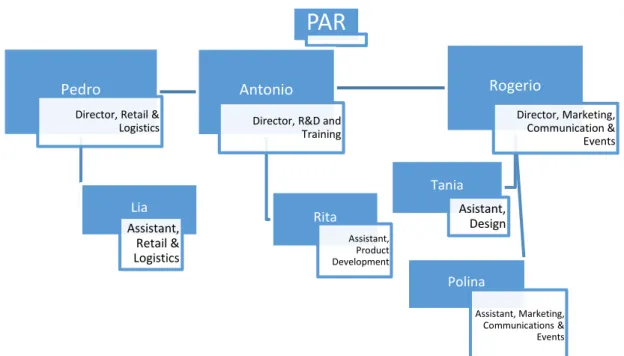
Figure 5- the organizational structure of PAR 34
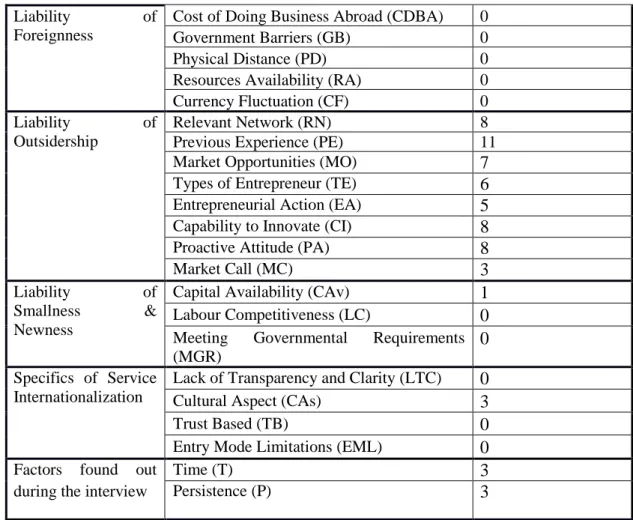
Table 2 - Factors influencing the process of internationalization of PAR in accordance to official documentation
35 Table 3 - Factors influencing the process of internationalization of PAR in accordance to António 37
Table 4 - Factors influencing the process of internationalization of PAR in accordance to Rogério 41
Table 5 - Factors influencing the process of internationalization of PAR in accordance to Pedro 43
3
Biographic Note
The author of this Master Dissertation, Polina Teterevleva, is a student of Master in Management Program of the Faculty of Economy, University of Porto.
Her academic career has started in St. Petersburg, Russia, where she graduated from the Bachelor in Management Program of National Research University – Higher School of Economy. While studying in Russia, Polina has been actively participating in the academic life of the faculty. She has been taking part in several conferences organised by the university. Her works, performed as individually, as in cooperation with another students - “Creativity in management is a way to success”, “Efficiency valuation of HR Department performance: case study of Pharma Ltd” and “Contemporary approach to motivation of the personnel” have received good references of the scientific community of the university.
Having her Bachelor Degree completed, Polina decided to gain international experience and chose University of Porto for the further studies. There was written an article based on the current work, which was presented on international conference in the University of Southern Denmark. The article was also accepted for EuroMed Academy of Business Conference, which will take place in September 2014 in Norway.
Polina also has working experience in different areas. In Russia, she has been working in a Human Resource Department of an international Clinical Research Organisation company for two years. Polina is currently working as a Marketing, Communications and Events Department assistant in a Portuguese start-up company. Polina is also collaborating with several Portuguese brands who are interesting in entering Russian market; she is performing consultancy and market researches for these brands.
4
Dedication
The author dedicates this Master Dissertation to her family.
Acknowledgments
Polina Teterevleva acknowledges her supervisor Raquel Meneses for all her help and patience. The author is grateful to the founders of PAR for their availability for the interviews and delivering all the necessary information.
She is grateful to her family, friends and boyfriend for supporting her during the working process.
She also acknowledges the organisers of the conference “New Research Themes in International Entrepreneurship” - Professor Mathias Lindekilde, Professor Tage Madsen and Professor Erik Rasmussen from the University of Southern Denmark, as well as valuable recommendations and comments of all the participants. The author grateful for the notes and comments of the review commission of EuroMed Conference, which helped her improving the paper.
5
The Abstract
Any company – small or big, new or old, service or product - faces several difficulties and limitations while going international. A service company has some extra limitations due to the nature of the services it provides. Moreover, it is considered that the smaller and newer the company is, the more limitations it faces and the more difficult the process becomes. However, how can a small new service company internationalize?
The current study is a case analysis of a small Portuguese start-up company, which is working on the development, and implementation of a retail chain of cosmetics stores. The company of seven people is developing a project is to be implemented in three continents.
The aim of the current study is identifying the key factors, which make the process of internationalization of such a company possible. The impact of the liability of foreignness, liability of outsidership, liability of smallness and newness as well as the specifics of the process of the service internationalization will be studied. The focus is made on the entrepreneurial characteristics: how the personal and professional features of the entrepreneur are helping the company to overcome the liabilities it faces.
The current study uses qualitative methodology by means of the Systematic Combining approach.
It was found out that for the PAR’s case, the most relevant constraints are those connected with the liability of foreignness. We also concluded that the entrepreneurial personal characteristics and professional skills are helping the company overcoming those constraints.
The originality of the research is determined by the fact that there are no studies conducted yet which would analyse the process of internationalization of small new service company. This research allows better understanding of the factors, which allow such company overcome the difficulties it faces.
6
Resumo
Qualquer empresa – grande ou pequena, recente ou antiga, de serviços ou de produto, enfrenta inúmeras dificuldades e limitações no processo de internacionalização. Uma empresa prestadora de serviços possui uma serie de limitações extra dada a sua própria natureza. Se para além disso for pequena e recente enfrenta um, ainda, maior número de limitações. Então como é que uma empresa de serviços nova e pequena pode internacionalizar-se?
O presente caso de estudo analisa uma pequena start-up portuguesa, que atua no desenvolvimento e implementação de uma cadeia de lojas de cosméticos. A empresa constituída por sete colaboradores desenvolve o seu projeto para ser implementado em três diferentes continentes.
O objetivo deste estudo é identificar os fatores que tornam este processo de internacionalização possível. O impacto de liability of foreigness, liabilitty of
outsidership, liability of smallness and newness tal como outros fatores específicos do
processo de internacionalização de uma empresa dos serviços são objeto de estudo. Com o decorrer da investigação, o foco foi direcionado para as características do empreendedor: como é que os aspetos pessoais e profissionais ajudam a empresa ultrapassar as dificuldades.
O presente estudo utiliza metodologia qualitativa, com recurso ao Systematic Combining. Verificou-se que, para o caso do PAR, as restrições mais relevantes são os relacionados com a liability of foreigness e as características pessoais e competências profissionais dos empreendedores são o fator mais importante para a empresa superar essas limitações. A originalidade do estudo é determinada pelo facto de que não existem estudos realizados que analisem o processo de internacionalização de PME, recentes, de serviços. Esta pesquisa permite uma melhor compreensão dos fatores que permitem que estas empresas superem as dificuldades que enfrentam no processo de internacionalização.
7
1 Introduction
Fast growth of globalisation, rapid development of technology and service innovation going further every day, as well as tough competition, provokes companies searching for more and more sophisticated competitive advantages and makes services going international. Besides, it is known that lately the economy has shifted to service as long as about 75% of employment and gross national product are contributed by service activities in Northern America and Europe (Cicic et al, 1999, Lommelen at al., 2005). Moreover, the process of service internationalization is more complex than the process of internationalization of goods.
In the majority of cases the process of the internationalization is toughly connected with certain difficulties: liability of foreignness (Johanson & Vahlne, 1977; Zaheer, 1995, Hymer, 1960) and liability of outsidership (Johanson & Vahlne, 2009), overcoming those liabilities requires a company using many resources. Therefore, the process of internationalization for small new companies is even more complicated as soon as usually such companies do not have many resources available. Such companies, besides of the liabilities mentioned above are also facing the liability of smallness (Aldrich & Audter, 1986) and, in some cases, the liability of newness (Singh et al 1986). Moreover, for the service company there are some additional constraints connected with the nature of the service (Patterson & Cicic, 1995; Cicic et al., 1999). However, such companies are still managing entering the international market.
Therefore, the research question is how do small, new retail companies manage to go international?
The motivation factor for choosing such theme for the dissertation was lack of variety of studies on the Service Internationalization as well as Internationalization process for retail SMEs. When speaking about the internationalization, it is usually mentioned some product supply for a foreign market (Johanson & Vahlne, 1977, 2009; Oviatt & McDougall 1994, 2005), however we believe that the contemporary business world is providing us with way more opportunities.
There are many studies conducted and theories developed regarding the aspects, stages and processes of the product internationalization (Johanson & Vahlne 1977, 2009; Oviatt & McDougall 1994, 2005; Schweizer, Vahlne & Johanson, 2010). However, the process of the service internationalization is passing different stages or depending on different
8 factors (Boddewyn et al, 1986; Patterson & Cicic, 1995; Cicic et al, 1999). The existing theories and approaches will be analysed critically in order to find differences and similarities between the product and service internationalization processes. There surely will be some similar factors, but even in this case, the importance of the factors for the product and service internationalization might be very different.
The originality of this work is reflected by the fact that there are no studies conducted yet which would analyse the process of internationalization of small new service company. Within the framework of the current study there will be analysed a case of PAR Europe Company. The aim of the PAR is currently working on is opening retail chains of selective cosmetics and perfumery stores. The business model assumes having in the stores selective brands (for example Chanel, Dior, Yves Saint Laurent and others), exclusive brands (the brands that are not sold by any other stores in a current country) and a private brand. The core characteristic of the brand is personalisation, and there were developed several services, which will be offered for all the clients of the brand internationally. This company is a retail company which was created in February 2013 and which has already started the process of internationalization to Turkey, Europe and Brazil. This business case corresponds perfectly with our research question.
The business case analysis will be conducted later using Systematic Combining approach (Dubois & Gadde 2002).
The structure of the work is following: The introduction is followed by the literature review, which analyses the main internationalization theories, and the existing constraints the companies face during this process. After this, the business case is being analysed and the findings are being compared with the theoretical base. Then the conclusions are being made as well as are proposed subjects for the further research.
9
2 Internationalization Constraints
Whenever a company decides to internationalise, there are always constraints and limitations it has to overcome. However, when the company is a service company it has to deal with additional constraints connected with specifics of the service nature. Moreover, if the company, which is entering the process of internationalization, is a small and new company, it does not possess many resources and there are additional constraints for it to overcome.
In the following chapter, there are described the liabilities the small new service company faces. The evolution of the theories and the concepts is followed.
2.1 Liability of Smallness and newness
All the companies are facing certain constraints when going international and overcoming the differences they face implies usage of the resources of the company. Nevertheless, what is happening when the company is small and it does not have too many resources to fight the difficulties? Or can only big companies go international?
In 1986, Aldrich and Auster conducted a study proving that for all types of firms – small and big, there are both advantages and disadvantages and there are strategies to overwhelm the disadvantages. Among the liabilities for the small and new companies the authors are defining problems of raising capital, meeting all the government requirements and being competitive in terms of labour with larger organizations, however those paths are connected with the risk of increased dependence and possible loss of control. For small companies there are several strategies to survive, among which there are partnership, franchising, contracting and being acquired.
In the same study, Aldrich and Auster (1986) are stating that small and new companies tend to have higher mortality rate then the big and old ones. They also conclude that normally, the price of surviving, getting older and growing is high – many companies are losing their autonomy.
Studying the liability of newness, Singh et al (1986) are also concluding that the mortal rage among the new organizations is much higher than for the more mature ones. However, authors claim that the acquisition of legitimacy by the organization significantly attenuates such liability. “This suggests that attempts by organizations that
10 lead to their becoming externally legitimated, either by changes in formal structure (Meyer and Rowan, 1977) or any other means, can significantly alter the liability of newness” (p. 191). Singh et al (1986) suggest that the attempts of the company to get some institutional support might significantly increase its chance of survival.
This point of view follows the same logic as the idea of Johanson and Vahlne, (1977) who state that the companies go international gradually, only after they have grown internally, which means that they have to have the domestic base first.
2.2 Liability of Foreignness
In the academic literature there are studies describing the first constraint of the internationalization – the liability of foreignness, which is connected with the fact that the new market entry is always associated with a disadvantage of lack of knowledge and unprivileged position of the firm compared to the local companies.
The PhD dissertation written by Hymer in 1960 has become a reference for international direct investment and international enterprise. His work is dedicated to search of microeconomic explanation of direct investment and he managed to identify several factors influencing the company when going international. The companies, entering foreign market have way less information about the market than the natives. Besides, the local companies might have different level of governmental support or the government
might create additional barriers for foreign companies to enter. Finally, the currency rates fluctuation might provoke a currency risk that in some cases might bring significant
losses for the company. All these factors are accumulating an additional cost for the company to go international and might influence the success of such initiative.
In the same vein, studying the question of how the company could overwhelm the liability of foreignness, Zaheer (1995) defined “the costs of doing business abroad that result in a competitive disadvantage for an MNE subunit ...broadly defined as all additional costs a firm operating in a market overseas incurs that a local firm would not incur” (pp. 342-343). The factors defining the liability of foreignness correspond to the ones listed by Hymer (1960). However, it was found out that the firm might also have several advantages, which might compensate the additional costs of doing business abroad. It is not always beneficial to copy the local practices while doing the business in another country as soon as the own practices of the company might be more efficient and give the competitive advantage over the local companies. Therefore, the company might benefit
11 from the combination of its own practices with the practices of the local companies in order to perform more efficiently.
Johanson & Vahlne (1977), in the study ”The Internationalization process of the firm – a model of knowledge development and increasing foreign market commitments” developed a model, known as Uppsala model, which explains the process of the firms intensifying their activities on the foreign markets gradually. The article has become the classical reference for studies of the process of the internationalization. It is one of the most cited articles.
The empirical research has as a theoretical basis the existing literature of the time. In the process of the research the authors has come to a contradictory conclusion, questioning the existing point of view that the firm, while evaluating the internationalization opportunity, should take into account the factors like their own resources and the market analysis based on the costs and risks depending on the market characteristics.
Johanson & Vahlne (1977) found out that in many cases the companies tend to formalize their entries through deals with intermediaries, and only then, firms increase their commitment with the foreign market – an establishment chain. And the second feature of the pattern was the psychic distance, as long as the companies tend firstly entering the closest market due to the fact that the environment on those markets is easier to understand, and then the companies tend to gradually enter other markets which are more far away in terms of the physic distance .
The basic assumptions of the Uppsala model are bounded by rationality and uncertainty. The model is fundamentally dealing with the problem of learning and knowledge acquisition on a foreign market. The researchers have mentioned that the firm firstly is changing while acquiring proficiency of the market and secondly, due to strengthening its position. The grade of the company’s market knowledge is defining the level of its commitment and the activities of the firm, and this leads to another level of commitment, which promotes more learning. This model is dynamic: to be able to internationalize, the company has to acquire experiential knowledge, which in its turn can only be acquired while internationalizing.
Therefore, we can see that in accordance to Johanson & Vahlne (1977) the firm, while making the decision regarding the location of the internationalization tends to undertake incremental commitment decisions choosing the closest countries in terms of physic distance, in order to minimise the uncertainty of the market.
12 Thus, the internationalization process necessarily requires many resources of the company in order to cover all the costs of doing business abroad and the time necessary for gaining experiential knowledge gradually.
2.3 Liability of Outsidership
Thirty-two years later Johanson & Vahlne (2009) reviewed their own theory taking into account such important component of business internationalization as relationship network. In the new research, they are considering the outsidership in terms of relevant
network in the market the main source of the uncertainty, rather than physic distances.
Authors argue that any firm is involved into a network of relationship, which are interconnected, so a change in one relationship might have a significant influence on some other relationships in the network. Still considering the knowledge creation as one of the fundamental processes and the biggest challenges of the company in the foreign market, they state that the company is using the network for searching and obtaining necessary information. Therefore, Johanson & Vahlne (2009, p.1415) argue that “insidership is a necessary but insufficient condition for successful business development”. Moreover, the authors find it necessary to consider trust as an important factor for the commitment establishment. Trust is vital for knowledge sharing, it persuades people to build joint expectations and it is truly key factor in the situations with high level of uncertainty. Studying the process of opportunity research, they conclude that it combines elements of discovery and creation.
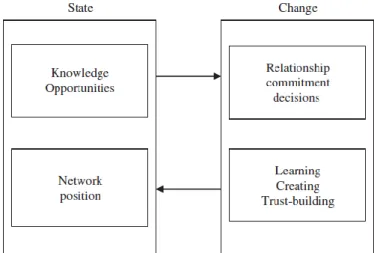
Figure 1 - The business network internationalization process model.
13 The new version of the model (figure 1) depicts the cumulative processes of the trust, commitment building and learning. The two sets of variables – state and change are interconnected. The growth of the level of knowledge might have positive or negative impact on building trust and commitment. In the new version of the model, authors tend to indicate that the opportunity is the most important body of knowledge that drives the process.
The reconsidered position of the authors is that the company, choosing the location for the internationalization, will go to the market where it and its partners see more
opportunities. In the situation where the company has no local partners yet, it will tend to
choose the market, where the possibilities of obtaining the business connections are higher, which, therefore, emphasises the importance of the networks for the internationalization. The authors also argue that while exploring the opportunity, such variables as trust, knowledge and commitment to the relationships should be taken into account.
The importance of the business networks was already pointed out by Hakansson & Snehota in 1989. They claimed that “No business is an island” – business networks help companies to implement their strategy better. Taking into account three basic assumptions - that the environment of the organization is beyond its influence and control; the strategy of the business organization is the result of the resources it controls and adaptation is necessary due to the continuously changing environment, they propose the Network model of organization-environment interface. The authors state that the organizational performance is conditioned by the totality of the network as a context. The model is based on 4 propositions:
The behaviour of a company is conditioned by a limited number of the counterparts;
An organization engages in continuous interactions that constitute a framework for exchange processes;
Relationships develop the distinctive capabilities of an organization;
The performance of the companies does not just depend on how well it interacts with other companies but also on how well these companies interact with third parties (partners’ partners) and the network.
Hakansson and Snehota (1989) also state that some of the resources that relationally were considered internal can hardly be controlled by the organization while a number of
14 external resources can be actually considered as an integral part of the organization; therefore, the boundaries between companies in the network are blurring. Previously it was considered that the effectiveness of business organization is given by its capacity to acquire resources through exchange with other parties in the context (Yuchtman & Seashore, 1967). Hakansson and Snehota (1989) make a contradictory statement that the effectiveness of the organization is not based on the adaption to the environment but on its relating to the concept. This means that the organizational effectiveness – its strategy - is based on interactive behaviour. The environment that was previously seen as a constraint is now perceived as opportunity.
The fact of the company belonging to certain business network provides it with a number of beneficial opportunities: they have access to the contacts, to the resources – physical, technical, financial, etc., to the useful information, knowledge and expertise. Through the network, the company might obtain strategic partners, find out and evaluate business opportunities.
Hakansson and Snehota (1995) identify that relations in the business network are not something given and stable, they are changing and evolving over time, in this regard the outcome of them is changing and out of control. This form of organization is peculiar because it does not have a centre, nor does it have clear boundaries. Contrary traditional points of view, the relations are described as sensible, economically efficient arrangement; a consequence of rational behaviour, they are essential for the economic performance of companies. The authors also mention that there is nothing like a typical or average business relationship. They define the relation as a mutually oriented interaction between two reciprocally committed parties. They also mention the interdependence and connectedness of the companies in the industrial market which constraints their behaviour as much as creates opportunities.
Hakansson and Ford (2002) emphasise the importance of the business networks in the contemporary world: “No one interaction, whether it is a sale, purchase, advice, delivery or payment can be understood without reference to the relationship of which it is a part. Similarly, no one relationship can be understood without reference to the wider network. Each company gains benefits and incurs costs from the network in which it is embedded and from the investments and actions of all of the companies involved” (p.134). Therefore, the company gets help via its network, contradictory to idea suggested by Johanson and Vahlne in their Uppsala model (1977), the process of internationalization is not necessarily slow and gradual process anymore.
15 The attention of researchers have attracted international SMEs due to their increasing role in the process of the knowledge and managerial skills transferring. Oviatt and McDougall in 1994 argue that “global start-ups”, or as they are called nowadays “born global companies” are not just uninteresting anomalies as it was considered earlier, but new entity on the international market deserving detailed study. Until 1990, those firms were not mentioned, known or taken seriously. Conducted inductive research, collecting and analysing information of 11 different firms they attracts the attention of the scientific world to a new phenomenon, which was considered as a future of the business organization. Oviatt and McDougall (1994, p. 49) define“... an international new ventures as a business organization, that from inception, seeks to derive significant competitive advantage from the use of resources and the sale of outputs in multiple countries”. The authors mentioned that the Uppsala Mode is only applicable for the companies, which internationalize slowly. However, for those born global companies it was needed different theoretical approach.
One of the main differences of such new ventures was that unlikely all other organisations, they do not necessarily need to have their own resources to start the international operations. Thus, these business entities are mostly defined by the actions undertaken by the entrepreneurs rather than the resources they possess. “These entrepreneurial actions lie at the core of new ventures' ability to develop ways to create value beyond their established and presumably resource-rich competitors” (Zahra, 2005: 21). This point of view assumes emphasising of the importance of intangible assets of the firm such as innovative abilities, relationships, networks, business insights and organizational cultures for the process of value creation for the international new ventures. Furthermore, those activities that enhance their performance on the international markets are the most valuable.
Zahra et al (2004) has emphasised that the INV and established companies have different patterns of the opportunity identification. International New Ventures undertake different assumptions; they perceive the competitors and the market differently. Therefore, the advantage of the INV is that the entrepreneur has different cognitions; he can evaluate the situation, spot the opportunities on the international market and quickly design new ways of exploiting these opportunities.
In more recent study, Oviatt & McDougall (2009) pay attention to such elements as licensing and network alliances. They also define “International entrepreneurship is the
16 discovery, enactment, evaluation, and exploitation of opportunities – across national borders - to create future goods and services” (p.7)
This article by Oviatt & McDougall ( 2009) is moving us further towards understanding the nature of born global companies.
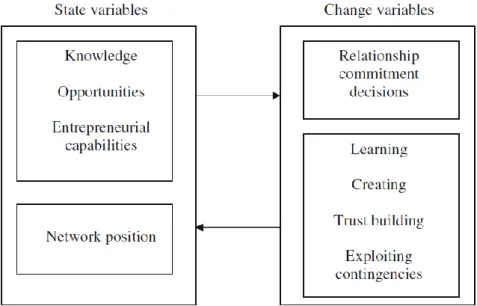
In 2010, Johanson and Vahlne, now with Schweizer adapted the model one more time. They consider that the internationalization should be seen as ether as product of a firm’s attempt to improve its position within the network or the result of entrepreneurial action. In the article authors suggested improvements to the Johanson & Vahlne’s (2009) business network internationalization model, emphasising the entrepreneurial aspects of the process (Figure 2).
These researchers consider the environment of the firm as dynamic, nonlinear and laced with networks. The model is also taking into account the importance of entrepreneurial activities, such as those needed for launching a born global company. Besides of the elements which were considered by Johanson & Vahlne (2009), authors add such state variable as entrepreneurial capabilities as a supplement to knowledge and opportunities. Schweizer et al (2010) are stating that entrepreneurs are operating under conditions of uncertainty and ambiguity, which is consequently causing entrepreneurial uncertainty, but it also allows the entrepreneur choosing more freely among the objectives, which only became visible during the process.
Figure 2 - The internationalization as an entrepreneurial process model
17 Schweizer et al (2010) believe that the model they created “presents a necessary albeit incomplete conceptualization of the role of entrepreneurship in the internationalization of firms” (p. 367)
The opportunity exploration and opportunity creation are the basic entrepreneurial activities (Brito & Meneses, 2007). Yet, the way these activities are being performed, depends on each case individually. Normally, when talking about the market opportunities, the market itself is being perceived as a passive element of the process. However, Andersen and Buvik (2002), after conducting an analysis of several business cases, have concluded that the buyer or customer may play an active role while establishing of an exchange transaction. Therefore, some firms might go international in order to respond the order of the local consumers – in this case, the market is “calling” the company to go abroad. To internationalize, firms might use relationship approach: they use personal and existing business relationship in order to gain information about the potential partnerships to be established and connections to be made.
The previous experience of the entrepreneur is also an important factor. Brockhaus and Horwitz (1986) argue that the entrepreneurs are not just learning from their previous experience, but profit from it. Those entrepreneurs, who have their second enterprise, tend to do better than those who have their first one, both in terms of sales and profits. This can be also applied to the internationalization entrepreneurial experience: in their study Reuber & Fischer (1997) have found proves to their hypothesis that the management team with previous international experience uses a strategic partnership to a greater extend, promoting faster and more efficient internationalization of the firm. In a study conducted by Spence & Crick (2007), the rapid and successful internationalization process of the companies studied is explained by the fact that the companies were “hiring an executive with relevant experience whose main role was to guide the firm to strategic international development” (Spence & Crick, 2007, p. 226).
Moreover, Andersson (2011) argues that a company can go international in a very short term, using the entrepreneur’s prior knowledge and network. The strategy, which is “based on an entrepreneur’s knowledge, links to foreign markets and a co-operative arrangement with network partners, can be successful” (Andersson, 2011, p.638).
The research conducted by Andersson (2000), demonstrates that the entrepreneurs are not all the same. They reveal different behavioural patterns, they concerned about different aspects of the business and they choose different strategies for the companies. According
18 to Andersson (2000), there are three types of the entrepreneurs: Technical, Marketing and Structure:
Technical Entrepreneur – his main concern is technology, the product and production development are his strategic priorities. The internationalization is not the key priority; however, the request from abroad might lead to export internationalization or to a listening agreement, as soon as these type of activities are not requiring many resources. The market choice depends on which countries are making the inquiries. This type of entrepreneur mostly prefers international pull strategy.
Marketing Entrepreneur – the idea of the product/business for those entrepreneurs emerges from existing need on the market and an idea how to fill this need. He is proactive in the internationalization process and aims to find new channels of reaching the consumers. He is willing to establish international new ventures. This type of the entrepreneurs might choose markets in accordance to the personal preferences and connections, instead of using approach that is more “rational”. It is more common for them to use international push strategy.
Structure Entrepreneur – is aiming to restructure companies and industries. He acts in the companies operating in mature industries and he implements his strategy on corporate level. The process of internationalization is more consequence of the entire strategy, rather than a goal for him. Markets are chosen in accordance to the competitive situation.
The creation of competitive advantage for SME while going international promotes entrepreneur to innovate. O'Cass & Weerawardena, (2009) argued “that SME internationalisation process is an entrepreneurial activity and entrepreneurial SMEs pursuing international market entry actively undertake innovation in all areas of value creating activities” (O'Cass &Weerawardena, 2009, p. 1338) Therefore, the capacity of the entrepreneur to innovate is an important factor of the business success. In accordance to Frishammar & Andersson (2009) it is also vital for the entrepreneur to be proactive. The authors define proactiveness as a willingness to introduce the product or the service to the market ahead of competition. It is first-mover advantage seeking and forward-looking. Their study shows that proactiveness has a lot bigger influence on success of SMEs internationalization than the strategic orientations.
19 2.5 The specifics of the service internationalization process
The main reason why the processes of service and product internationalization cannot be similar is hidden in the nature of the entities “product” and “service”.
The Oxford Dictionary provides us with following definitions: “Product – 1. a substance produced during a natural, chemical, or manufacturing process; commercially manufactured articles, especially recordings, viewed collectively. 2. a thing or person that is the result of an action or process” and “Service – the action of helping or doing work for someone; an act of assistance; assistance or advice given to customers during and after the sale of goods”
The key differences between product and service from the international business point of view are following. Firstly, products have physic distribution channels in order to reach the customer, while the majority of the pure services do not need it (Demirkan et al, 2011). Therefore, talking about different entry modes while expanding to a new country, such as intermediaries, might not be relevant in some service companies’ cases. Secondly, the level of the personalization of the service is always much higher, as long as the service consumer will always be expecting the individual approach, while good consumers are purchasing standardized pieces very often (Patterson & Cicic, 1995; Cant & van Heerden, 2005). Thirdly, the product is a tangible entity; the customer has an opportunity to test it before buying, while the purchase of a service is in many cases based on trust (Patterson & Cicic, 1995, Goerzen & Makino, 2007; Boddewyn et al, 1986, Demirkan et al, 2011). Fourthly, the processes of creation of the product and the service are totally different: the majority of products require machinery and raw materials, while services require skills, experiences, competencies and motivation of the one who delivers the service (Cant & van Heerden, 2005; Goerzen & Makino, 2007). Fifthly, growing the business for the product company means producing bigger amount of products and reaching new clients, while for the service company expansion it also requires improvement of the characteristics of the service provider (Demirkan et al, 2011; Cant & van Heerden, 2005, Boddewyn et al, 1986).
Therefore, we can see that all of the processes starting from creation and finishing with approaching the customer for goods and services are different; the internationalization paths of the good-providers and the service-providers are different too. For the service companies the entry mode, the production, the distribution channel should vary. The adaptation of the service for entering the new country is also more complicated rather than adaptation of a product as long as it implies taking deeper into account the cultural
20 differences, the language, the diversification and access of technologies in the country, the behavioural norms and standards, the economic issues and so on.
“Services are considered to be international when one or more of the following situations occur(s): (l) the movement of service providers to clients abroad; (2) the movement of foreign clients to service providers; (3) the movement of both clients and providers; and (4) no movement by either client or service provider due service delivery through objects, technological vehicles and/or assets” (Lommelen & Matthyssens, 2005, p. 97).
In 1986, Boddewyn et al have mentioned the key differences between services and “non-services” and the difficulties of services going international, which are connected with those differences. The authors are claiming that one of the major difficulties in the process of the service internationalization is associated with licensing and management contracts. “In their pure forms, they do not involve any equity since only technology or management skills are sold to another party [Buckley 1983b]. Besides, they use the "external market" rather than "internalization" within the international firm as a mode of transfer [Buckley and Casson 1985, p. 51]. Therefore, they cannot be considered forms of foreign direct investment” (p.47). The authors also emphasise the fact that the trade process in the case of services is losing its clarity and transparency – the money is paid, but there is no way ether to estimate the process of production of the service ether control its quality.
Boddewyn et al (1896) also define several ownership advantages for the service companies. Firstly, it is an Internalization Advantage: In the case of the consumer service, the internalization process might be conducted even with the absence of equity investments. Secondly, it is Location Advantage: in terms of location requirements, international services have no special problems.
In 1995 Patterson & Cicic claim that due to intangibility of the service, the providers are pretty limited in the entry mode options, meanwhile the entry mode is a key success factor for the service internationalization. They are also stating that for those services that require a lot of interaction between the customer and service provider, the cultural aspect is becoming one of the key important factors.
Based on those two key dimensions – intangibility and customer interaction, Patterson and Cicic (1995) are developing a conceptual typology of the service providers based on such factors as customization, firm size and amount of foreign investment. They are defining 4 types of service firms: Location-Free Professional Services (for those firms the degree of face-to face contact with the client in the service delivery is low and the degree of tangibility is high: those are not pure services), Location-Bound Customized Projects
21 (the degree of face-to-face contact is high and the degree of tangibility is high), Standardized Service Packages (the degree of face-to- face communication is low and the tangibility is low: the services are bounded with goods) and Value-Added Customized Services (the degree of face-to-face communication is high and the tangibility is low). The retail might be considered as Location-Bound Customized Project, as soon as both the level of tangibility and face-to-face interaction is high. In accordance to the results of the study, those four types of the service providers have different organizational, behavioural and attitudinal profiles, as well as entry mode profile and international operation profile. The appearance of this typology has allowed developing different insights into the behaviour and perception of international service marketers, and systemising complex and heterogeneous global environment.
The global economy development, globalization and technology development have been changing the world rapidly. The development and spread of all kinds of communication technologies has moved service companies into a new level. In 1999, Cicic et al (1999) have conducted a research in order to develop a model of service internationalization. They are stating that some stages of the processes and service internationalization are similar as product internationalization; however, there are many stages, which are different. They have built a conceptual model based on the literature review and a series of in-depth interviews with representatives of the service companies (Figure 3). Cicic at al. (1999) have developed a service classification. They are defining “hard” services – not the pure services, but services embedded in goods, and “soft” services – the standard pure services. They argued that the “hard” services due to their high similarity with the goods are more likely to internationalize via standard and traditional entry modes, they are less influenced by the cultural and technological differences; while the “soft” service require totally different approach and the entry mode for such services should be adapted. Due to the key difference between those types of services, the authors are defining different stages these services are passing during the process of the internationalization. The “hard” services due to their tangible nature have to pass all the phases as it is shown on the figure 3, when the “soft” services do not require the exporting stage due to their intangible nature (figure 3). Retail service is a soft service according to this classification and it is difficult to internationalise.
22 Figure 3 - Process of Internationalization of the service firms
Source: Cicic et al (1999: 87)
Knowing the unique characteristics of each service type and the potential of the particular service on a foreign market should facilitate the choice of approaching the market and selecting the entry mode. Besides, in order to achieve success internationally, the company should evaluate the technological possibilities.
2.6 Conclusion
From the current literature review we can conclude, that any company, entering the foreign market is facing difficulties; however, those difficulties are connected with the type of the company and the types of the goods/services the company is offering.
Any company is having two major disadvantages: liability of foreignness and liability of outsidership. The liability of foreignness is the disadvantages connected with lack of information about the host country market (Johanson & Vahlne,1977; Hymer, 1960; Zaheer,1995) unprivileged position in the eyes of the local government (Hymer, 1960; Zaheer,1995), higher costs of doing business abroad in comparison to the local companies (Hymer, 1960; Zaheer,1995), the currency risk (Hymer, 1960). In accordance to the Uppsala model, the company tends firstly enter to the psychic close country Johanson & Vahlne, 1977) and to be able to internationalise, the company has to possess a big amount of necessary resources (Hymer, 1960; Zaheer, 1995; Johanson & Vahlne, 1977)
23 The Liability of Outsideship is connected with lack of the network in the target country (Johanson & Vahlne, 2009; Hakansson and Snehota, 1989, 1999; Hakansson and Ford, 2002; Zahra et al, 2004), inability to make business connections and difficulty of spotting the market opportunity (Johanson & Vahlne, 2009). Due to this fact, it is important for the entrepreneur to have previous experience (Brockhaus & Horwitz, 1986; Reuber & Fischer, 1997; Andersson, 2011; Spence & Crick, 2007), undertake adequate entrepreneurial actions (Oviatt & McDougall, 2009; Schweizer, Valhne & Johanson, 2010), have capacity to innovate (O'Cass & Weerawardena, 2009) and be proactive (Frishammar & Andersson, 2009). Moreover, the market might be an active participant of the process (Buvik, 2002; Brito & Meneses, 2007)
When a new and small company is willing to internationalize, there appear even more constraints – liability of newness and liability of smallness. Those liabilities are associated with such difficulties as problems of raising capital, meeting all the government requirements and being competitive in terms of labour with larger organizations (Aldrich & Auster, 1986). There is also a very high probability of an early death of a young company, and even if it manages to survive in many cases, it risks losing its independence (Aldrich & Auster, 1986).
Finally, when a new small service company is searching for an opportunity of going international, it should be taking into account the types of services it is providing with and specifics of the nature of the services. It should consider the entry mode very carefully depending on the level of tangibility of the service it is providing with and the degree of face-to-face communication with the client (Patterson & Cicic, 1995). The right choice of the entry mode is one of the most vital factors for the service internationalization (Patterson & Cicic, 1995; Cicic et al, 1999). Depending on the type of the service, “hard” and “sort” service are following different internationalization paths (Cicic et al, 1995). The difficulties might appear because of the intangible nature of the service, the money is paid, but there is no way to control the process of the service production, nether the result (Boddewyn et al, 1896). Besides of that, it is necessary to adapt the service for the customers of different culture (Boddewyn et al, 1896). Finally, the consumer should trust the service provider to purchase the service (Patterson & Cicic, 1995; Goerzen & Makino, 2007; Boddewyn et al, 1986; Demirkan et al, 2011).
Therefore, a small new retail company during the process of the internationalization faces large number of difficulties.
24
3 Methodology
The methodology of conducting a research might be quantitative, qualitative or mixed. In accordance to Cresswell (2003), quantitative strategies are experiment designs and non-experimental designs such as surveys. Narratives, Phenomenologies, Ethnographies, Grounded theories and Case studies are belonging to the qualitative strategies. The mixed methodology strategies are Sequential, Concurrent and Transformative, which are combining the elements of both quantitative and qualitative methodologies.
Within the framework of the current study it will be used the case study strategy. “Case studies, in which the researcher explores in depth a program, an event, an activity, a process, or one or more individuals. The case(s) are bounded by time and activity, and researchers collect detailed information using a variety of data collection procedures over a sustained period of time” (Cresswell, 2003:15). Such strategy allows understanding dynamic changes in presence within single settings. It typically combines data collection activities such as archives, interviews, questionnaires, and observations (Eisenhardt, 1989). Case studies might be used in order to reach various goals: to provide description (Kidder, 1982), test theory (Pinfield, 1986; Anderson, 1983), or generate theory (Gersick, 1988; Harris & Sutton, 1986). Besides of that, case studies are helpful to cope with the fact of intangibility of many resources of organization, which makes it impossible to assign any quantitative valuables to those resources (Hoskisson et al, 1999).
The qualitative research implies the researcher making knowledge claims based on constructivist perspectives such as data related to personal experience of the respondent, historically/politically formed data, data collected in order to verify a theory (Cresswell, 2003). In other cases, the researcher is working due to advocacy/participatory perspectives, which can be political, collaborative, and issue- or change-oriented (Cresswell, 2003).
The key criteria for choosing the approach are the Match between the problem and approach, Personal experience and Audience. Qualitative research - an exploratory research - is used when the author does not know the important variables to examine. It happens when the topic of the investigation is new, or it has never been addressed to a sample group. It is also used when existing theories are not applicable to a certain case (Cresswell, 2003). Though on one hand, quantitative research with very strict rules and
25 procedures might be for many researches more comfortable approach. On another hand, the qualitative approach gives more space for innovation. “For advocacy/participatory writers, there is undoubtedly a strong personal stimulus to pursue topics that are of personal interest-issues that relate to marginalized people and an interest in creating a better society for them and everyone” (Cresswell, 2003:23)
The first phase of conducting a case study research is defining a research question in order to focus a research and not to be overwhelmed with the amount of information. It is also vital to specify some possibly significant variables, referring to already existing literature. Then the appropriate cases, which are likely to respond the emergent theory, are chosen. The final goal of analysing the sample is gaining accurate statistical evidence of the distribution of the variables.
There are several ways to collect information. Among them, there are observations, interviews and archival sources. Typically, such research assumes various different approaches of collecting the information. Case study might involve qualitative data only, quantitative data only or both. The case study research might be also performed by multiple investigators, which allows considering the situation from various points of view. When working with data it is important to overlap the processes of data collection and data analysis, which is not only giving the researcher a head start, but also allows them a flexible data collecting. While acquiring the research data it is useful to write down any impression that occurs rather than only those that seem important now as soon as it is unpredictable which information might turn out useful in the end of the research. Besides of that sometimes during a study the researcher feels a necessity to alter or add data collection methods.
The data analysis is the least codified and the most complicated process. One of the key steps is within-case analysis – detailed write-ups for each individual case, which is a tool for investigators to manage the huge amount of data
The next step of the process is comparison of the emergent data with the information from case to verify if the data fits into the frameworks of the theories. It is important to perfect the hypotheses and sharpen the constructs, which can be achieved by sharpening the characterisation of the construct and then identifying data that measures the construct within each individual case. Then it is necessary to ensure that the evidence in each case fit with the relationships between the constructs.
The literature review is an important part of the study firstly because it describes the existing theories about the research question and secondly, the conflicting theories, if
26 existing, may represent an opportunity of developing more creative and “outside the box” mode of thinking.
3.1 Methodology used
The case study conducted is a qualitative research using the Systematic Combining Approach developed by Dubois & Gadde in 2002. This methodology is an abductive approach rather than inductive or deductive approach allowing a continuous interplay between the theory and the empirical observation.
The advantage of such methodology is that it is stresses theory development rather than a theory generation allowing refining of the existing theories rather than creating new ones. “This approach creates fruitful cross-fertilization where new combinations are developed through a mixture of established theoretical models and new concepts derived from the confrontation with reality” (Dubois & Gadde, 2002, p. 559). The approach assumes matching, direction and redirection of 4 main components of Systematic Combining: Framework, the Case, Theory and the Empirical World (Dubois & Gadde, 2002).
The limitations of the study are connected with the nature of the case study. Such studies are based on analytical inference; they cannot be built using statistical inference. Besides, for the business case studies it is not possible to test the relations in complex structures and structures, so the creditability of such studies has to be proved using other means: adequacy of the research process and the empirical grounding on theory (Strauss and Corbin, 1990, Dubois & Gadde, 2002). Besides, when conducting such study it is important to be parsimonious and selective in order not to end up with a weak theory. Finally, the process of learning is guided by the theoretical framework of the research and some unpredictable discoveries might occur. The path to the discoveries and the process of how the researcher is learning should be transparent to the reader.
3.2 Conceptual Framework for Analysis
As a result of the literature review, we can conclude that small new company when starting the internationalization process faces following disadvantages (figure 4):
27 Figure 4 – The conceptual framework
Source: Own elaboration
1) The Liability of Foreignness – disadvantages connected with lack of information about the host country market (Johanson & Vahlne, 1977; Hymer, 1960; Zaheer, 1995), less advantageous position in the eyes of the local government (Hymer, 1960; Zaheer, 1995). It has higher costs of doing business abroad in comparison to local companies (Hymer, 1960; Zaheer, 1995), it faces the currency risk (Hymer, 1960) and the lack of resources necessary for the internationalization (Hymer, 1960; Zaheer, 1995, Johanson & Vahlne, 1977). The company is searching for the country, which is physically closer (Johanson & Vahlne, 1977).
2) The Liability of Outsidership – capacity of gaining relevant network in abroad (Johanson & Vahlne, 2009; Hakansson and Snehota, 1989, 1999; Hakansson and Ford, 2002; Zahra et al, 2004), difficulties of identifying market opportunities, (Johanson & Vahlne, 2009). Besides, the internationalization strategy might depend a lot on entrepreneurial action (Schweizer, et al., 2010), the type of the entrepreneur, as well as on his previous experience and network (Brockhaus & Horwitz 1986; Reuber & Fischer 1997; Andersson 2000, 2011; Spence & Crick, 2007, Johanson & Vahlne, 2009). Moreover, the international entrepreneur should be innovative and proactive (O'Cass
The co m pan y Int er na tiona liz at ion
Constraints
Liab. of Foreigness Liab. of Outsidership Liab. Of Foreigness Liab. of Smallness & Newness Specifics of Service Inter-nationalization Entrepreneurial Characteristics28 &Weerawardena, 2009; Frishammar & Andersson, 2009). Finally, the market itself might be an active participant of the process (Buvik, 2002; Brito & Meneses, 2007).
3) Liability of newness and smallness - such issues as problems of raising capital, meeting all the government requirements and being competitive in terms of labour with larger organizations (Aldrich & Auster, 1986). There is also a very high probability of early failure in a young company, and even if it manages to survive, in many cases it risks losing its independence (Aldrich & Auster, 1986).
4) The specifics of the service internationalization - depending on the type of service, “hard” and “soft” services follow different internationalization paths (Cicic et al, 1995). It is important to choose the entry mode carefully (Patterson & Cicic 1995). The company should also take into account the difficulty of controlling the quality and the price of the service due to its intangible nature, and consider the psychological and cultural differences of the customers in the country of destination and be able to adapt the service correspondingly (Boddewyn et al 1896). For a consumer to purchase a service, the trust factor is also essential (Patterson & Cicic, 1995, Goerzen & Makino, 2007; Boddewyn et al, 1986, Demirkan et al, 2011). Finally, it is important to mention that the market is not always a passive part in the internationalization process. In many cases, the market attracts the company to enter the country (Buvik, 2002; Brito & Meneses, 2007).
Therefore, we can define several challenges new service SMEs might face during their internationalization process (Table 1), which will be used as initial parameters for the case analysis.
Table 1 - Factors influencing the process of internationalization of service SMEs
Liability Factor Twitter definition Authors Liability of
Foreignnes s
Market Information (MI)
Lack of the market knowledge comparing to the local companies
Hymer (1960), Johanson & Vahlne (1977), Zaheer (1995)
Cost of Doing Business Abroad (CDBA)
Additional cost the company that is going to operate abroad has to incur and the local company would not incur
Hymer (1960), Zaheer (1995)
Government Barriers (GB)
Government might create additional barriers for the foreign company to enter the market
Hymer (1960), Zaheer (1995)
Physical Distance (PD)
The company tend to expand gradually: they firstly enter the markets which are physically
Johanson & Vahlne (1977)
29 closer to the domestic
market Resources
Availability (RA)
The process of the internationalization is requiring a lot of the company’s resources Hymer (1960), Zaheer (1995), Johanson & Vahlne (1977) Currency Fluctuation (CF)
The currency risk might in some cases bring sufficient losses for the company Hymer (1960), Zaheer (1995) Liability of Outsidershi p Relevant Network (RN) Belonging to a network provides the company with a number of advantages: it might obtain resources, knowledge, contacts information, etc. via the network
Johanson & Vahlne (2009), Hakansson & Snehota (1989, 1999), Schweizer, Valhne & Johanson (2010), Reuber & Fisher (1997); Andersson (2011); Hakansson and Ford (2002); Zahra et al, (2004) Previous Experience
(PE)
The entrepreneurs might use the information, business connections, strategies and approaches they obtained or developed previously in order to conduct the process of the internationalization faster and more efficiently
Brockhaus & Horwitz (1986); Reuber & Fischer (1997); Andersson (2011); Spence & Crick (2007)
Market Opportunities (MO)
The company, choosing the destination for internationalization, prefers the market where it and its partners see more opportunities
Johanson & Vahlne (2009)
Types of
Entrepreneur (TE)
Depending on the types the entrepreneur belongs to, it demonstrates different behavioural patterns, have concerns about specific aspects and chooses different strategies for the company.
Andersson (2000), Brito & Meneses (2007)
Entrepreneurial Action (EA)
The activities needed for launching the
process of
internationalization: discovery, enactment, evaluation and
Oviatt & McDougall (2009), Schweizer, Valhne & Johanson (2010)
30 exploration of opportunities Capability to Innovate (CI) The innovation is an important value creating activity O'Cass & Weerawardena (2009) Proactive Attitude (PA) Forward-looking, first mover advantage-seeking, willingness to introduce a product or service ahead of competition. Frishammar & Andersson (2009),
Market Call (MC) In some cases, the market is not just a passive participant of the process of internationalization. The entrepreneurs might go to the market aiming to respond the order of the local consumers
Buvik, (2002) Brito & Meneses, (2007) Liability of Smallness & Newness Capital Availability (CAv)
In many cases the capital raising might be a big challenge
Aldrich & Auster (1986)
Labour
Competitiveness (LC)
Being competitive in terms of labour with
larger local organizations Boddewyn et al (1896) Meeting Governmental Requirements (MGR)
The government might establish some rules and norms for the business processes which would differ for ones of the firm’s country of origin
Aldrich & Auster (1986) Specifics of Service Internation alization Lack of Transparency and Clarity (LTC)
The money is paid but there is no way to estimate the process of the service production or evaluate its quality
Boddewyn et al, (1896)
Cultural Aspect (CAs)
The service must be adapted in accordance with local culture, norms and traditions
Boddewyn et al, (1896)
Trust Based (TB) To order the service, the consumer should be secure about the service provider
Patterson & Cicic (1995), Goerzen & Makino (2007); Boddewyn et al (1986), Demirkan et al (2011)
31
Entry Mode
Limitations (EML)
Due to the intangible nature of the services the entry mode options are more limited
Patterson & Cicic (1995)
Source: Own elaboration
3.3 The selected Case
For the case study, it was chosen PAR Europe – a small Portuguese start-up company that is currently going through the process of the internationalization. The company is working on a project of organizing and opening a retail chain of cosmetics stores in several countries. Due to the characteristics of the business model, its strong correlation with personalization in particular, PAR Europe is working on creation a number of customer services which will be delivered in-store and online. The company is aiming to create a 1-to-1 communication strategy in order to treat each customer as individual and create a strong emotional connection.
The company was chosen in order to satisfy all the necessary characteristics concerned within the current study in order to follow up the process of the internationalization and see how the company is coping with all the constraints and limitations it faces: PAR is small, new retail company which is developing a project to be implemented in different countries. It has 3 founders, who have rich experience in 3 key areas of the business: Retail and Logistics, Training and R&D, Marketing and Communication. The company was invited to develop the project for Turkish market via the personal network of the founders. The project is innovative and the entrepreneurs are very proactive.
3.4 Data collection
The main source of information was the interviews with the founders of the company. The three interviews were structured the same way.
We also had access to the official documents of the company, and some informal conversation have been taking place in order to clarify the points that provoked doubts. Interviews were conducted with the founders and information collected. The interview with António was conducted on 10th of February 2014, the interview with Rogério was conducted on 26th February 2014, and the interview with Pedro was conducted on 14th of May 2014. All the interviews were taken place in the head office of PAR in Porto, Portugal. The official documentation was also provided by the founders of the company.
32 3.5 Conclusion
The current study uses qualitative methodology. Having different methodological approaches studied, we have chosen the Systematic Combining approach (Dubois & Gadde, 2002). This methodology allows abductive approach rather than inductive or deductive approach, which makes possible an incessant interaction of the empirical observation and theory.
Such approach allows the researcher refining the existing theories, rather generating new ones as soon as the methodology stresses theory development rather than a theory generation.
There was also developed the conceptual framework. The process of the internationalization of the small new retail company is conditioned by the liability of foreignness, liability of outsidership, liability of smallness and newness and specifics of service internationalization.
The case for the analysis was chosen accordingly. The current research analyses the case of small Portuguese start-up retail company who works on creation and implementation of makeup stores in three continents.