Potential of industrial by-products and wastes from the Iberian Peninsula as
carbon sources for sulphate reducing bacteria
Short Title: Potential of industrial by-products and wastes as carbon sources for SRB
J.D. Carlier
1, L.M. Alexandre
1, A.T. Luís
1, M.C. Costa
1*1 - CCMAR, University of Algarve, Campus de Gambelas, 8005-139 Faro, Portugal.
Phone number: +351289800900, ext. 7634; e-mail:
[email protected]
*Corresponding author
Title PageShort Title: Potential of industrial by-products and wastes as carbon sources for SRB
Potential of industrial by-products and wastes from the Iberian Peninsula as carbon sources
for sulphate reducing bacteria
Abstract
Industrial by-products and wastes from Portugal and Spain were tested for the first time as carbon sources/electron donors for sulphate reducing bacteria. Cultures in mineral medium supplemented with the tested substrates were monitored and sulphate reduction efficiency is discussed in light of substrates compositions, dosages and corresponding chemical oxygen demand/[SO42-] ratios. The use of doses targeting a ratio of 1.5 was a good strategy to
optimize sulphate reduction activity. As expected, this activity was faster for substrates that have in their composition simple compounds such as low chain alcohols and organic acids and/or compounds that can be rapidly degraded such as sugars, though it also occurred in a longer-term perspective with substrates composed mainly of slowly degradable compounds such as cellulose and lignin. Among eighteen tested substrates, six supported high sulphate reduction efficiency during incubation periods varying between two and four weeks (sugared water from a factory of candies, beetroot molasses, olive mill wastewaters not decanted and decanted, orange molasses without conservative and municipal wastewater from Mina de São Domingos, Portugal), while eight substrates sustained moderate sulphate reduction efficiency during periods from three to seven weeks (water from washing beetroots, Carbocal®, orange molasses with conservative, liquor extracted from orange peels, orange peel fragments, water from washing industrial equipments used to produce orange juice, pine nut shells and pine cone fragments). Nevertheless, after four months of incubation, total sulphate removal was observed with three of the solid substrates tested (orange peels, pine nut shells and pine nut cones).
Keywords
Chemical oxygen demand/[SO42-] ratio; electron donors; organic substrates; sulphate reduction
Introduction
Sulphate reducing bacteria (SRB) comprises a diverse group of microorganisms with the ability to obtain energy through anaerobic respiration by dissimilatory sulphate reduction, in which sulphate is the oxidising agent (electron acceptor) for the oxidation of certain compounds (electron donors), resulting in the release of sulphide. The resistance of SRB to extreme conditions and the fact that sulphide reacts with several metals forming precipitates have made these microorganisms known for their potential in bioprocesses to treat waters contaminated with metals and sulphate, such as acid mine drainage (AMD) (e.g. Costa et al. 2017; Dev et al. 2017; Miran et al. 2017; Muhammad et al. 2017). However, these waters are usually poor in compounds used by SRB as carbon sources and electron donors to obtain energy, thus
Blinded Manuscript Click here to view linked References
1 2 3 4 5 6 7 8 9 10 11 12 13 14 15 16 17 18 19 20 21 22 23 24 25 26 27 28 29 30 31 32 33 34 35 36 37 38 39 40 41 42 43 44 45 46 47 48 49 50 51 52 53 54 55 56 57 58 59 60
their biological treatment requires addition of such products (e.g. Lefticariu et al. 2015; Vasquez et al. 2016). Therefore, the efficiency and economic viability of a SRB based bioremediation process depends largely on the substrate used as carbon source and/or electron donors to feed bioreactors. The substrate must have compounds that can be directly used in the anaerobic respiration of SRB and/or others that despite not being immediately viable can be relatively rapidly decomposed into suitable ones.
Organic compounds resulting from fermentation processes, such as ethanol and methanol, as well as others such as volatile fatty acids (formic, acetic, propionic, butyric) and short chain fatty acids (lactic, pyruvic, malic) or just hydrogen or monoxide carbon, can be used as carbon sources and/or electron donors by SRB (e.g. Liamleam and Annachatre 2007; Parshina et al. 2010). However, the high costs associated to purchasing and handling such compounds in pure forms hamper their use in large scale operating treatment processes. The chemical reactions involved in the metabolic transformation of compounds that can be used as energy sources by SRB have been described for example by Cao et al. (2012) and benefits and drawbacks for known possible electron donors in biological wastewater treatment processes based on sulphate reduction were reviewed by Hao et al. (2014).
Over the years several low-cost industrial by-products rich in carbon compounds have been successfully tested as sources of electron donors for SRB, as for example sugar cane molasses and bagasse from the sugar processing industry (e.g. Michailides et al. 2015; Hussain and Qazi 2016). On the other hand, the use of zero-cost wastes to sustain SRB bioremediation processes is even more interesting from the economic point of view. Moreover, the use of wastes to treat waters contaminated with metals is also particularly interesting from an environmental point of view since it may constitute an integrated system to treat simultaneously different pollutants. Different types of wastes rich in carbon compounds, such as for example winery wastes, animal manure and grass cuttings (Martins et al. 2009; Zhang and Wang 2014; Mulopo 2016), have already been reported as valuable carbon sources/electron donors for SRB. A different approach is the use of SRB for co-treatment of different wastes. According to Li et al. 2017, AMD was used as a source of sulphate to strengthen the anaerobic treatment of landfill leachate. The results obtained showed high removal efficiency of chemical oxygen demand (COD), methane production and also heavy metals removal.
The Iberian Pyrite Belt (IPB), located in the south-west of the Iberian Peninsula (Figure 1), is one of the largest metallogenetic provinces of massive polymetallic sulphides in the world. The mining activity in this region goes back thousands of years and has been very intense in the last two centuries, having produced considerable amount of residues which deteriorate the environment of the mining areas and surroundings, mainly due to AMD. This is an extremely acid leachate with high contents of sulphate and metals produced when the piles of mine tailings, particularly those from metallic sulphides extraction, are exposed to air and water (Lowson 1982). The impact of AMD on the environment in the IPB region is still huge nowadays, especially in large mines left abandoned after the exploration period, such as the case of a mine in a small village named Mina de São Domingos, located in Southeast Portugal on the left margin of Guadiana River, near the Spanish frontier (Figure 1). In this mine site, as in others of the IPB, the AMD is not only confined to the pit lake, but also affects several water bodies nearby the mining area, highlighting the need of intervention aiming the remediation of AMD in those sites (Pereira et al. 2004).
While it is known that many organic substrates may sustain directly or at some stage of their degradation sulphate reducing activity, as said above, in practice prior to testing them is not known whether any industrial by-product or waste has toxic compounds for SRB. On the other hand, an organic substrate of a type already tested but from a different local or industry and/or the use of different sulphate reducing bacteria communities does not guarantee similar 1 2 3 4 5 6 7 8 9 10 11 12 13 14 15 16 17 18 19 20 21 22 23 24 25 26 27 28 29 30 31 32 33 34 35 36 37 38 39 40 41 42 43 44 45 46 47 48 49 50 51 52 53 54 55 56 57 58 59 60 61
results to the previously reported in literature. Thus, in the present work several low-cost industrial by-products and wastes generated in the Iberian Peninsula (Table 1) were tested for the first time to our knowledge as sources of carbon and electron donors for the anaerobic respiration (sources of energy) of SRB. The tested products were selected based on their availability, on the fact that other products with similar composition were previously successfully tested for the same purpose, and/or on reported evidences of the presence of SRB in those substrates (see table 1).
The research was carried out at the laboratory of Environmental Technologies of the Ecology and Restoration of Riverine, Estuarine and Coastal Habitats (ECOREACH) research group of Centre of Marine Sciences, located at the University of Algarve, in Portugal during 2015 and 2016. The achievements of the present study can be used for the development and implementation of economically viable treatment plants for the bioremediation of AMD in the IPB region, as well as in other regions where these products may also be available. In addition, the achievements obtained can encourage further studies aiming the co-treatment of AMD and some of the tested wastes.
Material and Methods Substrates tested
The list of tested substrates and summarized information about their compositions, obtained from published literature and/or from the respective suppliers, is presented in table 1.
The ratio of COD to [SO42-] in the feed is a key parameter in determining whether SRB would compete with
methanogens (e.g. Annachhatre and Suktrakoolvait 2001; Lu et al. 2017; Kiyuna et al. 2017; Jiang et al. 2018). Thus, the COD/[SO42-] ratio is commonly used to calculate the quantity of organic substrates supplied to feed bioreactors with SRB
(Vela et al. 2002; Neculita and Zagury 2008; Kiran et al. 2017). According to the stoichiometry of the process and assuming that all the COD is from compounds that can be utilised by SRB, waters with a COD/[SO42-] ratio of 0.67
contain enough sulphate to completely remove the organic matter via sulphate reduction (Vela et al. 2002). However, usually not all carbon compounds present in the organic substrates are suitable for SRB. Moreover, several other factors can influence the competition between SRB and other microorganisms. Therefore, when testing/selecting new substrates to feed SRB based processes it is important to establish their respective optimal COD/[SO42-] ratios (Prasad et al. 1999).
Taking this into account, the COD values and [SO42-] were measured in all substrates tested as carbon sources/electron
donors. In addition, the tested substrates were analyzed for the concentrations of phosphorous and nitrogen, two important nutrients also essential for SRB growth, and for pH, a chemical parameter critical for biologic activity. For the liquid substrates, dilutions in distilled water were made when necessary to fit the quantification ranges of the analytic methods for COD, [SO42-], [N] and [P]. For the solids, measurements were made in samples of the aqueous phase
obtained after homogenization of 10% (w/v) substrate in distilled water and 24 hours leaching without stirring.
Experimental design
The activity of SRB using the different organic substrates as carbon sources/electron donors was tested in duplicates of anaerobic batch reactors inoculated with a SRB enriched culture as follows: (1) positive controls were made in original Postgate B, a medium for SRB in which lactate is the carbon source and electron donor; (2) the tests were made using different quantities of each substrate added to a modified Postgate B medium prepared without lactate and (3) 1 2 3 4 5 6 7 8 9 10 11 12 13 14 15 16 17 18 19 20 21 22 23 24 25 26 27 28 29 30 31 32 33 34 35 36 37 38 39 40 41 42 43 44 45 46 47 48 49 50 51 52 53 54 55 56 57 58 59 60
the negative controls were prepared in this modified medium without any carbon source/electron donor added. Moreover, some tests and controls were carried out with calcite tailings as a buffering agent and others without it: after a first experiment with a few substrates, in which high sugared contents caused pH drops to values not suitable for SRB, all further tests and controls were carried out with supplements of calcite tailings to prevent acidification. To monitor the batch reactors, 5 mL initial culture media and 5 mL of samples periodically collected with a syringe were analysed, after centrifugation at 4000 rpm during 5 minutes at room temperature. Redox potential (Eh) and soluble [SO42-] and [S2-]
were monitored as indicators of SRB activity. The pH was monitored due to its importance as a limiting factor for SRB growth (O'Flaherty et al. 1998; Willow and Cohen 2003). Cultures were monitored weekly until [SO42-] stabilized, which
varied from approximately two weeks and nine weeks. Three of the tests with solid substrates (Orange peels, Pine nut shells and Pine cone fragments) were additionally monitored after 4 months. A schematic representation of the experiments performed is provided in figure 2.
Source and enrichment of SRB community
The SRB community used in these experiments was obtained from sludge collected in the first lagoon of the waste water treatment plant (WWTP) passive lagoon system Faro-Olhão, Portugal. The bacteria were harvested by centrifugation at 2500 g for 10 min at room temperature (25º±3ºC), washed with Postgate B medium, harvested again by centrifugation in the same conditions and grown in Postgate B medium in anaerobic batch flasks at room temperature before use in this work.
Batch tests
Experiments were performed in anaerobic batch reactors inoculated with 5% (v/v) of the SRB enriched culture and incubated at room temperature (25º±3ºC). In order to achieve the anaerobic conditions: (i) the medium was purged with nitrogen gas before bacterial inoculation, (ii) 5% (v/v) of liquid paraffin was added to the medium after inoculation to eliminate oxygen diffusion and (iii) finally the bottles were sealed with butyl rubber stoppers and aluminium crimp seals. Resazurin was added as an indicator to confirm the absence of oxygen. Tests with liquid organic substrates were performed using 120 ml glass bottles containing 100 ml of medium and tests with solid substrates were done in 250 glass bottles containing 200 ml of medium. Media and laboratory glass material used in the batch experiments were sterilized by autoclaving. Moreover, as described in the experimental design section, some batch reactors were supplemented with 10% (w/v) of a neutralizing/buffering material: a powder residue from a marble stone cutting and polishing industry mainly composed of magnesium calcite (*89%), quartz (*11%) and traces of illite mineral, as shown by X-ray diffraction analysis (Martins et al. 2009).
Substrates dosing
Several studies have shown that when the COD/[SO42-] ratio is below 1.7 the SRB prevail over the methanogens
(e.g. Wolicka and Borkowski 2009). Thus, it is generally accepted that in mixed populations when this ratio is lower than the mentioned value the SRB have good conditions to succeed. In this work, since the tests were carried out with the substrates diluted in modified (without lactate) Postgate B medium, whenever possible at least one of the tested dilutions 1 2 3 4 5 6 7 8 9 10 11 12 13 14 15 16 17 18 19 20 21 22 23 24 25 26 27 28 29 30 31 32 33 34 35 36 37 38 39 40 41 42 43 44 45 46 47 48 49 50 51 52 53 54 55 56 57 58 59 60 61
of each substrate was prepared to obtain a COD/[SO42-] ratio similar to that one calculated for the original Postgate B
medium (Postgate, 1984) based on its [lactate (C3H5O3)] and [SO42-], which are 2.8 and 1.7 g/L, respectively.
As demonstrated by van Haandel and van der Lubbe (2007), equation 1 can be used to calculate the theoretical chemical oxygen demand (CODt) of a compound with a structural formula CxHyOz.
(1) CODt = 8.(4x+y-2z)/(12x+y+16z) grams of oxygen per gram of CxHyOz
Calculated with this equation, the CODt for lactate is 0.99 g O/g C3H5O3. Therefore, the CODt for the original
Postgate B medium, estimated based on its lactate concentration, is 0.99*2.8 = 2.77 g O/L. With this value the COD/[SO42-] ratio of Postgate B medium is calculated as 2.77/1.7 = 1.63 (rounded to 1.5 for simplicity).
Liquid substrates
For the liquid organic substrates, the percentage (v/v) of each substrate used to make the dilution in modified Postgate B (without lactate) in order to obtain a COD/[SO42-] ratio of 1.5 was calculated using both the COD and [SO42-]
values measured for each substrate at the time of the experiment and the [SO42-] of Postgate B medium (1700 mg/L).
Trying to avoid major dilutions in the [SO42-] that would be adverse for the activity and proliferation SRB, the maximum
percentage of liquid substrate tested was in general 20% (w/v), even for the cases in which the respective estimated COD/[SO42-] ratios were below 1.5 (except in the case of municipal wastewater for which a 50% (v/v) dose was tested).
Solid substrates
The quantity of solid substrates tested was decided based on COD/[SO42-] ratios calculated with the [SO42-] in
Postgate B medium (1700 mg/L) and the COD and [SO42-] values measured in the initial characterization of the
substrates (using 10% (w/v) of solid substrate as described above). For example, if the COD/[SO42-] ratio calculated by
this way for a certain solid substrate was 3, it was assumed that the percentage of that substrate needed to make a COD/[SO42-] of 1.5 would be 5% (w/v). The maximum percentage of solid tested was 10% (w/v), even for the cases in
which the respective estimated COD/[SO42-] ratios were below 1.5.
Analytical Methods
Redox potential (Eh) and pH were determined using a pH/E Meter (GLP 21, Crison). The [SO42-] and [S2-] were
quantified by molecular UV/visible spectrophotometry using the SulfaVer4 (8051, Hach-Lange) and methylene blue (8131, Hach-Lange) methods, respectively, using a DR2800, Hach-Lange spectrophotometer. This equipment was also used to determine COD with cuvette tests for the dichromate method (LCK 514, Hach-Lange) with 2h digestion at 148ºC. To quantify total nitrogen (N) and total phosphorous (P) concentrations, the persulphate acid digestion method (10072, Hach-Lange) and the molybdovanadate with persulphate acid digestion method (10127, Hach-Lange) were used, respectively. The analytical procedures for the Hach-Lange methods were those indicted by the manufacturer. As the number of independently repeated experiments is small (n = 2), rather than showing the results with error values and statistics, the means are presented with the distance to individual data points.
1 2 3 4 5 6 7 8 9 10 11 12 13 14 15 16 17 18 19 20 21 22 23 24 25 26 27 28 29 30 31 32 33 34 35 36 37 38 39 40 41 42 43 44 45 46 47 48 49 50 51 52 53 54 55 56 57 58 59 60
Results and discussion
Initial characterization of substrates
The initial characterization of the tested substrates is shown in table 2. The pH varied from acid (4.03) to alkali (9.58), highlighting the need of neutralizing the medium pH after mixing with the substrates.
In what concerns the COD, the high range variation in the tested substrates (from 190 to ~1.2·106 mg/O 2/L)
suggests major differences on their composition in organic compounds. This idea is reinforced by a COD increase in the substrates accompanied with an increase in their [N] and [P] (from <10 to 51136 mg/L and from <2 to 17379 mg/L, respectively), two major elements in the composition of cells and thus in biological materials. When comparing the COD and the [N] and [P] measured on the tested substrates (Table 2) with the information for these parameters obtained from the literature or from the suppliers (Table 1), in general a concordance in the magnitude of values is seen. The case that deserves comment is the COD in beetroot molasses since the measured value is much higher (more 576730 mg/O2/L)
than the value obtained from the information sent by the supplier. However, it has to be noted that the value presented in table 1 is a theoretical estimation (CODt) based on the composition of beetroot molasses described by the supplier and it
is possible that this substrate has more organic compounds than those reported, which could justify the discrepancy between the estimated CODt and the measured COD.
Regarding the [SO42-], the variation among the tested substrates is not so wide: eleven substrates have [SO42-]
below 500 mg/L, six substrates between 500 and 1000 mg/L and just one is above 1000 mg/L (2290 mg/L). Therefore, the possibility of having COD/[SO42-] ratios of 1.5 when diluting the substrates in Postgate B medium without lactate was
mainly depending on the COD values of substrates.
Souring problem and pH control
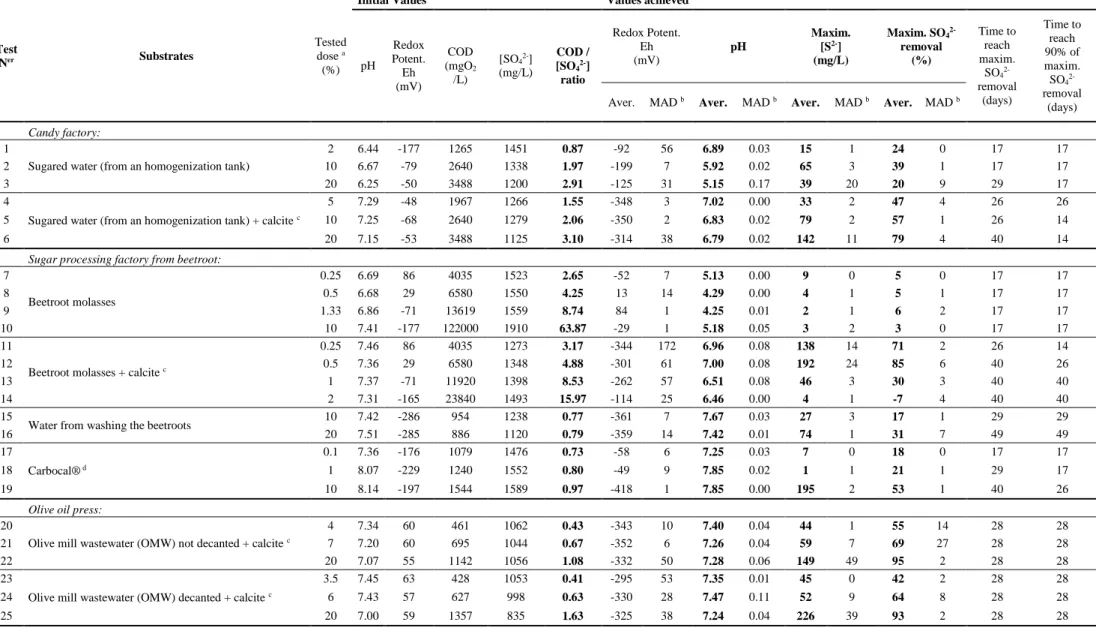
In a first round of tests with beetroot molasses as the carbon source/electrons donor, in which the initial pH was neutralized with sodium hydroxide but none buffering agent was added to the cultures, in all dilutions tested the pH decreased to values (pH < 5.5) that inhibited SRB activity. This is shown by the low percentages of sulphate removal (< 10%) and low production of sulphide (< 10 mg/L) achieved in those cases (tests N.ers 7 to 10 in table 3 and in graphs in
supplementary material). That also occurred with the sugared water from the factory of candies, though only in the dilution with 20% of this substrate. In this case, the removal of sulphate was just 20% and the [S2-] reached was only 39
mg/L (test N.er 3 in table 3 and in graphs in supplementary material). This phenomenon was expected for the sugar rich
substrates. For example, Cao et al. (2012) reported as a major drawback of using sucrose the high content of volatile fatty acids (formic acid, lactic acid and butanedioic acid) resulting from fermentation, which create a souring problem that impacts negatively on the growth of SRB and results in lower sulphate removal rates. Indeed, although SRB bioreactors operating under acidic conditions have already been reported (e.g. at pH 4.5, 4.0, 3.5 and 3.25 in Elliott et al. 1998), the optimum pH for the growth of most SRB has long been known to be between pH 5 and 9 (Postgate 1984). In this particular case, results previously reported indicate that SRB communities obtained from WWTP sludge collected at Faro, Portugal, as those used in this work, are active in neutral pH but loose activity in media with pH values lower than 5.5 (Martins et al. 2009). Nevertheless, the souring problem was solved maintaining the pH between 6 and 8 by adding 10% (w/v) of calcite tailings to cultures in additional tests with beetroot molasses from the sugar factory and with 1 2 3 4 5 6 7 8 9 10 11 12 13 14 15 16 17 18 19 20 21 22 23 24 25 26 27 28 29 30 31 32 33 34 35 36 37 38 39 40 41 42 43 44 45 46 47 48 49 50 51 52 53 54 55 56 57 58 59 60 61
sugared water from the candies factory, as well as in all further tests with the other organic substrates (except for Carbocal® because it is a lime rich product capable of neutralizing pH by itself).
Sulphate reduction efficiency General analysis
The results obtained with the control cultures prove the success of the followed strategy to test the substrates as carbon sources/electron donors for SRB by using Postgate B medium lacking lactate. In the positive controls with the original Postgate B medium (with lactate) the high removals of sulphate (87 and 92%) together with the high [S2-]
reached (259 and 304 mg/L) just in 14 days, suggest high activity and proliferation of SRB, while in the negative control with the modified Postgate B (without lactate), the low sulphate removal (25%) and the low [S2-] achieved (9 mg/L)
indicate low activity and weak or no proliferation of SRB (tests N.ers 47 to 49 in table 3 and in graphs in supplementary
material). With this in mind and considering the cultures in which the pH remained neutral throughout the incubation time, it is possible to say that the sulphate reduction efficiencies, shown by the evolution of [SO42-] and [S2-], varied
depending on the doses and composition of the tested substrates. The cultures reached levels of sulphate reduction that were classified as high ( 70% sulphate removal and 100mg/L sulphide produced); moderate ( 30 and < 70 % sulphate removal and 30mg/L sulphide produced) and low (< 30 % sulphate removal and < 30mg/L sulphide produced).
For the liquid substrates it was possible to calculate doses to obtain COD/[SO42-] ratios of 1.5 for almost all the
cases (Table 2). Doses close to those estimates were tested for substrates with relatively high COD values: beetroot molasses, orange molasses with conservative and without conservative, liquor extracted from orange peels, olive mill wastewater (OMW) decanted and not decanted and sugared water from the factory of candies, by descending order of COD values. For the liquid substrates with relatively low COD values (waters from washing the beetroots, waters from washing the orange juice processing equipments, all the wastewaters from the paper pulp and paper factories and the municipal wastewater from the WWTP of Mina de São Domingos) the relatively high doses calculated were not tested since they would have caused major dilutions in the [SO42-], deteriorating the optimal conditions for SRB. For the solid
substrates the maximum dose tested was 10% (w/v). However, just for orange peel fragments the estimated quantity of product needed for a 24h leachate yielding a COD/[SO42-] ratio of 1.5 was lower than 10% (w/v).
In general, high or moderate sulphate reduction efficiencies (as defined above) were achieved in the cultures with doses of substrates estimated to yield COD/[SO42-] ratios of 1.5 based on their initial characterizations,
demonstrating that this is a good strategy to follow when testing new carbon sources/electron donors for SRB. Nevertheless, when the COD and the [SO42-] measured in the beginning of experiments were used to calculate this ratio,
its value was in most cases lower (between 0.37 and 0.95) than the targeted 1.5 (Table 3). The reason for this is that the COD values were in most cases lower than the expected according to the initial characterization of substrates, probably because they were stored at room temperature and some degradation of their organic compounds occurred between the initial characterization and the tests. It is worth to note that the possibility of storing the organic substrates to be used as carbon sources/electron donors at room temperature, avoiding the high energy costs associated with refrigeration, would be a huge advantage in favour of implementing SRB based bioremediation processes.
1 2 3 4 5 6 7 8 9 10 11 12 13 14 15 16 17 18 19 20 21 22 23 24 25 26 27 28 29 30 31 32 33 34 35 36 37 38 39 40 41 42 43 44 45 46 47 48 49 50 51 52 53 54 55 56 57 58 59 60
The bacterial populations in the inoculum were adapted to the carbon source/electron donor lactate that was available in Postgate B, the growth media used for the SRB enrichment, which was also used in the positive controls. Previous phylogenetic analysis of dsr gene sequences from a consortium also enriched from WWTP sludge collected at Faro, Portugal, using Postgate B, revealed three species of genus Desulfovibrio (D. desulfuricans, D. aminophilus and D. fructosovorans) (Martins et al. 2009), which have better growths in media with lactate than with other carbon sources/electron donors. D. desulfuricans was described for the first time as Spirillum desulfuricans more than 100 years ago by Martinus Beijerinck and was later reclassified (Muyzer and Stams 2008). Nutritional studies on this species have shown that growth on other organic substances was poorer than on lactate (MacPherson and Miller 1963). D. aminophilus was discovered on a dairy wastewater treatment plant and has also optimum growth on a medium containing lactate and sulphate, despite being able to use several electron donors with sulphate as an electron acceptor, (Baena et al. 1998). D. fructosovorans was isolated for first time from estuarine sediments and differed from all other described Desulfovibrio species by the ability to degrade fructose (Ollivier et al. 1988). Thus, the longer times to achieve the maximum sulphate removals in the cultures with the substrates tested as carbon sources/electron donors, when compared to the positive controls, indicate that none of those substrates is rich in lactate. In fact, although carbon sources/electron donors that are directly used by SRB have been reported in the composition of some of the tested substrates, their quantities are small when compared to other organic compounds present in those substrates. For example, several short-chain fatty acids (lactic, formic, acetic, and propionic acids) known to be suitable as electron donors for SRB (Cao et al. 2012) are approximately 7% of the composition of beetroot molasses, while sugars, which are first fermented into simpler products (Maree et al. 1987; Cao et al. 2012), are approximately 47% of its composition (Table 1). Hence, the inoculated SRB community had to adapt to different carbon sources/electron donors and/or to new bacterial equilibria and mutualistic relationships resulting from the proliferation of species capable of transforming compounds present in the tested substrates into other products suitable for the SRB present in the consortium. For most of the tested substrates, the graphs showing the evolution of the monitored parameters reveal stair profiles with periods of high and low (or no) sulphate reduction activity along the incubation time, which clearly suggests shift points in the respective microbial populations (supplementary material). The test with 5% (v/v) of orange molasses without conservative is an elucidative example (Figure 3). The exceptions are sugared water from the factory of cadies and beetroot molasses, which supported more continuous SRB activities and therefore faster removals of sulphate. In all cultures with these substrates high removals of sulphate were reached in two weeks. In the other cases in which high removals of sulphate were also achieved, that was observed just after three weeks (Table 3 and supplementary material).
Liquid by-products
Exceptionally, for sugared water from the factory of cadies and for beetroot molasses, the COD values measured in the beginning of the experiments were higher than expected. Substrates dilutions in modified Postgate B (v/v) with 20% of the former and 0.25% of the second were estimated to yield a COD of 3000 mgO2/L, although the measured
COD values were 3488 and 4035 mgO2/L, respectively. This together with the [SO42-] somewhat lower than the expected
for Postgate B medium, resulted in COD/[SO42-] ratios close to 3 instead of 1.5, which did not prevent high SRB activity
(values of 79 % and 71 % sulphate reduction were obtained, respectively). In fact, for beetroot molasses a 0.5% dilution (v/v) with a COD/[SO42-] ratio of 4.88 revealed an even higher sulphate reduction efficiency (85%). Initial higher COD
values and lower [SO42-] than expected were also measured in the positive controls, originating COD/[SO42-] ratios
1 2 3 4 5 6 7 8 9 10 11 12 13 14 15 16 17 18 19 20 21 22 23 24 25 26 27 28 29 30 31 32 33 34 35 36 37 38 39 40 41 42 43 44 45 46 47 48 49 50 51 52 53 54 55 56 57 58 59 60 61
around 2.5, but not affecting the SRB activity which remained very high in those cases. These results obtained with sugared water from the factory of candies and with beetroot molasses are consistent with results obtained by other authors with sugar rich substrates. For example, Wang et al. (2008) studied SRB activities using molasses wastewater from a beetroot sugar refinery as the carbon source at varying COD/[SO42−] ratios. They observed that at a critical ratio
of 2.7, neither COD nor sulphate were in excess for a high sulphate reduction (88%), while at lower ratios of 1.9 and 0.9 the percentage of sulphate removal decreased to 65% and 39%, respectively. At even higher ratios of 4.5 and 3.6 high removals of sulphate were still observed (>95%), though excessive production of ethanol or acetate was detected.
For the other molasses tested in this work (orange molasses) the dilution supporting the highest sulphate reduction activity (70%) was also 0.5% (v/v) as for beetroot molasses. However, in this case, the analysis performed in the beginning of the tests indicated a much lower COD/[SO42−] ratio (<1). This may be related to the fact that when the
tests started this substrate had the classical odour of alcohol, indicating that some fermentation had already occurred. If so, at that time the relative amount of simplest organic molecules to the amount of more complex organic molecules was relatively higher than at the time of the initial characterization of this substrate. This can justify the much lower COD values than expected (around 400 instead of around 1800 mgO2/L) and consequently the lower COD/[SO42−] ratios in the
beginning of these tests. Moreover, this is in agreement with the fact that sulphate reduction was not inhibited since it is known that SRB use small simple organic molecules to obtain energy rather than large complex ones. When orange molasses with conservative CetoSTAT® TMR was used, there was also an odour of alcohol and the initial COD values were also much lower than the expected based on the initial characterization of substrates. Nevertheless, in this case, the sulphate reduction achieved was just moderate (49%), contrasting with the higher value (70%) obtained with orange molasses without any conservative. It is evident that the conservative must have inhibited some sort of biological activity that has affected the sulphate reduction efficiency.
In the cultures with the liquor extracted from orange peels (a sugar rich extract used to produce the orange molasses), the COD values measured when the tests started were also lower than expected based on the product characterisation. Due to that, in this case, the assumed optimum dosage (corresponding to a COD/[SO42-] ratio of 1.5) of
this substrate was not tested. For dilutions with 1.25% and 2.5% (v/v) of this substrate, having initial COD/[SO42-] ratios
lower than 1, sulphate reductions were about 35%, while for dilutions with 10% substrate and with an initial COD/[SO4
2-] ratio of 3.18, the removal of sulphate was only 11%. This suggests that in the cultures with less amount of substrate the lack of organic compounds to feed the SRB prevented higher sulphate reduction efficiencies. On the other hand, when more quantity of substrate was tested the SRB activity may have been inhibited by compound(s) with a putative toxic effect on SRB. Eventually an intermediate substrate concentration between 2.5% and 10% will result in higher sulphate reduction efficiencies.
It is known for a long time that in mixed bacterial cultures the sugars can be quickly fermented and the resulting products, such as ethanol and short-chain fatty acids, can then be used by SRB (Maree et al. 1987; Cao et al. 2012). Thus, it is most likely that the sulphate reduction activities here discussed for the cultures with the sugar rich by-products were the result of such biological dynamics. Indeed, the souring problem and pH control discussed above corroborate this idea.
Solid by-products 1 2 3 4 5 6 7 8 9 10 11 12 13 14 15 16 17 18 19 20 21 22 23 24 25 26 27 28 29 30 31 32 33 34 35 36 37 38 39 40 41 42 43 44 45 46 47 48 49 50 51 52 53 54 55 56 57 58 59 60
With Carbocal®, the initial COD and [SO42-] almost did not varied despite the wide different doses tested,
making COD/[SO42-] ratios ranging only from 0.73 to 0.97. Nevertheless, for this substrate the SRB activity increased as
the tested doses increased and a maximum of 53% sulphate removal was achieved in 40 days with the highest dose tested of 10% (w/v). This can be justified by the presence of organic compounds in the solid particles of this substrate which need time to be degraded into simpler molecules suitable as carbon sources/electron donors for SRB. With the three tested substrates composed of relatively large solids (orange peels, pine nut shells and pine nut cones), the high sulphate reductions (> 90%) achieved after four months of incubation confirm that with enough time the slowly degradable organic solids are probably converted into compounds suitable for the anaerobic respiration of SRB. It has to be said that in such cases dosing the substrate as a function of COD measured in the liquid phase of the medium has probably a limited utility, counting mostly for the initial SRB activity based on the already solubilised compounds available.
The tests with 1% and 4% (w/v) of orange peels, with initial COD/[SO42-] ratios of 0.85 and 0.94 respectively,
revealed high sulphate removals (>90%). However, when 8 % (w/v) of this substrate was used, yielding a COD/[SO42-]
ratio of 1.13, the removal of sulphate was very low (6%), indicating that in this case some compound(s) leached to the medium reach a toxic level for SRB. This idea is supported by the similar behavior observed when liquor extracted from orange peels was used. Orange peels are rich in sugars and have also organic acids (Table 1), one of which, malic acid, already reported as suitable for SRB (Cao et al. 2012). Despite that, with this substrate just a moderate removal of sulphate (47%) was observed during one month, even if almost total removal (99%) was detected after four months. This occurred because this substrate is composed of solid tissues with cellulose, hemicelluloses and lignin (Table 1), which are slowly and gradually degraded, allowing the organic compounds to be dissolved and available for the SRB just after relatively long periods. The results obtained in this work together with the results published by Hussain and Qazi (2012), who reported a sulphate reduction of 69% after fifteen days in Postgate B medium using watermelon rind powder (2%) instead of lactate, indicate that fruit peels have high potential as carbon source/electron donors for medium/long term remediation processes. Such processes may be useful in passive systems for the decontamination of large water bodies. Indeed, in passive systems the most efficient carbon sources/electron donors are mixtures usually containing relatively easily biodegradable substrates (with soluble sugars, starch, amino acids, and proteins) and recalcitrant ones (with cellulose, hemicelluloses and lignin) (Neculita et al. 2007). Such passive medium/long term bioremediation processes with SRB are useful for example in pit lakes with acidic sulphate rich waters formed by open-pit mining operations (Castro and Moore 2000).
In the case of pine cone fragments and pine nut shells, the high potential for passive medium/long term bioremediation processes is even more evident as they are almost totally composed by the recalcitrant organic compounds cellulose, hemicelluloses and lignin (Table 1). These complex organic polymers cannot be consumed directly by known SRB; however they can be converted into simpler molecules suitable to SRB (Logan et al. 2005). Cellulosic substrates have been tested as sources of organic compounds in SRB bioreactors for more than 20 years (Bechard et al. 1994) and the use of this type of substrates is still a focus of research. For example, Choudhary and Sheoran (2011) observed relatively low sulphate removal efficiencies (25%) when testing wood chips and sawdust in synthetic AMD water using retention times up to 10 days. More recently, Zhang and Wang (2014) tested the treatment of synthetic AMD water amended with sawdust during 15 days, but again no significant sulphate reduction was observed in this case. Yet these authors also tested this substrate as the sole carbon source for SRB in a modified Postgate C medium during 35 days and in this case a sulphate reduction of 50% was achieved at the end. This is in accordance with the results obtained in this work when using 10% (w/v) pine cone fragments and 10% (w/v) pine nut shells in a similarly modified medium: 1 2 3 4 5 6 7 8 9 10 11 12 13 14 15 16 17 18 19 20 21 22 23 24 25 26 27 28 29 30 31 32 33 34 35 36 37 38 39 40 41 42 43 44 45 46 47 48 49 50 51 52 53 54 55 56 57 58 59 60 61
moderate removals of sulphate (39 and 36%) were achieved after a month and high removals (97 and 99%) were observed after four months (Tests Ners 45 and 46 in table 3 and in graphs in supplementary material). An interesting observation done in this work is that the [S2-] measured in the cultures with these cellulosic substrates was always
relatively low (between 7 and 20mg/L), even after four months of incubation when total removal of sulphate was achieved. A probable explanation for this can be the adsorption of sulphide to these substrates. Cellulose, as a natural or modified cellulosic material, can be employed as adsorbent for various substances, including organic compounds, metal ions, dyes, etc., and many papers have been published discussing the importance of cellulose-based adsorbents in water pollution control (e.g. Hokkanen et al. 2016). Particularly regarding the adsorption of hydrogen sulphide, it is well known that activated carbon prepared from cellulosic compounds has industrial relevance. Another possible justification for the low [S2-] detected despite the high sulphate removal in the tests with the cellulosic substrates, could be the proliferation
of sulphidotrophic microorganisms. Perhaps it is worth to explore in future research what happened in this case, as it may lead to the development of biological processes to treat waters contaminated with sulphate without an excessive production of sulphide, which can be very important from an environmental point of view. In fact, in several wastewater treatment plants it is necessary to install systems to capture hydrogen sulphide avoiding the release of this toxic gas to the atmosphere.
Wastewaters
In the case of water used to wash the equipments from the orange juice factory, considering that its organic compounds are remains of orange juice and extract from orange peels, both rich in sugars, it was expected to support some SRB activity. However, since it is a highly diluted substrate it was predictable that sulphate reduction efficiency would not be very high. The very low initial COD/[SO42-] ratio of 0.37 in the beginning of the experiment suggests that
the lack of nutrients was the cause for just a moderate sulphate reduction efficiency.
The low percentages of sulphate reduction achieved in the cultures supplemented with 20% (v/v) of any of the tested wastewaters from the paper pulp and the paper factories, all with very low initial COD/[SO42-] ratios (< 0.25),
reinforce the idea that low values of this ratio indicate insufficient nutrients for the reduction of all sulphate available. With water from washing beetroots, the maximum sulphate removal of 31%, achieved for cultures with 20% of this substrate in approximately one month, also suggests insufficient nutrients available for SRB. However, the hypothesis that more time would have been necessary for the degradation of part of the organic matter present this substrate, namely as slowly degradable solid particles from the materials used to fertilize the beetroot fields and/or beetroot fragments (Table 1), should be considered. This hypothesis is supported by the fact that similar initial COD and [SO42-] values were measured despite the different doses used, resulting in similar COD/[SO42-] ratios (0.77 and 0.79),
together with the fact that the higher quantity of substrate used the higher SRB activity was achieved, as it also happened in the tests with Carbocal® (discussed above).
The best sulphate reduction activities achieved in one month when using OMW as carbon source/electrons donor were obtained with percentages approximately 3 times greater than the percentages calculated to make a COD/[SO42-] ratio of 1.5. This suggests that just part of the organic compounds present in this substrate is used by SRB
during this incubation period. In OMW most part of organic matter corresponds to oils and fats (1.67 to 8.16%); 1 2 3 4 5 6 7 8 9 10 11 12 13 14 15 16 17 18 19 20 21 22 23 24 25 26 27 28 29 30 31 32 33 34 35 36 37 38 39 40 41 42 43 44 45 46 47 48 49 50 51 52 53 54 55 56 57 58 59 60
however, it also contains sugars (0.1 to 0.9 %), polyalcohols (~1%) and volatile organic acids (~0.1 %) (Table 1). Focusing on sugars, which can be used by SRB after relatively rapid fermentation, and comparing the tested dilutions of OMW with the tested dilutions of the two substrates richest in sugars (beetroot and orange molasses), it can be seen that: (1) The best dilution for both molasses was 0.5% (v/v) and these substrates had approximately 45% sugars in their composition, which means that there was around 0.22% of sugars in the best cultures containing these substrates; (2) The best dilution for sulphate reduction with OMW corresponds to a concentration of 20% (v/v). Thus, supposing that this substrate had 0.44% of sugars in its composition (half the maximum value described in table 1), the best cultures with it would have 0.088% of sugars. This percentage is almost half the quantity of sugars present in the best cultures with molasses. Therefore, it can be said that probably sugars have played a major role in supporting the SRB activity in the cultures with OMW. In addition, it is known that alcohols and volatile organic acids can be directly used by SRB. Thus, based on a typical composition of OMW (Table 1) it can be estimated that approximately 0.2% of polyalcohols and 0.02% of volatile organic acids probably contributed for the SRB activity in the cultures with 20% OMW. Moreover, polyphenols are also important in OMW (0.0002 to 1.5%). It has been discovered that one of its most abundant phenolic compounds (1,4-tyrosol) can be oxidized by a SRB (Desulfovibrio marrakechensis) isolated for the first time from OMW in Morocco (Chamkh et al. 2009) and identified by 16S rRNA gene sequence analysis in OMW from Greece after treatment tests using amendments of laccase and cellobiose dehydrogenase (Prasetyo et al. 2015). This raises the hypothesis that SRB with this metabolic pathway may exist as well in OMW ponds in Portugal. If so, the bacterial communities in cultures with this substrate could have used this compound for sulphate reduction. This speculative analysis about which compounds of this substrate can support the biological activity of SRB communities is just a starting point for further research work aiming to explore this issue. Nevertheless, these results, proving that OMW is a good carbon source/electrons donor for SRB, open the way for the development of what would be a very interesting bioremediation process for this type of wastes, which are generated in high amount during the olive oil extraction process and have become an important challenge since its direct disposal in nature causes extremely negative impacts (Amaral et al. 2008).
In municipal wastewater (sewage), the organic pollutants are mainly proteins, saccharides and aliphatics (at least 78% of the total COD), most of them macromolecules that constitute slowly biodegradable organic matter, though rapidly biodegradable organic components and readily dissolved compounds such as micromolecular organic acids and alcohols are also present (e.g. Zhang et al. 2016). The reduction of sulphate in the tests with municipal wastewater from Mina de São Domingos started just one week after inoculation and continued during about one month while sulphate was present (graphs for tests Ner 43 and 44 in supplementary material). This suggests that probably the readily and rapidly
degradable dissolved compounds had been consumed during the transportation and storage and that the SRB activity might have been sustained by slowly biodegradable organic components after their transformation into simplest products. The municipal wastewater used in this work was collected, immediately transported at 25º±3ºC during three hours and then stored at 4ºC for three days before its use in the experiments. These results seem to contradict the work published by Kumar et al. (2011), which suggests that the presence of rapidly biodegradable and readily dissolved organic components in sewage is critical for an effective SRB activity. These authors reported that though sewage stored at 4 ºC had retained a high total organic carbon equivalent to prior storage, it failed to increase dissolved organic carbon and failed to stimulate SRB activity. After addition of labile organic carbon consisting of lactic acid and ethanol to the microcosm, effective removal of sulphate was observed, indicating biological activity of SRB. However, it should be noted that the duration of storage used by these authors was 3 years, a much longer period than the three days storage in this work. 1 2 3 4 5 6 7 8 9 10 11 12 13 14 15 16 17 18 19 20 21 22 23 24 25 26 27 28 29 30 31 32 33 34 35 36 37 38 39 40 41 42 43 44 45 46 47 48 49 50 51 52 53 54 55 56 57 58 59 60 61
Probably, during those three years the slowly degradable organic compounds with potential to sustain SRB activity were consumed due to some biological activity occurring at 4ºC. All these findings prove that municipal wastewater can be used as carbon source/electrons donor for SRB based processes, provided that it is immediately used and not after storage.
Conclusions
This work demonstrates the high potential of several industrial by-products and wastes as carbon sources/electron donors for SRB, which being available in the Iberian Peninsula can be easily used in bioremediation processes to treat AMD in the IPB region.
Moreover, it reports the approximate time needed to achieve high sulphate reduction with these substrates and the required doses of substrate (% v/v or % w/v, depending if the substrate is liquid or solid) and respective COD/[SO42-] ratios that favour SRB activity in sulphate rich aqueous environments with neutral pH.
Some substrates support high SRB activity in relatively short periods of two to four weeks: sugared water from the factory of candies (20 % (v/v) dose, 3.10 ratio); beetroot molasses (0.25 to 0.5 % (v/v) dose, 3.17 to 4.88 ratio); OMW not decanted (20 % (v/v) dose, 1.08 ratio); OMW decanted (20 % (v/v) dose, 1.63 ratio); orange molasses without conservative (0.5 % (v/v) dose, 0.61 ratio) and municipal wastewater from a small village near an inactive mine in the IPB (20 to 50 % (v/v) dose, 0.90 to 2.34 ratio).
Others substrates require longer periods, up to four months, to sustain high sulphate reduction efficiencies: orange peel fragments (1 to 4 % (w/v) dose, 0.85 to 0.94 ratio); pine nut shells (10 % (w/v) dose, 0.92 ratio) and pine cone fragments (10 % (w/v) dose, 0.90 ratio).
Supplementary data
Supplementary data associated with this article can be found in the online version: graphs showing the evolution of measured parameters along the experiments.
Acknowledgements
Funding: The research leading to these results has received funding from the European Union's Seventh Framework Programme (FP7/2007-2013) managed by REA-Research Executive Agency (http://ec.europa.eu/research/rea) under grant agreement no. 619101; and the Portuguese Foundation for Science and
Technology (FCT) through the project UID/Multi/04326/2013.
The authors also wish to acknowledge the company Águas do Algarve, namely Eng. Joaquim Freire and Patrício Fontinha, for supplying the WWTP sludge used to enrich cultures with SRB and companies that supplied the substrates tested as sources of carbon sources/electron donors (and the persons involved in this supply): Orange juice plant LARA – Laranja do Algarve S.A. (Eng. Pedro Pacheco), Factory of candies Dulciora (anonymous collaboration), Sugar processing plant Azucarera (Eng. Maria Hernandez Garcia), Olive mill Lagar Santa Catarina (Eng. Renato Rocha), 1 2 3 4 5 6 7 8 9 10 11 12 13 14 15 16 17 18 19 20 21 22 23 24 25 26 27 28 29 30 31 32 33 34 35 36 37 38 39 40 41 42 43 44 45 46 47 48 49 50 51 52 53 54 55 56 57 58 59 60
Águas Públicas do Alentejo, WWTP Mina de São Domingos (Eng. Olga Martins), Paper and paper pulp factories Navigator Company (Eng. Luis Medeiros Machado and Eng. Patrícia Castellano Rodrigues).
References
Almendros AI, Martín-Lara MA, Ronda A, Pérez A, Blázquez G, Calero M (2015) Physico-chemical characterization of pine cone shell and its use as biosorbent and fuel. Bioresour Technol 196:406-412. doi: 10.1016/j.biortech.2015.07.109
Amaral C, Lucas MS, Coutinho J, Crespí AL, do Rosário Anjos M, Pais C (2008) Microbiological and physicochemical characterization of olive mil wastewaters from a continuous olive mill in Northeastern Portugal. Bioresour Technol 99:7215–7223. doi: 10.1016/j.biortech.2007.12.058
Annachhatre AP, Suktrakoolvait S (2001) Biological sulphate reducing using molasses as a carbon source. Water Environ Res 73:118-126. doi: 10.2175/106143001X138778
Azbar N, Bayram A, Filibeli A, Muezzinoglu A, Sengul F, Ozer A (2004) A review of wastes management options in olive oil production. Crit Rev Env Sci Tec 34: 209-247. doi: 10.1080/10643380490279932
Baena S, Fardeau ML, Labat M, Ollivier B, Garcia JL, Patel BKC (1998) Desulfovibrio aminophilus sp. nov., a Novel Amino Acid Degrading and Sulfate Reducing Bacterium from an Anaerobic Dairy Wastewater Lagoon. Syst Appl Microbiol 21(4):498-504. doi:10.1016/S0723-2020(98)80061-1
Bechard G, Yamazaki H, Gould WD, Bedard P (1994) Use of cellulosic substrates for the microbial treatment of acid mine drainage. J Environ Qual 23:111-116. doi: 10.2134/jeq1994.00472425002300010017x
Buzzini AP, Pires EC (2007) Evaluation of a upflow anaerobic sludge blanket reactor with partial recirculation of effluent used to treat wastewaters from pulp and paper plants. Bioresour Technol 98:1838-1848. doi: 10.1016/j.biortech.2006.06.030
Cao J, Zhang G, Mao Z, Li Y, Fang F, Chao Y (2012) Influence of electron donors on the growth and activity of sulphate-reducing bacteria. Int J Miner Process 106-109:58-64. doi: 10.1016/j.minpro.2012.02.005
Castro JM, Moore JN (2000) Pit lakes: their characteristics and the potential for their remediation. Environ Geol 39:1254-1260. doi: 10.1007/s002549900100
Chamkh F, Spröer C, Lemos PC, Besson S, El Asli AG, Bennisse R, Labat M, Reis M, Qatibi AI (2009)
Desulfovibrio marrakechensis sp. nov., a 1,4-tyrosol-oxidizing, sulphate-reducing bacterium isolated from olive mill
wastewater. Int J Syst Evol Microbiol 59:936-942. doi: 10.1099/ijs.0.003822-0
Chen W, Horan NJ (1998) The Treatment of a High Strength Pulp and Paper Mill Effluent for Wastewater Re-Use. Environ Technol 19:163-171. doi: 10.1080/09593330.1998.9618627
Choudhary RP, Sheoran AS (2011) Comparative study of cellulose waste versus organic waste as substrate in a sulphate reducing bioreactor. Bioresour Technol 102:4319-4324. doi: 10.1016/j.biortech.2010.08.126
Clements RL (1964) Organic acids in citrus fruits. I. Varietal differences. J Food Sci 29:276–280. doi: 10.1111/j.1365-2621.1964.tb01731.x 1 2 3 4 5 6 7 8 9 10 11 12 13 14 15 16 17 18 19 20 21 22 23 24 25 26 27 28 29 30 31 32 33 34 35 36 37 38 39 40 41 42 43 44 45 46 47 48 49 50 51 52 53 54 55 56 57 58 59 60 61
Costa JM, Rodriguez RP, Sancinetti GP (2017) Removal sulfate and metals Fe+2, Cu+2, and Zn+2 from acid mine
drainage in an anaerobic sequential batch reactor. J Environ Chem Eng 5(2):1985-1989. doi: 10.1016/j.jece.2017.04.011
Costa MC, Duarte JC (2005) Bioremediation of acid mine drainage using acidic soil and organic wastes for promoting sulphate-reducing bacteria activity on a column reactor. Water Air Soil Poll 165:325–345. doi: 10.1007/s11270-005-6914-7
Das BK, Gauri SS, Bhattacharya J (2013) Sweetmeat waste fractions as suitable organic carbon source for biological sulfate reduction. Int Biodeterior Biodegradation 82:215-223. doi: 10.1016/j.ibiod.2013.03.027
Dev S, Roy S, Bhattacharya J (2017) Optimization of the operation of packed bed bioreactor to improve the sulfate and metal removal from acid mine drainage. J Environ Manage 200:135-144. doi:10.1016/j.jenvman.2017.04.102
Elliott P, Ragusa S, Catcheside D (1998) Growth of sulphate-reducing bacteria under acidic conditions in an upflow anaerobic bioreactor as a treatment system for acid mine drainage. Water Res 32:3724-3730. doi: 10.1016/S0043-1354(98)00144-4
Hao T, Xiang P, Mackey HR, Chi K, Lu H, Chui H, van Loosdrecht MCM, Chen GH (2014) A review of biological sulphate conversions in wastewater treatment. Water Res 65:1-21. doi: 10.1016/j.mineng.2016.02.008
Hokkanen S, Bhatnagar A, Sillanpää M (2016) A review on modification methods to cellulose-based adsorbents to improve adsorption capacity. Water Res 91:156-173. doi: 10.1016/j.watres.2016.01.008
Hussain A, Qazi J (2016) Application of sugarcane bagasse for passive anaerobic biotreatment of sulphate rich wastewaters. Appl Water Sci 6(2):205-211. doi:10.1007/s13201-014-0226-2
Hussain A, Qazi JI (2012) Biological sulphate reduction using watermelon rind as a carbon source. Biologia (Pakistan) 58:85-92
Jiang Y, Qin Y, Yu F, Li H, Liu K (2018) Is COD/SO42- ratio responsible for metabolic phase-separation shift in
anaerobic baffled reactor treating sulfate-laden wastewater? Int Biodeterior Biodegradation 126:37-44. doi: 10.1016/j.ibiod.2017.08.013
Kim YM, Kim S, Han TU, Park YK, Watanabe C (2014) Pyrolysis reaction characteristics of Korean pine (Pinus Koraiensis) nut shell. J Anal Appl Pyrol 110:435-441. doi: 10.1016/j.jaap.2014.10.013
Kiran MG, Pakshirajan K, Das G (2017) An overview of sulfidogenic biological reactors for the simultaneous treatment of sulfate and heavy metal rich wastewater. Chem Eng Sci 158:606–620. doi:10.1016/j.ces.2016.11.002
Kiyuna LS, Fuess LT, Zaiat M (2017) Unraveling the influence of the COD/sulfate ratio on organic matter removal and methane production from the biodigestion of sugarcane vinasse. Bioresour Technol 232:103-112. doi:10.1016/j.biortech.2017.02.028
Kumar RN, McCullough CD, Lund MA (2011) How does storage affect the quality and quantity of organic carbon in sewage for use in the bioremediation of acidic mine waters? Ecol Eng 37:1205-1213. doi: 10.1016/j.ecoleng.2011.02.021 1 2 3 4 5 6 7 8 9 10 11 12 13 14 15 16 17 18 19 20 21 22 23 24 25 26 27 28 29 30 31 32 33 34 35 36 37 38 39 40 41 42 43 44 45 46 47 48 49 50 51 52 53 54 55 56 57 58 59 60
Lefticariu L, Walters ER, Pugh CW, Bender KS (2015) Sulfate reducing bioreactor dependence on organic substrates for remediation of coal-generated acid mine drainage: Field experiments. Appl Geochem 63:70-82. doi:org/10.1016/j.apgeochem.2015.08.002
Li YL, Wang J, Yue ZB, Tao W, Yang HB, Zhou YF, Chen TH (2017) Simultaneous chemical oxygen demand removal, methane production and heavy metal precipitation in the biological treatment of landfill leachate using acid mine drainage as sulfate resource. J Biosci Bioeng 124(1):71-75. doi:10.1016/j.jbiosc.2017.02.009
Liamleam W, Annachatre AP (2007) Electron donors for biological sulfate reduction. Biotechnol Adv 25:452-463. doi: 10.1016/j.biotechadv.2007.05.002
Logan MV, Reardon KF, Figueroa LA, McLain JET, Ahmann DM (2005) Microbial community activities during establishment, performance, and decline of bench-scale passive treatment systems for mine drainage. Water Res 39:4537-4551. doi: 10.1016/j.watres.2005.08.013
Lowson RT (1982) Aqueous oxidation of pyrite by molecular oxygen. Chem Rev 82:461-497. doi: 10.1021/cr00051a001
Lu X, Zhen G, Ni J, Kubota K, Li YY (2017) Sulfidogenesis process to strengthen re-granulation for biodegradation of methanolic wastewater and microorganisms evolution in an UASB reactor. Water Res 108:137-150. doi:10.1016/j.watres.2016.10.073
MacPherson R, Miller JDA (1963) Nutritional Studies on Desulfovibrio desulfuricuns using Chemically Defined Media. Microbiol 31:365-373. doi:10.1099/00221287-31-3-365
Maree JP, Gerber A, Hill E (1987) An Integrated Process for Biological Treatment of Sulphate-Containing Industrial Effluents. J Water Pollut Con F 59:1069-1074. Stable URL: http://www.jstor.org/stable/25043436
Martins M, Faleiro ML, Barros RJ, Veríssimo AR, Costa MC (2009) Biological sulphate reduction using food industry wastes as carbon sources. Biodegradation 20:559-567. doi: 10.1007/s10532-008-9245-8
Michailides MK, Tekerlekopoulou AG, Akratos CS, Coles S, Pavlou S, Vayenas DV (2015) Molasses as an efficient low-cost carbon source for biological Cr(VI) removal. J Hazard Mater 8:95-105. doi: 10.1016/j.jhazmat.2014.08.004
Miran W, Jang J, Nawaz M, Shahzad A, Jeong SE, Jeon CO, Lee DS (2017) Mixed sulfate-reducing bacteria-enriched microbial fuel cells for the treatment of wastewater containing copper. Chemosphere 189:134-142. doi: 10.1016/j.chemosphere.2017.09.048
Muhammad SN, Kusin FM, Madzin Z (2017) Coupled physicochemical and bacterial reduction mechanisms for passive remediation of sulfate- and metal-rich acid mine drainage. Int J Environ Sci Technol. doi:10.1007/s13762-017-1594-6
Mulopo J (2016) Pilot scale assessment of the continuous biological sulphate removal from coal acid mine effluent using grass cutting as carbon and energy sources. J Water Process Eng 11:104-109. doi:10.1016/j.jwpe.2016.04.001
Muyzer G, Stams AJ (2008) The ecology and biotechnology of sulphate-reducing bacteria. Nat Rev Microbiol 6(6):441-54. doi:10.1038/nrmicro1892 1 2 3 4 5 6 7 8 9 10 11 12 13 14 15 16 17 18 19 20 21 22 23 24 25 26 27 28 29 30 31 32 33 34 35 36 37 38 39 40 41 42 43 44 45 46 47 48 49 50 51 52 53 54 55 56 57 58 59 60 61
Neculita CM, Zagury GJ (2008) Biological treatment of highly contaminated acid mine drainage in batch reators: Long-term treatment and reactive mixture characterization. J Hazard Mater 157:359-366. doi: 10.1016/j.jhazmat.2008.01.002
Neculita CM, Zagury GJ, Bussiere B (2007) Passive treatment of acid mine drainage in bioreactors using sulphate-reducing bacteria: critical review and research needs. J Environ Qual 36:1–16. doi: 10.2134/jeq2006.0066
O'Flaherty V, Mahony T, O'Kennedy R, Colleran E (1998) Effect of pH on growth kinetics and sulphide toxicity thresholds of a range of methanogenic, syntrophic and sulphate-reducing bacteria. Process Biochem 33(5):555-569. doi: 10.1016/S0032-9592(98)00018-1
Ollivier B, Cord-Ruwisch R, Hatchikian EC, Garcia JL (1988) Characterization of Desulfovibrio fructosovorans sp. nov. Arch Microbiol 149:447-450. doi: 10.1007/BF00425586
Parshina SN, Sipma J, Henstra AM, Stams AJ (2010) Carbon Monoxide as an Electron Donor for the Biological Reduction of Sulphate. Int J Microbiol 2010:319527. doi:10.1155/2010/319527
Pereira R, Ribeiro R, Gonçalves F (2004) Plan for an Integrated Human and Environmental Risk Assessment in the S. Domingos Mine Area (Portugal). Hum Ecol Risk Assess 10:543-578. doi:10.1080/10807030490452197
Postgate JR (1984) The Sulphate-Reducing Bacteria. 2nd edn. Cambridge Univ. Press. Cambridge
Prasad D, Wai M, Bérubé P, Henry JG (1999) Evaluating Substrates in the Biological Treatment of Acid Mine Drainage. Environ Technol 20:449-458. doi: 10.1080/09593332008616840
Prasetyo EN, Rodríguez RD, Lukesch B, Weiss S, Murkovic M, Katsoyannos E, Sygmund C, Ludwig R, Nyanhongo GS, Guebitz GM (2015) Laccase–cellobiose dehydrogenase-catalyzed detoxification of phenolic-rich olive processing residues. Int J Environ Sci Technol 12:1343-1352. doi:10.1007/s13762-014-0526-y
Rambabu N, Panthapulakkal S, Sain M, Dalai AK (2016) Production of nanocellulose fibers from pinecone biomass: Evaluationand optimization of chemical and mechanical treatment conditions on mechanical properties of nanocellulose films. Ind Crop Prod 83:746–754. doi: 10.1016/j.indcrop.2015.11.083
Raunkjaer K, Jacobsen TH, Nielsen PH (1994) Measurement of pools of protein, carbohydrate and lipid in domestic wastewater. Water Res 28:251-262. doi: 10.1016/0043-1354(94)90261-5
Relvas JMRS, Barriga FJAS, Longstaffe FJ (2006) Hydrothermal Alteration and Mineralization in the Neves-Corvo Volcanic-Hosted Massive Sulfide Deposit, Portugal. II. Oxygen, Hydrogen, and Carbon Isotopes. Econ Geol 101(4):791-804. doi: 10.2113/gsecongeo.101.4.791
Rivas B, Torrado A, Torre P, Converti A, Dominguez JM (2008) Submerged Citric Acid Fermentation on Orange Peel Autohydrolysate. J Agric Food Chem 56:2380-2387. doi: 10.1021/jf073388r
Shofinita D, Feng S, Langrish TAG (2015) Comparing yields from the extraction of different citrus peels and spray drying of the extracts. Adv Powder Technol 26:1633-1638. doi: 10.1016/j.apt.2015.09.007
van Haandel AC, van der Lubbe JGM (2007) Handbook Biological Waste Water Treatment - Design and optimization of activated sludge systems. Quist Publishing. Leidschendam
1 2 3 4 5 6 7 8 9 10 11 12 13 14 15 16 17 18 19 20 21 22 23 24 25 26 27 28 29 30 31 32 33 34 35 36 37 38 39 40 41 42 43 44 45 46 47 48 49 50 51 52 53 54 55 56 57 58 59 60
Vasquez Y, Escobar MC, Neculita CM, Arbeli Z, Roldan F (2016) Selection of reactive mixture for biochemical passive treatment of acid mine drainage. Environ Earth Sci 75:576. doi:10.1007/s12665-016-5374-2
Vela FJ, Zaiat M, Foresti E (2002) Influence of the COD to sulphate ratio on the anaerobic organic matter degradation kinetics. Water SA 28:213-216. doi: 10.4314/wsa.v28i2.4887
Wang A, Ren N, Wang X, Lee D (2008) Enhanced sulphate reduction with acidogenic sulphate-reducing bacteria. J Hazard Mater 154:1060-1065. doi: 10.1016/j.jhazmat.2007.11.022
Willow MA, Cohen RRH (2003) pH, dissolved oxygen, and adsorption effects on metal removal in anaerobic bioreactors. J Environ Qual 32:1212–1221. doi:10.2134/jeq2003.1212
Wolicka D, Borkowski A (2009) Phosphogypsum biotransformation in cultures of sulphate reducing bacteria in whey. Inter Biodeter Biodegr 63:322-327. doi: 10.1016/j.ibiod.2008.09.011
Zerrouki S, Rihani R, Bentahar F, Belkacemi K (2015) Anaerobic digestion of wastewater from the fruit juice industry: experiments and modeling. Water Sci Technol. 72:123-34. doi: 10.2166/wst.2015.193
Zhang M, Wang H (2014) Organic wastes as carbon sources to promote sulphate reducing bacterial activity for biological remediation of acid mine drainage. Miner Eng 69:81-90. doi: 10.1016/j.mineng.2014.07.010
Zhang QH, Jin PK, Ngo HH, Shi X, Guo WS, Yang SJ, Wang XC, Wang X, Dzakpasu M, Yang WN, Yang L (2016) Transformation and utilization of slowly biodegradable organic matters in biological sewage treatment of anaerobic anoxic oxic systems. Bioresour Technol 218:53-61. doi: 10.1016/j.biortech.2016.06.068
Figure captions
Figure 1 - Iberian Pyrite Belt geological map indicating the most important mining sites (adapted from Relvas et al.
2006).
Figure 2 - Schematic representation of the experimental design.
Figure 3 - Evolution of parameters measured in the cultures with 5% (v/v) of orange molasses without conservative.
Values are averages ± mean absolute deviations (in some points bars are smaller than the line width, thus not visible)
Table captions
Table 1 - Typical compositions of tested substrates and justifications to be tested
Table 2 - Characterization of the tested substrates in terms of pH, COD, [SO42-], [N] and [P] plus the percentages of
substrates estimated to obtain COD/[SO42-] ratios of 1.5 when diluted in Postgate B medium without lactate
1 2 3 4 5 6 7 8 9 10 11 12 13 14 15 16 17 18 19 20 21 22 23 24 25 26 27 28 29 30 31 32 33 34 35 36 37 38 39 40 41 42 43 44 45 46 47 48 49 50 51 52 53 54 55 56 57 58 59 60 61
Table 3 - Summarized results for measured parameters: initial (first day of experiment before inoculation with sulphate reducing bacteria) and values achieved during incubation
1 2 3 4 5 6 7 8 9 10 11 12 13 14 15 16 17 18 19 20 21 22 23 24 25 26 27 28 29 30 31 32 33 34 35 36 37 38 39 40 41 42 43 44 45 46 47 48 49 50 51 52 53 54 55 56 57 58 59 60