FACULDADE DE CIÊNCIAS E TECNOLOGIA
FCT
Universidade do Algarve
Early nutritional programming in fish: tailoring the
metabolic use of dietary carbohydrates
Filipa Soares Rocha
Tese
Doutoramento em Ciências da Vida, do Mar, da Terra e do Ambiente
Ramo de Aquacultura
(Especialidade em Nutrição)
Trabalho efetuado sob a orientação de:
Prof. Dr. Maria Teresa Dinis, Professor Emérito da Universidade do Algarve,
Portugal.
Dr. Jorge Dias, Diretor Geral da SPAROS Lda., Portugal.
Dr. Stéphane Panresat, Research Director, Nutrition, Metabolism, Aquaculture,
(UR-NuMeA), French National Institute for Agriculture Research, France.
1
Early nutritional programming in fish: tailoring the metabolic use of
dietary carbohydrates
Declaração de autoria do trabalho
Declaro ser a autora deste trabalho, que é original e inédito. Autores e trabalhos consultados estão devidamente citados no texto e constam da listagem de referências incluída.
Copyright© Filipa Soares Rocha, 2015
A Universidade do Algarve tem o direito, perpétuo e sem limites geográficos, de arquivar e publicitar este trabalho através de exemplares impressos reproduzidos em papel ou de forma digital, ou por qualquer outro meio conhecido ou que venha a ser inventado, de o divulgar através de repositórios científicos e de admitir a sua cópia e distribuição com objetivos educacionais ou de investigação, não comerciais, desde que seja dado crédito ao autor e editor.
3
ACKNOWLEDGEMENTS
When I started this journey four years ago, I remember the wish of being part of a great research group and leave my print in science, but above all, I wanted to feel the joy and the proud of doing a good research work. I accomplished all! But I could not do it without the work, collaboration and support of many people, to whom I would like to express my sincere acknowledgements and appreciation.
I would like to express my most sincere gratitude and respect to Professor Maria Teresa Dinis, for accepting me as her PhD student, for her guidance, encouragement and great availability offered throughout these years. I am also thankful for the excellent example she has provided as a successful researcher and teacher, being a true inspiration.
It was a privilege to have as my supervisors two of the most outstanding researchers in the field of fish nutrition, Doctor Jorge Dias and Doctor Stéphane Panserat. Words are not enough to express my gratitude for all the help, guidance and good advices that you both gave me whenever I needed. Your motivation and enthusiasm were determinative for me, to help me overcome all the difficulties encountered, especially when I doubted my skills. It was an honour to work with you both, learn from your profound knowledge and to gain your sincere friendship. Thank you for making this thesis a valuable experience for my life.
A special word to Dr. Sofia Engrola, for the endless support, encouragement and friendship given during these years we have worked together. Her guidance was crucial in every step of this thesis, as well as the consented autonomy given to develop my work.
A special thanks to Dr. Inge Geurden, from NuMeA team, for accepting the co-authorship of the developed research and for sharing her immense knowledge through fruitful discussions and constructive comments, which were vital in structuring solid arguments presented in this thesis. I am thankful for being worthy of your friendship.
Thanks to Dr. Paulo Gavaia, from the EDGE group, for the valuable contributions and co-authorship in this thesis, and also for introducing me to the world of zebrafish and the wonders of microinjection.
My acknowledgements to Fundação para a Ciência e Tecnologia (FCT) for the financial support provided during this thesis. This work was supported by the FCT grant SFRH/BD/74921/2010 and FCT project ULTRAFISH (PTDC/CVT/102481/2008). This work was also partially funded by the ARRAINA project nº 288925, under the EU seventh Framework Programme.
During this Phd I had the opportunity to work in two highly qualified research groups, the Aquaculture Research Group (Aquagroup) at CCMAR, Portugal and the Unité de Recherche Nutrition, Métabolisme, Aquaculture (NuMeA) at INRA, France.
It has been a privilege to work and be part of the NuMeA team. I am deeply grateful for the exceptional work experience that improved by far my skills, for having participated in your
4
amazing brainstorming meetings and for your kind welcome and care during those months in my stay abroad. Special thanks to Dr. Kaushik, Dr. Skiba-Cassy, Dr. Corraze and Dr. Seiliez for their amity and knowledge sharing. Thanks to Elisabeth Plagnes-Juan, Marianne Cluzeaud and Karine Dias for all the technical support and advices during molecular analysis. I also thank to all my friends and colleagues, Biju, Weiwei, Alexandre, Viviana, Ikram, Jan, Daniel, Tarra, Gaia, Yujie and my Portuguese mates Carolina and Pedro, for all the good moments that we spent together, the “long” walks to the fish pounds after lunch and for having shared your thoughts and knowledge with me. And thanks to Peyo, for the good laughs and friendship.
A very special thanks to all my colleagues and friends of the Aquagroup, who help me a lot during the experimental trials, the rearing of my “babies”, the long sampling days, lab procedures...you were always available to help me! I thank to all aquagroupies, especially to Lena Teixeira, Rita Colen, Sara Ferreira, Denise Schrama, Rita Teodósio, Ana Ramalho and to Cátia Silva (many times “stolen” from FBHRG group); and I also thank the former members Carmen Barrios (USACH), Diego da Costa (UFLA), Cristina Cárdenas (CSIC), Elisabete Matos (Sorgal) and Paulo Frias (ISPA), whose contributions were indispensable for this work. A particular word to my “wonder-girls” who help me unconditionally: Lena, obrigado pela tua amizade ao longo destes anos todos e por teres sido sempre o meu grande apoio durante todas as experiências. O que seria de mim sem ti…!A tua ajuda foi, e sempre, será muito valiosa para mim. Carmensita, a tua ajuda e dedicação foram exemplares e imprescindíveis, conseguimos alcançar muitas metas e ultrapassar desafios bastante difíceis! Obrigado às duas do fundo do coração!
I would like to thank to my dear friend and colleague Patrícia Diogo, from EDGE group, for all her help (so many weekends spent together in that “contentor”) and advices during my work with zebrafish. She was a true master on getting high quality zebrafish eggs!
I also wish to thank to all SPAROS LDA team, for manufacturing and providing the fish diets and emulsions used in this thesis, and for having me taught some important steps of feed production. A special thanks to Vera Rodrigues and André Santos.
Thanks to Dr. João Reis and Miguel Viegas from the Ramalhete marine station (CCMAR). Your knowledge and constant assistance were crucial for my performance during the seabream trials. Thank you for the availability to all my requests, for helping me in any situation and for your friendship.
Lastly, I would like to thank my beloved family, for providing me all the love, strength and encouragement to pursue this long and hard road, until its end. With all my heart I thank to:
My Mom, for being an amazing and extraordinary person, that inspires me in so many ways… I wish I had half your strength when you need to overcome battles in life. Obrigado pelo teu amor incondicional, pela tua preocupação constante e por nunca deixares de me apoiar em todas as decisões que tomo.
5
My Dad, for having me taught to be the person I am today. I carry you in my thoughts and in my heart. I am sure you would be very proud of all my achievements.
My dear brother Bruno and his wife Marília, for all the encouragement, wise advices and most of all, thank you for never stop believing in me. I know I can always count on you, even with a big ocean between us… And thank you for sharing with me your precious treasures, my lovely nieces Rita e Mariana!
My better-half Tiago, for giving me his unending love, patience and encouragement during all these years we have shared our lives. Thank you for holding on our lives during my absences and those moments of most intense work. You are such a wonderful person that helped me to never lose the faith in myself. I accomplished so much and went so far, only because I had you by my side!
7
SUMMARY
Sustainable feeding practices in aquaculture require a higher use of vegetable feedstuffs, which are naturally rich in carbohydrates. This can raise some constrains to fish species with carnivorous feeding habits, due to their poor ability to use dietary carbohydrates. This thesis aimed to explore the potential of nutritional programming as a new strategy to better understand the mechanisms underlying the impaired utilization of dietary carbohydrates in fish. The experimental work relied on multiple approaches: a) rearing trials with larvae and juvenile fish for assessment of zootechnical criteria; b) analysis with radiolabeled tracers to follow the metabolic flux of nutrients; c) and genomic expression of key metabolic-genes. In Chapters 2 and 3, we evaluated how the supplementation of egg-yolk with glucose, through microinjection, could act as a stimulus and permanently alter some metabolic pathways in zebrafish. Microinjection was proven an efficient technique to alter the nutritional composition of embryo’s yolk. We saw that the embryonic window for stimulus delivery is crucial in determining future outcomes. The late embryo stage was found more suitable to exert a glucidic stimulus compared with incipient stages of embryogenesis, based on molecular and metabolic analyses that suggested an improved capacity for glucose utilization. Chapters 4 and 5 aimed the nutritional programming of the carbohydrate-related metabolic pathways in gilthead seabream. Recurrent hyperglucidic stimuli were delivered at early larval development using live preys and a glucose-rich diet, demonstrating that nutritional stimuli can be performed in a marine fish species during sensitive stages of development, without compromising survival and growth. We found some short-term effects after stimulus delivery, on gene expression pattern and metabolic utilization of glucose of post-larvae. In contrast, juvenile fish exposed to the early stimuli showed only few changes on glucose utilization, namely a higher absorption of dietary starch. This thesis has generated new knowledge on the triggering effect of early glucidic events upon the regulation of key metabolic processes, contributing to a better comprehension over the concept of nutritional programming in fish.
Keywords: Fish nutrition; Nutritional programming; Glucose metabolism; Nutrigenomics; Nutrient flux;
9
RESUMO
A crescente procura por práticas de alimentação sustentáveis no sector da aquacultura tem conduzido a uma maior utilização de ingredientes de origem vegetal, o que acarreta um aumento do teor de hidratos de carbono nas dietas de peixe, quer pela incorporação direta de amidos ou indiretamente através de subprodutos das proteínas vegetais. No entanto, a aplicação desta prática alimentar não é bem aceite por espécies de peixes com hábitos alimentares preferencialmente carnívoros, devido à sua fraca capacidade metabólica de utilizar hidratos de carbono. Esta Tese visa explorar o potencial da programação nutricional como uma nova estratégia nutricional para peixes, de forma a compreender as limitações inerentes à utilização metabólica de alguns nutrientes, nomeadamente os hidratos de carbono. Como principal objetivo, foi colocada a hipótese de que um estímulo hiper-glucídico, exercido durante as fases iniciais de desenvolvimento dos peixes, podia causar alterações permanentes sobre as vias metabólicas relacionadas com os hidratos de carbono. A componente experimental realizada nesta Tese contou com uma abordagem multidisciplinar, com foco em: a) ensaios de cultivo larval e de juvenis, para a avaliação de critérios zootécnicos; b) ensaios com marcadores radioativos, para analisar o fluxo metabólico de vários nutrientes; e c) análises da expressão de genes-chave envolvidos em relevantes vias metabólicas. Nos Capítulos 2 e 3, avaliamos se uma suplementação de glucose nos ovos de peixe-zebra (Danio rerio), por meio da microinjeção, poderia funcionar como um estímulo nutricional e afetar de forma permanente algumas vias metabólicas dos peixes juvenis. Pela primeira vez foi demonstrada a eficiência da técnica de microinjecção para alterar a composição nutricional das reservas presentes nos ovos de peixe. Verificou-se ainda que a “janela” embrionária selecionada para a entrega do estímulo é crucial na determinação dos efeitos a longo prazo. Os resultados indicam uma ação mais eficiente e promissora dos estímulos quando aplicados durante uma fase embrionária tardia (organogénese), comparativamente com períodos mais precoces do desenvolvimento embrionário (gastrulação); com base em análises moleculares e metabólicas verificou-se que os peixes inicialmente submetidos aos estímulos glucídicos demonstravam uma melhor capacidade de utilização metabólica da glucose assim como uma menor produção de glucose endógena. Os Capítulos 4 e 5 foram dirigidos à programação nutricional das vias metabólicas de hidratos de carbono da dourada (Sparus aurata). A abordagem selecionada foi a entrega de repetidos estímulos híper-glucídicos, por meio da bioencapsulação do alimento vivo (rotíferos e artémia), a partir do início da alimentação exógena das larvas. O presente trabalho testou, pela
10
primeira vez, este procedimento numa espécie de peixes marinhos. Deste modo demonstrou-se que os estímulos nutricionais podem demonstrou-ser realizados durante períodos demonstrou-sensíveis do desenvolvimento inicial dos peixes, sem comprometer a sobrevivência e o crescimento larval. Alguns efeitos a curto prazo foram detetados imediatamente após a entrega dos estímulos às larvas de dourada, no padrão de expressão genética e utilização metabólica da glucose das pós-larvas. Em contraste, os juvenis de dourada expostos aos estímulos iniciais não sofreram alterações a nível da regulação molecular, apenas sofreram algumas mudanças no modo de utilização da glucose, refletidas por uma maior absorção de glucose proveniente do amido alimentar. Esta Tese permitiu gerar novo conhecimento sobre os potenciais efeitos da nutrição precoce de peixes, exercida em estadios críticos da embriogénese ou de larvas recém-eclodidas, sobre a regulação de importantes processos metabólicos, contribuindo assim para uma melhor compreensão sobre o conceito de programação nutricional em peixes.
Palavras-chave: Nutrição de peixe; Programação nutricional; Metabolismo da glucose; Nutrigenómica; Fluxo de nutrientes;
11
TABLE OF CONTENTS
Acknowledgements ... 3
Summary ... 7
Resumo... 9
Chapter I– General Introduction ... 13
1.1. Sustainable production in aquaculture ... 15
1.2. Feeding marine fish with dietary carbohydrates ... 16
1.3. Metabolic network for glucose utilization ... 20
1.4. Specificities on carbohydrate utilization at embryonic and larval stages ... 25
1.5. Nutritional programming: emerging tool for fish nutrition... 27
1.5.1. Nutritional programming in mammals ... 27
1.5.2. Nutritional programming in fish... 30
1.6. Objectives... 33
1.7. References ... 35
Chapter II‒ Nutritional programming at embryonic stages of fish ... 47
Abstract ... 49
2.1. Introduction ... 50
2.2. Materials and methods... 52
2.3. Results ... 58
2.4. Discussion ... 65
2.5. Conclusions ... 70
2.6. Acknowledgements ... 71
2.7. References ... 71
Chapter III– The importance of critical windows for nutritional programming ... 77
Abstract ... 79
3.1. Introduction ... 80
3.2. Materials and methods ... 82
3.3. Results ... 88
3.4. Discussion... 92
3.5. Conclusion... 98
3.6. Acknowledgements ... 99
3.7. References ... 99
12
Abstract ... 107
4.1. Introduction ... 108
4.2. Material and Methods... 110
4.3. Results ... 122
4.4. Discussion... 132
4.5. Conclusions ... 138
4.6. Acknowledgements ... 139
4.7. References ... 139
Chapter V– Long-lasting programming effects in marine fish species ... 147
Abstract ... 149
5.1. Introduction ... 150
5.2. Material and Methods... 151
5.3. Results ... 161
5. 4. Discussion ... 168
5.5. Conclusions ... 172
5.6. Acknowledgements ... 173
5.7. References ... 173
Chapter VI– General Discussion... 179
6.1 Which scientific challenges did we tackled?... 181
6.2. Is embryogenesis a suitable period to program fish metabolism? ... 182
6.3. Programming the metabolism of carbohydrates in marine fish species: how challenging can be?... 187
6.4. Can an early glucidic stimulus induce permanent changes in the metabolism of juvenile fish? ... 190
6.5. References ... 193
Chapter VII– Conclusions and Future Perspectives... 199
7.1. Conclusions ... 201
General Introduction
General Introduction Chapter I
15
1.1. Sustainable production in aquaculture
Aquaculture is the fastest growing animal producing sector in the world and is expected to play an important role in global food supply (FAO, 2014). The expansion of this sector is dictated not only by the choices and needs of the consumers but also by the current trends of sustainable practices for nature exploitation, increasingly demanded by today's society. The path towards a sustainable development of aquaculture embraces numerous challenges at a social, economic and ecological level, that should be addressed in a dynamic and extensive manner (Klinger and Naylor, 2012). Efforts to develop a) novel culture systems (to reduce land occupation, intensify the production and reduce water pollution) b) alternative feed strategies (less expensive formulations that maintain efficient growth at lower cost per unit gain) and c) species selection (to perform a selective breeding, genetic traits) are some examples of the various factors that can be considered for aquaculture growth (Klinger and Naylor, 2012). Above all, the future of fish production is highly dependent on the production of high quality and healthy fry (larvae) and juveniles, so the question now is how to maintain high production standards and lower its costs without choosing unsustainable practices? Providing the adequate nutrition and fulfilling all the nutritional requirements are one of the key-factors to a successful growth, development and survival of fish larvae and juvenile (Holt, 2011). Furthermore, there is a permanent pressure around aquaculture industry to reduce its dependence on marine-based ingredients, namely fish meal and fish oil (Gatlin et al., 2007). The replacement of these high priced and limited ingredients has been done mainly through the use of plant ingredients, being soybean one of the most used. The high availability, global production levels and the wide range of products makes plant feedstuffs strong candidates for a sustainable aquafeed production (Hardy, 2010). However, several disadvantages of using plant-based ingredients in fish diets were reported comparatively to fish-based ingredients, such as low crude protein content, amino acids unbalances, low palatability, anti-nutritional factors and high amount of carbohydrates (Gatlin et al., 2007). Counting with all recent advances in the field of fish nutrition, several improvements were made through dietary manipulations, supplementation with additives and processing technologies of raw vegetable material to enhance growth and feed efficiency of farmed fish raised on plant feeds, but despite great efforts it is inevitable the increased intake of carbohydrates associated with either a protein or a starch vegetable sources (Klinger and Naylor, 2012).
General Introduction Chapter I
16
Most marine teleosts, in particular those with carnivorous feeding habits, demonstrate a limited capacity to use dietary carbohydrates as energy-yielding substrate, mainly characterized by a persistent postprandial hyperglycaemia (Hemre et al., 2002; Moon, 2001; Polakof et al., 2012). Therefore, in the near future is expected some major changes in the field of fish nutrition, towards a higher use of plant ingredients in aquafeeds for marine species (particularly to carnivorous fish) and suitable to different life stages, from early larval stages until the final phase of production. A better understanding of the physiological mechanisms of fish, from an embryo to adulthood, underlying the use of dietary carbohydrates may allow exploitation of other feeding strategies, less conventional for fish.
1.2. Feeding marine fish with dietary carbohydrates
Nowadays, the major farmed species in Europe are the Atlantic salmon (Salmo salar), in cold waters and gilthead seabream (Sparus aurata) and European seabass (Dicentrarchus labrax),
in the Mediterranean, holding 84.7% of the total production in 2013 (FEAP, 2014). Thus, European fish production relies mainly in carnivorous species, whose natural diet is characterized by a high-protein and low-carbohydrate contents. The natural feeding habit of a species is crucial to determine their ability to use dietary carbohydrates as energy substrate. Indeed, omnivorous fish, such as common carp (Cyprinus carpio), present a relatively high tolerance and effective use of dietary carbohydrates comparatively with carnivorous fish like salmon, trout and seabream (Polakof et al., 2012). This is mainly due to the marked differences among species regarding the morphology of the digestive tract, the efficiency of digestive processes, nutrient uptake and how all mechanisms are regulated at different levels. Additionally, throughout development the nutritional capacity and physiology of a species suffers major alterations, as most marine larvae start to feed before the digestive system has developed into its adult form (Rønnestad et al., 2013). Thus, to achieve a successful feeding and nutrient utilization by fish, it should be considered the nutritional composition of the diet and its suitability to the feeding behaviour of the species, as well as to the developmental stage in which is provided (Rust, 2003).
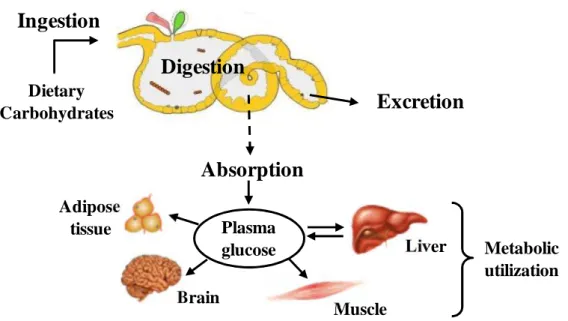
The digestive process involves a series of coordinated events beginning with food intake, followed by a chain of mechanical and enzymatic processes for reducing complex molecules into simple absorbable units, which are transported across the intestinal epithelium to the
General Introduction Chapter I
17
blood stream for cellular metabolism (Figure 1.1) (Rust, 2003). Dietary inclusion levels and bioavailability of plant-based ingredients have a great impact on diet acceptance and utilization by fish. For several species of commercial interest, as salmon, rainbow trout (Onchorhynchus mykiss), seabream and seabass, the replacement of fish meal by plant proteins was successfully achieved, reaching a reduction of 25 to 50% since the beginning of their production (Hardy, 2010). In addition, carbohydrates have been used in diets primarily as energy sources and for their binding properties, however the possibility of sparing protein utilization has not yet been clearly demonstrated in fish (Hemre et al., 2002). Based on several studies, it was recommended that the inclusion level of dietary carbohydrates should not exceed 20% for carnivorous and marine species, whereas for omnivorous and warm water species the levels could be higher and up to 40% (Stone, 2003; Wilson, 1994). In agreement with these values, Enes et al. (2011) suggested that diets for gilthead seabream juveniles could include up to 20% of digestible carbohydrates without compromising growth performance and feed utilization.
Figure 1.1 ‒ Digestive processes during dietary carbohydrate flux, from the intake to metabolic utilization. Adapted from Rønnestad et al. (2013).
But a negative correlation between carbohydrates digestibility and increasing dietary levels was reported for several fish species, including gilthead seabream (Enes et al., 2008; Hemre et al., 1989; Krogdahl et al., 2004; Moreira et al., 2008). Also, a comparative study between the
Digestion
Ingestion
Absorption
Excretion
Dietary Carbohydrates Metabolic utilization Brain Plasma glucose Liver Muscle Adipose tissueGeneral Introduction Chapter I
18
omnivorous common carp and the carnivorous rainbow trout, both fed the same diet containing 28% of starch, showed a higher starch digestibility in the carp (90%) compared to with the trout (78%) (Yamamoto et al., 2001). These data suggest a limited capacity to digest starch, reflecting anatomical and functional differences of the gastrointestinal tract and digestive system of fish. In all teleost fish investigated to date, it was reported the presence and activity of digestive enzyme (carbohydrases), including the main enzyme involved in
starch hydrolysis, the α-amylase (Enes et al., 2011; Krogdahl et al., 2005; Stone, 2003). The
reduction in starch digestibility may be related to fish feeding habits and consequent variations on carbohydrases activity, since higher activities of these enzymes were reported in the intestinal tract of herbivorous fish in relation to carnivorous fish (Stone, 2003). This event might also be explained by the inhibition of some carbohydrases due to the saturation stage attained with an overload of the enzyme substrate, as it was described for amylase - starch reaction (Dona et al., 2010; NCR, 2011).
The digestion and subsequent metabolic use of dietary carbohydrates by fish can be affected by other factors related to the botanical origin of the starch, its molecular complexity and physical state and to abiotic factors like water temperature or handling-induced stress (Hemre et al., 2002; Stone, 2003; Wilson, 1994). For instance, it was demonstrated that the effect of raising water temperature improves the apparent digestibility of dietary starch of seabass and rainbow trout (Brauge et al., 1995; Moreira et al., 2008), while for gilthead seabream, the digestibility showed to be unaffected by the temperature (Couto et al., 2008). Concerning the botanical origin of the starch, it was found that rainbow trout and gilthead seabream presented higher apparent digestibility for wheat starch (58%, 91%, respectively) than for potato (5%) or maize starch (72%) respectively (Bergot, 1993; Venou et al., 2003); whereas seabass showed that, with a dietary level of 10%, maize starch was better digested (97%) compared to wheat starch (79%) (Dias et al., 1998; Enes et al., 2006). These differences may be attributed to the structural properties of the starch grain, namely the granule size and the ratio between amylose/ amylopectin, the major components of starch (Bergot, 1993; Dona et al., 2010). Starches that present large granules and a high content of amylose are often poorly digested (Dona et al., 2010). The use of processing techniques, like extrusion and gelatinization, to alter the physical state of native starches granules, allowed to improve its digestibility in several species (Enes et al., 2011; Krogdahl et al., 2005; Rust, 2003).
General Introduction Chapter I
19
After carbohydrate digestion the main final product is glucose, which is then absorbed along the intestinal tract and transported to the major metabolic organs – liver, muscle and adipose tissue – via the circulatory system (Figure 1.1). The uptake of glucose in fish intestinal tract is mediated by active glucose-transporters present in the brush border membrane which is followed by a simple diffusion across the basolateral membrane, in a similar way to that found in mammals (Krogdahl et al., 2005). As so, the glucose transport can occur passively and Na+independent, through the GLUT carries of the facilitated glucose transporters family and by electrogenic, Na+dependent transport by the action of the SGLT cotransporters family (Bakke et al., 2010). To present date, several members of glucose transporters were identified, cloned and analised at a molecular level, in different fish species, namely the GLUT1 (Balmaceda-Aguilera et al., 2012; Hrytsenko et al., 2010), GLUT2 (Castillo et al., 2009; Terova et al., 2009), GLUT3 (Hall et al., 2005), GLUT4 (Planas et al., 2000) as well as SGLT1 (Geurden et al., 2007; Polakof et al., 2010) types. Glucose transporters seem to be fairly conserved within the vertebrates group, based on the degree of similarity found between the mRNA of fish and mammals (Krogdahl et al., 2005). Nevertheless, when compared to mammals, fish exhibit a lower capacity for glucose uptake associated with variations of transporters towards glucose affinity along the intestinal tract (Collie and Ferraris, 1995; Krogdahl et al., 2005). Two hypotheses were placed to explain the reduced rate of glucose absorption in fish intestine, comparatively to mammalian intestine: a) a lower densities of transporters or b) a lower amount of absorptive tissue (Collie and Ferraris, 1995). Intestinal transporters of glucose play major roles in the intermediary metabolism, regulation of hormones release (as glucose sensors) and maintenance of glucose homeostasis (Enes et al., 2009; Polakof et al., 2010).
Whenever the intake of dietary carbohydrates leads to a high blood glucose level that exceeds the renal threshold of fish, the excess glucose can be excreted through urine (glycosuria) or through the gills (Bucking and Wood, 2005; Deng et al., 2001; Hemre and Kahrs, 1997). Summarizing, each step of carbohydrates utilization by fish, from the intake to absorption and transport, present several factors that can narrow the use of plant-based diets, naturally rich in carbohydrates. However, the full potential and efficiency of using carbohydrates as energy yielding-substrates in diets is not only limited to its digestibility or absorption, the metabolic utilization of glucose and mechanisms underlying its regulation are equally important and crucial.
General Introduction Chapter I
20
1.3. Metabolic network for glucose utilization
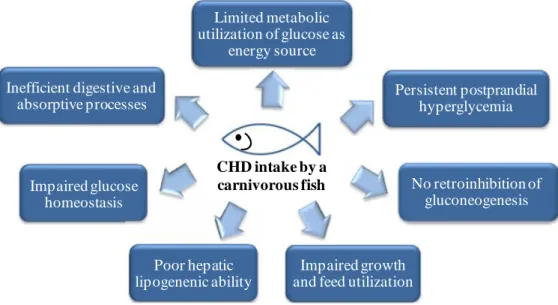
Regardless of the efficiency level of intestinal absorption, fish usually exhibit a poor metabolic use of dietary glucose, especially those species of a high trophic level (carnivorous) whose natural feed is rich in protein and poor in carbohydrates (Moon, 2001; Wilson, 1994). Following the intake of a carbohydrate-rich diet, fish tend to react with a persistent postprandial hyperglycaemia along with a lack of control on glucose homeostasis, which can later be reflected in a decrease of growth and development of a “fatty” liver (Figure 1.2) (Enes et al., 2011; Hemre et al., 2002; Polakof et al., 2012). Even with a significant research effort devoted to this issue, the physiological mechanisms underlying the apparent “glucose intolerance” in fish remain unclear. Until now, several hypothesis have been proposed to explain this inefficient use such as: lack of inhibition of endogenous glucose production (Panserat et al., 2000b; Panserat et al., 2001a), weak induction of hepatic lipogenesis from glucose (Ekmann et al., 2013; Polakof et al., 2012), inadequate response towards the control of blood glucose levels in particular after a high glucose load (Figure 1.2) (Legate et al., 2001; Peres et al., 1999) as well as the lower potency of glucose over amino acids as insulin secretagogues (Andoh, 2007; Mommsen and Plisetskaya, 1991) and the relatively low number of muscle insulin receptors (Navarro et al., 1999).
Figure 1.2 ‒ Relevant negative effects related to dietary carbohydrate (CHD) intake and
glucose metabolism by a carnivorous fish species.
Limited metabolic utilization of glucose as energy source Persistent postprandial hyperglycemia No retroinhibition of gluconeogenesis Impaired growth and feed utilization Inefficient digestive and
absorptive processes Impaired glucose homeostasis CHD intake by a carnivorous fish Poor hepatic lipogenenic ability
General Introduction Chapter I
21
Surprisingly, fish have the whole enzymatic machinery for carbohydrates metabolism fully functional, and the metabolic pathways are active similarly to mammals, however their regulation by nutritional and hormonal factors has shown to be different (Figure 1.3) (Dabrowski and Guderley, 2003; Enes et al., 2009). The activity and gene expression of the major enzymes involved in starch digestion, glucose phosphorylation (glycolysis), glucose production (gluconeogenesis), glycogen synthesis (glycogenesis) and breakdown (glycogenolysis) and the presence of glucose transporters have been confirmed and characterized in several fish species (Dabrowski and Guderley, 2003; Enes et al., 2009; 2011; Hemre et al., 2002; Krasnov et al., 2001; Krogdahl et al., 2005; Panserat et al., 2000a; Planas et al., 2000).Furthermore, the enzymes involved in lipogenesis and in the pentose phosphate pathway have also been described in fish livers (Dabrowski and Guderley, 2003; Figueiredo-Silva et al., 2012; Kamalam et al., 2012; Polakof et al., 2011; Richard et al., 2006). Although not directly linked to glucose metabolism, these two metabolic pathways are important for the maintenance of glucose homeostasis, since the glucose in excess can be converted into fatty acids through lipogenesis, which is dependent of the reducing potential of NADPH, that is mainly originated through the pentose pathway (Towle et al., 1997). The induction or repression of the activity of these metabolic enzymes by the intake of carbohydrate-rich diets can be observed at different levels through: a) regulation of gene expression; b) post-translational modifications of the proteins (e.g. phosphorylation, acetylation) and c) allosteric regulation of the proteins (Enes et al., 2009; Pilkis and Granner, 1992). In fish, as in mammals, glucose oxidation by the citric acid cycle and the respiratory chain results in ATP production (Dabrowski and Guderley, 2003). The citric acid cycle is a key metabolic pathway that unifies the glucose, fatty acid and amino acid metabolisms through a series of anaplerotic reactions (input of intermediates) and cataplerotic reactions (deplete of intermediates). Concerning cataplerosis, the carbons produced from glycolysis that enter the cycle can be used for nonessential amino acid synthesis as well for lipogenesis or gluconeogenesis (Bequette et al., 2006). Therefore, the proportion and availability of dietary carbohydrates affects not only the main pathways of glucose metabolism, but also the parallel metabolic fluxes that are interconnected to it, which indicates a dynamic and complex regulation of the whole metabolic network underlying the inefficient use of glucose by fish. Figure 1.3 summarizes the main metabolic pathways that occur in the hepatocytes focused in the catabolism and production of glucose.
General Introduction Chapter I
22
Figure 1.3 ‒ Representation of the hepatic intermediary metabolism: the pathways for glucose phosphorylation (glycolysis) and glucose production (gluconeogenesis) and their connections with other metabolic pathways involved in the storage of excess glucose (glycogenesis and lipogenesis), energy metabolism (pentose phosphate pathway, citric acid cycle and respiratory chain) and amino acid biosynthesis. The main end-products of each pathway are, as well, presented.
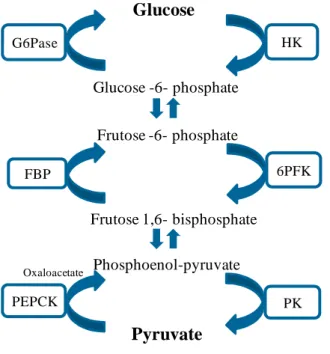
The main pathways for glucose metabolism are the glycolysis, where occurs the phosphorylation of glucose to pyruvate and its opposite pathway, the gluconeogenesis, where glucose is synthesised de novo from non-carbohydrate substrates (Pilkis and Granner, 1992). The glycolytic pathway is the major route for glucose utilization in all living organisms, and its flux is regulated at three limiting steps catalysed by the hexokinase (HK), 6-phosphofructo-1-kinase (6PFK) and pyruvate kinase (PK) (Figure 1.4.) (Oosterveer and Schoonjans, 2014; Pilkis and Granner, 1992). When glucose is present in excess, the hepatic-specific hexokinase VI, named as glucokinase (GK), acts firstly to induce the storage of glucose as glycogen, instead of promoting the glycolytic path. In mammals the activity of this
Glycogen Glycogenesis Glycogenolysis Citric Acid Cycle Glutamate Respiratory chain Acetyl CoA AA synthesis AA synthesis Aspartate AA synthesis Alaline Nucleotides Pentose phosphate pathway G ly co ly si s G lu co n eo g en es is GLUCOSE Glucose6-phosphate Fructose 6-phosphate Fructose 1,6-bisphosphatase Phosphoenol-pyruvate Pyruvate
Lipogenesis Fatty acids
GLUT2
GLUCOSE ABSORPTION
General Introduction Chapter I
23
enzyme is under a strong nutritional and hormonal control (Iynedjian, 1993). A similar induction was found for the piscine form of GK, which has been already characterized at a biochemical and molecular levels in several fish species (Panserat et al., 2014). The increase of GK activity in rainbow trout fed with high dietary carbohydrates was often associated with a significant induction of GK gene expression (Panserat et al., 2001b; Seiliez et al., 2011; Soengas et al., 2006), which strongly suggests the capacity of carnivorous species to adapt to carbohydrate intake and, therefore, to future use of plant-based diets.
Figure 1.4 – Enzyme / Substrate cycles in the glycolytic and gluconeogenic pathways. Adapted from (Pilkis and Granner, 1992).
The regulation of the gluconeogenic pathway is dependent on three key-enzymes, the phosphoenolpyruvate carboxykinase (PEPCK), the fructose-1,6-bisphosphatase (FBPase) and the glucose-6-phosphatase (G6Pase), each corresponding to a rate-limiting step of glucose endogenous production (Figure 1.4.) (Nordlie et al., 1999; Oosterveer and Schoonjans, 2014; Pilkis and Granner, 1992). Unlike glycolysis which is a non-tissue specific pathway, gluconeogenesis takes place mainly in the liver and, in less extent, in the kidney and intestine (Kirchner et al., 2008; Knox et al., 1980). Also, this pathway was found to be sensitive to a nutritional and hormonal regulation inomnivorousfish, such as common carp (Shimeno et al., 1995; Sugita et al., 2001), in a similar way to that observed in higher vertebrates. Thus, the
HK Glucose Glucose -6- phosphate Frutose -6- phosphate Frutose 1,6- bisphosphate 6PFK Phosphoenol-pyruvate Pyruvate PK G6Pase FBP PEPCK Oxaloacetate
General Introduction Chapter I
24
induction of the gluconeogenic enzymes occurs during glucagon release and starvation periods, whereas its repression occurs with insulin release, refeeding and high intake of dietary carbohydrates (Pilkis and Granner, 1992). On the contrary, carnivorous fish such as rainbow trout, gilthead seabream and European seabass, fed with high carbohydrate levels showed poor regulation of hepatic gluconeogenesis, reflected by a lack of inhibition of the major involved enzymes (Caseras et al., 2002; Enes et al., 2006; Panserat et al., 2000b; Panserat et al., 2001a). As previously mentioned, the absence of inhibition of endogenous glucose production, regardless the carbohydrate content of the diet, is one of the possible reasons for the poor use of dietary carbohydrates and “glucose intolerance” of carnivorous fish. But this hypothesis needs to be deeply investigated, since it was shown in seabream a down-regulation of some gluconeogenic genes after the intake of high carbohydrates (Panserat et al., 2002).
Liver plays a key role in regulating the intermediary metabolism and glucose homeostasis in fish. However, it was found that the white muscle has a relatively lower glycolytic capacity compared to the liver, and that is not regulated by dietary carbohydrates, at least at a molecular level, in several fish species (Hemre et al., 2002; Kamalam et al., 2012; Seiliez et al., 2011; Seiliez et al., 2013). The presence of an insulin sensitive glucose transporter (GLUT4) was reported in the muscle of rainbow trout (Diaz et al., 2009), however even with a functional glucose flux into the muscle, the glycolytic pathways remained unaffected after the intake of carbohydrates or injection with glucose (Legate et al., 2001; Panserat et al., 2009). Therefore, it seems that muscle does not have a major role in the regulation of glucose metabolism, despite being the largest tissue in fish, by representing almost 50% of the body weight of a fish (Moon, 2001).
Fish possess the two major pancreatic endocrine hormones, insulin and glucagon, responsible for the regulation of glucose homeostasis and all the metabolic pathways underlying carbohydrate metabolism (Navarro et al., 2002). Piscine insulins forms are structurally close to other vertebrates insulins while the glucagon hormone was found to be well conserved across most vertebrates (Navarro et al., 2002). The mechanisms underlying hormones secretion are also similar among vertebrates. After feeding (regardless the carbohydrate content) or a glucose load, insulin is released in the blood and induces glycolysis at the same time that inhibits gluconeogenesis and glycogen synthesis in the liver, muscle and adipose tissues (Caruso and Sheridan, 2011; Mommsen and Plisetskaya, 1991). However, in many
General Introduction Chapter I
25
carnivorous species, dietary amino acids appear to play a more important role in simulating insulin secretion than glucose (Andoh, 2007; Mommsen and Plisetskaya, 1991). Several in
vivo and in vitro studies have shown the high insulinotropic potential of some amino acids,
such as glycine, arginine, alanine and lysine, in different fish species (Andersen et al., 2014; Navarro et al., 2002; Rojas et al., 2009). Contrary to this, under a situation of food deprivation, the secretion of glucagon increases and glucose de novo synthesis is stimulated by the breakdown of glycogen and hepatic gluconeogenesis (Dabrowski and Guderley, 2003; Moon, 1998; Navarro et al., 1999). It is now accepted that both pancreatic hormones, insulin and glucagon, are fully functional in fish and thereby are not directly related to the poor metabolic use of carbohydrates, nevertheless their regulation by nutritional factors is still scarcely studied in fish (Polakof et al., 2012).
1.4. Specificities on carbohydrate utilization at embryonic and larval stages
Once spawned and fertilized the oviparous fish eggs operate as semi-closed system and only respiratory gases, heat and negligible amounts of solutes and water are exchanged freely (Kamler, 2008). The low permeability to external factors results from the hardening of the egg surface membrane, after being exposed to water (Heming and Buddington, 1988). The newly spawned eggs are therefore totally dependent on its endogenous yolk reserves to supply all the energetic substrates needed during growth and development. In turn, the nutritional composition of the egg/embryo yolk reserves was shown to be strictly dependent on the nutritional status and feeding habits of the broodstock (Fernández-Palacios et al., 2011). Therefore, the source, availability and pattern of depletion of the metabolic fuels during embryogenesis and the yolk-sac larval stage can vary between fish species and is associated to specific nutritional state of broodstock (Rønnestad et al., 1999). Even not being considered as a definite sequence for nutrient depletion, it is generally accepted that fish ontogeny begins with a short period of glucose utilization, soon switched to free amino acids (FAA). Recent studies have shown that marine fish eggs have a significant pool of FAA, which was found to play an important role in energy metabolism and protein synthesis during early development (Rønnestad et al., 1999), and in species that possess pelagic eggs (with oil globules), such as seabream, the FAA pool is mainly consumed prior to hatching (Rønnestad et al., 1994). Then, after hatching, lipids were found to be mostly mobilized (in triacylglycerols and phospholipids forms) in response of increased energy demand from the newly hatched larvae.
General Introduction Chapter I
26
Finally, a second peak of amino acid catabolism occurs after the exhaustion of the yolk reserves, when body protein-bound amino acids are mobilized (Kamler, 2008). Several studies in freshwater and marine fish have demonstrated that carbohydrates, derived from maternal glycogen reserves or glycoproteins, are used as primary energy source for catabolism during a very short period of early embryogenesis, mostly prior to gastrulation (Heming and Buddington, 1988; Kamler, 2008). Although fish eggs contain relatively low levels of carbohydrates compared to the amount on protein and lipids, in the common carp, an omnivorous species, carbohydrates represent 1.5- 6.2% of the egg dry mass, while in the carnivorous rainbow trout is found only in trace amounts (0.6%) (Heming and Buddington, 1988), thus the availability and use of carbohydrates in catabolic processes is species-specific. By analyzing the profile of glycogen and glucose levels during zebrafish embryogenesis, becomes clear the importance of these substrates as fuels prior to hatching, since the decrease of glycogen endogenous reserves is followed by an increase of free glucose levels (Soanes et al., 2011). Also, throughout zebrafish embryogenesis occurs a relatively steady increase of amino acids levels, which might explain, in part, the small pool of FAA found in some freshwater species eggs (Rønnestad et al., 1999; Soanes et al., 2011).
It is well known that yolk-sac stage represents an important developmental period for all fish larvae. At this stage, larvae undergo major morphological, anatomical and functional changes before the onset of exogenous feeding. Marine and small-sized eggs freshwater fish species have similar basic mechanisms involved in the differentiation of the gastrointestinal tract, although differences among species can be found in the relative timing of the ontogeny (Lazo et al., 2011). Fish larvae present an immature and undifferentiated digestive tract at hatching time, namely the two fish species studied in this thesis, seabream and zebrafish. The development of the main metabolic organs occurs between the transitional period of endogenous to exogenous feeding; commonly the liver, pancreas and intestine are formed and partially functional by the time of mouth opening and the ingestion of external food, whereas the morphogenesis of the stomach is species dependent (Zambonino-Infante et al., 2008). Also, the enzymes responsible for digestion of proteins, lipids, and carbohydrates are present at first-feeding (Lazo et al., 2011). In particular, the pancreatic enzyme α-amylase, a key enzyme for the digestion of complex carbohydrates, has been detected in early larvae of several fish species, including seabream (Naz, 2009; Zambonino-Infante et al., 2008) and zebrafish (Yee et al., 2005). In general, α-amylase activity is higher at the onset of exogenous feeding, then according to the feeding habits, the pattern of activity gradually declines, in
General Introduction Chapter I
27
carnivorous species, or progressively increases, in omnivorous species, along fish development (Zambonino-Infante et al., 2008; Zouiten et al., 2008). Concerning the molecular regulation of α-amylase, high mRNA levels of amylase have been observed during the initial stages of larval development, followed by a progressive decrease at later stages, which suggests that the activity and expression of amylase might be genetically programmed and regulated at a transcriptional level, during the development of marine larvae (Peres et al., 1996; Zambonino-Infante et al., 2008). Although the increase of activity of this digestive enzyme may be related to the onset of exogenous feeding, the common live preys of marine larvae are not naturally rich in starches, therefore the physiological function of this enzyme during the early life of marine fish are not completely understood. Nevertheless, the particular enzymatic action of amylase may suggest a natural predisposition of young fish larvae to use dietary carbohydrates (Krogdahl et al., 2005).
1.5. Nutritional programming: emerging tool for fish nutrition
As firstly mentioned, it would be of great interest, economically and environmentally, to improve the ability of fish to use dietary carbohydrates as energy substrates that allowed a higher incorporation of plant feedstuffs in their diets. From our brief review, it is clear that fish possess the whole enzymatic machinery required for the digestion, absorption and metabolism of carbohydrates however some species, particularly those with carnivorous feeding habits, have a limited capacity to use dietary carbohydrates, mainly reflected in the poor regulation of glucose metabolism. Despite the significant research work developed over the last years, the physiological basis underlying such metabolic deficiency remains unclear. The development of alternative nutritional strategies may contribute to generate novel knowledge, essential for overcoming the bottlenecks related to the poor utilization of carbohydrates as energy sources. Under this scope, the approach by means of nutritional programming appears to be as interesting as challenging.
1.5.1. Nutritional programming in mammals
The term “programming” was introduced into scientific literature by Lucas (1991) to describe the process by which exposure to specific stimulus or insult, during critical windows of development, can result in permanent changes in somatic structures, physiological systems or
General Introduction Chapter I
28
metabolic status of the organism. The extension of this concept to the field of early nutrition is known as ”nutritional programming” and has been largely studied in mammalian models to understand the consequences in adulthood of an altered nutrition during the intrauterine or post-natal periods, (Burdge and Lillycrop, 2010; Lucas, 1998; Metges et al., 2014; Ozanne and Hales, 1999; Patel and Srinivasan, 2002; Patel et al., 2009; Srinivasan et al., 2003). The time frame in which the programming event can occur is often confined to sensitive periods of high developmental plasticity. The majority of tissues retain their maximum plasticity during the periods of embryonic and fetal development, however the period immediately after birth, during lactation, is also considered of high susceptibility (Gluckman et al., 2011; Patel and Srinivasan, 2002). In human health, considerable efforts have been devoted to knowing how nutritional stimulus during pregnancy can induce the risks for the onset of chronic diseases, such as the metabolic syndrome, obesity and diabetes (Buckley et al., 2005; Burdge and Lillycrop, 2010; Langley-Evans, 2015; Patel and Srinivasan, 2002; Vieau, 2011). As a result there are clear evidences of the persistence of the programmed phenotype, present in the mother, as well as the possibility of its transmission to the offspring (generational effect) (Lim and Brunet, 2013; Vickers, 2014).
The mechanisms involved in metabolic regulation by early nutritional events are still not fully understood. Based on strong evidences that the genome can be “imprinted” to store genetic memory of the resulting nutritional event, mechanisms related to epigenetic modifications, such as DNA methylation, histone acetylation and non-coding RNAs have been suggested as potential sources for reprogramming the gene expression pattern (Anderson et al., 2012; Badeaux and Shi, 2013; Jaenisch and Bird, 2003; Lillycrop and Burdge, 2012).Although not encoded in the genes, epigenetic changes are known to be transmitted hereditarily, which largely supports the evidences of vertical transmission of metabolic-related diseases, from mothers to their progeny (Jaenisch and Bird, 2003; Youngson and Whitelaw, 2008). Moreover, new data on the role of nutrients, and their availability levels, as modulators of epigenetic mechanisms shows an increasing list of dietary components involved in chromatin remodeling (Badeaux and Shi, 2013; Milagro et al., 2013). Other possible mechanisms responsible for the programming outcomes were suggested, such as tissue remodelling and differential cellular proliferation, impaired mitochondrial function and nutrient-sensitive signalling pathways. Early events exerted during the phases of cellular proliferation and differentiation can caused tissue remodelling and compromise its function, which automatically causes a major impact upon the organ structure (Langley-Evans, 2015). Several
General Introduction Chapter I
29
studies have shown that the pancreas is particularly sensitive to early nutritional manipulations, as was the case of a study performed in rats submitted to a low- protein regimen during pregnancy that resulted in a decrease of islet size and cell proliferation of the offspring (Snoeck et al., 1990). An impaired mitochondrial function can result from long-term adaptations to early diets, being reflected in an imbalance of energy homeostasis. For instance, the increase of the reactive oxidative species and oxidative stress together with the decrease of the antioxidative defense capacity, was reported in pancreatic islets of a model of intrauterine growth retardation (rat), as being the result of the reprogramming of mitochondrial function (Simmons et al., 2005). For last, if the metabolic pathways of energy are affected it can alter the production of metabolites and interfere with their role as cofactors in signaling pathways, which may or may not alter DNA transcription by means of epigenetic mechanisms (Zawia et al., 2009).
The long-term effects of early nutritional stimulus on the glucose metabolism are well documented by numerous studies in adult animals, mostly on mammals. Also, recent studies have suggested that glucose may interact, as a cofactor, in signaling pathways involved in the regulation of the epigenome (Badeaux and Shi, 2013). An acute exposure to an increasing range of insulin levels during the gestational period induced glucose intolerance in the progeny of rats (Harder et al., 1998) while a restricted intake of proteins during the intrauterine period had a significant effect on the offspring tolerance to glucose, which revealed to be age-dependent, so in adulthood the offspring develop some diabetic symptoms (Ozanne and Hales, 2002). Changes in the immediate neonatal nutrition (lactation) were also found to have life-long consequences on carbohydrate uptake and metabolism. It is the case of the well study high-carbohydrate (HC) rat model. The use of an artificially high-carbohydrate milk formula during the lactation of rats pups before weaning resulted in an increased activity of the hepatic GK (Patel and Hiremagalur, 1992) and in altered mRNA transcription levels of genes involved in energy metabolism and appetite control, that persisted into adulthood (Srinivasan et al., 2008). Together these evidences prove the potential of glucose as a programming nutrient as well as demonstrate the vulnerability of carbohydrate metabolic pathways to nutritional regulation.
Programming by non-nutritional factors during early life is also documented in mammals. Extensive literature on the hazardous effects of the consumption of coffee, tobacco, alcohol and drugs during pregnancy clearly demonstrate the development of several chronic diseases,
General Introduction Chapter I
30
as respiratory failure, hepatic failure, abnormal endocrine function, behavior problems and also of some disorders as stress, depression and anxiety, in adulthood (Hellemans et al., 2010; Huizink and Mulder, 2006; Loomans et al., 2012; Maritz and Harding, 2011). Also it was shown that the exposure to stressful conditions during early neonatal period, involving an excessive maternal care (licking and grooming) alters the DNA methylation pattern of the offspring (Meaney and Szyf, 2005).
1.5.2. Nutritional programming in fish
In fish development, the windows of highest sensitivity and metabolic plasticity are restricted to the periods of embryogenesis and early larval development, similar to what is observed in mammals. When the concept of nutritional programming, based on previous studies performed in higher vertebrates is applied to fish, caution should be taken in the interpretation and extrapolation of possible results, since mammals and fish exhibit a distinct embryonic development. Therefore, while the foetus is directly linked to maternal nutritional experiences, possibly in a continuous state, through the umbilical cord and placenta, the fish embryo rely exclusively on his endogenous yolk reserves, acting as a semi-closed system unresponsive to external factors. Thus, the possibility of delivering a nutritional stimulus with success becomes more difficult to accomplish during the early development of fish.
Despite the mechanisms involved in metabolic regulation by nutritional factors are not fully understood, there are strong evidences that the genome can be “imprinted” to store genetic memory of the resulting event. These mechanisms, described in more detail in the previous section, can be (partly) related to epigenetic regulation, through covalent modifications of DNA and histone proteins, that include methylation, acetylation, phosphorylation, among others. Although not targeting nutritional factors, recent studies have demonstrated that specific abiotic factors like temperature can induce epigenetic alterations in fish through changes on the DNA methylation pattern, as observed in terrestrial vertebrates. A study performed in Senegalese sole showed that muscle growth of larvae undergoing metamorphosis was affected by the early rearing temperature of newly-hatched larvae, by means of methylation of the myogenin promoter. The lowest rearing temperature (15ºC) induced the methylation of myogenin promoter, which subsequently affected the expression of myogenin gene in the muscle and reduced the growth rate and muscle cellularity (Campos et al., 2013). In the same environmental frame, a research in European seabass upon the shift
General Introduction Chapter I
31
of sex-ratio in response to temperature showed that exposure to high temperatures (21ºC) increased the methylation level of the gonadal aromatase (cyp19a) promoter in both males and females. As result, the expression of aromatase gene was repressed and through the silencing of this gene, the development of males during sex differentiation was promoted. Thus, it was presented strong evidences that temperature-dependent sex determination in European seabass might be controlled by epigenetic mechanisms of DNA methylation (Navarro-Martín et al., 2011). Several other studies were performed in different fish species to enlighten the role of environmental factors as modulators of epigenetic mechanisms during the differentiation and determination of sexual phenotypes (Piferrer et al., 2012). A recent study in zebrafish showed that gene expression during early stages of embryogenesis can be markedly regulated by DNA methylation mechanisms, indicating this species as susceptible to early genomic imprinting (Andersen et al., 2012). Indeed, Olsen et al. (2012)showed that the phenomenon of diabetic metabolic memory might been transmitted to new generations of hyperglycemic zebrafish, through mechanisms related to DNA demethylation. It was also demonstrated how an exposure to nutrients excess, such as to glucose, can permanently
increase the number of β-cells in zebrafish pancreas, showing that other mechanisms besides
DNA methylation can be involved in the epigenetic regulation of the genome (Maddison and Chen, 2012). Current studies in mammalian model systems have shown that microRNA constitute important regulators of the intermediary metabolism (Dumortier et al., 2013). These findings were further extended to the effects of early nutritional events on programming the expression of microRNA. In mammals, a maternal fat-rich diet during gestation was found to alter the expression of key metabolic microRNAs of the offspring, possibly associated with altered DNA methylation (Zhang et al., 2009). These evidences of microRNAs involvement in nutritional programming of mammals could be potentially applied to fish. In fact, it was shown that, in rainbow trout alevins, the nutritional shift from endogenous to exogenous feeding changed the expression of specific microRNAs involved in the regulation of metabolism, being the new pattern consistent with the storage of external feed (Mennigen et al., 2013). Despite being fragmented and little related to nutritional factors, these evidences strongly support the hypothesis that nutritional events can potentially trigger permanent changes in the genome in fish.
Critical windows of development are highly restricted in fish. Thus the periods to exert a nutritional stimulus during stages of high developmental plasticity are narrowed to: a) maternal nutrition, through nutrient transfer to the yolk reserves and b) the onset of exogenous
General Introduction Chapter I
32
feeding, when larval nutrition can be manipulated by live prey enrichments or inert diets. In gilthead seabream, the positive effects of feeding the broodstock with a high quality diet, enriched with essential fatty acids, were reflected in a better egg quality and larval development (Fernández-Palacios et al., 1995; Fernández-Palacios et al., 1997). Other dietary components such as vitamin E, vitamin C, carotenoids and phospholipids were also considered as important nutrients to be fed during reproduction, since it was found an improvement of egg, sperm and larval quality (Izquierdo et al., 2001). Just recently, a study in gilthead seabream revealed that early nutritional programming could be achieved through parental feeding, with positive long-term metabolic changes of the offspring. When the broodstock was fed with a linseed-oil rich diet (over 60% of fish oil replacement) the resulting progeny proved to be better adapted to use diets with high vegetable oils /vegetable proteins, by showing improved growth rate and feed utilization. However, even not relevant to the nutritional programming aim, some short-term negative effects were found when fish-oil was replaced 100% by linseed-fish-oil in the broodstock diets, the fecundity, spawn quality, growth and Δ6 desaturase gene expression of 45DAH post-larvae were significantly affected (Izquierdo et al., 2015). Currently, research on nutritional programming in fish is still scarce, but the promising results shown at different studies are raising a growing interest in this subject.
The concept of nutritional programming was applied for the first time to fish by Geurden et al. (2007). The authors have demonstrated that an acute hyperglucidic stimulus exerted at the onset of exogenous feeding, induced the expression of carbohydrate digestive enzymes (maltase and amylase) in rainbow trout juveniles, suggesting some long-term physiological changes. Although the absence of phenotypic differences in growth and postprandial glycaemia has been observed, data showed persistent molecular adaptations to the early nutritional event, which may be related to epigenetic mechanisms, and thus, in line with the mammalian concept of nutritional programming. Since then, only few studies were performed under this topic. Two of these studies reported an enhancement of the expression of delta 6-desaturase gene in European seabass juveniles, which had been previously submitted, from first-feeding, to a dietary deficiency in long-chain 3-n polyunsaturated fatty acids (Vagner et al., 2007; Vagner et al., 2009). The remaining studies were focused on the effects of early exposure to high levels of dietary carbohydrates, during the first-feeding period, on the modulation of carbohydrate metabolic pathway. Therefore, these studies demonstrated some persistent adaptations on molecular markers related to the carbohydrate metabolism in
General Introduction Chapter I
33
rainbow trout (Geurden et al., 2014), zebrafish (Fang et al., 2014 ) and Siberian sturgeon (Gong et al., 2015).
1.6. Objectives
The aim of this thesis is to generate novel knowledge on the concept of nutritional programming in fish, during the early life stages of development, which is still scarcely investigated in the field of fish nutrition. This thesis intends to unravel how the glucidic stimuli, operating as nutritional events during sensitive periods of fish development, affect the regulation of key-metabolic pathways, in particular those involved in glucose homeostasis, and if these effects can persist in the adult life of the fish. Also, a novel technique for in ovo supplementation of nutrients is presented as possible accurate tool to alter the nutritional content of fish embryos. For this purpose, the following goals were proposed:
» Establishment of the technical and biological basis for the supplementation of zebrafish eggs with glucose: tolerance of embryos to a range of high doses of glucose and molecular characterization of metabolic pathways during the embryonic development of zebrafish (Chapter 2).
» Deliver a single hyper-glucidic stimulus directly into the yolk-sac of zebrafish embryos, at two different stages of embryogenesis, and assess the effects on survival, growth performance, glucose metabolism and gene expression of target metabolic pathways, in juvenile fish fed with a glucose-rich diet during a confined period (Chapters 2 and 3).
» Deliver three recurrent glucidic stimuli to seabream larvae during critical stages of development and evaluate the short- and long-term effects on growth performance, survival, nutrients metabolism and gene expression of seabream post- larvae (short-term) and juveniles (long-(short-term), both fed with a high glucose diet (Chapters 4 and 5).
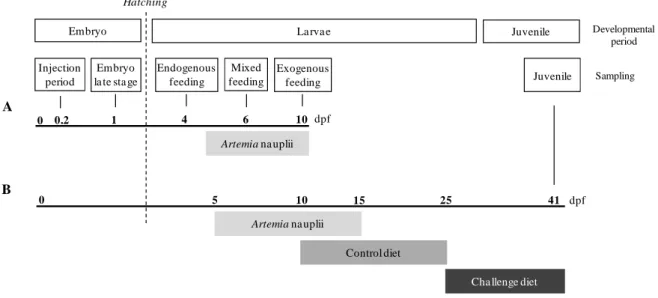
A schematic view of the plan work, detailing the four experimental trails developed under this thesis is provided in Figure 1.5. The resulting knowledge from this thesis can potentially pave the way towards a better use of carbohydrates as energy substrates for fish, and therefore allow a higher incorporation of plant-ingredients in fish diets, necessary for a sustainable
General Introduction Chapter I
34
production. It will, therefore, contribute to reinforce the scientific bases of the nutritional programming concept in the field of fish nutrition.
Figure 1.5 – Schematic plan of the four experiments developed with zebrafish and seabream focusing the early nutritional programming with glucose. Red arrows indicate the time period for glucidic stimulus delivery; Blue arrow indicates the periods of dietary challenge for the analysis of the long-term effects of early stimulus; Chapter II to V are indicated to each corresponding experiment.
Metabolic Plasticity
Maturation
Aging
Embryo Larvae Juvenile Adult
Ze b ra fi sh S ea b re a m Chapter II Hatching Chapter III Chapter IV Chapter V