Original article (full paper)
Psychometric properties of the Burnout
Inventory for Referees
Maria Regina Ferreira Brandão University of São Judas Tadeu, São Paulo, Brazil
Sidónio Serpa Antonio Rosado
Lisbon Technical University, Human Kinetics School, Portugal
Robert Weinberg Miami University of Ohio, USA
Abstract—The purpose of this study was to assess the psychometric properties of the Burnout Inventory for Referees (BIR) in Portuguese in a sample of professional soccer referees and to explore the nomological validity of the inventory through concurrent validation. The analysis showed a factorial structure of burnout for the referees with one second order factor and three irst order factors; physical and emotional exhaustion, reduced sense of accomplishment and sport devaluation. A cross-validation procedure showed that the factor structure was replicable, and the inventory demons-trated internal reliability as well as convergent and discriminant validity. In addition, the study assessed the concurrent validity of the inventory by examining the correlation between the scores of the Burnout Inventory for Referees and the scores of the Proile of Mood States (POMS). The subscales of burnout and total burnout were positively correlated with tension, depression, anger, fatigue and confusion and negatively with vigor, as expected. In conclusion, the Portuguese version of BIR presents good evidence of validity and reliability in the assessment of referees who may be at risk of suffering from burnout.
Keywords: burnout, psychological assessment, mood states, referee
Resumo—“Propriedades psicométricas do Inventário de Burnout para Árbitros.” O objetivo deste estudo foi avaliar as propriedades psicométricas do Inventario de Burnout para Árbitros (BIR) em português em uma amostra de árbitros de futebol proissional e explorar a validade nomológica do inventário através da validação concorrente. A análise mostrou uma estrutura fatorial de burnout para os árbitros com um segundo fator de ordem e três primeiros fatores de ordem; esgotamento físico e emocional, reduzido senso de realização e desvalorização esportiva. Um procedimento de validação mostrou que a estrutura de fator é replicável e o inventario apresenta uma coniabilidade interna, validade convergente e discriminante. Além do mais, o estudo avaliou a validade concorrente do inventario através da correlação entre os escores do BIR e o Peril dos Estados de Humor (POMS). As subescalas de burnout e o burnout total se correlaciona-ram positivamente com a tensão, depressão, raiva, fadiga e confusão e negativamente com vigor, como esperado. Para concluir, o BIR em português mostrou ser coniável e válido na avaliação de árbitros que podem estar em situação de risco para o burnout.
Palavras-chave: burnout, avaliação psicológica, estados de humor, árbitros
Resumen—“Propriedades psicométricas del Inventário de Burnout para Árbitros.” El objetivo de este estudio fue evaluar las propiedades psicométricas del Inventario de Burnout para Árbitros (BIR) en portugués en una muestra de árbitros de fútbol profesional y explorar la validez nomological del inventario a través de la validación concurrente. El análisis mostró una estructura del factorial de burnout para los árbitros con un segundo factor de orden y tres primeros factores de orden; agotamiento físico y emocional, sentido de realización reducido y devaluación del deporte. Un procedimiento de validación mostró que la estructura del factor era replicable, y el inventario demostró la iabilidad interna, validez convergente y discriminante. Además, el estudio evaluó la validez concurrente del inventario a través de la correlación entre los escores del BIR y el Peril de los Estados de Humor (POMS). Las sub-escalas de burnout y burnout total se correlacionaron positivamente con tensión, depresión, rabia, fatiga y confusión y negativamente con el vigor, como esperado. Para concluir, el BIR en portugués presenta el testimonio coniable de validez y iabilidad en la evaluación de árbitros que pueden estar en peligro del sufrimiento de burnout.
Introduction
Burnout is a syndrome which has been described in the literature in the past 40 years and is deined as a prolonged response to chronic stress which leads to fatigue and emotional exhaustion or loss of physical and mental energy resulting in interpersonal relationship problems, especially at work. It is rooted in three dimensions or subscales including emotional exhaustion, re-duced sense of accomplishment and depersonalization (Fejgin, Talmor, & Erlich, 2005; Maslach, 1976; Maslach & Jackson, 1981; Roelofs, Vebraak, Keijsers, de Bruin, & Schmidt, 2005). Burnout is a dysfunctional condition that develops gradually and may even go unnoticed for a long time (Schaufeli & Enz-mann, 1998). Burnout is characterized by ive main elements: i) predominance of physical symptoms and mental or emotional exhaustion, tiredness and depression; ii) atypical stress physical symptoms may occur; iii) work related symptoms; iv) symptoms appear in individuals who do not suffer from psychopathologies and, v) detrimental to effectiveness of work performance as result of negative attitudes or behaviors (Roelofs et al., 2005). It is an existing phenomenon not only in the workplace, but also in other contexts such as sport. Speciically, there are people whose expectations about their profession have an existential meaning, a sense that their occupation provides signiicance in their life, and they work for long periods of time in situations of highly emotional demands. These individuals can feel emo-tionally exhausted, modify their attitudes and develop burnout if these situations become chronic (Maslach, 1998; Maslach & Leiter, 2000; Maslach, Schaufeli, & Leiter, 2001).
Different studies conducted on burnout in sport have focused especially on athletes and coaches (Gould, Dieffenbach, & Mof-fett, 2002; Goodger, Gorely, Lavallee, & Harwood, 2007; Gusta-fsson, Hassmén, Kenttä, & Johansson, 2008; Hendrix, Acevedo, & Hebert, 2000, Hodge, Lonsdale, & Ng, 2008; Pires, Brandão, & Silva, 2006; Raedeke, 2004; Raedeke et al., 2002). These rese-archers believed that participation in sports, although challenging and rewarding, can also be frustrating and emotionally exhausting. Consequently, the burnout syndrome is developed, in part, due to the constant interpersonal relationships frictions with teammates, referees, coaches, friends and relatives. Thus, negative feelings are often experienced through the expectations and criticism from others, resulting in prolonged stress and eventually burnout.
As noted above, as burnout in sport has important implica-tions for athletes and coaches, referees also can be affected by this phenomenon. Actually, this is no surprise, because, oficia-ting in any sport at any level of competition is not an easy task. Guillén and Jiménez (2001) and González Oya (2006) noted that oficiating presents high complexity, not only due to the dificulty of making decisions in a short period of time, but also by exposure to criticism and pressure from spectators, athletes, and coaches. Furthermore, positive reinforcements are scarce, and probability of ending a sporting event without making any mistakes is low. Speciically, Louvet, Gaudreau, Menaut, Genty and Deneuve (2009) stated:
Indeed, referees have to deal with interpersonal conlicts and conlicts arising from the criticism of players, coaches, and
even leaders. They are almost always attacked physically and verbally by players, coaches and unsatisied fans, which establish an environment dominated by fear of making mistakes during the game. A great number of referees have to deal with family, professional and social life, what can be a stressful task. On top of that, competition among referees and the poor social appreciation of this profession, so it is no surprise that they live under high levels of stress (p. 125).
According to Balch and Scott (2007), there is no easy rela-tionship between participants and referees in sport. Historically, a referee is often the center of controversies and the focus of anger by the fans who normally believe they tend to “make bad calls” against their team. Weinberg and Richardson (1990) stated that the oral abuse and physical threats from coaches, players and fans, criticism of the press and assessment by oficiating peers, are part of the everyday life of referees. As a consequen-ce, burnout and dropout may relect the failure in dealing with disruptions resulting from interpersonal conlicts, role conlicts, fear of failure and other contextual factors involved in oficiating (Taylor, 1991). Furthermore, the context of oficiating involves evaluation and social comparison because the individual efforts are witnessed by peers and signiicant others (Brandão, Serpa, Krebs, Araújo, & Machado, 2011).
Based on the knowledge from theoretical essays about the burnout syndrome, there was a need to develop a reliable and valid measurement of burnout. Garcés de Los Fayos et al. (1999) presented a review of 15 burnout-measuring tools, including the “Maslach Burnout Inventory” (MBI), which is considered the irst psychometrically valid measurement tool. As with research involving other professions, in sport the MBI was used to help develop the Athlete Burnout Questionnaire (ABQ) to measure burnout in athletes (Raedeke & Smith, 2001).
There is no doubt that the use of psychological inventories is one of the main pillars of psychology, as emotional competences are often evaluated through psychological instruments. But, in order to produce valid and reliable measures, the psychological tests need to relect the speciic nature of the context, increasing the ecological validity of this instrument. This ecological vision of the inventories makes it possible to analyze individuals in their real world and gives proper attention to the importance of the relationship between the environment and the psychological competences of the individuals.
Along these lines Weinberg and Richardson (1990) deve-loped a measuring tool of burnout adapted for referees, called the Burnout Inventory for Referees. However, the inventory has methodological limitations because no validation studies were carried out. Additionally, although the work by Weinberg and Richardson (1990) made an important contribution to our understanding about the burnout syndrome, the utility of the scale is further limited by language barriers. Furthermore, the validation of the scale in a different language (Portuguese) will enable further testing of the psychometric qualities of the scale and will encourage future cross-cultural research on burnout.
explore the nomological validity of the inventory through the concurrent validation of BIR by examining correlations between BIR and Proile of Mood States (POMS) scores.
Study 1
The purpose of the Study 1 was to provide validity evidence for the measures of the BIR in the Portuguese language.
Method
Participants
Two hundred and twenty-four male professional soccer refe-rees (113 referefe-rees and 111 assistants; 64 from Portugal and 160 from Brazil) participated in Study 1. An assistant referee was one of several oficials who assisted the head referee in controlling a match. He could be a linesman or an oficial who assisted in admi-nistrative or other match related tasks, as directed by the referee. A total of 361 referees received the protocols and 242 sent them back, which corresponded to a 62 % response rate. Excluded from the sample of the present study were referees who have disconnected their association with the referee organizations of both countries.
Procedures
Prior to the main study, permissions were requested from the soccer referee associations in Brazil and Portugal to administer the translated version of the Burnout Inventory for Referees to their associated members. Next, the referees were contacted by email with an explanatory video about the objectives of the study and guidelines about the participation (strictly voluntary). The content of their answers, were treated conidentially. The referees in this study lived in different places in Brazil and
Portugal, suggesting that data collection by email was the most appropriate method. Speciically, the use of e-mail (internet) has been shown to increase the response rate of participants (Lonsdale, Hodge, & Rose, 2006).
Referees gave written consent for their voluntary participa-tion in the study. Then they received the Portuguese version of the BIR and a biographical data form (age, gender, educational background, oficiate level, and average length of time of oficia-ting). The two instruments were completed in their own homes and answers were forwarded, according to the convenience of each participant and to ensure conidentiality, directly to the email of the principal researcher without going through the referees’ supervisors. This investigation was approved by the Ethics Committee in Research at the University of São Judas Tadeu (# 062/2008).
Instruments
The translation of the BIR followed the guidelines for cross-cultural adaptations of measuring tools in the health sciences (Beaton, Bombardier, Guillemin, & Ferraz, 2002) and consisted of seven steps. These included: (1) translation of the English In-ventory into Portuguese by two professionals from the respective countries, who were luent in the English language and were also sport psychologists, generating two versions (T1 and T2) of the instrument; (2) synthesis of the two translations to determine the T3 version of the instrument; (3) reverse translation of T3 by two native English speakers who were luent in the Portuguese language, generating the T4 and T5 versions; (4) synthesis of the two translations to determine the T6 version of the instrument; (5) evaluation of the inventory by PhD specialists, generating the T7 version of the instrument; (6) sending the T7 version to the author of the original instrument for an expert opinion and, (7) inal version of the inventory (T8).
Finally, the translation of Portuguese in both Brazil and Portugal was carefully made in order to use common terms of
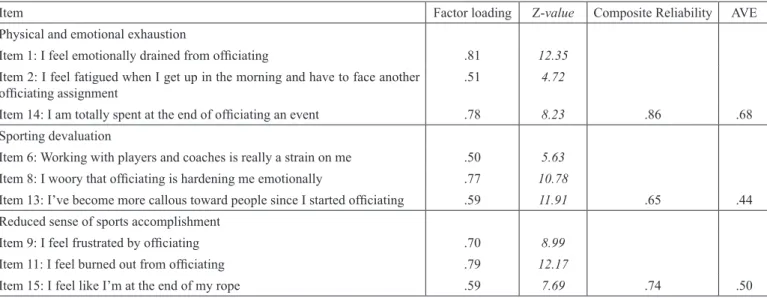
Item Factor loading Z-value Composite Reliability AVE
Physical and emotional exhaustion
Item 1: I feel emotionally drained from oficiating .81 12.35
Item 2: I feel fatigued when I get up in the morning and have to face another
oficiating assignment .51 4.72
Item 14: I am totally spent at the end of oficiating an event .78 8.23 .86 .68 Sporting devaluation
Item 6: Working with players and coaches is really a strain on me .50 5.63
Item 8: I woory that oficiating is hardening me emotionally .77 10.78
Item 13: I’ve become more callous toward people since I started oficiating .59 11.91 .65 .44 Reduced sense of sports accomplishment
Item 9: I feel frustrated by oficiating .70 8.99
Item 11: I feel burned out from oficiating .79 12.17
Item 15: I feel like I’m at the end of my rope .59 7.69 .74 .50
EX DES RED
AVE .68 .44 .50
EX .68 1
DES .44 .29 1
RED .50 .17 .22 1
Table 2. Discriminant validity results for the irst-order constructs.
Note. EX: Physical and emotional exhaustion; DES: Sporting devaluation;
RED: Reduced sense of sports accomplishment.
both languages in such a way that there were no differences in the interpretation of the sentences. Thus, the same instrument could be used by referees from both countries.
Data analysis
The conirmatory analysis of the factorial structure of the BIR to Portuguese version was accomplished with AMOS 18 (SPSS Inc, Chicago, Il) software by using the maximum likelihood method (ML). The assumptions of the conirmatory
factorial model, namely, the multivariate normality of the items and the absence of outliers were evaluated by the coeficients of skewness and kurtosis and by Mahalanobis distance, respec-tively (Arbuckle, 2009). To evaluate the quality of the global adjustment of the model, the indicative values of good adjust-ment CFI and GFI superior to .9 and PCFI and PGFI superior to .6 were considered. A RMSEA (root mean square error of approximation) value less than .06 was indicative of good it, while an acceptable it was assumed for a minimum cut-off of .08 (Byrne, 2000). The adjustment of the model was made from the values of the modiication indexes by the Lagrange Multipliers (LM), by considering that trajectories and/or correlations with LM>11 (p< .001) were indicators of signiicant variation of the quality of the model. Internal consistency was estimated through composite reliability and values above .70 were considered indicative of good internal consistency (Hair, Black, Babin, & Anderson, 2009). Convergent validity was evaluated through the average variance extracted (AVE) and values greater than .50 were considered indicative of good convergent validity (Fornell & Larcker, 1981; Hair et al., 2009). Discriminant validity was accepted when AVE for each construct was greater than the
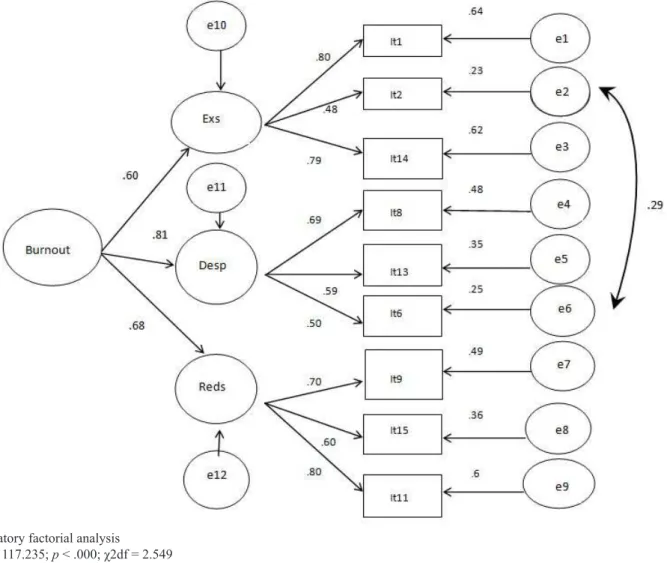
Conirmatory factorial analysis
χ2(46) = 117.235; p < .000; χ2df = 2.549
CFI = .932; PCFI = .596; CFI = .947; PGFI = .484 RMSEA = .058; p(rmsea < .05) = .156
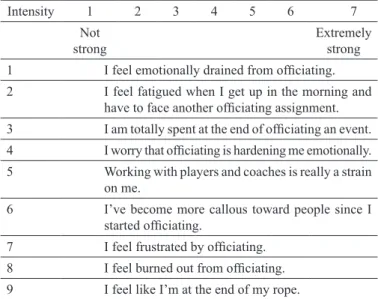
the sport devaluation factor included as items 6, 8 and 13 and the reduced sense of accomplishment factor was determined in items 9, 11 and 15. These item numbers came from the original inventory of Weinberg and Richardson (1990), but Table 3 has proposed the inal inventory with the items appropriately noted.
The model was also submitted to a cross-validation study. In the typical cross-validation, parameters of a model are estimated from one sample and the predictive effectiveness of the model is subsequently determined on a separate independent sample drawn from the same population as the irst. So, our sample was divided in two blocks; the calibration and the validation model. The model’s invariance in both samples was tested by comparing the unconstrained model with the constrained models (factor loadings ixed and variances/co-variances ixed). Fac-torial invariance was accepted when the models did not differ signiicantly (p> .05), according to the χ² statistic (Loehlin, 2003). The irst study (i.e., calibration) was carried out with a sample of 162 individuals and the validation study was carried out with a sample of 224 individuals. The calibration and va-lidation demonstrated the existence of an invariance structure of three factors of irst order and one factor of second order, as expected by the theory (Table 4).
According to Weinberg and Richardson’s (1990) initial proposal, it was possible to deine burnout as a second order factor correlated with physical and emotional exhaustion (r = .60, p < .001), with sport devaluation (r = .81, p < .001) and with reduced sense of accomplishment (r = .68; p = .001).
Intensity 1 2 3 4 5 6 7
Not
strong
Extremely
strong
1 I feel emotionally drained from oficiating. 2 I feel fatigued when I get up in the morning and
have to face another oficiating assignment. 3 I am totally spent at the end of oficiating an event.
4 I worry that oficiating is hardening me emotionally.
5 Working with players and coaches is really a strain on me.
6 I’ve become more callous toward people since I
started oficiating.
7 I feel frustrated by oficiating. 8 I feel burned out from oficiating. 9 I feel like I’m at the end of my rope.
Burnout Inventory for Referees
Please read each statement carefully and decide if you ever feel this way about oficiating. Then decide how strong the feeling is when you experience it by selecting the appropriate number (from 1 to 7). There is no right or wrong answer. Please, make sure that you answer all the statements.
Instructions for the assessment: Physical and emotional exhaustion
= (1+2+3); Sporting devaluation = (4+5+6); Reduced sense of sports accomplishment = (7+8+9).
Table 3. Proposed Burnout Inventory for Referees.
squared multiple correlations between that construct and any other (Fornell & Larcker, 1981). The scores of the factors were achieved by using the multiplication of the scores obtained by the respective weight factors by the regression imputation method built in AMOS 18.
Cross-validity was also veriied by a multi-group analysis. In addition, a multi-group analysis was conducted for testing the model’s invariance among referees and assistants. To test the difference between two invariance models, we did not rely on the chi-square difference test, as it is judged to be too restricti-ve. Instead we rely on the change in CFI value (Byrne, 2009), which has to be lower than .01 (Cheung & Rensvold, 2002). This analysis was tested comparing the unconstrained model (structural weights varying freely across both groups) with the constrained models (measurement weights and structural weights ixed to an equal value to both groups) (Loehlin, 2003).
Results
The referees in this study oficiated in the National and International Soccer Championships in Brazil and Portugal in 2008/2009. Sixty-two of them had college degrees and 162 were high school graduates. In addition, 21 oficiated in international level championships (e.g., FIFA, EUFA), 92 in nationwide championships and 111 in statewide championships. Their average age was, 31.9 years (SD= 5.8) and average length of time of oficiating was 9.4 years (SD= 5.8).
To examine the factorial validity of the Portuguese version conirmatory factor analysis was conducted. To evaluate if the items were close enough to the normal distribution and could be used in further factorial analysis, its skewness and kurtosis values were examined. This assumption was accepted for ab-solute values of skewness and kurtosis lesser than 3 and 10, respectively (Kline, 1998). Initial descriptive statistics analysis showed that the four subscales were normally distributed becau-se all the standard kurtosis and skewness scores were small. A preliminary analysis of the scale was conducted and the initial conirmatory factorial analysis of the factorial structure of the BIR indicated that the original model presented an inadequate adjustment to the sample under study (χ2/gl=3.52; CFI= .642; PCFI= .540; GFI= .816; PGFI= .606; RMSEA= .107; P[rmsea ≤ .05] < .000).
The scale was than reined based on individual and composi-te reliabilities analyses. In addition, extraccomposi-ted average variance (Table 1), and interconstruct covariances (Table 2) were used to examine convergent and discriminant validity, respectively.
Finally, in relation to irst order factors, sport devaluation is correlated positively with reduced sense of accomplishment (r = .55; p < .001) and with physical and emotional exhaustion (r = .41; p < .001). The correlation between sport devaluation and physical and emotional exhaustion was .48 (p < .000).
Invariance between referees and non-assistants was also tested as the CFI changes between the two models that repre-sented conigural and metric invariance was lower than .01. We assumed that there was a factor loading invariance between both groups of referees.
Discussion
The purpose of Study 1 was to investigate the psychometric validity of the BIR. This procedure has shown that the internal consistency as well as the construct validity of the instrument exhibited loadings of strong factors and produced scores for subscales that were internally consistent. Therefore, it is valid to measure the intensity of the burnout experiences in soccer referees. This form has nine items that relect a multidimensio-nal characteristic with three subscales, physical and emotional exhaustion, sport devaluation and reduced sense of sports accomplishment. These subscales basically reproduced the results of studies on burnout in sports described in literature (Raedeke & Smith, 2001; Raedeke et al., 2002). We found mi-nor psychometric problems with sporting devaluation where a lack of convergent validity fail to meet Hair et al.’s, (2009) rule of thumb in which AVE values should be at least .5. In fact, as Figure 1 shows, there is a correlation (r= .29; p < .001) between the residuals of item 2 from physical and emotional exhaustion and item 6 from sport devaluation suggesting that the two items associated with these errors are more related to each other than
the original measurement model predicted. Item 6 (“working with players and coaches is really a strain on me”) seems to be problematic in the sport evaluation factor and future analysis of the item should be undertaken. Speciically, the rewording of the item should be attempted in other studies to clarify its meaning. Nevertheless, the reexamination of the theory and the deinitions of this construct led to the conclusion of its practical signiicance and the maintenance of it in the factor. Given the strong conceptual arguments for the distinctness of this factor, the size and signiicance of its standardized loading estimate and the need that all factors to have at least three indicators (Hair et al., 2009), the item was not eliminated at this time. Further research is needed to determine if this item should, in fact, be retained or deleted.
Despite the referees being considered the third dimension of sport, the demands and needs are different from those found in athletes and coaches. Thus, the burnout dimensions for referees are described as follows: (a) the physical and emotional exhaus-tion factor is associated with exhausexhaus-tion coming from the intense demands of oficiating; (b) the sporting devaluation factor is related to the fact that referees generate a pattern of attitudes and behaviors of insensibility and reduced affect toward coaches and athletes and, (c) the reduced sense of sport accomplishment factor is associated with the feeling of frustration and tiredness, and to the constant loss of enthusiasm in the referee’s career.
Study 2
The purpose of the Study 2 was to explore the concurrent va-lidation of BIR in Portuguese by examining correlations between BIR and Proile of Mood States (POMS) scores (Hair, 2009).
Method
Evidence of concurrent validity was obtained by studying the association among construct measures under theoretical foundations. We empirically conirmed relationship between the constructs (Campbell & Fiske, 1959). The POMS proile is designed to measure six mood states: tension (TE), depression (DE), anger (AN), vigor (VI), fatigue (FA) and confusion (CO); and also to measure emotional variations associated with exer-Multi-group models χ² df ∆ χ² ∆df p
Model 1 86.73 34 --- ---
---Model 2 87.42 39 .629 5 .98 Model 3 87.91 42 .181 8 .99
Table 4. Multi-group analysis across the unconstrained model and the constrained models of the scale.
Note: Model 1 = Unsconstrained; Model 2 = Measurement weights; Model 3 = Structural weights
T
ension
Depression
Anger Vigor Fatigue
Confusion Total POMS
PEE .38* .47** .27* .42* .54** .69** .64**
SDE .37* .39** .36* -.12 .20 .56** .44**
RSA .18 .63** .36* -.26 .25 .63** .51**
TBN .33* .60** .39* -.30* .37* .72** .51**
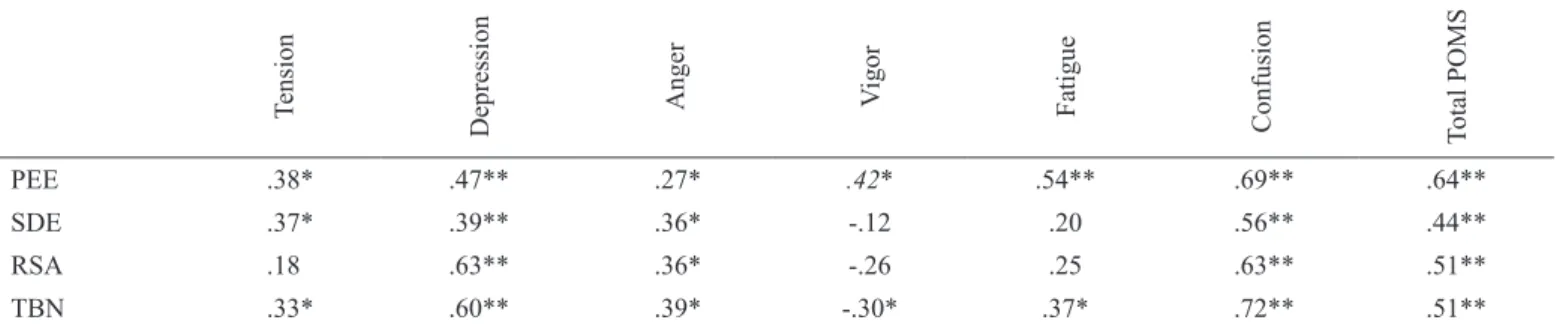
Table 5. Pearson’s correlation of the subscales and the total burnout with six mood states and the total POMS.
cise and psychological well-being. Furthermore, research using the POMS has consistently supported the association among changes in the states of mood and stress, overtraining and bur-nout (Cohn, 1990; Gould et al., 1996; Pires et al., 2006). In the present investigation, we hypothesized that total burnout (TBN), as well as the subscales of physical and emotional exhaustion (PEE), sporting devaluation (DES), and reduced sense of ac-complishment (RSA) will be related to the emotional states measured by the POMS. The hypothesized speciic relationships between burnout and the POMS subscales include the following: (a) positively related to the states of tension, depression, anger, fatigue and confusion and (b) negatively related to vigor.
Participants
Thirty-six male professional soccer referees (22 referees and 14 assistants), including 18 from each country, participated in the study. This sample was chosen as it represented the worl-dwide elite of the referees, along with experience oficiating in the Soccer International Championships in Brazil and Portugal 2008/2009. Excluded from the sample were two referees who have disconnected their relationship with the referee organiza-tion of both countries. The ethics committee documentaorganiza-tion and requirements were the same as in Study 1.
Measures
The validated version of the BIR from Study 1 and the adaptation of the reduced version of POMS to Portuguese by Viana, Almeida, and Santos (2001) were herein used. Concurrent validity was analyzed using Pearson’s correlation coeficients among the six mood states measured by the POMS, and the value of the total POMS with the three subscales of the BIR and the value of the total burnout (calculated by the sum of the values of the three subscales). The correlations among the scales were interpreted according to the criteria established by Bryman and Cramer (1990).
Procedures
The referees were contacted by email and invited to take part in Study 2. Those who agreed to participate were sent the purpo-ses of the study, guidelines on the participation and instructions for completing the two questionnaires and the consent form. The two instruments were completed by the participants in their own home and were, according to each participant’s convenience, returned directly to the responsible researcher’s email.
Results
Eighteen referees in this study had college degrees and 18 high school diploma. In addition, six oficiated in international championships (e.g., FIFA, UEFA) and 30 oficiated at the
national level, with average age of 35 years (SD = 4.0) and of 14.7 years (SD = 4.8) oficiating.
Correlations were used to examine the relationship among the three BIR subscales, the total burnout, the six mood states and the total POMS (Table 5). The results are presented in Ta-ble 5 and reveal that, as hypothesized, the burnout scales were positively correlated to the mood states TE, DE, AN, FA and CO, and negatively correlated with VI. Signiicant correlations, from weak to high, were observed among the total burnout, the mood states and the total POMS, which suggest a relationship between burnout and the mood states. Burnout subscales were not correlated in the same way as the mood states. The physical and emotional exhaustion subscale was the only one that showed signiicant correlations with all the others subscales. Depression and confusion appeared as the best predictors of the relationship between burnout and mood states. As hypothesized, BIR scores were signiicantly correlated with scores on the POMS and provided evidence of concurrent validity for the BIR.
Discussion
The purpose of Study 2 was to examine the concurrent validity of the BIR through its correlations with mood states (POMS), a theoretically related construct. In addition, these surveys have identiied other symptoms associated with bur-nout such as loss of motivation and pleasure, and changes in mood and apathy towards an activity once pleasant (Goodger, Gorely, Lavallee, & Hardwood, 2007; Raedeke & Smith, 2001). Although the literature related to burnout and emotional states in referees is scarce when compared to those related to athletes and coaches, results of Study 2 indicate that these relationships seen in athletes and coaches are also applicable to referees.
According to Creswell and Eklund (2003), different studies have shown that negative mood states can be altered as a result of physical and emotional exhaustion. Therefore, it is no sur-prise that, within the burnout subscales, physical and emotional exhaustion were the most consistent dimension and that best characterized the syndrome. These results are in accordance with the literature in which physical and emotional exhaustion are found to support all theoretical approaches developed for the understanding of the syndrome.
For Shirom (2005), depression is the psychological comor-bidity most prominent in burnout, (i.e., there is a higher predis-position in the individual with burnout to exhibit symptoms of depression). Accordingly, Iacovides, Fountoulakis and Kaprinis (2003) believe that depression would be predicted from burnout due to high levels of psychological demands, low levels of social support and high levels of stress.
with disturbances due to interpersonal conlicts, role conlicts, fear of failure and negative work environment can produce high levels of stress. Similarly, Brandão et al. (2011) found that making mistakes during a match, not being appreciated by the leaders and peers, and the inluence of oficiating in referees’ personal life also produced high levels of stress for referees. Accordingly, the results of Study 2 supported the concurrent validity of the BIR indicating that high levels of burnout are related to negative emotions.
General discussion
The primary research contribution of the two studies is the development of a validated instrument for evaluating referees burnout by following a more rigorous process than predeces-sors and revealing a wider range of dimensions. Measurement instruments are in a very real sense a research “infrastructure.” The development of the measure in itself may promote many research programs going forward. The present investigation has demonstrated the validity of BIR for a population of professio-nal soccer referees. A second contribution is associated with the importance of studying burnout in oficiating. Researchers as well as practitioners need to know how burnout inluences individuals both in health, psychological well-being, as well as in performance. This is especially important due to the fact that burnout and resignation rates are higher among referees than among athletes and coaches (Kaissidis & Anshel, 1993). Considering the preliminary validation of the adaptation to the oficiating context of the Portuguese version of the BIR, we con-cluded that the factorial structure shows high acceptable indexes of validity and reliability. Thus, it seems reasonable to state that the BIR could be used for burnout evaluation in the context of soccer oficiating. Nevertheless, considering sport devaluation, it seems necessary to recommend further studies, since the construct should have higher levels of convergence validity (Cronbach & Meehl, 1955). Indeed, for constructs that were underrepresented, additional items closely related to the remaining items should be generated by the researchers, keeping in mind the conceptual deinitions of the construct. Nevertheless, as burnout in referees is a multidimensional syndrome, to better understand the burnout impact on referees, it is necessary that further study investigate burnout in oficials by level and category, by age and years of experience, and among referees of different sports.
Furthermore, Schaufeli and Buunk (2001) observed that within the reactions associated with the burnout syndrome is the variation in mood states. Thus, the results found in the present investigation conirmed that burnout presented a close relationship with changes in mood states, especially with a predisposition to a depressive state (Glass, Mcknight, & Val-dimarsdottir, 1993; Grobbelaar, Malan, Steyn, & Ellis, 2010; Leiter & Durup, 1994; Martini, Arfken, Churchill, & Balon, 2004). In addition, since burnout also has been shown to have a negative impact on the physical and psychological wellbeing of athletes and coaches (Raedeke & Smith, 2004), demonstra-ting the link between burnout and mood states in referees is an important extension for future studies.
Furthermore, Gould et al. (1996) refer to the burnout experience in sports as the transformation of a passionate in-volvement in athletic activity into a behavior characterized by reduced or lack of motivation, lethargy or, even the complete resignation of the modality. The relationship of burnout to negative emotions and moods in referees, as well as decreased vigor, extends Gould et al.’s (1996) observations about referees. Thus, it appears that referees experience occupational stress that is deined as a process in which an individual notices demands of work as stressors. This results about a negative view of the environment, of the person himself/herself and of the future is expressed by exhaustion, depression, pessimism, feelings of resignation, low expectations and low self-conidence (Brandão, Pizzo, & Rubin, 2007).
Continual growth and interest in sport has created a challen-ging job for sport oficials. However, oficiating-speciic demands are extreme since sport oficials need to assess situations as rapidly and accurately as possible and must take into account the many aspects of a game. All of this not only makes the job very com-plex, but also makes it easy for referees to suffer from burnout.
In summary, the BIR instrument presented good evidence of validity and reliability in the assessment of referees who may be at risk of suffering from burnout. One of the values of the scale, considering the implications for practice is that it can be a irst step to identify situations that potentially lead to a pro-gressive professional disillusion with consequent physical and emotional symptoms. Of course, the BIR is not the inal word in measurement instruments for referees’ burnout. Therefore, a potential avenue for future research is to adapt the scales to different types of sport referees and attempt to replicate the model’s structure. Like any measurement instrument for an important research domain, it will certainly be modiied, added to, and reined in terms of reliability and validity via future empirical investigations.
References
Alonso-Arbiol, I., Arratibel, N., & Gómez, E. (2008). La motivación del colectivo arbitral en fútbol: un estudio cualitativo. [Motivation in soccer referees: a qualitative study]. Revista de Psicología del Deporte, 17, 187-203.
Arbuckle, J.L. (2009). AMOS 18 Reference Guide (Version 18) [Com
-puter Software]. Chicago, IL: SPSS Inc.
Balch, M.J., & Scott, D. (2007). Contrary to Popular Belief, Refs Are People Too! Personality and Perceptions of Oficials. Journal of Sport Behavior, 30, 3-20.
Beaton, D., Bombardier, C., Guillemin, F., & Ferraz, M.B. (2002).
Recommendations for the cross-cultural adaptation of health status measures. Retrieved May 31, 2010 from Institute of Work
& Health, American Academy of Orthopaedic Surgeons (AAOS). Web site: http://www.dash.iwh.on.ca.
Brandão, M.R.F., Serpa, S., Krebs, R., Araújo, D., & Machado, A.A. (2011). El signiicado del arbitrar: percepción de jueces de fútbol profesional. [Referee personal meaning: perception of football oficials]. Revista Psicología del Deporte, 20, 275-286.
Educação Física, 5, 439-444.
Bryman, A., & Cramer, D. (1990). Quantitative Data Analysis for Social Scientists. Routledge: New York.
Byrne, B.M. (2009). Structural equation modeling with AMOS: Basic concepts, applications, and programming. Mahwah, NJ: Lawrence
Erlbaum Associates.
Campbell, D.T., & Fiske, D.W. (1959). Convergent and discriminant
validation by the multitrait-multimethod matrix. Psychological Bulletin, 56, 81-105.
Cheung, G.W., & Rensvold, R.B. (2002). Evaluating goodness-of-it
indexes for testing measurement invariance. Structural Equation, 9, 233-255.
Cohn, P.J. (1990). An Exploratory Study on Sources of Stress and Athlete Burnout in Youth Golf. The Sport Psychologist, 4, 95-106.
Creswell, S.L., & Eklund, R.C. (2003). The athlete burnout syndrome:
a practitioner’s guide. New Zealand Journal of Sports Medicine, 31, 4-9.
Cronbach, L.J., & Meehl, P.C. (1955). Construct validity in psycholo -gical tests. Psychological Bulletin, 52, 281–302.
Fejgin, N., Talmor, R., & Erlich, I. (2005). Inclusion and Burnout in Physical Education. European Physical Education Review, 11,
29-50.
Fornell, C., & Larcker, D.F. (1981). Evaluating structural equation mo -dels with unobservable variables and measurement error. Journal of Marketing Research, 18, 39-50.
Garcés de los Fayos, E.J., Elbal, & Reyes (1999). Burnout en árbitros de fútbol. [Burnout in soccer referees]. In G. Nieto and E.J. Garcés de los Fayos (Eds.), Psicología de la actividad física y del deporte. Áreas de investigación y aplicación (pp. 628-633). Murcia: Socie -dad Murciana de la Activi-dad Física y el Deporte.
Glass, D.C., Mcknight, J.D., & Valdimarsdottir, H. (1993). Depression, Burnout, and Perceptions of Control in Hospital Nurses. Journal of Consulting and Clinical Psychology, 61, 147-155.
González-Oya, J. (2006). Psicología aplicada al árbitro de fútbol: Características psicológicas y su entrenamiento. [Psychology applied to football referee: Psychological characteristics and
trai-ning]. Sevilla: Wanceulen.
Goodger, K., Gorely, T., Lavallee, D., & Harwood, C. (2007). Burnout
in sports: A systematic review. The Sport Psychologist, 21, 127-151.
Gould, D., Dieffenbach, K., & Moffett, A. (2002). Psychological cha
-racteristics and their development in Olympic champions. Journal of Applied Sports Psychology, 14, 177-209.
Gould, D., Tyffey, S., Udry, E., & Loehr, J. (1996). Burnout in com
-petitive junior tennis players: II. Qualitative analysis. The Sports Psychologist, 10, 341-366.
Guillén, F., Jiménez, H. (2001). Características deseables en el arbitraje y el juicio deportivo. [Desired characteristics in sports refereeing].
Revista Psicología del Deporte, 10, 23-34.
Goodger, K., Gorely, T., Lavallee, D., & Harwood, C. (2007). The Sport Psychologist, 21, 127-151.
Grobbelaar, H.W., Malan, D. Steyn, B. & Ellis, S. (2010). Factors affecting the recovery-stress, burnout and mood state scores of
elite student rugby players. South African Journal for Research in Sports, Physical Education and Recreation, 32, 41-54.
Gustafsson, H., Hassmén, P., Kenttä, G., & Johansson, M. (2008). A
qualitative analysis of burnout in elite Swedish athletes. Psychology of Sports and Exercise,9, 800-816.
Hair, J.F., Black, W.C., Babin, B., Anderson, R.E (2009). Multivariate data analyses (7th ed.). New York: Prentice Hall
Hendrix, A.E., Acevedo, E.O., & Hebert, E. (2000). An examination of stress and burnout in Certiied Athletic Trainers at Division I-A
universities. Journal of Athletic Training, 35, 139-144.
Hodge, K., Lonsdale, C., & Ng, J.Y. (2008). Burnout in elite rugby:
Relationships with basic psychological needs fulillment. Journal of Sports Sciences, 26, 835-844.
Iacovides, A., Fountoulakis, K.N., & Kaprinis, S. (2003). The re
-lationship between job stress, burnout and clinical depression.
Journal of Affective Disorders, 75, 209-221.
Kaissidis, A., & Anshel, M. (1993). Sources and intensity of acute
stress in adolescent and adult Australian basketball referees: a preliminary study. Australian Journal of Science and Medicine in Sports (AJSMS), 25, 97-103.
Kline, R.B. (1998). Principles and practice of structural equation modeling. New York: The Guilford Press.
Leiter, M.P., & Durup, J. (1994). The discriminant validity of burnout and depression: a conirmatory factor analytic study. Anxiety,Stress and Coping, 7, 357-373.
Loehlin, J.C. (2003). Latent variable models: An introduction to fac-tor, path, and structural equation analysis (4th ed.). Mahwah, NJ:
Lawrence Erlbaum Associates.
Lonesdale, C., Hodge, K., & Rose, E. (2006) Pixels vs. Paper : Com -paring online and traditional survey methods in sport psychology. Journal of Sport and Exercise Psychology, 28, 100-108.
Louvet A., Gaudreau, P., Menaut, A., Genty, J. & Deneuve, P. (2009). Revisiting the changing and stable properties of coping utilization
using latent class growth analysis: A longitudinal investigation with soccer referees. Psychology of Sport and Exercise, 10, 124–135.
Luz, C.J.P.M. (2000). Stress, esgotamento e intenção de abandono entre os árbitros de futebol portugueses. [Stress, burnout and intention to dropout in Portuguese soccer referees]. (Master dissertation,
Faculdade de Motricidade Humana), Available from http://the
-saurus.reitoria.utl.pt. (M 621).
Martini, S., Arfken, C., Churchill, A., & Balon, R. (2004). Burnout
Comparison among Residents in Different Medical Specialties. Academic Psychiatry, 28, 240-242.
Maslach, C. (1998). A multidimensional theory of burnout. In C.L. Cooper (Ed.), Theory of Organizational Stress (pp. 68-85). Oxford,
UK: Oxford University Press.
Maslach, C., & Jackson, S.E. (1981). The Measurement of Experienced
Burnout. Journal of Occupational Behavior, 2, 99-113.
Maslach, C., & Leiter, M.P. (2000). Burnout. In G. Fink (Ed.), Ency-clopedia of stress. (pp. 358-362). San Diego, CA: Academic Press.
Maslach, C., Schaufeli, W.B., & Leiter, M.P. (2001). Job burnout.
Annual Review of Psychology, 52, 397-422.
Pires, D.A., Brandão, M.R.F., & Silva, C.B. (2006). Validação do Questionário de Burnout para Atletas. [Validation of the Burnout Inventory for Athletes]. Revista da Educação Física, 17, 17-36.
Raedeke, T. (1997). Is athlete burnout more than just stress? A sports
commitment perspective. Journal of Sport and Exercise Psycho-logy, 19, 396-417.
Raedeke, T.D. (2004). Coach commitment and burnout: A one-year
follow-up. Journal of Applied Sport Psychology, 16, 333-349.
Raedeke, T.D., Lunney, K., & Venables, K. (2002). Understanding
Athlete Burnout: Coach Perspectives. Journal of Sport Behavior, 25, 181-206.
Raedeke, T.D., & Smith, A.L. (2001). Development and preliminary
validation of an athlete burnout measure. Journal of Sport and Exercise Psychology, 23, 281-306.
Raedeke, T.D., & Smith, A.L. (2004). Coping resources and athlete
burnout: An examination of stress mediated and moderation hypo-theses. Journal of Sport and Exercise Psychology, 26, 525-541.
Roelofs, J., Verbraak, M., Keijsers, P.J., de Bruin, M., & Schmidt, A.J.M. (2005). Psychometric properties of a Dutch version of the Maslach Burnout Inventory General Survey (MBI-DV) in individu -als with and without clinical burnout. Stress and Health21, 17-25.
-Corresponding author
Maria Regina Ferreira Brandão
Alameda Jurupis, 900, ap. 171, torre 1, São Paulo 04088-002 Brazil Telephone: +55(11)50552922
Email: [email protected]
Manuscript submitted on June 7, 2013 Manuscript accepted on September 15, 2014
Motriz. The Journal of Physical Education. UNESP. Rio Claro, SP, Brazil - eISSN: 1980-6574 – under a license Creative Commons - Version 3.0
risons among nurses high and low in burnout. Journal of Applied Social Psychology, 3, 1500-1520.
Schaufeli W., & Enzmann, D. (1998). The burnout companion for research and practice: a critical analysis of theory, assessment, research, and intervention. London: Taylor & Francis.
Shirom, A. (2005). Relections on the study of burnout. Work & Stress, 19, 263-270.
Taylor, A.H. (1991). Burnout in Sports. In S.J. Bull (Org.), Sports Psychology: A self-help guide (pp. 157-177). Ramsbury: The Crowood Press.
Taylor, A.H., Daniel, J.V., Leith, L., & Burke, R.J. (1990). Perceived stress, psychological burnout and paths to turnover intentions among oficials. Journal of Applied Sport Psychology, 2, 84-97.
Viana, M.F., Almeida, P.L., & Santos, R.C. (2001). Adaptação portu
-guesa da versão reduzida do Peril de Estados de Humor – POMS
[Portuguese version of the Reduced POMS Proile]. Análise Psicológica, 1, 77-92.
Weinberg, R.S., & Richardson, P.A. (1990). Psychology of oficiating.
Champaign, Il: Leisure Press.
Authors’ note
Maria Regina Ferreira Brandão is afiliated with the University of São Judas Tadeu, São Paulo, Brazil. She is with the graduate program in
physical education of that institution.
E-mail: [email protected]
Sidónio Serpa and Antonio Rosado are afiliated with the Lisbon Te
-chnical University, Human Kinetics School, Portugal. E-mail: [email protected]; [email protected]
Robert Weinberg is afiliated with the Miami University of Ohio, United States.