Rev Saúde Pública 2012;46(1)
Gabrielle Cristine Moura
Fernandes Pucci
ICassiano Ricardo Rech
I,II,IIIRogério César Fermino
I,IIRodrigo Siqueira Reis
I,III Grupo de Pesquisa em Atividade Física e Qualidade de Vida. Centro de Ciências Biológicas e da Saúde. Pontifícia Universidade Católica do Paraná. Curitiba, PR, Brasil
II Programa de Pós-Graduação em Educação Física. Universidade Federal do Paraná. Curitiba, PR, Brasil
III Departamento de Educação Física. Curso de Educação Física. Universidade Estadual de Ponta Grossa. Ponta Grossa, PR, Brasil Correspondence:
Gabrielle Cristine Moura Fernandes Pucci Pontifícia Universidade Católica do Paraná Centro de Ciências Biológicas e da Saúde Curso de Educação Física Grupo de Pesquisa em Atividade Física e Qualidade de Vida R. Imaculada Conceição, 1.155 – Prado Velho 80215-901 - Curitiba, PR, Brasil
E-mail: [email protected] Received: 12/14/2010
Approved: 8/22/2011
Article available from: www.scielo.br/rsp
Association between physical
activity and quality of life in
adults
ABSTRACT
OBJECTIVE:
To summarize and analyze evidences of the association between
physical activity and quality of life.
METHODS:
Systematic literature review in three electronic databases —
PubMed, Lilacs and SciELO— using the following descriptors: “physical
activity,” “motor activity,” “exercise,” “walking,” “running,” “physical
fitness,” “sport,” “life style,” “quality of life,” “WHOQOL” and “SF.”
There were selected 38 studies published between 1980 and 2010 that used
any instrument to measure physical activity and any version of the Medical
Outcomes Study 36-Item Short-Form Health Survey or the World Health
Organization Quality of Life to assess quality of life.
RESULTS:
Most studies reviewed were cross-sectional (68%), 18%
experimental, 8% prospective follow-up cohort and 5% mixed-design
(cross-sectional and longitudinal). The most widely used questionnaire to assess
quality of life was SF-36 (71%), and physical activity was self-reported in
82% of the studies reviewed. Higher level of physical activity was associated
with better perception of quality of life in the elderly, apparently healthy adults
and individuals with different clinical conditions.
CONCLUSIONS:
There is a positive association between physical activity
and quality of life that varies according to the domain analyzed.
DESCRIPTORS:
Motor activity. Exercise. Quality of Life. Review.
INTRODUCTION
Quality of life (QoL) is a multidimensional subjective construct
41that is hardly
de
fi
ned and systematized and thus of complex operationalization. QoL is
conceptually de
fi
ned as an individual’s perception of his/her stand in life within
a sociocultural context with regards to their goals, expectations, standards and
concerns.
52It is related to personal well-being and includes several aspects such
as health, leisure, personal satisfaction, habits, and lifestyle.
30The operationalization of QoL involves its measurement. Several instruments
have been proposed to assess QoL in different populations,
41but most of them
have been developed in high-income countries and adapted to other contexts.
4,9,18The instruments for overall assessment of QoL include the Medical Outcomes
Study 36-Item Short-Form Health Survey (SF-36)
50and the World Health
Organization Quality of Life-100 (WHOQOL-100),
18both available in abridged
versions for use in speci
fi
c population groups and/or domains. These
instru-ments have enabled an increasing number of studies on the association between
QoL and health behaviors such as diet, smoking and physical activity (PA).
4,37Regular PA increases QoL at different ages.
4,19,26,31,39,51Studies have investigated the association between PA
and overall QoL, and the effects of PA on speci
fi
c
domains of QoL,
4,37and it has often been reported
an association with the “physical” and “mental”
domains.
19,39,41,42,46,51Evidence supports a positive association between PA and
QoL, but the state of the art is not well established. The
magnitude of this association is con
fl
icting in different
populations
4,37and inconsistent results have been found
when instruments for measuring PA and QoL, as well
as designs, were compared.
4A recent review study
4assessed the association between PA and perception of
QoL in apparently healthy adults and, despite reporting
a positive association, the authors stressed the
impor-tance of further exploring this same association in other
age groups, health conditions and using more speci
fi
c
instruments to measure PA and QoL.
4The current study aimed to summarize and analyze
evidence of the association between PA and perception
of QoL in adults.
METHODS
A systematic review was carried out in the electronic
databases PubMed, Lilacs, and SciELO following
the procedures described in the literature.
23There
were selected studies that met the following inclusion
criteria: report of the association or effect of PA on
QoL; use of an instrument for measuring PA; use of
any version of the SF or WHOQOL for assessing QoL;
year of publication from 1980; adults (
≥
18 years);
empirical cross-sectional or longitudinal, randomized
controlled, cohort or case-control studies; and studies
published in English or Portuguese. Studies that did not
report any instrument for the measurement of PA and/
or failed to assess QoL using either SF or WHOQOL,
review studies, opinion articles, letters to the editor,
books or book chapters, and dissertations and theses
were excluded.
The review was limited to QoL assessment instruments
that are recommended by health organizations and have
psychometric properties that have been widely studied
in the literature. While this choice may limit the number
of studies included, the analyses or evidence obtained
are not affected.
The following English terms were searched in PubMed:
“physical activity,” “motor activity,” “exercise,”
“walking,” “running,” “physical fitness,” “sport,”
and “lifestyle.” The following QoL terms were also
searched: “quality of life,” “WHOQOL,” and “SF.”
The same descriptors in Portuguese were searched in
the SciELO and Lilacs databases. Terms were combined
using Boolean operators “AND” and “OR.” The search
was conducted between March and August 2010.
The Figure shows a
fl
owchart of the search, selection,
and related reasons for excluding references. Three
researchers familiar with the methodology selected and
evaluated the references.
There were identi
fi
ed general aspects of publication,
methodological description, measurement instruments
of PA and QoL, and main results. The researchers
screened the studies separately and then compared
their findings in a consensus meeting. Items that
showed agreement between at least two researchers
were considered adequate and were included in the
description of results.
The results of experimental and cohort studies were
analyzed for the percentage of agreement of evidence
(Table 1). The agreement of the results was estimated
by dividing the number of studies pointing towards an
association by the number of studies reviewed and then
the results were categorized. This procedure is used in
reviews on PA and provides the level of agreement of
the
fi
ndings.
40RESULTS
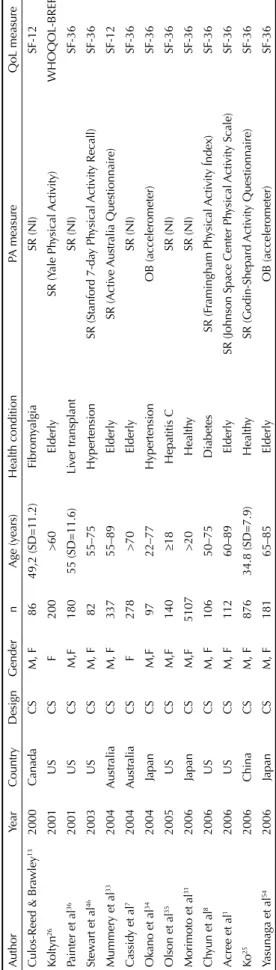
Thirty-eight studies met the inclusion criteria (Table
2). They were published from 1998 and 92% were
published from 2003 on. Most studies were conducted
in North America (42%), Europe (21%), and Asia (18%).
Most (71%) investigated both female and male
indi-viduals, but 29% were limited to one gender,
predomi-nantly female (26%). Several different population
groups were studied: 32% in the elderly and 24%
in apparently healthy adults. The clinical conditions
studied included heart disease (11%); overweight/
obesity (5%); breast cancer (5%); hypertension (5%);
diabetes, lung cancer,
fi
bromyalgia, colon cancer,
hepa-titis C, liver transplantation and multiple sclerosis (3%).
The majority were cross-sectional studies (68%), seven
were experimental (18%), three prospective cohort
(8%) and two (5%) had a mixed design (cross-sectional
and longitudinal).
The level of PA was self-reported in 82% of studies and
general questions were asked in 21%. The International
Physical Activity Questionnaire (11%) and Godin
Leisure-Time Exercise were the most commonly used
questionnaires (11%), a direct measure of PA was used
in 16% (accelerometer and/or pedometer) and both
measures of PA were used in 3%. About half of the
studies reviewed (53%) investigated overall PA, 21%
the leisure-time domain, 24% associated leisure-time
PA with another domain, and the domain evaluated
could not be identi
fi
ed in 3%.
3 Rev Saúde Pública 2012;46(1)
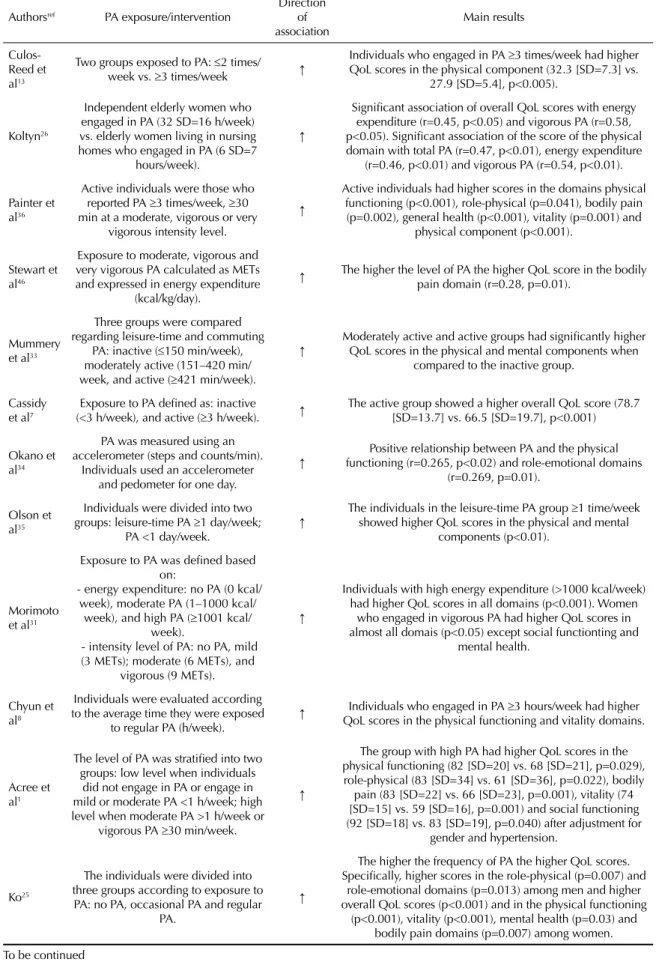
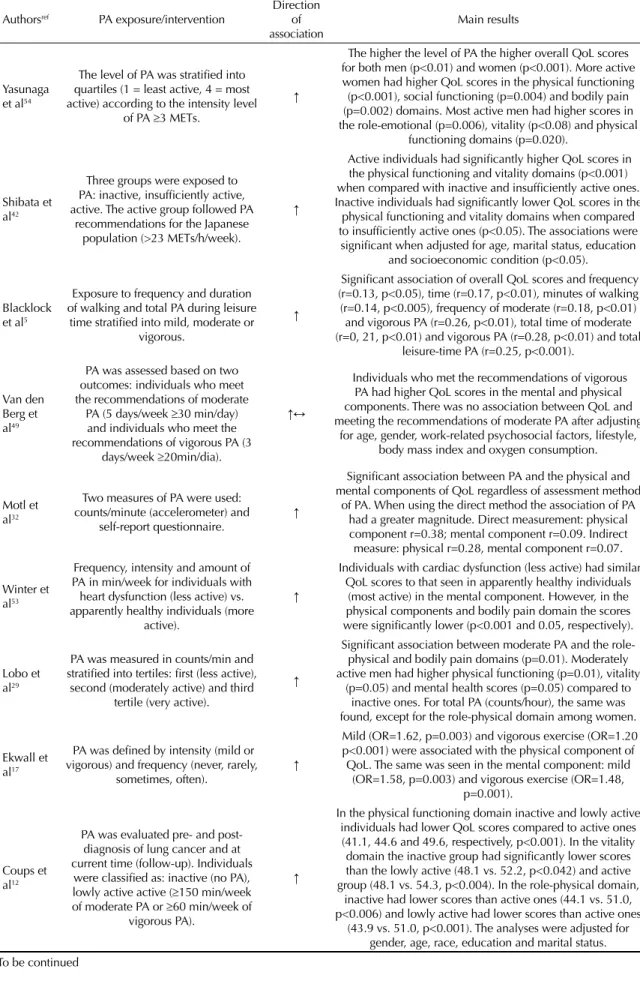
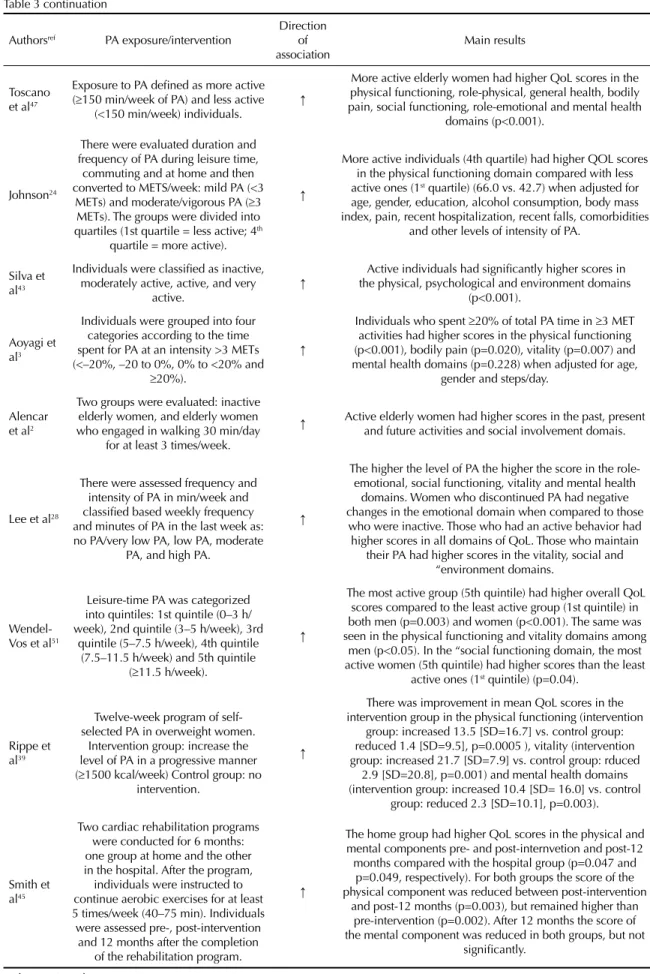
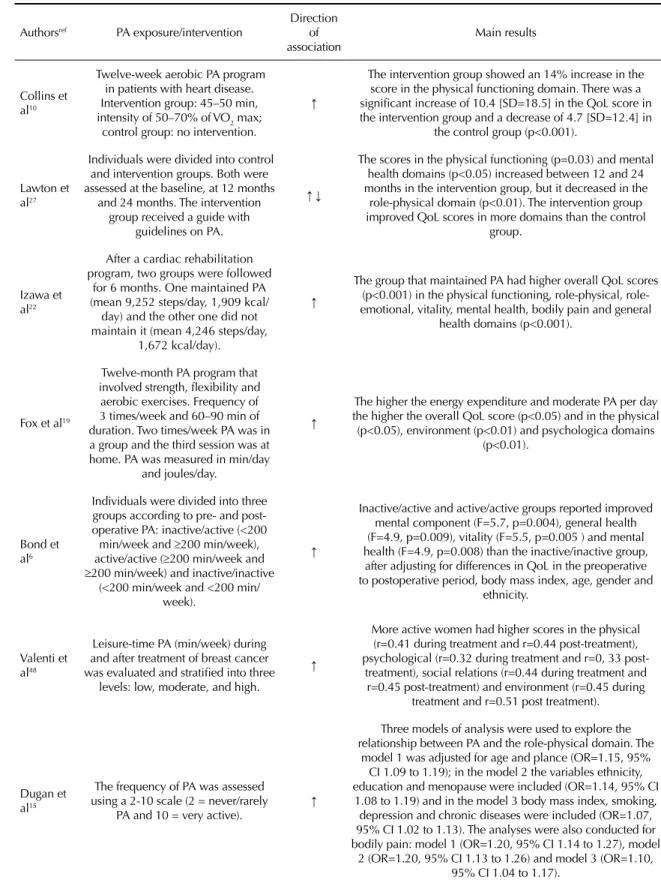
Higher level of PA was associated with better
percep-tion of QoL in the elderly, apparently healthy adults and
individuals with different health conditions (Table 3).
Two studies found an inverse association between PA
and any domain of QoL.
8,27Most studies examined the
association between PA and overall QoL score. But as
the instruments used were different, different domains
of QoL were included.
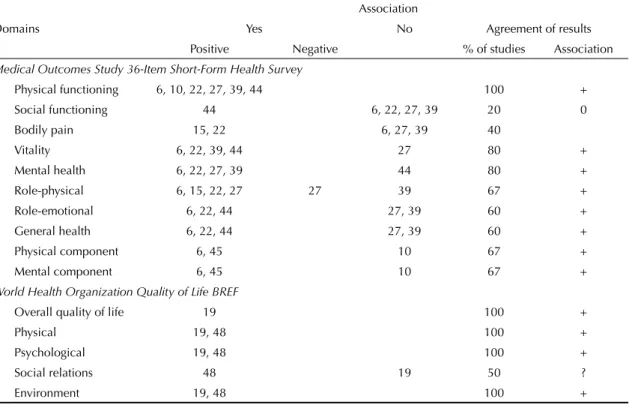
The results of experimental and cohort studies were
summarized (Table 4). There was no agreement of
fi
ndings on the association between PA and QoL in
the “social functioning,” “bodily pain,” and “social
relations” domains.
DISCUSSION
The current review showed that most studies were
published from 2003, indicating a recent interest in this
area. There were few studies conducted in low- and
middle-income countries such as Latin American
coun-tries. Since PA and perception of QoL are in
fl
uenced
by cultural, social and physical factors, this scarcity
of studies prevents the generalization of results and
comparisons of different contexts.
20This is true for
Latin America as social inequalities are a major factor
associated with people’s health.
11The level of
develop-ment of a country also seems to be related to PA patterns
of their populations.
16Leisure-time was the most widely investigated domain
of PA. It is the most commonly explored domain in the
literature and it has consistently reported that it favors
health promotion.
21Self-reported measures were most
widely used. Speci
fi
c questionnaires were developed
for some studies but their psychometric properties were
not reported.
7,17,28,36The SF-36 was the most commonly used QoL
ques-tionnaire, which corroborates previous reports in the
literature.
14This can be attributed to longer experience
using SF-36 since its was developed in the early 1990s
50while the WHOQOL was developed in the late 1990s.
18To increase the reliability of results, it was opted for
Figure. Search, selection and exclusion of studies on the association between physical activity and quality of life.Step 1 Search in electronic databases – PubMed,SciELO, Lilacs (n = 8,481, 100%)
4,448 references excluded – repeat titles (52.4%)
Reading of titles (n = 4033; 100% valid)
Reading of abstracts (n = 373)
Reading of full articles (n = 199)
Articles included in the review (n = 38, 0.9%) Step 2
Step 3
Step 4
Final step
3,660 references
excluded – not related to the subject (90.7%)
174 references excluded – did not assess PA and/or QoL (46.6%)
161 references excluded – did not use SF/WHOQOL, did not assess PA or did not
associate PA with QoL (80.9%)
establishing the use of SF and/or WHOQOL for the
assessment of QoL as an inclusion criterion. In their
literature review, Bize et al
4stressed the need for more
accurately measuring PA and QoL.
Most cross-sectional studies showed a positive
associa-tion between PA and QoL (Table 3). However, this study
design does not allow to establishing a time association
between cause (PA) and effect (QoL) and thus a causal
relationship. Other variables can also affect this
associa-tion: in addition to the levels of PA, self-ef
fi
cacy can
also in
fl
uence health perception,
fi
tness and vitality of
individuals.
4,51The results of experimental and cohort studies (Table
4) show agreement of
fi
ndings of a positive association
between PA and SF domains including “physical
func-tioning,” “vitality,” “mental health,” “role-physical,”
“role-emotional,” “general health” and “physical and
mental components.” This result may due to a greater
number of studies using SF. Despite evidence showing
an association between PA and QoL using WHOQOL,
the results were inconclusive due to the small number
of studies.
The domains “physical functioning,” “vitality,” and
“mental health” showed higher agreement among the
studies reviewed. These findings are corroborated
in other studies showing greater association of these
domains with PA regardless of the study design,
popula-tion studied, age, gender or type of intervenpopula-tion.
4,37,38,47Despite the small number of studies, the results indicate
a need to further explore the bene
fi
ts of PA in the “social
functioning,” “social relations,” and “bodily pain”
domains of QoL, as well as to investigate physiological
mechanisms and social and cultural factors involved.
Two studies had a mixed (longitudinal and
cross-sectional) design
28,51with inconsistent results. In
Wendel-Vos study,
51cross-sectional associations were
not con
fi
rmed by longitudinal analyses. The
cross-sectional analysis showed an association between
leisure-time PA and the physical component of QoL, but
the prospective analysis showed associations
predomi-nantly with the mental component. These
inconsisten-cies may arise from methodological differences as the
results may show a false association between PA and
QoL because a causal relationship cannot be established
Table 1. Classification of evidence according to the association between physical activity and quality of life.Studies supporting this
association (%) Code Direction of association 0 – 33 0 Lack of association
34 – 59 ? Inconclusive
60 + Positive
– Negative
Table 2.
Studies included in the systematic review on ph
ysical acti
vity and quality of life, b
y stud y design. A uthor Year Country Design Gender n Age (y ears) Health condition PA measure QoL measure
Culos-Reed & Br
awley 13 2000 Canada CS M, F 86 49,2 (SD=11.2) Fibrom yalgia SR (NI) SF-12 Koltyn 26 2001 US CS F 200 >60 Elderly SR (Y ale Ph ysical Acti vity) WHOQOL-BREF
Painter et al
36 2001 US CS M,F 180 55 (SD=11.6) Li ver tr ansplant SR (NI) SF-36 Stew
art et al
46 2003 US CS M, F 82 55–75 Hypertension
SR (Stanford 7-da
y Ph
ysical
Acti
vity Recall)
SF-36
Mummery et al
33 2004 A ustr alia CS M, F 337 55–89 Elderly SR (Acti ve A ustr alia Questionnaire) SF-12 Cassid
y et al
7 2004 A ustr alia CS F 278 >70 Elderly SR (NI) SF-36
Okano et al
34 2004 Japan CS M,F 97 22–77 Hypertension OB (accelerometer) SF-36
Olson et al
35 2005 US CS M,F 140 18 Hepatitis C SR (NI) SF-36
Morimoto et al
31 2006
Japan CS M,F 5107 >20 Health y SR (NI) SF-36 Ch
yun et al
8 2006 US CS M, F 106 50–75 Diabetes SR (F ramingham Ph ysical Acti vity Índex) SF-36
Acree et al
1 2006 US CS M, F 112 60–89 Elderly SR (J
ohnson Space Center Ph
ysical Acti vity Scale) SF-36 Ko 25 2006 China CS M, F 876 34.8 (SD=7.9) Health y SR (Godin-Shepard Acti vity Questionnaire) SF-36
Yasunaga et al
54 2006 Japan CS M, F 181 65–85 Elderly OB (accelerometer) SF-36
5
Rev Saúde Pública 2012;46(1)
Table 2 continuation
Author Year Country Design Gender n Age (years) Health condition PA measure QoL measure Shibata et al42 2007 Japan CS M, F 1211 20–59 Healthy SR (International Physical Activity Questionnaire, IPAQ) SF-8 Blacklock et al5 2007 England CS M, F 351 >30 Healthy SR (Godin Leisure-Time Exercise Questionnaire) SF-36 Van den Berg et al49 2008 Netherlands CS M,F 1141 18–63 Healthy SR (Stanford Wellness Inventory) SF-12
Motl et al32 2008 US CS M, F 292 48 (SD=10.3) Multiple sclerosis SR and OB (Godin Leisure-Time Exercise Questionnaire
and accelerometer) SF-12
Winter et al53 2008 Germany CS M, F 47 21–69 Heart dysfunction SR (Short Questionnaire to Assess Health-Enhancing
Physical Activity) SF-36
Lobo et al29 2008 Portugal CS M, F 185 >65 Elderly OB (accelerometer) SF-36
Ekwall et al17 2009 Sweden CS M, F 4360 >70 Elderly SR (NI) SF-12
Coups et al12 2009 US CS M, F 175 39–89 Lung cancer SR (Godin Leisure-Time Exercise Questionnaire) SF-36 Toscano & Oliveira47 2009 Brazil CS F 238 >60 Elderly women SR (International Physical Activity Questionnaire, IPAQ) SF-36
Johnson et al24 2009 US CS M,F 843 65 Coloretal cancer SR (CHAMPS Physical Activity Questionnaire for Older
Adults) SF-36
Silva et al43 2010 Brazil CS M,F 863 NR Healthy SR (Questionnaire of Habitual Physical Activity) WHOQOL-BREF Aoyagi et al3 2010 Japan CS M,F 109 65–85 Elderly OB (pedometer and accelerometer) SF-36 Alencar et al2 2010 Brazil CS F 30 60 Elderly women SR (Modifi ed Baecke Questionnaire for the Elderly) WHOQOL-OLD
Lee et al & Russell28 2003 Australia MI F 10063 70–78 Elderly SR (NI) SF-36
Wendel-Vos et al51 2004 Netherlands MI M, F 2129 20–59 Healthy SR (NI) SF-36
Rippe et al39 1998 US RE F 44 20–49 Overweight SR (Ross and Jackson scale) SF-36
Smith et al45 2004 Canada RE M, F 198 >55 Cardiac rehabilitation SR (Physical Activity Scale for the Elderly) SF-36 Collins et al10 2004 US RE M 27 64 (SD=10) Heart disease SR (Three-day Physical Activity Recall) SF-36 Lawton et al27 2009 NZ RE F 1089 40–74 Healthy SR (International Physical Activity Questionnaire, IPAQ) SF-36 Izawa et al22 2004 Japan E M, F 109 63.5 (SD=10.1) Myocardial infarction OB (pedometer) SF-36
Fox et al19 2007 England E M, F 176 >70 Elderly OB (accelerometer) WHOQOL-BREF
Table 3. Association between physical activity and perceived quality of life in the studies reviewed.
Authorsref PA exposure/intervention
Direction of
association Main results
Culos-Reed et al13
Two groups exposed to PA: 2 times/ week vs. 3 times/week ↑
Individuals who engaged in PA 3 times/week had higher QoL scores in the physical component (32.3 [SD=7.3] vs.
27.9 [SD=5.4], p<0.005).
Koltyn26
Independent elderly women who engaged in PA (32 SD=16 h/week) vs. elderly women living in nursing homes who engaged in PA (6 SD=7
hours/week).
↑
Signifi cant association of overall QoL scores with energy expenditure (r=0.45, p<0.05) and vigorous PA (r=0.58, p<0.05). Signifi cant association of the score of the physical domain with total PA (r=0.47, p<0.01), energy expenditure
(r=0.46, p<0.01) and vigorous PA (r=0.54, p<0.01).
Painter et al36
Active individuals were those who reported PA 3 times/week, 30 min at a moderate, vigorous or very
vigorous intensity level.
↑
Active individuals had higher scores in the domains physical functioning (p<0.001), role-physical (p=0.041), bodily pain (p=0.002), general health (p<0.001), vitality (p=0.001) and
physical component (p<0.001).
Stewart et al46
Exposure to moderate, vigorous and very vigorous PA calculated as METs and expressed in energy expenditure
(kcal/kg/day).
↑ The higher the level of PA the higher QoL score in the bodily pain domain (r=0.28, p=0.01).
Mummery et al33
Three groups were compared regarding leisure-time and commuting
PA: inactive (150 min/week), moderately active (151–420 min/ week, and active (421 min/week).
↑ Moderately active and active groups had signifi cantly higher QoL scores in the physical and mental components when compared to the inactive group.
Cassidy et al7
Exposure to PA defi ned as: inactive (<3 h/week), and active (3 h/week). ↑
The active group showed a higher overall QoL score (78.7 [SD=13.7] vs. 66.5 [SD=19.7], p<0.001)
Okano et al34
PA was measured using an accelerometer (steps and counts/min).
Individuals used an accelerometer and pedometer for one day.
↑ functioning (r=0.265, p<0.02) and role-emotional domains Positive relationship between PA and the physical (r=0.269, p=0.01).
Olson et al35
Individuals were divided into two groups: leisure-time PA 1 day/week;
PA <1 day/week. ↑
The individuals in the leisure-time PA group 1 time/week showed higher QoL scores in the physical and mental
components (p<0.01).
Morimoto et al31
Exposure to PA was defi ned based on:
- energy expenditure: no PA (0 kcal/ week), moderate PA (1–1000 kcal/
week), and high PA (1001 kcal/ week).
- intensity level of PA: no PA, mild (3 METs); moderate (6 METs), and
vigorous (9 METs).
↑
Individuals with high energy expenditure (>1000 kcal/week) had higher QoL scores in all domains (p<0.001). Women
who engaged in vigorous PA had higher QoL scores in almost all domais (p<0.05) except social functionting and
mental health.
Chyun et al8
Individuals were evaluated according to the average time they were exposed
to regular PA (h/week). ↑
Individuals who engaged in PA 3 hours/week had higher QoL scores in the physical functioning and vitality domains.
Acree et al1
The level of PA was stratifi ed into two groups: low level when individuals
did not engage in PA or engage in mild or moderate PA <1 h/week; high level when moderate PA >1 h/week or
vigorous PA 30 min/week.
↑
The group with high PA had higher QoL scores in the physical functioning (82 [SD=20] vs. 68 [SD=21], p=0.029), role-physical (83 [SD=34] vs. 61 [SD=36], p=0.022), bodily
pain (83 [SD=22] vs. 66 [SD=23], p=0.001), vitality (74 [SD=15] vs. 59 [SD=16], p=0.001) and social functioning (92 [SD=18] vs. 83 [SD=19], p=0.040) after adjustment for
gender and hypertension.
Ko25
The individuals were divided into three groups according to exposure to
PA: no PA, occasional PA and regular PA.
↑
The higher the frequency of PA the higher QoL scores. Specifi cally, higher scores in the role-physical (p=0.007) and
role-emotional domains (p=0.013) among men and higher overall QoL scores (p<0.001) and in the physical functioning
7 Rev Saúde Pública 2012;46(1)
Table 3 continuation
Authorsref PA exposure/intervention
Direction of association
Main results
Yasunaga et al54
The level of PA was stratifi ed into quartiles (1 = least active, 4 = most active) according to the intensity level
of PA 3 METs.
↑
The higher the level of PA the higher overall QoL scores for both men (p<0.01) and women (p<0.001). More active women had higher QoL scores in the physical functioning (p<0.001), social functioning (p=0.004) and bodily pain (p=0.002) domains. Most active men had higher scores in the role-emotional (p=0.006), vitality (p<0.08) and physical
functioning domains (p=0.020).
Shibata et al42
Three groups were exposed to PA: inactive, insuffi ciently active, active. The active group followed PA
recommendations for the Japanese population (>23 METs/h/week).
↑
Active individuals had signifi cantly higher QoL scores in the physical functioning and vitality domains (p<0.001) when compared with inactive and insuffi ciently active ones. Inactive individuals had signifi cantly lower QoL scores in the
physical functioning and vitality domains when compared to insuffi ciently active ones (p<0.05). The associations were
signifi cant when adjusted for age, marital status, education and socioeconomic condition (p<0.05).
Blacklock et al5
Exposure to frequency and duration of walking and total PA during leisure
time stratifi ed into mild, moderate or vigorous.
↑
Signifi cant association of overall QoL scores and frequency (r=0.13, p<0.05), time (r=0.17, p<0.01), minutes of walking (r=0.14, p<0.005), frequency of moderate (r=0.18, p<0.01) and vigorous PA (r=0.26, p<0.01), total time of moderate (r=0, 21, p<0.01) and vigorous PA (r=0.28, p<0.01) and total
leisure-time PA (r=0.25, p<0.001).
Van den Berg et al49
PA was assessed based on two outcomes: individuals who meet the recommendations of moderate
PA (5 days/week 30 min/day) and individuals who meet the recommendations of vigorous PA (3
days/week 20min/dia).
↑
Individuals who met the recommendations of vigorous PA had higher QoL scores in the mental and physical components. There was no association between QoL and meeting the recommendations of moderate PA after adjusting
for age, gender, work-related psychosocial factors, lifestyle, body mass index and oxygen consumption.
Motl et al32
Two measures of PA were used: counts/minute (accelerometer) and
self-report questionnaire. ↑
Signifi cant association between PA and the physical and mental components of QoL regardless of assessment method
of PA. When using the direct method the association of PA had a greater magnitude. Direct measurement: physical component r=0.38; mental component r=0.09. Indirect measure: physical r=0.28, mental component r=0.07.
Winter et al53
Frequency, intensity and amount of PA in min/week for individuals with heart dysfunction (less active) vs. apparently healthy individuals (more
active).
↑
Individuals with cardiac dysfunction (less active) had similar QoL scores to that seen in apparently healthy individuals
(most active) in the mental component. However, in the physical components and bodily pain domain the scores were signifi cantly lower (p<0.001 and 0.05, respectively).
Lobo et al29
PA was measured in counts/min and stratifi ed into tertiles: fi rst (less active),
second (moderately active) and third tertile (very active).
↑
Signifi cant association between moderate PA and the role-physical and bodily pain domains (p=0.01). Moderately active men had higher physical functioning (p=0.01), vitality
(p=0.05) and mental health scores (p=0.05) compared to inactive ones. For total PA (counts/hour), the same was found, except for the role-physical domain among women.
Ekwall et al17
PA was defi ned by intensity (mild or vigorous) and frequency (never, rarely,
sometimes, often). ↑
Mild (OR=1.62, p=0.003) and vigorous exercise (OR=1.20 p<0.001) were associated with the physical component of
QoL. The same was seen in the mental component: mild (OR=1.58, p=0.003) and vigorous exercise (OR=1.48,
p=0.001).
Coups et al12
PA was evaluated pre- and post-diagnosis of lung cancer and at current time (follow-up). Individuals
were classifi ed as: inactive (no PA), lowly active active (150 min/week of moderate PA or 60 min/week of
vigorous PA).
↑
In the physical functioning domain inactive and lowly active individuals had lower QoL scores compared to active ones (41.1, 44.6 and 49.6, respectively, p<0.001). In the vitality domain the inactive group had signifi cantly lower scores than the lowly active (48.1 vs. 52.2, p<0.042) and active group (48.1 vs. 54.3, p<0.004). In the role-physical domain,
inactive had lower scores than active ones (44.1 vs. 51.0, p<0.006) and lowly active had lower scores than active ones
Table 3 continuation
Authorsref PA exposure/intervention
Direction of
association Main results
Toscano et al47
Exposure to PA defi ned as more active (150 min/week of PA) and less active
(<150 min/week) individuals. ↑
More active elderly women had higher QoL scores in the physical functioning, role-physical, general health, bodily pain, social functioning, role-emotional and mental health
domains (p<0.001).
Johnson24
There were evaluated duration and frequency of PA during leisure time, commuting and at home and then converted to METS/week: mild PA (<3
METs) and moderate/vigorous PA (3 METs). The groups were divided into quartiles (1st quartile = less active; 4th
quartile = more active).
↑
More active individuals (4th quartile) had higher QOL scores in the physical functioning domain compared with less active ones (1st quartile) (66.0 vs. 42.7) when adjusted for age, gender, education, alcohol consumption, body mass index, pain, recent hospitalization, recent falls, comorbidities
and other levels of intensity of PA.
Silva et al43
Individuals were classifi ed as inactive, moderately active, active, and very
active. ↑
Active individuals had signifi cantly higher scores in the physical, psychological and environment domains
(p<0.001).
Aoyagi et al3
Individuals were grouped into four categories according to the time spent for PA at an intensity >3 METs (<–20%, –20 to 0%, 0% to <20% and
20%).
↑
Individuals who spent 20% of total PA time in 3 MET activities had higher scores in the physical functioning (p<0.001), bodily pain (p=0.020), vitality (p=0.007) and mental health domains (p=0.228) when adjusted for age,
gender and steps/day.
Alencar et al2
Two groups were evaluated: inactive elderly women, and elderly women who engaged in walking 30 min/day
for at least 3 times/week.
↑ Active elderly women had higher scores in the past, present and future activities and social involvement domais.
Lee et al28
There were assessed frequency and intensity of PA in min/week and classifi ed based weekly frequency and minutes of PA in the last week as: no PA/very low PA, low PA, moderate
PA, and high PA.
↑
The higher the level of PA the higher the score in the role-emotional, social functioning, vitality and mental health domains. Women who discontinued PA had negative changes in the emotional domain when compared to those
who were inactive. Those who had an active behavior had higher scores in all domains of QoL. Those who maintain
their PA had higher scores in the vitality, social and “environment domains.
Wendel-Vos et al51
Leisure-time PA was categorized into quintiles: 1st quintile (0–3 h/ week), 2nd quintile (3–5 h/week), 3rd
quintile (5–7.5 h/week), 4th quintile (7.5–11.5 h/week) and 5th quintile
(11.5 h/week).
↑
The most active group (5th quintile) had higher overall QoL scores compared to the least active group (1st quintile) in both men (p=0.003) and women (p<0.001). The same was seen in the physical functioning and vitality domains among
men (p<0.05). In the “social functioning domain, the most active women (5th quintile) had higher scores than the least
active ones (1st quintile) (p=0.04).
Rippe et al39
Twelve-week program of self-selected PA in overweight women.
Intervention group: increase the level of PA in a progressive manner (1500 kcal/week) Control group: no
intervention.
↑
There was improvement in mean QoL scores in the intervention group in the physical functioning (intervention
group: increased 13.5 [SD=16.7] vs. control group: reduced 1.4 [SD=9.5], p=0.0005 ), vitality (intervention group: increased 21.7 [SD=7.9] vs. control group: rduced
2.9 [SD=20.8], p=0.001) and mental health domains (intervention group: increased 10.4 [SD= 16.0] vs. control
group: reduced 2.3 [SD=10.1], p=0.003).
Smith et al45
Two cardiac rehabilitation programs were conducted for 6 months: one group at home and the other in the hospital. After the program, individuals were instructed to continue aerobic exercises for at least 5 times/week (40–75 min). Individuals were assessed pre-, post-intervention
and 12 months after the completion of the rehabilitation program.
↑
The home group had higher QoL scores in the physical and mental components pre- and post-internvetion and post-12 months compared with the hospital group (p=0.047 and
p=0.049, respectively). For both groups the score of the physical component was reduced between post-intervention
and post-12 months (p=0.003), but remained higher than pre-intervention (p=0.002). After 12 months the score of the mental component was reduced in both groups, but not
signifi cantly.
9 Rev Saúde Pública 2012;46(1)
Table 3 continuation
Authorsref PA exposure/intervention
Direction of association
Main results
Collins et al10
Twelve-week aerobic PA program in patients with heart disease. Intervention group: 45–50 min, intensity of 50–70% of VO2 max;
control group: no intervention.
↑
The intervention group showed an 14% increase in the score in the physical functioning domain. There was a signifi cant increase of 10.4 [SD=18.5] in the QoL score in the intervention group and a decrease of 4.7 [SD=12.4] in
the control group (p<0.001).
Lawton et al27
Individuals were divided into control and intervention groups. Both were assessed at the baseline, at 12 months
and 24 months. The intervention group received a guide with
guidelines on PA.
↑
The scores in the physical functioning (p=0.03) and mental health domains (p<0.05) increased between 12 and 24 months in the intervention group, but it decreased in the
role-physical domain (p<0.01). The intervention group improved QoL scores in more domains than the control
group.
Izawa et al22
After a cardiac rehabilitation program, two groups were followed
for 6 months. One maintained PA (mean 9,252 steps/day, 1,909 kcal/ day) and the other one did not maintain it (mean 4,246 steps/day,
1,672 kcal/day).
↑
The group that maintained PA had higher overall QoL scores (p<0.001) in the physical functioning, physical, role-emotional, vitality, mental health, bodily pain and general
health domains (p<0.001).
Fox et al19
Twelve-month PA program that involved strength, fl exibility and aerobic exercises. Frequency of 3 times/week and 60–90 min of duration. Two times/week PA was in a group and the third session was at home. PA was measured in min/day
and joules/day.
↑
The higher the energy expenditure and moderate PA per day the higher the overall QoL score (p<0.05) and in the physical (p<0.05), environment (p<0.01) and psychologica domains
(p<0.01).
Bond et al6
Individuals were divided into three groups according to pre- and post-operative PA: inactive/active (<200
min/week and 200 min/week), active/active (200 min/week and 200 min/week) and inactive/inactive
(<200 min/week and <200 min/ week).
↑
Inactive/active and active/active groups reported improved mental component (F=5.7, p=0.004), general health (F=4.9, p=0.009), vitality (F=5.5, p=0.005 ) and mental health (F=4.9, p=0.008) than the inactive/inactive group,
after adjusting for differences in QoL in the preoperative to postoperative period, body mass index, age, gender and
ethnicity.
Valenti et al48
Leisure-time PA (min/week) during and after treatment of breast cancer was evaluated and stratifi ed into three
levels: low, moderate, and high.
↑
More active women had higher scores in the physical (r=0.41 during treatment and r=0.44 post-treatment), psychological (r=0.32 during treatment and r=0, 33
post-treatment), social relations (r=0.44 during treatment and r=0.45 post-treatment) and environment (r=0.45 during
treatment and r=0.51 post treatment).
Dugan et al15
The frequency of PA was assessed using a 2-10 scale (2 = never/rarely
PA and 10 = very active). ↑
Three models of analysis were used to explore the relationship between PA and the role-physical domain. The
model 1 was adjusted for age and plance (OR=1.15, 95% CI 1.09 to 1.19); in the model 2 the variables ethnicity, education and menopause were included (OR=1.14, 95% CI 1.08 to 1.19) and in the model 3 body mass index, smoking,
depression and chronic diseases were included (OR=1.07, 95% CI 1.02 to 1.13). The analyses were also conducted for bodily pain: model 1 (OR=1.20, 95% CI 1.14 to 1.27), model
2 (OR=1.20, 95% CI 1.13 to 1.26) and model 3 (OR=1.10, 95% CI 1.04 to 1.17).
Smith et al44
Three groups were exposed to different levels of PA: inactive (0 h/ week), lowly active (<2.5 h/week) and
active (2.5 hours/without)
↑ The group of active women had higher scores in the social functioning, vitality, role-emotional and mental health domains (p<0.01).
Table 4. Summary of evidence on the association between physical activity and quality of life in experimental and cohort studies.
Domains
Association
Yes No Agreement of results
Positive Negative % of studies Association Medical Outcomes Study 36-Item Short-Form Health Survey
Physical functioning 6, 10, 22, 27, 39, 44 100 +
Social functioning 44 6, 22, 27, 39 20 0
Bodily pain 15, 22 6, 27, 39 40
Vitality 6, 22, 39, 44 27 80 +
Mental health 6, 22, 27, 39 44 80 +
Role-physical 6, 15, 22, 27 27 39 67 +
Role-emotional 6, 22, 44 27, 39 60 +
General health 6, 22, 44 27, 39 60 +
Physical component 6, 45 10 67 +
Mental component 6, 45 10 67 +
World Health Organization Quality of Life BREF
Overall quality of life 19 100 +
Physical 19, 48 100 +
Psychological 19, 48 100 +
Social relations 48 19 50 ?
Environment 19, 48 100 +
0: lack of association, ?: inconclusive association, + positive association
in a cross-sectional analysis. In Lee et al
28study, the
cross-sectional analyses showed that higher levels of
PA were associated with better QoL in all domains of
the mental component. After a three-year follow-up, the
longitudinal analysis found that women who initiated or
maintained PA had higher QoL scores. However, active
women at baseline who discontinued PA had lower QoL
scores. These results point to a transient effect of PA
on QoL. Despite different results seen among the study
designs, PA is associated with improved mental health
in elderly women.
28It was not feasible to assess the quality of the studies
reviewed using a common instrument for the studies
had different designs and information on the methods
used (e.g., cutoffs for PA; sample size; selection criteria;
control for confounders, etc.) was not available. The
application of a single instrument could produce
inac-curate scores, which would lead to miscategorization
of studies to the detriment of the quality of the
fi
nd-ings. The review followed strict inclusion criteria and
there were selected studies with any measure of level
of PA and perception of QoL using SF or WHOQOL.
This approach increase the strength of evidence of the
associations found.
In conclusion, there is a positive association between
PA and perception of QoL, which varies according to
the domains of QoL assessed. Further studies should
be encouraged to investigate the association between
PA and the different domains of QoL, particularly in
low- and middle-income countries in Latin America.
Methodological issues such as design and quality of
measurement of PA should be optimized.
1. Acree LS, Longfors J, Fjeldstad AS, Fjeldstad C, Schank B, Nickel KJ, et al. Physical activity is related to quality of life in older adults. Health Qual Life Outcomes. 2006;4:37. DOI:10.1186/1477-7525-4-37 2. Alencar NA, Souza Jr JV, Aragão JCB, Ferreira MA,
Dantas E. Nível de atividade física, autonomia funcional e qualidade de vida em idosas ativas e sedentárias. Fisioter Mov. 2010;23(3):473-81. 3. Aoyagi Y, Park H, Park S, Shephard RJ. Habitual
physical activity and health-related quality of life in
older adults: interactions between the amount and intensity of activity (the Nakanojo Study). Qual Life Res. 2010;19(3):333-8. DOI:10.1007/s11136-010-9588-6
4. Bize R, Johnson JA, Plotnikoff RC. Physical activity level and health-related quality of life in the general adult population: a systematic review. Prev Med. 2007;45(6):401-15. DOI:10.1016/j. ypmed.2007.07.017
5. Blacklock RE, Rhodes RE, Brown SG. Relationship between regular walking, physical activity, and
11 Rev Saúde Pública 2012;46(1)
health-related quality of life. J Phys Act Health. 2007;4(2):138-52.
6. Bond DS, Phelan S, Wolfe LG, Evans RK, Meador JG, Kellum JM, et al. Becoming physically active after bariatric surgery is associated with improved weight loss and health-related quality of life. Obesity (Silver Spring). 2008;17(1):78-83. DOI:10.1038/oby.2008.501 7. Cassidy K, Kotynia-English R, Acres J, Flicker L,
Lautenschlager NT, Almeida OP. Association between lifestyle factors and mental health measures among community-dwelling older women. Aust N Z J Psychiatry. 2004;38(11-12):940-7.DOI:10.1111/ j.1440-1614.2004.01485.x
8. Chyun DA, Melkus GD, Katten DM, Price WJ, Davey JA, Grey N, et al. The association of psychological factors, physical activity, neuropathy, and quality of life in type 2 diabetes. Biol Res Nurs. 2006;7(4):279-88. DOI:10.1177/1099800405285748
9. Ciconelli RM, Ferraz MB, Santos W, Meinão I, Quaresma MR. Tradução para a língua portuguesa e validação do questionário genérico de avaliação de qualidade de vida SF-36 (Brasil SF-36). Rev Bras Reumatol. 1999;39(3):143-50.
10. Collins E, Langbein WE, Dilan-Koetje J, Bammert C, Hanson K, Reda D, et al. Effects of exercise training on aerobic capacity and quality of life in individuals with heart failure. J Acute Critical Care. 2004;33(3):154-61. DOI:10.1016/j.hrtlng.2003.12.009
11. Comarú FA, Westphal MF. Housing, urban
development and health in Latin America: contrasts, inequalities and challenges. Rev Environ Health. 2004;19(3-4):329-45.
12. Coups EJ, Park BJ, Feinstein MB, Steingart RM, Egleston BL, Wilson DJ, et al. Physical activity among lung cancer survivors: changes across the cancer trajectory and associations with quality of life. Cancer Epidemiol Biomarkers Prev. 2009;18(2):664-72. DOI:10.1158/1055-9965.EPI-08-0589
13. Culos-Reed SN, Brawley LR. Fibromyalgia, physical activity and daily functioning: the importance of effi cacy and health-related quality of life. Arthritis Care Res. 2000;13(6):343-51. DOI:10.1002/1529-0131(200012)13:6<343::AID-ART3>3.0.CO;2-P 14. Dantas RAS, Sawada NO, Malerbo MB. Pesquisas
sobre qualidade de vida: revisão da produção científi ca das universidades públicas de São Paulo. Rev Latino-Am Enfermagem. 2003;11(4):532-8. DOI:10.1590/S0104-11692003000400017
15. Dugan SA, Everson-Rose SA, Karavolos K, Sternfeld B, Wesley D, Powell LH. The impact of physical activity level on SF-36 role-physical and bodily pain indices in midlife women. J Phys Act Health. 2009;6(1):33-42. 16. Dumith SC, Hallal PC, Reis RS, Kohl III HW.
Worldwide prevalence of physical inactivity and its association with human development index in 76 countries. Prev Med. 2011;53(1-2):24-8. DOI:10.1016/j.ypmed.2011.02.017
17. Ekwall A, Lindberg A, Magnusson M. Dizzy - why not take a walk? Low level physical activity improves quality of life among elderly with dizziness. Gerontology. 2009;55(6):652-9. DOI:10.1159/000235812
18. Fleck MPA, Leal OF, Louzada S, Xavier M, Chachamovich E, Vieira G, et al. Desenvolvimento da versão em português do instrumento de avaliação de qualidade de vida da OMS (WHOQOL-100). Rev Bras Psiquiatr. 1999;21(1):19-28. DOI:10.1590/S1516-44461999000100006
19. Fox KR, Stathi A, McKenna J, Davis MG. Physical activity and mental well-being in older people participating in the Better Ageing Project. Eur J Appl Physiol. 2007;100(5):591-602. DOI:10.1007/s00421-007-0392-0
20. Frumkim H. Urban sprawl and public health. Public Health Rep. 2002;117(3):201-17.
21. Hallal PC, Gomez LF, Parra DC, Lobelo F, Mosquera J, Florindo AA, et al. Lessons learned after 10 years of IPAQ use in Brazil and Colombia. J Phys Act Health. 2010;7 Suppl 2:S259-64.
22. Izawa KP, Yamada S, Oka K, Watanabe S, Omiya K, Iijima S, et al. Long-term exercise maintenance, physical activity, and health-related quality of life after cardiac rehabilitation. Am J Phys Med Rehabil. 2004;83(12):884-92.
23. Jackson N, Waters E. Criteria for the systematic review of health promotion and public health interventions. Health Promot Int. 2005;20(4):367-74. DOI:10.1093/ heapro/dai022
24. Johnson BL, Trentham-Dietz A, Koltyn KF, Colbert LH. Physical activity and function in older, long-term colorectal cancer survivors. Cancer Causes Control. 2009;20(5):775-84.DOI:10.1007/s10552-008-9292-9
25. Ko GT. Both obesity and lack of physical activity are associated with a less favorable health-related quality of life in Hong Kong Chinese. Am J Health Promot. 2006;21(1):49-52.
26. Koltyn KF. The association between physical activity and quality of life in older women. Womens Health Issues. 2001;11(6):471-80.
27. Lawton BA, Rose SB, Raina Elley CR, Dowell AC, Fenton A, Moyes SA. Exercise on prescription for women aged 40-74 recruited through primary care: two year randomised controlled trial. Br J Sports Med. 2009;43(2):120 -23. DOI:10.1136/bmj.a2509
28. Lee C, Russell A. Effects of physical activity on emotional well-being among older Australian women: cross-sectional and longitudinal analyses. J Psychosom Res. 2003;54(2):155-60.
29. Lobo A, Santos P, Carvalho J, Mota J. Relationship between intensity of physical activity and health-related quality of life in Portuguese institutionalized elderly. Geriatr Gerontol Int. 2008;8(4):284-90. DOI:10.1111/j.1447-0594.2008.00478.x 30. Minayo MCS, Hartz ZMA, Buss PM. Qualidade de
vida e saúde: um debate necessário. Cienc Saude Coletiva. 2000;5(1):7-18. DOI:10.1590/S1413-81232000000100002
32. Motl RW, McAuley E, Snook EM, Gliottoni RC. Does the relationship between physical activity and quality of life differ based on generic versus disease-targeted instruments? Ann Behav Med. 2008;36(1):93-9. DOI:10.1007/s12160-008-9049-4
33. Mummery K, Schofi eld G, Caperchione C. Physical activity dose-response effects on mental health status in older adults. Aust N Z J Public Health. 2004;28(2):188-92. DOI:10.1111/j.1467-842X.2004. tb00934.x
34. Okano Y, Hirawa N, Tochikubo O, Mizushima S, Fukuhara S, Kihara M, et al. Relationships between diurnal blood pressure variation, physical activity, and health-related QOL. Clin Exp Hypertens. 2004;26(2):145-55.
35. Olson SH, Iyer S, Scott J, Erez O, Samuel S, Markovits T, et al. Cancer history and other personal factors affect quality of life in patients with hepatitis C. Health Qual Life Outcomes. 2005;3:39. DOI:10.1186/1477-7525-3-39
36. Painter P, Krasnoff J, Paul SM, Ascher NL. Physical activity and health-related quality of life in liver transplant recipients. Liver Transpl. 2001;7(3):213-9. DOI:10.1053/jlts.2001.22184
37. Rejeski WJ, Brawley LR, Shumaker SA. Physical activity and health-related quality of life. Exerc Sport Sci Rev. 1996;24:71-108.
38. Rejeski WJ, Mihalko SL. Physical activity and quality of life in older adults. J Gerontol A Biol Sci Med Sci. 2001;56 N. espec 2:23-35.
39. Rippe JM, Price JM, Hess SA, Kline G, DeMers KA, Damitz S, et al. Improved psychological well-being, quality of life, and health practices in moderately overweight women participating in a 12-week structured weight loss program. Obes Res. 1998;6(3):208-18.
40. Sallis JF, Prochaska JJ, Taylor WC. A review of correlates of physical activity of children and adolescents. Med Sci Sports Exerc. 2000;32(5):963-75.
41. Seidl EMF, Zannon CMLC. Qualidade de vida e saúde: aspectos conceituais e metodológicos. Cad Saude Publica. 2004;20(2):580-88. DOI:10.1590/S0102-311X2004000200027
42. Shibata A, Oka K, Nakamura Y, Muraoka I. Recommended level of physical activity and health-related quality of life among Japanese adults. Health Qual Life Outcomes. 2007;5:64. DOI:10.1186/1477-7525-5-64
43. Silva RS, Silva I, Silva RA, Souza L, Tomasi E. Atividade física e qualidade de vida. Cienc Saude Coletiva. 2010;15(1):115-20. DOI:10.1590/S1413-81232010000100017
The authors declare no confl icts of interest.
44. Smith AW, Alfano CM, Reeve BB, Irwin ML, Bernstein L, Baumgartner K, et al. Race/ethnicity, physical activity, and quality of life in breast cancer survivors. Cancer Epidemiol Biomarkers Prev. 2009;18(2):656-63. DOI:10.1158/1055-9965.EPI-08-0352
45. Smith KM, Arthur HM, McKelvie RS, Kodis J. Differences in sustainability of exercise and health-related quality of life outcomes following home or hospital-based cardiac rehabilitation. Eur J Cardiovasc Prev Rehabil. 2004;11(4):313-9. DOI:10.1097/01. hjr.0000136414.40017.10
46. Stewart KJ, Turner KL, Bacher AC, DeRegis JR, Sung J, Tayback M, et al. Are fi tness, activity, and fatness associated with health-related quality of life and mood in older persons? J Cardiopulm Rehabil. 2003;23(2):115-21.
47. Toscano JJO, Oliveira ACC. Qualidade de vida em idosos com distintos níveis de atividade física. Rev Bras Med Esporte. 2009;15(3):169-73. DOI:10.1590/ S1517-86922009000300001
48. Valenti M, Porzio G, Aielli F, Verna L, Cannita K, Manno R, et al. Physical exercise and quality of life in breast cancer survivors. Int J Med Sci. 2008;5(1):24-8. 49. Van den Berg TIJ, Alavinia SM, Bredt FJ, Lindeboom D,
Elders LAM, Burdorf A. The infl uence of psychosocial factors at work and life style on health and work ability among professional workers. Int Arch Occup Environ Health. 2008;81(8):1029-36. DOI:10.1007/s00420-007-0296-7
50. Ware JE Jr, Sherbourne CD. The MOS 36-item short-form health survey (SF-36). I. Conceptual framework and item selection. Med Care. 1992;30(6):473-83. 51. Wendel-Vos GC, Schuit AJ, Tijhuis MA, Kromhout D.
Leisure time physical activity and health-related quality of life: cross-sectional and longitudinal associations. Qual Life Res. 2004;13(3):667-77. DOI:10.1023/ B:QURE.0000021313.51397.33
52. WHOQOL Group. The World Health Organization Quality of Life assessment (WHOQOL): position paper from the World Health Organization. Soc Sci Med. 1995;41(10):1403-9. DOI:10.1016/0277-9536(95)00112-K
53. Winter MM, Bouma BJ, van Dijk AP, Groenink M, Nieuwkerk PT, van der Plas MN, et al. Relation of physical activity, cardiac function, exercise capacity, and quality of life in patients with a systemic right ventricle. Am J Cardiol. 2008;102(9):1258-62. DOI:10.1016/j.amjcard.2008.06.053