Development of an instrument to measure
psychosocial determinants of physical activity
behavior among coronary heart disease patients
DESENVOLVIMENTO DE INSTRUMENTO PARA MEDIDA DOS FATORES PSICOSSOCIAIS DETERMINANTES DO COMPORTAMENTO DE ATIVIDADE FÍSICA EM CORONARIOPATAS
DESARROLLO DE UN INSTRUMENTO PARA LA MEDIDA DE LOS FACTORES PSICOSOCIALES DETERMINANTES DEL COMPORTAMIENTO DE LA ACTIVIDAD FÍSICA EN INDIVIDUOS CON CORONARIOPATÍA
1 Nurse. Doctoral student of the Nursing Graduate Program at Faculdade de Ciências Médicas, Campinas State University (UNICAMP). Campinas, SP, Brazil. [email protected] 2 Nurse. Associate Professor of the Nursing Department at Faculdade de Ciências Médicas, UNICAMP. Campinas, SP, Brazil. [email protected] 3 Nurse. Doutoral student of the Nursing Graduate Program at Faculdade de Ciências Médicas, UNICAMP. Campinas, SP, Brazil. [email protected] 4 Nurse. Associate Professor of the Nursing Department at Faculdade de Ciências Médicas, UNICAMP. Campinas, SP, Brazil.
O
RIGINAL
A
R
TICLE
RESUMO
Este estudo teve como objetivo apresentar o desenvolvimento, a análise de conteúdo e da confiabilidade do Questionário para iden-tificação dos fatores psicossociais determi-nantes do comportamento de atividade físi-ca em coronariopatas, baseado na extensão da Teoria do Comportamento Planejado. O instrumento foi submetido à validade de conteúdo, com realização de sua avaliação por três juízes e pré-teste com cinco sujei-tos, até mostrar-se conceitualmente adequa-do e compreensível aos sujeitos entrevista-dos. Foi aplicado em 51 sujeitos para a avali-ação preliminar da consistência interna, por meio da determinação do coeficiente alfa de Crombach. Foram observados coeficientes alfa de Crombach >0,75 para os constructos Intenção, Atitude, Norma Subjetiva, Autoefi-cácia e Hábito. O instrumento desenvolvido mostrou evidências de validade de conteú-do e de confiabilidade.
DESCRITORES Doença das coronárias. Exercício.
Motivação. Comportamento. Estudos de validação.
Roberto Della Rosa Mendez1, Roberta Cunha Matheus Rodrigues2, Marilia Estevam Cornélio3, Maria
Cecília Bueno Jayme Gallani4, Gaston Godin5
ABSTRACT
The aim of this study was to report the de-velopment and the analysis of content va-lidity and reliability of the Psychosocial De-terminants of Physical Activity among Coro-nary Heart Disease Patients Questionnaire, based on an extension of the Theory of Planned Behavior. In the content validity step, three experts evaluated the instrument which was, afterwards, pre-tested with five subjects in order to obtain a conceptually appropriate and easily understood instru-ment. Fifty-one patients participated in the evaluation of internal consistency of the re-viewed instrument. Cronbach's alpha coef-ficients above 0.75 were observed for the constructs: Intention, Attitude, Subjective Norm, Self-efficacy and Habit. The new in-strument demonstrated acceptable evi-dence of content validity and reliability.
KEY WORDS Coronary disease. Exercise. Motivation. Behavior. Validation studies.
RESUMEN
Este estudio tuvo como objetivo presentar el desarrollo, el análisis de contenido y de confiabilidad del Cuestionario para la iden-tificación de los factores psicosociales de-terminantes del comportamiento de activi-dad física en pacientes afectados de coronariopatías, basado en la extensión de la Teoría del Comportamiento Planificado. Se sometió la validez del contenido del ins-trumento a la evaluación por parte de tres jueces y pre test con cinco sujetos, hasta mostrarse conceptualmente adecuado y comprensible para los sujetos entrevista-dos. Fue aplicado en 51 sujetos para la eva-luación preliminar de consistencia interna, a través de la determinación del coeficien-te Alfa de Cronbach. Fueron observados coeficientes Alfa de Cronbach >0,75 para los constructos Intención, Actitud, Norma Sub-jetiva, Autoeficacia y Hábito. El instrumen-to desarrollado evidenció la validez de su contenido, así como su confiabilidad.
DESCRIPTORES Enfermedad coronaria. Ejercicio.
Motivación. Conducta.
INTRODUCTION
Coronary artery disease (CAD) is one of the main causes of morbidity and mortality in developed countries and its incidence is related with the lifestyle and the presence of cardiovascular risk factors, such as smoking, hypertension, diabetes mellitus(DM), dyslipidemias, obesity and a sed-entary lifestyle (1).
In reference to being sedentary, adopting an active lifestyle helps control cardiovascular risk factors and reduce weight, besides increasing endothelium nitric oxide levels, promoting vasodilatation and antithrombotic effects(2). Regular physical activity also helps to increase tolerance towards exercise, improves quality of life and reduces car-diovascular mortality at mild or older ages(1). Therefore, cardiac rehabilitation programs have proven an important therapeutic strategy in myocardial infarction patients after hospital discharge, and are effective in the treatment and in preventing new events.
Nevertheless, despite the benefits of exercise on coro-nary disease, literature provides evidence that there is poor adherence to rehabilitation programs. In social psychology there are several theoretical models for understanding the factors that influence the adoption of behaviors in health. One important example among the referred models is the motivational theories, which point at motivation as the main
determinant of behavior; therefore, the best predictors of a behavior would be the factors that predict or determine motivation (or Intention). One of these important theories is the Theory of Planned Behavior (TPB)(3).
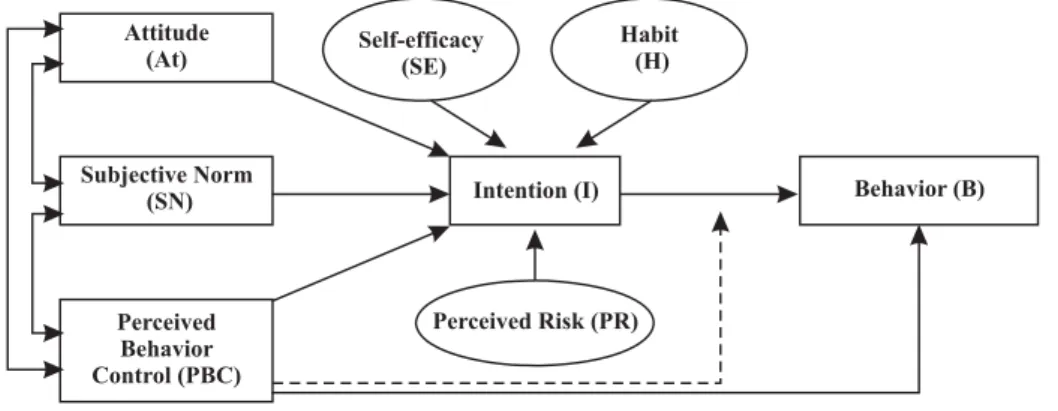
According to the TPB, Intention, the main determinant of behavior, and has three components: personal feature, referred to as Attitude; Subjective Norm which reflects the influence of the society on behavior; and Perceived Behav-ior Control (PBC) which refers to the perception of an indi-vidual in terms of his or her ability to performing or not a certain behavior. The central idea of the model may be ex-pressed using the following diagram (Figure 1). The scheme shows that the Perceived Behavioral Control, in addition to contributing with the development of Intention, may play two different roles in predicting behavior. First, along with Intention it can be a direct behavior predicting variable. The second role, represented by the dotted line in Figure 1, re-flects the Intention x Perceived Behavior Control interaction hypothesis, i.e., among individuals who express the same level of Intention towards performing a certain behavior, those with a higher perception of control tend to be firmer in performing the behavior compared to those with a lower perception of control. Among the advantages of the model, the most important are the demonstration of its effective-ness in health behavior studies, including exercising behav-iors, as well as its flexibility to include other variables that may contribute to comprehend how Intention is formed(4).
Attitude (At)
Subjective Norm (SN)
Perceived Risk (PR)
Intention (I) Behavior (B) Self-efficacy
(SE)
Habit (H)
Perceived Behavior Control (PBC)
Figure 1 - Diagram representing the relationships between the factors that determine behavior, according to the TPB, considering the additional psychosocial variables - Self-efficacy, Past Behavior, Habit and Perceived Risk, adapted by Ajzen(3).
Although literature states that behavior, Intention is a strong predictor because of the variables that compose the TPB. Authors(5) have argued that adding variables from other theoretical models can improve its predictive strength.
Variables external to the TPB include self-effectiveness, which is reflection of one’s personal abilities for a certain behavior, different from the concept of Perceived Control that represents barriers, which refers to aspects beyond control(5); Habit, a construct defined as a sequence of learned actions that become automatic responses to spe-cific situations, completed unconsciously(6) and Perceived
Risk, which is related to the judgment that an individual has about the risk for developing a certain disease, and is an important motivator in prevention, detection and treat-ment(7). Other studies using the referred theory have dem-onstrated that these three variables are significant elements in the prediction of Intention(5).
as its reliability and validity, which, if confirmed, indicate that it provides valid and consistent measures(8).
The TPB has been widely used in of health behaviors, including those that address physical activity, from sports to leisure activities, in different subject groups(9-10). Studies have also been developed to identify the factors involved in the motivation of coronary disease patients to perform physical activity(11-12).
Hence, literature portrays the researchers’ concern with understanding the factors supporting physical activity, in-cluding in the context of coronary disease. Nevertheless, no study has addressed patients’ perception about perform-ing physical activity in the period followperform-ing hospital dis-charge related to an ischemic event, due to angina or stroke.
Therefore, the objective of this study was to present the development, content and reliability analyses of the Questionário para identificação dos fatores determinantes do comportamento de atividade física em pacientes com infarto do miocárdio (Questionnaire for identifying determining fac-tors of exercise behavior in with myocardial infarction), based on TPB, and including the additional variables – Self-efficacy, Habit and Perceived Risk, defined as an extension of TPB.
The reliability and validity analysis of the referred in-strument is important so it can be used in studies that aim at evaluating the determinants of the physical activity per-formed by coronary disease patients. The period following discharge from hospitalization due to an ischemic event is a critical moment to motivate patients towards adopting healthier behaviors. The bridge between the patient’s per-ception and the educational goals from the view of health workers is a challenge for developing interventions that are more realistic and have greater chances of becoming effec-tive(13). The data that could be obtained with the new in-strument should support the development of specific strat-egies to motivate patients towards becoming more physi-cally active in the different adaptation periods that follow their experience of an ischemic event.
METHOD
Developing the Instrument
The instrument was designed based on the theoretical construct of the TPB and including additional variables (Habit, Self-efficacy, Perceived Risk) to the model, which is widely used in worldwide literature in studies involving health be-haviors(14), and on an extensive literature review on the use of TPB in behaviors related to physical activity (9-10,15) and some in behaviors related to exercise involving patients with coro-nary disease(11-12). The original questionnaire consisted of 30 items distributed to evaluate the following constructs: Be-havior (1 item), Intention (6 items), Attitude (5 items), Sub-jective Norm (4 items), Perceived Behavior Control (5 items), Self-efficacy (2 items), Habit (5 items) and Perceived Risk (2 items), which was submitted to content validation.
Content Validation
For content validation, the instrument was submitted to an evaluation by judges who had knowledge and expertise in the field, and met at least one of the following criteria: knowledge in care, teaching and research in cardiology and knowledge in research using theoretical frameworks for be-havior. As described before, there is no minimum number of judges required for content validation studies, but a mini-mum of three has been recommended. More than ten judges is considered overestimation(16). In the present study, three judges evaluated the instrument in terms of its title, items, answer format, scoring procedure and form of register. The evaluation was performed considering pertinence (it the items expressed a true relationship with the study proposi-tion); clarity (if the items are understandable); and coverage (if the selected variables permit to obtain information to achieve the study objectives). After the informal approach, the judges received a letter with an invitation and consent form to participate in the study accompanied by a copy of the instrument and the instructions for its administration and scoring and the content validation questionnaire. The judges were also informed about the conceptual framework (TPB and additional variables) of the instrument, and the target population. Items were left unchanged if there was 100% of agreement among the judges in terms of their per-tinence and clarity. Item with at least one disagreement were discussed among the other judges until reaching a consen-sus of its evaluation and restructuring.
After the analysis stage, the judges moved to the pro-cess of instrument validation, based on the recommenda-tions of the theoretical model and of studies using the TPB, according to the following diagram:
Original version of the Questionnaire
⇓
Content validity (three judges) ⇓
Application to 5 subjects (target population and experts) ⇓
Small changes ⇓
Second Version of the Questionnaire
⇓
Pilot Study
(n=51 subjects) → Internal Consistency Evaluation - Cronbach's alpha ⇓
Third Version of the Questionnaire
⇓
Application to 3-4 subjects (target population and experts) ⇓
Main Study
(to be applied)
Instrument
The instrument was submitted to content validity and was composed by the measures of physical activity behavior (walking), and its respective variables from the TPB (Inten-tion, Attitude, Subjective Norm, Perceived Behavior Control) and other models (Self-efficacy, Habit and Perceived Risk).
Behavior. Was measured using the following question: Over the last six months before your infarction, you used to practice physical activity, that is, walking: (1) less than once a week, (2) once a week, (3) twice a week, (4) three or more times a week.
Intention. The Intention construct, with six items, ad-dressed the individual’s motivation to perform a certain be-havior, and each item is measured using a five-point Likert scale (1.I intend to walk, for at least 30 minutes, three times a week next month definitely not[1] – definitely yes[5], 2.I’m planning to walk, for at least 30 minutes, three times a week next month definitely not[1] – definitely yes[5]; 3.I’ll try to walk for at least 30 minutes, three times a week... definitely not[1] – definitely yes[5]; 4.I want to walk, for at least 30 minutes, three times a week...; definitely not[1] – definitely yes[5]; 5. I hope to walk, for at least 30 minutes, three times a week... unlikely [1] – very likely [5]; 6. What are the chances that you will walk, for at least 30 minutes... unlikely [1] – very likely [5]. The score for Intention was obtained by the arithmetic mean of the six items that compose the construct, ranging from 1 to 5: the higher the mean score the higher the subject’s Intention towards the behavior.
Attitude. The attitude variable refers to the favorable or unfavorable assessment made by the individual regard-ing the addressed behavior, and was measured by means of five semantic differential scales constructed with bipo-lar adjectives, with scores ranging from one to five assigned for the answer to the following question: To me, walking three times a week for at least 30 minutes next month is: very bad [1] – very good [5]; very harmful [1] – very benefi-cial [5]; very unpleasant [1] – very pleasant [5]; very boring [1] – very pleasing [5]; very meaningless [1] – very reason-able [5]. The Attitude score was obtained by the arithmetic mean of the five items composing the construct, ranging from 1 to 5: the higher the mean score, the higher the chances of the subject performing the behavior.
Subjective Norm. The subjective norm refers to the so-cial pressure that individuals perceive regarding their en-gaging or not in a behavior, and it was assessed by means of four items with answers using a five-point Likert scale: 1. People who are important to me think that I.. walk... defi-nitely should not[1] - defidefi-nitely should [5]; 2.People who are important to me would… of me walking...; definitely disapprove [1] - definitely approve [5]; 3. People who are important to me want me to walk... unlikely [1] – very likely [5] and 4. I feel there is some pressure for me to start walk-ing... I totally disagree[1] - I totally agree [5]. The Subjec-tive Norm score was obtained by the arithmetic mean of the four items composing the construct, ranging from 1 to 5: the higher the mean score, the higher the perception of social pressure towards the behavior.
Perceived Behavior Control. The Perceived Behavior Con-trol refers to the individual’s perceived easiness or difficulty to perform a behavior, and was measured by means of five items, using a five point Likert scale: 1. Walking, for at least 30 minutes, three times a week next month, depends only on me totally disagree [1] – totally agree [5]; 2.How much control do you believe you have about walking, for at least 30 minutes, three times a week next month totally beyond my control [1] – totally under my control [5]; 3.I would like to go walking, for at least 30 minutes, three times a week... but I really don’t know if I can I totally disagree [1] – I totally agree [5]; 4.I am sure that if I wanted to I could go walking... next month I totally disagree [1] – I totally agree [5]; 5.For me, walking, for at least 30 minutes, three times a week next month is very difficult [1]- very easy[5]. The score for Per-ceived Behavior Control was obtained by the arithmetic mean of the five items composing the construct, ranging from 1 to 5: the higher the mean score the higher the subject’s per-ceived control about performing the behavior.
Three other variables were added to the TPB construct and grouped under three domains (Self-efficacy, Habit and Perceived Risk) with nine items.
Self-efficacy. Self-efficacy is defined as one’s confidence on one’s own ability to perform a behavior(5) and was mea-sured using two questions with answers on a five-point Likert scale: 1.Even if I find it difficult I am capable of walking, for at least 30 minutes, three times a week, next month I totally disagree [1] – I totally agree [5]; 2. I’m sure that I’m capable of walking, for at least 30 minutes, three times a week, next month I totally disagree [1] – I totally agree [5]. The score for Self-efficacy was obtained by the arithmetic mean of the two items composing the construct, ranging from 1 to 5: the higher the mean score, the higher the subject’s confidence in his or her ability to perform the behavior.
Habit. Habit has been described as a sequence of learned actions that become automatic responses to specific clues(6) and was measured by applying five questions with answers on a five-point Likert scale, one of which was I totally disagree and five were I totally agree. The following guiding question was used: Before my heart attack, walking was something that: 1. ...I did frequently; 2. ...if I didn’t do I felt strange; 3....was part of my everyday routine; 4. ...i missed whenever I didn’t do it; 5. ...I did a long time ago. The score for Habit was obtained by the arithmetic mean of the five items composing the con-struct, ranging from 1 to 5: the higher the mean score, the higher the perception of the influence that Habit had on per-forming the behavior automatically.
associ-ated with inhibiting the behavior, and is thus referred to as a negative Perceived Risk. Both questions were designed with answers on a five-point Likert scale, being [1] I totally disagree and [5] I totally agree 1. If I go walking, for at least 30 minutes, three times a week next month, there is a smaller chance of my having another infarction, 2. I think that walking, for at least 30 minutes, three times a week next month, puts me at risk for having another heart attack. Hence, the two ques-tions, despite addressing the perception of risk, concern per-ceptions with different concepts. When interpreting the scores for question 1, the higher the score, the higher the perception of the risk towards not performing the behavior. In question 2, the higher the score, the higher the perception of the risk as a consequence of walking.
It is highlighted that the instrument does not have a total score. Each construct should be considered as a vari-able that should be individually evaluated.
Instrument to measure the answers
To measure the psychosocial variables an adapted vi-sual scale was used, based on the model used by Bah(17). The purpose of using a visual scale is to facilitate answer-ing the items related to the psychosocial variables, among subjects with a low educational level, who corresponds to the majority of the population in the present study. In this scale, the answer options are replaced by a line with a picture of a triangle, divided into five quadrants, which dimension increases as the answer is more favorable to the study object. According to the position of the vertical line, a score from one to five is assigned, which corre-sponds to the measure for that item. In the present study, after the initial pre-test, it was found that it was neces-sary to add the semantic equivalents to each quadrant/ value on the scale.
5 4
3 2
1
Figure 3 - Visual scale to measure the answers to the items related to psychosocial variables, adapted from Bah(17).
Reliability evaluation
The final version of the instrument was applied to 51 subjects with coronary disease, being followed at an out-patient clinic of a university hospital in the state of São Paulo, in accordance with the recommendation for devel-oping questionnaires to measure variables in the context of social cognitive theories(18). The subjects were selected continuously until achieving the established sample size provided they presented medical diagnosis for coronary disease, medical discharge, and no physical limitations to perform physical activity. Data collection was performed by the researcher, by individual interviews performed at a private location of the referred research field, after obtain-ing of the Informed Consent Form (ICF) and explainobtain-ing the study objectives and the application of the instrument. To analyze the reliability according to the homogeneity crite-rion (internal consistency), Cronbach’s alpha was used, along with performance analysis of each item in relation to the total score of the related construct. Alpha coefficients above 0.70 indicated satisfactory internal consistency(19).
Ethical Aspects
The project and the ICF, signed by the participant be-fore the interview, were approved by the Independent Eth-ics Committee at Faculdade de Ciências Médicas – Unicamp (IEC number 557/2006).
RESULTS
In the content validation step it was recommended that the instrument should be reviewed in terms of its title, which in the final version changed from Questionário dos fatores
Internal Consistency
This part of the study counted with 51 subjects, whose average age was 57.9 (±9.2) years, and 72.5% were male, 58.2% married, with an average education time of 4.6 (±3.7) years, and mean individual and family income of 1.8 (±1.2) and 3.3 (±1.7) wages, respectively.
As for the clinical profile, most subjects presented clinical complications and/or associated risk factors, with predominance
of dyslipidemia (86.3%), followed by ASH (80.4%), DM (27.5%) and cerebrovascular accident (3.9%). Among the lifestyle hab-its, 51.0% of subjects were smokers and 9.8% were alcoholics.
Internal consistency was analyzed by calculating Cronbach’s alpha coefficient for the behavior variables.
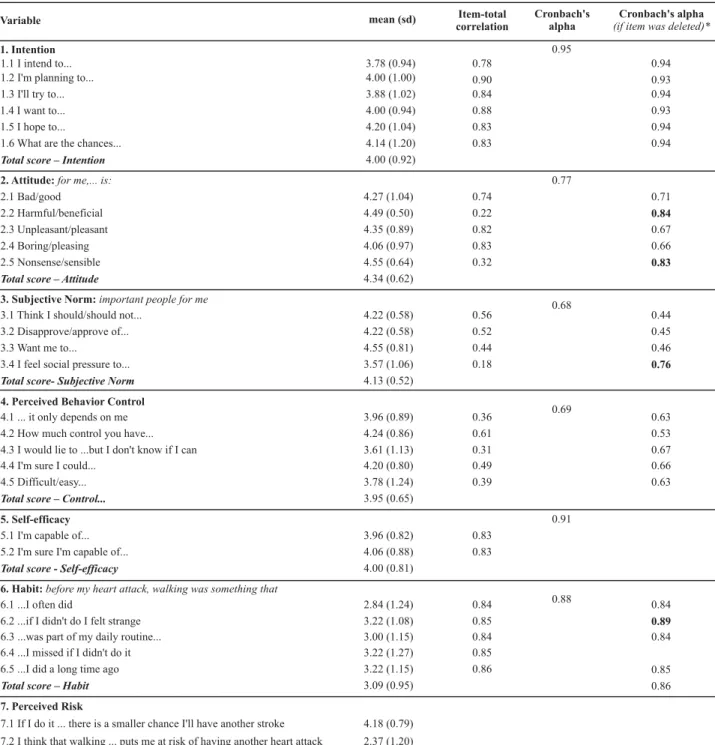
Table 1 shows the mean scores, item-total score correla-tions (of each construct) and Cronbach’s alpha for the psycho-social variables associated with physical activity behavior.
Table 1 - Mean, item-total correlation, Cronbach’s alpha of the psychosocial variables that compose the instrument Questionnaire to Identify Psychosocial Determinants Physical Activity Behavior in individuals with coronary disease - Campinas - 2007/2008
Variable mean (sd) Item-total correlation
Cronbach's alpha
Cronbach's alpha
(if item was deleted)*
0.95 0.77 0.68 0.69 0.91 0.88 0.78 0.90 0.84 0.88 0.83 0.83 0.74 0.22 0.82 0.83 0.32 0.56 0.52 0.44 0.18 0.36 0.61 0.31 0.49 0.39 0.83 0.83 0.84 0.85 0.84 0.85 0.86 0.94 0.93 0.94 0.93 0.94 0.94 0.71 0.84 0.67 0.66 0.83 0.44 0.45 0.46 0.76 0.63 0.53 0.67 0.66 0.63 0.84 0.89 0.84 0.85 0.86 4.06 (0.88) 3.78 (0.94) 4.00 (1.00) 3.88 (1.02) 4.00 (0.94) 4.20 (1.04) 4.14 (1.20) 4.00 (0.92) 4.27 (1.04) 4.49 (0.50) 4.35 (0.89) 4.06 (0.97) 4.55 (0.64) 4.34 (0.62) 4.22 (0.58) 4.22 (0.58) 4.55 (0.81) 3.57 (1.06) 4.13 (0.52) 3.96 (0.89) 4.24 (0.86) 3.61 (1.13) 4.20 (0.80) 3.78 (1.24) 3.95 (0.65) 3.96 (0.82) 4.00 (0.81) 2.84 (1.24) 3.22 (1.08) 3.00 (1.15) 3.22 (1.27) 3.22 (1.15) 3.09 (0.95) 1. Intention
1.1 I intend to... 1.2 I'm planning to... 1.3 I'll try to...
1.4 I want to... 1.5 I hope to...
1.6 What are the chances...
Total score – Intention
2. Attitude:for me,... is:
2.1 Bad/good 2.2 Harmful/beneficial
2.3 Unpleasant/pleasant 2.4 Boring/pleasing
2.5 Nonsense/sensible
Total score – Attitude
3. Subjective Norm:important people for me
3.1 Think I should/should not...
3.2 Disapprove/approve of... 3.3 Want me to...
3.4 I feel social pressure to...
Total score- Subjective Norm
4. Perceived Behavior Control
4.1 ... it only depends on me 4.2 How much control you have... 4.3 I would lie to ...but I don't know if I can 4.4 I'm sure I could...
4.5 Difficult/easy...
Total score – Control...
5. Self-efficacy
5.1 I'm capable of... 5.2 I'm sure I'm capable of...
Total score - Self-efficacy
6. Habit:before my heart attack, walking was something that
6.1 ...I often did
6.2 ...if I didn't do I felt strange 6.3 ...was part of my daily routine... 6.4 ...I missed if I didn't do it
6.5 ...I did a long time ago
Total score – Habit
7. Perceived Risk
7.1 If I do it ... there is a smaller chance I'll have another stroke 4.18 (0.79)
A mean score of about 4.0 was found for the variables -Intention, Attitude, Subjective Norm, and Self-Efficacy, which shows the subjects positive attitude towards per-forming activity. However, lower mean scores were ob-served for the variables - Habit (3.09) and Perceived Risk (2.63). The score obtained for the Habit variable suggests that for the studied group, performing the physical activity was not included in their lifestyle as part of their everyday life, rather as an activity that requires a rational structure to be completed. On the other hand, the lower score achieved by the Perceived Risk suggests that the subjects perceive the physical activity behavior as a threat due to the risk of a new ischemic event.
Regarding the reliability analysis, Cronbach’s alpha val-ues > 0.75 were found for the Intention, Attitude, Self-effi-cacy and Habit variables. The Subjective Norm and per-ceived Behavior Control variables presented alpha values below 0.70. Removing items did not make significant im-provements on the alpha coefficient of those variables, except when item 3.4 (I feel social pressure towards...) was removed form the Subjective Norm construct (alpha=0.68 to 0.76 after its removal) and removing the item harmful/ beneficial from the Attitude construct (alpha=0.77 to 0.84). The two items that improved the alpha coefficient also pre-sented low item-total correlation values (r= 0.22 and r=0.32, respectively). The internal consistency of the Perceived Risk variable was not tested because it is composed by only two conceptually distinct items, confirmed by the absence of any correlation between them (r= -0.091; p-value=0.525).
DISCUSSION
The objective of this study was to present the develop-ment as well as the content of the reliability of an instru-ment developed to study the determinants of behavior and perform physical activity (walking) in patients with myo-cardial infarction after hospital discharge, based on TPB. The finding show that it is a conceptually valid instrument, which patients understand, and coherent for the attributes it measures.
When a new scale is developed, researchers follow strict procedures for the development as well as for providing information about its reliability and validity. Although con-struct and criterion validity are important, the information about measure content validity is also considered neces-sary to draw conclusions about the quality of the scale. Content validity has been defined as the level to which an instrument has an appropriate group of ideas to represent the construct being measured(8) or extent to which an in-strument adequately represents the domain of interest, when aiming to measure a phenomenon(20).
Regarding reliability, the Attitude and Subjective Norm constructs presented better psychometric performance when some of their items were removed (Attitude =Harm-ful/Beneficial; Nonsense/Sensible; Subjective Norm = item
3.4 I feel social pressure towards...). In the Subjective Norm construct, eliminating item 3.4 made a significant improve-ment to the alpha coefficient, changing it from 0.68 to 0.76, which points at the recommendation of removing the item for a wider study. For the Attitude construct, however, the alpha value first observed (0.77) meets the criterion adopted in this study as an indicator of internal consistency, therefore not justifying removing the item.
Similarly, regarding the Attitude construct, it was ob-served that removing the items walking for me is harm-ful/beneficial, for me walking is senseless or sensible iso-lated results in a similar improvement of the alpha coeffi-cient. But in this case, observing the items as a whole points at the coherence of answers. The two mentioned items refer to the aspects of the importance of behavior and were those that obtained the highest scores. The other items composing Attitude refer to the perception of ac-ceptability of behavior (bad/good, unpleasant/pleasant, boring/pleasing), and obtained the lowest scores, suggest-ing that the subject acknowledges the need to perform physical activity, but does not find it pleasant/pleasing to perform this behavior.
There are many practical implications to the develop-ment of scales that support the behavior of performing physical activity in coronary disease patients, especially in the period following hospital discharge after an ischemic event.
Experiencing an ischemic event such as a myocardial infarction brings about important repercussions to the physical, psychological and social aspects of an individual’s life, and can thus mean experiencing a period of crisis and turbulence. The period following the event, in the acute phase, is strongly marked by the experience of a life threat-ening event, by the fear of recurrence and by the need to know the causes that contributed to such a critical health condition, as well as the strategies for treatment and for preventing other events(21).
Although the negative consequences of experiencing an acute or chronic disease receive more attention in studies, some studies have shown that it is possible to find positive aspects from those experiences. For instance, a recent study demonstrated that patients who perceive (but do not nec-essarily have the clinical condition) that their situation is serious have a stronger chance of engaging and changing their lifestyle in the long term, a fact which appears to be associated with a higher predisposition or good will towards changing their lifestyle(22).
It is likely that the patient, due to the strong impact, as soon as he or she gets hold of information/knowledge of the risk factors for the disease, develop a stronger motiva-tion towards changing behaviors, especially those related to eating and performing physical activity.
strongest influence on motivation to engage in an active lifestyle. It is possible that these factors change as the is-chemic events gets older, and, therefore, specific strategies should be employed in the different phases of recovering from the event. In addition, administering the instrument before and after the educational intervention, allied to the outcome measure would permit to assess the extent to which changing the factors involved in forming Intention actually contribute to changing or maintaining an active lifestyle.
CONCLUSION
The present study results show that the instrument to study the factors determining physical activity behavior in myocardial infarction patients is a tool with valid content that patients understand, and has concepts that present evidence of internal consistency. Its use could support de-signing theory-based educational interventions and assess the effect of its effectiveness.
REFERENCES
1. Rosamond W, Flegal K, Furie K, Go A, Greenlund K, Haase N, et al. Heart disease and stroke statistics - 2008 update: a report from the American Heart Association Statistics Committee and Stroke Statistics Subcommittee. Circulation. 2008;117(4):e25-146.
2. Fletcher GF, Balady GJ, Amsterdam EA, Chaitman B, Eckel R, Fleg J, et al. Exercise standards of exercise and training: a statement for healthcare professionals from the American Heart Association. Circulation. 2001;104(14):1694-740.
3. Ajzen I. Attitude, personality and behaviour. Milton Keynes: Open University Press; 1988.
4. Godin G, Kok G. The theory of planned behavior: a review of its applications to health-related behaviors. Am J Health Promot. 1996;11(2):87-98.
5. Armitage JC, Conner M, Loach J, Willets D. Different perceptions of control from self-efficacy: predicting consumption of a low fat diet using the Theory of Planned Behaviour. J Appl Soc Psychol. 1999;21(3):301-16.
6. Verplanken B, Myrbakk V, Rudi E. The measurement habit. In: Betsch T, Haberstroh S. The routines of decision making. Mahwah, NJ: Lawrence Erlbaum; 2005. p. 231-47.
7. Leventhal H, Kelly K, Leventhal EA. Population risk, actual risk, perceived risk and câncer control: a discussion. J Nat Cancer Inst Monogr. 1999;25(1):81-5.
8. Polit DF, Beck CT. Nursing research: principles and methods. 7th
ed. Philadelphia: Lippincott; 2004.
9. Blue CL. The predictive capacity of the theory of reasoned action and theory of planned behaviour in exercise research: an integrated literature review. Res Nurs Health. 1995; 18(2):105-21.
10. Armitage JC. Can the theory of planned behavioural predict the maintenance of physical activity? Health Psychol. 2005;24(3):235-45.
11. Blanchard CM, Courneya KS, Rodgers WM, Fraser SN, Murray TC, Daub B, et al. Is the theory of planned behavior a useful framework for understanding exercise adherence during phase II cardiac rehabilitation? J Cardiopulm Rehabil. 2003;23(1):29-39.
12. Johnston DW, Johnston M, Pollard B, Kinmonth, AL, Mant D. Motivations is not enough: prediction of risk behavior following diagnosis of coronary heart disease from the Theory of Planned Behavior. Health Psychol. 2004;23(5):533-8.
13. Dantas RAS, Stuchi RAG, Rossi LA. A alta hospitalar para fami-liares de pacientes com doença arterial coronariana. Rev Esc Enferm USP. 2002;36(4):345-50.
14. Sheeran P, Conner M, Norman P. Can the Theory of Planned Behavior explain patterns of health behavior change? Health Psychol. 2001;20(1):12-9.
15. Gretebeck KA, Black DR, Blue CL, Glickman LT, Huston SA, Gretebeck RJ. Physical activity and function in older adults: theory of planned behavior. Am J Health Behav. 2007; 31(2):203-14.
16. Cramer ME, Atwood JR, Stoner JA. Measuring community coalition effectiveness using the ICE© instrument. Public Health Nurs. 2006;23(1):74-87.
17. Bah AT. Étude sur les determinants de l’Intention des travailleuses du sexe en Guinée de demander à leurs petits amis d’utiliser le préservatif. Mémoire – Maître ès Sciences (M.Sc). Québec : Faculté de Médecine, Université Laval ; 2005.
18. Gagné C, Godin G. Les théories sociales cognitives: guide pour la mesure des variables et le développement de questionnaire [text on the Internet]. [cited 2009 Feb 4]. Available from: http://www.go din.fsi.ulaval.ca/Fichiers/Rapp/Guide_mesure _variables.pdf
19. Nunnaly JC. Psychometric theory. New York: McGraw-Hill; 1978.
20. Wynd CA, Schmidt B, Schaefer MA. Two quantitative ap-proaches for estimating content validity. West J Nurs Res. 2003;25(5):508-18.
21. De Jonge P, Spijkerman TA, van den Brink RHS, Ormel J. Depression after myocardial infarction is a risk factor for declining health related quality of life and increased disability and cardiac complaints at 12 months. Heart. 2006;92(1):32-9.
Attachment
Questionário para identificação dos fatores psicossociais determinantes do comportamento de atividade física em coronariopatas (Questionnaire for identifying the determining psychosocial factors of physical activity behavior in
subjects with coronary disease)
A) Comportamento
No(s) último(s) (período de referência*), antes do seu ataque do coração, você costumava realizar atividade física, ou seja, caminhada:
( ) < 1 vez/semana ( ) 1 vez/semana ( ) 2vezes/semana ( ) 3 ou mais vezes/semana
* o período deve ser determinado de acordo com os objetivos de cada estudo. Exemplo: No último (mês) ... Nos últimos (dois meses)... Nos últimos (seis meses) antes do infarto
Definição do comportamento: TODAS AS PERGUNTAS SEGUINTES SE REFEREM AO COMPORTAMENTO DE: realizar atividade física, ou seja, fazer caminhada no mínimo 3 vezes por semana, com duração de no mínimo 30 minutos no próximo mês (ou no período determinado para cada estudo)
B) Variáveis Psicossociais 1. Intenção
1.1Eu tenho intenção de fazer caminhada, no mínimo 30 minutos, três vezes por semana no proximo mês.
1.2Eu estou planejando fazer caminhada, no mínimo 30 minutos, três vezes por semana no próximo mês
1.3 Eu vou tentar fazer caminhada, no mínimo 30 minutos, três vezes por semana no próximo mês
1.4Eu espero fazer caminhada, no mínimo 30 minutos, três vezes por semana no proximo mês
1.5Qual é a probabilidade de você fazer caminhada, no mínimo 30 minutos, três vezes por semana no proximo mês 5
4 3
2 1
definitivamente sim sim
não faz diferença ou não sei não
definitivamente não
5 4
3 2
1
definitivamente sim sim
não faz diferença ou não sei não
definitivamente não
5 4
3 2
1
definitivamente sim sim
não faz diferença ou não sei não
definitivamente não
5 4
3 2
1
definitivamente sim sim
não faz diferença ou não sei não
definitivamente não
5 4
3 2
1
muito provável provável
não faz diferença pouco provável
2. Atitude
Para mim, fazer caminhada, no mínimo 30 minutos, três vezes por semana no próximo mês será:
1 2 3 4 5
2.1 Muito ruim Ruim Nenhum Bom Muito bom
2.2 Muito prejudicial Prejudicial Nenhum Traz benefício Traz muito beneficio
2.3 Muito desagradável Desagradável Nenhum Agradável Muito agradável
2.4 Muito chato Chato Nenhum Prazeroso Muito prazeroso
2.5 Muita bobagem Bobagem Nenhum Sensato Muito sensato
5 4
3 2
1
definitivamente devo devo
nenhum não devo
definitivamente não devo
5 4
3 2
1
definitivamente aprovar aprovar
nenhum desaprovar
definitivamente desaprovar
5 4
3 2
1
muito provável provável
não faz diferença pouco provável
improvável
5 4
3 2
1
concordo totalmente concordo
nenhum discordo
discordo totalmente
5 4
3 2
1
concordo totalmente concordo
nenhum discordo
discordo totalmente
3. Norma Subjetiva
3.1 Pessoas que sao importantes para mim acham que eu:
Fazer caminhada, no mínimo 30 minutos, três vezes por semana no proximo mês
3.2 Pessoas que sao importantes para mim iriam:
Que eu caminhe, no mínimo 30 minutos, três vezes por semana no próximo mês
3.3 Pessoas que sao importantes para mim querem que eu faça caminhada, no mínimo 30 minutos, três vezes por semana no próximo mês.
3.4 Eu sinto que existe uma pressão para fazer caminhada, no mínimo 30 minutos, três vezes por semana no próximo mês.
4. Controle Comportamental Percebido
4.2 Quanto você acha que esta sob seu controle fazer caminhada, no mínimo 30 minutos, três vezes por semana no proximo mês.
4.3 Eu gostaria de fazer caminhada, no mínimo 30 minutos, três vezes por semana no proximo mes, mas realmente eu nao sei se consigo
4.4 Eu tenho certeza de que se eu quisesse, eu poderia fazer caminhada, no mínimo 30 minutos, três vezes por semana no proximo mês.
4.5 Para mim, fazer caminhada, no mínimo 30 minutos, três vezes por semana no proximo mês é:
5. Auto-eficácia
5.1 Mesmo que eu ache difícil eu sou capaz fazer caminhada, no mínimo 30 minutos, três vezes por semana no proximo mês.
5.2 Estou certo de que sou capaz de fazer caminhada, no mínimo 30 minutos, três vezes por semana no proximo mes.
6. Hábito
Antes do meu ataque do coração, caminhar foi algo que:
6.1 Eu fazia freqüentemente
5 4
3 2
1
Totalmente sob meu controle Sob meu controle
nenhum Fora do meu
controle Totalmente fora
do meu controle
5 4
3 2
1
concordo totalmente concordo
nenhum discordo
discordo totalmente
5 4
3 2
1
concordo totalmente concordo
nenhum discordo
discordo totalmente
5 4
3 2
1
muito fácil fácil
nenhum difícil
muito difícil
5 4
3 2
1
concordo totalmente concordo
nenhum discordo
discordo totalmente
5 4
3 2
1
concordo totalmente concordo
nenhum discordo
discordo totalmente
5 4
3 2
1
concordo totalmente concordo
nenhum discordo
6.2 Se eu não fizesse me sentia estranho
6.3 Foi parte da minha rotina diária
6.4 Eu sentia falta, se não fizesse
6.5 Eu fiz há muito tempo
7. Risco Percebido
7.1 Se eu fizer caminhada, no mínimo 30 minutos, três vezes por semana no proximo mês, a chance de eu ter um novo ataque do coração será menor
7.2 Eu penso que caminhar, no mínimo 30 minutos, três vezes por semana no proximo mês, me coloca em risco de sofrer um outro ataque do coração
5 4
3 2
1
concordo totalmente concordo
nenhum discordo
discordo totalmente
5 4
3 2
1
concordo totalmente concordo
nenhum discordo
discordo totalmente
5 4
3 2
1
concordo totalmente concordo
nenhum discordo
discordo totalmente
5 4
3 2
1
concordo totalmente concordo
nenhum discordo
discordo totalmente
5 4
3 2
1
concordo totalmente concordo
nenhum discordo
discordo totalmente
5 4
3 2
1
concordo totalmente concordo
nenhum discordo